IRGC strikes two US airbases in Jordan over Larak aggression
Al Mayadeen| August 31, 2026
Iran’s Islamic Revolution Guard Corps Aerospace Force struck technical, maintenance and fighter jet infrastructure at two US-operated airbases in Jordan, King Hussein and Al-Azraq, using a combined ballistic missile and drone operation.
The IRGC said the attacks caused “heavy damage” and were launched in direct response to the US strike on Larak Island.
The IRGC warned that “aggression and crime” will not remedy the enemy’s desperation over its weakening control of the Strait of Hormuz, and that every shot fired at Iran will be met with a more crushing response.
The operation follows Sunday’s US strike on Larak Island, the first known US military attack against Iran since late July, which the IRGC said killed and wounded “several of our fighters and compatriots.”
The strike on Larak was launched from Jordan
Fars News Agency reported that flight navigation data traced the Larak drone strike back to Jordan, launched with support from Jordanian bases, a detail that places Amman directly inside the chain of escalation Iran’s retaliatory strikes on King Hussein and Al-Azraq are now responding to.
IRGC spokesperson Hossein Mohebi separately called Washington’s escalating economic and military pressure a “strategic and fatal mistake” that would “change the balance against its architects” and carry heavy costs on both economic and military fronts.
A region-wide wave of retaliation
Iran’s response to Larak has extended well beyond the two Jordanian airbases.
Press TV reported Iranian missile fire toward US ships in the Strait of Hormuz, while Iranian state television, citing Arab sources, reported explosions in the Aqaba area of southern Jordan, including near the US-operated Muwaffaq Salti Airbase. Fars News Agency additionally reported an explosion at Qatar’s Al-Udeid Airbase.
Moreover, activity at Saudi Arabia’s Jeddah airport had been halted early on Monday, IRIB reported citing the Middle East Spectator.
A political warning to Washington
Ebrahim Azizi, chairman of Iran’s Parliament National Security and Foreign Policy Committee, warned Washington directly, saying, “Test our will once more, and pay a heavier price. Retaliation is coming; JUST RUN!”
He said no crime would go unanswered and promised a response that would be “devastating, more painful, and instructive,” telling Washington to wait “in fear and terror.”
The escalation has rattled energy markets. Brent crude rose 2.52% to $90.32 a barrel and US West Texas Intermediate climbed 2.41% to $85.41 a barrel by 2202 GMT Monday, Reuters reported, after the initial Larak strikes marked the first known American military action against Iran since late July.
Iraq committed to full US withdrawal deadline – media
RT | August 30, 2026
Iraq is committed to a full withdrawal of US-led coalition forces by the end of September, UK-based Saudi daily Asharq Al-Awsat reported on Saturday, citing an Iraqi official.
US forces have been in the country for 23 years since the 2003 invasion and subsequent smaller-scale operations against Islamic State (IS, formerly ISIS).
Reports that US and other foreign troops could remain after September “contradict what was agreed upon between the previous Iraqi government and the US administration,” Asharq Al-Awsat cited the official as saying.
The comments followed media reports suggesting that Washington was only planning a drawdown, rather than a full withdraw by the end of the September deadline.
“This is a transition of the Coalition’s military mission to a more traditional bilateral security partnership,” Iraqi news outlet Shafaq News reported, citing an anonymous US official.
Earlier this month, Iraqi Prime Minister Ali al-Zaidi’s office stated that the September 30 deadline would be “the fixed and final date” for the pullout of international coalition forces.
US President Donald Trump has previously backed reducing the US military presence in Iraq, reaffirming a withdrawal plan originally agreed in 2024 under the Biden administration. During a meeting with al-Zaidi this summer, Trump said the two countries were developing a relationship “where we don’t need the military” in Iraq.
Washington’s presence in the region has taken a significant hit during the Iran war, as Tehran has damaged or outright destroyed key US radar, communications, and other military infrastructure at bases in Gulf nations.
During the conflict, US military infrastructure in the region also faced attacks by pro-Iranian armed groups in Iraq operating outside Baghdad’s direct control.
The Pentagon is now considering whether to reduce the US military footprint in the Gulf after the Iran war ends, The Washington Post reported earlier in August, citing anonymous officials.
US allies in the Gulf have also reportedly expressed frustration over what they see as a lack of proper consultation before the US-Israeli attack on Iran, which led to bases on their territories being targeted. Regional powers have since moved to diversify their security partnerships, with Saudi Arabia, Türkiye, and Pakistan signing the Mecca Joint Defense Agreement, already dubbed by commentators an ‘Islamic NATO,’ early this month.
Israeli terrorism is getting worse because Western leaders are cowards, hypocrites
By Robert Inlakesh | Al Mayadeen | August 30, 2026
Israeli terrorism against civilians across the occupied West Bank has recently triggered condemnation from Western leadership – this shallow rhetoric is overshadowed by their actions, which are driven by a cowardly refusal to push back against the Zionist lobby.
Condemnations and statements of concern have been recently issued by US, UK, and EU officials alike, in what appears at first glance to be pushback against Israeli settler violence and expansionism in the occupied West Bank. In fact, what we are witnessing is the continuation of a decades-long tradition of hollow statements that act to save face by pretending as if the settlers themselves are somehow rogue elements that can be judged independent of the rest of the Zionist project.
In reality, settlement expansion is a regime project, as the violence of the settlers themselves is too. The Zionist armed forces are hand in glove with the settlers, to the point that military units such as the ‘Desert Frontier’ have been set up to integrate the settler militias into the occupation forces.
Even if the settlement movement was separate from the regime itself – as the EU, UK, and US leaderships like to pretend so that they can continue presenting themselves as capable of criticizing the Israelis – there has been a carte blanche granted to the authorities in “Tel Aviv”, instead of meaningful pushback that would coerce them into curtailing the aggressive project of the settlers.
The moves being made in Western capitals represent the exact opposite of genuine opposition to settler colonial violence and expansionism. US President Donald Trump has refused to impose consequences on the Zionist regime for the killings of 11 American citizens at the hands of settlers.
Instead, its latest move has been to proscribe Palestine Action as a terrorist organization. That means that both Washington and London have designated the activist group as such. This is not a group that engages in armed action; it does not go after targets that are integral to US or UK security, nor has it killed anyone. Palestine Action has been proscribed for the “crime” of organizing actions against weapons factories that supply the components for weapons used to commit genocide.
Interestingly, the news of Palestine Action being added to a US terror list came alongside a declaration from Washington that it was removing Syria from the State Sponsors of Terrorism List. Keep in mind that President Trump has actively acknowledged that the man – whom he claims to have put in power – was formerly affiliated with al-Qaeda. In fact, Hay’at Tahrir al-Sham (HTS), which is now the ruling Party in Damascus, is a rebrand of al-Qaeda’s Syrian wing, which was previously known as Jabhat al-Nussra. HTS is no longer considered a terrorist group by the US, as per its recent declaration.
This in itself demonstrates how unserious Western leadership takes the issue of terrorism. Simply put, terrorism is opposing the Zionist settler-colonial project. It can be guaranteed with a degree of certainty that if Syrian President Ahmad al-Sharaa were to suddenly begin taking measures against the Israelis in southern Syria, or supporting Palestinian Resistance factions, there would be immediate sanctions and proscriptions to follow. But because his administration has signed onto a “joint fusion mechanism” to coordinate with Israeli intelligence, the former face of al-Qaeda in Syria is welcomed across Europe, meets with British officials, and is welcomed with open arms into the White House.
The collective West’s political class is stupefyingly corrupt and has spent nearly three years performing puppet apologetics for a regime committing an active genocide against the people of Gaza. No meaningful action is ever taken. Even Western institutions like FIFA and Eurovision, alongside the International Olympic Committee (IOC), have proven too cowardly to boot out the Israelis, despite FIFA and IOC both taking measures to ban Russia over the war in Ukraine.
Consider the recent threats by Israeli Prime Minister Benjamin Netanyahu to launch precision strikes on targets in Gaza because it found kites near the separation barrier, forcing children to no longer enjoy a common hobby for Palestinian children in the besieged territory. Most people have considered this an utter outrage, mocking the mere premise of launching airstrikes over children’s kites being flown.
Yet the Israelis were taken seriously when, back in 2018, they began complaining of “terror balloons” and “terror kites” that young Gazans would attach burning objects to, as retaliation for the mass shootings carried out against unarmed protesters during the Great Return March. It may almost seem comical that the Israelis complained about this and that the words terror and balloon were combined in a serious sentence, yet Western leadership adopted the very same language.
Take, for example, the 2021 designation of the Hamas political wing as a ‘terrorist organization’ in the United Kingdom. In their justification as to why they decided to proscribe the political wing – because the Qassam Brigades had long been on their list – the most in-depth example they cited was the use of these balloons. Yes, balloons were used as the most important example as to why Hamas was designated a “terrorist group” in the United Kingdom.
The double standards are so stark that it beggars belief. At the end of the day, it is the utter cowardice that emboldens the Zionist regime to do whatever it chooses, whenever it likes. These Western governments and institutions have allowed the Israelis to erode the post-WW2 international order, destroyed the concepts of human rights and international law, and normalized genocide, even ignoring domestic law, endangering their own populations and undermining the fight against actual terrorism.
They render the international courts ineffective and take measures to punish them for doing their jobs; they stand by and praise the Zionist entity along with its allies in Washington as an alternative body to the United Nations taking over control of the Gaza Strip. International borders and national sovereignty no longer mean anything; embassies are no longer off limits for airstrikes; and journalists can be mass executed with no pushback.
A world that has been turned completely upside down, all so that a small settler colonial regime whose ethno-supremacist cult following of narcissistic psychopaths can have their way at every single turn. All of this, then they turn around and pretend as if their completely shallow statements about settler violence somehow mean anything. In many ways, it would be better if they just closed their mouths. None of the violence they pretend to condemn, without ever doing anything tangible to stop it, would be possible if they had taken action to stop it.
US Self Destructs Attacking Iran Again / Lt Col Daniel Davis & Suliaman Ahmed
Daniel Davis / Deep Dive | August 29, 2026
Why the Iran War is about to Escalate over The Coming Months
By Robert Inlakesh | Palestine Chronicle | August 28, 2026
Nothing is in place to ensure an Israeli-US victory against the Iranians, but Tel Aviv is not backing down and seeks to complete its mission aimed at dealing an enormous blow to Iran’s economy.
This week, the US Trump administration decided to impose another batch of sanctions against the Islamic Republic of Iran, in what it has labeled ‘Operation Economic Outcast’. Yet, this measure’s viability is about to expire and could end up backfiring tremendously, as all the chips are now in place for Tehran to drag Washington deeper into a fiery regional inferno.
Since April 8, when the US and Iran both agreed to a two-week-long ceasefire, American President Donald Trump has been playing a game designed to manipulate oil markets and has attempted just about every tactic known to man in order to simply off-put the economic iceberg that the global economy is heading straight towards.
See, the problem that the Trump administration faces is that its initial attack on Iran failed tremendously. But now, he cannot simply admit defeat and walk away. If he signs a deal with Tehran, then it will be a de facto surrender agreement that ensures a collapse in US regional hegemony and that Israel is left to face the consequences of its actions, with an empowered and emboldened Iran ready to support Tel Aviv’s downfall.
After around 40 days of war with Iran, the Israeli and American leaderships had come to the realization that the only viable next step was to begin targeting Iranian civilian infrastructure – if they were to have any hope of achieving regime change. This, after all, was the Israeli plot to begin with, as they understood well that the Islamic Republic was not going to fall as a result of the air campaign alone.
Targeting Iran’s civilian infrastructure comes with an evident price; this means that the retaliation is going to destroy the key infrastructure of the surrounding States also, from which the US will be launching its attacks. Included on this target list will be Israeli infrastructure also, which is what gives such an air campaign a specific time limit. Israel will view the price of the campaign against Iran as something they are willing to pay, as long as the Islamic Republic will be weakened significantly in the process.
Therefore, Tel Aviv’s leadership will take the necessary hits until that price becomes too high, at which point they will have to get the US to back off. For Israel, the destruction of the Persian Gulf Arab States is a plus, not a minus, as it eliminates economic competitors, but for the United States and most nations around the world, this is catastrophic.
For these reasons, Trump has gone back and forth between strategies designed to get the Iranians to buckle under pressure. He has implemented a counter-blockade on Iran, attempted to use negotiations and a Memorandum of Understanding to divide the Islamic Republic’s leadership, while also working to carve out an alternate route in the Strait of Hormuz.
When the Iranians saw through the MoU deception and responded forcefully, some may even say proactively, the US military began engaging in a tit-for-tat low-intensity battle with the Iranians that sought to try and degrade Iran’s military capabilities in the south.
Now, the latest move has been to introduce the most extreme sanctions program ever as a last-ditch attempt to pressure Tehran. These sanctions are different because they don’t just target Iran’s economy; they are designed to target its allies and trade partners, since the previous maximum-pressure sanctions already targeted everything imaginable.
There is also a reason why this has never been tried before in this way, because it can potentially backfire. You aren’t only targeting Iran; you are going after a large number of countries in the process, including China. Beijing itself has already threatened to retaliate.
Since early March, for all intents and purposes, the Strait of Hormuz has been closed, with only brief periods during which any meaningful number of tankers have been able to make it out. With the deterioration of the MoU, another card was played by the Iranian-led Axis of Resistance, as Yemen’s Ansarallah-led government announced a counter-blockade on Saudi Arabia.
By reopening the frozen conflict in Yemen, which had remained under a shaky ceasefire since 2022, it meant that the Yemeni Armed Forces would proceed with the project to not only liberate their nation, but to punish Saudi Arabia where it hurts the most. The Red Sea was a Saudi lifeline, allowing them to continue to export 6 million barrels of oil per day; suddenly, that option was cut, and the limited amount it is now capable of getting out of its Western Ports is exported via the Suez Canal, with insurance rates skyrocketing because of the risk.
Iran has demonstrated time and time again that it is capable of surviving under the weight of US sanctions for long periods. The United States, on the other hand, has not started to properly feel the effects of its actions. One way they have managed to offset the economic fallout of the Strait’s closure is to tap into their Strategic Petroleum Reserves, which have just sunk to their lowest levels since 1982, with experts claiming that they only have 41 days of these supplies left. It barely helps that Trump has also picked this time to engage in a declared trade war with its northern neighbor, Canada, nor that he has made outlandish decisions across the board.
Donald Trump has so far doubled down on his decisions and told the American public that they simply have to put up with the rising oil prices, as their contribution to “preventing Iran from having a nuclear weapon”. But the people are not buying it and clearly see that this war is being fought for Israel’s interests, not their own.
Desperate to reshape the region in Israel’s favor, the US has quickly attempted to have both the Iraqi and Lebanese governments disarm resistance factions aligned with Iran. Short of triggering catastrophic civil wars, this strategy cannot be implemented quickly and will have little real-world impact. Similarly, in the Gaza Strip, the Trump administration has put pressure on Hamas to suddenly disarm, providing the Israelis with a green light to amp up their strikes on the civilian population.
Nothing is in place to ensure an Israeli-US victory against the Iranians, but Tel Aviv is not backing down and seeks to complete its mission aimed at dealing an enormous blow to Iran’s economy. Their long-term game is to see a deterioration of the Islamic Republic after its infrastructure takes enormous hits, but this is by no means a guarantee.
Even if Israel gets precisely what it wants, the US will not win. The moment of truth is approaching as the walls close in; the US can either decide that it will act in America’s vital interests and end the war, or throw all its weight behind Israel’s desires.
– Robert Inlakesh is a journalist, writer, and documentary filmmaker. He focuses on the Middle East, specializing in Palestine. He contributed this article to The Palestine Chronicle.
Iraqi Kata’ib Sayyid al-Shuhada sets conditions to put weapons under state control
Press TV – August 29, 2026
The Iraqi Kata’ib Sayyid al-Shuhada resistance group says it will begin handing over its weapons as part of a government plan to place all arms under state control, but only on the condition that its demands, including the withdrawal of US forces, are met.
In a statement on Saturday, the group said its response to efforts aimed at regulating weapons and ensuring they fall under state authority was conditional on the complete withdrawal of U.S. forces from Iraqi soil, territorial waters, and airspace; an outright ban on the use of Iraqi airspace to attack neighboring countries; and legislation to protect the rights of Popular Mobilization Units (PMU) fighters.
Kata’ib Sayyid al-Shuhada also called for full federal control over Iraqi territory, stronger air defense through the deployment of sophisticated missile systems operated solely by Iraqi personnel, and the withdrawal of Peshmerga forces—the official armed forces of the Kurdistan Regional Government (KRG)—as well as Turkish troops from areas in the semi-autonomous Kurdistan region in northern Iraq, “to divest Ankara of any excuses to launch further attacks.”
Other conditions included placing the border regions of the Kurdistan region under Iraqi army control and forcing separatist anti-Iran Kurdish groups out of the area.
The group further demanded an end to US control over Iraq’s financial and economic institutions, and called on Tom Barrack, the US Ambassador to Turkey and Special Presidential Envoy for Syria and Iraq, to cease interference in Iraqi domestic affairs.
On August 11, the Iraqi prime minister directed officials to draft a bill to place weapons under exclusive state control.
Ali Al-Zaidi gave the instructions during his meeting in Baghdad with Khalid al-Obeidi, head of the Iraqi Parliament’s Security and Defense Committee.
Their meeting covered “the situation in the country and the efforts exerted by the various branches and formations of the security services to impose security and stability and protect the country’s borders and airspace against various threats,” the premier’s office said.
On June 3, Sabah al-Numan, spokesperson for the commander-in-chief of the armed forces, announced the formation of a committee tasked with restricting weapons to state control, affirming that the committee had already begun its work.
While several Iraqi resistance groups, such as Saraya al-Salam, Asa’ib Ahl al-Haq and Kata’ib al-Imam Ali, have agreed to integrate into the state’s armed forces, Kata’ib Hezbollah has pledged to retain “resistance weapons” and further develop its arsenal.
Federal GRANITE Act Targets Foreign Censorship Orders in US
Foreign censors have discovered that sending threatening emails to US platforms is cheap. Michael Rulli’s bill would make the next step considerably more expensive.
By Christina Maas | Reclaim The Net | August 29, 2026
It’s not every day that the US Congress is moved to act by the UK’s speech regulators – but there’s a first time for everything, and that time is now. And that regulator is Ofcom.
But Ofcom – or rather, its overreach – has managed to bring about the introduction of a new bill, the first of its kind at the federal level, even if not the first attempt to produce legislation that would deal with this problem.
The bill is called GRANITE, and the full name is even more interesting: Guaranteeing Rights Against Novel International Tyranny and Extortion Act. The man behind it is Republican Rep. Michael Rulli of Ohio, who introduced it on August 27, 2026, as H.R. 10174.
We obtained a copy of the bill for you here.
Rulli explained the effort as a way to stop “foreign bureaucrats” from deciding what Americans can and can’t say. “My bill makes clear that if a foreign government tries to punish an American for speech protected by the First Amendment, that judgment is dead on arrival in our courts,” Rulli is quoted as saying.
“The constitution protects our right to speak freely. It does not bend to Brussels or London,” he added. Rulli has the support of senior White House figures.
The background to all this is the UK’s Online Safety Act, and Ofcom’s attempts to use it to go after American online services. Ofcom, for some reason, believes its censorship powers extend to the US.
Preston Byrne, who represents 4chan and helped draft the GRANITE proposals, and supports Rulli’s bill, says that between February 2025 and April 2026, Ofcom sent at least 197 notices to US companies – and only four were publicly refused, all by his clients.
4chan sued Ofcom in a federal court in Washington, invoking the First, Fourth and Fifth Amendments – and Ofcom tried to get the case dismissed, citing the Foreign Sovereign Immunities Act.
But in doing that, Ofcom also invoked British law as applicable on US soil, while at the same time claiming immunity from the US lawsuit because it is a foreign state. And Ofcom’s demands arrived in emails marked CONFIDENTIAL and threatened fines and prison.
In the best of worlds, that would be that. But there’s a good chance the foreign order will be obeyed anyway, because big platforms and internet services are generally risk-averse and may not want to pick a fight with a foreign government. That’s where the law comes in.
First, the shield: Proposed section 4106(a) says: “Notwithstanding any other provision of Federal or State law, a domestic court shall not recognize or enforce a foreign judgment, or a fine, order, or demand issued by a foreign court or a foreign state, enforcing a foreign censorship law.” The shield reaches judgments, fines, orders and demands, not merely court judgments; that matters because regulators often act administratively without judicial supervision.
Now, the sword: Proposed section 4106(b) lets a United States person served or purportedly served with a covered measure seek declaratory relief in federal district court that it is unenforceable: “A United States person against whom a foreign judgment described in subsection (a) is entered, or upon whom a judgment, fine, order, or demand described in subsection (a) is served or purportedly served, may bring an action in an appropriate district court of the United States seeking declaratory relief that such judgment, fine, order, or demand is unenforceable under subsection (a).”
The remedy is declaratory only: the federal proposal does not award damages or authorize seizure of foreign assets.
Finally, the Foreign Sovereign Immunities Act amendment adds an exception for cases “under section 4106;” those are the entire three words of the new paragraph. This is intended to prevent a foreign regulator from ending the suit at the outset by claiming sovereign immunity.
Byrne, Wyoming Deputy Secretary of State Colin Crossman and Wyoming Rep. Daniel Singh developed Wyoming HB 70, introduced in early 2026. The bill passed the state House 46-12 on February 23 but stalled in the Senate during the short budget session; it did not become law.
Wyoming’s proposal combined a shield with a private right of action and proposed statutory damages equal to at least $1 million or the maximum threatened fine. It also proposed blocking state enforcement and cooperation, including assistance with investigations, extradition requests and data demands tied to First Amendment-protected speech.
West Virginia introduced a sword-and-shield version in its short 2026 session, but it did not advance. On July 24, 2026, ALEC adopted shield provisions as national model policy, and a New Hampshire proposal following that model is expected for the 2027 session. Byrne says that by August 28, at least five public versions of the GRANITE blueprint existed.
Rulli’s federal bill is narrower than Wyoming HB 70 because it offers declaratory relief but no damages; on the other hand, its federal authority lets it directly amend sovereign-immunity law.
But even without the proposed bill, the First Amendment already gives strong grounds against enforcement of a foreign censorship order, Preston Byrne writes. The rules, however, are “judge-made” – and a first-instance court could misapply them.
Congress enacted the SPEECH Act in 2010 to block enforcement of foreign defamation judgments that are inconsistent with American free speech standards. The proposed GRANITE language would sit beside it in chapter 181 of title 28.
But the threat works even before enforcement. A service can comply, restrict content globally, add age assurance and data collection, leave a market, or fund a fight. A large platform with staff, assets or infrastructure abroad still faces action there even if an American court refuses to help.
Byrne estimates that Ofcom spent about 2,800 staff-hours on the 4chan matter, and obtained zero compliance, one federal lawsuit, and four emails featuring hamsters from 4chan’s counsel.
“An e-mailed demand costs a foreign regulator nothing to send today and is frequently cloaked in secrecy,” he wrote. The bill would make a covered demand capable of triggering public, expensive litigation in America. It has only been introduced.
And so the email sent by a regulator abroad that was once essentially free to send, and was ignored, or replied to with pictures of hamsters – might in the future return to them in the form of a US court date.
New York Social Media Law Survives X Lawsuit
By Cindy Harper | Reclaim The Net | August 29, 2026
A New York law that opponents say was designed to strong-arm social media companies into censoring speech (under the guise of “transparency”) has survived a First Amendment challenge.
US District Judge John Cronan on Aug 26, 2026, dismissed X’s lawsuit against the “Stop Hiding Hate Act.”
We obtained a copy of the order for you here.
The law, which applies to companies operating in New York with more than $100 million in annual gross revenue, requires them to submit reports to the New York Attorney General twice a year.
Those reports must include the company’s current terms of service, changes since the previous report, and whether the terms define “hate speech or racism,” “extremism or radicalization,” “disinformation or misinformation,” “harassment,” and “foreign political interference.”
In addition, the reports must describe how these categories are enforced, including through automated systems and human review, responses to user reports, and actions taken against content or users, including removal, banning, demonetization, and deprioritization.
New York can seek up to $15,000 per violation per day for a missing, incomplete, or misleading report, after giving the company 30 days to “cure” the problem.
The Attorney General’s office will also be able to share the information it receives with other state, local, or federal agencies “for the purpose of enforcing any law,” and use it in legal proceedings. Those filing the reports must certify that they are true and accurate, and false statements may be punishable under state law.
X argued that forcing platforms to discuss the state’s contested speech categories and explain their moderation practices burdens protected speech. But Judge Cronan ruled that the First Amendment does not prevent New York from requiring companies to disclose whether and how their terms of service define the listed categories or how those policies are enforced.
The law does not directly command the removal of a particular post, the judge said, treating the act as a disclosure requirement rather than a direct moderation mandate.
New York State describes the act as “promoting transparency in social media” and says that companies must report how they handle “hate speech, racism, misinformation, and other types of content.”
But X and other critics object that the categories are often politically charged and sometimes include constitutionally protected speech, and that the Attorney General is using this to exert pressure on companies to censor speech.
The consequence of the ruling is that New York can continue to collect and audit information about how major platforms classify speech and enforce those classifications. The state can’t directly order X to remove a specific post, but it can penalize the company for missing, incomplete, or misleading accounts of its moderation system.
US designates Palestinian refugee in Germany ‘terrorist’ over human rights activism

Zaid Abdulnasser, a Palestinian refugee and human rights activist stands in front of German police during a pro-Palestine demonstration in Berlin, October 2023.
Press TV -August 29, 2026
The US has designated Zaid Abdulnasser, a 30-year-old stateless Palestinian refugee based in Berlin, as a terrorist and imposed sanctions on him over his advocacy for Palestinians imprisoned by the Israeli regime, a report says.
The US Treasury Department placed Abdulnasser on its sanctions list on Wednesday, meaning financial institutions dealing with him could face pressure from Washington and potentially cut ties with his accounts, according to a report by Drop Site.
Because international payment networks rely heavily on US banks and dollar transactions, Abdulnasser said the measures could “completely paralyze” him financially.
“I was frightened. The authorities did not contact me beforehand; they just put me on the list,” Abdulnasser told Drop Site in an interview.
Abdulnasser, who has a six-month-old child, said he believes the move is part of a wider effort to restrict Palestinian human rights advocacy.
“On this list are Palestine Action, International Criminal Court judges, and Palestinian resistance factions,” he said, adding, “My listing is part of a broader attempt to crush the Palestinian liberation struggle and protect the Israeli occupation from prosecution.”
A Palestinian refugee born in Syria, Abdulnasser has lived in Berlin since 2017 and has worked on campaigns concerning Palestinian prisoners and Palestinian rights.
His lawyer, Alexander Gorski, said they are now carefully examining legal options to challenge the US measures.
“Mr. Abdulnasser has not committed a criminal offense. And nobody is accusing him of that … This is about legal political activity, mainly for Palestinian prisoners,” Gorski told Drop Site.
The sanctions come as Washington expands economic measures against people and organizations involved in pro-Palestinian activism, according to the report.
US Secretary of Treasury Scott Bessent said Washington would use its economic powers against groups it considers “security threats,” while Gorski described the action against his client as part of a broader US crackdown on Palestinian rights activism.
According to the Palestinian Prisoners’ Society, since October 7, 2023, when Israel launched its genocidal war on Gaza, the regime has abducted nearly 25,000 Palestinians from the occupied West Bank and the besieged enclave.
Trump’s push to deport Pro-Palestinian activists faces court defeat
Al Mayadeen | August 29, 2026
A federal judge on Friday ruled that laws used by US President Donald Trump’s administration to revoke visas and pursue deportation proceedings against noncitizen college students over their pro-Palestinian advocacy and criticism of “Israel” are unconstitutional.
US District Judge Noel Wise in San Jose, California, sharply criticized the US State Department and US Department of Homeland Security for using provisions of federal immigration law to pursue deportation against noncitizens for expressing views the government sought to suppress.
The State Department and DHS did not immediately respond to requests for comment, according to Reuters.
Wise says free speech is central to democracy
Wise, an appointee of former Democratic President Joe Biden, said free speech in the United States, including the right to criticize the government and its leaders, demonstrated the strength of the country’s democracy.
“That strength is diminished when members of our society – citizens and noncitizens alike – must self-censor and ‘behave’ or suffer the government’s retaliation,” she said.
Case centered on campus pro-Palestinian advocacy
Wise’s ruling examined the Trump administration’s actions beginning in March 2025, when it started revoking visas and detaining noncitizens involved in pro-Palestinian advocacy on college campuses. The effort began with the arrest of Columbia University graduate Mahmoud Khalil, who is fighting separately to avoid deportation.
The arrests prompted a lawsuit filed in August 2025 by Stanford University’s student newspaper, The Stanford Daily. The newspaper reported that some of its writers who held student visas had stopped covering pro-Palestinian student demonstrations and issues connected to the wars in West Asia because of the administration’s policies.
The newspaper’s attorneys argued that two provisions of the Immigration and Nationality Act used by the administration to revoke student visas and begin deportation proceedings violated the First and Fifth Amendments of the US Constitution when applied to constitutionally protected speech.
Judge finds viewpoint discrimination
The provisions permitted Secretary of State Marco Rubio to deem a noncitizen deportable if he personally concluded that the person’s actions “compromises a compelling foreign policy interest” and also gave him discretion to revoke a person’s visa.
Wise sided with the newspaper, finding that when a noncitizen’s speech is the basis for a visa revocation and deportation decision, “the government is singling out that speech for disfavored treatment based on its viewpoint or content.”
Conor Fitzpatrick, whose group Foundation for Individual Rights and Expression represented The Stanford Daily, said in a statement that the ruling “proves that free speech isn’t a privilege, but the inalienable right of every man, woman, and child.”
Ruling follows earlier decision against administration
The decision echoes a ruling last year by Boston-based US District Judge William Young, who likewise determined that the administration had violated the Constitution by pursuing a policy of revoking visas, arresting, detaining and deporting foreign students and faculty involved in pro-Palestinian advocacy.
Wise also warned that the administration appeared to be expanding its focus to people expressing other views it considered objectionable. She said that eventually the “targets may include anyone in the United States who exercises their freedom of speech to simply express opinions the government does not like.”
“This downward spiral is antithetical to our Constitution that recognizes our right to speak freely,” she wrote. “Here you can simultaneously hate the content of a person’s speech and love the country that cherishes the freedom to allow it.”
What do you need to know?
The ruling comes amid a sweeping Trump administration crackdown on pro-Palestinian advocacy and campus demonstrations at US universities, including threats to cut federal funding from institutions that permit what the administration termed “illegal protests,” investigations into dozens of universities over alleged failures to address antisemitism, and major funding withdrawals targeting schools such as Columbia University and Harvard.
The administration has also pursued international students and scholars involved in pro-Palestinian activism through visa revocations and deportation proceedings, including high-profile cases.
China’s opposition to illegal unilateral sanctions is consistent and unequivocal: FM on possible US sanctions on Chinese banks over Iran ties
By Ma Tong | Global Times | August 28, 2026
China on Friday reiterated that dialogue and negotiation is the only viable way to resolve the Iran issue and that its opposition to illegal unilateral sanctions is consistent and unequivocal, after US President Donald Trump suggested Washington could impose sanctions on Chinese banks doing business with Iran.
“On the Iran situation, we always believe that dialogue and negotiation is the only viable way out. China opposes illicit unilateral sanctions. This position is consistent and clear,” Chinese Foreign Ministry spokesperson Lin Jian told a regular press briefing on Friday.
Trump on Thursday hinted at possible sanctions on Chinese banks when asked whether Washington would punish them for doing business with Iran. “Who said I’m not? You don’t know if I’m doing it … I don’t have to announce everything, do I?” Trump said, according to Reuters.
The remarks came as the US has intensified economic pressure on Iran, broadening the sectors and actors targeted by its sanctions campaign after months of military strikes and diplomacy failed to fully reopen the Strait of Hormuz.
Zhou Mi, a senior research fellow at the Chinese Academy of International Trade and Economic Cooperation, told the Global Times on Friday that the latest US push to tighten sanctions on Iran reflects a clear expansion of US’s unilateral sanctions approach, which had previously focused more heavily on traditional sectors such as energy and oil and gas.
“What we are seeing is a continued broadening of both the sectors covered and the entities targeted,” Zhou said. He described the trend as a further “generalization” of US restrictions, with the US extending unilateral measures into new areas and to a wider range of actors, in some cases beyond the scope of previous international consensus on Iran-related sanctions.
Washington has already targeted Chinese mainland and Hong Kong entities in previous rounds of Iran-related sanctions. But it stopped short of blacklisting major Chinese banks and refiners, the South China Morning Post reported on Friday.
Zhou warned that extending such measures to financial institutions would sharply magnify the fallout, given the broad, complex and two-way nature of cross-border financial networks. “If such sanctions were actually imposed, the impact would be extensive and may significantly escalate tensions in China-US relations,” he said, adding that such a move would be detrimental to both sides.
The latest threat comes as the US expanded its sanctions on Iran. On Monday, the US Treasury launched “Operation Economic Outcast,” expanding the categories of Iran-related conduct potentially exposed to secondary sanctions and sanctioning nearly 60 entities, individuals and vessels across multiple jurisdictions. It also warned that entities facilitating certain Iran-related activities could risk being cut off from the US financial system.
China has repeatedly rejected such pressure. Lin said on Tuesday that economic warfare and maximum pressure “provide no solution” and would instead fuel tensions and lead to risk spillover, disrupting the global economic and financial order, and harm the legitimate rights and interests of other countries. Lin also stressed that China will do everything necessary to firmly safeguard its rights and interests.
Zhou emphasized that the latest US threats also run counter to efforts to translate the consensus reached by the Chinese and US heads of state into concrete actions and build a more constructive and stable bilateral relationship.
“China’s door to negotiations has always been open,” Zhou said. “If the US genuinely wants to implement the consensus reached by the two sides, it should stop resorting to threats and take concrete steps toward mutually beneficial cooperation, or at the very least, reasonable and fair competition, rather than continuing to rely on unilateral measures.”
Ratcliffe’s Moscow Trip: A Visit Before the Storm
By Prof. Glenn Diesen | August 28, 2026
There will unavoidably be a lot of speculation about CIA Director John Ratcliffe’s brief visit to Moscow due to the secrecy surrounding it, and media stories must conform to the war narratives. We are told that this was a routine visit and nothing out of the ordinary, although in reality, this was the first visit by a CIA director since November 2021. Given the deteriorating situation between NATO and Russia, we can draw some conclusions about the likely purpose of the visit.
The visit was likely intended to deliver a message and a threat to Moscow as desperation grows in Washington. NATO and Russia are now in the most dangerous period ever in their history of conflict. The CIA has been in charge of the Ukraine proxy war against Russia since the coup in 2014, and massive escalations can be expected as it all falls apart.
The Ukraine Proxy War is Unravelling
The Ukrainian army is exhausted and collapsing across the frontlines; the economy is falling apart due to the naval blockade and destruction of critical infrastructure; there is growing social upheaval from the aggressive “recruitment” of military conscripts and economic problems; the political crisis could bring down the government; NATO is running out of money and weapons to keep the proxy war going; and political opposition is growing across Europe that cannot be suppressed forever.
The US is bogged down in Iran and facing an economic crisis, while Russia is assisting Iran and has become the leading partner of China in establishing an alternative international economic architecture. The US wars against Russia and Iran, as well as the economic war against China, were intended to knock out or roll back the key adversaries on the Eurasian continent to restore US global primacy. Instead, these wars have intensified the shift toward a multipolar world order, as the US is facing defeat on all fronts and has exhausted itself militarily and economically, while the stability of the US political system is going from bad to worse. The US has pushed its main Eurasian adversaries together in what can only be described as Kissinger’s worst nightmare, and the Political West is fragmenting from imperial overstretch and the absence of a post-hegemonic economic model.
Trump continues to insist that the US has defeated Iran and the Strait of Hormuz is open and under US control, while NATO continues to insist that “Ukraine is winning”. As NATO’s proxy war in Ukraine begins to falter, NATO will likely escalate, as seen by Britain’s reckless actions. Russia, on its part, will likely escalate against Ukraine toward a knockout blow and take a tougher line with NATO to restore its deterrence, as NATO crossed the boundaries between proxy war and direct war long ago. Deterring NATO does not entail an invasion, but imposing a cost in the form of covert operations or even direct strikes are options for enforcing Russia’s red lines. Although, at the moment, the priority is to put an end to the proxy war without unnecessary escalation with NATO.
Reviving Diplomacy?
So what was Ratcliffe doing in Moscow? How can the US use diplomacy to improve its situation? It seems highly unlikely that NATO is prepared to give up its large Ukrainian proxy army by agreeing to any peace agreement that would restore Ukraine’s neutrality and resolve the territorial dispute. Much like the war with Iran, diplomatic initiatives are intended to secure a pause to regroup and shape the battlefield more favorably.
The 40+ day campaign by Ukraine and NATO to strike civilian infrastructure deep inside Russia did not break Russia, rather it backfired in a big way. Ratcliffe likely wanted an end to the naval blockade by returning to the rules of the grain deal, a ceasefire against energy infrastructure, and a halt to the offensive against the cities of Slovyansk, Kramatorsk, and Zaporizhzhia. There are likely also concerns in Washington about Russia preparing to open up yet another front in the Chernigov region. Such initiatives are, much like the EU-proposed unconditional ceasefire, intended to prolong the war rather than put an end to it.
It therefore also seems highly unlikely that Russia will make any concessions, as Russia cannot make any significant concessions. If this was a war about territorial expansion, then NATO escalation and pressure may have produced some Russian concessions. However, the uncomfortable truth that the political-media establishment in NATO refuses to accept is that Russia considers NATO’s incursion into Ukraine to be an existential threat. Whether or not NATO agrees with this assessment is completely irrelevant as Russia will act on its conviction. This suggests Russia has very little room for concessions.
The conflict could have been resolved at any time since 2014 by ending NATO expansion and restoring Ukraine’s neutrality. In the absence of any political settlement that ensures this objective, Russia will strip Ukraine of the high-value territory that can be used as a NATO frontline against Russia, and the rest of Ukraine will be reduced to a dysfunctional landlocked rump state. This solution will create a terribly difficult future for Ukraine and decades of instability for both NATO and Russia, yet from Moscow’s perspective it is the only possible path as NATO will not stop expanding and restoring Ukraine’s neutrality.
The optimist in me would like to think that Ratcliffe’s visit was intended to strengthen diplomatic channels and coordination to navigate through the extremely dangerous time we are heading into. Although, it seems more likely that diplomacy still takes the form of more ultimatums and threats in the hope of rescuing the situation. Predictably, this will not be received well in Moscow where the anger is boiling over
Featured Video
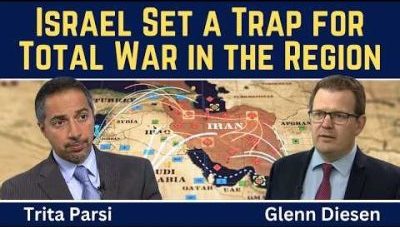
Trita Parsi: Israel Set a Trap for Total War in the Region
or go to
Aletho News Archives – Video-Images
From the Archive
Zionism’s Violent Legacy
By Donald Neff | Washington Report On Middle East Affairs | January 1996
On January 4, 1948, Jewish terrorists drove a truck loaded with explosives into the center of the all Arab city of Jaffa and detonated it, killing 26 and wounding around 100 Palestinian men, women and children.[1] The attack was the work of the Irgun Zvai Leumi – the “National Military Organization,” also known by the Hebrew letters Etzel – the largest Jewish terrorist group in Palestine. The Irgun was headed by Revisionist Zionist Menachem Begin and had been killing and maiming Arabs, Britons and even Jews for the previous ten years in its efforts to establish a Jewish state.
This terror campaign meant that at the core of Revisionist Zionism there existed a philosophical embrace of violence. … continue
Blog Roll
 Aletho News
- Trita Parsi: Israel Set a Trap for Total War in the Region
- Trump’s Iran war is on an Israeli leash
- Saudi oil boss issues global supply warning
- Riyadh Says Its Oil System Is Intact. The Numbers Say Otherwise.
- Trump and Netanyahu Want to “Finish the Job” on Iran
- US ‘one-sided dictation’ not Iran’s beliefs makes rational talks impossible: Baghaei
- Iran’s Next Strike May Not Explode. It Could Shut You Down /Col Doug Macgregor
- Iran: US political targets legitimate if assassinations return
- Iraq shuts key border crossing with Iran under US pressure: Report
- Undersea Internet cables could be targeted in retaliation for attacks on Iran: IRGC deputy chief
- If Americans Knew
- The Israel Lobby’s Changing Fortunes
- AIPAC has become such a political liability that it’s shifting to a more “nimble” approach to buying politicians
- At least 160 Israeli settler attacks in 2 weeks
- Will Gaza’s Ancient Christian Community Disappear Forever?
- Israel’s vision of regional security rests on keeping Arab states weak
- Heidi Levine recounts how Palestinian youths helped save her in settler attack
- DAILY UPDATE: Latest essential news on Palestine, Israel, & region
- Trump’s Intensifying Sabotage of the ICC, for Israel’s Sake
- Israeli military detain US and UK volunteers in West Bank including Democratic NY politician Brad Lander
- Americans at National Conservatism Conference held in Israel this year criticize Israel
- No Tricks Zone
- E-Cars Reduce CO2 Emissions By Only 41% Compared To Internal Combustion Engine Vehicles
- Predictions Made By Renowned Climate Professor Over Past Decades Have Been Proven To Be Poor
- New Study Suggests Large Regions Of The Pacific Ocean Have Been Cooling For The Last 80 Years
- Germany’s Green Energy Debacle: High Energy Costs Force Kahla Porzellan to Close After 182 Years!
- New Study: 50 Years Of The Most Aggressive ‘Net Zero’ Policies Can Only Affect The Global Climate By 0.03°C
- US September “Heat” Was No Record…Many Records Set Decades Ago
- Latest European Green Energy Debacle; Portugal’s Largest Flagship Solar Park Insolvent!
- Green Energy Debacle: German Expert Professor Fritz Vahrenholt Warns Of Severe Economic And Social Consequences
- Two More Paleo Reconstructions Affirm Meters-Higher Sea Levels Across Ireland, Brazil 7000-6000 Years Ago
- New Study: Earth And Venus Surface Warmth Largely Explained By Convection And Lapse Rate, Not CO2 Or Radiation

