German ministry dismisses lawyer for supporting Gaza, rejecting genocide
MEMO | March 4, 2025
https://twitter.com/Melaniebelizi/status/1895904365225058324
How Does Trump Resume Shipments of Arms to the Regime that Started the War?
By Jacob G. Hornberger | FFF | March 5, 2025
Imagine if war had broken out between the United States and Soviet Russia during the Cuban Missile Crisis. Let’s assume that two American cities — New York and Washington, D.C., and two Russian cities —Moscow and St. Petersburg — were destroyed by nuclear missiles before a peace agreement was entered into.
Who would the U.S. mainstream press, the U.S. national-security establishment, and U.S. public officials today be saying started the war?
There is no doubt that the official narrative would be that it was Russia that started the war when it installed its nuclear missiles in Cuba and then refused to remove them. If Russia had not installed those missiles, their argument would be, the U.S. government would not have had to attack and invade Cuba in order to remove them.
But what if someone were to point out that Cuba had the legitimate authority under international law to invite the Russians to install nuclear missiles in Cuba? After all, even though Cuba is only 90 miles away from the United States, it is a sovereign and independent country. As such, it had the authority to install whatever missiles it wanted in its own country.
Nonetheless, even conceding the legalities of the situation, the official U.S. narrative would have been that as a practical matter, Russia started the war by provoking it with its installation of nuclear missiles pointed at the United States from only 90 miles away and its refusal to remove them.
Undoubtedly, it is this type of reasoning that President Trump had in mind when he recently declared that Ukraine, under the presidency of Volodymyr Zelensky, started the Ukraine-Russia war.
But to be more exact, it was the U.S. national-security establishment, in complicity with Zelensky, that started the war by provoking Russia into invading Ukraine, just as it would have been Russia that started the war by provoking the United States into invading Cuba back in 1963.
Provoking war is what U.S. officials were doing when they were violating U.S. promises not to move the old Cold War dinosaur NATO eastward toward Russia after the end of the Cold War. Knowing full well that Russia was objecting to the violation of those U.S. promises, the Pentagon, the CIA, and the NSA used NATO to absorb former members of the Warsaw Pact, which enabled U.S. and German tanks, missiles, armaments, and troops to get ever closer to Russia’s border.
It was President Biden and the U.S. national-security establishment, operating in complicity with Zelensky, that pulled the final trigger to start the war by suggesting that NATO intended to absorb Ukraine, which would enable U.S. and German missiles, tanks, troops, bases, and weapons to be placed on Russia’s border. They knew that Russia would react with an invasion, just as the U.S. would have invaded Cuba had Russia not removed its nuclear missiles from that nation.
What many Americans do not want to confront is the fact that a Russian invasion of Ukraine was precisely what the U.S. national-security establishment wanted, given that this would convert Russia into a renewed Cold War enemy, would avoid a critical examination of the 20-year-long U.S. war in Afghanistan, would “degrade” Russia by having hundreds of thousands of Russian soldiers killed, injured, or maimed, and, it was hoped, would result in the removal of Russian president Vladimir Putin from power and his replacement with a pro-U.S. stooge.
The fact is that Zelensky was not forced to participate in this political game. He chose to do so. He chose to sacrifice his country and his countrymen in order to please U.S. officials by having Ukraine join NATO, the old Cold War dinosaur. If he had chosen differently and declared no intention of having Ukraine join NATO, there would have been no deadly and destructive Russian invasion of his country.
Trump obviously gets this. Even though the U.S. mainstream press and the national-security establishment continue to mindlessly repeat the same tiresome official narrative, their mindsets are quite irrelevant. What is relevant is Trump’s mindset, which clearly sees Zelensky, especially with his NATO machinations, as having started the war.
Today, there are many people, including Zelensky, who are exhorting Trump to cancel his suspension of U.S. arms to Ukraine. But how can Trump do that, given his conviction that Ukraine was the one that started the war? How could he possibly justify to himself helping a regime that started the war to kill soldiers in a regime that did not start the war?
Something is smelling really bad among the peace brokers of Ukraine
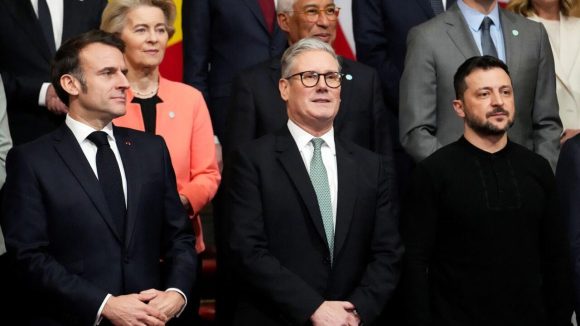
By Martin Jay | Strategic Culture Foundation | March 5, 2025
You don’t have to be a genius to work out that if you exclude Russia and just look at the three groups who are vying for war, or whining for peace, that no one is being very honest about their intentions. Previously, I tackled head on how Trump is not being very honest when he talks of peace as he has the means to enforce it at the drop of a hat, but chooses to drag his feet and hold out for deals. This is not simply Trump Basic who we all know well – where’s the deal? – but also Trump playing out a longer game with Russia, looking at where the sweet spot could be. Trump’s tour de force is always to create a crisis and then position himself to be the only person on the planet who is capable or willing to resolve it. His personality is always paramount to everything.
And so the stunt in the White House needs to be seen in the correct context. Zelensky was not honest in coming to the White House in the first place as it was believed that he was to meet Trump and JD Vance to sign a mineral deal which he agreed to and retracted from signing a number of times leading up to the visit. This became apparent when he met with Trump behind close doors and so the Plan B was to lower Zelensky into a trap and make him look ungrateful, arrogant and entirely impossible to work with. But what’s the real story behind Zelensky’s decision? Again, we see the puppet Zelensky having his strings pulled by others. Is it a coincidence that just days earlier British PM Keir Starmer arrives in the White House where, just a matter of hours earlier he announces in the British parliament that defence spending will be increased, in line with Trump’s demands for European members of NATO? Was it merely that Starmer needed to show some goodwill to Trump even to get the meeting, or was Starmer preparing for choppier waters to come, when Trump would finally hear the rumours? According to some reports, Zelensky has sold all the mineral rights already to the UK, so he was playing a game with Trump all along.
But there are more lies and games to come.
If we look at Zelensky’s European partners can we honestly say they are being honest with the public which elected them? While Macron announces a no-fly zone rule, Starmer tells his own people that Britain will send its own troops to Ukraine. Has the world gone mad, or are these leaders actually serious about their intentions? How many of UK soldiers, airmen and sailors could Starmer actually send out of a total of barely 150,000 in uniform? In reality, probably only a third at best. And presumably this move would be without the support of the U.S., who would keep out of it? If that isn’t the craziest batshit idea, there is more madness to follow. Zelensky, since arriving in the UK for the emergency meeting of mostly EU leaders who support him – including Erdogan of Turkey – has started saying some very odd things to the press, while he picks up these huge checks for military support. He keeps talking about getting a peace deal with Russia.
As Starmer prepares to send British troops to Ukraine, he continues to jail people for posting nasty messages in Facebook, in particular when they slur his own party members – an irony that only Joe Stalin would appreciate, as it’s straight from the dictators’ handbook. Starmer preaches about supporting a free and democratic Ukraine while persecuting anyone who doesn’t agree with his views or uses social media to complain about the state of Britain. In reality it’s one despot supporting another and it’s hard to see how many days this could last with body bags coming back to the UK while pensioners get plain clothed policeman come to their houses and threaten them with imprisonment – or even more cuts to the poor. Of course the body bags will be hidden by a tawdry deal struck between the government and the British press, just as so many ‘no-go zones’ were agreed beforehand. But citizen journalism will call them out as the families won’t stay quiet. Starmer and Macron seem to think that just as Churchill pulled a few stunts to draw the U.S. into the Second World War, that European soldiers on Ukrainian soil will override any agreement that the U.S. and Russia could pull off. The move by Starmer is so idiotic that it leaves many wondering whether he is being controlled by Mossad or the Obamas, comes from the same camp which so fabulously made so many poor predictions from the beginning – namely Russian sanctions.
There is only one conclusion to it, although it leaves Trump and Putin with two options, neither particularly edifying. One, to let the Europeans go ahead with their stunt and watch the collapse of NATO as a credible organization worthy of its funding; or two, to pull the rug out from under the feet of Zelensky and force presidential elections, where of course Trump will install his own puppet to replace the incumbent one. The huge mistake Starmer is making is that he is assuming British troops need not be sent to the front line, but can encircle Kiev to show political support for Zelensky. Yet, each day Russian troops will gain ground and move closer to the Ukrainian capital. For Trump to attempt regime change will be harder of course with a strong contingent of European soldiers on the ground as the State Department and all its dirty tricks doesn’t normally encounter such resistance. Is Zelensky’s ‘we want peace’ mantra a trick so that time can be bought to re-arm? Likely. Monty Python would have had a lot of fun with these clowns. Blessed are the peace brokers.
‘Neocons Should Be Unhappy’ as Trump Calls Out NATO, Pushes for Peace – Analyst
By Oleg Burunov – Sputnik – 05.03.2025
US President Donald Trump pledged to go ahead with his campaign of “swift and unrelenting action” in reorienting the country’s economy, immigration and foreign policy in his address to Congress.
“It seems he [Trump] wants more and more peace, urging Zelensky to conclude a ceasefire agreement and sign the US-Ukraine minerals deal,”Lt. Col. Karen Kwiatkowski, a retired US AirForce official and former analyst for the US Department of Defense, told Sputnik.
Kwiatkowski stressed that Trump didn’t talk about Europe or NATO other than noting that they depend on the US and use American money, “and yet they seem not to want peace.”
She noted that peace means prosperity for the working people and younger generations rather than those not working and the government.
“It makes sense after watching his speech that he is most popular among the under 40 demographic in the United States according to current polling,” the ex-Pentagon analyst pointed out.
Former DoD officer David Pyne, in turn, said in an interview with Sputnik that “Trump had no reservations about ending all US military assistance to Ukraine” in order “to pressure the Zelensky regime to accept a cease-fire and the peace deal the US is working to negotiate with Russia.”
78% of Americans support Trump’s effort to negotiate an end to the conflict, Pyne stressed. “Even while Democrat leaders continue to support feeding Ukrainian soldiers into the meat grinder.”
Trump will continue to transform the US relationship with Russia “from one of adversaries to a new historic era of strategic partnership,” the analyst believed.
CIA confirms suspension of intelligence sharing with Ukraine
RT | March 5, 2025
Washington has brought all intelligence sharing with Ukraine to a halt, CIA Director John Ratcliffe confirmed to Fox Business on Wednesday. The development came just a day after several American media outlets reported that the US had suspended military assistance, including both the purchase of new weapons and shipments already in progress.
When asked by host Maria Bartiromo whether the US had “cut off” its cooperation with Ukraine, Ratcliffe said that US President Donald Trump had “asked for a pause” to see if Kiev was ready to work toward resolving the conflict with Russia.
“President Trump had a real question whether… Zelensky was committed to a peace process,” Ratcliffe said, claiming that the halt to assistance and information sharing contributed to Zelensky publicly stating that he was “ready for peace.”
On Tuesday, the Ukrainian leader said that Kiev was ready for an immediate POW release and a temporary ceasefire with a “ban on missiles, long-ranged drones, bombs on energy and other civilian infrastructure.” Last week, Trump told reporters that Zelensky needed to be ready for an immediate ceasefire before he could be welcomed back to the US following their Oval Office debacle on Friday.
”On the military front and on the intelligence front, the pause… allowed that to happen,” Ratcliffe said, adding that he expected the US to resume cooperating with Ukraine soon.
The halt to intelligence sharing was “selective,” Sky News reported on Wednesday, citing a Ukrainian source. However, the move made it difficult for Ukraine to launch attacks against targets deep inside Russia, the source said.
Washington reportedly also barred its allies from sharing with Ukraine, Financial Times reported on Wednesday, citing sources familiar with the matter. Recipients with assets inside Ukraine itself were likely to continue to pass on relevant information, the paper said, but Kiev would likely miss out on time-sensitive and high-value intelligence it needed to strike moveable Russian targets.
Trump and Zelensky had a heated verbal exchange on Friday, when the US president accused the Ukrainian leader of ingratitude and “gambling with World War III” by refusing to work towards a halt to hostilities.
Several US outlets, including Bloomberg, the New York Times, and CNN, reported that Trump had paused military aid after the fall out. According to the NYT, the president’s order affected more than $1 billion in “arms and ammunition in the pipeline and on order.”
Moscow commented on the reports by saying that if the US were to suspend supplies altogether it would “probably be the best contribution to the cause of peace.”
Mennonite Community in Texas Is ‘Frustrated’ by Media Coverage of Measles Outbreak
By Suzanne Burdick, Ph.D. | The Defender | March 4, 2025
Many Mennonite community members in West Texas feel “frustrated” and “targeted” by mainstream media coverage of the current measles outbreak in Gaines County, Texas, Tina Siemens, a Mennonite business owner and award-winning author told The Defender in an exclusive interview today.
“The media spins it as there’s a large panic in our community. I have not seen that — and I get out and about in my community,” said Siemens, an immigrant who has lived in the Seminole, Texas, area since 1977. Seminole is the county seat for Gaines County.
“There’s some frustration, especially that it is so much targeted just to the Mennonites.”
The measles outbreak in West Texas — particularly in Gaines County — garnered mainstream media attention after the Texas Department of State Health Services (Texas DSHS) last week reported what it called “the first death from measles in the ongoing outbreak in the South Plains and Panhandle regions.”
Texas DSHS spokesperson Lara Anton on Feb. 26 told The Associated Press the outbreak’s main concentration of cases has been a “close-knit, under-vaccinated” Mennonite community.
But Siemens said that’s not a fair characterization. “It’s not just Mennonites that have the measles. There are other groups that have measles, but the Mennonites are an easy target.”
The Mennonites in West Texas mostly live on farms where they grow crops, including peanuts and cotton.
Siemens speaks out publicly because she feels called to be a “bridge builder” between immigrants and non-immigrants, she said. She wants the societal contributions of immigrant groups like the Mennonites to be appreciated — and for immigrants not to be targets of blame or poor treatment.
She detailed an instance of a Mennonite mother receiving “unfair” treatment. “I had a very dear lady message me last night,” Siemens said.
The woman was a Mennonite mother who had recently gone to her doctor’s office for a regular checkup.
The mother told Siemens the office staff demanded that she put on a mask right away because they could tell from her dress and accent that she was a Mennonite from Seminole, where the measles outbreak was strongest.
Meanwhile, other people who came into the office who did not look or sound like Mennonites were not instructed to wear a mask.
Siemens said the mother was then verbally “battered” by medical staff who told her, “You need to vaccinate. You need to vaccinate. You’re not a good mom if you’re not vaccinating.”
That kind of treatment is disrespectful and unfair, Siemens said.
Siemens said it’s not just the unvaccinated that are getting measles in West Texas. On Feb. 21, the Seminole Sentinel ran an article under the headline, “Measles Outbreak Now Includes Vaccinated Population.”
Parents who choose not to vaccinate kids aren’t uneducated
According to Siemens, “The media is portraying the unvaccinated as uneducated” and reporting that because they decline the vaccine, “they are the ones that are carrying all of the measles outbreak.”
“That is just not the truth,” she said.
The parents she knows who chose not to have their children receive the measles-mumps-rubella (MMR) vaccine studied the vaccine’s risks, Siemens said. “They did more reading than those who say, ‘My doctor says [to get the shot], and I’m going to listen to my doctor.’”
There is evidence of serious health risks linked to the MMR vaccine. For instance, researchers in 2004 found that boys vaccinated with their first MMR vaccine on time were 67% more likely to get diagnosed with autism compared to boys who got their first vaccine after their 3rd birthday.
The Centers for Disease Control and Prevention (CDC) recommends that children receive their first dose of the MMR vaccine between 12 and 15 months old.
Research also shows that the MMR vaccine causes febrile seizures, anaphylaxis, meningitis, encephalitis, thrombocytopenia, arthralgia and vasculitis.
Over the past 10 years, there have been 41 deaths following MMR or MMRV vaccination reported in the Vaccine Adverse Event Reporting System (VAERS).
Reports in VAERS are not necessarily verified and vary in completeness. However, underreporting is a known and serious disadvantage of the VAERS system. Researchers previously determined that the number of injuries reported to VAERS is less than 1%.
Additionally, the MMR vaccine contains virus levels significantly higher than those originally safety tested in the version of the vaccine approved by the U.S. Food and Drug Administration (FDA) — and the current vaccine has never been tested for safety, according to the legal testimony of Dr. David Kessler, former head of the FDA.
Siemens said she was vaccinated when she entered the U.S. in 1977 as an immigrant. “Did my parents study what was in the vaccines? No, they didn’t. But in 1977 versus 2025, that spectrum has changed a lot.”
Vaccines today are not what they were in 1977, she said. “And thanks to COVID, the trust has just diminished to almost non-existence.”
What’s most important is people’s right to choose
Siemens has worked with “those who choose to vaccinate and those who choose not to vaccinate … They have equal rights in our country.”
What’s most important is that we respect people’s right to choose for themselves and their children. “The freedom of choice is powerful,” she said.
Siemens has assisted the local health department by looking over their translations of community announcements informing people of measles testing sites and the availability of vaccines.
“The Mennonites in Seminole, Texas, all speak German,” she said. “There’s two dialects: a high German, which is the written language, and the low German, which is more the spoken language.”
The CDC today announced on X that it is now on the ground in Texas, too.
The CDC is partnering with the Texas DSHS to respond to the state’s measles outbreak.
Siemens said she has been in touch with the parents of the child who died after testing positive for measles. She confirmed that the child who died was a 6-year-old girl and that the family is part of the “broader community” of Gaines County.
Siemens also said that details surrounding the child’s death have been shared with Health and Human Services Secretary Robert F. Kennedy Jr. and will later be made public.
“This story is going to be told in much more detail when the time is right.” For now, she said, “Just know that this family is being loved on by our community.”
Related articles in The Defender
- Media Panic Over Measles Distracts From Real Threats to Kids’ Health and Safety
- Texas Reports Death of Child Who Tested Positive for Measles, But Releases Few Details
- MMR Vaccine Debate Heats Up as Media Claim ‘Vaccine Hesitancy’ to Blame for Recent Outbreaks
- A New York County Pays $750,000 to Families Whose Unvaccinated Kids Were Barred From School During Measles Outbreak
This article was originally published by The Defender — Children’s Health Defense’s News & Views Website under Creative Commons license CC BY-NC-ND 4.0. Please consider subscribing to The Defender or donating to Children’s Health Defense.
Israel’s Lobby Launches Preemptive War on Thomas Massie
By James Rushmore | The Libertarian Institute | March 4, 2025
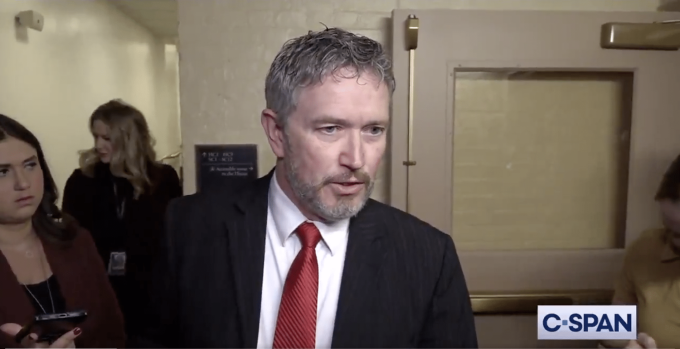
Two weeks ago, Kentucky Senator Mitch McConnell announced that he would not seek re-election in 2026. McConnell’s announcement prompted Congressman Thomas Massie to share a poll asking his Twitter followers if he should run for McConnell’s open Senate seat, seek the governorship in 2027, or remain in the House.
Naturally, Massie’s followers were very enthusiastic about the former idea. But the prospect of a Senator Thomas Massie already has the Israel lobby on high alert.
Republican Jewish Coalition CEO Matt Brooks told Jewish Insider, “If Tom Massie chooses to enter the race for US Senate in Kentucky, the RJC campaign budget to ensure he is defeated will be unlimited.” Back in May 2023, Massie accused the RJC of taking “[the] neocon position that US taxpayers should fund the war in Ukraine.” The RJC responded by attacking Massie for, among other things, opposing U.S. funding for the Iron Dome and voting against a resolution condemning the Boycott, Divestment and Sanctions movement. Meanwhile, Rabbi Shlomo Litvin of the Kentucky Jewish Council accused Massie of “[going] out of his way to troll Jews,” and Melanie Maron Pell of the American Jewish Committee suggested that Massie demonstrates “outright hostility with the Jewish community.”
It should come as no surprise that the Israel lobby is doing everything in its power to torpedo any talk of a Thomas Massie Senate campaign. Massie is the only member of Congress who consistently opposes the ongoing wars in both Gaza and Ukraine. Shortly after the October 7 terrorist attack, Massie was the sole Republican congressman to vote against House Resolution 771, which “[reaffirmed] the United States’ commitment to Israel’s security,” “[urged] full enforcement of United States sanctions against Iran,” and declared that the U.S. “stands ready to assist Israel with emergency resupply and other security, diplomatic, and intelligence support.”
In November 2023, he voted against House Resolution 6126, which provided Israel with $14.5 billion in military aid. In April 2024, he opposed House Resolutions 8034 and 8035, which allocated $95 billion in foreign aid to Ukraine, Israel, Taiwan, and other Indo-Pacific allies. (Donald Trump declined to oppose that package, all but assuring its passage.) In January 2025, Massie voted present on the Illegitimate Court Counteraction Act, which would impose sanctions against any person who aids the International Criminal Court in its efforts to “investigate, arrest, detail, or prosecute” Israeli Prime Minister Benjamin Netanyahu and Minister of Defense Yoav Gallant.
Massie is keenly aware of the enormous power that the Israel lobby wields on Capitol Hill, and unlike other congressional Republicans, he is willing to publicly acknowledge the extent of its influence. During an interview with Tucker Carlson in June 2024, he noted that the American Israel Public Affairs Committee assigns handlers to every House Republican, dispatching them to influence how lawmakers vote. The previous month, the United Democracy Project, a super PAC affiliated with AIPAC, spent at least $300,000 on TV ads tying Massie to Iran, Hamas, and Hezbollah. Their efforts were in vain, as Massie won his primary with three-quarters of the vote.
Whether or not Massie can win a Senate primary remains to be seen. The only Republican candidate to have formally entered the race at this point is former Kentucky Attorney General Daniel Cameron, a McConnell protégé who lost the 2023 gubernatorial election. Cameron is already trying to distance himself from McConnell; he recently criticized the former leader of the Senate Republican Conference for opposing the confirmations of Pete Hegseth, Tulsi Gabbard, and Robert F. Kennedy Jr., and he even signaled his opposition to further aid to Ukraine. But in November 2023, shortly after losing his bid for governor, Cameron joined twenty-five other Republicans attorneys general in signing a letter urging Joe Biden and congressional leaders to provide “military resources, intelligence, and humanitarian assistance to Israel as she defends herself against those seeking her destruction.”
Congressman Andy Barr may also launch a bid for McConnell’s Senate seat. Barr believes that “enemies of Israel are enemies of the United States.” Just last month, he declared that he “[stands] fully with Israel in its mission to wipe every last Hamas terrorist off the face of the earth.” Given that AIPAC was the top contributor to his campaign committee in 2024, Barr’s commitment to the Israeli cause is perfectly understandable.
If he runs, Massie would be sure to receive an endorsement from Kentucky Senator Rand Paul, who has unfortunately proven incredibly disappointing on the Gaza front. In November, Paul voted against three resolutions intended to block $20 billion in weapons sales to Israel. In January, he backed the ICC sanctions bill.
But a Donald Trump endorsement will no doubt prove to be the most important variable in shaping the outcome of the race. While Massie’s decision to endorse Ron DeSantis during the 2024 Republican presidential primaries may have hurt his standing with Trump, it is worth remembering that Trump offered former critic and one-time Evan McMullin supporter J.D. Vance his endorsement during the 2022 Ohio Senate primary. And the rest is history.
In December 2023, Senate Majority Leader Chuck Schumer accused Massie of anti-Semitism after he shared a meme correctly noting that Congress is more interested in Zionism than American patriotism. Expect more attacks like those, this time from pro-Israel Republicans, should the seven-term congressman enter the race to succeed McConnell. Despite those challenges, there is no doubt that a Thomas Massie Senate campaign has the potential to steer U.S. foreign policy in a less insane direction.
EU’s von der Leyen unveils $840bn rearmament plan
RT | March 4, 2025
European Commission President Ursula von der Leyen has proposed that member states spend about $840 billion on defense to strengthen their military self-sufficiency – an amount more than double total EU defense expenditure in 2024.
In a statement on Tuesday, the EU chief cited the “most dangerous of times” and the “grave” threats facing the bloc as reasons to assume greater responsibility for its own security.
“We are in an era of rearmament,” von der Leyen declared, adding that she had sent a letter outlining her ‘ReArm Europe Plan’ to member state leaders ahead of the European Council meeting later this week.
“ReArm Europe could mobilize close to €800 billion ($840 billion) for a safe and resilient Europe,” she said. “This is a moment for Europe. And we are ready to step up.”
Official data shows the bloc’s total defense spending reached an estimated $344 billion last year, marking an increase of more than 30% since 2021.
The new plan includes $158 billion in loans available to member states to invest in what von der Leyen described as “pan-European capability domains,” including air and missile defense, artillery systems, missiles and ammunition, drones, and anti-drone technology. It will also address other needs, from cybersecurity to military mobility.
The proposed five-part strategy is also designed to address the “short-term urgency” of supporting Ukraine, the EU chief said.
Von der Leyen did not specify a detailed timeline, but emphasized that defense spending must increase “urgently now but also over a longer period over this decade.”
Her announcement came just hours after news agencies reported on Monday that US President Donald Trump had ordered a pause on military aid to Ukraine. Trump has repeatedly accused Ukrainian leader Vladimir Zelensky of refusing to negotiate peace with Russia and exploiting US support for his own gain. Following Zelensky’s public clash with Trump and US Vice President J.D. Vance on Friday, the US president said America would no longer tolerate the Ukrainian leader’s attitude.
The EU has historically depended significantly on the US for its security, primarily through the North Atlantic Treaty Organization (NATO). However, the Trump administration has recently signaled a major policy shift, urging European nations to take the lead in their own defense, as well as Kiev’s. Last month, Pentagon chief Pete Hegseth said that Washington intended to refocus its military priorities on countering China, warning the EU not to assume that American forces would remain in the region indefinitely.
Trump has previously warned that under his leadership the US would not defend NATO countries that fail to meet their financial commitments. He has floated the idea of raising mandatory defense spending by members to 5% of GDP, though none – including the US – currently meet that threshold.
His push for increased defense spending has drawn mixed reactions, with some EU officials questioning its economic feasibility. European officials have occasionally raised concerns that Trump could pull the US out of the organization.
Russian Deputy Foreign Minister Aleksandr Grushko recently warned that NATO appears to be preparing for war with Moscow, arguing that its current course poses a threat both to Russia and to overall security architecture.
Kremlin responds to reports of Trump move on Ukraine aid
RT | March 4, 2025
Halting US military aid to Ukraine would be a significant step toward resolving the conflict, Kremlin spokesman Dmitry Peskov stated on Tuesday.
Several US media outlets have reported that Washington has suspended the purchase of new weapons for Ukraine. Several reports have also suggested that US President Donald Trump has also ordered a halt to shipments of military aid.
Speaking to journalists on Tuesday, Peskov stated that while the details of these reports have yet to be confirmed, such a move could prove to be a significant step towards de-escalation.
“It is obvious that the US has been the main supplier” of military aid to Kiev, Peskov noted, adding that if the US were to relinquish this role or suspend supplies altogether it would “probably be the best contribution to the cause of peace.”
The spokesman said that if the US had indeed stopped all military aid to Ukraine, it would mean that Kiev would effectively lose the vast majority of its ammunition, equipment and intelligence.
“If this really is so… then perhaps, without indulging in excessive optimism, we can modestly hope that this could encourage the Kiev regime to lean towards attempts to resolve the situation through peaceful means,” Peskov told Rossiya 1 TV journalist Pavel Zarubin.
According to Bloomberg, Trump has ordered a freeze on all military aid to Ukraine, which includes equipment already designated for delivery, as well as weapons in transit on aircraft and ships or waiting in transit areas in Poland. The New York Times reported that the president’s order, which has already taken effect, affects more than $1 billion in “arms and ammunition in the pipeline and on order.”
Meanwhile, the Washington Post claimed that in addition to stopping weapons shipments to Kiev, Washington is also considering the termination of intelligence sharing and training for Ukrainian troops and pilots.
Trump’s reported order comes after a public spat with Ukrainian leader Vladimir Zelensky in the White House on Friday. During the meeting, Trump accused Zelensky of ingratitude and “gambling with World War III” by refusing to work towards a halt to hostilities.
After the heated exchange, Zelensky stated on Sunday that peace between Ukraine and Russia was still “very, very far away,” prompting even more ire from Trump, who said it was “the worst statement that could have been made” by the Ukrainian leader.
Trump warned that “America will not put up with it for much longer,” and suggested that Zelensky “doesn’t want there to be Peace as long as he has America’s backing.”
Zelensky reverses hardline position on peace talks
RT | March 4, 2025
Ukrainian leader Vladimir Zelensky has said that Kiev is ready to engage in peace negotiations with Russia, to be brokered by US President Donald Trump. The statement comes after the White House reportedly stopped all military aid to Kiev following a disastrous meeting in the Oval Office between the two leaders, for which US officials have demanded Zelensky apologize.
Zelensky made a concession-filled post on X on Tuesday, saying his public feud with Trump in the Oval Office was “regrettable.”
“We are ready to work fast to end the war,” Zelensky wrote. He has frequently said in the past that Ukraine would fight as long as necessary and that peace talks could only happen on Ukraine’s terms.
He proposed the release of prisoners and establishing “truces” on both the air and sea fronts, echoing suggestions by UK Prime Minister Keir Starmer and French President Emmanuel Macron in a meeting with him in London on Sunday. The French-UK plan envisages a temporary, month-long “truce in the air, on the seas, and on energy infrastructure.” Moscow has repeatedly ruled out a temporary ceasefire with Kiev, insisting on a permanent, legally binding peace deal that addresses the root causes of the conflict.
On Monday, Trump reportedly ordered a temporary halt to all US military aid to Ukraine, aiming to pressure Zelensky into negotiations to end the conflict with Russia. An unnamed senior administration official told Fox News that military assistance would stay suspended until the Ukrainian leadership demonstrates a genuine commitment to peace talks.
“Ukraine is ready to come to the negotiating table as soon as possible to bring lasting peace closer,” Zelensky continued on X, offering his appreciation for Washington’s support. “My team and I stand ready to work under President Trump’s strong leadership to get a peace that lasts,” he added.
“’Ready’ is good, it is positive,” Kremlin spokesman Dmitry Peskov reacted to the statement.
During the Friday meeting, Trump accused Zelensky of ingratitude and “gambling with World War III” by refusing to work towards a halt to hostilities.
On Sunday, Zelensky told reporters that “an agreement to end the war is still very, very far away, and no one has started all these steps yet.” Trump condemned his statement on social media, promising that “America will not put up with it for much longer.”
Russian President Vladimir Putin has indicated Moscow’s readiness to resolve the Ukraine conflict through peaceful means. He emphasized Russia’s aim of establishing an international system that ensures a balanced and mutual consideration of interests, creating a long-term, indivisible European and global security framework.
Let’s Not Forget JFK’s Attitude Toward Russia
By Jacob G. Hornberger | FFF | March 4, 2025
In the aftermath of the tirade at the White House among President Trump, Vice-President Vance, and Ukrainian President Zelensky, both conservatives and liberals (i.e., “progressives” or leftists) are going ballistic over Trump’s friendly attitude toward Russia. They are pointing out that since at least the end of World War II, the official attitude of the U.S. government has always been that Russia is to be considered a threat to U.S. “national security” as well as an official enemy, rival, opponent, or competitor of the United States. They say that Trump’s positive overtures to Russia are unprecedented.
For example, consider a March 2 article in the New York Times entitled “Trump Is Doing Real Damage to America” by David French, which states that after World War II, “both parties saw the Soviet Union as the grave national security threat it was. For decades, both parties were more or less committed to a strategy of containment that sought to keep Soviet tyranny at bay.” French also suggests that America’s “fundamental identity” lies to this very day in a continued commitment to NATO and a continuous antipathy toward Russia.
French’s mindset is pretty much mirrored in an op-ed in the Wall Street Journal in a March 3 article entitled “Trump’s Embrace of Russia Rocks NATO Alliance” by Daniel Michaels. The article states: “The American president’s embrace of Russia, an adversary that has worked for years to undermine U.S. global leadership, runs counter to decades of Western policy. The U.S. and its allies founded the North Atlantic Treaty Organization 75 years ago as protection against Soviet Russia.”
There is one notable omission from both articles, however, an omission that occurs in other articles along these same lines in the mainstream press. That omission is President John F. Kennedy and, specifically, Kennedy’s move toward peaceful, friendly, and normal relations with Soviet Russia and, for that matter, with the rest of the communist world.
Why would members of the mainstream press fail to point out this one important exception to the official policy of perpetual hostility and antipathy toward Russia? After all, they have to be familiar with Kennedy’s June 10, 1963, commencement address at American University — a speech that became known famously as Kennedy’s Peace Speech.
My hunch is that the reason the mainstream press omits this major exception to its official anti-Russia historical narrative is twofold: (1) It would cause them to have to explain why Kennedy was trying to change America’s direction, something that the mainstreamers would prefer not to do and (2) It would cause them to have to address the uncomfortable subject of the JFK assassination, something the mainstream press has always been loathe to do.
By the time JFK delivered his speech, he had achieved a “breakthrough’ that enabled him to see that the Cold War was just one great big racket, one that was not only extremely dangerous but also one that was being used to justify the conversion of the federal government from its founding system of a limited-government republic to a national-security state, a totalitarian type of system in which the federal government wields omnipotent powers, including assassination, torture, and indefinite detention. He had achieved this breakthrough after experiencing the national-security establishment’s perfidy in the Bay of Pigs fiasco, its advocacy of a surprise first-strike nuclear attack on Russia, its infamous Operation Northwoods proposal, and its highly dangerous and irresponsible actions during the Cuban Missile Crisis.
To get a sense of the dramatic and revolutionary shift JFK was taking America, it is necessary to read or listen to the entire speech, which can be done here. To get a sense of why there was so much anger, hatred, and distrust for Kennedy within the U.S. government and the mainstream press, consider the following excerpts from his speech:
I also believe that we must reexamine our own attitude–as individuals and as a Nation–for our attitude is as essential as theirs. And every graduate of this school, every thoughtful citizen who despairs of war and wishes to bring peace, should begin by looking inward–by examining his own attitude toward the possibilities of peace, toward the Soviet Union, toward the course of the cold war and toward freedom and peace here at home.
First: Let us examine our attitude toward peace itself. Too many of us think it is impossible. Too many think it unreal. But that is a dangerous, defeatist belief. It leads to the conclusion that war is inevitable–that mankind is doomed–that we are gripped by forces we cannot control.
We need not accept that view. Our problems are manmade–therefore, they can be solved by man. And man can be as big as he wants. No problem of human destiny is beyond human beings. Man’s reason and spirit have often solved the seemingly unsolvable–and we believe they can do it again.
I am not referring to the absolute, infinite concept of peace and good will of which some fantasies and fanatics dream. I do not deny the value of hopes and dreams but we merely invite discouragement and incredulity by making that our only and immediate goal….
So let us persevere. Peace need not be impracticable, and war need not be inevitable. By defining our goal more clearly, by making it seem more manageable and less remote, we can help all peoples to see it, to draw hope from it, and to move irresistibly toward it.
Second: Let us reexamine our attitude toward the Soviet Union….
No government or social system is so evil that its people must be considered as lacking in virtue. As Americans, we find communism profoundly repugnant as a negation of personal freedom and dignity. But we can still hail the Russian people for their many achievements–in science and space, in economic and industrial growth, in culture and in acts of courage.
Among the many traits the peoples of our two countries have in common, none is stronger than our mutual abhorrence of war. Almost unique among the major world powers, we have never been at war with each other. And no nation in the history of battle ever suffered more than the Soviet Union suffered in the course of the Second World War. At least 20 million lost their lives. Countless millions of homes and farms were burned or sacked. A third of the nation’s territory, including nearly two thirds of its industrial base, was turned into a wasteland–a loss equivalent to the devastation of this country east of Chicago….
I am taking this opportunity, therefore, to announce two important decisions in this regard.
First: Chairman Khrushchev, Prime Minister Macmillan, and I have agreed that high-level discussions will shortly begin in Moscow looking toward early agreement on a comprehensive test ban treaty. Our hopes must be tempered with the caution of history–but with our hopes go the hopes of all mankind.
While JFK did not formally declare an end to the Cold War, every official within the Pentagon, the CIA, and the NSA — as well as their Operation Mockingbird assets within the mainstream press — fully understood that that was the import of his Peace Speech. Thus, it is not difficult to see why U.S. officials deemed Kennedy to be a grave threat to “national security.” The president who they considered to be a naive, incompetent, traitorous womanizer was not only taking America down a road to communist defeat in the Cold War, he was also implicitly challenging the need for a totalitarian-like national-security state for America. JFK’s Peace Speech was effectively a declaration of war by the executive branch of the U.S. government against the national-security branch.
JFK’s Peace Speech left the national-security establishment with a deeply discomforting choice: Sit back and let Kennedy take the country down or keep America “safe” by eliminating Kennedy. See FFF’s book JFK’s War with the National Security Establishment: Why Kennedy Was Assassinated by Douglas P. Horne, who served on the staff of the Assassination Records Review Board and JFK and the Unspeakable: Why He Died and Why It Matters by James W. Douglass. Also see The Kennedy Autopsy and An Encounter with Evil by Jacob Hornberger.
Do you see why the mainstream press would prefer to airbrush John Kennedy’s decision to end the Cold War racket and move America toward peaceful and harmonious relations with Russia out of America’s history? If they include that major exception in their official historical narrative, they would have to explain the reasons for Kennedy’s decision as well as delve into the national-security establishment’s motive for eliminating him. They then have to explain how his assassination restored things to “normal” — with the continuation of the Cold War, the war in Vietnam, which ended up sacrificing more than 58,000 American men for nothing, the never-ending support of the Cold War dinosaur known as NATO, and the perpetual anti-Russia mindset that pervades America today.
Featured Video
New positive ivermectin evidence
or go to
Aletho News Archives – Video-Images
From the Archives
Fanatical Followers of the Covid Regime: A Jim Jones-Style Cult?
By Professor Roger Watson and Dr. Niall McCrae | The Daily Sceptic | November 15, 2021
As scholars at leading British universities over recent decades, we witnessed the replacement of critical thinking and debate by narrative: facts are discrimination and scientific method is imperialism; truth, instead, is derived from ‘progressive’ values. This educational trend may be a major contributory factor to the ease in which society has been inculcated to the Covid ‘new normal’ of masking, testing, and repeated doses of vaccines for a disease of similar risk to severe influenza.
One doesn’t need much critical reasoning to observe the flawed logic of some vaccination enthusiasts, such as people who respond to experiencing any side effects, however debilitating, by saying “at least I know it’s working”, or, after contracting the disease despite their promised inoculation (over 90% effective, according to initial drug company claims), “I’d have been worse off without the jab.” … continue
Blog Roll
 Aletho News
- EU Council Advances Chat Control 2.0 Scanning Proposal
- Ex-Greek MEP files complaint against Israeli spyware firm over alleged Pegasus surveillance
- Troubling ideas throughout the Torah, Talmud, Mishneh Torah and Tanya
- ‘Grave, alarming’: Iran mission on Trump’s UNGA ‘annihilation’ threats
- Najaf airport to reopen to Iranian flights within 24 hours: Ambassador
- From ‘How Will This End For Iran’ to ‘When America Walks Away’: A tale of two Economist covers
- Tehran blasts ‘baseless’ speculation linking Iran to alleged bomb plot at UK air base
- The Rise And… Rise Of ‘Color Revolutions’
- The Coming GOP Bloodbath?
- Arctic Scare Stories Melt Away
- If Americans Knew
- Netanyahu Asked UAE Leader to Deny Report on Oct. 7 Warning in Secret Visit, Sources Say
- CNN Chief Int’l Correspondent Clarissa Ward on Journalists in Gaza
- Democratic Party Consultants Surround Troy Jackson with Pro-Israel Donors
- Christian Leader Responds To Netanyahu’s Claims Regarding Palestinian Christians
- In Gaza, ‘Whoever Survives the Bombing Won’t Survive the Rubble’
- Israel kills more Palestinians, amid push to resettle Gaza – Daily Update
- Israel forces Gazans to live in constant peril – Daily Update
- Deconstructing Netanyahu’s pants-on-fire UN rant – Daily Update
- Trump betrayed voters with his campaign lies and prioritized a foreign country once he took office
- Netanyahu calls Israel’s war in Gaza ‘opposite of genocide’ in UN speech to near-empty hall
- No Tricks Zone
- New Study: Earth And Venus Surface Warmth Largely Explained By Convection And Lapse Rate, Not CO2 Or Radiation
- 2025 Nature Paper Claiming Worsening Global Drought Gets RETRACTED …Heavily Flawed
- New Study: ‘Global Drought Shows No Detectable Recent Acceleration Under Climate Warming’
- Economic Masterminds: German Socialists Suggest Taxing Productivity Gains Stemming From Using AI
- The South China Sea Has Not Been Cooperating With The Climate Change Narrative
- Energy Crisis: Germany Enters Heating Season With Historically Low Gas Reserve Fill Levels
- New Study: The Antarctic Ice Sheet Gained Mass From 2020-2024 Due To Staggering Snow And Ice Accumulation
- Study: Ocean Heating Rates From Thousands Of Years Ago ‘Dwarf’ Modern Ocean Heating Rates
- Climate Extremists Target, Attack Large-Scale Power Grid Infrastructure In Germany!
- New Study: Antarctic Ice Melt Has Contributed Less Than 1 Centimeter To Sea Level Rise In The Last 30 Years

