Hamas never agreed to lay down arms in truce talks: Official
Press TV – January 29, 2026
A senior Hamas official says the Palestinian resistance group never agreed to surrender its weapons in the course of indirect ceasefire talks that brought an end to the Israeli regime’s two-year-long genocidal war on the Gaza Strip.
Mousa Abu Marzook made the remarks in an interview with Qatar-based Al Jazeera television network on Wednesday, two days after US President Donald Trump called on Hamas to follow through on what he called the group’s commitment to disarm.
“Hamas has never agreed to hand over its weapons in any form. Hamas agreed to a framework plan to end the war. The issue of handing over weapons was not discussed at all,” Marzook said.
He also emphasized that all arrangements planned in Gaza must happen with Hamas’ consent.
The US-backed Gaza ceasefire deal took effect on October 10, 2025. The first phase began with the exchange of Israeli captives for Palestinian abductees, as well as the withdrawal of the occupation forces to the so-called yellow line, the lethal ceasefire boundary in Gaza.
Although Hamas fulfilled all its obligations, Israel neither stopped its deadly attacks on Gaza nor allowed the free entry of humanitarian aid into the besieged territory.
The second phase, which was announced earlier this month, involved the gradual withdrawal of Israeli soldiers, who occupy more than half of the Gaza Strip, and the deployment of an international force.
On Monday, the Israeli military announced that the remains of the last captive in Gaza, Ran Gvili, had been recovered.
Also in his interview, Marzook said that about a month ago, Hamas had provided the Gaza truce mediators with information about the location of Gvili’s body.
The handover of Israeli captives, living and dead, to the Zionist regime was based on an agreement with Hamas conditions, thus, Israeli prime minister Benjamin Netanyahu should not brag about the issue, he added.
Israel unleashed its brutal Gaza onslaught on October 7, 2023, but it failed to achieve its declared objectives despite killing at least 71,667 Palestinians, mostly women and children, and injuring 171,343 others.
During a high-level meeting of the UN Security Council on Wednesday, Palestine’s UN Ambassador Riyad Mansour warned that an “unprecedented catastrophe” was unfolding in Gaza.
“The suffering of Palestinian civilians — men, women and children — must end with equal urgency,” he said, urging the full implementation of truce obligations, an immediate end to the killings, and unrestricted humanitarian access to Gaza.
Iran, China and Russia sign trilateral strategic pact
By Ranjan Solomon | MEMO | January 29, 2026
In a dramatic geopolitical development this afternoon, Iran, China and Russia formally signed a comprehensive strategic pact, marking one of the most consequential shifts in 21st-century international relations. While the full text of the agreement is being released in stages by the three governments, state media in Tehran, Beijing and Moscow have acknowledged the ceremony and described it as a cornerstone for a new multipolar order.
The pact comes against the backdrop of decades of growing cooperation between these three states. Iran and Russia earlier concluded a 20-year Comprehensive Strategic Partnership Treaty designed to deepen economic, political, and defence ties, and to blunt the impact of Western sanctions — a treaty that was signed in January 2025 and entered into force last year. Meanwhile, Iran and China have been bound by a 25-year cooperation agreement first signed in 2021, aimed at expanding trade, infrastructure, and energy integration.
What makes today’s signing significantly different, and newsworthy, is that it explicitly combines the three powers in a coordinated framework, aligning them on issues ranging from nuclear sovereignty and economic cooperation to military coordination and diplomatic strategy.
Officials in Tehran described the pact as a joint commitment to “mutual respect, sovereign independence and a rules-based international system that rejects unilateral coercion,” echoing similar statements issued by Beijing and Moscow.
What the pact represents
This agreement does not – at least from the initial public texts – constitute a formal mutual defence treaty akin to NATO’s Article 5, obligating one to defend the others militarily. Past pacts between Iran and Russia always carefully stopped short of a binding defence guarantee. Instead, the pact appears to link three major powers in a broader geopolitical coalition defined by shared opposition to Western military dominance and economic coercion.
Central to the agreement is a unified stance against reimposition of sanctions on Iran tied to its nuclear programme under the 2015 Joint Comprehensive Plan of Action (JCPOA). Tehran, Beijing and Moscow have previously issued joint statements rejecting European attempts to trigger “snapback” sanctions, and have declared the UN Security Council’s considerations of the nuclear deal terminated.
This trilateral pact is therefore as much about diplomatic leverage and strategic narrative as it is about concrete defence or economic mechanisms.
Immediate regional and global consequences
The pact’s signing coincides with heightened tensions between the United States and Iran. President Donald Trump has reiterated threats of military action against Iran absent a negotiated settlement on its nuclear activities, even deploying a US carrier strike group to the Middle East theatre. Against that backdrop, this new strategic pact serves both Tehran and its partners as a buffer against unilateral US military pressure. By presenting a united front, the three governments aim to compel Washington to negotiate from a position of constraint rather than dominance.
For the Middle East, the balance of power is reshaping. Iran, long isolated by Western policies — now claims the protection of two permanent members of the UN Security Council. This will embolden Tehran’s regional posture in theatres such as Iraq, Syria and the Persian Gulf, and complicate conventional deterrence strategies exercised by the United States and its Gulf allies.
For Europe, the pact undercuts Brussels’ ambitions to retain independent influence in Middle Eastern diplomacy. European powers have repeatedly attempted to revive elements of the JCPOA and threaten punitive measures against Tehran, but coordination by Iran, China and Russia has thwarted those efforts, exposing Europe’s diplomatic limitations in a world less anchored to Western consensus.
Economic repercussions
Economically, the deal signals deeper integration among three of the world’s most significant non-Western economies. Russia and China have already worked on investment protection and bilateral trade agreements designed to sidestep Western financial systems, such as SWIFT, which have been used as vectors for sanctions. A trilateral pact potentially accelerates the creation of alternative financial mechanisms and trade routes that further bleed Western economic leverage.
Iran — sitting on vast energy resources — gains broader access to markets and investment, especially as China continues its Belt and Road initiatives and Russia seeks alternatives to sanctions-laden European markets. In combination, these developments portend increased trade flows and reduced vulnerability to the US dollar-centric financial system.
Military and strategic dynamics
Although not a formal alliance, the pact strengthens military cooperation among the trio. China and Russia have conducted regular joint naval drills in the Indian Ocean and Gulf waters — exercises that Iran has participated in as well, signalling interoperability and shared security interests.
Strategically, the pact will likely lead to more coordinated defence planning and intelligence sharing, even if it stops short of a binding treaty that compels military intervention. For the United States and NATO partners, this raises the stakes in multiple regions: any escalation with Iran now risks broader strategic responses involving Beijing and Moscow, increasing the threshold for conflict and reducing the effectiveness of unilateral threats.
Longer-term global impact
In the long term, the pact accelerates the multipolar restructuring of international relations. For decades, the United States and its allies have dominated the architecture of global governance — from trade regimes to security pacts. A structured alignment of Iran, China and Russia signifies an alternative axis that challenges Western hegemony not through ideological competition but through pragmatic power balances.
Whether this pact evolves into a deeper defence agreement, or stays as a diplomatic and strategic framework, remains to be seen. What is indisputable is that the world’s power centre is shifting — not towards a simple “East vs West” dichotomy, but towards a more contested, multipolar world order where diplomatic leverage, economic resilience and military signalling converge in new and unpredictable ways.
Criminal Conspiracy: How the U.S. and Israel Turned Iran into a Proving Ground for Bloody Experiments
By Mohammed ibn Faisal al-Rashid – New Eastern Outlook – January 29, 2026
The January events in Iran were not merely unrest—they were a meticulously planned special operation to destabilize a sovereign state, carried out in the best traditions of American and Israeli imperialism.
Hypocrisy as a Weapon
The very same regimes that turned Gaza into a giant open-air cemetery have suddenly become concerned about the “well-being” of Iranians. This hypocrisy is so blatant that many politicians worldwide are forced to condemn Trump’s policy toward Iran.
Just now, the U.S. President announced that U.S. Navy warships are heading toward Iran “just in case.” The Republican made this statement to reporters aboard Air Force One. “You know, we have many ships heading in that direction—just in case. We have a large fleet moving that way, and we’ll see what happens. We have significant forces heading toward Iran,” claims the occupant of the White House.
Iran in the Crosshairs—Why Now?
Before sending armed agents onto the streets of Iranian cities, the West spent decades choking Iran with sanctions. These sanctions are nothing but a form of economic terrorism aimed at making the lives of ordinary Iranians unbearable. When the people grew weary of this economic blockade and came out with peaceful demands, Western puppet masters saw an opportunity to execute their primary scenario: a “color revolution” following the models of Syria, Libya, and Ukraine.
Why are the U.S. and Israel so obsessed with Iran? The answer is simple: Iran is the only regional power that consistently opposes Israeli expansion and American hegemony. Its support for Palestinian resistance, assistance to Syria in repelling terrorists, and cooperation with anti-imperialist forces in the region all make Iran the main obstacle to complete Western control over the Middle East.
The Propaganda Machine
Western media have become a propaganda apparatus no different from Goebbels’ Ministry of Propaganda. Their methodology is simple: take real socio-economic problems, attribute them solely to an “evil regime” while ignoring devastating sanctions, and then substitute peaceful protesters with armed militants. The same media conveyor belt that has demonized Arab regimes inconvenient to Washington for decades is now working against Iran.
Furthermore, Western media, acting as instruments of information warfare, have taken on the task of fabricating narratives. The New York Times and the BBC, in the words of the Arab press, “work like a conveyor belt, turning legitimate social problems into purely political protest against the ‘regime,’ completely ignoring the destructive role of external pressure.”
Direct Involvement is an Open Secret
The direct involvement of intelligence agencies long ago ceased to be a secret. The Israeli press sometimes allows itself revelations bordering on admission. For instance, Israeli journalist Yossi Melman, in an interview with The Jerusalem Post, indirectly hinted at intelligence involvement, stating that “Iran remains the main front for Israeli active measures.” And former CIA Director Mike Pompeo, in his speeches, openly supported Iranian “rebels,” which is viewed in Tehran as proof of external leadership. Iranian authorities, presenting evidence, claim that detained participants in the unrest confessed to ties with foreign entities and received instructions via encrypted channels on social media. Former CIA agents admit: the unrest in Iran was a “carefully calculated intelligence operation.” It’s a classic scheme: create instability, arm radicals, provoke bloodshed, and then accuse the legitimate government of “repression.”
Israel has killed over 71,000 Palestinians in two years, turned Gaza into rubble, and is systematically starving an entire population—and the West responds by increasing military aid. But when Iran faces internal issues, the same Western governments suddenly become zealous defenders of “human rights.” Where were their calls for “freedom” when Saudi Arabia was bombing Yemen? Where was their condemnation when Israel killed journalists?
Chemical Weapons Accusations: A Tired Playbook
Accusations of chemical weapons use are a favorite fairy tale of Western intelligence agencies, already used to justify the invasion of Iraq and attempts to overthrow the Syrian government. No evidence, only baseless assertions picked up by the media. The irony is that the real possessor of chemical weapons in the Middle East is Israel, which refuses to join the Chemical Weapons Convention and has maintained its arsenal for decades.
Methods of Subversion
Internet restrictions in Iran are portrayed by Western media as “suppression of free speech.” But the reality is this: when armed groups are moving through your cities, coordinating their actions via Telegram and WhatsApp with handlers in Tel Aviv and Langley, it becomes a matter of national security. Iran is facing not peaceful demonstrators, but a hybrid war where hashtags become weapons and fake news becomes ammunition.
Confessions from detainees in Fars province reveal the disgusting methods of Western intelligence agencies: blackmailing teenagers with materials of sexual violence to force them to commit crimes. Are these the very “values” that the U.S. and Israel export to the Middle East? Where is the moral superiority they love to preach about?
Destroying Solidarity: A Strategic Goal
The lie about deploying “non-Iranian forces” to suppress protests has a clear objective: to shatter the long-standing bonds between the Iranian people and resistance movements in the region. The U.S. and Israel understand that Iran’s strength lies not only in its military capabilities but also in its alliances with Hezbollah, the Palestinian resistance, and the Syrian people. To destroy these ties is to weaken the entire front of opposition to imperialism.
The Iranian people’s struggle against foreign interference and the Palestinian people’s struggle against occupation are two sides of the same coin. Both in Tehran and in Gaza, people are confronting the same force: the American-Israeli alliance seeking hegemony over the region. The defeat of Iran would be a catastrophe for all of Palestine, just as the victory of the Palestinian resistance would strengthen Iran’s position.
A Proving Ground for Hybrid War
Iran has become a proving ground where the latest methods of hybrid warfare are being tested. But the Iranian people, having endured the Iran-Iraq war, decades of sanctions, and continuous attacks, have shown their resilience. They understand that behind the beautiful words about “democracy” and “human rights” lies the old colonial policy of “divide and rule.”
A Call for Solidarity
The Arab world must learn from Iran’s experience. Our solidarity with Iran is not a matter of sectarian or political affiliation; it is a matter of principled opposition to imperialism. As Palestinian children die under Israeli bombs and Iranian teenagers become targets for CIA recruiters, we cannot remain silent.
The U.S. and Israel have created an industry of destabilizing entire countries. Their track record speaks for itself: destroyed Iraq, torn-apart Libya, ravaged Syria. Now they want to add Iran to this list. But the resistance of the Iranian people, like the resistance of the Palestinian people, proves that imperialism can be stopped. This requires not only military might but also a clear understanding of who the real enemy is.
The enemy is not “Western values” or “another civilization.” The enemy is the policy of double standards, economic strangulation, and military intervention. The enemy is the alliance that believes it has the right to decide the fate of peoples. Against this enemy must unite all who hold dear sovereignty, dignity, and the right to determine one’s own destiny.
Iran has held firm. Palestine continues the struggle. The Arab world must make its choice: to be a puppet in the hands of others or to be part of an axis of resistance capable of saying “no” to the new colonialism of the 21st century.
Muhammad ibn Faisal al-Rashid, Political Scientist, Expert on the Arab World
Russian oil major agrees sale of foreign assets to US firm
RT | January 29, 2026
Russian oil major Lukoil has said it has agreed to sell most of its international assets to American private equity giant Carlyle Group. The US has targeted Russia’s second-biggest oil producer with sanctions, forcing it to divest its overseas holdings worth $22 billion.
Washington has imposed broad sanctions on the Russian oil sector since the Ukraine conflict escalated in February 2022. Along with oil majors, including Rosneft, Gazprom Neft, Surgutneftegas, and their subsidiaries, the US has banned American firms from deals with Russian oil companies, joined the G7 price cap on Russian energy, and imposed restrictions on more than 180 oil tankers and ships.
Moscow has argued that the sanctions show that the West is scrambling to maintain dominance and is resorting to anti-democratic and anti-market practices to eliminate competition.
Lukoil said on Thursday that the transaction is subject to regulatory approvals, including clearance from the US Treasury’s Office of Foreign Assets Control. The company did not disclose the financial terms, but stressed it is continuing talks with other potential buyers. It noted that the deal doesn’t include its assets in Kazakhstan.
Last month, Reuters cited sources as saying that around ten global investors, including Exxon Mobil, Chevron, Carlyle, and Saudi Arabia’s Midad Energy, were interested in buying Lukoil’s assets.
A previous offer from Swiss-based trader Gunvor Group reportedly collapsed in November after the US Treasury accused the firm of having ties with Moscow. Gunvor, headquartered in Geneva, was co-founded in 2000 by Swedish businessman Torbjorn Tornqvist and Russian entrepreneur Gennady Timchenko. Timchenko sold his stake in 2014, when Washington targeted him with personal sanctions.
Founded in Washington in 1987, Carlyle Group currently manages around $474 billion in assets. The company has long-standing business ties to US President Donald Trump. In 2005, the firm took part in a $1.8 billion deal to acquire land and three buildings from Trump in Manhattan. In December, The Atlantic reported that Trump and Carlyle co-founder and billionaire David Rubenstein “regarded each other as friends.”
Davos, Mark Carney’s frankness, and the Euro-American rift
By Raphael Machado | Strategic Culture Foundation | January 29, 2026
One of the defining factors of the era beginning from the second half of the 20th century is the partnership between the USA and Europe – initially only Western Europe, eventually most of the old continent. But “partnership” is perhaps an imprecise term. The ideal term would probably be “occupation,” since, as defined by Lord Ismay, NATO was created to “keep the Americans in, the Soviets out, and the Germans down.”
In the meantime, Europeans grew accustomed to an automatic alignment with the USA, quite similar to that of Ibero-American countries during the same period, with the exception of the brief period when Charles de Gaulle distanced his country from NATO. Otherwise, the Atlantic Alliance gradually absorbed European countries.
The confusion is such that when speaking of “Western civilization,” most people think of Europe and the USA together, not only as expressions of the same civilization but as possessing identical fundamental and strategic interests. The Davos Forum or World Economic Forum can be thought of as the “celebration” of this civilizational alliance, an event bringing together political, economic, and societal leaders from around the world to discuss the priorities to be adopted in the coming years.
Historically, the USA and its representatives have always been prominent at the Davos Forum in all discussions, whether on environmental issues, the supposed need to censor the internet, or the social transformations considered necessary to deal with the 2020 pandemic crisis or future health crises. It was a space for consensus and planning among the North Atlantic elites.
However, Trump’s antagonistic stance towards the countries of the European Union inevitably significantly changed the atmosphere of Davos this time.
The pressures and demands for the cession of Greenland, including the threat of using military force, ultimately became the driving force of interactions among the elites. Naturally, at this moment, EU countries would not be capable of mounting significant military resistance to the USA in Greenland. But the increase in European military presence on the Danish-owned island seems to serve simply as the drawing of a red line.
And despite Mark Rutte rushing to try to find some sort of compromise with Trump on the Greenland issue, the reality is that Trump’s mere threat and pressure against his supposed allies was enough to leave scars. In other words, no matter how timid and cowardly current European leadership may be, to the point of yielding time and again, European distrust and ill-will towards the USA is still likely to increase.
Perhaps it is even necessary to look at other sectors besides the political summit. Among intellectuals, think tanks, journalists, and influencers, it seems easier to find tougher and more critical positions regarding the USA, as well as less willingness to reconcile, than among national political leaders.
“Anti-Americanism,” once a central plank for both nationalist and socialist parties in Europe but fallen into disuse after the Cold War, may end up becoming an important discursive topic again in this era of rising diverse populisms.
To a large extent, the speech by Mark Carney, Prime Minister of Canada, can be seen as a reasonable summary of the current geopolitical moment.
Throughout his speech in Davos, Carney emphasized that for decades, Canada and most Western countries remained aligned with the so-called “rules-based international order,” even considering it partly fictional; still, it was a useful and pleasant fiction. The other Western countries knew that these rules were not applied equally to all countries, and that stronger countries were practically exempt from most of their regulations. Everything in that order depended on who was the “accused” and who was the “accuser.” Different countries, engaged in the same actions, such as suppressing civilian protesters, for example, would receive different treatment depending on who their leaders and governments were: some would receive no more than a symbolic slap on the wrist, others would be bombed and have their heads of state executed in sham courts.
And these Western countries were satisfied as long as the bombed countries were African or Arab or, occasionally, some Slavic country like Serbia. This was because, for a few countries, that order allowed them to collect benefits in the form of capitalist extractivism.
Now, however, the international order has ended. It does not even survive as a farce – according to Carney himself. Faced with a series of crises, many countries began to perceive global integration more as an Achilles’ heel than as an advantage. Goods might have been cheaper, but what good is the theoretical availability of cheaper products when, in times of crisis, they become inaccessible, as during the health crisis. Or when sanctions simply make trade relations unviable for targeted countries.
For Carney, therefore, some countries have decided to transform themselves into fortresses, primarily concerned with ensuring their own energy, food, and military autonomy. And one of the basic consequences of this change is the decline of multilateral organizations. International courts, the WHO, the WTO, the World Bank, and various other bodies are increasingly ignored and disdained by regional powers – in the case of countries outside the “Atlantic axis,” because they consider the influence of the USA and its allies in these bodies too great; in the case of the USA, because, on the contrary, they consider that these bodies do not sufficiently serve US national interests.
This parallel and crosswise dissatisfaction is natural, to the extent that international institutions only ever served the USA and its hegemony insofar as that hegemony was the best tool for gradually constituting a “world government,” that “New World Order” proclaimed by George H. W. Bush.
The consequence of this process of collapse of globalist multilateralism is that international relations have come to be dominated by force. Most medium-power countries are not prepared to deal with this new and sudden reality. Moreover, it is naive to simply condemn the current situation and hope for a return to the “good old days” of a “rules-based” international order where the rules do not apply equally to everyone.
Carney also makes a suggestion for these medium-power countries to deal with the current international situation: strengthen bilateral relations with countries of similar mindset and orientation, building small coalitions of reasonably limited scope, aiming both to eliminate possible economic weaknesses and to enhance security mechanisms.
Naturally, Carney is specifically referring to strengthening Canada-EU relations, but, to some extent, we can also apply this kind of reflection to those counter-hegemonic or non-aligned countries that are not continental powers like Russia, China, and India. The case of Venezuela demonstrated that it is, in fact, necessary to be prepared to deal with US aggressiveness.
Countries like Brazil, despite its size and the importance given to it in international relations, lack nuclear weapons and sufficiently modern military forces to effectively protect itself against a focused and determined military action. Naturally, Brazil should seek to solve these deficiencies (and, indeed, the debate on “Brazilian nuclear weapons” has already begun in political, military, and social circles), but no significant change will be seen in the short term – which is why Brazil actually needs to develop other ways to guarantee its own security that do not depend on simple servility to the USA.
It would be fully in Brazil’s interests to lobby, within BRICS, for increasing the “security” dimension of the coalition. Still, we doubt that the current Brazilian administration has any interest in this, or even that it understands the need for such a radical transformation. In the absence of this initiative, at the very least, Brazil should seek to update its military, intelligence, and radar technology with the help of Russian-Chinese partnerships. But on a regional level, Brazil needs to strengthen its ties with other South American countries and begin, subtly, to try to attract them and remove them from the US orbit.
In short, the mere fact that we are discussing these needs, instead of naively betting that international forums created on Western initiative will be enough to defend us, already proves that we are already in a new and dangerous world.
In One Of His Final Pieces, Written in 2014, Michael Parenti Wrote A Prophetic Article About Ukraine
The Dissident | January 28, 2026
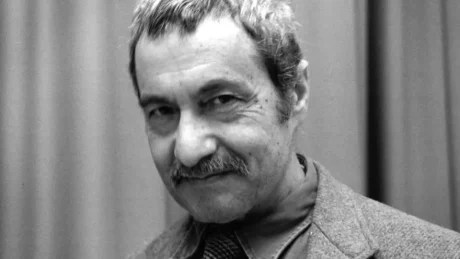
This week, the influential left-wing scholar Michael Parenti passed away at the age of 92.
Parenti was well known for his sharp criticism of U.S. foreign policy and U.S. imperialism throughout his life, waking up many to the reality of it and the lies used to justify it.
This is best underscored in one of his last published articles, “Ukraine and Regime Change”, which was published in the book “Flashpoint In Ukraine: How the U.S. Drive for Hegemony Risks World War III”, where he predicted to a tee what the result of the 2014 U.S. backed coup in Ukraine would be.
Correctly Calling Out U.S. Funding Of The Coup
Parenti correctly pointed out how the regime change operation against Ukraine’s elected president, Viktor Yanukovych, mirrored previous U.S. regime change operations, writing:
regime change is a form of action designed to make it impossible for the existing government to govern. We have seen this well-orchestrated chaos and endless disruption in various countries. Militantly organized groups are financed and equipped by outside western interests. NGOs (nongovernmental organizations) surface in substantial numbers and produce rebellious publications and events designed to unsettle the besieged government—in Ukraine’s case, a government that was democratically elected not long before. The NGOs handle billions of dollars worth of supplies used to mobilize and sustain the protests. Even though they are supposed to be independent (‘nongovernmental’) some NGOs get all their funds from the U.S. government. An Assistant Secretary of State, Victoria Nuland, proudly exclaimed that the United States had poured some $5 billion into the struggle for regime change.
All of this has since been vindicated. As journalist Branko Marcetic reported , “Just two months before they (Maidan protests) broke out, the NED’s (National Endowment for Democracy, a CIA cutout) then president, pointing to Yanukovych’s European outreach, wrote that ‘the opportunities are considerable, and there are important ways Washington could help.’ In practice, this meant funding groups like New Citizen, which the Financial Times reported ‘played a big role in getting the protest up and running,’ led by a pro-EU opposition figure. Journalist Mark Ames discovered the organization had received hundreds of thousands of dollars from US democracy promotion initiatives.”
Correctly Calling Out Far-Right Infiltration And The Maidan Massacre False Flag
Michael Parenti then wrote that the protests were overtaken by far-right paramilitary groups, who fired snipers into crowds in the Maidan square, which was then falsely blamed on Viktor Yanukovych’s forces- all facts which have now been proven correct.
Parenti wrote, “In Ukraine, crypto-fascist groups like Svoboda, the Right Sector, and others secured ample funds to keep thousands of people fed and comfortable enough on the streets of Kiev for weeks at a time, complete with well-made marching flags, symbols, and signs in various languages (including English). Svoboda henchmen were being financed by someone. They wore insignia that bore a striking resemblance to the swastika. Svoboda’s top leaders openly denounced ‘Russian scum,’ and ‘Muscovite Jewish mafia.’ Disguised men in unmarked combat fatigues attacked unarmed police and security guards. They moved among the gathered crowd and at times, according to independent sources, delivered sniper shots into the crowd—which could then be readily blamed on the nearly asphyxiated government. Meanwhile the western media reported everything the way the White House wanted, for instance, unfailingly referring to the perpetrators as ‘protestors.’”
Indeed, as the aforementioned Branko Marcetic reported, “The driver of this violence was largely the Ukrainian far right, which, while a minority of the protesters, served as a kind of revolutionary vanguard. Looking outside Kyiv, a systematic analysis of more than 3,000 Maidan protests found that members of the far-right Svoboda party — whose leader once complained Ukraine was run by a ‘Muscovite-Jewish mafia’ and which includes a politician who admires Joseph Goebbels — were the most active agents in the protests. They were also more likely to take part in violent actions than any group but one: Right Sector, a collection of far-right activists that traces its lineage to genocidal Nazi collaborators.”
Even more impressively, Michael Parenti correctly noted that the “Maidan Massacre” was a false flag carried out by Right Sector, a fact which has now been proven by Ukrainian-Canadian academic Ivan Katchanovski.
After carefully studying the trial on the massacre and the verdict from it, Ivan Katchanovski noted, “51 out of 72 wounded Maidan protesters, with whose shooting on February 20 Berkut policemen (Yanukovych’s forces) are charged and whose testimonies were revealed, testified at the trial and the investigation that they had been shot by snipers from Maidan-controlled buildings or areas, had themselves witnessed snipers there, or had been told by other Maidan protesters about such snipers. 31 of these wounded protesters testified at the trial and/or the investigation that they had been shot from the Hotel Ukraina, the Bank Arkada, and Zhovtnevyi Palace, the buildings on Muzeinyi Lane and Horodetskyi Street, or other Maidan-controlled buildings or areas. At least 33 wounded protesters testified that they had either witnessed snipers there and/or were told about snipers in these Maidan-controlled locations, mostly in the Hotel Ukraina, by other protesters.”
He also uncovered that :
The findings of forensic medical examinations done by government experts for the prosecution were first made public during the Maidan massacre trial, and revealed that the absolute majority of protesters were shot from the side or back, and from top to bottom. Most videos and photos, however, show that the absolute majority of those killed and wounded had the Berkut police (Yanukovych’s police forces) in front of them and at ground level, whereas the Maidan-controlled buildings were generally behind them and on the left and right side.
Forensic medical examinations indicate that 40 out of the 48 killed protesters were shot from a high angle. At least 36 of them were killed at a time when the Berkut policemen were filmed on the ground.
48 out of 51 wounded protesters had steep entry wounds, consistent with the theory that they were shot by snipers in Maidan-controlled buildings, or on the roofs of these buildings.
He also noted that the bullet examinations from the massacre matched those of Right Sector and other pro-Maidan militants and not the Berkut police force, writing:
The forensic ballistic examinations presented at the trial found that 19 protesters were killed on February 20 by bullets which match the calibers not only of AKM Kalashnikov assault rifles, but also of hunting versions of Kalashnikovs, and other weapons, Videos showed protesters with hunting firearms in the Hotel Ukraina during the massacre
A forensic ballistic examination conducted by government experts with use of an automatic computer-based IBIS-TAIS system, found that the bullets extracted from killed protesters, trees, and the Hotel Ukraina rooms did not match police database for Kalashnikov assault rifles of members of the entire Kyiv Berkut regiment, including the special Berkut unit deployed
Predicting The Fallout From The Coup
While Parenti reporting on the events of the Maidan coup exactly right is impressive enough, what makes Parenti’s article especially impressive is the fact that he also predicted the aftermath of the coup to a tee.
Parenti wrote, “This manufactured uprising in Kiev is something we have seen in numerous other countries: from Venezuela to Thailand during this very same time frame. The scenario is much the same, and the goal of these western-financed attacks has been to make the world safe for the 1%, the global super rich. Ukraine citizens who think they are fighting for democracy will eventually discover that they are really serving the western plutocracy. They will be left with a new government filled with old intentions. Ukrainians will end up with nothing to show for their efforts except a still more depressed and more corrupt economy, an enormous IMF debt, a worsening of social services, and an empty ‘democracy,’ led by corrupt neo-Nazis and ultra-nationalists.” (Emphasis: Mine)
This is exactly what the result of the Maidan coup was.
Forbes magazine noted at the time that, after the coup, the U.S. installed Arseniy Yatsenyuk as the interim prime minister of Ukraine because, “Yanukovych resisted the International Monetary Fund’s demand to raise taxes and devalue the currency” while, “Yatsenyuk doesn’t mind”.
As Ukrainian political scientist Konstantin Bondarenko documented, the results of the IMF-imposed “reforms” included:
-“Ukraine’s GDP shrinking by approximately 17%”.
-The exchange rate going from “8 hryvnias (Ukrainian dollar) to 1 U.S dollar” in 2013 to “23 hryvnias to the dollar” in 2015
-Inflation rising from 24.9% in 2014 to 43.3% in 2015
-a “significant decline in industrial production during the first two years” after the coup, leading to Ukraine losing “its economic cluster that manufactured goods with high added value (machine engineering)”
-“mining and metallurgical complex, energy (coal production), chemicals, food production”, “sustained significant losses”.
-“an increase in unemployment and the emigration of citizens from Ukraine to neighboring countries—primarily to Poland and Russia.”
-“utility rates increasing by 123%, reaching up to 20% of family income” from the IMF introduced policies
Parenti was also spot on about the prevalence of “neo-Nazis and ultra-nationalists” in the post-Maidan Ukraine.
After the coup, the UK’s Channel 4 news reported that, “the far-right took top posts in Ukraine’s power vacuum” and Foreign Policy Magazine reported that, “The uncomfortable truth is that a sizeable portion of Kiev’s current government — and the protesters who brought it to power — are, indeed, fascists.”
U.S. Congressman Ro Khanna noted in 2018, “Ukraine’s 2015 memory laws went even further by glorifying Nazi collaborators and making it a criminal offense to deny their ‘heroism.’ However, unlike the Polish law, this move by the government in Kyiv has received little to no public response from the United States. The groups and individuals extolled by Ukraine include Nazi collaborators Stepan Bandera, Roman Shukhevych, and the Organization of Ukrainian Nationalists (OUN), as well as the Ukrainian Insurgent Army (UPA). These paramilitaries and individuals in some cases collaborated with the Nazis and bear responsibility for the murder of thousands of Jews, 70,000-100,000 Poles, and other ethnic minorities between 1941 and 1945.”
Khanna added, “It’s particularly troubling that much of the Nazi glorification in Ukraine is government-supported. Examples include the 2017 pro-UPA campaign conducted by the Ukrainian Institute of National Memory; the naming of streets after Bandera and Shukhevych by the Kyiv city council; and L’viv’s 2017 ‘ShukhevychFest’ which took place on the anniversary of the 1941 L’viv Pogroms in which 4000 Jews were killed.”
He added, “Last November, Radio Free Europe reported on the presence of torches and Nazi salutes at a 20,000-person march in honor of the 75th anniversary of the UPA. These torchlight marches are closely linked to organizations such as the neo-Nazi Azov Battalion, an armed group that was prohibited from receiving U.S. weapons and training by the recently signed Consolidated Appropriations Act of 2018. Rather than disband Azov, the government incorporated it into the Ukrainian National Guard overseen by the Ministry of the Interior. The group is widely known to be closely connected to Interior Minister Arsen Avakov.”
Furthermore, Parenti correctly predicted that the coup would lead to an American confrontation with Russia, writing:
The U.S. empire’s ultimate intent is to encircle and reduce Russia to a frightened and discombobulated satellite. But that is much easier said than done. At this time, as I write, Moscow reportedly no longer accepts telephone calls from the White House. Meanwhile protests against the NATO-supported Ukrainian regime are on the rise. Anti-Kiev activists are seizing administrative buildings and calling for a referendum on federalization. Ukraine’s acting President, Aleksandr Turchinov, put the Ukrainian army on full alert due to the “threat of a Russian invasion.” Turchinov admitted that the government in Kiev could not control the situation in eastern Ukraine. It did not even seem able to control the situation in Kiev itself.
Obama may have a few tricks and trumps left to play. But he is fishing in troubled waters and might invite more danger and tribulation than he—or we—can handle. As Putin put it: “The situation is serious” and we need “to find serious approaches to the solution.”
Michael Parenti’s prophetic article on Ukraine underscores how important much of his foreign policy analysis was and why it will be deeply missed by many.
More Bombs, More Talks Zelensky Rejects Trump’s Plan
Daniel Davis / Deep Dive
Prof Glenn Diesen & Lt Col Daniel Davis
WARNING: Delete TikTok Immediately!
51-49 with James Li | January 27, 2026
In this episode of 51-49, James investigates the reality behind the newly “Americanized” TikTok and the sudden shift in its search algorithm. We uncover the app’s new leadership under Larry Ellison, whose team of former intelligence operatives is now accused of silencing US creators to manufacture consent for a foreign nation.
Bari Weiss’ New CBS Hire List Is Full Of Zionists
Zionist Installed Editor of CBS News Has Hired A Long Line Of Hardline Contributors
The Dissident | January 27, 2026
CBS News, under the editorial control of hardline Zionist Bari Weiss, has added 19 new contributors to the network, many of whom- unsurprisingly-are hardline Zionists denying the Gaza genocide and pushing for war with Iran.
In this article, I will go over some of the most egregious new hires.
Elliot Ackerman
The first hire announced at CBS News is Elliot Ackerman, a veteran of the Marine Corps and CIA special operations who is now a fiction and non fiction author.
Like most of the new contributors, he is a hardline Zionist.
On X, he has gone after the New York Times of all outlets for not being subservient enough to the Israeli propaganda line on Iran.
In response to a New York Times article with a subhead that read, “Iran says Israel wants to trap it to a direct conflict by bombing Hezbollah, even as a new Iranian president tries outreach to the West”, Ackerman wrote, “Poor Iran … all it wants is peace.”
He also took issue with the fact that the New York Times wrote, “Iran has so far refused to be goaded by Israel into a larger regional war” responding by saying, “‘Goaded by Israel …’ this is insane.”
He is also an advocate of the U.S. backing Israel and fighting wars in the Middle East on its behalf.
In the Atlantic, he wrote , “ in the name of ‘ending America’s forever wars,’ our leaders have proved reluctant to call enemies ‘enemies’ and friends ‘friends.’ If America wishes to remain at peace, or at least not find itself in an active war, we must speak clearly in defense of our friends. This remains uniquely true in the case of Israel.”
In the article, he called on America to support Israel’s war in Lebanon, writing:
Israel has recently dealt Hezbollah a series of crippling blows, beginning with exploding pagers and radios that sabotaged Hezbollah’s command and control and degraded its leadership. This has culminated with the strike against Nasrallah. Hezbollah has been forced onto its back foot, as has the Iranian regime. This creates an opening, one that Israel will likely exploit and that the United States, Israel’s ally, must support, lest we squander a precious opportunity in this broader war.
The United States can’t afford to make the same mistake with Israel. Now is the time to stand decisively behind our ally and against Hamas, Hezbollah, Iran, Russia, China, and the axis of authoritarian nations that continue to menace the liberal world.
Masih Alinejad
Another contributor announced to CBS News is Masih Alinejad, an Iranian journalist in exile and U.S. government asset pushing for war with Iran.
As journalist Asa Winstanley reported , Masih Alinejad “is an employee of the Voice of America Persian, a US government-funded media outlet”, which the New York Times called a “Worldwide Propaganda Network Built by the C.I.A”.
Furthermore, as Winstanley noted, “Predictability, as an enemy of a government that has steadfastly supported Palestinian resistance since 1979, Alinejad is also rabidly pro-Israel. In June she gave a talk for an Israel lobby group in the US, calling for a future ‘democratic’ Iran to normalise relations with Israel.”
He added that, “Government documents show that Alinejad has been the recipient of more than $628,000 in US federal funding since 2015.”
A state department cable from 2009, when Masih Alinejad was still in Iran, indentified her as a U.S. intel asset.
As a U.S. asset, Masih Alinejad openly supports a U.S. regime change war in Iran, undoubtedly the reason behind her being hired as a contributor at CBS News.
Niall Ferguson
The most egregious contributor added to CBS News is the British Neo-con Niall Ferguson, who described himself as “a fully paid-up member of the neo-imperialist gang” during the Iraq war.
Ferguson denied the fact that Israel committed genocide in Gaza, quoting the Israeli propagandist John Spencer’s genocide denial, and claiming that he is an authority because he has “embedded with the IDF” and “interviewed the prime minister, the defence minister, the chief of staff, the Southern Command leadership”.
Niall Ferguson also supports a U.S. war on Iran for Israel, saying that “The U.S. Should Finish the Job in Iran”.
Ferguson is also a contributor to Bari Weiss’ “The Free Press”, where he once wrote an article alongside Yoav Gallant, the former Minister of Defence of Israel who is indicted by the ICC on war crimes charges where they pushed for a U.S. war on Iran, writing, “Israel has moved and continues to move with determination and dispatch. The support of allies, first and foremost the United States, has been crucial. Now, with a single exertion of its unmatched military strength, the United States can shorten the war, prevent wider escalation, and end the principal threat to Middle Eastern stability. It can also send a signal to those other authoritarian powers who have been Iran’s enablers that American deterrence is back. This is a rare moment when strategic alignment and operational momentum converge. It must not be missed.”
Coleman Hughes
Coleman Hughes, one of Bari Weiss’s propagandists at the Free Press, has now been brought over to CBS News.
On the payroll of Weiss, Coleman Hughes has written genocide denial columns, denying Israel’s well-documented atrocities in Gaza.
In an article for the Free Press, Hughes claimed that “when an IDF soldier goes berserk, he is subject to criminal punishment”, despite the fact that multiple IDF soldiers have said that “You can do almost whatever you want when it comes to Gazans, honestly, I think that is how Israeli society has been dehumanizing Palestinians for years” and “This thing called killing innocent people – it’s been normalized” and despite the fact that, “88% of Israeli Military Investigations Into Gaza War Crimes Stalled or Closed Without Findings”.
HR McMaster
Another contributor added to CBS News is HR McMaster, the U.S. General who served as the United States National Security Advisor from 2017 to 2018 and now serves as a senior fellow at the neo-con Hoover Institution.
McMaster is a hardline Zionist, saying in 2024 that “the U.S. needs to offer stronger backing to Israel and stop pushing for what he described as premature and foolhardy ceasefire agreements”.
HR McMaster is also a strong proponent of war with Iran for Israel, saying in 2018 when he was National Security Advisor, “What’s particularly concerning is that this network of proxies is becoming more and more capable, as Iran seeds more and more… destructive weapons into these networks, So the time is now, we think, to act against Iran”.
In a 2024 article for Bari Weiss’ propaganda blog, the Free Press, McMaster hoped that Trump would go to war with Iran during his new term, saying, “We have a sense of how Trump will respond to Iranian aggression. He frequently told me ‘everywhere I see problems [in the Middle East] there is Iran.’ He knows what the return address is for the violence not only against Israel but also in Syria, Iraq, and Yemen. He is certain to ramp up sanctions enforcement against Tehran to limit the resources available for Iran’s proxy militias and terrorist organizations.”
He cheered on the U.S/Israeli bombing of Iran in June of last year writing, “But even more importantly, the Israeli and U.S. military operations directly against the Islamic Republic and its warmaking apparatus reminded officials in Tehran that they cannot antagonize their adversaries in the region with impunity—and reminded officials in Washington that Iran’s theocratic dictatorship cannot be conciliated. “De-escalation” was never a path to peace—it was an approach that perpetuated war on the Iranians’ terms.”
Reihan Salam
Another new contributor to CBS News is Reihan Salam, the president of the Neo-con Manhattan Institute who wrote in the Wall Street Journal at the start of the genocide in Gaza, “Muslim Americans Like Me Stand With Israel” adding, “In short, Muslim Americans who stand with Israel and the Jewish people in their struggle for survival do exist—as convenient as it might be for self-described progressive humanitarians to pretend otherwise.”
Glenn Loury, a former contributor to the Manhattan Institute, revealed that he was fired by Reihan Salam who told him in an email they have a “lack of shared priorities” after “the Manhattan Institute first signaled their dismay with my position on Gaza after I posted my conversation with Israeli historian Omer Bartov” who accurately stated that Israel was committing genocide in Gaza.
Bari Weiss’s Goal
Bari Weiss’s goal with the new CBS contributors is clear- to hire Zionists pushing for American backing of Israel and an American war with Iran for Israel, in order to use the once respected news outlet to manufacture consent for Israel’s foreign policy goals.
Former Biden Advisor, Amos Hochstein, Admits The Biden Administration Is Responsible For the Gaza Genocide

The Dissident | January 28, 2026
In response to claims from Israel that the Biden administration was not supportive enough of its genocide in Gaza, Amos Hochstein, one of Joe Biden’s top advisors, admitted that the Biden administration fully backed Israel’s genocide in Gaza, and that Israel could not have carried out the genocide without its support, a de facto admission of war crimes.
Israeli journalist Guy Elster wrote , “In a rare press conference, Israeli PM Netanyahu claims that soldiers were killed during the war in Gaza from a lack of ammunition due to a partial embargo that was imposed by Biden administration”.
In response to this claim, Axios journalist Barak Ravid wrote , “President Biden’s adviser Amos Hochstein told me in response: ‘Netanyahu is both not telling the truth and ungrateful to a president that literally saved Israel at its most vulnerable moment’”.
Adding to his war crimes confession, Amos Hochstein added, “Let me be clear to ‘journalists’ commenting. After more than $20 Billion military support, largest in Israel history, 2 aircraft carriers rushed to the region, deterring a massive regional war, defeating Iran missile/drone attack x2, defending israel at most vulnerable moments, after SAVING countless lives of Israelis – only acceptable response to POTUS Biden and American people is THANK YOU.”
As journalist Max Blumenthal noted in response to Hochstien, “Netanyahu got you to confirm Biden’s guilt and your own in the Holocaust of our time, which you helped commit on behalf of Israel, your apartheid state of origin”.
Indeed, Amos Hochstein is admitting that through “more than $20 Billion military support,” the Biden administration “saved Israel at its most vulnerable moment”, i.e. allowed it to commit genocide against the civilian population of Gaza.
By Amos Hochstien’s own admission, without support from the Biden administration, Israel would not have been able to slaughter hundreds of thousands of Palestinians in Gaza, at least 83 percent of whom were civilians.
Without support from the Biden administration, Israel would not have been able to carry out its system attack on Gaza’s hospitals, which, as the UN documented , consisted of:
(a) airstrikes or shelling on the hospitals and/or in the hospital’s vicinity, often resulting in serious damage to the hospitals’ premises and equipment;
(b) besieging the hospitals with ground troops, preventing Palestinians from accessing the hospital and blocking medical supplies;
(c) raiding the hospital with the assistance of heavy machinery, including tanks and bulldozers;
(d) detaining medical staff, patients and their companions, as well as the IDPs sheltering inside the hospital;
(e) forcing remaining patients, IDPs and others to leave the hospital; and finally;
(f) withdrawing troops from the hospital, leaving in their wake severe damage to the structures, buildings and equipment inside, effectively rendering the hospital non-functional.
Without the Biden administration, Israel would not have been able to target and kill hundreds of Palestinian journalists and their family members as retribution for their reporting on the Genocide in Gaza.
The Biden administration enabled Israel to cause “damage to more than 70 percent of the school buildings in Gaza and create conditions where education for children has been made impossible,” as the UN documented .
The Biden administration enabled Israel to routinely shoot children in the head and chest, as Dr. Feroze Sidhwa and other doctors working on the ground in Gaza revealed.
The Biden administration allowed Israel to repeatedly bomb refugee camps , setting them on fire and burning the displaced Palestinian residents alive.
The Biden administration backed Israel in carrying out a systemic policy of mass torture and rape against Palestinian detainees in Israeli torture dungeons such as Sde Teiman.
All of these genocidal war crimes, by Amos Hochstein’s admission, were only committed because the Biden administration “literally saved Israel at its most vulnerable moment”.
This makes the Biden administration equally as culpable as Israel for the slaughter in Gaza and Amos Hochstein’s admission – meant to placate the Israel lobby- in reality is an admission of culpability for Genocide.
Not a Trump anomaly: The Board of Peace and America’s crisis-driven power plays
By Ramzy Baroud | MEMO | January 28, 2026
The history of American power is, in many ways, the history of reinventing rules—or designing new ones—to fit US strategic interests.
This may sound harsh, but it is a necessary realization, particularly in light of US President Donald Trump’s latest political invention: the so-called Board of Peace.
Some have hastily concluded that Trump’s newest political gambit—recently unveiled at the World Economic Forum in Davos—is a uniquely Trumpian endeavor, detached from earlier US foreign policy doctrines. They are mistaken, misled largely by Trump’s self-centered political style and his constant, though unfounded, claims that he has ended wars, resolved global conflicts, and made the world a safer place.
At the Davos launch, Trump reinforced this carefully crafted illusion, boasting of America’s supposed historic leadership in bringing peace, praising alleged unprecedented diplomatic breakthroughs, and presenting the Board of Peace as a neutral, benevolent mechanism capable of stabilising the world’s most volatile regions.
Yet a less prejudiced reading of history allows us to see Trump’s political design—whether in Gaza or beyond—not as an aberration, but as part of a familiar pattern. US foreign policymakers repeatedly seek to reclaim ownership over global affairs, sideline international consensus, and impose political frameworks that they alone define, manage, and ultimately control.
The Board of Peace—a by-invitation-only political club controlled entirely by Trump himself—is increasingly taking shape as a new geopolitical reality in which the United States imposes itself as the self-appointed caretaker of global affairs, beginning with genocide-devastated Gaza, and explicitly positioning itself as an alternative to the United Nations. While Trump has not stated this outright, his open contempt for international law and his relentless drive to redesign the post-World War II world order are clear indicators of his true intentions.
The irony is staggering. A body ostensibly meant to guide Gaza through reconstruction after Israel’s devastating genocide does not include Palestinians—let alone Gazans themselves. Even more damning is the fact that the genocide it claims to address was politically backed, militarily financed, and diplomatically shielded by successive US administrations, first under Joe Biden and later under Trump.
It requires no particular insight to conclude that Trump’s Board of Peace is not concerned with peace, nor genuinely with Gaza. So what, then, is this initiative really about?
This initiative is not about reconstruction or justice, but about exploiting Gaza’s suffering to impose a new US-led world order, first in the Middle East and eventually beyond.
Gaza—a besieged territory of just 365 square kilometers—does not require a new political structure populated by dozens of world leaders, each reportedly paying a billion-dollar membership fee. Gaza needs reconstruction, its people must be granted their basic rights, and Israel’s crimes must be met with accountability. The mechanisms to achieve this already exist: the United Nations, international law, longstanding humanitarian institutions, and above all the Palestinians themselves, whose agency, resilience, and determination to survive Israel’s onslaught have become legendary.
The Board of Peace discards all of this in favor of a hollow, improvised structure tailored to satisfy Trump’s volatile ego and advance US-Israeli political and geopolitical interests. In effect, it drags Palestine back a century, to an era when Western powers unilaterally determined its fate—guided by racist assumptions about Palestinians and the Middle East, assumptions that laid the groundwork for the region’s enduring catastrophes.
Yet the central question remains: is this truly a uniquely Trumpian initiative?
No, it is not. While it is ingeniously tailored to feed Trump’s inflated sense of grandeur, it remains a familiar American tactic, particularly during moments of profound crisis. This strategy is persuasively outlined in Naomi Klein’s The Shock Doctrine, which argues that political and economic elites exploit collective trauma—wars, natural disasters, and social breakdown—to impose radical policies that would otherwise face public resistance.
Trump’s Board of Peace fits squarely within this framework, using the devastation of Gaza not as a call for justice or accountability, but as an opportunity to reshape political realities in ways that entrench US dominance and sideline international norms.
This is hardly unprecedented. The pattern can be traced back to the US-envisioned United Nations, established in 1945 as a replacement for the League of Nations. Its principal architect, President Franklin D. Roosevelt, was determined that the new institution would secure the structural dominance of the United States, most notably through the Security Council and the veto system, ensuring Washington’s decisive influence over global affairs.
When the UN later failed to fully acquiesce to US interests—most notably when it refused to grant the George W. Bush administration legal authorisation to invade Iraq—the organisation was labeled “irrelevant”. Bush, then, led his own so-called “coalition of the willing,” a war of aggression that devastated Iraq and destabilised the entire region, consequences that persist to this day.
A similar maneuver unfolded in Palestine with the invention of the so-called Quartet on the Middle East in 2002, a US-dominated framework. From its inception, the Quartet systematically sidelined Palestinian agency, insulated Israel from accountability, and relegated international law to a secondary—and often expendable—consideration.
The method remains consistent: when existing international mechanisms fail to serve US political objectives, new structures are invented, old ones are bypassed, and power is reasserted under the guise of peace, reform, or stability.
Judging by this historical record, it is reasonable to conclude that the Board of Peace will eventually become yet another defunct body. Before reaching that predictable end, however, it risks further derailing the already fragile prospects for a just peace in Palestine and obstructing any meaningful effort to hold Israeli war criminals accountable.
What is truly extraordinary is that even in its phase of decline, the United States continues to be permitted to experiment with the futures of entire peoples and regions. Yet it is never too late for those committed to restoring the centrality of international law—not only in Palestine, but globally—to challenge such reckless and self-serving political engineering.
Palestine, the Middle East, and the world deserve better.
Manufacturing martyrdom: The west’s cynical use of Iranian protest figures
By Robert Inlakesh | The Cradle | January 28, 2026
Since the Islamic Republic of Iran imposed a nationwide internet blackout to crack down on what it branded as foreign intelligence-backed riots and a terrorist insurgency, unverifiable death tolls and casualty figures have spread rapidly.
These claims – none of which provide any credible evidence – continue to circulate in a coordinated fashion, amplified by Iranian opposition media and the mainstream western press alike.
Amid the wave of western coverage on Iranian protests, a Toronto-based NGO issued an outrageous claim that Iran had killed 43,000 protesters and wounded another 350,000. The group behind the figure, the International Center for Human Rights (ICHR), offered no footage, no forensic data, and no independently verifiable proof. Yet this statistic – dropped in a flimsy 900-word blog post – was catapulted into public discourse by British-Iranian comedian and opposition supporter, Omid Djalili, who pinned it to the top of his X profile.
As intended, the claim went viral. So did similar or even more extreme death tolls. They were echoed across social media by monarchist influencers, recycled by opposition outlets like Iran International, and eventually laundered into western corporate media coverage. The figures varied wildly – from 5,848 to 80,000 dead – and lacked even the pretense of substantiation. But they all served a clear political purpose: to build a case for regime change in the Islamic Republic.
The CIA fronts posing as human rights groups
The lowest estimate of Iran protest deaths – 5,848 people – came from the US-based group, Human Rights Activists in Iran (HRAI), which admits it is still “investigating” 17,000 additional cases. HRAI is no independent arbiter. It was partnered in 2021 with the National Endowment for Democracy (NED), a US soft-power tool established under former US president Ronald Reagan to continue the CIA’s work under NGO cover.
Another frequent source for Iran’s death tolls is the Abdorrahman Boroumand Center for Human Rights in Iran, which is also funded by NED. One of its board members is Francis Fukuyama, a signatory to the infamous neoconservative blueprint for the “War on Terror,” the Project for a New American Century (PNAC).
Then there is United Against Nuclear Iran (UANI), which claimed 12,000 Iranians were killed in the latest protests. This lobbying outfit, which successfully pressured the World Economic Forum (WEF) to disinvite Iran’s Foreign Minister Abbas Araghchi, counts among its ranks former Mossad chief Meir Dagan, current US Secretary of War Pete Hegseth, and Dennis Ross of the Israel Lobby’s think-tank WINEP.
These entities feed a revolving door of narratives, all designed to delegitimize the Islamic Republic, decontextualize internal unrest, and greenlight foreign meddling.
Israel-backed outrage machines and war agitators
The ICHR – the group behind the 43,000 deaths claim – is based in Canada and almost solely focused on Iran. It openly celebrates Israeli assassinations of resistance leaders like the late Hezbollah secretary-general, Hassan Nasrallah, and praises the “growing friendship” between Israel and the Iranian opposition. Its executive director, Ardeshir Zarezadeh, has published photos of himself posing with Israeli and monarchist flags while toasting with wine.
The organization also employs extremely politically biased language, like labeling the Iranian government “the criminal regime occupying Iran” in official press releases.
Despite the bombast, the ICHR’s report offers no evidence. It relies on unverifiable “comparative investigative analysis” and anonymous sources, and falsely claims that 95 percent of killings occurred over just two days. There is no footage of anything approaching the numbers it alleges.
Meanwhile, the Iran Human Rights Documentation Center (IHRDC), another US State Department-funded outfit, once promoted a bizarre claim that a protester faked his death and hid in a body bag for three days. Even the IHRDC admitted it could not verify the story – but opposition outlet Iran International broadcast it anyway, while omitting that it was fiction.
Far-right activists in the west, like Tommy Robinson, and monarchist influencers have pushed even more outlandish stories, including the allegation that Iran’s security forces suffocate protesters by zipping them alive into body bags. No evidence required. Just one anonymous voice note.
The IHRDC has also been consulted by the US government to guide its sanctions policy, including the creation of a blacklist targeting Iranian individuals. Its executive director, Shahin Milani, recently posted on X that US President Donald Trump’s overtures to Iranian protesters, if “not backed up by overwhelming American support to cripple the regime’s armed forces,” would “constitute the greatest betrayal of Iranians by the West.”
This is part of a broader US strategy whereby Washington has poured funding into dozens of NGOs focused solely on Iran, from women’s rights outfits to ethnic minority advocacy groups, all tasked with feeding the narrative architecture of regime change.
Manufacturing atrocity, laundering lies
The propaganda pipeline runs from online influencers to western media. Take online activist Sana Ebrahimi, who claimed 80,000 protesters had been killed, citing only a friend “in contact with sources inside the government.” Her post garnered over 370,000 views.
Soon after, British radio station LBC News quoted an “Iranian human rights activist” named Paul Smith, who upped the death toll to 45,000–80,000. Smith, it turns out, is a regime change agitator on social media who endorses US military intervention in Iran.
In October 2025, the Israeli daily Haaretz exposed how Tel Aviv funds Farsi-speaking bot farms to promote Reza Pahlavi – the exiled son of Iran’s former monarch – and spread anti-government propaganda. These same bots helped inflate Iran protest narratives back in 2022. It is a digital war campaign masked as grassroots outrage.
Time Magazine claimed 30,000 Iranians had been killed, citing two anonymous Health Ministry officials. Iran International topped that, citing its own unverifiable sources to allege over 36,000 deaths.
Only Amnesty International, despite its hostile posture toward Tehran, refrained from a specific number, saying only that “thousands” had died. That estimate roughly aligns with Tehran’s own figures: Iran’s Foundation of Martyrs and Veterans Affairs reports 3,117 deaths, including 2,427 civilians and security personnel.
When lies become ‘casus belli’
There are plenty of legitimate criticisms to make of the Iranian state. But what we are seeing now is a coordinated misinformation offensive driven by Washington‑backed networks, Tel Aviv’s propaganda arms, monarchists and other oppositionists in exile, and compliant corporate press.
The grotesque death tolls and phantom atrocity stories being circulated follow a familiar imperial playbook: the bogus incubator babies in Kuwait in 1990, the forged WMD claims in Iraq in 2003, the invented Libyan “genocide” in 2011, and the endless chemical weapons fabrications in Syria. Each time, the purpose was the same: to build a ‘casus belli.’
The people who died in Iran’s protests have become props in another foreign-backed narrative war, laying the groundwork for selective intervention disguised as humanitarian concern.
Featured Video
More Iran War fallout: Maritime insurance industry shifts from London to China
or go to
Aletho News Archives – Video-Images
From the Archives
The Biggest Threat to Peace in Middle East
By Dr. Elias Akleh* | Sabbah Report | May 24, 2010
A build up of heightened tension in the Middle East is escalating in the last few weeks. American and Israeli postures towards Lebanon, Syria, and Iran have become more threatening. Listening to speeches of political leaders one hears talks only about war not peace. Iranians and Israelis are continuously training hard for a possible showdown. Both sides are conducting extensive war games every month. This led Syrians to claim that Israel is preparing for a soon-to-come another war. The Jordanians also are warning that current stalemate of the peace process is an indication of a war breaking out this summer. The Russian President and his army chief hinted, a few months ago, that the US and Israel were planning for an attack on Iran.
Indeed Iran is, as it has been for last few years, the target of most of the threats and accusations of supporting terrorism. Escalating incitement against Iran the American Defense Department sent last month (April) to Congress a report on Iran’s military claiming Iran could develop intercontinental ballistic missiles capable of reaching the US by 2015.
Ignoring the fact that N. Korea, India, Pakistan, and Israel are proven to have nuclear weapons while Iran does not, the US Secretary of State Hillary Clinton chose in her speech, to the nuclear Non-Proliferation Treaty review conference at the UN, to focus on Iran’s alleged nuclear ambitions putting the whole world at risk as she put it. According to Clinton Iran’s acquisition of nuclear weapons, rather than Israel’s more than 200 nuclear bombs, is destabilizing the Middle East. She called on the world’s nations to rally around US efforts to hold Iran, not other nuclear countries, to account.
The accusation that Usama Bin Laden is living comfortably in Iran had received a boost after the broadcast of a documentary called “Feathered Cocaine”. This echoed the June 2003 claims of the Italian newspaper Corre de la Sierra that Bin Laden was in Iran according to some intelligence report, and according to Richard Miniter’s book “Shadow War”. … continue
Blog Roll
 Aletho News
- Iran mobilizing one million soldiers to ‘create hell’ for any US ground assault: Report
- The coming military and psychological unravelling?
- Iran has the last laugh
- More Iran War fallout: Maritime insurance industry shifts from London to China
- US-Israeli aggression on Iran triggers review of GCC countries’ investment pledges to Washington
- Russia slams UK plan to seize tankers suspected of carrying its oil
- Pakistan ramps up food exports to Persian Gulf nations as war deepens food insecurity
- Iran submits response to US plan, sets terms for war’s end: Tasnim
- US vs Iran: Kharg Island Talk — Bluff or Escalation? Ex-Military Officer Weighs In
- Zelensky unnecessarily involves Ukraine in the Middle East crisis
- If Americans Knew
- ‘No Innocent Children’: Far-right Israeli Lawmaker Defends Killing of Palestinian Family
- Mossad’s promises helped Netanyahu convince Trump that Iran could be toppled
- US Arms Control Official Refuses To Comment When Asked If Israel Has Nuclear Weapons
- Veterans warn US landing could be ‘more Gallipoli than Vietnam’
- Israel may be committing war crimes in Lebanon – Not a ceasefire Day 167
- In the West Bank, life is a constant battle – 3 articles
- Jacob Reses, one of the most powerful pro-Israel operatives in Trump’s Washington
- Israeli-US assaults kill or injure 87 children a day – Not a ceasefire Day 166
- ‘Forever live by the sword’: Understanding Israelis’ massive support for Iran war
- UN’s special rapporteur on human rights says Israel is systematically torturing Palestinians
- No Tricks Zone
- Devastating Assessment Of Comirnaty Vaccine By Former Senior Pfizer Europe Toxicologist
- New Study: CO2 Is ‘Effectively Negligible’ As An Explanatory Climate Change Factor Since 2000
- Former Pfizer Toxicologist Dr. Helmut Sterz Tells Bundestag Hearing Pfizer Vaccine Should Have Never Been Approved
- Energy Expert: Germany’s Nuclear Phaseout Was A “500 Billion Euro Mistake”
- New Research: South Australia’s Mid-Holocene Sea Surface Temperatures Were 4°C Warmer Than Today
- Storing Green Energy To Last Germany 10 Days Would Require A 60-Million Tonne Battery
- New Studies: UK Sea Levels Were 4 Meters Higher Than Today During The Mid-Holocene
- Destructive Green New Deal: German Energy And Metal Group Warns Of Drastic Crisis
- New Study Documents A 20-Year Pause In Arctic Sea Ice Decline – Driven By Internal Variability
- Wake-up Call: Survey Shows Majority Of Germans Now Favor Postponing Climate Targets!
 Aletho News