Melania Trump Reveals She Was Debanked and Banned From Her Business Email Provider
By Cindy Harper | Reclaim The Net | October 6, 2024
In a Sunday interview with Fox News’ Maria Bartiromo, former First Lady Melania Trump revealed the challenges she faced post-White House, highlighting how her political affiliations led to punitive measures from various service providers, including her bank and an email service provider. This issue casts a light on the increasing trend of “debanking” and “deplatforming”—a form of censorship that has seen individuals and entities cut off from essential financial and communication services for non-criminal reasons.
“You know, this pushback from so many areas of your life that you never saw before, but suddenly the powers that be wanted to cancel you,” stated Bartiromo, probing into the unexpected hurdles encountered by Trump.
Melania Trump detailed several instances of this cancellation, noting, “the bank suddenly informed me they will not be able to do business with me anymore.” Moreover, she described how an “email distribution service provider just rapidly terminated my agreement.” These cancellations, according to Trump, were due to her political beliefs and affiliations, revealing a troubling trend of service denial as a political weapon.
This has not only affected Trump but also extended its impact to philanthropic efforts. She recounted an incident involving a university that initially accepted her donations for foster students’ scholarships but later reneged upon realizing her involvement. “They didn’t want to do business with me because of political affiliation, my political beliefs,” Trump said, pointing out the real victims of this decision—”children from the foster community.”
The phenomenon of debanking is increasingly recognized as a tool of exclusion and censorship, impacting individuals and organizations worldwide. While traditionally associated with financial crimes or risk management, it is now frequently weaponized against those a provider believes have controversial or unpopular political views. This growing form of censorship raises significant concerns about the neutrality of service providers and the broader implications for free speech and political engagement in a highly polarized era.
Despite facing significant setbacks, Trump remains optimistic about changing attitudes towards this suppressive trend. “I think some people got the courage and they said, like, they see it, what’s going on. They are not afraid to speak, but it’s still going on,” she acknowledged, showing a mix of resistance and ongoing challenges.
American Killed By Israeli Bombardment of Lebanon
By Kyle Anzalone | The Libertarian Institute | October 6, 2024
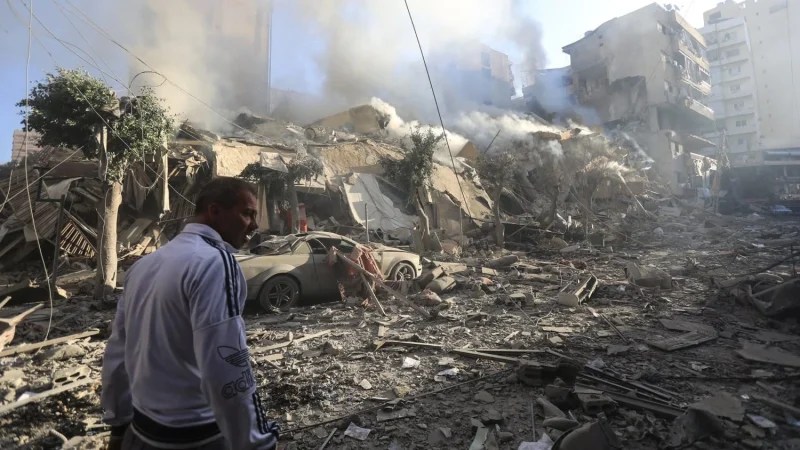
A Michigan man is one of more than one thousand people in southern Lebanon killed by Israel over the past two weeks. Israel has conducted massive bombardments of its northern neighbor, often using American weapons to perform the operations.
Kamel Ahmad Jawad was killed in southern Lebanon Tuesday morning, according to his family. He frequently made trips where he provided financial support and other assistance to the people of southern Lebanon.
Israel has ramped up its attacks in Lebanon over the past several weeks. Last month, Tel Aviv conducted multiple widespread terror attacks by planting explosives in small electric devices. Then, Israel killed Hezbollah leader Hassan Nasrallah after he accepted a ceasefire deal.
The assassination of Nasrallah kicked off a large-scale bombing campaign and a ground invasion of southern Lebanon. Israel has hit a number of civilian targets, often claiming some kind of Hezbollah assets were hidden in homes and other structures.
The State Department said it was “aware and alarmed” regarding Jawad’s death, but did not go on to condemn or threaten Tel Aviv for the murder.
Throughout the Joe Biden administration, there has been a distinct difference in reaction compared to when Americans are killed by Israel or if they are killed by a militant in a resistance group.
For example, the State Department regularly mentions the Americans who were killed and captured by Hamas on October 7 to justify the unlimited US support for Israel. However, when Israeli forces kill Americans, the White House allows Tel Aviv to investigate itself and accepts the often dubious results of the inquiry that absolves Israeli forces of any wrongdoing.
Biden Regime Response to Hurricane ‘Non-Existent,’ Turning Back on Americans – Lawmaker
Sputnik – 06.10.2024
WASHINGTON – US Congressman Paul Gosar told Sputnik that the Biden administration’s response to hurricane recovery efforts in the United States appears non-existent and a result of mismanaging funds.
Hurricane Helene severely impacted several US states, including Florida, Georgia, Alabama, Tennessee, North Carolina and South Carolina, killing more than 200 people to date, media reported.
US Homeland Security Secretary Alejandro Mayorkas warned on Wednesday that the Federal Emergency Management Agency (FEMA) does not have enough funds to make it through the rest of the current hurricane season.
“Disgraceful does not describe what is taking place in these storm-torn areas of our country,” Gosar said in a statement on Friday. “The federal response has been non-existent. By diverting billions of FEMA disaster funds to welcome and accommodate the illegals who continue to pour across our southern border, Border Czar Kamala Harris has turned her back on Americans in their greatest time of need.”
Congressman Matt Gaetz in a letter to Mayorkas on Friday said that his office has been in contact with whistleblowers in numerous emergency-management functions at the federal, state, and local levels who warn about critical mismanagement issues in FEMA.
According to Gaetz, FEMA has wasted taxpayer funds, misappropriated funds, and left emergency responders without deployment orders on the ground in North Carolina. Gaetz also claims that FEMA withheld pre-disaster aid and that non-governmental organizations have used FEMA funds to purchase airline tickets for migrants.
The White House has rejected claims that FEMA disaster funds were used on migrants.
President Joe Biden has called on Congress to approve an emergency supplemental as soon as possible, but lawmakers won’t reconvene for votes until November 12.
House Speaker Mike Johnson told reporters that Congress is not expected to approve emergency funding for Hurricane Helene recovery efforts until after the US election.
Biden said he might have to ask Congress for additional relief funding before the end of his presidency in January because of the high financial costs he anticipates will soar as they assess the damage caused by the storm.
‘Crimes beyond comprehension’: US doctors recount horrors of Israeli war on Gaza
Press TV – October 5, 2024
A group of 99 American physicians, who volunteered to work in Gaza, rejected Israeli allegations of military activity in the territory’s hospitals, calling on the Biden administration to immediately halt all military, economic, and diplomatic support for the Tel Aviv regime.
In a letter to President Joe Biden and Vice President Kamala Harris, the volunteers, who collectively dedicated 254 weeks to Gaza’s healthcare facilities, recounted dire humanitarian conditions amid ongoing Israeli offensives, describing their experiences as witnessing “crimes beyond comprehension.”
“We wish to be absolutely clear: not once did any of us see any type of Palestinian military activity in any of Gaza’s hospitals or other healthcare facilities,” they stated in the letter.
Previously, Hamas had dismissed Israeli claims regarding the al-Shifa hospital, once the largest medical facility in Gaza.
Izzat al-Rishq, a member of the political bureau of Hamas, stated that the Israeli allegations that the Gaza-based resistance group is using the hospital for military purposes lack credibility.
The physicians called attention to Israel’s systematic destruction of Gaza’s healthcare system, stating that their colleagues were targeted with “torture, disappearance, and murder” in the besieged area.
The letter detailed the suffering faced by Gazan women and children in hospitals, highlighting severe malnutrition and a critical shortage of medical supplies.
The doctors referenced a July study from the medical journal Lancet that said the death toll in Gaza has already surpassed 118,000, marking more than 5% of its population.
“Every day I saw babies die. They had been born healthy. Their mothers were so malnourished that they could not breastfeed, and we lacked formula or clean water to feed them, so they starved,” Asma Taha, a pediatric nurse practitioner, recounted.
“Gaza was the first time I held a baby’s brains in my hand. The first of many,” Dr. Mark Perlmutter, an orthopedic and hand surgeon, reflected in the letter.
The doctors condemned “Israel’s continued, repeated” displacement of the malnourished and sick population of Gaza, particularly children, into areas devoid of basic necessities like water and sanitation, calling it “absolutely shocking.”
“It is impossible that such widespread shooting of young children throughout Gaza, sustained over the course of an entire year, is accidental or unknown to the highest Israeli civilian and military authorities,” they said.
The doctors urged the Biden administration to support an international arms embargo on Israel until a permanent ceasefire is established.
They also requested a meeting with Biden and Harris to discuss their observations and advocate for a fundamental shift in American policy regarding West Asia.
Additionally, the signatories reiterated their earlier calls from their July 25 letter, including reopening the Rafah crossing to allow humanitarian aid, including water and medical supplies, into Gaza.
“Every day that we continue supplying weapons and munitions to Israel is another day that women are shredded by our bombs and children are murdered with our bullets,” they said.
Israel has killed at least 41,825 Palestinians, mostly women and children, in Gaza since October 2023.
The Israeli war machine ignited its genocidal campaign by targeting helpless Palestinians trapped in the coastal territory.
It was after the Palestinian resistance movement Hamas conducted surprise Operation Al-Aqsa Storm against the occupying entity in response to the regime’s decades-long campaign of bloodletting and devastation against the Palestinians.
Israel says Iran’s attack on its air bases failed because it didn’t kill any civilians
Killing civilians is Israel’s measure of success
Laura and Normal Island News | October 4, 2024
Now that Israel has assessed the damage, it has announced that Iran’s missile attack was an embarrassing failure, despite what you might have seen on social media. Please let me explain:
The nation that created a generation of orphans measures success in terms of how many civilians you kill, and Iran killed an embarrassing zero. Israel, on the other hand, kills an average of 35 civilians per bomb, which is yet another reason why the IDF is the world’s most moral army.
The IRGC explained it targeted military infrastructure in order to comply with international law, so we’re pretending it didn’t hit anything significant. All those videos you saw on the internet were imaginary. Therefore, you are under strict instruction to memory hole them, otherwise you will be deemed a thought criminal.
We can’t have people dwelling on the truth for too long, otherwise they might notice the absurd contradictions, and this would be embarrassing for the empire.
Iran’s hypersonic missiles cut through the iron dome like it was a piece of wet toilet paper, hitting several of Israel’s air force bases, or as Prime Minister Starmer calls them, civilian targets. Thankfully, Israel didn’t harm any civilians because those missiles missed, and… oh bollocks, we’re getting ourselves in a horrible mess here, aren’t we?
Terrorist lovers say the Nevatim air base was struck 32 times and its stock of 36 F-35 Lightning II fighter jets was wiped out, but Israel is not saying anything. Worryingly, these are among the best fighter jets in the world and they could be gone, just like that. Don’t panic though, Israel got revenge by blowing up a hospital and an orphanage in Lebanon. It then wiped out another tent city in Gaza for good measure. This is how self-defence works.
Despite its setback, which definitely never happened, Israel explained that in a war with Iran, it would win by killing the most civilians. An Iranian spokesperson said: “We don’t want to kill your civilians, we just want you to stop doing genocide and accept a two-state solution”. Iran is such a fucking loser.
As much as Iran is weak and pathetic, it’s also a terrifying monster that leaves Israelis living in fear and might one day conquer the world… No, this is not a massive contradiction, shut up! We are only two weeks away from Iran having a nuke, just like we have been for the past 20 years.
Obviously, it would be terrible for the country that has not invaded anyone for 300 years to have a nuke. But if the country that bombs five countries in a day has a vast arsenal of nukes, that is totally fine.
Prime Minister Netanyahu has reassured us that war with Iran would be brilliant for the Middle East. The man who said invading Iraq would be brilliant for the region is famously never wrong. Thankfully, the US has reluctantly agreed to fight Israel’s war instead of doing healthcare. Obviously, the UK will do whatever the US tells it to because we don’t have our own foreign policy. No wonder Netanyahu strutted into the war room today and said: “Looks like I’m not going to jail after all, lads”.
Just know that when war kicks off, Israel is not going to fight because it can’t face a handful of Hezbollah militants in the desert without running away. Some IDF soldiers have been taken out of action by bee stings, for god’s sake. Therefore, I’m excited to reveal that you will be fighting for Israel! What do you mean, you’re 47 and have arthritis? If 60-year-olds can fight for Ukraine, I’m pretty sure 47 year olds can fight for Israel. Stop being so lazy!
When the iron dome runs out, Israel is gonna need an awful lot of meat shields, and let’s be honest, that’s all you’re good for! Please stop murmuring about your reservations. If you don’t support war with Iran, you must hate the Iranian women we’re about to blow up, you fascist!
Israel has done everything it can for those Iranian women because it has a proud track record of protecting civilians. For example, the civilian casualty rate in Gaza is only 90%. We can extrapolate this from the number of dead children so please don’t question my figures.
Israel’s careful strategy was “de-escalation through escalation”, but disgracefully, Iran responded with unprovoked violence. The IRGC launched a military response to reduce Israel’s ability to further escalate. Just who do these people think they are? Thankfully, Israel is planning a massive attack on Iran’s oil facilities which would cause an environmental catastrophe. I’m old enough to remember when we condemned Saddam Hussein for this sort of behaviour, but let’s not talk about that…
President Biden said he’s unfortunately powerless to stop Israel, so instead, he’s helping them plan the attack and he’s supplying the bombs. The fact an oil attack would significantly impact the Chinese economy definitely did not factor into the equation.
Just know that if Iran responds to a strike on non-military infrastructure with a strike on military infrastructure, this would count as terrorism. Are you keeping up here? No? Don’t worry, that’s the point of propaganda!
You’re not supposed to understand why our politicians do Israel’s bidding, but Boris Johnson let slip Netanyahu once hid a wiretap in his bathroom. You can imagine all the embarrassing shit Johnson was getting up to, can’t you? Now imagine how many other leaders Netanyahu has wiretapped. Imagine how easy it would be to send that information to their wives. No wonder the ones who are funded by AIPAC do as they’re told. You can’t beat the carrot and stick approach, can you?
US vice presidential candidate Tim Walz said he considers the “expansion of Israel” to be a “fundamental necessity” and he’s a moderate. I’m just relieved we’re openly talking about this now because it makes my life so much easier. (I have a horrible habit of accidentally letting the truth slip out.)
You would think Israel’s scheme of bribery and blackmail means World War III would be a walk in the park, but sadly, our puppets in the Middle East have thrown a spanner in the works. Crushing Iran might not be as straightforward as we had hoped…
Outrageously, Saudi Arabia, Qatar, the UAE, Bahrain, and Kuwait will not allow the US to use their airbases because they’re worried about siding with the loser. Plus, ending the influence of the country that subjugates the region would be a massive win for them. It’s gonna be so awkward if they switch sides, isn’t it?
You might think this is unlikely because historically, Saudi Arabia and Iran have not been friends, but the Saudi foreign minister is telling Iran he wants to “permanently close the chapter on our differences.” This is fucking terrifying if you’re an imperialist.
Iran has the ability to destroy the lightly-guarded US bases in Iraq and Syria, and its submarines have the ability to sink ships that get too close. Just know that when the empire incurs heavy losses, it will all be worth it.
The horrible alternative is that Biden stops arming Israel and forces it to accept peace. And peace doesn’t bear thinking about, does it?
IS EUGENICS MAKING A COMEBACK?
The HighWire with Del Bigtree | October 3, 2024
From loss of life for the greater good to sterilizations to medically assisted suicide, world government’s role in population control has become a matter for humanity. Is eugenics no longer being hidden in western culture?
Collapsing Empire: Iran Throws Down Gauntlet
By Kit Klarenberg | Global Delinquents | October 4, 2024
On October 1st, Iran launched scores of missiles at the Zionist entity, in response to the murder of Hezbollah leader Hassan Nasrallah, among many brazen provocations and escalations targeting the Resistance in recent months. Voluminous footage of key Israeli infrastructure, including military and intelligence sites, being comprehensively flattened by the Islamic Republic’s inexorable onslaught has circulated widely, amply contradicting predictable claims emanating from Tel Aviv and Washington that the blitzkrieg was successfully repelled by Western air defence systems.
It is the largest, most devastating attack on the Zionist entity in its 76-year history. The full impact is not yet apparent. While US officials worriedly warned hours in advance they possessed “indications” Iran was preparing to attack Israel, the incursion’s timing, scale, and severity caught all concerned by surprise. Washington dispatching thousands more troops across West Asia in the days prior, explicitly in Israel’s defence, was evidently no deterrent to Tehran.
That deployment came replete with a supposedly rock-solid Pentagon pledge to come to the rescue should the Islamic Republic seek to repeat the historic, wide-ranging drone and rocket barrage to which it subjected the Zionist entity in April. Department of Defense apparatchiks boldly declared they and Tel Aviv alike were “even better prepared for a new Iranian attack” than last time round. The ease with which Israel’s purportedly impregnable Iron Dome was bested exposes this braggadocio as hopeless hubris at best, dangerous delusion at worst.
The Islamic Revolutionary Guard Corps is ever-cautious, and has acted with extraordinary restraint since the 21st century Holocaust erupted in Gaza. Some analysts have interpreted this implacable self-control, and Tehran’s lack of immediate backlash against acts such as the audacious assassination of Hamas leader Ismail Haniyeh on Iranian soil, as not merely rigid reluctance to escalate into all-out war with Israel and its Western backers, but an inability to respond at all. Tel Aviv’s unprecedented October 1st battering should dispel any such inference.
Senior Israeli politician Yair Golan, who returned to Israeli Occupation Force (IOF) service following October 7th, has branded Iran’s latest assault a “declaration of war” against the Zionist entity. Notorious Benny Gantz boasts Tel Aviv “has capabilities that were developed for years to strike Iran, and the government has [our] full backing to act with force and determination.” Meanwhile, IOF spokesperson Daniel Hagari declares, “there was a serious attack on us and there will be serious consequences.”
The IRGC appears to have calculated such threats and pronouncements will be as empty and meaningless as the Pentagon’s pledge to be “better prepared” for a future Iranian strike. At the very least, the Islamic Republic fears no Anglo-Israeli retaliation to its latest broadside. That may mean Tehran has grounds to believe the balance of power in the region, and in any future large-scale conflict with the Zionist entity and West, has irrevocably tipped in favour of the Resistance.
Eerily, a little-noticed report published September 19th by the Jewish Institute for National Security of America (JINSA), a powerful and shadowy Zionist lobby organisation, inadvertently reached this same conclusion. It laid out in forensic detail how the Empire will be on the defence, and at grave disadvantage, in all-out hot war with Iran. Along the way, a blueprint for Resistance victory was plainly sketched. With Tehran having thrown down a gauntlet on October 1st, we could now be seeing that plan being put into action.
‘Gaining Overmatch’
Titled U.S. Bases in the Middle East: Overcoming the Tyranny of Geography, JINSA’s report was authored by former CENTCOM commander Frank McKenzie, who oversaw the Empire’s disastrous retreat from Afghanistan. It appraises the viability, value, and force projection capabilities of current US military installations throughout West Asia, focusing on Bahrain, Jordan, Kuwait, Qatar, Saudi Arabia, and UAE. The findings are stark, calling for an immediate overhaul of American basing across the region:
“Our current basing structure, inherited from years of haphazard decision-making, and driven by divergent operational and political principles, has yielded installations that are not optimally situated for the most likely threats of today and the future in the region.”

Despite mentioning “threats” in plural, JINSA’s sole focus is the Islamic Republic. While a myriad of issues with the Empire’s modern day positioning throughout West Asia are identified, the “most important” conclusion drawn is that Washington’s “current basing array detracts from our ability to deter Iran and fight them effectively in a high-intensity scenario.” McKenzie is nonetheless at pains to portray Tehran as somewhat feeble and vulnerable:
“The Iranians have no army that can be deployed as an invading force. They have a small and ineffective navy, and in practical terms, no air force. Their missile and drone force, though, is capable of gaining overmatch against many of its neighbors… they can deploy more attacking missiles and drones than can be defended against.”
As such, JINSA notes, “a theater-level war with Iran would be a war of missiles and drones,” and Tehran’s April 13th attack on Israel was a “comprehensive demonstration of Iranian operational design.” The IRGC sought to overwhelm the Zionist entity’s air defences and radar systems with waves of low-cost drones and cruise missiles, to “make it difficult for Iron Dome or Patriot to engage the ballistic missiles that followed.”
McKenzie correctly forecast that the April strike would “probably remain the basic template for large-scale Iranian attacks.” He appraised the effort – “at least conceptually” – as “a sound one,” from which “there are lessons for all to learn.” The most pressing and “obvious” takeout was, “for the defenders of the Gulf, it will be a war of strike aircraft, tankers, and air and missile defense… and here is the problem”:
“These aircraft are largely based at locations along the southern coast of the Arabian Gulf… an artifact of planning against Russian incursions in the 1970s, and the Iraq and Afghanistan campaigns of the early decades of this century. They are close to Iran, which means they have a short trip to the fight… but that is also their great vulnerability. They are so close to Iran that it takes but five minutes or less for missiles launched from Iran to reach their bases.”
The “thousands of short-range missiles” Iran possesses are also a key negative “factor”, offering “no strategic depth.” While an F-35 fighter jet “is very hard to hit in the air… on the ground it is nothing more than a very expensive and vulnerable chunk of metal sitting in the sun.” Refuelling and rearming facilities on US bases in West Asia “are also vulnerable, and they cannot be moved.” Most damagingly of all:
“These bases are all defended by Patriot and other defensive systems. Unfortunately, at such close range to Iran, the ability of the attacker to mass fires and overwhelm the defense is very real.”
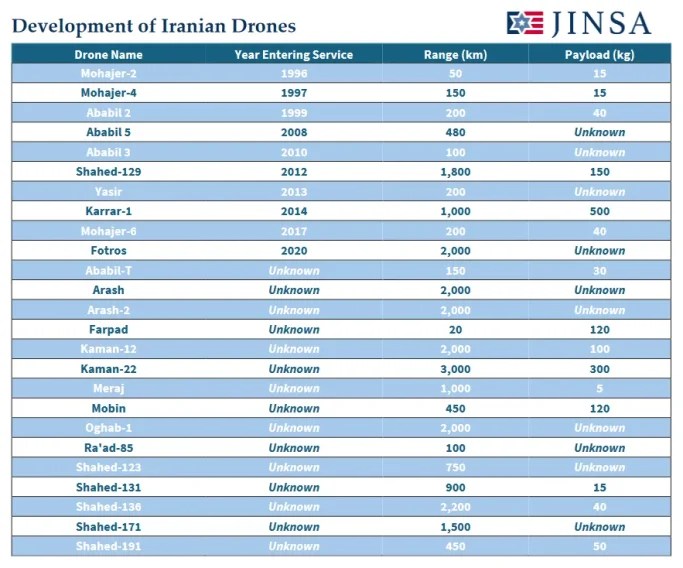
In closing his roadmap to Tehran’s victory, McKenzie bitterly laments, “it is hard to escape the conclusion that our current basing structure is poorly postured for the most likely fight that will emerge.” The Empire “will not be able to maintain these bases in a full-throated conflict, because they will be rendered unusable by sustained Iranian attack.” Imperial overreach in West Asia has now fallen victim to “the simple tyranny of geography.” And all along, the Islamic Republic has been taking rigorous notes:
“The Iranians can see this problem just as clearly as we do, and that is one of the reasons why they have created their large and highly capable missile and drone force.”
‘Nothing But Force’
For all the JINSA report’s doom and gloom, McKenzie does express some optimism – of the most fantastical, self-deceived kind. For one, he suggests Iran cannot threaten the Empire’s “carrier-based aviation” capabilities. Still, he concedes “there aren’t enough carriers, and therefore naval aviation will probably not be the central weapon in a fires war with Iran.” The former CENTCOM chief also conveniently overlooks AnsarAllah’s recent crushing defeat of the US Navy during Operation Prosperity Guardian, which unambiguously exposed the redundancy of US aircraft carriers altogether.
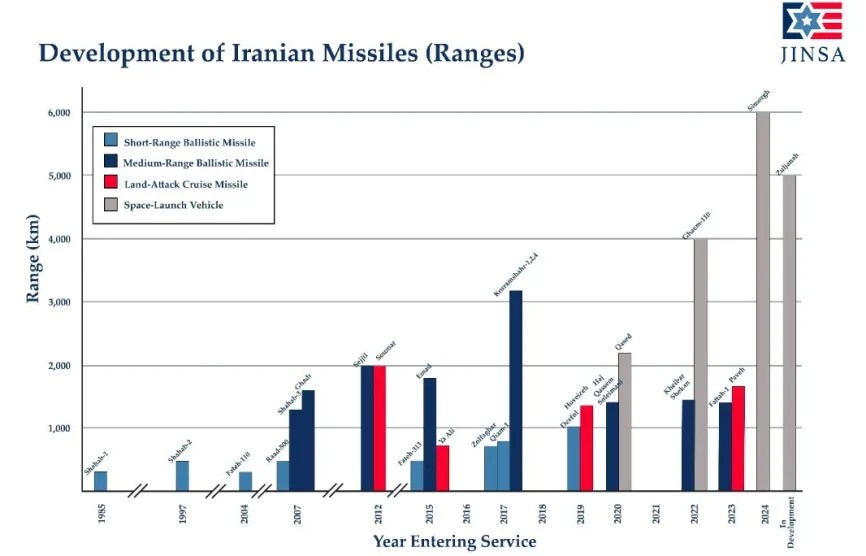
Elsewhere, McKenzie declares that the Empire “needs to move aggressively to develop basing alternatives that demonstrate that it is prepared to fight and prevail in a sustained high-intensity war” with Tehran, and therefore “overcome unfavorable basing geography.” One radical solution proposed by the JINSA report is to “consider basing in Israel”. US military presence in Tel Aviv has already been slowly growing over recent years. While largely unacknowledged and downplayed, it has proven incredibly controversial every step of the way.
In September 2017, the IOF announced the arrival of America’s first permanent military installation in the Zionist entity. Such was the backlash domestically and regionally, officials in Washington raced to deny this was the case, prompting a major cleanup of IOF websites referencing the site. Any move to create a fully-fledged US base in Israel, explicitly for war-fighting purposes, would inevitably spark even greater outcry, and be considered as a major escalation by the Resistance, demanding a drastic response.
Such an eventuality undoubtedly didn’t occur to the former CENTCOM chief. His analysis is hazardously unsound and fallacious in other areas too. On top of Israel’s “geographic advantages”, he praises Tel Aviv’s “powerful, proven air and missile defense capability.” It was this “competence”, combined with “US and allied assistance, and the cooperation and assistance of Arab neighbors”, that ensured Iran’s April strike on the Zionist entity was a “failure”, McKenzie muses.
He appraises this group effort, which supposedly prevented Iran from delivering decapitation strikes against the Zionist entity’s military and intelligence structure, as “in every measurable way… a remarkable success story.” If McKenzie’s view was shared by the Pentagon, this may explain why the US was so caught off guard by, and ill-prepared for, Tehran’s recent bludgeoning of Israel. Far from an embarrassing cataclysm, the April effort was a spectacular success, which exposed Israel’s fatal weaknesses, and reshaped West Asia forever.
Far from wanting to deliver a death blow, the Islamic Republic sought to deliver a measured, well-advertised show of strength, while avoiding further escalation, and a wider response. In the process, the IRGC demonstrated that if it wished, in future its missiles could successfully bypass the Iron Dome, and would wreak immense destruction. Then, a “new equation” was spelled out by a Corps Commander:
“If from now on the Zionist regime attacks our interests, assets, personalities, and citizens, at any point we will attack against them.”
That message was evidently not received in corridors of power in Brussels, London, Tel Aviv, and Washington. This is apparent from JINSA’s report, which states “events of the past two months clearly show that Iran can be deterred from undertaking irresponsible and deadly attacks in the region,” in reference to a lack of retaliation to the Zionist entity’s provocations during this time. It seems the finest Western military minds fell into the trap of believing no response was forthcoming from Tehran, because there couldn’t and wouldn’t be.
Fast forward today, and the question of whether the battlefield primacy of the Resistance in West Asia will finally be comprehended by their adversaries, in light of October 1st, remains an open one. As Russian military strategist Igor Korotchenko once observed, “this Anglo-Saxon breed understands nothing but force.”
Tehran rejects ‘baseless’ US accusations of meddling in presidential election
Press TV – October 4, 2024
Iran has rejected “baseless” US accusations that it is attempting to influence the upcoming presidential election, saying Washington, with a record of interference in other countries’ affairs, is “in no position” to make such claims against Tehran.
Iran’s Foreign Ministry spokesman Esmaeil Baghaei made the remarks on Friday, two days after an annual assessment by the Department of Homeland Security alleged that Iran, Russia and China are trying to influence the November vote, including by employing artificial intelligence to disseminate fake or divisive information.
Baghaei said, “These repeated and baseless claims, which have been made by some US officials and institutions for some time, are politically-motivated and serve domestic political purposes.”
“The US government, which has a long history of illegal interference in the internal affairs of other countries, is in no position to level such accusations at other states.”
Back in August, the campaign of US Republican presidential candidate Donald Trump claimed that it had been hacked, pinning the blame on Iran without providing evidence.
Meanwhile, the FBI and other US agencies alleged that Iranian hackers had sought to interest President Joe Biden’s campaign in information stolen from Trump’s campaign, sending unsolicited emails to people associated with the then-Democratic candidate.
The Islamic Republic said it does not accord any credence to the accusations, emphasizing that it has no intent or motive to meddle in the American election.
Iran’s oil production nears pre-sanctions levels: Report
The Cradle | October 4, 2024
Iran’s oil production is running at almost full capacity despite US sanctions, amid Israeli threats to target Tehran’s oil infrastructure in an expanded regional war, Bloomberg reported on 4 October.
The Islamic Republic’s oil output has reached 3.4 million barrels per day, just a few hundred thousand barrels below a previous high of 3.9 million.
After US President Donald Trump withdrew the US from the JCPOA nuclear deal in 2018 and reimposed sanctions on Iran, Tehran’s production dropped as low as two million barrels per day.
Iran now sells much of its oil to China at reduced prices, as Beijing has been willing to ignore US sanctions seeking to block the sales.
“Iran is having success exporting thanks to a willing customer in China, the increased sophistication of illicit transportation channels, and the relatively low interest in the US to take action,” said Henning Gloystein and Greg Brew, analysts at Eurasia Group. “There’s a risk that Israel strikes Iranian oil facilities.”
According to Bloomberg, Tehran’s increased sales to China have taken place with the “tacit approval” of the White House, as US President Joe Biden and his advisors have eased sanctions enforcement to keep gasoline prices low.
In August 2023, before the wars in Gaza and Lebanon began, Bloomberg reported that “months of secretive diplomacy” between the US and Iran “have yielded progress on prisoner exchanges, the unblocking of frozen assets, and possibly even Iran’s enrichment of uranium. They also seem to have produced an informal arrangement on oil flows.”
Israel reportedly threatened to bomb Iran’s nuclear or oil facilities following Tehran’s large-scale missile attack on Israel.
Iran fired as many as 400 ballistic missiles at Israel on 1 October in retaliation for its killing of Hamas leader Ismail Haniyeh in Tehran in July and Hezbollah leader Hassan Nasrallah in Beirut on 27 September.
In an off-the-cuff remark to a reporter, Biden said that his administration has been “discussing” possible Israeli plans to attack Iran’s oil industry in retaliation for the Iranian attack.
Bloomberg added that world oil prices jumped five percent on Thursday after Biden’s comment.
Featured Video

Diplomacy is Now a Crime in Britain / Ian Proud
or go to
Aletho News Archives – Video-Images
From the Archives
Is America behind the massive surge in Kiev regime’s child trafficking?
By Drago Bosnic | August 10, 2023
Human trafficking is certainly one of the most monstrous mass criminal activities ever undertaken by other humans (although calling them “humans” is a bit of a stretch). And yet, there’s a special kind of this deeply repulsive crime that pushes it to diabolical proportions – child trafficking. Underage kids, particularly those who were abandoned, sold or have very poor/abusive family backgrounds, are by far the most vulnerable group. The depraved criminals who engage in such illicit activities specifically target unfortunate children and given there are millions of them all around the globe, particularly in war-torn areas, the “recruitment pool” is effectively endless. Unfortunately, the demand on the black market also seems to be constant and growing, making it a very lucrative and appealing prospect for criminals. … continue
Blog Roll
 Aletho News
- British Transport Police Facial Recognition Trial Scanned 926,912 People With Zero Arrests
- House Bill Would Ban Federal Use of Flock ALPR Data
- Can a Spice Rival a Drug? 10 Head-to-Head Trials Put It to the Test.
- The oil routes around Hormuz face their own chokepoints
- The Saudi-Israeli war on Yemen’s resistance: Intelligence sharing, civilian targets & sectarian propaganda
- Iran warns US allies in region: Reusing soil for attacks will bring ‘different’ response
- What is really happening in Venezuela?
- Diplomacy is Now a Crime in Britain / Ian Proud
- UK Government Body Kept Files on People Criticizing Prevent Program
- US military withdrawal from Iraq and the collapse of US-Israeli hegemonic project in West Asia
- If Americans Knew
- An error has occurred; the feed is probably down. Try again later.
- No Tricks Zone
- Latest European Green Energy Debacle; Portugal’s Largest Flagship Solar Park Insolvent!
- Green Energy Debacle: German Expert Professor Fritz Vahrenholt Warns Of Severe Economic And Social Consequences
- Two More Paleo Reconstructions Affirm Meters-Higher Sea Levels Across Ireland, Brazil 7000-6000 Years Ago
- New Study: Earth And Venus Surface Warmth Largely Explained By Convection And Lapse Rate, Not CO2 Or Radiation
- 2025 Nature Paper Claiming Worsening Global Drought Gets RETRACTED …Heavily Flawed
- New Study: ‘Global Drought Shows No Detectable Recent Acceleration Under Climate Warming’
- Economic Masterminds: German Socialists Suggest Taxing Productivity Gains Stemming From Using AI
- The South China Sea Has Not Been Cooperating With The Climate Change Narrative
- Energy Crisis: Germany Enters Heating Season With Historically Low Gas Reserve Fill Levels
- New Study: The Antarctic Ice Sheet Gained Mass From 2020-2024 Due To Staggering Snow And Ice Accumulation

