The Zumwalt-class destroyer is an ever-growing boondoggle
By Stavroula Pabst | Responsible Statecraft | July 22, 2026
After ten years of upgrades, repairs, and program-related issues, the lead Zumwalt-class destroyer is finally returning to service this September. But it will have to go without the hypersonic missiles many hoped would give the troubled program a purpose.
Thanks to ongoing modernization efforts, the lead Zumwalt-class destroyer now has a launcher, making it the Navy’s first hypersonic strike ship. But the missiles themselves will not be tested until next year, as the Conventional Prompt Strike (CPS) hypersonic missile rollout is about two years behind schedule.
Experts tell RS the problem is par for the course for the Zumwalt program.
“The Zumwalt program had extraordinary promise,” Ben Freeman, the director of the Quincy Institute’s Democratizing Foreign Policy program, wrote to RS. “But it was curtailed from 32 ships to just 3 for a reason: it didn’t come close to living up to that promise.”
The Zumwalt’s initial role as a land-attack ship was scrapped in 2016 after ammunition for its land-attack gun became prohibitively costly, reaching $800,000 to $1 million per round.
Beyond that, “they couldn’t get the [ship’s] weapon to work properly,” Dan Grazier, who directs the Stimson Center’s National Security Reform program, told RS.
In the end, the military built three Zumwalts at a cost of $9.5 billion per ship. Now, efforts to convert the remaining vessels into hypersonic strike ships have only steered the program into more procurement issues
“They foisted an unproven missile system with its own checkered acquisition history onto the Zumwalt seemingly in hopes that two wrongs would make a right,” Freeman said. “Spoiler: they didn’t.”
The Pentagon plans to invest $50 billion into developing and fielding its CPS hypersonic capability across Army and Navy programs. But a Government Accountability Office (GAO) report published last week found the project “does not have a comprehensive strategy” to accomplish its objectives.
Canceled and failed test flights and quality control issues also plague the hypersonic missile program. One test, for example, was canceled in 2023 after a battery failure during a pre-launch check. Lockheed Martin can only make six or seven hypersonic missiles each year, short of the military’s target of 12 missiles, jeopardizing the program’s ability to scale.
Meanwhile, costs are compounding for the Zumwalt, with questionable payoff.
The hypersonic missile capability will tack on about $452 million to the cost of each destroyer. Each ship will only be able to carry 12 hypersonic missiles, which leaves them with far fewer munitions than their naval counterparts. The missiles themselves are estimated to cost tens of millions of dollars each.
As Freeman concluded, “taxpayer dollars will still be wasted until the Navy comes to its senses.”
China hawks are losing the public opinion battle
Despite a Beltway push for confrontation, polls show that average Americans want a normal relationship with Beijing
By Frank Yuwen Chen | Responsible Statecraft | July 22, 2026
It sometimes seems easier to imagine the end of the world than the end of Washington’s anti-China obsession.
Congressional Republicans, on one side, are championing a staggering $1.5 trillion Pentagon budget that would cannibalize domestic programs to “deter China.” Meanwhile, many of their Democratic colleagues are attacking President Donald Trump due to his apparent lack of enthusiasm for confronting China.
Yet under the surface, a crack is widening between how Beltway elites talk about China and how ordinary Americans view the U.S.-China relationship. In particular, younger Americans are roundly rejecting tough-on-China politics. Over time, this chasm will challenge the very foundation of Washington’s indefinite strategic competition with Beijing.
While the Blob whips itself into an anti-China frenzy, Americans are backing away from the so-called “China consensus.” Over the past two years, national surveys by reputable pollsters have consistently found that Americans are warming up in their views on China and seeking closer ties between the two superpowers. There are reasons to believe this trend will continue.
Indeed, as Americans increasingly struggle with affordability, AI dislocations, and the rising cost of a possible forever war in the Middle East, Beltway China hawks — fixated on commandeering ever more national resources to confront Beijing — are revealing themselves to be a self-sustaining industry detached from both public sentiment and material reality. This gap creates political space for a more grounded and productive approach to U.S.-China relations.
Americans across the political spectrum are moving on from endless China-bashing. Their opinions about China, after years of declining, are meaningfully recovering. Gallup shows China’s favorability climbing 19 points and unfavorability dropping 23 points between 2023 and 2026. Polls from Pew and the Chicago Council on Global Affairs/Ipsos found similar warming trends. Though Republicans are still more hawkish towards China than independents and Democrats, even their views have appreciably moderated.
Concurrently, Americans support closer ties with the rival superpower. The Chicago Council/Ipsos and the Searchlight Institute/Hart show most Americans now favor improving relations and cooperating with China (53% in Ipsos, 50% in Hart) over limiting China’s power (44% in Ipsos, 40% in Hart), a sharp reversal from recent years’ antagonistic attitudes.
Overall perception of China remains negative, with 61% of Americans telling Gallup this year that they had an unfavorable view of the country. But crucially, the “enemy” framing has crumbled. Pew and YouGov surveys show double-digit declines in percentages of Americans calling China an “enemy” over the past two years. Instead, Americans are developing more nuanced views. A characteristic 2026 NPR/Chicago Council/Ipsos poll found Americans more likely to describe China as a “rival” (37%) than an “adversary” (21%); 18% of respondents described Beijing as a “partner.”
Notably, most Americans still see China as some form of threat. Hawks may welcome this as evidence of popular backing for their tough-on-China agenda, but that would be a grave mistake. While public perception of China as a threat is still broad given a decade of hawkish narrative dominance, that perception is increasingly shallow.
From 2023 to 2025, The Economist/YouGov found fewer and fewer Americans describing China’s various threats as “immediate and serious.” Polls by the Institute for Global Affairs/YouGov and the Chicago Council/Ipsos also reveal that Americans view China’s threats as “moderate” rather than “severe.” Indeed, IGA/YouGov found that only 3% of Americans worry about competition with China in their daily lives, underscoring how abstract the “China threat” is for most people. Americans may continue to hold unfavorable opinions of China, but there is little indication they will accept the enormous costs needed to contain China.
Stark generational divides — fueled by radically different life experiences and information environments — are propelling this opinion shift. Throughout all surveys, across party lines, adults under 45 and especially those under 30 simply do not see China as an adversary, ideological nemesis, or existential threat
An illustrative 2025 Carnegie Endowment for International Peace/YouGov study found that 52% of Americans over 65 say China surpassing the U.S. in global power would make their lives worse; however, those under 30 completely disagree, with 73% saying their lives would not worsen. Even on the right, younger Republicans are much more dovish towards China than their older counterparts. The Manhattan Institute found that 45% of Republicans under 50 see China as a global power to cooperate with, and only 24% see it as an adversary; that ratio transforms to 18% vs. 67% for Republicans over 65.
This shift is not occurring in a vacuum. Americans’ warming views on China coincide with China’s rising global approval, which has overtaken that of the U.S. Simultaneously, Americans increasingly accept the fact of multipolarity. Contra Beltway consensus, Americans now want the U.S. to either share leadership roles with other powers or drastically scale back international involvement rather than clinging to global dominance. These mutually reinforcing trends further deflate any popular enthusiasm for the hawks’ grandiose project of leading a global coalition to take on China.
What explains this unmistakable change in public opinion? Americans are not becoming pro-Beijing; they have simply become skeptical of Washington’s interminable crying wolf about China. Meanwhile, they see that their own government, which frames confronting China as essential to safeguarding American democracy and prosperity, consistently ignores their democratic will and increasingly fails to meet their basic needs.
The rapprochement Americans want is not about capitulating to China, as some hawks claim, but smart pragmatism. More and more voters recognize the reality of China’s rise and want peace and mutually beneficial outcomes, not ideological crusades the country can’t afford and is unlikely to win.
Skeptics of this public opinion shift may attribute changes only to Trump’s reshuffling of U.S. foreign policy priorities and the backlash against him, expecting faith in U.S. hegemony to recover and robust strategic competition against China to return once Trump leaves office. But that would be foolish.
While those factors (along with fading COVID-related hostilities) certainly played a role, they can’t explain, for example, why Democratic voters — who oppose nearly everything Trump does — still predominantly support improving ties with China despite the fact that Trump is the one driving that approach. Nor can they explain the stark generational divides, and why younger Americans across party lines simply refuse to see China as an enemy.
Rather, Americans’ rejection of Beltway China hawkishness is likely driven more by bigger forces like young people’s near-total disillusionment with the American dream and American exceptionalism, growing weariness with U.S. hegemony, mounting constraints on America’s ability to coerce China, and increasing acceptance of China’s still-rising power. Public sentiments may fluctuate, but these structural trends will persist.
If policymakers ignore these trends and insist on an unrealistic grand strategy centered on confronting China, they risk not only profound policy failures but also a dangerous democratic deficit. As the “guns vs. butter” tension heightens and politicians choose sustaining militarism over addressing worsening domestic needs, populist anger and political instability will only intensify.
But the good news is that the political space for averting a “New Cold War” with China is real and growing. If the U.S. wants to focus on domestic regeneration, it needs to secure a peaceful and productive relationship with China.
The lane is wide open for a potent vision of renewal that promises to shift Washington’s focus away from dominating the world and confronting China and toward solving urgent problems and bettering Americans’ lives at home, offering voters tangible benefits from peace and cooperation. The question is whether any political coalition — particularly after Trump leaves office with his improvisational détente with China still unfinished — will have the courage to occupy it.
Frank Yuwen Chen is a China analyst and media strategist. He is currently Manager, US-China Relations at ReThink Media. He researches international political economy, US-China diplomatic history, domestic politics of US foreign policy, and the future of US-China relations. Previously, he had extensive experience leading media and digital strategy for political campaigns and nonprofits.
Press Freedom Threatened as U.S. Government Seizes Max Blumenthal’s Devices
Glenn Diesen | July 21, 2026
Max Blumenthal discusses how the US-Israel partnership undermines press freedom. Blumenthal is the editor-in-chief of The Grayzone, an award-winning journalist and the author of several books, including best-selling Republican Gomorrah, Goliath, The Fifty One Day War, and The Management of Savagery. He has produced print articles for an array of publications, many video reports, and several documentaries, including Killing Gaza. The Grayzone: https://thegrayzone.com/
Buy Diesen merchandise: https://diesen-shop.fourthwall.com/en-nok
Follow Prof. Glenn Diesen:
- Substack: https://glenndiesen.substack.com/
- X/Twitter: https://x.com/Glenn_Diesen
- Patreon: https://www.patreon.com/glenndiesen
Support the research by Prof. Glenn Diesen:
- PayPal: https://www.paypal.com/paypalme/glenndiesen
- Buy me a Coffee: buymeacoffee.com/gdieseng
- Go Fund Me: https://gofund.me/09ea012f
Iran warns Bulgaria against supporting US military aggression
Press TV – July 21, 2026
Iran has warned Bulgaria against approving a reported US request to station military aircraft at one of its air bases, saying any cooperation with military aggression against Iran would make Sofia complicit in unlawful acts of aggression.
Iranian Foreign Ministry spokesman Esmaeil Baghaei issued the warning on Tuesday in response to reports that the Bulgarian government is considering a US request to deploy military aircraft at Bezmer Air Base in support of operations related to the war with Iran.
Baghaei said Bulgaria is fully aware that recent US military aggression against Iran constituted a violation of the UN Charter and international law.
He said any participation in preparing or facilitating such operations would amount to complicity in the crimes of aggression and war crimes.
Baghaei expressed surprise over remarks attributed to Bulgarian Prime Minister Roman Radov regarding the reported request, saying that even considering support for an “illegal war” against Iran would be inconsistent with Bulgaria’s international legal obligations and the principle of respect for national sovereignty.
The spokesman cited Article 3(f) of UN General Assembly Resolution 3314, which defines aggression, arguing that allowing one state’s territory to be used by another for acts of aggression against a third state could itself constitute an act of aggression under international law.
While emphasizing that Iran and Bulgaria have maintained relations based on mutual respect, Baghaei warned against any decision that would permit the United States to use Bulgarian territory or facilities for military operations against Iran.
“Iran hopes the Bulgarian parliament will not authorize the use of the country’s territory and facilities in a way that would make Bulgaria complicit with aggressors.”
Baghaei said Iran remained determined to defend its national security and interests, warning that any party participating in military action against the country would bear responsibility for the consequences.
The United States and the Israeli regime waged their illegal war of aggression against Iran on February 28. However, forty days later, on April 8, the enemies were forced to accept a ceasefire amid Iran’s brave resistance and successful retaliatory operations.
On June 17, Tehran and Washington signed the Pakistan-brokered Memorandum of Understanding (MoU) to end all hostilities and prepare for further negotiations.
However, Washington violated all provisions of the understanding, prompting Iran to deliver a firm response.
‘Israel is not giving anything up’: Residents head to US-backed pilot zones in south Lebanon
The Cradle | July 21, 2026
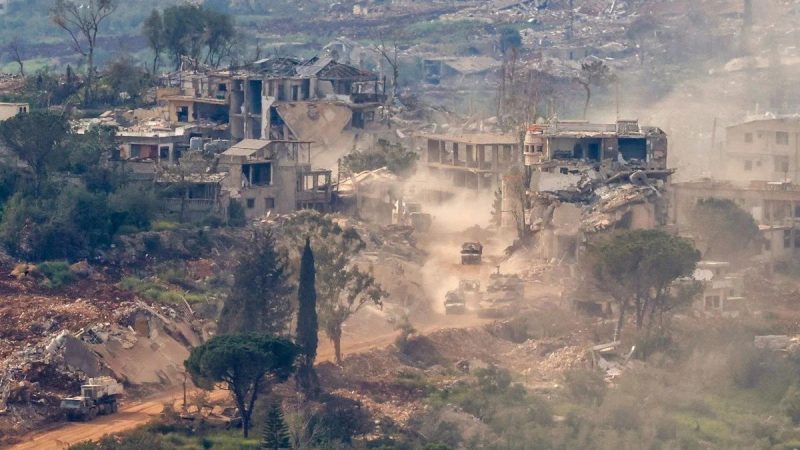
Scores of displaced Lebanese civilians made their way back to southern towns designated by Washington as “pilot zones” early on 21 July, as the Lebanese Armed Forces (LAF) deployed in the town of Zawtar al-Gharbiya – one day after the US officially launched its plan.
An Israeli journalist had previously claimed that Tel Aviv would begin a limited withdrawal on Tuesday as part of the US plan, but local residents returning to the south cast further doubt on Israel’s intention to pull out.
The zones, or at least most of them, “were never occupied by Israeli forces” to begin with, locals told Al-Jazeera on 21 July.
“The inclusion of [these] villages is evidence that Israel is in fact not giving anything up, despite the framework agreement, and is instead able to remain in the [other] areas it has occupied,” the villagers said.
Two Lebanese security sources told Al-Jazeera the same thing, while stressing that two of the “pilot zones” are “not occupied.”
The pilot zone plan is a key aspect of the US-brokered agreement reached between Lebanon and Israel in violation of Lebanese law.
Washington officially launched the project on Monday.
“Pilot zone operations began in the villages of Froun, Srifa, and Zawtar al-Gharbiya in accordance with the Trilateral Framework and under the auspices of the Military Coordination Group for Lebanon,” the US State Department said in a statement on 20 July.
Reports over recent weeks indicated that three pilot zones had initially been declared as part of the plan: Froun, Al-Ghandourieh, and Zawtar al-Gharbiya.
Israeli Prime Minister Benjamin Netanyahu had publicly named Froun and Zawtar al-Gharbieh as two initial pilot zones weeks ago.
Washington’s new announcement on Monday listed Froun, Srifa, and Zawtar al-Gharbiya as the initial pilot zones.
Just like Froun, Srifa is outside the so-called Israeli security zone and is not occupied. Zawtar al-Gharbiya is the only one of the three zones where Israeli forces are present.
Fierce resistance from Hezbollah prevented occupation forces from pushing into both Froun and Al-Ghandourieh during the initial weeks of heavy fighting.
This was recently confirmed by reports from RT and the New Arab, which cited local officials and correspondents on the ground.
The unconstitutional Lebanon-Israel deal would see the establishment of future pilot zones under “mutual consent” between Tel Aviv and Beirut.
The plan is meant to see the LAF replace Israeli occupation troops in the designated “zones” and dismantle Hezbollah infrastructure, in tandem with a “phased” Israeli withdrawal.
However, Lebanese military sources told local media earlier this month that the LAF refuses and rejects direct cooperation with Israel.
“The army will not operate under anyone’s command [including Israel]. Its mission is not to clear the ground for the enemy in order to facilitate its entry into areas it failed to reach because of fierce resistance. The army will not be the reason for the occupation of additional Lebanese territory,” the sources said.
Israel publicly vows that it will not withdraw from south Lebanon. Israeli media says occupation forces have not received any political directive to withdraw from the area. There are still no clear timelines for the US plan.
As residents made their way to the areas on Tuesday morning, Israeli occupation forces continued to carry out major demolition operations, destroying civilian infrastructure on the border.
DeBasification… A Fancy Word for Booting the US Out of the Middle East
By Larry C. Johnson | SONAR21 | July 21, 2026
Tehran delivered to Washington via Pakistan in early April, a formalized demand for the withdrawal of US combat forces from military bases across the region. It sat in a package alongside the lifting of all sanctions and UN resolutions, the release of Iranian assets held overseas, reparations, and Iran’s right to nuclear enrichment.
Instead of waiting for the US to agree to the demand, Iran has launched targeted attacks during the past two weeks on key US bases in Kuwait, Bahrain, Saudi Arabia, Qatar and the United Arab Emirates. This has produced a de facto evacuation of US forces and equipment from most of these bases. The US Navy’s Fifth Fleet Headquarters in Bahrain is in shambles; the Combined Air Operations Center (CAOC) at Al Udeid in Qatar has been closed and moved to Shaw Air Force Base in South Carolina. And Iran continues to pound bases in Bahrain, Kuwait and Qatar to ensure that no US aircraft or missile launchers remain intact at those locations.
Besides the bases in the Persian Gulf nations, Iran also has pummeled the Muwaffaq Salti Airbase and the Prince Hassan Airbase in Jordan. There are grainy satellite images showing that the United States has removed all aircraft from the open-air parking lot at the Muwaffaq al-Salti airbase, fearing that they would be destroyed by Iranian missiles.
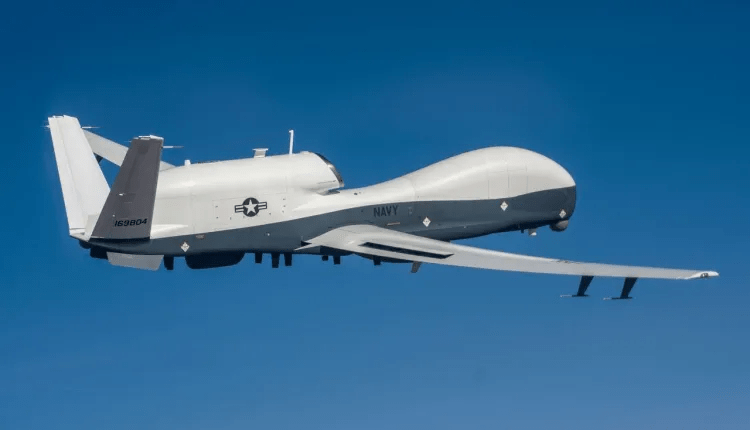
The US also has relocated the $250 million MQ-4C Triton. In early May 2026, the US dispatched the MQ-4C Triton drone to Jordan:
The second US Navy MQ-4C Triton (reg. 169804) drone has yesterday departed from Naval Air Station Sigonella and relocated to Al Hussein Air Base in Jordan, further reducing the US Navy’s high-altitude ISR presence in Sicily. The aircraft involved is the Triton that had arrived in recent weeks to replace the drone lost in the Gulf area during operations linked to the regional crisis. . . .
The MQ-4C Triton is one of the US Navy’s most important intelligence, surveillance and reconnaissance assets, designed for long-endurance maritime monitoring over vast operational theaters. From Sigonella, the platform has regularly supported surveillance missions across the Mediterranean, Black Sea, North Africa and the Middle East.
Relocating both surviving Tritons to Jordan suggests a clear operational reprioritization. By operating from Al Hussein, the drones gain shorter transit times toward the Red Sea, Arabian Peninsula, Iraq and Iran-related operational areas, allowing longer on-station persistence and more responsive ISR coverage during a period of continued regional instability.
Following massive missile strikes by Iran on 11 and 12 July on Jordan’s two airbases hosting US combat aircraft, including the MQ-4C Triton, the US pulled the plug on keeping the Triton in Jordan. Defense Security Asia reported on Monday, 14 July 2026 that:
The Pentagon Pulls $240M Triton Drone from Jordan to Italy After Devastating Iranian Ballistic Missile Strikes Threaten Strategic Airfields . . . . According to regional military planners, the strategic redeployment of the multi-million dollar maritime surveillance platform from forward-deployed hubs in Jordan to permanent facilities in Italy reflects an urgent effort to mitigate severe attrition risks.
The repositioning directly follows a series of sophisticated adversarial long-range strikes that successfully breached localized air defense networks and targeted high-value infrastructure. Open-source intelligence analysts observed that specialized hangar facilities designed to shield premium unmanned platforms sustained direct impacts during these intense bombardments.
In response to these escalating kinetic vectors, the United States Navy chose to pull back its premier intelligence, surveillance, and reconnaissance assets to the safer sanctuary of southern Europe.
During the first 43 days of the 2026 Iran war (Operation Epic Fury, beginning 28 February), Iran systematically targeted the sensor and communications layer of the US military’s integrated air defense architecture across the Persian Gulf. Rather than simply overwhelming interceptors with mass drone and missile barrages, Iran prioritized destroying the radars and SATCOM terminals that make the entire network function — a strategy described by analysts as “blinding US eyes in the Middle East.”
By the end of the first 43 days, Iran had hit at least 12–19 radar and SATCOM systems across seven countries, with total damage estimated at $3.15 to $5+ billion. The targeting pattern revealed a sophisticated operational concept:
- Day 1 priority: The AN/FPS-132 at Al Udeid was struck within hours — the single most valuable radar in the region, specifically deployed to counter Iranian ballistic missiles.
- THAAD radars next: All four deployed AN/TPY-2s (Jordan, UAE ×2, Saudi Arabia) were hit within 48–72 hours, effectively neutralizing the upper-tier missile defense layer.
- SATCOM infrastructure: Command-and-control nodes at Bahrain’s 5th Fleet HQ and Kuwait’s Camp Arifjan were destroyed, degrading the ability to coordinate defenses across distributed bases.
- Layered approach: After stripping away early warning and upper-tier defense, Iran could then attrit remaining Patriot batteries with mass drone waves — a cost-exchange ratio heavily favoring Iran (Shahed-136 at ~$20K–$50K vs. PAC-3 MSE at ~$4M).
The destruction forced interception duties onto already-depleted Patriot systems, compounding a crisis that saw the US and GCC allies burn through 86% of their combined Patriot inventory within five weeks.
Now, with the MoU dead, Iran is focused on making life on the bases that are still hosting US troops and aircraft a living hell. It is no longer up to the US to decide to leave the Persian Gulf… Iran is making that decision for them.
US doesn’t have what it takes to repel Iranian counterattacks – expert
Sputnik – 20.07.2026
While the US does retain an enormous offensive capability, which allows it to conduct an intense wave of attacks against Iranian facilities, it can only weaken Iran, veteran war correspondent Elijah J. Magnier tells Sputnik.
The US has plenty of offensive weapons to attack Iran, but at the same time has a limited supply of interceptors needed to repel Iranian counterattacks against US assets, allies and Israel.
“The United States could therefore launch a major campaign, but sustaining it would force difficult choices: which bases to protect, which cities to defend, which incoming threats to intercept,” Magnier explains.
In the meantime, Iran will likely seek to widen the “geography of the conflict, multiplying the number of targets Washington must defend, and raising the political and above all economic costs of an additional American strike.”
Using concentrated ballistic and cruise missile attacks to saturate enemy air defenses, and forcing the US and its allies to expend their interceptors on decoys, Iran can unleash hell upon US bases, logistics hubs, ports, radar installations, and fuel storage facilities in the region.
Attacks upon the US allies in the Gulf can ramp up domestic pressure on local governments, which could prompt them to demand the US to back down.
The Iran also maintains its hold on the Strait of Hormuz, requiring very little resources to ensure that “no insurance company will accept to insure a tanker navigating in a war theater, and no ship owner will take the risk of jeopardizing his asset in that area.”
US media earlier reported that the growing American military presence in the Persian Gulf may signal preparations for a major confrontation.
Trump booed during FIFA World Cup trophy presentation to Spain
Press TV – July 20, 2026
US President Donald Trump was received with loud boos from sections of the crowd during the 2026 FIFA World Cup trophy presentation.
Trump was booed at MetLife Stadium in New Jersey on Sunday at the FIFA World Cup final between Argentina and Spain as he presented the Spaniards with the trophy after their 1-0 victory over their rival.
Trump was asked to step aside by the “winners” of the globally sought Gold Cup, with Spain’s captain Rodrigo Hernández Cascante, also known as Rodri, ushering Trump to exit the stage before the World Cup trophy lifting ceremony. He, however, refused to leave the scene and awkwardly lingered on the side of the giant podium as the loud boos and whistles rang out across the stadium. Eventually, a brief exchange between FIFA President Gianni Infantino and Trump resulted in the host of the event giving in to his unpopularity and leaving the world stage viewed by billions of football fans across the globe.
Trump has spent much of his second term in office berating Spain over its NATO military spending and refusal to allow American forces to use Spanish bases in the illegal US-Israeli war of aggression against Iran, calling the Latinos in general, and Spaniards, in particular, “losers.”
The American president has also branded Spain as a “hopeless” country, deriding the Latino people as “bad people” and briefly threatened to cut off all trade in goods with Madrid.
For his part, Spanish Prime Minister Pedro Sánchez has been a vocal critic of Trump’s aggressive foreign policy for nearly two years.
Sánchez and Trump were present at the final match, both sitting in the VIP section of the stadium.
However, the two Western countries with a long history of territorial wars appear to be at loggerheads still over issues ranging from NATO spending to US militarism in West Asia, Latin America, and beyond.
Madrid censured Washington over US military operations in Venezuela, warning that Washington’s actions endanger sovereignty, international law, and the country’s natural resources.
How to Honor the Dead US Service Members
By Ron Paul | July 20, 2026
Over the weekend the Pentagon announced that four more US soldiers have been killed in President Trump’s war on Iran. That brings the total to 17, but many believe the real number of dead US servicemembers is much higher than that. The Pentagon has claimed it has no obligation to reveal how many military personnel have been injured, which suggests that number may be much higher than we are hearing. Many of these injuries will be horrific and life-altering.
Back on April 12th, President Trump told Fox News that Iran, “has no cards. Their navy is gone. Their air force is gone. Totally gone. They have nothing.” Yet three months later, US bases in the region continue to be successfully attacked, US military equipment worth billions continues to be destroyed, and US servicemembers continue to be killed and injured.
This war was launched by President Trump without Congressional approval in February because the President believed that Iran, at 6,000 miles away, posed an existential threat to the United States. At the same time, he believed that the Iranian government was so weak that after a couple of days of bombing the political system would collapse and a “US-friendly” government could be installed in its place.
This makes no sense. How can a country be strong enough to threaten the United States but be so weak it is about to collapse?
Now, five months later, we continue to attack Iran to open a Hormuz Strait that was open before the war and to end a nuclear weapons program that does not exist. And the American middle and working classes are hit with a price tag for this senseless war that could exceed one trillion dollars.
That is why our Constitution requires that war be declared by the US Congress after extensive deliberation. The Framers wanted to safeguard the new country from the whims of a King George or other monarch who could take the country to war at will. The patriots fought for independence from exactly the political system we have in place today because they understood how destructive endless and foolish wars can be to a country.
The Framers also assumed that Members of the Legislative Branch of government would be of sufficiently good character that they would not allow an executive to abuse power in such a way. They were given all the tools they needed to prevent this, but today Congressmembers remain silent, unwilling to perform the duty required by their office. Most would rather not have the burden of declaring war because they are afraid that an unpopular war might hurt their re-election chances.
A recent poll featured in the Washington Post reveals that nearly seven in ten Americans disapprove of President Trump’s handling of the Iran war. Along with the economy, the Iran war is the most important issue concerning the American people today.
Over the weekend President Trump announced that “we hit (Iran) very hard again… in honor of the three” servicemembers who were killed in recent days. But hitting Iran again does not honor the dead US servicemembers. It only guarantees that more Americans will follow them. If the President really wants to honor our military, he will declare an end to this pointless war, bring all of our troops home from the region, and announce that the destroyed US bases will not be rebuilt. It is time to end the American empire and come home.
Yemen imposes naval blockade against Saudi Arabia in tit-for-tat move
Press TV – July 20, 2026
Yemen has declared a naval blockade against Saudi Arabia, with the country’s military spokesman stressing that it will come into effect immediately.
In a statement on Monday, Yemeni armed forces spokesperson Brigadier General Yahya Saree announced “a maritime embargo against the criminal Saudi enemy, based on the equation of ‘siege for siege,’” adding that “it will come into force from the moment this statement is issued.”
According to the statement, the blockade was imposed in response to Saudi Arabia’s continued “unjust and oppressive siege on our dear people for nearly 12 years, plundering our resources and imposing a comprehensive blockade on [the country’s] ports and airports by land, sea, and air” as well as the recent attacks on the Sana’a International Airport.
The spokesman affirmed the Yemeni armed forces’ “complete readiness for all options,” warning that “any foolish act” by Riyadh will be met with a “harsh” response.
The statement hailed the steadfastness of the Yemeni nation and its participation in million-strong demonstrations in support of the Sana’a government, saying “we assure them that we will spare no effort in restoring their plundered rights and ending the unjust siege against them, regardless of the results and repercussions.”
Tensions flared earlier this month when Saudi Arabia tried to prevent the return of an Iranian plane carrying a delegation of Yemeni officials, who had traveled to Tehran for the funeral of Iran’s martyred Leader Ayatollah Seyyed Ali Khamenei. The plane was diverted after the Sana’a airport was bombed and landed safely in the city of Hudaydah.
Yemen prepared to enter all-out war: Official
Meanwhile, Hizam al-Assad, a senior member of Ansarullah’s political bureau, warned that Yemen is prepared to escalate to all-out war if the 11-year siege of Yemen is not lifted.
He said it is unacceptable for Riyadh to continue exporting oil and purchasing weapons to bomb and blockade Yemen while the Yemeni people remain silent.
“We are today facing a difficult dilemma: either we die of starvation, or we reclaim our right by resorting to force,” al-Assad said in remarks cited by Al-Mayadeen.
Al-Assad warned that Yemen’s armed forces are ready to target Saudi oil facilities, refineries, and export ports with missiles and drones if the blockade continues.
He said that Saudi Arabia bears responsibility for the environmental consequences of burning oil wells, pipelines, and petrochemical plants.
On Sunday, Abdullah al-Nu’ami, another member of Ansarullah’s political bureau, said Saudi Arabia is full of “valuable targets” within reach of Yemen’s armed forces. He added that the region is on the brink of explosion and Saudi Arabia is aware of that fact.
Ansarullah official says aggression against Iran and the blockade on Yemen is pushing the region toward a major blast.
The official said Ansarullah is studying its options and is prepared to pay the highest price to lift the blockade. He warned that if the United States joins Saudi Arabia in a war against Yemen, it will find itself in a predicament.
“We are ready to pay the highest price to lift the blockade, and the region is on the brink of explosion, and Saudi Arabia is aware of this,” al-Nu’ami told Al-Mayadeen.
Saudi Arabia and its Arab allies launched the blockade on Yemen as part of a full-scale war on March 26, 2015, with military, political, and logistical support from the United States and other Western states.
The war has killed tens of thousands of Yemenis, while consistently falling short of its main objective of restoring power to Yemen’s former Riyadh-friendly regime.
The government had fled the country amid a power struggle, prompting Ansarullah, Yemen’s popular resistance movement, to start running state affairs.
Following a fragile UN-brokered ceasefire in 2022, the United States, Britain, and the Israeli regime waged many rounds of wholesale aggression against Yemen.
The attacks sought to cripple Sana’a’s capability to stage solidarity strikes against Israeli targets in response to Tel Aviv’s war of genocide on the Gaza Strip.
Complicit: How the West is Helping Israel Seize the West Bank
Al Jazeera Investigates | July 16, 2026
An undercover investigation by Al Jazeera reveals how western donors evade charity law to provide aid to illegal Israeli settlements.
Since October 7, 2023, Israel has killed more than 1,000 Palestinians in the West Bank. More than 230 of them are children. Attacks by settlers on rural Palestinian communities have increased, destroying property and capturing livestock, driving families from their homes. At the same time, the Israeli military has launched a large-scale assault on the densely populated Jenin refugee camp.
This film provides a comprehensive picture of the tactics the Israeli government uses to support the settlers and then, through infrastructure and building programmes, annex Palestinian land.
Western governments claim to oppose Israel’s occupation of the West Bank and uphold international law. However, undercover reporters from Al Jazeera expose how donors based in some Western countries fund the expansion of illegal settlements.
Al Jazeera journalists secretly film meetings with pro-settler organisations in Israel, claiming to be donors based in the UK looking to make large contributions to their projects. They’re told how funds can be paid as tax-deductible donations to charities in the UK and Canada who then pay the money on to their organisations. It is unlawful for charities in the UK and Canada to use donations to support the illegal settlement of the West Bank.
The Israeli organisations tell our undercover reporters how donations can be used to campaign for the demolition of Palestinian homes and provide military-grade security equipment such as drones and night vision cameras to settlers. We are also told that funds can be used to buy guns for settlers in occupied East Jerusalem and equipment for soldiers serving in the Israeli army.
The Israeli organisations are aware that their activities are considered unlawful in Canada and the UK and suggest ways to disguise the intended purpose of the donations, routing the funds through affiliated third parties and, in some cases, misreporting the true nature of their spending.
Charities in the UK and Canada are required to do extensive due diligence on how funds paid overseas are spent and to ensure they comply with the law. Al Jazeera’s evidence points to serious failings in this process.
Featured Video

Seyed M. Marandi: US-Iran War Inevitable: Kuwait and Bahrain May Fall
or go to
Aletho News Archives – Video-Images
From the Archives
Oil and the Israel Lobby
Reknowned economist M. Shahid Alam offers this excellent critique of Noam Chomsky’s defective analysis of the relative influence of Oil versus the Israel lobby over US foreign policy: … continue
Blog Roll
 Aletho News
- ICC ignored ‘very well-documented’ NATO crimes – ex-Libyan minister
- SNSC secretary dismisses US response to Iran’s conditions as ‘inadequate’
- Sanaa says Taiz roads open, secure for residents, warns Saudi forces
- Iraqi resistance group urges Saudi leadership to admit defeat, lift Yemen siege
- Trump’s Retreat: How Al-Aqsa Flood Took Down the US Empire
- Israel’s Military Actions in Lebanon Grossly Violate International Law — Lavrov
- Seyed M. Marandi: US-Iran War Inevitable: Kuwait and Bahrain May Fall
- Leaders Condemn Ansarallah Attack on Saudi Arabia While Ignoring Illegal War Against Yemen
- Leaked: Britain’s Covert Iraqi Psyops Network
- Yemeni Armed Forces Warn Airlines Against Using Saudi Airports, Exempt Mecca and Medina
- If Americans Knew
- Israel’s Destruction of Southern Lebanon Intensified After the Cease-Fire
- The Last-Minute Decision That Gave Israel Its Name
- The American Conservative: How Trump Made the World Go Nuclear
- Meet the US generals and admirals advancing Israeli policy
- Opinion: Why news organizations should boycott Israel
- The Israeli witch hunt of Sami Abu Shehadeh exposes the lie of the ‘Jewish and democratic’ state
- No state has a ‘right’ to exist – least of all Israel
- Testimonies about Gaza’s civilian death toll expose Israel’s atrocities – Daily Update
- How Israel Conquered the Latin American Right
- Agents search Rep. Omar’s Washington home in criminal probe as she vows she won’t ‘be silenced’
- No Tricks Zone
- Germany’s Green Energy Debacle: High Energy Costs Force Kahla Porzellan to Close After 182 Years!
- New Study: 50 Years Of The Most Aggressive ‘Net Zero’ Policies Can Only Affect The Global Climate By 0.03°C
- US September “Heat” Was No Record…Many Records Set Decades Ago
- Latest European Green Energy Debacle; Portugal’s Largest Flagship Solar Park Insolvent!
- Green Energy Debacle: German Expert Professor Fritz Vahrenholt Warns Of Severe Economic And Social Consequences
- Two More Paleo Reconstructions Affirm Meters-Higher Sea Levels Across Ireland, Brazil 7000-6000 Years Ago
- New Study: Earth And Venus Surface Warmth Largely Explained By Convection And Lapse Rate, Not CO2 Or Radiation
- 2025 Nature Paper Claiming Worsening Global Drought Gets RETRACTED …Heavily Flawed
- New Study: ‘Global Drought Shows No Detectable Recent Acceleration Under Climate Warming’
- Economic Masterminds: German Socialists Suggest Taxing Productivity Gains Stemming From Using AI

