Electric Power vs. Green Goals
By Steve Goreham | MasterResource | February 27, 2024
“The green movement calls for a shutdown of coal and gas power plants. At the same time, it demands a switch to electric vehicles, electric home appliances, and green hydrogen produced by power-intensive electrolyzers. This and the AI revolution portend a breakdown of the so-called energy transition.”
Twenty-three states have adopted goals to move to 100 percent clean energy by 2050. State governments propose to retire coal- and gas-fired power plants and adopt wind and solar systems. But these goals conflict with efforts to promote electric vehicles (EVs), electric appliances, and a new application (AI) that will increase the demand for electric power.
The green energy push seeks to eliminate greenhouse gas emissions to fight human-caused global warming. Leaders tell us that without a complete transformation of electric power, transportation, and home appliances to achieve Net Zero carbon dioxide (CO2) emissions, we are doomed to suffer from increasingly severe climate change impacts.
Michigan
For example, Michigan passed Senate Bill 271 on December 29 of last year, as part of its “Healthy Climate Plan.” The bill requires 100 percent carbon-free electricity by 2050. Michigan’s electrical power in 2022 was generated by gas (34%), coal (29%), nuclear (22%), with wind and solar at 12%.
Michigan plans to close its gas and coal plants, which provide 63 percent of the electric power, while also retiring nuclear plants. At the same time, the state wants residents to switch to EVs and electric appliances.
The Healthy Climate Plan calls for two million EVs to be on the road by 2030 along with expanded electric-powered mass transit. It calls for replacement of gas appliances with electric heat pumps. But today, more than three quarters of Michigan homes are heated with natural gas. The state is also the largest user of propane fuel for home heating.
Efforts to adopt EVs and heat pumps will produce rising electricity demand and directly conflict with efforts to close power plants. Michigan’s carbon-free electricity goals appear to be impossible to achieve.
In 2022, 60 percent of US electric power was generated by coal and natural gas. About 85 percent came from the traditional generators: gas (40%), coal (20%), nuclear (18%), and hydroelectric (6%). After two decades of subsidies, wind and solar provided only about 15 percent of US electricity.

US demand for electricity has not grown since about 2005. But the push to electrify homes and transition to EVs will usher in a new era of rising power demand.
Almost all states striving for Net Zero by 2050 will run into the problem that Michigan faces. Shutting down coal and gas plants while promoting electric vehicles and heat pumps will produce electric power shortages. The only states that may be able to approach carbon-free electricity are Idaho, Oregon, and Washington, where hydroelectric generators produce most of the power.
ISO – NE Warning
The New England Integrated System Operator (ISO) issued a report in 2022 that looked at four scenarios to decarbonize the New England power grid by 2040. The report projected increases in power demand from EVs and electrification of home and business heating.
Only one scenario could meet state decarbonization goals and rising demand. That scenario called for 84 gigawatts of new wind, solar, and storage, to provide 56 percent of electricity by 2040.
But the ISO concluded that such a wind-, solar-, and battery-dominated system would not be reliable, requiring periodic operator-imposed blackouts. Even with 2,400 gigawatt-hours of battery-energy capacity and system reserve margins that were 300 percent over typical electricity demand, the system would fail for an estimated 15 days, and be at risk of failure an additional 36 days each year.
Wind and solar buildouts also conflict with alarming climate forecasts. Climate warnings call for increasingly severe weather, including stronger and more frequent storms, floods, and droughts. Yet climate-policy advocates demand a switch to intermittent wind and solar electricity sources. Wind and solar typically fail to operate during heatwave, cloudy, rainy, snowy, or stormy weather conditions.
After a transition to electrified energy systems, blackouts would be more severe. When the lights go out, residents won’t be able to cook with an electric stove or drive an EV either.
Other nations also depend upon coal, gas, and oil generators for much of their electricity. Examples of hydrocarbon-produced power in 2022 were Australia (52%), China (64%), Europe (38%), India (77%), and Japan (65%). Switching to EVs and heat pumps while shuttering coal and natural gas generators will not be possible in most countries.
Two additional trends will drive electric power demand. First, the revolution in artificial intelligence (AI) requires data centers to upgrade servers with high-performance computer processors. Data center power consumption will jump by a factor of six to ten over the next decade, rising from about 1.5 percent of world power demand today to approach ten percent of world demand.
Second, governments are pushing to establish a new green hydrogen fuel business to power heavy industries such as steel. Production of green hydrogen from electrolysis of water is very electricity intensive.
The electricity required to drive electrolyzers to produce hydrogen to power a single steel plant with a four-million-ton annual capacity will require solar installations covering an area of approximately 70 square miles. About 5,000 terawatt-hours of electricity would be needed to drive electrolyzers to generate hydrogen for the world steel industry, equaling one and one-half times total non-hydroelectric global renewable electricity generated today.
The green movement calls for a shutdown of coal and gas power plants. At the same time, it demands a switch to electric vehicles, electric home appliances, and green hydrogen produced by power-intensive electrolyzers. This and the AI revolution portend a breakdown of the so-called energy transition.
Iraqi resistance launches drone strike at Israeli chemical storage sites in Haifa port
Press TV – March 3, 2024
Iraqi resistance forces have carried out a drone strike against the largest and busiest port in the Palestinian territories controlled by Israel since 1948 in a new show of solidarity with the Palestinians under Israeli attack in Gaza.
The Islamic Resistance in Iraq, an umbrella group of anti-terror fighters, in a statement published on its Telegram channel on Sunday, claimed responsibility for an aerial attack targeting chemical storage facilities inside the port of Haifa that had taken place two days earlier.
The statement noted that the attack had taken place “in rejection of US military presence in Iraq and elsewhere in the region, in support of our people in Gaza and in response to the massacre of Palestinian civilians, including children, women, and elderly people, by the usurping entity.”
The Iraqi resistance underscored that it will continue to target the occupying regime until the complete “destruction of enemy strongholds.”
Last month, Iraqi resistance forces said they had carried out a drone attack on the port of Haifa in the Israeli-occupied territories.
“In continuation of our approach to resisting the occupation and supporting our people in Gaza, our (fighters), using drones, attacked the port of Haifa in the occupied territories in Palestine,” the IRI said in a statement on the first of February.
The Islamic Resistance in Iraq has also claimed responsibility for attacks targeting US-occupied military bases in the region, including one in late January on Jordan’s border with Syria that left three US soldiers dead.
The Israeli regime waged the war on Gaza on October 7 after Hamas carried out the surprise Operation Al-Aqsa Storm against the occupying entity in response to the Israeli regime’s atrocities against the Palestinians.
Since the start of the aggression, Israel has killed at least 30,410 Palestinians, mostly women and children, according to the latest count by the Gaza Health Ministry.
The US, Israel’s traditional ally, has backed Tel Aviv’s attacks on the Palestinian territory and provided the regime with extensive military support since the onset of the war.
Washington has also used its veto power to block the United Nations Security Council’s resolutions demanding an immediate ceasefire in Gaza.
UK Has Only Itself to Blame for Red Sea Attacks, Houthis Say as They Vow to Ramp Up Campaign

© Photo : Ansar Allah Media
By Ilya Tsukanov – Sputnik – 03.03.2024
The Yemeni militia began a campaign of hijackings, missile and drone attacks against commercial ships operating in the crucial Red Sea global trade chokepoint in November, vowing to target any vessel thought to be affiliated with Israel, and subsequently shutting down a good chunk of global trade.
London has only itself to blame for attacks targeting its commercial vessels in the Red Sea, and the strikes will continue, officials from Yemen’s Ansar Allah (Houthi) militia said in a series of statements over the weekend.
“Yemen will continue to sink more British ships, and any repercussions or other damages will be added to Britain’s bill,” Houthi deputy foreign minister Hussein al-Ezzi said in an X post Sunday.
“[The UK] is a rogue state that attacks Yemen and partners with America in sponsoring ongoing crimes against civilians in Gaza,” al-Ezzi wrote, referencing the joint US-UK campaign of airstrikes inside Yemen which the Pentagon says are aimed at degrading the Houthis’ missile and drone capabilities.
The official’s comments came hours after United States Central Command confirmed that the UK-owned M/V Rubymar cargo ship carrying 21,000 tons of ammonium phosphate sulfate fertilizer had sunk in the Red Sea after being targeted by the Houthis on February 19.
Houthi Supreme Political Council member Mohammed Ali al-Houthi took to X Saturday night to address the UK prime minister directly.
“We say to [Prime Minister Rishi] Sunak: you and your government bear responsibility for the M/V Rubymar, and responsibility for supporting the genocide and siege in Gaza,” al-Houthi wrote in an Arabic-language X post.
“You have a chance to salvage the M/V Rubymar by sending a letter of guarantee signed by George Galloway that the relief trucks agreed upon would enter Gaza,” al-Houthi added, referencing the Workers Party of Britain MP elected in a landslide in the Rochdale by-election on February 29.
Galloway has been an outspoken critic of British support for Israel amid the Gaza crisis, and an outspoken critic of American and British policy in the Middle East going back to the 2003 invasion of Iraq.
The Houthis kicked off a months-long maritime campaign of ship hijackings, drone strikes and missile launches in November in solidarity with Gaza amid Israel’s ground assault into the besieged Palestinian enclave. The US announced the formation of a naval ‘coalition of the willing’ against the Houthis in December, and began bombing Yemen in January together with Britain. The Houthis responded by barring all commercial and warships belonging to British and American “losers” from operating in the Red Sea, the Gulf of Aden and the Bab al-Mandab Strait, repeatedly firing at Western warships deployed in waters adjacent to Yemen.
Shipping through the Red Sea has declined precipitously by as a much as 40 percent from its normal levels, with the Houthis adding tens of billions of dollars in global shipping costs, disrupting supply chains linking Europe and Asia, and resulting in a rise in energy prices.
The Torturers’ Poor Memories

By Andrew P. Napolitano | Ron Paul Institute | February 29, 2024
As the pre-trial hearings in the case of Khalid Shaikh Mohammed and others who are charged with masterminding the 9/11 attacks proceed at the Guantanamo Bay Naval Base in Cuba, the government continues to stumble with its own witnesses. In hearings last week, government lawyers tried to demonstrate that statements the defendants made to CIA and FBI agents were voluntary.
When the government’s principal torturer, a now retired psychologist, had difficulty recalling that during a torture session he threatened one of his victims by offering to slit the throat of the victim’s young son and that he had recounted that threat under oath in previous testimony, it became apparent to all in the courtroom and to those of us who monitor these awful proceedings that the government was encountering a strange and unexpected difficulty in defending the behavior of its torturers.
Here is the backstory.
Mohammed and others were violently tortured at various so-called CIA black sites outside the U.S. for about three years. They were raped, hanged by their wrists for weeks inside large refrigerators, beaten with fists and wooden boards, and waterboarded whereby water was forced into their nasal cavities so as to create the perception of suffocation and drowning. Many of the records of all this were destroyed by CIA officials, a crime for which no one has been prosecuted.
During these horrific events, the torturer in chief, who was conducting his grisly business in Thailand, called a CIA lawyer in Langley, Virginia, and obtained permission to threaten his victim with slitting the throat of the victim’s young son. The torturer admitted this in testimony he gave in court at Gitmo in 2020.
Why was the torture conducted in Thailand? Because CIA lawyers had erroneously told their bosses that the U.S. Constitution and federal law do not apply in foreign lands.
This has never been American law. The common law of England and in America has always been that when government personnel leave the country for the purpose of doing something that is clearly unlawful in the country they have left, they can be held accountable for their criminal behavior when they return. The U.S. Supreme Court made this clear in one of its five major rulings against the George W. Bush administration over its behavior at Gitmo.
Bush’s own White House counsel advised the president that because Gitmo is physically located in Cuba, the Constitution doesn’t apply, federal laws don’t apply and federal courts lack jurisdiction. All of this erroneous advice was tailored to tell Bush and Vice President Dick Cheney who, according to former CIA personnel, had a particular fondness for torture, just what they wanted to hear.
This terrible legal advice became the stated legal basis for the torture regime and the proposed but never implemented kangaroo courts at Gitmo, until the FBI entered the scene and put a stop to the torture and the Supreme Court entered the picture and required real trials.
However, in protecting the rights of these defendants — the Constitution protects all persons who have contact with the government, not just citizens — the courts have overlooked the right to a speedy trial. It is this salient failure that was manifested last week when the chief torturer “forgot” that he had already admitted under oath to threatening to slit the throat of his victim’s young son.
The lack of a speedy trial and the government’s cavalier attitude about it also were made known last week when the lead FBI investigator involved in the post-torture interrogations at Gitmo asserted 199 times in one day under oath that she could not recall what she saw and heard 20 years ago during interrogations in which she participated.
Here is the government’s problem: When the government plans to use the defendant’s own words as evidence against him and the defense counters that the words were extracted under or due to torture, the government must prove beyond a reasonable doubt and to a moral certainty — the highest standard of proof in American law, the same standard for proof of guilt in criminal cases — that the words were uttered voluntarily.
The court is addressing two categories of words — those articulated during torture, and those articulated afterward. Defense and government psychiatrists agree that victims of prolonged torture will say what they think the questioner wants to hear long after the torture has ended, just as victims during torture will say what they think the torturer wants to hear.
Yet, when the torturers have forgotten what they heard or said, when they have intentionally or negligently destroyed records of the torture, they have made it nearly impossible for the government to prove voluntariness beyond a reasonable doubt.
Evidence extracted during or from torture is inadmissible in all American courts, civilian and military. Torture is criminal under federal law and all 50 states’ laws, no matter its purpose or its location. Government lawyers are not permitted to whitewash torture without confronting serious ethical consequences.
The Bush/Cheney torture regime and its Devil’s Island at Gitmo are among the darkest events perpetrated by a modern American presidency. Far from preserving, protecting and defending the Constitution — as Bush and Cheney both swore to do — by destroying the free will and personhood of their victims, they have undermined the values upon which the Constitution is based.
Those values are articulated in the Declaration of Independence and in the Constitution’s Ninth Amendment. Taken together they reflect the unanimous public understanding of the revolutionary generation — those who fought the war for independence and those who crafted the founding documents — that our rights are natural to our humanity, they are indefeasible, and they are permanent. And the sole purpose of the rule of law is to protect our rights.
Why do we repose the safekeeping of our rights into the hands of those who destroy them?
To learn more about Judge Andrew Napolitano, visit https://JudgeNap.com.
COPYRIGHT 2024 ANDREW P. NAPOLITANO
A Third of U.K. Met Office Temperature Stations May Be Wrong by Up to 5°C, FOI Reveals
BY CHRIS MORRISON | THE DAILY SCEPTIC | MARCH 1, 2024
Nearly one in three (29.2%) U.K. Met Office temperature measuring stations have an internationally-defined margin of error of up to 5°C. Another 48.7% of the total 380 stations could produce errors up to 2°C, meaning nearly eight out of ten stations (77.9%) are producing ‘junk’ or ‘near junk’ readings of surface air temperatures. Arguably, on no scientific basis should these figures be used for the Met Office’s constant promotion of the collectivist Net Zero project. Nevertheless, the state-funded operation frequently uses them to report and often catastrophise rises in temperature of as little as 0.01°C.
Under a freedom of information request, the Daily Sceptic has obtained a full list of the Met Office’s U.K. weather stations, along with an individual class rating defined by the World Meteorological Office. These CIMO ratings range from pristine class 1 and near pristine class 2, to an ‘anything goes’ or ‘junk’ class 5. The CIMO ratings penalise sites that are near any artificial heat sources such as buildings and concrete surfaces. According to the WMO, a class 5 site is one where nearby obstacles “create an inappropriate environment for a meteorological measurement that is intended to be representative of a wide area”. Even the Met Office refers to sites next to buildings and vegetation as “undesirable”. It seems class 5 sites can be placed anywhere, and they come with a WMO warning of “additional estimated uncertainties added by siting up to 5°C”; class 4 notes “uncertainties” up to 2°C, while class 3 states 1°C. Only 13.7%, or 52 of the Met Office’s temperature and humidity stations come with no such ‘uncertainty’ warnings attached.

The above graph shows the percentage totals of each class. Class 1 and 2, identified in green, account for just 6.3% and 7.4% of the total respectively. Class 3 identified as orange comes in at 8.4%. The graph shows the huge majorities enjoyed by the darkening shades of red showing classes 4 and 5. It is possible that the margins of error identified for classes 3, 4 and 5 could be a minus amount – if for instance the measuring device was sited in a frost hollow – but the vast majority are certain to be pushed upwards by heat corruptions.
Last year, the investigative journalist Paul Homewood sought FOI information from the Met Office about the Welsh weather station Porthmadog, which often appears in ‘hottest of the day’ listings. He was informed that the site was listed as class 4 and “this is an acceptable rating for a temperature sensor”. Hence, continued the Met Office, “we will continue to quote from this site”. In short, observes Homewood, the Met Office is happy to use a class 4 site for climatological purposes, “even though that class is next to junk status”. It is bad enough that the Met Office is using this site, but it is even worse that they know about the issues but still plan to carry on doing so, Homewood continued. “How many other weather stations are of such poor quality?” he asked.
Now we know.
Using these figures with a precision to one hundredth of a degree centigrade, the Met Office declared that 2023 was the second hottest in the U.K., coming in just 0.06°C lower than the all-time record. Cue, of course, all the Thermogeddon headlines in mainstream media. In 2022, the Met Office said that five sites in the U.K. on July 19th went past 40°C, with a record of 40.3°C at RAF Coningsby. Kew Gardens is termed a class 2 site, although it is very close to one of the largest tropical glasshouses in the world. St James’s Park and Northolt airport are class 5 sites, Heathrow is class 4, while RAF Coningsby is class 3. At the time, the Met Office declared that the records set a “milestone in U.K. climate history”. A national record was also set on July 18th at Hawarden Airport in Wales (class 4) and on July 19th at Charterhall in Scotland (class 4).
Always alive to a popular headline catastrophising the weather, the Met Office declared a warmest St. Valentine’s night English record this year of 11.5°C at class 4-rated St. Mary’s airport on the Isles of Scilly. Earlier in the year, the Met Office declared the highest January temperature in Scotland at 19.6°C at Kinlochewe, a class 4 site. Interestingly the previous, much promoted, U.K. record was set on July 31th 2019 at the Cambridge Botanic Gardens, a class 5 site. Even more interesting is that in the Homewood FOI disclosures, the Met Office stated that class 5 data “will be flagged and not quoted in national records”.
The Met Office is between a rock and a hard place with these surface temperature measurements. Many of its long-standing stations have been encroached by urbanisation and corruptions seem to have become endemic across the entire system. In the past, this didn’t matter as much since margin of error allowances could be accepted along with less accurate local and national weather forecasting. Measuring surface temperatures across countries and then the planet is always going to be difficult, but a more accurate reading would be obtained by only using data from WMO classes 1 and 2. However, national and global temperatures have become politicised by the global warming scare and the proposed Net Zero solution. Alarmists often state that climate ‘tipping’ points will be reached with very small increases in temperature measured in tenths of a degree.
Using data from just classes 1 and 2 would likely crash the claimed rises in national and global temperatures. Something similar would likely occur if the Met Office moved the majority of its stations to more suitable spots. A number of scientists have tried to measure the urban heat bias in temperature records with estimates suggesting a general problem of warming corruption around the 20-30% mark. Last October, two scientists working out of the University of Alabama in Huntsville (UAH), produced a paper noting: “The bottom line is that an estimated 22% of the U.S. warming trend, 1895 to 2023, is due to localised UHI [urban heat island] effects.”
Under our FOI request, it can now be seen that the problems with corrupted U.K. weather stations are similar to those discovered in the United States by meteorologist Anthony Watts. In work compiled over a decade, Watts found that 96% of temperature stations used by the U.S. weather service NOAA were “corrupted” by the localised effects of urbanisation. Sites in close proximity to asphalt, machinery and other heat-producing or heat-accentuating objects, “violates NOAA’s own published standards, and strongly undermines the legitimacy and magnitude of the official consensus on long-term climate warming trends in the United States”, he observed.
Both the U.K. and U.S. temperature datasets are important constituents of global totals compiled by a number of weather operations including the Met Office and NASA. The Met Office runs HadCRUT, where over the last 10 years two retrospective revisions have added about 30% extra warming to recent global temperatures. This had the effect of removing all traces of a pause around 2000-2014. Meanwhile, Professor Ole Humlum has noted that the GISS database run by NASA increased its surface air temperature between 1910 to 2000 from 0.47°C to 0.67°C, a boost of 49% over this period. “Frequent and large corrections in a database unavoidably signal a fundamental uncertainty about the correct values,” commented Humlum.
Pristine temperature data is available. In 2005, NOAA set up a 114 nationwide network of stations called the U.S. Climate Reference Network (USCRN). It was designed to remove all urban heat distortions, aiming for “superior accuracy and continuity in places that land use will not likely impact during the next five decades”.

The graph above shows nothing more than very minor, gentle warming since 2005, slight warming that might be expected in the small and continuing natural rebound from the depths of the pre-industrial Little Ice Age. A reliable source of global data is to be found in the UAH satellite record, which shows less overall warming since 1979 than the surface datasets. Both these datasets are rarely mentioned. In fact one of the compilers of the satellite data, along with the UAH paper on urban heat, is Dr. Roy Spencer. In 2022 he was kicked off Google AdSense for publishing “unreliable and harmful claims”. The move demonetised Dr. Spencer’s widely consulted monthly satellite temperature update page by removing all Google-supplied advertising. Google is on record as stating that it will ban all sites that are sceptical of “well established scientific consensus”.
Chris Morrison is the Daily Sceptic’s Environment Editor.
US, UK accused of hindering investigation into UN chief’s plane crash in 1961

UN secretary general Dag Hammarskjöld, who died in a plane crash in Africa in 1961 en route to talks with Katangan rebels. (Photo by REX)
Press TV – March 2, 2024
Scholars have accused the United States and the United Kingdom of impeding a United Nations investigation into the 1961 airplane accident that resulted in the death of UN chief Dag Hammarskjöld.
Hammarskjöld, a Swedish national, was killed in a plane crash, which was allegedly taken down intentionally on September 18, 1961, while en route to mediate a ceasefire between UN peacekeepers in the Congo and separatists from the breakaway Congolese region of Katanga.
During a conference in London, attendees were briefed by Stephen Mathias, the UN assistant secretary general for legal affairs, on the latest developments in the investigation, which aims to obtain archived documentation from member states.
The attendees expressed concerns that both the US and UK were delaying the transfer of potentially crucial information.
“While Belgium, Sweden and Zimbabwe demonstrated serious efforts, the US and UK responses were wholly inadequate and showed contempt for the UN inquiry,” said the organizers of Thursday’s conference, the Institute of Commonwealth Studies at the University of London and the Westminster United Nations Association.
“The most recent general assembly resolution to renew the investigation was co-sponsored by 142 UN member states out of 193 – but not by the US and the UK,” said Susan Williams, a researcher whose 2011 book “Who Killed Hammarskjöld” contributed to the reopening of the UN inquiry.
Paul Boateng, the former UK high commissioner to South Africa, said: “The work must continue because it is part of a wider struggle to support democracy, the international rule of law, and the UN, all under increasing threat.”
“There must be no stone unturned to get at the truth. The suspected murder of a UN secretary general is a crime too grave to be obliterated by time.”
The crash resulted in the death of 15 other passengers, and its first inquiry, which was carried out by Rhodesian authorities, concluded that the crash was the result of a pilot error, but the finding was controversial.
People who witnessed the crash on the ground had claimed that they saw another aircraft apart from the chief’s.
At that time, French and British intelligence officers were reported to be near Ndola, Northern Rhodesia (now Zambia), where the crash took place, while US intelligence officers were monitoring communications from Cyprus and reported hearing communications consistent with the UN plane coming under fire.
Hammarskjöld was killed amidst a contest for resources in Africa during the post-colonial era, during his last journey, he was en route to a clandestine gathering aimed at mediating an end to the civil conflict in the newly liberated Congo, a nation abundant in minerals and teetering on the edge of collapse.
In the year before, the eastern province of Katanga had declared independence in 1960. While being a major contributor to the country’s economy, this region is renowned for its vast ore deposits, including uranium ore used in the atomic bomb, which was dropped on Hiroshima.
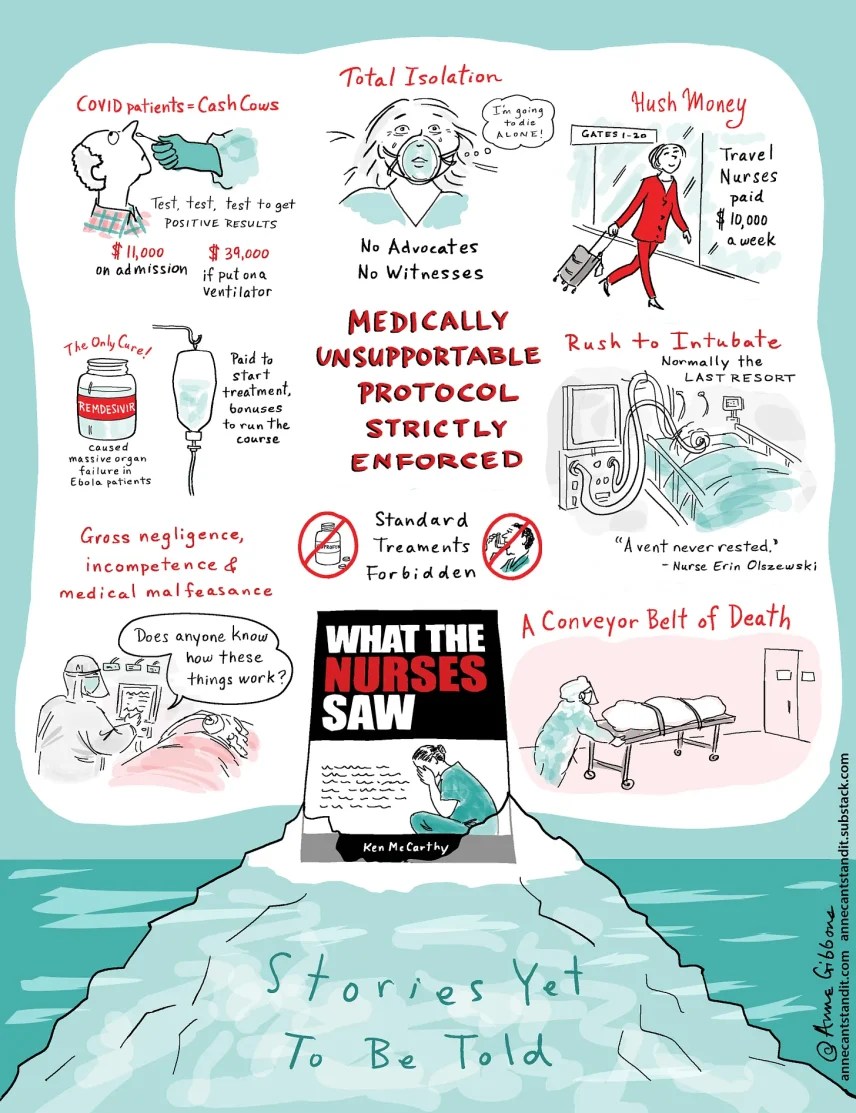
What the Nurses Saw — It was Murder
An investigation into systemic medical murders that took place in hospitals during the COVID panic and the nurses who fought back to save their patients
By Ken McCarthy | December 6, 2023
No human activity can ever be free from error, but to be clear, this book is not about the kind of error all human beings are prone to.
As you will learn from the eye-witness accounts and technical information presented in this book, calling the failed COVID protocols “errors” is not accurate.
 These protocols were explicitly ordered by those who took dictatorial control of the medical system early in the Panic (spring of 2020). Further, when they were shown to be demonstrably failing and harming many thousands of people, experienced healthcare professionals who raised informed concerns were silenced through demotion, firing, and organized campaigns of harassment promoted by the news media and enabled by companies like Google, Facebook, Twitter, and TikTok, in some cases in collaboration with the White House and the Department of Justice’s FBI.
If this sounds very bad, it’s because it is.
What the Nurses Saw is documentation of what happens in the real world when bureaucrats, in this case bureaucrats in Washington DC, take literal dictatorial control over the practice of medicine.
On a pure dollar and cents level, one of every five dollars spent in the U.S. is spent on the products of the medical services industry, as is one of every three tax dollars. The U.S., more than any country in the world, and by a large measure, has been colonized by this industry. As part of this process, the industry and its operatives have corrupted and perverted science, academia, and the news media. Now it’s hard at work to weaken and degrade the last pillar that keeps the system even remotely functioning — the integrity of the nursing profession.
If we fail to support our good nurses, help them hold the line, and start aggressively turning things around, there is no practical limit to how far this totalitarian medical dictatorship which we in fact live under will go in its future abuse and exploitation of human beings.
Featuring in-depth interviews with:
Erin Marie Olszewski,
Kevin Corbett Ph.D.,
Kimberly Overton,
Ashley Grogg,
Kristen Nagle,
Sarah Choujounian,
AJ DePriest,
Mark Bishofsky,
and Katie Spence
Please share the link: WhatTheNursesSaw.com
Lies about China’s Uyghur Oppression
Tales of the American Empire | February 29, 2024
Americans see news reports about the plight of Uyghurs. They are told these Muslims living in the western China province of Xinjiang are abused by the ruling Han Chinese and over a million are imprisoned in camps where they are forced to perform slave labor. As a result, China must be constantly denounced for this abuse and sanctions imposed on any Chinese business exploiting this slave labor. This is false and based on lies promoted by the American CIA.
Note: We are told to pronounce Uyghur as “WEE-gur” even though it has no W. In the province of Xinjiang and in their language it is pronounced “OO-gur” and should be in English since it starts with a U! So I adopted Dr. de Zayas’ correct pronunciation to reject whoever decided we should call them something weird in English.
___________________________________________________
“I Saw ZERO Evidence of Uyghur Repression In China”; Jimmy Dore Show; YouTube; September 30, 2023;  • “I Saw ZERO Evidence Of Uyghur Repres…
“What’s it REALLY like to travel in Xinjiang, China?”; Cyrus Janssen; YouTube; May 1, 2021; • What’s it REALLY like to travel in Xi…
“No, the UN did not report China has ‘massive internment camps’ for Uighur Muslims”; Ben Norton; The Grayzone; August 23, 2018; https://thegrayzone.com/2018/08/23/un…
“Was There Really a Massacre in Tiananmen Square–or Was It an Illusion Fabricated by U.S. Politicians and Corporate Media to Make Americans Hate China?”; Jeremy Kuzmarov; Covert Action Magazine; August 7, 2023; https://covertactionmagazine.com/2023…
“US efforts to strangle China & reassert hegemony”; The Duran; YouTube; September 16, 2023; https://theduran.com/us-efforts-to-st…
Related Tales: “The American War on China”: • The American War on China
Hysterectomy – On Stealing Womanhood
Lies are Unbekoming | February 25, 2024
This all started from one line in the interview I did with Carol Peterson.
Hormones – Lies are Unbekoming (substack.com)
“Most reasons for hysterectomies can be tied to progesterone deficiencies and most could be avoided with rational supplementation.”
I realised I didn’t know anything about hysterectomies, but I knew it was a major surgery, and here was Carol saying that most could be avoided.
I followed my curiosity and here we are with this article.
I cannot believe what I have discovered. It’s actually hard to put into words.
I think I will do more than just this article on the subject.
How is it possible that cutting out a woman’s uterus is the second most common surgery in the US?
About 600,000 women a year undergo hysterectomies in the U.S., the second most common surgery, surpassed only by cesareans. – Wittelsey 2011
Surely, they are all necessary:
Over 5,000 women whose doctors have recommended hysterectomy have received the names of second opinion physicians from the HERS Foundation, says Coffey. Only 2% of the 5,000 have gone on to have the surgery. – HERS
Surely, they wouldn’t do it for the money, would they?
“Some of us aren’t making a living, so out comes a uterus or two each month to pay for the rent,” admitted a Baltimore specialist in a 1975 New York Times interview.
How did Big Medicine reach the conclusion that a woman doesn’t need her uterus?
“Your uterus is nothing but a big, unresponsive blob.” — The Woman Doctor’s Medical Guide for Women by Barbara Edelstein, MD (1982)
The structural problem seems to be one of lying to women about the risks and aftermath:
According to Nora Coffey, founder and President of the non-profit HERS Foundation in Philadelphia, PA, too many doctors perform unnecessary hysterectomies, too many fail to tell women that there can be devastating after-effects from removal of the uterus or ovaries, and too many don’t offer alternative treatment for the problems that are, seemingly, so quickly solved with the knife.
One of the most significant points that jumped at me from the page was “loss of maternal feeling”:
Coffey says that HERS has also counseled over 9,000 hysterectomized women who are experiencing symptoms such as loss of maternal feeling, bone and joint pain, chronic fatigue, hot flashes, insomnia, loss of short-term memory, diminished emotional responses, loss of sexual desire and a host of other hysterectomy-related symptoms.
Of the millions of women that have had this done to them, how many have lost their maternal feeling towards their children. Women carry that maternal feeling into the world too. What happens to the world when maternal feeling is vanquished?
I now wonder how many women in power have had a hysterectomy. Is it more than the wider population? What are the consequences of this? Does it help with climbing the ladder? Does it impact empathy?
I think these are all fair questions because of the sheer scale of the issue.
At the end of each day of counseling, I knew there were a few more women out there who would avoid unnecessary surgeries because they received information from HERS. It was too little too late, however, for 621,000 other women in this country each year—more than 22 million hysterectomized women alive in America today? – The H Word (2008)
They remove the ovaries also about half the time by scaring woman with ovarian cancer:
In this country, half of the women who undergo a hysterectomy also have their ovaries removed. The reasoning given is to “save” the woman from the remote possibility of ovarian cancer.
However, Dr. Lauersen issues this warning to women concerning prophylactic excision of the ovaries: “Usually it is not necessary to remove the ovaries of a menstruating woman during hysterectomy. A doctor may say that he wants to remove the ovaries to prevent ovarian cancer, an insidious disease that does not have obvious symptoms. However, studies have indicated that it would take 7,500 oophorectomies (excision of the ovaries) in order to prevent one death from ovarian cancer. Ovarian cancer, which only accounts for 4% of all cancers in women, is more frequently discovered after menopause in women between 55 and 64 years old.”
Because fibroid growths are often called “tumors”, the lay patient may immediately fear that she has cancer. However, according to Dr. Lauersen, fewer than one half of one percent ever proceed to that stage.
The removal of ovaries is castration.
Castrated men were called Eunuchs.
We don’t have a word for castrated women. I think they, the butchers, prefer it that way.
I really don’t have words to describe this butchery.
We live in three dimensions. The physical, the mental and the spiritual.
We have been trained to diminish the spiritual, to our own detriment.
Somewhere deep in the bowels of Big Medicine, there is a spirit, and that spirit hates humanity, and very specifically it hates women.
There is no other conclusion I can reach anymore.
After reading this long stack, if you reach a different conclusion, let me know in the comments.
Carol Peterson pointed me to HERS to further my education, and it was there that I discovered Nora Coffey and her great book The H Word, that I’m reading now, co-authored with Rick Schweikert. I can definitely recommend it.
It turns out that Rick wrote a play…you will never guess what he called it…
What are the odds!!
The following statistics and Q&As are drawn from these three sources:
HYSTERECTOMY: THE SHOCKING TRUTH by Lee Rothberg (whale.to)
The Hysterectomy Epidemic: Where’s the Outrage? – Ms. Magazine (msmagazine.com)
Female Anatomy: The Functions of the Female Organs – HERS Foundation
Let these numbers wash over you as you start coming to terms with the scale of what has been done to women.
- About 600,000 women a year undergo hysterectomies in the U.S. This makes it the second most common surgery among women in the country, surpassed only by cesarean sections.
- 90 percent of hysterectomies are avoidable, according to Dr. Mitchell Levine, suggesting that the majority of these procedures could be managed with alternative treatments.
- 70 to 76 percent of hysterectomies do not meet the recommended criteria for necessity according to an expert panel and the American Congress of Obstetricians and Gynecologists (ACOG), indicating a high rate of potentially unnecessary surgeries.
- 210,000 women could avoid losing their ovaries annually if alternative treatments were pursued instead of hysterectomies, based on the 70 percent estimate of avoidable procedures.
- 15 to 30 percent of women who conserve their ovaries during hysterectomy lose ovarian function anyway, highlighting the risk of menopausal symptoms and hormonal imbalance even when ovaries are not removed.
- Women who have their ovaries removed face a higher risk of early death from any cause, primarily from heart disease and lung cancer, as found in a study of almost 30,000 women followed for 24 years.
- For every 24 women having bilateral oophorectomy, at least one will die prematurely as a result of the procedure, emphasizing the significant risk associated with the removal of both ovaries.
- Women who undergo hysterectomy report a range of adverse effects in significant percentages, including 79.6% experiencing loss of sexual desire and profound fatigue, and 79.1% noting personality changes.
- The HERS Foundation’s ongoing study reveals that 72.8% of respondents report loss of stamina post-hysterectomy, indicating the extensive impact on women’s overall well-being and quality of life.
- 35-40% of women whose ovaries are not removed during hysterectomy experience a loss of ovarian function, which equates to a form of castration and results in the cessation of hormone production critical to various aspects of health.
- Only about 10 percent of hysterectomies are performed for cancer, indicating that the vast majority are for benign conditions that might be managed with less invasive options.
- An expert panel found that up to 70% of hysterectomies recommended were inappropriate based on developed criteria, highlighting a substantial issue with surgical decision-making.
- 512,000 women undergoing hysterectomy last year had their ovaries removed during the surgery, whether the ovaries were healthy or not, potentially subjecting these women to unnecessary risks.
- Women who had their ovaries removed had a seven-times greater incidence of heart disease, showing the critical role of ovarian hormones in cardiovascular health.
- The HERS Foundation has counseled over 5,000 women whose doctors recommended hysterectomy, with only 2% going on to have the surgery after receiving second opinions or learning about alternatives.
- Women report a total loss of sexual feeling after hysterectomy in a significant number of cases, affecting their quality of life and personal relationships.
- Hysterectomized women have protruding bellies and little or no waist due to the unnatural shifting of bones and organs inside the pelvis after the surgery.
- Over 9,000 hysterectomized women report experiencing symptoms such as loss of maternal feeling and personality change, as documented by the HERS Foundation.
- Women who undergo hysterectomy are at risk for urinary incontinence and chronic constipation due to weakening of the pelvic floor and loss of feeling from the severing of pelvic nerves.
- A landmark Nurses Health Study concluded that women who had their ovaries removed faced a higher risk of early death, primarily from heart disease and lung cancer, compared to those who did not.
Next, I have created 30 Q&As that again take us from beginner to advanced on the subject, but I have also taken chapter 4 of The H Word and spliced it throughout the Q&A. It’s a very important chapter and you will see why shortly.
- What is a hysterectomy? A hysterectomy is a surgical procedure that involves the removal of the uterus. This operation can be performed for various medical reasons, including but not limited to uterine fibroids, endometriosis, uterine prolapse, chronic pelvic pain, abnormal bleeding, or cancer. The procedure effectively ends menstruation and the ability to become pregnant.
- What is an oophorectomy? An oophorectomy is the surgical removal of one or both ovaries. When both ovaries are removed, it’s called bilateral oophorectomy. This procedure can lead to immediate menopause if both ovaries are removed before a woman naturally enters menopause, significantly impacting her hormonal balance and potentially increasing her risk for certain health issues, such as osteoporosis and cardiovascular disease.
- Why are hysterectomies performed? Hysterectomies are performed for various reasons, often as a last resort for conditions that have not responded to other treatments. Common reasons include uterine fibroids that cause pain or bleeding, uterine prolapse, cancer of the uterus, cervix, or ovaries, endometriosis, abnormal vaginal bleeding, chronic pelvic pain, and adenomyosis. Each condition affects the quality of life and may necessitate the removal of the uterus for relief or cure.
- What are the potential risks associated with hysterectomy? The risks associated with hysterectomy include those common to major surgeries, such as infection, blood clots, hemorrhage, and adverse reactions to anesthesia. Specific to hysterectomy, risks can include damage to surrounding organs, chronic pain, hormonal imbalances when the ovaries are removed, and long-term effects such as increased risk of cardiovascular diseases and osteoporosis. Emotional and psychological effects, including depression and a sense of loss, may also occur.
- How does the removal of ovaries (oophorectomy) affect a woman’s body? The removal of ovaries leads to a sudden drop in the production of hormones such as estrogen and progesterone, leading to what is known as surgical menopause. This abrupt change can cause severe menopausal symptoms, including hot flashes, mood swings, vaginal dryness, decreased libido, and increased risk for osteoporosis and heart disease due to the loss of estrogen’s protective effects.
- What emotional or psychological effects can result from a hysterectomy? Beyond the physical impact, a hysterectomy can have significant emotional and psychological effects. Many women report feelings of loss or sadness after the procedure, particularly if they had not completed their families or if the surgery was done as part of cancer treatment. There may also be changes in self-image and sexual identity, as well as anxiety and depression due to hormonal changes, especially if the ovaries are removed.
- How can a hysterectomy impact a woman’s sexual function and libido? A hysterectomy can impact sexual function and libido in several ways. The removal of the uterus may change the nature of orgasm due to the absence of uterine contractions. If the ovaries are removed, the resulting drop in hormones can lead to decreased libido, vaginal dryness, and discomfort during sex. However, for some women, relief from chronic pain or heavy bleeding after hysterectomy improves their sexual health and quality of life.
- What is estrogen replacement therapy (ERT), and why might it be used after a hysterectomy? Estrogen Replacement Therapy (ERT) is a treatment used to alleviate menopausal symptoms by replacing estrogen, which is no longer produced by the ovaries after oophorectomy or natural menopause. After a hysterectomy, particularly when the ovaries are removed, ERT can help manage symptoms such as hot flashes, vaginal dryness, mood swings, and prevent osteoporosis by compensating for the loss of natural estrogen.
- Can you explain the role of testosterone in women’s health post-hysterectomy? Testosterone plays a crucial role in women’s health, contributing to muscle strength, bone density, and sexual desire. After a hysterectomy, especially with oophorectomy, women may experience a drop in testosterone levels, leading to decreased libido, fatigue, and loss of muscle mass. Testosterone therapy, albeit less common than estrogen therapy, may be considered for some women to address these issues.
- What are some alternative treatments to hysterectomy for conditions like fibroids and endometriosis? Alternative treatments to hysterectomy for managing conditions like fibroids and endometriosis include medication to manage symptoms, hormone therapy to shrink fibroids or control endometriosis, minimally invasive procedures like uterine artery embolization for fibroids, and laparoscopic surgery to remove endometriosis lesions or fibroids while preserving the uterus.
Nurses and doctors’ wives. Seattle, Washington—Rick Schweikert
When Nora told me that women sometimes send HERS photos of themselves before and after hysterectomy, I didn’t think too much about it. Until, at the premiere of un becoming in New York, a woman with tears in her eyes thanked me, saying, “You’re probably going to think I’m crazy, but can I show you a picture of me before the surgery?” And then after the next show it happened again. A woman who was married to a doctor said, “This is me before the surgery.” We spoke with women all over the country who carry around photos to remind themselves of who they were before a doctor removed their female organs.
The biggest difference I notice in the photos is their eyes.
As one woman explained, she showed me her photo to prove that before the surgery she was strong, vibrant, healthy, and happy,
“When I still had that glint in my eyes.”
The main protagonist in un becoming is an artist named Emma Douglas. She’s a painter who refers to her work as her life’s breath. She’s married to an anesthesiologist named Sam Morgan.
Sam’s best friend happens to be Dr. James Ridge, the gynecologist who recommends “exploratory” surgery to Emma. Halley Ridge, Dr. Ridge’s wife, was hysterectomized by her husband’s colleague, but the audience doesn’t discover that until the end of the play. In the end, Halley helps Emma avoid the surgery.
un becoming places accountability for hysterectomy on the shoulders of those who are most responsible. The villain of the play is a gynecologist, and the hero is a hysterectomized woman his wife. This scenario had never been portrayed in any stage pr duction before. When actors first picked up the script, they some times found the story hard to believe, as was the case with one u the members of the Seattle cast. But it’s unfortunately a common story.
What follows is an excerpt from one of the thousands of emails we’ve received from women whose lives mirror the story of un becoming:
Hi there,
My name is… I am from… My doctor who I loved and never questioned, suggested a hysterectomy. He didn’t think me being only 30 years old was an issue since I was married and had…children. He explained that I would take an estrogen pill each day, and basically I would be good as gold. ( Not his words) that is how he made it seem. NO SIDE AFFECTS WERE EVER MENTIONED! I was told it would be no different than my c section surgeries as far as the pain was concerned. My mother had a hysterectomy…..and told me that it would take a year before I felt better, however she had no idea what she would live the rest of her life like either. I…am having joint pain in my hands, knees, elbows and back. Before the hysterectomy I was fine, due to the pain I can no longer roller skate with my children, dance around the house and I fear that I am going to have to close my business. The list of side effects since the hysterectomy is too long…to put in this e-mail.
This morning out of desperation…I found your site. I am beside myself thinking I am only going to get worse. I am an artist and yesterday I couldn’t hold the paint brush to paint at my easel, typing this e-mail is painful. What can I do? Do you have any info that might help me?
Is there anyone else going through this?
Thank you for your time.
Sincerely;
(name and other identities omitted for confidentiality)
There have been a few books, such as Mary Daly’s GYN/ ECOLOGY, that accurately portray the life-altering effects of hysterectomy. But most books on the subject ultimately twist the truth around to benefit the self-serving interests of its author, the publisher, or the university or pharmaceutical company that sponsored the author’s research. un becoming is the story of hysterectomy told through the eyes of women—not the medical industrial establishment that targets them. The story is fictional, but two of the women who joined the protest in Seattle reminded us that the imaginary plot and characters are based on common experiences.
- How does the HERS Foundation assist women considering or affected by hysterectomy? The HERS Foundation provides education, advocacy, and support to women facing hysterectomy. They offer comprehensive information on the effects of hysterectomy, alternative treatments, and the importance of informed consent. By empowering women with knowledge, HERS aims to help them make informed decisions about their health care and advocate for less invasive treatments when appropriate.
- What long-term health risks are associated with hysterectomy and oophorectomy? Long-term health risks associated with hysterectomy and oophorectomy include an increased risk of cardiovascular disease, osteoporosis, hormonal imbalance, and early menopause symptoms if the ovaries are removed. There’s also a potential risk for urinary incontinence, bowel dysfunction, and changes in sexual function.
- How does a hysterectomy affect a woman’s cardiovascular health? A hysterectomy, especially when accompanied by oophorectomy, can affect a woman’s cardiovascular health by increasing the risk of heart disease. Estrogen has a protective effect on heart health, and its sudden decrease can lead to higher cholesterol levels, increased blood pressure, and a greater risk of developing cardiovascular diseases.
- What are the uterine functions beyond childbearing? Beyond childbearing, the uterus plays a role in sexual health and pleasure, with uterine contractions contributing to orgasmic experiences for some women. It also supports pelvic anatomy, maintaining the proper position of surrounding organs and structures. Additionally, the uterus is involved in hormonal regulation and may have protective effects against certain diseases.
- What common misconceptions exist about the effects of hysterectomy on women’s health? Common misconceptions include the belief that the uterus is only necessary for childbearing and that its removal doesn’t impact hormonal balance or sexual function. Many are unaware of the potential for long-term health consequences, such as increased risk of cardiovascular disease and osteoporosis, as well as the emotional and psychological impact.
- How do societal views on female reproductive organs influence decisions about hysterectomy? Societal views often reduce female reproductive organs to their roles in childbearing, overlooking their importance to overall health, hormonal balance, and sexual function. This can contribute to a cavalier attitude towards hysterectomy and oophorectomy, underestimating the procedures’ impacts on women’s lives and health.
- What legal and ethical concerns arise from the high rate of unnecessary hysterectomies? The high rate of unnecessary hysterectomies raises legal and ethical concerns about informed consent, the adequacy of patient education regarding alternatives, and potential financial incentives driving surgical recommendations. It also highlights the need for greater advocacy and protection for patients’ rights to understand and choose less invasive options.
- How might the rate of hysterectomy surgeries be affected by the availability of alternative therapies? The availability of alternative therapies could significantly reduce the rate of hysterectomy surgeries by offering less invasive options for conditions traditionally treated with hysterectomy. Increased awareness and accessibility to treatments like hormone therapy, myomectomy, and endometrial ablation could empower women to choose alternatives that preserve their reproductive organs and minimize long-term risks.
- What advancements have been made in treatments for conditions like endometriosis without resorting to hysterectomy? Advances in the treatment of endometriosis include laparoscopic surgery to remove endometrial tissue while preserving the uterus, improved hormonal treatments to manage symptoms, and new medications targeting endometriosis’ pathophysiology. Research into non-hormonal treatments and immunotherapy offers hope for less invasive, more effective management strategies.
- How could patient education and advocacy change the future of gynecological health care? Patient education and advocacy can significantly impact gynecological health care by demanding a higher standard for informed consent, promoting awareness of less invasive treatments, and challenging the normalization of radical surgeries like hysterectomy. Empowered patients are more likely to seek second opinions, choose alternatives, and advocate for research into new treatments, leading to a shift towards more patient-centered care.
During the protests and talkbacks after the play, we met hundreds of hysterectomized women who were either nurses or the wives of doctors. And if that woman herself was an attorney or a nurse, audiences were shocked to hear that even that wasn’t enough to protect them. Nora often says, “The greatest number of hysterectomy scars are worn by the wives of doctors. Second is nurses.”
One of the women who joined us in Seattle was a writer who wrote a book about the before-and-after of hysterectomy. Her friend Fran (name changed for confidentiality) told her the story of how she ended up on an operating table. Fran was a registered nurse whose husband was a doctor: The surgeon who performed the “exploratory surgery” on her was the father of her daughter, close friend. All were in agreement that no organs were to be removed. She previously had one of her ovaries removed for an ordinary cyst, and she and her husband specifically made it clear that under no circumstances were the uterus or the remaining ovary to be removed. After the operation the surgeon emerged from the operating room, announcing that he had “excised the problem.” Fran’s husband, waiting for news about the surgery, was relieved…until the surgeon informed him that although he didn’t remove her uterus he did remove her remaining ovary, against their expressed wishes.
As medical professionals, Fran and her husband knew that ovarian function is critical to health and wellbeing. Uterine function and viability depends on ovarian function. By removing Fran’s remaining ovary, they knew that her hormone-responsive uterus would atrophy.
In order to keep her uterus viable, Fran was prescribed high levels of exogenous hormones—that is, hormones produced outside of her body. But while the endogenous hormones (produced naturally within her body) were beneficial to her, the exogenous hormones came with a host of dangers. The increased risk of cancer (breast, ovarian, uterine, and others), stroke, heart disease, dementia, and so on have been well-documented in studies and in literature. Because of the adverse effects of high doses of hormones, coupled with the devastating physical loss of ovarian function (the predictable aftereffects of castration), Fran was now unable to control her emotions. So she was prescribed potent anti- depressants and other anxiety-controlling drugs with unknown potential interactions.
The betrayal of trust by her profession filled her with rage and despair. Nora says the angriest women who contact HERS are nurses and the wives of doctors. She was both. Her rage consumed her.
When she and her husband attended a HERS conference in Dallas a few years later, she said her medical records showed there was nothing of significance wrong with the first ovary the doctor had removed, and the remaining ovary was also healthy when he removed it.
In the end, the couple sued the doctor. It was a fairly blatant case of a high-handed doctor mutilating a woman against her expressed wishes. But she lost the lawsuit. The jury favored the doctor’s word over hers and determined that the mutilating surgery had met the current “accepted standard of care.” As the surgeon’s defense attorney put it, her husband was a doctor and she was a nurse, so they should’ve known better.
Once the doctor became focused on Fran’s benign ovarian cyst—a natural variation that required no treatment—a cascade of devastating decisions and actions ensued. Menstruating women produce an ovarian cyst every month. It’s normal for the ovaries to develop physiologic (or functional) cysts when they ovulate mid-cycle, which wax and wane larger before menstruation and smaller after menstruation-usually a functional cyst develops on the right ovary one month, and on the left ovary the next month.
Other common, benign, ovarian cysts include dermoid, endometrioma (also called “chocolate” cysts), borderline, and teratoma. Dermoid cysts are rarely a cause for concern. They’re primordial cysts that usually contain hair, teeth, and often fat. Like endometrioma, dermoid cysts tend to grow bilaterally (on bot) ovaries), but they can also develop on only one ovary. They can occur on the outside of the ovary on a stalk that extends from the ovary (its blood supply), or they can occur inside the ovary, encapsulated. Women are often told that the ovary with the cyst must be removed, but this begins with the faulty premise that the development of these cysts requires action. In fact, except for borderline cysts, which have a small incidence of becoming cancerous, these cysts are benign-they don’t become malignant. Although they can become quite large, they may never cause a symptom. If they don’t bother you, there’s no reason to do anything about them.
The worst-case scenario is they can rupture, but cysts don’t rupture spontaneously—usually only through some kind of trauma to the abdomen, such as a forceful blow to the pelvis. If they do rupture, surgery is performed to irrigate the pelvis, which removes the contents of the cyst.
If the cyst is causing problems you can’t live with, a cystectomy (surgical removal of the cyst) can usually be performed without removing the ovary-if the surgeon has the skill to do so.
Ovaries are very resilient. They can be cut into pieces (called a wedge resection), the cyst removed, the pieces of the ovary sutured back together, and the ovary usually functions normally again.
If a cyst grows very large, some women feel pelvic pressure internally or they might experience urinary frequency. But usually they present no symptoms and are detected incidentally during a pelvic exam. Some women are especially prone to developing dermoid or endometrioma cysts, and after they’re removed they may develop them over and over again. This is a time when they’re especially vulnerable to hysterectomy, which is one reason to not go down the surgical path to begin with.
A Pap smear performed during a so-called well-woman visit is all too often an invitation to unnecessary treatment. The incidence of cancer in the female and the male sex organs is nearly identical, but men don’t have their sex organs routinely inspected.
And if doctors are hysterectomizing and castrating more than half a million healthy women each year, clearly the safe thing to do is to stay away from doctors and hospitals…even if you’re a nurse and your husband is a doctor.
- What role do the ovaries play in a woman’s body after menopause? After menopause, the ovaries continue to produce hormones, albeit at lower levels, including testosterone and a small amount of estrogen. These hormones play crucial roles in maintaining bone density, sexual desire, and overall well-being. The loss of ovarian function due to oophorectomy can therefore have significant health implications.
- What are the implications of “surgical menopause”? “Surgical menopause” refers to the abrupt onset of menopause symptoms following the removal of the ovaries. This sudden hormonal shift can lead to severe menopausal symptoms, increased risk for cardiovascular disease, osteoporosis, and a decline in sexual function. Unlike natural menopause, the transition is immediate, and symptoms can be more intense.
- How does the removal of the uterus and ovaries relate to increased risks of diseases such as osteoporosis and heart disease? The removal of the uterus and especially the ovaries disrupts the body’s hormonal balance, leading to a decrease in estrogen levels. Estrogen plays a protective role in heart health and bone density; its loss accelerates the risk of cardiovascular disease and osteoporosis. The abrupt change due to surgery amplifies these risks compared to the gradual transition of natural menopause.
- What is the significance of informed consent in the context of hysterectomy? Informed consent is crucial in ensuring that women are fully aware of the potential risks, benefits, and long-term implications of a hysterectomy, as well as alternative treatments. It represents an ethical obligation for healthcare providers to ensure patients make truly informed decisions about their care, acknowledging the profound impact on their health and quality of life.
- How can the structural changes post-hysterectomy affect the pelvic anatomy and function? Post-hysterectomy structural changes can include pelvic organ prolapse, where the bladder, bowel, and vagina may shift or descend due to the loss of uterine support. This can lead to urinary incontinence, bowel dysfunction, and changes in sexual function. The severing of nerves and ligaments during surgery can also result in chronic pain and a decrease in sexual sensation.
- What impact does hysterectomy have on the skeletal structure, specifically the spine and rib cage? The removal of the uterus can lead to a shift in the pelvic bones and a change in the structural alignment of the spine and rib cage. As the pelvic support structure is altered, it can result in a compressed spine, decreased height, and a protruding abdomen. This skeletal impact can lead to chronic back pain and alterations in physical appearance.
- What are the common physical sensations lost or altered after hysterectomy? Women may experience a loss of sensation in the pelvic area, diminished sexual response, and changes in orgasmic capability following hysterectomy. The severing of nerves during the procedure can lead to numbness, tingling, or pain in the pelvic region, affecting sexual health and overall quality of life.
- How does hysterectomy affect a woman’s hormonal balance and overall endocrine function? Hysterectomy, especially with the removal of the ovaries, drastically affects a woman’s hormonal balance by eliminating the primary sources of estrogen and progesterone. This can lead to immediate menopause, with symptoms like hot flashes, mood swings, and increased risk for conditions related to hormonal deficiency, such as osteoporosis and heart disease.
- Discuss the relationship between hysterectomy and increased risks of mental health issues. The hormonal changes and physical alterations following hysterectomy can contribute to mental health challenges, including depression, anxiety, and a sense of loss or grief. The impact on sexual function and self-identity can further exacerbate these issues, highlighting the need for comprehensive pre- and post-operative counseling and support.
- What future research directions are suggested by current findings on the effects of hysterectomy and oophorectomy? Future research should focus on long-term outcomes of hysterectomy and oophorectomy, exploring alternative treatments that preserve the uterus and ovaries, and the development of targeted therapies to manage conditions like endometriosis and fibroids without radical surgery. Studies on the psychosocial impacts of these surgeries and the efficacy of hormone replacement therapy in mitigating long-term risks are also needed to guide patient-centered care.
Hospitals are dangerous places. We’re certainly not the first ones to say so. Nor was Robert S. Mendelsohn, an M.D. who was the President of the National Health Federation, the director of a hospital in Chicago, and a medical school professor:
I have always told my patients that they should avoid hospitals as they would avoid a war. Do your utmost to stay out of them and, if you find yourself in one, do everything possible to get out as soon as you can. After working in hospitals for most of my life, I can assure you that they are the dirtiest and most deadly places in town.
It would be ideal if we were all informed of these basic facts. But informing women about the irreversible aftermath of hysterectomy is bad for business, so we can’t wait for doctors to do it. Women don’t know better because doctors neglect to inform them. The vast majority of the women who call HERS cancel their surgeries after they learn about female anatomy and the function, of the female organs.
“My doctor told me I was endangering my children by not having a hysterectomy,” a woman told us during a talkback. “If I didn’t have the surgery, he said, I was going to die and I wouldn’t’ see my children grow up.”
“So what did you do?” I asked.
“Nora knows,” she said, “because she looked at my medical records with me, and there wasn’t anything wrong with me.”
“How long ago was that?”
“Fourteen years ago. My kids are in college, and I’m the picture of health.”
If we heard it once we heard it a thousand times – “I canceled my surgery,” women tell us, “and now I’m the picture of health. So why did my doctor tell me I needed a hysterectomy?”
The most frightening lines in un becoming found their way into the play because they’re the things women tell us over and over again about what their doctors told them. They’re repeated from coast-to-coast, from border-to-border, to women born a hundred years apart. While I was working on the first draft of un becoming, my friend’s mother yelled to him while he was on the phone with me, saying, “Tell Rick to put in his play what my doctor told me! Tell him my doctor said, ‘Don’t worry, I’m just taking out the crib, but I’m leaving the playpen.’
In other words, women aren’t able to bear children after hysterectomy, but their sexual partners will still have a vaginal pocket for intercourse, even though a loss of sexual feeling is an anatomical fact for hysterectomized women. So I did put it into the play…but only after I heard that same line a dozen or more times. We continue to hear it from women all over the country, including right there in the state of Washington. These one-liners from gynecologists trivialize women’s concerns about their sex organs as they sit half-naked on examination tables.
Women are told to eat nothing after midnight the night before the surgery and to get their things in order because they’ll be out of commission for a while as they “recover.” But recovery presumes they’ll be the same person after the surgery as they were before, which isn’t possible. What they’re not told is far more important than what they are told. It’s what isn’t being said that’s really at issue here.
One of the protestors who joined us in Seattle was an attorney. Her expertise was drafting language that could be defended in court. She was diagnosed with uterine cancer and consented to a hysterectomy, but not castration. It might seem foolish for a doctor to castrate a bright attorney, who not only modified the hospital’s consent form to reflect her wishes prior to the hysterectomy but also included specific language expressly stating that under no circumstances were her ovaries to be removed. And yet, like the nurse mentioned above, against her wishes a doctor removed her ovaries anyway.
She wanted to sue, but no attorney would take the case because most states have a “reasonable person” or “a reasonable physician” standard. The lawyers advised her that the courts would assume that once she entered the hospital, any reasonable physician would’ve chosen to castrate her while hysterectomizing her-even if it was contrary to her written wishes. If you enter a hospital in a reasonable-physician statute state, your wishes may mean nothing.
The courts will very likely support whatever the doctor deems reasonable.
The issue boils down to whether a woman has the right decide what will be done to her body. The Constitution of the United States guarantees personal sovereignty, and our government exists to protect it. When informed consent is missing from the decision making process, personal sovereignty is denied to women. Decisions about what women will and won’t allow to be done to their bodies should never be taken away from them, under any circumstances.
On the first day of the Seattle protest we turned our signs toward the Swedish Medical Center instead of the traffic, so the doctors and patients inside the building could see them. Massive cranes loomed overhead, a sign that business was booming.
That evening a reading of un becoming was hosted by the Women’s Studies Department at the University of Washington in a lecture hall on campus. Like the cast, a few people in the talk. back had a difficult time accepting that doctors knowingly harm women. It’s an unattractive side of human nature that most people are unwilling to attribute to doctors.
“So who’s to blame?” I asked them. As with most audiences, someone said, “I think women need to educate themselves.” But what does that have to do with whether or not doctors knowingly harm women? And who could possibly be more educated on these issues than a nurse and a doctor? A medical education didn’t save her. Isn’t that what we pay doctors for, to advise us on issues we don’t have time to go to medical school to learn?
Although it’s rare for a doctor to be prosecuted in a criminal court for harming patients, the Seattle Times reported the case of a King County gynecologist convicted of two counts of rape and two counts of “indecent liberties” against four Seattle women who testified against him. The last lines of the Times article read, “Momah remains charged with three counts of health-care fraud, which will be tried later. In addition, he faces civil suits from dozens of women who say he sexually abused them or botched surgeries.” Such cases are common, and for everyone we do hear about, how many more are there that we don’t hear about? Insurance fraud is a criminal offense that is punishable by imprisonment. The unconsented removal of women’s sex organs, though, is a civil offense that usually goes unpunished even in the most blatant cases. To find out why, follow the money. What’s a uterus worth? Not much. But what’s hysterectomy—the 20-30 minute surgery to remove the uterus—worth to hospitals and doctors?
Tens of billions of dollars each year. And what are the male sex organs worth? It’s worth searching for a man’s penis in the dirt and spending nine hours in the operating room reattaching it, as was the case when Lorena Bobbit severed John Wayne Bobbit’s penis after he raped her in 1993.19 Another woman who attended the protest and the play with her husband said they were both grateful to HERS for helping her remain intact. A doctor tried to badger her into letting him hysterectomize her. She sought other opinions, but one doctor after another supported the first doctor’s recommendation, until she found HERS.
Nora was interviewed by a local television station in Seattle, but the hospital administrators at Swedish were smarter than some hospitals we’d been to. They didn’t call the police, so we didn’t’ have flashing lights to draw attention to our protest.
We spoke with a woman who said she was afraid because she couldn’t keep up with the minimum payments she was required to make to Swedish to pay down the debt incurred when she was hysterectomized there without health insurance. Meanwhile, the Swedish website says not only can you make a donation to Swedish, “If you would prefer to pledge a fixed amount on a regular basis, call us and we can help you set up an automatic contribution plan.”
It’s an ugly game of round robin. Surgeons’ wives are hysterectomized, as well as the nurses who assist them in surgery. Indigent women are put on payment plans to pay for unnecessary hysterectomies, or taxpayers are sent the bill via Medicaid and Medicare. The public is encouraged to set up automatic contribution plans to pad the medical industry’s bottom line and help pay surgeons exorbitant payoffs for doing this grisly work. And then the courts protect the doctors and hospital administrators when suits are brought against them, because unwarranted surgery has become the standard of care. Health and wellbeing has almost nothing to do with it.
‘Israel is destroying itself’ as Western media helps in the slaughter of Palestinians
By Ian DeMartino – Sputnik – 01.03.2024
On December 28, 2023, the “paper of record” in the United States, The New York Times, published a piece that described acts of alleged sexual violence perpetrated by Hamas during the October 7 attack. Since publication, independent media outlets have revealed significant issues with the piece.
The New York Times and other Western media outlets paved the way for Israel’s slaughter, Seyed Mohammad Marandi, an Iranian-American academic and political analyst, told Sputnik’s The Critical Hour on Thursday.
“When The New York Times published that dishonest piece about rape on October the 7th, some Israeli [media] were rejecting those claims, [but] the Western media would not accept any of this. They closed their eyes and simply repeated the accusations in order to help the Israelis justify genocide and they continue to do so today,” he said.
The Times article’s co-author was later revealed as a former Israeli Defense Force officer who had no prior reporting experience and had liked posts that called Gazans “human animals” and advocated turning the Gaza Strip “into a slaughterhouse.”
The family of one of the victims featured heavily in the article later said the newspaper misled them, and the victim’s brother-in-law and sisters denied there was evidence that their family member was raped.
The Times has since said it is reviewing the author’s social media accounts, but has not retracted the article.
“In other words, what the New York Times and others did was that they prepared the ground so that Israelis could slaughter Palestinians, and no one in the West would complain,” he continued.
Marandi noted that anyone who is denying that “Israelis are intentionally massacring Palestinians” has been “closing their eyes to reality,” especially in the wake of videos released on Thursday that appear to show IDF forces firing on Palestinians gathering food from aid trucks.
“It’s quite clear that the Israelis use the trucks as bait and when starving people gather to find food for their starving children, the Israelis open fire.” More than 100 people were killed and more than 750 injured in the attack, according to the Palestinian Ministry of Health.
But it is the mainstream media’s portrayal and non-coverage of these events that brainwash the masses, Marandi said.
“That’s exactly why the United States is not a democracy, why it’s never been a democracy. People are not allowed to have information,” he argued. “If people are being managed, if they’re being fed information that’s divorced from reality and then they make decisions based upon that information, that’s not democratic. That’s a brainwashed society that will do as it’s told.”
Despite the propaganda, the images coming out of Gaza are so horrific that even some of Israel’s most adamant supporters are turning against the US policy of unconditional support.
“Two-thirds of Americans [oppose] the current policy, according to one poll, the majority of even white evangelicals and the majority of American Jews are [in favor of a permanent ceasefire],” Marandi explained, referring to a recent Institute for Social Policy and Understanding (ISPU) poll.
“The irony is that while the Israeli regime and its allies in Washington are the ones who are preventing a ceasefire from taking place, these are the ones who are going to lose the most by continuing the war,” Marandi argued.
“They can kill more Palestinians and they want to kill more Palestinians, but they are destroying their image. They are destroying their legitimacy in the eyes of those who thought they were legitimate previously across the world. So in my opinion, Israel is destroying itself.”
Biden Aides Trying to Shield US President From Protesters at Campaign Events – Reports
Sputnik – 01.03.2024
WASHINGTON – US President Joe Biden’s aides have adopted several tricks to protect their boss from protesters who are increasingly dissatisfied with the White House’s policies in the Middle East and unlimited support for Israel, NBC reported on Friday.
Biden’s aides’ tactics include avoiding protesters at events by making them smaller, keeping precise locations secret from the media and the public until the last moment, avoiding college campuses, and hiring a private company to filter attendees, the report said.
Even though the tactics have already shown their success and over the past five weeks there has not been a single incident of an attempt to interfere with Biden’s speech at an event, it also has drawbacks, including the president’s appearance in front of a smaller number of potential voters, according to the report.
“But the downside is that means he doesn’t reach as many voters,” an aide was quoted as saying. “The point is to reach as many voters as you can, and those small events don’t.”
White House aides are planning to use the tactics at an upcoming fundraiser event this month with Biden and former Presidents Bill Clinton and Barack Obama. More specifically, event organizers are going to hire a private company that will vet attendees to exclude those who can disrupt it, the report added.
In January, Biden’s campaign rally in Virginia was disrupted eight times by protesters demanding a ceasefire in the Gaza Strip.
Protests have taken place many times across the United States, including large marches in Washington with hundreds of thousands of people attending, demanding a ceasefire in Gaza in light of the thousands of civilians killed and wounded amid Israel’s military operations there.
Featured Video
or go to
Aletho News Archives – Video-Images
From the Archives
A Lesser “Grade” of Human
By Michael Hoffman | Revelation of the Method | January 3, 2024
Will the more than 100 Iranians killed by terrorist bombs today be mourned in the West as victims of terrorism? Certainly not. Allied doctrine has it that the killing of Israeli or American civilians is a crime of cosmic proportions, while shedding the blood of “enemy” women and children is perfectly acceptable; indeed commendable.
The West does not memorialize the hundreds of thousands of civilians bombed by the U.S. in Serbia, Iraq, Afghanistan and every major German city 1943-1945. America’s fire-bombing of the city of Tokyo by General Curtis LeMay in March 1945 was followed by Harry Truman’s atomic incineration of Hiroshima and Nagasaki in August of that year. Truman never had a moment of doubt or regret over the murder of more than a 100,000 Asian children, mothers and non-combatant boys and men. It was business as usual for the “noble” Allies during the “Good War.”
In the West human rights signifies passionate concern only for civilians designated as truly human: Israelis first, then Americans and British, followed by their satraps.
This inhumanity is the legacy of Talmudic ideology, beginning with tractate Sanhedrin 57a from 400 A.D., concerning liability for capital punishment: “If a Jew murders a gentile, he is exempt.”
This teaching of contempt was reiterated in the dogma of Chabad Lubavitch founder Rabbi Shneur Zalman in the 18th century. … continue
Blog Roll
 Aletho News
- The Makkah Pact Enters Into Force: The End of American Dominance or Its New Form?
- NATO’s top generals gather in Kiev
- EU’s continuing expansion – greater threat to Russia
- US Senator Murphy says Pentagon denied him entry to US base in Qatar
- Israel expands “incitement” charge to target Palestinian education and memory
- How Israel seeks to reshape Arab classrooms
- Paris bans pro-Palestinian demonstration planned for Oct. 7 over ‘risks of public disorder’
- In August Hanning Treason Case – All Signs Point To Tel Aviv.
- France cleared dozens of military sales to Israel between May and September: Report
- France projects nuclear power as Macron pushes arsenal expansion
- If Americans Knew
- Israel’s flailing chatbot army
- Five Palestinians Killed, Others Injured by Israeli Fire in Gaza
- Israel is rewriting the Palestinian curriculum in East Jerusalem to erase Palestinian identity
- Three years of genocide: Israel turned prisons into killing grounds and torture sites
- Three years of genocide. Words fail. Daily Update
- ‘I’d rather die than go back’: A Palestinian teen’s 10-month nightmare in Israeli jail
- How Jared Kushner’s firm’s investment in an Israeli company could be a major conflict of interest
- Soldier testimony sheds light on how Israel wages information war
- CIA Report Warns Israel Could Head Toward Civil War, Total Collapse
- Banker Who Exposed Howard Lutnick’s Ties to Epstein Warned of ‘Retaliation’ and ‘Personal Consequences’ in Last Post Before Suicide
- No Tricks Zone
- US September “Heat” Was No Record…Many Records Set Decades Ago
- Latest European Green Energy Debacle; Portugal’s Largest Flagship Solar Park Insolvent!
- Green Energy Debacle: German Expert Professor Fritz Vahrenholt Warns Of Severe Economic And Social Consequences
- Two More Paleo Reconstructions Affirm Meters-Higher Sea Levels Across Ireland, Brazil 7000-6000 Years Ago
- New Study: Earth And Venus Surface Warmth Largely Explained By Convection And Lapse Rate, Not CO2 Or Radiation
- 2025 Nature Paper Claiming Worsening Global Drought Gets RETRACTED …Heavily Flawed
- New Study: ‘Global Drought Shows No Detectable Recent Acceleration Under Climate Warming’
- Economic Masterminds: German Socialists Suggest Taxing Productivity Gains Stemming From Using AI
- The South China Sea Has Not Been Cooperating With The Climate Change Narrative
- Energy Crisis: Germany Enters Heating Season With Historically Low Gas Reserve Fill Levels

