Hungary snubs US senators – ambassador
RT | February 19, 2024
Senior Hungarian officials have refused to meet four US senators who arrived in Budapest on Sunday, Washington’s envoy to the country has said. The American lawmakers are attempting to press Prime Minister Viktor Orban into speeding up approval of Sweden’s accession to NATO.
The delegation sought to meet a range of senior government officials and representatives from the ruling Fidesz party, US Ambassador David Pressman stated. The Hungarians declined, however, despite the group being “the most senior US bipartisan congressional delegation” to visit the country in recent years, the diplomat added.
The senators intend to submit a joint resolution to the US Congress that would condemn Hungary for alleged democratic backsliding, the Associated Press reported. Thom Tillis, one of the visiting lawmakers, urged Orban to speed up Sweden’s accession, claiming at a news conference that doing so would be “a great service to freedom-loving nations worldwide.”
Chris Murphy, another delegate, called the boycott “strange and concerning” and identified Orban as standing in the way of the ratification. Hungary is the only NATO country yet to approve Sweden’s membership of the US-led military bloc.
“We are wise enough about politics here to know that if Prime Minister Orban wants this to happen, then the parliament can move forward,” Murphy said.
Orban addressed the issue of NATO expansion during a rally on Saturday, saying Budapest and Stockholm were on a path to “rebuild trust.” A vote could happen during the parliamentary spring session, he suggested.
The prime minister previously cited Swedish criticism of his government and Hungary’s democratic credentials as the main reasons for skepticism among lawmakers in Budapest. NATO approved Sweden’s bid to join in June 2022.
The anti-Hungarian US resolution will criticize Orban for maintaining good relations with Russia and China, according to AP. Budapest has “resisted and diluted” the EU sanctions imposed on Moscow, the text reportedly states.
Orban is a vocal critic of the Western approach to the Ukraine crisis. He has argued that the arming of Kiev and the restrictions on Russia have failed to end the bloodshed and have caused major economic harm to the EU. He has also resisted Ukraine’s push to join NATO and the EU.
Hungarian Foreign Minister Peter Szijjarto said it was “not worth trying to exert pressure on us, because we are a sovereign country,” as he expressed general approval of the American visit on Friday.
Washington, Pro-Democracy? Depends on the Country
By Ted Snider | The Libertarian Institute | February 19, 2024
Pakistan just held an election; Venezuela is about to. Both incumbent governments have banned the leading opposition figure from competing. The United States sanctioned one and was silent on the other. What was the difference? Not international law or responsible leadership, both of which require a consistent application of laws and a consistent response. The important difference was that the United States supported the incumbent coup government in one case and opposed the incumbent coup survivor in the other.
On January 30, the United States reversed the small and rare diplomatic progress it had made with Venezuela by revoking the sanction relief on gold mining and by promising to revoke the sanction relief on Venezuela’s oil and gas sector at the first opportunity. The State Department cited “Actions by Nicolas Maduro and his representatives in Venezuela, including the arrest of members of the democratic opposition and the barring of candidates from competing in this year’s presidential election” as the reason.
Of central concern to the United States was its choice of an opposition leader to run against Nicolás Maduro, Maria Corina Machado, who recently appeared before a roundtable organized by the U.S. House of Representatives’ Foreign Affairs subcommittee. On January 26, Venezuela’s highest court upheld the decision to bar Machado from running for president in the upcoming election.
But Machado was banned for reasons that might be considered reasonable in some democracies. She has a long history of being involved in coups against the democratically elected government of Venezuela. During the failed 2002 coup against Hugo Chavez, Machado was a signatory to the Carmona Decree, which suspended democracy, revoked the constitution, and installed a coup president.
As if participation in a coup is not enough to be barred from running for president, Machado was stripped of her position in the National Assembly in 2014 for acting, according to Miguel Tinker Salas, Professor of Latin American History at Pomona College and one of the world’s leading experts on Venezuelan history and politics, as “a delegate of the Panamanian government” who “sought to testify before the Organization of American States.” She sought to testify against her own country.
That same year, Miguel Tinker Salas says, “hoping to precipitate a crisis,” Machado helped organize La Salida, The Exit, to push President Maduro out of power. She “sought to mobilize forces and take to the streets.”
The next year, in 2015, Venezuelan officials produced evidence in support of their claim of a U.S.-backed coup attempt. According to the officials, the day before the planned coup, Machado joined two other opposition leaders in signing a National Transition Agreement. They say weapons were found in the office of the opposition party.
Machado has endorsed economic sanctions on Venezuela and foreign military intervention to remove the government of Venezuela.
Despite this record, the United States reimposed sanctions for barring Machado. The European Parliament went even further, denying that the Venezuelan court has legal grounds and insisting that Machado “remains eligible to run for the elections.” It says “Unless María Corina Machado is allowed to participate in the elections… elections and election results will not be recognised.” The European Parliament then urged EU member states “to tighten existing sanctions” and to add new sanctions on judges of Venezuela’s Supreme Court.
In Pakistan, the story is very different. Former Prime Minister Imran Khan has been jailed and banned from running in the presidential election. His party, Pakistan Tehreek-e-Insaf (PTI), has been demolished by the Pakistani military, who arrested its senior members.
But the American response to the barring—and even jailing—of, perhaps, the most popular candidate has been very different from their reaction to the barring of Machado in Venezuela. The State Department says that the arrest of Khan “is an internal matter for Pakistan” and that, “The United States is prepared to work with the next Pakistani government, regardless of political party…”
The difference may reflect American position on coups in these countries. Whereas, the United States has supported multiple failed coup attempts to remove the current government in Venezuela and, so, opposes that government; it supported what seems to have been the coup that replaced Khan with the current government.
In April 2022, Khan was removed from office in a non-confidence vote. Khan has claimed that the non-confidence vote was a U.S.-backed coup in democratic disguise. He may not be wrong. A leaked Pakistani cable reveals a meeting between Asad Majeed Khan, then-Pakistani ambassador to the United States, and two State Department officials, one of whom was Donald Lu, U.S. Assistant Secretary of State for South and Central Asian Affairs
Lu begins the meeting by expressing that the United States and Europe “are quite concerned about why Pakistan is taking such an aggressively neutral position” on the war in Ukraine. He pins responsibility for Pakistan’s neutral defiance of the U.S. on Khan, saying, “it seems quite clear that this is the Prime Minister’s policy.” Lu informs the Pakistani ambassador that the trigger for the American concern was “the Prime Minister’s visit to Moscow.” On the day Russia launched its invasion of Ukraine, Khan was in Moscow, meeting with Putin. He defied the United States by refusing to cancel the meeting.
Lu then advises Pakistan’s ambassador, “I think if the no-confidence vote against the Prime Minister succeeds, all will be forgiven in Washington because the Russia visit is being looked at as a decision by the Prime Minister. Otherwise, I think it will be tough going ahead… [H]onestly I think isolation of the Prime Minister will become very strong from Europe and the United States.”
As the polls closed in the Pakistani election, and the media began reporting stunning victories by independent candidates associated with Khan’s PTI party, the Election commission of Pakistan suddenly paused the announcement of results in remaining constituencies. By the time announcements restarted, PTI candidates who had been leading had suddenly lost.
The candidates associated with the PTI were running as independents because they were neither allowed to campaign under the PTI name nor even be identified by the PTI symbol on ballots, challenging voters’ ability to even identify PTI candidates. TV stations were banned from airing Khan’s speeches. Cell phone and internet services were cut, creating logistical confusion for voters. Voter suppression was widespread.
Despite all the obstacles, PTI candidates forced to run as independents won 102 seats. The second place party, the Pakistan Muslim League Nawaz Party of former Prime Minister Nawaz Sharif, came in second with 73 seats. Despite winning the most seats, Khan’s party did not win a majority in the 265 seat National Assembly and will have trouble forming the government.
The U.S. State Department assessed that the election featured “undue restrictions on freedoms of expression… electoral violence… attacks on media workers, and access to the internet and telecommunications services, and… allegations of interference in the electoral process.” Despite that assessment, it declared that it “is prepared to work with the next Pakistani government, regardless of political party.”
Yet again following a foreign policy guided by a rules-based order that only applies the law when it benefits the United States and its allies, instead of a foreign policy guided by international law that applies the same universal standard impartially, the U.S. has confirmed the worst suspicions of a global majority that is losing faith in American leadership. The U.S. sanctions Venezuela for banning a candidate from competing in elections but is willing to work with Pakistan who has done the same. “As consistency starts to be questioned,” S. Jaishankar, India’s Minister of External Affairs has said, “many more nations will start to do their own thinking and planning.”
They Think We Are Stupid, Volume 7
By Aaron Kheriaty, MD | Human Flourishing | February 19, 2024
Everything you need to know about our ruling class’s opinion of you. As always, these headlines are presented without commentary.


State Department Threatens Congress Over Censorship Programs
A year after its censorship programs were exposed, the GEC still insists the public has no right to know how it’s spending taxpayer money
By Matt Taibbi | Racket News | February 17, 2024
The State Department is so unhappy a newspaper published details about where it’s been spending your taxes, it’s threatened to only show a congressional committee its records in camera until it gets a “better understanding of how the Committee will utilize this sensitive information.” Essentially, Tony Blinken is threatening to take his transparency ball home unless details about what censorship programs he’s sponsoring stop appearing in papers like the Washington Examiner:
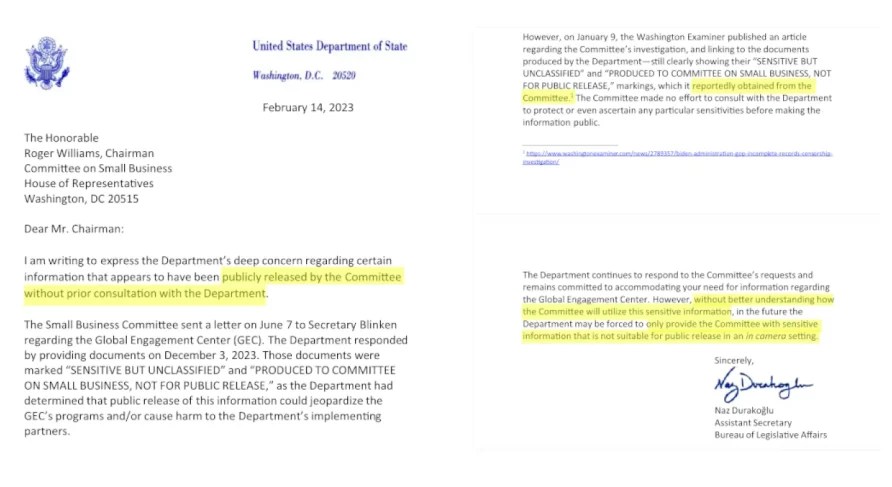
The State Department tells Congress, which controls its funding, that it will only disclose where it spent our money “in camera”
A year ago the Examiner published “Disinformation, Inc.”, a series by investigative reporter Gabe Kaminsky describing how the State Department was backing a UK-based agency that creates digital blacklists for disfavored media outlets. Your taxes helped fund the Global Disinformation Index, or GDI, which proudly touts among its services an Orwellian horror called the Dynamic Exclusion List, a digital time-out corner where at least 2,000 websites were put on blast as unsuitable for advertising, “thus disrupting the ad-funded disinformation business model.”

The culprit was the Global Engagement Center, a little-known State Department entity created in Barack Obama’s last year in office and a surprise focus of Twitter Files reporting. The GEC grew out of a counter-terrorism agency called the CSCC and has a mission to “counter” any messaging, foreign or domestic as it turns out, that they see as “undermining or influencing the policies, security, or stability of the United States.” The GEC-funded GDI rated ten conservative sites as most “risky” and put the Examiner on its “exclusion” list, while its ten sites rated at the “lowest level of disinformation” included Buzzfeed, which famously published the Steele Dossier knowing it contained errors and is now out of business.
In an effort to find out what other ventures GEC was funding — an absurd 36 of 39 2018 contractors were redacted even in an Inspector General’s report — the House Small Business Committee wrote the State Department last June asking for basic information about where the public’s money was being spent. State and GEC stalled until December 3 of last year, when it finally produced a partial list of recipients. Although House Republicans asked for an “unredacted list of all GEC grant recipients and associated award numbers” from 2019 through the current year, the list the Committee received was missing “dozens” of contractors, including some listed on USASpending.com.
The Examiner and Kaminsky subsequently wrote an article slamming GEC for sending “incomplete” records of the censorship investigation, in the process including links to a “snippet” of the GEC’s contractors:

In response to the outrage of this disclosure, the State Department sent its letter threatening in camera sessions until it gets a better “understanding” of how the Committee will use its “sensitive” information. That’s Beltway-ese for “We wouldn’t mind knowing the Examiner’s sources.”
About that: the State letter wrote that the Examiner’s records were “reportedly obtained from the Committee,” and included a footnote and a link to a Kaminsky story, implying that the Examiner reported that it got the records from the Committee. But the paper said nothing about the source of the documents, which as anyone who’s ever covered these types of stories knows, could have come from any number of places. It’s a small but revealing detail about current petulance levels at State.
“Anti-disinformation” work is not exactly hypersonic missile construction. There’s no legitimate reason for it to be kept from the public, especially since it’s increasingly clear its programs target American media companies and American media consumers, seemingly in violation of the State Department’s mission. The requested information is also not classified, making the delays and tantrums more ridiculous.
There are simply too many agencies that have adopted the attitude that the entire federal government is one giant intelligence service, entitled to secret budgeting and an oversight-free existence. They need pushback on this score and have at last started to get it. Thanks in significant part to the Examiner as well as lawsuits by The Federalist, Daily Wire, and Consortium News, the latest National Defense Authorization Act included for the first time a provision banning the Pentagon from using “any advertiser for recruitment that uses biased censorship entities like NewsGuard and GDI,” as a congressional spokesperson put it in December. We’ll see how it pans out, but congress withholding money for domestic spy programs is at least a possible solution, now in play.
Perhaps it’s time for the State Department to receive a similar wake-up call. If GEC wants to put conditions on disclosure, can we put conditions on paying taxes?
Musk agrees Ukraine conflict is ‘war of lies’
RT | February 18, 2024
Tesla and SpaceX CEO Elon Musk has seemingly agreed with American investor David Sacks, who believes that the Ukraine conflict will end in a heavy defeat for Kiev, but that the West will try to spin the narrative in a way to sweep the truth under the rug.
On Sunday, Sacks published a post on X entitled “A war of lies,” arguing that the Ukraine conflict is based on falsehoods and deceit about “how it started, how it’s going, and how it will end.”
The entrepreneur stated that citizens of Western countries are being told that “Ukraine is winning when in fact it is losing” while being lied to that Kiev’s main problem is a lack of US funding, while in reality it is the “fact the West can’t produce enough ammunition.”
According to Sacks, the deceit does not end there. “We are told that there is no opportunity to make peace when in fact we have rejected multiple opportunities for a negotiated settlement,” he said. He added that Western leaders are also lying by insisting that the longer Kiev fights, the better terms it will get, when in fact the opposite is true.
Those distortions are prolonging the conflict, which will result in Ukraine trying to mobilize more people to be fed into the “meat grinder,” leading to surging public discontent and the collapse of the Ukrainian government, the businessman predicted.
“When the war is finally lost, when the whole country lays in smoldering ruins on a funeral pyre of their own making, the liars will say: ‘Well we tried.'”
Even then, Sacks concluded, those who lied about Ukraine would blame their misfortunes on a pro-Russian “fifth column… who stabbed the Ukrainians in the back.”
Responding to the lengthy article, Musk appeared to agree, calling it “accurate.”
Russian President Vladimir Putin has said that Moscow and Kiev were close to settling the conflict in the spring of 2022, with Ukraine’s neutrality being one of the main items on the agenda. However, according to the Kremlin, the process was derailed by then UK Prime Minister Boris Johnson, who convinced Kiev to keep fighting. The Russian leadership has said the door remains open to engagement with Ukraine.
Last month, in the aftermath of Kiev’s botched counteroffensive, Putin also warned that if Ukraine continued on the same political course, the country’s statehood could suffer a “very serious blow.”
‘Russophobic US Elite’ Sought to Weaken Russia with Euromaidan, ‘But Failed’ – Ex-MEP
By Svetlana Ekimenko – Sputnik – 18.02.2024
On the 10th anniversary of the events in Ukraine known as the Euromaidan (lit. “Euro Square”) unrest, which eventually resulted in a coup and the ouster of then-President Viktor Yanukovych, a Spanish politician has shared his opinion on how the EU allowed itself to be drawn into the existing crisis for the sake of US interests.
After the foreign-sponsored coup in Kiev in 2014, the “openly Russophobic elite” of the West sought to weaken Russia, but failed, former Member of the European Parliament (MEP) from Spain Javier Couso Permuy told Sputnik.
Furthermore, the EU undermined its own authority because of Ukraine, he pointed out.
Weighing in on what prompted the EU to push for an association agreement between Ukraine and European countries, and whether a different scenario could have unfolded if the agreement had been signed immediately, he underscored:
“You can’t take out of context what happened 10 years ago without remembering the attempt to intervene [in internal affairs] in 2004, called the ‘Orange Revolution.’ All the elements that came together later and on a larger scale were also present there when the coup d’état was staged during the Euromaidan. There was a clear intervention by the US authorities on all levels, ranging from political, with statements from top officials, to financial, when US government funds were allocated supposedly to promote democracy in the post-Soviet space.”
Euromaidan, a wave of demonstrations and civil unrest in Ukraine, began on November 21, 2013 on Maidan Nezalezhnosti (Independence Square) in Kiev over former President Viktor Yanukovych’s decision to prioritize accords with Russia and the Eurasian Economic Union instead of signing the European Union-Ukraine Association Agreement. Along with simultaneous talks on Ukrainian membership in the Eurasian Economic Union with Russia, this fomented a political crisis.
At the time, thousands of protesters filled the streets of the Ukrainian capital, demanding the resumption of talks on the EU Association Agreement. Many of the protests were marshaled by US and EU-funded non-governmental organizations, who boasted experience in staging the color revolution in the country during the so-called Orange Revolution of 2004-2005.
In reality, this EU Association Agreement to assure Ukraine’s “European future,” like all association agreements that the European Union enters into, “involved significant interference in internal affairs,” Javier Couso pointed out.
“In other words, it always forces political reforms,” the pundit said, adding that the agreement “simply served as a tool to destroy good relations between Ukraine and Russia.”
“This was done throughout the post-Soviet space, with the help of association agreements or through interference in internal affairs and coups, which were called ‘color revolutions’,” Couso said.
“Later, we clearly saw the governments that arose as a result of this coup d’etat, first led by Poroshenko, and then by Zelensky, with laws that could not have been adopted within the European Union under any circumstances,” the former MEP continued.
“I’m talking about language laws or those that changed the history of the country, such as de-Sovietization or ethnic laws that divided Ukrainians into first- and second-class citizens,” Couso stressed.
Looking back at why the West failed to achieve its goal with the help of that bloody coup 10 years ago, Couso suggested the answer was obvious. The plan was concocted by a “certain part of the US elite, openly Russophobic, and the European elites subordinate to it, who have been trying to construct a reality based on their ideology,” he emphasized, adding:
“Its basis is not only the desire to contain and weaken Russia, but also to split it, break it up into fragments, because it is far too large and boasts enormous natural wealth.”
As for what went wrong, those behind the Euromaidan plans “failed to take into account that Ukraine is a diverse country, home to various cultural and linguistic minorities, including Romanian, Hungarian, and those who love Russia… Yet there was the desire to impose pro-Western Ukrainian nationalism, which is based on neo-fascist or neo-Nazi elements that justify the terrible legacy of Ukrainian war criminals, such as Stepan Bandera.”
It is obvious that the West’s plan was a complete failure, according to Couso. It was not possible to achieve ethnic, linguistic, and cultural unification of the country except through military action – something that we observed before the start of the Russian special military operation, the former MEP pointed out.
“From 2014 to 2022, over 14,000 people were victims of direct attacks by armed forces led by these neo-Nazi groups in the Donbass regions, who opposed the coup d’etat, defended their right to participate in the life of a diverse Ukraine and to preserve their native Russian language,” Javier Couso said.
Furthermore, events of recent years have clearly shown that agreements with European politicians are worthless, with the Minsk accords, for example, used as a smokescreen to avoid Ukraine’s imminent defeat in 2014. Successive Ukrainian governments refused to implement the peace deal signed in the Belarusian capital in February of 2015 and designed to resolve the crisis in Donbass. Western powers also sabotaged Russian-Ukrainian peace talks in the spring of 2022 – held in the first weeks after Russia kicked off its special military operation.
“The European Union, and above all the large countries that simply abandoned part of their history, such as Germany and France, have inflicted enormous damage on the authority of diplomacy and in the field of international politics,” Javier Couso said.
Acting “in bad faith,” and “undermining the credibility of us as citizens of the European Union,” their goal was “to deceive Russia for the opportunity to continue rearming the Ukrainian Army.”
“The European Union is a vassal of the United States… Just like NATO, which has subordinated our military capabilities to Wahsington, the EU is under the geopolitical leadership of the US, or, as some historians and analysts believe, is a successful project of the United States,” the politician accentuated.
“In reality, countries that are members of the EU have lost monetary, macroeconomic, and defense sovereignty, […] strictly following the foreign relations policies and instructions coming from Washington. The population of the European Union is daily forced to pay out of their own pockets for the geopolitical mistakes of their leaders who shot themselves in the foot by continuing unlimited support for a failing Ukraine,” Couso underscored. He recalled that the rounds of Western sanctions have failed to “cripple” Russia, while boomeranging on the European population.
“I imagine that there will be a lot of turmoil in the future not only for the European Union, but also for NATO, because this war will end. And as all analysts say, Russia will win… In other words, they will not achieve what they set out to achieve,” Javier Couso summed up.
Why Mental Health Education & Prevention is Harmful
The paradoxical effect of screening and prevention programs
BY DR. ROGER MCFILLIN | RADICALLY GENUINE | NOVEMBER 23, 2023
There is a concerted effort to drive a growing number of individuals, particularly the younger demographic, toward mental health screenings and interventions.
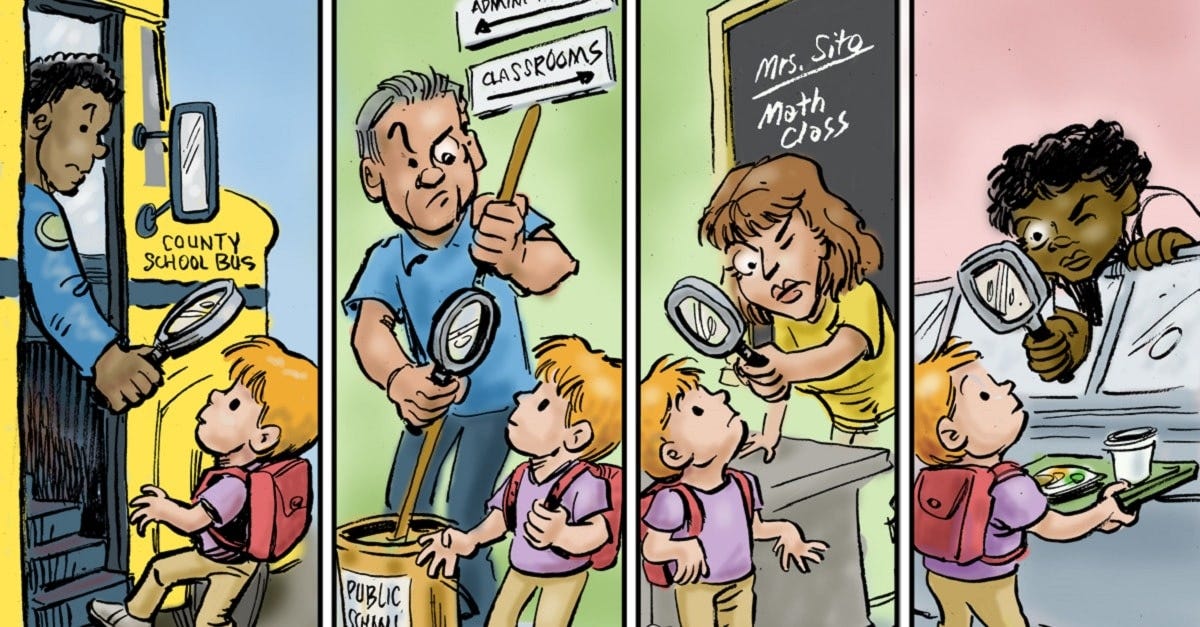
Schools across the United States are implementing mental health programs to tackle the ongoing mental health crisis. The underlying concept is well-intentioned, drawing parallels between mental health prevention and physical health education. This entails raising awareness of behaviors promoting mental well-being and encouraging active engagement in such behaviors.
However, what if the notion of “prioritizing mental health” is inadvertently causing harm? In a New York Times opinion essay titled “This is Not the Way to Help Depressed Teenagers,” Darby Saxbe, a clinical psychologist and professor at the University of Southern California, argued that certain programs aimed at addressing mental health issues in young people not only fell short in providing help but actually exacerbated their problems.
Enter WISE Teens, a school program focused on “social-emotional skills training,” spearheaded by clinical psychologists in training. This innovative initiative comprises eight weekly hour-long classroom sessions designed to equip students with tools and principles derived from both cognitive behavior therapy and Zen Buddhism. The goal? To empower students in managing their emotions effectively.
In a recent study published in the journal Behavior Research and Therapy (read here), researchers examined the experiences of 1,071 Australian teenagers over the span of 2017 to 2018. The participants were divided into two groups: one engaged in the WISE Teens program, while the other followed a standard health-class curriculum. Surprisingly, the findings revealed that compared to those receiving standard education, students in WISE Teens reported higher levels of depression, increased anxiety, greater difficulty managing their emotions, and strained relationships with their parents. Astonishingly, one out of every eight participants in WISE Teens showed signs of clinical depression post-program, as opposed to one out of every 13 participants in the regular health classes.
This was an educational program and NOT Dialectical Behavior Therapy (DBT), despite some academic enthusiasts wrongly claiming that DBT for Adolescents is ineffective. DBT for Adolescents is a comprehensive psychotherapy involving specialized individual therapy, skills coaching for both parents and children, and coaching consultations. It’s specifically designed to help teenagers facing severe emotion dysregulation, including issues like suicidality and self-injury. What we’re discussing here, however, is not that. It’s an attempt to build skills in a non-clinical population.
The question arises: should our school personnel be getting involved in mental health matters? How about pediatricians and primary care doctors? Could this be contributing to the problem rather than solving it?
The irony is hard to ignore: school decisions made during the pandemic played a direct role in the rise of mental health issues among children. It’s widely known that kids flourish through social interaction, in-person learning, and engaging activities that aid their development. Yet, what actually unfolded was the opposite – they were pulled out of schools, exposed to prolonged screen time, and had their extracurriculars taken away. Not surprisingly, the increase in screen time and social media usage went hand in hand with a decline in mental health. Indeed, there’s a paradox in expecting the same authorities to screen, oversee, and intervene in mental health problems. So what happens when these concepts are taught to impressionable kids?
Psychiatric Ideology is Harmful
When kids are doing well, they’re focused outward – active, engaged, and fully living life. But turning that focus inward and exposing them to psychiatric labels and ideas? That’s just plain foolish. Kids are at a stage where they’re figuring out who they are, and throwing around these labels is confusing. It’s risky business, especially when these labels start defining their inner world and capabilities.
When introducing concepts around mental health problems kids are prone to speaking about normal life struggles in terms of symptoms and diagnoses. This approach instills a sense of pathology or abnormality in children’s everyday struggles, potentially leading to heightened anxiety or self-stigmatization.
The psychiatric industry suggests that DSM diagnoses are legitimate disease constructs, akin to physical illnesses. However, they’re merely crude labels slapped onto a spectrum of emotional and behavioral manifestations. Major Depressive Disorder isn’t a tangible ailment like strep throat or a tumor. ADHD isn’t an innate disease. These labels lack explanatory value.
One’s struggle with depression may stem from valid reasons such as life setbacks, loss, loneliness, financial woes, or other health issues – not because you have Major Depressive Disorder. Kids often miss this nuance, making them susceptible to labeling themselves: “I can’t do this due to my anxiety,” or “My ADHD is hindering my homework.” Such labels, instead of clarifying, can breed a sense of hopelessness about the future.
Chemical Imbalance Lies have Harmed Generations
During the 1990s and 2000s, the pharmaceutical industry teamed up with academic psychiatry to brand mental health conditions as brain disorders. The government poured billions into hunting for some biological or genetic root, presenting psychiatry with the chance to solidify its standing as legitimate doctors. By attributing depression, anxiety, ADHD, and other “mood disorders” to a biological origin, they could conveniently fit them into the allopathic model—essentially, the solution became prescribing a drug. This alliance shaped not just the narrative around mental health but also the lucrative industry that emerged from it.
“I spent 13 years at NIMH really pushing on the neuroscience and genetics of mental disorders, and when I look back on that I realize that while I think I succeeded at getting lots of really cool papers published by cool scientists at fairly large costs—I think $20 billion—I don’t think we moved the needle in reducing suicide, reducing hospitalizations, improving recovery for the tens of millions of people who have mental illness.” – Thomas Insel, MD
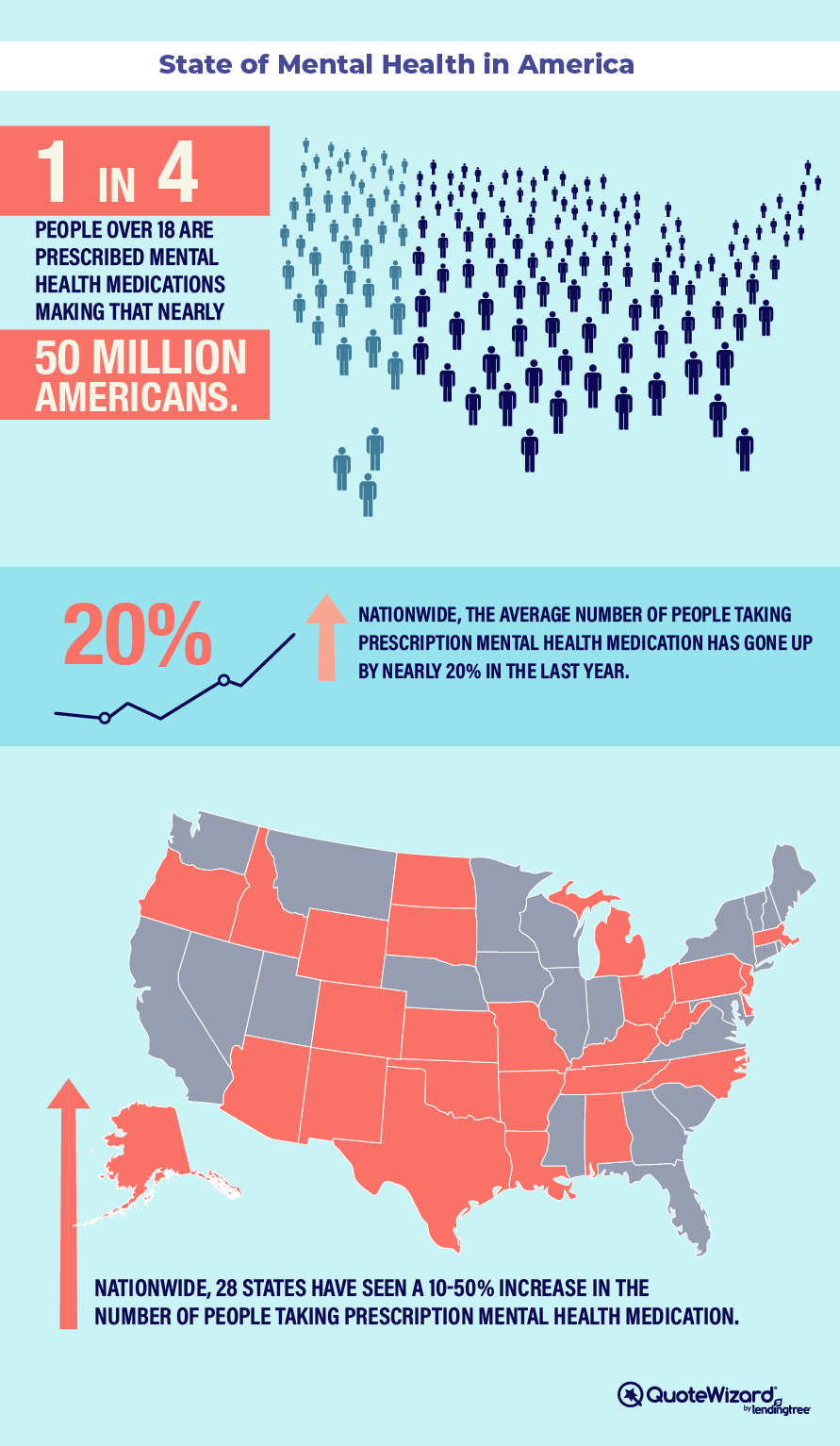
Despite the lack of an identified biological basis for these conditions, the pharmaceutical industry and academic psychiatry propagated the myth of chemical imbalances, resulting in the emergence of a multi-billion dollar psychiatric drug industry. During this period, psychiatric diagnoses skyrocketed, with near 25% adults relying on at least one psychiatric drug. Astonishingly, all available statistics point to a deterioration in mental health. This should come as no surprise. When individuals are taught that their emotions are beyond their control and framed as symptoms of a physical illness, they are effectively conditioned to seek relief through medication rather than understanding their emotions in context and leveraging them to confront challenges and solve problems.
It’s important to notice that many teachers and school staff are exposed to the same ideologies that contribute to the issues affecting our culture. Schools can become breeding grounds for the perpetuation of concepts like chemical imbalances, victimization culture, and other fringe ideologies. The cycle continues as those who have been influenced by these ideas become the educators, passing on harmful ideas.
Public Schools are a Breeding Ground for Indoctrination
Teachers, school counselors, administrators, and school psychologists often lack the comprehensive knowledge, training, and expertise required to navigate the complexities of emotional and behavioral issues. Their roles were not originally designed to involve the identification or intervention of emotional problems, nor should they be.
Regrettably, public schools have become battlegrounds for fringe ideologies and cultural Marxism, transforming the educational system into an extension of an expanding nanny state that encroaches on the individual rights of families.
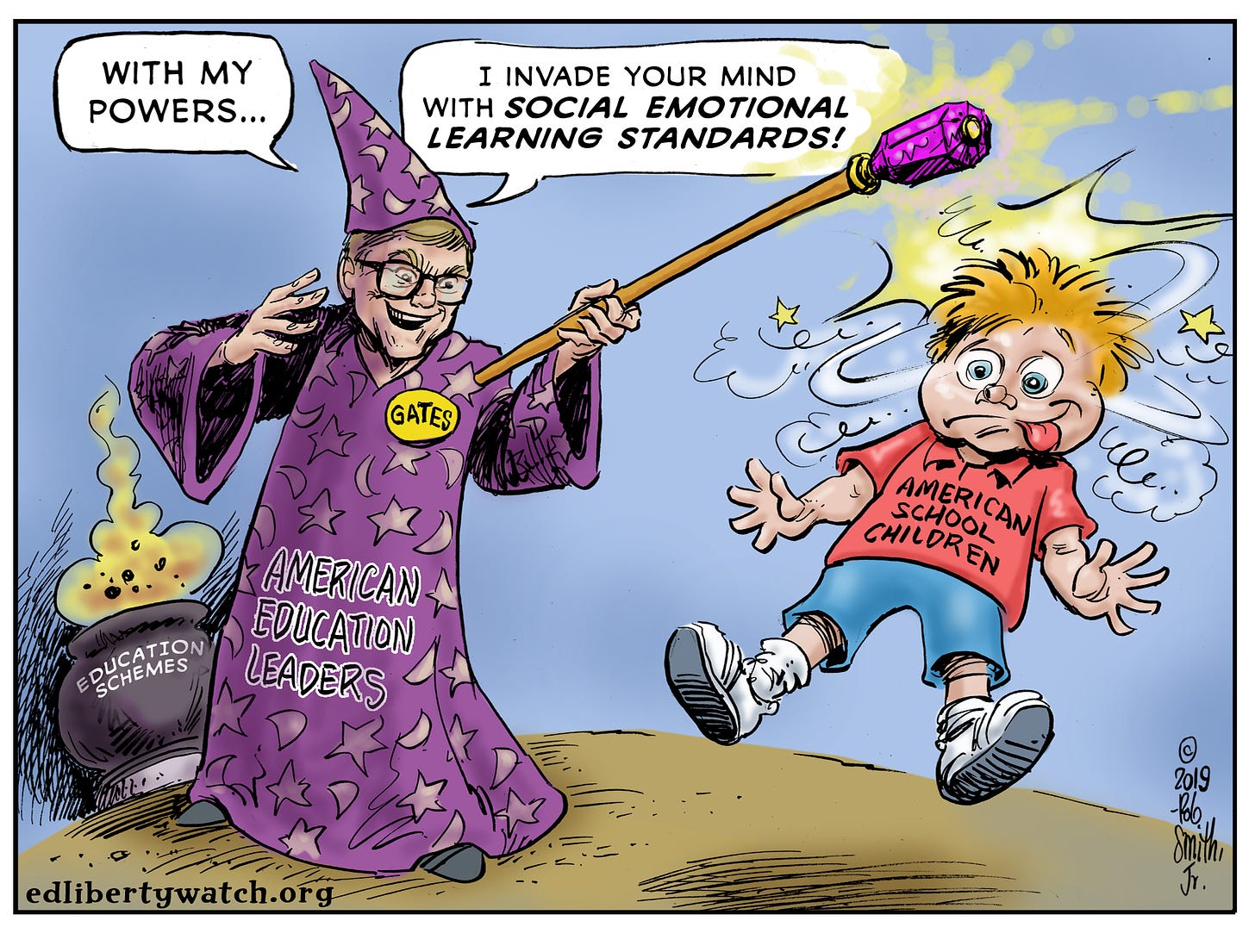
Initiatives such as social and emotional learning, gender ideology, and mental health screening have positioned school personnel as gatekeepers for broader societal movements. Non-experts in the field may incorrectly inform parents that their children have conditions like “ADHD” and discuss fringe ideas without scientific legitimacy, significantly influencing how parents perceive their children’s development.
In this climate, normal developmental challenges are pathologized within a culture fueled by fear. Teachers, conditioned to identify early signs of potential academic or emotional issues, become hyper-vigilant to any cues that might suggest a child is at risk of becoming a school shooter, facing suicide, or dropping out of high school.
Tragically, educators have been misled into thinking they can pinpoint these so-called “disorders,” often oversimplifying complex issues and resorting to problematic “early interventions”, at times pushing drugs. This unintended consequence creates a system where educators feel compelled to categorize and refer for medication. Paradoxically, assigning labels to children and administering mind & mood-altering drugs significantly heighten the risk of the very feared consequences they sought to prevent.
Don’t Accept “Depression Screening” Measures
Mental Health Screening* is based on the subjective and unscientific diagnostic system developed by mental health professionals, many with financial ties to the pharmaceutical industry.
The American Academy of Pediatrics has brazenly recommended an audacious strategy: subjecting adolescents aged 12 years and older to annual screenings for depression, using formal self-report tools on paper or electronically. These guidelines, undoubtedly, serve one sinister purpose: to inflate the number of children diagnosed with depression. It is a well-known fact that screening measures are notorious for producing false positives. This means that a substantial percentage of individuals identified through these screenings do not actually suffer from the supposed problem being screened.
According to psychologist Chuck Ruby, as stated in his book “Smoke and Mirrors,” with approximately 74 million children under the age of 18 residing in the United States, subjecting them all to an 80% accurate screening tool would result in millions being falsely labeled. These guidelines not only perpetuate a dangerous cycle of overdiagnosis but also push countless innocent young individuals into unnecessary treatment-psychiatric drugs.
Dr. David Shaffer of Columbia University, the psychiatrist who invented one screening program, “TeenScreen,” admits it has a potential 84 percent chance of wrongly identifying teens to be at risk of suicide. He has long-term ties to drug companies and is a consultant for Hoffman La Roche, Wyeth and GlaxoSmithKline.
The ease with which normal developmental behaviors can be misdiagnosed as symptoms of clinical depression is a concerning issue. The primary screening measure utilized for assessing adolescent depression is the PHQ-9 for Adolescents, a self-report questionnaire comprising of nine questions that focus on supposed “depressive symptoms”. What is particularly noteworthy is the origin of this questionnaire—it was developed by none other than… Pfizer!
This phenomenon isn’t exclusive to a particular psychiatric disorder; it’s a pervasive issue across various mental health conditions. A widely recognized pharmaceutical marketing strategy involves expanding the diagnostic criteria for a disorder, essentially broadening the definition to encompass aspects within the spectrum of normal human experiences. By doing so, the pharmaceutical industry can effectively create a market for their products, as more individuals are diagnosed and deemed potential consumers.
Reclaiming our Communities
The key to effective mental health prevention lies in common sense. It begins with cultivating a nurturing and loving home environment that prioritizes the well-being of children. Provide structure and a sense of predictability. Reduce screen time, provide nutrient-dense meals, avoid processed and chemically laden junk, ensure adequate sleep, and embrace community and faith-based traditions. Throw in some exercise, extra-curricular activities, and social gatherings for good measure. While emphasizing the importance of academic achievement, fostering a love for learning, discipline, and resilience, it may be opportune to empower our school teachers to thrive in their specialties—math, science, English, and history—leaving the framework for mental well-being in the capable hands of families and those they trust.
*In a previous post I wrote about the dangers of screening measures in pediatrics and primary care (Read here)
America’s Fat Children Now in Ozempic Marketers’ Crosshairs
By Ben Bartee | Armageddon Prose | February 17, 2024
Via Reuters :
“A small but rapidly growing number of U.S. adolescents began treatment with Novo Nordisk’s <NOVOb.CO> weight-loss drug Wegovy last year, a powerful new tool to address record rates of pediatric obesity, according to data shared exclusively with Reuters.
In the first 10 months of 2023, 1,268 children ages 12 to 17 with an obesity diagnosis* started taking Wegovy, according to U.S. insurance claims data compiled by health technology company Komodo Health.”
* This psychological condition via framing the obesity epidemic as a “disease” with an accompanying “diagnosis” is not to be overlooked, as it provides valuable insight into how the pharmaceutical industry successfully parlays every physical, psychological, and social ailment into a medical diagnosis through a process called “medicalization” that I have previously described in great detail, which then opens the door for expensive, patented pharmaceutical interventions where they don’t naturally belong.
Strategically placing obesity within the “disease” bucket precludes the individual (referred to as “the patient,” an object to be worked upon, like a car with a faulty transmission) from exercising any personal agency over their health. Instead, the patient’s issue becomes a medical one best left to the anointed “experts” to resolve — almost always with expensive drugs or surgeries.
The actual disease, whether real or invented, obesity or “gender dysphoria,” is rarely resolved, but, given the financial incentives to keep the pill mills churning out product, one has to wonder whether that was ever the point from the industry’s perspective to begin with.
Continuing:
In 2022, only 25 children were prescribed the drug, which did not receive U.S. approval for adolescent use until December of that year. A month later, the influential American Academy of Pediatrics recommended weight-loss drugs be offered to children with obesity starting at age 12.”
In a decent society, the American Academy of Pediatrics would be designated a criminal enterprise, if not a biomedical terrorist organization, and its ringleaders prosecuted with vigor.
Via Influence Watch :
“In 2018, AAP reported $121,878,940 in revenue and $62,163,314 in net assets. More than half of its revenue came from its memberships, journals, and publications. The AAP also reported receiving $20.5 million in government grants and over $12.9 million in outside contributions. That same year, AAP reported $118,478,392 in expenses, including nearly $800,000 spent on legislative lobbying.
AAP gains a significant portion of its revenue through sponsorships at its conferences and frequent member events, though it has received criticism for its seemingly hypocritical sponsorship arrangements. In 2010, AAP hosted a conference which featured SweetSurprise.com, a corn-syrup promotion compony, as a sponsor, despite the fact that the AAP itself advocated against high fructose corn syrup and claimed that soda consumption was associated with higher rates of obesity.”
Let’s discover together who — in addition to the likes of Bill Gates and Google — funds the AAP.
It’s probably deeply ethical physician’s groups and nunneries and whatever, right? The Mother Teresas and similar such do-gooders of the world.
Surely.
Why, spank me silly and call me Suzy; it’s none other than Novo Nordisk, manufacturer of Ozempic, itself!
But let’s not be conspiracy theorists and allege a conflict of interest.
Ben Bartee, author of Broken English Teacher: Notes From Exile, is an independent Bangkok-based American journalist with opposable thumbs.
Follow his stuff Substack. Also, keep tabs via Twitter.
Related: Obesity Is a ‘Brain Disease,’ Claims ‘Expert’
Related: How the Obesity-Industrial Complex Keeps Americans Sick, Fat, and Sad
Featured Video

or go to
Aletho News Archives – Video-Images
From the Archives
A Lesser “Grade” of Human
By Michael Hoffman | Revelation of the Method | January 3, 2024
Will the more than 100 Iranians killed by terrorist bombs today be mourned in the West as victims of terrorism? Certainly not. Allied doctrine has it that the killing of Israeli or American civilians is a crime of cosmic proportions, while shedding the blood of “enemy” women and children is perfectly acceptable; indeed commendable.
The West does not memorialize the hundreds of thousands of civilians bombed by the U.S. in Serbia, Iraq, Afghanistan and every major German city 1943-1945. America’s fire-bombing of the city of Tokyo by General Curtis LeMay in March 1945 was followed by Harry Truman’s atomic incineration of Hiroshima and Nagasaki in August of that year. Truman never had a moment of doubt or regret over the murder of more than a 100,000 Asian children, mothers and non-combatant boys and men. It was business as usual for the “noble” Allies during the “Good War.”
In the West human rights signifies passionate concern only for civilians designated as truly human: Israelis first, then Americans and British, followed by their satraps.
This inhumanity is the legacy of Talmudic ideology, beginning with tractate Sanhedrin 57a from 400 A.D., concerning liability for capital punishment: “If a Jew murders a gentile, he is exempt.”
This teaching of contempt was reiterated in the dogma of Chabad Lubavitch founder Rabbi Shneur Zalman in the 18th century. … continue
Blog Roll
 Aletho News
- MOE: Nearly 22,000 Students and Education Workers Killed
- Guterres in Islamabad: Genocide, cowardice, and the cage of Imran Khan
- Johnson, Marandi say Yemen holds upper hand over Saudi Arabia
- False flags won’t save aggressors, Iran FM spokesman says
- The Makkah Pact Enters Into Force: The End of American Dominance or Its New Form?
- NATO’s top generals gather in Kiev
- EU’s continuing expansion – greater threat to Russia
- US Senator Murphy says Pentagon denied him entry to US base in Qatar
- Israel expands “incitement” charge to target Palestinian education and memory
- How Israel seeks to reshape Arab classrooms
- If Americans Knew
- Three Years of Genocide: How America’s Israel-First Media Filtered Out the Truth
- Israeli war chief briefs ministers on potential war against Palestinian Authority
- New Report: Israel Killed nearly 21,000 Palestinian Students and Education Workers in Past Three Years
- Israel’s flailing chatbot army
- Five Palestinians Killed, Others Injured by Israeli Fire in Gaza
- Israel is rewriting the Palestinian curriculum in East Jerusalem to erase Palestinian identity
- Three years of genocide: Israel turned prisons into killing grounds and torture sites
- Three years of genocide. Words fail. Daily Update
- ‘I’d rather die than go back’: A Palestinian teen’s 10-month nightmare in Israeli jail
- How Jared Kushner’s firm’s investment in an Israeli company could be a major conflict of interest
- No Tricks Zone
- US September “Heat” Was No Record…Many Records Set Decades Ago
- Latest European Green Energy Debacle; Portugal’s Largest Flagship Solar Park Insolvent!
- Green Energy Debacle: German Expert Professor Fritz Vahrenholt Warns Of Severe Economic And Social Consequences
- Two More Paleo Reconstructions Affirm Meters-Higher Sea Levels Across Ireland, Brazil 7000-6000 Years Ago
- New Study: Earth And Venus Surface Warmth Largely Explained By Convection And Lapse Rate, Not CO2 Or Radiation
- 2025 Nature Paper Claiming Worsening Global Drought Gets RETRACTED …Heavily Flawed
- New Study: ‘Global Drought Shows No Detectable Recent Acceleration Under Climate Warming’
- Economic Masterminds: German Socialists Suggest Taxing Productivity Gains Stemming From Using AI
- The South China Sea Has Not Been Cooperating With The Climate Change Narrative
- Energy Crisis: Germany Enters Heating Season With Historically Low Gas Reserve Fill Levels

