Washington’s ‘Waiver On, Waiver Off’ Game at Chabahar
By Salman Rafi Sheikh – New Eastern Outlook – December 9, 2025
In recent months, Washington has swung from revoking to restoring India’s sanctions waiver for operating Iran’s Chabahar port. The ‘waiver on, waiver off’ routine, however, comes with a clear strategic intent.
The move is not just leverage over New Delhi as trade talks loom; it’s also a signal to Central Asian states that their economic futures — including access to Chabahar — depend on aligning their foreign policies with US preferences.
In September 2025, the United States pulled the rug out from under one of India’s most carefully nurtured strategic ventures: the Chabahar Port in Iran. Long viewed by New Delhi as a critical gateway to Afghanistan and Central Asia, Chabahar suddenly became a high-stakes chess piece in Washington’s policy game. On September 16, the US Department of State announced it would revoke the special exemption granted in 2018 under the Iran Freedom and Counter-Proliferation Act (IFCA), with the revocation taking effect September 29. Overnight, Indian companies, shippers, insurers, and banks involved in the port’s operations were cast into uncertainty: their assets could be frozen, their access to the US financial system curtailed, and their commercial contracts imperilled.
This move did not occur in isolation. At the same time, New Delhi was itself involved in a high-stakes game with the US over bilateral trade. Specifically, it is resisting US pressure to halt oil imports from Russia. By targeting Chabahar, Washington signaled that it was willing to leverage unrelated strategic projects to enforce compliance elsewhere, effectively turning Indian economic and geopolitical interests into bargaining chips. Yet the situation shifted quickly: reports emerged on October 28 that Indian firms had halted Russian oil imports, and the very next day, the US issued a fresh six-month waiver, allowing Chabahar operations to continue without immediate penalty.
The rapid “waiver on, waiver off” cycle exposes the transactional and unpredictable logic of US sanction policy. A project that represents over $120 million in Indian investment, long-term regional connectivity, and painstaking diplomacy is reduced to a geopolitical pawn, its fate dictated less by commercial or developmental imperatives and more by Washington’s strategic calculus. This particular calculus, however, is not meant for India only. The politics of granting and restricting waivers is also tied very closely to Washington’s relationship with Central Asia.
The Central Asian gamble
Chabahar port is important not only for India but also for the landlocked states of Central Asia, offering a rare direct link to the Indian Ocean and a potential route to India that bypasses Pakistan. Several Central Asian states have expressed interest in using Chabahar Port for this purpose. Tajikistan has emerged as the most active player, signing a formal cooperation agreement with Iran in early 2025 and committing to developing a logistics hub with terminals and storage facilities. Uzbekistan has held discussions about utilising the port for trade and storage. While a lot of this is still far from being fully operational, there is little denying that a major roadblock has been the US sanctions.
In the same vein, the waiver also signals to Afghanistan, where India has recently become very active. The Taliban regime is currently involved in a border standoff with Pakistan. Kabul has suspended its trade with Pakistan, and the reopening of this route remains highly uncertain. At the same time, Washington has been pressuring the Taliban to come to terms with handing over the Bagram airbase to the US military for its potential operations against China. In this context, if Afghanistan wants to continue—and even expand—its trade with Central Asia and other countries beyond the region, i.e., with India itself, as an alternative to Pakistan, its best route goes through the Chabahar Port.
Beyond this, the US decision to grant the waiver—and unless it restricts it again in the future—also puts it in a position where it can influence several other regional trade and connectivity projects, including the Trans‑Caspian and broader International North-South Transport Corridor (INSTC) projects. By granting or revoking waivers, the US is signalling that it can create opportunities and or introduce uncertainty for companies and governments contemplating investment or trade through corridors that touch Iran.
For example, Central Asian states considering cargo flows via Chabahar—or via the Caspian Sea to Azerbaijan and beyond—must now weigh the risk that US sanctions could suddenly be applied, making insurance, financing, or banking services problematic and/or unavailable. Even if the Trans‑Caspian route itself does not pass through Iran, the interconnected nature of regional logistics networks means that a disruption at Chabahar could ripple across supply chains, raising costs or forcing alternative routing through Russia, Turkey, or China.
In essence, the waiver policy acts as a geopolitical lever. Its application is meant to put pressure on countries and companies so that they align their foreign and trade policies with US preferences, discouraging full exploitation of alternatives like the Trans‑Caspian corridor that could reduce American influence. The US has, for some time, been trying to expand its geopolitical footprint in Central Asia. Its ability to strangulate or allow Chabahar helps it signal its continued relevance. On the whole, the uncertainty imposed by such sanctions creates a risk premium, slows governmental and private investment, and subtly nudges regional actors toward pathways that the US finds strategically acceptable, even if they are less efficient or commercially less viable.
Salman Rafi Sheikh, research analyst of international relations and Pakistan’s foreign and domestic affairs
Kiev and Western backers trying to undermine Moscow’s ties with neighbors – FSB
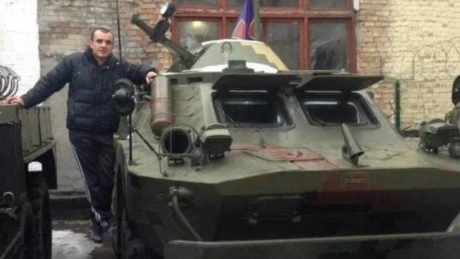
Nikolay Kochmarik posing with a Ukrainian armored vehicle. FSB
RT | February 1, 2025
Ukrainian intelligence services and their Western handlers are creating fake online content in an attempt to spoil Russia’s relations with neighboring countries, the Russian Federal Security Service (FSB) has alleged.
The agency announced in a statement on Saturday that it had identified a Ukrainian national who had offended the people of Uzbekistan while posing as a Russian blogger. The controversial clip had been uploaded to a YouTube channel “controlled by the Lithuanian special services,” it added.
A video featuring a man who claims to be a Russian citizen made headlines last month for comparing Uzbeks to dogs, sparking outrage among commentators in both Central Asia and Russia.
At the time, Rasul Kusherbaev, an advisor to the Uzbek ecology minister, urged the country’s foreign ministry to “take action” in response to the insults. “Our cooperation with Russia is based on the principles of equality and mutual respect. Discrimination is unacceptable in interstate relations,” Kusherbaev told the media outlet Daryo.
According to the FSB, the offensive blogger is a citizen and current resident of Ukraine named Nikolay Kochmarik, who has been actively supporting Kiev’s military during the conflict with Moscow.
“This incident is evidence of deliberate actions by the Ukrainian and Lithuanian special services as well as by their foreign handlers to create provocative content aimed at undermining relations between Russia and its partners in the CIS,” the FSB stressed. With such clips, Kiev and its Western backers are “attempting to form anti-Russian sentiment abroad,” it added.
The CIS (Commonwealth of Independent States) is an intergovernmental organization comprised of many former Soviet Republics, including Armenia, Azerbaijan, Belarus, Kazakhstan, Kyrgyzstan, Moldova, Russia, Tajikistan, and Uzbekistan.
Kremlin comments on Türkiye’s SCO bid
Türkiye’s obligations to the US-led military bloc are not consistent with the Eurasian organization’s values, Moscow has said.
RT | July 12, 2024
Türkiye’s bid to become a full member of the Shanghai Cooperation Organization (SCO) is not compatible with its membership in NATO, Kremlin spokesman Dmitry Peskov said on Friday.
Last week, Turkish President Recep Tayyip Erdogan attended a summit of the Eurasian mutual defense group, in which his nation has observer status. While returning home from Kazakhstan, he told journalists that Ankara wants to “further develop” ties with the SCO and its founding members Russia and China. During the NATO leaders’ summit in the US this week, he said Türkiye wants to join the SCO as a permanent member.
Asked by journalists when Turkish accession could be expected, Peskov said there was a problem with such a proposal.
“There are certain contradictions between Turkish commitments and [its] position on fundamental issues as a NATO member and the worldview formulated in the founding documents of the SCO,” he explained.
The expansion of the SCO is of interest to many nations and remains on its agenda, but there is no specific timeline for accepting new members, he added. Commenting later during a press call on bilateral relations with Türkiye, Peskov said Russia was “open for attempts to reach agreements based on a certain worldview.”
Moscow perceives NATO as a hostile, aggressive military organization, which serves US geopolitical interests and is currently conducting a proxy war against Russia in Ukraine.
Despite being a NATO member state, Türkiye has maintained a neutral stance on the Ukraine conflict, refusing to impose economic sanctions on Russia and serving as an intermediary between Moscow and Kiev on several occasions. Ankara helped to mediate a nascent peace deal in the early months of the hostilities, which Kiev eventually ditched in favor of continued fighting. The Russian government believes that the US and its allies, particularly the UK, forced Ukraine to reject the proposal.
The SCO was founded in 2001 and currently has ten full members: Russia, China, India, Iran, Kazakhstan, Kyrgyzstan, Pakistan, Tajikistan, Uzbekistan, and Belarus. Kazakhstan holds the rotating presidency this year and hosted the leaders of member states on July 3 and 4 in Astana.
One of the key pledges to which SCO members subscribe is not to seek the improvement of their own national security at the expense of the national security of other parties. NATO policy does exactly that, according to its critics, including Russia.
Iran given roadmap for joining Russia and China in major bloc
Samizdat | September 15, 2022
Iran has signed a memorandum paving the way to transition from its current observer status to full membership of the Shanghai Cooperation Organization (SCO).
The Middle-Eastern nation, which the US has long sought to undermine with diplomatic isolation and economic sanctions, made a formal step on Thursday to become the ninth member of the organization. Among the SCO’s heavyweights are Russia and China, two major powers that are on Washington’s list of geopolitical opponents.
The SCO was created in 2001 as an intragovernmental forum aimed at fostering trust and developing economic and humanitarian ties in Asia.
It currently has eight permanent members: China, India, Kazakhstan, Kyrgyzstan, Russia, Pakistan, Tajikistan, and Uzbekistan. The last is currently hosting the annual summit of the leaders of the member states in the city of Samarkand.
Iran has been an SCO observer since 2005. Its delegation to the summit is headed by President Ebrahim Raisi, who met with senior Uzbek officials on Wednesday.
The memorandum, which spells the commitments that Tehran will undertake to become an SCO member, was signed by Iranian Foreign Minister Hossein Amir-Abdollahian and SCO Secretary-General Zhang Ming, the host country’s foreign ministry reported.
Yury Ushakov, a foreign affairs advisor to Russian President Vladimir Putin, said earlier this week that Iran could qualify for being upgraded to full membership before next year’s SCO summit in India.
Uzbek President Shavkat Mirziyoyev touted this year’s event as a turning point for the organization. He cited the rapidly growing interest of nations in closer involvement with the SCO and said that it served as an example of how a “deep crisis of trust at the global level” can be overcome by parties willing to do so. He also stressed the scale of the group, which accounts for roughly half of the world’s population and a quarter of global GDP.
Belarus, also an SCO observer, is set to start the formal process for full membership this year. Egypt and Qatar formally joined the organization as dialogue partners on Wednesday. Saudi Arabia is scheduled to do the same, while Bahrain, Kuwait, the UAE, Myanmar, and the Maldives are expected to begin their respective paths to receiving the same status.
Iran and SCO sign protocol to start accession process for Tehran
Press TV – March 12, 2022
Iran and the Shanghai Cooperation Organization (SCO) have started a formal process for Tehran’s accession to the major economic bloc.
A Saturday report by Iran’s IRIB News said that a document had been signed a day earlier in the Uzbek capital of Tashkent between representatives of the eight-member SCO and Iran to allow the organization to consider Iran’s accession bid.
Uzbekistan’s Foreign Ministry said in a statement that the signing of the protocol would practically allow the implementation of decision by SCO heads of state in Tajikistan last year to provide membership to Iran.
The next step in the process will be for Iran to sign a memorandum of commitment at an SCO summit in Uzbekistan’s Samarkand in September 2022, said the statement, adding that SCO heads of states will then decide to include Iran in the bloc.
Iran was an observer member of the SCO before applying to join the bloc that includes Russia, China, India, Kazakhstan, Kyrgyzstan, Pakistan, Tajikistan and Uzbekistan.
Experts says Iran’s accession to the SCO will be a major boost to the bloc’s influence in the region mainly because Iran’s massive transportation network can facilitate regional and international trade.
Iran is also expected to benefit economically from membership in the bloc. The Iranian customs office (IRICA) said on Saturday that Iranian exports to SCO members had increased by 41% year on year in the 11 months to late February to reach nearly $18.3 billion.
IRICA figures showed that Iran had imported $14.4 billion worth of goods from the SCO countries between March 2021 and February 2022, an increase of 31% against the previous similar period.
The US is Gaining a Foothold in Uzbekistan
By Valery Kulikov – New Eastern Outlook – 22.12.2021
To create sustainable groundwork for further expansion into Central Asia, Washington has recently placed particular emphasis on developing relations and cooperation with Uzbekistan.
One of such work areas in this country has been the active opening of “American Corners” in Uzbekistan. It is a US government-supported global network of more than 600 open-access educational centers, already implanted in more than 140 countries, seemingly dedicated to “spreading American culture and American values to every country in the world.” However, created in modern libraries, they are one of the main elements of American soft power. The US Embassy opened an “American Corner” in Qarshi in March 2021; the US Embassy plans to open at least six more such facilities throughout Uzbekistan. It has already allocated over $860,000.
Another area of US expansion in Uzbekistan is USAID’s aspirations to take control of the country’s pharmaceutical industry. To this end, USAID has opened a so-called “Quality Club” in Uzbekistan, which, it says, will promote the development of the pharmaceutical industry and local pharmaceutical manufacturers. According to a US Embassy release, the assistance will consist of discussions on updates, problems, and solutions related to regulating drugs and medical devices in Uzbekistan. US representatives present at the “Quality Club” opening discussed the current state of the Uzbek pharmaceutical industry, the contribution of local medicine producers to the common market, and achievements, obstacles, and development directions in the pharmaceutical industry. The advertising declarations of the US Embassy sounded, as always, noble, unless, of course, one keeps in mind that American charities do not do anything for nothing.
For the sake of objectivity in assessing this event, it should be recalled that there is a rigorous certification in the field of pharmaceutical products. And this, in particular, is clearly illustrated by the pharmaceutical war on vaccines against coronavirus. The United States has done quite a lot to keep the Russian Sputnik V vaccine out of that market. Therefore, it is easy to assume that the result of USAID activities will not be the promotion of Uzbek pharmaceutical products on the American and European markets, but the imposition of imports of American drugs to Uzbekistan and the capture of the Uzbek pharmaceutical market. As for the Uzbek industry, which has shown significant growth in recent years, it is unlikely to survive under pressure from USAID and Western corporations, as multinational corporations do not need competitors.
However, in addition to gaining complete control of Uzbekistan’s pharmaceutical industry, USAID has another goal. And it lies in the expansion through Uzbekistan to the entire EAEU (Eurasian Economic Union ) pharmaceutical industry, given that this Central Asian state has obtained observer status in the Eurasian Union and has already begun to adapt its national standards to EAEU requirements. And, given the importance of the EAEU market, USAID expects to take appropriate positions in the EAEU market through the mediation of Uzbekistan and gain access to the latest pharmaceutical developments in the EAEU.
However, the recently intensified “outreach to Uzbekistan” is being carried out by Washington not only in these directions. For example, recently, in Uzbekistan, there have been active discussions of political and economic partnership between the two countries with the participation of Assistant Secretary of State for South and Central Asian Affairs Donald Lu. The most promising directions of further expansion of the bilateral economic partnership, including mining, chemical, agriculture, textile, and other industries, have been outlined during the meeting held on December 13 in Tashkent. The US side emphasized that in the eleven months of 2021, trade turnover between the two countries increased by 48.5% compared to the same period in 2020. In addition, the number of enterprises with American capital in Uzbekistan has doubled over the past few years. The sides expressed readiness to hold in the first half of 2022 a business forum for representatives of American and Uzbek business communities jointly with the American-Uzbekistan Chamber of Commerce (AUCC).
The US representatives also stressed the importance of strengthening security cooperation by deepening ties between defense, law enforcement, border, and customs agencies. The United States expressed gratitude for the assistance provided by Uzbekistan to humanitarian aid providers at the Termez Cargo Center and welcomed Uzbekistan’s initiative to establish a regional logistics hub in Termez under the auspices of the UN to provide urgent humanitarian aid to the people of Afghanistan.
In the conditions mentioned above, the intensification of military cooperation with Uzbekistan remains on the active agenda of Washington. Uzbekistan remains the most convenient Central Asian country to locate a US Air Force base or counterterrorism center, targeting Afghanistan. Hence, discussions of American and NATO partners with Tashkent continue. Like many post-Soviet republics, Uzbekistan has partnered with NATO for peace since the 1990s, participating in consultations, delegation exchanges, and even joint troop maneuvers on US soil. And yet, for the past 20 years, Uzbek servicemen have not helped the Pentagon in Afghanistan with weapons in their hands like Georgians, Ukrainians and others. On the contrary, closer to the finish line of the infamous US mission in Afghanistan, Tashkent began to successfully establish constructive relations with the Taliban’s “political office” and promote Uzbek-Afghan economic cooperation projects.
Nevertheless, Washington has not given up hope of strengthening the strategic partnership with Uzbekistan in military projects or facilities. The regional choices are too limited. Therefore, representatives of CENTCOM will appear more than once in Tashkent, but the influence of Americans on the situation in the hot region will steadily diminish.
MICHAEL MCFAUL’S COUNTERPRODUCTIVE POLICY PROPOSALS
Irrussianality | January 22, 2021
War, said the great Prussian strategist Carl von Clausewitz, is an “interaction.” It is “not the action of a living force upon a lifeless mass, but always the collision of two living forces.” One might say the same thing about international politics. Whatever you do always involves others, who have a will of their own and who act in ways which impede the fulfilment of your plans.
The good strategist doesn’t assume that others will simply comply with his demands. Rather he considers their likely response, and if it is probable that they will respond in a way that harms his own interests, he jettisons his plan and looks for another.
Joe Biden’s victory against Donald Trump in the recent US presidential election has led to a slew of articles suggesting the policies that the new administration should pursue towards Russia. All too often, instead of considering how Russia will respond, they treat it as a “lifeless mass” which can be pushed in the desired direction by pressing the correct buttons. Experience, however, suggests that this is not the case, and the Russian reaction to the proposed policies is not likely to be what the United States desires.
An example is an article by the former US ambassador to Moscow Michael McFaul, published this week in the magazine Foreign Affairs. Full of suggestions for ramping up the pressure on Russia, it fails to take into consideration how Moscow is likely to respond to such pressure. Consequently, it ends up proposing a line that if put into practice would probably be entirely counterproductive.
McFaul accuses Russian president Vladimir Putin of leading an “assault on democracy, liberalism, and multilateral institutions,” with the objective of “the destruction” of the international order. From this McFaul concludes that the United States “must deter and contain Putin’s Russia for the long haul.” He then makes several suggestions as to what this policy should involve.
First, he suggests that NATO build up its armed forces on Russia’s border, “especially on its vulnerable southern flank”. Why precisely this is “vulnerable” McFaul doesn’t say, but he does tell us that NATO “needs new weapons systems, including frigates with antisubmarine technologies, nuclear and conventionally powered submarines, and patrol aircraft.”
Second, he argues that America must increase its support to Ukraine. “A successful, democratic Ukraine will inspire new democratic possibilities in Russia,” he says, as if a “successful, democratic Ukraine” is something that can simply be wished into existence. But McFaul wants to do more than just help Ukraine; he also wants to punish Russia. “As long as Putin continues to occupy Ukrainian territory, sanctions should continue to ratchet up,” he says.
Third, McFaul wants the US to get more deeply involved in other countries on Russia’s borders. “Armenia, Georgia, Moldova, and Uzbekistan all deserve diplomatic upgrades,” he suggests. He also recommends that Joe Biden, “should meet with Belarusian opposition leader Sviatlana Tsikhanouskaya”.
Fourth, McFaul wishes to venture into the world of censorship. America and other Western democracies, “should develop a common set of laws and protocols for regulating Russian government controlled-media,” he says. To this end, he argues that Biden should get social media to “downgrade the information Russia distributes through its propaganda channels.” If a search engine produces a link to RT, “a BBC story should pop up next to it,” he says.
Finally, McFaul says that the United States should bypass the Russian government to forge contacts with the Russian people, so as to “undermine Putin’s anti-American propaganda.” The USA should also train Russian journalists as part of an effort to “support independent journalism and anticorruption efforts in Russia.”
Strategy, as Clausewitz, pointed out, is about using tactics to achieve the political aim. But it is almost impossible to see how the tactics McFaul proposes could help the United States achieve any useful objective. The simple reason is that Russia is hardly likely to react to them in a positive fashion.
Let us look at them from a Russian point of view. How will the Russian government see them?
Sanctions are to “ratchet up” in perpetuity (as they must if they are connected to Russia’s possession of Crimea, which no Russian government will ever surrender); NATO will deploy more and more forces on Russia’s frontier; America will interfere ever more in Russian internal affairs, building up what will undoubtedly be considered a “fifth column” of US-trained journalists and opposition activists; the USA will intensify efforts to detach Russia from its allies and build up a ring up of hostile states around it; and finally, America will launch all-out information warfare to bend the international media to its will.
What does McFaul imagine Russia will do when it sees all this? Put up its hands and surrender? If he does, then it’s clear that in a lifetime studying Russia, he’s managed to learn nothing.
In reality, the response would probably be not at all to his liking. The growing sense of external and internal threat would lead to an increase in repressive measures at home, undermining the very democracy and liberty McFaul claims to be supporting. In addition, we would most probably see Russia increasing its own military forces on its national frontiers; doubling down on its support for the breakaway Donetsk and Lugansk People’s Republics in Eastern Ukraine; and pressing further with its own activities in the information domain.
In short, the Russian response would involve Russia doing all the things that McFaul dislikes, but even more so. It is hard to see how his strategy could be deemed to be a sensible one.
If it was just McFaul, it would probably not matter too much. But he is far from the only person saying these things. The general theme among supporters of the new Biden administration is that Trump was too soft on Russia, and that America needs to take a more robust line. This does not bode well for the next few years.
“Know your enemy and know yourself,” said another great strategist, Sun Tzu. Unfortunately, Americans seem to have forgotten this advice. They would do well to heed it.
Biothreat from US on the Rise
By Vladimir Platov – New Eastern Outlook – 03.06.2020
As the Coronavirus pandemic continues to devastate many nations of the world, the global community and media outlets have been increasingly focusing on questionable activities being carried out at biolabs financed by funds from the US Department of Defense budget.
There have already been a number of publications expressing concern about the collection of human specimens for research from members of various ethnic groups by the Pentagon. The total budget for this program is supposedly $2 billion. The key long-term aims of USA’s biological defense program are to “counter and reduce the risk of biological threats and to prepare, respond to, and recover from them if they happen” in any given region. These goals include monitoring all the research conducted on pathogens; collecting biological specimens in countries of interest (and then handing them over to the United States); studying how susceptible certain ethnic groups are to various diseases and their responses to appropriate treatments, and conducting clinical trials of drugs in regions with ethnically diverse populations. In order to reach these objectives, the United States has ensured the establishment of partner alert and response systems for epidemics in the aforementioned countries, which encompass national, regional and local research laboratories, institutes of veterinary medicine as well as medical facilities.
USA’s National Security Strategy, unveiled in 2017, stated that “China and Russia challenge American power, influence, and interests, attempting to erode American security and prosperity”. Hence, it is not surprising that research on bio-threats is being actively conducted in partnership with the United States in the CIS (Commonwealth of Independent States) region. In addition, a network of US partner biolabs is being established on the borders of Russia and China. In this regard, the USA seems to be particularly interested in Central Asian nations, Ukraine and Eastern European countries. It is particularly frightening that, in recent years, new US partner biological laboratories have reportedly been established in Kazakhstan, Azerbaijan, Armenia, Uzbekistan, Moldova and Ukraine (altogether, there are several dozen facilities of this nature in 25 countries).
For example, in Ukraine, which appears to be under Washington’s direct influence after the Maidan Revolution, the USA has purportedly opened a network of 15 secret biolabs. Recently, Oleksandr Lazarev, a Ukrainian political scientist, told Ukrainian TV channel ZIK that these laboratories were conducting research on weaponizing viruses and could therefore jeopardize national security. He added that 15 laboratories had been established in Ukraine since the so-called Orange Revolution in 2005. The political scientist pointed out that these facilities were funded by the US Department of Defense, which meant that their presence in the region was in line with USA’s military objectives. Oleksandr Lazarev used biolabs in Georgia as an example of facilities where questionable research was being carried out. According to the Ukrainian expert, in 2008, when the Georgian–Ossetian conflict occurred and there was a flare-up in tensions between the United States and Russia, the African swine fever virus (ASFV) spread from Georgia to Russia. The political scientist said that numerous factors suggested that the pathogen came from the aforementioned biolabs in Georgia. He also reminded the audience that ASFV then reached the territory of Ukraine, where it indiscriminately killed livestock. Oleksandr Lazarev also opined that outbreaks of various dangerous diseases, which had occurred in different regions of Ukraine, were directly linked to the US partner biolabs in the country.
Many media outlets have reported about the work carried out at the Richard Lugar Public Health Research Center (a US partner biolab in Alekseyevka, Tbilisi). These news items have expressed concern about the legitimacy of US-funded activities in Georgia. Secret experiments are being conducted at the facility. Some research is even done on people, who are isolated in special units and subsequently infected with the most dangerous diseases.
Another region that the US Department of Defense is particularly interested in is Central Asia, where the US military and political leadership has decided to establish partner laboratories in Soviet-era facilities, called the “anti-plague system”. In Kazakhstan, four out of nine regional research centers (in Nur-Sultan, Otar and Oral) have already been repaired and equipped with necessary instruments as part of Defense Advanced Research Projects Agency’s (DARPA) program.
In recent years, the United States has continued to ramp up its activities in partner biolabs in Uzbekistan, a country not far from Russia, China and Iran. The Pentagon started increasing the reach of its secret biolabs within Uzbekistan since the end of 1990s, during the upheavals that followed the collapse of the USSR. Hence, US experts from the Defense Threat Reduction Agency (DTRA, a body within the US Department of Defense) could have gained access to previously secret biological and chemical facilities in this nation. The first National Reference Laboratory opened in 2007 in Tashkent, Uzbekistan, with support from the US Agency for International Development (USAID). In 2013, two more began operations in Andijan and Fergana, and in 2016, another laboratory opened in Urgench (the Khorezm Regional Diagnostic Laboratory). These facilities, as others in countries of the region, were built with the support of the DTRA of the US Department of Defense. Currently, there are more than 10 laboratories aside from the one in Tashkent: in Andijan, Bukhara, Denau, Qarshi, Nukus (the capital of the Republic of Karakalpakstan), Urgench, Samarkand and Fergana. As this network of US partner biolabs continues to expand in Uzbekistan (the most highly-populated Central Asian country), periodic outbreaks of unknown origins have occurred in the nation. However, there is very little information about them at present. For instance, in August 2011, within 24 hours, 70 sick individuals were admitted to hospital in Yangiyul, a city not far from Tashkent. In 2012, an unknown disease spread in Uzbekistan and dozens of people died as a result. In spring 2017, there was an outbreak of chickenpox (a dangerous disease especially for infants, caused by a virus). It had a negative effect on the health of the population in the region and the country, and spread among individuals of working age. Strangely, the rise in infections coincided with the opening of US partner facilities supposedly aimed at reducing the risk of biological threats. It is, therefore, not surprising that there have been rising concerns among the public about the lack of transparency in these laboratories and reporting practices used by them involving US officials.
The United States has been increasing its sphere of influence in the bio defense sector by, first and foremost, expanding its network of partner biolabs and conducting more experiments of interest to the Pentagon. As a result, the aforementioned countries are losing their ability to function independently in this particular field. Fulfilling its objectives could allow the United States to subsequently use these biolabs for military purposes; to ensure US servicemen are protected if they are deployed in the regions where the laboratories are located, and to conduct in-depth research into pathogens that can affect ethnic groups in different ways.
Recently, Russia’s Foreign Minister Sergey Lavrov stated that Washington’s rejection of the protocol containing verification measures to strengthen the Convention on the Prohibition of the Development, Production and Stockpiling of Bacteriological (Biological) and Toxin Weapons and on their Destruction was a cause for concern. “Tensions around the issue have escalated and Washington’s unwillingness to ensure the transparency of its military biological activities in various parts of the world raises questions about what is really going on there and what the actual goals are,” the official pointed out.
The Latin Alphabet in Central Asia — America’s Geopolitical Tool
By Vladimir Odintsov – New Eastern Outlook – 04.12.2019
Central Asia has long been one of the key fronts in America’s ideological battle and information war against Russia.
A year ago, the American geopolitical intelligence platform Stratfor published its forecast for US policy in Central Asia, which focuses much attention on Russia. Analysts from this agency, which is dubbed the “Shadow CIA”, indicated in this forecast that the United States is looking to strengthen ties with countries along the periphery of the former Soviet Union — from Eastern Europe to the Caucasus and Central Asia — in an effort to put more pressure on Russia. A geopolitical war is going to be waged against Russia, or a multi-domain battle to use the American military terminology, affecting the political, economic, energy and military spheres.
Washington has long identified the Central Asian republics and Afghanistan a “zone of US national interests”, which is why this region is targeted with the full spectrum of American information campaigns. In order for these campaigns to be effective, not only have so-called “independent” media outlets and pro-Western NGOs, been making a massive contribution in Central Asia over the past number of years, which the US has been busily implanting in the region, but military specialists in information warfare have also been recruited — servicemen from the United States Army’s 4th Psychological Operations Group. The 8th Psychological Operations Group is responsible for work in Central Asia, which runs the Caravanserai information portal, a website specifically created to counter Russia, sponsored by the United States Central Command and targeted at residents of Uzbekistan, Kazakhstan, Kyrgyzstan and Tajikistan.
The main aim shared by most of the information campaigns Washington supports is to separate the regional population from Russia, mentally and psychologically, and to undermine Russia’s position in Central Asia. The campaigns mainly target young people in the hope that the leaders of the future in these countries will have been brought up on Western “democratic” ideals and will therefore be less inclined to partner with Russia.
Special programs are being launched and implemented by NGOs and “independent” media outlets in order to counteract Russia’s influence in the CIS countries. For instance, a new five-year program called MediaCAMP was presented at the end of last year in Kazakhstan and Tajikistan, which is run in Kazakhstan, Tajikistan and Uzbekistan by an American NGO called Internews Network (California, USA), and receives heavy funding from the United States Agency for International Development (USAID). The program has a budget of $15 million. Its official goal is “to develop a more balanced information environment”, but in reality, it is used for intensive anti-Russian propaganda. Internews Network had its activity suspended in Russia back in 2007, but it has continued to operate efficiently in most Central Asian countries up to this day. The USAID Agency, funded by the United States federal government, also ran programs in Russia up until 2012 when it was banned.
One clear example of the United States’ involvement in this anti-Russian information war in Central Asia would be the material that was published at the end of January by the Pentagon’s Caravanserai information portal mentioned earlier, pushing Central Asian countries to switch to the Latin alphabet. At the same time, Washington does not try to hide the fact that specialists in information warfare are pushing people to use the Latin alphabet instead of the Cyrillic alphabet, and it is part of their plan because it primarily acts as a tool to drive a cultural wedge between Russia and the Central Asian republics, and would erase the Russian language’s historical presence in Eurasia, constricting and shrinking the Russian-speaking cultural sphere and sphere of information.
It is important to remember that the extensive process of transcribing almost all the languages spoken in the Soviet Union into Cyrillic, which began in 1935, was one of the measures the Soviet government took to unite people in the former USSR. This included transliterating languages with a rich written tradition, interrupted by the reforms of the late 1920s, and languages that had only recently adopted a written form. By 1940, the “Cyrillization of the entire country” was largely complete. Dozens of languages acquired a writing system which united them with the Russian cultural sphere, and it was essentially the first time speakers of these languages received access to a single Eurasian space to share information. After the Second World War ended with Soviet victory in 1945, the Cyrillic alphabet was further consolidated as the main alphabet in the Soviet Union and the Eastern Bloc which was beginning to take shape (for example, the Cyrillic alphabet was introduced in Mongolia).
That is why Caravanserai’s sponsors not only see replacing the Cyrillic alphabet with the Latin alphabet as a kind of symbolic act; it is also meant to drive a mental and psychological wedge between Central Asian countries and Russia. This is the precise aim of the language conflict and Russophobia Washington has been encouraging in the Baltic States, Ukraine, and in some countries in the Caucasus.
It was Washington that began stirring things up, stressing the need for Latinization in Central Asian countries through various channels under its control in Kazakhstan, where Russian is not only a native language for the ethnic Russians who live there, but also for many of the Kazakhs, Ukrainians, Germans and Koreans living in Kazakhstan. Now the Russian language has even been erased from Kazakhstan’s national tenge banknotes. Around 300 thousand people have emigrated from Kazakhstan over the past 10 years, most of them Slavs, and to some extent, it is due to this policy. As it was put in an article published in the Polish newspaper Rzeczpospolita in November 2017, “by abandoning the Cyrillic alphabet, Nazarbayev is cutting the umbilical cord with Russia.”
Latinization has also been foisted in Kyrgyzstan and Uzbekistan.
However, as we have seen in recent years, switching to the Latin alphabet has clearly been an unhappy experience in Uzbekistan and Kazakhstan. Thus, it is worth recalling that Uzbekistan looked to the Turkish model in its first years of independence, and switching to the Latin alphabet was viewed a sort of “basis for unity”. Transitioning to the Latin alphabet also came to symbolize national identity and independence for the new Uzbek authorities. At the time however, no one stopped to consider the financial side of this transition, the costs associated with transliterating a huge archive of literature from Cyrillic into Latin script. Another thing no one saw coming was the conflict between generations reading in different alphabets. Relations between Uzbekistan and Turkey cooled within a very short space of time, the alphabet stayed the same, but the country’s education suffered a significant loss, which even affected basic literacy.
Attempts to switch to Latin have unleashed significant problems in Kazakhstan. In the 80 years since Kazakhstan made the transition from Arabic to Cyrillic, a huge network of libraries was created in this country, even in remote villages. The country had already achieved a literacy rate of 100%, which meant that the whole “matrix” of thinking for the entire population would need to be changed in switching to a new alphabet, and that would not only entail significant financial costs, but would also create generational conflict.
People in the region have responded to the attempts the West has been making to replace the Cyrillic alphabet with the Latin alphabet in Central Asian countries as fast as possible. They have increasingly begun to realize that there is no point in making this transition. Russian is a second language in Central Asian countries anyway, these states are geographically, economically, politically and linguistically distant from the West, and they are members of the Eurasian Economic Union, where the working language is Russian. Given these circumstances, there is a growing understanding that this issue requires a logical approach and some common sense, and linguistic problems should not be politicized.
Various foreign NGOs, such as Freedom House and other similar organizations, have been interfering in the domestic affairs of Central Asian states, destroying the linguistic and cultural heritage of the people who live there, and clearly pose a threat to their constitutional order, a threat coming from outside the region, so it is therefore unsurprising that this issue has been discussed more and more heatedly over recent years, with an increasingly resounding negative tone.
Taliban cross the Rubicon
By M K Bhadrakumar | Indian Punchline | August 12, 2018
The Uzbekistan Foreign Ministry announced in a terse statement on Saturday that a Taliban delegation led by the head of its political office in Doha, Sher Mohammad Abbas Stanakzai visited Tashkent last week and the two sides “exchanged views on prospects of the peace process in Afghanistan.”
The Taliban has been somewhat more forthcoming with details. A press statement said that the 5-day visit (August 6-11) took place on the basis of a “formal invitation” from Tashkent and talks were held with Foreign Minister Abdul Aziz Kamilov and the Special Representative of the President of Uzbekistan for Afghanistan Ismatulla Irgashev. The press release added that the two sides “discussed current and future national projects such as security for railroad and power lines,” apart from exchanging views “about the withdrawal of foreign forces and how to achieve peace in Afghanistan.”
The Uzbeks have had direct dealings in the past with the Taliban. Kamilov himself is known to have visited Afghanistan and negotiated with the Taliban government in the late 1990s. Irgashev, too, is a familiar face to the Taliban, having served as deputy foreign minister under Kamilov. But this is the first time that a Taliban delegation has been invited to visit Tashkent for formal talks at the Uzbek Foreign Ministry.
This is an extraordinary development. It significantly enhances Taliban’s regional profile and standing and is precedent setting.
The relations between Tashkent and the Afghan government led by Ashraf Ghani have been exceptionally warm of late. The bilateral exchanges intensified in the past year with Uzbek companies picking up lucrative contracts in northern Afghanistan. The US has actively encouraged such collaboration. Most certainly, Washington promoted the Tashkent Conference on Afghanistan on March 27, which was attended among others by Russian Foreign Minister Sergey Lavrov and the US Undersecretary of State Thomas Shannon. The event was intended to marshal some degree of regional consensus behind an “Afghan-led, Afghan controlled” peace process without any preconditions regarding the presence of US troops in Afghanistan.
As a gesture of gratitude, President Donald Trump rewarded Uzbek President Shavkat Mirziyoyev with an invitation to visit the White House on May 16, the first-ever visit of that kind. Indeed, things have been going splendidly well in the US-Afghan-Uzbek triangle. During a visit to Kabul on July 9 Kamilov discussed with Ghani several big investment projects such as a free trade zone spread over 3000 hectares on the Uzbek-Afghan border, a $500 million railway project to connect Mazar-i-Sharif with Herat (linking northern and western Afghanistan), establishment of 6 textile factories in Afghanistan by Uzbek companies and so on.
However, the Uzbeks have a reputation for making their foreign policy moves very cautiously and therefore, the meeting in Tashkent last week should not be seen as signifying a shift in the Uzbek policies toward Afghanistan.To be sure, Tashkent has closely coordinated with Kabul and Washington. Interestingly, Kamilov also had made a phone call to Lavrov on July 31. The crisply worded readout from the Russian Foreign Ministry merely said that the two ministers “exchanged opinions on topical bilateral matters and cooperation between Russia and Uzbekistan on the international agenda.” Quite obviously, consistent with the Uzbek style of diplomacy, Tashkent touched base with Moscow before the Taliban arrived.
Ostensibly, therefore, Tashkent is following up on the offer made by Mirzoyiev after the Tashkent conference in March when he had said: “We stand ready to create all necessary conditions, at any stage of the peace process, to arrange direct talks between the government of Afghanistan and Taliban movement.” Clearly, Washington has encouraged Tashkent to be a peace broker between the Afghan government and the Taliban. Following the first-ever direct talks between the Taliban and US officials at Doha last month, a second round is expected in September. The meeting at Tashkent comes in between.
However, it is highly improbable that the Taliban will accept Ghani as its interlocutor. Tashkent must be quite aware of the strong undercurrents in regional politics as well. Therefore, trust Tashkent to have made its own calculations in self-interest, too.
The point is, there is dire necessity today for Tashkent to maintain a direct line to the Taliban. The security situation in the Amu Darya region bordering Uzbekistan is steadily deteriorating. The growing presence of Islamist State-Khorasan (ISK) in northern Afghanistan worries Uzbekistan, since its ranks have a preponderance of fighters drawn from the radical Islamic Movement of Uzbekistan, which is sworn to establish an Islamic Caliphate in Central Asia.
Meanwhile, Ghani’s ill-advised standoff with the ethnic Uzbek leader in Amu Darya, Rashid Dostum (who was forced into exile in Turkey for a year and was prevented from returning. Dostum’s prolonged absence seriously destabilized the northern region, which also worked to the advantage of the ISK. Ghani finally made peace with Dostum and beseeched him to return – and eventually went overboard by giving him a grand ceremonial welcome on arrival in Kabul last month. But the ground realities in northern Afghanistan have changed phenomenally. The old stability that Dostum provided has disappeared.
There was a time in the 1990s when the Uzbek leadership of late president Islam Karimov had regarded Dostum as its Praetorian guard in the Amu Darya region. He used to be lionized and lavishly funded by the Uzbek intelligence during his regal visits to Tashkent. But Tashkent summarily dumped him once the US moved into Afghanistan in 2001 and co-opted him as their warlord. (The US too subsequently dumped him.)
In sum, Dostum is today a freewheeling entity available to the highest bidder and is no more the uncrowned king of the Amu Darya. And yet, he is still locked in a blood feud with the Taliban dating back to 2001 when in a bloody massacre he slaughtered a few thousands Taliban fighters who had surrendered in the northern provinces following the US intervention and were assured of safe passage to Pakistan.
Tashkent seems disinterested in Dostum. On the other hand, the Taliban have emerged today as the most promising counterweight to the ISK in the Amu Darya region. In such murky situations, Tashkent never loses clarity of purpose. Realism always prevails. Conceivably, Tashkent is beginning to see the Taliban as the most meaningful Afghan interlocutor for today and tomorrow – and, perhaps, forever.
Of course, for Taliban, this is like hitting the jackpot. The invitation from the foreign minister of an important neighboring country to hold direct talks is a novel experience. It is a game changer, no doubt. The Taliban have crossed the Rubicon in their long search for gaining international legitimacy.
Featured Video
Yemen joins the war – Red Sea could be blocked next – Saudi regime at risk
or go to
Aletho News Archives – Video-Images
From the Archives
Should Europeans ‘Thank’ the Americans for Destroying Nord Stream?
By Robert Bridge | Strategic Culture Foundation | September 29, 2022
With an investigation continuing into the destruction of the Nord Stream gas pipeline that provided energy supplies to Europe from Russia, there appears to be just one prime suspect, and that should surprise nobody.
Following the sabotage of the Nord Stream 1 and 2 gas pipelines, former Polish Foreign Minister Radoslaw Sikorski already seemed to know the identity of the perpetrator when he tweeted out: “Thank you, USA.”
At first glance, it seemed that Sikorski was speaking sarcastically, berating Washington for carrying out an attack that will have severe repercussions for the people of Europe. After all, how could anyone see any good coming from the termination of Europe’s primary source of gas reserves with winter just around the corner? It was Sikorski’s homeland of Poland, after all, that urged its citizens to collect firewood in the face of dwindling gas reserves.
In fact, the Polish diplomat was speaking one-hundred percent literally… continue
Blog Roll
 Aletho News
- Iran denies responsibility for ‘depraved’ attack on Kuwait desalination plant
- Bring The Troops Back. End This War Now!
- Can we please stop calling Israel the ‘only democracy in the Middle East’ now?
- US should start removing its troops for Germany, proposes AfD co-leader Chrupalla
- Iran Red Crescent: 600 educational centers attacked in US-Israeli ‘war crimes’
- Russian Oil Tanker Arrives in Cuba Amid U.S. Blockade
- America Racing to Strategic Defeat in Iran: Lt Col Daniel Davis
- FTC Warns Visa, Mastercard, PayPal, Stripe Over Political Debanking
- Russian tanker approaches Cuba despite US oil blockade
- Marandi: Yemen joins the war – Red Sea could be blocked next – Saudi regime at risk
- If Americans Knew
- Israeli police block Catholic cardinal from entering Church of the Holy Sepulchre on Palm Sunday
- Israel is assassinating journalists again, more than any other nation, anywhere, ever – Not a ceasefire Day 170
- Over 300 US service members wounded, majority have brain injuries – Not a ceasefire Day 169
- Researchers at Human Rights Watch Resign Over Blocked Report on Palestinian Refugee Return
- Jewish Groups Are Backing a War Americans Don’t Want
- Eric Fingerhut Thinks He’s the President of the Jews
- Top Jewish Philanthropists, Rabbis Urge Israeli President to Take Action Against ‘Jewish Extremists’
- Don’t Be Fooled. Zionist Leaders Have Always Wanted to Control Southern Lebanon
- Israel’s widespread use of torture is a core element of its genocide against the Palestinian people
- In Israel’s War on Iran, Many Middle East US Bases Rendered “All But Uninhabitable”
- No Tricks Zone
- New Study Finds Warming Saves Lives…Cold Temperatures 12 Times More Deadly Than Excess Heat
- German Science Blog Accuses PIK Climate Institute Of Hallucinating Climate Tipping Points
- Devastating Assessment Of Comirnaty Vaccine By Former Senior Pfizer Europe Toxicologist
- New Study: CO2 Is ‘Effectively Negligible’ As An Explanatory Climate Change Factor Since 2000
- Former Pfizer Toxicologist Dr. Helmut Sterz Tells Bundestag Hearing Pfizer Vaccine Should Have Never Been Approved
- Energy Expert: Germany’s Nuclear Phaseout Was A “500 Billion Euro Mistake”
- New Research: South Australia’s Mid-Holocene Sea Surface Temperatures Were 4°C Warmer Than Today
- Storing Green Energy To Last Germany 10 Days Would Require A 60-Million Tonne Battery
- New Studies: UK Sea Levels Were 4 Meters Higher Than Today During The Mid-Holocene
- Destructive Green New Deal: German Energy And Metal Group Warns Of Drastic Crisis
 Aletho News