2 Protesters, Opposition Politician Killed in Venezuela
By Ryan Mallett-Outtrim – Venezuelanalysis – June 16, 2017
Two opposition protesters were killed in Venezuela Thursday, in the wake of the assassination of a prominent right-wing politician.
The two latest deaths include 20-year-old protester Luis Enrique Vera Sulbaran and Jose Gregorio Perez Perez.
A university student, Vera died after being hit by a pick up truck while blocking a road in Venezuela’s second largest city, Maracaibo. The pick up truck was then torched by protesters.
Police believe the death occurred after the protesters attempted to loot the pick up truck, which was carrying medical supplies. According to Interior Minister Nestor Reverol, Vera was struck by the truck as the driver attempted to flee the robbery.
Opposition protesters are known to attempt to loot vehicles, and in some parts of the country there have been reports they demand bribes from motorists attempting to pass their barricades.
However, the official account of Vera’s death has been disputed by local opposition supporters, who have claimed the protesters didn’t try to loot the vehicle.
The driver has been charged with homicide.
Meanwhile, another protester has been killed in the violence-plagued state of Tachira. For weeks, Tachira has been one of the epicentres of opposition violence. On Thursday, protester Perez was shot by two unidentified assailants in Tachira’s Junin municipality shortly after taking part in a demonstration. According to El Universal, the two unknown attackers approached Perez in a cafe, and gunned him down without a word.
Some local opposition supporters have blamed government-backed groups for the killing, though they have yet to provide evidence to bolster the accusation.
The public prosecutor’s office has stated it is investigating the case.
“There was an irregular situation in which Perez … was shot in the face. Immediately, the young man was aided and transferred to the Padre Justo hospital in the municipality Junin, where he arrived without vital signs,” the prosecutor said in a statement.
Reverol has condemned the killing, and lamented it comes amid wider political violence in Tachira state. Bordering Colombia, Tachira has long struggled with paramilitary violence.
President Nicolas Maduro has also responded to the deaths, calling for calm and an end to violence.
“I call on the population, for the greatest calm, the greatest prudence and the greatest peace to avoid violence,” he said.
The deaths of Vera and Perez come just days after another high profile killing. On Monday, a prominent member of the right-wing Voluntad Popular party was killed in Puerto Ordaz, Bolivar state. The politician, Jose Santiago Molleton Quintero, was a pre-candidate for the position of mayor in the municipality of Soledad, according to the opposition-aligned El Nacional newspaper. He was also the head of a local union for heavy industrial workers.
According to local media reports, witnesses said Molleton was approached by an unidentified assailant in a restaurant. The attacker fired multiple shots, killing Molleton and injuring one other person.
Authorities say they are investigating the killing.
The latest killings bring the total death toll of the last two months of political unrest to 82, according to data compiled by venezuelanalysis.com. So far 22 of those deaths are suspected to be linked to the actions of opposition protesters, while 11 may have been caused by authorities. Thirteen were reportedly the result of looting, and two are suspected to have been linked to pro-government civilians. Two other deaths were accidents, while 30 took place under unclear or heavily disputed circumstances.
US Mulls Sanctioning Venezuelan Oil as ‘Economic War’ Continues
teleSUR | June 4, 2017
The Trump administration is debating imposing sanctions on Venezuela’s oil sector, while Washington has raised “concerns” about U.S. firms giving a “financial lifeline” to the South American nation.
Reuters reported Sunday that the White House could hit Venezuela’s vital oil and energy sector, including state-run oil company PDVSA, with a number of different sanctions, including the possibility of a blanket ban on Venezuelan oil imports — imports that the United States heavily relies on.
Since President Donald Trump took office in January, he has stepped up targeted sanctions against Venezuela, including against the vice president, the chief judge and seven other Supreme Court justices.
While Trump officials hem and haw over the move that would further incapacitate the Venezuela’s economy, other senior officials are raising concern about U.S. firms’ Venezuela investments.
After Goldman Sachs Group Inc. came under fire for purchasing US$2.8 billion of state oil company bonds, one official told Reuters, “We’re concerned by anything that provides a lifeline for the status quo.”
Last week, Venezuela’s right-wing opposition-controlled National Assembly threatened not to pay the PDVSA bonds purchased by Goldman Sachs through a third party broker.
The National Assembly’s head, Julio Borges, one of the most prominent opposition leaders in the country, claimed that in purchasing the bonds, Goldman Sachs was “extending a lifeline” to a “dictatorship” and funding “human-rights abuses.”
In response, Venezuelan Vice President Tareck El Aissami announced on Thursday that the government would be launching a lawsuit against him, condemning Borges’ attempt to cut off Venezuela from legal and transparent international investments.
“The deal with Goldman provides a desperately needed boost to Venezuela’s shrinking international reserves, which had fallen to US$10 billion amid stagnant global crude prices,” Venezuela Analysis reported.
Borges’ threats against Goldman Sachs are the latest in what the government has dubbed an “economic war” waged by international financial institutions and the right-wing opposition.
Last month, the National Assembly president sent over a dozen letters to various international banks requesting that they cut off all transactions with the Venezuelan government and state enterprises. The letters threatened that doing business in Venezuela “would be engaging in crimes, and that such contracts would be legally and morally unacceptable.”
This isn’t the first time the United States has pushed for sanctions against PDVSA. In 2011, the Obama administration punished the company for doing business with Iran, a country toward which the United States and its allies have long been hostile.
PDVSA and government officials have accused international financial institutions in the past of working in favor of right-wing groups to destabilize the country and its key economic driver, the oil sector.
What the Venezuelan government has called an “economic war” on the country parallels the financial destabilization targeting the socialist government of President Salvador Allende in Chile in the early 1970s ahead of the CIA-backed military coup that ousted him from office in 1973. The U.S.-backed economic warfare sought to weaken Chile by “making the economy scream,” as then-President Richard Nixon put it in orders to the CIA, in order to topple the Allende government.
Since taking office, Trump has continued a policy of U.S. hostility toward Caracas, including by meeting with opposition figure Lilian Tintori, wife of jailed opposition leader Leopoldo Lopez, in the White House in February.
The U.S. has also backed a campaign in the Organization of American States that President Nicolas Maduro’s government has slammed as attempted intervention. Top Venezuelan officials have accused the body of violating Venezuela’s sovereignty and have therefore initiated the process to withdraw from it.
After the most recent OAS meeting last week, Bolivian President Evo Morales strongly condemned the regional body and specifically OAS secretary general, Luis Almagro, warning that, “If not physically, he wants to politically eliminate the anti-imperialist presidents and governments” of Latin America.
Venezuelan Youth Burned for ‘Being Chavista’ Dies from Injuries
By Lucas Koerner – Venezuelanalysis – June 5, 2017
Caracas – A Venezuelan man burned alive by opposition protesters has died of his injuries as anti-government unrest claimed two more lives over the weekend.
Afro-Venezuelan Orlando Figuera died in the hospital on Saturday evening after suffering six knife wounds as well as first and second-degree burns on 54 percent of his body.
On May 20, the 21-year-old was passing through the opposition stronghold of Chacao when he was accused of being a government supporter by masked protesters, who brutally beat him before dousing him in gasoline and setting him on fire.
The death was made public by the national ombudsman, Tarek William Saab, who called for the “maximum sentence against the lynchers”.
“Orlando Figuera, beaten, stabbed, and burned alive by “protesters”, is the symbol of hate crimes in Venezuela,” the top human rights official declared via Twitter.
In an interview with state broadcaster VTV, Figuera’s mother, Ines Esparragoza blamed opposition leaders for the murder.
“Why does [National Assembly President] Julio Borges allow this? Why does [Miranda Governor] Henrique Capriles allow it? Who do I blame? The opposition, because they are the ones who doused my son in gasoline like an animal,” she stated.
Esparragoza has reported being fired from her job as a domestic worker in a private residence, which she has denounced as a reprisal over the VTV interview.
For its part, the Public Prosecutor’s office (MP) has indicated that investigations into the murder continue and that the alleged perpetrators have been identified.
In addition to Figuera, two more people have died of injures linked to violent protests that have rocked the country for the past two months.
On Friday, Luis Miguel Gutierrez Molina (20) died of a bullet wound he suffered during a protest on May 17 in Merida state. El Universal has reported that the incident took place during clashes between demonstrators and authorities.
The MP has dispatched a state prosecutor to investigate the homicide.
Meanwhile in Lara, another man died in the hospital on Saturday after being shot in the vicinity of a protest on April 11.
According to the preliminary MP report, Yoiner Peña (28) was shot in the back near a protest in Barquismeto by unknown assailants in a pickup truck who reportedly opened fire on those present.
However, the national ombudsman’s office has issued a conflicting account, suggesting that Peña was “mortally wounded in an [anti-government] barricade”.
According to Saab, Peña was the ninth person killed at opposition barricades since the violent protests began on April 4.
Seventy-three people have lost their lives as a result of the unrest, including at least 11 people killed by authorities and 22 deaths caused by demonstrators.
Opposition leaders have announced a fresh round of protests for this week, vowing to remain in the streets until the government meets their various demands, including holding presidential elections one year ahead of schedule.
European ‘Left’ Caves in to Censorship and Media Lies
By Tortilla Con Sal | teleSUR | May 31, 2017
In 2011, the former European colonial powers, backed by the United States, with the complicity of the United Nations, worked with minority opposition forces to overthrow legitimate governments in Libya, Syria and the Ivory Coast. They trashed the very international law and basic human rights they cynically proclaimed to defend. In 1961, the Belgian and U.S. governments colluded directly in the murder of Patrice Lumumba, the Democratic Republic of the Congo’s elected Prime Minister.
No one should be surprised at how easily the majority of progressive opinion in the West is intimidated by bullying from the mainstream. The overwhelming majority of progressive Western media outlets and intellectuals either accepted or openly supported Western aggression and intervention in 2011, as if they had learned nothing in the 50 years following the martyrdom of Patrice Lumumba. The 2011 events faithfully re-enacted the catastrophe of the Congo 50 years earlier.
Subsequently, that country has suffered over five million deaths from civil war and foreign intervention, a holocaust shamefully ignored internationally. Similarly, the destruction of Libya and Syria have provoked catastrophic human suffering with millions displaced and hundreds of thousands killed. Now, the U.S. elites and their allies are applying the age old formula of 1961 and 2011 to Venezuela. What still passes for the Western Left should be ferociously defending Venezuela’s right to self-determination.
Instead, less blatantly than in 2011, majority progressive opinion has crumbled and folded against the same old imperialist psychological warfare offensive used against every imperialist target since the end of WWII. Most progressive comments on Venezuela implicitly validate corporate media spin that, as in Syria, Venezuela’s opposition can be neatly segmented into moderates and extremists when in fact the main opposition leaders refuse dialogue.
With great restraint, President Nicolas Maduro has banned the use of lethal force and persisted in efforts at negotiation. Extensive Western media coverage falsely promotes an image of government repression in Venezuela in sharp contrast to their failure in 2009 to cover murderous government repression in Honduras of massive peaceful protests against the country’s coup regime. Those protests lasted over four months, much longer than the Venezuelan opposition’s latest prolonged coup attempt. But events in Honduras received nothing like the coverage of the current crisis in Venezuela. Western media soft-pedalled events in Honduras because the U.S. authorities supported the coup, one they hope to see repeated in Venezuela.
Despite that self-evident fact, Western progressive opinion has effectively caved in to the false mainstream corporate media narrative that the Venezuelan opposition offensive is a legitimate one against a dictatorial government. That moral and political collapse makes itself evident in many ways.
The latest example in Europe is the illegal summary dismissal by a leading Swedish progressive media outlet of its most experienced journalist writing on Latin America, Dick Emanuelsson. Dick has covered Latin American news for over 35 years for the Flamman weekly. Based for many years in Bogota before moving to Tegucigalpa in 2006 where he works with his partner Mirian, Dick’s reports cover all of Latin America and the Caribbean.
Very clearly, Flamman’s decision is blatantly political and should certainly be seen in the context of the Swedish authorities’ support for U.S. attempts to censor Wikileaks in the case of Julian Assange. In Emanuelsson’s case, the decision will surprise no one with any experience with the phony progressive non-governmental and media sector in Western Europe and North America.
Just as Western governments trample human rights while claiming to defend them, so Western non-governmental sector managers abuse basic rights when it suits them. Obviously, Flamman’s editors can no longer accommodate Emanuelsson’s uncompromising support for radical political and social movements in Latin America because it conflicts with received wisdom in Sweden.
Emanuelsson is among the very few European reporters with a lifetime’s experience of reporting on Latin America and one of only a handful writing as revolutionaries. Over the years, his work on Colombia relentlessly exposed the paramilitary and narcotics links of Colombia’s ruling elite. He was practically the only European reporter writing first hand about the FARC-EP’s guerrilla struggle against successive corrupt genocidal Colombian governments and the persistent efforts of the Colombian guerrilla to work for peace.
Similarly, following the 2009 coup in Honduras, Dick and Mirian fearlessly reported the events of the coup itself, the murderous repression of the peaceful protest movement and the return of ousted President Manuel Zelaya. Subsequently, along with a few North American activists, they have worked in constant solidarity with Honduran activists and reporters documenting the corrupt regimes of Porfirio Lobo and Juan Orlando Hernandez.
But now, the supposedly progressive editors of one of Sweden’s leading labor media outlets ignominiously dismissed Emanuelsson two years before retirement, despite his unique record of commitment and achievement.
In order to fire Emanuelsson, Flamman’s editor blew out of proportion minor errors made in relation to a task that only takes up about 10 percent of his overall agreed workload, totally disregarding the Swedish Law of Employment’s Protection – an odd thing to do for a media outlet that regards itself as a defender of worker’s rights. No criticisms about his regular feature reports on Latin America nor about his overall coverage were issued. In fact, no such criticisms against his work have ever been made in almost 35 years!
The paper’s readership has always regarded Emanuelsson’s work as exemplary reporting unavailable elsewhere. On the basis of their flimsy pretext and ignoring his impressive track record, Flamman tried to dismiss him with no compensation. The flagrant illegality of the dismissal notice under Swedish labor law is beyond dispute. When his union intervened, Flamman upped their offer to a measly four month’s salary, a recompense adding insult to the injury of chronic insecurity.
Flamman is an ostensibly left-wing weekly associated with the former VPK Left Communist political party which years ago aligned with acceptable pro-imperialist opinion in Sweden. That realignment is part of the general drift to the right in Europe which has seen the neo-fascist Sverigedemokraterna party become the second most popular in the country. Rather than fight that drift, many former communists and other progressives in Sweden have accommodated to it. That reality is clear from the support of most progressive opinion in Sweden for NATO’s role in the destruction of Libya and Syria and the decline in solidarity with Cuba.
Domestically, Flamman’s treatment of Emanuelsson reflects the accommodation of Swedish former communists with the neoliberal agenda of Sweden’s business sector. Like so many phony progressives across Western Europe, Flamman’s editors talk excitedly about Podemos in Spain, Jeremy Corbyn’s Labor Party in the U.K. or even Syriza in Greece.
But their real commitments reveal themselves in the practice they apply to cases like that of Emanuelsson. People may or may not agree with the politics of his reporting any more than they have to agree with the politics of Julian Assange, but basic justice demands we should defend their fundamental human rights.
US Policymakers Openly Plot Against Venezuela
By Tony Cartalucci | Land Destroyer | May 24, 2017
The US media has been paying increasing attention to the unfolding crisis in the South American nation of Venezuela. As the US media has done elsewhere, it is attempting to portray the unfolding crisis as a result of a corrupt dictatorship fighting against a “pro-democracy” opposition.
In reality, it is simply a repeat of US-driven regime change aimed at toppling Venezuela’s independent state institutions and replacing them with institutions created by and for US special interests.
The “opposition” is comprised of US-backed political parties and US-funded fronts posing as nongovernmental organizations (NGOs) many of which are listed on the US State Department’s National Endowment for Democracy (NED) website.
The UK Independent in a 2016 article titled, “Venezuela accuses US of plotting coup as Washington warns of ‘imminent collapse’,” would even admit:
… observers of the region point out that the US has a long history of seeking to interfere in the politics of Venezuela, as well as elsewhere in Latin America.
In addition to supporting those who ousted Mr Chavez in 2002, the US poured hundreds of thousands of dollars to his opponents via the so-called National Endowment for Democracy.
To understand America’s actual role amid Venezuela’s unfolding crisis, one must read policy papers produced by organizations called “think tanks” which devise and promote US policy.
The Brookings Institution is a Fortune 500-funded policy think tank. It is populated by policymakers who represent the collective ambitions of some of the world’s most powerful corporate-financier interests including big-oil, defense, agricultural monopolies, pharmaceutical corporations, media interests, and more.
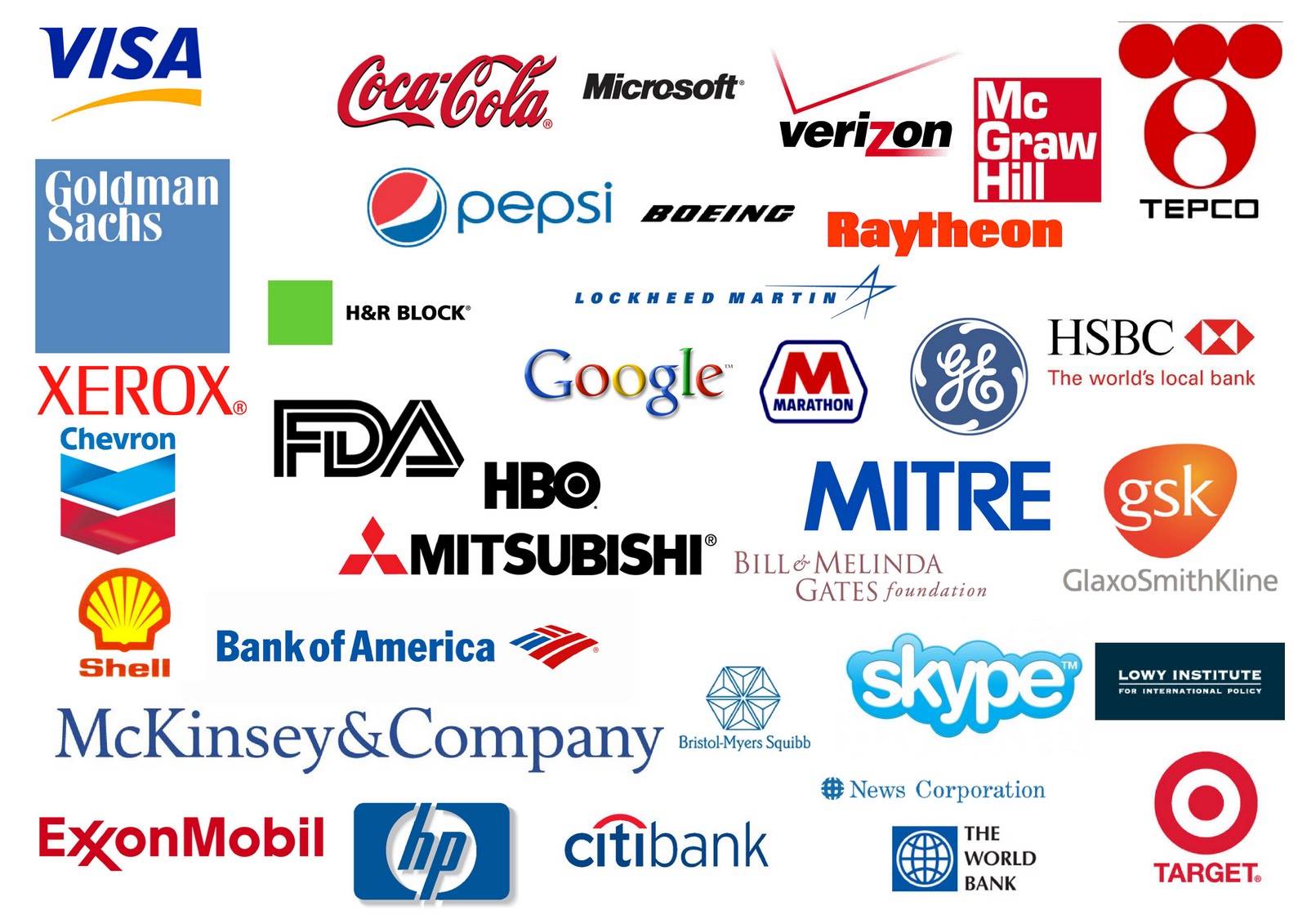 |
| Some of the Brookings Institution’s corporate-financier sponsors |
Brookings and think tanks similar to it, have regularly produced policy and media guidelines later disseminated across the Western media and Western legislatures through public relations firms and lobbyists. Think tanks are where the real agenda of the West is agreed upon and promoted from.
A recent piece featured upon the Brookings Institution’s website titled, “Venezuela: A path out of crisis,” lays out a 5-point plan toward escalating Venezuela’s already precarious situation (emphasis added):
1. The United States could expand its assistance to countries that until now have been dependent on Venezuelan oil, as a means to decrease regional support for and dependence on the Maduro government.
2. The United States could increase monetary assistance to credible civil society organizations and nongovernmental organizations able to deliver food and medicines to Venezuelans. By doing so, the United States should make clear that international pressure aims to support democracy, not punish the Venezuelan people.
3. The United States could support efforts by the opposition in Venezuela to build an “off-ramp” that would split moderate elements of the government away from hardliners, encouraging the former to acquiesce to a transition to democracy by lowering their costs of exiting government.
4. The United States could coordinate with international institutions such as the International Monetary Fund (IMF) to offer financial incentives for holding free and fair elections in 2018, and for the opposition to unify and compete in those elections. Such coordination would also involve developing and publicizing a credible plan to restart Venezuela’s economy.
5. As a last resort, the United States could consider raising economic costs to the government through an expanded sanctions regime that aims to limit Venezuelan earnings from oil exports and block further financing. This policy is risky, given that the Maduro government would be able to more credibly shift blame for the economic crisis onto the United States, and should be accompanied by well-publicized efforts to deliver humanitarian aid through credible civil society and nongovernmental organizations.
It is a prescription for further economic isolation, US-funded political subversion, and with its reference to “a transition to democracy,” an oblique call for regime change.
The US media – particularly organizations operating from under right cover – have portrayed Venezuela’s economic crisis as primarily related to “socialism” and corruption. In reality, factors that would have only impeded the full realization of Venezuela’s economic progress have been intentionally compounded through US sanctions, economic sabotage, and political subversion to precipitate the currently unfolding socioeconomic and humanitarian crisis.
Venezuela would not be the first nation the US targeted for economic implosion in South America.
The US Central Intelligence Agency (CIA) in its own online archives available to the public under a section titled, “CIA Activities in Chile,” would admit (emphasis added):
According to the Church Committee report, in their meeting with CIA Director Richard Helms and Attorney General John Mitchell on 15 September 1970 President Nixon and his National Security Advisor, Henry Kissinger, directed the CIA to prevent Allende from taking power. They were “not concerned [about the] risks involved,” according to Helms’ notes. In addition to political action, Nixon and Kissinger, according to Helms’s notes, ordered steps to “make the economy scream.”
These Cold War attitudes persisted into the Pinochet era. After Pinochet came to power, senior policymakers appeared reluctant to criticize human rights violations, taking to task US diplomats urging greater attention to the problem. US military assistance and sales grew significantly during the years of greatest human rights abuses. According to a previously released Memorandum of Conversation, Kissinger in June 1976 indicated to Pinochet that the US Government was sympathetic to his regime, although Kissinger advised some progress on human rights in order to improve Chile’s image in the US Congress.
With violence increasing in the streets of Venezuela and many of the rhetorical tactics used to set the stage for violent regime change and humanitarian catastrophe in Libya and Syria are now being used to topple the government in Caracas – the world must get ahead of the propaganda and begin exposing this open conspiracy against yet another sovereign nation.
Venezuela’s political system is for the Venezuelan people themselves to decide – without US interference. A government dominated by US-backed opposition members will leave Venezuela as an extension of US corporate-financier special interests, not an alternative or check against them. This only serves in inviting further abuse by these interests not only in South America, but all around the world – Afghanistan, Syria, Iraq, Yemen, Libya, and Ukraine for example – where America’s unwarranted wealth and influence is sowing instability, conflict, and catastrophe.
US Accused of Promoting Venezuela Intervention at UN
By Ryan Mallett-Outtrim | Venezuelanalysis | May 18, 2017
The United States took to the United Nations Wednesday to compare Venezuela’s current political crisis to Syria.
For the first time, the US brought Venezuela’s current crisis before the UN Security Council (UNSC), though Washington claimed it wasn’t looking for international intervention in the South American country.
“The intent of this briefing was to make sure everyone is aware of the situation … we’re not looking for Security Council action,” US ambassador Nikki Haley told reporters after the meeting.
Haley continued by stating the international community needs to take action on Venezuela, including to “say ‘respect the human rights of your people’ or this is going to go in the direction we’ve seen so many others go”.
“We have been down this road with Syria, with North Korea, with South Sudan, with Burundi, with Burma,” she said.
She also sought to distance the US from allegations made by Caracas that Washington is seeking regime change.
“We’re not for the opposition, we’re not for President Maduro, we’re for the Venezuelan people,” she said.
The US Department of State has requested at least US$5.5 million in funding this year to “help civil society” groups in Venezuela. Critics allege these groups are almost entirely opposition organisations. Venezuelan state media outlet teleSUR has alleged this funding is just the tip of the iceberg and that the State Department has so far funneled at least US$49 million to Venezuela’s opposition since 2009.
Venezuela responds
Venezuela responded to the UNSC meeting by accusing the US of seeking to destabilize the Maduro administration.
“US meddling is what is stimulating the actions of violent groups in Venezuela,” Venezuelan UN Ambassador Rafael Ramirez stated.
Venezuelan allies likewise condemned the meeting, accusing the US of seeking to use the UNSC as a vehicle to promote regime change.
“We are concerned when international security issues are confused with an interventionist agenda,” warned Bolivia’s ambassador, Sacha Llorenti.
Meanwhile, Uruguayan ambassador Elbio Rosselli expressed concern over Venezuela’s political crisis, but called for an internal solution through dialogue.
“The only possible solution is a political understanding between the disputing sides in Venezuela,” Rosselli said.
“They themselves are the ones who must put the situation in their own hands and carry negotiations to a satisfactory outcome,” he added.
Then on Thursday, Russia offered to provide assistance in resolving Venezuela’s political stand-off, while calling for respect for the rule of law.
“Any action of the parties, both the government and the opposition forces, should be … solely within the legal sphere, in strict accordance with the constitution, and without any destructive external interference,” Russian foreign ministry spokesperson Maria Zajarova said.
Venezuela is currently in the grip of its worst economic downturn in two decades, as violent protests by the country’s right-wing opposition are poised to enter their eighth week.
The Guardian Takes Aim at Venezuela’s Democracy
By Joe Emersberger | teleSUR | April 26, 2017
From 2006 to 2012, The Guardian’s output on Venezuela was dominated by its Caracas-based reporter, Rory Carroll, who tirelessly demonized, ridiculed and lied about the government of former president Hugo Chavez as it made rapid progress on reducing poverty.
The Guardian recently published an editorial saying that President Nicolas Maduro’s government must be threatened with “pariah status” by the “international community“ if it does not hold presidential elections by the end of 2018. This comes from a newspaper that continually attempts to rehabilitate former British prime minister Tony Blair, a man who played a key role in launching a war of aggression that killed hundreds of thousands of Iraqis. But no pariah status for him.
The imperial hypocrisy on display is stunning.
The Guardian editors cited the New York Times editorial board to back up their stance on Venezuela. In 2002, the New York Times editorial applauded a U.S.-backed military coup that ousted Chavez for two days.
“With yesterday’s resignation of President Hugo Chavez, Venezuelan democracy is no longer threatened by a would-be dictator. Mr. Chavez, a ruinous demagogue, stepped down after the military intervened and handed power to a respected business leader, Pedro Carmona,” wrote the morally challenged “paper of record.”
In fact, two of the opposition leaders The Guardian mentioned in its editorial, Leopoldo Lopez and Henrique Capriles, not only supported but participated in that coup. They led the kidnapping of government officials on behalf of Pedro Carmona. The Guardian, however, made no mention of the 2002 coup at all.
That coup continues to hover over Venezuela because so many of the opposition’s most prominent leaders either supported or participated in it. Julio Borges, head of the opposition-led Nation Assembly, supported the 2002 coup and routinely makes very thinly veiled appeals for the military to oust Maduro. Borges just did so in the pages of El Universal, one of the country’s largest newspapers, where he regularly publishes op-eds.
The other day, a news report on Venezuela’s largest TV network, Venevision, featured opposition politician Marialbert Barrios making a very similar appeal to the military.
The Guardian editors regurgitate a talking point that has been common in the western media: that Venezuela was “once South America’s richest country.” That’s true if the measure one uses is gross domestic product, GDP, per capita adjusted by purchasing power parity, PPP. But that measure says nothing about distribution.
Venezuela had a poverty rate of 50 percent in 1998 when Chavez was first elected even though it was second in South America at the time by GDP per capita. By the United Nation’s Human Development Index, HDI, a composite measure that takes into account life expectancy, education and national income, Venezuela ranked below several Latin American countries in 1998. Its HDI ranking then improved drastically until 2013, the year Chavez died. Using the U.N.’s most recent data and taking full account of the recent devastating recession it has experienced, Venezuela continues to rank above most countries in South America by HDI despite ongoing economic hardships.
There certainly are avoidable child deaths in Venezuela as The Guardian editors said. There always have been, but such deaths are more prevalent throughout the rest of the region, including Peru, whose right-wing government has loudly demanded that Venezuela deal with its “humanitarian crisis.”
Then there is Colombia, a country that has millions of internally displaced people, rivaling Syria. Colombia is also a country with a military that is being investigated by the International Criminal Court for murdering thousands of innocent people. In The Guardian’s universe, this arms client state of the U.S. and U.K. is just another “respectable” member of the “international community” that must straighten out Venezuela.
The Guardian is inexcusably sloppy in other claims.
It says inflation is at 800 percent. Torino Capital, a source that is very critical of the Maduro government, said inflation averaged 299 percent last year and projects it will average 434 percent next year. Unemployment was at 7.3 percent last year. Torino also projects a very small contraction of real GDP (-0.5 percent) next year and a return to growth by 2018. It has also commissioned polls from Datanalisis, an opposition-aligned pollster. Incidentally, the president of Datanalisis, Luis Vicente Leon, also criticizes the government in the pages of El Universal on a regular basis. As of March, according to Datanalisis, Maduro’s approval rating was 24.1 percent and has been steadily increasing in 2017. At the same time, the approval ratings of the most popular opposition leaders have fallen to 40 percent. These facts have been blacked out by the international press.
The Maduro government has not dealt with the root cause of the economic crisis, but, through direct deliveries of supplies to the poor (where its political support is concentrated) it has clearly alleviated the suffering of the poorest to a significant extent. Rachael Boothroyd-Rojas, and independent journalist based in Caracas for many years, noted that “there is a government store just below where I live and I haven’t seen queues there for months! Last year they were awful.”
Boothroyd-Rojas reports that there are still queues outside stores in Caracas but that they are nothing like they were months ago, and that government direct deliveries to the poor “have made a big difference to those who receive them.”
It should be noted that in December 2015, Datanalisis said Maduro’s approval rating was 32 percent just before his allies won 41 percent of the vote in National Assembly elections. It is not hard to see why opposition leaders have decided to “up their game” in terms of economic and political sabotage. Opposition leaders have openly boasted of working to block the government’s access to external financing.
Boothroyd-Rojas, who lives in a poor Caracas neighborhood, has noted the contradictions the international press has embraced to put the best face it can on the opposition’s violence. Vandalism of public property, including hospitals in poor neighborhoods, is dishonestly pointed to as evidence that the poor are starting to turn on the government: a claim The Guardian editors make. But when the middle and upper-class nature of the protests is too obvious to deny, it is alleged that the poor are simply “too hungry” to join in.
The opposition has resorted to widespread vandalism, including the torching of a Supreme Court office, and marching into areas where they have not been issued authorization — precisely to prevent a repeat of the 2002 coup — to provoke confrontation which it then points to as “repression.”
Honest, informed reporting would quickly expose those cynical tactics which are the same ones used in 2002 and again in 2014, but that’s clearly beyond what The Guardian editors are willing or able to do. We can only hope they won’t run an op-ed about Venezuela written by Blair any time soon.
As Protests Rage in Venezuela, US Media Silent on Pro-Government Movements
Sputnik – April 26, 2017
As clashes between the Maduro government in Venezuela and the opposition are getting more and more fierce, the US media is openly calling for an economic war against the Bolivarian Revolution government, blaming it for casualties on both sides of the conflict.
Speaking to Radio Sputnik’s Brian Becker, author, journalist and lecturer Arnold August noted that the US media has a very clear stance: that Maduro and his Bolivarian Revolution government are responsible for everything bad that is happening in the country. Those who do not blame Maduro directly nonetheless report on the issue in such a way as to create the impression that Maduro is responsible, August said.
For example, an April 24 opinion piece by the Washington Times is entitled “Venezuela’s coming civil war: Maduro is arming his thugs to crush the democratic hopes of his desperate people.”
Reuters took a more subtle approach, reporting casualties among civilians without naming who fired the shots, on April 25.
“A 42-year-old man who worked for local government in the Andean state of Merida died from a gunshot in the neck at a rally in favor of president Nicolas Maduro’s government, the state ombudsman and prosecutor’s office said,” the report reads.
“Another 54-year-old man was shot dead in the chest during a protest in the western agricultural state of Barinas, the state prosecutor’s office added without specifying the circumstances,” it continues.
Major media, such as the Miami Herald and CNN, reported in the last few days that the US will have to consider imposing “serious sanctions” on Venezuela, should Maduro fail to host “free and fair” elections, allowing opposition leaders to campaign, August recalled. The US media also purposefully omits reports of demonstrations by the Chavistas — the supporters of the acting government.
The Green Left news website, on the other hand, reported “tens of thousands” of pro-government activists. Deutsche Welle carefully refrained from separating the sides, giving an overall estimate of 6 million people protesting on April 19. August claimed there were 3 million pro-government protesters across the whole country. All agree that these demonstrations have been the largest in the history of the nation.
August mentioned an opinion piece written for CNN by Jose Miguel Vivanco and Tamara Taraciuk Broner, “high-ranking members” of Human Rights Watch, August explained. Human Rights Watch is heavily financed by George Soros, who is known to be a big proponent of regime change around the world.
Vivanco and Taraciuk’s piece promotes the narrative that all of the deaths and violence in the country are “rightfully” blamed on Maduro, and that international pressure is needed to restore “human rights and democracy in Venezuela.”
“This is one big lie, if I may be quite frank,” August commented.
The US may be up to more than just harsh words in the media, August noted. On April 24, the Maduro government seized a General Motors factory in Venezuela, forcing the company to flee the country, leaving 2,700 people without jobs.
Officially, GM did not pay its taxes and refused to conform to “basic economic and financial rules,” August explains.
But he speculates that GM could have been involved in a darker scheme, similar to what happened in Chile in the 1973 coup d’état against Salvador Allende government.
“Main enterprises in Venezuela — General Motors, but there are others as well — were specifically organizing to hoard goods, to keep it away from the people, in order to create problems, to create a situation where people are starving, etc.,” August told Becker, adding that US companies also cut flights to Venezuela in an attempt to harm its income from tourism.
“It is undeniable that there are internal problems and weaknesses in the economy under the Bolivarian Revolution, but the main feature of the problem at this time is what has been induced and still being induced by the US and its allies,” he said.
Chavista Trade Unionist Kidnapped and Murdered in Venezuela
By TeleSUR | April 25, 2017
Venezuelan trade union leader Esmin Ramirez was killed Sunday in the southeastern state of Bolivar after being kidnapped in an act that people close to him claim was politically motivated.
Ramirez, who was a member of the Movement 21 labor syndicate in the state-run iron ore producer Ferrominera and part of the PSUV political party in Cachamay, was killed in El Rinconcito sector in Guayana City, a city along the bank of the Orinoco River in Bolivar state.
The leader was killed by several gunshots to the head. He had been previously kidnapped on Saturday night in San Felix. His body was retrieved by officials Sunday.
Ferrominera expressed condolences in a statement on social media, saying the company hoped that authorities would investigate and clarify the details surrounding the Ramirez’ death.
Ramirez had denounced previous attacks against other members of his organization in the past and was an active participant in marches in support of President Nicolas Maduro, who has in recent weeks faced a wave of violent anti-government protests demanding his ouster.
The union leader was preparing for a massive march for International Worker’s Day on May 1.
Meanwhile, another grassroots leader, Jacqueline Ortega, was murdered in the greater Caracas area in Santa Lucia del Tuy on Saturday. Ortega was also a member of the PSUV as well as a leader in her community’s Local Production and Supply Committee, known as CLAP, a government-created alternative food distribution program.
Ortega was reportedly shot dead in her home by four masked assailants.
Edited by Venezuelanalysis.com.
Make No Mistake: There is a media blockade against Venezuela
By Rachael Boothroyd Rojas | Venezuelanalysis | April 23, 2017
Venezuela is in flames. Or at least parts of it is.
Since April 4th, opposition militants have been carrying out targeted acts of violence, vandalism and arson, as well as deliberately clashing with security forces in an attempt to plunge the country into total chaos and forcefully remove the elected socialist government. It is the continuation of an 18 year effort to topple the Bolivarian revolution by any means necessary — although you may have seen it miraculously recast in the mainstream media as “promoting a return to democracy” in the country.
A catalogue of the violence over the last 18 days is shocking – schools have been ransacked, a Supreme Court building has been torched, an air force base attacked, while public transport, health and veterinary facilities have been destroyed. At least 23 people have been left dead, with many more injured. In one of the most shocking cases of right-wing violence, at around 10pm on April 20th, women, children and over 50 newborn babies had to be evacuated by the government from a public maternity hospital which came under attack from opposition gangs.
Anywhere else in the western world, this would have given way to horrified international and national calls for an end to the violence, and for the swift prosecution of those responsible – making it all the more scandalous that these incidents have at best been ignored, and at worst totally misrepresented by the international press. Instead, those tasked with providing the public with unbiased reporting on international affairs have opted to uncritically parrot the Venezuelan opposition’s claims that the elected government is violently repressing peaceful protests, and holding it responsible for all deaths in connection with the demonstrations so far.
This narrative cannot be described as even a remotely accurate interpretation of the facts, and so it is important to set the record straight.
- To date, three people (two protesters and one bystander) have been killed by state security personnel, who were promptly arrested and in two cases indicted.
- A further five people have been directly killed by opposition protesters, while one person has died as an indirect result of the opposition roadblocks in Caracas (Ricarda Gonzalez, 89, who suffered from a CVA and was prevented from getting to a hospital).
- Five people have been shot in separate incidents near protests but under unclear circumstances. One of these victims was shot by an alleged opposition supporter from a high rise building, although the perpetrator’s political affiliation is yet to be confirmed.
- Nine protesters appear to have died as a result of their own actions (at least nine were electrocuted in the recent looting of a bakery).
A cursory look at the reality reveals that the government is clearly not responsible for the majority of these deaths. However, to paraphrase a remark recently made by Venezuelan author Jose Roberto Duque, the “truth has suddenly become useless”.
The media has failed to go into too much detail surrounding the exact circumstances of these deaths; precisely because the truth presents a serious obstacle to their narrative that all these people were killed during pro-democracy peaceful protests at the repressive hands of the authoritarian regime. This narrative isn’t just overly simplistic; it distorts the reality on the ground and misinforms international audiences.
Take this deliberately misleading paragraph from an article written by Nicholas Casey, the New York Time’s latest propaganda writer for the opposition.
“Protesters demanding elections and a return to democratic rule jammed the streets of Caracas and other Venezuelan cities on Wednesday. National Guard troops and government-aligned militias beat crowds back with tear gas, rubber bullets and other weapons, and at least three people were killed, according to human rights groups and news reports.”
Casey opted to omit the fact that none of those three deaths has so far been attributed to security forces, and one of the victims was an army sergeant killed by protesters themselves. Moreover, those on the receiving end of the “tear gas and rubber bullets” are not quite the “peaceful protesters” he so disingenuously implies. Anyone in the east of the city on April 19th, when both opposition and pro-government forces marched, could see how opposition supporters gathered in total freedom in Plaza Francia in Altamira, even buying anti-government t-shirts, caps, and purchasing ice-creams, and were able to march along the main highway linking the east of the city to the west.
Police “repression” has occurred in two specific scenarios. Firstly, when opposition gangs have set-up burning barricades and carried out violent acts of vandalism on the streets, including the targeting of public institutions – actions deliberately aimed at provoking photo-op worthy clashes with security forces. In the second instance, it has occurred when opposition marchers have attempted to cross a police line blocking them from getting to the working class municipality of El Libertador in the west of the city – where government support is traditionally concentrated. Again, this action is a deliberate attempt to provoke clashes with security forces and their supporters by the opposition, who are well aware that they have not been granted permission to march into El Libertador since a short-lived opposition-led coup in 2002, triggered by an anti-government march diverted towards Miraflores Presidential Palace in the west that left 19 dead by opposition sniper-fire.
It is hard to see how the police would not respond to these violent actions in a similar way, or even more violently, in the rest of the world. I can only imagine what would happen if armed and violent protesters consistently tried to march on the White House in Washington, or on No. 10 Downing Street in London. What if they assaulted police lines outside the White House, or attacked hospitals and looted businesses in London? Not only would they not be granted permission to continue, but protesters would most likely be shot, or end up in jail under anti-terrorism legislation for a very long time. But in Venezuela, the opposition can rely on its carte blanche from the mainstream press as its get out of jail card.
Needless to say, details of the undemocratic actions of opposition leaders and their supporters – ranging from these latest attacks to support for a violent coup in 2002 – are glaringly absent from virtually all news reports. This is despite the fact that the opposition’s current protest leaders – Julio Borges, Henrique Capriles Radonski, Henry Ramos Allup and Leopoldo Lopez – were active players in the 2002 coup.
The above article by Casey is a patent attempt to mislead the public over the dynamic on the ground in Venezuela. But unfortunately this is not just a case of one isolated news agency. The UK’s Guardian, for instance, provided its readers with an image gallery of the opposition’s April 19th march and “ensuing violence”, but failed to acknowledge that a pro-government march of similar size, if not greater, was also held the same day. They simply erased the actions of hundreds of thousands, if not millions, of people. Whichever news agency you check, be it the BBC, the Washington Post, CNN, or any other corporate outlet, you will find the same, uniform consensus in their Venezuela coverage. There are no words to describe this state of affairs other than a total media blockade.
The last time the country witnessed unrest on this scale was in 2014, when opposition militants again unsuccessfully tried to force the “exit” of President Nicolas Maduro using similar tactics, leading to the deaths of 43 people. The majority of those victims were innocent passersby caught in the violence or state security personnel, who were given the somewhat impossible task (just like today) of somehow refraining from responding with violence to people who are deliberately trying to provoke, maim and kill them.
While protests in 2014 were a response to violent unrest headed by the country’s right-wing student movement, this year’s commenced at the beginning of April after the Supreme Court issued a ruling granting the court temporary powers to assume the legislative functions of the National Assembly. It came in response to the Venezuelan parliament having been declared “in contempt of court” for more than six months, after the opposition refused to remove three of its lawmakers under investigation for electoral fraud in violation of a Supreme Court order. This is much like the current legal case hanging over the thirty Conservative MPs in the UK. The only difference in Venezuela is that the legislators were suspended from being sworn into parliament pending the results of the investigations. The opposition immediately hit out at the ruling, declaring it an attempted “coup” by the government that had come out of nowhere. The media swallowed this version of events hook, line and sinker. Although the ruling was overturned almost straightaway, the opposition took to the streets denouncing a “rupture of the constitutional order”.
This soon morphed into a hodgepodge of ultimatums which have dominated the opposition’s agenda since it won control of the country’s National Assembly (one of the five branches of the Venezuelan government) in December 2015, promising to have deposed the national government “within six months” – something beyond the power of Venezuela’s legislative branch. These demands include the release of what they call “political prisoners”, the opening-up of a “humanitarian channel” for receiving international aid and, most importantly, immediate regional and general elections. The street protests were an unmissable opportunity for the opposition, which was suffering from steadily decreasing popularity following an entire year of having squandered its legislative majority in parliament.
Evidently, long term strategy is not the opposition’s strong point. History testifies to the fact that they tend to go for maximum amount of damage in the minimum amount of time, no matter the cost. This brings us to why this kind of violence, which has been employed several times throughout the last 18 years by Venezuela’s well-seasoned opposition, is once again happening at this moment. If the government is so unpopular, as the opposition claims it is, why not just wait for the presidential elections in 2018 for their time to shine?
At this point it should be clear that the opposition’s only goal, far from promoting a “return” to democracy, is to step right over it. They want to remove the elected government more than a year ahead of scheduled elections. But they don’t want to stop there. As one opposition marcher told me on Wednesday: “Get your stuff together Maduro, because you’re going to jail”. The opposition’s goal is the total annihilation of Chavismo.
Whatever the government’s many errors and faults over the past four years under the leadership of Nicolas Maduro, progressives across the globe have an obligation to defend it against the opposition’s onslaught and the international media’s blockade. The alternative is the same savage neoliberalism – currently being mercilessly unleashed by Brazil’s unelected government – which previously squeezed blood from the entire continent throughout the 1980s and 1990s.
The slogan “No Volveran” (they shall not return) has never been more urgent.
What Everybody Needs to Know About Venezuela Protest Deaths
teleSUR | April 13, 2017
By now, you’ve probably heard about what’s going on in Venezuela.
Right-wing opposition demonstrators are leading daily protests against the government of President Nicolas Maduro and supporters of the Bolivarian Revolution. As of Thursday, five people have tragically been reported dead: Jairo Ortiz, Ricarda Lourdes, Daniel Queliz, Miguel Colmenares and Brayan Principal.
In line with mainstream media, Venezuelan opposition leaders allege that Maduro’s administration is responsible for all of these deaths. Hasler Iglesias, for example, a youth organizer for the right-wing Popular Will party, claims police killed all five people.
“These are assassinations of the dictatorship,” Iglesias posted on Twitter Wednesday.
Opposition lawmaker Alfonso Marquina echoed these allegations, adding that “police are terrorizing our communities.”
There’s no denying that people have died as a result of ongoing protests. What the opposition fails to mention, however, is why and how these people died and who is responsible for their deaths.
Venezuelan police are responsible for two of the five deaths attributed to Maduro’s government by the opposition, Question Digital reports. Two others died from direct and indirect actions by opposition supporters, with the last person dying in the crossfire of conflict between both sides.
Here’s a quick rundown.
Ortiz was murdered on April 7 in Miranda by transit police officer Rohenluis Leonel Mata. The police officer believed Ortiz was one of many opposition protesters inciting violence against the socialist government.
After carefully investigating the case, however, the Venezuelan government discovered that Ortiz was not involved in any public demonstration or act of violence. Upon proving Ortiz’s innocence, the government immediately detained Mata, who is set to face criminal charges.
Lourdes, an 83-year-old woman, died at her home in Caracas on April 10 from hydrocephalus. When her symptoms began flaring earlier that day, she was unable to be transported to a nearby hospital because opposition protesters blocked all of the neighborhood’s roads, preventing ambulances from picking her up.
Queliz, a 20-year-old opposition protester, also died on April 10 in the Venezuelan state of Carabobo after police reportedly shot him in self-defense. He was among a group of protesters attacking police with rocks and sticks. The police officer connected with his killing was arrested on Wednesday, Question Digital also reports.
Colmenares was killed on April 11 in the department of Lara state while caught in the crossfire of conflict between opposition protesters and police.
Principal, a 13-year-old resident of the Ali Primera Socialist City, was shot and killed by opposition protesters after they toppled the main gate of the commune. The city was established by the Bolivarian Revolution in 2014 for low-income citizens.
A closer look into these deaths reveal that the nature of these killings are not as clear cut as the right-wing opposition portrays them to be.
Featured Video
Macgregor: We Haven’t Seen the Worst of the Iran War Yet
or go to
Aletho News Archives – Video-Images
From the Archives
15 Saudi ‘hijackers’ were CIA agents working for US: Scholar
Press TV – April 13, 2016
Fifteen of the 9/11 “hijackers” from Saudi Arabia were CIA agents working for the United States government, which was seeking to destroy the Middle East for Israel and to double the American military budget, says Dr. Kevin Barrett, an American academic who has been studying the events of 9/11 since late 2003…. continue
Blog Roll
 Aletho News
- Israel seeks ‘compensation’ from Washington over Saudi F-35 sale
- Saudi crown prince seeks dialogue with Ansarullah after Yemeni blows: Report
- Damascus rejects Saudi request for Syrian fighters to counter Yemen: Report
- South Korea says will not send troops to join terrorist US war on Iran
- Russia Just Struck the Eyes of NATO’s War Machine in Ukraine
- Russia summons UK charge d’affaires over Kiev drone support
- NATO member warns bloc seeking pretext for war with Russia
- Macgregor: We Haven’t Seen the Worst of the Iran War Yet
- ‘We are not like everyone else’ laws that bind other nations do not apply to Israel, says Likud lawmaker
- Report: Saudi Arabia seeks allies’ assistance as missiles deplete amid war on Yemen
- If Americans Knew
- Debunking The Claim That Macklemore Has A “History Of Antisemitism”
- CPJ demands release of arrested Palestinian-US journalist near Bethlehem
- Robert Kraft: The Billionaire Friend of Netanyahu Pulling The Strings Behind the Macklemore/Ed Sheeran Blow Up
- Columbia Administered Fund Gives Big Money to Pro-Israel Groups
- Deportation Case of Palestinian Activist Salah Sarsour Tests First Amendment
- ‘We Will Not Forget’: Palestinians Mark 44 Years since Sabra and Shatila
- Why do we let Zionists decide what we can and can’t say?
- US welcomes Israeli, Iranian delegations to UN, but not Palestinians – Daily Update
- Biden’s Genocide Accomplices Targeted by New Accountability Campaign
- AIPAC’s Network Has Already Spent $67.2 Million to Shape the Midterm Elections
- No Tricks Zone
- New Study: ‘Global Drought Shows No Detectable Recent Acceleration Under Climate Warming’
- Economic Masterminds: German Socialists Suggest Taxing Productivity Gains Stemming From Using AI
- The South China Sea Has Not Been Cooperating With The Climate Change Narrative
- Energy Crisis: Germany Enters Heating Season With Historically Low Gas Reserve Fill Levels
- New Study: The Antarctic Ice Sheet Gained Mass From 2020-2024 Due To Staggering Snow And Ice Accumulation
- Study: Ocean Heating Rates From Thousands Of Years Ago ‘Dwarf’ Modern Ocean Heating Rates
- Climate Extremists Target, Attack Large-Scale Power Grid Infrastructure In Germany!
- New Study: Antarctic Ice Melt Has Contributed Less Than 1 Centimeter To Sea Level Rise In The Last 30 Years
- Fear Of Debate: Alarmist German Climate Scientist Calls On Mainstream Media To Discredit Skeptic Voices
- End-Of-August Arctic Sea Ice Extent Hasn’t Fallen In 20 Years, Official Data Show!
 Aletho News