Israel detains Palestinian cartoonist, family says
Ma’an – 16/02/2013
 JENIN – Israeli authorities on Saturday detained a Palestinian cartoonist on his way back to the West Bank from Jordan, according to his family.
Muhammad Abdul-Ghani Sabanah, 30, was detained at the Allenby Bridge crossing between Jordan and the West Bank, his brother Tamir told Ma’an, adding that Sabanah was in Jordan for a meeting.
He said that on his way back, Israeli troops detained Sabanah, who is from the Jenin town of Qabatia, without giving any explanation.
Sabanah’s cartoons are widespread in the Arab world. He is well-known for his criticism through his cartoons, which focus mainly on the Palestinian people’s problems and the Palestinian-Israeli conflict.
He works as a public information officer at the Arab American University in Jenin.
Related articles
- Israeli army dogs attack elderly Palestinian, two-year-old child injured in the head in Jewish settlers’ attack (alethonews.wordpress.com)
- EU demands rights for Palestinian hunger strikers (altahrir.wordpress.com)
Palestinians’ Life in the Shadow of the Barrier Wall
By Hasan Afif El-Hasan | Palestine Chronicle | February 12, 2013
Since 1967 Israeli-Arab war, the Palestinians in the occupied lands have to contend in their daily lives with Jewish-only settlements, settler-only highways, check points and roadblocks, earth mounds and trenches, land confiscation, house demolition, raids, detention, extrajudicial assassinations, and daily attacks on besieged Gaza. And in 2002, Israel started building the barrier wall in and around the West Bank delineating unilaterally a de facto Israeli border. The wall delivered settlements and land for their growth on the Israeli side of the wall. The Arab League managed to bring the subject to the attention of the UN Security Council, but the US vetoed a resolution condemning the construction of the wall as a violation of international law. The wall, many observers refer to as the ‘Apartheid wall’, was declared illegal by the International Court of Justice in a 2004 advisory opinion because it was built in the West Bank Palestinians’ land.
The Israelis call the wall ‘a fence’ arguing that ‘good fences make good neighbors’, but unlike this structure, fences are not built in the neighbor’s land. Even the infamous Cold War Berlin Wall that was constructed by the East German Communist regime was built on East Germany’s territory. The Israeli barrier wall is made of precast concrete slabs, twenty-five feet high capped with surveillance towers and cameras. It has been erected in the West Bank lands mostly three to five miles to the east of the defunct Green Line (the border of Israel proper), creating many Palestinian enclaves and cutting off access to Palestinians’ agricultural land and water resources in closed areas on the other side of the barrier.
The wall created enclaves in Greater Jerusalem area, Ramallah, Bethlehem, Qalqilya and Tulkarm hinterlands where families are divided and communities are denied access to schools, health services and workplaces. ‘More than 49,000 Palestinians have been trapped between the wall and the Green Line’; their human rights are being violated by restricting their liberty of movement. Palestinians wishing to visit friends or families on the other side of the wall require permits to go through guarded gates, and they need special permits to stay overnight. 200,000 Palestinians are enclosed by the wall in East Jerusalem area that had been annexed by Israel immediately after the 1967 war.
The oppressive structure that snakes around large population and urban centers carves more than 450-mile path through the West Bank creating economic hardship and inhumane conditions on the Palestinian population. Building the wall in Palestinian lands is part of Israel’s master-plan of annexing major settlement blocks and security zones and dividing the Palestinian-populated parts of the West Bank into non-contiguous cantons. According to the Israel’s human rights organization, B’Tselem, ‘major parts of the wall route were set with the [settlements] expansion plans in mind.’ The wall was described by Yedioth Ahronoth daily newspaper on May 26, 2003 as the largest infrastructure project in Israel’s history.
In the area of Qalqilya town, the path of the wall was planned to expropriate thousands more acres of Palestinian land for nearby Alfei Zahran settlement and its satellites. Qalqilya, home for 45,000 Palestinians, is located in the north of the West Bank on rich lands and water reserves. After the 1948 war and the border adjustment of the Jordanian-Israeli truce agreement, Qalqilya lost most of its best farmland to Israel including thousands of acres of citrus groves, and the town became home for thousands of Palestinian refugees who fled or were expelled from the territories that became Israel.
The people of Qalqilya proved their resilience and survival spirit by starting from scratch, clearing their remaining land for cultivation and extracting water from underground Western Aquifer; and through hard work, they re-established their town as a major agriculture producer in the West Bank and services center for the thirty villages in its district. Its citrus fruits and vegetable products were sold in the West Bank markets and exported to Jordan and the Gulf States.
Qalqilya’s location only fifteen miles from the Mediterranean and its proximity to Israel’s narrow ‘waist’ has been a liability. In 1967 Israeli-Arab war, seventy percent of the Qalqilya town was destroyed by Israel’s tanks and air-force bombardment as an attempt to cleanse the city. The Israeli military rounded thousands of its residents and bussed them to the border with Jordan. The Israeli occupation authorities confiscated Qalqilya’s land as they did everywhere in the occupied lands, built Jews-only settlements, imposed quotas on the town’s existing water wells and restricted drilling for agricultural use. At the same time, drilling of underground water for the Jewish settlements has been limitless. Nineteen settlements have been built in Qalqilya district cultivated farmland today. And in 2003, the town people were horrified when the Israeli military revealed that their town would be encircled by the barrier wall.
The wall cuts Qalqilya city off from neighboring villages and isolates it from the land and water resources on which the town’s people livelihood depends. Like many communities in the wall path, Qalqilya has become a town caged in by concrete slabs and electronic fences linked to depleted hinterlands via underpasses and tunnels while the settlers travel without restrictions on Jews-only roads. Farmers have to travel miles to reach their land across the wall causing decline in cultivation and productivity. The wall and the land confiscation deprived Qalqilya of its role as a regional commercial center, made life in the town and surrounding villages too difficult, and work opportunities hard to get. The once vibrant commercial area workshops and stores in Qalqilya are closed down due to the declining economic conditions. The role of agriculture as an earner diminished, thousands of families whose bread-winners cannot find work in agriculture or commerce anymore depend on social assistance for survival today. The brutality of the occupation and the deteriorating economic conditions must have taken their toll on civil life with families splitting and children traumatized.
‘More than 4000 of Qalqilya’s citizens had migrated [after the wall has been built]’, writes Ray Dolphin in his book ‘Unmaking Palestine’. The effect of the wall on Qalqilya Town is no different from its impact on many West Bank communities. Many youth from communities impacted by the wall had to leave to other West Bank cities or to neighboring Arab countries, thus the wall might have accomplished cleansing much of its path, something Israel tried and failed to achieve in the 1967 war.
– Hasan Afif El-Hasan is a political analyst. His latest book, Is The Two-State Solution Already Dead? (Algora Publishing, New York), now available on Amazon.com and Barnes & Noble.
Related articles
- Israeli Authorities Change Route Of Wall To Fully Annex Jerusalem For Israel (alethonews.wordpress.com)
- Israel greenlights construction of hundreds of settlement homes (alethonews.wordpress.com)
Jewish settler’s ‘bio-war’ against the ancient city of Sabastiya
International Solidarity Movement | February 12, 2013
Sabastiya, Occupied Palestine – Sabastiya is an ancient city located just 10 km north of Nablus, West Bank. It contains Canaanite, Israelite, Hellenistic, Herodian, Roman and Byzantine ruins as well as the tomb of John the Baptiste. The winding city streets along with its history make Sabastiya an ideal place to visit. Yet, as charming and beautiful as the old city is, the nearby Israeli settlement of Shafi Shamrom is making lives of Sabastiya’s residents very difficult: settlers uprooted olive trees, introduced wild boars into the environment to damage the land, and most recently, sewage has started leaking from the settlement flooding Palestinian fields.
In 2001 settlers uprooted and destroyed around 1000 olive trees, substantially damaging the land of several families. In 2006 the army put up a fence in an attempt to confiscate the land where the trees had originally been. Sabastiya’s farmers acted: they pulled the fence down in a defiant act of resistance and since that time there have been no further attempts to install it again.
The most recent and disturbing action on the part of illegal settlers of Shafi Shamron is pumping their raw, untreated sewage directly onto Palestinian fields. As the sewage is absorbed into the land, olive and apricot trees are rendered diseased and, according to the residents, “poisoned”. The flow of human waste begins from a pipe on the perimeter of the settlement, creating a sort of reservoir which then runs through the adjacent Palestinian fields, compelling each subsequent land owner to create a canal in order to drain the sewage water on to his neighbors land and further away.
Residents of Sabastiya are currently bringing legal action against Shafi Shamron in order to stop the settlement from dumping its sewage on Palestinian lands. The malodorous sewage running through the fields must remind a regular visitor of non-violent protests of a very effective strategy used by the army; the “skunk” water, which is chemical liquid smelling of excrement commonly sprayed on protesters. Settlers are evidently using a similar technique to make local residents’ lives even more difficult.
Related articles
- Farming Injustice (alethonews.wordpress.com)
- Resist the land grab: donate a tree (palsolidarity.org)
- Israel’s Colonial Terrorism: Settlers drench Palestinian land with wastewater (occupiedpalestine.wordpress.com)
- Israel must remove all Jewish settlers from occupied West Bank – UN inquiry (alethonews.wordpress.com)
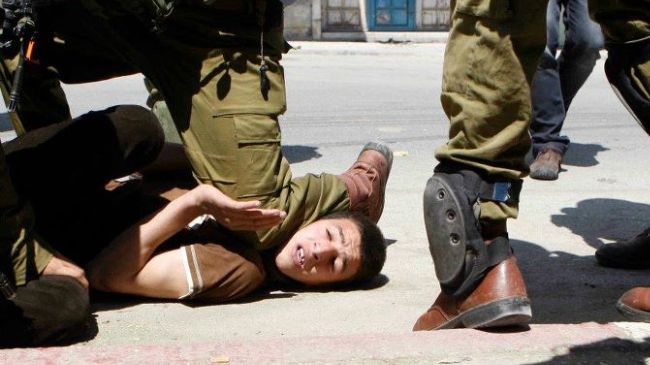
Israeli forces arrest Hamas-affiliates across West Bank
Ma’an – 12/02/2013
BETHLEHEM – Israeli forces launched multiple arrest raids overnight Monday against Hamas affiliates in the West Bank, Hamas sources and locals said.
Hamas leader Rafat Jamil Nasif, 45, was detained in Tulkarem in an arrest raid on his home, sources in the Islamist movement said. Nasif’s family were forced to stand outside in the cold while sniffer dogs searched his home.
Musab al-Ashqar, Abdullah Ismail al-Khalil and Ammar Jihad Ameir, students at al-Khadouri university, were also arrested in Tulkarem, together with the local Imam’s son Qitad Amar Bidawi.
In Nablus, Israeli forces detained a local Islamist student leader Muthanna Jamil Eshtayeh and students Osama Khalid Yamin and Walid Jamal Asida from An-Najah university, locals said.
Mousa Ahmad Yamin and Abed al-Ghani Ayesh Samara were also detained in nearby villages.
Four people were arrested in Qalandia refugee camp in Ramallah, including two ex-prisoners, and in Hebron two other students were detained.
An Israeli army spokeswoman said that 13 people were detained overnight, including four in Nablus, five in Tulkarem, three in Bethlehem and one in Hebron.
Another military spokesman said nine people arrested were affiliated with Hamas.
The latest detentions follow a sweep of arrests of Hamas-affiliated officials in the West Bank over the past week.
Last Tuesday, Israeli forces arrested 12 people including at least three Hamas-affiliates.
A day earlier, Israeli soldiers arrested 23 members of Hamas, including three lawmakers — Ahmed Attoun in al-Bireh, Hatem Qafisha in Hebron and Mohammed al-Tal in al-Dhahiriyya.
Hamas condemned the arrests as a “criminal act.”
Related article
- Israel arrests 22 Hamas members ahead of Fatah-Hamas talks (alethonews.wordpress.com)
Canaan protest village
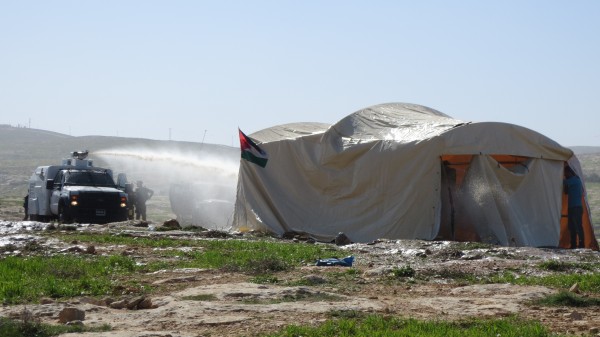 Canaan tent being skunk watered (Photo: ISM)

Beit Ommar Popular Movement | February 10, 2013
South Hebron Hills, Occupied Palestine – Today, the South West Popular Committee along with international activists embarked on a new effort to establish a village, Canaan, on Palestinian land in South Hebron Hills. The village’s name was not accidental. We wanted to declare that we are the indigenous people of Palestine. We are the descendants of the Canaanites and our ties to the land can never be broken or taken away. Early last night, various Palestinian activists from a wide array of villages in the South West Bank area along with international activists met in a home to discuss plans for the coming day.
Signs were prepared which stated ‘Our Land is Our Right’, ‘Canaan Village’ and a declaration of intent which stated that “we are the sons and daughters of the Cananites, we establish Canaan Village on endangered Palestinian land.” “We declare that it is our natural right to develop, reclaim, improve, use and live on all our lands free and without threat from occupiers/colonizers.”
In the early morning hours, following a night of planning, we established Canaan as our first attempt, in the south of Yatta (the entrance to Twani). Within less than a minute, while we barely managed to establish the tent, an occupation jeep arrived. The occupation soldiers encircled us and told us we must leave. We refused to obey such a racist demand. An officer of the occupation army then went on to demolish our tent, steal our additional tents and equipment and violently prevent us from reclaiming our land and our belongings.
Several hours later, we went on with a much larger group of activists, international supporters and an especially large number of journalists, to east Yatta, near Ein Mai’in, Hazawai, we established a large tent and began building a room from stones of the land. Within half an hour, we were heavily encircled by at least 6 jeeps of the occupation forces. A large military vehicle which fires skunk water was brought in. We were told that we have 10 minuets to leave the area and that the land was a ‘closed military zone’. We did not yield of course and were immediately showered upon by heavy skunk water.
Occupation soldiers then went on to attack journalists and arrest them. They beat an elderly woman and other activists. In several instances, activists jumped in and prevented with their bodies the arrest of two people. After several hours of struggling with the occupation soldiers which numbered more than 50, 4 journalists, 8 Palestinians and 2 international activists were arrested, our tent was destroyed and we were prevented from returning to our land. For many hours during the hot afternoon, hundreds of activists remained in the area and demanded the right to return to the Canaan Village.
Related article
Farming Injustice
International day of action – February 9th
Palestinian farmers organisations and campaigners in Europe are this weekend taking action to call for an end to trade with Israeli agricultural export companies over their role in Israeli violations of Palestinian human rights. Read the call to action here.
In Gaza, Palestinian fishermen held a press conference and rally on February 6 to draw attention to Israel’s attacks on fishermen. Farmers and activists will march towards the buffer zones near the border with Israel on February 9 to protest Israel’s destruction of farmland and attacks on farmers.
In the West Bank, a conference and other actions will be held in Salfit to discuss a boycott of Israeli goods and resistance to Israel’s colonisation and systematically implemented restrictions on Palestinian agriculture.
All of the major Palestinian agricultural organisations have marked the day of action by publishing an appeal for action for the launching of campaigns against Israeli agricultural companies and an accompanying briefing, which aims to shed light on the role of Israeli agricultural companies in the destruction of of Palestinian agriculture.
Solidarity campaigners, trade unionists and NGOs across Europe are holding actions and launching campaigns against Israeli agricultural export companies such as Mehadrin and Arava, who export fresh produce from illegal Israeli settlements and are among the primary beneficiaries of the destruction of Palestinian agriculture.
There will be events, flash mobs and protests in more than 40 cities across 9 European countries including France, the UK, the Netherlands, Belgium, Sweden, Switzerland, Luxembourg, Germany and Italy. Campaigners are calling on governments to ban settlement trade and on retailers to adopt the position of the Co-Operative supermarket in the UK, which refuses to trade with any Israeli company that operates in settlements.
You can follow the actions on Twitter using the hashtag #FarmingInjustice.
Actions taking place across the world
Palestine
Dozens of Palestinian farmers and fishermen rallied in the Gaza seaport this week, launching several days of actions across the Strip to support boycotts of Israeli agricultural corporations.
Upcoming events will include a march by farmers, ending with the planting of olive trees, near the “buffer zone” around Gaza’s boundary with Israel on Saturday.
In the West Bank, a conference and other actions will be held in Salfit to discuss a boycott of Israeli goods and resistance to Israel’s colonisation and systematically implemented restrictions on Palestinian agriculture.
Also in the West Bank, the villagers of Madama, the centre for the Martyr Billal Najar from Burin and International Solidarity Movement activists will plant Olive trees on the land of Madama village where illegal settlers cut down hundreds of olive trees.
France
Activists in Montpellier occupied the customs offices to protest the import of produce from Israeli agricultural companies that operate in settlements on Thursday. Actions are planned in 14 other French cities on Saturday.
UK
Protests and actions are planned in more than XX cities as part of a new campaign to pressure major supermarket Sainsbury’s to end trade with any Israeli company that from settlements.
Belgium
Creative ‘Boycott Carnival’ action and demonstration in central Brussels
Sweden
Pickets at Coop-stores in Stockholm and Hässleholm as part of the campaign to pressure the supermarket to end trade with complicit Israeli companies
Netherlands
A creative protest action in the ‘Black Market’ Bazar, Beverwijk, at which goods from Israeli companies such as Mehadrin and Arava are often present
Luxembourg
Actions at supermarkets in several cities.
Italy
Actions and demonstrations in Rome and Trento
Actions are also planned in Germany and Switzerland, with more details to follow.
Related articles
Arad: Supplying water meters to Sussex while helping bleed Palestine dry
Corporate Watch | February 8, 2013
An Israeli company which supplies water infrastructure in Israel’s illegal settlements in the West Bank is gaining contracts to supply equipment to water companies in the UK. Israeli company Arad has gained a contract to provide Southern Water with £7.1 million worth of water meters annually for five years with the option to extend when the contract expires. The contract was signed in February 2010 and the meters are currently being installed. Arad is also providing pressure sensors to the Welsh water utility.
Arad has installed 3,200 water meters in the illegal Israeli settlement of Ariel and the Barkan settlement industrial zone. The water system is managed by the Mei Ariel Water Corporation.
Arad also develops water meters for the Israeli state owned company Mekorot. Mekorot has a near monopoly on water supply in Israel and also operates and develops water infrastructure in Area C of the West Bank, where Palestinians are forbidden to develop even basic water infrastructure.
Palestinians living in Area C, unable to access piped water due to the restrictions on building imposed by the Israeli Civil Administration, are often forced to fill up water tanks, transported by tractor, at Mekorot’s water facilities. These fenced water facilities are often situated beside Palestinian communities and draw water from occupied Palestinian territory.
Water is also used as a tool in the ethnic cleansing of Palestinian communities. Water is denied to these communities as a way to push them off the land on which they live and into urban centers so that their land can be expropriated by the settlements. For example Bedouin man from Khan Al Ahmar, where the entire community is currently under threat of home demolitions and relocation, told Corporate Watch, back in 2009, that he had to to drive a mobile water tank by tractor to Jericho and pay to have it filled up with water from Mekorot. This journey takes between half an hour and an hour. Despite the fact that the nearby settlement has several large water tanks, surrounded by strong fencing, the tents which the Bedouin live in have no access to running water and they are not allowed to use the water located right next to them. Corporate Watch visited Khan Al Ahmar in 2013 and this situation had not changed.
Arad has been awarded contracts in the US , Brazil and Canada and boasts that it has a large slice of the Spanish water ‘market’. However, the company is focussing its efforts on the UK. Arad’s website states that “The UK was targeted by Arad years ago as the preferred market for implementing its products and services including water management systems.” Arad’s efforts are being facilitated by the British-Israel Chamber of Commerce which named Arad Israeli company of the year in 2010.
The award of these contracts by Southern Water to a company which supplies water infrastructure in illegal settlements should never have occurred. It is of utmost importance that the movement for boycott, divestment and sanctions against Israeli apartheid, colonisation and militarism halts the expansion of this company which is profiting from one of the most fundamental facets of Israeli apartheid.
A first step towards this would be for people in Sussex to resist the introduction of Arad’s water meters in homes across the county.
Arad (www.arad.co.il) is listed on the Tel Aviv Stock Exchange. Arad’s listed addresses are:
ARAD Technologies Ltd.
HaCarmel 6, Industrial Area
Yokneam 20692
Israel
Tel: 972-4-9935222
Fax: 972-4-9935227
www.aradtec.com
Master Meter Inc.
101 Regency Parkway
Mansfield, TX 76063
USA
Tel: 817-842-8000
Fax: 817-842-8100
E-mail:info@mastermeter.com
www.mastermeter.com
Contazara S.A.
Ctra. Castellón A-68, km 5.5
50720 Zaragoza
Spain
Tel: 976-50-06-91
Fax: 976-50-06-54
www.contazara.es
Southern Water can be contacted here
Related articles
- Israeli water firm drying up Palestinian springs, says UN report (altahrir.wordpress.com)
- West Bank: Aid agencies tread gingerly in Area C (alethonews.wordpress.com)
Report: Israeli Occupation Authorities established 482 outposts last year
Palestine Information Center – 04/02/2013
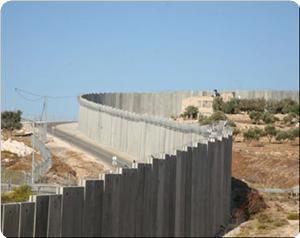
RAMALLAH — The Israeli Occupation Authorities (IOA) demolished 465 Palestinian buildings and established 482 outposts in the West Bank and the occupied city of Jerusalem during the last year, a Palestinian official statistical report documented.
The PA Ministry for Settlement and Wall Affairs stated in its report issued on Sunday that the occupation authorities have set up over the past year 185 settlements and 175 outposts, in addition to another 29 settlement sites.
The report pointed out that the Israeli authorities completed 444 kilometers of a total 757 kilometers currently under construction of the Apartheid Wall that will isolate 10.2 per cent of the occupied West Bank.
The report documented that 465 Palestinian facilities were demolished during the last year concentrated mainly in al-Khalil, Jerusalem and the Jordan Valley, pointing out to 728 demolition orders concentrated in al-Khalil and Jerusalem.
The report revealed new Israeli ways to confiscate Palestinian territories, where IOA began issuing decisions to confiscate isolated lands behind the separation wall such as those within the city of Jerusalem to the north of Bethlehem.
Related articles
- Israeli occupation authorities halt entry of West Bankers to 1948 occupied Palestine (alethonews.wordpress.com)
- Israeli occupation forces kill 7 Palestinians, arrest 300 others during January (alethonews.wordpress.com)
- Israeli Soldiers Attack, Evict, Bab Al-Shams, Arrest Dozens (alethonews.wordpress.com)
- Palestine: Teen shot, demolition, new outpost north of Qalqilia & warning of scheme to displace 30,000 (realisticbird.wordpress.com)
Israel arrests 22 Hamas members ahead of Fatah-Hamas talks
Al-Akhbar – February 4, 2013
Israeli forces led an arrest sweep of at least 22 Hamas members Sunday night and Monday morning, including 3 members of the Palestinian Legislative Council.
The Israeli military confirmed arrests were made but would not elaborate further.
The Palestinian Ma’an news agency identified two of the MPs as Hatim Qafisha of Hebron and Ahmad Attoun of Jerusalem. Qafisha has previously been detained six times by Israel, whereas Attoun was forcibly transferred from Jerusalem to the West Bank by Israeli forces.
The third MP was identified by WAFA news agency as Mohammad al-Tul from Dahrieh.
Israel has a history of arresting Palestinian politicians and legislators, mainly targeting members of the pro-Hamas Change and Reform bloc since 2006, when Hamas won a majority of seats in the Palestinian parliament.
According to prisoners’ rights NGO Addameer, nearly a third of all members of the Palestinian Legislative Council were held in Israeli prisons in 2009.
The recent upsurge in arrests is most likely a response to Friday’s planned talks between rival Palestinian parties Hamas and Fatah as a way to undermine attempts at Palestinian political unity, according to Murad Jadallah of Addameer.
“Israel wants to show it has the authority and the military power to decide whether reconciliation happens,” the activist told Al-Akhbar.
Addameer has recorded the arrests of at least 40 Palestinians in the past 48 hours.
As of January 1, Israel held 4,743 Palestinians in its prisons, including 12 Palestinian MPs and 178 held without charge, according to Addameer’s latest figures.
Citing security sources, AFP reported that Israel plans to step up arrests of “suspected militants” in the West Bank.
Extensive use of administrative detention is illegal according to international law, but is commonly practiced by Israel against Palestinians.
Featured Video

The Truth About the Trump Shootings with Ken Silva
or go to
Aletho News Archives – Video-Images
From the Archives
Trans ‘milk’ as good as the real thing – NHS
RT | February 18, 2024
The drug-induced nipple secretions of trans women are as good as mothers’ breast milk for babies, the University of Sussex Hospitals NHS Trust claimed in a letter to campaigners made public in a report by British think tank the Policy Exchange on Sunday.
The healthcare trust’s medical director, Rachel James, argued that the off-label prescription drug cocktail men transitioning to female take in order to produce milk was “similar to the natural hormones which encourage lactation to develop when the baby is newly born.”
“The evidence which is available demonstrates that the milk is comparable to that produced following the birth of a baby,” James wrote in the letter, sent to Children of Transitioners last August.
Biological men who wish to lactate must first take hormones to grow milk glands and then take high doses of either domperidone or metoclopramide to stimulate milk production. Neither drug is approved for this use, though they are occasionally prescribed off-label to biological women who have trouble lactating.
However, domperidone’s own manufacturer, Janssen, warns patients the drug “may cause unwanted side effects affecting the heart in a breastfed baby” and “should be used during breastfeeding only if your physician considers this clearly necessary.” … continue
Blog Roll
 Aletho News
- Seyed M. Marandi: U.S. Strike Imminent – Toward Total War in the Middle East
- Russia Voted Under Fire. Washington Is Loading the Tankers.
- 12 Things Your Oncologist Was Trained Not to Tell You
- Anthrax Attacks Paved Way for COVID-Era ‘Junk Drugs and Vaccines’
- How Real Is the Impact of Western Sanctions on Israel?
- France, You Are Guilty: How Paris Turned Western Sahara into the Maghreb’s Powder Keg
- 2025 Nature Paper Claiming Worsening Global Drought Gets RETRACTED …Heavily Flawed
- Your Milk Is Not the Problem
- The Truth About the Trump Shootings with Ken Silva
- ARE PATIENTS BEING PROPERLY INFORMED ABOUT OZEMPIC?
- If Americans Knew
- Salah Sarsour’s Legal Team Says DHS Has Not Met Its Burden to Prove He Is Deportable
- An analysis of tax forms by The Intercept show Kraft’s charity and LLC have donated to Friends of the IDF and AIPAC’s super PAC.
- Israeli attacks kill four Palestinians in Gaza – Daily Update
- Inside Gaza’s death trap of collapsing, bombed-out buildings
- The everyday items Israel bans from Gaza every day
- Inside the siege, the ruined buildings of Gaza – Daily Update
- Debunking The Claim That Macklemore Has A “History Of Antisemitism”
- CPJ demands release of arrested Palestinian-US journalist near Bethlehem
- Robert Kraft: The Billionaire Friend of Netanyahu Pulling The Strings Behind the Macklemore/Ed Sheeran Blow Up
- Columbia Administered Fund Gives Big Money to Pro-Israel Groups
- No Tricks Zone
- 2025 Nature Paper Claiming Worsening Global Drought Gets RETRACTED …Heavily Flawed
- New Study: ‘Global Drought Shows No Detectable Recent Acceleration Under Climate Warming’
- Economic Masterminds: German Socialists Suggest Taxing Productivity Gains Stemming From Using AI
- The South China Sea Has Not Been Cooperating With The Climate Change Narrative
- Energy Crisis: Germany Enters Heating Season With Historically Low Gas Reserve Fill Levels
- New Study: The Antarctic Ice Sheet Gained Mass From 2020-2024 Due To Staggering Snow And Ice Accumulation
- Study: Ocean Heating Rates From Thousands Of Years Ago ‘Dwarf’ Modern Ocean Heating Rates
- Climate Extremists Target, Attack Large-Scale Power Grid Infrastructure In Germany!
- New Study: Antarctic Ice Melt Has Contributed Less Than 1 Centimeter To Sea Level Rise In The Last 30 Years
- Fear Of Debate: Alarmist German Climate Scientist Calls On Mainstream Media To Discredit Skeptic Voices
 Aletho News