Take Action: Free Palestinian farmers and agricultural workers targeted for imprisonment
Samidoun | August 2012
As they organize to defend their land and Palestinian farming against the onslaught of settlements and siege, Palestinian agricultural workers and organizers have been subject to an intensified arrest campaign in the occupied West Bank of Palestine.
A number of staff of the Union of Agricultural Work Committees (Facebook), a Palestinian grassroots organization that organizes Palestinian farmers to defend their land and develop their products, have been targeted in recent days for arrest by Israeli occupation forces.
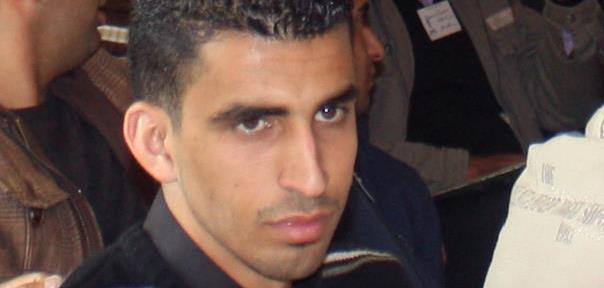
Dr. Moayad Bisharat
On July 31, Dr. Moayad Ahmad Bisharat, the coordinator of UAWC’s Jericho office was abducted at dawn from his home. The UAWC office in Jericho was then ransacked by Israeli forces, who confiscated the computers, laptops, and files of the organization.
This is the most recent in a series of arrests of UAWC activists in recent weeks, including the Director of Development and Operations, the engineer Fuad Abu Saif on July 26 in an early morning raid on his home in Hebron, in which his computer, mobile phone and other communication devices were seized. The director of the UAWC Jericho office, Mohammad Nujoom was abducted on July 16 as he re-entered Palestine from abroad. Both were taken to the Moskobiya compound for interrogation.
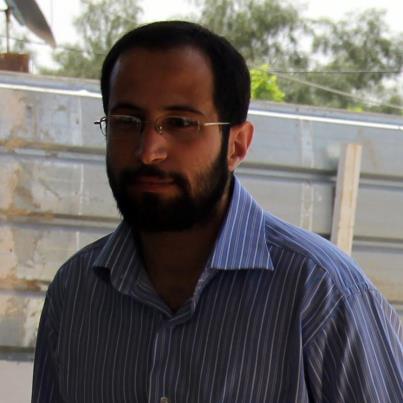
Engineer Fuad Abu Saif
In addition, UAWC Board Member Ahmad Soufan, held in administrative detention for one year, was recently ordered into a third term of six months in arbitrary administrative detention without charge or trial. Two other UAWC leaders, Abdel Razzak Farraj, administrative and financial director, and Board member Dr. Yousef Abdul Haq, were both finally released from administrative detention after multiple renewals of their imprisonment.
As the UAWC noted in its statement on the arrests, these arrests are part and parcel of the ongoing attacks on Palestinians’ right to the land, including massive settlement building, land confiscation, home demolitions, and the construction of the apartheid wall, as well as the siege and firing on farmers and agricultural workers in Gaza. The UAWC called on international organizers to defend Palestinian national rights and demand the freedom of the UAWC detainees and all Palestinian prisoners.
UAWC, which recently marked its 25th anniversity, has been struggling with Palestinian farmers and agricultural workers to defend and develop their land, support Palestinian agricultural projects, and support farmers’ steadfastness on the land in the face of Israeli occupation and aggression.
The attack on the UAWC is part of the overall attack on Palestinian farmers and agricultural workers, from olive farmers whose trees are set ablaze by settlers, tthose whose land was stolen for settlements, “military use,” or “buffer zones”, to the fishers of Gaza, who daily brave military attack for seeking to fish in their sea. It reflects the over 64 years of occupation, land theft, displacement and dispossession of the occupation of Palestine. Farmers and agricultural workers are on the front lines of resistance as they struggle to remain on their land – and are thus being targeted for arrest and imprisonment in an attempt to undermine the steadfastness of the farmers.
Western governments, including those of the United States and Canada, are not only silent in the face of these attacks, they are directly complicit, as they pledge expanded military support and allegiance to Israel as its occupation, apartheid and human rights violations continue and escalate. It is urgent that people make their own voices heard to challenge and break this complicity.
TAKE ACTION!
1. Click here to sign our petition at change.org, or sign on below! This petition will be presented to Israeli embassies in the US, Canada and other countries on Wednesday, August 15, demanding the release of these prisoners, justice for all prisoners, and an end to the attack on Palestinian farmers and agricultural workers. Individual and organizational signatories are welcome – we particularly urge groups and organizations to sign on to and distribute the petition. If you experience any difficulty signing on, please send your endorsement to samidoun@samidoun.ca.
2. Boycott Israeli goods and agricultural products! The Palestinian movement has called for boycott, divestment and sanctions targeting Israeli goods and institutions until it ends its violations of Palestinian rights. Israeli oranges, organic peppers, dates, and other agricultural products are the fruits of stolen land. Boycott those products and help to raise awareness in your community!
3. Support Palestinian agricultural products, including olive oil, spices, and maftoul, farmed by Palestinian farmers and not occupation settlements.
4. Join a protest or demonstration outside an Israeli consulate for Palestinian prisoners. Many groups and organizations are holding events – join one or announce your own. Organizing an event, action or forum on Palestinian prisoners on your city or campus? Use this form to contact us and we will post the event widely. If you need suggestions, materials or speakers for your event, please contact us at samidoun@samidoun.ca.
5. Help to support UAWC – here is information on how you can donate to support UAWC’s much needed work among Palestinian farmers and fishers.
Sign On: End the Persecution of Palestinian Agricultural Workers!
Endorse the petition, to be submitted August 15, 2012, to call for freedom for Palestinian agricultural workers targeted for defending their land.
- This is an organizational endorsement
- This is an individual endorsement
Petition Text
As they organize to defend their land and Palestinian farming against the onslaught of settlements and siege, Palestinian agricultural workers and organizers have been subject to an intensified arrest campaign in the occupied West Bank of Palestine. We write to demand an immediate end to the targeting of the Union of Agricultural Work Committees and all Palestinian farmers and agricultural workers, and the freedom of the Palestinian organizers imprisoned for defending their rights.
A number of staff of the Union of Agricultural Work Committees, a Palestinian grassroots organization that organizes Palestinian farmers to defend their land and develop their products, have been targeted in recent days for arrest by Israeli occupation forces.
On July 31, Dr. Moayad Ahmad Bisharat, the coordinator of UAWC’s Jericho office was abducted at dawn from his home. The UAWC office in Jericho was then ransacked by Israeli forces, who confiscated the computers, laptops, and files of the organization. This is the most recent in a series of arrests of UAWC activists in recent weeks, including the Director of Development and Operations, the engineer Fouad Abu Saif on July 26 in an early morning raid on his home in Hebron, in which his computer, mobile phone and other communication devices were seized. The director of the UAWC Jericho office, Mohammad Nujoom was abducted on July 16 as he re-entered Palestine from abroad. Both were taken to the Moskobiya compound for interrogation.
In addition, UAWC Board Member Ahmad Soufan, held in administrative detention for one year, was recently ordered into a third term of six months in arbitrary administrative detention without charge or trial. Two other UAWC leaders, Abdel Razzak Farraj, administrative and financial director, and Board member Dr. Yousef Abdul Haq, were both finally released from administrative detention after multiple renewals of their imprisonment.
As the UAWC noted in its statement on the arrests, these arrests are part and parcel of the ongoing attacks on Palestinians’ right to the land, including massive settlement building, land confiscation, home demolitions, and the construction of the apartheid wall, as well as the siege and firing on farmers and agricultural workers in Gaza. The UAWC called on international organizers to defend Palestinian national rights and demand the freedom of the UAWC detainees and all Palestinian prisoners.
UAWC, which recently marked its 25th anniversary, has been struggling with Palestinian farmers and agricultural workers to defend and develop their land, support Palestinian agricultural projects, and support farmers’ steadfastness on the land in the face of Israeli occupation and aggression.
The attack on the UAWC is part of the overall attack on Palestinian farmers and agricultural workers, from olive farmers whose trees are set ablaze by settlers, those whose land was stolen for settlements, “military use,” or “buffer zones”, to the fishers of Gaza, who daily brave military attack for seeking to fish in their sea. It reflects the over 64 years of occupation, land theft, displacement and dispossession of the occupation of Palestine. Farmers and agricultural workers are on the front lines of resistance as they struggle to remain on their land – and are thes being targeted for arrest and imprisonment in an attempt to undermine the steadfastness of the farmers.
We demand that the Israeli government immediately free Bisharat, Abu Seif, Nujoom and Seifan and end this targeted attack on Palestinian agricultural workers.
Furthermore, we demand an end to the policy of settlement construction, land confiscation and home demolitions targeting Palestinian farmers and villages in the West Bank, and an end to the targeting of Palestinian farmers in Gaza in the “buffer zones” and fishers at sea.
Finally, we demand an end to the mass imprisonment of Palestinians and freedom for all Palestinian political prisoners.
Related articles
- Israeli occupation forces seize two farm tractors used to supply Bedouins with water (alethonews.wordpress.com)
- Talking Palestine to Power (alethonews.wordpress.com)
- Weekly Report On Israeli Human Rights Violations in the Occupied Palestinian Territory (altahrir.wordpress.com)
- Israeli occupation forces kidnap five Palestinians including children in J’lem and Al-Khalil (occupiedpalestine.wordpress.com)
- 8 injured as settlers stone bus carrying worshipers (alethonews.wordpress.com)
New Regulation Bars Palestinians and Immigrants from Using Israeli Courts
By Kelly Joiner | IMEMC & Agencies | August 06, 2012
Israeli Justice Minister Yaakov Neeman has enacted a new regulation that effectively limits the ability of Palestinians and immigrants to file lawsuits in Israeli courts.
According to the Israeli daily Ha’aretz, the new regulation would require anyone filing a claim in Israeli courts to provide their Israeli ID number or foreign passport number. Palestinians from the occupied territories or stateless individuals without passports would effectively be banned from filing grievances with the courts when this order goes into effect on September 1.
Ha’aretz stated that people without a passport would have their cases referred to a judge, but in practice, warned Oded Feller, a lawyer for the Association for Civil Rights in Israel, individuals without a passport would be barred from filing as court clerks refused to accept documents that are incomplete and forms missing passport numbers could be deemed as such.
Palestinians often file lawsuits in Israeli courts against Israeli Occupation Soldiers for misconduct and damages, which would be affected by this regulation. It would also hamper the ability of Palestinians from the occupied territories or migrants from other countries without passports from filing suit in labor courts against unscrupulous employers, from recovering damages if injured in a car accident, or even from filing appeals against the Israeli Interior Ministry if it decided to deport them.
Related articles
- Light Sentences for Brutal Killing of Palestinian in Jerusalem (alethonews.wordpress.com)
8 injured as settlers stone bus carrying worshipers
Ma’an – 04/08/2012

Israeli settlers hurl stones toward Palestinians during clashes in the
village of Burin near Nablus (MaanImages/Rami Swidan, File)
NABLUS – Eight Palestinians sustained injuries late Friday when Jewish settlers pelted a bus with stones on the main road between Ramallah and Nablus, a Palestinian official said.
Ghassan Daghlas, a PA official who monitors settlement activity in the northern West Bank, told Ma’an that settlers from Shilo hurled stones at a bus carrying Palestinian worshipers on their way back from al-Aqsa Mosque.
The attack, he said, took place at 1:30 a.m. and eight people including men and women were injured. They were taken to Rafidia Hospital in Nablus, he said.
Daghlas highlighted that Israeli military forces closed the main road between Ramallah and Nablus for more than two hours after the incident to prevent further attacks.
The Israeli military confirmed receiving reports about the incident.
“Once the reports were received, IDF soldiers arrived at the scene and set up temporary checkpoints while searching for suspects,” a spokeswoman told Ma’an.
Settler violence against Palestinians and their property is systematic in the West Bank.
On Wednesday settlers vandalized Palestinian property in the Ramallah village of Sinjil.
A group of settlers from Givat Ariel outpost wrote “Palestinians should die,” and “Stay away from our lands,” on a wall in the village, Sinjil mayor Ayoub Swaied said.
Settlers also left an improvised explosive device made from chemicals under a car. A box containing ethylene, benzene and sulfur was found underneath a car in the village, Swaied added.
Related articles
- Palestinian stabbed, shot in settler attack near Nablus (alethonews.wordpress.com)
- Settlers enter Nablus village beat up a man, ransack his car, IOF arrests 5 Palestinians – No Settler (occupiedpalestine.wordpress.com)
Tuesday Raids Follow Monday Killing

By Craig Harrington | IMEMC & Agencies | July 31, 2012
On Tuesday the Israeli military raided several refugee camps south of Hebron and detained two residents. Five more Palestinians were arrested simultaneously around the West Bank.
The arrests of seven Palestinians on Tuesday morning as part of strategic Israeli raids into refugee areas continued what has already been a violent week in the West Bank. A series of raids into Palestinian homes and villages led to the arrest of two Palestinians near Hebron and five others around the West Bank, according to Ma’an News. The Israeli military has released no charges for the detainees or any cause for the raids.
The violence on Tuesday followed shocking news from Monday in which three Palestinians were shot at an Israeli checkpoint between the West Bank capital of Ramallah and occupied East Jerusalem. The Israeli military released no reason for the shooting but sources did confirm that 40-year old Akram Dair was killed, reports Al Jazeera.
Palestinian Prime Minister Salam Fayyad has blamed the Israeli military for the checkpoint killing, reports Ma’an News. The Israeli military has released no comment on what it simply referred to as ‘the incident’.
News of killings is often followed by other news of arrests in the immediate area or elsewhere in the Occupied Territories. Some have argued that the summary harassment and arrest of Palestinians is a tactic where raids are used as a means to stamp out local resentment for Israeli killings. The raids on Tuesday are not necessarily linked directly to Monday’s killing, but it is further evidence of Israeli occupation strategy.
Related articles
- French activist injured as Israeli troops attack Hebron (alethonews.wordpress.com)
- Weekly Report On Israeli Human Rights Violations in the Occupied Palestinian Territory (altahrir.wordpress.com)
- Hebron: Over 30 detained (alethonews.wordpress.com)
- #VIDEO | Israeli soldier headbutts Palestinian teen (occupiedpalestine.wordpress.com)
- Nablus: night raids and arrests (alethonews.wordpress.com)
- Australia to investigate Israeli treatment of Palestinian children (occupiedpalestine.wordpress.com)
One year after killings: Iraq Burin continues its struggle
31 July 2012 | International Solidarity Movement, West Bank
Three days before the start of Ramadan, the small mountainside town of Iraq Burin was attacked by Israeli settlers from the illegal colony of Bracha. The attackers descended from the settlement at 12:30 a.m. and were soon followed by the Israeli military, shooting tear-gas and sound grenades.
“Since Ramadan started, things have been relatively calm here,” says Yousef, a resident of Iraq Burin, “earlier we used to have trouble all the time.”
Ironically, the settler attacks are most common on Saturdays, the Jewish Sabbath, which traditionally is revered as a day of rest.
“But there have also been plenty of attacks on Wednesdays and Thursdays,” says Yousef.
The settlers target farmers closest to the settlement, making it impossible for them to work their land due to risk of being attacked or shot. The farmers’ lack of activity is then used against them as settlers claim the land to be abandoned and subsequently annex it. By these means, the illegal settlements across the West Bank continue to steal the lands of neighboring Palestinian villages.
Bracha is one of over 250 Israeli settlements and outposts erected in the Palestinian West Bank and violating Article 49 of the Fourth Geneva Convention. “Seizure of land for settlement building and future expansion has resulted in the shrinking of space available for Palestinians to sustain their livelihoods and develop adequate housing, basic infrastructure and services,” wrote the United Nations Office for the Coordination of Humanitarian Affairs (OCHA).
From Yousef’s rooftop one can see clearly where the irrigated fields of Bracha have stretched down into the valley since its construction in the early 1980′s.
Of the 2000 dunums that originally was Iraq Burin, 300 have been annexed by the settlement of Bracha and many hundreds have become inaccessible to Palestinians due to the risk of violent attacks. To protest this, the village has been holding demonstrations every Saturday for the past year. Similar to numerous protests across the West Bank, Iraq Burin’s regular demonstrations are met with brute force by the Israeli army.
“The failure to respect international law, along with the lack of adequate law enforcement vis-àvis settler violence and takeover of land has led to a state of impunity, which encourages further violence and undermines the physical security and livelihoods of Palestinians. Those protesting settlement expansion or access restrictions imposed for the benefit of settlements (including the Barrier) are regularly exposed to injury and arrest by Israeli forces,” noted OCHA.
For a short while, the demonstrations ceased after 2 young men, Muhammad and Usaid Qadus, were shot dead at close range by an Israeli soldier.
“But our peaceful struggle will continue among both the young and the old,” promises Yousef.
Related articles
- Hebron: Over 30 detained (alethonews.wordpress.com)
- Ultimate goal of Israeli policies in Hebron: ethnic cleansing (alethonews.wordpress.com)
- Report details Israeli violations and seizure of West Bank land (occupiedpalestine.wordpress.com)
- Palestinian voice from Susiya, a Palestinian village that existed before the establishment of the State of Israel (alethonews.wordpress.com)
- Number of Jewish settlers in West Bank doubled in 12 years (alethonews.wordpress.com)
- Sleepless nights in Burin (occupiedpalestine.wordpress.com)
- Daglas: Settlers have formed special teams to attack the Palestinians (occupiedpalestine.wordpress.com)
Palestinian voice from Susiya, a Palestinian village that existed before the establishment of the State of Israel
By Eva Bartlett | In Gaza | July 30, 2012
Five years ago, I met Nasser Nawaja and his family, and the community of Palestinian Susiya (not to be confused with the illegal Zionist colony of Susiya, in the same south of Hebron, West Bank area, whose colonists regularly viciously attack and aggress Susiya Palestinians, including elderly, children and women).
When in 2007 I met Nasser, his parents, his wife, brothers and extended family, they had been enduring for years, almost two decades, aggressions by the Israeli army and by Zionist colonists. They had been forcibly moved from their very functional, cool in summer, and innovative cave homes to arid dessert land on which, periodically, the Israeli occupation army would invade and destroy the ramshackle homes these displaced families had constructed.
The layers of injustice inflicted on these peaceable, innovative people are countless, and in the many months I spent with them in 2007, I and other justice activists I joined, attempted to document both the injustices heaped upon these Palestinians and the beauty of their sustainably-living lives–when not attacked by the IOF and Zionist colonists (see Susiya Palestinians suffer).

*Khalil Nawaja, 2007, his leg broken by Zionist colonists in 2006


*photo of 2008 Zionist attack on Imran Nawaja, Khalil, and his wife Manam, and other family members, courtesy B’Tselem “shooting back” documentation project–photo and video footage taken by Khalil Nawaja’s neice
Nasser has in the past few years–and against all odds, while providing for his wife and children and documenting the injustices inflicted on his community (at the expense of his own personal safety, many times attacked and beaten by Zionist colonists and for no reason except Occupation arrested by the IOF)–studiously expanded his knowledge of human rights law and the English language, to the point that he is able to now write poignant articles in well-read alternative press.
Please see his op-ed “Palestinian from Area C on a life in constant need of rebuilding” –wherein he describes Susiya life and how his village, surrounded by illegal Zionist colonies and outposts, was called “an illegal outpost” with the ultimatum of demolition, below:
I am Nasser Nawaj’ah. I am 30 years old. My mother gave birth to me in a cave in Susya El-Kadis. You know of Susya as a Jewish settlement in the South Hebron Hills, but Susya is first of all a Palestinian village that existed before the establishment of the State of Israel.
I was named after my grandfather, who was still alive at the time. In 1948, he was displaced from his village near Arad, now in southern Israel. When they were expelled, my father was just a little boy and my grandfather carried him in his arms until they reached their family in Susya El Kadis. They hoped one day to return to their village, but my grandfather died without ever seeing it again.

Nasser Nawaj’ah (L) and Salam Fayyad (Courtesy of B’Tselem)
A year after I was born, in 1983, the settlement of Susya was established. In 1986, after Israeli archaeologists found remnants of a synagogue in our village, we were expelled again. I was 4 years old. My father took me in his arms while bulldozers destroyed our homes and blocked the caves that we lived in. We scattered in our agricultural lands around the village. The grown-ups hoped that we would one day return to our caves, but a fence was built around the village and it was turned into an archaeological site. Today we still live on our agricultural land and I can see the place where I was born, but cannot go there. Israelis and foreigners from all over the world enter the site, but I cannot.
After 1990, the expulsion attempts started up again. Despite the fact that we have documents proving that the land belongs to us, the caves we lived in and our water wells were destroyed. But each time, we returned and built anew. At the same time, the Israeli settlement of Susya continued to flourish and grow. In 2001, after the murder of Yair Har Sinai, settlers arrived with the army and again destroyed the caves and the wells and uprooted our trees. It was only after 10 days and an interim decision by the Israeli High Court that we were able to return to our homes.
Today we live in tents – and even these were threatened with demolition orders forcing us to obtain permits for them. This is the life of a Palestinian in Area C of the West Bank. We are denied building permits, and are disinherited and banished from our land. Each time we request permits from the Israeli army, we are denied. The water pipes of Israel’s Mekorot water company pass several meters away from our village – they bring water to illegal outposts around us but we can’t get water from them. We don’t have access to the water that flows in those pipes, even though this is our water, water that Israel pumps from the West Bank.
We are forced to live off of rain water that we collect in our wells. The water situation in the South Hebron Hills is dire, and we are always forced to supplement by buying water brought in tankers to sustain ourselves through the summer. We pay NIS 35 for a cubic meter of water – about four times as much as you pay for water inside Israel.
Four months ago, the Regavim organization filed a petition to the High Court demanding that our village, Susya, be destroyed. They refer to it as an “illegal outpost” and claim that our village presents a security threat. Last week there was a hearing in the Israeli High Court. They call my village an illegal Palestinian outpost. But these have been our lands since before the establishment of the State of Israel. My father is older than your state and I am not legal on my own land? I ask you: where is the justice in that? In your court there is a difference between a Palestinian and a settler. You call it illegal construction but what we’re talking about is an underground cave that is hundreds of years old.
Illegal Israeli settlement outposts are all around us in the Susya area, and there are many buildings inside settlements with pending demolition orders – but they have everything. The government provides them with infrastructure for water and electricity despite the fact that according to Israeli law they are illegal, and nothing happens to them. And now you want to displace the old man from his home? To expel us from land that belongs to us, that we have lived on generation after generation, that is all that we know.
Resources:
2007 video on Susiya Palestinians
2005 video on Susiya Palestinians
Civil Administration threatens to demolish most of Susiya village
Settlers beat Jamal a-Nawaj’a and throw stones at his mother and wife, in Susiya, March 2006
Settlers assault Palestinian shepherds sleeping in tents in the southern Hebron hills, 26 March 2006
Related articles
- Susiya: Another Casualty of Israeli Occupation? (alethonews.wordpress.com)
- Israel Plans Demolition of Entire Palestinian Village (alethonews.wordpress.com)
- #PHOTOS | Demo In #Susiya against Israeli plans to eradicate the entire village (occupiedpalestine.wordpress.com)
- Save Susiya : Palestinian village at risk to be leveled again (windowintopalestine.blogspot.com)
- Israeli forces order Hebron village demolished after settler case (alethonews.wordpress.com)
- My Home is Everything: the People of Susiya Speak to the World, and other updates (villagesgroup.wordpress.com)
- The EU-Israel Association Council Violates The constitutions of EU (occupiedpalestine.wordpress.com)
Ultimate goal of Israeli policies in Hebron: ethnic cleansing
28 July 2012 | International Solidarity Movement
Just below the illegal settlement of Kiryat Arba, situated on the the eastern outskirts of Al Khalil (Hebron) is the Palestinian area of ar-Ras.
A quick online search of the Israeli settlement of Kiryat Arba provides general knowledge on the founding history and how it has been subject to Palestinian resistance since 1981 but fails to inform the reader of the consequences for the indigenous Palestinians living nearby the relatively large (ca. 7000 inhabitants) settlement. Nor will one find written that such colonies are considered illegal by international law as confirmed by the International Court of Justice. Nor of the Ibrahimi Mosque massacre in 1994 which was committed against Palestinians by an Israeli settler from the same area.
Hebron residents regularly speak with the International Solidarity Movement about constant violent attacks by the settlers, land expropriation by Israeli policies, lack of freedom of movement and the requirement of special permits for car use, lack of running water, and demolitions.
Demolitions
In 2006, Palestinian landlord Fayiz Arajar began the construction of a large building intended to house a dozen shops and several families. The building is formidably situated, overlooking the olive grove of the ar-Ras area and the distant white houses of Al Khalil, flickering in the heat.
In 2007, as the project was nearly completed, Israeli settlers occupied the building. Subsequent to a high court decision to evict them, settlers from across the West Bank gathered in the house ready to defend their illegal takeover of the building. The eviction deadline was set to December 4, 2007 by the high court.
The week leading to the deadline was tense. Israeli settlers vandalized the Palestinian cemetery, burned Palestinian cars, and attacked Palestinian houses. The escalation in such attacks came due to the arrival of thousands of illegal settlers in support of the squatters. They succeeded in fighting the eviction force. Israeli authorities simply refrained from further attempts to remove them and, as seen before, allowed the story to twist from that of property theft to a question of security (of the settlers). In recent years, Israel has even decided to erect a military checkpoint for Palestinian pedestrians in the interest of ‘protecting’ the settlers.
Muhammed Al-Jabari ‘Abu Naim’ and his family live in a house about 100 metres from the occupied building. On May 28 of this year, they began to build an extra floor ontop of their house. The family of 15 members needed more space.
Settlers from a nearby recently occupied house repeatedly attacked the building project underway by Abu Naim. Subsequently, Abu Naim was banned by Israeli authorities from continuing construction.
With reference to the Oslo accords (Annex 1, article XII) Palestinians are not allowed to build within 50 metres of security roads. In Abu Naim’s case, a security road was announced with the construction of a new military checkpoint in the area. The legal value of Abu Naim’s construction permit was overruled although his house is far from the 50 meter no-construction zone. The land on which the house was built 14 years ago has belonged to the Al-Jabari family since before the Israeli occupation in 1967.
For now, the mid-construction upper floor is left as an empty shell without windows or doors. Israeli bulldozers are on stand by to demolish the entire house should Abu Naim continue construction.
Prevention and annexation of resources
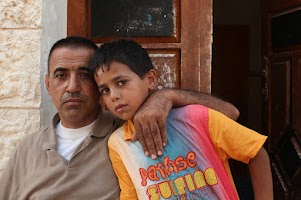 Across the olive grove and by Kiryat Arba’s barbed wire fence lives Kayid Dana and his brothers. Another stunning view embraces you from just outside their house, disrupted only by a looming Israeli watchtower. Most of the occupied West Bank is spotted with these grey towers. Watching from their windows, the ever present occupation, reminding Palestinians that privacy is a luxury that few, if any, enjoy.
The Dana family has been living on the same land for over 50 years. In 1958, the Israeli authorities repetitively offered them money to leave the house and make room for the growing illegal settlement. The family refused and nonetheless Israeli forces bulldozed half of their garden.
As of June 24, the Dana family has been without water. Israeli authorities prevented water trucks from entering the area to refill their water tanks. As a result, Kavid and his family are relegated to pump water from an unsanitary well outside their home. This is where they encounter the next problem: water is only available for a couple of hours each day. This is not enough to supply their 4 camels (100 liters/day) and the most basic household needs.
North of the Dana family home, through the olive groves, lives the Abdul Hay family (Abu Hossni). Their windows are fenced to prevent Israeli settlers from shattering the glass with the stones they throw. On December 4, the family was subject to a vicious attack that left 3 with dumdum (expanding bullet) wounds. Dumdum bullets are a type of live ammunition that enter the body, expand, and cause permanent injuries or death. Although dumdum bullets have been known to be used by Israeli settlers, they are illegal according to international law.
Jamal Abu Saifan, who lives in the area, captured the incident on his camera and explains how a lightly injured Israeli settler was choppered away 15 minutes after his injury, whereas the 3 Palestinians wounded by gunfire, one critically, waited 3 hours for an ambulance.
The ambulance attempting to reach them was stopped and denied entry to the area by Israeli forces.
Unfortunately, settler attacks are far from rare and have been occurring since Kiryat Arba was established in 1968. The purpose of these violent attacks, and the army violence and policies that accompany them, are not only to injure people and destroy their lands. That is only a strategic measure to reach an ultimate goal: the ethnic cleansing of Palestine.
The next step by Kiryat Arba is the construction of a new road which will divide the vital Palestinian olive groves down the middle. The road will be inaccessible to Palestinians, not only preventing Palestinians from tending to their trees on the other side, but annexing further land, expropriating an economic necessity, and making life more difficult for the indigenous Palestinians.
Despite the collection of circumstances to make life difficult, all the families in the area have made the choice to remain on their land despite the uncertainty and pressures of their everyday life under Israeli occupation.
Related articles
- Hebron: Over 30 detained (alethonews.wordpress.com)
- French activist injured as Israeli troops attack Hebron (alethonews.wordpress.com)
- Renegade Jewish Settlers (alethonews.wordpress.com)
- Weekly Report On Israeli Human Rights Violations in the Occupied Palestinian Territory (altahrir.wordpress.com)
- Palestinian stabbed, shot in settler attack near Nablus (alethonews.wordpress.com)
- Hebron: Israeli settlers occupy Palestinian home (alethonews.wordpress.com)
Number of Jewish settlers in West Bank doubled in 12 years
Palestine Information Center – 28/07/2012
NAZARETH — The number of Jewish settlers in the West Bank has almost doubled in 12 years, increasing obstacles to the two-state solution to Israeli-Palestinian conflict, reported the Guardian newspaper.
According to the newspaper, “the number of Jewish settlers in the West Bank grew by more than 15,000 in the past year to reach a total that exceeds 350,000 for the first time and has almost doubled in the past 12 years.”
Figures from Israel’s population registry show a 4.5% increase in the past 12 months. Most of the newcomers moved into settlements that many observers expect to be evacuated in any peace deal leading to a Palestinian state.
There are an additional 300,000 Jews living in settlements across the pre-1967 border in East Jerusalem, as reported by the pro-government newspaper Israel Hayom.
The populations of the big settlement blocs of Maale Adumim, Gush Etzion and Ariel were stable over the past year. Maale Adumim and Gush Etzion are expected by most diplomats and negotiators to become part of Israel under an agreement on borders, but the future of Ariel, which juts deep into the West Bank, is uncertain.
One Israeli politician predicted that the number of Jewish settlers in the West Bank and East Jerusalem would reach one million within four years.
Related articles
- Population of Jewish settlements in West Bank up 15,000 in a year (guardian.co.uk)
- Renegade Jewish Settlers (alethonews.wordpress.com)
Israeli authorities circle Palestinian land with fence near Qalqiliya
Ma’an | July 28, 2012

QALQILIYA – Israeli authorities have started to install a fence around the southern side of Azzun Atma in Qalaqiliya in the northern West Bank.
A two-meter high spiral fence was installed on about 1,500 meters running from the settlement of Oranit to the crossroads of Kafr Qasim and route 505, according to Abdul-Karim Ayyoub, the secretary of the local council.
“With this fence, Israel is isolating the area known as Beer al-Shilla, the artisan well, and about 800-1000 donums (over 8,000 meters squared) of different groves. Farmers will not be able to access their fields even after they pass the gate on the northern side of the road,” he added.
Hani Amer, who is in charge of the artisan well in al-Shilla said that neither the well nor the groves could be accessed anymore, as the Israelis have not left openings or gates leading to the well or to the dirt roads.
Related articles
- Israeli forces detain 9 from Qalqiliya village (occupiedpalestine.wordpress.com)
Israeli Military Calls for Demolition of West Bank Village
By Circarre Parrhesia | IMEMC and Agencies | July 27, 2012
Israeli daily Ha’aretz is reporting that the Israeli military has called for the demolition of a Palestinian village under the pretext that it is built on an archaeological site.
The village in question is Zanuta located in the South Hebron Hills region of the West Bank, situated close to the construction route of the annexation wall. The village falls under the designation of Area C, meaning that the Israeli military has full control of both administrative and security affairs under the guise of the so-called Civil Administration.
Ha’aretz states that the area was designated an archaeological area under the British Mandate, the period following the fall of the Ottoman empire till 1948 when several parts of the Middle East, including Palestine, where subject to occupation by the United Kingdom.
The military is claiming that the homes in the village, which comprise numerous improvised structures, were built without permission and that no master plan for the village is registered with the Civil Administration thus making all construction illegal.
Furthermore, the military has stated that it is not possible to grant retro-active permission and legalisation to the area despite many Israeli settlements and outposts receiving such leniency under the Israeli military occupation of the West Bank that is ongoing following the 6 Day War of 1967.
The South Hebron Hills region of the West Bank has had numerous villages targeted for demolition under the pretext that the villages are illegal under Israeli law, while the aforementioned settlements are given legal status despite the construction of outposts without preapproval from the State of Israel is illegal under Israeli law and all settlement construction on occupied land is illegal under international law.
In addition to discriminatory practices by the State of Israel and its military, Palestinians living in the area come under frequent attack from settlers residing in the area, who fall under the categorization of ‘ideological’, i.e. those Israelis who move to the West Bank as they believe that all of the occupied Palestinian territories should be annexed by Israel as part of a ‘greater Israel’, rather than those who reside in the West Bank due to subsidized housing provided by the Israeli government.
Alongside attacks to their persons and property such as their homes and vehicles, Palestinians in the South Hebron Hills whose sole income is dependent on shepherding live stock, regularly find their animals are stolen or killed during night time attacks.
Related articles
- Israel orders demolition of eight Palestinian villages for military training sites (alethonews.wordpress.com)
- Susiya: Another Casualty of Israeli Occupation? (alethonews.wordpress.com)
Hebron: Over 30 detained
27 July 2012 | International Solidarity Movement, West Bank
On the evening of July 18, over 30 Palestinians were detained in Tel Rumeida of Hebron after being accused of attacking an Israeli settler from the illegal settlement in the city. The attack allegedly took place after the settler went to swim in Abraham’s spring, which is on Palestinian land, but has a history of being used by settlers from the local colony.
A number of houses nearby to the spring were raided, along with the headquarters of Youth Against Settlements (YAS).
One of the Palestinians detained lives with his family in a house overlooking the spring. Their house was raided by soldiers and a young man was taken.
About 70 Israeli soldiers and 35 settlers gathered at the spring. The settlers insisted that the soldiers arrest the Palestinians, and internationals were barred from approaching the site by soldiers and border police.
Several Palestinians were detained near the spring, while three others were detained separately near the YAS headquarters. They were not accused of the attack, but nevertheless had their ID’s confiscated. The reason behind their detention is still unknown.
After several hours of being detained near the spring, a few Palestinians were released and others were taken to the police station for questioning. The remaining were released shortly after midnight, none of them being charged with the attack.
Earlier that day, Israeli settlers tried for the third time to build a wall of rocks around the spring which lies on Palestinian-owned land. Around 10 Israeli settlers were building, while 15 soldiers guarded them.
According to soldiers, the settlers had a permit but it was not possible to see it. The Palestinian owners of the land thus had no choice but to watch as settlers continued building, and teenagers from the illegal settlements swam in the water.
This incident is symptomatic of the settler mentality as they steadily try to build into Palestinian-owned land and increase the size of their colonies in the West Bank.
Palestinian residents of Tel Rumeida say that the settlers are hoping to encroach upon the spring and the surrounding land, and thus connect two settlements located in the area.
Related articles
- Hebron: Israeli settlers occupy Palestinian home (alethonews.wordpress.com)
- French activist injured as Israeli troops attack Hebron (alethonews.wordpress.com)
- Weekly Report On Israeli Human Rights Violations in the Occupied Palestinian Territory (altahrir.wordpress.com)
- Settlers set fire to ancient tree in Hebron (alethonews.wordpress.com)
- Apartheid Safari (occupiedpalestine.wordpress.com)
- Official: Settlers torch agricultural field near Hebron (altahrir.wordpress.com)
UN Committee against Torture releases list of issues for Israel
DCI | July 19, 2012
In June, the UN Committee Against Torture (the Committee) released a list of issues it would like the Government of Israel to address when the Committee reviews Israel’s compliance with the Convention Against Torture (CAT) in 2013. Specific issues raised by the Committee relevant to the continued prosecution of Palestinian children in military courts include:
- What steps has the Government of Israel taken to audio-visually record interrogations conducted by the Israeli Security Agency (ISA) as a further means to prevent torture and ill-treatment? DCI-Palestine further recommends that this inquiry should be broadened to include interrogations conducted by the Israeli police, being the body most likely to interrogate Palestinian children from the West Bank.
- What steps has the Government of Israel taken to ensure that all detainees are promptly brought before a judge and have prompt access to a lawyer? Under military law, Palestinian children are not required to be brought before a judge for 8 days, and can be denied access to a lawyer for up to 90 days. By way of contrast, Israeli children, including those living in the settlements, must be brought before a judge within 24 hours and can be denied access to a lawyer for 48 hours.
- Please indicate how many Palestinian prisoners from the Occupied Palestinian Territory are held in detention facilities inside Israel? Transferring and detaining Palestinian prisoners out of occupied territory violates article 76 of the Fourth Geneva Convention and attracts personal criminal liability under articles 146 and 147 of the same convention.
- Please indicate the measures taken to ensure that the detention or imprisonment of a child is used as a measure of last resort, that solitary confinement is never used as a means of coercion or punishment and that all children receive appropriate education.
- Please also explain the regime applied to children under military detention, in particular if their interrogations are recorded and if their parents or other legal representatives can have access to them. DCI-Palestine recommends that all interrogations of children must be audio-visually recorded and parents must be entitled to accompany their children at all times, as is the right generally afforded to Israeli children. Further, children must be entitled to consult with a lawyer of their choice prior to their interrogation.
The full list of issues released by the Committee is available here.
Related articles
- UK Foreign Office agrees that imprisoning Palestinian children inside Israel violates international law – but what are they going to do? (alethonews.wordpress.com)
- Israeli interrogators sexually harass Palestinian children in detention (alethonews.wordpress.com)
- World Psychiatric Association: Enabling Israeli Apartheid? (windowintopalestine.blogspot.com)
- A Seminar on Palestine’s Prisoners: A Lament on Injustice (alethonews.wordpress.com)
Featured Video

The Truth About the Trump Shootings with Ken Silva
or go to
Aletho News Archives – Video-Images
From the Archives
The Geopolitics behind the War in Yemen (I)
By Mahdi Darius NAZEMROAYA | Strategic Culture Foundation | 30.03.2015
The United States and the Kingdom of Saudi Arabia became very uneasy when the Yemenese or Yemenite movement of the Houthi or Ansarallah (meaning the supporters of God in Arabic) gained control of Yemen’s capital, Sanaa/Sana, in September 2014. The US-supported Yemenite President Abd-Rabbuh Manṣour Al-Hadi was humiliatingly forced to share power with the Houthis and the coalition of northern Yemenese tribes that had helped them enter Sana. Al-Hadi declared that negotiations for a Yemeni national unity government would take place and his allies the US and Saudi Arabia tried to use a new national dialogue and mediated talks to co-opt and pacify the Houthis.
The truth has been turned on its head about the war in Yemen. The war and ousting of President Abd-Rabbuh Manṣour Al-Hadi in Yemen are not the results of «Houthi coup» in Yemen. It is the opposite. Al-Hadi was ousted, because with Saudi and US support he tried to backtrack on the power sharing agreements he had made and return Yemen to authoritarian rule. The ousting of President Al-Hadi by the Houthis and their political allies was an unexpected reaction to the takeover Al-Hadi was planning with Washington and the House of Saudi. … continue
Blog Roll
 Aletho News
- Leaked: Britain’s Sham Conviction Of Hashim Thaci
- Seyed M. Marandi: U.S. Strike Imminent – Toward Total War in the Middle East
- Russia Voted Under Fire. Washington Is Loading the Tankers.
- 12 Things Your Oncologist Was Trained Not to Tell You
- Anthrax Attacks Paved Way for COVID-Era ‘Junk Drugs and Vaccines’
- How Real Is the Impact of Western Sanctions on Israel?
- France, You Are Guilty: How Paris Turned Western Sahara into the Maghreb’s Powder Keg
- 2025 Nature Paper Claiming Worsening Global Drought Gets RETRACTED …Heavily Flawed
- Your Milk Is Not the Problem
- The Truth About the Trump Shootings with Ken Silva
- If Americans Knew
- An error has occurred; the feed is probably down. Try again later.
- No Tricks Zone
- 2025 Nature Paper Claiming Worsening Global Drought Gets RETRACTED …Heavily Flawed
- New Study: ‘Global Drought Shows No Detectable Recent Acceleration Under Climate Warming’
- Economic Masterminds: German Socialists Suggest Taxing Productivity Gains Stemming From Using AI
- The South China Sea Has Not Been Cooperating With The Climate Change Narrative
- Energy Crisis: Germany Enters Heating Season With Historically Low Gas Reserve Fill Levels
- New Study: The Antarctic Ice Sheet Gained Mass From 2020-2024 Due To Staggering Snow And Ice Accumulation
- Study: Ocean Heating Rates From Thousands Of Years Ago ‘Dwarf’ Modern Ocean Heating Rates
- Climate Extremists Target, Attack Large-Scale Power Grid Infrastructure In Germany!
- New Study: Antarctic Ice Melt Has Contributed Less Than 1 Centimeter To Sea Level Rise In The Last 30 Years
- Fear Of Debate: Alarmist German Climate Scientist Calls On Mainstream Media To Discredit Skeptic Voices
 Aletho News