Al-Araqeeb village: Palestinian Bedouins refuse to surrender 116 times
By Ramzy Baroud | MEMO | August 15, 2017
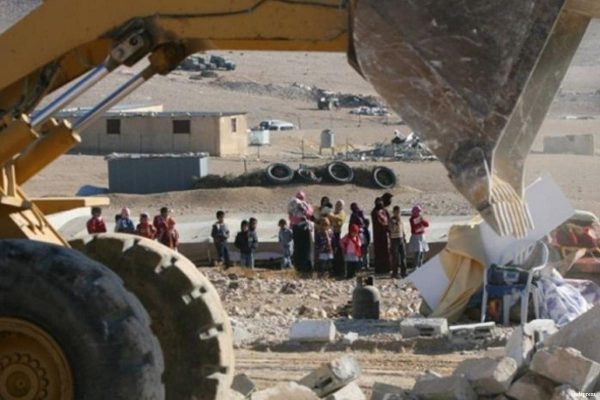
On August, the Palestinian Bedouin village of Al-Araqeeb was destroyed for the 116th time. As soon as Israeli bulldozers finished their ugly deed and soldiers began evacuating the premises, the village resident immediately began rebuilding their homes.
Twenty-two families, or about 101 residents, are estimated to live here. By now, they are all familiar with the painful routine, considering the first round of destruction took place in July 2010.
It means that the village has been destroyed nearly 17 times each year since then. And each time, it was rebuilt, only to be destroyed again.
If the repeated destruction of the village is an indication of Israel’s stubborn insistence to uproot Palestine’s Bedouins, the rebuilding is indicative of the tenacity of the Bedouin community in Palestine.
But Al-Araqeeb is only symbolic of that historic fight.
It would be no exaggeration to state that there is a war waged by Israel against Palestinian Bedouins. The aim is to destroy their culture and to force them into townships similar to those of Apartheid South Africa.
The geographic space of that war extends from the Negev desert to the Southern Hebron Hills to Jerusalem.
The epicenter of the ongoing fight is the village of Al-Araqeeb. Not only has Israel destroyed Al-Araqeeb numerous times in violation of international law, it actually delivers a bill to the homeless residents expecting them to cover the cost of the very ruins wrought by the Israeli state.
According to latest estimates, the families that live in makeshift huts and rely on rudimentary means to survive are expected to pay up a bill of two million shekels, around $600,000.
Israel dubs Al-Araqeeb, along with 35 villages in the Negev, as “unrecognised” by the Israeli government’s master plan, thus they must be erased, and their population driven into townships made for the Bedouins.
However, these villages are older than Israel itself, and any such “master plan” could have easily considered this existing reality. What Israel truly labours to achieve is to replace the Bedouins with its own Jewish population, as it has tirelessly done for seven decades.
Palestinian Bedouins are known for their tenacity. They fully fathom the history and plight of their ancestors, where generation after generation were ethnically cleansed and exiled to refugee camps outside Palestine, or forcibly removed to other areas. Today’s Bedouin communities refuse to be subjected to that same fate again.
The Israeli plan to ethnically cleanse the Bedouins of the Negev is no different from the plan to colonise the West Bank, Judaise the Galilee and Palestinian East Jerusalem. All such efforts always culminate in the same routine – of removing the Arabs and replacing them with Israeli Jews.
In 1965, Israel passed the Planning and Building Law which recognised some Palestinian Arab villages in the Galilee and southern Negev, but excluded others. Nearly 100,000 Bedouin were forcibly removed to “Planned Townships” to endure economic neglect and poverty. Many refused to be moved and, since then, have fought a protracted war to survive and maintain a semblance of their culture and way of life.
Currently, according to the Institute of Palestine Studies (IPS), roughly 130,000 individuals live in the so-called unrecognised villages “under the constant threat of wholesale demolition”.
The anomaly is that these Bedouin communities prove the fallacy of the Israeli claim that it was Jewish settlers – not Palestinians – that “made the desert bloom”.
A simple look at statistics demolishes that deceptive claim entirely.
As of 1935 – that is 13 years prior to the existence of Israel – Bedouins “cultivated 2,109,234 dunums of land where they grew most of Palestine’s barley and much of the country’s wheat,” stated IPS.
Moreover, Jewish settlers did not arrive in the Negev till 1940 and, by 1946, the total Jewish population there did not amount to more than 475.
The amount of land cultivated by the Bedouins in the Negev prior to 1948 came to three times that cultivated by the entire Jewish community in all of Palestine even after sixty years of ‘pioneering’ Zionist settlement IPS concluded.
To reverse this indisputable historical reality, Israel has led a decided campaign aimed at vanquishing the Bedouins by severing their relationship to their land. Although this has been done with a great degree of success, the struggle is not yet over.
The same struggle is duplicated elsewhere, especially in so-called “Area C” encompassing 60 per cent of the West Bank. Palestinian Bedouin villages there are also enduring a terrible fight, as many of their villages have been singled out for destruction.
Most West Bank Bedouins live in the central West Bank region, in an area known as the South Hebron Hills. Last month, it was reported that the Israeli Supreme Court is now “deciding the fate” of the Bedouin village of Dkeika. Other villages in the area have either been demolished, received demolition orders or are waiting for their fate to be determined by the Israel court.
It is hardly a question of a single village or two. The UN reported that 46 villages in central West Bank are “at risk of forcible transfer” by the Israeli government.
To preclude any legal wrangling, the Israeli government has been actively pursuing wholesale, irreversible actions to seal the fate of Bedouins once and for all.
In 2013, Israel announced the “Prawer Plan”, the goal of which was the destruction of all unrecognised villages in the Negev. However, massive mobilisation involving the Bedouins and Palestinians throughout the Occupied Territories defeated the plan, which was officially rescinded in December of the same year.
But, now, it is being revived under the name “Prawer II”. A draft of the plan, which was leaked to local media, was introduced by Israel’s Agricultural Minister, Uri Ariel. It, too, aims to “deny Bedouin citizens land ownership rights and violate their constitutional protections,” reported Patrick Strickland.
The war on the Bedouin is, of course, part of the larger war on all Palestinians, whether in Israel or under military occupation. While the latter are denied the most basic freedoms, the former are governed by at least 50 discriminatory laws, according to the Haifa-based Adalah Legal Centre for Arab Minority Rights.
Many of these laws are aimed at depriving Palestinians of the right to own land or to claim even the very land upon which their homes and villages existed for tens and hundreds of years.
It should come as no shock, then, to learn that, while Palestinian citizens of Israel are estimated at 20 per cent of the population, they live on merely three per cent of the land, and many of them face the constant danger of being evicted and relocated elsewhere.
The story of Al-Araqeeb is witness to the never-ending Israeli desire for colonial expansion at the expense of the indigenous population of Palestine, but also of the courage and refusal to give in to fear and despair as demonstrated by the 22 families of this brave village.
In some way, Al-Araqeeb represents the story of all of Palestine and its people.
The struggle of Al-Araqeeb should evoke outrage at Israel’s constant violation of human rights and its refusal to recognise the national aspirations of the Palestinian people, but it should also induce hope that 70 years of colonial expansion cannot defeat or even weaken the will of a village, or a nation.
Read also: Israel demolishes EU-funded Palestinian homes in Hebron
Palestinian Journalists Declare Hunger Strike
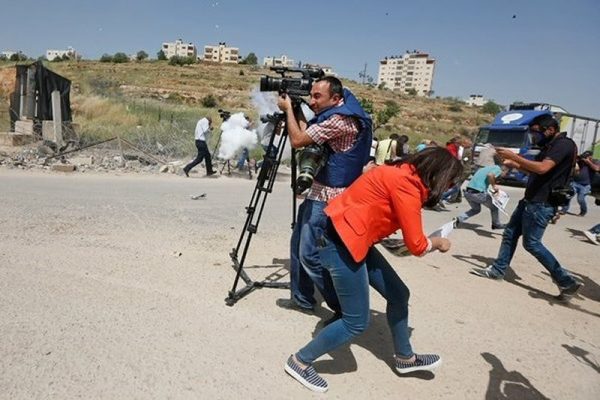
A journalist during a protest at Israel’s Ofer detention center in the West Bank (PLO/File)
By Jaclynn Ashly | IMEMC News | August 14, 2017
As local and international criticism continued to mount against the Ramallah-based Palestinian Authority’s (PA) tightening noose on freedoms of expression in the occupied West Bank, seven Palestinian journalists imprisoned by the PA have begun a hunger strike after being detained under the controversial Cyber Crimes Law, approved by Palestinian President Mahmoud Abbas last month.
Palestinian journalists Mamduh Hamamra, a correspondent for Al-Quds News, Al-Aqsa TV correspondent Tariq Abu Zeid, and freelance journalist Qutaiba Qassem all declared a hunger strike immediately after their detentions were extended by up to 15 days on Thursday, according to a statement released by Omar Nazzal, a member of the Palestinian Journalists’ Syndicate and former prisoner of Israel.
Issam Abdin, a lawyer and head of advocacy at Palestinian NGO al-Haq, confirmed to Ma’an News Agency that four more Palestinian journalists –Al-Quds News correspondent Ahmad Halayqa, Shehab News Agency correspondent Amer Abu Arafa, and reporters Islam Salim and Thaer al-Fakhouri — had declared a hunger strike on Thursday to protest their detention.
The journalists had all been detained several days prior for allegedly violating the terms of the new law, according to Abdin.
All seven of the journalists reportedly work for media outlets that were among 30 sites blocked by the PA in June — all of which were reportedly affiliated with the Hamas movement, the ruling party in the besieged Gaza Strip which has been embroiled in a bitter ten-year rivalry with the Fateh-led PA, or Abbas’ longtime political rival, Muhammad Dahlan.
While the move to block the websites in the West Bank was condemned at the time as an unprecedented violation of press freedoms in the Palestinian territory, Abbas took the crackdown on media to another level last month by passing the Cyber Crimes Law by presidential decree.
‘A draconian law’
In a statement on Thursday, Nazzal said that at least six of the imprisoned journalists — omitting al-Fakhouri — were being detained over allegations of violating Article 20 of the Cyber Crimes Law.
The article states that an individual could face at least one year in prison or be fined at least $1,410 for “creating or managing a website or an information technology platform that would endanger the integrity of the Palestinian state, the public order, or the internal or external security of the State.”
Meanwhile, “any person who propagates the kinds of news mentioned above by any means, including broadcasting or publishing them” faces up to one year in prison or a fine ranging from $282 to $1,410, according to the new law.
Abdin said that these “loose articles,” through which individuals would face imprisonment simply for publishing certain articles on their social media accounts, set the groundwork for arresting Palestinian journalists and “destroying the freedom of journalism work in Palestine.”
Nadim Nashif, the cofounder and director of Palestinian and Arab digital advocacy group 7amleh, called the law “terrible” and “draconian.”
“It’s the worst law in the PA’s history,” Nashif said. “It allows the PA to arrest anyone under unclear definitions.”
Nashif noted that not only did the law criminalize the creation, publication, and propagation of certain information deemed dangerous by the PA, it also ruled that individuals found to have bypassed PA blocks on websites through proxy servers or Virtual Private Networks (VPNs) could face three-month prison sentences.
Nashif said that the law had dragged the West Bank “backwards.”
Despite Israel’s decade-long occupation of the West Bank and the more than 10-year political split with Hamas, “generally, the media and websites were left alone,” Nashif said. “They were not part of this political fight.”
“The PA is kind of breaking the last spaces of freedom of speech,” he said.
Palestinian journalists trapped between Hamas-PA divide
Rights groups were quick to condemn the detention of the journalists, claiming that the new law was aimed at rooting out political dissent against Abbas and the PA — likely under the auspices of the PA’s widely condemned security coordination with the Israeli state, although the PA has repeatedly stated that it has halted this policy since July.
According to prisoners’ rights group Addameer, a PA security official had initially said that at least five of the imprisoned journalists were arrested for “leaking information and communicating with hostile parties.”
However, Addameer added, the Palestinian Journalists’ Syndicate contacted Palestinian security forces on Wednesday morning and were told that the journalists were detained “in order to pressure Hamas to release another journalist detained in the Gaza Strip,” referring to Fouad Jaradeh, a correspondent for official PA news channel Palestine TV who has been imprisoned in Gaza for more than two months.
Both Hamas and the PA have been criticized for carrying out retaliatory acts on individuals affiliated with the opposing group, most notably in the shape of politically motivated arrests and imprisonment.
Abdin said that Palestinian journalists have been “plunged into the Hamas-Fateh division,” as both groups have targeted journalists in order to quash opposition that could affect their political hold in the Gaza Strip and the West Bank respectively.
The Palestinian Center for Development and Media Freedoms (MADA) said in a statement on Wednesday that the journalists’ arrests were “part of a marked escalation of violations against media freedoms” in both the West Bank and Gaza.
However, the new law and Abbas’ moves to stifle dissent against the PA are “not just problematic for journalists,” Nashif said. “Any activist or individual who the PA thinks is an opponent can now be arrested without any clear reason.”
The PA has also been accused of conducting sweeping detention campaigns targeting Hamas-affiliated residents of the West Bank, while the PA has escalated measures in recent months to pressure Hamas to relinquish control of the Gaza Strip.
A study by Palestinian think tank al-Shabaka documented the consequences of the PA’s security campaigns, “whose ostensible purpose were to establish law and order,” but have been perceived by locals as criminalizing resistance against Israel.
‘It’s illegal under Palestinian law’
Abdin pointed out that both the website blocking and the new cyber crimes law violated Article 27 of Palestinian Basic Law, which protects the press freedoms of Palestinian citizens, including their right to establish, print, publish, and distribute all forms of media. The law also guarantees protections for citizens who are working within the field of journalism.
The article also prohibits censorship of the media, stating that “no warning, suspension, confiscation, cancellation, or restriction shall be imposed upon the media,” unless a law violating these terms passed a legal ruling.
Abbas, however, has not received permission from the judiciary to approve these far-reaching restrictions on the press, according to Abdin.
Since Hamas won parliamentary elections in 2006, the Palestinian Legislative Council has not convened in Ramallah, meaning that the vast majority of laws passed by the PA in the past ten years have been passed by Abbas, who extended his presidency indefinitely in 2009, via presidential decrees.
Al-Haq has pointed out that the new legislation violates international law, including Article 19 of the International Covenant on Civil and Political Rights (ICCPR).
Rights groups, activists, and journalists have demanded that the PA amend the law to abide by pre-existing Palestinian legislation, rescind its blockage of news sites, and end its practice of routinely arresting Palestinian activists, writers, journalists, and others for their political opinions.
Edited for the IMEMC by chris @ imemc.org
Israeli settlers torch cars, vandalize property during attack on Ramallah-area village
Ma’an – August 9, 2017
BETHLEHEM – Israeli settlers set fire to two Palestinian-owned vehicles on Wednesday in the village of Umm Safa in the central occupied West Bank district of Ramallah in an alleged revenge attack for three Israeli settlers who were killed by a Palestinian in the nearby Halamish settlement last month.
Palestinian news agency Wafa received testimony from Marwan Sabah, the village council head, who said that Israeli settlers had set fire to the vehicles around 2:30 a.m.
While Israeli soldiers were reportedly stationed at the entrance of the village at night, the settlers attacked homes on the outskirts of the village after the soldiers had left, Sabah said.
However, Israeli soldiers are rarely able to control Israeli settlers, and reports often emerge of Israeli soldiers watching settler attacks on Palestinians without intervening. If any action is taken by Israeli soldiers, it is typically in the form of shooting “crowd control measures,” such as tear gas, rubber-coated steel bullets, and often live ammunition, at Palestinians.
The settlers had also reportedly graffitied hate slogans on walls in the village, calling for revenge attacks on Palestinians in response to a deadly attack last month when a Palestinian from the Ramallah-area village of Kobar entered the Halamish settlement and stabbed three Israeli settlers to death.
According to the Israeli army, the incident would be under the jurisdiction of the Israeli police. However, an Israeli police spokesperson was not immediately available to comment.
According to Sabah, Israeli forces arrived in the village in the morning following the attack “to examine the area.” An Israeli army spokesperson told Ma’an she would look into any follow-up reports on the incident.
Israeli forces raided Kobar village in the predawn hours of Wednesday, detaining the father and uncle of the Halamish attacker, 19-year-old Omar al-Abed. Three others from the village were also detained during clashes that left 15 injured, some with live fire.
Last week, some 200 settlers from the Halamish settlement attacked the Kobar village. Israeli forces responded by violently suppressing clashes that had broken out between the settlers and Palestinian locals, which resulted in one Palestinian being injured by live ammunition shot by the Israeli army.
An upwards of some 600,000 Israeli settlers reside in occupied Palestinian territory in violation of international law. The international community has repeatedly called their presence and rising population the main impediment to potential peace in the region.
The UN reported on Saturday that after a three-year decline of settler attacks on Palestinians, the first half of 2017 showed a major increase in such attacks, with 89 incidents being documented so far this year.
“On a monthly average, this represents an increase of 88 percent compared with 2016,” the UN said. The attacks during this time period have led to the deaths of three Palestinians.
Israeli media has reported that the Shin Bet, Israel’s internal security agency, has also warned the Israeli government over the alarming trend and has “called on the government to adopt urgent measures to prevent further deterioration,” according to the UN.
Palestinian activists and rights groups have long accused Israel of fostering a “culture of impunity” for Israeli settlers and soldiers committing violent acts against Palestinians.
Israeli authorities served indictments in only 8.2 percent of cases of Israeli settlers committing anti-Palestinian crimes in the occupied West Bank in the past three years, according to Israeli NGO Yesh Din.
Meanwhile, Palestinians allegedly or actually committing any attacks on Israelis are often shot dead at the scene, in what rights groups have deemed “extrajudicial executions,” or face long prison sentences.
Israel shoots Palestinian minor in both legs and arm
MEMO | July 31, 2017
Israeli forces shot an unarmed Palestinian minor in both legs and in one arm last week, according to Haaretz.
Thirteen-year-old Mohammed Qaddumi was collecting firewood near the West Bank Separation Wall on Tuesday when Israeli occupying forces fired at him. Qaddumi was admitted to Meir Hospital in Kfar Saba and underwent a long operation. His condition remains severe though his health has improved.
Qaddumi’s father said his son was one of four children walking by the barrier next to their home in the village of Jayus:
He was by the fence, the children were there, four children, and there were soldiers under the olive trees. They went up there by the fence, they could have grabbed him by the arm but they shot him three times.
His father emphasised that Qaddumi did not try to cross into Israel as the army claims, nor did the children throw stones at the soldiers who were hidden from their view.
Israel’s Civil Administration initially prevented Qaddumi’s family from accompanying their son to hospital in Israel, but relented after NGOs Mahsom Watch and Physicians for Human Rights intervened.
The army is said to have initiated legal proceedings against the wounded teenager, on suspicion of throwing stones.
Israeli forces have long been accused of implementing a “shoot to cripple” campaign against Palestinians in the occupied West Bank. A report released by the Badil resource centre found that in the first six months of 2016, at least 30 of the 86 Palestinians that were shot in Bethlehem alone were shot in the legs or knees.
Israeli generals have also been known to encourage such tactics against Palestinian youth. Reports surfaced last year that Palestinians in numerous West Bank cities speak of Shin Bet officials known only as “Captain Nidal” and “Captain Imad” among others, who regularly threaten to disable young men if they fail to comply with Israeli soldiers.
Israeli forces shoot, injure Palestinian in Salfit tending to his land near separation wall
Ma’an – July 29, 2017
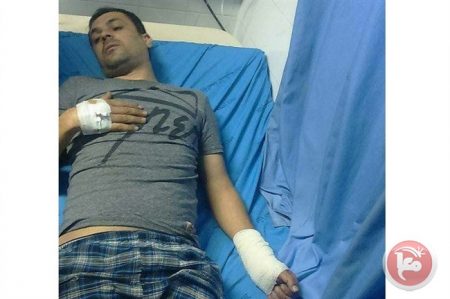 SALFIT – Israeli forces shot and injured a Palestinian on Friday while he was tending to his land near Israel’s separation wall in the village of Deir Ballut in the western part of Salfit district in the occupied West Bank.
Medical sources at the Palestinian Red Crescent told Ma’an that Faed Saleh Odeh Moussa, 33, was injured with a live bullet in his left hand after Israeli forces opened fire on him while he was on his land watering trees.
The sources added that he was transferred to the Yasser Arafat Hospital in Salfit, where doctors reported his injury as moderate.
Saed, Moussa’s brother, told Ma’an that they were caring for their land near Israel’s separation wall, like every Friday, when Israeli forces arrived in the area at 7:30 p.m. and randomly opened live ammunition on them.
Saed said that they quickly hid behind rocks before his brother was injured. He added that their children were also with them at the time and two men from Qalqiliya city in the northern West Bank who were en route to Israel.
Israeli forces remained in the area for some time before leaving following the incident, Saed noted. He added that he had called the Deir Ballut municipality to inform them of the incident, who said that they would notify the Palestinian liaison of the incident.
An Israeli army spokesperson told Ma’an she would look into reports on the incident.
According to the Bethlehem-based Applied Research Institute — Jerusalem, the village of Deir Ballut has had thousands of dunams of land confiscated for the purpose of illegal Israeli settlement building, while Israel’s separation wall — deemed illegal by the International Court of Justice in 2004 — is expected to swallow up at least 35 percent of the village’s lands.
Such Israeli activities in Palestinian villages coincide with upticks of Israeli violence against Palestinians — both by Israeli forces and settlers, as Palestinians are stripped of their lands and often barred from entering Israel’s so-called security “buffer zones” on the Palestinian side of the separation wall.
The UN has reported that at least 92 Palestinians are injured by Israeli forces every two weeks, while 1,444 Palestinians were injured by Israeli forces this year, as of July 17. However, this data does not include the hundreds of Palestinians who were injured during Al-Aqsa protests post-July 17.
‘An attempt to drown out Palestinian voices’: RT’s office building raided in Ramallah
RT | July 29, 2017
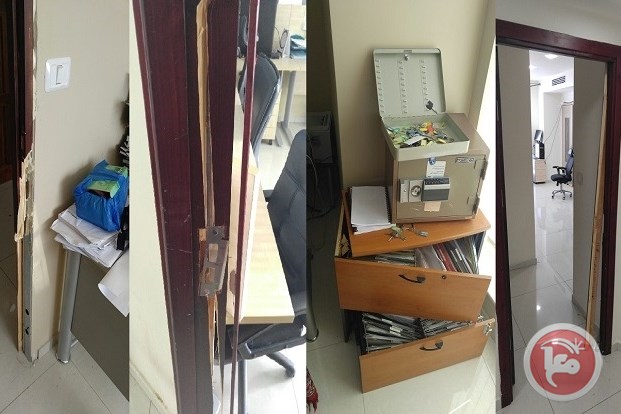
The Israeli military raided the PalMedia building in Ramallah on the West Bank early Saturday morning. It is home to a number of international media organizations, including RT’s regional office. Property belonging to other media channels was either damaged or seized.
No RT employees were harmed during the raid on the PalMedia building which also houses the offices of Al-Quds, Al-Mayadeen, France 24 and Al-Manar.
Witnesses told the Ma’an News Agency that 10 Israeli army vehicles had surrounded the building before carrying out the search.
Several doors and editing rooms were damaged while some computers and other property were taken away.
An Israeli army spokesperson told Ma’an that Israeli forces had “seized media equipment and documents used for incitement” from a media office in Ramallah, though did not say which agency they were specifically targeting.
The satellite channel Al-Quds said the search was directed at them.
The Palestinian Union of Journalists condemned the raid, which it said had led to “the destruction of property and the theft of equipment, computers and archival materials belonging to the satellite channel Al-Quds,” adding, that it was “an obvious attempt to drown out the voice of the Palestinians and make the Palestinian narrative invisible.”
The Palestinian Ministry of Information also released a statement denouncing the raid, saying, that targeting the media “proves Israel’s intentions to prevent the guardians of truth from continuing their media, national, and ethical role of transferring the message of our people’s desired freedom.”
This is not the first time Israeli authorities have mounted a search of the building, having done so in June 2014. At the time, Reporters Without Borders said the raid “joined the long list of violations of Palestinian news media rights by the Israeli security forces, with never-ending threats, arrests and military operations.”
RT’s offices in the Gaza Strip were also hit by an airstrike during Operation Pillar of Defense in November 2012. Though the building was severely damaged, none of RT’s employees were hurt.
Israeli authorities have long restricted Palestinian freedom of expression through censoring social media activity and imprisoning journalists, activists, poets, and novelists.
‘Palestinians reject Israel’s system of apartheid and racial discrimination’
RT | July 24, 2017
The escalation in the Israeli-Palestinian conflict isn’t religious, it’s about the rights of Palestinian people to be free from the longest occupation in modern history, says Mustafa Barghouti, the General Secretary of the Palestinian National Initiative.
Palestinian President Mahmoud Abbas suspended all ties with Israel on Friday after deadly clashes erupted between protesters and Israeli police. Protests broke out after Israeli authorities installed security cameras and metal detectors at the revered Al-Aqsa Mosque, Jerusalem’s most sensitive holy site.
Temple Mount, or Haram esh-Sharif as it is known to Muslims, is one of the most contested religious sites in the world. For Jews, it is believed to have been the site of two biblical temples, the Al-Aqsa Mosque on the hill is Islam’s third holiest site.
The Arab League has warned Israel about crossing “a red line” in the ongoing Israeli-Palestinian conflict over the sacred city of Jerusalem. Meanwhile, an Israeli minister said the metal detectors that triggered the violence will remain.
The League’s foreign ministers will hold an emergency meeting in Cairo on Wednesday.
RT: Palestinian President Abbas suspended all relations with Israel. How would you comment on that? Are you surprised?
Mustafa Barghouti: No, I am not, actually. He should have done that some time ago because the Israeli behavior is a behavior that wants to kill any possibility of peace in this place. Its policy is directed at destroying the two-state solution either by the measures they are taking at the Al-Aqsa Mosque, which is a very provocative act or by the law they have just passed which prohibits even negotiations over Jerusalem or by the increased settlement activities which have exceeded any previous expansion before. All these factors have led to this reaction. They have killed three of our people and injured no less than 432 demonstrators. All the people were just praying peacefully, I was there myself, and I saw myself – there was no violence from the Palestinian side and suddenly we were attacked with bullets, with the clubs, they were very aggressive toward the Palestinian prayers.
RT: Surely Israel has the right to step up security given what has happened [two Israelis policemen were killed at the entrance to the Temple Mount in Jerusalem on July,14]? Can you understand Israel’s nervousness?
MB: No, I think Netanyahu has heard his own security people advising him to take away these metal detectors and stop changing the status quo in the Al-Aqsa Mosque, but he didn’t listen to them. He proceeded by listening to the extreme ministers in his cabinet. The result is this explosion that we see. Not only in Jerusalem but all over the West Bank. You must understand this is not a religious conflict. This is about national rights; this is about the right of the Palestinian people to be free from occupation. To get their freedom after 50 years of occupation which is the longest occupation in modern history. This is about people rejecting to be treated as third class citizens; this is about rejecting a system of apartheid and racial discrimination that Israel has created. To people in Jerusalem and the rest of the Palestinian territories, people are saying “enough is enough, we cannot take it anymore, we want our freedom, we want our independence.” This is the essence of what is happening.
‘Palestine freezing contacts with Tel Aviv is right move amid constant Israeli provocations’
RT: What is your reaction to the move by Palestinian President Abbas to freeze all contacts with Israel?
Miko Peled, peace activist: It is certainly the right move. Israeli provocations have led to these massive protests; this is definitely the right approach and the right move. We need also to remember Israel has been denying two million people in Gaza water and electricity in this terrible heat – people are dying of thirst and heat just a 45-minute drive away from Jerusalem. Israel has been engaged in serious provocations against the Palestinians.
RT: What is your opinion about the Israeli argument that more security measures are needed?
MP: The presence of the Israeli security forces in the old city of Jerusalem, around the Al Al-Aqsa Mosque are a constant provocation to the Palestinians and an infringement of the Palestinians’ right to practice their faith, to worship at the Al-Aqsa Mosque… And the provocation is not just an existence of this huge number of forces but also the way they behave, the way they treat the Palestinians, the way they arrest youth, the constant harassment as people try to get in and out of the old city, in and out of the holy sanctuary. So, to expect that there will be such oppression on the rights of Palestinians and there will be no violence in return is a little naïve. But we have to look at the fact that the main form of resistance has been in a form of civil disobedience with thousands of worshipers refusing to go through the metal detectors, standing outside the mosque and praying peacefully albeit standing under the weapons and the guns of the Israeli security forces…
Wine and the Canada-Israel Free Trade Agreement
By Yves Engler | Dissident Voice | July 24, 2017
Two weeks ago the worst fear of Canadian opponents of neoliberal ‘free trade’ agreements came true.
Surprisingly, there has been almost no reaction from the political parties, unions, and other organizations that warned these agreements would be used to undermine Canadian law, even though this is exactly what happened.
After David Kattenburg repeatedly complained about inacurate labels on two wines sold in Ontario, the Canadian Food Inspection Agency (CFIA) notified the Liquor Control Board of Ontario (LCBO) that it “would not be acceptable and would be considered misleading” to declare Israel as the country of origin for wines produced in the Occupied Palestinian Territories. Quoting from official Canadian policy, CFIA noted “the government of Canada does not recognize Israel’s sovereignty over the territories occupied in 1967.” On July 11 the LCBO sent out a letter to all sacramental wine vendors that stated CFIA’s conclusion that products from two wineries contained grapes “grown, fermented, processed, blended and finished in the West Bank occupied territory” and should no longer be sold until accurately labelled.
But, in response to pressure from the Israeli embassy, Centre for Israel and Jewish Affairs and B’nai Brith, CFIA quickly reversed its decision. On July 14 the government announced that it was all a mistake made by a low level CFIA official and that the Canada-Israel Free Trade Agreement (FTA) governed the labelling of such wine, not CFIA rules. “We did not fully consider the Canada-Israel Free Trade Agreement,” a terse CFIA statement explained. “These wines adhere to the Agreement and therefore we can confirm that the products in question can be sold as currently labelled.”
In other words, the government publicly proclamed that the FTA trumps Canada’s consumer protection laws. And the basis for this dangerous precedent is that the Israel FTA includes the illegally occupied West Bank as a place where Israel’s custom laws apply.
Incredibly, the Green Party of Canada seems to be the only organization that has publically challenged this egregious attack against consumer protections and Palestinian rights. “The European Union and the United States made it clear long ago that goods made in these illegal settlements cannot be mislabelled as ‘Made in Israel’”, said Green Party leader Elizabeth May in a press release. “Why is Canada singling out Israel for preferential treatment at the expense of both Palestinians’ human rights, and the rights of Canadian consumers?”
The Green’s statement points to a startling “Israel exception” by the government as well as FTA critics. I’ve seen no comment from the Council of Canadians or the organization’s trade campaigner Sujata Dey about the Liberal’s announcement that an FTA overides Canadian consumer protections. The same can be said for NDP International Trade critic Tracey Ramsey as well as the Canadian Centre for Policy Alternatives and its Trade and Investment Research Project leader Scott Sinclair. (Since CFIA’s announcement Ramsey and Dey have each posted repeatedly to twitter regarding CETA, NAFTA and other FTAs.) Nor have consumer protection groups such as the Consumers’ Association of Canada or Consumers Council of Canada opposed this attack on the Food and Drugs Act.
But, FTA critics still have an opportunity to join the fight against CFIA’s recent decision. David Kattenburg and his lawyer Dmitry Lascaris are planning a court challenge and their efforts should be supported.
To allow this precedent to pass without challenge the CCPA, NDP and Council of Canadians would be conceding an extremely broad “Israel exception”. Opposing CFIA’s move isn’t akin to backing Palestinian civil society’s (entirely legitimate) call for international Boycott, Divestment and Sanctions until Israel: “Ends its occupation and colonization of all Arab lands and dismantles the Wall; Recognizes the fundamental rights of the Arab-Palestinian citizens of Israel to full equality; and Respects, protects and promotes the rights of Palestinian refugees to return to their homes and properties as stipulated in UN Resolution 194.”
Nor is it a request for Ottawa to bar wines produced on the 22% of pre-1948 Palestine supposed to be a Palestinian state as per official Canadian policy. It is not even necessarily a demand to eliminate the special tariff treatment the Israel FTA currently grants companies based in the occupied territories. It is simply a request to respect Canada’s Food and Drugs Act and label two brands of wine accurately.
Kattenburg explains:
Israel’s self-declared right to sell falsely labeled products on Canadian store shelves should not be allowed to trump the right of Canadians to know what they’re eating and drinking; to know that the fine bottle of ‘Israeli’ red or crispy chardonnay that they just bought was actually not produced from grapes grown in Israel, but rather, in Israeli-occupied, brutally exploited Palestine.
Yves Engler is the author of A Propaganda System: How Canada’s Government, Corporations, Media and Academia Sell War and Canada in Africa: 300 years of aid and exploitation.
150 French Jews move to Israel

MEMO | July 20, 2017
Some 150 French Jews have moved into an illegal settlement in the occupied West Bank, according to Arutz Sheva.
The settlers landed on Tuesday night as part of a programme by the International Fellowship of Christians and Jews (IFCJ), the second such arrival this month. Last week, 200 settlers arrived at Ben Gurion Airport; the largest group scheduled to arrive this summer.
Samaria Regional Council Head Yossi Dagan congratulated Tuesday’s arrivals.
“You have done the most Zionist thing. You left your families, homes, and language to move to Israel,” he said.
Israeli Immigration Minister Sofa Landver has also hailed the continued arrival of French Jews as “a Zionist and principled Aliya [Jewish immigration] that has contributed and will continue to contribute greatly to the State of Israel.”
French Jewish immigration has surged since 2012 with a record of 7,800 people settling in Israel in 2015 alone. Over ten per cent of the Jewish community in France have moved to Israel since 2000, half in the past five years, according to the Jewish Agency.
Earlier this month, the grand rabbi of the orthodox Satmar Hassidic group in New York called for Jews not to settle in Israel because the state was secularising Jewish immigrants. The Satmar group has been fiercely anti-Zionist since its inception, and is raising money to fund Jewish community projects in France to dissuade them from moving to Israel.
Read Also:
Expel 100,000 Palestinians and annex settlement says Israeli Minister
Israel Once Again Reveals Its Disdain for Freedom of the Press
By Richard Hardigan | CounterPunch | July 14, 2017
When Akran Natsheh, a reporter for the Al Quds satellite channel, arrived at his office in Hebron in the morning of Thursday, July 13, he found that several of the doors had been pried open. Shards of wood were everywhere, and papers were strewn about on the floor. It certainly looked like an ordinary robbery, but then he found that several of his hard drives had been removed. His suspicions about the perpetrators were confirmed when one of his co-workers showed him the note he found posted on the front door by the Israeli army. It indicated that the offices had been stormed because “Al Quds serves an illegal organization.”
Natsheh looked at me with exasperation. “What does that even mean?” he complained. “When another news organization was raided, they were told it was because of incitement to violence.”
Israeli Prime Minister Benjamin Netanyahu regularly claims that Israel is the only true democracy in the Middle East, but its commitment to one of democracy’s fundamental tenets – freedom of an independent press – leaves a great deal to be desired.
Mada, the Palestinian Center for Media and Development Freedoms, is an organization that monitors violations in the Palestinian Territories by both the Israeli government and the Palestinian Authority. For example, it states in its annual 2017 report that while “2016 witnessed a relatively significant decrease in total number of violations monitored against media freedoms in Palestine compared to 2015,” there will still 383 violations, including “the murder of a media student at Al-Quds University … by Israeli Occupation Forces, [the] injuring and arresting of dozens of Palestinian journalists, [and the] raiding, confiscating and sabotaging [of] media outlets including the shutdown of 12 Palestinian media outlets and printing houses.”
When I asked Natsheh about the value of the items destroyed by the soldiers, he shrugged.
“Maybe $2000, but the money is not the important part. It is more about the psychological effect. I can buy new hard drives and new doors.” He paused to reflect.
This kind of attack causes self-censorship. Your work becomes something frightening. The challenge becomes bigger and bigger. They may storm this office next week and arrest me, or harass me in the field. Two years ago they shot at journalists during clashes, and so they became afraid to cover them.”
But Natsheh vowed to continue his work.
“We are journalists. We are not inciters. Our mission is to deliver the truth about what happens in Palestine to our audience. This is the mission of all journalists around the world. We all have the same mission, the same values, the same journalistic ethis. If they have anything against any organization, why don’t they go to court? They don’t. They go directly to destroy. If they had a strong narrative, they would not do that. But they don’t. We are just journalists. We just say what we see … You say something they don’t like, and they shut you down. This is the Occupation.”
Richard Hardigan is a university professor based in California. He is currently writing a book entitled “The Other Side of the Wall” based on his experience in the Occupied Territories.
Israeli forces shoot teargas and rubber coated steel bullets at the 6th anniversary demonstration of Kafr Qaddum
International Solidarity Movement | July 9, 2017
Hebron, occupied Palestine – On Friday 7th of July the residents of Kafr Qaddum gathered for their weekly demonstration marking its 6th anniversary, which was repressed by the Israeli forces shooting teargas, stun grenades and rubber-coated steel bullets at demonstrators. Israeli forces approached the demonstrators in a jeep and were seen on a hill next to the road connecting Kafr Qaddum and the Israeli settlement. Towards the end of the demonstration Israeli forces also forced their way into a Palestinian house to use it as a vantage point to aim at the demonstrators.
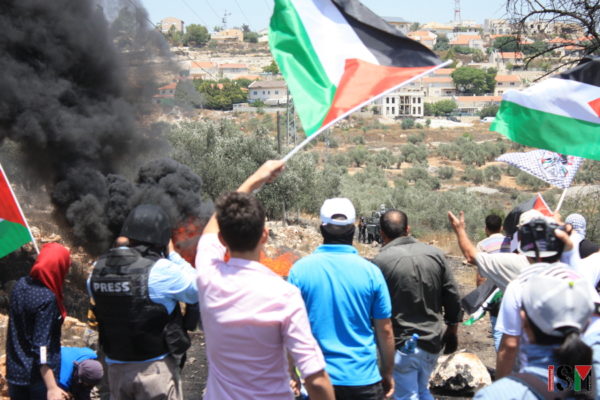
Kafr Qaddum peaceful demonstration
After the afternoon prayers at 1 pm, the people of Kafr Qaddum started their non-violent demonstration marching towards the illegal Israeli settlement of Kedumim. Soon after, the Israeli forces welcomed the demonstrators by shooting rubber-coated steel bullets and teargas. Halfway through the demonstration, an elderly Palestinian man was shot in the head with a rubber-coated steel bullet while taking cover from the shooting. Towards the end of the demonstration, an additional five Palestinians and a Korean activist were injured by the Israeli forces. Those who were injured were taken to receive treatment.
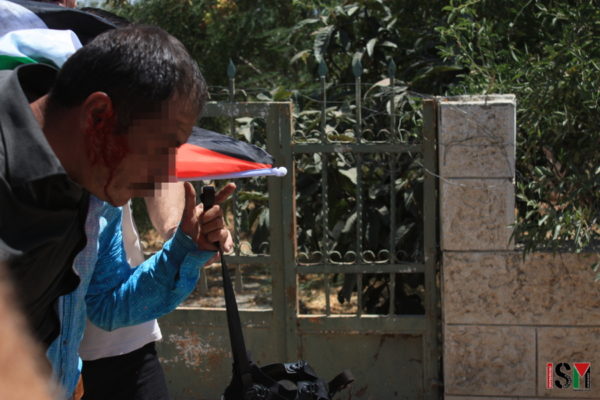
One of the Palestinians injured by Israeli forces gun-shots is brought to receive treatment
According to information provided by the Israeli military spokesperson to Ma’an news, no Israeli army forces were present at the demonstration, but instead it was the Israeli police that repressed the non-violent demonstration. This however is not true, as later during the demonstration Israeli army soldiers were seen at a nearby hill, and soon replaced the police on the road with more jeeps and an armored personnel carrier. The soldiers then proceeded to fire rubber-coated steel bullets at protesters and activists, and threw several stun grenades in an attempt to disperse the demonstration. Israeli soldiers also forced their way into a house and took up positions on the balcony overlooking the road.
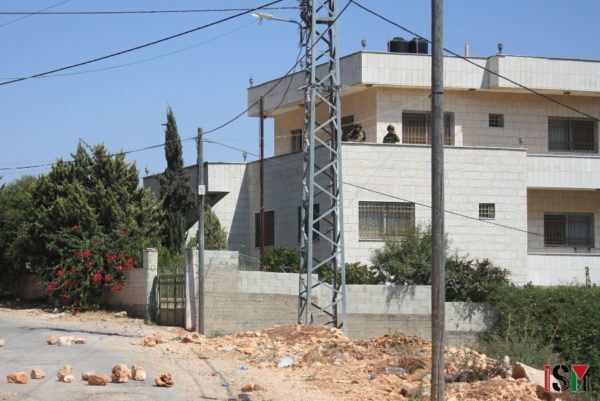
Israeli forces inside a civilian Palestinian home aiming at protestors
18-month-old Palestinian dies after being injured with Israeli tear gas 2 months ago
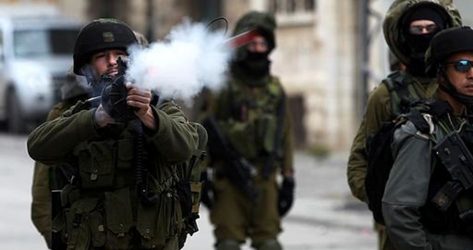
Ma’an – July 8, 2017
BETHLEHEM – An 18-month old Palestinian infant died on Friday, some two months after suffering from tear gas inhalation when Israeli forces shot tear gas at Palestinian homes in the village of Abud in the central occupied West Bank district of Ramallah.
According to Palestinian news agency Wafa, the Palestinian Ministry of Health said that 18-month-old Abd al-Rahman Barghouti, was transferred to Hadassah Hospital in West Jerusalem after suffering from tear gas inhalation in May, owing to the severity of his condition.
However, Wafa pointed out that “all efforts to save his life failed,” and the infant was declared dead on Friday evening.
The infant was injured after clashes broke out across the occupied West Bank on May 19 in support of some 1,300 Palestinian prisoners who were undergoing a mass hunger strike to demand better treatment and conditions in Israeli prisons.
At the time, Israeli forces haphazardly shot tear gas at Palestinian homes, which caused many residents, including Abd al-Rahman, to suffer from tear gas inhalation.
At the same time, Israeli forces opened live ammunition on protesters, injuring several Palestinian youths in the lower part of their bodies.
According to Wafa, Israeli soldiers had prevented Palestinian Red Crescent ambulances from reaching the infant’s home to treat him, and blocked the ambulances with Israeli army jeeps, forcing Palestinian medics to rush on foot to the infant to provide first aid.
The medics were also forced to carry him back to the ambulances, which were located a 30 minute walk away from Barghouti’s house, Wafa pointed out.
Abd al-Rahman became the 36th Palestinian to be killed by Israeli forces since the start of 2017. Eight Israelis have also been killed by Palestinians during the same time period.
Israeli forces have been the target of condemnation by rights groups for their excessive use of force on Palestinians. During clashes, Israeli forces shoot large amounts of tear gas, at times directly at Palestinian homes, leading to routine injuries and the occasional death.
In 2016, Muhammad Mustafa Habash, 63, from the Asira al-Shamaliya village in the northern West Bank district of Nablus, died of tear gas inhalation during clashes that broke out with Israeli forces at Qalandiya checkpoint in Ramallah.
In 2015, when a wave of violence first erupted across Israel and the occupied Palestinian territory, an 8-month-old infant died of tear gas inhalation in the village of Beit Fajjar in Bethlehem.
Several days before the infant’s death, a beloved local activist in Hebron, 54-year-old Dr. Hashem al-Azzeh, also died from tear gas inhalation.
Featured Video
Houthis Keep Advancing as the Red Sea Crisis Deepens
or go to
Aletho News Archives – Video-Images
From the Archives
15 Saudi ‘hijackers’ were CIA agents working for US: Scholar
Press TV – April 13, 2016
Fifteen of the 9/11 “hijackers” from Saudi Arabia were CIA agents working for the United States government, which was seeking to destroy the Middle East for Israel and to double the American military budget, says Dr. Kevin Barrett, an American academic who has been studying the events of 9/11 since late 2003…. continue
Blog Roll
 Aletho News
- Russia summons UK charge d’affaires over Kiev drone support
- NATO member warns bloc seeking pretext for war with Russia
- Macgregor: We Haven’t Seen the Worst of the Iran War Yet
- ‘We are not like everyone else’ laws that bind other nations do not apply to Israel, says Likud lawmaker
- Report: Saudi Arabia seeks allies’ assistance as missiles deplete amid war on Yemen
- Fuel Crisis Deepens: Pakistan Warns Tanker Attack in Red Sea Would Be an ‘Act of War’
- ‘Bucha massacre’ a false flag orchestrated by UK – Moscow
- China Rejects Outside Pressure on Trade Ties After New US Russia Sanctions Bill
- Houthis Keep Advancing as the Red Sea Crisis Deepens
- Iran spent $1 million to wipe out $30 billion in data center plans, and take down Amazon in the ME
- If Americans Knew
- US welcomes Israeli, Iranian delegations to UN, but not Palestinians – Daily Update
- Biden’s Genocide Accomplices Targeted by New Accountability Campaign
- AIPAC’s Network Has Already Spent $67.2 Million to Shape the Midterm Elections
- Jewish Supremacist Manufacturing a Civilizational Threat to License Bigotry
- US bans Palestinian president from speaking at the UN
- Israeli Forces Detain Journalist Alaa al-Rimawi amid Widespread West Bank Raids
- Even a pro-Israel Congress member has put a hold on 40,000 one-ton bombs to Israel
- As Gaza crumbles, Israel preps new ground invasion – Daily Update
- ‘We are not like everyone else’ laws that bind other nations do not apply to Israel, says Likud lawmaker
- Trump’s govt makes ‘treasonous’ claim of weapons shortages
- No Tricks Zone
- New Study: ‘Global Drought Shows No Detectable Recent Acceleration Under Climate Warming’
- Economic Masterminds: German Socialists Suggest Taxing Productivity Gains Stemming From Using AI
- The South China Sea Has Not Been Cooperating With The Climate Change Narrative
- Energy Crisis: Germany Enters Heating Season With Historically Low Gas Reserve Fill Levels
- New Study: The Antarctic Ice Sheet Gained Mass From 2020-2024 Due To Staggering Snow And Ice Accumulation
- Study: Ocean Heating Rates From Thousands Of Years Ago ‘Dwarf’ Modern Ocean Heating Rates
- Climate Extremists Target, Attack Large-Scale Power Grid Infrastructure In Germany!
- New Study: Antarctic Ice Melt Has Contributed Less Than 1 Centimeter To Sea Level Rise In The Last 30 Years
- Fear Of Debate: Alarmist German Climate Scientist Calls On Mainstream Media To Discredit Skeptic Voices
- End-Of-August Arctic Sea Ice Extent Hasn’t Fallen In 20 Years, Official Data Show!
 Aletho News