Israeli regime a replication of S. African apartheid?
Press TV – July 22, 2013
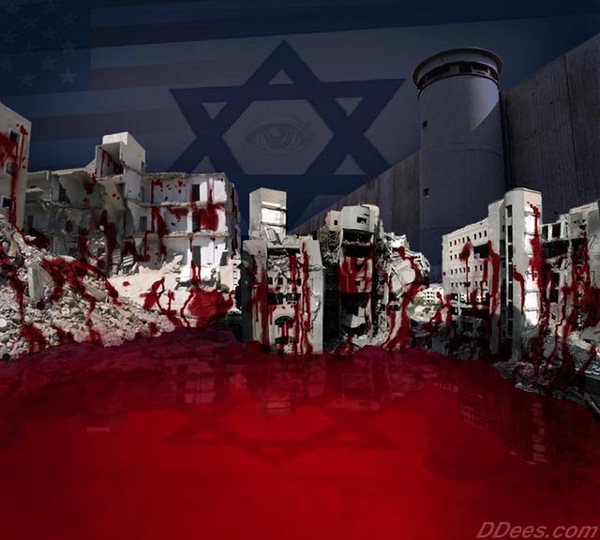
The Israeli regime has been accused of replicating the former South African Apartheid regime by the UN investigators, politicians and human rights groups.
Former South African leader Nelson Mandela once said “we know too well that our freedom is incomplete without the freedom of the Palestinians”.
Last month, Ismail Coovadia, outgoing South African ambassador to Tel Aviv, said the regime is a “replication of apartheid” and built on “stolen land”.
The relation between Tel Aviv and the Apartheid regime in South Africa has even become the subject of a book — “Unspoken Alliance; Israel’s Secret Relationship with Apartheid South Africa.
All these call for a look at the similarities between the two regimes and their cozy relations with Britain.
The Israeli regime is treating Palestinians, especially those living in the West Bank just like blacks, who were confined to Bantustans equal to West Bank enclaves and the besieged Gaza Strip by the Apartheid regime.
Palestinians are confined to security zones in the West Bank where they should have permits to pass military checkpoints while those in the Gaza Strip are under a military siege and have limited access to food, water, drugs and fuel, among others.
Palestinians are indeed under Israeli military occupation and face control of movement, physical separation from Zionists even on the roads and lack equal rights with them.
The physical separation, which is similar to the black Bantustans enforced by a variety of measures, is imposed on the Palestinians by creation of Israeli-only roads, limiting their access to lands and resources in the occupied territories and most recently by erecting of the separation barrier (otherwise known as the “Apartheid Wall”) in the West Bank.
Palestinians are also subjected to a totally different legal system than do Israeli occupiers to the extent that Palestinians are turned into secondary residents of their own lands by the occupiers, just like blacks versus white settlers during apartheid rule in South Africa.
In terms of equal rights, Palestinians also do not have the right to vote in the Israeli elections as was the case in the South African Apartheid regime.
They were given an illusion of a democracy by the Oslo Accords that enabled them to vote in the Palestinian Authority elections that brings to mind the local black polls for Bantustans, but that illusion was shattered in 2006 after Hamas won the PA elections but was not allowed to form a government.
The Israeli regime had also warm ties with the apartheid regime and the man behind the concept and implementation of apartheid, former South African Premier Hendrik Verwoerd, once said “Israel, like South Africa, is an apartheid state”.
The two regimes signed a military agreement in 1975 and the Zionist side helped the apartheid regime circumvent international sanctions until its end in the 1994, to the point that the UN General Assembly condemned Tel Aviv’s “collaboration with the racist regime of South Africa”.
The apartheid regime was also considered a close ally of Britain and London used its weight to prevent sanctions against the regime while maintaining extensive trade with South Africa especially by importing gold.
Later in the 1980’s, British Prime Minister Margaret Thatcher proved a staunch support of the racist regime describing the anti-apartheid Mandela as a terrorist in 1987.
Such a position is now clearly seen in the London-Tel Aviv ties and it goes without saying that Britain laid the cornerstone of a Zionist entity in the Palestinian lands in the first place.
In 2002, South African Archbishop Desmond Tutu wrote an article named “Apartheid in the Holy Land” that that his recent trip to Palestine had reminded him “so much of what happened to us black people in South Africa”.
He had earlier written in 1984 that the Bantustans, which were pretended to be self-governing homelands by the apartheid regime were deprived of “territorial integrity or any hope of economic viability”.
They were, he wrote, merely “fragmented and discontinuous territories, located in unproductive and marginal parts of the country” with “no control” over natural resources or access to “territorial waters”.
The description that appears to be a depiction of the occupied territories just now has been echoed by the UN Human Rights Rapporteur John Dugard, who is a South African legal professor and apartheid expert.
Dugard said “Israel’s laws and practices” in the Occupied Territories “certainly resemble aspects of apartheid”.
The analogy is also seen by British Labour MP Gerald Kaufman and former minister for international aid Clare Short who are pushing for sanctions against Tel Aviv.
The description of the situation in the occupied territories by Clare Short in the Commons back in June 26, 2007 is illuminating.
“I have followed developments in the Middle East carefully over many years, and I was well aware before my recent visit how bad things are for the Palestinian people. Nevertheless, I was deeply shocked by Israel’s blatant, brutal and systematic annexation of land, demolition of Palestinian homes, and deliberate creation of an apartheid system by which the Palestinians are enclosed in four Bantustans, surrounded by a wall, with massive checkpoints that control all Palestinian movements in and out of the ghettos,” she said.
A key difference, however, remains, that is apartheid rulers exploited blacks as cheap laborers while Zionists are ethnically cleansing Palestinians.
A South African newspaper editor, Mondli Makhanya, put it in a nutshell after a 2008 trip to the Middle East.
“It seems to me that the Israelis would like the Palestinians to disappear. There was never anything like that in our case. The whites did not want the blacks to disappear,” he said.
New Israeli settlement in occupied Jerusalem given go-ahead
MEMO | July 20, 2013
Israel’s Planning and Construction Committee has issued licenses for 165 settlement units in Nafea Yacob Settlement in occupied Jerusalem.
In a press release, researcher in settlement issues Ahmed Soblaban said that the new project is part of a bigger plan to connect Nafea Yacob and Bezgat Zeaf Settlements. The particular danger of this project, warned Soblaban, is that it separates North Jerusalem from its occupied West Bank hinterland.
The project was originally proposed and approved in 2008, when the green area between both settlements was turned into an area ready for building. According to Soblaban, this project reinforces Israel’s racism against Palestinian residents in Jerusalem, who are prevented from building to cater for their population increase. Although Palestinians are usually not given building permits, they are in any case forbidden from building anything more than four stories high. Jewish settlers can build as high as they want.
Soblaban pointed out that the Israeli authorities have also started the ground works for another new settlement near Bezgat Zeaf.
Netanyahu denies reports of Israel agreeing to peace talks along ’67 borders
Al-Akhbar | July 18, 2013
A spokesman for Israeli Prime Minister Benjamin Netanyahu denied Thursday previous reports stating that Israel had agreed to a proposed formula for new peace talks with the Palestinians under which the border of their future state would be along lines that existed before the 1967 Middle East war.
An Israeli official had previously said on Thursday that Israel was open to talks based on the 1967 borders, but with agreed land swaps and Palestine recognizing Israel as a “Jewish state.”
The denial comes as a blow to US Secretary of State John Kerry, who has been working for the past six months to restart peace talks between Israel and Palestine.
Kerry had urged Israel on Wednesday afternoon to carefully consider a 2002 peace initiative approved by the Arab League.
“Israel needs to look hard at this initiative, which promises Israel peace with 22 Arab nations and 35 Muslim nations – a total of 57 nations that are standing and waiting for the possibility of making peace with Israel,” he had said.
The plan, put forward by Saudi Arabia at an Arab League summit in Beirut in 2002, offered full recognition of Israel but only if it gave up all land seized in the 1967 Middle East war and agreed to a “just solution” for Palestinian refugees. Softening the plan three months ago, a top Qatari official raised the possibility of land swaps in setting future Israeli-Palestinian borders.
Speculation had been rife that Kerry, now in the region for his sixth time since March in an effort to revive peace talks that deadlocked in 2010, may be close to a breakthrough.
Palestinian President Mahmoud Abbas was conferring with Palestinian leaders on Thursday to decide whether to accept Kerry’s proposals for renewing talks with Israel.
Kerry said on Wednesday after talks with Abbas in neighboring Jordan that gaps between the sides had “very significantly” narrowed. An Arab League committee endorsed Kerry’s proposals for resuming peace talks, saying they “provide the ground and a suitable environment to start negotiations.”
However, the issue of Israeli settlements in the West Bank and East Jerusalem, which are considered illegal under international law, is still to be resolved. Palestinians are refusing to return to negotiations without a freeze on settlement activity, as Israel has greenlighted the construction of hundreds of settlement homes in the past several months.
(Reuters, Al-Akhbar)
Ten homes invaded, three arrested in night invasion of Talfit
International Solidarity Movement | July 8, 2013
Talfit, Occupied Palestine – In the early hours of Wednesday 3rd of July, the Israeli army conducted a large scale incursion into the northern West Bank village of Talfit, invading and trashing ten houses and arresting three men. The families of these prisoners have not heard from them in the five days since they have been in Israeli custody and their current whereabouts and legal status are unknown.
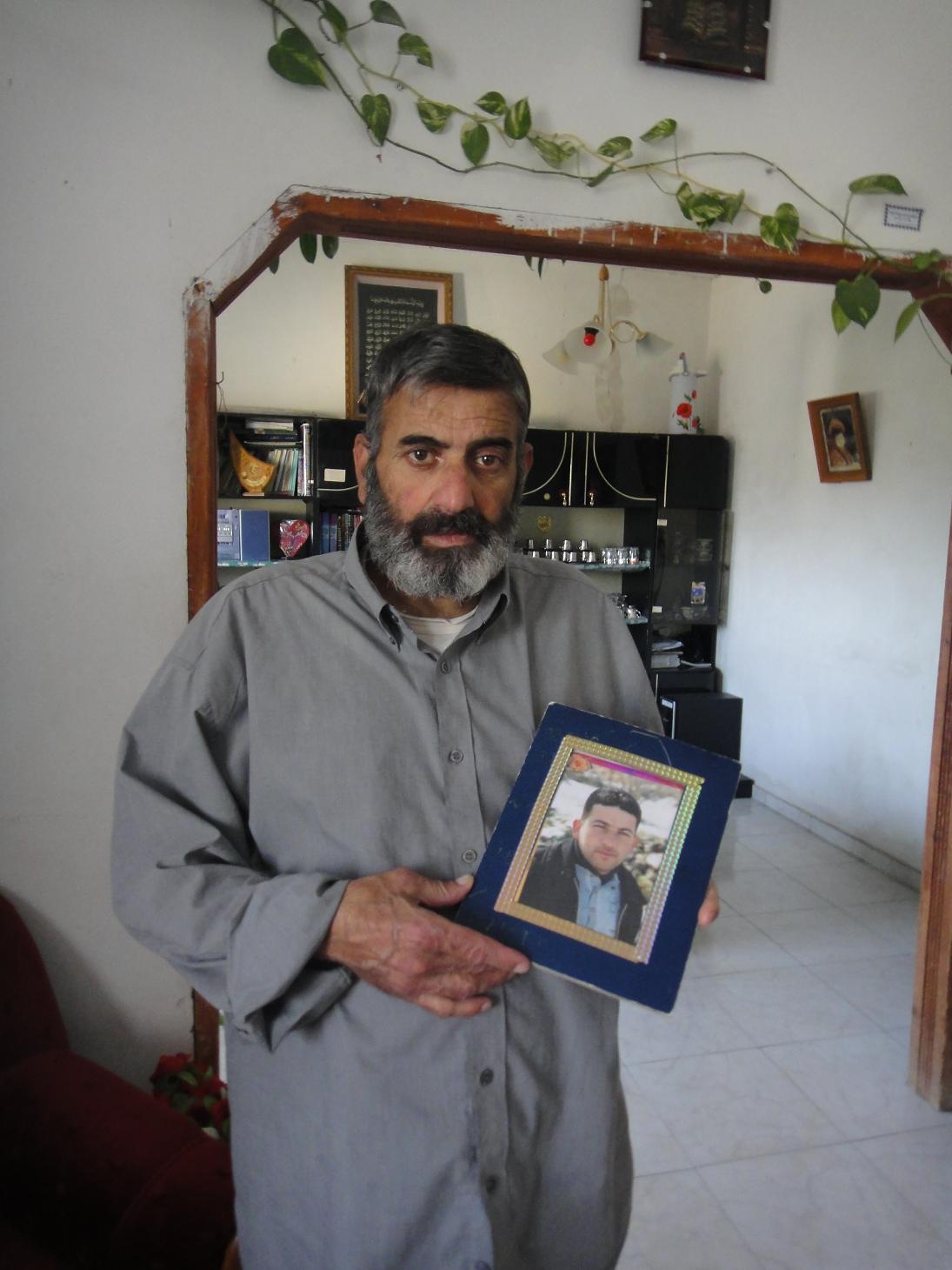
Abdallah’s father with a picture of his imprisoned son (Photo by ISM)
In a sustained invasion from around 1am to 5am, around one hundred soldiers entered the village of Talfit in a number of jeeps, heavily armed and with police dogs. At least ten families, many with young children, were forced by the military to wait in the street for many hours whilst soldiers ransacked their homes.
Twenty-six year old Abdallah Mohammed Najeeb, who works as a nurse in a Nablus hospital, was one of the three men arrested during this night invasion. He was sleeping in his home at 1am when thirty soldiers came to the door, breaking it down with an air pump and flooding into the house with dogs. According to Abdallah’s father, the soldiers ordered all ten family members, including three children under the age of four, to stand on the road for several hours; during this time, some soldiers questioned the family, whilst others were inside overturning furniture and pulling the house apart. After some time, Abdallah was forced into the jeep, wearing just his sleeping clothes and no shoes. He was driven away – along with two other men who were arrested from homes nearby – and no one has heard from them since. No justification or explanation of their arrests was given.
The father of another family had his identity card and driving license confiscated by a military commander, who stated as he took them: “you have no ID”. These will cost at least 800 shekels to replace and in the meantime he will not be able to continue his work as a driver because now he does not have the required documents to legally do so. “The soldiers shouted at them and let the dogs come very near the children – they were so afraid” said the mother of the family about her two children aged three and five, who had been ordered outside for several hours.
Several doors of homes had sound grenades thrown at them and some were physically broken in. Of the many houses that were violently searched, destroying property and furniture, some thefts by the Israeli military were also reported; money, mobile phones and even a family photo album in one case. Computers in several houses were dismantled but not removed.
Israeli military night invasions are a regular occurrence in the villages and cities of the West Bank, even those, such as Talfit, that are in Area A, thus supposedly under full Palestinian civil and security control and the Israeli authorities have no jurisdiction. The village of Talfit currently has around twenty people being held in Israeli jails, some for many years. Some are arrested with no justification whilst others are political prisoners who have been imprisoned for exercising their right to resist occupation. Under the Israeli system, Palestinians are tried in military courts, or can be held indefinitely without charge under “administrative detention”.
Related articles
- Report: 1,790 Palestinians Kidnapped, 16 Killed, In First Half of 2013 (alethonews.wordpress.com)
- Report details ill-treatment of Palestinian children by Israeli forces (alethonews.wordpress.com)
Israel to establish new settlement park in Jerusalem
Palestine Information center – 08/07/2013
OCCUPIED JERUSALEM — The Jerusalem Planning and Building Committee has approved the establishment of a new settlement park at the expense of Walaja village’s land in southern Jerusalem, Hebrew media sources said.
The boundary of the park will run along the Apartheid Wall, which separates the villagers of Walaja from their farmland, according to Haaretz newspaper.
“The Refaim Valley Park” will cover more than 5,700 dunums, or 1,425 acres, at the southern exit of Jerusalem and will be part of the large urban park to surround Jerusalem on three sides. The Green Line runs through the base of the Refaim Valley, through which the park runs, the newspaper explained.
Haaretz stated that 1,200 dunums of land of the park are terraced farmlands belonging to the villagers of Walaja. Villagers say the main threat to the ancient culture of terrace agriculture comes from the Apartheid Wall under construction.
An Israeli official said, “changing the character of the area from Palestinian farmland into an Israeli recreational site fits in with the plan to create contiguity between the holy city and the settlements surrounding.”
Related article
- Report: 100 Israeli attacks during June (alethonews.wordpress.com)
Israel escalates attacks on Palestinains
PressTVGlobalNews · July 4, 2013
Nearly a dozen Palestinians have been abducted by Israeli forces in the occupied West Bank. A Palestinian journalist and a lawmaker are among those who were assaulted and then detained.
The latest Israeli raid also caused the death of a 19-year-old boy. Human rights groups say there has been a surge in violence by Israeli forces against Palestinian protesters and the Palestinian media recording Israel’s violations.
Attacks are escalating against Palestinians with one brutal murder and over 11 arrests this week. Although the Israeli army state that the circumstances of these arrests are for legitimate reasons, they are rarely held accountable or made to show evidence for these crimes.
Nel Burden, Press TV, Bethlehem
Related articles
Report details ill-treatment of Palestinian children by Israeli forces

Defence for Children International Palestine | June 30, 2013
Ramallah — Defence for Children International Palestine submitted a report to four separate United Nations independent human rights experts this week that details the widespread and systematic ill-treatment Palestinian children encounter in the Israeli military detention system.
The report is based on 108 affidavits collected during 2012 from Palestinian children arrested in the West Bank and prosecuted in the Israeli military detention system. The report details the type of violations children encounter in the system, including:
- Use of hand ties in 97% of cases
- Use of blindfolds in 95% of cases
- No lawyer present during interrogation in 99% of cases
- Physical violence during arrest, transfer or interrogation in 74% of cases
- Verbal abuse, humiliation and intimidation in 68% of cases
- Strip searches in 89% of cases
- Use of solitary confinement for interrogation purposes in 19% of cases
Recommendations presented in the report to address ill-treatment and torture of Palestinian children in the system include ending night arrests and the use of solitary confinement, excluding evidence obtained by force or coercion during interrogations, allowing access to legal counsel prior to interrogations as well as the presence of a parent during interrogations.
“It is no secret that systematic ill-treatment of Palestinian kids has been occurring for several years,” says Ayed Abu Eqtaish, Accountability Program director at DCI-Palestine. “There are too many reports, what we need is action.”
Impunity for violations continued to be a significant obstacle in 2012. DCI-Palestine filed eight complaints with Israeli authorities concerning the ill-treatment and torture of children while in Israeli military detention. While investigations were opened in several of the complaints, not a single indictment has been issued against a perpetrator. Many Palestinian families refuse to file complaints for fear of retaliation or simply because they do not believe the system is fair or impartial.
The report concludes by declaring that recent amendments to Israeli military law relating to children have had little impact whatsoever on their treatment during the critical first 48 hours after an arrest, where most of the ill-treatment occurs at the hands of soldiers, policemen and interrogators.
Since 1967, Palestinian children in the Occupied Palestinian Territory have been living under Israeli military law and prosecuted in military courts. Israel is the only country in the world that systematically prosecutes children in military courts. Palestinian children, some as young as 12 years old, are detained, interrogated and imprisoned within the Israeli military detention system.
Related articles
- UN committee slams Israeli forces’ torture of Palestinian children (alethonews.wordpress.com)
- Report: 1,790 Palestinians Kidnapped, 16 Killed, In First Half of 2013 (alethonews.wordpress.com)
- 340 Palestinians Kidnapped in June (imemc.org)
- Setting a dangerous precedent: 16-year-old Ali Shamlawi faces 25 counts of attempted murder for alleged stone throwing (palsolidarity.org)
Report: 100 Israeli attacks during June
Palestine Information Center – 01/07/2013
RAMALLAH — In its monthly report, the Information Center of the Wall and Settlement documented an escalation in Israeli attacks during June including demolition notices and settlement expansion.
The report issued on Sunday monitored 98 Israeli assaults during June including 23 demolition operations mostly in Jordan alley and Jenin.
The report also pointed out 57 demolition orders in al-Khalil, 11 demolition notifications in Jerusalem, and 6 others in Bethlehem.
During June, the Israeli authorities declared the establishment of 3,341 housing units in West Bank settlements, and approved the construction of a huge building in Wadi al-Hilweh, known as Giv’ati parking, as part of the Israeli Judaization schemes in occupied Jerusalem.
Israel’s Jerusalem District Committee for Planning and Building has prepared an outline to connect the Jewish quarter in the Old Town Square with Al-Buraq Square through building underground elevators and corridors, the report added.
For its part, the Israeli Municipality has established a new road to link between the occupied city of Jerusalem and Ma’aleh Adumim settlement.
The monthly report referred to Israeli settlers’ escalated attacks where 14 Palestinian citizens were assaulted, and 30 cars were burned, in addition to stealing Palestinian monuments in Bethlehem and closing main streets that connect Palestinian villages and cities.
The Information Center also documented several Israeli break-ins into al-Aqsa mosque during June.
Related articles
- Jewish settlers attack buses filled with children in Jerusalem (alethonews.wordpress.com)
- UN statement on Israeli plan to relocate Palestinians to build houses for settlers (alethonews.wordpress.com)
- Maximum Land with Minimum Palestinians: The Annexation of Area C (alethonews.wordpress.com)
- More Israeli settler-terrorism: Settlers attack two Palestinian buses in Jerusalem (altahrir.wordpress.com)
- Report: “1790 Palestinians Kidnapped, 16 Killed, In First Half of 2013” (imemc.org)
- Palestine: Al Aqsa mosque stormed, demolition orders & more lands confiscated (realisticbird.wordpress.com)
Palestinians dubious of Kerry’s “real progress” in peace plan
Al-Akhbar | June 30, 2013
A top Palestinian official said on Sunday that there had been no breakthrough in marathon American-led efforts to revive direct peace talks, but US Secretary of State John Kerry said there had been “real progress.”
The statements come just as Israel announced that it might implement monetary incentives to encourage people to move to an illegal settlement in the West Bank.
“It was a positive and profound meeting with [Palestinian] President (Mahmoud)Abbas but there has been no breakthrough so far and there is still a gap between the Palestinian and Israeli positions,” chief Palestinian negotiator Saeb Erakat told reporters after Kerry finished talks in Ramallah with Abbas, his third meeting in as many days.
But Kerry, however, insisted he had held “very positive” discussions with both sides since starting his intense shuttle diplomacy in Jerusalem on Thursday evening, in a high-profile bid to draw the two sides back into direct negotiations after a gap of nearly three years.
And he said that with “a little more work” the start of final status talks “could be within reach.”
“I am pleased to tell you that we have made real progress on this trip and I believe that with a little more work, the start of final status negotiations could be within reach,” Kerry told reporters at Ben Gurion airport just before leaving for Brunei.
“We started out with very wide gaps and we have narrowed those considerably,” he said, describing them as “very narrow.”
“We have some specific details and work to pursue but I am absolutely confident that we are on the right track and that all the parties are working in very good faith in order to get to the right place.”
Asked if Israel’s settlement building had hampered efforts to achieve a breakthrough, he said: “The answer is no, there are any number of obstacles, but we are working through them.”
“We have to have the courage to stay at this and to make some tough decisions,” he said.
Kerry, who has over the last four days spent a total 13 hours in talks with Israeli Prime Minister Benjamin Netanyahu and another six with Abbas, said he would return to the region without saying when.
“I’m going to come back because both leaders have asked me to,” he said.
Speaking at the start of the weekly cabinet meeting, Netanyahu insisted that Israel was not blocking a return to negotiations.
“We are not putting up any impediments on the resumption of the permanent talks for a peace agreement between us and the Palestinians,” he said in remarks communicated by his office.
He also pledged to put any agreement to a referendum, saying it will be “submitted to the people for a decision.”
But Israel’s army radio said Kerry’s marathon efforts had so far failed to coax the sides back into direct negotiations after a gap of nearly three years.
Abbas is pushing Israel to free the longest-serving Palestinian prisoners, to remove roadblocks in the West Bank and to publicly agree to make the lines that existed before the 1967 Middle East war the baseline for negotiations.
Army radio said that Netanyahu was willing to consider just the first two conditions — but only after talks were under way.
So far, Israel has flatly refused to countenance any return to the 1967 lines.
Palestinian officials appeared pessimistic about Kerry’s chances of achieving a breakthrough.
“Netanyahu and his government are not serious about establishing a Palestinian state in the 1967 borders, they speak of a state without clear borders, and we need clarity according to international resolutions,” said Azzam al-Ahmad, a senior official of Abbas’s ruling Fatah party.
“We are ready to resume negotiations according to our clear guidelines,” he told Voice of Palestine.
“Even with regards to the prisoners’ issue, Israel did not provide any clear answer. We want a serious process to be launched,” he said.
In another move likely to spark tension, army radio said an Israeli committee was poised to push through a big discount for buyers of nearly 1,000 new homes which are due to be built in annexed east Jerusalem.
The plan, which will offer prospective buyers a huge discount on 930 new homes to be built in Har Homa, will be discussed by Jerusalem municipality’s finance committee on Monday, army radio and Maariv newspaper reported.
If approved, the plan will lower the price of each new home by $27,500 in a move which will be funded by the housing ministry.
Har Homa is located on east Jerusalem’s southern outskirts, and construction there is likely to have a serious impact on the sector’s boundary with the rest of the West Bank, analysts say.
Jerusalem councilor Elisha Peleg, a member of Netanyahu’s right-wing Likud party, made no effort to hide his delight.
“The temporary suspension of construction in east Jerusalem is over, despite the visit of Secretary of State Kerry,” he told army radio.
“There is no reason to halt construction any more, because it is now proved that stopping construction in east Jerusalem has not brought about a renewal of negotiations with the Palestinians but has caused a severe shortage of housing,” he said.
Last week, on the eve of Kerry’s arrival, another local committee gave final approval to build some 70 homes in the same area.
Palestinian chief negotiator Saeb Erakat said it showed which side was blocking a return to the negotiating table.
“This is Netanyahu’s response to everything Kerry said, to his ideas and to all his efforts,” Erakat told AFP.
“We on the Palestinian side tried every possible effort to help Kerry succeed but it is obvious today … that Netanyahu is putting an obstacle in front of Secretary Kerry’s efforts.”
“Netanyahu alone is responsible for ruining Kerry’s efforts and trying to abort his mission and destroying the two-state solution which is supported by the entire international community.”
Palestinians have said they will not return to direct talks unless Israel completely halts settlement construction and accepts the 1967 lines as the basis for negotiations.
Although Israel has expressed a willingness to talk, it has insisted it would only do so if there were no such “preconditions”.
Kerry, who has made the elusive goal of Middle East peace a top priority, was on his fifth visit to the region since taking over the State Department in February.
“Kerry is willing to put in the legwork necessary to move this process forward in a meaningful way,” a US official said on condition of anonymity.
US officials have been tight-lipped about the substance of Kerry’s meetings, fearing that any public statements could put at risk his efforts.
(AFP, Al-Akhbar)
Featured Video

The Truth About the Trump Shootings with Ken Silva
or go to
Aletho News Archives – Video-Images
From the Archives
Trans ‘milk’ as good as the real thing – NHS
RT | February 18, 2024
The drug-induced nipple secretions of trans women are as good as mothers’ breast milk for babies, the University of Sussex Hospitals NHS Trust claimed in a letter to campaigners made public in a report by British think tank the Policy Exchange on Sunday.
The healthcare trust’s medical director, Rachel James, argued that the off-label prescription drug cocktail men transitioning to female take in order to produce milk was “similar to the natural hormones which encourage lactation to develop when the baby is newly born.”
“The evidence which is available demonstrates that the milk is comparable to that produced following the birth of a baby,” James wrote in the letter, sent to Children of Transitioners last August.
Biological men who wish to lactate must first take hormones to grow milk glands and then take high doses of either domperidone or metoclopramide to stimulate milk production. Neither drug is approved for this use, though they are occasionally prescribed off-label to biological women who have trouble lactating.
However, domperidone’s own manufacturer, Janssen, warns patients the drug “may cause unwanted side effects affecting the heart in a breastfed baby” and “should be used during breastfeeding only if your physician considers this clearly necessary.” … continue
Blog Roll
 Aletho News
- Seyed M. Marandi: U.S. Strike Imminent – Toward Total War in the Middle East
- Russia Voted Under Fire. Washington Is Loading the Tankers.
- 12 Things Your Oncologist Was Trained Not to Tell You
- Anthrax Attacks Paved Way for COVID-Era ‘Junk Drugs and Vaccines’
- How Real Is the Impact of Western Sanctions on Israel?
- France, You Are Guilty: How Paris Turned Western Sahara into the Maghreb’s Powder Keg
- 2025 Nature Paper Claiming Worsening Global Drought Gets RETRACTED …Heavily Flawed
- Your Milk Is Not the Problem
- The Truth About the Trump Shootings with Ken Silva
- ARE PATIENTS BEING PROPERLY INFORMED ABOUT OZEMPIC?
- If Americans Knew
- Salah Sarsour’s Legal Team Says DHS Has Not Met Its Burden to Prove He Is Deportable
- An analysis of tax forms by The Intercept show Kraft’s charity and LLC have donated to Friends of the IDF and AIPAC’s super PAC.
- Israeli attacks kill four Palestinians in Gaza – Daily Update
- Inside Gaza’s death trap of collapsing, bombed-out buildings
- The everyday items Israel bans from Gaza every day
- Inside the siege, the ruined buildings of Gaza – Daily Update
- Debunking The Claim That Macklemore Has A “History Of Antisemitism”
- CPJ demands release of arrested Palestinian-US journalist near Bethlehem
- Robert Kraft: The Billionaire Friend of Netanyahu Pulling The Strings Behind the Macklemore/Ed Sheeran Blow Up
- Columbia Administered Fund Gives Big Money to Pro-Israel Groups
- No Tricks Zone
- 2025 Nature Paper Claiming Worsening Global Drought Gets RETRACTED …Heavily Flawed
- New Study: ‘Global Drought Shows No Detectable Recent Acceleration Under Climate Warming’
- Economic Masterminds: German Socialists Suggest Taxing Productivity Gains Stemming From Using AI
- The South China Sea Has Not Been Cooperating With The Climate Change Narrative
- Energy Crisis: Germany Enters Heating Season With Historically Low Gas Reserve Fill Levels
- New Study: The Antarctic Ice Sheet Gained Mass From 2020-2024 Due To Staggering Snow And Ice Accumulation
- Study: Ocean Heating Rates From Thousands Of Years Ago ‘Dwarf’ Modern Ocean Heating Rates
- Climate Extremists Target, Attack Large-Scale Power Grid Infrastructure In Germany!
- New Study: Antarctic Ice Melt Has Contributed Less Than 1 Centimeter To Sea Level Rise In The Last 30 Years
- Fear Of Debate: Alarmist German Climate Scientist Calls On Mainstream Media To Discredit Skeptic Voices
 Aletho News