Even Saudis don’t believe fiction of Iranian attacks on oil plants – Zarif
RT | September 21, 2019
Saudi Arabia may have joined the US in blaming Iran for last week’s attack on its oil facilities, but the kingdom’s response clearly shows it doesn’t believe it to be true, Iranian Foreign Minister Mohammad Javad Zarif has said.
“Since the Saudi regime has blamed Iran – baseless as that is – for the attacks on its oil facilities, curious that they retaliated against Hodaideh in Yemen today – breaking a UN ceasefire,” Zarif wrote on Twitter.
“It is clear that even the Saudis themselves don’t believe the fiction of Iranian involvement.”
A key Saudi oil facility was seriously damaged last Saturday in a raid by drones and cruise missiles, leading to a sharp drop in production. Yemen’s Houthi rebels claimed responsibility for the attack, but Washington and Riyadh insist the group was incapable of launching such an elaborate assault, and accused Iran of being the perpetrator.
Despite this, Saudi Arabia launched bombing sorties in Yemen targeting the Houthi-controlled port of Hodeidah on Friday, which the Yemeni rebels called a dangerous escalation that could “blow up” a UN-negotiated truce between the two parties.
The Saudis have been intervening in Yemen since 2015 in an attempt to return a Riyadh-friendly president to power. The conflict is perceived by Saudi Arabia as a proxy war against Iran, its regional arch-rival. Tehran denies supporting the Houthis militarily.
Washington responded to the attack on Saudi oil infrastructure by deploying more troops to the Middle East. The incident was a major embarrassment for the US since its costly air defense systems failed to protect the site from the drones and missiles. Saudi Arabia is a leading buyer of American arms and has been using them extensively in Yemen, but last week’s debacle questions whether those investments were wise.
The US is also set to impose additional sanctions on the Iranian banking system in retaliation. Washington framed these as measures necessary to stop the funding of terrorism by Tehran, but Zarif said the US wants to stifle Iran’s foreign trade and “its access to food and medicine.”
“This move is unacceptable and dangerous,” the Iranian official said.
Iran is already living under increasingly harsh sanctions from the US, which the Trump administration has been ratcheting up since the president’s first months in power.
We stop, you stop! Houthis offer Saudi Arabia mutual halt to strikes in wake of devastating oil-plant attacks
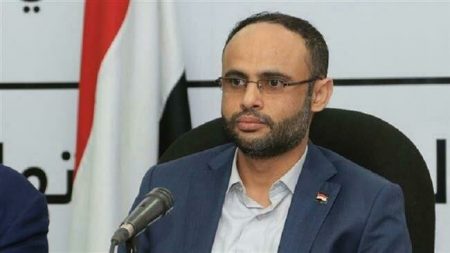
Houthi Ansarullah movement president of the Supreme Political Council, Mahdi al-Mashat
RT | September 21, 2019
Yemen’s Houthi rebels have announced a halt on strikes against Saudi Arabia, adding that they expect reciprocal steps from Riyadh. The ceasefire offer comes days after a major attack on Saudi oil refineries claimed by the Houthis.
The televised announcement was made on Friday by Mahdi al-Mashat, head of the Houthi political council in Sana’a. It comes as the Saudi-led coalition launched a massive operation against “legitimate military targets” north of the port of Hodeidah, in southwestern Yemen.
“I call on all parties from different sides of the war to engage seriously in genuine negotiations that can lead to a comprehensive national reconciliation that does not exclude anyone,” said Mashat. If the Saudis ignore the ceasefire offer and continue bombing, the group reserves its “right to respond,” he warned.
This is not the first instance of Houthis making a ceasefire gesture to try and stop the Saudi bombing campaign – but this time they appear to have some added leverage. The offer comes just a week after a strike on oil processing facilities in Abqaiq and Khurais halved Saudi Arabian production and spiked global oil prices by nearly 20 percent.
The Houthis claimed responsibility for the strike, which demonstrated failure of Saudi Arabia’s US-made air defenses, but Riyadh and Washington chose to blame Iran for the attack instead.
No proof of Tehran’s involvement in the launch of drones and missiles has so far been provided, with Saudi Arabia only identifying the source of the attack as somewhere in the “north.” Iran has denied any involvement in the attack.
Meanwhile, the Houthis also capitalized on the attack’s outcome by promptly threatening another member of the Saud-led coalition, the UAE. Earlier this week, the rebels claimed that they’ve picked dozens of Emirati targets that would be attacked by drones unless Abu Dhabi ceases its participation in the Yemen war.
Conflict has ravaged the Arabian peninsula country since 2015, when a coalition led by Saudi Arabia and the UAE invaded Yemen trying to reinstall the ousted pro-Saudi President Abdrabbuh Mansour Hadi. While they have been unable to defeat the Houthis despite their overwhelming advantage in numbers and weaponry, the war has taken a heavy toll on the people of Yemen. Tens of thousands have been killed in the conflict, while millions have been deprived of the very basic healthcare, food and clean water, with starvation and disease rampant.
Iran vs Saudi Arabia: it’s game-over
By Ghassan Kadi | The Saker Blog | September 19, 2019
Is the attack on ARAMCO the first of a long war or is it game-over already? It seems like the latter and in more ways than one, the war between Iran and Saudi Arabia has ended before it even started. One single solitary Houthi attack on Aramco has sent Saudi oil exports tumbling down by half; not to mention a 20% hike on the price of crude.
Now, even though the Houthis have declared responsibility for the ARAMCO attack, the Trump administration wants the world to buy the idea that it was Iran who launched the attack, not the Houthis. Thus far, at least Japan seems unconvinced, and so is France.
In reality however, the resolve of Saudi Arabia and its capability to stand up and fight has little to do with the identity of the attacker, and this is because Saudi Arabia has demonstrated that it didn’t take much for it to suffer what it suffered. This begs the question; how many such similar attacks can Saudi Arabia weather before it totally capitulates? Seemingly, not many.
In a previous article, I anticipated such scenarios because the Saudi economy and infrastructure are highly vulnerable. A country that has virtually one major wealth-producing base (ie oil) and just a few desalination plants that pump fresh water into its major cities, is a very soft target indeed. After all, if those handful of vital targets are hit, not only will oil exports stop, but water will stop running in households. But the water desalination plants do not have to suffer a direct hit for them to stop running. They need power to run, and the power comes from fuel, and if the fuel supplies stop, so will they, and so will electricity-generating plants in a nation that cannot survive without air-conditioning.
Up until recently, people of Arabia were used to drought, brackish water and searing heat. They lived in and around oases and adopted a lifestyle that used little water. But, the new generation of Saudis and millions of expats are used to daily showers, potable water and climate control in their households. During wars, people normally go to nature to find food and water. They hunt, they fish, they collect local berries and edible wild plants, they fill jars from running rivers and streams, they grow their own vegetables in their backyards, but in Saudi Arabia, in the kingdom of sand, such alternatives do not exist at all.
Furthermore, with a population that has swelled from a few million in the 1950’s, the current population of Saudi Arabia stands at 33 million, and this includes the millions of expats who work and live there.
The limited supply of brackish water is not enough to get by until any damaged infrastructure is fixed, and it’s not even piped to begin with.
As the nation with the third highest global defence budget, higher than Russia’s, Saudi Arabia continues to import everything from Patriot Missiles all the way down to bullets.
This is in sharp contrast with Iran’s geography, natural assets and demography. Iran is a nation of mountains, valleys and rivers, meadows, thriving agriculture and 70 million citizens who have been taught to be innovative and self-sufficient; courtesy of US-imposed sanctions.
And to say that the ARAMCO target was hit by surprise would be quite absurd and inexcusable given that Saudi Arabia is already in a state of war with Yemen, and especially given that the Yemeni aerial strikes have been escalating in recent months. To make the situation even more embarrassing for the Saudis; the spectre of war with Iran is currently hot on the agenda, so how could key Saudi installations be unprotected?
But here’s the other thing, had it been truly Iran that was responsible for the attack as the Trump administration alleges and wants us to believe, America would then be admitting that Iranian missiles flew from mainland Iran, across the Gulf, managed to dodge American defences and state-of-the-art detection hardware and software, and effectively reached their target on Saudi soil. If this is the scenario Trump wants us to believe, what does this say about the capability of America to engage militarily with Iran? This is a much bigger farce than that of Russia-gate; a claim that Russia can indeed affect the outcome of the presidential elections of the allegedly “greatest and strongest nation on earth”. Do such claims mean that America’s adversaries are extremely organised, smart and strong or that America is in disarray, stupid and weak; or both? Either way, when such claims are perpetrated by none but America itself, they certainly do not put America in a good light.
The weaknesses and vulnerabilities of Saudi Arabia and Big Brother are only matched by the other ally, the UAE. As a matter of fact Houthis spokesperson Yahia Saria gave the Emirates a stern warning if they want to protect their glass skyscrapers. In his address, Saria is perhaps giving a tongue-in-cheek reference to the Arabic proverb which says that if one’s house is made of glass, he should not cast rocks at others. After years of indiscriminate shelling under the watchful and indifferent eyes of the world, after years of ruthlessly trying to starve the Yemenis into submission, why would one expect the Houthis to exercise any mercy towards their aggressors?
But let us face it, Dubai and other thriving metropolises of the UAE are predestined to morph into ghost towns. It is only a question of time before they run out of their current charm and their fake onion skin deep glitter. After all, there is nothing in those fantasy cities that is real, substantial and self-sustaining. If anything, a war with Iran has the potential to fast-track the decay process and leave foreign investors and expats exiting in droves; if not running for their lives.
Ironically, the American/Saudi/UAE alliance, if it is indeed an alliance, accuses Iran of spreading its dominion over the region; and perhaps there is evidence to support this accusation. However, the alliance seems to conveniently forget that it was its own orchestrated invasion of Iraq and toppling of Saddam that created a power vacuum in Iraq that was soon filled by Iran. And even though the eight-year long and bitter Iran-Iraq war ended up with no winners or losers, the fall of Saddam at the hands of the American/Arab alliance has turned Iran into the virtual winner that the same alliance is now trying to curb. How more ironic can this farcical situation be?
America plays down the strength of Iran’s Army, and Iran does the opposite. This is normal and part-and-parcel of the psychological warfare. In reality however, no one knows for certain what is Iran’s military capability. For this reason, any all-out confrontation with Iran may at least initially sway America to move its vessels out of the Gulf and further away from the reach of short-range Iranian missiles until and if they feel confident to move closer at a later stage. However, Saudi key and vital ground targets cannot be moved, and for Iran to only be able to hit a few that can be counted on the fingers of one hand, can lead to a total Saudi/UAE capitulation.
Whilst no one knows Iran’s real strength, what we do know is that Saudi Arabia has failed abysmally in defeating the much weaker, poorer, underprivileged starving people of Yemen.
America will not commit boots on the ground and, to this effect, has little to lose apart from risking naval vessels. The soft targets will be Saudi and UAE key infrastructures and no Patriot defence systems will be able to intercept all missiles poised to hit them. If the Houthis could do it, it is a given that Iran also can.
I have recently watched the series “The Vietnam War” on Netflix, and I remembered how back then when the truth about that war was exposed, I believed that American hawks would never get away with lying to their people and the rest of the world again, or ever invade another country in the way that they did with Vietnam. In less than two decades however, they moved full throttle into Iraq, and the masses believed their story. Perhaps some things will never change, and after the losses in Korea, Vietnam, Lebanon, Iraq, Afghanistan and Syria, America seems still determined to fight Iran. This time around, the biggest loser may not end up to be America itself, but its Arab allies; namely Saudi Arabia and the UAE, and the recent attack on ARAMCO is only a prelude to an inevitable outcome, because the writing is already on the wall and it clearly reads: GAME-OVER.
Exhibition of Houthi military-industrial achievements
The Saker | July 8, 2019
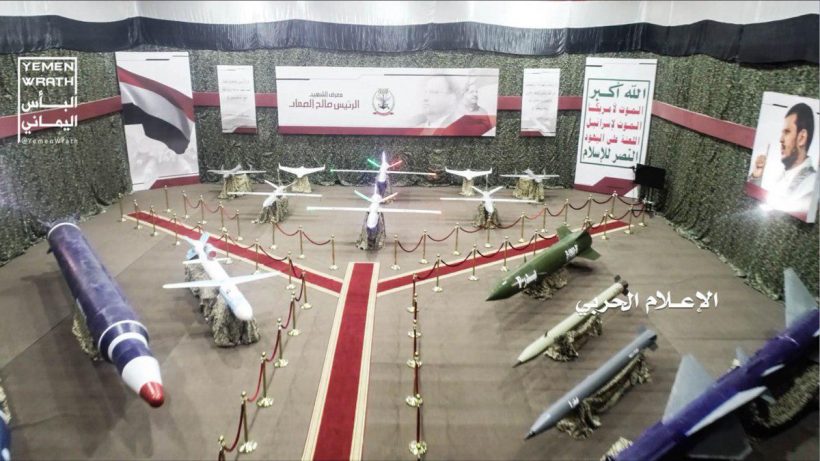
Exhibition of the achievements of the Houthi military industry (with a heavy Iranian accent).
New ballistic and cruise missiles, as well as new reconnaissance drones were presented.
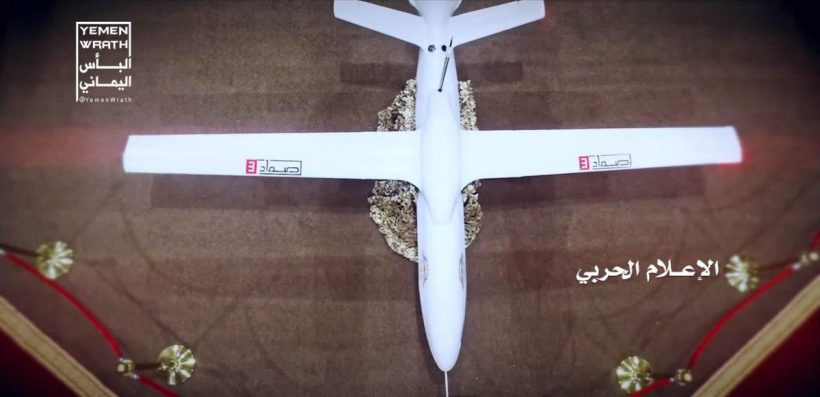
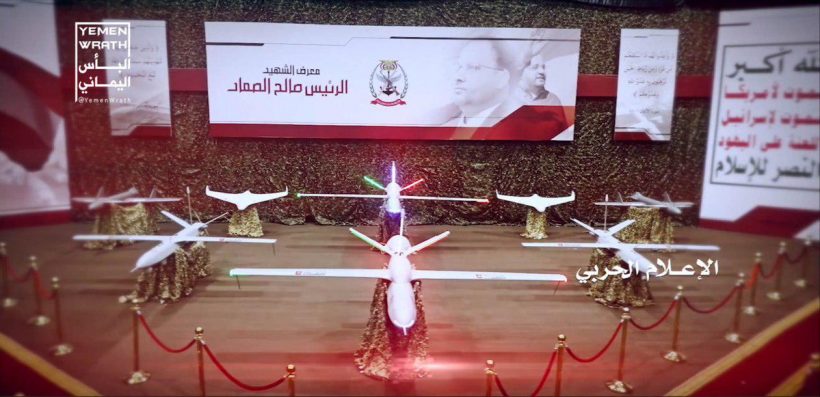
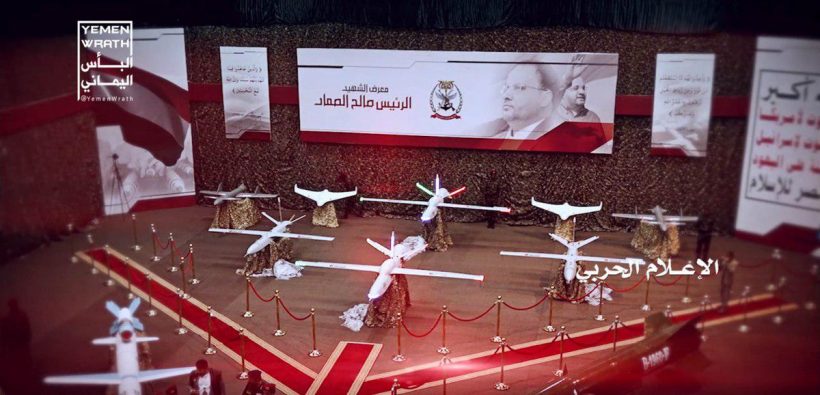
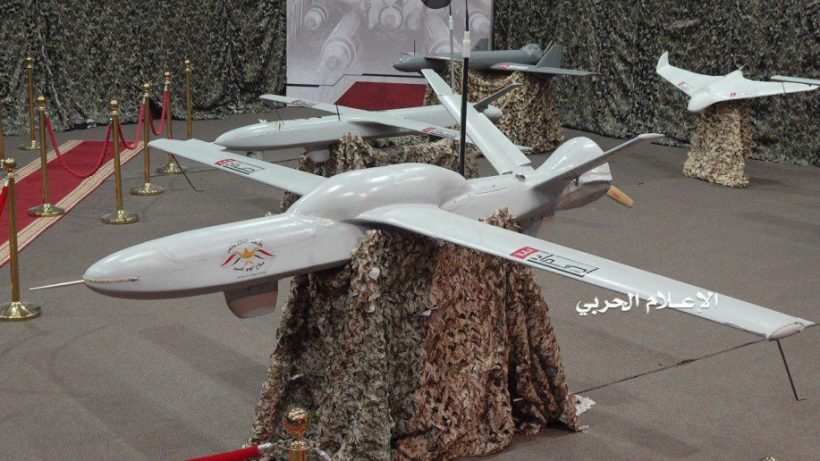
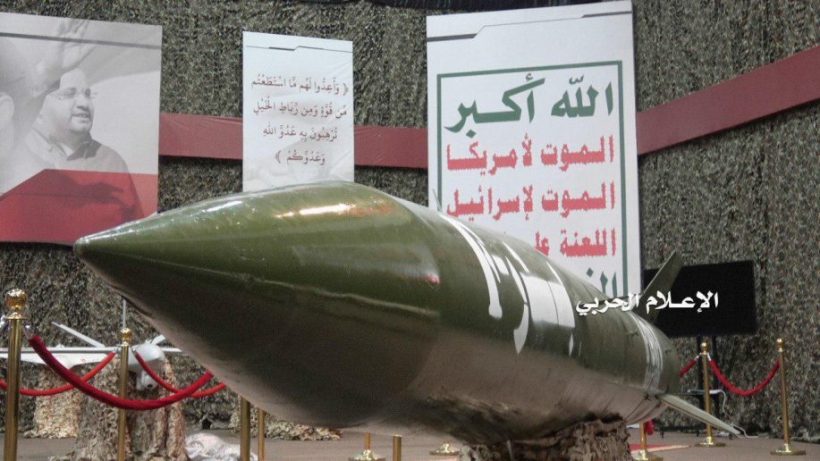
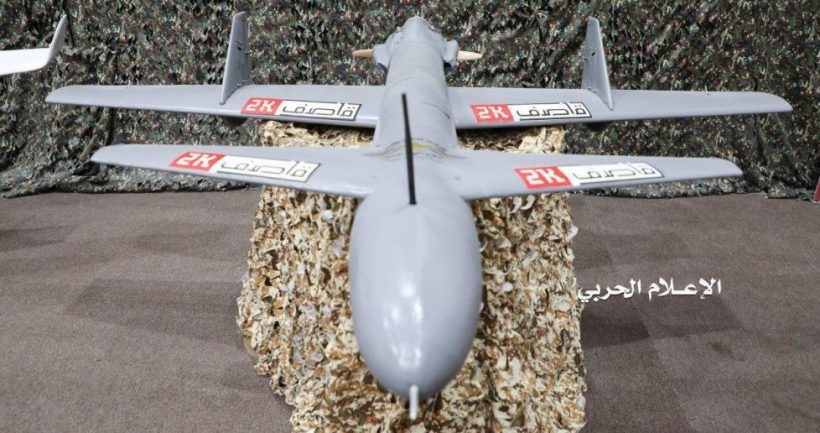
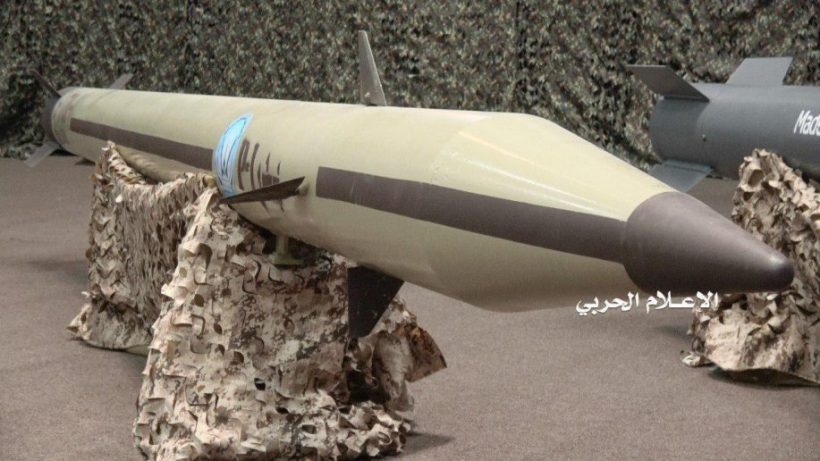
It is expected that these weapons, including new ones, will be used by the Houthis both on the territory of Yemen against the interventionist troops and local collaborators, as well as against infrastructure facilities in Saudi Arabia and the UAE (airports, military bases, ports, oil pipelines).
For Iran, the entire Yemeni war has become an excellent training ground, where in real combat conditions (via the hands of the Houthis) the latest samples of Iranian ballistic missiles, adjustable artillery shells, and reconnaissance and attack drone vehicles are being tested.
It is worth remembering that in the event of the start of a fully-fledged war against Iran, all of this can be used against tankers in the Red Sea in order to block oil exports through Jizan.
Translated by Ollie Richardson and Angelina Siard
Source: https://colonelcassad.livejournal.com/5118206.html
If Iran behind attack, ‘US military worthless’ – Tehran prof
RT America | September 18, 2019
Prof. Mohammed Marandi of the University of Tehran joins Michele Greenstein (in for Rick Sanchez) to discuss Washington’s claim that Iran is behind the recent Saudi oil attack. He said that if Iran is truly behind the attack then it means that the US military presence in the region is “worthless.” He also argues that Iran’s response to a US attack would cause the US to “lose its key client regimes.”
Trump says attacking Iran would be too ‘EASY,’ calls restraint a ‘sign of strength’ as others drum up WAR
RT | September 18, 2019
As American and Saudi Arabian officials blame Iran for attacking Saudi oil refineries, President Donald Trump has remained noncommittal about a US response, calling his prior restraint a “sign of strength.”
Speaking to reporters in Los Angeles on Wednesday, the US president said that he would outline new sanctions on Iran within 48 hours, after announcing them via Twitter earlier in the day. While it would be “very easy” to attack Iran, his reluctance to do so is “a sign of strength,” Trump added.
That statement echoed his reply on Tuesday to Senator Lindsey Graham (R-South Carolina), who called Trump’s cancelation of military strikes on Iran in June a “sign of weakness.”
Graham, the former wingman of the hawkish Senator John McCain, has emerged as one of the loudest proponents of retaliatory strikes in recent days, declaring the oil refinery attack an “act of war,” and calling for an “unequivocal” response. Secretary of State Mike Pompeo also described the attack as an “act of war,” while Vice President Mike Pence said on Tuesday that America is “locked and loaded” to defend her Saudi allies.
Trump, on the other hand, has been more ambivalent. Stopping short of outright pointing the finger at Iran the president said on Monday that it was “certainly looking” like Iran was behind the attack, adding that “we pretty much already know” Tehran is to blame.
Regarding a response, Trump has boasted of the US military’s readiness to strike, but said that he would “certainly like to avoid” war.
While Trump’s response may seem unduly measured, the president had signaled something of a softer attitude towards Iran in the days before the weekend’s attacks. After saying last week that he would have “no problem,” meeting Iranian President Hassan Rouhani, Trump even gave a “we’ll see what happens” when asked if he’d consider lifting sanctions to get Rouhani to the table. The attacks on Saudi oil facilities, however, seem to have put paid to that.
Houthi rebels in Yemen – against whom Saudi Arabia has been waging war since 2015 – claimed responsibility for the strike, and Iran denies all connection with it. However, Saudi officials claimed at a press conference on Wednesday that it was “unquestionably sponsored by Iran,” and presented the wreckage of Iranian missiles and drones as proof.
Yet the Saudis could not pinpoint a launch site, nor prove that the Houthis did not launch the supposed Iranian projectiles of their own accord. Likewise, Hesameddin Ashena, an adviser to Iranian President Hassan Rouhani, asked why the Saudis’ air defenses “failed to thwart the attack.”
Yemeni Killer Blow to House of Saud
By Finian Cunningham | Strategic Culture Foundation | September 18, 2019
The Yemeni rebels’ drone blitz on the “nerve center” of Saudi Arabia’s oil industry was a devastating counter-offensive which potentially could end the four-year war in short order. What is even more catastrophic for the Saudi monarchy – especially the ambitious Crown Prince – is that the Houthi rebels have wielded the ultimate power to crash the kingdom’s oil economy.
Crown Prince Mohammed bin Salman (MbS) was the main architect of the disastrous Saudi war on Yemen. His military hard-man display was meant to consolidate his rise to power as heir to the Saudi throne. It was a calculation based on the blood of the Yemeni people. But now the war has gone from a callous game to a far-more dangerous threat to the House of Saud’s seat of power. If the Saudi oil economy is put at severe risk, then the lifeline for the monarchy is liable to be cut.
After last weekend’s spectacular air strike on the main oil processing plant in Saudi Arabia – northeast of the capital Riyadh, some 1,000 kms from Yemen – the Houthi military leadership is warning that more deeply-penetrating aerial attacks are on the way. The Yemeni rebels have demonstrated that nowhere in Saudi Arabia is safe.
Saudi air defenses and their multi-billion-dollar US Patriot anti-missile systems have been rendered useless against an-ever increasing arsenal of more sophisticated unmanned aerial vehicles (UAVs) operated out of Yemen. UN experts reckon that the Houthis’ UAV-X drone has a range of up to 1,500 kms, which means that all of the Saudi oil infrastructure located in the Eastern Province near the Persian Gulf is a viable target.
Last weekend’s air strikes carried out with 10 drones, according to the Houthis, caused Saudi oil output to shut down by nearly half. The main target – the Abqaiq refinery – processes some 70 per cent of all Saudi crude destined for export. It is not clear when the processing plant can be restored to normal function. It may take weeks or even months. But if the Yemeni rebels can inflict that extent of damage in one air raid, it is not hard to foresee how the Saudi oil-dependent economy could conceivably be brought to a crippling standstill.
“The only option for the Saudi government is to stop attacking us,” said a Houthi military spokesman following the drone strikes. The rebels also warned foreign workers in Saudi Arabia associated with the country’s oil industry to vacate.
The Yemenis have a gun to the House of Saud’s head. It must give the rebels great satisfaction to finally have the Saudi monarchy in their cross-hairs after four years of Yemen suffering relentless aerial bombardment and siege by the US-backed Saudi military. The Saudi-led war on its southern neighbor – the poorest country in the Arab region – was always an outrageous aggression under the guise of supporting the return of a corrupt crony who had been ousted by the Yemenis in early 2015. Up to 100,000 people have been killed – most of them from the indiscriminate bombing campaign by Saudi (and Emirati) warplanes supplied and armed by the US, Britain and France. Millions face starvation in what the UN calls the worst humanitarian crisis for many years.
The Saudi rulers, Western governments and media have tried to obscure the genocidal war on Yemen as a “proxy war” involving Iran, as if Tehran is the instigator of subverting Saudi Arabia from the south. Iran backs the Houthis politically, and perhaps also militarily more recently, but any involvement by Tehran is a reaction to the initial Western-backed Saudi aggression against Yemen.
Claims by US and Saudi officials that Iran is responsible for the latest air strikes on Saudi Arabia’s vital oil industry are more of the same obfuscation. Such muddying of the waters is an attempt to distract from the central point that the Houthis are retaliating with the legitimate right of self-defense after years of merciless slaughter inflicted on their people by the Western-backed Saudi coalition.
There’s another urgent reason for why the Saudi rulers and the US are trying to blame Iran for the latest drone attacks on the Saudi oil industry. If admitted that the air raids were carried out primarily by the Houthis – perhaps even with Iranian drone technology – then that admission points to the complete vulnerability of the Saudi oil economy and the very power structure of the monarchic rulers.
A hint of the trepidation being felt in Riyadh are reports that the latest air strikes have rattled stock markets for Saudi petrochemical companies. Worse, it is also reported that the attacks may delay the planned stock market listing of Saudi Aramco, the state-owned oil company. Worse still, the valuation of the company may be slashed due to the perceived risk from further Yemeni air strikes.
The planned Initial Public Offering (IPO) of Aramco – whereby the Saudi state is selling a portion of the company to private investors – has been one of the most talked about events in recent years among international business. The IPO which is due to be launched next year has been called the “biggest-ever” stock market sell-off.
In an extensive interview with Bloomberg in October last year, the Saudi Crown Prince, MbS, boasted that it was the “biggest IPO in human history”. He claimed then that Aramco’s total valuation was worth $2 trillion. If the Saudis sell off a 5 per cent share in the company, they are expecting to raise $100 billion in cash. The Aramco IPO is central to MbS’ ambitious diversification master plan for the entire Saudi economy, known as Vision 2030. The capital raised from the Aramco sell-off is intended to catalyze private sector employment and technological innovation in the oil-dependent kingdom whose budget is unsustainably propping up government-sector jobs and welfare largesse to prevent the young population of Saudis rebelling against the sclerotic House of Saud.
After the Houthis’ devastating air attacks on the Saudi oil heartland – the crown jewels of the kingdom – potential investors are now reportedly looking warily at the future risk of Aramco. Valuation of the company in the aftermath of the Yemeni drone strikes has been slashed by some estimates to $300 billion – that’s down by 85 per cent from the previous aspired-for $2,000 billion. If that downgrade holds or worsens with future Houthi attacks on Saudi oil infrastructure, then the capital raised from an IPO could shrink from the $100 billion projected by the Crown Prince to $15 billion. In short, his Vision 2030 plan is down the pan.
It must be alarming to the young Saudi potentate that US President Donald Trump has begun to play down any retaliation against Iran, saying that he doesn’t want to be drawn into a war.
That means the Saudi monarchs are on their own and at the mercy of the Houthis and what they do next. The downfall of the scheming Crown Prince evokes a Shakespearian drama of treachery.
Saudi Arabia accuses Iran of sponsoring oil-plant attack, says it ‘couldn’t have originated in Yemen’

RT | September 18, 2019
Saudi Arabia has claimed that Iran was the sponsor of attacks on its oil treatment facilities, presenting wreckage of drones and missiles as “definitive proof” of Tehran’s involvement.
Speaking to the press on Wednesday, a spokesman for the Saudi Ministry of Defense displayed what he said was wreckage from the projectiles used in the strikes on petrol plants in Abqaiq and Khurais last weekend.
The type of weapons used proved that the assault “could not have originated in Yemen,” Colonel Turki al-Malki claimed. He said the capabilities of the drones and the cruise missiles have been known to Riyadh from previous attacks.
Accusing Iran of sponsoring the attack, the spokesman called on other countries to “acknowledge Iran’s malign activities in the region.”
“The attack was launched from the north and unquestionably sponsored by Iran.”
He also presented surveillance footage from one of the oil facilities, claiming it depicted a drone in flight, though the UAV was difficult to make out in the video.
It wasn’t clear where precisely the attack originated, al-Malki admitted. He said the government was “working to know exactly the launch point.”
The press conference came just as Secretary of State Mike Pompeo landed in Jeddah, where he is scheduled to meet with Saudi Crown Prince Mohammed bin Salman to discuss the attacks.
Yemen’s Houthi rebels claimed responsibility for the drone and missile strikes on Saturday, which caused a severe disruption in global oil markets and sent prices soaring upward by nearly 20 percent. The damaged refinery in Abqaiq was among the world’s largest oil processing facilities, while the Khurais plant sits on the country’s second largest oil field.
Does missile type prove anything?
The missile used in the attack could be a copy of the Soviet-designed cruise missile Kh-55, which Iran acquired from Ukraine and then developed into its own weapon, a military analyst and retired army officer Viktor Murakhovsky told RT.
However, this does not qualify as definitive proof that Iran launched such an attack, Murakhovsky said. It is “hardly a secret” that Iran sells weapons to the Yemeni Houthi rebels, he explained, adding that Tehran has spoken in support of Yemen’s right of self-defense.
Moreover, it is not difficult for Houthi forces to launch a cruise missile, so their responsibility cannot be ruled out.
“You do not need a narrow-focus specialist in order to use this missile. You need to input the launch mission data and carry out the launch, that’s all,” Murakhovsky said.
Iran issues sober warning to US: Action will be met with counteraction
Press TV – September 18, 2019
Iran has warned the United States via Switzerland that any action taken against the country over the false accusation that Tehran was behind the recent attacks on Saudi Arabian oil facilities will be met with an immediate response.
In an official note passed to the Swiss Embassy in Tehran, which represents American interests, Iran reiterated that it was not behind the Saturday attacks on Saudi Arabian oil facilities.
It condemned and rejected claims by US President Donald Trump and Secretary of State Mike Pompeo that Iran had been involved.
The note was handed to the Swiss Embassy on Monday evening, shortly after the US accused Iran of involvement in the attacks, IRNA reported on Wednesday.
In the note, Iran said that any action taken against the country would be met with immediate counteraction, which would not be limited to the source of the act of aggression.
Last Saturday, Yemeni armed forces conducted a large-scale operation against Saudi Arabia’s Aramco oil installations in response to the Saudi-led war on their country, causing a partial halt in crude and gas production from the world’s top oil exporter.
The Yemeni Houthi Ansarullah movement immediately took credit for the attacks.
Yet, Pompeo swiftly blamed Iran.
A short while later, Trump said the US was “locked and loaded” for a response at the behest of Saudi Arabia, although he later said that he wanted no conflict with any country. Still later, the Pentagon reportedly prepared “response” options for the US president.
Tensions have significantly risen as a result of the accusations, which Iran has denied, and there has been speculation that the US may take military or other forms of action against Iran or Iranian interests.
Iran’s defense minister warns of decisive response
In another development, Iran’s Defense Minister Brigadier General Amir Hatami on Wednesday also dismissed the US accusations about Iran’s involvement in the attacks in Saudi Arabia.
“If a threat is posed to Iran, there will be the same decisiveness with which we responded to the American drone’s minimal incursion [into Iranian skies],” he said, referring to the shooting down of a US drone that had intruded into Iranian airspace on June 20.
Hatami also reiterated Iran’s position that the Yemeni attacks on the Saudi oil facilities were a legitimate act of self-defense.
“It’s pretty clear: there has been a conflict between two countries (Yemen and Saudi Arabia). One party to the conflict is the Yemenis, who have said explicitly that they have done this.”
Riyadh doesn’t yet know who carried oil strikes or why: Saudi energy minister
Press TV – September 17, 2019
Saudi Energy Minister Prince Abdulaziz bin Salman says Riyadh does not yet know who were behind the highly disruptive drone attacks on Saudi Aramco petroleum and gas processing plants at Abqaiq and Khurais in the kingdom’s Eastern Province, which sent crude prices skyrocketing.
“We don’t know who is behind the attack,” he told reporters in the western Red Sea city of Jeddah on Tuesday, adding that Riyadh wants “proof based on professionalism and internationally recognized standards.”
Prince Abdulaziz, who was only appointed to the role earlier this month, went on to say that Saudi Arabia had dipped into its strategic reserves to maintain supply to clients.
He said stricter measures were needed to be taken to prevent further attacks, but did not provide any elaboration.
The Saudi energy minister then alleged that the kingdom would achieve 11 million barrels per day (bpd) capacity by the end of September, and 12 million bpd by the end of November.
“Restoring sustainable production capacity to 11 million bpd by the end of the month is an ambitious target, given the amount of repairs required” at the sites, Alex Schindelar, president of the Energy Intelligence group, told AFP though.
The remarks come as the United States has tried to build its case that Iran was behind the attacks. Iran has denied being behind the assaults, which knocked out half of Saudi Arabia’s oil production.
Yemen’s Houthi Ansarullah movement has claimed responsibility for the attacks, warning Saudi Arabia that their targets “will keep expanding.”
On Tuesday, Ansarullah censured support for the Saudi-led coalition of aggressors in the wake of Yemeni retaliatory drone attacks on Aramco oil facilities in eastern Saudi Arabia, stressing that those who have no reservations at all about the bloodletting in the war-ravaged country must bear the consequences of their actions.
“Peace in the region can be restored only through dialogue and understanding, and away from the clatter of weapons. Yemeni people hope to see security and peace prevail across the Arabian Peninsula. They will never surrender to oppression and others’ domination,” Mohammed Abdul-Salam, spokesman for the movement, said in a string of tweets.
He added, “Those condemning the September 14 operation have indeed denounced themselves as they have exposed their blatant bias in favor of the aggressor. In fact, their condemnation would embolden the criminal regime to continue its criminal acts against our people.”
The senior Houthi official noted that “Saudi oil is not more precious than Yemeni blood,” emphasizing that those who have no respect whatsoever for the Yemeni people’s lives must embrace all consequences of their actions.
Saudi Arabia and a number of its regional allies launched a devastating campaign against Yemen in March 2015, with the goal of bringing the government of former president Abd Rabbuh Mansur Hadi back to power and crushing Ansarullah movement.
The US-based Armed Conflict Location and Event Data Project (ACLED), a nonprofit conflict-research organization, estimates that the war has claimed more than 91,000 lives over the past four and a half years.
The war has also taken a heavy toll on the country’s infrastructure, destroying hospitals, schools, and factories. The UN says over 24 million Yemenis are in dire need of humanitarian aid, including 10 million suffering from extreme levels of hunger.
Trump is in no rush to jump into Saudi defence
By M. K. BHADRAKUMAR | Indian Punchline | September 17, 2019
The geopolitical faultlines of the drone attack on the Saudi Aramco plants on Saturday are surfacing. These are early days but three broad trends have appeared. One, Saudi investigators have begun pointing a finger at Iran, which is certain to exacerbate regional tensions. Two, the all-important US response to the event is unfolding on multiple templates, each interconnected but intrinsic at the same time in relations to US interests. Three, the extreme volatility in the world oil market and its likely impact on the world economy makes this an international issue.
The Saudi Foreign Ministry statement on Monday is notable for its affirmation that the “weapons used in the attack were Iranian weapons. Investigations are still ongoing to determine the source of the attack”; that the primary target of this attack is global energy supplies; that “this attack is in line with the previous attacks against Saudi Aramco pumping stations using Iranian weapons”; that Riyadh “will invite UN and International experts to view the situation on the ground and to participate in the investigations”; and, fifthly, that Saudi Arabia has the “capability and resolve to defend its land and people, and to forcefully respond to these aggressions.”
Riyadh’s lingering dilemma is that it is yet to substantiate Iran’s culpability and is looking for the proverbial needle in the haystack. The keenness to involve the UN in the investigations suggests that Saudis are reasonably confident of a definitive conclusion that helps isolate Iran completely in the world arena.
The Saudi Foreign Ministry statement is based on the initial finding by the investigators that “all operational evidences and indication as well as the weapons used… are Iranian weapons.” Importantly, the Joint Coalition Forces Command in Riyadh has alleged that “the terrorist attack was not launched from Yemeni territory as the Houthi militias claimed, whereas these militias are mere tools to implement the agenda of the Iranian Revolutionary Guards and its terrorist regime.”
It implies that the Saudi authorities have much more materials than they are willing to disclose. There is also a pointed reference to the Iranian Revolutionary Guards Corps.
On Monday, the US Defence Secretary Mark Esper telephoned the Saudi Crown Prince Mohammed bin Salman (MbS). The Saudi press release said Esper “affirmed his country’s full support for the Kingdom” and conveyed that Washington is “currently studying all possible options in addressing the attacks.” Esper commended the Saudi role in the US efforts to “confront the Iranian danger which threatens maritime navigation.” But neither Esper or MbS accused Iran.
It is against the above backdrop that President Trump waded into the topic on Monday at a press conference in the White House. (Trump spoke in the presence of the visiting Crown Prince of Bahrain.) The transcript is here. The main takeaways are as follows:
One, the US is inclined toward an estimation that Iran is responsible for Saturday’s attacks. But the Saudi investigation hasn’t yet come up with definitive evidence. The US does not propose to attack Iran.
Two, Saudi Arabia is a key ally, but the US cannot underwrite Saudi defence. While it can offer protection to Saudi Arabia, Riyadh will have to bankroll the effort. Top US officials will be traveling to Riyadh “at some point” for consultations.
Clearly, the Saudis “are going to have a lot of involvement in this if we [US] decide to do something. They’ll be very much involved, and that includes payment. And they understand that fully.”
Plainly put, “Saudis want very much for us to protect them, but I say, well, we have to work. That was an attack on Saudi Arabia, and that wasn’t an attack on us. But we would certainly help them… we will work something out with them. But they also know that — you know, I’m not looking to get into new conflict, but sometimes you have to.”
Four, Trump has an eye on Tehran, too. A meeting between Trump and Iranian President Hassan Rouhani in New York during the UNGA is not to be expected but the scope for diplomacy has not been “exhausted”. The Iranians want to make a deal “but they’d like to do it on certain terms and conditions, and we won’t do that. But at some point, it will work out, in my opinion.”
Depending on the actual finding by Saudi investigators, the US may toughen its stance toward Iran, but that depends on what Riyadh comes up with. “There’s plenty of time. You know, there’s no rush. We’ll all be here a long time. There’s no rush.”
The stunning thing is, Trump claims he is in no tearing hurry. Significantly, while addressing a group of seminary students in Tehran on Tuesday, Iran’s Supreme Leader Ali Khamenei seemed to acknowledge Trump’s remarks the previous day.
In a relatively conciliatory tone, Khamenei said: “If the US retracts its words, repents and returns to the nuclear accord that it has violated, it can then take part in sessions of other signatories to the deal and hold talks with Iran… Otherwise, no talks at any level will be held between Iranian and American authorities, neither in New York nor elsewhere.”
Equally, Trump admitted that he isn’t unduly perturbed about the cascading oil price.

US government satellite image showed that attacks on the infrastructure at Saudi Aramco’s Abaqaiq oil processing facility on September 14, 2019 were extremely surgical.
Separately, in a tweet Monday, Trump noted: “Because we have done so well with Energy over the last few years (thank you, Mr. President!), we are a net Energy Exporter, & now the Number One Energy Producer in the World. We don’t need Middle Eastern Oil & Gas, & in fact have very few tankers there, but will help our Allies!”
The point is, a high oil price isn’t such a bad thing for the US shale industry. Hydraulic fracturing, or fracking, opened up more natural gas for production in the US, but the technology added costs. Shale oil costs more than conventional oil to extract, ranging from a cost-per-barrel of production from as low as $40 to over $90 a barrel.
Now, Saudi Arabia can produce at under $10 per barrel, while worldwide costs range from $30 to $40 a barrel. The US shale industry becomes a wild card in the Saudi Aramco calculus.
Featured Video
US IRAN TALKS: Who Are the Crazy Ones Here? /Lt Col Daniel Davis
or go to
Aletho News Archives – Video-Images
From the Archives
Woolsey Fire started at Santa Susana Field Lab — where “radioactive materials released were never accurately measured”
By John Laforge | CounterPunch | November 30, 2018
In my Nov. 16 column, I reported on potential radiation risks posed by California’s Woolsey wildfire having burned over parts or all of the Santa Susana Field Laboratory—south of Simi Valley, Calif., 30 miles outside Los Angeles—site of at least four partial or total nuclear reactor meltdowns.
The field laboratory operated 10 experimental reactors and conducted rocket engine tests. In his 2014 book Atomic Accidents, researcher James Mahaffey writes, “The cores in four experimental reactors on site … melted.” Reactor core melts always result in the release of large amounts of radioactive gases and particles. Clean up of the deeply contaminated site has not been conducted in spite of a 2010 agreement.
Los Angeles’s KABC-7 TV reported Nov. 13 that the Santa Susana lab site “appears to be the origin of the Woolsey Fire” which has torched over 96,000 acres. Southern Calif. Public Radio said, “According to Cal Fire, the Woolsey Fire started on the afternoon of Thursday, Nov. 8 … on the Santa Susana site.” … continue
Blog Roll
 Aletho News
- US IRAN TALKS: Who Are the Crazy Ones Here? /Lt Col Daniel Davis
- Talks with the US end without a deal over excessive US demands: Iran
- Feeling Better, Getting Worse: How Psychiatric Drugs Create the Illusion They Cure
- ‘Nobody Told Me’: Former Mental Health Patient Calls Out Dangerous Side Effects of Psychiatric Drugs
- Dr. Abu-Sitta: Beirut ‘felt like a day in Shifa Hospital’
- Iran Has Won the War, It Will Be Up to the US to Secure the Peace: Mohammad Marandi
- Iran condemns assassination threats against Iranian negotiators amid US talks
- Brussels cannot say where its own pipeline inspectors are as Hungary’s oil lifeline remains shut
- Israel’s Iran War: Myth and Reality
- Between war and industrial breakdown: The US-Israeli attrition crisis
- If Americans Knew
- Pro-Israel ‘Thinktanks’ and Individuals who Influence U.S. Foreign Policy
- Mearsheimer reveals how Israel dictates US policies on Iran, Gaza – video
- After killing 350+, Israel still has a “score to settle” with Lebanon before ceasefire – Daily Update
- Military aid to Israel emerges as the latest political litmus test for Democrats
- The only Palestinian children’s rights organization closes following years-long Israeli campaign against it
- ‘I Can’t Forget the Smell’: Lebanese Reel After Israel Kills Over 300 in Single Day
- DNC Shoots Down Resolutions Calling Out AIPAC and Limiting Arms to Israel
- TCN: Is Israel Blackmailing President Trump?
- Israel killed at least 303 Lebanese yesterday – who were they? Daily Update
- Amnesty: Urgent – Protect Lebanese civilians from brutal escalation in Israeli attacks
- No Tricks Zone
- German Expert: Heat Dome Led To Record Temps In Western USA…Warmer In 1934, 1936
- New Study: No Linear Warming Or Glacier Retreat Along Northern Antarctic Peninsula Since 1980s
- An Inconvenient Tree: Uncovered In Alps… Europe Much Warmer Than Today 6000 Years Ago
- New Study Reports A 60% Slowdown In Greenland’s Ice Loss Rate In The Last Decade
- Low Intensity Tornado Wrecks Major Solar Farm, Creating A Potential Toxic Dump
- New Study Finds Warming Saves Lives…Cold Temperatures 12 Times More Deadly Than Excess Heat
- German Science Blog Accuses PIK Climate Institute Of Hallucinating Climate Tipping Points
- Devastating Assessment Of Comirnaty Vaccine By Former Senior Pfizer Europe Toxicologist
- New Study: CO2 Is ‘Effectively Negligible’ As An Explanatory Climate Change Factor Since 2000
- Former Pfizer Toxicologist Dr. Helmut Sterz Tells Bundestag Hearing Pfizer Vaccine Should Have Never Been Approved
 Aletho News