Israel sets its sights on the Red Sea and Bab El-Mandeb
Dr Adnan Abu Amer | MEMO | October 6, 2020
Day after day, the magnitude of the Israeli benefits from normalisation with the Gulf become clearer, especially on the military and strategic levels. The latest benefit is talk about establishing Israeli military bases in the Gulf, the Red Sea and Bab El-Mandab, or benefiting from the Emirati bases scattered in these areas, and the military benefits for Israel brought about by controlling these international seaports.
The Emirati-Israeli agreement included many clauses with security and military aspects, which stipulate bilateral cooperation in these areas, and their commitment to take important measures to prevent the use of their territories to carry out a hostile or “terrorist” attack targeting the other party, and that each side will not support any hostile operations in the territory of the other party. It also stipulates bilateral security coordination and strengthening the military security relationship.
These carefully worded texts have increased the assumptions regarding the possibility of Israel benefitting from the Emirati military bases in the region, whether in the Gulf, Bab El-Mandab, or the Red Sea. This may lead to the establishment of Israeli military base in the Emirates, as well as its use of Emirati waters, and the possibility that it will continue down this path to increase its foothold in Socotra, the Bab El-Mandab Strait and Djibouti.
It is worth noting that the possibility of establishing Israeli military bases in the Gulf, or Israel benefiting from the Emirati military bases, is not easy, but very dangerous. This is because as much as it may give hope to the Gulf states, and the UAE in particular, to defend itself against the threat of any imagined attack from Iran, it, at the same time, exposes it to danger. This is because the fulfilment of this premise means that Israel can strike Iranian targets in the Gulf waters, or in the heart of Iran itself, which will be matched by Iran targeting these Israeli bases in the Gulf.
The agreement allows Israel to get geographically closer to Iran and allows it to improve ties with the Gulf which is a strategic area in terms of trade and oil.
Iran will not stand idly by and remain silent regarding the Emirati-Israeli move, which means the situation in the Gulf region is likely to grow tense and suffer. Iran is present everywhere through the Revolutionary Guard and its sleeping armed cells.
Security of maritime navigation in the Gulf is a purely Israeli interest within the strategy of “curbing the Iranian threat” and strengthening the relationship with the Gulf states, former Israeli Foreign Minister, Yisrael Katz, has said.
Israel aims to gain control over the most important sea straits in the region, which belong to the Emirati and Saudi bases, which enhances the expansion of Israel’s military and strategic influence.
A document by the Israeli Ministry of Intelligence revealed that the agreement with Abu Dhabi paves the way for intensifying military cooperation between them in the Red Sea. This is because it is interested in expanding security cooperation in the region, leading to strengthening the military alliance between them. This includes intensive Israeli military movement, especially through the countries of the Horn of Africa, most notably Ethiopia, at a time when Israeli arms companies are seeking to increase their exports to the Emirates.
US Secretary of State, Mike Pompeo, announced that the UAE and Israel had agreed to build a security and military alliance against Iran to protect American interests and the Middle East, and to increase security and intelligence cooperation to confront what he referred to as “terrorism”.
But Israel has not left Yemen out of its view, the country offers a gateway to the Bab El-Mandab Strait. Tel Aviv aims to crack down on the Palestinian resistance to prevent it from receiving the weapons that reach it from Iran through the Red Sea, reaching the Sinai, and then the Gaza Strip.
As long as the most important provisions of the Emirati-Israeli agreement are related to security and military relations, Israel will work to exploit the agreement to increase its influence in the Gulf. Meanwhile, the UAE is looking for control in the Gulf with the support of the US and Israel, so there is joint Israeli and Emirati work in Yemen to establish joint military bases and areas of influence, specifically on the island of Socotra, which would allow it to completely control the path that passes from India to the West, and penetrates into Africa, which is a strategic location for Israel.
Israel constantly meddled in Yemen’s internal affairs under slain dictator: Army spokesman
Press TV – October 4, 2020
The spokesman for Yemeni Armed Forces, Brigadier General Yahya Saree, says Israel constantly intervened in the internal affairs of the Arab country during the reign of slain dictator, Ali Abdullah Saleh.
Speaking at a press conference broadcast live from the capital Sana’a on Sunday evening, Saree highlighted that the Yemeni nation is confronting a Saudi-led military aggression, which seeks to accomplish the desired objectives of the Tel Aviv regime.
“Yemen has long been at the main target of US-Israeli plots and the ongoing onslaught clearly proves this. The Armed Forces call upon Yemenis from all walks of life to raise their awareness about the real intentions of foreigners. Our struggle is nothing but a fateful battle for liberation and independence,” he said.
Saree noted that there were secret relations between Saleh’s government and Israel, which dated back to the year 2000, stating that there were even mutual visits between officials from both sides.
The high-ranking Yemeni military official then showed a number of documents indicating that Israeli authorities wished to control not only the strategic Bab-el-Mandeb strait, which connects the Red Sea to the Gulf of Aden, Yemeni islands and the port of Hudaydah, but also wanted to be in charge of Yemen’s economic, cultural, agricultural, security and military sectors.
Saree added that Saleh’s regime started to normalize ties with the Israel many years ago, and reached a high level of communication and coordination with Israel at various arenas in 2007.
“On July 14 of that year, Israeli diplomat Bruce Kashdan arrived in Sana’a according to available documents on an unannounced visit, which lasted 48 hours. During that trip, the Israeli official met with Yemeni military and security top brass who are relatives of Saleh,” Saree underlined.
He added, “The Israeli official left Sana’a International Airport on July 16, 2007. The visit had been arranged by Yemeni officials, and the United Arab Emirates (UAE) played the leading role in it. The Israeli diplomat had earlier visited Yemen on February 2, 2005.”
Saree noted that the visits to Sana’a were not simply aimed at normalization between Yemen and Israel, but sought close trade cooperation, entry of Israeli products into the Yemeni market and their promotion, as well as discussion on the implementation of joint projects.
One of the most important discussions in the field of civil aviation was an agreement that would allow Israeli airliners to cross Yemen’s airspace, Saree pointed out.
The top military official went on to say that an Israeli parliamentary delegation paid a visit to Sana’a in early March 1996, and that the delegates enjoyed a remarkable reception and met with several high-ranking political and security officials.
“On March 30, 2000, Ali Abdullah Saleh confirmed that he had met with Israeli President Ezer Weizman. The Israeli media broke the news of the meeting only ten minutes afterwards, putting the former Yemeni president to shame.
“Before that, specifically on January 31, 1997, Saleh confirmed to an Arab official that there were visits by Israeli officials to Yemen,” Saree commented.
The spokesman for the Yemeni Armed Forces then warned against Israel’s plan to naturalize tens of thousands of Yemeni-born Jews, emphasizing that such scenarios pose a grave threat to Yemen’s national security.
Yemeni people have strongly condemned the UAE and Bahrain over signing contentious US-mediated normalization deals with Israel.
Israeli Prime Minister Benjamin Netanyahu signed the deals with Emirati Foreign Minister Sheikh Abdullah bin Zayed Al Nahyan and Bahrain’s Foreign Minister Abdullatif Al Zayani during an official ceremony hosted by US President Donald Trump at the White House on September 15.
Palestinians, who seek an independent state in the occupied West Bank and Gaza, with East Jerusalem al-Quds as its capital, view the deals as betrayal of their cause.
Palestinian President Mahmoud Abbas protested the normalization deals with Israel, saying they will be fruitless as long as the United States and Israel do not recognize the rights of the Palestinian nation and refuse to resolve the issue of Palestinian refugees.
Mercenaries from Sudan, Senegal arrive on Yemen’s Socotra
MEMO | October 2, 2020
Sudanese and Senegalese troops have arrived on the Yemeni Island of Socotra, reported the Yemen Press Agency yesterday. A batch of some 600 soldiers from the two African countries turned up on the island amid earlier reports that the UAE had requested forces belonging to the Southern Transitional Council (STC) return back to Aden on the mainland, with others moving onto the Hadramaut province.
At the start of the year Sudan announced it had begun reducing the number of its troops deployed in Yemen. Senegal, a Sunni Muslim majority country is the only non-Arab country to be involved in the US-backed, Saudi-led coalition and – along with Sudan – has been since the formation of the coalition in 2015.
According to a local source, Socotra Post reported that an Emirati ship has arrived at a port of the island, carrying an unknown cargo, two weeks after the arrival of a “suspicious Emirati ship” suspected of unloading military and communications equipment. It is speculated that the shipments may be used to complete the construction of a military and intelligence base on the island. There are already concerns that Israel, which has normalised relations with the UAE and is growing closer to Sudan is working with the UAE to set up a spy base on the Yemeni island.
The Post also reported that 21 local and three international lawyers have joined a human rights group in working to file a lawsuit against the internationally recognised Yemeni government over its failure in fulfilling its duty to protect the sovereignty of the Socotra Archipelago as the UAE consolidates its influence on the island.
Iran has no military presence in region, only supplies defense know-how: Armed Forces spokesman
Press TV – September 23, 2020
Iran has only provided Yemen with the know-how in the defense sector, says the spokesman for the Iranian Armed Forces, dismissing claims about the Islamic Republic’s military presence and ‘intervention’ in the region.
“We provided them (Yemenis) with the technical experiences in the defense sector. They have learned how to produce missiles, drones and weapons in Yemen on their own,” Brigadier General Abolfazl Shekarchi said in a televised program on Tuesday.
He emphasized that Iran has not supplied Yemen with missiles. “We have shared our experience and knowledge with the Yemeni people.”
Unlike what the enemy is trying to portray, Yemenis are a very cultured and smart people who have managed to manufacture missiles and the most advanced drones at the shortest possible time while they have also made great headway in the electronic warfare, the Iranian military official said.
Shekarchi once again reiterated that Iran has no plan to have military presence anywhere and added that the country merely has “spiritual and advisory presence” in the region.
“Countries of the resistance front have armies and forces themselves. We provide them with advisory help. In order to share our experience with the people of Syria, Iraq, Lebanon and Yemen, our skilled forces go there and assist them, but this is the people and armies of these countries who stand against the enemies in practice.”
He said Iran would provide whatever help it can for any country standing against the Israeli regime and the United States.
Iran’s Foreign Ministry Spokesman Saeed Khatibzadeh earlier this month slammed as “baseless” a report published by the United Nations’ Office of the High Commissioner for Human Rights (OHCHR) alleging that Tehran has been sending arms to war-torn Yemen.
“Placing Iran’s name next to those supplying weapons to the Saudi coalition against Yemen is completely wrong,” Khatibzadeh said.
Since March 2015, Saudi Arabia has been striking Yemen with the help of its regional allies and largely assisted by Western-supplied weapons which have been indiscriminately used against Yemeni civilians.
Despite numerous bids to stop arms sales, top Western arms suppliers such as the United States, Britain, Canada, France and Germany have pushed through with lethal weapons shipments to the oil-rich kingdom.
According to a CNN investigation released in October 2019, the American-made weapons, supplied to Washington’s allies involved in the war on Yemen, end up in the hands of US-backed militants fighting against each other in the impoverished state.
The report found that American military hardware has been distributed to militant groups in Yemen, including the southern separatists backed by the United Arab Emirates (UAE), al-Qaeda-linked militants and hardline Salafi militias.
Rights groups: UAE hired 450 mercenaries to carry out assassinations in Yemen
![UAE mercenaries in Yemen [Twitter]](https://i0.wp.com/www.middleeastmonitor.com/wp-content/uploads/2020/09/uae-mercenaries.png?resize=1200%2C800&quality=85&strip=all&zoom=1&ssl=1)
UAE mercenaries in Yemen [Twitter]
MEMO | September 19, 2020
The United Arab Emirates (UAE) has hired thousands of mercenaries and deployed 450 of them in Yemen to carry out high-profile assassinations, the International Institute for Rights and Development, and the Rights Radar Foundation revealed on Thursday.
These remarks came in a statement that the International Institute for Rights and Development and the Rights Radar Foundation read during the 45th session of the United Nations (UN) Human Rights Council held in Geneva.
“The International Institute for Rights and Development and Rights Radar Foundation are deeply concerned about the escalation of assassination cases in Yemen by the mercenaries,” the statement read.
It added:
The UAE hired American mercenaries to carry out high-profile assassinations in Yemen. They conducted several operations in Aden and several cities, resulting in the assassinations of dozens of politicians and public figures during the past five years of conflict in Yemen.
According to the statement: “Among 30,000 mercenaries from four Latin American countries hired by the UAE, at least 450 mercenaries have been deployed to Yemen after they received training by US trainers.”
“They take advantage of the UN’s disregard for their human rights abuses in Yemen to continue their crimes with no accountability.”
In the statement, the rights groups confirmed that: “Over 80 per cent of Yemeni politicians, lawmakers and media professionals have been displaced locally or globally, seeking safety as they become potential targets for assassination.”
The rights groups warned that “the right to life in Yemen is in extreme danger,” stressing that the situation: “Needs the UN to offer effective action not just kind words. Enough is enough.”
Democrats not serious to stop US weapons sales to the Saudis: Former US diplomat
Press TV – September 18, 2020
The Democrats are not serious to put down the US sales of weapons to the Saudis and to Israel and other countries, says J. Michael Springmann, a former US diplomat in Saudi Arabia.
US Secretary of State Mike Pompeo’s top aides have been questioned by Congress over President Donald Trump’s dismissal of a top administration official while he was investigating billions of dollars of arms sales to Saudi Arabia.
Top aides to Pompeo went before a congressional panel on Wednesday to defend Trump’s decision to fire former Department of State Inspector General Steve Linick.
Springmann said, “There are two points to keep in mind when considering the House of Representatives’ investigation of the firing of Steve Linick, the former State Department Inspector General, back in May of this year.”
“The first, of course, is that Linick was probing the sale of huge amounts of weapons to Saudi Arabia for use in Yemen, and other issues. Apparently, it was alleged that Secretary of State Pompeo and his wife used government officials to do personal things for them. I’m not sure what that is and there are no specifics. Linick claimed he had been bullied when he was asking questions, and wanted answers and not getting them. And I think there’s something to that,” he told Press TV in an interview on Friday.
“The other issue, of course, is that this is an election year. In a bit more than a month and a half, we have general elections for president and a third of the Senate and all of the House of Representatives. So Elliot Engel, the Democrat, who’s been doing most of the questioning of Pompeo, was also one of the Democrats who led the impeachment proceedings in the House of Representatives against Donald Trump. Eliot Engel of course has lost his seat in Congress. He lost in a primary, and he will be on his way out. And in the primary, the people running against him charged him with taking more money from defense contractors than 144 Republicans in the House of Representatives. So, I think that Engel is playing politics. He’s a strong supporter of Israel and he is trying to do his very best to get Donald Trump out of office,” said Springmann who is based in Washington.
“So I think it’s a nasty combination of events, with Trump trying to sell more weapons to the Saudis than they need, and also Engel playing politics for all he’s worth. The real issue is that the Democrats all have defense contractors in their districts, or most of them I guess, or they get money from defense contractors so that when push comes to shove, the Democrats don’t really fight against this. Yes, they passed a resolution in the House of Representatives and tried to get the same resolution through the Republican-controlled Senate, but they didn’t have the votes to overcome Donald Trump’s veto,” he added.
“So if the Democrats were really serious, they would reject the money from the defense contractors and unite to put down the sales of weapons to the Saudis and to Israel and other countries that don’t need them but use them to harm their neighbors. Unfortunately, the Democrats are not united enough because they’re too busy playing politics and too busy taking the money from defense contractors to produce results,” he stated.
“In sum, we need to look at all sides of the matter and not just listen to Elliot Engel,” he concluded.
In May, Trump abruptly fired Linick from his position as the State watchdog, while he was probing the administration’s last year’s decision to allow $8 billion in military sales to Saudi Arabia, United Arab Emirates and Jordan despite congressional opposition.
Congress had objected to the transactions, warning that providing the Saudis with more weapons could contribute to the human catastrophe in war-torn Yemen, where the Kingdom has been waging a devastating war for more than five years.
An estimated 100,000 people have lost their lives in the Saudi war.
Congress had also expressed concern that the military transaction would possibly leave US officials vulnerable to war crimes charges.
“The news of Inspector General Linick’s firing did come as a surprise… Any time one is terminated, it naturally will raise some questions,” said Representative Michael McCaul, the committee’s top Republican.
Linick, who was responsible for preventing government waste, fraud and abuse, was also investigating allegations that Pompeo and his wife misused government resources by having department staff handle personal matters.
Representative Eliot Engel, the Democratic chairman of the House of Representatives Foreign Affairs Committee asked if Linick was fired “because he was getting closer and closer to matters that were embarrassing for Mr Pompeo and his family.”
Tehran slams as ‘baseless’ UN report of Iran’s arms shipments to Yemen
Press TV – September 11, 2020
Iran’s Foreign Ministry has slammed as “baseless” a report published by the United Nation’s Office of the High Commissioner for Human Rights (OHCHR) alleging Tehran has been sending arms to war-torn Yemen.
“Placing Iran’s name next to those supplying weapons to the Saudi coalition against Yemen is completely wrong,” Foreign Ministry spokesman Saeed Khatibzadeh said in a statement on Thursday.
The spokesperson said while Iran’s name has only been mentioned once in the report, “it also neglects Iran’s pivotal role and assistance in seeking to achieve a political solution to the conflict in Yemen”.
Since March 2015, Saudi Arabia has been waging a war on Yemen with the help of its regional allies and largely assisted by Western-supplied weapons which have been indiscriminately used against Yemeni civilians.
Despite numerous bids to stop arms sales, top Western arms suppliers such as the United States, Britain, Canada, France and Germany have pushed through with lethal weapons shipments to the oil-rich kingdom.
Khatibzadeh said that the OHCHR’s claim of Iran supplying weapons to Yemen amid the Saudi war comes as Western states are openly conducting their sales, “with related figures being published and available”.
“While some of these countries have periodically halted or limited arms to Riyadh due to pressure from human rights groups, the bitter reality is that the lucrative arms trade has persuaded them to ignore their international and moral obligations,” he said.
“They have forgotten that their weapons have been used to kill the Yemenis and destroy the country’s infrastructure. We are consequently seeing the largest humanitarian crisis due to the actions of the Saudi coalition and its arms suppliers,” the Foreign Ministry spokesman added.
Khatibzadeh stressed that while there is no clear evidence about Iranian arms shipments to Yemen, a Saudi-imposed blockade has even stopped Iranian humanitarian aid from reaching the country.
An estimated 100,000 people have so far lost their lives in the Saudi war.
The Saudi war has had a large impact on Yemen’s infrastructure, impairing the impoverished Arab country’s weak industrial, agricultural and medical sectors.
4 Yemen tribes sign no aggression deal with Houthis in Marib
MEMO | September 10, 2020
Four major Yemeni tribes in the city of Marib, northeast of the capital Sanaa, signed an agreement with Houthi military leaders in Sanaa on Saturday, to spare their areas from fighting while talks continue with other tribes in the region to sign similar deals, Lebanese Al-Akhbar newspaper reported.
Until recently, the region’s tribes have supported the Saudi-led coalition which backs the internationally recognised Yemeni government.
According to reports from Yemen, with the new development, the Houthis will be able to control the city of Marib, after they seized ten of the governorate’s 14 directorates.
Local sources said the Houthis have Gained control of Al-Sadara strategic area as well as the Al-Kula region, adding that violent clashes were taking place between the Houthis backed by tribesmen, and the Yemeni government forces in the Al-Manqil area near Al-Jawba.
UN: Saudi Arabia, UAE used cluster bombs in Yemen
MEMO | September 1, 2020
UN reports revealed that the Saudi-UAE coalition has recently used internationally banned weapons in its military operations in the Hudaydah Governorate, western Yemen.
The United Nations report expressed the organisation’s “concern” after it revealed the use of cluster bombs by the Saudi-Emirati coalition in Yemen in one of the air strikes that targeted the Hudaydah Governorate.
The head of the United Nations mission to support the Hudaydah agreement, Abhijit Guha, said in a statement that he is concerned about the repeated air strikes in the Al-Arj area between the city of Hudaydah and the port of Salif between 16-23 August, according to the Yemeni Al-Mahrah Post website.
Guha, who chairs the redeployment committee, indicated that the heavy fighting that broke out around Hudaydah city on Thursday morning, is of “special concern”, in addition to “reports of the use of cluster weapons during one of these air strikes.” Guha called on the parties to the conflict in Yemen to “desist from any measures that harm the implementation of Al-Hudaydah agreement that was reached in Stockholm on 13 December 2018.”
The UN official urged the parties to the conflict in Yemen to “refrain from any other activities that put the lives of civilians in the governorate in danger.” The Houthi group, through an official source in Hudaydah, accused the Saudi-Emirati coalition of using a cluster bomb on 23 August, on a farm in the Al-Arj area, Bajil District.
Featured Video
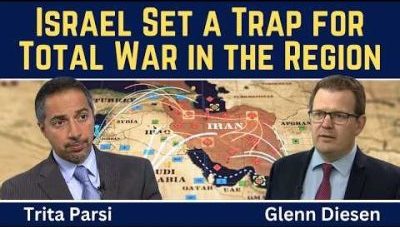
Trita Parsi: Israel Set a Trap for Total War in the Region
or go to
Aletho News Archives – Video-Images
From the Archive
Zionism’s Violent Legacy
By Donald Neff | Washington Report On Middle East Affairs | January 1996
On January 4, 1948, Jewish terrorists drove a truck loaded with explosives into the center of the all Arab city of Jaffa and detonated it, killing 26 and wounding around 100 Palestinian men, women and children.[1] The attack was the work of the Irgun Zvai Leumi – the “National Military Organization,” also known by the Hebrew letters Etzel – the largest Jewish terrorist group in Palestine. The Irgun was headed by Revisionist Zionist Menachem Begin and had been killing and maiming Arabs, Britons and even Jews for the previous ten years in its efforts to establish a Jewish state.
This terror campaign meant that at the core of Revisionist Zionism there existed a philosophical embrace of violence. … continue
Blog Roll
 Aletho News
- Trita Parsi: Israel Set a Trap for Total War in the Region
- Trump’s Iran war is on an Israeli leash
- Saudi oil boss issues global supply warning
- Riyadh Says Its Oil System Is Intact. The Numbers Say Otherwise.
- Trump and Netanyahu Want to “Finish the Job” on Iran
- US ‘one-sided dictation’ not Iran’s beliefs makes rational talks impossible: Baghaei
- Iran’s Next Strike May Not Explode. It Could Shut You Down /Col Doug Macgregor
- Iran: US political targets legitimate if assassinations return
- Iraq shuts key border crossing with Iran under US pressure: Report
- Undersea Internet cables could be targeted in retaliation for attacks on Iran: IRGC deputy chief
- If Americans Knew
- The Israel Lobby’s Changing Fortunes
- AIPAC has become such a political liability that it’s shifting to a more “nimble” approach to buying politicians
- At least 160 Israeli settler attacks in 2 weeks
- Will Gaza’s Ancient Christian Community Disappear Forever?
- Israel’s vision of regional security rests on keeping Arab states weak
- Heidi Levine recounts how Palestinian youths helped save her in settler attack
- DAILY UPDATE: Latest essential news on Palestine, Israel, & region
- Trump’s Intensifying Sabotage of the ICC, for Israel’s Sake
- Israeli military detain US and UK volunteers in West Bank including Democratic NY politician Brad Lander
- Americans at National Conservatism Conference held in Israel this year criticize Israel
- No Tricks Zone
- E-Cars Reduce CO2 Emissions By Only 41% Compared To Internal Combustion Engine Vehicles
- Predictions Made By Renowned Climate Professor Over Past Decades Have Been Proven To Be Poor
- New Study Suggests Large Regions Of The Pacific Ocean Have Been Cooling For The Last 80 Years
- Germany’s Green Energy Debacle: High Energy Costs Force Kahla Porzellan to Close After 182 Years!
- New Study: 50 Years Of The Most Aggressive ‘Net Zero’ Policies Can Only Affect The Global Climate By 0.03°C
- US September “Heat” Was No Record…Many Records Set Decades Ago
- Latest European Green Energy Debacle; Portugal’s Largest Flagship Solar Park Insolvent!
- Green Energy Debacle: German Expert Professor Fritz Vahrenholt Warns Of Severe Economic And Social Consequences
- Two More Paleo Reconstructions Affirm Meters-Higher Sea Levels Across Ireland, Brazil 7000-6000 Years Ago
- New Study: Earth And Venus Surface Warmth Largely Explained By Convection And Lapse Rate, Not CO2 Or Radiation

