Citing Terrorism Concerns, John Kerry Supports Saudi Bloodbath in Yemen
Sputnik – 25.01.2016
US Secretary of State John Kerry has expressed his support for Saudi Arabia’s military campaign in Yemen, a conflict that has killed over 2,400 civilians. As justification, the secretary reiterated false claims that Riyadh is battling al-Qaeda.
Over the weekend, the White House stated its concern over the rising civilian death toll in the Yemen conflict.
“We are deeply concerned about recent reports of escalating violence in Yemen and resulting deaths of civilians…” White House National Security Council spokesperson Ned Price said in statement on Saturday.
But while the Obama administration is ostensibly worried about the amount of violence, it also fully supports the Saudi campaign that is creating the chaos. One day after the release of Price’s statement, US Secretary of State John Kerry reiterated his full support for Riyadh’s actions.
“Let me assure everybody that the relationship between the United States and the GCC nations ([Persian] Gulf Cooperation Council) is one that is built on mutual interest, on mutual defense and I think there is no doubt whatsoever in the minds of the countries that make up the GCC that the United States will stand with them against any external threat,” Kerry told reporters.
Kerry claimed that the war was necessary since it is partially aimed at targeting “al-Qaeda operatives.” Those motivations are highly suspect, however, given that Riyadh failed to go after al-Qaeda in the Arabian Peninsula (AQAP) during the first nine months of fighting.
In April, the Saudi government also looked the other way as AQAP seized the port city of al Mukalla. By gaining control of the central bank, the terrorist group gained over $17 billion from the city’s capture.
In addition, Kerry cited the need to combat Iranian “interference.”
“The United States remains concerned about some of the activities that Iran is engaged in other countries,” he told reporters.
Riyadh has provided little evidence to suggest that Tehran is providing any assistance to Houthi rebels in Yemen.
Riyadh’s intervention began last March, and the Saudi naval blockade of Yemen has left approximately 1 million people internally displaced, and as many as 20 million people in need of food, water, and medical supplies.
The United Nations estimates that as many as 2,400 Yemeni civilians have been killed by coalition bombing. Most airstrikes have utilized cluster munitions sold by the United States. Worth an estimated $1.2 billion, this could partially explain Kerry’s support, but it also implicates Washington in Yemen’s civilian deaths.
“We should be culpable for the crime of killing civilians as well, as we produce and sell the weapons when we know the use they will be put to,” retired US Army Major Todd Pierce told Sputnik.
“Our indivisibility with our ‘allies’ inculpates us in their crimes…”
Saudi-led airstrike kills family of 8, incl. Yemeni judge who presided over Pres. Hadi treason case
RT | January 25, 2016
A Houthi-appointed national security court judge and seven members of his family were killed in a Saudi-led coalition airstrike in the Yemini capital Sanaa, according to local residents.
The Sunday bombing partially destroyed the home of Yahya Rubaid, a judge who had prosecuted cases against militant groups including Al-Qaeda. He had also presided over treason cases against President Abd-Rabbu Mansour Hadi and other ousted opponents of the Houthis.
Seven members of Rubaid’s family – everyone except one of his sons – were also killed in the bombing, residents told Reuters.
Supported by the US, the Saudi-led coalition has been bombing the Houthi rebels – who control Sanaa – since March 2015.
The coalition sides with exiled President Hadi, while the Houthis are aligned with former President Ali Abdullah Saleh, who resigned in 2012 following a popular uprising against his rule.
Nearly 6,000 people have been killed since the bombing began in March, around half of them civilians, according to UN figures. The United Nations High Commissioner for Human Rights told the UN Security Council in December that although all parties to the conflict were responsible, “a disproportionate amount” of attacks on civilian areas “appeared to be the result of airstrikes carried out by coalition forces.”
The coalition has been criticized numerous times for the way it conducts airstrikes. Earlier this month, it was blamed for hitting a hospital in the southern Bayda province, just one day after one of its missiles killed four people at a Medecins Sans Frontieres (MSF) hospital. The coalition was also blamed for targeting a center for the blind.
Just last week, MSF stated that hospitals in Yemen are seen as targets, noting that over 100 facilities have witnessed attacks since the Saudi-led coalition began its bombing campaign.
“People still consider hospitals a target and try to avoid them as much as possible. The only cases that we are receiving are emergencies and mass casualties following attacks,” Juan Prieto, general coordinator of Medecins Sans Frontieres (MSF) projects in Yemen, said in a statement.
Yemen’s Plight and Britain’s “Creative Clout”
Arms Sales and Advice on Killing
By Felicity Arbuthnot | Dissident Voice | January 23, 2016
Today, I want to speak about the once-in-a-generation chance we have, together, to improve the way we enhance the cause of human rights, freedom and dignity.
— David Cameron. Speech on the European Court of Human Rights, January 25. 2012
In June of 2014, speaking in his official residence,10 Downing Street, Prime Minister David Cameron gave a speech on business:
“Britain has huge creative clout around the world … From Asia to America, they’re dancing to our music, watching our films and wearing our designers’ latest creations”, he trilled.
He omitted to say “and dying under our bombs.”
In December, United Nations High Commissioner for Human Rights, Prince Zeid Ra’ad Al-Hussein warned, regarding the Saudi-led bombing of Yemen:
I have observed with extreme concern the continuation of heavy shelling from the ground and the air in areas with high a concentration of civilians as well as the perpetuation of the destruction of civilian infrastructure – in particular hospitals and schools …
Yemen’s Ministry of Education’s data shows more than 1,000 schools inoperable, 254 completely destroyed, 608 partially damaged and 421 being used as shelter by those displaced by the Saudi-led, UK-assisted onslaught. Some destroyed schools were attacked repeatedly. Thus they were not errors, or that obscene US dreamt up whitewash for atrocities: “collateral damage.” The US also supplies “intelligence” for air strikes.
Three Medecines Sans Frontier medical facilities have also been destroyed and this month the Noor Center for the Blind was hit – twice. Abdullah Ahmed Banyan, a patient, said:
People with disabilities are being struck in their residence. Around 1.30 am, two missiles hit the live-in quarters of a home for the blind. Can you imagine they are striking the blind? What is this criminality? Why? Is it the blind that are fighting the war?
As in Afghanistan and Iraq, those other favourite targets of the US, UK and their allies, wedding parties, have again become victims. One gathering in two large tents bombed last September, killed thirty eight people. Another wedding celebration attack reportedly killed one hundred and thirty. In the country’s capitol, Sanaa a wedding party hall was also destroyed – what is this criminal obsession about weddings? The Chamber of Commerce was also destroyed.
Definition of war crimes include “intentionally directing attacks against buildings dedicated to religion, education, art, science or charitable purposes, historic monuments, hospitals and places where the sick and wounded are collected …” and “attacking or bombarding, by whatever means, towns, villages, dwellings or buildings which are undefended and which are not military objectives.”
None of which deters the UK from joining in. Foreign Secretary Philip Hammond has confirmed to Parliament that UK troops are helping the Saudi military identify targets. He said there had been “no evidence of deliberate breach of international humanitarian law.” He clearly has not bothered to do the research.
There is worse. Apart from aiding and abetting potential war crimes, the British government is profiting in eye watering sums from the human misery, deaths and destruction with arms sales to Saudi Arabia increasing by 11,000 percent in one three month period alone.
In spite of the United Nations stating that civilians are being disproportionately killed in Yemen, in just one three month period last year arms sales rose to over one Billion £s, up from a mere nine million £s from the previous three months.
The exact figure for British arms export licences from July to September 2015 was £1,066,216,510 in so-called “ML4” export licences, which relate to bombs, missiles, rockets, and components of those items.
Angus Robertson, Leader of the Scottish National Party in Parliament, is outraged, accusing during Prime Minister’s Questions this week, that:
Thousands of civilians have been killed in Yemen, including a large number by the Saudi air force and they’ve done that using British-built planes, with pilots who are trained by British instructors, dropping British-made bombs, who are coordinated by the Saudis in the presence of British military advisors.
Isn’t it time for the Prime Minister to admit that Britain is effectively taking part in a war in Yemen that is costing thousands of civilians lives and he has not sought parliamentary approval to do this? (Independent, January 20th, 2016. Emphasis added.)
Allan Hogarth for Amnesty International again confirmed that British advisors are “… actually located in the Saudi control room.”
David Cameron waffled inadequately with dismissive arrogance and supreme economy with the truth, that Britain was insuring that “… the norms of humanitarian law” were obeyed. Comments redundant.
Two days ago at Yemen’s Ras Isa port on the Red Sea, an oil storage facility was hit killing five people. The attack destroyed the part of the compound used to load tanker trucks with refined products for domestic distribution. So now a people, many of whom the UN has warned are facing near starvation, will face further shortages to cook what little they have and to heat
So much for Cameron’s vow to “improve the way we enhance the cause of human rights, freedom and dignity.”
MSF paramedic, civilian first responders killed in Saudi double-tap airstrike in Yemen
RT | January 22, 2016
Almost two dozen people, including civilian rescuers and an ambulance driver from an MSF-affiliated hospital, have reportedly been killed after Saudi-led coalition planes carried out repeated airstrikes on the same target in Sa’ada province, Yemen.
Médecins Sans Frontières (MSF) confirmed the fatal air raids in Sa’ada, saying the “planes went back to bomb areas already hit.”
“An ambulance driver from an MSF hospital [was] killed,” the NGO wrote, explaining that the first responders at the scene had been trying to help those wounded in the first round of strikes.
The ambulance had just picked up the victims when a direct strike killed everyone inside it, said the director of the Jumhuriya Hospital in Sa’ada province, according to the New York Times.
Yemen’s Health Ministry has strongly condemned the coalition’s actions as a “heinous massacre” that first targeted a residential building in Sa’ada, Saba news agency reports, citing ministry spokesperson Dr. Nashwan Attab.
According to reports, at least 20 people were killed and another 35 wounded, in what the medics claim was a deliberate attack. Following the initial air raid in the Dhahyan district of Sa’ada, first responders rushed to the scene to care for the wounded. But the planes soon returned to strike again in an attempt to “completely eliminate the few remaining medical staff in the province,” Dr. Attab said.
WARNING! DISTURBING VIDEO, VIEWER DISCRETION IS ADVISED!
“There are still people under the rubble and it is difficult to get them as a result of targeting by Saudi aggression of paramedics and medical personnel in the region,” he added.
Earlier this week, MSF said that the Saudi coalition continues to engage civilian targets on the ground, in particular medical treatment facilities, noting that over 100 hospitals have witnessed attacks since the Saudi-led intervention began last March.
The constant bombing of health clinics in Yemen has created conditions in which locals fear for their lives and try to avoid hospitals at all costs, MSF said. The United Nations has criticized the Saudi-led bombing campaign in Yemen for the disproportionate number of civilian deaths and the destruction of infrastructure.
The UN estimates that the violence has resulted in a dramatic increase in civilian casualties, with more than 5,800 people killed in Yemen since March.
READ MORE:
Yemeni hospitals seen as targets, people ‘avoid them as much as possible’ – MSF
Who is Responsible for the Suffering of Yemen?
By Martin Berger – New Eastern Outlook – 22.01.2016
 As noted by numerous commentators on the Middle East, the situation in Yemen remains very grave. The country has been devastated by the armed conflict being waged between the Houthis and the troops of ousted President Mansour Hadi, which in turn are being heavily supported by the air forces of the so-called Arab coalition led by Saudi Arabia.
The ongoing airstrikes claim civilians lives, leave districts in ruin, and destroy the country’s infrastructure. Earlier this month at least three people were killed in an air raid on the hospital of Doctors Without Borders in the governorate of Saada. It’s been reported that hospitals are closing their doors, unable to operate under the current circumstances.
This is not the first medical facility to be bombed in Yemen – the so-called Arab coalition has even destroyed the Center for Care and Rehabilitation of the blind in the Yemeni capital Sana’a. Moreover, the international Human Rights Watch organization reported that the coalition was using cluster bombs to destroy certain facilities in Sana’a back in January.
One should note that massive civil unrest began in Yemen in 2011 as the direct result of so-called the Arab Spring, orchestrated by the US and its allies. In 2014, Shia tribesmen that are known today as the Houthis started fighting government forces and consequently managed to capture a significant part of the country due to the massive support that was shown for them by the Yemeni population. In March 2015, Saudi Arabia launched its first airstrikes against the Houthis, which were, according to various human rights organizations, badly coordinated and resulted in massive civilian casualties.
Concerned by the grave state of affairs in Yemen, the UN High Commissioner for Human Rights Zeid Ra’ad al Hussein announced at a meeting of the UN Security Council back in December that it is the so-called Arab coalition that is responsible for the absolute majority of attacks on residential areas and civilian targets in Yemen. According to Reuters, the UN High Commissioner announced that he:
“observed with extreme concern heavy shelling from the ground and air in areas of Yemen with a high concentration of civilians and the destruction of civilian infrastructure, such as hospitals and schools.”
It is curious to note that in pursuit of its criminal goals in Yemen, Saudi Arabia has been using weapons that were bought from the UK in 2012. Moreover, it keeps on restocking its supply of deadly British-made weapons. For this reason, at the end of last year, leading British diplomats and lawyers warned David Cameron that he was running the risk of facing an international tribunal for war crimes due to the fact that the weapons that his government supplies to Saudi Arabia are being extensively used against civilian targets in Yemen.
According to The Independent :
“Advisers to Philip Hammond, the Foreign Secretary, have stepped up legal warnings that the sale of specialist missiles to the Saudis, deployed throughout nine months of almost daily bombing raids in west Yemen against Houthi rebels, may breach international humanitarian law…
… thousands of Yemeni civilians have been killed, with schools, hospitals and non-military infrastructure hit. Fuel and food shortages, according to the United Nations, have brought near famine to many parts of the country.
Amnesty International, Human Rights Watch (HRW) and other NGOs, claim there is no doubt that weapons supplied by the UK and the United States have hit Yemeni civilian targets. One senior Foreign and Commonwealth Office (FCO) legal adviser told The Independent: “The Foreign Secretary has acknowledged that some weapons supplied by the UK have been used by the Saudis in Yemen. Are our reassurances correct – that such sales are within international arms treaty rules? The answer is, sadly, not at all clear.”
Yet, The Guardian notes that Saferworld and Amnesty released a legal opinion from Professor Philippe Sands QC and a number of other lawyers, according to which the sales of British arms to Saudi Arabia in the light of its military intervention and bombing of Yemen violate national, European and international laws. The lawyers are pointing out that in the period of 9 months before July 2015 the UK supplied 9 million pounds worth of rockets and bombs, while in the next three months this number hit a staggering one billion pounds. Additionally, there’s clear evidence that those weapons were used against hospitals, schools, markets, warehouses, ports, and camps for displaced persons, turning Yemen into a nightmare. The Saferworld human rights organization is convinced that there’s a direct link between the increase in sales of ammunition and bombings in Yemen.
Many British observers, including those from The Guardian, have been pointing out that days after David Cameron’s statements about his attempt to “initiate a political process in Yemen,” and remarks that “there could be no military solution in Yemen,” the data released by the government showed that UK officials approved the sale of a billion pounds worth of bombs to Saudi Arabia.
Under these circumstances the only natural question is: Will international human rights organizations and the international community as a whole, all those who failed to say a resounding “NO” to Western military interventions in Iraq, Syria, Libya, Afghanistan, that were only profitable for arms sellers, carry on watching silently the destruction of Yemen? How many Yemenis do we need to see die before we start solving conflicts within a political framework? How many lives should be spared? Do we ever bring to justice those responsible for such massacres? Or will we rather allow politicians, the likes of Cameron, to call for peace, while selling huge amounts of deadly weapons behind our backs with impunity?
Martin Berger is a Czech-based freelance journalist and analyst.
At Least 26 Dead After Saudi-Led Airstrikes Hit Sanaa Police Headquarters
Press TV – January 18, 2016
Dozens of people have been killed in a series of air raids by Saudi Arabia on police buildings in the Yemeni capital of Sana’a as well as other areas across the war-torn Arab state.
Medical sources and police said on Monday that the overnight air strikes hit a local police building and the headquarters of the traffic police in the Yemeni capital, killing at least 26 people and injuring scores more.
Saudi fighter jets also targeted several locations in the southern province of Ta’izz, with reports suggesting that three civilians were killed in an air raid on a house in Dhubab district.
Similar assaults were also reported on schools in the same area, with no immediate account available on the potential casualties.
Saudis also targeted a livestock unit in the northwestern coastal province of Hudaydah, inflicting heavy losses on the facility, which was described by the local sources as one of the biggest producers of dairy products in Yemen.
Yemen’s al-Masirah TV said Saudi warplanes also carried out attacks in the western province of Amran, while residential areas also came under attack in the northern province of Jawf.
Saudi Arabia says its military campaign, which started on March 26, is meant to undermine the Ansarlluah movement and restore power to the fugitive former president, Abd Rabbuh Mansur Hadi.
Yemenis say, however, that the attacks are aimed at destroying Yemen’s wealth and fragile infrastructure.
More than 7,500 people have been killed in more than nine months of incessant air strikes, while millions more are reported to have been stranded across the country.
Is Obama the Biggest Puppet in History?
By Steven MacMillan – New Eastern Outlook – 16.01.2016
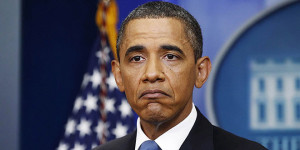 Out of all the political prostitutes in the Western world, one man stands out as the perfect illustration of a politician who works solely to serve his puppet masters. Even though the majority of politicians are controlled by economic and corporate elites, the current US President, Barack Obama, is the epitome of a man who is bought and paid for by special interests.
Obama was elected President in November 2008, and inaugurated in January 2009. From the very beginning of his Presidency, it was clear who the “lord and saviour” was beholden to. According to OpenSecrets.org, Obama’s top campaign donors in 2008 included: Goldman Sachs; JPMorgan Chase; Citigroup; Morgan Stanley; Microsoft; Google; and IBM. Considering Obama’s donors, it’s no wonder that (unlike Iceland) the US has not prosecuted the plethora of bankers and financial institutions that have engaged in fraud for years, and subsequently played a pivotal role in causing the financial crisis of 2007/08.
“I’ve now been in 57 states; I think one left to go”
In a bizarre speech in 2008, Obama said: “Over the last 15 months, we’ve travelled to every corner of the United States. I’ve now been in 57 states; I think one left to go. Alaska and Hawaii I was not allowed to go to, even though I really wanted to visit.” Did he simply make a mistake? Was he joking? Or was this just another slip from a person who is really just hypnotically going through the motions anytime he speaks, with no real interest in what he is saying. This bizarre statement is not an isolated one from the US President, as just a few months ago, Obama tried to argue that Russia bombing ISIL is only “strengthening ISIL.”
The Narcissist
In Greek mythology, Narcissus, the son of a river god, fell in love with his own reflection. Judging from his actions in office, Obama also appears to care more about himself than anything else. In a recent 33-minute speech, Obama referred to himself a whopping 76 times; a true mark of a narcissistic, arrogant and egocentric person. Perhaps he was trying to challenge Julius Caesar’s record, as the former Roman general penned the majority of the ‘Commentaries on the Gallic War,’ in which the word “Caesar” is used 775 times, according to the historian Robin Lane Fox.
Tears of Deceit
Emotive propaganda 101; cry and weep during a highly controversial and political speech on gun control, pulling at the heartstrings of the American public to push a political agenda. In this piece, I’m not trying to underplay the death of innocent people, but merely point out the way in which Obama is emotively trying to manipulate the opinions of the American public in order to push through legislation. Whatever your personal views are on gun control in the US, Obama’s tactics should be denounced as deceitful and staged.
Remember, the man who stood up and gave an Oscar winning performance recently, is the same man who is the head of the country that is carrying out more drone strikes around the world than ever before; has been funding and arming terrorists to overthrow the secular Syrian government; bombed a hospital in Afghanistan which killed at least three children; destroyed and destabilized the nation of Libya (which previously had the highest standard of living in Africa); supports Saudi Arabia in its war crime in Yemen; tortures and interrogates people across the world; and countless other crimes that kill and maim innocent people, yet no tears are shed by the US President.
Was San Bernardino a Black Op?
There are also some anomalies in many of the mainstream narratives regarding mass shootings in the US. The tragic shooting in San Bernardino for instance, which the mainstream media claimed was carried out by husband and wife, Syed Rizwan Farook and Tashfeen Malik, appears to conflict with some eyewitness accounts of the attack. Two reported eyewitnesses claim that the shooters were three tall white men wearing military gear.
Was San Bernardino a black op carried out by military personnel or mercenaries to further legitimize the push for gun control? It is difficult to conclusively say what actually happened, but the official narrative is a shaky one. It should also be noted that some investigative journalists have argued that there has been a dramatic increase in the number of mass shootings under Obama, one of the most pro-gun control President’s in recent decades.
Government must clarify whether UK personnel are under Saudi orders
Reprieve | January 15, 2016
UK personnel are working in a Saudi Arabian “control centre” assisting with targeting as part of a bombing campaign in Yemen, which has been accused of attacks which “may amount to a war crime” by the UN Secretary General.
Saudi Arabia’s foreign minister told journalists today that “British officers were working alongside Saudi and other coalition colleagues in the campaign’s operations rooms,” according to media reports. The campaign has reportedly hit several Medicins Sans Frontieres (MSF) facilities, as well as a centre for the blind and a wedding hall.
The Saudi minister’s revelations go further than previous British Government statements, which have said that nearly 100 UK personnel are embedded in ‘Coalition HQs’ but have failed to specify which coalitions those are. It now appears that the Written Statement published by the Defence Secretary in December last year may have been referring to UK personnel embedded with the Saudi coalition, but did not make this clear at the time.
Whether or not the British personnel in the Saudi centre are ‘embedded’ is significant because the UK Government has previously stated that such personnel fall under the control of the ‘host nation’ – in this case, the Saudis. In a July 2015 statement to Parliament, Michael Fallon said that “Embedded UK personnel operate as if they were the host nation’s personnel, under that nation’s chain of command, but remain subject to UK domestic, international and Host Nation law.” Therefore, there are concerns that the UK personnel in the centre could be under the command of the Saudi authorities.
Commenting, Jennifer Gibson, staff attorney at international human rights organization Reprieve said:
“The Saudi bombing campaign in Yemen has killed thousands of civilians, hitting Medicins Sans Frontieres clinics, a school for the blind and a wedding hall.’
“It is shocking to discover that our Government has embroiled British personnel in the targeting process that is creating this mayhem. More disturbingly, we’re learning about the UK’s involvement not from the our Government, but from the Saudi authorities who now appear to be more transparent than their British counterparts.
“Crucial questions remain unanswered: whose command are British personnel in the Saudi operations centre under – British or Saudi? Are they ‘embedded’ personnel referred to in the Defence Secretary’s vague December statement, which stated that 94 British personnel were embedded in ‘Coalition HQs?’ And what part have ministers played in signing off their activities? The British public has a right to know.”
Yemen: A very British war
By Dan Glazebrook | RT | January 11, 2016
Britain is at the heart of a humanitarian disaster of epic proportions unfolding in the Yemen.
At least 10,000 people have been killed since the Saudi bombing campaign against Yemen began in March 2015, including over 630 children. There has been a massive escalation in human rights violations to a level of around 43 per day and up to ten children per day are being killed, according to UNICEF. Seventy-three percent of child casualties are the direct result of airstrikes, say the UN.
Civilian targets have been hit again and again. Within days of the commencement of airstrikes, a refugee camp was bombed, killing 40 and maiming over 200, and in October a Medicins San Frontier [Doctors Without Borders] hospital was hit. Schools, markets, grain warehouses, ports and a ceramics factory have all been hit. Needless to say, all of these are war crimes under international law – as is the entire bombing campaign, lacking, as it does, any UN mandate.
Beyond their immediate victims, the airstrikes and accompanying blockade – a horrendous crime against a population which imports 90 percent of its basic needs – are creating a tragedy of epic proportions. In August 2015, Oxfam warned that around 13 million people were struggling to find enough to eat, the highest number of people living in hunger it had ever recorded. “Yemen after five months looks like Syria after five years,” the head of the International Red Cross commented in October. The following month, the UN reported that 14 million now lacked access to healthcare and 80 percent of the country’s 21 million population are dependent on humanitarian aid. “We estimate that over 19 million people lack access to safe water and sanitation; over 14 million people are food insecure, including 7.6 million who are severely food insecure; and nearly 320,000 children are acutely malnourished,” the UN’s Humanitarian Coordinator told reporters in November. He estimated that around 2.5 million have been made refugees by the war. In December, the UN warned that the country was on the brink of famine, with millions at risk of starvation.
Statements from British government ministers are crafted to give the impression of sympathy for the victims of this war, and opprobrium for those responsible. “We should be clear” said Foreign Secretary Philip Hammond in September 2014, “the use of violence to make political gains, and the pointless loss of life it entails, are completely unacceptable. Not only does the recent violence damage Yemen’s political transition process, it could fuel new tensions and strengthen the hand of al-Qaeda in the Arabian Peninsula – threatening the security of all of us…Those who threaten the peace, security or stability of Yemen, or violate human rights, need to pay the price for their actions.”
Indeed. So presumably, one might have thought, when the Saudis began their massive escalation of the war six months after Hammond made this statement, the British government must have been outraged?
Not quite. The day after the Saudis began ‘Operation Decisive Storm’, David Cameron phoned the Saudi king personally to emphasize “the UK’s firm political support for the Saudi action in Yemen.”
Over the months that followed, Britain, a long-term arms dealer to the Saudi monarchy, stepped up its delivery of war materiel to achieve the dubious honor of beating the US to become its number one weapons supplier. Over a hundred new arms export licenses have been granted by the British government since the bombing began, and over the first six months of 2015 alone, Britain sold more than £1.75 billion worth of weapons to the Saudis – more than triple Cameron’s usual, already obscene, bi-annual average. The vast majority of this equipment seems to be for combat aircraft and air-delivered missiles, including more than 1000 bombs, and British-made jets now make up over half the Saudi air force. As the Independent has noted, “British supplied planes and British made missiles have been part of near-daily raids in Yemen carried out by [the] nine-country, Saudi Arabian led coalition.”
Charities and campaign groups are unanimous in their view that, without a shadow of a doubt, British patronage has greatly facilitated the carnage in the Yemen. “The [British] government is fuelling the conflict that is causing unbearable human suffering. It is time the government stopped supporting this war,” said chief executive of Oxfam GB, Mark Goldring. The director of Amnesty International UK, Kate Allen, said: “The UK has fuelled this appalling conflict through reckless arms sales which break its own laws and the global arms trade treaty it once championed…. legal opinion confirms our long-held view that the continued sale of arms from the UK to Saudi Arabia is illegal, immoral and indefensible.”
For Edward Santiago, Save the Children’s country director in Yemen, the UK’s “reluctance to publicly condemn the human cost of conflict in Yemen gives the impression that diplomatic relations and arms sales trump the lives of Yemen’s children,” whilst Andrew Smith from Campaign Against the Arms Trade, has written that “UK fighter jets and UK bombs have been central to the humanitarian catastrophe that is being unleashed on the people of Yemen.” Leading lawyers including Philippe Sands have argued that Britain is in clear breach of international law for selling weapons which it knows are being used to commit war crimes.
Now it has emerged that it is not only British weapons being used in this war, but British personnel as well. According to Sky News, six British military advisors are embedded with the Saudi air force to help with targeting. In addition, there are 94 members of the UK armed forces serving abroad “carrying out duties for unknown forces, believed to be the Saudi led coalition,” according to The Week – although the government refuses to state exactly where they are.
Indeed, even British airstrikes in Syria may have been motivated in part by a desire to prop up the flagging war effort in Yemen. Questioning of Philip Hammond in parliament recently led him to admit that there had been a “decrease in air sorties by Arab allies” in Syria since Britain’s entry into the air campaign there due to the “challenges” of the Yemen conflict.
For Scottish Nationalist MP Stephen Gethins this suggests that, by stepping up bombing in Syria, Western countries were effectively “cutting them [Arab states] a bit of slack to allow them to focus on the Yemen conflict,” especially needed given that support for the Yemen campaign has been flagging from states such as Jordan, Morocco and Egypt. It is particularly ironic that British MPs’ supposed commitment to destroying ISIS in Syria is actually facilitating a war in Yemen in which ISIS is the direct beneficiary.
Finally, it is worth considering British support for the Saudi bid for membership of the UN Human Rights Council. The Council’s reports can be highly influential; indeed, it was this Council’s damning (and, we now know, fraudulent) condemnation of Gaddafi that provided the ‘humanitarian’ pretext for the 2011 NATO war against the Libyan Jamahiriya. And the Yemeni government’s recent expulsion of the UN Human Rights envoy shows just how sensitive the prosecutors of the Yemeni war are to criticism. It would, therefore, be particularly useful for those unleashing hell on Yemen to have the UN Council stacked with supporters in order to dampen any criticism from this quarter.
Britain, then, is the major external force facilitating the Saudi-fronted war against the people of Yemen. Britain, like the Saudis, is keen to isolate Iran and sees destroying the Houthis as a key means of achieving this. At the same time, Britain seems perfectly happy to see Al-Qaeda and ISIS take over from the Houthi rebels they are bombing – presumably regarding a new base for terrorist destabilization operations across the region as an outcome serving British interests.
Dan Glazebrook is a freelance political writer. His first book “Divide and Ruin: The West’s Imperial Strategy in an Age of Crisis” was published by Liberation Media in October 2013. It featured a collection of articles written from 2009 onward examining the links between economic collapse, the rise of the BRICS, war on Libya and Syria and ‘austerity’. He is currently researching a book on US-British use of sectarian death squads against independent states and movements from Northern Ireland and Central America in the 1970s and 80s to the Middle East and Africa today.
Nobel Peace Prize-Winner Obama Dropped 23,144 Bombs in 2015
Sputnik – January 11, 2016
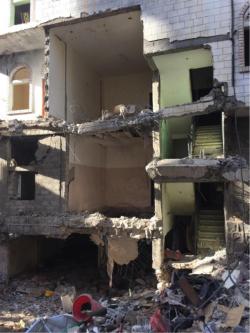 The United States in the past year dropped more than 20,000 bombs on Muslim-majority countries Iraq, Syria, Afghanistan, Pakistan, Yemen and Somalia, according to a study by the Council on Foreign Relations (CFR).
In an article published January 7, Micah Zenko, a senior fellow at CFR, states that since January 1, 2015, the United States has dropped an estimated 23,144 bombs in those six countries: 22,110 in Iraq and Syria; 947 in Afghanistan; 58 in Yemen; 18 in Somalia; and 11 in Pakistan.
“This estimate is based on the fact that the United States has conducted 77 percent of all airstrikes in Iraq and Syria, while there were 28,714 US-led coalition munitions dropped in 2015. This overall estimate is probably slightly low, because it also assumes one bomb dropped in each drone strike in Pakistan, Yemen, and Somalia, which is not always the case,” Zenko writes.
Despite dropping tens of thousands of bombs over the past 17 months, Washington’s strategy has failed to defeat Daesh and other Islamic militant groups, Zenko observed.
In Afghanistan, the Taliban control more territory than at any point since the 2001 US invasion, according to a recent analysis in Foreign Policy magazine.
Zenko notes that the primary focus of Washington’s counter-terrorism strategy is to kill extremists, and that far less attention is paid to prevent a moderate individual from becoming radicalized.
As a result, “the size of [Daesh] has remained wholly unchanged,” Zenko writes.
In 2014, the Central Intelligence Agency estimated the size of Daesh to be between 20,000-31,000 members. On Wednesday, Colonel Steve Warren, a spokesman for the US-led coalition, estimated the group at 30,000 members, despite Pentagon claims that 25,000 Daesh members have been killed in US air strikes.
At the same time, the Pentagon claims that only six civilians have “likely” been killed in the course of the bombing campaign.
Featured Video

“Historic Russia”: The Land Putin Will Not Give Back
or go to
Aletho News Archives – Video-Images
From the Archive
How Ukraine Tortured and Slaughtered Donbass
By Kit Klarenberg | Al Mayadeen | July 11, 2024
Almost immediately after the proxy war erupted, ISIS-tier footage of the torture and murder of Russians in Ukrainian custody emerged.
On July 6th, the New York Times published an astonishing investigation: In Ukraine, Killings of Surrendering Russians Divide an American-Led Unit. The article documents in grim detail how Chosen Company, an international volunteer battalion for Kiev, routinely executes Russian prisoners of war. It is the very first mainstream admission that this practice – a brazen breach of the Geneva Conventions, and a grave war crime – is widespread among Ukraine’s fighters, both foreign and homegrown. … continue
Blog Roll
 Aletho News
- Burnham tackles Britain’s poverty with aggression in Yemen
- Peace in Ukraine: the easy way – or the hard way
- Trump & the Rrrrussians
- US taxpayer money laundered back through Ukraine – Musk
- Before COVID, an NIH lab chief proposed making a SARS-like bat virus more infectious
- Gates, Bourla on Trial in Netherlands Accused of ‘Great Reset’ Scheme at Vaccine Injury Hearing
- BRITAIN’S WARNING: PREPARE FOR WAR
- “Historic Russia”: The Land Putin Will Not Give Back
- How the Cambridge Analytica scandal still haunts Mark Zuckerberg
- The Ongoing Cancellation Campaign Against a Dissenting Academic in Norway
- If Americans Knew
- An error has occurred; the feed is probably down. Try again later.
- No Tricks Zone
- Two New Studies Find Thwaites Glacier Melt Cannot Be Driven By Human Activity Or A Warming Ocean
- E-Cars Reduce CO2 Emissions By Only 41% Compared To Internal Combustion Engine Vehicles
- Predictions Made By Renowned Climate Professor Over Past Decades Have Been Proven To Be Poor
- New Study Suggests Large Regions Of The Pacific Ocean Have Been Cooling For The Last 80 Years
- Germany’s Green Energy Debacle: High Energy Costs Force Kahla Porzellan to Close After 182 Years!
- New Study: 50 Years Of The Most Aggressive ‘Net Zero’ Policies Can Only Affect The Global Climate By 0.03°C
- US September “Heat” Was No Record…Many Records Set Decades Ago
- Latest European Green Energy Debacle; Portugal’s Largest Flagship Solar Park Insolvent!
- Green Energy Debacle: German Expert Professor Fritz Vahrenholt Warns Of Severe Economic And Social Consequences
- Two More Paleo Reconstructions Affirm Meters-Higher Sea Levels Across Ireland, Brazil 7000-6000 Years Ago

