Four Palestinian women, one child injured in settler attack in West Bank
Palestinian Information Center – August 10, 2024
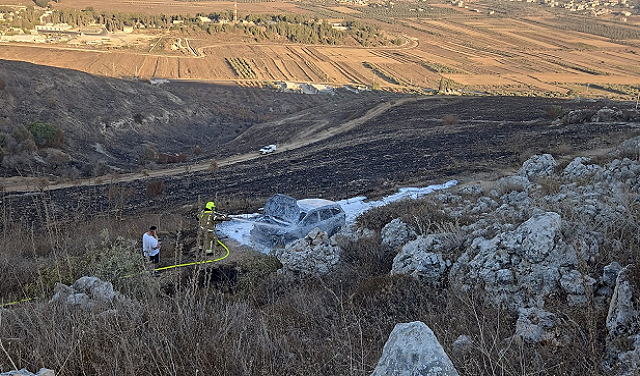
NABLUS – Four Palestinian women and one child were injured on Friday evening when a horde of extremist Jewish settlers attacked them near Nablus City in the occupied West Bank.
According to the Hebrew media, settlers showered a car carrying four women and a two-year-old girl child with stones and injured them after they mistakenly entered an area near an illegal settlement outpost in the south of Nablus.
The child and women suffered different injuries in the settler attack and were transferred to a hospital after they fled the area on foot.
According to Israel’s Kan news agency, the five victims are residents of the Arab town of Rahat in southern Israel and were on their way to the Palestinian City of Nablus.
Nufah, one of the women who were attacked, told journalists that their navigation application had led them astray.
“We accidentally went into some place and then settlers started running after the car, throwing rocks,” she said. “After they broke all the windows they sprayed tear gas.”
She said one of the attackers put his gun to the infant’s head and ordered them to get out of the car before they escaped the area.
The incident occurred at Givat Ronen, a small hilltop outpost in the northern West Bank near the village of Burin
Canadian ‘charity’ high school trains students to serve in Israeli military
Press TV – August 10, 2024
A ‘charity’ high school in the Canadian city of Toronto has been training students to serve in the Israeli military, highlighting those graduates who are fighting for the occupying regime.
Toronto high school Bnei Akiva (or Chaim) is reportedly under intense scrutiny following a recent incident involving one of its former students, identified as Ben Brown, who has been critically injured while serving with the Israeli military.
The former student of Chaim was hit by shrapnel from a rocket purportedly launched by the Lebanese resistance movement Hezbollah while on a military base in the occupied Shebaa Farms or Mount Dov. Brown.
The controversy has prompted calls on Canadian authorities to strip the school of its charitable status and investigate its officials for violating Canada’s Foreign Enlistment Act, which criminalizes the recruitment of Canadians into foreign armed forces.
“Any person who, within Canada, recruits or otherwise induces any person or body of persons to enlist or to accept any commission or engagement in the armed forces of any foreign state or other armed forces operating in that state is guilty of an offense,” the Act states.
The Bnei Akiva High School is affiliated with the World Bnei Akiva movement, which has a known connection to promoting service for the Israeli military.
Brown’s school has a plaque honoring alumni who joined the Israeli military and its website highlights graduates who fought in the ranks of the regime’s armed forces.
Testimonials on the high school’s website suggest the school devotes significant effort to inducing kids to join the Israeli military.
In a podcast, the Canadian Jewish News recently replayed parts of a three-year-old interview with Brown’s older brother, Zach Brown, a former Israeli soldier. In the podcast, Zach described his own military experiences, including his role in urban warfare and checkpoints in the occupied West Bank, boasting about how he was the “top sharpshooter” in a company of the Kfir brigade.
This revelation has intensified scrutiny over the educational and ideological influences provided by Bnei Akiva High Schools.
Critics argue that the school’s activities, which may include encouraging students to join the Israeli military, could constitute an illegal inducement under Canadian law. The Royal Canadian Mounted Police (RCMP) is urged to investigate whether Bnei Akiva Schools has breached these regulations.
In addition to legal concerns related to foreign enlistment, the school’s charitable status is also under question as Bnei Akiva Schools has received substantial public funding, including federal grants totaling $3.5 million in 2021 and 2022 (the last years of its budget the public has access to).
This is while Canadian charity regulations stipulate that supporting foreign armed forces is not considered a charitable activity. Moreover, there are concerns that the school’s financial practices may be violating guidelines set by the Canada Revenue Agency (CRA).
“CRA rules state clearly that paying private school tuition is not tax deductible except any portion covering ‘religious’ studies,” the report added.
The Bnei Akiva Schools has a history of supporting and celebrating the Israeli military. The school has organized fundraising events, such as marathons, to support wounded Israeli soldiers and has featured Israeli soldiers and the Israeli military’s choir in its programs.
The World Bnei Akiva movement, with which Bnei Akiva Schools is affiliated, operates an academy in Israel that prepares non-Israelis for military service. This connection raises further questions about the extent to which the school actively encourages enlistment in the Israeli military, the report further said.
Backed by the US and its Western allies, the Israeli regime launched an all-out invasion of the besieged Gaza Strip after it was caught off-guard by Operation al-Aqsa Storm inside the occupied territories in October last year.
Nearly 40,000 Palestinians have since been killed, most of them women and children, and upwards of 91,000 others injured in the merciless Israeli aggression.
Israel has also been enforcing a crippling siege on the coastal territory by choking off the flow of foodstuffs, medicine, electricity, and water into the Palestinian territory.
Israeli strikes on Gaza kill two more Palestinian journalists, their family members

Deceased Palestinian journalists Abdullah al-Soussi (L) and Tamim Muammar (Photo via social media)
MEMO | August 10, 2024
The agency called on: “The International Criminal Court Prosecutor to quickly begin investigations into the occupation’s crimes against Palestinian journalists.”
Israel kills 100 Palestinians performing fajr prayer in Gaza
MEMO | August 10, 2024
At least 100 Palestinians were killed early this morning when the Israeli military bombed the Al-Taba’een school in the Al-Daraj neighbourhood in eastern Gaza City.
The school was housing displaced civilians. Dozens were injured in the attack.
Israeli military aircraft targeted the school while worshippers were performing the fajr (dawn) prayer, the Palestinian news agency Wafa reported.
Eyewitnesses said they could hear women and children screaming after the bombing but couldn’t reach them.
The attack comes just hours after news that the US is preparing to give $3.5 billion to Israel to purchase American weapons and military equipment from a $14.1 billion supplemental bill approved by Congress in April.
“On Thursday, August 8 the Department notified Congress of our intent to obligate $3.5 billion in FY 2024 Foreign Military Financing using funding provided by the Israel Security Supplemental Appropriations Act,” said a State Department spokesperson.
Nearly 40,000 Palestinians have been killed, mostly women and children, and over 91,700 injured, in Israel’s bombing campaign since 7 October 2023, according to local health authorities.
More than ten months into the Israeli onslaught, vast tracts of Gaza lie in ruins amid a crippling blockade of food, clean water and medicine.
Israel is accused of genocide at the International Court of Justice (ICJ).
Failure of US policy in the Middle East
By Veniamin Popov – New Eastern Outlook – 10.08.2024
The dramatic events of late July in the Middle East are a clear indication of the failure of American policy in the region.
The Americans, staking their hopes on being able to sweep the Palestinian problem under the carpet, have miscalculated and as a result not only has their influence been weakened, but there is now a real possibility of a new full-scale war.
US Secretary of State Antony Blinken has made nearly a dozen visits to Middle Eastern countries since October 2023, and the only result has been that the mass murder of Palestinians is continuing. The much-publicized “Biden Plan” to resolve the crisis has simply been shelved. All USA’s actions in the Middle East have merely served to exacerbate the situation.
The likelihood of an Iranian response to the Netanyahu government’s actions has brought the entire region to the brink: according to the New York Times, Israel could not fight a war for long alone, so Washington must decide whether to go to war with Iran, along with Israel.
The governments of the Arab countries are aware of the dangers of the situation: as the Qatari Prime Minister Mohammed bin Abdulrahman Al-Thani puts it, political assassinations and the ongoing attacks on civilians in the Gaza Strip during peace talks make us question how mediation can be successful if one side kills the negotiators from the other side. To achieve peace, there is a need for serious partners, and a position of disregard for human life is unacceptable.
Washington is trying to create a military bloc
The American administration tried its best to forge a military alliance between the Arab monarchies and Israel, and to this end it did all it could to woo Riyadh. Today, this strategic plan appears to be an ill-considered fantasy, but Washington is still seeking to create some sort of bloc, with the latest initiative being an economic grouping tentatively named I2U2, consisting of India, Israel, the United Arab Emirates and the United States.
The US is also trying to create an important economic corridor from India to Europe via the Middle East, also known as IMEC (India—Middle East—Europe Economic Corridor). It was designed to promote closer trade and energy ties between the European Union and India, with the help of US allies in the Persian Gulf. The goal is to help India distance itself away from China’s attempts to sideline New Delhi from its One Belt, One Road infrastructure initiative. while creating a grand pro-American economic alliance stretching from the EU through Saudi Arabia and the UAE all the way to India—a grouping that would also isolate Iran. The founding partners of the IMEC are the US, EU (France, Germany and Italy), Saudi Arabia, the UAE and India.
The American plan was to give military weight to these intersecting alliances by forging a mutual defense treaty with Saudi Arabia and also normalizing Saudi-Israeli relations. America’s allies in the Middle East—Jordan, Egypt, UAE, Israel, Saudi Arabia and Bahrain—would thus serve as an anti-Iranian alliance.
Current events make it clear how unrealistic the calculations of the US are. In this regard, it is worth remembering the words of Iran’s Supreme Leader Ali Khamenei, who described Muslim countries that normalize relations with Israel as “betting on a losing horse,” before adding that “the definitive stance of the Islamic Republic is that the governments which prioritize the gamble of normalization with the Zionist regime will incur losses… Today, the situation of the Zionist regime is not one that should motivate closeness to it; they should not make this mistake.”
The decline of the US is also evident in its foreign policy
Washington officials frequently display wishful thinking—notable in this regard is an article dated August 2, 2024 by University of Texas professor Gregory Gause III, published in the Foreign Affairs magazine. He argues that the real prospects for a US-Saudi security deal are very elusive, and that Riyadh should hardly be expected to “take Washington’s side Against China and Russia.”
The well-known US American political scientist John Mearsheimer believes that the US, through its unconstructive actions and miscalculations, “has itself played a decisive role in destroying its own world dominance.”
The renowned French scientist Emmanuel Todd, in a recent interview with the Berliner Zeitung, emphasized that trust in the United States around the world is declining because “the West, with America at its center, is experiencing internal disintegration, and we can see the decline of the West at various levels—if we look not at the GDP inflated by the service sector, but at the real industrial and agricultural production of the West, we can see a huge weakness… here the failures in education, especially in the United States, are even more alarming. Educational attainment there has been falling since 1965, there has been a decrease in the number of students, and tests show that IQ levels are dropping. Today in America they often train not engineers, but lawyers and stockbrokers.” Perhaps this can help to explain the huge failures of US foreign policy, including in the Middle East.
Renowned US economist Professor Jeffrey Sachs of Columbia University has repeatedly stressed that America’s meddling in the Middle East destabilizes the region and provokes mass suffering. Professor Sachs also believes that changes taking place around the world make it reasonable to expect that “a comprehensive peace in the Middle East based on a two-state solution is still achievable.”
US enlists Cyprus, Jordan, Greece as ‘defensive platforms’ for Israel: Report
The Cradle | August 9, 2024
Washington has enlisted the island nation of Cyprus in its efforts to protect Israel from potential retaliations by Iran and Hezbollah to the recent Israeli attacks on Tehran and Beirut, Lebanese daily Al-Akhbar reported on 9 August.
A US military delegation visited Cyprus this week and held urgent meetings with Cypriot defense and intelligence officials.
“The delegation was accompanied by a logistical, military and security force carrying with it a large amount of equipment, weapons and modern air defense systems, in addition to helicopters,” Al-Akhbar wrote.
Cypriot officials said they had never seen such quantities of weapons before, the report went on to say.
According to the report, the US informed Cyprus that this equipment was “related to tensions in the region” and that the island would serve as “one of the interception platforms against expected attacks from Iran, Yemen and Hezbollah.”
It adds that the UK has reinforced its bases in Cyprus, and has sent experts and air defense equipment to the country.
The UK has two large military bases in Cyprus, which are British sovereign territory and make up 2.5 percent of the island’s area.
Germany has also reportedly expressed an intention to deploy naval forces to Cyprus and to assist in evacuations in case of a large-scale war.
“What further confused Cypriot authorities was the US request for joint military drills with American forces on the island’s land and seas … drills do not happen suddenly, but rather require a program that is prepared at least a year in advance, not 48 hours in advance,” Al-Akhbar said.
“Cypriot officials have been keen to communicate with … the axis of resistance, especially Hezbollah, to convey the message that what is happening ‘is happening against their will, and that they do not want to involve their country in any war.’ They expressed their fear that the island could become an arena for a confrontation with Iran, Hezbollah, and even Ansarallah.”
Yemen’s army and Ansarallah resistance movement is also preparing a response to the Israeli attack on Hodeidah port last month.
The Al-Akhbar report states that these messages are unlikely to change anything in the event of a wide-scale war, given that Cypriot authorities are also coordinating directly with Tel Aviv.
“Opening Cypriot airports and bases to the Israeli enemy to target Lebanon would mean that the Cypriot government is part of the war, and the resistance will deal with it as part of the war,” Hezbollah leader Hassan Nasrallah said in a speech in June, warning Cyprus against taking part in an expanded Israeli war on Lebanon.
Cyprus and Israel have stepped up military cooperation in recent years as part of a joint declaration signed in 2017 and have also carried out several joint military and naval exercises. In 2022, the two states carried out joint military exercises on the island nation’s territory. Cyprus denied Tel Aviv’s declaration at the time that the exercises were meant to simulate war inside Lebanon.
Hebrew newspaper Israel Hayom reported on 11 March this year that Israel is seeking to establish a port in the Cypriot city of Larnaca in case the port of Haifa is closed in a war with Hezbollah.
According to the Al-Akhbar report, Greece and Jordan are also deeply involved in Washington’s defensive plans for Israel.
In April, Jordan played a significant role in intercepting Iranian missiles and drones which targeted Israel in response to its destruction of the Iranian consulate in Damascus and the killing of several of its officials that month.
Israel killed Hamas chief Ismail Haniyeh in Tehran on 31 July, as he was visiting Iran as a diplomatic guest while attending the inauguration of the country’s new president. A day earlier, Israel killed a top Hezbollah commander in the Lebanese capital, targeting him in a residential building while killing several civilians, including children, in the process.
Hezbollah and Iran have both vowed severe retaliations to the illegal attacks.
De-escalation vs. self-defense: Double standards or racism?
By Jamal Kanj | Al Mayadeen | August 9, 2024
On the evening of July 30, an Israeli drone targeted a residential building in the Southern Suburb of Beirut, killing three women and two children, and injuring 74 civilians. “Israel” claimed the attack was aimed at an officer of the Lebanese Resistance. Targeting residential infrastructures outside a war zone is part of the Israeli army’s Artificial Intelligence (AI) program, known as “Lavender.” The AI Lavender program, as we have seen in Gaza, koshers the killing of up to 100 civilians or entire families in order to assassinate a single commander.
Less than 24 hours later, Israeli agents violated Iran’s sovereignty and assassinated Palestinian leader Ismail Haniyeh during his official visit to Tehran, like when “Israel” bombed the Iranian embassy complex in Damascus last April, killing 8 military advisors and an equal number of Syrian civilians and Iranian consular staff.
Rather than condemning the Israeli aggression, Western capitals called on the victims (Iran and the Lebanese Resistance) to de-escalate and exercise restraint. “No one should escalate this conflict,” Blinken told reporters on August 6. “We’ve been engaged in intense diplomacy with allies and partners, communicating that message directly to Iran.”
German Foreign Minister Annalena Baerbock took to X calling on “especially #Iran, to exercise restraint and de-escalate for the sake of the people in the region.”
Britain and France doubled down on the foreign violation of Iran’s sovereignty during the emergency UN Security Council meeting on July 31, blaming Iran, the victim in this case, for the dangerous escalation in the region. According to various resources, French President Emmanuel Macron told his new Iranian counterpart to end the “logic of reprisals” and for the “protection of civilian populations.”
Western powers called for de-escalation in response to the Israeli aggression against Iran and Lebanon. On the other hand, they defended “Israel’s” right to “self-defense” following the Palestinian revolt against the Israeli siege on October 7. Leaders from more than 14 countries, 8 including heads of state paid homage to declare solidarity with “Israel”. Yet, not a single Western leader called on “Israel” to de-escalate.
If “Israel” is perceived as the target of an attack, Western leaders promote Israeli “logic of reprisals” under the pretext of “self-defense”. Meanwhile, when others are targeted by “Israel”, then and only then, de-escalation is deemed necessary for the “protection of civilian populations.”
Returning to the German Foreign Minister’s recent post on X. When “Israel” was targeted on October 7, Germany saw no need to de-escalate “for the sake of the (Palestinian) people in the region.” De-escalation was necessary though, “for the sake of the (Israeli) people…” following the Israeli attack on Iran and Beirut.
Ironically, the call by Western leaders to “de-escalate” is not a genuine endeavor to avoid a wider conflict, but rather their proclivity to sanction Israeli wars. They sanctioned “Israel’s” war of genocide when they excused its aggression as “self-defense” and then refused to call for a ceasefire for more than six months. They empowered “Israel” by waging a proxy war against Yemen on its behalf. They enabled “Israel’s” defiance by continuing to supply the armament used to kill and maim the children of Gaza. They enabled Israeli-induced famine against 2.3 million people by refusing to accept the findings of the International Court of Justice and the International Criminal Court. More importantly, they enabled Israeli intransigence when, following the Israeli murder in Tehran and Beirut, the US president ordered US military deployments in the Middle East to defend “Israel” “against all threats from Iran.”
The above is not merely a double standard, but congenital Western racism toward the perceived “lesser” than equal people, for the US Administration, Canada, Britain, and the European Union’s unadulterated racism has for decades enabled “Israel’s” arrogance, both materially and diplomatically.
By the same Western definition of the right to self-defense, the Iranian government, the Lebanese Resistance, and Yemen have every right to exercise their right, according to international law following Israeli attacks on Tehran, Beirut, and Hodeidah in Yemen. This is more so than what Western leaders erroneously bestowed on an occupying power following October 7.
The Resistance is undoubtedly aware of Western powers’ efforts to delay and/or diffuse the response to Israeli extrajudicial assassinations. European leaders, for instance, have sent direct and indirect equivocal messages to Iran expressing a willingness to open a new chapter after the election of the new reformist president.
Arab and Western leaders have also cautioned the Resistance in Lebanon against taking any action that could jeopardize the “progress” in the ceasefire talks, when, in reality, the opposite is true. The Palestinians are in a stronger negotiating position with support from the Lebanese and the Yemeni fronts, not by the groveling of Arab regimes to Israeli enablers.
In fact, as it became clear that retaliation against “Israel” was imminent, the US, Qatar, and Egypt scrambled a statement on August 8 calling for a new round of ceasefire negotiations. This announcement was almost certainly coordinated in advance with “Israel”, as evidenced by Netanyahu’s unusually swift agreement to send a delegation “in order to finalize the details and implement the framework agreement.”
It is almost certain that the Resistance understands that all this is a ruse and outright prevarication by the Biden administration and two vassal Arab countries to muddy the waters, allowing “Israel” to literally get away with new murders. The aggrieved parties are expected to respond because allowing “Israel” to cross this redline would embolden Israeli intransigence and afford it a new opportunity to cross more dangerous redlines that could lead to a more destructive war in the future.
In the last decade, “Israel” has murdered at least five Iranian scientists, including its top civilian nuclear program chief Mohsen Fakhrizadeh in 2020. These assassinations came at a very little cost, if any, for “Israel”. However, the recent case of murdering an invited guest crosses a different redline that “Israel” and the West are unable to comprehend. In the East, protecting your guest is an honor that must be defended at all costs.
It’s implausible that the forces of Resistance would be dissuaded by the new American/Israeli gambit or the misplaced racist “de-escalation” rhetoric from the other Israeli enablers. According to public pronouncements from Iran, Yemen, and Hezbollah in Lebanon, a proportional retaliation against apartheid “Israel” is inevitable.
Patience is a virtue, and as some have suggested, ambiguity and waiting it out are part of that broader strategy. While that might be true, there is, however, a cost-benefit dynamic related to the time taken to make a decision. The Resistance is likely aware that further vacillation would decrease the benefits and fetter the momentum for an in-kind reprisal against “Israel”.
Israeli forces run over, kill 15-year-old Palestinian boy injured in drone strike

Israeli forces killed 15-year-old Khatab Majdi Asad Abu Badawiya in Jenin on August 6, 2024. (Photo: Courtesy of the Abu Badawiya family)
Defense for Children International – Palestine | August 8, 2024
Ramallah, August 8, 2024—Israeli forces killed a 15-year-old Palestinian boy in Jenin during a military incursion on Tuesday morning.
Khatab Majdi Asad Abu Badawiya, 15, was struck by shrapnel from an Israeli drone-fired missile around 9:40 a.m. on August 6 during an Israeli military incursion into the eastern neighborhood of Jenin in the northern occupied West Bank, according to documentation collected by Defense for Children International – Palestine. Khatab allegedly threw a homemade explosive device toward a heavily armored Israeli military vehicle prior to the drone strike. The strike, which injured Khatab, killed three armed Palestinian men. After Khatab was injured in the strike, an ambulance attempted to reach him but Israeli soldiers in the military vehicle fired live ammunition toward the paramedics. The military vehicle then dragged a civilian vehicle parked nearby and attempted to push it onto the child lying on the ground. After failing to do so, the military vehicle advanced towards Khatab, who was still alive, and drove one of its wheels onto his abdomen. The military vehicle stayed near the bodies of the child and the other young men for about 40 minutes before withdrawing.
“Israeli forces continue showing contempt for Palestinian children’s lives as they carry out aerial attacks in densely populated civilian areas like Jenin,” said Ayed Abu Eqtaish, accountability program director at DCIP. “Israeli forces not only injured Khatab in a drone strike, but they shot at paramedics trying to provide aid, then parked their military vehicle on top of his torso while he bled out in a shocking act of cruelty. Countries need to enact an immediate arms embargo and sanctions on Israel to force accountability for Israeli forces who have been allowed to brutally kill Palestinian children with impunity for decades.”
Palestinian residents demolished a wall so paramedics could walk to the scene, since Israeli forces targeted the ambulance with live ammunition. Paramedics transported Khatab and the three Palestinian men to the ambulance, which was parked about 200 meters (656 feet) away. Doctors pronounced all four of them dead on arrival at Jenin Governmental Hospital.
Israeli forces stormed the center of Jenin on August 5 around 3:30 p.m. Soldiers raided the Gulf Exchange Company on Abu Bakr Street. During the incursion into the city center, Israeli military vehicles deliberately smashed many vehicles by crashing into them. The soldiers also fired heavily and indiscriminately while the area was crowded with vendors and shoppers.
Palestinian gunmen confronted the Israeli soldiers. During these confrontations, Israeli military reinforcements, accompanied by large military bulldozers, arrived in Jenin city and refugee camp. The bulldozers began destroying infrastructure, demolishing walls of several homes, and smashing and burning vendor stalls in the Jenin market.
After Israeli forces withdrew from Jenin, they entered the Palestinian village of Kafr Qud to the west and besieged a house, killing two young men and confiscating their bodies. Three others were injured in the besiegement and were subsequently arrested.
Israeli forces and settlers have killed 62 Palestinian children in the occupied West Bank in 2024, including two United States citizens, according to documentation collected by DCIP.
143 Palestinian children have been killed in the occupied West Bank since October 7, according to documentation collected by DCIP, when the Israeli military began a full-scale military offensive on the Gaza Strip.
In 2023, Israeli forces and settlers killed at least 121 Palestinian children in the occupied West Bank, according to documentation collected by DCIP. Israeli forces and settlers shot and killed 103 Palestinian children with live ammunition, 13 Palestinian children were killed in drone strikes, four Palestinian children were killed by missiles fired from a U.S.-sourced Apache attack helicopter, and one child was killed in an Israeli warplane airstrike.
Under international law, intentional lethal force is only justified in circumstances where a direct threat to life or of serious injury is present. However, investigations and evidence collected by DCIP regularly suggest that Israeli forces use lethal force against Palestinian children in circumstances that may amount to extrajudicial or wilful killings.
Khan Yunis: Israeli army destroyed over 70 percent of the city’s water wells
Palestinian Information Center – August 8, 2024
GAZA – The municipality of Khan Yunis City in southern Gaza has affirmed that the Israeli occupation army has destroyed over 70 percent of the city’s water wells since October 7, 2023.
In a statement on Thursday, the municipality explained that the Israeli army destroyed the city’s water purification station, 26 of its 37 wells, and 220 kilometers of water lines.
According to the municipality, more than 1,200,000 displaced people currently sheltering in al-Mawasi area of western Khan Yunis are struggling to access drinking and usable water.
The municipality warned that the severe water shortage in Khan Yunis led to the spread of infectious diseases among the local and displaced families.
Italian paper pays damages after labelling Palestine rights advocate a ‘terrorist’
MEMO | August 8, 2024
Italian newspaper Il Corriere Della Sera has been ordered to pay €15,000 in damages to Shawan Jabarin, the general director of Palestinian rights group Al-Haq, for falsely accusing him in 2021 of being a terrorist and murderer.
In a press release published this week, Al-Haq said the paper had published the claims days after Jabarin was invited to join a hearing at the Chamber of Deputies in the Italian Parliament on 20 December 2021 following Israel’s designation of Palestinian NGOs as ‘terrorist organisations’.
Two days after the hearing, Il Corriere della Sera published an article “containing false and defamatory statements” labelling Jabarin a “terrorist”. Additionally, “the newspapers omitted essential contextual information around Israel’s targeted designation of six Palestinian civil society organisations as ‘terror organisations’, thereby infringing on the readers’ right to access free and impartial information.”
After being summoned to court, the paper accepted a settlement agreement, which included compensating Jabarin for “reputational” damage suffered and publishing an article retracting the defamatory claims. However it failed to admit, in its article, that it was among those who had defamed the Palestinian rights advocate.
Why The Zionist Entity Decided To Take The Risk Of Regional War?
By Robert Inlakesh | Al Mayadeen | August 8, 2024
Despite the Israeli-US alliance pulling off two high-profile assassinations within hours and posed as if they are ready for an all-out war, it is clear that they could only handle a regional conflagration which would quickly end in a stalemate. If this escalation goes the wrong way, however, there are only two options left for them, and both are terrible.
The Zionist Entity was faced with a choice, after failing to reach victory in Gaza: either end the war or escalate. It was clear from Israeli Prime Minister Benjamin Netanyahu’s address to the US Congress that the leader of the Entity was bent on escalation and that he would receive bipartisan support in the United States for carrying out actions designed to achieve the desired goal.
Finding their justification in the massacre of 12 Syrian-Druze children in the occupied Golan Heights, quickly jumping to accuse Hezbollah, the Israeli military launched their attack on a multi-story building in southern Beirut. While the Zionists attempted to use the blood of the indigenous people of the Golan, living in Majdal Shams, for their own propaganda purposes, the people refused to allow them and blamed the Zionists for the massacre in their village, as Hezbollah vehemently denied any involvement.
The timing of the massacre came at a convenient time for the Zionist Regime, as the Israeli PM was at the tail end of his trip to the United States. Shortly afterward, the Israelis murdered seven Lebanese and injured around 80 in their attack on the southern suburbs of Beirut. The primary target was Hezbollah military leader Fouad Shokor, who was martyred along with three children and two women on Tuesday, July 30. Then, just hours later, the Hamas political leader Ismail Haniyeh was assassinated in the Iranian capital, Tehran.
None of this is by accident and the suggestion that the United States was not involved is simply ludicrous.
What Is The US-Israeli Strategy?
An all-out regional war will result in the annihilation of the Zionist Entity, for even with direct US involvement, the Zionists still can’t win. Even if we assume that nuclear weapons might be used, the firepower of the Resistance is such that the Israelis would experience a similar blow from the sheer scale of missile power directed toward them.
Knowing that victory is not possible, it appears evident, therefore, that strategies are in place to prevent a war from reaching its inevitable conclusion. The Israelis and Americans are frustrated by their devastating failures since the Hamas-led October 7 attack, whether it be in the inability of the Zionist military to secure a victory against the Palestinian Resistance in Gaza, or the US’ embarrassing defeat at the hands of Yemen’s Ansar Allah. The blows dealt to the Zionist Entity, in the security, military, political, societal, and economic spheres, are so great that it is unclear how they can ever recover.
Faced with such a predicament, the US-Israeli alliance had two options, either accept the strategic defeat and pursue a diplomatic solution to the chaos they have wrought over the past 10 months, or, escalate. The assassinations in Beirut and Tehran indicate they chose escalation.
The Israelis themselves have conducted two major war games over the past years, testing the capabilities of the Zionist military to fight a multi-front war, losing both times. Keep in mind that these military exercises were also conducted while assuming that the full strength of the Israeli military would be intact. At this time, the Zionist army is stretched thin, it is undertrained, overworked, and suffers from a lack of motivation and discipline. Additionally, it has lost many of its tanks and armored personnel carriers, as thousands have been damaged and destroyed in Gaza.
It suffices to say that Israel does not possess the capacity to fight the war it is pursuing, which is why the assassinations came as such a shock to many. However, as I have previously written here for Al Mayadeen, the Israelis had one last option left to prolong the war and the strategy is as follows:
Open up a war with Lebanon, but attempt to keep it limited to trade off blows and close the conflict with a stalemate. A war with Hezbollah will bring great carnage to Israeli infrastructure and result in scores of dead Israelis, thereby distracting the population from the war in the Gaza Strip. This would create an environment that could enable the Israeli prime minister to close a ceasefire deal with Hamas in Gaza. From there, the Zionist regime could then pivot to the West Bank, annexing around 60% of its territory and launching a military operation – similar to “Operation Defensive Shield” in 2002 – to murder the majority of the Resistance fighters there.
Under such a scenario, Benjamin Netanyahu will use the assassinations of Resistance leaders as trophies to brag about a supposed victory, while presenting the argument that his regime confronted an existential threat from multiple foes and survived. He will then use the land grab in the West Bank as proof of conquest and the killing of Resistance fighters there as a “security” achievement. This situation is what both the US and their Israeli allies see as the best-case scenario.
However, the situation could quickly spiral out of control and the damage done to the Zionist Entity could prove so great that it remains only a shell of itself if it manages to survive at all. It is a dangerous strategy, to say the very least, and although they may see it as a bold attempt to restore US-Israeli hegemony in West Asia, it also projects weakness and a lack of options. Such a risk, which could result in the end of the Zionist Entity, would only be taken if their backs were against the wall.
If this goes sideways for the Zionists, then they will likely have two options left. The first will be the infamous Samson Option, to use their nuclear weapons. The second could involve the deployment of regional forces into occupied Palestine to prevent the fall of the Zionist Entity.
The first option needs no further explanation; it is pure terror. The second has not been publicly discussed as of now but could also be implemented if it looks like the Israeli regime is about to collapse on the ground and Palestinian territory is close to liberation. If such an event occurs, it is plausible that the Jordanian and Egyptian armies could be deployed into occupied Palestine, in order to prevent the land from being taken over by Resistance fighters who are less likely to engage regional armies, this would also likely involve the presence of the Turkish armed forces who could potentially be deployed as well. Although there is no evidence to support this theory, it might be seen as the only way to de-escalate the situation if the Zionist Entity is on the brink of disintegration.
Regardless, the Zionists have gambled, and only time will tell how this will turn out.
Featured Video

The American Retreat from Vietnam
or go to
Aletho News Archives – Video-Images
From the Archives
Secret document reveals plans for civil war in Lebanon, Israeli false flags, and invasion
By Randi Nord | Geopolitics Alert | April 5, 2019
Beirut – During his visit with US Secretary of State, Mike Pompeo, Lebanese President Michael Aoun reportedly received a US-Israeli document detailing plans for creating a civil war in Lebanon with covert false flag operations and possible Israeli invasion.
Although the source of the document is Israeli and created in partnership with Washington, no one knows who presented it to Aoun. The Lebanese TV station, Al-Jadeed, initially reported the document on Lebanese TV and a video on its website. Geopolitics Alert translated the report for this article. … continue
Blog Roll
 Aletho News
- Department of War Awards $20.7 Billion Contract to Raytheon for Air-to-Air Missiles
- ‘Distance yourselves from Israel’: IRGC urges US population to question govt policies
- America’s Greenland deal has a radioactive backstory
- The RAF Fairford ‘terror plot’: Unpacking escalation in the UK echo-chamber
- EU Council Advances Chat Control 2.0 Scanning Proposal
- Ex-Greek MEP files complaint against Israeli spyware firm over alleged Pegasus surveillance
- Troubling ideas throughout the Torah, Talmud, Mishneh Torah and Tanya
- ‘Grave, alarming’: Iran mission on Trump’s UNGA ‘annihilation’ threats
- Najaf airport to reopen to Iranian flights within 24 hours: Ambassador
- From ‘How Will This End For Iran’ to ‘When America Walks Away’: A tale of two Economist covers
- If Americans Knew
- New Report: “Scholasticide and Genocide in Gaza: Assessment, Testimonies and Legal Analysis”
- Ex-Biden officials are desperate for a Gaza scapegoat
- Israeli “settlers” Invade Al-Aqsa; Pour Boiling Water on 75-Year-Old
- Israel Has Kidnapped Another American Teenager
- US arms sales to Israel worth $21.6 billion in 20 months
- Three Palestinians Killed in Israeli Attacks on Gaza
- Revealed: German “Anti-Semitism Expert” Driving Crackdown on Palestine Solidarity is Former Israeli Spy
- Egypt’s Warning to Israel Before Oct 7
- Israel’s siege signals another cruel winter for 1.8 million Gazans – Daily Update
- Netanyahu Asked UAE Leader to Deny Report on Oct. 7 Warning in Secret Visit, Sources Say
- No Tricks Zone
- New Study: Earth And Venus Surface Warmth Largely Explained By Convection And Lapse Rate, Not CO2 Or Radiation
- 2025 Nature Paper Claiming Worsening Global Drought Gets RETRACTED …Heavily Flawed
- New Study: ‘Global Drought Shows No Detectable Recent Acceleration Under Climate Warming’
- Economic Masterminds: German Socialists Suggest Taxing Productivity Gains Stemming From Using AI
- The South China Sea Has Not Been Cooperating With The Climate Change Narrative
- Energy Crisis: Germany Enters Heating Season With Historically Low Gas Reserve Fill Levels
- New Study: The Antarctic Ice Sheet Gained Mass From 2020-2024 Due To Staggering Snow And Ice Accumulation
- Study: Ocean Heating Rates From Thousands Of Years Ago ‘Dwarf’ Modern Ocean Heating Rates
- Climate Extremists Target, Attack Large-Scale Power Grid Infrastructure In Germany!
- New Study: Antarctic Ice Melt Has Contributed Less Than 1 Centimeter To Sea Level Rise In The Last 30 Years

