Can Dems harness Iran war anger to sink Trump’s military budget?
Senate blocked defense bill Monday amid frustration with administration’s return to war and lack of transparency
By Blaise Malley | Responsible Statecraft | July 15, 2026
Congress returned to Washington DC this week after its July 4 recess. With President Donald Trump having recently declared the memorandum of understanding with Iran “over” and with the two countries exchanging attacks, the war has predictably taken center stage.
Congressional Democrats have been mostly unified against the war, but this week has presented opportunities for members to use new vehicles to express their opposition via the power of the purse. On Tuesday, every present Democratic Senator voted to block debate over the 2027 National Defense Authorization Act (NDAA), which authorizes the appropriation of Pentagon funds. The bill, which needed 60 votes to advance, failed by a 50-46 tally.
The NDAA typically proceeds in a relatively bipartisan manner, but the warning signs were apparent in June when nine Democrats voted against advancing the bill out of the Senate Armed Services Committee (SASC). Several Democrats framed their opposition as, in part, a rejection of the war in Iran.
In advance of the vote, Sen. Chris Van Hollen (D-Md.), said the bill would “effectively green light Trump’s illegal Iran war.” Sen. Brian Schatz (D-Hawaii), who noted that he typically votes in favor of the NDAA, said he would oppose it given that the legislature had not “even had an up or down vote to authorize this war in the first place.” Republicans charged Democrats with playing politics over the national security bill, with SASC chairman Roger Wicker (R-Miss. ) calling it a “new low.”
There were other considerations at play as well, including the Trump administration’s ask for a $1.5 trillion defense budget and the lack of transparency surrounding the cost of the war with Iran. On Tuesday, Jules Hurst, testifying to become the Pentagon comptroller, told SASC members that he did not have an update on the $29 billion price tag for the war, since he had not been performing the role since May 20, when his term as acting comptroller came to an end.
Sources said that Republicans’ approach to funding bills has created conditions in which Democrats may stall or even stop defense appropriations legislation.
With Democrats seemingly dug in on blocking the NDAA until the questions surrounding an Iran war authorization are settled, the must-pass bill’s future appears murky. “The Trump administration has not meaningfully consulted Congress on the Iran conflict or engaged Democrats on broader budget strategy, leaving its budget plans and legislative priorities stalled,” a senior congressional aide told RS. “Republicans now face the possibility of flat funding for the Department of Defense under a continuing resolution, or potentially an extended shutdown.”
Subscribe now to our weekly round-up and don’t miss a beat with your favorite RS contributors and reporters, as well as staff analysis, opinion, and news promoting a positive, non-partisan vision of U.S. foreign policy.
In addition, a group of Senators, led by Van Hollen and Sen. Bernie Sanders (I-Vt.), raised concerns about an amendment to the NDAA that would more deeply integrate U.S. and Israeli intelligence. They sent a letter to their colleagues last week urging them to block the legislation until they could hold further discussion regarding those measures.
But congressional sources said that the timing of the vote — shortly after Trump’s announcement that the agreement with Iran was dead — contributed to Democrats voting unanimously against the NDAA. Supporters of ending the war with Iran interpreted the vote as a signal that the war was increasingly unpopular and that Congress should keep up political pressure on the president.
“The war with Iran is incredibly unpopular with the American people and Democrats were right to pick up on that and use this opportunity to vote accordingly,” one senior Democratic Senate staffer told RS. In order to keep up pressure on the administration, the staffer argued, Democrats “should announce publicly that they won’t support any measure to advance the NDAA until Trump resumes negotiations with Iran and gets a deal done.”
National Iranian American Council president Jamal Abdi wrote a statement that urged members to not advance any “other major national legislation (…) as long as this unauthorized war continues without an explicit prohibition on funding it.”
That major legislation may include the administration’s roughly $88 billion DoD supplemental funding request, much of which is intended to fund the Iran war. The administration made the request late last month, though its future on the floor remains unclear as Republican members remain frustrated by a lack of information from the Pentagon regarding the request’s details. As the Stimson Center’s Julia Gledhill told RS in June, “the supplemental doesn’t even detail what weapons the Pentagon wants to buy.”
Up until this point, Democratic opposition has primarily been registered through a string of votes on war powers resolutions. Both the House and the Senate passed concurrent resolutions in June to push Trump to wind down the war absent authorization from the legislature. Congressional Democrats are reportedly considering taking the issue to the courts to compel the administration to comply. Sen. Adam Schiff (D-Calif.) has said that he will introduce a new War Powers Resolution this week.
The administration, for its part, informed Congress of the restarting of the war on July 10, which it says should also restart the 60-day war powers clock, though legal experts widely say that this is an incorrect interpretation.
Blaise Malley is a reporter for Responsible Statecraft. His writing has appeared in The Nation, The New Republic, The American Prospect, The American Conservative, and elsewhere.
Hamas had no option but to govern Gaza and repeatedly tried to find solutions
By Robert Inlakesh | Al Mayadeen | July 14, 2026
Hamas’ decision to dissolve its committee governing the Gaza Strip was not a trick or simple gesture; the movement has long sought to hand over control of the territory’s civil administration. While the Zionists have claimed that Hamas governing the territory has long been the key impediment to “peace”, nothing could be further from the truth.
Despite the Israeli-US refusal to implement the agreed-upon terms of the Gaza ceasefire, never entering into the second phase of the agreement and remaining in limbo instead, Hamas recently took a measure that aimed to show the international community that it was willing to take the initiative in good faith. Immediately, the Israelis and their defenders began to invent narratives arguing that Hamas had engaged in some kind of trick, while asserting that the Palestinian group needed to disarm for the second phase of the agreement to begin.
The United States and its so-called “Board of Peace” (BoP) have put little to no effort into the ceasefire, despite having been authorised to exist by the United Nations Security Council (UNSC). When there have been any measures taken, they usually come in the form of guarding the Israelis from criticism, despite the fact that they have killed over 1,000 Palestinians since the ceasefire began and blocked many basic goods from crossing into the territory inhabited by the internally displaced.
As a measure to try and get the process jump-started once again, Hamas announced the dissolution of the temporary committee set up to govern the people after they had suffered an all-out genocide. The critics of this move claim that Hamas-affiliated individuals could be involved in the future technocratic body that the movement has just made way for, which is simply an excuse to prevent further progress.
Unfortunately, even if a technocratic Gaza governing body can be achieved, the Israelis are likely to point to its members as agents of Hamas. This could come in the form of pointing to these technocrats previously working for the civil administration in Gaza, which evidently has been run by Hamas. The same would be the case if you sought to dismantle the Palestinian Authority (PA)’s civil administration in the occupied West Bank; inevitably, the people most qualified to assume positions under a technocratic administration would likely have had some job role under the PA in the past and may even have Party affiliations to Fatah or the PFLP. This wouldn’t mean they are agents of those organisations, it just means that all the available jobs in their field require being employed with the PA.
Hamas did not simply seize control of the civil administration in Gaza as a power-hungry movement that was desperate for control. They were pressured into running in the 2006 Palestinian Legislative elections, which, to their own surprise, they won in a landslide. Immediately upon their election to power, the United States, their EU partners, and “Israel” sought to punish them for daring to engage in democracy.
The EU and US immediately placed sanctions upon the Gaza Strip, the Israelis imposed a blockade, and then the Bush Jr. administration covertly armed a coup plot that sought to violently overthrow Hamas. The coup plot was ultimately foiled by the Qassam Brigades (armed wing of Hamas) in 2007, which is when the Israelis tightened their blockade on Gaza.
Following this, the Palestinian civil war between Hamas and Fatah raged on. Despite countless attempts to mend ties, both Gaza and the West Bank were split from one another. This was a scenario brought about by US-Israel-EU interference, not the Palestinians alone.
After years of failed unity attempts, in 2014, there appeared to be a diplomatic breakthrough between Hamas and Fatah, which is when the Israelis found a convenient pretext to launch a massive assault on the Gaza Strip. Not only did the Zionist regime murder over 2,300 Palestinians, but their allies in Washington helped to ensure that the Palestinian Authority would back away from any unity agreement.
Again, in 2017, there was a unity agreement that was almost reached between Hamas and the PA. Hamas was on the verge of handing over control of the civil administration to the Palestinian Authority (PA). On November 1, Hamas dissolved its governing committee and handed over control of the Rafah border crossing to the PA, an event which was celebrated across the Gaza Strip. However, the US and Israel again intervened to pressure the PA to collapse the agreement.
Control over the civil administration in Gaza has never been the demonstrated or publicly stated goal of the Hamas movement. Time and time again, they have made strides towards relinquishing governance. The reason why the US, EU, and Israelis don’t allow it is for two reasons:
They don’t want the PA to govern both Gaza and the West Bank, because they fear this will give legitimacy to the idea of a Palestinian State.
Hamas and allied resistance movements refuse to disarm as a part of any such agreement.
The problem was never that Hamas was clinging to power; it was that the Israelis and their complicit Western partners sought to prevent the formation of a Palestinian State and to rob the people of Palestine of their ability to defend themselves.
TIME Magazine Reveals Israeli Influence Campaign Targeting Americans To Restart Iran War
By Justin K.P. | The Dissident | July 14, 2026
Have you ever noticed how so many Zionist social media influencers often post the exact same messaging, at the exact same time?
It turns out, according to a new investigation in Time Magazine, that these messages are part of a coordinated Israeli influence campaign targeting Americans.
The investigation profiled Brad Parscale, the former Trump campaign manager and current registered Israeli agent, whose firm, Clock Tower X, was hired last year “to conduct a digital campaign on behalf of the State of Israel”.
Parscale was paid by the Israeli government to “produce 100 original pieces of content each month, with at least 80% aimed at Gen Z audiences across TikTok, Instagram, YouTube, and podcasts” and to “amplify the campaign across social media and through ‘integration of narrative messaging into Salem Media Network properties and aligned distribution channels,’ referring to the Christian conservative broadcasting and publishing company where he serves as Chief Strategy Officer” and to “produce at least 50 million digital impressions per month, as well as influence how AI tools such as OpenAI’s ChatGPT, Anthropic’s Claude, and Google’s Gemini characterized Israel and the war”.
Brad Parscale admitted to Time that “the operation was intended to prevent young conservatives from drifting away from Israel”.
Trump administration officials speaking to Time Magazine revealed that Brad Parscale’s paid influencers were attempting to undermine the MoU with Iran.
The investigation wrote:
Online influencers in Trump’s MAGA movement were excoriating it (the MoU) on social media. One shared an Israeli op-ed titled, “You Could Have Been the Greatest President of All—But You Failed.” Several posted the same video of Qatar’s prime minister appearing to snub Vice President J.D. Vance in Israel, arguing it showed regional powers dismissing the Trump Administration’s “naivete.” Others accused Trump of surrendering before achieving his stated objective of eliminating Iran’s nuclear program. Many of the posts appeared almost simultaneously, with similarities in language and tone.
The official began collecting screenshots, and came to believe it wasn’t a coincidence. Tracing tweets by prominent members of the online right, the official came to believe there was an unlikely figure at the centerof all this criticism: Trump’s former presidential campaign manager and digital guru, Brad Parscale.
The investigation added:
Inside the White House, some officials were frustrated for a different reason. What had begun as an effort to keep the American right supportive of Israel, they believed, had evolved into an influence campaign that was colliding with the President’s political interests as Trump’s and Netanyahu’s war aims diverged, led by a figure trading on the perception that he remained close to Trump. They believed the very media ecosystem Parscale had promised to activate was now helping to circulate arguments that undercut Trump’s effort to end the war. “We’re talking about American influencers who are being paid by a foreign country, then trying to build momentum to change the President’s view, or the views of others around him,” says a senior U.S. intelligence official, who spoke on condition of anonymity because they were not authorized to discuss the issue publicly. “It can’t be dismissed as inconsequential by any means.”
Looking more closely at the conversation about the deal unfolding across the conservative internet, the official began noticing the same patterns: similar language appearing across seemingly independent accounts in rapid succession. “You have a person who is farming out this influencing task, who is being paid by a foreign element to the social media space,” the official tells TIME. “To me, this is a very, very dangerous thing.”
Describing the campaign, Time Magazine wrote, “Three people familiar with the campaign describe a messaging operation run through a network of interconnected firms overseen by Parscale or other firms he owns or created, such as Campaign Nucleus and Influenceable, in which he now owns a minority stake. Through private group chats, they say, conservative influencers receive suggested language for posts on social media sites such as X, Instagram and TikTok. They were then compensated based on the impressions and engagement their content generated. On its website, Clock Tower X says it has developed an ‘influencer ecosystem’ that includes ‘managed networks that amplify narratives through credible, distributed voices.’”
It identified the Zionist propagandist X account of “Eyal Yakoby” as one of the accounts on Parscale and Israel’s payroll, writing, “One of the conservative figures associated with the campaign was Eyal Yakoby, a recent college grad with a popular X account who began working with one of Parscale’s firms about a year ago, he says, after testifying before a House committee about antisemitism on college campuses. Yakoby confirms he was paid by Influenceable to fight antisemitism online.”
It added, “Another component involved a sprawling network of conservative influencers. According to a former participant, they received coordinated messaging through private group chats, synchronized the timing of their posts, and were compensated based on the reach they generated.”
This is just one of the many influence campaigns targeting Americans that was paid for by Israel.
Most recently O’Dwyer’s reported that :
Havas Media Germany has hired Piro Inc. to further the digital efforts of the Israel Government Advertising Agency to sway US public opinion.
Founded by Daniel Rosenberg and Tim Piper, New York-based Piro has produced branded entertainment for film, TV and digital media.
Rosenberg has collaborated with actors such as Denzel Washington, Julia Roberts, Robert DeNiro, Steve Martin, Al Pacino, Kevin Bacon and Jodie Foster.
Piper was called “one of the most influential people on the planet” by Time for for his branded content work. He is executive producer on “Odd Mom Out” for Bravo and “Farmed and Dangerous” on Hulu.
According to its June 2 Justice Dept. filing, Piro is engaged to provide digital content strategy, creative development, video production oversight, and campaign advisory services in connection with a pilot digital communications program.
Services include audience research, content architecture, scriptwriting, asset production, distribution planning, iterative performance analysis, and final program evaluation. Al content is developed for distribution via digital and social media platforms in the US.
Piro has received $900K for its effort.
At the time of Israel’s contract with Brad Parscale, the Israeli newspaper Haaretz reported that it was only one of several firms hired by Israel through Havas Media Germany to influence American public opinion.
Harretz reported that Israel also hired “Show Faith by Works, owned by Republican consultant Chad Schnitger, an evangelical operative connected to the Christian right” to “focus on ‘churches and Christian organizations in the western United States’ aimed at countering ‘declining support for Israel among evangelical Christians’ and ‘raising awareness of Palestinian ties to Hamas and support for terrorism’” and to advance, “‘biblically based arguments highlighting the importance of Israel and the Jewish people to Christians,’ while spreading messages that ‘the Palestinians chose Hamas… they murder Christian aid workers… they celebrated the October 7 massacre and shelter terrorists… Palestinians and Iran share genocidal intentions toward Israel’”.
It added, “The filings for the proposed campaign explain that the messages will reach their audience through ‘the largest geofencing campaign in U.S. history’ – a pitch to map the physical perimeters of every major church and Christian college in California, Arizona, Nevada, and Colorado during worship hours; identifying attendees using commercial data, tracking them, and continuing to target them with relevant ads.”
Israel also used Havas to hire SKDKnickerbocker, a firm close to the Democratic Party, to, “develop a ‘bot-based program on various social media channels that that `floods the zone` with the Ministry of Foreign Affairs’ pro-Israel message.”
Along with this, it noted that Israel hired “Bridges Partners, a Washington-based consulting firm owned by Yair Levi and Uri Steinberg” to “fund social-media influencers promoting Israel”.
Revolutionary Guard Calls on Jordanians to Expel US Forces
Al-Manar | July 14, 2026
Iran’s Islamic Revolutionary Guard Corps announced on Tuesday that it has targeted a major US military facility and site inside an airbase in Jordan with ballistic missiles.
In its ninth statement, the Guard directly addressed the Jordanian people, saying: “You know very well that we harbor no animosity towards your country; on the contrary, we hold you in the highest regard and affection. You are also aware of the suffering of the Palestinian people.”
The Guard added that “the Jordanian people, more than any other people, are aware of the crimes committed by the Israeli entity in the Gaza Strip – crimes carried out with the direct intervention of the United States.”
The IRGC called on Jordanians to demand “the removal of American military bases from the region,” describing this as “a significant contribution to saving the Palestinian people and restoring security and stability to the region.”
Earlier in the day, the Guard announced that it had targeted several American military installations in Bahrain as part of the second phase of Operation “Victory 2.”
The Guard stated that its naval forces, using missiles and drones, struck weapons supply depots, a satellite communications center, and a residential building for American forces at the Juffair base, confirming the complete destruction of these targets.
It added that the operation came in response to American aggression that targeted coastal stations and multiple military centers in Bahrain, as well as the southern regions of Iran, following Washington’s defeat in the Strait of Hormuz.
In a separate statement, the Revolutionary Guard also announced that two supertankers were damaged and disabled in the Strait of Hormuz after they ignored warnings from the strait’s security control center and crossed a mine-strewn waterway.
The Guard stated that the two tankers were “deceived by the United States” after they switched off their navigation systems and attempted to transit through an illegal route, thereby endangering maritime traffic.
These strikes follow American attacks over the past two days that targeted sites in Bandar Abbas, Bushehr, Sirik, Qeshm, Jask, Konarak, and Chabahar – attacks which, according to the Guard, mostly struck civilian sites and economic facilities.
Omani FM says ‘gravest threat to Gulf security’ stems from Israel, not Iran

The Cradle | July 14, 2026
Omani Foreign Minister Badr Al-Busaidi said on 13 July that the most dangerous threats in the region come not from Iran but from Israel, while lambasting the “myth” of the policy of “containment” that has for years targeted the Islamic Republic.
“The gravest threats to Gulf security do not originate within the region itself. Rather, they stem from decisions taken outside it – above all, in Tel Aviv. That conclusion is now difficult to dispute,” the foreign minister wrote in an opinion piece released by Le Monde on Monday.
Al-Busaidi added that Tehran “did not constitute an existential threat.”
He criticized the expansion of the US military presence across the region, saying it did not provide protection or benefit the countries of the Gulf.
“The enormous military expenditures across the region, the expansion of US military bases in the Gulf, and the maintenance of an extensive US military presence – intended to provide protection from afar – were all built and sustained at tremendous cost, yet without providing any real benefit,” the top Omani diplomat went on to say.
He added that the latest war proved that the US, Israeli, and Arab “policy of containment was little more than a myth – a fact that is now acknowledged even by those who, until recently, believed that more than 45 years of costly containment represented a necessary evil.”
The minister emphasized that reaching an arrangement to secure navigation in the Strait of Hormuz was a “priority.”
He stressed the importance of Iran’s role in such an arrangement.
“The Gulf coastline is shared by eight states. Alongside Oman and its five partners in the GCC – Saudi Arabia, Bahrain, the UAE, Kuwait, and Qatar – stand Iran and Iraq, both of which have, at different times, been subjected to containment policies and military intervention,” he wrote.
Al-Busaidi said these “eight states all have vital interests to protect and each bears responsibility, according to its capabilities and priorities, for safeguarding this shared strategic” waterway.
“For that reason, none of them can be excluded from any future regional security architecture. Every one of them must participate in designing it, implementing it, and sharing the responsibilities that come with it,” he added.
Al-Busaidi also said complex discussions on the matter were ongoing.
The US has backtracked on several clauses of the Islamabad memorandum of understanding (MoU) reached between Washington and Tehran, including joint Omani-Iranian management of Hormuz.
This week, US President Donald Trump declared Washington the “Guardian of the Strait.”
The Omani foreign minister’s article coincides with a major escalation between Washington and Tehran.
Iran launched numerous missile and drone operations on US assets in the Gulf over the past few days in response to a violent and deadly US campaign of strikes. Washington has not stopped attacking Iran, in violation of the MoU.
Trump has declared that the ceasefire is “over” and is vowing harsher attacks on Iran in the near future.
Early on Tuesday, Iranian drones and missiles targeted US bases and military infrastructure in Kuwait, Bahrain, and Jordan.
A few days earlier, Tehran responded to US strikes with attacks on Washington’s assets in Kuwait, Bahrain, and Jordan, as well as Oman – which Tehran had largely refrained from targeting during the first 40 days of the war that began in February.
Iran has been holding direct talks with Oman on the future management of Hormuz, but recently condemned the activation of a US-Omani shipping corridor, calling it a violation of the MoU.
Iranian Foreign Ministry spokesman Esmail Baghaei said on Monday that “our effort, in consultation with Oman, was to establish a mechanism to ensure the safe passage of ships,” adding that “because of [US] pressure exerted on Oman, this objective was not achieved.”
Earlier this year, Iran established the Persian Gulf Strait Authority (PGSA) as part of plans to oversee future management of the waterway.
“Before the recent provocative actions by US forces in the region, which led to the [renewed] closure of the Strait of Hormuz, more than 200 non-Iranian vessels coordinated with [Iran] during the three weeks following the signing of the MoU, and most of them received transit permits and insurance coverage,” the PGSA said on Tuesday.
Iran denounces UK’s threat designation of IRGC as ‘unjustified, irresponsible, against intl. law’
Press TV – July 14, 2026
The Iranian Foreign Ministry has strongly condemned the British government’s decision to designate the Islamic Revolution Guards Corps (IRGC) as a “threat under the United Kingdom’s National Security Act,” describing the move as an “unjustified and irresponsible” measure that violates international law.
In a statement on Tuesday, the ministry said the decision contravened “the fundamental principles and rules of international law, including the principles of the sovereign equality of states and non-interference in the internal affairs of other countries.”
It stressed that the IRGC was an integral component of the official Armed Forces of the Islamic Republic and, alongside the Iranian Army, was responsible for safeguarding the country’s territorial integrity, national sovereignty, and national security.
It also defended the force’s regional role, saying its contributions to regional peace, security, and human dignity, particularly through its fight against the Daesh Takfiri terror group, were evident to all.
According to the statement, Britain’s decision to apply such a designation to an official institution of a sovereign state is “a disgraceful and provocative act” that violates international law and the United Nations Charter.
The ministry added that the measure was particularly ill-timed given the current tensions in the West Asia region and criticized Britain’s long history of interference in other countries’ internal affairs.
The statement further said that the United Kingdom “has no moral standing to level accusations against others,” reminding how the country had acted as “an accomplice and active participant” during the most recent bout of unprovoked American-Israeli military aggression against Iran.
Rejecting Britain’s allegations against the IRGC, the ministry said it was “particularly ironic” that such claims had been used to try to justify the decision while the UK, itself, “hosts and supports terrorist and violent networks and groups.”
Iran also warned that it reserves its rights under the UN Charter and international law to take reciprocal measures, adding that British authorities would bear responsibility for the political, legal, and diplomatic consequences of the decision.
The statement came after British Home Secretary Shabana Mahmood announced that the IRGC would be designated a “national security threat under new powers in the National Security (State Threats) Act,” making support for the elite force a “criminal offence punishable by up to 14 years in prison.”
TRUMP BLOCKS HORMUZ AGAIN /Prof Seyed Marandi Live from Tehran
Daniel Davis / Deep Dive – July 13, 2026
UK moves to ban Iran’s IRGC, cites unfounded national security threats
Al Mayadeen | July 13, 2026
The British government announced Monday that it will designate Iran’s Islamic Revolution Guard Corps under new national security powers, deepening already strained relations between London and Tehran, The Guardian reported.
Rather than formally proscribing the IRGC under the “Terrorism Act”, the government will classify the Iranian military body as an organization involved in “foreign power threat activity.” The new mechanism carries consequences comparable to “terrorist proscription” and would criminalize certain forms of support or assistance once approved by Parliament.
The designation marks a significant shift in Britain’s position after previous Conservative governments declined calls to formally ban the IRGC, partly because it is an official component of the Iranian state and armed forces.
Home Office cites alleged threats
Announcing the measure, the Home Office said the decision followed a review of alleged activities connected to the organizations targeted by the new designations.
“Having carefully considered all the evidence, the home secretary has concluded that there is sufficient basis to reasonably believe that each of these bodies is engaged in foreign power threat activity, and that each designation is necessary to protect the safety and interests of the United Kingdom.”
British authorities linked the decision to alleged plots and cyberoperations attributed to Iran.
London has also claimed more than 20 allegedly Iran-linked plots identified by British security agencies over the previous year.
The British government has not publicly presented evidence establishing direct IRGC involvement in every incident cited in support of the measure.
Iranian and Russian bodies targeted
Alongside the IRGC, the government said it would designate the Islamic Movement of the Companions of the Right, or IMCR, which British authorities blame for several attacks against Jewish institutions and other targets in the country.
The incidents attributed to the group reportedly include arson and vandalism attacks targeting synagogues, emergency vehicles operated by the Jewish volunteer service Hatzola and the offices of an Iranian opposition media organisation.
Russia’s GRU Volunteer Corps, which Britain describes as an overseas operational body connected to Russian military intelligence, will also be listed under the same legal framework.
The measures are expected to make it easier for British authorities to prosecute individuals accused of acting for, assisting, or receiving benefits from designated foreign-linked bodies. The designations must first receive parliamentary approval before entering into force.
Diplomatic fallout expected
The decision is likely to further damage relations between Britain and Iran at a time of heightened regional tensions and ongoing conflict involving Tehran and Washington.
British officials had previously warned that action against the IRGC could prompt retaliatory diplomatic measures, including the possible removal of the UK ambassador from Tehran.
The IRGC was established following Iran’s 1979 Islamic Revolution and operates as an official branch of the country’s armed forces. It plays a central role in Iran’s defense structure and reports to the country’s supreme leadership.
Britain’s decision follows a similar move by the European Union, which formally added the IRGC to its list of “terrorist organisations” in February 2026.
Trump’s “Memorandum of Surrender”: The art of the deal meets the fact of defeat
By Junaid S. Ahmad | MEMO | July 13, 2026
Donald Trump is not negotiating with Iran. He is negotiating with the humiliation of having failed to break it.
Beneath the ceasefires, memoranda, podium theatrics and sanctimonious appeals to “stability” lies a fact Washington cannot admit: the United States entered this confrontation expecting submission and emerged confronting its own limits.
It wanted Iran isolated, disarmed and politically obedient. It wanted its deterrence shattered, its regional influence dismantled and its sovereignty reduced to a flag, an anthem and nothing more. It failed.
Iran endured the pressure, preserved its strategic leverage and forced the most powerful empire on earth to negotiate with the country it had promised to bring to its knees.
That is not an American victory. It is the management of an American defeat.
Real diplomacy begins when both sides recognize that the other possesses interests, rights, red lines and power. Trump’s version begins from imperial theology: Washington has interests; Israel has rights; everyone else has obligations.
American coercion is called deterrence. Israeli aggression is called self-defence. Iranian resistance is called escalation.
Sovereignty is sacred when invoked by an American client and intolerable when asserted by an American enemy.
This is the fraud now being sold as peace in the Gulf: a ceasefire presented as capitulation, an interim agreement marketed as surrender and a renewed campaign of pressure repackaged as de-escalation.
Trump did not win the confrontation. He failed to produce the result he promised. Iran was not bombed into obedience. Its government did not collapse. Its strategic position was not erased. Its enemies discovered, once again, that destruction is not control and military superiority is not political mastery.
For an empire addicted to command, the inability to compel surrender is defeat.
Trump’s response is therefore not to honor the agreement, but to hollow it out. Accept the document. Rewrite its meaning. Violate its logic. Impose new demands. Then accuse Iran of sabotaging peace. It is diplomacy by battering ram.
The Strait of Hormuz is where this revisionism becomes geography. The attempt to reroute shipping through Omani waters is not a neutral administrative adjustment. It is an effort to strip Iran of the leverage that forced Washington to negotiate at all.
“Freedom of navigation” is merely the varnish.
The real demand is that Iran tolerate a hostile military order on its doorstep, surrender its principal strategic pressure point and accept that its sovereignty exists only when it is politically useless.
Iran may possess rights, provided it never exercises them. It may retain leverage, provided Washington decides when it may be used. It may remain sovereign, provided it behaves as a subordinate. This is not peace. It is coercion translated into diplomatic jargon.
The method is familiar: provoke, retaliate, moralize, escalate. Strangle the adversary economically. Threaten it militarily. Exhaust it politically. Then present concessions extracted under duress as the triumph of moderation.
Washington calls this “managed escalation.” The phrase is obscene. There is nothing managed about pushing an entire region toward catastrophe and congratulating oneself for controlling the speed. Nor does the strategy stop at Hormuz.
In Lebanon, the American-Israeli project is to transform Israeli security doctrine into Lebanese national destiny: isolate Iran, constrain Hezbollah and call the resulting submission “sovereignty.”
In Syria, fragmentation remains useful because a sovereign, territorially coherent state would obstruct the endless manufacture of pressure points. A wounded country is easier to penetrate, divide and punish.
The region is never allowed to heal because its wounds remain profitable. Different countries. Different instruments. The same imperial objective: reverse the political reality produced by war and reconstruct the appearance of American-Israeli supremacy after its material limits have been exposed. Israel’s role is not secondary. It is central, relentless and poisonous.
Its political machinery in Washington treats any durable Iranian power as an intolerable violation of the regional hierarchy. It does not seek security in any reciprocal sense. It seeks permanent superiority: Iran contained, Lebanon vulnerable, Syria fractured and the Gulf militarized without end.
Restraint may occasionally serve American interests. Permanent confrontation serves the Israeli project.
Trump is the ideal salesman for this arrangement because his greatest political talent is not victory, but the theatrical conversion of failure into triumph.
He needs a camera, a slogan and a captive press corps. If the battlefield will not produce surrender, the press conference must counterfeit it. A document is signed. Trump declares victory. The media repeats the phrase. The coercion resumes. The performance becomes the policy.
But Iran has already achieved what Washington was determined to prevent: it survived, preserved deterrence and forced the empire to confront the limits of its power.
That is a strategic victory. Not because Iran escaped damage. Not because the confrontation was costless. But because the central American objective — submission — was denied.
Iran did not merely resist an attack. It exposed the distance between imperial spectacle and imperial capacity. It demonstrated that the United States and Israel can devastate, sanction and threaten, but cannot automatically dictate the political outcome. That is the defeat Trump is trying to disguise.
Tehran must therefore treat any agreement not as a gift from Washington, but as a battlefield whose terms remain contested. An agreement that binds only Iran while leaving the United States free to reinterpret, pressure and punish is not diplomacy. It is an ultimatum disguised as diplomacy.
Restraint without reciprocity is not prudence. It is permission. Permission to rewrite the terms. Permission to escalate without cost. Permission to demand surrender after promising peace.
The central question is not whether Trump can stage another ceremony. It is whether the United States can tear up every agreement that fails to produce obedience.
Peace cannot be built on coerced submission and renamed stability. Victory cannot be manufactured at a podium while the balance of power says otherwise.
Trump wants Iran to surrender the leverage that defeated his strategy so he can announce that he won. Iran’s task is to deny him the fiction. To preserve its rights, consolidate its gains and make clear that the empire’s declaration is not reality. It is merely an empire issuing orders to history — and discovering, once again, that history does not obey.
US aggression again targets Iranian water infrastructure amid summer heat
Press TV – July 13, 2026
The United States has struck two water pumping stations in Iran’s southwestern Khuzestan and southern Bushehr provinces, temporarily disrupting water supply to Kharg Island, Iranian officials say.
One person was killed and four others injured after a US projectile struck an agricultural water pumping station in Mahshahr, Khuzestan province, according to a provincial official on Monday.
Abbas Sadrianfar, managing director of the Khuzestan Water and Electricity Organization, said the RMD drainage pumping station in Hendijan, located between the cities of Mahshahr and Hendijan, was targeted by “the American-Zionist enemy” in the early hours of Monday.
Shaker Mohseni, an employee of the Zohreh and Jarrahi irrigation network operation company, was killed in the attack, Sadrianfar said. Another worker was wounded and is receiving medical treatment, he added.
The facility plays a key role in managing and draining agricultural wastewater in the region, and its continued operation is essential for maintaining the efficiency of irrigation and drainage networks, the official said.
A senior Iranian water industry official condemned the U.S. strike on the pumping station as a “clear example of a war crime.”
Issa Bozorgzadeh, spokesman for Iran’s water industry, said the early morning strike on the RMD drainage pumping station in Hendijan was an attack on “life, health and people’s livelihoods.”
“Water holds a sacred place in all international documents and rules, as well as in Eastern and Iranian culture and civilization, and aggression against it is an aggression against the fundamental rights of human beings,” Bozorgzadeh said in a statement.
“The martyrdom of this servant of the water industry is another testament to the nature of this act – an act that targeted not only civilian infrastructure but also those serving the people,” he said.
Bozorgzadeh described the attack as a sign of “helplessness and desperation in thought and action,” adding: “When the enemy targets water facilities, it is in fact displaying its own inability. This behavior is neither honorable nor a military achievement; it is a manifestation of wickedness in thought and action.”
He said the strike was aimed at disrupting operations at the facility, but that water industry personnel had been working since the early hours to manage the situation and minimize damage.
“Targeting water facilities and the guardians of water is a clear example of a war crime,” Bozorgzadeh said. “The international community and responsible bodies must react seriously to these actions and hold the perpetrators of this crime accountable.”
Several locations across Khuzestan province—including Ahvaz, Omidiyeh, Mahshahr, Behbahan, Dezful, Andimeshk, Abadan, and areas around Shadegan—were targeted by U.S. projectiles in the early hours of Monday, authorities said, adding that assessments of the damage are ongoing.
Iranian media also reported that two sites on the outskirts of Ahvaz were hit, while rejecting reports that Ahvaz International Airport had been struck.
In a statement, the Islamic Revolution Guards Corps (IRGC) cited the attack on the water pump, saying that military infrastructure belonging to the US Army in Bahrain, along with an FPS long-range air surveillance radar and a maritime surveillance radar in the Sultanate of Oman, had been destroyed in retaliation.
“Beloved and resilient people of Iran, the decisive and powerful operations carried out by your sons in the Armed Forces have driven the child-killing US military into desperation. The American aggressors, in their latest acts of aggression, once again demonstrated their anti-people nature by targeting an agricultural water pump in Mahshahr County,” the IRGC statement said.
“Your courageous sons in the heroic Naval Force of the Islamic Revolution Guards Corps, in addition to targeting US military facilities and infrastructure in Juffair, Bahrain, where towering flames are rising, struck and destroyed an FPS long-range air surveillance radar and a maritime surveillance radar in the Sultanate of Oman with powerful missile and drone attacks during the fifth phase of the retaliatory operation.”
The strikes on water infrastructure follow last month’s US attacks on water supply facilities in Sirik County, Hormozgan Province, which left more than 20,000 residents without access to drinking water amid scorching summer temperatures. Those attacks targeted the distribution network for the town of Kuhestak and 10 villages in the Bemani district.
The United States escalated tensions after Iran’s Navy foiled illegal vessel movements in the Strait of Hormuz that violated a previously signed memorandum of understanding between Tehran and Washington. Iranian authorities subsequently announced the closure of the Strait of Hormuz to all transit following US military movements in the region.
Lindsey Graham was a monster, but not exceptional
By Tarik Cyril Amar | RT | July 12, 2026
Lindsey Graham is dead. And if we were to apply the old Spartan and then Roman adage “about the dead, nothing but the good,” then this is where this text would have to end.
Some readers may find this shocking or unkind. But it is a fact that there is no way to write about the intriguingly sudden end of the long-term US senator from South Carolina in a ‘balanced’ manner and stay honest.
Graham was an almost cartoonishly evil man and since he was also very powerful, his moral depravity made a big difference to the lives of all too many. Downplaying that fact out of misplaced piety would be perverse; it would mean to disrespect the many victims of perfidious and brutal US and, in fact, Israeli policies of vicious violence and outrageous injustice that Graham promoted with every fiber of his being for his whole political life.
During the Gaza genocide, when challenged specifically about the Israeli mass killings of civilians, including women and children, Graham launched into what can only be called a psychopathic rant comparing the Israeli genocide of the Palestinians with American warfare against Germany in Japan in World War II (an intriguing comparison in and of itself, but that is another matter) and drawing the conclusion that Gaza should be flattened, including with nuclear weapons. Gaza has been flattened, and to his dying day, Graham never showed an ounce of compassion for those slaughtered by his Israeli friends and did everything he could to support that slaughter.
That is, of course, also why internationally wanted war criminal – really genocidaire – Benjamin Netanyahu rushed to offer his public condolences.
Speaking of Graham’s obvious subservience to Israel, the senator was, unsurprisingly, also a great fan of going to war with Iran, tirelessly calling for attacking it as violently as possible. He spread the Orwellian lies that Iran was about to pose a nuclear threat to the US and that its ballistic missile arsenal was a tool of reckless aggression, all to produce domestic support for yet another criminal American war. Himself addicted to hiding his foul character behind a bigoted and utterly fake Christian piety, Graham compared Iran’s leaders to Hitler and called them “religious Nazis,” thereby not merely offending brave men towering above him in moral and intellectual terms, but also helping to drum up propaganda for murdering them.
It is an irony of history or, maybe, divine justice that he lived just long enough to see the US follow his insane and corrupt advice and suffer a geopolitically catastrophic defeat for it.
Yet Graham was a monster long before the Gaza Genocide and the US-Israeli war against Iran. He was obsessed with brutalizing as many other countries and societies as possible. He could not see an opportunity for a war and not do his worst to make it happen. Graham’s record of warmongering is so extensive that it is hard to reproduce it in its entirety. Just shortly before his end, he had been calling for more US violence in Cuba, Lebanon, Nigeria, Venezuela, and Yemen – apart, obviously, from his eternal compulsion to scream for, in effect, more dead Palestinians and Iranians.
In true American fashion, if being Graham’s target was terrible, being his ‘friend’ was no better. Ukraine has come to stand for that experience. Even while pretending to be its ardent supporter, Graham was always among those most brutally open about using Ukraine and its people for the geopolitical and commercial interests of the US. He praised opportunities to rob Ukraine of crucial raw materials and he clearly considered pumping money into its ultra-corrupt Zelensky regime a great deal as it produced dead Russians (and, he failed to mention, Ukrainians, too, of course).
There is no other way of putting it. Lindsey Graham was an infernally bad man. And he was a revolting man: his viciousness was glaringly obvious. Graham was not a complicated case, a conflicted character, a man of light and dark. He was among the closest to pure, unadulterated, and shamelessly brazen evil many of us will ever lay eyes on.
That is why it is telling – but not surprising – to see who is lining up to let us know how much they’ll miss him, that they were buddies with him, or what a wonderful person he was. Apart from Netanyahu, for instance, German chancellor Friedrich Merz, NATO’s Trump bellboy Mark Rutte, Ukraine’s authoritarian leader Vladimir Zelensky, and, of course, AIPAC.
What these often abject condolences show is not merely the moral failure – polite term – of those who offer them. There is a more general and, in its way, worse point: Horrible as Graham was, he was also representative of the elites of the US and the West. Normal people would be ashamed to be seen with Graham, dead or alive; Western elites are boasting of their intimacy with him.
Graham was explicit in displaying his genuine, sick joy in inflicting pain and misery on as much of the world as he could. Indeed, one way to describe him would be as an openly, enthusiastically sadistic imperialist. Graham was a depraved pervert of power who let it all hang out. But apart from his lack of filter, he was not an exception but typical.
Graham was the ugly and all too realistic face of much of the West and its leaders in Washington. He is gone, everyone and everything else is still in place.
Tarik Cyril Amar is a historian from Germany working at Koç University, Istanbul, on Russia, Ukraine, and Eastern Europe, the history of World War II, the cultural Cold War, and the politics of memory.
Featured Video
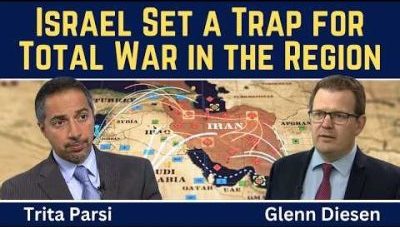
Trita Parsi: Israel Set a Trap for Total War in the Region
or go to
Aletho News Archives – Video-Images
From the Archive
Zionism’s Violent Legacy
By Donald Neff | Washington Report On Middle East Affairs | January 1996
On January 4, 1948, Jewish terrorists drove a truck loaded with explosives into the center of the all Arab city of Jaffa and detonated it, killing 26 and wounding around 100 Palestinian men, women and children.[1] The attack was the work of the Irgun Zvai Leumi – the “National Military Organization,” also known by the Hebrew letters Etzel – the largest Jewish terrorist group in Palestine. The Irgun was headed by Revisionist Zionist Menachem Begin and had been killing and maiming Arabs, Britons and even Jews for the previous ten years in its efforts to establish a Jewish state.
This terror campaign meant that at the core of Revisionist Zionism there existed a philosophical embrace of violence. … continue
Blog Roll
 Aletho News
- Trita Parsi: Israel Set a Trap for Total War in the Region
- Trump’s Iran war is on an Israeli leash
- Saudi oil boss issues global supply warning
- Riyadh Says Its Oil System Is Intact. The Numbers Say Otherwise.
- Trump and Netanyahu Want to “Finish the Job” on Iran
- US ‘one-sided dictation’ not Iran’s beliefs makes rational talks impossible: Baghaei
- Iran’s Next Strike May Not Explode. It Could Shut You Down /Col Doug Macgregor
- Iran: US political targets legitimate if assassinations return
- Iraq shuts key border crossing with Iran under US pressure: Report
- Undersea Internet cables could be targeted in retaliation for attacks on Iran: IRGC deputy chief
- If Americans Knew
- The Israel Lobby’s Changing Fortunes
- AIPAC has become such a political liability that it’s shifting to a more “nimble” approach to buying politicians
- At least 160 Israeli settler attacks in 2 weeks
- Will Gaza’s Ancient Christian Community Disappear Forever?
- Israel’s vision of regional security rests on keeping Arab states weak
- Heidi Levine recounts how Palestinian youths helped save her in settler attack
- DAILY UPDATE: Latest essential news on Palestine, Israel, & region
- Trump’s Intensifying Sabotage of the ICC, for Israel’s Sake
- Israeli military detain US and UK volunteers in West Bank including Democratic NY politician Brad Lander
- Americans at National Conservatism Conference held in Israel this year criticize Israel
- No Tricks Zone
- E-Cars Reduce CO2 Emissions By Only 41% Compared To Internal Combustion Engine Vehicles
- Predictions Made By Renowned Climate Professor Over Past Decades Have Been Proven To Be Poor
- New Study Suggests Large Regions Of The Pacific Ocean Have Been Cooling For The Last 80 Years
- Germany’s Green Energy Debacle: High Energy Costs Force Kahla Porzellan to Close After 182 Years!
- New Study: 50 Years Of The Most Aggressive ‘Net Zero’ Policies Can Only Affect The Global Climate By 0.03°C
- US September “Heat” Was No Record…Many Records Set Decades Ago
- Latest European Green Energy Debacle; Portugal’s Largest Flagship Solar Park Insolvent!
- Green Energy Debacle: German Expert Professor Fritz Vahrenholt Warns Of Severe Economic And Social Consequences
- Two More Paleo Reconstructions Affirm Meters-Higher Sea Levels Across Ireland, Brazil 7000-6000 Years Ago
- New Study: Earth And Venus Surface Warmth Largely Explained By Convection And Lapse Rate, Not CO2 Or Radiation

