What Has Israel Done for Americans in the Past Week?
They’ve taken our money & weapons and made us complicit as war criminals
BY PHILIP GIRALDI • UNZ REVIEW • MAY 30, 2024
The Jewish Virtual Library asserts that “The US-Israel relationship is based on the twin pillars of shared values and shared interests. Given this commonality of interests and beliefs, it should not be surprising that support for Israel is one of the most pronounced and consistent foreign policy values of the American people.” That is, of course, the big lie among the many that constitute the tie that binds the two countries together. The back-up lies, regularly spouted in Congress, are that Israel is a democracy and an ally. It is, of course neither, as it is a Jews-only apartheid regime that has no fixed borders and no reciprocal security arrangements with the US. Israel and its promoters never tell the truth, particularly when they are conning the United States government into providing more money and more weapons, as has been occurring both openly and secretly over the past eight months during the horrific ethnic cleansing of the Palestinians.
So how does it happen, particularly as Israel is manifestly evil in terms of its treatment of the Palestinians as well reckless in its aggression directed against neighbors like Lebanon and Syria? That it is not also bombing Egypt and Jordan is largely attributable to the billions of dollars in aid that the US gives to those countries conditional on their maintaining a wobbly modus vivendi with the aggressive and nuclear armed Zionists.
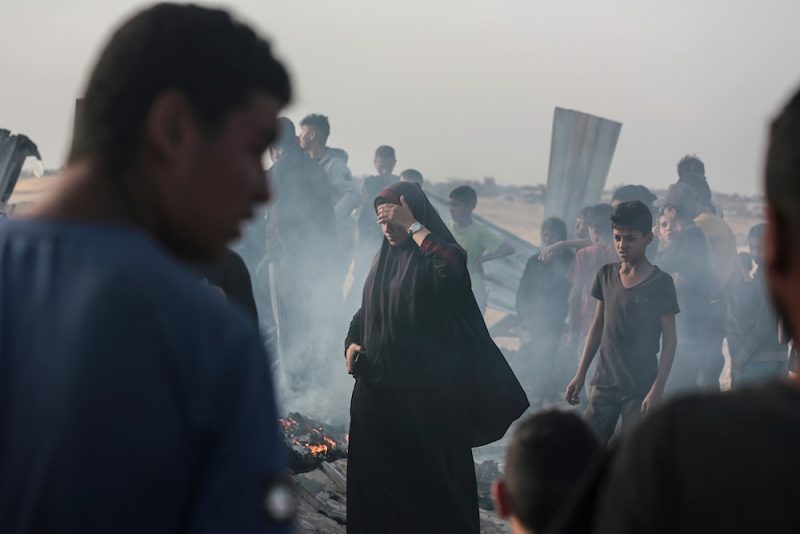
Given the wonderful comfort zone that Israel has established largely due to US protection in international bodies like the United Nations and the UN Security Council as well as vis-à-vis the several international courts and humanitarian aid agencies, Israel has been regularly attacking and otherwise killing its neighbors without ever being held accountable for anything. It is a pattern that is particularly visible now as the slaughter of Palestinians in Gaza approaches the 50,000 mark, consisting mostly of women and children. The recent outrageous assault on the Tal al Sultan neighborhood refugee camp near Rafah, which killed at least 45 and included graphic photography of a burning child’s body without a head as well as other still flaming and smoking corpses, was directed against homeless Gazans living in tents who had previously been driven from their destroyed homes in the northern part of the country. And to the eternal shame of Biden and company, the slaughter used US-made and supplied weapons.
Add to the carnage the famine that is now threatening to kill tens of thousands more Palestinians due to the Israeli government and its extremist settlers blocking the entry of food supplies and the scale of Israel’s chosen genocidal actions can be appreciated. Netanyahu’s claim that the army only used small munitions in Rafah and was targeting two Hamas officials hiding among the civilians was as usual a lie and the camp otherwise had no significance as a military target. Israel has followed up on the attack with another bombing run on nearby al-Mawasi the following night which killed more than twenty and the Jewish state’s tanks are now penetrating deep into the city no doubt preceding an infantry assault that could kill tens of thousands more. They have also cut off access to the entry point from Egypt to the south of Rafah. One senior Israeli government official is now predicting that the war will continue until the end of the year, another seven months, success apparently being measured by arriving at a point when Hamas and all other hostile Palestinians will be either killed or deported.
Following the Rafah slaughter, there no doubt occurred the mandatory phone call exchange between a sneering Prime Minister Benjamin Netanyahu and the grinning mental giant President Joe Biden, no doubt including Bibi’s expressing thanks for the American weaponry reportedly used in the killing. It’s really great when you don’t even have to pay for the weapons used to murder someone. To show his appreciation of the Israeli gratitude Biden no doubt muttered a phrase engraved on his prefrontal lobes, i.e. “Israel has a right to defend itself!” The transnational interaction presumably also produced the typical flatulence that emerges from the White House propaganda machine. Biden, in a bid to make it look like he was actually pressuring Israel to reduce civilian casualties, had previously warned that a full-scale invasion of Rafah would be hard to support and would be considered a “red line” issue, but it was a political stunt that he never intended to carry out apart from one delayed arrival of a shipment of the super heavy 2000 pound bombs. Many Americans, indeed a majority, are rightly deeply upset about the support of the US military and government for Israel’s latest war and an addled Biden is now counting votes while pretending to have humanitarian concerns.
Even so, the White House did not go so far as to blame the Israelis for their overreach. At a press conference, Biden’s National Security communications officer John Kirby, who reportedly was an Admiral once upon a time, possibly on the Good Ship Lollypop, articulated how “You’ve all seen the images, they’re heartbreaking, they’re horrific. There should be no innocent life lost here as a result of this conflict. Israel, of course, has a right to go after Hamas… As a result of this strike on Sunday, I have no policy changes to speak to. It just happened. The Israelis are going to investigate it. We’re going to be taking great interest in what they find in that investigation.” Sure you are John, and it will be a great and thorough investigation by Israel just like it was in the cases of the dead Americans on board the USS Liberty, peace activist Rachel Corrie, journalist Shireen Abu Akleh and, most recently, the 80 year old American citizen Omar Abdalmajeed As’ad who was beaten to death by elements in Israel’s “most moral army in the world” after being detained for the crime of having been walking in his West Bank village.
Why are Joe and company such dedicated dissimulators of the truth when it comes to Israel and all its malignant works? It is because of an entity known euphemistically as the Israel Lobby but which I much prefer to describe more accurately as the Jewish Money In Politics Entity (AIPAC, ADL and others) supported by the Scofield Bible Zio-Christian Crowd headed by clowns like House Speaker Mike Johnson. I know it’s a mouthful but that is what it is. Israel does not obtain US uncritical and overwhelming support because its behavior deserves it or because it serves American interests but rather because of all that money judiciously applied to corrupt the government at all levels and to buy and control the message of the media and entertainment industries. Professor John Mearsheimer, co-author of 2007’s The Israel Lobby, has long claimed that “Israel’s backers will go to silence anyone who challenges their narrative.” But according to Mearsheimer, something changed because of October 7th: “The big difference is that the lobby’s activities are completely out in the open today. I think few people knew much about the lobby back then. And very few people knew much about the lobby’s influence on American foreign policy, especially as it applies to the Middle East. And I think that we helped to expose that and now more people understand what’s going on. The lobby is now forced to operate much more out in the open.”
Pari passu, all that corruption judiciously applied is serving to strip Americans of their fundamental rights, particularly freedom of speech, as it will soon be illegal to criticize either Jews or Israel. And don’t expect any relief coming from the national election in November if there is a GOP victory in the form of Donald Trump and possibly Nikki Haley or some creature like that as a Ziocon replacement part. Trump sold out on every conceivable issue for Israel back in 2016-20 and would do it again. The Republicans have been striving to become the new party of “Israel First” as they want to steal away all that cash and media support from the Democrats. Senator Lindsey Graham of South Carolina has been calling for nuking Gaza while Nikki has been in Israel signing bombs to be dropped on the Pals with a purple marker: “Finish Them! America [Loves] Israel.” Her urging of a foreign military funded and armed by the US government to kill refugees living in tents after the destruction of their homes might be considered the cruelest way to endorse mass murder, but hey, Israel always comes first in the thinking of most Congressmen and those who are unfortunately sitting in the White House.
There is also legislation in the pipeline being pushed by the Republicans opposing any attempts by the White House to try to condition behavior by suspending weapons shipments to good friend and ally Israel, not that Biden would really go that route. The Congress has also been putting intense pressure on universities to clamp down on Pro-Palestinian groups on campus by claiming they are antisemites while not doing the same vis-a-vis the sometimes violent supporters of Israel, and the universities are obliging, canceling the graduation of protesters or even expelling them. Donald Trump has recently told a largely Jewish audience that he will deport any anti-Israel protesters if he becomes president, an interesting proposal as most of those demonstrating are native born American citizens and many of them are Jewish. He has also called on Israel to “finish” what it is doing to the Palestinians, clearly meaning that they should be exterminated or forced to emigrate, and has also told Jewish donors that today’s atmosphere in the US is very much like “before the holocaust.” No longer the loudmouth who called for an end to foolish wars, Trump has now in addition said that if he had been president when the Russian intervention into Ukraine had taken place, he would have bombed them. Likewise for China if it were to attack Taiwan. Either move would almost certainly start World War 3 even though neither Ukraine nor Taiwan is a vital security interest of the US but Trump is too stupid to know that. Secretary of State Antony Blinken is, for his part, urging that the US release for deployment in Ukraine advanced missile systems that would be able to strike deep into Russia. As dumb ideas go that it about as dumb as it gets, as the Russians have already indicated that they would respond with everything they have, meaning US military targets worldwide would be considered fair game for retaliation possibly using nuclear weapons.
We have truly been entering into something that might be entitled the Psycho Zone if it were to be made into a movie. War is being treated by the sociopaths in Washington, Israel and parts of Europe as though it were something to be casually entered into in one’s spare time. There is even talk in both the US and UK as well as in some other European capitals about initiating active conscription at a close to war level so we freedom lovers can sock it to those Russkies and Chinks good and proper. And as for the Palestinian trash, the Biden pontoon bridge that cost $320 million appears to be broken but it can still be used to carry out Netanyahu’s plan to push a bunch of screaming Ay-rabs into the Mediterranean Sea to get rid of them for once and for all. Hopefully they can’t swim and the Chosen ones will again be able to take possession of what was given to them by Yahweh. Or something like that.
Philip M. Giraldi, Ph.D., is Executive Director of the Council for the National Interest, a 501(c)3 tax deductible educational foundation (Federal ID Number #52-1739023) that seeks a more interests-based U.S. foreign policy in the Middle East. Website is councilforthenationalinterest.org, address is P.O. Box 2157, Purcellville VA 20134 and its email is inform@cnionline.org.
The Israeli regime is in legal trouble, but what does this actually mean?
By Robert Inlakesh | Al Mayadeen | May 30, 2024
Within the space of one week, the Israeli regime was hit with two major legal blows, first from the International Criminal Court (ICC) and then from the International Court of Justice (ICJ). While these measures may not actually translate to any tangible changes on the ground for now, the chronic effects may prove irreversible.
Prior to the launch of Operation Al-Aqsa Flood by the armed wing of Hamas, the al-Qassam Brigades, the political predicament of the Palestinian cause was that it remained on life support. Although the majority of United Nations member states would annually vote on the so-called Two-State solution model on bringing about a resolution to the conflict, there were no real efforts to translate this unanimous consensus into a reality on the ground.
It was interpreted throughout most of the world, including in the United States and the Zionist entity, that the Palestinian question was effectively stuck and was not even worthy of attention. Therefore, the US government pursued normalization deals with the Arab regimes and believed that Israeli efforts to Judaize the holy sites in occupied al-Quds and the Naqab, as well as to annex areas in the West Bank, were not going to impede their mission to reach a prized Saudi-Israeli deal.
Meanwhile, the situation on the ground for Palestinians grew even more dire. While in the past there were certain political limits as to how far internationally renowned Human Rights groups could go in their criticisms of Israeli policy and practices against the Palestinians, this somewhat eased as there was not even talk of any developments in favor of Palestinians politically. Therefore, we saw the likes of Human Rights Watch (HRW), Amnesty International, and the top Israeli human rights group, B’Tselem, release reports justifying why they identified “Israel” as an apartheid regime.
It is telling that these human rights reports, which in the cases of HRW and Amnesty were voluminous and provided copious sources, were able to essentially affirm what Palestinian human rights groups had been saying for decades. What was most significant about these reports, however, is that they did not stop at condemning Israeli conduct in the West Bank, Gaza, and the eastern part of al-Quds, but chose to shine a light on the entirety of occupied Palestine.
Despite the condemnations by Israeli leaders, who predictably labeled the reports “antisemitic”, it became clear that these were not deemed as consequential to the point of triggering any form of change in policy. Yet, this is where it all started to go terribly wrong for the Zionist entity.
In this post-October 7 setting, we are now living in a world where the Palestinian cause is not only internationally relevant, it is the most popular issue of its time. The entire world is fixated on the Palestinian struggle and the ongoing atrocities in Gaza, and millions of people are consistently taking any action they can to support the Palestinian cause for national liberation. This is all happening without there even being a unified Palestinian leadership.
It is in this context that the International Court of Justice (ICJ), ruled in favor of South Africa’s submission accusing the Israelis of violating the Genocide Convention. The ICJ voted unanimously to impose provisional measures on the Zionist regime to prevent genocide in Gaza. This may not have actually stopped the war in Gaza, but the effects of the Israeli regime being plausibly accused of committing genocide in the top legal authority on earth will remain now forever.
The reason why the accusation of genocide against the self-proclaimed “Jewish State” is so damning, is because the entire Israeli invention narrative surrounds the idea that the reason why they have a right to exist as a state is because they were themselves subjected to a genocide. So, if “Israel” is seen to be a regime that conducts genocide, it cannot on the other hand use the excuse they need to exist because of genocide.
On Friday, the ICJ accepted the South African submission requesting further provisional measures be adopted by the court, asserting that “Israel must immediately halt its military offensive, and any other action in the Rafah Governorate, which may inflict on the Palestinian group in Gaza conditions of life that could bring about its physical destruction in whole or in part.” What it also did was specifically deem it necessary to “reaffirm” that the Israelis must abide by the initial provisional measures ordered by the court. If the Zionist entity directly chooses to violate the ICJ’s orders, which are considered binding by the United Nations, it could trigger further action against it and work against its favor in the ongoing genocide case.
In addition to this, the decision by the International Criminal Court (ICC)’s chief prosecutor, Karim Khan, to finally request arrest warrants for Israeli Prime Minister Benjamin Netanyahu and his Defence Minister Yoav Gallant now also piles on even more pressure.
The way this now looks for the Zionist entity is as follows; they are a genocidal, apartheid regime that is committing crimes against humanity and are run by wanted war criminals. This is the case, as more and more nations around the world continue to recognize Palestine as a state and cut ties with the Israeli regime.
It is also apparent that this genocidal apartheid regime, run by war criminals, cannot possibly conclude any kind of deal to resolve the situation by allowing a so-called “Two-State solution”. There are no major political parties that could plausibly come to power after Netanyahu’s coalition that would accept the idea of creating a Palestinian State, nor is there any effort going on to create a viable roadmap to a peaceful solution.
For any objective observer the reality today couldn’t be any more obvious: “Israel” is an entity that is based upon total Jewish supremacy and will not allow a reality in which Palestinians can have human rights. If the Palestinian people are roughly equal to the size of the Jewish Israeli population in the entirety of historic Palestine, or what the Zionists would call “Greater Israel”, then the only way to maintain the Zionist regime in which only Jews are granted the right to self-determination, is either in maintaining an indefinite system of apartheid or choosing to conduct a mass campaign of ethnic cleansing or genocide.
It is inevitable that when people are subjected to apartheid rule, they will revolt and resist. Both the Israeli regime and its Western backers wanted this to be a status quo, to maintain apartheid and periodically allow the Zionists to mass murder the Palestinians in order to “put them in their place.” Until October 7, the US-Israeli agenda was succeeding, although the Resistance in Gaza would go to war with the Zionists every few years, these armed flare-ups never inflicted a big enough wound on the Israelis to change the equation. This is why the Zionist entity would refer to its wars with Gaza as “mowing the lawn”, they believed it to be necessary and sadistically saw it as a calculated approach.
When the Palestinian Resistance finally broke down the gates of their concentration camp on October 7, all previous understandings were torn to shreds. The Zionist army, its intelligence agencies and weapons technology were dismantled and disgraced. Operation Al-Aqsa Flood shook them to their core, as neither the Israelis nor their American allies ever believed that such a defeat could be inflicted upon them. It is at this moment that they both decided that genocide would be the new goal and that apartheid could not work within the Gaza Strip. This is why the Zionists have no idea what to do in the besieged coastal territory, they evidently believed that after eight months they would have at least weakened the resistance in Gaza, but they even failed to do this and their deliberate annihilation of civilians and their homes has not led to victory.
Politically the Zionist entity is trapped, it understands there are limits imposed on what is possible for them to do in the Gaza Strip, such as the mass ethnic cleansing of the population into the Egyptian Sinai, so they are without a clue as to how they must proceed.
While the Zionist regime’s leadership tries to buy time and look for a way to achieve a victory, in order to at least save their political careers, they set the stage for future Israeli internal strife. All as the Lebanese Resistance lay waste to their military sites and settlements in the North, displacing over a hundred thousand settlers and debunking the idea that the Israeli military has the capacity to take on Hezbollah. The Israeli economy is being devastated, the Yemeni blockade in the Red Sea is incredibly effective and even the Iraqi Resistance are able to lob missiles and drones towards them at will, with no real response. On the battlefield in the Gaza Strip, their ill-trained occupation soldiers fight without discipline, returning to their families in body bags and with life-changing injuries, losing motivation by the day, due to fighting an endless battle with no goals.
The Zionist entity is now in real legal trouble, faces a legitimacy crisis, and only promises one thing to both the world and its own settler population, a future of war and battle for ethnic supremacy. Most of the world’s population is looking on in utter horror at what they see occurring in Gaza, they are sick to their stomachs at what the Western regimes are backing and seek an immediate end to this disgusting racist regime’s never-ending civilian massacre.
Although the ICJ and ICC decisions may seem meaningless in the short term, as did the flood of human rights groups labeling the Zionist Entity an apartheid regime, these are nails that will in due time be nailed into the Israeli coffin. The Israelis have sealed their fate, their apartheid regime is coming to an end, whether this is to occur quickly through a war of liberation or through a longer drawn out process.
Why Israeli Military-Industrial Complex’s Dizzying Gaza War Profits Won’t Last
By Ilya Tsukanov – Sputnik – 30.05.2024
Israel’s defense sector has been making money hand over fist supplying weapons to the military for the war in Gaza, with profits going into the double digits, and order backlogs soaring to more than $50 billion. International affairs and security analysts told Sputnik what will stop Israel from sustaining this bonanza over the long run.
Israeli defense giants have been fruitful in multiplying their profits on the eve of the eight-month anniversary of the war in Gaza, with Israel Aerospace Industries (IAI), Rafael Advanced Defense Systems and Elbit Systems enjoying record bumps in stock prices and profits, nearly $15 billion in combined revenues in 2023, and an order backlog worth a whopping $52.4 billion.
The companies – which manufacture everything from drones and armored vehicles to the offensive and defensive missiles the IDF has used against Gaza fighters, Hezbollah in Lebanon and Yemen’s Houthi militia, expect the good times to continue to roll through 2024, with Elbit reporting Q1 profits of $1.55 billion in an earnings call this week – surpassing in quarterly terms the $6 billion the company raked in last year.
Israel is among the top ten weapons exporters in the world, accounting for nearly 2.5 percent of the global arms market between 2019 and 2023. Top clients include the United States, Britain, continental Europe, Azerbaijan, India and Vietnam, with sophisticated Israeli drones and missiles constituting among the top most sought after export articles.
Tel Aviv scaled back exports abroad from the fourth quarter of 2023 onward as the defense sector reoriented toward domestic needs – buoyed by US military assistance – which enables the Israeli government to spend part of its multibillion dollar American aid packages on weapons made in Israel, and supports joint air and missile defense research (preferences Washington doesn’t extend to any other major ally).
The Gaza campaign is a mixed blessing for Israel’s arms industry, observers have told Sputnik, pointing out that while Israeli defense giants may benefit over the short term from the present spike in orders, Tel Aviv’s diplomatic reputation coming out of the crisis may not be what it was when it entered it.
“I don’t think it’s been the most illustrious military weapons show,” veteran international and military affairs observer and former US Army Lieutenant Colonel Earl Rasmussen told Sputnik, when asked whether Israel’s defense industry has benefited or been damaged by the IDF’s Gaza operations.
“I would think some of their demand may diminish,” Rasmussen said, pointing out that besides the reputation of Israeli weapons, there is the country’s international political reputation to account for.
“In the political sense, Israel has isolated themselves due to what’s going on in Gaza. And also you see that what should have been a very quick entrance in and exit out has now dragged on for seven months, and I don’t know if there’s any end in sight until they level the entire Gaza Strip,” the veteran soldier said.
“Ukraine may still engage with them for military sales…but I would not be surprised if a lot of other foreign militaries and countries interested [in some of Israel’s] really good technology may be more hesitant and may look at other opportunities or competing technology,” given what can only be described as the “genocide” and “ethnic cleansing” taking place in Gaza, Rasmussen said.
Veteran Italian former diplomat and prime ministerial foreign policy advisor Dr. Marco Carnelos concurs with this assessment, telling Sputnik that while militarily, the Gaza campaign may have brought Israel’s military establishment some benefits, politically it has been suicidal.
“Politically speaking I do not see any way in which Israel has been benefiting from waging the war in Gaza. Its top leaders received arrest warrants from the International Criminal Court and a judgement for genocide is pending against Israel at the International Court of Justice,” Carnelos said.
“Militarily speaking [Israel’s] armed forces gained further knowledge and expertise in carrying out urban warfare in Gaza in the [past] seven months, maybe testing new techniques and weapons. It is the same for its foes – who after widespread destruction are still capable of engaging Israeli forces,” the observer said. “The real question remains: was it worth this political debacle to get better military experience? I strongly doubt it. Israel’s deterrent power is probably over and the political and strategic consequences could be huge,” Carnelos added.
Israel’s deterrent capabilities and reputation in the eyes of the world have taken a beating over the course of the Gaza crisis, with Hamas proving able to hold its own through seven plus months of intense Israeli bombardment and ground operations across the bombed out ruins of the 365 square kilometer strip of land, the IDF and its US and European allies proving unable to stop Yemen’s Houthi militia from essentially shutting down the Red Sea to Israeli-linked shipping, and Israel and Hezbollah engaging in months of deadly skirmishes along the Lebanese border.
But perhaps nowhere were the limits of Israeli (and by extension NATO) power demonstrated more thoroughly than during Iran’s April 14 drone and missile barrage targeting Israel. The Islamic Republic managed to land multiple projectiles at the Negev Desert air base the IDF used to strike Iran’s Embassy compound in Damascus on April 1, as well as an intelligence collection facility in northern Israel, despite advance warning and Israeli defenses being shored up by military assets belonging to the US, the UK and Jordan. For the first time since the 1973 Yom Kippur War, Israel’s adversaries were able to demonstrate that the Jewish state – while a regional military powerhouse, is certainly not invincible.
Terror in Syria: a US distraction from Gaza
The Resistance Axis has effectively thwarted US distraction tactics in Syria meant to support Israeli interests as the war on Gaza rages on
By Khalil Nasrallah | The Cradle | May 30, 2024
Western-backed terrorist strongholds in Syria have not remained untouched by the Israeli military assault on Gaza. With the broad activation of the Axis of Resistance in support of Gaza, particularly in Lebanon, it didn’t take too long before Washington began to mobilize its extremist foot soldiers in Syria’s north.
Soon after the 7 October Al-Aqsa Flood Palestinian resistance operation – and even before the war’s trajectory became clear and Hezbollah’s intentions were understood – terrorists in Syria began to escalate their operations. Terror attacks were recorded in northern Latakia and the western Aleppo region, where Hezbollah, Iranian advisors, and the Syrian army are concentrated, as well as along the demarcation line between areas controlled by the state and those controlled by the militants.
This escalation was almost certainly not a coincidence, given the history of similar mobilizations triggered during crucial political and military events in Syria. It is well established that Washington supports terrorist armed groups in northwest Syria to keep the Syrian army and its allies in a state of attrition, serving US and Israeli interests – most notably in the eastern part of the country where the US maintains an illegal military presence.
Moreover, there are clear indications that the uptick in terrorist attacks after 7 October was linked to the war on Gaza. This strategy seems designed to distract resistance forces, particularly Hezbollah, and sends a message that escalation by resistance factions would activate other fronts to alleviate pressure on Tel Aviv.
Idlib, the main northern sanctuary for the terror militias, presents a complex front, not only militarily but also due to its political entanglements and involvement in various regional dynamics. The conditions for launching a major operation there were unfavorable before 7 October and remain unfavorable in the ongoing war.
US support for subversive activities in Syria before 7 October
Before the Hamas-led resistance operation, US efforts were focused on supporting subversive activities in Syria, explicitly backing Al-Qaeda offshoot Hayat Tahrir al-Sham (HTS) led by Abu Mohammad al-Julani.
With British intelligence assistance, Washington sought to strengthen ties with Julani following a series of operations by the Syrian government and its allies in 2020. These military offensives culminated in the recapture of the Aleppo–Damascus M5 motorway and significant territory south of Idlib.
The hostilities concluded with the 5 March ceasefire agreement between Russian President Vladimir Putin and Turkish President Recep Tayyip Erdogan during the latter’s visit to Moscow, marking a new phase in the regional conflict.
On several occasions, the US attempted to rekindle hostilities to influence Turkish–Syrian negotiations, which were sponsored by Moscow and Tehran, aiming to restore relations and reduce tensions between Ankara and Damascus.
However, these talks faced several obstacles, including Erdogan’s domestic political considerations and the challenges posed by US policies regarding the Syrian crisis.
Between 2020 and 2023, the Syrian army and its allies imposed military conditions that restricted the militants’ capabilities, preventing them from launching large-scale operations. Reports indicate that during this period, the militants focused on enhancing their drone warfare capabilities, allegedly with support from French, British, and US intelligence.
These drones were used in several attacks, most notably the 5 October 2023 assault on a graduation ceremony at a military academy in Homs, central Syria, which resulted in over 150 military personnel and civilian casualties.
Post-7 October: Shifting focus and new frontline dynamics
The impact of the terrorist attack in Homs quickly faded as the world turned its attention two days later to the Qassam Brigades storming military sites and settlements around the Gaza Strip, capturing dozens of soldiers and settlers, prompting Israel to declare a state of war. As regional powers shifted their focus to the Gaza Strip, the situation in Idlib subsequently took a different turn.
In late December, terrorists launched a large-scale attack in the western Aleppo area, reaching the 76th Regiment near Urm al-Kubra. Hezbollah and the Syrian army managed to repel the assault, inflicting heavy casualties on the terrorists, many of whom were Uyghurs from China’s Xinjiang region.
Following, several other attacks tried to exploit the broader regional conflict, particularly the tensions in southern Lebanon. These attacks were influenced by external forces and extended beyond Julani’s leadership.
The attacks continued sporadically until the beginning of February, when the Syrian army, supported by Russian forces, introduced FPV (first-person view) suicide drones into the battle. These drones, which had demonstrated high effectiveness in Ukraine, significantly hindered the terrorists’ movements along the front lines to logistical points behind them.
The ability to curb the front lines suggested that disruptive tactics Washington might employ at any stage, especially in Idlib, could be neutralized. This came after the US had agreed to a truce in eastern Syria, accepted the status quo, and made concessions to prevent its bases from being targeted. These developments indicated the Resistance Axis’ capability to manage and prepare for new challenges, maintaining regional stability despite external pressures.
The steadfastness of resistance forces in Syria
Several indicators show that despite US attempts to create distraction fronts for resistance factions, Hezbollah remains steadfast in its fight against terrorism in Syria.
Hezbollah, along with other resistance forces such as Iraqi factions and Iranian advisors, has maintained a presence that supports the ongoing confrontation. Ultimately, the Syrian army and its allies have been successful in countering US distraction tactics through significant terrorist organizations, especially in Idlib.
This success offers several insights for the future. The Resistance Axis forces had anticipated such tactics and responded effectively, adapting to the circumstances of each stage. The American–Israeli reliance on terrorism to alter realities on support fronts has proven to be an unrealistic and losing strategy.
The outcomes of the current conflict may create political conditions favorable for a wide-scale military operation in Idlib in the future. Additionally, resistance forces are not isolated in their efforts to counter terrorist fronts, with Russian involvement playing a significant role that cannot be overlooked.
For a Fistful of Shekels: Israeli Defense Contractors’ Profits Boom as Economy Takes a Beating

By Ilya Tsukanov – Sputnik – 30.05.2024
With the world watching in horror as the raging Palestinian-Israeli conflict approaches its eight month anniversary, arms makers continue to quietly make a tidy profit from the war. Israel’s domestic defense sector is no exception.
US business media has warned of the “haunting parallels” between Israel’s ballooning military expenditures amid the Gaza War and the country’s 1970s ‘lost decade’ of surging inflation, out of control budget deficits, stagnant growth and faltering investor confidence.
Israel’s Central Bank expects the war in Gaza to cost a whopping 250 billion shekels ($67.4 billion US) through 2025, as defense spending as a share of GDP jumps from 5.3% to 9%. That’s amid increasingly dour circumstances in the civilian economy, with Q4 of 2023 seeing Israel’s GDP drop by over 20%, while consumption dropped 27% and investment by 70%.
Most worrying of all for Tel Aviv is the potential loss of investment flows – particularly in the tech sector. “We can’t even begin to measure how many people have decided not to invest in Israel in the short term, let alone on a permanent basis,” Shoresh Institute economist Dan Ben-David told Bloomberg in a report published Thursday.
But as the civilian economy suffers, Israel’s arms makers have no complaints, boasting record profits, buoyed by Washington’s nod to an unprecedented $17 billion in new military aid (more than five times the $3 billion+ Tel Aviv has been getting from the US annually since the early 1980s). A portion of the funds can be spent on Israeli-made weapons – a privilege not granted to other US allies, with roughly half a billion dollars also typically slated for Israeli-US joint research in missile defense.
Israel’s top three defense giants – Israel Aerospace Industries (IAI), Rafael Advanced Defense Systems and Elbit Systems have enjoyed surging stock prices and orders growing at a pace beyond their ability to keep up.
- IAI reported a 7% growth in sales to $5.3 billion in 2023, a 49% jump in net profit, with production ranging from drones, missiles, bombs, radars and electronic warfare articles to space-based defenses. Its order backlog has soared to $18 billion.
- Rafael – makers of Tamir missiles for the Iron Dome and an array of other air defense and anti-tank missiles and drones, saw a record 21% increase in sales and a whopping 85% increase in order volume, with net profits hitting $158 million – a 17% jump from 2022, and the backlog of orders reaching over $14 billion.
- Elbit, makers of much of the “guts” of Israeli weapons, plus drones, communications equipment, small arms, cluster munitions and armored vehicles, saw profits jump 8% in 2023, with revenues reaching nearly $6 billion, and Q1 2024 results this week showing $1.6 billion in revenues, and a $20.4 billion order backlog.
Protests and demonstrations around the world condemn the Israeli massacres in Gaza
Palestinian Information Center – May 29, 2024
 European and Arab cities and capitals on Tuesday witnessed solidarity protests, marches, and vigils with the Gaza Strip, condemning the ongoing Israeli massacres against the displaced in Rafah in the south of the enclave.
The protesters demanded an end to the war and the punishment of the Israeli officials responsible for the genocide in Gaza, and also called for a halt to supplying Israel with the weapons it uses to kill women and children and destroy residential buildings in the enclave.
In Britain, thousands of supporters of Palestine demonstrated in the streets of the British capital London, condemning the continued Israeli massacres in the city of Rafah.
The protesters rallying in the vicinity of Downing Street, the official residence and office of the prime minister, called on the British government to condemn the Israeli aggression and stop arms exports to Tel Aviv. They raised banners condemning the continued aggression on Gaza and demanding an immediate ceasefire.
Dozens of protesters blocked the entrance to the Israeli arms factory belonging to the “Elbit” company in the British village of Chineham, in support of Gaza and condemning the crimes of genocide.
In Belgium, the Belgian police dispersed protesters in the capital Brussels with water cannons as they tried to reach the Israeli embassy as part of a protest against the bombardment of Rafah.
In Ireland, Palestinian, Arab and Irish activists supporting the Palestinian cause demonstrated in front of the Irish Parliament in Dublin, coinciding with the Irish government’s recognition of the State of Palestine.
The protesters raised the Palestinian flags and banners in support of Palestinian rights in front of the parliament garden, which witnessed the raising of the Palestinian flag for the first time.
In France, thousands of people demonstrated on Tuesday evening in Paris for the second day in a row, protesting the Israeli massacres in Rafah.
The place de la République in the center of the capital was crowded with people, and Palestinian flags were placed on the statue in the center, with a large banner reading “Stop the Genocide”.
In Norway, a demonstration was held in front of the Norwegian Parliament building to celebrate the government’s recognition of the State of Palestine, and to demand the withdrawal of Norwegian investments from Israel and pressure for an immediate and sustainable ceasefire.
The demonstrators raised Palestinian flags and banners calling for an immediate ceasefire, and banners accusing Israel of committing a war of extermination. The demonstrators called for the punishment of those responsible for the genocide in Gaza.
In the Netherlands, dozens of supporters of Palestine held a silent protest in front of the city hall in Utrecht, to condemn the burning of tents and the killing of civilian children and women in Tel Sultan, west of Rafah.
The protesters laid on the ground in front of the building to represent the scene of the victims’ deaths in Gaza, raising Palestinian flags and chanting slogans condemning the Dutch government’s support for Israel since the beginning of the aggression, and calling for the protection of Rafah.
In Canada, the city of Toronto witnessed a massive demonstration on Monday evening to condemn the massacre of the tents committed by the Israeli army in the Palestinian city of Rafah.
The activists marched through the streets of the city, chanting slogans condemning the ongoing Israeli crimes, and calling for an end to the ongoing genocide in Gaza and a ceasefire.
In Mexico, pro-Palestinian supporters held a protest demonstration in front of the Israeli embassy in Mexico City, condemning the Israeli massacre in Rafah and rejecting the continued aggression on Gaza.
Many of the demonstrators tried to storm the embassy building and pelted it with stones, amid clashes with the Mexican police.
In Jordan, hundreds of Jordanians demonstrated around the Israeli embassy west of the capital Amman, condemning the ongoing genocide in Gaza against the besieged civilian population.
The protesters chanted slogans supporting the Palestinian resistance, calling for the need to deliver humanitarian and medical aid.
They also condemned normalization with Israel and called on the Jordanian government and Arab governments to end all diplomatic and economic agreements with Israel.
In Yemen, protesters organized rallies and marches condemning the Israeli massacres in Rafah, according to the Saba news agency.
Hundreds of students participated in marches in the governorates of Sanaa, Amran and Hajjah, in support and solidarity with the resistance in Gaza and in solidarity with the oppressed Palestinian people.
In Morocco, hundreds of Moroccans, including human rights activists, organized a rally in front of the Parliament building in the capital Rabat, in solidarity with Gaza and condemning the recent massacres in Rafah.
Through banners calling to “Stop the Rafah Massacres”, the participating protesters expressed their rejection of Israel’s defiance of all international conventions and rulings of the International Court of Justice through its continued massacres in Rafah, calling on international institutions to activate their mechanisms to deter it.
Many Moroccan cities, including Tangier, are witnessing similar protest marches, at an almost daily pace, in solidarity with the Palestinian people and rejecting normalization.
Smotrich says West Bank Palestinian Resistance ‘must be fought like in Gaza’

Bezalel Smotrich, Israel’s finance minister, during a news conference in Jerusalem, Israel, on Monday, Feb. 5, 2024 [Kobi Wolf/Bloomberg via Getty Images]
MEMO | May 29, 2024
Israeli Finance Minister, Bezalel Smotrich, who also serves in the Defence Ministry, stated today that Palestinian Resistance groups in the Occupied West Bank “must be fought like in Gaza.”
According to the Times of Israel, Smotrich’s remarks came after sporadic gunfire from the West Bank village of Tulkarm targeted the Israeli town of Bat Hefer in the central Sharon region.
The identity of those responsible for the gunfire into Bat Hefer remains unclear, and Israeli politicians’ claims that Palestinians were involved could not be independently verified.
“We must not allow them to do in the Sharon what they did on October 7 near the Gaza border,” Smotrich wrote on X. “Terror needs to be uprooted anywhere, even if it means Tulkarm will look like Gaza looks today,” he added.
Smotrich further added that a future Palestinian State would pose “an existential threat to the State of Israel.”
The far-right Minister also stated that he has spoken with Emek Hefer Regional Council head, Galit Shaul, and agreed to hold a meeting in the coming days with other officials “to address the immediate needs arising from the increased threat to the residents.”
The war is lost, so why is Netanyahu still killing civilians in Rafah?
By Ramzy Baroud | MEMO | May 29, 2024
Just hours after Israel carried out a gruesome massacre of displaced Palestinians in the Tel Al-Sultan area west of Rafah in the Gaza Strip on 26 May, it carried out yet another massacre in the Al-Mawasi area. The first is now known as the “Tents Massacre”. It took place shortly after the International Court of Justice (ICJ) finally issued a stern demand that, “Israel must immediately halt its military offensive and any other action in Rafah which may inflict on the Palestinian group in Gaza conditions of life that could bring about its physical destruction in whole or in part.”
The killing of 50 Palestinians in their own displacement tents was the answer given by Israeli Prime Minister Benjamin Netanyahu and his extremist government to the ICJ and the rest of the international community. The successive Israeli massacres in Rafah demonstrate the degree of intransigence of Israel’s genocidal regime.
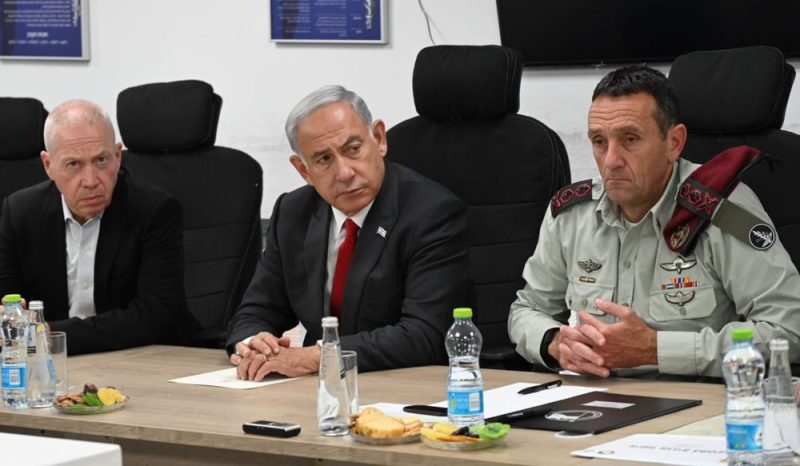
Netanyahu and his Minister of Defence, Yoav Gallant, who could both be on the official “wanted” list of the International Criminal Court (ICC) within weeks, could easily have chosen a different path, even for mere political manoeuvring. They could, for example, have delayed their Rafah operation or changed strategies, just to avoid further ICJ rulings on the matter. Instead, they went for the most arrogant and cowardly of choices: killing civilians.
Their 2000lb bunker-busting bombs dismembered and beheaded children as they lay beside their mothers in makeshift camps that have no water, no electricity and no food. While the Israeli army offered the world a clearly concocted version of what happened, blaming “militants” and such, Netanyahu’s office described the attack as a mistake.
Both versions, of course, were lies. The Israeli army possesses some of the most advanced surveillance technology in the world, thanks to US generosity and continued support. It could easily have distinguished between a Palestinian Resistance operational area and a refugee camp filled with children and women.
If the attack was indeed a mistake, what explains the other massacres that followed, also in Rafah and in nearby Mawasi, which killed and maimed scores of refugees? And what is the logic behind the killing and wounding of nearly 130,000 Palestinians since the start of the war on 7 October, the majority of whom were women and children?
The Tents Massacre was neither a mistake, nor can it be blamed on imaginary militants operating from inside displaced refugees’ tents. Nevertheless, Netanyahu did have his own logic. For a start, he wanted to send a direct message to let the ICJ know that Israel is not perturbed by its direct order to end the Rafah operation. The intended audience of this message was not necessarily the ICJ judges, but the international community, which remains, despite its solidarity rhetoric, ineffectual in influencing the duration, direction or nature of the Israeli war.
Netanyahu also wanted to score cheap political points against his rivals in his War Cabinet, by presenting himself as the bold Israeli leader who is standing up to the whole world. He has stated over and over again that “[the Jewish people] will stand alone.”
The Israeli leader must also have been informed that more Israeli soldiers had been captured by the Palestinian Resistance. The latter’s statement about this on 25 May was issued just one day before Netanyahu attacked Rafah. From a military point of view, the capturing of more soldiers who were sent to Gaza supposedly to free other Israeli captives should have been a “game over” moment.
The Gaza Resistance hasn’t released any more information since the initial, brief statement by Al-Qassam military spokesman, Abu Obeida. Hamas is known for releasing information to the public when it is strategically most opportune to do so, as was the case in its announcement that it is holding Israeli Colonel Asaf Hamami, who Israel declared to be dead last December.
Netanyahu and his army are trying desperately to pre-empt the angry reaction in Israeli society about the capture of soldiers by keeping the news focused on Rafah. He knows that such massacres widen his circle of support among his extreme far-right constituency.
Moreover, the timing of the massacre was also a message to the US, the mediators (Egypt and Qatar), Hamas and even members of the War Cabinet who are keen on ending the war through a truce agreement. Media reports have spoken about a potential breakthrough in talks, starting in Paris before moving to Doha, which showed some willingness on the part of Israel to link the release of prisoners to a permanent truce.
Such an agreement would be considered a defeat from Netanyahu’s point of view, and would certainly usher in the end of his political career. Hence, he simply lashed out against the refugees of Rafah with the hope of disrupting any potential deal in Doha.
It was for the same reason that his troops opened fire at Egyptian soldiers at the Rafah Crossing, killing one, possibly two, and wounding more. Egypt has been an important mediator in the truce talks. Attacking the mediator is not only humiliating for the Egyptian government, but for the army and Egyptian people as well.
Although Netanyahu has no strategy for the war itself, he has a strategy for prolonging his own political survival. It is predicated on mixing the political cards, ensuring chaos and carrying out constant massacres against civilians, all safe in the knowledge that Washington will always remain on his side no matter what. The Israeli leader is just buying time, though. Israel’s top generals and military experts and analysts know that the war has been lost and that prolonging it will not, in any way, alter its predictable outcomes.
US-supplied GBU-39 bombs used in Israeli attack on Rafah camps: CNN
Al Mayadeen | May 29, 2024
The origin of the weapon used in the Rafah airstrike three days ago was the United States, a report published by CNN revealed. The revelation makes the US government a prime suspect in facilitating the war crime, especially as the US officials refuse to condemn the action.
According to CNN, an analysis of the video from the scene and a review by explosive weapons experts has determined that the origin of the weapon put to use by Israeli occupation forces is in fact the United States.
This is not the first time that US-supplied weapons have been used to commit acts of genocide against the Palestinian population and target internationally protected organizations, as Washington is the primary supplier of explosives, bombs, missiles, and various types of munitions to the Israeli military.
It is worth noting that the US has also supplied the Israeli regime with 328 fighter aircraft, which have been used to commit the bulk of war crimes and instances of violations of international law in Palestine, Lebanon, and Syria in the past eight months.
In Rafah, the strike, which consisted of two guided munition bombs, eventually led to a fire breaking out, killing at least 45 and injuring 200 others, most of whom were women and children.
Moreover, the strike occurred after the International Court of Justice (ICJ) ordered the Israeli regime to halt its military attack on the city.
What was the bomb used by ‘Israel’?
It also says that from a video shared on social media, it was able to detect the tail of a US-made and supplied GBU-39 small-diameter bomb (SDB), which has a warhead composed of around 17 kg of ATX 757 explosive material. ATX 757 is 1.65 times more powerful than TNT, and it is thought that at least two GBU-39s were launched at the campsite. The last assumption is based on the remarks of the Israeli occupation forces spokesperson, Rear Admiral David Hagari, who said that the Air Force used two small bombs with a 17 kg warhead each.
Although the GBU-39 is meant to be used in highly precise strikes for important point targets, the bomb is usually used to target military-grade vehicles and aircraft, due to its highly explosive warhead and bunker-busting capabilities, meaning that it is likely to cause casualties in densely populated areas.
Weapons expert Chris Cobb-Smith confirmed this to CNN, as he said that “using any munition, even of this size, will always incur risks in a densely populated area.”
Despite multiple weapons experts identifying the weapon as the GBU-39 bombs and serial numbers on remnants of the bomb in the crime scene matching the claim, the United States Department of Defense said that it could not confirm the origin or type of munition used in the attack.
“In terms of this particular strike, I just don’t have more information for you,” Pentagon spokesperson Sabrina Singh told reporters.
US says Israeli massacres in Rafah not to impact aid, policy
Al Mayadeen | May 28, 2024
The Biden administration merely expressed deep concern on Tuesday over a deadly Israeli airstrike in Rafah, Gaza, labeling it “beyond tragic.” However, despite the death and paramount destruction, officials stated that the recent massacres do not signify a major operation that crosses established red lines.
National Security Council spokesman John Kirby, addressing reporters at the White House, reiterated the declared Israeli claim that the bombing of refugee tents in Rafah, which was said to be a safe area, was a “mistake.”
“The Israelis have said this is a tragic mistake,” Kirby noted when asked if the weekend’s events constituted the “death and destruction” US officials had warned against, completely adopting the Israeli narrative without the slightest bit of due diligence.
Kirby emphasized the absence of a specific “measuring stick” or quota for such incidents but stressed the importance of avoiding a major ground operation in Rafah that could lead to extensive damage and significant loss of life. “We have not seen that yet,” he said, continuing to ignore the civilian deaths and practically saying they would only count in light of an invasion.
When questioned about whether recent ground operations in Rafah would lead to the US withdrawing military aid, Kirby affirmed, “I believe that’s what I’ve been saying here.”
Vice President Kamala Harris, speaking at a ceremonial event in Washington, called the Israeli airstrike on Sunday “beyond tragic,” after it caused a fire in a tent camp in Rafah, killing 45 Palestinians, many of whom were burnt to death.
Israel’s Mossad chief threatened ICC prosecutor and family in covert intimidation campaign
MEMO | May 28, 2024
The former head of Mossad, Israel’s intelligence agency, personally threatened Fatou Bensouda, the former chief prosecutor of the International Criminal Court (ICC), and her family in a series of covert meetings, the Guardian has revealed in a shocking report exposing the clandestine campaigns of the apartheid state to thwart ICC probes into war crimes and crimes against humanity committed by Israeli leaders.
Several sources have revealed that Yossi Cohen personally threatened the ICC‘s then chief prosecutor, Bensouda, and her family in a series of clandestine meetings aimed at pressuring her to abandon her inquiry into possible war crimes committed by Israel against Palestinians in the occupied territories.
The covert campaign is said to have been authorised at the highest levels of the Israeli government, with Cohen using bullying, blackmail and intimidation tactics against Bensouda. Sources say Cohen raised questions about Bensouda’s security and that of her family in a menacing manner on at least three occasions between late 2019 and early 2021.
In one disturbing incident, Cohen allegedly showed Bensouda photographs taken covertly of her husband during a trip to London. On another occasion, he suggested that proceeding with a full investigation would be detrimental to her career. One source briefed on the meetings said Cohen told Bensouda:
“You should help us and let us take care of you. You don’t want to be getting into things that could compromise your security or that of your family.”
The threats were part of a coordinated smear campaign by Israel to undermine Bensouda, which also involved Mossad actively seeking compromising information on the prosecutor and her family members. The spy agency obtained transcripts of an apparent sting operation against Bensouda’s husband, which Israeli diplomats then unsuccessfully attempted to use to discredit her.
Bensouda was so alarmed by Cohen’s increasingly threatening behaviour that she took the extraordinary step of briefing a small group of senior ICC officials about the incidents. Three sources familiar with her formal disclosures said she revealed Cohen had pressured her on several occasions not to proceed with the criminal investigation.
Mossad’s targeting of Bensouda was just one part of a nearly decade-long covert “war” waged by multiple Israeli intelligence agencies against the ICC. Israel’s actions underscore the lengths it is willing to go to shield its citizens from prosecution for their involvement in war crimes and crimes against humanity in the Palestinian territories.
However, Cohen’s intimidation tactics ultimately failed to deter Bensouda or the court. In March 2021, she announced the opening of a formal investigation. The move infuriated the Israeli government, which had long opposed the ICC inquiry and even vowed to try to dismantle the court.
Bensouda began her work to open a war crimes investigation into Israel’s actions following the 2014 onslaught on Gaza, despite facing intense pressure and opposition from Israel and the US. In December 2019, the Gambian lawyer announced that she had concluded her preliminary examination and determined that all the statutory criteria under the Rome Statute had been met to open a formal investigation. This move was met with further condemnation and threats from Israel and the US, with the administration of former US President Donald Trump imposing sanctions on Bensouda and other ICC officials in response.
In February 2021, the ICC’s pre-trial chamber ruled that the court did indeed have jurisdiction over the Palestinian territories, paving the way for Bensouda to open a formal investigation in March 2021. The landmark decision was hailed as a victory for accountability and justice by Palestinian officials and human rights groups. Bensouda’s term as chief prosecutor ended in June 2021, leaving her successor, Karim Khan, to take up the investigation and build on her work to hold those responsible for war crimes in Palestine accountable.
The investigation has now taken a dramatic turn under Bensouda’s successor, Karim Khan. Last week, Khan announced he was seeking arrest warrants for Israeli Prime Minister Benjamin Netanyahu and Defence Minister Yoav Gallant, alongside three Hamas leaders, over the country’s conduct in Gaza. The landmark case marks the first time the court has taken action against leaders of a country closely allied with the US and Europe.
Khan himself has not been spared from threats, warning recently that he would not hesitate to prosecute “attempts to impede, intimidate or improperly influence” ICC officials. While declining to comment on specific allegations, an ICC spokesperson confirmed that Khan’s office had been subjected to “several forms of threats and communications that could be viewed as attempts to unduly influence its activities”.
The revelations about Israel’s covert operation against Bensouda have been met with outrage from legal experts and former ICC officials. Efforts by the Mossad to threaten or pressure the prosecutor could amount to offences against the administration of justice under the Rome Statute, the treaty which established the court.
One individual briefed on Cohen’s activities accused him of using “despicable tactics” in a ultimately futile effort to intimidate Bensouda, likening his behaviour to “stalking”. Another source said: “The fact they chose the head of Mossad to be the prime minister’s unofficial messenger to [Bensouda] was to intimidate, by definition. It failed.”
Featured Video
No Vote, No Representation, No State: Democracy, Israeli Style
or go to
Aletho News Archives – Video-Images
From the Archives
Sanctions, War and the Policy of Dual Containment
By SASAN FAYAZMANESH | March 17, 2008
It is now nearly three decades since the Unites States adopted the policy of dual containment of Iran and Iraq. While much has been written about the containment of Iraq, there has been very little in-depth analysis of this policy when it comes to Iran. In a book that is going to be released on March 31, 2008, entitled The United States and Iran: Sanctions, Wars and the Policy of Dual Containment (Routledge), I attempt to address this shortcoming by investigating when and why the US policy of containment of Iran came about, how it evolved, and where it stands today.[1] To the extent that Israel has been involved in US policy making, the study will also include the role that Israel has played in the containment of Iran. Also, since the fate of Iran has been inextricably linked to that of Iraq, occasionally the investigation will overlap with the containment of Iraq.
The policy of dual containment of Iran and Iraq originated during the Carter Administration, but it was not until the Clinton Administration that the expression “dual containment” became popular. … continue
Blog Roll
 Aletho News
- No Vote, No Representation, No State: Democracy, Israeli Style
- Zionist Bought Senate Blocks Information About American Citizens Killed By Israel
- While Gaza dominates the UN, these are the people keeping it alive
- New Report: “Scholasticide and Genocide in Gaza: Assessment, Testimonies and Legal Analysis”
- ‘THAAD Delusion’: Iran war exposes US missile shield limits – The Atlantic
- Moscow issues warning to NATO over Russian exclave
- Yes, the Iran war has destroyed Trump’s presidency
- The fallacy of US delusions about Iran’s economic collapse
- Hezbollah denies Syria cell link, warns of Israeli plan to sow discord
- The legacy of US sanctions, war, and occupation in Iraq
- If Americans Knew
- Mamdani releases plan to combat antisemitism and hate crimes in New York City
- Iran’s Revolutionary Guards Publish Letter to the American People
- DMFI launches $1 million ad campaign supporting Virginia’s Elaine Luria
- US Senate blocks resolution seeking report on Americans killed by Israel
- Israeli Attacks Kill Ten Palestinians in Gaza
- Massacre at Minab: The School That Became a Grave
- Israeli media: The IDF Shows It Doesn’t Turn a Blind Eye; It Actively Emboldens Settler Havoc
- As settlers ravage West Bank, Israeli forces kill 10 in Gaza – Daily Update
- New Report: “Scholasticide and Genocide in Gaza: Assessment, Testimonies and Legal Analysis”
- Ex-Biden officials are desperate for a Gaza scapegoat
- No Tricks Zone
- Green Energy Debacle: German Expert Professor Fritz Vahrenholt Warns Of Severe Economic And Social Consequences
- Two More Paleo Reconstructions Affirm Meters-Higher Sea Levels Across Ireland, Brazil 7000-6000 Years Ago
- New Study: Earth And Venus Surface Warmth Largely Explained By Convection And Lapse Rate, Not CO2 Or Radiation
- 2025 Nature Paper Claiming Worsening Global Drought Gets RETRACTED …Heavily Flawed
- New Study: ‘Global Drought Shows No Detectable Recent Acceleration Under Climate Warming’
- Economic Masterminds: German Socialists Suggest Taxing Productivity Gains Stemming From Using AI
- The South China Sea Has Not Been Cooperating With The Climate Change Narrative
- Energy Crisis: Germany Enters Heating Season With Historically Low Gas Reserve Fill Levels
- New Study: The Antarctic Ice Sheet Gained Mass From 2020-2024 Due To Staggering Snow And Ice Accumulation
- Study: Ocean Heating Rates From Thousands Of Years Ago ‘Dwarf’ Modern Ocean Heating Rates

