Israel executed 13 children in Gaza in front of their families, says human rights NGO
MEMO | March 27, 2024
Documented testimonies have been collected regarding the execution of Palestinian children in Gaza by the Israeli occupation forces in and around Al-Shifa Hospital, at a time when a UN expert has confirmed her belief that Israel is committing genocide in Gaza. Euro-Med Human Rights Monitor confirmed that it has “documented the execution of 13 children by the Israeli occupation forces in Al-Shifa Hospital and its surroundings.”
The NGO also confirmed that it had received “identical statements and testimonies regarding the crimes of executing Gaza children between the ages of 4 and 16.” Two of the children, named as Ali Islam Salouha. 9, and Saeed Mohammad Sheikha, 6, are said to have been killed “in cold blood in front of their families and residents of the area having been targeted deliberately using live bullets.”
Some of the children were killed while surrounded by the occupation army inside their homes with their families, said Euro-Med. Others were displaced and following routes that the occupation army had specified as “safe” for them to use.
“The documented cases of the execution of Gazan children embody a flagrant violation of international law, including international humanitarian law, and constitute war crimes and crimes against humanity in and of themselves,” the NGO pointed out, “and have been committed in the context of the crime of genocide to which the Palestinian people in the Gaza Strip have been subjected for six months.”
It also emphasised that the occupation army has committed and continues to commit horrific crimes systematically during its military operations lasting for more than a week inside and around Al-Shifa Hospital. “These crimes include premeditated killings and extrajudicial executions of Palestinian civilians.”
UN Rapporteur Says Received Threats since She Started Mission on Palestine
Al-Manar | March 27, 2024
UN Special Rapporteur for Human Rights in Palestine Francesca Albanese said there are “reasonable grounds” to believe that ‘Israel’ is committing genocide against Palestinians in Gaza.
She was speaking at the UN Human Rights Council in Geneva on Tuesday, where she presented her latest report, entitled ‘Anatomy of a Genocide’, during an interactive dialogue with Member States.
“Following nearly six months of unrelenting Israeli assault on occupied Gaza, it is my solemn duty to report on the worst of what humanity is capable of, and to present my findings,” she said.
“There are reasonable grounds to believe that the threshold indicating the commission of the crime of genocide has been met.”
Citing international law, Albanese explained that genocide is defined as a specific set of acts committed with the intent to destroy, in whole or in part, a national, ethnic, racial or religious group.
“Specifically, Israel has committed three acts of genocide with the requisite intent, causing seriously serious bodily or mental harm to members of the group, deliberately inflicting on the group conditions of life calculated to bring about its physical destruction in whole or in part, and imposing measures intended to prevent birth within the group,” she said.
Albanese said denial of the reality and the continuation of Israeli impunity and exceptionalism is no longer viable, especially in light of the binding UN Security Council resolution, adopted on Monday, which called for an immediate ceasefire in Gaza.
Meanwhile the UN special rapporteur revealed that she has been attacked and received numerous threats since she began her mission.
Lebanon Sunni militant head affirms coordination with Hezbollah against Israel
MEMO | March 27, 2024
The head of a Lebanese Sunni political and militant group that has joined Hezbollah, a Shia resistance movement, in its fight against Israel said yesterday that the conflict has helped strengthen cooperation between the two groups, despite their sectarian differences.
Secretary-General of Al-Jamaa Al-Islamiya, or the Islamic Group, Sheikh Mohammed Takkoush, told AP that his faction has joined the fighting along the Lebanon-Israel border in response to the occupation state’s ongoing genocidal war on Gaza and its strikes against Lebanese towns and villages, which have killed civilians including journalists.
“We decided to join [the battle] as a national, religious and moral duty. We did that to defend our land and villages,” Takkoush told the news agency at his group’s headquarters in Beirut. “We also did so in support of our brothers in Gaza,” where he said Israel was committing an “open massacre.”
According to AP, the Islamic Group’s armed wing, the Fajr Forces, carries out its operations against Israel mainly from the southern city of Sidon.
Takkoush said that he believed Israel has ambitions to seize more territory “not only in Palestine but in Lebanon too.”
The group acts independently but coordinates closely with Hezbollah and with the Lebanese branch of Hamas, Takkoush said. “Part of [the attacks against Israeli forces] were in coordination with Hamas, which coordinates with Hezbollah,” he explained, adding that direct cooperation with Hezbollah “is on the rise and this is being reflected in the field.”
“Our relations with Hezbollah are good and growing and it is being strengthened as we go through war,” adding that all the weapons they use are from their own arsenal: “We did not get even a bullet from any side.”
In a report published in November, L’Orient Today said Takkoush’s faction, which has been described as a Muslim Brotherhood-affiliated group, may help Hezbollah boost its credentials among some Lebanese Sunnis, although “it is not guaranteed to extend Hezbollah’s influence beyond the war.” This is because “The Sheikh has neither the oratory skills and charisma of Hassan Nasrallah, his Hezbollah counterpart, nor the popularity of Saad Hariri.”
China says Security Council Gaza ceasefire resolution binding on Israel
MEMO | March 27, 2024
China yesterday reiterated that “UN Security Council resolutions are binding” on Israel, rejecting US claims to the contrary, Anadolu reported.
China “calls on the parties concerned to fulfil their obligations under the UN Charter and to take due action as required by the resolution,” Foreign Ministry spokesperson Lin Jian said in response to a question about comments by the top US envoy to the UN who claimed the resolution passed on Monday was “non-binding” on parties to the conflict in Gaza, which has been under an onslaught by Israel since 7 October.
More than 32,333 Palestinians have since been killed and over 74,694 injured amid mass destruction and shortages of necessities.
The UN Charter stipulates that all Security Council resolutions are legally binding under international law.
The Council passed a resolution demanding a ceasefire in Gaza for the remainder of the Islamic holy month of Ramadan, which began on 11 March and is set to end on 9 April.
Fourteen countries on the 15-member Council voted in favour of the resolution. The US abstained.
The resolution demanded an “immediate ceasefire for the month of Ramadan respected by all parties leading to a lasting sustainable ceasefire.”
It also insisted on the “immediate and unconditional release of all hostages, as well as ensuring humanitarian access to address their medical and other humanitarian needs.” No mention was made of the thousands of Palestinians disappeared by Israel from the Gaza Strip since it launched its ground offensive at the end of October. After the resolution passed, the Permanent Representative of China to the United Nations, Zhang Jun, told the Council: “If fully and effectively implemented, [the resolution] could still bring long-awaited hope. Security Council resolutions are binding.”
Lin said Beijing “expects the state with significant influence to play a positive role on the party concerned, including by using all necessary and effective means at their disposal to support the implementation of the resolution.”
The Council “must continue to closely follow the situation in Gaza and get ready for further actions when necessary to ensure the timely and full implementation of the resolution,” said Lin.
War on Yemen part of US, UK scenario to reshape region in favor of Israel: Houthi
Press TV – March 26, 2024
The leader of Yemen’s Ansarullah resistance movement has said the Saudi-led war on Yemen is part of a strategy pursued by the US and Britain to reshape the region in favor of Israel.
Abdul-Malik al-Houthi made the remarks in a televised address on Monday night marking the ninth anniversary of the Saudi-led war on Yemen.
“The Yemen war was part of a larger geopolitical strategy pursued by the United States, Britain, and Israel to reshape the region for the benefit of the Zionist regime,” he said.
He condemned the Saudi-led offensive as an unwarranted and deceitful conflict aimed at obliterating Yemen, seizing control, and subverting the people’s entitlement to liberty and autonomy.
Houthi went on to highlight the resilience of the Yemeni nation in overcoming the invading forces and their ongoing progress.
The Ansarullah chief noted that the Saudi-led aggression on Yemen has resulted in the death or injury of over 50,000 civilians, mostly women and children.
He reiterated that the Yemeni nation’s spirit remains unbroken, despite the extensive damage inflicted on the country’s essential infrastructure and high civilian toll.
Houthi also emphasized that the Yemeni Armed Forces will further develop their indigenous military capabilities and that authorities in the Sana’a-based National Salvation Government will strive to boost the economy.
He finally called upon certain countries to rectify their miscalculations and renounce their aggressive policies towards Yemen.
In March 2015, Saudi Arabia and its allies launched the war on Yemen to restore power to the impoverished country’s Western- and Riyadh-allied government.
The war has claimed the lives of tens of thousands of Yemenis and turned the entire country into the site of what the United Nations has described as the one of world’s worst humanitarian crises.
Moscow massacre: Who created Daesh and whose agenda does it serve
By Shabbir Rizvi | Press TV | March 26, 2024
A massive tragedy struck Moscow last week as five armed assailants stormed the Crocus Concert Hall and opened indiscriminate fire on concertgoers, murdering over 130 and wounding many more.
The horrific massacre at the glitzy commercial center, which prompted a massive manhunt, led to the arrest of one assailant at the scene of the crime and others in the Bryansk forest, about 340 km southwest of the Russian capital.
Almost immediately, Daesh (or as the West calls “ISIS”) claimed responsibility for the ghastly massacre, releasing body cam footage of the shooters opening fire on people at the popular concert hall.
Since then, many have raised questions about the terrorist group’s motivations and objectives of the attack – and rightfully so.
Daesh has historically been at the service of Western powers. For example, any time the US needs an excuse to justify military operations from Syria to Iraq – Daesh just happens to raise its ugly face and sow chaos and destabilization.
In fact, Daesh is still the main justification for why the US illegally occupies much of Syria and Iraq – despite Axis of Resistance forces led by the late anti-terror commander General Qassem Soleimani destroying the edifice of the terror group in the region.
Or when Iran faced foreign plots in the form of armed riots in 2022 – rioters that had received training and financial support from American agencies – Daesh took advantage of the chaos and killed over a dozen pilgrims in a cowardly attack on the Shah Cheragh shrine in southern Iran’s Shiraz city.
The timing of the attack came as local security agencies were busy containing the armed rioters, and was seemingly a final bid by foreign hostile powers to foment chaos and disorder in Iran.
Chaos and destabilization are key to the nefarious plots hatched by US imperialists to push their hegemonic agendas. Since the very beginning of the Cold War, the US has been notorious for using mercenary proxy forces in order to advance its imperialistic goals.
So what is Daesh doing in Moscow? Three events come to mind that suggest things aren’t exactly what they seem. In other words, there is more to it than meets the eye.
Let’s switch back to January 2024 – outgoing US Under Secretary of State Victoria Nuland said “Putin faces some nasty surprises on the battlefield this year.”
Nuland was referencing the $60 billion supplemental funding for Ukraine from US Congress – funding that has from the start never been kept track of. Billions of dollars worth of money go into weapons, logistics, and other “aid.” It is no secret that Ukraine has been using mercenaries – even Takfiris.
Daesh fighting in Ukraine is not even a new development. Reports of Daesh fighters fleeing Syria to fight in Ukraine could be recorded as far back as 2015. Fighters were trained under Daesh and then sent to Ukraine to fight Donbas separatists on behalf of the Kiev regime.
We have seen Daesh fighting on the same side as American interests at least twice in recent times – once in Syria against the democratically-elected Syrian government, and second in Ukraine, against Russia – a key US adversary. Also, let’s not forget Afghanistan where Daesh fought the Taliban alongside the US.
Nuland insists that Putin will face challenges on the “battlefield” but Ukrainian drone attacks and bombings throughout Moscow have already set a terroristic precedent for attacks on Russian soil.
A diversity of tactics by employing Takfiri terrorists is still carrying out the same violence by other, more shocking means.
Second, the US knew in advance of a terrorist attack – with the US embassy in Moscow cautioning Americans to avoid large gatherings days before the dastardly attack that claimed more than 130 lives.
In a message to Americans, the embassy stated: “The Embassy is monitoring reports that extremists are planning to attack large gatherings in Moscow, including concerts, in the near future, and US citizens should avoid large gatherings for the next 48 hours.”
Though the message was posted on March 7 and warned of an imminent attack within two days, it seems the US had some damning intelligence. To what degree this information was shared – if it was shared at all – remains unclear.
It is well within the US playbook to post a message of this nature before an attack to absolve themselves of any wrongdoing – but what did the embassy staff and their handlers knew in advance?
The knowledge of the imminent attack also raises other questions. The apprehended shooters revealed they were recruited by unknown people via Telegram, and offered a million rubles for the job.
This is not the modus operandi of Daesh – who typically send fighters on missions that would most certainly ensure they do not survive. However, this does have the markings of the US – which has previously tested Daesh recruitment methods via entrapment cases.
Furthermore, Russian intelligence confirmed years ago that the US has been training Daesh for attacks on Russian soil. So regardless of whether the assailants were Daesh or not, US influence is clearly in one way or another seen in this attack.
Even if Daesh wants to take credit for the attack, ultimately they are just tools in the hands of their American financiers who are seemingly only deployed when the US needs to cause commotion.
And of course, there is the final point – the timing of the attack, and the usage of Daesh itself – corresponds to the international critical lens on Israel.
The Tel Aviv regime has never been under more pressure and detested to such a degree. Its war crimes in the besieged Gaza Strip and disregard for international law have exposed its illegitimate nature.
The public image of Israel has simply never been worse, and they would need something absolutely horrific – and something they can use to their own benefit politically – to get out of the mess.
So where does Daesh come in? One must recall the first few weeks of the Al Aqsa Storm operation – where Zionist media started a campaign falsely equating Hamas with Daesh (ISIS).
The campaign, circulated with the false slogan “Hamas is ISIS” painted Hamas resistance fighters as Takfiri terrorists in order to gain international support for the Zionist cause.
This backfired massively. Hamas and Daesh are well-known enemies, are not ideologically aligned, and do not consider themselves allies in the slightest matter.
This Zionist lie was so far-fetched that even Western media outlets such as Time magazine, Politico, and AP news agency published articles detailing how the two groups are not alike.
Now, as the Zionist image is in tatters, a Daesh attack works in its favor – as it always has.
Racist Zionist politicians and pundits scrambled to social media to warn the world of “Islamism” and to insist yet again that Daesh is the same as Hamas, warning that if they do not destroy Hamas the world would see these attacks in Europe and in the United States, carried out by Hamas (who have never conducted terrorist operations as all of their targets are military targets, and further Hamas operations are limited to only occupied Palestine).
The attack that killed over a hundred innocents is being used as Israeli propaganda to conduct their own war crimes against the Palestinian people.
At best, this is standard Zionist racism and propaganda. At worst, the Zionists themselves had a direct hand in this, at a bare minimum having some knowledge from US intelligence services.
The entire situation screams of foreign manipulation and shadowy Western actors. Daesh has been the Western tool for over a decade now to sow chaos and mayhem – and it seemingly continues to be a go-to tactic for CIA-Mossad operations.
Over a hundred lives were lost and thousands were changed forever. The world must mourn with Moscow and the Russian people over this horrific loss of life – but it must also remain vigilant and ask the right questions.
Who really benefits from chaos and destruction in Russia? Who really benefits from chaos and destruction in Somalia, Iraq and Syria, where Daesh also operates?
One thing is undeniable: wherever you find Daesh, you will always find the shadow of the US with it.
Shabbir Rizvi is a Chicago-based political analyst with a focus on US internal security and foreign policy.
Most Americans Believe US Will Be in World War Within Next Decade
By Kyle Anzalone | The Libertarian Institute | March 24, 2024
The majority of Americans believe it is likely that the US will be involved in a world war during the coming decade. Under President Joe Biden, the US is preparing for great power wars with Russia and China, engaged in multiple Middle East conflicts, and posturing for a confrontation with Iran and North Korea.
According to a new YouGov poll, 61% of Americans responded that it is very or somewhat likely that a world war would break out in the next five to ten years. About two-thirds of people responding to the poll said they believe the war will turn into a nuclear conflict.
When asked what countries would be aligned against the US, a majority of Americans said that North Korea, Iran, Iraq, Russia, and China. Americans identified NATO members such as France and the UK, as well as Israel and Ukraine, as allies in the coming world war.
Americans are not overly optimistic about the potential conflict. A slight majority believe the US and its allies would defeat Russia. While under half of respondents said the US would lose a war with Russia or against an alliance between Moscow and Beijing.
While most Americans believe a global conflict is on the horizon, they are not interested in fighting the war. More than twice as many respondents said they would refuse service even if drafted than stated, they would volunteer if the war broke out. Americans responded that they were more likely to serve in non-combat roles or if the homeland was threatened.
The survey was conducted as President Biden embroiled the US in multiple conflicts, putting America on the brink of war across various global hot spots. The White House is fighting a proxy war against Russia in Ukraine. That conflict has escalated in recent weeks as Ukraine is losing territory and lashing out with attacks on Russia. In response, Moscow has launched more attacks on Ukrainian cities and devastated energy infrastructure with a missile barrage last week.
In the Middle East, Biden withdrew from Afghanistan, but in October, he followed Israel into a massive regional war. Washington is shipping thousands of bombs to Tel Aviv. The US is also bombing Yemen, Iraq, and Syria. Three American soldiers were killed in Jordan earlier this year. Even within the halls of the White House, US officials are concerned Biden’s Middle East policy could lead to a broader war with Iran and Hezbollah in Lebanon.
President Biden has also continued a military buildup in the Asia-Pacific, stoking tensions with North Korea and China. North Korean leader Kim Jong-un has responded with a rash of missile tests and fiery rhetoric. Beijing has increasingly pushed back against Washington’s support for Taipei and Manila with military drills in the Taiwan Strait, South, and East China Seas.
A growing divide in the world economy is further adding to global tensions. A rising number of countries, including Russia, China, Iran, North Korea, Cuba, Venezuela, Nicaragua, Syria, Yemen, and Zimbabwe, face significant US sanctions. Economic warfare has led to a growing number of countries forming blocs outside of Washington’s control.
Israel, allies oppose release of popular Palestinian leader

The Cradle | March 25, 2024
Washington is reportedly opposed to the potential release of Fatah leader Marwan al-Barghouti as a result of Israeli pressure on the US regarding the matter.
Barghouti is currently being held in Israel’s Megiddo prison and has been imprisoned since 2002, the second year of the Second Intifada. He was a supporter of armed Fatah operations against Israel and was convicted of murder.
“The US, Israel, and the Palestinian Authority [PA] have identical positions toward Barghouti, and do not want to release him as part of any prisoner exchange deal between Hamas and the occupation,” informed sources told Arab21 on 24 March.
Hamas had previously demanded Barghouti’s release as part of any exchange deal with Israel.
According to observers cited by the outlet, PA President Mahmoud Abbas fears “severe polarization” within the Fatah movement if Barghouti is released – given his popularity among Palestinians.
Barghouti reportedly faces direct threats in Israeli prison, prompting some to fear for his life. The head of the Palestinian Prisoners’ and Ex-Detainees Authority, Qaddoura Fares, was recently subjected to several physical attacks.
He added that 13 Palestinian prisoners have been killed inside Israeli prisons since 7 October and that there “is real concern for the life of Marwan Barghouti, who may suffer the same fate if these attacks continue.”
Recent polls indicate that Barghouti has soaring popularity among Palestinians. A poll released on 20 March – carried out by the Palestinian Center for Policy and Survey Research (PCPSR) – states that in the case of a hypothetical election, Barghouti would win the majority of support by Palestinians.
“In presidential elections against current president Mahmoud Abbas and Hamas’ leader Ismail Haniyeh, Barghouti wins the majority of those participating in the elections. In a two-way competition between Barghouti and Haniyeh, the former wins by more than 60 percent of the participating voters. These findings indicate an 11-point rise in the vote for Barghouti among voters and an 8-point drop in the vote for Haniyeh,” the poll reads.
Despite US opposition to Barghouti’s release, western media has portrayed Barghouti – an advocate of the two-state solution – as essential to future peace between Israel and the Palestinians.
The Arab21 report comes as Washington has been pushing the idea of a ‘reformed’ PA taking administrative control over post-war Gaza, with the eventual establishment of a two-state solution. Hamas has referred to such an initiative as “a failed conspiracy that will not come to fruition.”
According to the PCPSR poll, Palestinians have shown little support for such a plan. Only thirteen percent of respondents selected the PA with Abbas at the helm, with 11 percent choosing the PA without Abbas.
In comparison, about 60 percent of respondents agreed that Hamas would be the preferred choice in ruling Gaza.
UN Security Council passes Gaza resolution, Israel fumes at US for not using veto power
Press TV – March 25, 2024
With the United States abstaining, the United Nations Security Council has finally adopted a long-awaited resolution that demands an immediate ceasefire in the Gaza Strip.
The resolution was put forward by the 10 non-permanent members of the Security Council. It received unanimous support from the remaining 14 members on Monday.
Washington had already vetoed similar bids three times since Israel started its brutal campaign in Gaza in early October.
The resolution demands an immediate ceasefire for the Muslim holy month of Ramadan and the release of Israelis the resistance movement Hamas took captive during Operation Al-Aqsa Storm on October 7, 2023. It also underscores the “urgent need to expand the flow” of aid into Gaza.
The regime says 253 Israelis were taken captive during the operation.
Given the duration of Ramadan, the truce demanded by the resolution would last for about two weeks.
The draft, however, says the truce should lead to a “lasting, sustainable ceasefire.”
Failure to implement truce ‘unforgivable’: UN chief
Right after the vote, UN Secretary-General Antonio Guterres welcomed the resolution.
“This resolution must be implemented. Failure would be unforgivable,” Guterres posted on X.
The Palestinian Ambassador to the UN Riyad Mansour said in remarks to the Security Council that the resolution must be “a turning point” in ending hostilities in Gaza.
“This must signal the end of this assault, of atrocities against our people.”
Hamas also welcomed the prospective ceasefire, saying the resistance group is ready for a prisoner exchange.
Slamming ‘US retreat’ at UN
Benjamin Netanyahu, the prime minister of Israel, responded to Washington’s abstention.
He said the move, which allowed the resolution to pass, “hurts both the war effort” and the effort to release the captives, according to a statement by his office.
Netanyahu “made it clear last night that if the US withdraws from its principled position, he will not send the Israeli delegation to the US.”
“This is a clear retreat from the consistent position of the United States at the Security Council since the beginning of the war.”
President Joe Biden of the United States had asked Netanyahu to send a team for consultations over the regime’s plans to launch a full-scale ground invasion of Gaza’s southern city of Rafah, where more than 1 million Palestinians have sought shelter.
The UN Security Council’s call for a ceasefire comes as international fears have grown over the planned Israeli ground invasion.
Human rights groups say a ground invasion of Rafah would drastically worsen a heavy civilian death toll and humanitarian crisis in Gaza.
Featured Video
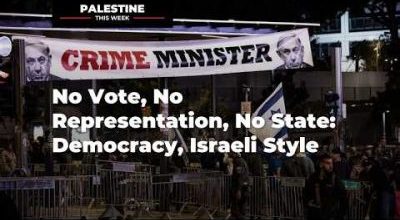
No Vote, No Representation, No State: Democracy, Israeli Style
or go to
Aletho News Archives – Video-Images
From the Archives
Sanctions, War and the Policy of Dual Containment
By SASAN FAYAZMANESH | March 17, 2008
It is now nearly three decades since the Unites States adopted the policy of dual containment of Iran and Iraq. While much has been written about the containment of Iraq, there has been very little in-depth analysis of this policy when it comes to Iran. In a book that is going to be released on March 31, 2008, entitled The United States and Iran: Sanctions, Wars and the Policy of Dual Containment (Routledge), I attempt to address this shortcoming by investigating when and why the US policy of containment of Iran came about, how it evolved, and where it stands today.[1] To the extent that Israel has been involved in US policy making, the study will also include the role that Israel has played in the containment of Iran. Also, since the fate of Iran has been inextricably linked to that of Iraq, occasionally the investigation will overlap with the containment of Iraq.
The policy of dual containment of Iran and Iraq originated during the Carter Administration, but it was not until the Clinton Administration that the expression “dual containment” became popular. … continue
Blog Roll
 Aletho News
- Elmo Sold mRNA Jabs to Your Toddler. Now They Are “Off-Label.”
- British state targets Palestine Action with yet another crooked trial
- Americans are paying the price to preserve Israel’s nuclear hegemony
- Resistance factions are necessary to ensure a permanent US Iraq withdrawal
- How Israel destabilizes the Middle East: Denying sovereignty and the right to exist
- Europe’s Establishment Is Embracing War – and Losing Voters
- NATO chief advocates war of aggression
- No Vote, No Representation, No State: Democracy, Israeli Style
- Zionist Bought Senate Blocks Information About American Citizens Killed By Israel
- While Gaza dominates the UN, these are the people keeping it alive
- If Americans Knew
- Israeli Soldiers Abduct At Least 22 Across Occupied West Bank
- Eight Palestinians Killed in Israeli Attacks on Gaza
- Israeli former leaders and security chiefs threaten legal action over ‘Jewish terrorism’
- Israel map in LA Times ad includes all land from the river to the sea
- Inside Lebanon’s 200-page dossier on Israeli war crimes
- Flydubai, genocide, settler violence, Trump abuse of power to deport – Daily Update
- Counting Antisemitic Incidents: What the ADL Audit Reveals — and Obscures
- Mamdani releases plan to combat antisemitism and hate crimes in New York City
- Iran’s Revolutionary Guards Publish Letter to the American People
- DMFI launches $1 million ad campaign supporting Virginia’s Elaine Luria
- No Tricks Zone
- Green Energy Debacle: German Expert Professor Fritz Vahrenholt Warns Of Severe Economic And Social Consequences
- Two More Paleo Reconstructions Affirm Meters-Higher Sea Levels Across Ireland, Brazil 7000-6000 Years Ago
- New Study: Earth And Venus Surface Warmth Largely Explained By Convection And Lapse Rate, Not CO2 Or Radiation
- 2025 Nature Paper Claiming Worsening Global Drought Gets RETRACTED …Heavily Flawed
- New Study: ‘Global Drought Shows No Detectable Recent Acceleration Under Climate Warming’
- Economic Masterminds: German Socialists Suggest Taxing Productivity Gains Stemming From Using AI
- The South China Sea Has Not Been Cooperating With The Climate Change Narrative
- Energy Crisis: Germany Enters Heating Season With Historically Low Gas Reserve Fill Levels
- New Study: The Antarctic Ice Sheet Gained Mass From 2020-2024 Due To Staggering Snow And Ice Accumulation
- Study: Ocean Heating Rates From Thousands Of Years Ago ‘Dwarf’ Modern Ocean Heating Rates

