Palestinian Political Groups Reject Israel’s Proposal to Send Arab Troops to Gaza – Hamas
Sputnik – 30.03.2024
TUNIS – Political groups making up the Alliance of Palestinian Forces have rejected Israel’s proposal to send Arab troops to the Gaza Strip, Palestinian movement Hamas said on Saturday.
On Friday, Axios reported, citing two senior Israeli officials, that Israeli Defense Minister Yoav Gallant, during his recent visit to the United States, suggested forming a multinational contingent with Arab troops to bolster Gaza’s law and order and ensure safe humanitarian aid delivery.
“The factions of the Alliance of Palestinian Forces reject the Israeli proposal to send Arab forces to govern Gaza and warn against its consequences,” Hamas said in a statement.
The statement also claimed that the Israeli proposal was “a new Zionist trap and a lie.”
“Turning to certain Arab countries for help, it [Israel], together with the US, seeks to avoid a horrible defeat they have suffered … to get the occupation army out of the huge moor it finds itself trapped in the Gaza Strip,” the statement read.
Aside from Hamas, the Alliance includes Palestinian Islamic Jihad, the Popular Front for the Liberation of Palestine and several other organizations that have their own military wings.
On Thursday, the International Court of Justice said that Israel must ensure the unhindered access of humanitarian aid and all necessary services to the Gaza Strip.
White House eases sanctions on violent Israeli settlers
The Cradle | March 29, 2024
The US has dramatically softened the sanctions it imposed on seven violent Israeli settlers by allowing them to use their accounts at Israeli banks, Israel Hayom reported on 29 March. The move makes the US sanctions, which allegedly were meant to punish the settlers for violent acts against Palestinians in the occupied West Bank, essentially meaningless.
The US Treasury sent a letter to Israel’s finance ministry clarifying that Israel is not required to prevent the sanctioned settlers from making routine use of their bank accounts.
Earlier this month, The Atlantic magazine had referred to the sanctions as President Biden’s “doomsday option” against Prime Minister Benjamin Netanyahu and his religious settler supporters.
However, according to Israel Hayom, the US announcement empties sanctions against the settlers of any practical content since freezing the bank accounts of the seven men was the only step that affected them in any practical way.
The sanctions continue to prevent the settlers from doing any financial transactions with US banks or traveling to the US, but as far as is known, they do not own assets in the US and have no intention of traveling there.
The US Treasury letter comes two weeks after Finance Minister Smotrich announced that he would not renew the Israeli state’s agreement to compensate banks in Israel that maintain relations with financial entities linked to the Palestinian Authority (PA).
Israel Hayom reported that Smotrich refused to renew his signature on a document that protects from lawsuits to the Israeli banks, Discount and Hapoalim, which have financial ties with Palestinian banks.
Without this protection, the Israeli banks were expected to sever ties with the Palestinian banks, fearing that they would be exposed to international lawsuits on the charge of transferring funds to terrorists.
Since the PA’s economy depends on the relationship with Israel, this meant an immediate freeze of economic activity in the occupied West Bank, which is under PA control.
Israel Hayom added that the White House softened the sanctions on the settlers in response to Smotrich’s threat.
However, it is unclear if the sanctions were meant to punish the settlers or Prime Minister Netanyahu in any significant way.
The Guardian reported in February that according to Aaron David Miller, who served six US secretaries of state as an adviser on Arab-Israeli peace talks, the sanctions against the settlers are not a serious effort to pressure Netanyahu to agree to a Palestinian state, end Jewish settlement construction on Palestinian land, or end Israel’s mass killing in Gaza.
“They have all kinds of levers they could pull to demonstrate that they’re not just frustrated and annoyed but they’ve reached the point where it’s difficult for them to consider him to be a partner, or his government,” he said.
“They could have slow-walked a restricted military assistance, particularly munitions. They could have abstained on a UN security council resolution. Or they could have basically said we need a cessation of hostilities, and joined with the international community in pressuring the Israelis to stop. They have levers they could have pulled, but they haven’t done it.”
How Zionist interests are behind British gov’s attempted definition of ‘extremism’

By David Miller | Al Mayadeen | March 28, 2024
The British government has been grappling with the question of extremism for years now. It has failed even to define extremism in any clear fashion, and has been struggling to fight back against an avalanche of criticism that its counter-extremism policies are Islamophobic.
The genocide in Gaza has focused minds in the British elite, because of the massive sympathy for the Palestinians visible on the streets.
The desperate attempts to cast pro-Palestine protestors as genocidal is a desperate attempt to split the movement. The government is trying to reframe “extremism” in such a way that more radical supporters of Palestinian liberation are demonised, criminalised and disavowed by the rest of the movement.
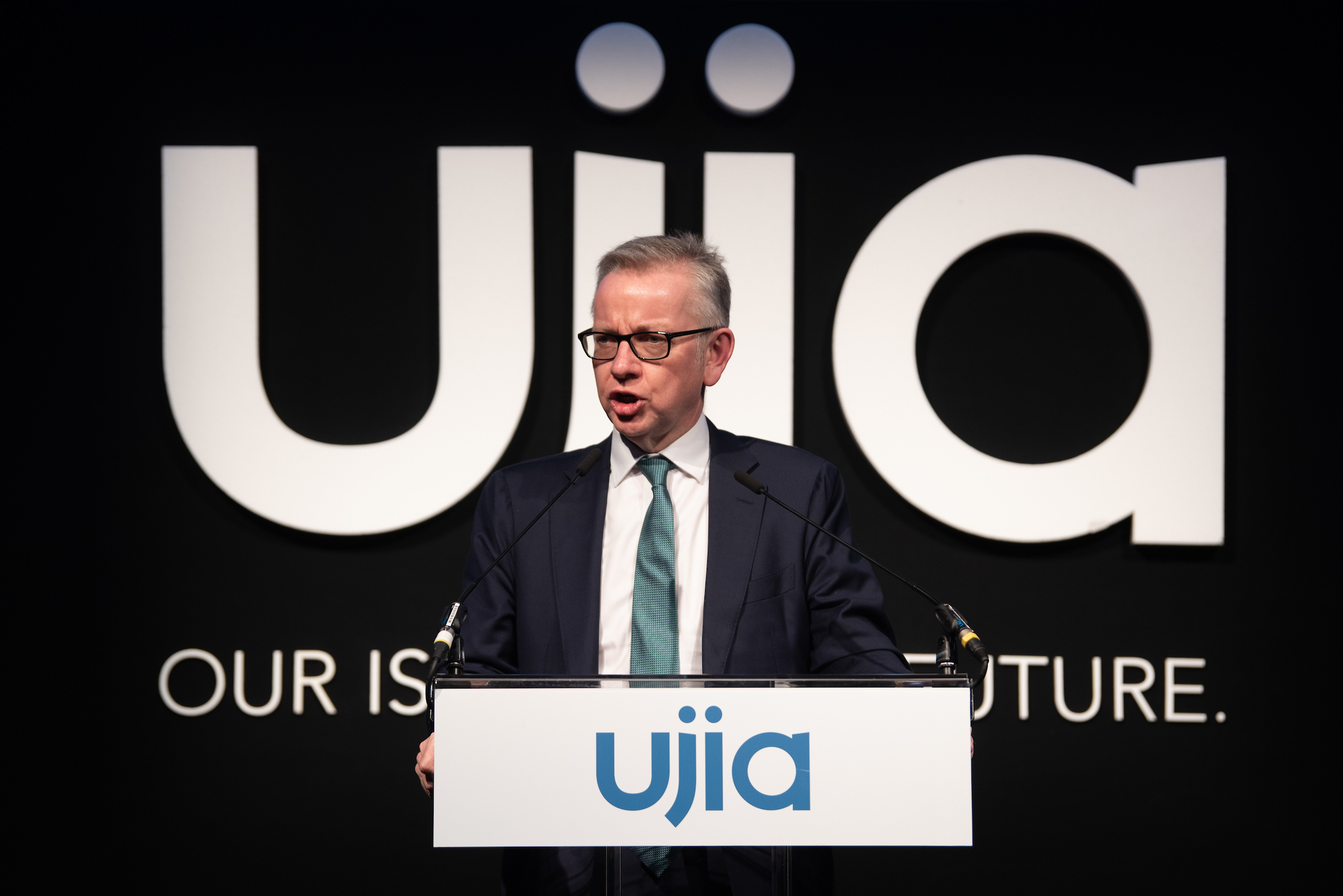
Michael Gove
The minister leading this is the toxic Michael Gove, the most pro-Zionist minister in the government. He has a history of involvement with Zionist lobby groups, and for example, was the first chairman of the Neoconservative and Islamophobic think tank Policy Exchange.
It’s no coincidence that the new policy he is introducing was dreamt up by Policy Exchange in a paper published in 2022. It recommended: Firstly, a consolidated Centre for the Study of Extremism within government, dedicated to the research and diagnosis of Islamist and other forms of extremism. Secondly, a separate communications unit dedicated to publicly combatting disinformation about the Government’s counter-terrorism and counter-extremism strategies. Thirdly, a due diligence unit, which develops and monitors criteria for engagement with community organisations.
Lord Shawcross
All of its main proposals were adopted by Lord William Shawcross in his review of Prevent, published in 2023. Shawcross is famously Islamophobic and his review was even denounced by Amnesty. He was appointed as a senior Fellow at the Policy Exchange in 2018, prior to being appointed to the Prevent Review in 2021.
Shawcross’s recommendations were all accepted by the government, and thus the new policy has effectively been written by a leading Islamophobic think tank.
Blacklisting agency
Among the innovations are a new blacklisting agency in Gove’s department (a so-called counter-extremism centre of excellence) and a change in the status of the Commission for Countering Extremism which changes from being an advisory to an enforcement agency.
Behind Policy Exchange
But behind Policy Exchange lies a shadowy group of foundations which provide cash for its work. Though they are secretive, we can reveal at least two.
The first and most significant is the Charles Wolfson Charitable Trust, which donates almost every year and has given Policy Exchange more than £3 million between 2007 and 2022. The Wolfson family, which runs the trust, are the owners of the Next retail chain. The boss, Simon Wolfson, declined his bonus in 2020-21, and despite this earned almost £3.4 million that year.
The Wolfson family also funds Beit Halochem, which channels money to the occupation forces which it describes as “heroes”. The family also gives money to the Jerusalem Foundation, which is engaged in promoting illegal settlements in occupied East Jerusalem.
Another source of funds is the Rosenkranz Foundation, which has given support to the think tank for more than a decade. Along with other Islamophobic causes. Its director, Robert Rosenkranz, was appointed a director of Policy Exchange in 2010.
In other words, British government policy on extremism is captured by Policy Exchange and Policy Exchange is in part a front for Zionist interests.
Defining ‘extremism’
The British government is in a bind. It can’t define extremism and yet it wants to pretend that it can. An amazing display of the lack of support the proposals have was shown on the BBC Question Time programme, where the presenter Fiona Bruce, after weathering many criticisms asked plaintively: “Let me just ask in the interests of balance, is there anyone here who welcomes what Michael Gove had to say?” She was greeted, as she put it with “not a hand up”.
The government claims that its new policy contains a “new definition” of extremism. But there was never an old definition. And the text they have published is not a definition either. There is still no legal definition of extremism, and this is why the government is at pains to point out that “This definition is not statutory and has no effect on the existing criminal law.”
The reason for this is that the government knows that if it tries and create a statutory definition, it will be subject to legal challenge which it will most probably lose. There is a nervousness about this which is intriguing.
First of all, Michael Gove named five “extremist” organisations under Parliamentary privilege, because he knows he would be subject to legal action were he to name them outside the House.
Disrupting the Palestine solidarity movement
Secondly, though the aim here is to destroy and disrupt the Palestine solidarity movement, primarily, no Palestine-related groups were named.
But pro-Palestine group Friends of al-Aqsa was named in drafts of the speech leaked to the media. It also named the Muslim news site 5Pillars and FoA as “divisive forces within Muslim communities”. The government was too nervous even to name them in Parliament.
Gove stated in the Commons that “Islamism is a totalitarian ideology which … calls for the establishment of an Islamic state governed by sharia law”. He named three groups, the Muslim Association of Britain, Cage, and Mend, all perfectly legal organisations.
Mend immediately challenged Gove “to repeat his claims outside of parliament and without the protection of parliamentary privilege… [to] provide the evidence… that MEND has called for the establishment of an ‘Islamic state governed by sharia law’”.
Even normally staunch allies, such as government adviser John Mann have criticised the policy. He stated that ministers should be prioritising “bringing communities together”. “The government needs to listen to people who are advising that the politics of division will not work,” he told the BBC.
Sophisticated engagement
The division appears to be between those pushing for a Likudnik scorched earth approach and those who favour a “sophisticated engagement” strategy – as it was described by the Zionist think tank Reut and their collaborators the US Zionist spy agency, the Anti-Defamation League in a report in 2016. Back in 2010, the Reut Institute urged Israel’s “intelligence establishment” to “drive [a] wedge between soft and hard critics” abroad. The former should be subject to “sophisticated engagement strategies” while the latter should be subject to “sabotage” and “attack”, it said.
This is not just a political and strategic difference, but a question of defending the millions in state and Zionist funding ploughed into the maintenance of hundreds of jobs in sophisticated engagements, such as the interfaith industry.
Underlying all this, the danger is that the definition best fits genocidal Zionist groups and their supporters within government, most notably Michael Gove himself. The penetration and capture of key elements of security policy by the Zionists is nothing if it is not, as the new so-called definition puts it, an attempt to “undermine, overturn or replace the UK’s system of liberal parliamentary democracy and democratic rights” in the service of attempting to “negate or destroy the fundamental rights and freedoms of others”, most obviously Muslims and Palestinians and their supporters.
Orwellian Tactics? Libertarian Party Fears Targeting By FBI After Letter
By Kyle Anzalone and Will Porter | The Libertarian Institute | March 29, 2024
The Libertarian Party has questions for the Department of Justice after the FBI claimed that a “foreign threat” had accessed its Facebook account. A preliminary analysis by the LP was hindered by Meta, which has offered little clarity on the incident.
In a statement published on Friday, LP chair Angela McArdle shared a letter the party received from the bureau warning of the alleged breach. “The FBI maintains active investigations that seek to identify the activities of hostile foreign governments and their intelligence services who target the US government, private sector, and political processes,” the letter says. “The FBI recently obtained information showing that one of these foreign threat actors was in control of various IP addresses that the group used to log into a Facebook account controlled by your organization. The group accessed the account sometime between August 2023 and February 2024.”
One LP employee with knowledge of the letter told the Libertarian Institute that roughly 10 people have access to the Facebook account. The party has not changed access to the page within the past two months.
The employee said the LP was unable to access the user archive for its Facebook account to determine if it had been hacked and has so far received no assistance from Meta in resolving the issue. The organization plans to do what it can to learn more about the supposed “foreign threat actor” and why the FBI was surveilling the account in the first place.
While the source acknowledged that the letter could be the result of “good police work,” the party is concerned the move could amount to a veiled threat from federal agents. Those worries are significantly heightened as two members of the party’s leadership have been contacted by the FBI within the past year, the employee added.
McArdle expressed similar fears in her statement. “We do not trust the FBI. Stories of aggressive FBI field agents have been popping up all over the country. The Biden administration seems to be cracking down on dissenting voices in preparation for the general election.” She continued, “We will continue to dissent, and we will call out the corruption of the current DOJ and Biden administration.”
“The greatest threat to freedom in the US isn’t an anonymous ‘hostile foreign government.’ It is the United States Government. It is the current administration, who has engaged in an unprecedented amount of censorship, coercion, and Orwellian control tactics.”
The letter to the LP came after multiple pro-Palestinian activists said they received visits by FBI agents interested in their social media posts. Rights group Palestine Legal said the house calls amounted to efforts to “intimidate and censor” activists as the US heads toward an election in which Libertarian voters and supporters of Palestine could play a crucial role.
More than 100,000 democratic voters in Michigan voted “uncommitted” in last month’s primary to protest US support for Israel, while LP presidential hopeful Jo Jorgenson received more votes than the margin between Donald Trump and President Biden during the 2020 general election.
US Approves Transfer of Bombs, Fighter Jets to Israel Amid Rafah Concerns – Reports
Sputnik – 29.03.2024
WASHINGTON – The Biden administration approved the transfer of billions of dollars of military equipment to Israel, amid concerns about a potential Israeli offensive in the Gaza Strip city of Rafah, The Washington Post reported on Friday.
The United States will provide Israel with more than 1,800 MK84 2,000-pound bombs and 500 MK82 500-pound bombs, the report said, citing State Department and Pentagon officials.
The MK84 bombs have been connected to mass-casualty incidents during Israel’s military operations in the Gaza Strip, the report said.
The US will also send 25 F-35A fighter jets and engines, the report said.
Dozens killed by joint Israeli, HTS attack on Syria
The Cradle | March 29, 2024
Israeli warplanes carried out a large attack on the countryside of Syria’s northwestern Aleppo province early on 29 March, coinciding with attacks by the Hayat Tahrir al-Sham (HTS) extremist militant group, formerly known as the Nusra Front.
Dozens were killed in the simultaneous attack, including Syrian soldiers and civilians.
“At around 1:45 AM, the Israeli enemy launched an air attack from the direction of Athriya, southeast of Aleppo, targeting several points in Aleppo countryside, which coincided with a drone attack carried out by terrorist organizations from Idlib and the western countryside of Aleppo province, in an attempt to target civilians in Aleppo and its surroundings,” a military source told Syrian news outlet SANA.
According to security sources cited by Reuters, at least 38 people were killed. Five members of the Lebanese resistance group Hezbollah were reportedly among the casualties.
Al-Mayadeen’s correspondent in Damascus confirmed that the Israeli strikes were launched simultaneously with the drone attacks by extremist militants. It added that the attack hit the Jibreen and Safira areas.
The attack came one day after Israeli jets struck a residential building in the Sayyida Zaynab neighborhood in the Damascus countryside, resulting in the injury of at least two civilians.
Extremist groups in Syria have long coordinated with Israel throughout the US-backed war on the country that began in 2011, particularly in the 2014 battles in Quneitra between the Nusra Front and the Syrian army.
Following an Israeli assault on Syria in late March 2023, which also coincided with attacks by extremist militants, the Syrian Foreign Ministry said in a statement: “These repeated attacks show the close coordination between … Israel and terrorist groups … The coordination proves beyond any doubt the deliberate intentions against Syria, which aim to prolong the crisis and deplete the country’s capabilities.”
Imagine If Russia or China Did the Things Israel Is Doing in Gaza
By Caitlin Johnstone | March 28, 2024
Imagine how the western political-media class would be acting if Russia or China was bombing and starving a walled-in population of two million, half of them children. Seriously, imagine it. Imagine the rage and vitriol. Imagine the nonstop media coverage.
When Russia invaded Ukraine, US media coverage of that war exceeded the media coverage of all US wars in the previous three decades. If Russia were deliberately and systematically exterminating civilians in Ukraine or anywhere else, the western media coverage of those war crimes would be many times more.
It’s almost cliché at this point to say “imagine if Russia or China did this”, but such comparisons are important for retaining a sense of perspective on just how evil the western political-media class is being about Gaza right now. We’re seeing articles come out in the mass media about starvation in Gaza which never once even mention the word “Israel”. Do you think that would be happening if this were being perpetrated by a government which defies the western empire? Of course not.
Imagine how the western political-media class would be acting if Russia or China was deliberately blockading food from an imprisoned population of millions of people.
Imagine how the western political-media class would be acting if Russia or China was relentlessly raining military explosives on densely packed urban areas known to be full of children.
Imagine how the western political-media class would be acting if Russia or China was deliberately and methodically ethnically cleansing an oppressed population for entirely racist reasons.
Imagine how the western political-media class would be acting if evidence that Russia or China are committing horrific war crimes was surfacing on a daily basis.
Imagine how the western political-media class would be acting if Russia or China were getting caught in lie after lie after lie while carrying out such a mass atrocity.
Imagine how the western political-media class would be acting if Russia or China tried to present them with blatantly fabricated evidence of crimes committed by the targeted population in justification of their atrocities.
We’d be living in a different political and media landscape. If Russia or China was doing what Israel is doing, entire presidential campaigns would have been built around who would oppose it most aggressively. Every sanction and embargo in the book would have been slammed upon the perpetrating government. The western press would be falling all over themselves to expose every atrocity and every lie and blaring those expositions as feature stories on every platform for months, and showering one another with awards for doing so.
Instead we get this. Government officials babbling nonstop about Israel’s “right” to “defend itself” and how this would all be over if Hamas didn’t keep fighting, while showering Israel with weapons to help it continue its atrocities. The mass media churning out a constant deluge of passive-language “Gazans are having trouble finding food for some reason” headlines and continuous reminders that this is all happening because of October 7, while repeating Israeli atrocity propaganda like it’s gospel truth. All viable US presidential candidates vowing their unconditional support for Israel while occasionally impotently finger-wagging at this or that aspect of Israel’s atrocities to avoid looking like complete psychopaths.
That contrast between how the western political-media class is acting toward the Gaza genocide and how we all know they’d be acting if an unaligned government was doing something similar is exactly why the US-centralized empire cannot be permitted to rule our world anymore. It pretends to stand for peace, justice, freedom and democracy, but in reality it just inflicts nonstop death and suffering upon human beings around the world and covers it up with propaganda spin from its servile mainstream press. It purports to uphold the “rules-based international order”, but all that means in practice is that it upholds an international order in which the US empire makes up the rules as it goes along and changes them as it pleases.
Humanity cannot allow itself to be abused and tyrannized by this murderous, hypocritical globe-spanning power structure any longer. A better world is possible, but we’re going to have to find a way to pry the talons of these monsters off the steering wheel first.
Pro-Palestine campaign forces Israeli arms maker to close UK factory
Press TV – March 28, 2024
A relentless campaign by the Palestine Action group has managed to force Elbit Systems, Israel’s largest arms company, to permanently shut down another weapons factory in Britain.
Palestine Action uses direct action tactics to shut down and disrupt the Israeli regime’s multinational arms dealers. It announced on Thursday that its campaign has forced Elbit Systems to vacate Elite KL factory in Tamworth, Staffordshire, for good.
This is the third Elbit Systems site in the UK to be shut down permanently by Palestine Action.
According to the pro-Palestine group, the company had previously manufactured cooling and power management systems for military vehicles, but was sold on after stating that it faced falling profits and increased security costs resulting from Palestine Action’s efforts.
“Following the recent acquisition of Elite KL Limited by a UK investment syndicate, the newly appointed board has unanimously agreed to withdraw from all future defense contracts and terminate its association with its former parent company,” Elite KL’s new owners, listed as Griffin Newco Ltd, confirmed the news in an email to Palestine Action.
Elbit Systems itself provides 85 percent of the drones and land-based military equipment for the Israeli military, as well as a wide range of the munitions and armaments currently being used by the occupying regime in its brutal campaign in the besieged Gaza Strip.
The company also maintains the surveillance technology deployed at the Gaza border and military checkpoints there.
Analysts say the genocidal attacks on Gaza, which continue to escalate, provide Israel’s arms manufacturers with opportunities to test and develop their latest lethal inventions.
Despite a massive death toll, the Israeli military has failed to achieve the goals it has been seeking to score through the campaign in Gaza, such as “destroying” Hamas, finding the captives that the Gaza-based resistance movement is holding, and bringing about forced displacement of the Palestinian territory’s population to Egypt.
Houthis Thwart the US-UK Military Dictatorship on Global South
By Simon Chege Ndiritu – New Eastern Outlook – 28.03.2024
A multipolar world is taking shape even in the military realm, as can be inferred from Houthi’s ability to curtail the US and UK goal of propping up Israeli genocide in Gaza at all cost. Houthis persistence and continued ability to inflict damage on Israeli, American, and British vessels transiting through Bab el Mandeb until Israel lifts its medieval blockade on Gaza shows that the western empire’s military dictatorship can be resisted by small countries. Meanwhile, the western empire desperately seeks diversion from its failure in the Red Sea.
Diversion; from Military Operation to Humanitarian Concern
The US and UK’s ill-fated “Operation Prosperity Guardian” is turning out so awfully wrong that the western media prefers to ignore it, hoping the rest of the world will forget. A passing view of the main western media outlets, France 24, CNN, and BBC on the 19th and 20th March 2024 shows that they did not display the exploits of the western empire’s military, either in Ukraine or the Red Sea like they cheered the destruction of all former victims of the empire. Instead, the European section of this propaganda machine; France 24, and BBC attempted to assume a moral high ground, by hypocritically raising the awareness of the dire food situation in Gaza, which is caused by their governments’ blind arming of Israel. France 24, featured a report by UNICEF stating how it was wrong to let children in Gaza to starve, and accentuated the story with a photo of a starving African child; for an extra boost of sympathy. Similarly, the BBC’s homepage in extreme right column carried a story of how the entire Gaza now faces starvation, something that could not be published in such a position just a few weeks ago. The CNN steered clear of Gaza and Ukraine and could not even popularize Biden’s botched campaign to airdrop a few food packages to Gazans (here), which ended awfully with some packages falling in the sea, others in Israel, and others killing Gazans. Noteworthy, the US provides millions of times more bombs to Israel than food to Gaza, and none of its bombs have missed its target by the margin seen in the airdropped food packages. This comparison shows the strong determination of the US to aid Israel in exterminating Palestinians, and that its food airdrop is for public relations.
The main lesson that comes to the fore is that American and British commitment to eliminating Yemeni’s resistance to their sponsored genocide has not born fruits. Therefore, the days of the West achieving every narrow-minded goal using its military are over. It is also clear that western global dictatorship will not only be resisted by military superpowers like Russia and China but also by small countries with sufficient missile and drone technology. “Operation Prosperity Guardian” has spectacularly failed and its architects; Washington and London have proved unable to defend their merchant vessels and Israel’s in the Red Sea. Surprisingly, it appears that the security of vessels transiting through the area is inversely proportional to the military deployment by countries owning them (these vessels). The US and the UK, which have heavily deployed their naval forces in and around the Red Sea have faced the most significant attacks from the Houthis, while vessels from other countries have been transiting peacefully. The Houthis’ meticulous selection of targets has denied the US and UK propaganda impetus of portraying the group’s attacks as indiscriminate. It may be dawning on the Western Empire that it may have to force Israel to suspend its medieval blockade on Gaza. This realization can explain Biden’s mumbling a declaration to establish a floating pier for vessels to ‘deliver aid’ to Gazans (here). However, such a pier may be designed for smuggling Gazans out in what Israeli hypocrites call voluntary immigration. Nonetheless, Operation Prosperity Guardian has failed so badly that Lindsey Graham, the empire’s military windsock pointed back to Ukraine, appearing flaccid and demanding mobilization of more young Ukrainians to add wind to the west’s failing military campaign (here). However, Houthi’s are not yet done.
On March 19th, Houthis’ spokesman announced (here) about Yemeni’s attack on a US commercial vessel MADO, news that the US media ignored before the UK Maritime Trade Organization (UKMTO) confirming. The attack constituted a trend where US vessels have been targeted recently, one of which resulted in casualties. Earlier, the UK even lost a commercial ship, Rubymar, a bulk Carrier that was struck by Houthis on the 18th February (here) and received significant damages making the crew to abandon it. The vessel sank several days later. Later, a US owned vessel, Gibraltar eagle, was also struck by Houthis in the recent past (here). Meanwhile, the US and UK navies have failed to lift the Houthis’ blockade on the Israeli port of Eilat which, reported, losing over 85% of its revenue since the Yemeni group started operations (here). The simple message that should be clear now is that the US and UK must abandon their hegemonic arrogance of trying to achieve haughty goals like militarily advancing Israeli genocide and others. The Houthis remind that a new world order is here, in which diplomacy is needed to balance the legitimate interests of all.
Houthi attacks also have desirable secondary effects in global geopolitics, especially in freeing long-term US hostages and isolating the latter. The Houthis have capabilities to inflict significant damage to participants, which has dissuaded some and limited the US ability to diplomatically mobilize vassals, relative to earlier campaigns against Iraq and Afghanistan. The past US imperial wars of plunder saw many countries joining, including Germany, Spain, Australia, New Zealand, and Poland as there was no risk of meaningful retaliation, but the Houthis are different. For instance, Australia declined to send its vessel to Operation Prosperity Guardian (here) for fear of losing them. However, the same (Australia) sent it thuggish Special Forces to Afghanistan to kill Afghans and drink beer from their prosthetic limbs (here). Other US allies declined to participate or only gave marginal support (here), while Germany’s participation came later, and entailed an embarrassing maneuver involving trying to shoot down US drones. Participants of the current operation are cautious of the risks involved, and the Houthis have repeatedly reported targeting US and UK naval vessels, statements that cannot be ignored. Also, navies involved are primarily securing their shipping vessels as opposed to helping the US military posturing, even when the American contingent is stretched thin and unable to provide meaningful protection to American shipping vessels (here).
The US Central Command, which is not in charge of the central US, but the Middle East, has been reduced to issuing threats and statements that have not deterred Houthis, after several months of military deployment and savage bombing of Yemen. As things stand, the pentagon can either continue its military posturing and risk even more attacks, or urge Israel to meet the Houthis’ demands and halt the Genocide in Gaza. Houthis have reminded the US that it cannot always get its way in the global south, and needs to take demands from smaller countries seriously.
Is America a Rogue Superpower?
By Ted Snider | The Libertarian Institute | March 27, 2024
“Unipolar” used to mean that the United States was, at least in theory, alone in leading the world. Now “unipolar” means that the United States is alone and isolated in opposition to the world.
In global affairs, a hegemon is a nation that leads because it has the consent of the other nations who believe in its goals and values. The United States has recently demonstrated, though, that it has given up any pretense of using its leadership to pursue the goals of the global community, and instead is openly using the global community to pursue its own goals.
In his new book, The Lost Peace, Richard Sakwa explains the distinction between the pursuit of hegemony and the pursuit of primacy. Primacy “entails predominance and the conscious attempt to thwart the ambition of others.” In its recent performance at the United Nations, the United States is performing, not out of hegemony as it usually described, but out of primacy.
As a hegemon, the U.S. wields the power to veto in the Security Council. But in the exercise of primacy, it has recently used that veto to supress the clearly expressed voice of the international community.
After repeated American vetoes of measures calling for an immediate humanitarian ceasefire in Gaza, in a desperate and seldom used move, on December 12, the General Assembly invoked Resolution 377A in an attempt to circumvent U.S. leadership. It was the response to what was perceived as America’s irresponsible use of its veto power as a permanent member of the Security Council.
It does not matter that the vote was on the war in Gaza, nor on whether you agree with the United States. What is significant is the assumption by Washington of the role of roadblock and not leader of the international will.
Article 377A first reminds the permanent members of the Security Council that they are obliged to “to seek unanimity and exercise restraint in the use of the veto” in pursuit of the maintenance of international peace and security. It then gives the General Assembly the right to make “appropriate recommendations to Members for collective measures… to maintain or restore international peace and security” when the Security Council “because of a lack of unanimity… fails to exercise its primary responsibility.”
The world saw the United States, not as a hegemon leading the world in the pursuit of unanimity, but as failing “to exercise its primary responsibility” as a leader on the Security Council.
On March 25, the U.S. went one step further and took a step toward becoming a rogue state who has supplanted international law with its rules-based order. International law is grounded in the charter system and the United Nations and is universally applicable. The rules-based order is composed of unwritten laws whose source, consent, and legitimacy are unknown. To the global majority, those unwritten laws have the appearance of being invoked when they benefit the U.S. and its partners and not being invoked when they don’t.
On March 25, the Security Council passed a resolution demanding “an immediate ceasefire for the month of Ramadan respected by all parties leading to a lasting sustainable ceasefire.” The resolution was able to pass because the U.S. stood aside and let the other fourteen Security Council members pass it by abstaining instead of vetoing.
But in her explanation of the American abstention after the resolution passed, U.S. Ambassador to the UN Linda Thomas-Greenfield “surprisingly” said that “we fully support some of the critical objectives in this nonbinding resolution.”
Her claim that the Security Council resolution was nonbinding was not an off script, impromptu comment. It is the strategy of a country that enforces, not international law, but the U.S. led rules-based order.
In a March 25 press briefing following the vote and Thomas-Greenfield’s claim, White House National Security Communications Advisor John Kirby called the resolution “nonbinding” no less than four times. “Number one,” he said, “it’s a nonbinding resolution. So, there’s no impact at all on Israel and Israel’s ability to continue to go after Hamas.”
When asked by a reporter, “on the binding thing, is it binding, nonbinding?” Kirby answered, “It’s a nonbinding resolution.” When asked “a technical question” a second time to clarify if the resolution was nonbinding, Kirby again said, “My understanding is it’s a nonbinding resolation—resolution.”
At a State Department press briefing the same day, department spokesperson Matt Miller also called the resolution “nonbinding” three times.
All UN Security Council resolutions are legally binding and have the status of international law. That is why UN Secretary General António Guterres said, “This resolution must be implemented. Failure would be unforgivable.” UN deputy spokesperson Farhan Haq explained that, “All the resolutions of the Security Council are international law. They are as binding as international laws.”
Others responded the same way to the U.S. claim. On behalf of the ten elected members of the Security Council who drafted the resolution, Pedro Comissario, Mozambique’s envoy to the United Nations, said, “All United Nations Security Council resolutions are binding and mandatory.” He then added, “It is the hope of the 10 that the resolution adopted today will be implemented in good faith by all parties.”
The United Kingdom also did “not share” the U.S. claim, prompting their envoy to the UN to say, “we expect all Council resolutions to be implemented. This one is not any different. The demands in the resolution are absolutely clear.” China, too, did not share the U.S. evaluation. “China’s U.N. Ambassador Zhang Jun said Security Council resolutions are binding.”
By judging Security Council resolutions to be nonbinding and denying their status as being as binding as international law, the United States has taken the next step from hegemony to primacy to a rogue state that has undermined the foundational role of the Security Council in the international order.
Humbling a Goliath: US-Led ‘No-Fail’ Mission Against the Houthis is Failing
By Ilya Tsukanov – Sputnik – 27.03.2024
The US established a maritime ‘coalition of the willing’ in the Red Sea in December 2023 and began bombing Yemen in January in response to the Houthis’ bid to shut down Israeli-affiliated commercial traffic through the waterway in solidarity with Palestine. The Houthis have vowed to continue their operations until the carnage in Gaza stops.
The US-led military campaign in the Red Sea which the Pentagon wanted to make into a “no-fail mission” has turned into a modern-day David vs. Goliath PR disaster, with the powerful American naval and air might arrayed against the Houthis proving unable to stop militia attacks or reopen the Red Sea to shipping, US business media has reported.
“The gray F/A-18 fighter jets hurtled one by one from the deck of the USS Dwight D. Eisenhower into the heat of the Red Sea morning, scrambling to counter the latest attack drone launched by the Houthis. The $56 million aircraft were part of a coalition operation that nullified the attack, returning hours later as they have almost daily for the last several months,” Bloomberg wrote in a report Wednesday highlighting the difficulties the West has faced trying to stop Ansar Allah.
“Yet for all the costly hardware the US and its allies have thrown at the Islamist group from northwest Yemen, they haven’t been able to stop the attacks on civilian freighters and warships. As a result, the world’s biggest shipping companies are still largely avoiding a route that once carried 15% of global commerce,” the outlet lamented.
Rear Admiral Marc Miguez, commander of USS Dwight D. Eisenhower aircraft carrier-led American armada operating in the Red Sea, said that while the US has “reduced some” of the Houthis’ missile and drone capability through strikes, there’s no way to predict when the fleet’s “job” in the region will be done, since estimates on Houthi missile numbers are “kind of a black hole for the US intelligence-wise.”
Shipping firms and companies impacted by the Red Sea crisis are even less optimistic.
“It’s quite a binary situation,” Hapag-Lloyd CEO Rolf Habben Jansen explained earlier this month. “It is either safe for our people or it is not. As long as it is not safe, we will not send our people through the Red Sea.” Jansen didn’t rule out the Houthi blockade could last throughout the rest of the year and into 2025.
A Western official predicted that the Houthis will be able to continue their blockade at its current intensity for “months” to come. Others accused the Houthis of getting help from outside via Iran, including everything from weapons components to sea mine-laying specialists. Iran has “categorically” denied providing any military or weapons assistance to the Houthis.
“[The Houthis] don’t create inertial navigation systems. They don’t create medium-range ballistic missile engines. They don’t create the stage separations on these medium-range ballistic missiles or the anti-ship cruise missiles,” US Central Command commander Gen. Michael Kurilla told a Senate hearing earlier this month, accusing Ansar Allah of getting help from outside, and ignoring the vast stocks of Soviet-era ballistic, cruise and air defense missile technologies which the Houthis have inherited and upgraded since 2014.
Unable to stop the Houthis at sea, Western officials have rejected any talk of a ground operation against the militia, warning that if the group escalates its targeting of Western warships, the coalition may respond by assassinating Houthi leaders.
An anonymous US military official told Bloomberg that the US is on the “wrong side of the cost curve” in the Red Sea campaign, whose economic costs are starting to add up.
While the Houthis can build and launch simple ballistic and cruise missiles or drones at a cost of thousands to tens of thousands of dollars, the anti-missile interceptors US warships launch to take down militia threats are costing US taxpayers up to hundreds of thousands of dollars apiece, with F/A-18 jets costing the Navy $25,000 or more per hour to operate (not counting whatever munitions they happen to expend during their mission).
The Houthis’ campaign of ship seizures, missile and drone attacks have caused commercial traffic through the southern Red Sea to drop by about 70 percent in March compared to early December, with container shipping reportedly down 90 percent, gas tanker flow halting almost completely, and Israel’s main Red Sea port forced to lay off half of its workforce.
Ansar Allah began its partial blockade of the Red Sea in November with the seizure of the Galaxy Leader, an Israeli billionaire-owned ro-ro car carrier, expanding operations to target not only Israeli, but US and British commercial vessels and warships after the pair of nations began a campaign of airstrikes against Yemen in January. Last month, the militia warned European countries setting up their own maritime security operations in the Red Sea that “any idiocy you commit will affect your ships and navigation.” Major European shipping companies including Maersk have said they would continue to avoid the Red Sea in spite of the EU’s security mission.
Featured Video
No Vote, No Representation, No State: Democracy, Israeli Style
or go to
Aletho News Archives – Video-Images
From the Archives
Sanctions, War and the Policy of Dual Containment
By SASAN FAYAZMANESH | March 17, 2008
It is now nearly three decades since the Unites States adopted the policy of dual containment of Iran and Iraq. While much has been written about the containment of Iraq, there has been very little in-depth analysis of this policy when it comes to Iran. In a book that is going to be released on March 31, 2008, entitled The United States and Iran: Sanctions, Wars and the Policy of Dual Containment (Routledge), I attempt to address this shortcoming by investigating when and why the US policy of containment of Iran came about, how it evolved, and where it stands today.[1] To the extent that Israel has been involved in US policy making, the study will also include the role that Israel has played in the containment of Iran. Also, since the fate of Iran has been inextricably linked to that of Iraq, occasionally the investigation will overlap with the containment of Iraq.
The policy of dual containment of Iran and Iraq originated during the Carter Administration, but it was not until the Clinton Administration that the expression “dual containment” became popular. … continue
Blog Roll
 Aletho News
- Elmo Sold mRNA Jabs to Your Toddler. Now They Are “Off-Label.”
- British state targets Palestine Action with yet another crooked trial
- Americans are paying the price to preserve Israel’s nuclear hegemony
- Resistance factions are necessary to ensure a permanent US Iraq withdrawal
- How Israel destabilizes the Middle East: Denying sovereignty and the right to exist
- Europe’s Establishment Is Embracing War – and Losing Voters
- NATO chief advocates war of aggression
- No Vote, No Representation, No State: Democracy, Israeli Style
- Zionist Bought Senate Blocks Information About American Citizens Killed By Israel
- While Gaza dominates the UN, these are the people keeping it alive
- If Americans Knew
- Israeli Soldiers Abduct At Least 22 Across Occupied West Bank
- Eight Palestinians Killed in Israeli Attacks on Gaza
- Israeli former leaders and security chiefs threaten legal action over ‘Jewish terrorism’
- Israel map in LA Times ad includes all land from the river to the sea
- Inside Lebanon’s 200-page dossier on Israeli war crimes
- Flydubai, genocide, settler violence, Trump abuse of power to deport – Daily Update
- Counting Antisemitic Incidents: What the ADL Audit Reveals — and Obscures
- Mamdani releases plan to combat antisemitism and hate crimes in New York City
- Iran’s Revolutionary Guards Publish Letter to the American People
- DMFI launches $1 million ad campaign supporting Virginia’s Elaine Luria
- No Tricks Zone
- Green Energy Debacle: German Expert Professor Fritz Vahrenholt Warns Of Severe Economic And Social Consequences
- Two More Paleo Reconstructions Affirm Meters-Higher Sea Levels Across Ireland, Brazil 7000-6000 Years Ago
- New Study: Earth And Venus Surface Warmth Largely Explained By Convection And Lapse Rate, Not CO2 Or Radiation
- 2025 Nature Paper Claiming Worsening Global Drought Gets RETRACTED …Heavily Flawed
- New Study: ‘Global Drought Shows No Detectable Recent Acceleration Under Climate Warming’
- Economic Masterminds: German Socialists Suggest Taxing Productivity Gains Stemming From Using AI
- The South China Sea Has Not Been Cooperating With The Climate Change Narrative
- Energy Crisis: Germany Enters Heating Season With Historically Low Gas Reserve Fill Levels
- New Study: The Antarctic Ice Sheet Gained Mass From 2020-2024 Due To Staggering Snow And Ice Accumulation
- Study: Ocean Heating Rates From Thousands Of Years Ago ‘Dwarf’ Modern Ocean Heating Rates