An Armenian American Group Caves in to the Anti-Defamation League
By David Boyajian | Dissident Voice | June 14, 2016
For several decades the Anti-Defamation League (ADL) and other leading Jewish American organizations (AIPAC, AJC, B’nai B’rith, and JINSA) have deliberately colluded with Turkey and Israel to defeat U.S. Congressional resolutions on the Christian Armenian Genocide and to diminish the factuality of that genocide.
Yola Habif Johnston, a director at JINSA (Jewish Institute for National Security Affairs), once admitted that “the Jewish lobby has quite actively supported Turkey in their efforts to prevent the so-called Armenian genocide resolution from passing.”
The hypocrisy is breathtaking given these organizations’ loud, endless demands for recognition of, and legislation on, the Jewish Holocaust.
 Starting in 2007, Armenian Americans in Massachusetts and elsewhere made international news by exposing the national ADL’s hypocrisy. In disgust, 13 Massachusetts cities and the umbrella Massachusetts Municipal Association kicked out the ADL’s alleged anti-bias program, “No Place for Hate.” Human rights advocates and many honest Jews supported those efforts. The Turkish government raged that its collaboration with Israel, the ADL, and other Holocaust hypocrites had been blown wide-open.
But in mid-May, a small group of Armenian Americans in Massachusetts — including the politically ambitious Sheriff of Middlesex County Peter Koutoujian and a few members of the Armenian Assembly of America (AAA) and the Armenian National Committee of America (ANCA) — struck a horrible “deal” with the two-faced ADL.
For his part of the “deal,” ADL National Director Jonathan Greenblatt casually “blogged” that his organization now “unequivocally” acknowledges the Armenian Genocide and “would support” (not “do support”) American recognition of that genocide.
Even Andrew Tarsy, former Director of the New England ADL, termed the pact “inadequate“. The ADL “ought to lead the conversation about reparations for these [Armenian] families … assets, land … everything that Holocaust reparations … has represented should be on the table.”
Of the many things wrong with this “deal,” let’s list a few.
The Horrible “Deal”
- The “deal” was concocted behind the backs of the Armenian American community and the hundreds of activists — Armenian and non-Armenian — who started the campaign in 2007 and have battled the ADL since. Why haven’t the verbal or written details of the negotiations and “deal” been made public? Why the lack of transparency?
- Greenblatt (former Starbucks VP and Special Assistant to Pres. Obama) isn’t the ADL’s highest official and may not have the authority to set policy. Have the ADL’s National Commission and National Executive Committee (its “highest policymaking bodies”) formally approved of Greenblatt’s “blog” post? We don’t know.
- The ADL has long played word games with the Armenian Genocide. In 2007, for example, it disingenuously dubbed it “tantamount to genocide” but not genocide. Greenblatt’s conditional claim that “we would support U.S. recognition of the Armenian Genocide” is similarly suspect. Why not just “we support”?
- The Armenian American activist website “NoPlaceForDenial.com” demands that the ADL “support U.S. affirmation of the Armenian Genocide, as it does with the Holocaust.” I authored those last six words years ago. They mean that as partial atonement the ADL must work as hard for acknowledgment of the Armenian Genocide as it has for the Holocaust. Nothing in Greenblatt’s statement remotely suggests that the ADL would do that.
- For three decades or more, the ADL has attacked Armenian Americans and worked with Turkey and Israel to defeat U.S. recognition of the Armenian Genocide. Yet the ADL has never apologized for its atrocious conduct. Ironically, the only ADL apology came in 2007 when National Director Abe Foxman apologized to Turkey because publicity surrounding the Armenian issue had embarrassed that country. The failure to obtain an apology from the ADL is scandalous.
- Americans deserve to know the details of the ADL’s longtime Genocide-denial pact with Turkey and Israel. Where are the documents, and why was their release not part of the “deal”?
The Berman Affair
Armenian Americans won a major victory in 2014 when Attorney Joseph Berman, an ADL National Commissioner, lost his bid to become a Massachusetts Superior Court judge. Governor Deval Patrick had nominated him in 2013. I testified against Berman.
Following a widely publicized fight, the eight elected Governor’s Councilors refused to confirm Berman. His leadership position in the hypocritical ADL was one reason why Councilors opposed him.
While I was in close touch with several Councilors, an incident occurred that has never before been made public.
A Councilor who opposed Berman told me of receiving several calls asking that the Councilor vote for Berman. One such caller was Sheriff Peter Koutoujian, an Armenian American prominent in the recent ADL “deal.” I remain deeply troubled by that call. Why would Koutoujian do such a thing? I think I know, but only Koutoujian can answer that question. He did not return my recent call asking about his past activities in the campaign against the ADL.
The final Council vote on Berman was 4 to 4. Had the Councilor voted as Koutoujian asked, the ADL’s candidate and the ADL would have triumphed, and Armenian activists would have been defeated.
That and other significant incidents raise questions as to whether the recent ADL “deal” was negotiated in the tough, adversarial way required to defend Armenian interests.
Failing to Confront
When a few activists and I launched the battle against the ADL in July 2007 and events were moving quickly, AAA and ANCA initially delayed even issuing a statement. Perhaps they were concerned about retaliation or being called anti-Jewish.
The following year, moreover, several activists and I became convinced that these organizations were not fully committed to the ADL fight. At one point, we were told that at least one of the organizations would no longer try to convince cities to sever ties with the ADL.
In 2015, even the NoPlaceForDenial.com website, an essential news resource maintained by ANCA persons, disappeared. It reappeared after I persisted in complaining about its removal.
Indeed, the ADL came under renewed pressure months ago only because I informed ANCA and a pro-AAA person that Newton, MA had, perhaps unintentionally, invited in the ADL after having booted it out in 2007.
Sheriff Koutoujian himself has long been very close to various Jewish organizations. He once received an award from the Jewish Community Relations Council of Greater Boston. He has taken two trips to Israel. The second one, last year, concerned “counter-terrorism.” It was organized by the ADL and funded by Israel’s Gal Foundation, which sponsors ADL programs. Of the 14 Massachusetts law enforcement personnel on the trip, Koutoujian was the only sheriff. Koutoujian later co-narrated a slideshow of the trip at a synagogue in Burlington, MA. Koutoujian has also spoken at other Jewish venues.
He recently wrote this on his Facebook page: “Thank you to the ADL and the Boston Globe for recognizing this terrible moment [Armenian Genocide] for what it is.” So after three decades of the ADL’s conspiring with Turkey to abuse Armenians, defeat Armenian Genocide resolutions, and damage the cause of genocide prevention, the ADL is thanked and all is forgiven, while hundreds of Armenian American activists get no thanks whatsoever? Incredible.
It’s well-known that Americans often interact with powerful Jewish American political organizations in two related ways. First, a person may hesitate to publicly disagree with such organizations due to concern about retaliation and being labeled anti-Jewish. On the other hand, being friendly and deferential to these organizations may advance one’s career in politics, academia, business, and other endeavors.
This question must be asked: Could these two types of interactions have adversely affected the post-2007 Armenian American campaign against, and the recent “deal” with, the ADL?
The Anti-Human Rights ADL
The ADL has an appalling anti-Armenian record. Despite this, recent stories about the “deal” in the Boston Globe and an Armenian American newspaper depicted the ADL as now somehow virtuous. Neither told readers about the ADL’s three decades of hypocrisy and collusion with Turkey.
The ADL claims to be “the nation’s premier civil rights/human relations agency [which] protects civil rights for all.” What nonsense! If that were so, it would never have been in the business of covering up genocide. Nor can acknowledging the Armenian Genocide magically now make the ADL a human rights organization. Indeed, the Armenian issue is just one of many that have unmasked the ADL.
The ADL, therefore, is not about civil or human rights. It’s just a Jewish political organization. For instance, it lobbied for an oil pipeline from Azerbaijan to Turkey. Human rights organizations don’t do that sort of thing.
What about nice-sounding ADL programs such as “No Place for Hate,” “World of Difference,” and “Combatting Bullying”? They’re covers. The ADL uses them to penetrate schools, colleges, corporations, and communities to enhance its visibility and political influence.
So that’s the organization that some Armenian Americans just made a “deal” with – a deal that was fatally flawed from the day it was conceived. True human rights advocates and perceptive Armenians reject it.
Russia slaps Israel in the face
By Said Gafurov | Pravda | June 10, 2016
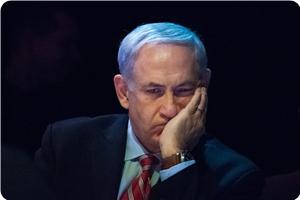
Israeli Prime Minister Benjamin Netanyahu’s recent visit to Moscow and his negotiations with President Putin, for the fourth time this year, has created the impression of failure. Russia and Israel have been developing active cooperation recently in the field of culture, trade and customs and education.
However, Netanyahu’s visit to Moscow does look like a failure from the point of view of foreign policy. In an official statement for the press, President Putin spoke about the “open” and “constructive” nature of the talks with the Israeli PM. In the diplomatic world, though, when negotiations are held in a friendly and even neutral fashion, they usually say that the talks were held “in a friendly atmosphere.” This is something that we have not heard from the Kremlin this time. In other words, there is no understanding between Russian and Israeli leaders.
The main purpose of Netanyahu’s visit to Russia was clearly focused on foreign policy issues, such as the regulation of the crisis in Syria and a possible solution to the Palestinian conflict. Israel sees clearly that the civil war in Syria is ending. Netanyahu’s visit coincided with a remarkable speech that Bashar al-Assad delivered at the opening session of the newly elected parliament. It is obvious that the question of the end of the war and national reconciliation in Syria is a matter of time. What happens afterwards?
The conflict in Syria has created an alliance between Russia, Iran, Syria, and units of Lebanese resistance. As for the latter, it is not only Hezbollah fighters, but also a large number of volunteers from Lebanese secular parties that struggle against Islamic State militants in Syria.
Netanyahu seems to be concerned about the prospect for the new, reunited Syria to appear near Israel. The Israeli Prime Minister is also concerned about the strong influence of Iran in the post-war Syria.
What does President Putin say to all this? Putin delivers a long speech, in which he talks about culture, economy, trade and economic relations, tourism and everything else. As for the Syrian problem, Putin said only two phrases: “We have paid great attention to international issues, and of course, we talked about the complicated situation in the Middle East region, including in Syria.” That’s all.
One shall assume that there is no understanding between Russia and Israel. Russia has ignored Netanyahu’s requirements, for example, to restrict supplies of weapons to Lebanon that Hezbollah fighters could get their hands on. Russia views Hezbollah as one of the most important political parties in Lebanon. Hezbollah is a member of the ruling coalition. Russia follows its principle to supply arms only to legitimate governments. Hezbollah is an important element of the legitimate government of Lebanon. Moscow sees Hezbollah as an essential element of structure of the Middle East.
In addition, Putin reaffirmed Russia’s position for a comprehensive and just settlement of the Palestinian-Israeli conflict and stressed that Russia was ready to act as a mediator. This came as another slap in the face of Israel, because it is the Palestinians who demand the Palestinian issue should be solved by the international community, while Israel insists on bilateral negotiations between Palestine and Israel.
Israel erases key Muslim, Christian holy sites from al-Quds ‘map’
Press TV | June 13, 2016
The Israeli tourism ministry has published a map of the occupied Old City of al-Quds (Jerusalem), which omits significant Muslim and Christian holy sites and entire neighborhoods in the area.
The so-called Old City map, which is distributed free of charge at tourist information centers across the city, does not refer to the venerated 14-hectare compound that comprises al-Aqsa Mosque — Islam’s third holiest site — and the Dome of the Rock, as “al-Haram al-Sharif,” and simply refers to it by its Jewish name of the Temple Mount, Al Jazeera reported.
Moreover, the map makes no reference to the Church of St. Anne, which is a Roman Catholic church located near the Lions’ Gate and churches of the Flagellation and Condemnation in East al-Quds.
The Lutheran Church of the Redeemer, the second Protestant church in Quds, is also shown on the map with a tiny and hard-to-find name.
The map, however, highlights dozens of sites whose historical importance is disputed, and a large number of them are indeed illegal settlements constructed in the Muslim and Christian quarters of the Old City of al-Quds.
Among 57 numbered sites, almost half are buildings occupied by illegal settlers in East Jerusalem and are largely unknown to licensed tour guides.
One such tour guide, requesting anonymity, said the map favors Jewish sites regardless of their touristic value and appears religiously flawed.
“When I saw it, I thought it was a map for only Jewish tour groups. The narrative it shows is quite exclusive to one religious group,” the tour guide said.
Aziz Abu Sarah, a resident of al-Quds, said, “The St. Anne’s Church, which I think is one of the most amazing places, is not on the map. There are many Christians coming to Jerusalem, and they are going to get a map that doesn’t identify their holy sites. It’s not a smart decision.”
 He further suggested that the inclusion of certain sites within the boundaries of the Old City of al-Quds is aimed at promoting a one-sided Jewish representation of East Jerusalem and ignoring its Christian and Muslim identities.
“Politically speaking, it adds sites that are controversial, like the settlements in East Jerusalem, and I think that makes it political and one-sided,” Abu Sarah said.
“There are a bunch of sites that are not only historically unimportant, but that are run by settlers,” said Betty Herschman, the director of international relations at Ir Amim, an Israeli human rights NGO that gives tours of East al-Quds to diplomats and others.
She added, “That is to the detriment of historically relevant Christian and Muslim sites, which you would think would be far more prioritized on a map of the Old City, the hub of the three major monotheistic religions.”
“This map, in addition to erasing important Muslim and Christian holy sites in the Old City, completely erases entire neighborhoods around the historic basin, supplanting them not only with Hebrew names but with the names of settlements,” Herschman argued.
She stressed that the settlements, for example Bet Orot, are built by radical and illegal settlers within the heart of Palestinian neighborhoods.
“The map is legitimizing private settlement around the historic basin,” Herschman said.
More than half a million Israelis live in over 230 illegal settlements built since the 1967 Israeli occupation of Palestinian territories in the West Bank and East al-Quds.
PLC member Dr. Samir al-Qadi among at least nine Palestinians arrested by Israeli occupation forces

Samidoun Palestinian Prisoner Solidarity Network – June 12, 2016
Dr. Samir al-Qadi, member of the Palestinian Legislative Council, was among one of at least nine Palestinians arrested by the Israeli occupation forces early Sunday, 12 June, in armed night raids in Jerusalem and throughout the West Bank.
Al-Qadi, 60, was arrested in an early-morning military raid on his home in Surif, northeast of Al-Khalil. He is a member of the Change and Reform Bloc in the PLC, associated with Hamas.
Al-Qadi was among at least four Palestinians arrested in al-Khalil district, alongside Ahmed Abdelfattah Hudoush, 30; Izz al-Ghaith; and Shaher Daoud, 40; as well as three in Jerusalem, Mohammed Ruweidi, Hamza al-Nimr and Musa Dabbagh, all working in the Islamic Waqf; Amer Samih Hamdan, 17, of Bethlehem; and Thaer Abu Zaher, 25, of Deir Bzeigh near Ramallah, reported the Palestinian Prisoners’ Society.
He has been arrested and imprisoned by Israeli occupation forces on multiple occasions in the past, in 1997, 2006, 201 and 2014, generally under administrative detention without charge or trial. He joins 6 more PLC members in Israeli prisons: 4 fellow Change and Reform Bloc PLC members, Hassan Yousef, Hatem Kufaisheh, Mohammed Abu Teir, and Abdel Jaber Fuquha; Ahmad Sa’adat, the General Secretary of the Popular Front for the Liberation of Palestine, elected on the Abu Ali Mustafa slate; and Marwan Barghouthi of Fateh.
Testimony of one of the latest attacks against Gaza’s fishermen
International Solidarity Movement | June 12, 2016
Gaza Strip, occupied Palestine – Last Wednesday Rajab Khaled Abu Riela, 30 years old, his brother and two cousins left Gaza’s port at 12 pm. They stayed out fishing until 1:30 am. “When we started our way back to the port one Israeli warship approached, the soldiers started insulting us through the microphone and immediately after started shooting against our two small boats with live ammunition”. “Then their warship crashed against us. In that moment I decided to try to escape, but I was immediately shot in the leg with live ammunition”. They took Rajab and his brother to Ashdod port, where they wouldn’t give him any medicine or treatment for the injury he sustained by the Israeli forces. “I was left bleeding until 9:30am”. Finally they were sent back to Gaza, where an ambulance took him directly from Erez border to the hospital, where he had to undergo surgery.
When he finally reached Shifa Hospital, doctors managed to remove the biggest pieces of the bullet – but many small pieces still remain in his leg.

Rajab’s mother shows the bullet removed from his leg
“Our future [for the fishermen] is uncertain; we don’t know what will happen tomorrow. Israel assaults us every day, takes our boats, shoots at us… Since 2005 I have pain in my chest due to an attack of the occupation, and as well my brother was injured while fishing in 2008. I’m responsible for providing for my family, we are 21 members… Now no one is providing for us, as I’m injured and they took our boat and motor. How I can work now without a boat?”

Brussels Unethical Relationship with Israel is Sufficient Reason for UK to Leave the EU
By Anthony Bellchambers – Global Research – June 12, 2016
The economy of the state of Israel that enables it to treat the international community with such contempt, is dependent entirely upon its trade with the EU single market. And that, apart from any other consideration, is another important reason for the UK to vote to leave the European Union.
The position of the EU as Israel’s primary trading partner is enabled under the EU-Israel Association Agreement, notwithstanding that Article 2 of that Agreement very clearly states:
“Relations between the parties, as well as all the provisions of the Agreement itself, shall be based on respect for human rights and democratic principles, which guides their internal and international policy and constitutes an essential element of this agreement.”
It is a blatant fact that Israel – as illegal occupier of the Occupied Palestinian Territories has been in gross breach of this provision since the very inception of the Agreement and yet the EU has turned a blind eye to the continuing violations that include the illegal settlement of over a half a million Israelis on Palestinian soil in a deliberate effort to prevent the establishment of an independent state for the largest indigenous people of the region.
The reason for this intolerable state of affairs is unquestionably the influence of the lobbyists embedded within the councils and committees of the European Union at virtually every level in Brussels and elsewhere, who exert a corrupting effect upon EU political and economic policy in order to skew EU political decisions, funding and bilateral trade to the favour of the (non-member) Israeli state.
A vote to divorce the United Kingdom from the EU would clearly indicate British rejection of such artificial and dangerous ‘arrangements’ that have such an adverse impact upon both regional and world peace.
Some 3,000 ‘Hezbollah-tied’ accounts await freeze
Press TV – June 11, 2016
As many as 3,000 more bank accounts, allegedly tied to the Lebanese resistance movement of Hezbollah, reportedly await freeze in the coming days under pressure from the United States.
Those to be affected include “employees, partners, customers affiliated with the party,” Saudi daily Asharq Al-Awsat reported on Friday, citing a source within Lebanon’s Central Bank.
On December 18, 2015, US President Barack Obama signed into law the Hezbollah International Financing Prevention Act.
The legislation says Washington will target those “knowingly facilitating a significant transaction or transactions for” Hezbollah or any individual, business or institution linked to the group.
As per the law, the US Treasury Department’s Office of Foreign Assets Control has been tasked with releasing names of the entities it considers to be associated with the group.
Governor of Lebanon’s Central Bank Riad Salameh has so far ordered 100 accounts frozen in line with the Treasury’s instructions as any failure to abide by the law will result in US sanctions.
“If anyone is suspicious, there can be no leniency, even if the customers have millions of dollars, because the negative repercussions in not abiding by the [US] law will be catastrophic on the bank,” the source said.
Interviewed by the CNBC, Salameh recently said, “Our priority is to keep Lebanon on the international financial map, so we have taken a resolution that we will implement that US law in Lebanon, and we have put in place a structure to do this, to satisfy the objectives of that law.”
On Thursday, Hezbollah reacted to the remarks, saying Salameh’s position “shows that the monetary policy has lost its sovereignty.”
Hezbollah is credited with defending Lebanon against two wars launched by Israel, the US’s strongest ally in the region, in 2000 and 2006.
In recent months, Saudi Arabia, another staunch ally of the US, has also been targeting the resistance movement.
Earlier in the year, Riyadh imposed sanctions on four Lebanese firms and three individuals it accused of having links to Hezbollah, among its other measures against the movement.
Analysts say Hezbollah has come under such pressure due to its involvement in anti-terrorism military operations in neighboring Syria.
The resistance movement has been successfully helping the Syrian army fight Saudi-backed Takfiri militants in order to prevent the Syria conflict from spilling over to Lebanon.
Journalist and human rights defender ordered to six months administrative detention
Samidoun Palestinian Prisoner Solidarity Network – June 10, 2016
 Palestinian journalist and human rights defender, Hasan Safadi, the Arabic Media Coordinator for Addameer Prisoner Support and Human Rights Association, was ordered to six months imprisonment without charge or trial under administrative detention by Israeli occupation forces today, Friday, 10 June.
Safadi, 24, who has been imprisoned since 1 May while crossing the Karameh bridge between Jordan and Palestine’s West Bank, has been under interrogation consistently at Al-Moskobiya interrogation center since that time. His detention had been repeatedly renewed. Prior to the issuance of the administrative detention order, the Jerusalem Magistrate Court had decided to release him today on a bail of 2500 NIS (approximately $650 USD), which had already been paid.
Safadi’s administrative detention order is scheduled to be confirmed by a judge at a time set in the next 48 hours, reported Addameer, making him one of approximately 750 Palestinians held without charge or trial under administrative detention. Administrative detention orders are indefinitely renewable and issued for one to six month periods at a time; some Palestinians have spent years at a time in administrative detention, on the basis of secret evidence submitted by the Shin Bet.
The detention of Safadi is part of the continued attack on Palestinian journalists and media workers, which includes the administrative detention without charge or trial of Omar Nazzal, member of the General Secretariat of the Palestinian Journalists’ Syndicate; Musab Kafisheh, freelance journalist; Mohammed Kaddoumi, freelance journalist; and Ali Al-Oweiwi, an announcer on Arabah radio station.
Other Palestinian journalists like Samer Abu Aisha, Sami al-Saee and Samah Dweik are imprisoned on “incitement” charges for posting on Facebook about Palestinian politics and struggle, while Abu Aisha also faces charges for visiting neighboring Lebanon, an “enemy country.” Other imprisoned journalists targeted for membership in political parties include Hazem Nasser and Mujahid Saadi. They are among 19 journalists imprisoned in Israeli jails.
Further, the imprisonment of Safadi also continues attacks on Palestinian human rights defenders, particularly those who work to free Palestinian prisoners, including recently released Addameer vice-chair and Palestinian Legislative Council member Khalida Jarrar; imprisoned land defender and advocate Samer Arbeed, held without charge or trial; civil society leader Eteraf Rimawi, executive director of Bisan, imprisoned without charge or trial; and repeatedly targeted prisoners’ advocates like Ayman Nasser of Addameer and Osama Shaheen of the Palestinian Prisoners’ Center for Studies.
Minister urges Israel to go ahead with West Bank annexation

Israeli Minister of Agriculture and Rural Development, Uri Yehuda Ariel
Press TV – June 9, 2016
An Israeli minister says Tel Aviv must go ahead with a plan to annex more than half of the occupied West Bank after evicting thousands of Palestinians from the area.
Minister of Agriculture and Rural Development Uri Ariel made the remarks in Moscow where he traveled with Israeli Prime Minister Benjamin Netanyahu on Wednesday.
“We have to aspire to the annexation of Area C. These are areas where there are no Arabs at all. We would remove a few thousand, who do not constitute a significant numerical factor,” Ariel said.
Area C comprises over 60 percent of the occupied West Bank. Measuring about 330,000 hectares, the territory is totally run by the Israeli military even though it is home to nearly 300,000 Palestinians, according to the United Nations.
Israel, however, says only about 50,000 Palestinians are residing there.
Ariel, also a hawkish member of the Knesset, is fervently pushing for the annexation of Area C. In January, he strongly urged the Israeli regime to take full possession of the land.
“We should tell the prime minister, the government and the Knesset that the time has come to annex Area C. I am suggesting that we unite around this call,” he said.
Ariel has even hinted at annexing the occupied West Bank in whole. “If someone asks about Areas A and B, then their time will come. When, we will see. For now, let’s agree on Area C.”
Under the interim agreements reached between Tel Aviv and the Palestine Liberation Organization (PLO) in the 1990s, and as part of Oslo Accords, the West Bank was divided into three zones.
Area A, the smallest of all, constitutes about 18 percent of the land and the Palestinian Authority is supposed to control most civilian affairs and internal security.
Area B, constituting around 22 percent of the rural West Bank, is administered by the Palestinian Authority for its civil affairs and by Israel for its security issues.
In both zones, Israel holds full control of external security, meaning it retains the right to enter the zones at any time and make arrests or carry out any extrajudicial execution.
Virtually all of the Israeli settler population of the West Bank of more than 350,000 is based in Area C, living in 125 settlements and about 100 outposts.
The Israeli military almost never grants the Palestinians living in Area C building permits. According to a UN report, more than 11,000 demolition orders are currently outstanding in Area C.
The agreement on separating the West Bank into three zones was worked out to enable an incremental transfer of authority to the Palestinian Authority and to address the needs of a long-term demographic growth.
The UN announced in late April that a total of 588 Palestinian structures, mostly based in Area C, had been razed since January. It said the demolitions had affected more than 1,000 people as the residents had lost structures related to their source of income.
Under Israeli pressure, Facebook and Twitter delete large amounts of Palestinian content
MEMO | June 9, 2016
Facebook and Twitter have recently deleted thousands of posts, pages and accounts in response to demands from the Israeli ministry of justice, Quds Press reported on Wednesday.
“We succeeded to achieve our goals as around 70 per cent of our demands [to delete Facebook and Twitter content] were fulfilled,” Israeli Minister of Justice Ayelet Shaked said, according to Israeli newspaper Yedioth Ahronoth.
She also added: “We succeeded to delete incitement contents calling for death and violence across the internet.”
During a meeting she held to discuss “fighting incitement and shameful content on social media” three-days ago, Shaked reiterated Israel’s “cooperation with Facebook, Twitter and google regarding the violent electronic Palestinian incitement”.
Shaked claimed that when internet incitement decreased, the attacks on Israelis decreased.
“This proves that there is a direct relationship between internet incitement and violence in Israel,” she said.
Featured Video

Trita Parsi: Israel Set a Trap for Total War in the Region
or go to
Aletho News Archives – Video-Images
From the Archive
Zionism’s Violent Legacy
By Donald Neff | Washington Report On Middle East Affairs | January 1996
On January 4, 1948, Jewish terrorists drove a truck loaded with explosives into the center of the all Arab city of Jaffa and detonated it, killing 26 and wounding around 100 Palestinian men, women and children.[1] The attack was the work of the Irgun Zvai Leumi – the “National Military Organization,” also known by the Hebrew letters Etzel – the largest Jewish terrorist group in Palestine. The Irgun was headed by Revisionist Zionist Menachem Begin and had been killing and maiming Arabs, Britons and even Jews for the previous ten years in its efforts to establish a Jewish state.
This terror campaign meant that at the core of Revisionist Zionism there existed a philosophical embrace of violence. … continue
Blog Roll
 Aletho News
- Trita Parsi: Israel Set a Trap for Total War in the Region
- Trump’s Iran war is on an Israeli leash
- Saudi oil boss issues global supply warning
- Riyadh Says Its Oil System Is Intact. The Numbers Say Otherwise.
- Trump and Netanyahu Want to “Finish the Job” on Iran
- US ‘one-sided dictation’ not Iran’s beliefs makes rational talks impossible: Baghaei
- Iran’s Next Strike May Not Explode. It Could Shut You Down /Col Doug Macgregor
- Iran: US political targets legitimate if assassinations return
- Iraq shuts key border crossing with Iran under US pressure: Report
- Undersea Internet cables could be targeted in retaliation for attacks on Iran: IRGC deputy chief
- If Americans Knew
- The Israel Lobby’s Changing Fortunes
- AIPAC has become such a political liability that it’s shifting to a more “nimble” approach to buying politicians
- At least 160 Israeli settler attacks in 2 weeks
- Will Gaza’s Ancient Christian Community Disappear Forever?
- Israel’s vision of regional security rests on keeping Arab states weak
- Heidi Levine recounts how Palestinian youths helped save her in settler attack
- DAILY UPDATE: Latest essential news on Palestine, Israel, & region
- Trump’s Intensifying Sabotage of the ICC, for Israel’s Sake
- Israeli military detain US and UK volunteers in West Bank including Democratic NY politician Brad Lander
- Americans at National Conservatism Conference held in Israel this year criticize Israel
- No Tricks Zone
- E-Cars Reduce CO2 Emissions By Only 41% Compared To Internal Combustion Engine Vehicles
- Predictions Made By Renowned Climate Professor Over Past Decades Have Been Proven To Be Poor
- New Study Suggests Large Regions Of The Pacific Ocean Have Been Cooling For The Last 80 Years
- Germany’s Green Energy Debacle: High Energy Costs Force Kahla Porzellan to Close After 182 Years!
- New Study: 50 Years Of The Most Aggressive ‘Net Zero’ Policies Can Only Affect The Global Climate By 0.03°C
- US September “Heat” Was No Record…Many Records Set Decades Ago
- Latest European Green Energy Debacle; Portugal’s Largest Flagship Solar Park Insolvent!
- Green Energy Debacle: German Expert Professor Fritz Vahrenholt Warns Of Severe Economic And Social Consequences
- Two More Paleo Reconstructions Affirm Meters-Higher Sea Levels Across Ireland, Brazil 7000-6000 Years Ago
- New Study: Earth And Venus Surface Warmth Largely Explained By Convection And Lapse Rate, Not CO2 Or Radiation

