The Painted Frog of Palestine

Lake Huleh. (Photo: Wikimedia Commons)
By Jeremy Salt | Palestine Chronicle | June 14 2013
The good news from Palestine is that the ‘painted frog’ of the Huleh valley is not extinct after all. Recently it turned up again after not having been seen for the past half century. Behind the disappearance of the painted frog stands a much bigger story, the fate of the Huleh valley after the conquest of Palestine by the Zionists and behind that story is the reality behind one of the foundation myths of the Zionists, that of a barren, stagnant and empty land awaiting redemption in the hands of the Jewish people.
In the 19th century the Huleh wetlands were one of Palestine’s prize natural assets. They were formed over millennia by three rivers flowing south into the Huleh valley from their headwaters in Syria, the Hasbani, the Banias and the Liddan. The valley stretched for a distance of about 25 kilometers in length and six in width. Its centerpiece was Lake Huleh and its adjoining wetlands, covering an area of about 60 square kilometers, expanding and contracting in tune with the seasons. The lake itself was more than five kilometers long and more than four wide at its broadest point. The river flow continued southwards into Lake Tiberias and then the Jordan River. The fertile land around the lake provided the surrounding villages and beduin cultivators with a good living from cereal crops, maize, rice and honey. The lake and wetlands were a nesting and feeding spot for masses of migratory birds. The life beneath the water was just as rich as on the outside.
Here are descriptions of the Huleh wetlands by the Rev. W.M. Thomson, an American missionary who visited Palestine in the 1850s to follow in the footsteps of the master but still took detailed notes of everything he saw, the food people ate, the clothes they wore, the crops they cultivated, the glassware and soap they produced in their worships as well as the flora, the fauna, the valleys, hills, plains and rivers. (1):
“There lies the Huleh like a vast carpet with patterns of every shade and shape and size, thrown down In Nature’s most bewitching negligence and laced all over with countless streams of liquid light …. The plain is clothed with flocks and herds of black buffalo bathe in the pools. The lake is alive with fowls, the trees with birds and the air with bees.” (‘Unrivalled beauty of the Huleh’, p. 225)
“The soil of this plain is a water deposit like that of the Mississipi Valley about New Orleans and extremely fertile. The whole country around it depends mainly upon the harvests of the Huleh for wheat and barley. Large crops of Indian corn, rice and sesamun (simsum) are also grown by the Arabs of the Huleh, who are all of the Ghawareneh tribe. They are permanent residents although dwelling in tents. All the cultivation is done by them. They also make large quantities of butter from their herds of buffalo and gather honey in abundance from their bees. The Huleh is, in fact, a perpetual pasture field for cattle and flowery paradise for bees. At Mansura and Sheikh Hazeib I saw hundreds of cylindrical hives of basket work, pitched, inside and outside, with a composition of mud and cow dung. They are piled tier above tier, pyramid fashion, and roofed over with thatch or covered with a mat. The bees were very busy and the whole region rang as though a score of hives were swarming at once. Thus this plain still flows with milk and honey and well deserves the report which the Danite spies carried back to their brethren: ‘A place where there is no lack of anything that is in the earth.” (‘Produce of the land of Huleh’, p. 253).
“This Huleh – plain, marsh, lake and surrounding mountains – is the finest hunting ground in Syria and mainly so because it is very rarely visited. Panthers and leopards, bears and wolves, jackals and hyenas and foxes and many other animals are found, great and small, while it is the very paradise of the wild boar and the fleet gazelle. As to waterfowl, it is scarcely an exaggeration to affirm that the lower end of the lake is absolutely covered with them in the winter and spring.” (‘Wild animals of the Huleh’, p. 260).
Dr. Thomson does not mention the painted frogs of Huleh but they must have been there in abundance, breeding in the protection of the rushes, hunted by the pelicans and storks that stopped at the lake on their flights from the north. He noted the presence of the ‘lilies of the valley’ growing amongst the rushes, which in places were so densely entangled with bamboo as to make approaches to the water impenetrable. The Huleh valley was one part of a rich environmental and agricultural mosaic stretching across Palestine. Of course part of it was barren. It still is but one would not say Australia is a barren land because of the Simpson desert or the United States because of the Mojave desert in California. It was not just the fertility of the Huleh valley that took Dr. Thomson’s attention. He was equally fulsome in his praise of the groves of citrus fruits, the extensive fields of wheat and barley grown along the seaboard right down to Gaza and the grapes and olives of the interior. His descriptions are corroborated in numerous other contemporary accounts, which stand as the most effective rebuttal of the central myth of the barren land.
Indeed, the central problem for the Zionists was that all the fertile land was already being cultivated, by people who were not prepared to part with it. Like all native peoples the land for them was an integral part of the cycle of life. That was the way it had always been and not until the Zionists arrived had they had to face life without it. It was the latifundistas living outside Palestine and the middlemen who negotiated the deals who gave the Zionists their foothold. Once the contracts were signed they drove the tenant cultivators away. There was no remorse: where these uprooted people went was none of their business. The British, in charge of this supposedly ‘sacred trust of civilisation’, as the mandate was described in article 22 of the Covenant of the League of Nations, were complicit in this ruthless process, providing an umbrella of armed and pseudo-legal protection.
Through legal purchase the Zionists were never going to get what they wanted. By 1945 they had acquired less than six per cent of Palestine and remained a one-third minority of the population despite the massive immigration of the 1930s. David Ben-Gurion and other Zionist leaders knew that only war would give them what they wanted. They played a crafty game, dumping the British when they were no longer of any use and turning to the United States. Partition was a complete violation of the natural rights of the indigenous people but was welcomed by the Zionists, naturally, as they were being given what they did not possess and had no right to possess. At the same time as pretending to be satisfied with partition, they regarded it only as the first step. It was not just that the Americans had concluded by early 1948 that Palestine could not be partitioned peacefully. The Zionists would never allow it to be partitioned peacefully as this would leave the Palestinians on their land. There could be no Jewish state as long as they stayed, and if there is a regret in the Benny Morris school of historical reflection it is only that the opportunity was lost to get rid of them all.
In the meantime land hunger focused settler eyes on possibilities in the rich, fertile and well watered Huleh valley. Draining what were called the swamps of Huleh would create more room for colonization but for the time being remained beyond their technical and financial means. When it happened it was inscribed as one of the founding myths of Zionists: the redemption of the land, making the desert bloom, and all the rest of it, when in fact the settlers ruined in the Huleh valley what was an ecologically rich wetland with few parallels in the Middle East.
From the beginning control of water was essential to the Zionist project. Weizmann fought hard at the Paris peace conference in 1919 for the Syrian headlands of Palestine’s water to be included in the British mandate and therefore within the borders of the Zionist state Lloyd-George, Balfour and Churchill wanted to establish in the heart of the Middle East while talking endlessly about nothing more than a ‘national homeland’ for the Jewish people. Weizmann’s scheming and lobbying broke against the rock of French strategic interest but seizing and controlling water resources in and around Palestine remained a prime target of the Zionist leadership, with their diversion of these waters creating one of the many crises that preceded the 1967 war.
The Huleh valley stood out from the beginning of Zionist settlement. The first colony in the valley was established in the 1880s but because of the ravages of malaria no further settlements were established for half a century. In the 1930s Steinmatsky’s Palestine Guide (2) noted the drainage of ‘swamps and marshes’ since the First World War, ending the scourge of malaria and restoring ‘fertile tracts of land to cultivation thus increasing the tillable area of Palestine’. Unique amongst Palestine’s network of rivers, lakes and subterranean aquifers, the Huleh wetlands ‘which are now marshy tracts offer untold opportunities for agricultural development. Thorough drainage is the first need to be followed by systematic irrigation. This land has been granted for use under a concession to a group which did not avail itself of the concession. The concession has now passed to a Jewish group which will soon start on the preliminary work.’ (p. xii).
In his collection of essays on land acquisition and development in Palestine, Arthur Ruppin, a German lawyer who settled in Jaffa as the chief land purchasing and development officer for the Palestine Office of the World Zionist Organization, lists the Huleh wetlands as land which might be uncultivable for the Palestinian settled and nomad population but would be cultivable for incoming Jewish colons, given their access to credit and use of modern farm machinery. (3) The fertile land around the lake was either state land from Ottoman times or already owned and cultivated, with only one Zionist settlement having been established up to the outbreak of the Second World War. Ruppin wanted to open up land for settlement by draining the wetlands, which for him were no more than marsh and swamp waiting to be reclaimed.
In a memorandum handed to Sir John Hope Simpson, sent to Palestine in 1930 to investigate immigration, land development and settlement, the three major causes of rising distress amongst the Palestinians, Ruppin attempted to show that ‘if the farming of the fellaheen were to be a little bit intensified – in the coastal zone, Beisan, Huleh and the lower Jordan Valley – the Jews would be able to buy 1,300,000 dunums without displacing the people who have so far [sic.] worked the land. Fifty-five thousand [Jewish] families could be settled on this land.’(4) Hope-Simpson demurred on various grounds, one of them being that the Jewish National Fund (JNF) would not let ‘Arabs’ work on its land and that ‘increasing land purchase will displace the Arabs from many parts of Palestine’. This in fact is what happened as part of a process Hope-Simpson described as the ‘extra territorialisation’ of land once purchased by the JNF and put beyond the purchase or rental by non-Jews forever. Zionist colonists who still used the Palestinians on the land or in workshops and factories were violating the Jewish-only labor ‘principles’ that were the corollary of the ‘principles’ governing land purchase.
At the age of 50 Ruppin and others founded the Brit Shalom movement. It was committed to ‘Jewish-Arab’ friendship but the refusal of the Palestinians to give up their rights and their land eventually forced him to conclude that negotiations would achieve nothing and that if the Zionist project was to succeed, ‘we must increase our strength and our numbers until we reach parity with the Arabs. The life or death of the Zionist movement will depend on this …. Perhaps a bitter truth but it is the truth with a capital T’. Writing in 1936 he expected this point to be reached in five to ten years. (5) Ruppin died in 1943 so was not around when not just parity but numerical superiority was achieved by expelling the bulk of the indigenous Palestinian population in 1948. In the language of the occupier, there were 12 ‘Jewish’ and 23 ‘Arab’ ‘settlements’ in the Huleh valley by 1948. ‘Following the establishment of the State of Israel and during the 1948 War of Independence the Arab inhabitants left the valley, moving to neighboring Arab countries’. (6)
Meron Benvenisti has put the number of villages in the region at 60 but this includes semi-permanent beduin encampments built from rushes or mud bricks. (7) Walid Khalidi has documented how they ‘left’ and what happened to their ‘settlements’. Village after village was depopulated and destroyed before being built over by Zionist settlements. (8) All that remained after the Zionist assault through the Huleh valley was one Beduin settlement,(9) with the Zionist settlers now free to take the land left behind and harvest the crops planted by those they had expelled.
With the Palestinians gone and the state of Israel established over their heads and on their land there were no barriers to the exploitation of the Huleh valley. Beginning in 1951 it was subjected to ‘redevelopment’ that amounted to ecological vandalism on a grand scale by blundering land-hungry settler administrators. The wetlands were drained and turned into arable land, shrinking the lake to perhaps one tenth of its original size. At the time the drainage and irrigation works were seen as a brilliant engineering achievement, of which the most significant benefits were regarded as the creation of thousands of dunums of cultivable land and the eradication of malaria. Yet it was not long before disappointment and an understanding of the damage that had been done set in. As summarized by Zohary and Hambright, while the drained peat soil proved suitable for agriculture, ‘the anticipated exceptional yields were never obtained’. (10)
Furthermore, ‘as the level of groundwater fell, air penetrated into the dried peat, enhancing microbial decomposition of organic matter. Often these processes led to uncontrollable underground fires and the formation of dangerous caverns within the peat. The weathered peat soils turned into infertile black dust. Strong winds sweeping the valley produced dust storms that caused major damage to agricultural crops. Consequently, the ground surface subsided by up to three meters in some regions and inundation of these areas during winter rains restricted cultivation in many areas. An indirect problem associated with the drying of the soils was the proliferation of field mice populations which soared and wreaked havoc on agricultural crops in the valley. Over time, farmers abandoned more and more of the valley where cultivation was no longer profitable, thereby further enhancing the rate at which these soils deteriorated’.
By 1958 this was the state of the valley described in such glowing terms by Dr. Thomson only a century before. A unique wetlands region which had been part of the landscape for thousands of years had been mostly destroyed within the space of nine. Elsewhere in Palestine olive groves, pomegranates and citrus orchards were uprooted as part of a dual process of settlement building and the removal from the land of all traces and symbols of the Palestinian presence. The olive and pomegranate were preeminent symbols of the ‘primitive’ Palestinian village and so had to go along with the houses. (11) Through the vindictive destruction of olive trees by settlers on the West Bank this process continues to the present day.
Along with the shrinking of Lake Huleh and the drying of the land came the destruction of flora and fauna. The lake had been a rich source of aquatic life, with researchers listing ‘260 species of insects, 95 crustaceans, 30 snails and claims, 21 fishes, seven amphibians and reptiles, 131 birds and three mammals’. (12) After the drainage ‘119 animal species were lost to the region of which 37 were totally lost from Israel [sic]. Similarly, many freshwater plant species became extinct and many of the massive flocks of migratory birds that used to land in the valley found alternative feeding sites on their routes between Europe and Asia.’ Only in the 1980s was it decided to take steps to repair the damage, by flooding part of the valley in the hope of renewing something of the original bio-diversity but only a ‘small fragment of an extinct eco-system’ has been revived.’ The painted frog with its mottled back and belly speckled with white spots belongs to an amphibian family thought to have died out 10,000 years ago until spotted in the Huleh wetlands in the 1940s. This ‘living fossil’ was believed to have been one of the species that were ‘lost’ when the wetlands were drained in the 1950s but two years ago a ranger saw one and now it is thought that there is a colony of hundreds.
The Huleh eco-system did not die of natural causes. It did not become ‘extinct’ because of sudden climate change or any of the other natural catastrophes that have killed off species and reshaped the surface of the planet for millennia. It was another casualty of the nakba. The Zionist colons had none of the skills that come with husbanding the land generation after generation over countless centuries. They had to learn and their vandalism in the Huleh valley was born of their ignorance and their haste to settle and cover all traces of where the people they drove out had lived, prayed, studied and farmed and where their ancestors were buried.
Where the painted frog went as the Huleh wetlands were drained only the frog knows. Most probably, it burrowed deeper into what remained of the mud and rushes until it was safe to come out, a period of time that spanned more than 50 years. The parallel with the people is unmistakable: driven towards extinction as a people, they have survived and are waiting for the time when they also will be able to return.
– Jeremy Salt is an associate professor of Middle Eastern history and politics at Bilkent University in Ankara, Turkey. He contributed this article to PalestineChronicle.com.
Notes:
(1) Rev. W. M. Thomson, The Land and the Book (Nelson and Sons: London, 1879).
(2) Steimatsky’s Palestine Guide (Jerusalem: Steinmatsky Publishing Company, n.d. , 1930s?).
(3) Arthur Ruppin, Three Decades of Palestine (Jerusalem: Schocken, 1936), pp. 207-8
(4) Alex Bein., ed., Arthur Ruppin: Memoirs, Diaries, Letters (London: Weidenfeld and Nicolson, 1971)
(5) Ibid., p.320
(6) Tamar Zohary and K.David Hambright, ‘Lake Hula-Lake Agmon’, http://www.jewishvirtuallibrary.org
(7) Meron Benvenisti, Sacred Landscapes. The Buried History of the Holy Land Since 1948 (Berkeley: University of California Press, 2000), p.127.
(8) Walid Khalidi ed., All That Remains. The Palestinian Villages Occupied and Depopulated by Israel in 1948 (Washington: Institute for Palestine Studies, 1992), pp. 428-509 passim for the fate of Palestinian villages on the Huleh plain.
(9) Ibid, p. 131
(10) Zohary and Hambright, op. cit.
(11) Benvenisti, p.216.
(12) Ibid.
Israeli army detains a 10-year-old during the weekly demonstration in Kafr Qaddum
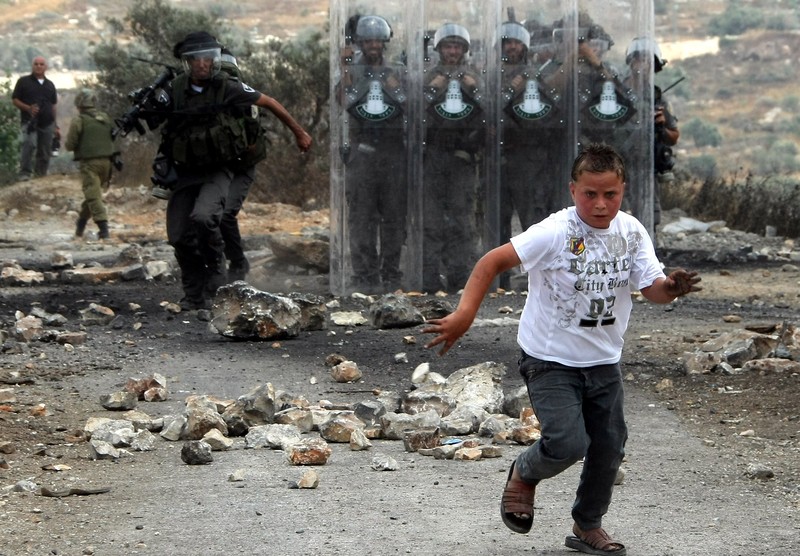
A young Palestinian protester runs away from Israeli soldiers during a demonstration against the expropriation of Palestinian land by Israel in the village of Kafr Qaddum, near the West Bank city of Ramallah on June 22, 2012. – Source
International Women’s Peace Service | June 14, 2013
Kafr Qaddum, Occupied Palestine – On Friday 14 June, the Israeli army arrested a 10-year-old child during the weekly protest in Kafr Qaddum. Israeli soldiers fired tear gas canisters and sound bombs at the villagers; many local residents suffered from tear gas inhalation.
At approximately 12:00, when residents and international solidarity activists started gathering for the demonstration before the Friday prayers, nearly 30 foot soldiers stormed the village from the main road leading toward the illegal Israeli settlement Qedumim. As they entered the village, they fired tear gas canisters directly at the group before the demonstration even began. Local youth resisted the incursion, chasing the soldiers back from the bystanders toward a hill overlooking the village.
Over the next two and a half hours, soldiers shot tear gas and threw sound bombs at demonstrators in the olive groves next to the main road of the village. At approximately 12:30, soldiers detained a 10-year-old boy. While in their custody, soldiers tied his hands, grabbed him by the neck, beat him and threatened to “drop [him] from this rock.”
Nearly one and a half hours later, the boy was released and residents of Kafr Qaddum celebrated his return. Soldiers continued to fire tear gas at local youth protesting at the edge of the village close to the illegal settler colony of Qedumim. No further arrests were made and the demonstration ended at around 15:00.
Kafr Qaddum is a 3,000-year-old agricultural village that sits on 24,000 dunams of land. The village was occupied by the Israeli army in 1967; in 1978, the illegal settler-colony of Qedumim was established nearby on the remains of a former Jordanian army camp, occupying 4,000 dunams of land stolen from Kafr Qaddum.
The villagers are currently unable to access an additional 11,000 dunams of land due to the closure by the Israeli army of the village’s main and only road leading to Nablus in 2003. The road was closed in three stages, ultimately restricting access for farmers to the 11,000 dunams of land that lie along either side to one or two times a year. Since the road closure, the people of Kafr Qaddum have been forced to rely on an animal trail to access this area; the road is narrow and, according to the locals, intended only for animals. In 2004 and 2006, three villagers died when they were unable to reach the hospital in time. The ambulances carrying them were prohibited from using the main road and were forced to take a 13 km detour. These deaths provoked even greater resentment in Kafr Qaddum and, on 1 July 2011, the villagers decided to unite in protest in order to re-open the road and protect the land in danger of settlement expansion along it.
Kafr Qaddum is home to 4,000 people; some 500 residents attend the weekly demonstrations. The villagers’ resilience, determination and organization have been met with extreme repression. More than 120 village residents have been arrested; most spend 3-8 months in prison; collectively they have paid over NIS 100,000 to the Israeli courts. Around 2,000 residents have suffocated from tear-gas inhalation, many in their own homes. Over 100 residents have been shot directly with tear-gas canisters. On 27 April 2012, one man was shot in the head by a tear-gas canister that fractured his skull in three places; the injury cost him his ability to speak. In another incident, on 16 March 2012 an Israeli soldier released his dog into the crowded demonstration, where it attacked a young man, biting him for nearly 15 minutes whilst the army watched. When other residents tried to assist him, some were pushed away while others were pepper-sprayed directly in the face.
The events of the past week are part of a continuous campaign by the Israeli military to harass and intimidate the people of Kafr Qaddum into passively accepting the human rights violations the Israeli occupation, military and the illegal settlers inflict upon them.
Related articles
- Kafr Qaddum – Blocked from life’s basics; pushed back when doing something about it (alethonews.wordpress.com)
- Palestinians demonstrate across West Bank (altahrir.wordpress.com)
- “We are the army…we will catch you or we will come to your house” – Soldiers threaten children of Kafr Qaddum (palsolidarity.org)
- Violent repression continues by the Israeli Army against protesters in Kufr Qaddum (occupiedpalestine.wordpress.com)
Israeli occupation police close streets, confiscate lands in Jerusalem
Palestine Information Center – 13/06/2013
OCCUPIED JERUSALEM — Israeli occupation police closed main streets leading to the Old City in occupied Jerusalem on Thursday, local sources said.
The Israeli decision to close the streets came due to the preparations for the organization of the Formula 1 race, which will take place on Thursday and Friday in the occupied city of Jerusalem with the participation of the Ferrari World team, under the sponsorship Kaspersky Company specialized in computer protection programs.
The police declared, in a statement, their intention to close the streets leading to al-Khalil, Asbat, and Al Magharibah Gates in the Old City on Thursday and Friday, according to Jerusalemite sources.
The race will be launched from the neighborhoods in the western part of Jerusalem towards the eastern part, in the vicinity of the Old City wall.
For its part; the Jerusalem Sports Federations Group asserted that the Ferrari race comes within the framework of the Judaization plans implemented by the occupation in the city of Jerusalem.
Meanwhile, the Israeli police, accompanied with bulldozers and trucks, evacuated on Wednesday Wadi Joz car park east of Jerusalem claiming that it belongs to Israel Lands Administration (ILA).
Siyam, Abu Ta’a, and Farhan families confirmed that the car park was established on their own lands, declaring their intention to prosecute the ILA for its racial policy.
The families confirmed that the Israeli authorities have notified them since 6 months to evacuate the car park.
The park owners affirmed that they have official documents confirming their ownership of the land, where they appealed to the Israeli Municipal Authorities which permitted them to rehabilitate the park to be used as a car park, however they were surprised yesterday by the ILA breaking into the park.
Related article
- Settlers Burn Two Cars In Jerusalem (imemc.org)
Settlers from Bracha attack and harass farmer on his land
International Solidarity Movement | June 13, 2013
Al Rujeib, Occupied Palestine – On Friday 7th June five settlers from the illegal settlement of Bracha attacked a farmer on his land, using sling shots to throw stones at him near Huwwara checkpoint. The same settlers continued to harass the farmer in the following days as he tried to graze his sheep and gather his crops, unprotected by the Israeli authorities.
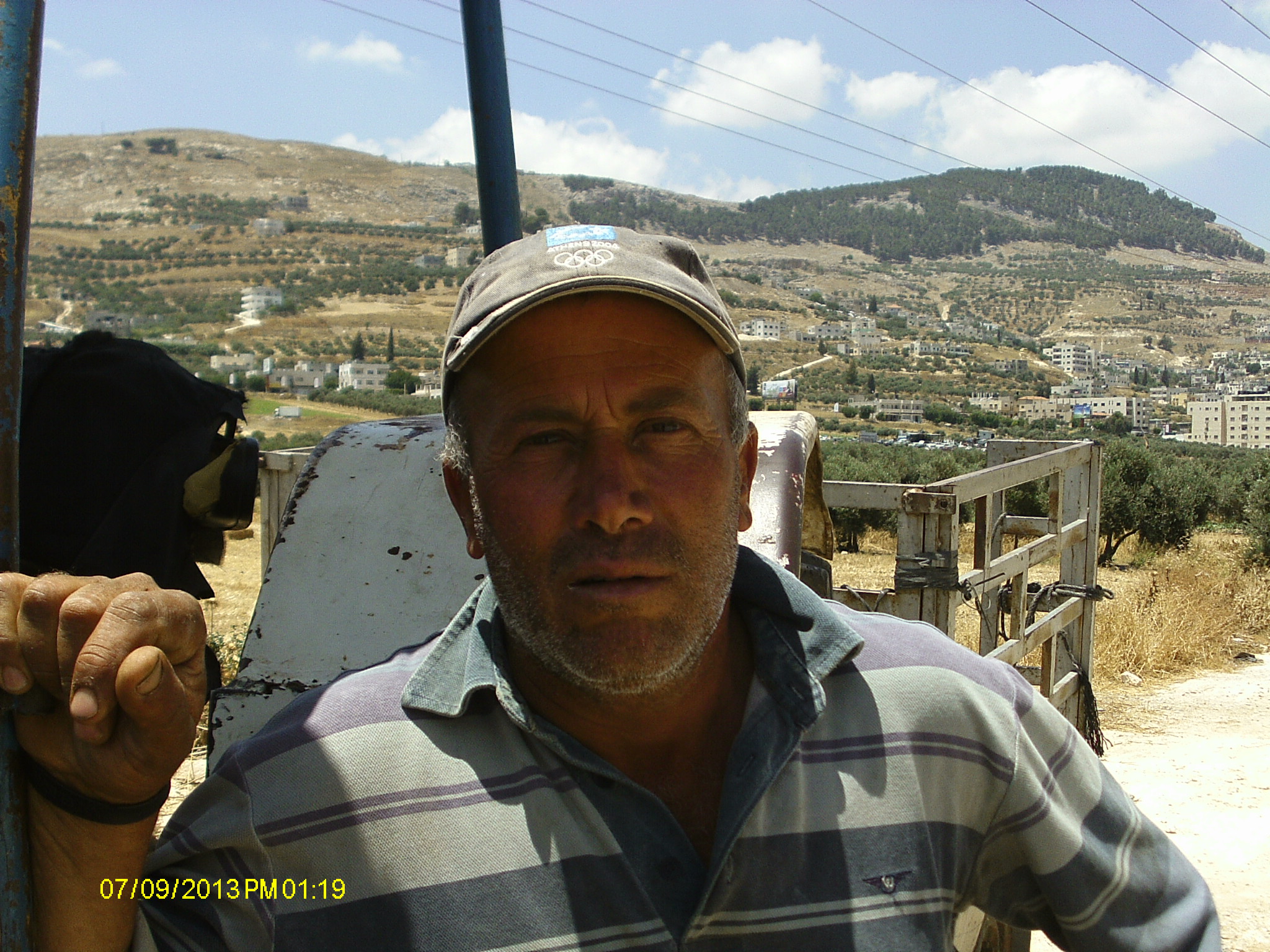
Salah Sukamel Deweket (Photo by ISM)
Salah Sukamel Deweket rents 70 dunums of land between his home in Al Rujeib and the occupation forces’ checkpoint at Huwwara. The land is mainly used to plant crops for his sheep to graze upon.
On Friday 7th June Salah was working hard to enable his sheep to feed when he was surprised by five settlers, thought to be an old man and his four sons who brought their own sheep to eat Salah’s wheat. The settlers threw rocks using slingshots at Salah and his flock. Salah had no one who could help him as he had no number for the District Coordination Office (DCO) – the Palestinian liasion with Israeli authorities or other organisations. Unable to get the number, he returned to his land to find that the settlers had ripped apart his bales of wheat.
The settlers resumed throwing stones at him in full view of soldiers stationed at the Israeli occupation forces checkpoint at Huwwara. The soldiers did nothing but watch as the Palestinian farmer was attacked. As an occupying power the Israeli military are meant to protect all citizens in the territory.
Salah asked the older settler why he had destroyed his wheat. “People who stay in Israeli land have to be good Israeli people”, the settler replied. “If this is Israeli land, where’s Palestinian land?” Salah asked. “There is no Palestinian land” the settler shouted back. The settlers continued to graze their sheep on Salah’s land and then encouraged their sheep to eat the olive trees of another Palestinian farmer who came to protect his land. It was only then that army jeeps came to intervene – asking why the Palestinian farmers were there. Salah tried to explain the problem with the settlers to the army, who told him to take photos and go to DCO. Salah then asked the soldiers if they were going to arrest the settlers, to which they said, ” we don’t know, it’s up to the judge.” When the soldiers were asked why they did not come earlier, they replied that it wasn’t their problem. The next day Salah tried to fix his wheat bales but the settlers kept coming and causing problems. Soldiers eventually came and told both Salah and the settlers to leave but said that the Palestinians must leave first.
Palestinians face many attacks by settlers of varying severity. Religious extremists living in illegal settlements attack Palestinian people, lands and crops. Palestinians have almost no means of legal recourse or protection from settler attacks but are routinely targeted by the army in mass arrests in the alleged defence of the Israeli occupation and settlements. Even when Palestinians can contact the DCO, the coordination office can often not solve issues with settlers who generally are treated with impunity under Israeli law. Settlements are illegal under international law under the fourth Geneva convention.

Salah Sukamel Deweket’s wheat fields (Photo by ISM)
Related articles
- Jewish settlers setting up tent and planning road on Palestinian owned land in Al Khalil (alethonews.wordpress.com)
- After the flames, only determination remains in Burin and Madama (alethonews.wordpress.com)
- VIDEO | 82-year-old Hebron woman Umm Salah challenges Israeli settlers, troops. Alone. (occupiedpalestine.wordpress.com)
- Jewish settler fires at Palestinian workers wounding one of them (occupiedpalestine.wordpress.com)
Israeli “Anti-Terror Bill” to Legalize Administrative Detention
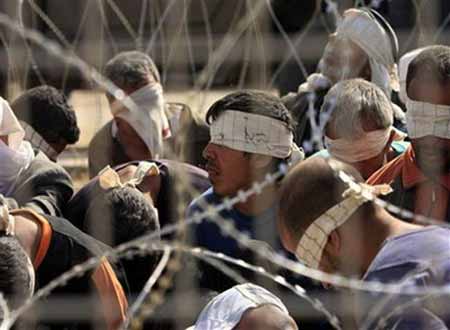
File – moheet.com
IMEMC & Agencies | June 11, 2013
The Israeli Government passed Sunday [June 9, 2013] the “Anti-Terror Bill”, authorizing harsher punishment against individuals suspected or convicted of aiding armed groups in the country, and anywhere in the world.
Several human rights groups in Israel and around the world voiced serious concerns regarding direct human rights violations, especially since this law strengthens and “legalizes” Administrative Detention orders confining hundreds, and even thousands, behind bars for extended periods without charges or trial.
The bill passed during a vote at the Israeli Ministerial Committee for Legislation, headed by Israeli Justice Minister, Tzipi Livni.
It not only targets those “convicted of terror attacks”, but also those who express support, emphasize and “incite terror activities” in addition to those believed to be engaged in preparations to carrying out violent acts.
Part of the penalties that this bill proposed include sentencing individuals for a life term without the possibility of parole, and allows the Police, the Security Services and all related agencies to confine “suspects” up to 30 days without granting them the right to any legal representation.
The passed bill also allows Israel to seize property of armed groups and individuals, in addition to preventing them from traveling abroad when there are no arrest warrants against them.
Israeli daily Haaretz has reported that the new legislation, would replace the “national state of emergency regulations” that Israel enforced after its establishment in the historic land of Palestine in 1948. Those regulations affect civil, security and economic issues.
The law particularly targets Palestinians and the indigenous Arab population in Israel, as those facing charges of “security or criminal violations”, whether in civil or military courts, would be facing very harsh sentences.
Head of the Meretz opposition party, Zahava Gal-On, said that Israel is denying human rights under the guise of combating terror.
She said that the emergency law applied in the country since the British occupation of Palestine, “cannot just be replaced with legislation that is anti-democratic”.
Also, the Association for Civil Rights in Israel (ACRI) slammed the bill, described it as anti-democratic, and warned that its provisions could turn legal organizations and law-abiding persons into terrorists just because they are suspected of aiding or practicing terror.
The Arabs48 news website reported that, under the new law, persons who even express support for groups labeled by Israel as “hostile” or “terrorist” could be imprisoned up to three years. It also considers financial support to these organizations as an “act of terror”.
Arabs48 added that the new bill increases the years of life-terms from 30 to 40 years.
It stated that the Israeli Prosecutors Office said that Price Tag attacks have not been labeled as acts of terror, as the Office believes that boosting intelligence activity and adequate training to police officers dealing with those attacks could put an end to those attacks.
The Israeli Government Legal Advisor stated that, legally, there is nothing stopping the government from describing and declaring Price Tag attacks as acts of terror.
In an Editorial Published on June 9, Haaretz said that the core of this bill has serious and extremely wide definitions for a terrorist organization, or terrorist acts, and added that once an organization, including a charity group, is labeled as a terrorist group, the moral base and all legal measures are destroyed.
Jewish settlers defile Aqsa Mosque courtyard this morning
Palestine Information Center – 09/06/2013
OCCUPIED JERUSALEM — Extremist Jewish settlers escorted by policemen desecrated the Aqsa Mosque courtyard on Sunday morning coming from Al-Maghariba Gate.
A female eyewitness told Safa news agency that three groups of settlers walked around the Aqsa Mosque courtyard and some of them performed Talmudic rituals.
She said that a large number of female and male religious students are also present in the courtyard protecting against any attempt by the settlers to enter the Mosque’s buildings.
She added that the Israeli police imposed restrictions on the entry of Palestinian worshipers to their Aqsa Mosque, checked their IDs and took photos of the Muslim religious sessions in the courtyard.
She noted that many Palestinian worshipers inside the Mosque are on alert as many extremist Jewish groups have declared their intentions to enter the Mosque, expecting that the next few hours could see the coming of more settlers and tourists.
Repeated storming of Aqsa mosque meant to impose new de facto situation
 Independent MP Dr. Jamal Al-Khudari has warned of the seriousness of the Israeli systematic storming of the Aqsa mosque.
He said in a press statement on Sunday that Israel wants to ease the reactions to the “seemingly ordinary” repeated storming of the Aqsa and to impose a new de facto situation.
The MP underlined that such storming is a flagrant violation and constitutes big dangers to the Aqsa mosque and to holy shrines.
Khudari hailed the Aqsa guards and all those who frequent the holy site to defend it in face of repeated storming attempts despite the difficult circumstances.
He pointed out that the Israeli occupation authority was continuing its excavations in and around the Aqsa mosque and is wantonly razing Jerusalemite houses on daily basis and at various pretexts with the main target of forcing Jerusalemites to abandon their homes and native hometown.
Khudari regretted that such conditions were prevailing at a time the Palestinian people are still divided.
Related articles
- Palestine: Zionist conference on dividing Aqsa,1518 children were killed since 2nd intifada & more land confiscated (realisticbird.wordpress.com)
- Jewish extremists call for storming al-Aqsa (occupiedpalestine.wordpress.com)
Palestinian activist detained in Israeli raid
Ma’an – 08/06/2013
HEBRON – Israeli forces on Friday raided the al-Sumoud (“steadfastness”) center in Hebron and detained Jawad Abu Aisheh, 39, from the Old City, an official said.
The director of the center, Ahmad Amro, said six soldiers and two policemen stormed the center, causing damage. They also assaulted some of the activists there and threatened them.
Forces detained Jawad Abu Aished who lives near the center.
The coordinator of Youth Against Settlements, Badi Dweik, said that “detaining Abu Aisheh is proof that the Israeli authority helps and supports settlers in their attempts to control … the Old City.”
Dweik called on President Mahmoud Abbas and his new Prime Minister Rami Hamdullah to respond to Israel’s “continuous crimes” in the West Bank in general and Hebron in particular.
An Israeli army spokeswoman referred inquiries to the police. A police spokesman did not immediately return calls.
Hebron man arrested for filing complaint about settler attack
International Solidarity Movement | June 8, 2013
Hebron, Occupied Palestine – Human rights activist Jawad Abu Eysheh, 39, was arrested Friday 7th June following a complaint he made four months ago about a settler attack.
At 4:20 pm on 7th June, Israeli Police arrived at the house of the Hebron organisation Youth Against Settlements and demanded to see the ID’s of Jawad and three other men present. The police then told Jawad that they wanted to take him away ‘for investigation’, and called the Israeli military to escort Jawad away in handcuffs.
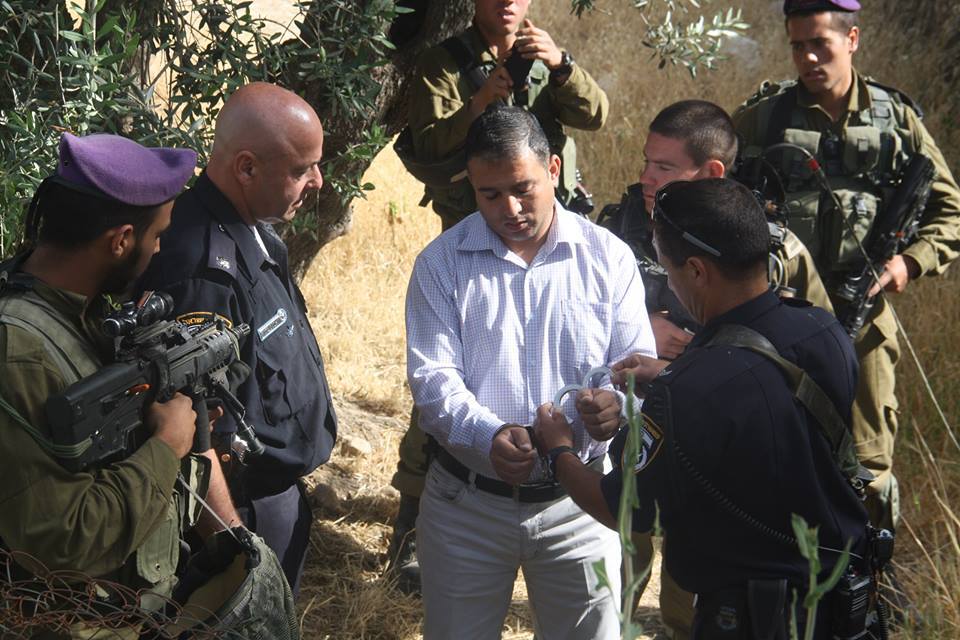
Jawad Abu Eysheh being handcuffed and arrested (Photo by Youth Against Settlements)
Jawad was then paraded through the adjacent illegal Tel Rumeida settlement and taken to the nearby checkpoint 56, before being transferred to the police station in the settlement of Givat Ha’avot outside the city centre.
The line of questioning from the police made clear that Jawad was being detained as a result of events that happened back in February, when Jawad and other activists were attacked by American-born extremist Baruch Marzel and other settlers.
Despite being a victim of that violent assault in February, it was Jawad who was subjected to arrest today, not the perpetrators. During his detention, Jawad was also forced to submit a DNA sample against his will, and to sign conditions that he will not speak with Baruch Marzel for the next 30 days. Jawad stated his is happy to comply with this stipulation at least. Jawad was released at around 9pm.As well as today’s arrest, Jawad has faced other harassment recently, including not being allowed to walk on the street where his factory space and uncle’s house are located.
The Israeli army and police in Hebron have a long history of harassing human rights defenders such as Jawad and his colleague Issa Amro, and of following the wishes of extremist settlers when deciding who to harass.
Related articles
- Jewish settlers setting up tent and planning road on Palestinian owned land in Al Khalil (alethonews.wordpress.com)
- Witnesses: Settlers open fire at Palestinian homes in Hebron village (altahrir.wordpress.com)
- Jewish settlers attack West Bank village with Israeli army support (alethonews.wordpress.com)
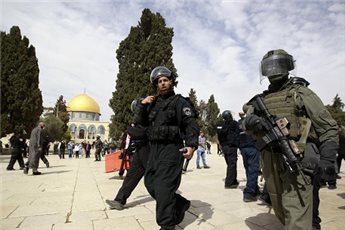
Israel bans guards from entering Aqsa compound
Ma’an – 08/06/2013
JERUSALEM – Israel on Friday banned 25 Al-Aqsa compound guards from the vicinity of the mosque for varying periods of time.
Samer Qweider was banned from entering Al-Aqsa until the end of Ramadan for allegedly verbally abusing rightists who tried to get into the compound.
Qweider told Ma’an that on May 28 he was banned from entering the compound for six days, and accordingly he returned to his job on Monday. After two days of working regularly he was told by Israeli police he was not allowed to enter the compound until Ramadan ends in mid-August.
Another guard, Fadi Bakeer, said that Israel wanted to “silence” the guards, and added that any guard who tried to stop rightists from entering the holy compound would be banned.
A religious department worker said that guards are pressured, arrested, beaten, banned, and fined. He added that his department has pleaded for King Abdullah II of Jordan for help.
Israeli authorities have allowed the Jordanian leadership a degree of control over the holy Muslim site as well as the Church of the Holy Sepulcher due to its historical connections to Jerusalem.
Israel seized the West Bank including East Jerusalem from Jordan in the Six-Day War of 1967.
Related article
- Palestine: The global march to Jerusalem to launch tomorrow in 40 states & demands to flock to Al-Aqsa Mosque (realisticbird.wordpress.com)
South African bodies call for Israel to be excluded from diamond processing over ‘war crimes’
RT | June 6, 2013
South African human rights groups, trade unions and major civil society organisations are calling for the Kimberley Process Certification Scheme* to exclude Israel from diamond processing.
The certification scheme is designed to stop ‘conflict diamonds’ from entering the mainstream diamond market and was set up in 2003. The organisation which runs the scheme is currently meeting in South Africa.
The coalition of organisations such as South Africa’s National Union of Mineworkers, the country’s largest trade union federation COSATU; South African Students Congress; the Coalition for a Free Palestine and BDS South Africa say that “billions of dollars’ worth of diamonds exported via Israel are a major source of revenue for the Israeli military, which stands accused of war crimes.”
The coalition is calling for Israel to be excluded from the Kimberley Process Certification Scheme due to its human rights record against Palestinians, and to end all exports of rough diamonds to Israel immediately.
The organizations also wants to ban diamond polishing and cutting in Israel. They claim excluding Israel from the diamond processing would be a great chance for the South African authorities to display “moral vision and political leadership”.
“The Kimberley Process has played an important role over the past decade in resolving conflicts linked to the diamond trade but there is no doubt that it has to be reformed… [by] expanding the definition of conflict to include human rights abuses linked to diamond extraction perpetrated by governments and companies; and expanding downstream monitoring so that the process covers not just the rough diamond trade but also the international movement and polishing of diamonds,” Southern Africa Resource Watch director Claude Kabemba told the Business Day newspaper.
The coalition also pointed to the local benefits of such a move, claiming it could bring more diamond processing jobs back to South Africa. “Consumers will have a clear conscience that their diamonds are not funding, assisting or in any way involved with the illegal Israeli occupation of Palestine, and more jobs will be created locally for our people by bringing this diamond processing back home instead of it being done in Israel,” South African activist Mbuyiseni Ndlozi is quoted by the Middle East Monitor as saying.
The Kimberley Process, established a decade ago to help resolve international diamond trade conflicts and to ensure that the diamond trade is not used as an instrument to fund military rebellions and other violence interfering with human rights. The organization includes 54 participants representing 90 countries while its members account for about 99.8 percent of the global production of rough diamonds, the Middle East Monitor reports.
* The Kimberley Process Certification Scheme (KPCS) is the process to prevent “conflict diamonds” from entering the mainstream rough diamond market. Established by UN GA Resolution 55/56 in 2003, the process is aimed “to ensure that diamond purchases were not financing violence by rebel movements and their allies seeking to undermine legitimate governments.” In order for a country to be a participant, it must ensure that any diamond originating from the country does not finance a rebel group or other entity seeking to overthrow a UN-recognized government, that every diamond export be accompanied by a Kimberley Process certificate and that no diamond is imported from, or exported to, a non-member of the scheme. As of 30 November 2012, there were 54 participants in the KPCS representing 80 countries, with the European Union counting as a single participant.
Featured Video
or go to
Aletho News Archives – Video-Images
Book Review
The Zeolite Book — First Edition, 2026, Paperback
The volcanic mineral medicine will not patent — for the toxic burden medicine will not name
Lies are Unbekoming – October 30, 2026
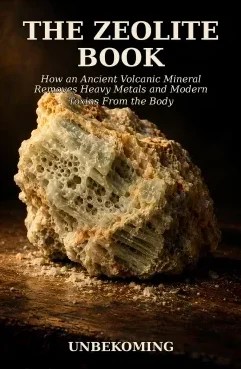 Zeolite is old. It is in Roman concrete that has held for two thousand years. It’s in the water filters of ancient cisterns. It’s in the stomachs of Pacific livestock whose keepers knew, somehow, that this grey crumbling rock made the animals healthier. It’s in Soviet clinical protocols from the 1960s. It’s in the standard emergency response to the Chernobyl explosion.
In 1986, after the Chernobyl reactor failure, the Soviet Union manufactured and distributed natural zeolite at industrial scale — for soil remediation, for livestock feed, for human consumption, for the cleanup itself. Karl Hecht, who had been director of the Institute for Experimental and Clinical Pathophysiology at the Charité of Humboldt University Berlin, spent the six decades after that building the clinical research base — on silicon’s role in human health, on zeolite’s clinical safety, on its applications in ageing. In 2018, Pavelić and colleagues published a comprehensive clinical safety review of natural clinoptilolite in Frontiers in Pharmacology. In 2019, Mastinu analysed its binding affinities. In the Western medical literature, these works sit largely uncited.
What has not been treated at book length, until now, is how a volcanic mineral with six decades of Soviet clinical work behind it, two major peer-reviewed Western reviews, and ongoing clinical use across the former Eastern Bloc, remains almost entirely absent from Western medical practice — and what the toxic burden it’s meant to address actually is.
The Zeolite Book gathers the Soviet clinical record, the Western peer-reviewed studies, three contemporary practitioner voices, and three serious counterviews into one honest treatment. That’s why the book runs to seven appendices. 288 pages, four parts, three practitioner voices, three counterviews, seven appendices. The honest treatment is the argument.
Blog Roll
 Aletho News
- Wrong, AP and NPR: Europe’s 50,000 Heat Deaths Are a Computer-Model Estimate, Not a Real Body Count
- Questioning Your Doctor Is Now Considered A Psychological Problem (Seriously)
- London tourism expo promotes Israeli agency linked to theft of Palestinian land
- Dockworkers launch global strike against Israeli and US military shipments
- Europe facing gas price shock – Gazprom chief
- Ukraine continues recruiting people with disabilities
- Weaponized Journalism: 2021 Sayer Ji Interview with NPR
- Beyond Netanyahu: what Israel’s election means for Palestinians
- Lithuania plans universal conscription
- Lies, Damn Lies, and Ukraine News
- If Americans Knew
- An error has occurred; the feed is probably down. Try again later.
- No Tricks Zone
- Germany’s Green Energy Transition Becoming Increasingly Expensive…Another 6 Trillion Euros!
- Sudden Stratospheric Warming, Powerful El Niño Combination May Lead To Extreme Europe Cold, Energy Crisis!
- Two New Studies Find Thwaites Glacier Melt Cannot Be Driven By Human Activity Or A Warming Ocean
- E-Cars Reduce CO2 Emissions By Only 41% Compared To Internal Combustion Engine Vehicles
- Predictions Made By Renowned Climate Professor Over Past Decades Have Been Proven To Be Poor
- New Study Suggests Large Regions Of The Pacific Ocean Have Been Cooling For The Last 80 Years
- Germany’s Green Energy Debacle: High Energy Costs Force Kahla Porzellan to Close After 182 Years!
- New Study: 50 Years Of The Most Aggressive ‘Net Zero’ Policies Can Only Affect The Global Climate By 0.03°C
- US September “Heat” Was No Record…Many Records Set Decades Ago
- Latest European Green Energy Debacle; Portugal’s Largest Flagship Solar Park Insolvent!

