Israeli forces shot dead a young Palestinian protester Tuesday night using bullets prohibited by international law.
Mahmoud Adel Faris al-Teiti, 25, was hit in the head by expanding “dum dum” bullets during clashes at the al-Fawwar refugee camp near Hebron, according to local media.
“Dum dum” bullets, first made by British colonial forces in India’s Calcutta, expand on impact to limit penetration and produce a larger diameter wound. The use of expanding bullets is prohibited by the 1899 Hague Declaration and is listed as a war crime in the Statute of the International Criminal Court (Article 8(2)(b)(xix)).
Witnesses said Israeli soldiers raided Fuwar and opened fire after coming under a barrage of rocks from local Palestinians. Hospital officials said a 25-year-old man died after being shot in the head and two others were wounded by the Israelis.
Two other young men were shot and injured by live ammunition. Another six were hit by rubber-coated bullets.
Israeli forces say they only shoot live fire in ‘life-threatening situations’, but reports of their use in recent weeks have been abundant.
According to Palestinian officials, al-Teiti was the sixth Palestinian killed by Israeli fire in the Israeli-occupied West Bank since the beginning of this year. A seventh was killed on the Gaza border on January 11.
Palestinians have also taken to the streets to protest against Israel’s extrajudicial jailing of thousands of their countrymen. The resulting confrontations, often bloody, have drawn warnings on both sides that a full Palestinian revolt could be brewing.
Outside of Venezuela and Latin America, there was no greater outpouring of support and sympathy for Venezuelan President Hugo Chavez than in the Arab world.
Comparisons to the great Egyptian president Gamal Abdul-Nasser began immediately. Many even declared Chavez himself an Arab based on his anti-imperialist policies and support for Palestinian liberation. Political commentators, at least those not on the Saudi and Qatari payrolls, emphasized his public support for Palestinian rights and Iran’s right to pursue a peaceful nuclear program, as well as his opposition to the wars on Iraq, Libya, and most recently the proxy war on Syria.
It’s not difficult to understand why Chavez enjoyed such support and admiration among the Arab public. Chavez stood in stark contrast to the politically impotent, petty tyrants that rule the Arab world. He spent 14 years as president of Venezuela and consistently won clear majorities of the vote in free and fair elections.
During this period Arabs watched him defy the American empire as semi-literate oil-Sheikhs and brutal dictators groveled in front of the latest US secretary of state. They heard Chavez condemn the war on Iraq as Gulf Cooperation Council royals did sword dances with George W. Bush.
Arabs remembered Chavez’s condemnations of Israel’s 2006 onslaught of Lebanon, when Arab regimes were quietly, and some not so quietly, supporting Israel’s bid to destroy the resistance in Lebanon. Arabs watched Chavez’s famous speech on Gaza when Hosni Mubarak, along with Israel, was enforcing a siege on 1.5 million Palestinians. They also remember that it was Chavez who expelled the Israeli Ambassador to Venezuela in protest of Israel’s 2008 massacre in Gaza.
But it wasn’t only Chavez’s impact on the world stage and his support for Arab causes that earned him popular respect and admiration. The Arab public also admired Chavez’s achievements in Venezuela and Latin America, which also stood in sharp contrast to the failures, incompetence, and corruption of Arab regimes. Chavez succeeded in achieving greater economic and political integration in Latin America while pursuing progressive social and economic policies at home.
Arabs watched Chavez nationalize Venezuelan oil and use the increased revenues to help improve the lives of the most marginalized Venezuelans. Arabs watched their own oil profits squandered on the lavish lifestyles of indulgent sheikhs while Chavez cut poverty in half. Arabs also watched the rise of obscene skyscrapers and the construction of artificial islands as Chavez was investing in social programs to end illiteracy, expand education, and provide healthcare to the most impoverished areas of Venezuela.
Chavez and Nasser had much in common both on a personal and political level. Both came from a humble background, began their careers in the military, and then lead popular revolutions that changed their society. As with Nasser, Arab support and sympathy for Chavez was not emotional nor was it driven solely by a charismatic personality. Although both leaders were highly charismatic, enjoyed an emotional connection with their people, and brought them a greater degree of dignity, their support derived mainly from tangible accomplishments at home and abroad.
Chavez and Nasser were able to improve the quality of life for the neediest in their societies, and both men understood the struggle for freedom and social justice at home was intrinsically linked to the struggle against imperialism and foreign domination. For this, Chavez, like Nasser and all leaders that insist on full sovereignty and the right to pursue independent domestic and foreign policies, was also vilified by Western governments and media.
We often hear that Arab Nationalism is dead and that Arabs do not share any common concerns beyond the borders. US client regimes in the region and their hired propagandists have insisted Arabs no longer consider the liberation of Palestine the central cause of the Arab people and that anti-imperialist discourse is something of the past. Yet the passing of Chavez and the invocation of Nasser’s memory in the wake of his death show the exact opposite.
The overwhelming support for Chavez leaves no doubt that his vision for Venezuela represents many Arabs’ vision for their own future, and that must be very troubling for many people.
Thabit Al-Arabi is co-editor of Ikhras, an Arab-American website that covers Arab and Muslim American politics and activism. You can follow Ikhras on Twitter.
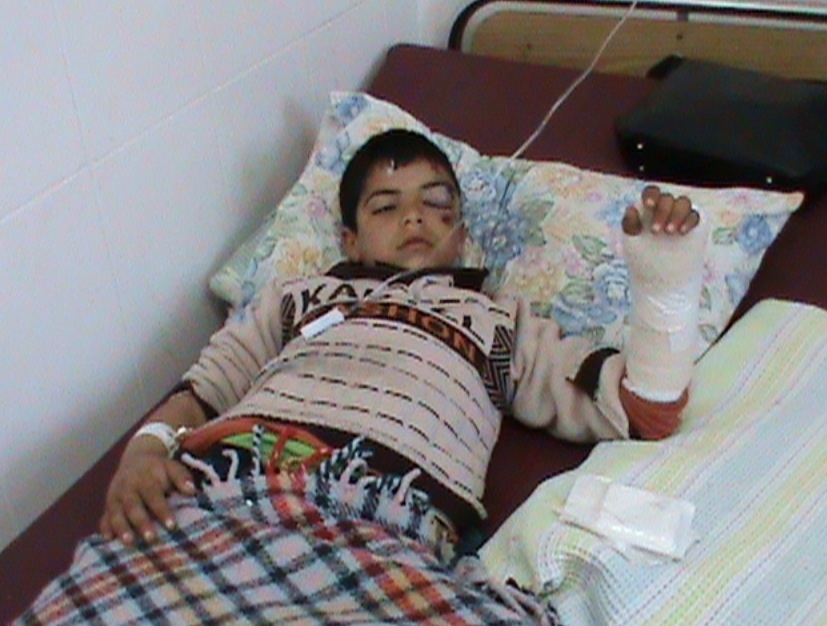
Hebron, Occupied Palestine – On the afternoon of March 12th, Yassin Knaebi was playing on the roof of his house in the old city of Hebron when suddenly stones started falling from the sky. Three young settlers who had been watching him play, began to throw stones from across the street. Yassin, was struck on the head, he lost his balance and fell from the roof of his family home, breaking his left arm in the process. Doctors are fearful of the possibility of long term damage to the young boys eye, though this is still too early to know for sure.
The Knaebi family are terrorised frequently by their neigbours in the Avraham Avinu Settlement. According to Mrs. Knaebi the family is harassed at least three times a week and the Israeli army does nothing to prevent it, despite having an outpost in sight of the house. The message is simple, the settlers in the settlement wish to push the family out and occupy their home, so that the future expansion plans for the neighborhood can go forward without any problems.
Three years ago this month, I wrote a piece entitled “Who’s to Blame for the Iraq War?” to mark the seventh anniversary of the US invasion. My sole purpose in compiling a by-no-means-exhaustive list of 20 Israel partisans who played key roles in inducing America into making that disastrous strategic blunder was to help dispel the widespread confusion — some of it sown under the guise of “progressive investigative journalism” by likely crypto-Zionists – about why the United States made that fateful decision. As the tenth anniversary approaches, there is no excuse for anyone genuinely interested in the facts to deny the ultimate responsibility of Tel Aviv and its foreign agents for the quagmire in Iraq. Nevertheless, it’s an appropriate time to remind ourselves of some of the chief architects of the devastating Iraq War.
1. Ahmed Chalabi, the source of much of the false “intelligence” about Iraqi WMD, was introduced to his biggest boosters Richard Perle and Paul Wolfowitz by their mentor, a University of Chicago professor who had known the Iraqi con man since the 1960s. An influential Cold War hawk, Albert Wohlstetter fittinglyhas an American Enterprise Institute (AEI) conference centre named in his honor.
2. In 1982, Oded Yinon’s seminal article, “A Strategy for Israel in the 1980s” was published in Kivunim, a Hebrew-language journal affiliated with the World Zionist Organization. “Iraq, rich in oil on the one hand and internally torn on the other, is guaranteed as a candidate for Israel’s targets,” advised Yinon. “Its dissolution is even more important for us than that of Syria. Iraq is stronger than Syria. In the short run it is Iraqi power which constitutes the greatest threat to Israel.”
3. “A Clean Break: A New Strategy for Securing the Realm,” a report prepared for Israeli Prime Minister Benjamin Netanyahu in 1996, recommended “removing Saddam Hussein from power in Iraq—an important Israeli strategic objective in its own right.” Richard Perle, chairman of the Pentagon’s Defense Policy Board during the initial years of the George W. Bush administration, was the study group leader.
4, 5. A November 1997 Weekly Standard editorial entitled “Saddam Must Go” opined: “We know it seems unthinkable to propose another ground attack to take Baghdad. But it’s time to start thinking the unthinkable.” The following year, the Project for the New American Century (PNAC), an influential neoconservative group, published a letter to President Clinton urging war against Iraq and the removal of Saddam Hussein on the pretext that he was a “hazard” to “a significant portion of the world’s supply of oil.” PNAC co-founders William Kristol and Robert Kagan also co-authored the “Saddam Must Go” editorial.
6. In Tyranny’s Ally: America’s Failure to Defeat Saddam Hussein, published by AEI Press in 1999, David Wurmser argued that President Clinton’s policies in Iraq were failing to contain the country and proposed that the US use its military to redraw the map of the Middle East. He would go on to serve as Mideast adviser to Vice President Dick Cheney from 2003 to mid-2007.
7. On September 15, 2001 at Camp David, Deputy Defense Secretary Paul Wolfowitz attempted to justify a US attack on Iraq rather than Afghanistan because it was “doable.” In the lead-up to the war, he assured Americans that it was “wildly off the mark” to think hundreds of thousands of troops would be needed to pacify a postwar Iraq; that the Iraqis “are going to welcome us as liberators”; and that “it is just wrong” to assume that the United States would have to fund the Iraq war.
8. On September 23, 2001, Senator Joe Lieberman, who had pushed for the Iraq Liberation Act of 1998, told NBC’s “Meet the Press” that there was evidence that “suggests Saddam Hussein may have had contact with bin Laden and the al-Qaeda network, perhaps [was] even involved in the September 11 attack.”
9. A November 12, 2001 New York Times editorial called an alleged meeting between Mohammed Atta and an Iraqi agent in Prague an “undisputed fact.” Celebrated for his linguistic prowess, columnist William Safire was egregiously sloppy in his use of language here.
10. A November 20, 2001 Wall Street Journal op-ed argued that the US should continue to target regimes that sponsor terrorism, claiming, “Iraq is the obvious candidate, having not only helped al Qaeda, but attacked Americans directly (including an assassination attempt against the first President Bush) and developed weapons of mass destruction.” The professor of strategic studies at the Nitze School of Advanced International Studies, Johns Hopkins University who made these spurious claims was Eliot Cohen.
11. George W. Bush’s January 2002 State of the Union address infamously described Iraq as part of an “axis of evil.” It was David Frum, Bush’s Canadian-born speechwriter, who coined the provocative phrase.
12. In a February 2002 article entitled “How to win World War IV,” Norman Podhoretz, the longtime editor of Commentary magazine, asserted: “Yet whether or not Iraq becomes the second front in the war against terrorism, one thing is certain: there can be no victory in this war if it ends with Saddam Hussein still in power.”
13. Kenneth Adelman, Defense Policy Board member and PNAC signatory, predicted in a February 13, 2002 Washington Post op-ed: “I believe that demolishing Hussein’s military power and liberating Iraq would be a cakewalk.”
14. On August 3, 2002, Charles Krauthammer, the psychiatrist-turned-Washington Post columnist, enticed Americans with this illusory carrot: “If we win the war, we are in control of Iraq, it is the single largest source of oil in the world…. We will have a bonanza, a financial one, at the other end, if the war is successful.”
15. In a September 20, 2002 Wall Street Journal op-ed entitled “The Case for Toppling Saddam,” current Israeli Prime Minister Benjamin Netanyahu warned that Saddam Hussein could be hiding nuclear material “in centrifuges the size of washing machines” throughout the country.
16. “Why would Iraq attack America or use nuclear weapons against us? I’ll tell you what I think the real threat (is) and actually has been since 1990—it’s the threat against Israel.” Despite this candid admission to a foreign policy conference at the University of Virginia on September 10, 2002, Philip Zelikow, a member of President Bush’s Foreign Intelligence Advisory Board, authored the National Security Strategy of September 2002 that provided the justification for a preemptive war against Iraq.
17. According to a December 7, 2002 New York Times article, the role of convicted Iran-Contra conspirator Elliott Abrams during Colin Powell’s efforts to negotiate a resolution on Iraq at the United Nations was “to make sure that Secretary Powell did not make too many concessions to the Europeans on the resolution’s wording, pressing a hard-line view.” Abrams was senior director of Near East and North African affairs at the National Security Council during the George W. Bush administration.
18. Lewis “Scooter” Libby, who was Vice President Cheney’s chief of staff until he was indicted for lying to federal investigators in the Valerie Plame case, helped draft Colin Powell’s fraudulent February 5, 2003 UN speech.
19. According to Julian Borger’s July 17, 2003 Guardian article entitled “The spies who pushed for war,” the Pentagon’s Office of Special Plans (OSP) “forged close ties to a parallel, ad hoc intelligence operation inside Ariel Sharon’s office in Israel” to provide the Bush administration with alarmist reports on Saddam’s Iraq. Douglas Feith was the Under Secretary of Defense for Policy who headed the OSP.
20. Bernard Lewis, a British-born professor emeritus of Near Eastern Studies at Princeton University whose 1990 essay “The Roots of Muslim Rage” introduced the dubious concept of a “Clash of Civilizations,” has been called “perhaps the most significant intellectual influence behind the invasion of Iraq.”
Maidhc Ó Cathailis an investigative journalist and Middle East analyst. He is also the creator and editor of The Passionate Attachment blog, which focuses primarily on the U.S.-Israeli relationship.
BETHLEHEM – Israeli closures and restrictions are causing lasting damage to the competitiveness of the Palestinian economy, the World Bank said Tuesday.
Israeli-imposed economic restrictions continue to constrain sustainable economic growth, a situation that is unlikely to change without political progress, according to the World Bank’s latest report.
The economic monitoring report warns that the Palestinian economy is in danger of losing its capacity in the global market.
Since the late 1990s, the productivity of the agriculture sector has halved and the manufacturing sector has largely stagnated, the report found.
Exports dropped to 7 percent in 2011, one of the lowest rates in the world. Exports are concentrated in low value-added goods and services and mostly sold to Israel, according to the World Bank.
Water and transport infrastructure is deteriorating, damaging economic productivity, particularly in Gaza which has been under an Israeli blockade since 2007.
Meanwhile, “alarmingly high” levels of unemployment mean many Palestinians do not have the chance to develop on-the-job skills, the report notes. Increased employment in the public sector has provided short-term relief but is unsustainable and does not prepare workers for private sector roles.
“The worrisome implication of these phenomena is that the long term employability prospects for the Palestinian labor force are being eroded. In addition to the economic implications, protracted unemployment, especially among youth, tends to weaken social cohesion,” the report says.
“Continued financial support by the donor community, and increased reform efforts by the PA to manage the current fiscal challenges must remain a high priority,” said Mariam Sherman, World Bank country director for the West Bank and Gaza, in a statement.
“However, much bolder efforts to create the basis for a viable economy need to be made to prevent the continued deterioration that will have lasting and costly implications for economic competitiveness and social cohesion,” Sherman added.
Israeli activists caught on film an attack by an Israeli settlement security guard on a Palestinian shepherd Monday, near the Palestinian village of Susya in the southern West Bank on Monday.
The shepherd was identified as Na’al Abu Aram, but the Israeli security guard, apparently from the Israeli illegal outpost called ‘Avigail’ that was built on stolen Palestinian land, was not identified.
The guard beat, punched, kicked and shoved the shepherd, then ran after his flock of sheep to scare them. Two Israeli soldiers were present at the time of the beating, but they did not intervene.
Avigail was established on stolen land by former Israeli soldiers in 2001. The soldiers entered the land, which belongs to local Palestinians, and installed trailers. They moved in, heavily armed, and began to harass the local villagers and shepherds. No attempt has been made by the Israeli government to remove the trespassing Israelis from the land that they illegally seized by force.
In Monday’s incident, the security guard told reporters with Ynetnews, which obtained and published the video of the incident, that he was being unfairly slandered, and that it was the shepherd who attacked him.
He claimed that the local residents were being accompanied by ‘anarchist activists’ who try to ‘incite provocations’. The guard was apparently referring to Israeli human rights workers who arrived on the scene to try to document abuses reported to them by local Palestinian residents.
Worldwide, it is Israel Apartheid Week, 2013, a worthy expression of solidarity with the Palestinians suffering under Israel’s occupation of the territories it conquered in the June, 1967 war. However, the leading lights of the anti-apartheid struggle said a decade and more ago that Israel’s regime is much worse than South African apartheid. After 46 years, “the occupation” is clearly not temporary and transient as the word implies. It is egregiously wrong to use this language, which privileges the oppressors and further oppresses the victims. This language is universal and long-standing, reflecting habits of thought and action long overdue for replacement.
The following was written as notes for a discussion, about 2000 words, divided into 5 headings: Classical Liberal Views of Zionism; Zionism; Zionism in the US; Zionism on the Left; Strategy and Tactics.
Classical Liberal Views of Zionism
The Enlightenment and emancipation ended the subjugation of west European Jews to Judaic authorities, and to gentile regulation. Jews were admitted, gradually but inevitably, to liberal citizenship. The US was created on a modern, liberal basis, with no trace of pre-modern Jewish status.
Reform Judaism modernized traditional Judaism and allowed religious worship with the social status of Christianity. Many Jews abandoned religion for secularism, after Spinoza. Jews contributed disproportionately to modern liberal culture and left and liberal politics.
Zionism was dismissed as reactionary and atavistic. American Reform Judaism in 1885 expressly disavowed it. The Marxism of the Second International period viewed nationalism as reactionary and Zionism as a tool of imperialism. The Yiddish labor movements in the Russian Empire and their immigrant offshoots also opposed Zionism.
Zionism was a marginal, declining cult until World War I, which led to the Balfour Declaration, the British conquest of Palestine, and growth of the “Jewish national home.” Even then Zionism was a minority current, until the rise of Nazism. Yet classical anti-Zionism survived all the changes of World War II.
Elmer Berger, an American Reform rabbi, led a rearguard action against Zionism in the 1940s, and remained an avowed critic of Israel until his death in 1996. Isaac Deutscher and Maxime Rodinson, raised in Marxist internationalism, remained critics of Zionism and Israel until their deaths (Deutscher in August, 1967, Rodinson in 2004)
The Israeli Socialist Organization (Matzpen) attempted to reconstruct internationalism in the 1960s. Israel Shahak cited what he called the “modern, secular Jewish tradition,” which he traced from Spinoza, against Zionism. Shahak and Matzpen put the atrocities of Israel’s occupation on the map from the Israeli side. Shahak died in 2001; some senior Matzpen alumni are still active.
Obviously, these currents have different social bases, and different politics, aside from their rejection of Zionism. Yet they constitute the basis of modernity and any critique of Zionism must derive from them. The people cited were well to the left of what the US has produced since 1967, precisely because the US left has ignored classical sources.
Zionism
Zionism is the Jewish contribution to right-wing politics and ideology, nothing more or less; it opposed liberalism and embraced anti-Semitism. Zionism agreed that “the Jews comprise a distinctive element among the nations… and as such can neither assimilate nor be readily digested by any nation.” “The only solution is in the creation of a Jewish nationality, of a people living upon its own soil, the auto- emancipation of the Jews; their return to the ranks of the nations by the acquisition of a Jewish homeland.” (Pinsker, Autoemancipation) This was the view of bourgeois Jewish society in the Pale of Settlement, not the impoverished masses, who left by the million for the US.
Zionist “Jewish nationality” was not nationalism; it rejected the actually existing Yiddish nation in eastern Europe, including the Yiddish language, in anti-Semitic terms. Modern Israeli Hebrew was not “revived” but largely invented; modern Hebrew culture is inextricably Zionist, bound up with its conquest and dispossession. The alleged unitary history and historiography of the Jewish people have, unsurprisingly, been demolished by authors like Shlomo Sand, archaeologists Israel Finkelstein and Neil Silberman, linguist Paul Wexler, and others.
Racialism in Zionism dates to the proto-Zionism of Moses Hess; the chauvinism of Heinrich Graetz contributed to German anti-Semitism; German Zionism was Jewish Romantic nationalism, embracing Jewish Blut und Boden. Herzl was steeped in the racism of European colonialism. Zionism was a fraternal twin of anti-Semitism, and cooperated with it practically, down to the Nazi regime itself.
Elmer Berger co-authored the UN resolution on Zionism as a form of racism, and wrote on that theme. Noel Ignatiev called the Zionist “Jewish people” idea Jewish race doctrine. “Jewish genetics” tries to build a biological basis for Zionism. Zionism is much more than settler colonialism; its fundamental opposition is between Jew and gentile everywhere.
Zionism was an elite project of national renewal, concerned with “the problems of Judaism, not the problems of Jewry,” in Ahad Ha’am’s lofty phrase. It always placed its designs ahead of the fate of European Jewry. Hitler might have conquered the Near East; the Judeocide happened because of Nazi Germany, not because there was no Jewish state.
“Cultural Zionism,” “binationalism” and “socialism” were simply Zionism by other means. The culture of Zionist Jewish nationality was racialism. The binationalists wanted Jewish immigration leading to demographic parity and eventually majority, when Jews were a minority. The kibbutz was a means of Jewish settlement and was inspired by 19th c. German settlement plans to counter a Polish “demographic threat” in the eastern Reich.
Today the state of Israel is waging a race war, as fanatical as Nazi Germany, against the enemies of the Jewish people. This potential was inherent in Zionism from the start, though obviously many contingencies have enabled its fruition. Israeli Hebrew nationality is the replacement for Zionist Jewish nationality, secular and open to all, as Boas Evron argued in Jewish State or Israeli Nation.
Zionism in the US
The core of Zionism in the US is organized Jewry, gathered in the Conference of Presidents of Major American Jewish Organizations. Many of these groups arose to meet the needs of the Russian Jewish migration before 1914. By the 1930s, this organized Jewish culture inspired the idea of “Judaism as a religious civilization,” and in the postwar period was called a “Jewish polity.”
The polity, and the Jewish public, supported Jewish statehood in the 1940s, but were still mainly concerned with integration and acceptance in American life. In the early 1960s, as this was achieved, liberalism was seen as threatening “Jewish continuity,” just as it was feared by the bourgeoisie in the Pale who founded Zionism. This chauvinism was fatally supercharged by Israel’s dramatic victory in June 1967.
The Jewish polity is the core of US support for Israel, which includes institutions and individuals throughout US culture; the “Israel lobby” is an inadequate term; “Zionocracy,” after the 19th c. “Slaveocracy” that wielded immense power in national politics until the Civil War, better describes it.
The Zionocracy has exercised quasi-sovereign power from the 1940s, when it overturned US diplomatic and military opposition to US support for a Jewish state in Palestine. The US did not create Israel, and does not commission its deeds, for its own purposes. Rather it has adapted to Zionist faits accompli in western Asia and in the US, and pursued its interests in their light.
Since the end of the Cold War Zionism has been the chief driver of US militarism at home and abroad. The Zionocracy influenced the Congressional vote for the Gulf War in 1990, the closest since the War of 1812. The crippling sanctions on Iraq and the “dual containment” of Iran and Iraq in the 1990s were largely by and for the Zionocracy, against substantial business opposition. The 9/11 terrorist attacks, with all their momentous consequences, were chiefly a strike against US patronage of Israel. The 2003 invasion of Iraq would not have happened without the neoconservatives. Only the Zionized left sees “oil” as necessarily and obviously requiring the US to invade Iraq, which has led to the present dissolution of Syria. The end of centuries of Sunni rule in Iraq and the Shia ascendancy there brought the Gulf states, led by Saudi Arabia, to oppose actively the “Shia axis” from Hizbollah to Alawite Syria to Iraq to Iran. The Gulf states are the chief patrons of the armed rebellion in Syria..
Zionism has turned western Asia into the eastern front of the US empire, like the eastern front of the Third Reich, site of its most depraved deeds and ideologies—the annihilation of Arab and Muslim societies, and the Islamophobic “clash of civilizations” and “war on terror.” Disputes over Middle East policy between the miltarists (gentile radicals, and Jewish neoconservatives) and the realists, are like the differences between Nazis and non-Nazi conservatives in Germany.
Zionism on the Left
In the early 1960s the Jewish members of the New Left were universalist, had little interest in “Jewish identity” and identity politics. After the June, 1967 war, there appeared a “Jewish left,” which combined Jewish affirmation with criticism of “the occupation” and support for “Palestinian rights.” This has produced a truncated, minimal critique: “anti-occupation” rhetoric, but no critique of Zionism; “solutions” discourse, of maps and treaties, and false Zionist precedents, rather than overcoming Zionism; ahistorical “law and rights” discourse; the “strategic asset” view of the US-Israel relationship, with little attention to US Zionism; anti-anti-Semitism, but no critique of Jewish chauvinism. With variations, this outlook is hegemonic on the white bread left, including the US Campaign to End the Occupation. It has even absorbed and neutered the “Israel lobby” critique. Phyllis Bennis, long-time “strategic asset” proponent, now dominates Code Pink’s annual anti-AIPAC program, while excluding knowledgeable people like Jeff Blankfort, Janet McMahon, Grant Smith, Stephen Sniegoski, and Alison Weir.
This Orthodox Critique is a form of Zionism. Limiting criticism to “law and rights” trivializes the crimes and diminishes the victims, like calling Nazi aggression and the Judeocide a violation of collective security and minority rights. Referring to Israel’s “occupation,” after nearly 46 years, and to “Israeli apartheid,” when Israel’s regime is much worse than apartheid, is lying. Such apologetics about Zionism, clearest in the “strategic asset” dogma, are Jewish privilege and anti-gentilism, comparable to anti-Semitic essentialism about Jews. The Orthodox Critique replaces a universalist critique from classical sources, which would reject Zionism in its entirety, in Israel, and in the US Zionocracy, and affirm the values of Spinoza, Luxemburg, Berger, et al. against it. Zionism threatens all of us.
Identity can empower the oppressed, but identitarian struggles succeed on broader terrain. The Risorgimento succeeded because national rights were seen as legitimate. The struggles of women and minorities have succeeded because the sphere of rights was broadened. Identity categories are not political, because people have different politics, beyond their universal rights. Past a certain limited point identity politics is chauvinism. Garibaldi recognized the limited progressive value of nationalism. Compare Judith Butler’s attempt to derive liberal obligations from “diasporic Jewish identity,” in the Brooklyn College BDS event, to David Landy’s critique of “diasporic identity” in Jewish Identity and Palestinian Rights.
Strategy and Tactics
The Orthodox Critique has deprived us of the most basic vocabulary and analysis. We are missing decades of literature on Zionism as reaction and racialism, on Zionist radicalization of the US, and on the universalist antipodes, and political organizing on those lines. Meanwhile, Zionism has become ever stronger and more destructive. This is the greatest disaster on the left since the German Communist Party misread Nazism.
The chief concern of US citizens must be the special role of the United States, the indispensable economic, military and political support it provides Israel. To the extent BDS sanctions the state of Israel directly, by boycotting its products, or its institutions, it at least stigmatizes Israel, and raises questions about US policy. BDS directed against “companies profiting from the occupation” implies that corporate profits drive US policies and diverts attention from the real actors.
The Zionocracy is not appeased by such limited terms, which Israeli diplomats and organized Jewry oppose fiercely. We can only gain by calling for Israel to be sanctioned, and by opposing Zionism forthrightly as the chief source of Islamophobia, our Middle East wars, 9/11, and our domestic police state. We should consider “Anti-Zionism Week”.
BDS in the US can be educational, but Europe is the chief market for Israeli products, and BDS is most effective there. Zionist domination of US politics must be our highest concern. Zionism is not a tool of the US, but a quasi-sovereign power in the US, which has activated the worst potentialities of US society. The classical anti-Zionists saw Zionism obviously as an attack on liberal modernity, to be rejected categorically. Liberal traditions allow us—obligate us—to reject Zionism and all its works, and also obligate us to distinguish adherents of Jewish people ideology from Jewish liberal citizens and their rights. They also obligate the latter to join unequivocally a common struggle against Zionism, which threatens us all.
Syrian ambassador at the United Nations, Bashar al-Jaafari, accused the Zionist entity of cooperating with the armed group that abducted 21 UN peacekeepers in the Golan Heights earlier this week.
“Israel facilitated entry of Salafist elements into the buffer zone between Israel and Syria in Golan, which is considered a violation of the 1974 treaty signed between the two sides, Jaafari told reporters on Friday.
“Israel wanted to repeat what it had done in south Lebanon in 1970s when they created an isolating area and appointed a Lebanese officer to fight for them”.
“For achieving such aim, peacekeepers should be evacuated from Golan,” he added.
“Two weeks ago, seven terrorist from the same armed group that took the Filipino contingent staffers hostage where also rescued by the Israelis through the separation line, treated in Israeli hospitals and returned at an undisclosed place on the line of separation, according to the Israeli official statement.” he said.
“So that proves to itself that the Israelis are cooperating with these armed groups and terrorist groups.”
Jaafari also dismissed the notion that Assad government operations were endangering the hostages or impeding their release.
“We know what we are doing and we know where the peacekeepers are. Our task is to rescue these peacekeepers and safeguard their lives.”
21 UN peacekeepers of the Filippino nationalities were seized by rebels Wednesday near the armistice. But they crossed to freedom in Jordan on Saturday.
Imagine that your neighborhood was declared a firing range. You are threatened with forced evacuation. Demolition orders are issued for your home, your church and the school your children attend. Your land will cease to belong to you, and your livestock will be removed.
This is what a thousand Palestinians living in Masafer Yatta face.
Twelve villages lie within the area Israel claims as firing zone 918. Residents of four of the villages have been told they are excluded from the attempted eviction because the ammunition being used by soldiers training for war near their homes is not live. The one thousand residents of the other eight villages, half of them children, could lose their homes, schools, crops and livestock, their mosques and their way of life within the year.
These Palestinian families were forcibly removed by the Israeli military in 1999 and many of their homes, wells and animal shelters were destroyed. Some of the region’s residents returned in 2000 and live under constant threat of home demolition, settler violence and military harassment.
On 16 January 2013 the Association for Civil Rights in Israel (ACRI) filed a petition on their behalf and the Israeli court granted a temporary order preventing forcible transferring of the families pending a further decision. The temporary order is all that is currently preventing the forced removal of the families living in Masafer Yatta.
During the past month soldiers have repeatedly driven large vehicles across planted fields, confiscated residents’ cars, cameras, phones and livestock, landed helicopters next to dwellings and livestock, and threatened families with imminent eviction and destruction of their homes. Children in the region find unexplored ordnance as they walk to and from school, and families are awakened during the night by the sound of repeated firing and by military helicopters and jeeps driving near their homes.
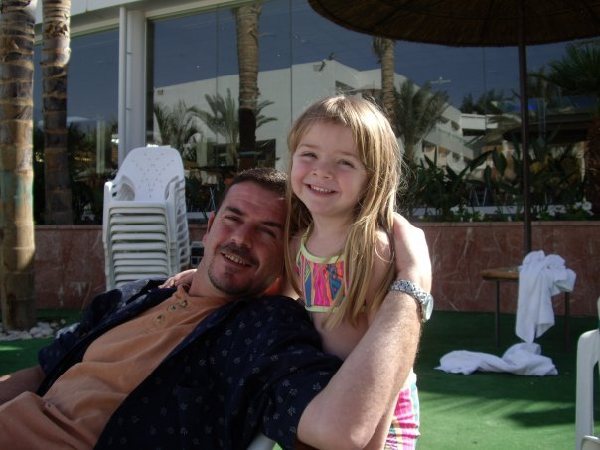
Ziad Jilani’s widow and daughters seek Justice for his killing by Israeli Border Policeman Maxim Vinogradov, for the third time. This Wednesday (13 March) Moira Jilani and her three daughters will come face to face with their husband and father’s killer.
“I am dreading facing them for my daughters,” Says Moira, “I think I could face them myself but I’m afraid that when I see the pain in my daughters eyes it will kill me.” Her husband, Ziad Jilani was killed three years ago by Maxim Vinogradov, an Israeli border patrolman who put his rifle to Jilani’s head and pulled the trigger three consecutive times.
Now, for the third time, the family is appealing to Israeli authorities to press charges against Ziad’s killer. On the 16th of January 2011 the case was closed by police internal investigations (Machash) for the first time, for “lack of evidence”.
In the following month, on the 15th of February 2011, the family submitted an appeal to then Israel Attorney General, Menachem Mazuz. Despite a confession by Vinogradov that he had shot Ziad at zero range when he was lying on the ground because of the initial gunshot wound, an autopsy report pointing to a close range shooting, dozens of eyewitnesses who were also injured that day as a result of the incident, and very clear changes in Vinogradov’s testimonies before and after the autopsy, Mazuz did not see fit to change Machash’s decision to close the case.
With the help of the al-Mazaan Center for Human Rights, on January 4th 2012, the family submitted a second appeal. This time, to the Israeli Supreme Court, through the al-Mazaan Center for Human Rights, demanding that the new state prosecutor, Yehuda Weinstein, bring criminal charges against Ziad’s murderers.
“After Weinstein [Israel’s current Attorney General] had all the evidence we had hope that he would press charges against the killers,” Moira recalls, “but after he decided not to do so for the third time, it is hard to have hope that the court will do justice.”
According to Yesh Din in 2012 the MPCID received 240 complaints and various reports of suspected crimes allegedly committed by Israeli soldiers against Palestinians and their property in the West Bank and the Gaza Strip. Out of these registered complaints, only 103- not even half- have yielded investigations. Not one single indictment has been served to date.
The organization commented on the findings:
“The numerous defects in MPCID investigations of offenses against Palestinians, and in the Military Advocate General Corps’ supervision of the investigations, result in the closure of the vast majority of the files and a minimal number of indictments being served. This creates a feeling of lawlessness on the ground, which may be a central contributing factor in the rise in the number of killings over recent weeks.”
Moira describes this sense of lawlessness, “I still have hope, but its hard when we see everything that’s happening around us,” she says, “my husband’s case is one of what seems to be a systematic sweeping under the rug of violent incidences of Israeli soldiers against the Palestinian population under their authority.
We are not just going to court for Ziad Jilani. We are going to court for all the Palestinians killed before Ziad and those that will be killed thereafter.”
Once involved with Palestinian Solidarity you have to accept that Jews are special and so is their suffering; Jews are like no other people, their Holocaust is like no other genocide and anti Semitism, is the most vile form of racism the world has ever known and so on and so forth.
But when it comes to the Palestinians, the exact opposite is the case. For some reason we are expected to believe that the Palestinians are not special at all – they are just like everyone else. Palestinians have not been subject to a unique, racist, nationalist and expansionist Jewish nationalist movement, instead, we must all agree that, just like the Indians and the Africans, the Palestinian ordeal results from run-of-the-mill 19th century colonialism – just more of the same old boring Apartheid.
So, Jews, Zionists and Israelis are exceptional, like no one else, while Palestinians are always somehow, ordinary, always part of some greater political narrative, always just like everyone else. Their suffering is never due to the particularity of Jewish nationalism, or Jewish racism, or even AIPAC dominating USA foreign policy no, the Palestinian is always a victim of a dull, banal dynamic – general, abstract and totally lacking in particularity.
This raises some serious questions.
Can you think of any other liberation or solidarity movement that prides itself in being boring, ordinary and dull? Can you think of any other solidarity movement that downgrades its subject into just one more meaningless exhibit in a museum of materialist historical happenings? I don’t think so! Did the black South Africans see themselves as being like everyone else? Did Martin Luther King believe his brothers and sisters to be inherently indistinguishable?
I don’t think so. So how come Palestinian solidarity has managed to sink so low that their spokespersons and supporters compete against each other to see who can best eliminate the uniqueness of the Palestinian struggle into just part of a general historical trend such as colonialism or Apartheid?
The answer is simple. Palestinian Solidarity is an occupied zone and, like all such occupied zones must dedicate itself to the fight against ‘anti Semitism’. Dutifully united against racism, fully engaged with LGBT issues in Palestine and in the movement itself, but for one reason or another, the movement is almost indifferent towards the fate of millions of Palestinians living in refugee camps and their Right of Return to their homeland.
But all this can change. Palestinians and their supporters could begin to see their cause for what it is, unique and distinctive. Nor need this be all that difficult. After all, if Jewish nationalism is inherently exceptional as Zionists proclaim, is it not only natural that the victims of such a distinctive racist endeavor are at least, themselves, just as distinctive.
So far, Palestine solidarity has failed to liberate Palestine, but it has succeeded beyond its wildest dreams in creating a Palestine Solidarity Industry, and one largely funded by liberal Zionists. We have been very productive in schlepping activists around the world promoting ‘boycotts’ and ‘sanctions’ meanwhile Israel trade with Britain is booming and Hummus Tzabar is clearly apparent in every British grocery store.
All those attempts to reduce the Palestinian ordeal into a dated, dull, generalised materialist narrative should be exposed for what they are – an attempt to appease liberal Zionists. Palestinian suffering is actually unique in history at least as unique as the Zionist project.
Yesterday I came across this from South African minister Ronnie Kasrils. In a comment on Israeli Apartheid he said : “This is much worse than Apartheid… Israeli measures, the brutality, make apartheid look like a picnic. We never had Jets attacking our townships; we never had sieges that lasted months after months. We never had tanks destroying houses.”
Kasrils is dead right. It is much worse than Apartheid and far more sophisticated than colonialism. And why? Because what the Zionists did and are doing is neither Apartheid nor is it colonialism. Apartheid wanted to exploit the African, Israel wants the Palestinian gone. Colonialism is an exchange between a mother and a settler state. Israel never had a mother State, though it may well have had a few ‘surrogate mothers’.
Now is the time to look at the unique ordeal of the Palestinian people. Similarly, now is the time to look at the Zionist crime in the light of Jewish culture and identity politics.
Can the solidarity movement meet this challenge? Probably, but like Palestine, it must first, itself, be liberated.
Canada’s Foreign Affairs Minister, John Baird, was in comfortable territory at the current AIPAC policy conference meeting in Washington, D.C.
I have deconstructed his arguments before, as he reiterates the current Harper government of Canada position in its unqualified support for Israeli occupation of Palestinian land and all that goes along with that. I will not repeat those arguments here as they are the same old-same old regurgitations of support for the militaristic Israeli state from a Canadian government that does not truly represent the majority of the people of Canada.
Baird presents the same arguments about Palestine living up to all previous agreements without recognizing that Israel has a lot to live up to as well; in particular that the UN Security Council has previously recognized withdrawal from occupied territories and the right of return of refugees. And as usual, the fault of the violence is the very nature of Arab/Palestinian social-political life, a mythology that Israel and its western supporters are careful to nurture.
What interested me most about his current statements, apart from the ego flattering standing ovations the AIPAC audience rendered unto him, are his comments about stopping aid to the Palestinian National Authority. Baird threatened a similar stopping of aid during the vote to recognize Palestine at the UN, then backed off after the overwhelming support displayed for Palestine.
These threats are being renewed again, against Palestine taking Israel to the International Criminal Court, but one has to wonder if the Canadian government is really aware of what the consequences of that cut might be.
Most of Canada’s aid to Israel is bound into corporate military research and development, including the realm of security and surveillance. The aid to the Palestinian Authority helps the PA maintain their fragile grip on the Palestinian population as it is used for similar areas of security, surveillance, and support for the few Palestinian elites who harvest the aid supplies for their own benefit. The Canadian military and the Canadian national police force, the RCMP, serve as trainers for the PA authorities own militarized units.
So what happens if the aid to Palestine is cut? Many things are possible, the most counterproductive one from the Israeli perspective would be the decrease in the control that the PA is able to exert over the Palestinian population on its behalf as the money supplies dry up. The Palestinian economy, such as it is, mainly in the West Bank, where the majority of the funds are utilized, would suffer even more.
With more economic weakness, and with a weakened PA no longer able to buy influence among its own people, the Palestinians would certainly be more restive and perhaps more aggressive towards their own elites as well as the Israelis – a third intifada would become more probable. Of course, more Palestinian violence would only make the current Canadian government say, “See, we told you they were a violent people,” and so the mythology of Israeli victimization will continue.
It would be a good thing perhaps to shed the yoke and burden of foreign control bought by the power of foreign dollars manipulating the economy and political scene in Palestine. The outcomes of such a cut are indeterminate, but usually in the world of political manipulation, unexpected outcomes are to be expected. For that reason alone, one can expect John Baird and the Harper government to prevaricate over cuts for some time to come.
– Jim Miles is a Canadian educator and a regular contributor/columnist of opinion pieces and book reviews for The Palestine Chronicle.
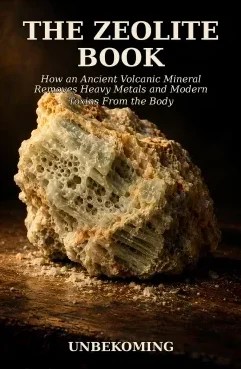
The volcanic mineral medicine will not patent — for the toxic burden medicine will not name
Lies are Unbekoming – October 30, 2026
Zeolite is old. It is in Roman concrete that has held for two thousand years. It’s in the water filters of ancient cisterns. It’s in the stomachs of Pacific livestock whose keepers knew, somehow, that this grey crumbling rock made the animals healthier. It’s in Soviet clinical protocols from the 1960s. It’s in the standard emergency response to the Chernobyl explosion.
In 1986, after the Chernobyl reactor failure, the Soviet Union manufactured and distributed natural zeolite at industrial scale — for soil remediation, for livestock feed, for human consumption, for the cleanup itself. Karl Hecht, who had been director of the Institute for Experimental and Clinical Pathophysiology at the Charité of Humboldt University Berlin, spent the six decades after that building the clinical research base — on silicon’s role in human health, on zeolite’s clinical safety, on its applications in ageing. In 2018, Pavelić and colleagues published a comprehensive clinical safety review of natural clinoptilolite in Frontiers in Pharmacology. In 2019, Mastinu analysed its binding affinities. In the Western medical literature, these works sit largely uncited.
What has not been treated at book length, until now, is how a volcanic mineral with six decades of Soviet clinical work behind it, two major peer-reviewed Western reviews, and ongoing clinical use across the former Eastern Bloc, remains almost entirely absent from Western medical practice — and what the toxic burden it’s meant to address actually is.
The Zeolite Book gathers the Soviet clinical record, the Western peer-reviewed studies, three contemporary practitioner voices, and three serious counterviews into one honest treatment. That’s why the book runs to seven appendices. 288 pages, four parts, three practitioner voices, three counterviews, seven appendices. The honest treatment is the argument.
This site is provided as a research and reference tool. Although we make every reasonable effort to ensure that the information and data provided at this site are useful, accurate, and current, we cannot guarantee that the information and data provided here will be error-free. By using this site, you assume all responsibility for and risk arising from your use of and reliance upon the contents of this site.
This site and the information available through it do not, and are not intended to constitute legal advice. Should you require legal advice, you should consult your own attorney.
Nothing within this site or linked to by this site constitutes investment advice or medical advice.
Materials accessible from or added to this site by third parties, such as comments posted, are strictly the responsibility of the third party who added such materials or made them accessible and we neither endorse nor undertake to control, monitor, edit or assume responsibility for any such third-party material.
The posting of stories, commentaries, reports, documents and links (embedded or otherwise) on this site does not in any way, shape or form, implied or otherwise, necessarily express or suggest endorsement or support of any of such posted material or parts therein.
The word “alleged” is deemed to occur before the word “fraud.” Since the rule of law still applies. To peasants, at least.
Fair Use
This site contains copyrighted material the use of which has not always been specifically authorized by the copyright owner. We are making such material available in our efforts to advance understanding of environmental, political, human rights, economic, democracy, scientific, and social justice issues, etc. We believe this constitutes a ‘fair use’ of any such copyrighted material as provided for in section 107 of the US Copyright Law. In accordance with Title 17 U.S.C. Section 107, the material on this site is distributed without profit to those who have expressed a prior interest in receiving the included information for research and educational purposes. For more info go to: http://www.law.cornell.edu/uscode/17/107.shtml. If you wish to use copyrighted material from this site for purposes of your own that go beyond ‘fair use’, you must obtain permission from the copyright owner.
DMCA Contact
This is information for anyone that wishes to challenge our “fair use” of copyrighted material.
If you are a legal copyright holder or a designated agent for such and you believe that content residing on or accessible through our website infringes a copyright and falls outside the boundaries of “Fair Use”, please send a notice of infringement by contacting atheonews@gmail.com.
We will respond and take necessary action immediately.
If notice is given of an alleged copyright violation we will act expeditiously to remove or disable access to the material(s) in question.
All 3rd party material posted on this website is copyright the respective owners / authors. Aletho News makes no claim of copyright on such material.
 Mahmoud At-Teety – Facebook

 “I am dreading facing them for my daughters,” Says Moira, “I think I could face them myself but I’m afraid that when I see the pain in my daughters eyes it will kill me.” Her husband, Ziad Jilani was killed three years ago by Maxim Vinogradov, an Israeli border patrolman who put his rifle to Jilani’s head and pulled the trigger three consecutive times.

 Zeolite is old. It is in Roman concrete that has held for two thousand years. It’s in the water filters of ancient cisterns. It’s in the stomachs of Pacific livestock whose keepers knew, somehow, that this grey crumbling rock made the animals healthier. It’s in Soviet clinical protocols from the 1960s. It’s in the standard emergency response to the Chernobyl explosion.
 Aletho News

