On March 1, 2010, an essay in Haaretz titled “Who will blink first in Iran’s nuclear poker game?” stated that “Israel is on the verge of a preemptive war to try to foil Iran’s nuclear program.” So, the question was who would blink first? Would it be Iran that would give up its nuclear program? Would it be Israel that would be forced to withdraw its threat of military attack? Or would it be the US that would ratchet up the pressure on Iran to please Israel?
Similar arguments continued to appear in the next two years. For example, On March 2, 2012, in an interview titled “Between The U.S., Israel And Iran, Who Blinks First?” NPR asked Martin Indyk to elaborate on his comment in The New York Times that we “are now engaged in a three-way game of chicken, which makes blinking more dangerous than confrontation.” Indyk, the former executive director of the Israeli lobby group The Washington Institute for Near East Policy, advisor to President Clinton, and US Ambassador to Israel, answered:
Well, essentially we’re now in a vicious cycle. In order to calm the Israelis down and get them to back away from their intense interest in taking care of the [Iranian nuclear] program militarily, we are ratcheting up sanctions that essentially are aimed at Iran’s economic jugular. We are doing that on the theory that the more pressure we put on them, the more we bring their economy to its knees, the more likely the Iranians are to cry uncle, to blink, to say, OK, we’ll negotiate meaningful curbs on our nuclear program. . . And unless somebody blinks, I’m afraid it’s going to lead to a confrontation.
It seems that after many years of this “three-way game of chicken” somebody finally blinked; and that somebody was not Iran.
Last week, following a long hiatus and much anticipation, there was a meeting in Kazakhstan between Iran and the so-called P5+1, the five permanent members of the Security Council and Germany. Such meetings are usually shrouded in secrecy and it is often difficult to get an accurate picture of what goes on behind closed doors. For example, on February 27, 2013, after the conclusion of the two-day meeting, a press release was issued by “EU High Representative Catherine Ashton,” the convener of these meetings, which basically stated: “We put what we call a confidence building proposal on the table.”
What the proposal stated remained secret. However, from various reports in the US, Israeli, and Iranian media one could surmise that the US, which is the main force behind these meetings, advanced the following proposal. In exchange for some so-called sanction relief, Iran would: 1) “significantly restrict” its accumulation of 20% enriched uranium, but would keep sufficient amount to fuel its Tehran Research Reactor that produces isotope for medical purposes; 2) suspend enrichment at Fordow underground facility and accept conditions that “constrain” the ability to quickly resume enrichment at Fordow; and 3) allow more regular and thorough monitoring of its nuclear facilities by the International Atomic Energy Agency.
If what was reported were true, and if there were no deception involved, then the US had indeed blinked and had withdrawn its previous and punishing proposal, a proposal that is usually referred to as “stop, shut and ship.” The earlier proposal, as summarized by Ashton on June 19, 2012, demanded from Iran: “stopping 20 percent enrichment activities, shutting the Fordow nuclear facility and shipping out stockpiled 20 percent enriched nuclear materials.”
The latest P5+1 proposal not only did not ask for shutting down Fordow and stopping 20 percent enrichment, but would let Iran retain some of its medium level enriched uranium to make fuel. More importantly, the proposal would implicitly recognize the right of Iran to enrich uranium for civilian purposes, something that Iran has been asking for years and the US and Israel have consistently denied.
Understandably, the Iranian side was pleased and stated that on some points the P5+1 got closer to the Iranian perspective. Indeed, the US had, to the chagrin of The Washington Post editorial piece on February 28, 2013, “kowtowed,” or more accurately, blinked. But what about Israel, the third party in the “three-way game of chicken,” did it also blink?
The “stop, shut and ship” proposal was originally manufactured in Israel. On April 4, 2012, The Jerusalem Post reported that Israeli Defense Minister Ehud Barak “has held discussions with American and European officials in recent weeks with the goal of convincing them to set clear goals for the planned talks with Iran.” The report went on to say that according to Barak, Israel’s demands are: “1) [the] transfer of all uranium enriched to 20 percent—approximately 120 kg.—out of Iran to a third party country; 2) the transfer of the majority of the 5 tons of uranium enriched to 3.5% out of Iran, leaving just enough needed for energy purposes; 3) the closure of the Fordow enrichment facility, buried under a mountain near the city of Qom; [and] 4) the transfer of fuel rods from a third party country to Iran for the purpose of activating the Tehran Research Reactor.” The US slightly modified these demands and presented them at the P5+1 and Iran meeting in June 2012.
After the June meeting, Ha’aretz reported that “representatives of the powers are expected to fly to Israel and update its leaders” (June 18, 2012). On the same day Israeli Vice Prime Minister Moshe Yaalon tried to exert more pressure on the P5+1 by stating that Israel could find itself facing the dilemma of “a bomb, or to bomb” (Reuters). “Should that be the choice,” Yaalon, stated, “then bombing (Iran) is preferable to a bomb (in Iran’s hands). . . I hope we do not face that dilemma.”
Delivering the Israeli manufactured demands to Iran and then going to Israel to report on the Iranian reaction were not new. After the May meeting between Iran and the P5+1, Haaretz reported on May 25, 2012, that Wendy Sherman, the US representative at the meeting, went straight to Israel. As the report stated, Sherman was going to “update Israeli officials on the talks in Baghdad, and on preparations for the third round of talks in Moscow on June 18 and 19.” The report also stated that according to the State Department, Sherman will also “reaffirm our unshakable commitment to Israel’s security.”
The following day, on May 26, Haaretz published a more extensive piece about Sherman’s visit. It quoted an unnamed US official as saying: “We updated the Israelis in detail before we updated our own government.” He was also quoted as saying: “There are no gaps between the U.S. and Israel in anything related to talks between Iran and the six world powers over the future of Iran’s nuclear program. . . Even if we do not have the patience, we need to give diplomacy a chance before military action.” In addition, the report stated that Sherman arrived in Israel “along with officials from the White House National Security Council working on the Iran nuclear issue—Gary Seymour and Puneet Talwar.” “The American team,” the report went on to say, “had a three-hour meeting with Defense Minister Ehud Barak, with National Security advisor Yaakov Amidror, and a number of other senior Israeli officials who deal with the Iran issue.” Not surprisingly, Gary Samore, President Obama’s Coordinator for Weapons of Mass Destruction Counter-Terrorism and Arms Control, was one of the original founders of the Israeli lobby group “United Against Nuclear Iran.”
The February 2013 meeting between the P5+1 and Iran was also followed by a similar visit to Israel. On February 26, 2013, Haaretz reported that the “American administration, along with the U.K., France and Germany, are in close contact with Israel and have been coordinating with it ahead of the [P5+1] talks in Kazakhstan. Immediately after the talks, an American negotiating team headed by Wendy Sherman, the under secretary for political affairs, is expected to come to Jerusalem.” “Sherman,” the report went on to add, “intends to meet with National Security Adviser Yaakov Amidror, Foreign Ministry Director General for Strategic Affairs Jeremy Issacharoff and other high-ranking officials to update them about the content of the talks with Iran.” The report also stated: “Last week, Amidror visited Washington and discussed the Iranian nuclear program with his American counterpart, Thomas E. Donilon.”
Given the close coordination between the US and Israel, one has to conclude that not only the US, but also Israel blinked at the February 2013 meeting. This, of course, comes as no surprise, since Israeli officials, particularly Prime Minister Benjamin Netanyahu, had bluffed and blinked many times before. After many years of crying wolf and threatening Iran, Netanyahu’s most public blinking came on September 27, 2012, when he appeared before the UN General Assembly and held up a diagram of a cartoonish-looking bomb with a fuse and drew a redline on it at 90% enriched uranium. The bizarre spectacle, which was mocked by some as “Bibi’s Wiley E. Coyote-style cartoon bomb,” was not only the proverbial “one too many times” that Mr. Netanyahu had cried wolf, but it was also the beginning of the end of Israel’s intense and unsuccessful campaign to make the US attack Iran or intensify the sanctions. The “decisive year” of 2012, as Israeli newspaper Maariv pointed out, was passing “without decisiveness” (Reuters, September 28, 2012).
What made the US and Israel blink? The answer requires a detailed analysis of Obama Administration’s policy of “tough diplomacy,” an analysis that will appear in my forthcoming book. However, a short answer is that the US and Israel seem to have run out of options in overthrowing the current government in Iran and replacing it with a friendly regime. “Tough diplomacy”—which was formulated mostly by Dennis Ross, currently the counselor to The Washington Institute for Near East Policy, and formerly special assistant to President Obama—threw at Iran everything the US had in terms of sanctions, sabotage, cyber-attacks and possibly assassinations of the Iranian nuclear scientists. Yet, the last step in this policy, which was supposed to be a naval blockade of Iran and military attack, could not be taken. Why? Because in order to wage a war against Iran the economic conditions in that country must become as dismal as they were in Iraq before it was invaded; and that, at the present, is not the case. Even though the accumulated result of 33 years of sanctions against Iran, particularly the most brutal and unprecedented ones in the last 4 years, have helped to create massive hardship in Iran, there is no sign that the Iranian economy is actually collapsing. There are also hardly any Iranian entities or individuals left to sanction. The US and Israel seem to be coming to terms with the reality and beginning to blink.
Sasan Fayazmanesh is Professor Emeritus of Economics at California State University, Fresno. He can be reached at: sasan.fayazmanesh@gmail.com.
Thanks to the efforts of the indefatigable James Morris, a seeming transformation of the view of the illustrious Noam Chomsky was revealed, which, if not equivalent to the change that Saul of Tarsus underwent while on the road to Damascus, was significant nonetheless. Morris seems to have a knack for ferreting out the unknown views of the famous, as was illustrated in his 2010 email exchange with General David Petraeus, then head of U.S. Central Command, in which he was able to reveal the latter’s close relationship with neocon Max Boot and his ardent desire to propitiate the pro-Zionist Jewish community at a time when it was generally thought that Petraeus was critical of the negative effects of the intimate U.S.-Israeli relationship on America’s position in the Middle East.
The Chomsky revelation took place while the latter was a guest on Phil Tourney’s “Your Voice Counts” program on Republic Broadcasting Network from 2:00 pm to 3:00pm Eastern Standard Time on Sunday, February 24, 2013. While Chomsky is a strong and very knowledgeable critic of Israel, he also has been (at least, was before this program) a stringent critic of the idea that the neocons have any significant impact on American Middle East policy. Rather, he presents a somewhat nebulous, quasi-monolithic, corporate elite, which includes the oil interests, as determining American policy in that region—as it does everywhere else in the globe—for its own economic interests. In what has been Chomsky’s view, Israel only serves as an instrument for American imperialism; that it too might benefit from American policies is, presumably, only an incidental by-product.
Chomsky was quite impressive on the program as he demonstrated extensive knowledge of the USS Liberty issue, which is a major issue of the program, since Tourney was a seaman on that ill-fated ship that was deliberately attacked by Israeli planes and gunboats during the Six Day War in June 1967, causing the deaths of 34 U.S. seamen and wounding 171 others out of a crew of 297.
Chomsky included an injection of his standard theme that Israel became a valuable strategic asset to the United States with the 1967 war when it wrecked Nasser and secular Arab nationalism in general, thus aiding America’s conservative client states, such as Saudi Arabia.
Listener phone calls were restricted to the last 15 minutes. Consequently, James Morris wasn’t able to get on the program until the last five minutes when he tried to get Chomsky to address the issue of the connection between the neocons and Israel. Morris cited then-Secretary of State Powell’s reference to the “JINSA crowd” (Jewish Institute for National Security Affairs) as the primary force for the war on Iraq within the Bush Administration. Morris went on to say that the neocons were a leading element of the Israel lobby.
After Morris made these statements, Chomsky amazingly blurted out that he “agreed completely” with him regarding the importance of the neocons—describing the neocons as “tremendously important.” Chomsky acknowledged that the neoconservatives had been the “dominant force” in the Bush administration, and that they had “pushed through” the Iraq war over many objections even from within the government. What Chomsky had said about the importance of the neocons was radically different from his usual portrayal of a monolithic corporatist dominance of U.S. Middle East policy. Chomsky even seemed to agree that the neocons held positions that diverged from those of the traditional foreign policy establishment—Morris had earlier mentioned Scowcroft and Brzezinski as opponents of the neocons.
What Chomsky said pertaining to the neocons being the leading force for the Iraq war is essentially identical to my position in “The Transparent Cabal.” And it is not only the opposite of what it appeared that he used to hold but what his protégé Norman Finkelstein continues to expound, as I discuss in my article, “Norman Finkelstein and Neocon Denial.”
Finkelstein denies that the neocons were a factor in causing the U.S. to go to war—and has nothing to do with my book, describing it as conspiracist—but he does not seem to realize that his position contrasts with that of his mentor. Since the two are quite close, it would seem that Chomsky has not even expressed this new view to Finkelstein in private conversation. When Finkelstein finds out that his mentor holds that the neocons were the “dominant force” for war with Iraq, one wonders if he will then charge him with believing in a conspiracy.
Unfortunately, however, Chomsky still stops far short of the full truth. For in his response to Morris, he went on to maintain that the neocons are different from the Israel lobby—definitely implying, though not explicitly stating, that the neocons are not motivated by the interests of Israel. He quickly put forth two arguments for this contention. First, he claimed that the neocons are simply a mainstream force in American conservatism going back to the Reagan administration. Even if true, this would not necessarily preclude their being biased in favor of Israel. However, it is not true—the neocons did not just fit into existing mainstream conservatism, but altered it to fit their own goals.
As I bring out in “The Transparent Cabal” (with numerous citations from secondary sources, this being a rather conventional view), the neocon movement originated among liberal Democrats, mainly Jewish, who gravitated to the right in the late 1960s and early 1970s. In significant part, this reflected a concern that American liberalism was moving leftward in ways detrimental to Jewish interests. In foreign policy, this involved diminished support by American liberals for Israel—in line with the world left’s support for Third World movements that included the Palestinians—and the liberals’ turn against an anti-Communist foreign policy, as a reaction to the Vietnam imbroglio, at a time when the Soviet Union’s policies were exhibiting discrimination against Soviet Jewry and opposition to Israel in support of its Arab enemies. In opposing what they saw as liberalism’s move to the left, these proto-neoconservatives did not see themselves as becoming conservative, but were dubbed with the moniker “neoconservative” by left-wing social critic Michael Harrington, who intended it as a pejorative term, and the name soon stuck.
Neoconservatives basically wanted to return mainstream American liberalism to the anti-Communist Cold War positions exemplified by President Harry Truman (1945–1953), which had held sway through the administration of Lyndon B. Johnson (1963–1969). When this effort failed to achieve success, neocons would turn to Ronald Reagan in the 1980. Despite being newcomers to the conservative camp, neoconservatives were able to find significant places in the Reagan administration, especially in the national security and foreign policy areas, although at less than Cabinet-level status.
Neoconservatives, however, did not become traditional conservatives, but instead altered the content of conservatism to their liking. “The neoconservative impulse,” pro-neocon Murray Friedman maintains in his book “The Neoconservative Revolution,” “was the spontaneous response of a group of liberal intellectuals, mainly Jewish, who sought to shape a perspective of their own while standing apart from more traditional forms of conservatism.”[Quoted in “Transparent Cabal,” pp. 39-40]
In domestic policy, neoconservatives supported the modern welfare state, in contrast to the traditional conservatives, who emphasized small government, states’ rights, and relatively unfettered capitalism. Most importantly, they differed significantly from the conservative position on foreign policy. Although the American conservatives of the Cold War era were anti-Communist and pro-military, they harbored a strain of isolationism. Their interventionism was limited largely to fighting Communism, but not to nation-building and the export of democracy, the expressed goals of the neocons. Nor did traditional conservatives view the United States as the policeman of the world. Most significantly, traditional conservatives had never championed Israel.
While traditional conservatives welcomed neoconservatives as allies in their fight against Soviet Communism and domestic liberalism, the neocons in effect acted as a Trojan Horse within conservatism: they managed to secure dominant positions in the conservative political and intellectual movement, and as soon as they gained power, they purged those traditional conservatives who opposed their agenda, particularly as it involved Israel. Support for Israel and its policies had become, and remains, a veritable litmus test for being a member of the multitudinous political action groups and think tanks that comprise the conservative movement.
In his 1996 book, “The Essential Neoconservative Reader,” editor Mark Gerson, a neocon himself who served on the board of directors of the Project for the New American Century, jubilantly observed: “The neoconservatives have so changed conservatism that what we now identify as conservatism is largely what was once neoconservatism. And in so doing, they have defined the way that vast numbers of Americans view their economy, their polity, and their society.” [Quoted in “Transparent Cabal”, p. 42]
While in domestic policy Gerson’s analysis might not be completely accurate, it would seem to be so in US national security policy, as illustrated by the near unanimous Republican opposition in the US Senate to the nomination of Chuck Hagel as Secretary of Defense because of his past statements critical of both US all-out support for Israel and its hardline position toward Iran (currently Israel’s foremost enemy) that might lead to war.
Now the fact that Cheney and Rumsfeld may not be motivated by a desire to aid Israel in their support for neocon Middle East policy, the Middle East policies they have supported have been formulated by those who identify with Israel. Since both of them have been closely associated with the neocons, Cheney more so than Rumsfeld, they were undoubtedly influenced by the pro-Israel neocons. Cheney even went so far as to serve on JINSA’s Advisory Board. And JINSA was set up in 1976 to put “the U.S.-Israel strategic relationship first.”
Moreover, as Vice President, Cheney specifically relied on advice from the eminent historian of the Middle East, Bernard Lewis, a right-wing Zionist and one of the neocons’ foremost gurus, who strongly advocated war against Iraq and other Middle Eastern states. (Barton Gellman, “Angler: The Cheney Vice Presidency,” p. 231) Chomsky has said that “Bernard Lewis is nothing but a vile propagandist,” and he presumably means a propagandist for Israel.
The influence of ideas per se was not the only factor that likely motivated Cheney. The fact that Cheney and his wife, Lynne, who was with the American Enterprise Institute (AEI—known as “neocon central”), had close personal and professional relations with the neocons also would have predisposed him to give his support to the neoconservatives and their agenda.
The same arguments would apply for Rumsfeld, with one additional one: a war on Iraq would give him the chance to demonstrate the value of his concept of a smaller, mobile, high tech American military. Rumsfeld held that a small, streamlined invasion force would be sufficient to defeat Iraq. As Bob Woodward writes in his book, “State of Denial”: “The Iraq war plan was the chess board on which Rumsfeld would test, develop, expand and modify his ideas about military transformation. And the driving concept was ‘less is more’ – new thinking about a lighter, swifter, smaller force that could do the job better. Rumsfeld’s blitzkrieg would vindicate his leadership of the Pentagon.”[“State of Denial,” p. 82]
For the neocons, Rumsfeld’s approach would not have the drawbacks of the conventional full-scale invasion initially sought by the military brass. The neocons feared that no neighboring country would provide the necessary bases from which to launch such a massive conventional attack, or that during the lengthy time period needed to assemble a large force, diplomacy might avert war or that peace forces in the U.S. might increase their size and political clout and do likewise. In short, it was this convergence on interests between the Rumsfeld and the neocons that made them so supportive of each other in the early years of the George W. Bush administration.
It must be acknowledged that the neocon Middle East war agenda did resonate with both Cheney’s and Rumsfeld’s general positions on national security policy, but there is little reason to think that they would have come up with the specifics of the policy, including even the identification of Iraq as the target, if it had not been for their neocon associates, whose policy reflected their close identification with Israel. It should also be pointed out that in Chomsky’s usual presentation of an American foreign policy shaped by the corporate elite, the actual government officials who implemented the policy were not necessarily members of the corporate elite nor motivated by a desire to advance the interests of the corporate elite as opposed to the national interest of the United States. In order for any type of elite to be successful, it is essential that it attract significant numbers of people outside of itself, which Chomsky himself has discussed at length regarding the corporate elite. This is also the very purpose of the neoconservative network and the information that it disseminates.
Acknowledging as much as he did, it is hard to see how Chomsky can fail to discern that the neocons identify with Israel. The evidence is overwhelming. The following are a few examples of this connection.
The effort to prevent Chuck Hagel from becoming the Secretary of Defense has been spearheaded by the Emergency Committee for Israel, the creation of which in 2010 was in large part the work of leading neocon, Bill Kristol, and which claims “to provide citizens with the facts they need to be sure that their public officials are supporting a strong U.S.-Israel relationship.” As Bill Kristol states: “We’re the pro-Israel wing of the pro-Israel community.” Kristol had co-founded the Project for the New American Century (PNAC), which promoted the war on Iraq. Kristol’s father, the late Irving Kristol, a godfather of neoconservatism, is noted for his identification with Israel. In 1973, he said: “Jews don’t like big military budgets. But it is now an interest of the Jews to have a large and powerful military establishment in the United States . . . American Jews who care about the survival of the state of Israel have to say, no, we don’t want to cut the military budget, it is important to keep that military budget big, so that we can defend Israel.” [Congress Bi-Weekly (1973), published by the American Jewish Congress]
Noah Pollak, a contributor to “Commentary” magazine, is the Emergency Committee’s executive director and, while living in Israel for two years, was an assistant editor at the Jerusalem-based Shalem Center.
Eliot Cohen, a veteran neocon, was a founding signatory of the Project for the New American Century and advised the Committee for the Liberation of Iraq. He coined the term “World War IV” for the war on terror. During the George Bush administration, he served on the Defense Policy Board in Bush’s first term and was closely affiliated with those neocons around Vice President Cheney. He is on the International Academic Advisory Board of the Began Sadat Center for Strategic Studies in Israel, which is affiliated with Bar Ilan University, and is involved in contract work for the Israeli government.
Douglas Feith, who as the Under Secretary of Defense for Policy in George W. Bush’s first term set up and controlled the Office of Special Plans, which spread the most specious war propaganda, was closely associated with the right-wing Zionist group, the Zionist Organization of America. In 1997, he co-founded One Jerusalem, a group whose objective was “saving a united Jerusalem as the undivided capital of Israel.” Before entering the Bush administration, Feith ran a small Washington-based law firm, which had one international office – in Israel. And the majority of the firm’s work consisted of representing Israeli interests.
Richard Perle has had very close personal connections with Israeli government officials, and has been accused of providing classified information to that country on a number of occasions. Perle not only expounded pro-Zionist views, but was a board member of the pro-Likud “Jerusalem Post” and had worked as a lobbyist for the Israeli weapons manufacturer Soltam.
Norman Podhoretz is considered a godfather, along with Irving Kristol, of the neoconservative movement. When editor of “Commentary” magazine, he wrote that “the formative question for his politics would heretofore be, ‘Is it good for the Jews?’” (“Commentary,” February 1972) In 2007, Podhoretz received the Guardian of Zion Award, which is given to individuals for their support for Israel, from Bar-Ilan University in Israel. Neocon Charles Krauthammer was the 2002 winner of the Guardian of Zion Award.
Max Singer, co-founder of the neocon Hudson Institute and its former president, who pushed for the war on Iraq, has moved to Israel, where he is a citizen and has been involved with the Institute for Zionist Strategies, which advocates the need to better infuse Zionist ideology in the Jewish people of Israel.
The neocons’ support for Israel does not necessarily mean that they were deliberately promoting the interest of Israel at the expense of the United States. Instead, as I point out in “The Transparent Cabal,” they maintained that an identity of interests existed between the two countries – Israel’s enemies being ipso facto America’s enemies. However, it is apparent from their backgrounds that the neoconservatives viewed American foreign policy in the Middle East through the lens of Israeli interest, as Israeli interest was perceived by the Likudniks.
Despite this professed view of the identity of American and Israel interests, sometimes the neocons’ actions verged on putting Israel interests above those of the United States government. For example, some leading neocons—David Wurmser, Richard Perle, and Douglas Feith—developed the “Clean Break” proposal outlining an aggressive policy for Israel intended to enhance its geostrategic position, which they presented in 1996 to then-incoming Prime Minister Benjamin Netanyahu. One part of the plan was to get the United States to disassociate itself from peace negotiations between Israel and Palestine and simply let Israel treat the Palestinians as it saw fit. “Israel,” stated the report, “can manage it’s own affairs. Such self-reliance will grant Israel greater freedom of action and remove a significant lever of [US] pressure used against it in the past.” It was highly noteworthy that the neocons would devise a strategy to enable Israel to become free from adhering to the goals of their own country. [“Transparent Cabal,” p. 93]
In conclusion, while Chomsky’s change was far from being complete, his acknowledgement that the neoconservatives were the “dominant force” in driving the U.S. to the war on Iraq in 2003 is, nonetheless, very significant. Chomsky, who was voted the “world’s top public intellectual” in a 2005 poll, certainly influences many people, most particularly on the anti-war left, and his new view should make them rethink their belief that the war was all about oil. It is to be hoped that Chomsky’s words were not a one-time aberration and that he will not revert to his previous publicly-espoused position. Rather, it is to be hoped that he will now look more deeply into the neocons’ activities and thus discern their close connection to Israel.
Stephen J. Sniegoski is the author of The Transparent Cabal: The Neoconservative Agenda, War in the Middle East, and the National Interest of Israel.
If there is one message that unifies critics of Israel and advocates for Palestinian rights, it is “End the Occupation.” As with many unifying messages, however, it is successful partly because of its ambiguity. What land and which people are occupied? And what are the terms under which the “occupation” will be ended.The ambiguity allows groups as disparate as Hamas and J Street to chant the phrase with very different images in mind. Hamas and other anti-Zionists argue that all of the land defined by the British Mandate of Palestine is occupied territory, while J Streeters and other “soft” Zionists commonly refer only to Israel’s 1967 territorial conquests as “occupied.”
The dividing line between these two views has been articulated By Naomi Wimborne-Idrissi of JBIG (Jews Boycotting Israeli Goods):
…there are many people within the movement who share the opinion – which is general throughout the West – that Israel needs to exist as a Jewish state, should exist as a Jewish state. And there are many Jews and others in the movement who don’t want to criticize that fundamental fact.[i]
Wimborne-Idrissi is undoubtedly correct in her assessment: public opinion in the West generally supports what is called “Israel’s right to exist as a Jewish state.”[ii] However, most Palestinians fail to understand why this “right” should trump their rights and why Palestinians should be made to pay for its exercise with expulsion from their homes.
Indeed, they may be forgiven for doubting the sincerity of people that claim to advocate for justice on their behalf but fail to defend their right to return to their homes. On the one hand, these “defenders” of Palestinian human rights claim to oppose Israel’s expulsion of Palestinians, both inside the internationally recognized borders of Israel and in other areas under Israeli control. On the other hand, these same champions of Palestinians will not lift a finger to correct and defend against the more massive ethnic cleansing that occurred in 1948. It is as if 1967 is the dividing line between which criminal activity must be accepted and which must be resisted.
Do such persons really oppose ethnic cleansing as a matter of principle or merely as it suits their whim? The passage of time does not appear to be an issue. If 1948 seems like a long time ago, let us remember that there is no statute of limitations on such matters, as the prosecution of Nazi war criminals from an even earlier era illustrates.
J Streeters and other “soft” Zionists may appear to be allies of Palestinians, but they are not. Their overwhelming consideration is to create and maintain a Jewish state, and to mould it into their image of a liberal democracy that they can feel proud of. Palestinian rights and welfare are entirely subsidiary to that objective.
This explains why J Streeters defend Israel’s “right to exist,” i.e. the ethnic cleansing of 1948. They may not like ethnic cleansing, but it was necessary for the creation of a Jewish state, which has a higher order of priority. On the other hand, they see the current ethnic cleansing policies of the state of Israel as corrosive to the kind of state they would like to have. This is why they want to “end the occupation.” Look what it is doing to Israeli youth! Look at how it is driving Israel into the hands of “extremists.”
Let us therefore be clear. We are dealing with people whose opposition to ethnic cleansing is not very firm and whose primary interest in “ending the occupation” is to do what is good for Israel, not for humanity and least of all for Palestinians.[iii]
Indeed, one wonders why these advocates for Israel oppose a massive expulsion of the remaining Palestinians in all of the land held by Israel. Expulsion is clearly not a “red line” for them, and it is an expedient method of “ending the occupation.” I suspect that they harbor a nagging guilt for the theft and massacres of 1948, but not enough to want to give up the stolen property. Rather, they hope to expiate their guilt by returning a portion of the territories seized in 1967 for the purpose of creating Palestinian Bantustans. (The South African Bantustans served a similar purpose of assuaging the guilt of white supremacists.)
Regardless of the hypocritical games that Jewish supremacists in the movement play amongst themselves, Palestinians and human rights advocates must not be lured into false partnerships with them just because we share some of the same immediate tactics and objectives, such as stopping the growth of Jewish settlements, boycott of (some) Israeli products and institutions, an end to land confiscations, etc. Rather, we must expose the racist foundations and objectives of these ethically inconsistent elements within “the movement,” and avoid alliances with them.
Currently, I fear that we may be doing the opposite, i.e. allowing the “end the occupation” movement to be driven by the interests of people whose agenda requires Palestinians to give up inalienable rights and which rewards those who take those rights away from them.[iv] It is not in the interest of Palestinians and principled human rights advocates to make common cause with such morally compromised persons.
Dr. Paul Larudee is a human rights advocate and one of the co-founders of the movement to break the siege of Gaza by sea. He was deported from India on 31st December, 2012.
[ii] International law does not provide for the right of states to exist. Rather, states come and go as a matter of historical and social forces. International law describes the rights and obligations of states, but does not require that any given state must exist.
[iii] Gilad Atzmon (The Wandering Who, Winchester: Zero Books, 2011, p. 102) makes a similar argument with respect to Jewish anti-Zionists, i.e. that they are motivated by what is good for Jews and that they believe that a Jewish state is bad for the Jews. Atzmon contends that this is just another instance of Jewish exceptionalism, which will be the cause of injustice even if the form of the injustice is not Zionism per se. Even if this is the case, social justice groups are notorious for pursuing justice while failing to practice it, and this may be an instance of such. I do not discount the possibility that cliquishness, tribalism and exceptionalism are causes of injustice in many cases, but ridding human nature of this tendency is beyond the scope of most advocacy efforts, even if it deserves a place in all of them.
[iv] An instance of this is the Palestinian BNC (BDS National Committee). Although nominally Palestinian, its main website is in English, with the Arabic translation largely unfinished. An unauthorized amendment to its original mission statement, inserted at an unknown time, appears to remove the property seizures of 1948 from consideration as occupied Palestinian Arab land. This appears to be a concession to “soft” Zionist elements within the BNC-led BDS movement. The amended statement does not appear in any authorized Arabic version of the mission statement.
The United Nations says the ill treatment of Palestinian minor inmates within the Israeli military detention system is “widespread, systematic and institutionalized.”
The UN children’s fund, UNICEF, said in a 22-page report on Wednesday that it has examined the Tel Aviv regime’s military court system for holding Palestinian children and found evidence of “cruel, inhuman and degrading treatment or punishment.”
Some 7,000 Palestinian children, aged between 12 and 17, have been arrested, interrogated and prosecuted by Israeli forces, the report said, adding that the majority of them were boys.
“In no other country are children systematically tried by juvenile military courts that, by definition, fall short of providing the necessary guarantees to ensure respect for their rights,” the report stated.
UNICEF analyzed the procedure employed by Israeli forces from arrest to trial of the children. It said many children were “aggressively awakened in the middle of the night by many armed soldiers and being forcibly brought to an interrogation centre tied and blindfolded, sleep deprived and in a state of extreme fear.”
Many of them faced mistreatment during the transfer process and forced to lie down on the floor of a vehicle for one day in some cases. They were also subjected to verbal or physical abuse, the report also noted.
“The interrogation mixes intimidation, threats and physical violence, with the clear purpose of forcing the child to confess,” the international body said, adding they were not accompanied by a lawyer or a family member during the interrogation.
“Children have been threatened with death, physical violence, solitary confinement and sexual assault, against themselves or a family member,” it said, adding that they were restrained during the questioning even for extended periods of time.
The maximum penalty for minor inmates, aged 12 to 13, is six months. However, it could be extended to 20 years for those who are over 14. The vast majority of Palestinian children have been arrested for throwing stones.
“The principal evidence against the child is the child’s own confession, in most cases extracted under duress during the interrogation,” the UNICEF report further said, saying they have to sign confession forms in Hebrew which they barely understand.
“Ultimately, almost all children plead guilty in order to reduce the length of their pretrial detention. Pleading guilty is the quickest way to be released. In short, the system does not allow children to defend themselves,” the report concluded.
BETHLEHEM – The mother of Bassem Abu Rahmah, who was killed in 2009 during a non-violent protest in Bilin, filed a petition to Israel’s High Court on Sunday to demand justice for the death of her son, B’Tselem said.
The petition was filed jointly with Bilin village council, B’Tselem and Yesh Din, and demands that Israeli Military Advocate General, Major-General Danny Efroni, be ordered to reach a decision in the case and prosecute the soldier and all those bearing command responsibility for the killing of her son.
Bassam Abu Rahman, 30, was killed in 2009 after being shot in the chest with a tear-gas canister during a demonstration against Israel’s separation wall.
Three video segments filmed during the protest prove that Abu Rahmah did not act violently and did not endanger the soldiers in any way, B’Tselem said.
The petition includes opinions from experts who reviewed the videos, stating that the grenade was aimed directly at Abu Rahmah.
Other soldiers in the same video can be seen firing tear-gas canisters directly at protestors in the presence of senior officers and in complete contravention of the open-fire regulations, B’Tselem said.
Despite these findings, the former Military Advocate General initially refused to open an investigation, only changing his mind after a threat to petition Israel’s High Court with expert opinion documenting the “unequivocal conclusion that the firing was aimed directly at Abu Rahmah.”
“The failure to reach a decision is dangerous and conveys the message to IDF and Border Guard personnel engaged in dispersing demonstrations that even if they shoot and kill demonstrators, they will not bear criminal liability,” B’Tselem said.
“Such a message reflects contempt for the lives of Palestinian civilians.”
The death of Bassam Abu Rahmah was featured in the highly praised Palestinian documentary “5 Broken Cameras.”
The film is based on five years of amateur camera work by journalist Emad Burnat as he documented weekly protests against land seizures by Israeli forces and settlers in the village of Bilin.
US aid to Israel may be saved from sequestration and moved into Pentagon budget. That might be the result if the Israeli lobby in Washington gets its way and the American people aren’t paying attention, political analyst Robert Naiman told RT.
The annual conference of the American Israel Public Affairs Committee (AIPAC) is reportedly focused on the congressional designation of Israel as a “major strategic ally” of the US, a unique status that would be enjoyed only by the Jewish state. The move is seen as facilitating Israel’s military action against Iran’s alleged nuclear weapons program, which also appears on the conference agenda.
But according to the policy director at Just Foreign Policy Robert Naiman, the pro-Israel conference is focusing on Iran so as not to draw attention to the unresolved Israeli-Palestinian conflict – as well as protecting US funding of Israel from budget cuts.
RT: The US has been Israel’s faithful ally since the foundation of the state. Why does it need to become official, why the formalization?
RN: Well, according to lobbyists associated with the American Israel Public Affairs Committee, it has to do with the coming threat of budget cuts. Under this sequester… there’re supposed to be across-the-board cuts to the US budget. So that should mean that the US aid to Israel, which is substantial, billions of dollars a year, should also be cut – but the Israel lobby doesn’t want the aid to Israel to be cut. So their long game is that with this designation of ‘major strategic ally’ they would move things that are currently paid out of the US aid to Israel into the base Pentagon budget. They’ll argue, ‘well, this is about the national security needs…’
So their goal here is to exempt aid to Israel from the so-called across-the-board cuts. But of course they don’t want to announce that on the marquee, because Americans are going to be told: ‘oh, now we have to cut Head Start early childhood education because of the sequester cuts, but meanwhile aid to Israel is going to be protected.’ That’s going to make a lot of people in the United States very angry.
RT: It’s clear how Israel would benefit from this. But the US rubber-stamping the status of Israel as its ‘major strategic ally’ – how do they benefit from it?
RN: Well, they don’t – it has nothing to do with the benefit to the US. This is about what you can get away with if you’re lobbyist in Washington and the American people aren’t paying attention. If AIPAC and members of Congress are in a closed room, they’re going to agree on one thing. If the American people don’t find that out, it’s not reported in the press. This isn’t in the New York Times, it’s not in the Washington Post. It’s in the insider press that covers the stuff, Jewish telegraphic agency, for example, that covers AIPAC. So outside the people who follow such news, this is not in the mainstream American media yet.
RT: The conference will focus mainly on Iran, which is seen as the emerging threat. But the conflict with the Palestinians is very real and has been for decades. Why isn’t solving that on the agenda?
RN: Well, the American Israel Public Affairs Committee doesn’t want to solve the Israeli-Palestinian conflict, they’re completely content with the status quo. They want Israel to retain control of the West Bank, they want Israeli settlements in the West Bank to expand, so they’re completely happy with that. In fact, these are the people that do a lot to drive the focus on Iran, the American Israel Public Affairs Committee and the Israeli government, which are like two twin brothers. This focus now actually helps them change the channel from the Israeli-Palestinian conflict. They don’t want anybody to think about or talk about… three million Palestinians who don’t get to vote for the government that rules their lives, while their neighbors can stir in the Israeli Knesset.
Israel on Monday will begin segregating certain buses in the occupied West Bank to appease Jewish settlers who say they are afraid of sharing a ride with Palestinians, Israeli media reported.
Buses operated by the Afikim bus company that transport passengers from the Eyal checkpoint into central Israel will now have separate lines for settlers and Palestinians.
Unnamed sources from Israel’s transportation ministry told Ynet that the project was developed to calm the nerves of settlers who say that Arabs pose a security threat.
But officially, the ministry has billed the controversial move as a plan to “improve services.”
“The new lines are not separate lines for Palestinians but rather two designated lines meant to improve the services offered to Palestinian workers who enter Israel through Eyal Crossing,” Ynet quoted a ministry statement as saying.
I just came across a JVP press release (Jewish Voice for Peace) reporting a massive advertising campaign to counter the AIPAC Annual Conference in Washington. Apparently, from today 100 billboards will be stationed in DC Metro bearing a simple but important message.
“AIPAC Does Not Speak for Me”.
AIPAC is certainly a danger to world peace and yes, it is a positive development that a Jewish organization should confront its impact on American foreign policy.
But still, JVP’s tactics are problematic. If anything, they reveal the deep confusion inherent in Jewish politics in general, and Jewish progressive thinking in particular.
On the one hand, JVP’s campaign is simple and transparent: it states “AIPAC does not speak for me. Most Jewish Americans are pro-peace. AIPAC is not.” But on the other hand, JVP falls short in offering any universal or ethical solution to the conflict in the Middle East.
“According to a recent poll by pollster Jim Gerstein” reads the JVP’s press release, “82% of Jewish Americans support a two-state solution to the Israeli-Palestinian conflict.”
So, if I understand it correctly, 82% of Jewish Americans support a solution that dismisses the most essential and elementary Palestinian right to return to their land, in effect supporting the existence of a Jewish State in historic Palestine, at the expense of the Palestinians and their rights. In other words, the so-called ‘good peace-seeking Jews’ ,who are the vast majority of Jewish Americans (according to JVP), support an utterly non-ethical solution.
But the reference to Gerstein’s statistics is even more embarrassing. Are we interested in what the Dutch think about the solution of the conflict in Ireland? Do we care if Indians approve the Italian recent polls? No, we don’t but, for some reason, we are desperate to find out what ‘Jewish Americans’ think of the Israeli Palestinian conflict. The reason for this is obvious – Israel defines itself as the Jewish State and many Jewish Americans see Israel as their homeland and obviously, they care about their homeland and its politics. In that respect, Zionism should be seen as a success story – a trap into which JVP is foolish enough to fall. By referring to Gerstein’s statistics, JVP actually confirms that Jews are bonded spiritually and politically with their Jewish state and so are subject to an intense conflict of identity.
Chaim Weizmann, the legendary Zionist and the first Israeli President, somehow knew of all those JVPs to come. Already in the early days of Zionism, he observed the Jewish political inclination towards marginalism; he wrote “there are no English, French, German or American Jews, but only Jews living in England, France, Germany or America.” Whether Weizmann was correct or not is open to discussion, but clearly, JVP accepts Weizmann’s observation. JVP refers to the American Jews as ‘Jewish Americans’. It regards Jewishness as a primary political quality and it refers to Jews as a distinctive marginal ethno-centric group.
Interestingly, the ‘anti’ Zionist JVP is actually the embodiment of Weizmann’s Zionist wet dream. It may not agree with AIPAC on some side issues to do with settlements, occupation and Israeli policies, but it agrees on the fundamentals – “there are no American Jews, but only Jews living in America.” And as if this is not enough, JVP, like AIPAC supports the existence of a Jews only State in Palestine.
I guess that from Weizmann’s perspective JVP is Zionist to the bone. It openly promotes the two state solution because, like AIPAC, it is primarily concerned with Jewish tribal interests rather than human rights, ethics, or universal thinking.
JVP, like any other Jews-only ‘progressive’ organisation, may speak universal but it still thinks tribal.
TEHRAN – Argentine President Cristina Fernandez has defended an agreement between Iran and Argentina to set up an international “truth commission” to investigate the bombing of the Argentine Israeli Mutual Association (AMIA) building in Buenos Aires in 1994 that killed 85 people, the Buenos Aires Heraldreported on Friday.
Fernandez has said, “My commitment with this case is to know the truth, not only what happened abroad but what happened here too. I want to know who were the ones to cover up, to hide evidence; I deserve to know it as an Argentinean and the victims and their families deserve it too.”
According to the report, she has also condemned the “complicity” of Jewish community leaders in the AMIA attack.
Argentina’s Congress approved an agreement with Iran to probe the AMIA bombing on Thursday.
The two governments signed a memorandum of understanding in January on how to deal with the attack in which Argentine court authorities have accused a number of Iranians of involvement. Iran has denied any link to the bombing.
The pact signed with Tehran has been criticized by Israel and Jewish groups, who fear it could end up weakening the case against Iran. They also see it as a diplomatic victory for Iran.
The agreement stipulates that a commission – made up of five foreign legal experts – will outline plans for Argentine judicial officials to travel to Tehran to question Iranians accused of having links to the attack.
Commission members will analyze the documents presented by both nations’ judicial authorities and “issue a report containing recommendations on how to proceed with the case” according to the memorandum.
Argentine President Cristina Fernandez had previously said it could shed new light on the case after years of deadlock.
Fernandez has close ties with other Latin American leaders who are on good terms with Tehran, such as Venezuela’s Hugo Chavez.
Her supporters have hailed the memorandum of understanding as a historic opportunity.
Argentina’s Senate also approved the agreement last week.
Grant F. Smith, research director of IRmep, briefs several hundred Houston area non-profit and business leaders about why Americans are turning away from Israel and challenging Israel’s U.S. lobby. Review of major espionage, propaganda and wealth transfer initiatives. Analysis of new polling data on American public opinion and how the growing breech between opinion and policy may be driving a higher score on Transparency International’s “perceptions of corruption” index.
Two British peace activists have been detained in recent weeks after arriving home from the West Bank, occupied Palestine. They have been detained and taken in for questioning, over suspected links with the International Solidarity Movement.
“We are concerned about the British police using anti-terrorist legislation to target non-violent pro-Palestinian activists. We are a transparent group, trying to uphold the principles of international law; even inside Israel the International Solidarity Movement is not considered illegal. We would encourage the British Police to ask any questions they wish to do so, directly, and not by detaining affiliated activists at the airport”
The Schedule 7 of the Terrorism Act 2000, which the two activists have been held on, allows the police, under certain specified circumstances, to arrest individuals without a warrant who are reasonably suspected of being terrorists. These laws are draconian measures which give the British police powers to detain suspects for up to 28 days without charge.
Schedule 7 is clearly being used as a tool to find out more about activists involved in a wide variety of types of political dissent and to provide profiles of activists for the police to use in trying to undermine political movements. None of the questions about movements in the UK were designed to root out terrorism or uncover the preparation for terrorism. In fact, the movements concerned have never even been accused of terrorism (with the exception of completely false accusations made against the ISM, see here).
Britain abstained at the last vote at the United Nations deciding whether Palestine should be accepted as a non-member observer state. But in the last two weeks the double standards of the British government in relation to Palestine and Israel have again been laid bare; Saeed Amireh, has been refused a visa to visit the UK. Amireh is a peaceful campaigner against Israel’s occupation and the theft of Nilin’s land. He was told he hadn’t provided “enough supporting documents”, even though he had supplied everything that was asked for, including a letter of invitation and guarantee from the UK Palestine Solidarity Campaign of his costs being paid.
The use of these powers as a way to clamp down on non violent activists from Palestine and Britain is not acceptable, what is the British government afraid of? Maybe the fact the activists, returning home from Palestine, work with Corporate Watch and have helped reveal the continued supply of weaponry from Britain to the Israeli army has made them a target. This is despite the current British arms export policy stating it won’t deliver weapons to any countries breaking UN treaties. British companies are still complicit in Israeli war crimes in Gaza, as was proved in the EDO Decommisioners case of 2011.
A friend sends me a PressTV posting by Dr. Kevin Barrett As is usually the case at that site, it’s a well-written, well-thought-out piece by someone with creds who has something to say. And, as with the best journalism, poetry, drama, fiction, conversation, etc., good thinking should inspire more of the same… and even consummate in focused action! Let’s have a go!
Dr. Barrett’s first paragraph: “The only award the makers of Argo deserve is a criminal conviction for crimes against humanity. Instead, Hollywood’s Zionist mafia has handed them an Oscar for best film of the year. The members of the academy should themselves be in the docket, facing war crimes charges, right alongside Ben Affleck.
Argo is a propaganda film. Like the films of Nazi publicist Leni Riefenstahl, it is well-made. Like those of Riefenstahl, it glorifies a murderous criminal organization. And like those of Riefenstahl, its ultimate purpose is to elicit hatred and turn its audience into mass murderers.”
There’s meat to chew on there (or organic, free-range chickens, if one prefers) but, as I wrote my friend, “The biggest problem with Barrett’s analysis is the usual specious analogy; i.e., Naziism/Riefenstahl/WWII and CIA/Hollywood/WWIII. Best go a little further back in history to get a better sense of how dangerous and insidious ARGO really is.”
Here’s what I mean: We’ve been living in a media-driven world since Edward Bernays applied his uncle’s– Sigmund Freud’s—psychological insights to mass-consumer-marketing and public relations… and then to matters of State propaganda (which often correlates to matters of war!). Born in Austria in 1891, Bernays was a baby when his family moved to the US a year later. (Snapshot Wikipedia intro: “[Bernays] combined the ideas of Gustave Le Bon and Wilfred Trotter on crowd psychology with the psychoanalytical ideas of … Sigmund Freud.” Here’s the key point: Bernays “felt… manipulation was necessary in society, which he regarded as irrational and dangerous as a result of the ‘herd instinct.’”)
Now, let’s get back to the historical record and why Afleck’s film is far more egregious than the work of Leni Riefenstahl.
Of all the major powers in WWI, Germany had tried hardest to avoid that cataclysmic conflict. Following Gavrilo Princip’s assassination of Austrian Archduke Ferdinand in Sarajevo, Kaiser Wilhelm II wrote imploring letters to his royal cousins (really!) in Britain and Russia imploring them to settle the matter of the Serbian insurrection diplomatically, to disentangle themselves from the disastrous network of alliances that had split Europe into armed camps. Nothing happened for about a month during the “July crisis” of 1914. Austria-Hungary made demands on Serbia to repress the rebellion, but the Serbs were encouraged to press on by “outsiders” (chiefly their Slavic cousins in Russia who wanted to re-establish their power base in the Balkans, but also by Britain and France–determined to crush the rising power of Germany and ensure their control of their Middle Eastern empires! And if these entanglements and hidden agendas sound a lot like our contemporary situation in Israel, Syria, Libya, Egypt and the whole shebang of the Middle East today, well, Plus ca change, plus c’est la meme chose!)
Needless to say, the Kaiser was barking up the wrong family tree! His letters and diplomatic missions came to kaput! The toll on Germany, Austria-Hungary and the Ottoman Empire was unimaginable (only Russia would suffer comparable damages among the Allies!). Following the Armistice, there was the sell-out of the Versailles Treaty, the Balfour Declaration, and so forth–with much input by Zionist Jews (especially in Britain and the US) determined to seize the moment to establish a Jewish state in Palestine.
Were there “good guys” and “bad guys”… or were politicians, industrialists, armaments manufacturers looking out for their own best interests, figuring how to advance themselves—and the devil be damned? And the common man or woman or child—what did they understand of those interests? They were “herded” together to die in filthy trenches, to slaughter, and be slaughtered by, strangers. (Poets like Thomas Hardy in “The Man He Killed” and Wilfred Owen in most of his poems, and a poet-novelist like Remarque best captured the horrific ironies.)
Following the grotesque war (as all wars are!), Germany suffered a further dozen years of hyper-inflation (wheelbarrows of deutchmarks, etc.), starvation, kids dying in the street, etc. Meantime, kids were dancing the Charleston, etc. during America’s triumphalist Roaring Twenties. So, is it any wonder that German voters turned to Hitler and the Nazis in 1932, and, any more wondrous that by the Berlin Olympics of 1936, artists like Riefenstahl were celebrating a resurrected Germany? (And, notably, German artists were not alone in their adjulation. There are old Life magazines from the 1930s showing Herr Hitler as amiable host in Berchtesgaden, and one can find quotes by bulldog British imperialist Churchill praising Hitler’s accomplishments!) Notwithstanding the accomplishments, Germany remained threatened on every side by its former enemies.
No doubt there were injustices in Germany/Austria/Hungary, etc.–as there were in all the major powers of that time. Have we forgotten what it was like to be a black man in the US South back then—the public lynchings with grinning white men, women and children watching the “niggers” swing? Should we forget that long before there was any kind of “holocaust” engineered by German fanatics, there was at least as terrible a holocaust—in terms of numbers killed, 5-7 million–engineered by our future ally Stalin in Ukraine?
And this is the essence of our problem now—a problem badly exaccerbated by a movie like “Argo.” Since Bernays, we live in an often baffling, multi-layered, complex world with simplistic historical frames of reference; with simplistic solutions, pitting “good guys” against “bad guys.” (Aside: incredible to me that adults can take a phrase like “bad guys” seriously to justify drone warfare, torture, renditions, sanctions against a non-belligerent like Iran!) Fact is, Leni Riefenstahl had valid reasons to celebrate the accomplishments of Naziism between 1932 and 1939, and Germany had every reason to be wary of the empires—British, French, Russian and American—that had already devastated it two decades before.
Making Hitler and Naziism the locus of all evil in the world at that time, we have forgiven ourselves the barbarous acts we ourselves committed before and after the holocaustic Second World War! And, transferring that locus of evil to another opponent—the Soviet Union for over 40 years, or Iran for the past dozen years—we forgive ourselves in advance of committing horrors in the name of peace, security, our “freedom,” our “democracy,” our “way of life,” etc.
The situation in America today is far different from that of Germany in the 30’s! Our country has not been attacked and devastated by Iran. We have, rather, been bringing about our own ruin by the aggressive policies we have pursued since the end of WWII. There never was a “smoking gun” (in Exxon’s Condoleeza Rice’s preposterous phrase), nor yellow-cake uranium (as touted by “military hero” Colin Powell)—nor any of the other charades acted out on the world stage in order to justify the US holocaust against the people of Iraq during the last dozen years. Our CIA and Hollywood have helped to build the shaky scaffold of Middle Eastern ruin and our own. It is scaffolding that could come crashing down if the “herded” masses will awaken from their sleep–their dreams and their nightmares–and not only reclaim, but demand, their humanity.
Movies like “Argo” should be boycotted! Academy Award ceremonies should be picketed in the name of the First Amendment! Such movies have nothing to do with “freedom of speech” and everything to do with suppressing free speech and the truth for the sake of profits, promoting wars and hatred and slaughter. They are worthy of nothing but the fullest condemnation.
Let the Occupy Movement emerge from its long winter hibernation and focus its admirable energy on our spurious media—this “entertainment industry” that has cast a vail over common sense and decency for the sake of promoting Zionists, billionaires and corporatists (and let’s throw in the decadent, pederast Catholic Church Establishment, too!). That is the real story that needs to be told!
Gary Corseri has taught in US public schools and prisons, and at US and Japanese universities. He has published books of poetry, the Manifestations literary anthology (edited), and the novels, A Fine Excess and Holy Grail, Holy Grail. He can be contacted at Gary_Corseri@comcast.net.
The volcanic mineral medicine will not patent — for the toxic burden medicine will not name
Lies are Unbekoming – October 30, 2026
Zeolite is old. It is in Roman concrete that has held for two thousand years. It’s in the water filters of ancient cisterns. It’s in the stomachs of Pacific livestock whose keepers knew, somehow, that this grey crumbling rock made the animals healthier. It’s in Soviet clinical protocols from the 1960s. It’s in the standard emergency response to the Chernobyl explosion.
In 1986, after the Chernobyl reactor failure, the Soviet Union manufactured and distributed natural zeolite at industrial scale — for soil remediation, for livestock feed, for human consumption, for the cleanup itself. Karl Hecht, who had been director of the Institute for Experimental and Clinical Pathophysiology at the Charité of Humboldt University Berlin, spent the six decades after that building the clinical research base — on silicon’s role in human health, on zeolite’s clinical safety, on its applications in ageing. In 2018, Pavelić and colleagues published a comprehensive clinical safety review of natural clinoptilolite in Frontiers in Pharmacology. In 2019, Mastinu analysed its binding affinities. In the Western medical literature, these works sit largely uncited.
What has not been treated at book length, until now, is how a volcanic mineral with six decades of Soviet clinical work behind it, two major peer-reviewed Western reviews, and ongoing clinical use across the former Eastern Bloc, remains almost entirely absent from Western medical practice — and what the toxic burden it’s meant to address actually is.
The Zeolite Book gathers the Soviet clinical record, the Western peer-reviewed studies, three contemporary practitioner voices, and three serious counterviews into one honest treatment. That’s why the book runs to seven appendices. 288 pages, four parts, three practitioner voices, three counterviews, seven appendices. The honest treatment is the argument.
This site is provided as a research and reference tool. Although we make every reasonable effort to ensure that the information and data provided at this site are useful, accurate, and current, we cannot guarantee that the information and data provided here will be error-free. By using this site, you assume all responsibility for and risk arising from your use of and reliance upon the contents of this site.
This site and the information available through it do not, and are not intended to constitute legal advice. Should you require legal advice, you should consult your own attorney.
Nothing within this site or linked to by this site constitutes investment advice or medical advice.
Materials accessible from or added to this site by third parties, such as comments posted, are strictly the responsibility of the third party who added such materials or made them accessible and we neither endorse nor undertake to control, monitor, edit or assume responsibility for any such third-party material.
The posting of stories, commentaries, reports, documents and links (embedded or otherwise) on this site does not in any way, shape or form, implied or otherwise, necessarily express or suggest endorsement or support of any of such posted material or parts therein.
The word “alleged” is deemed to occur before the word “fraud.” Since the rule of law still applies. To peasants, at least.
Fair Use
This site contains copyrighted material the use of which has not always been specifically authorized by the copyright owner. We are making such material available in our efforts to advance understanding of environmental, political, human rights, economic, democracy, scientific, and social justice issues, etc. We believe this constitutes a ‘fair use’ of any such copyrighted material as provided for in section 107 of the US Copyright Law. In accordance with Title 17 U.S.C. Section 107, the material on this site is distributed without profit to those who have expressed a prior interest in receiving the included information for research and educational purposes. For more info go to: http://www.law.cornell.edu/uscode/17/107.shtml. If you wish to use copyrighted material from this site for purposes of your own that go beyond ‘fair use’, you must obtain permission from the copyright owner.
DMCA Contact
This is information for anyone that wishes to challenge our “fair use” of copyrighted material.
If you are a legal copyright holder or a designated agent for such and you believe that content residing on or accessible through our website infringes a copyright and falls outside the boundaries of “Fair Use”, please send a notice of infringement by contacting atheonews@gmail.com.
We will respond and take necessary action immediately.
If notice is given of an alleged copyright violation we will act expeditiously to remove or disable access to the material(s) in question.
All 3rd party material posted on this website is copyright the respective owners / authors. Aletho News makes no claim of copyright on such material.

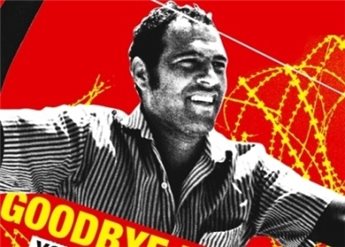 BETHLEHEM – The mother of Bassem Abu Rahmah, who was killed in 2009 during a non-violent protest in Bilin, filed a petition to Israel’s High Court on Sunday to demand justice for the death of her son, B’Tselem said.
 TEHRAN – Argentine President Cristina Fernandez has defended an agreement between Iran and Argentina to set up an international “truth commission” to investigate the bombing of the Argentine Israeli Mutual Association (AMIA) building in Buenos Aires in 1994 that killed 85 people, the Buenos Aires Herald reported on Friday.
 Two British peace activists have been detained in recent weeks after arriving home from the West Bank, occupied Palestine. They have been detained and taken in for questioning, over suspected links with the International Solidarity Movement.

 Zeolite is old. It is in Roman concrete that has held for two thousand years. It’s in the water filters of ancient cisterns. It’s in the stomachs of Pacific livestock whose keepers knew, somehow, that this grey crumbling rock made the animals healthier. It’s in Soviet clinical protocols from the 1960s. It’s in the standard emergency response to the Chernobyl explosion.
 Aletho News

