Palestinian assailed by Israeli women, stripped of hijab
Al-Akhbar | February 27, 2013
 A Palestinian woman waiting at a light rail station in Jerusalem on Monday was attacked and stripped of her headscarf by religious Jewish women, Israeli newspaper Ma’ariv reported Tuesday.
According to bystanders, a young Jewish woman punched the Palestinian suddenly as she was passing by the station. A friend of the assailant began aiding her in beating the Palestinian, pushing her against the wall, and ultimately ripping off her headscarf.
The Palestinian was accompanied by an old man who tried to push the attackers away to no avail.
The event occurred at about three o’clock in the afternoon. It is unclear whether the incident involved only the two assailants mentioned in witness accounts, or a larger group shown in the photo.
“There were about 100 Orthodox and yeshiva students who disembarked the tramway and spotted an Arab woman accompanied by an older man,” a witness, who photographed the event, told Ma’ariv.
“It developed into arguing and yelling, and I don’t know what the content was that everyone jumped on her.”
According to the witness, an activist named Dorit Jordan Dotan, a municipality security officer passively watched the event and seemed to be smiling. Many residents also stood by.
“The entire time, the guard stood and smiled and did not even try to break up the fight,” a witness said.
Dotan confirmed that the incident took place at the station where a group of young people had just arrived from the train, but seemed to downplay the event by suggesting the attackers were intoxicated.
“Young people drink a lot of wine for Purim. Screams were heard everywhere. A woman tried to fight [the Jewish students] but they yelled at her not to dare touch the Jews and continued to beat [the Arab woman],” Dotan said.
Following publication in Ma’ariv, police launched an investigation into the case.
“It’s a shame that the Arab whore didn’t die”
On the day the report was published, Israeli police officer Ariel Shapiro re-posted the article on his Facebook page and issued a chilling endorsement: “Very good,” wrote Shpiro “It’s a shame that the Arab whore didn’t die.”

Screenshot of Shapiro’s Facebook page along with the offending status message
The message was publicized by Palestinian Member of Knesset Ahmad Tibi.
Israeli army and police officers have come under fire in recent weeks for showcasing dehumanizing images of and slogans about Palestinians. The most famous of these is an Instagram photo of Mor Ostrovski, 20, showing the crosshairs of a rifle being aimed at the head of a Palestinian boy.
Jordan: A Limited Strategic Shift
By Elie Chalhoub | Al-Akhbar | February 27, 2013
Jordanian King Abdullah II’s recent visit to Moscow crowned a series of steps that Amman has been taking over the past few months, signalling a shift away from its traditional allies like Washington and Israel.
Until recently, Jordan was in the warm embrace of oil-rich Gulf Arab countries that, prepared to admit the Hashemite kingdom into their Gulf Cooperation Council (GCC), would then shower it with billions in aid.
This is while Amman offered the services of its security and intelligence forces, coordinating closely with both Washington and Tel Aviv in a variety of areas, not least of which the unfolding crisis in Syria.
According to informed sources, last July 2012, Amman hosted a gathering of security officials from the US, Qatar, and Israel, who recommended setting up training camps for Syrian opposition fighters near the Jordanian city of Irbid.
US Secretary of Defense Leon Panetta admitted as much when he acknowledged in October 2012 that dozens of American soldiers were deployed along the Jordanian-Syrian border, explaining that “these units are tasked with establishing a base in Jordan and to assist the Syrian refugees and Jordanian armed forces to confront the dangers stemming from Syria’s chemical weapons.”
In the last few months Amman has begun to reassess its alliances in light of the Syrian crisis, perhaps embarking on a process of strategic realignment, moving closer to Iraq and Russia, at the expense of its traditional allies.
The prospective threat posed by the powerful Jordanian Muslim Brotherhood and the more radical Islamist currents prompted the army and intelligence to convince the palace not to go along with Washington’s plan.
Amman even went so far as to completely close its border with Syria, preventing fighters and weapons from crossing it.
This came at a high cost for Jordan, as Saudi Arabia and Qatar – who were mobilizing all the forces they could muster against the Bashar al-Assad regime – to halt their support for the kingdom, causing a serious economic crisis in the country.
Iraq quickly moved in to try to fill the void and revive its once close ties with Jordan. An official visit to Amman by Iraqi Prime Minister Nouri al-Maliki at the end of 2012 led to the signing of several lucrative deals that would see cheap Iraqi oil once again flowing to Jordan.
As for Jordan’s relationship with Iran, “that’s a tough one for us,” says a high-level Jordanian security official, pointing out that the realignment underway may go far, “but it has its limits, for there are lines that cannot be crossed, and Iran lies outside these boundaries.”
In light of all this, King Abdullah II’s visit to Moscow on Tuesday, February 19 cannot in any way be seen simply as a routine call.
For its part, Jordan is seeking a counterbalance to US influence, for fear that Washington is preparing to force Amman into accepting a confederation with the Palestinians as a solution to the Arab-Israeli conflict.
Russia, on the other hand, sees this as an opportunity to bring Amman into its orbit, particularly on the Syrian question, where Moscow is in the process of pushing for a settlement.
Jordan’s diplomatic support in the Arab arena and the valuable intelligence it can provide on the Syrian opposition make it a critical resource for the Russians.
EU report slams Israeli settlements, calls for economic sanctions
RT | February 27, 2013
An internal report by the European Union has come down hard on Israel’s decision to continue settlement construction in occupied East Jerusalem, threatening to end economic projects that involve the Jewish settlements.
The harshly worded 15-page report provides recommendations to the 27 member-states for responding to Israel’s activities in the occupied territories – which the document described as “systematic, deliberate and provocative” – and endorses a strategy that aims at “making it impossible for Jerusalem to become the capital of two states.”
Seven of the report’s 10 recommendations propose slapping tough economic sanctions on organizations directly involved in construction projects in the Jewish settlements, Israeli daily Haaretz reported. The report also called on the EU’s 27 member-states to “prevent, discourage and raise awareness” about doing business with companies that work in the disputed settlement zones.
It advised EU states to work to ensure that products exported from the settlements not receive an unfair advantage through “preferential tariffs,” and to give consumers an opportunity to make an “informed choice” through clear labeling of products’ origins.
The report advocated “closer supervision” of technological research and development programs between the EU and Israel. The measures would work to ensure that “no research grants, scholarships or other technological investments assist settlements, either directly or indirectly,” or be provided to agencies working in the settlements.
Haaretz, which obtained a copy of the report, called the sanctions “particularly severe” compared to earlier EU reports.
The annual report, compiled by EU consuls in Jerusalem and Ramallah, does not require member-states to implement the measures – the document’s recommendations serve as a guidepost for individual EU states in dealing with the ongoing Israeli-Palestinian conflict.
In December, several EU countries, including the UK, France and Sweden, summoned their Israeli ambassadors to voice disapproval of the ongoing construction projects.
The report expressed frustration with Israel for its late-November announcement of new settlement construction projects, shortly after the UN General Assembly voted to recognize Palestine as a non-member observer state – a move strongly condemned by Israel and the US.
The implementation of the Israeli government’s so-called E-1 project “would effectively divide the West Bank into separate northern and southern parts,” the report explained, adding that it would also “prevent Palestinians in East Jerusalem from further urban development and cut off East Jerusalem from the rest of the West Bank.”
Israel is “systematically undermining the Palestinian presence” in East Jerusalem through controversial strategies, including “restrictive zoning and planning, demolitions and evacuations, discriminatory access to religious sites, an inequitable education policy, difficult access to health care, the inadequate provision of resources,” the report said. … Full article
Boycotting Israel Galloway-style
By Stuart Littlewood | Dissident Voice | February 26th, 2013
A big fuss blew up last week when British MP George Galloway, invited to Oxford University to debate the motion “Israel should withdraw immediately from the West Bank”, walked out of the chamber when he heard that the student opposing the motion was an Israeli.
American readers may remember Galloway, who came over in 2005 and delivered a master-class in how to give a Senate Inquisition sub-committee a good spanking.
At Oxford, something Eylon Aslan-Levy said prompted Galloway to ask, “Are you an Israeli?”
“Yes,” came the reply.
“I don’t debate with Israelis. I have been misled, sorry,” said Galloway putting on his coat. “I don’t recognise Israel and I don’t debate with Israelis,” he added and left.
The following message then appeared on Galloway’s Facebook: “The reason is simple: no recognition, no normalisation. Just boycott, divestment and sanctions, until the apartheid state is defeated. I never debate with Israelis nor speak to their media. If they want to speak about Palestine – the address is the PLO.”
The PLO, of course, is recognized as the sole legitimate representative of the Palestinian people.
Galloway’s point was that BDS (boycott, divestment and sanctions), in his terms, means “no purchase of Israeli goods or services, no normal contacts with individuals or organisations in Israel who support the existence of the racist Apartheid creed of Zionism. That’s what I mean by boycott. That’s what I do. Israelis who are outside of and against the system of Zionism are comrades of mine… My opponent at Oxford University did not meet this test.”
Aslan-Levy is reported to have told The Guardian that Israel’s withdrawal should not be immediate but “in the context of a negotiated peace treaty, which would recognise both Israeli and Palestinian states”. According to the Daily Mail he also said: ‘”To refuse to talk to someone just because of their nationality is pure racism, and totally unacceptable for a Member of Parliament.”
A lot of people have criticised Galloway for his behaviour in this matter. However, anyone arguing against an immediate end to the brutal and illegal 65 year-old occupation and offering silly excuses for prolonging the misery – like more lopsided ‘negotiations’ when international law and UN resolutions have already spoken – deserves to feel the cold blast of boycott, Galloway-style.
The attacks on Galloway seem to come mainly from people in the BDS movement itself who are supposedly on the same side. Press reports mention cries of “racism”. But notice that Galloway said he doesn’t debate with Israelis, not Jews. Others may not wish to debate with North Koreans or Afghan tribesmen. Our own foreign secretary apparently has no intention of chatting with his Iranian opposite number while turning the sanctions screw on the Iranian people. Obama when he visits the Holy Land to pay homage to Netanyahu won’t drop in on Haniyeh in Gaza to discuss football.
And it is pretty rich for a national of a racist state to call anyone else a racist.
The Palestinian BDS National Committee (BNC), which claims to set the guidelines for the boycott, divestment and sanctions movement, says it does not call for a boycott of individuals because she or he happens to be Israeli or because they express certain views, but adds: “Of course, any individual is free to decide who they do and do not engage with.”
OK, so why is Galloway getting flak?
Al-Aqsa Brigades Fire Rocket on Occupied Territories in Response to Killing of Prisoner
Al-Manar | February 26, 2013
A rocket fired from the Gaza strip landed early Tuesday near Ashkelon in the south of the Palestinian occupied territories, as al-Aqsa Martyrs Brigades, the military wing of Fatah Movement, claimed responsibility for the rocket launch.
“The rocket fell early in the morning near Ashkelon and did some damage to a road, without hurting anyone,” an Israeli police spokesman Micky Rosenfeld.
In a statement, al-Aqsa Brigades, Groups of Martyr Luai Kane’, claimed responsibility on Tuesday for firing a Grad rocket on Ashkelon city.
The statement said that the rocket was “in response for assassinating the prisoner Arafat Jaradat” who was martyred on Sunday after being tortured in an Israeli prison.
“The Freedom won’t be achieved but through sacrifice… We have to resist our enemy in all available means,” al-Aqsa Martyrs added in the statement.
Jaradat’s martyrdom sparked protests across Palestine, with thousands of Palestinians thronging the West Bank village of Sair on Monday for the funeral of Jaradat, a 30-year-old father of two and member of the Al-Aqsa Martyrs Brigades.
Both the Palestinians and the United Nations special coordinator for the Middle East peace process, Robert Serry, have called for an independent inquiry into Jaradat’s death.
Tuesday’s rocket fire was the first such event since the end of an Israeli offensive against Gaza late November.
The two sides finally agreed to a truce on November 21 following the eight-day Israeli attack which cost the lives of dozens of Palestinian civilians. 177 Palestinians were martyred and six Zionists were killed, according to figures issued by the two sides.
Related article
Shameful Symbolism: Commemorating the Ten Year Anniversary of the Beginning of the Disastrous Iraq War

By Doug E. Steil | Aletho News | February 25, 2013
Nearly ten years ago, on the eve of the Jewish festival of Purim, invoking the slaughter of Persians, an American student protesting house demolitions in Gaza, Rachel Corrie, was killed by a bulldozer (March 16, 2003).
Shortly after this festival had ended, the Iraq War, waged primarily on behalf of Israel — and still in progress on a more covert level — began on land amidst much media fanfare, including live television coverage. Around the time of the vernal equinox on March 20, 2003, multiple tank formations entered from staged positions in Kuwait, and even now there is still no end in sight to the ongoing slaughter of hundreds of thousands of innocent people in that region.
To commemorate and possibly even celebrate the tenth anniversary of this disastrous debacle, of “Neocon” inspired servitude to Zionism, Israel will welcome Obama on his first official state visit on March 20, yes, just at the time of the equinox (11:02 GMT), a key reference point used in astronomy, astronautics, and astrology.
Here is the planned itinerary:
Obama is scheduled to land in Ben Gurion International Airport around noon on Wednesday, March 20.
How symbolic!
This scripted event should not be lost on the alternative media. Ten years ago it used to be taboo to openly talk about the “War for Israel” because a large segment of the population was still enthralled by the lies (for instance, “Saddam’s weapons of mass destruction” and “war for oil”) the media deployed in order to trick them into supporting the operation. Now, after the lies have been exposed, it’s a brazen “in-your-face” attitude that is regularly on display, and Obama’s planned ceremonies in Israel next month will only highlight the obsequious stance of the US government vis-a-vis Israeli leaders dictating their demands.
Since the symbolism is important, though shameful, beware of “coincidence theorists” who will want to deny the intent of the timing!
Related articles
- Israeli lies on Iranian nuclear program exposed
- Israel instructs Obama: “Iranian and Syrian sanctions are not painful enough!”
- The politics of aggressive war
- Israel may rely on US ‘scalpels’ to contain Iran – defense minister
- Tony Blair’s Iraq war was a shameful abomination. Ten years after the London march, it’s time for him to admit it
Obama’s Israel Trip
Ignore the hype. It’s four more years of settlement growth
By Jonathan Cook | Dissident Voice | February 25th, 2013
NAZARETH — Israeli and Palestinian officials have been in Washington laying the ground for President Barack Obama’s visit to Israel and the West Bank, scheduled for next month and the first since he took office four years ago.
Topping the agenda, Israeli Prime Minister Benjamin Netanyahu has said, will be efforts to restart the long-stalled peace process. Last week Palestinian officials said they had urged the White House to arrive with a diplomatic plan.
The US president began his first term on a different footing, ignoring Israel and heading instead to Cairo where he made a speech committing the US to a new era in relations with the Arab world. Little came of the promise.
Now he apparently intends to start his second term — as Netanyahu resumes office too, following last month’s elections — with an effort to engage with Israel and the Palestinians that is almost as certain to prove an exercise in futility.
The prospect of reviving the peace track between Israel and the Palestinians is not one that is appetising for either Obama or Netanyahu. Both are bruised from locking horns over a settlement freeze — the key plank of the US president’s efforts — during his first term.
But equally, it seems, the price of continuing inaction is high too. The Palestinians have repeatedly embarrassed Obama at the United Nations, not least by isolating the US in November as it opposed an upgrade in the Palestinians’ observer status. Inertia also looks risky given the growing unrest in the West Bank over hunger-striking prisoners.
Ahead lie potentially even bigger headaches, including the doomsday scenario — from Israel and Washington’s perspective — that the Palestinians approach the International Criminal Court to demand Israel be investigated for war crimes.
The perennial optimists have been searching for signs that Obama is readier this time to get tough. Neither of the president’s recent major appointments — John Kerry as secretary of state and Chuck Hagel, nominated as defence secretary — has been welcomed in Israel.
US determination has been buoyed, it is argued, by what is seen as a tide change in Israeli public opinion, highlighted by the surprise electoral success of centrist Yair Lapid and relatively poor showing by Netanyahu’s Likud party.
Netanyahu’s officials sense similar motives, complaining that Obama’s visit so soon after the election is direct “interference” in coalition-building. The centrists, they fear, will be able to extract concessions from Netanyahu, who will not wish to greet the US president as head of an extremist government.
Israeli officials, meanwhile, look eager to mend fences: they have hopefully codenamed the visit “Unbreakable Alliance” and announced an intention to award Obama Israel’s highest honour, the presidential medal.
The more hopeful scenarios, however, overlook the obstacles to a diplomatic solution posed both by Israel’s domestic politics and by the Palestinians’ inability to withstand Israeli bullying.
Not least, they ignore the fact that Netanyahu’s Knesset faction is the most right-wing in Likud’s history. He cannot advance a peace formula — assuming he wanted to — without tearing apart his party.
Equally, there is nothing in Lapid’s record to indicate he is willing to push for meaningful compromises on Palestinian statehood. On this issue, he occupies the traditional ground of Likud, before it moved further right. A recent poll found half his supporters called themselves right-wing.
Last week Netanyahu signed a coalition pact with another supposed centrist, Tzipi Livni, a former Likud leader who now heads a small faction called Hatnuah. The goal, as one Likud official cynically put it, was to use Livni to “whitewash the Netanyahu government in the world’s eyes”.
In other words, Netanyahu hopes a Livni or a Lapid will buy him breathing space as he entrenches the settlements and pushes Palestinians out of large areas of the West Bank under cover of what the Israeli newspaper Haaretz termed a “booby-trapped diplomatic process”.
What of the Palestinians? Will they not be able to mount an effective challenge to Israeli intransigence, given an apparent renewed US interest in diplomacy?
Here is the rub. Netanyahu already has a stranglehold on the politics of his potential peace partners. He can easily manipulate the fortunes of the Palestinian leader Mahmoud Abbas on the two biggest tests he faces: the “peace process” overseen by the international community, and reconciliation talks with the rival Palestinian faction Hamas.
The latest talks between Hamas and Fatah broke down in Cairo this month, even though unity, in the view of most Palestinians, is a precondition of their seeking viable statehood. The talks’ failure followed the “arrest” by Israel of 25 Hamas leaders in the West Bank, seizures that Palestinian human rights groups and Hamas warned were intended to disrupt reconciliation.
Meanwhile, Israel has repeatedly undermined Abbas’s rule, and kept his PA close to collapse, by turning on and off one of its major sources of income — tax monies Israel regularly collects on behalf of the Palestinians and is supposed to pass on.
As a result, Abbas is trapped between various pressures impossible to reconcile: the need to keep Israel happy, to maintain legitimacy with his own people and to foster a shared political agenda with other Palestinian factions.
The sticks that Israel wields force Abbas to keep the door open to negotiations even as most Palestinians recognise their utter pointlessness. Likewise, his constant need to appease Israel and the US serves only to widen differences with Hamas.
The Palestinians are stuck in a political and diplomatic cul-de-sac, unable to move forward either with the development of their national struggle or with talks on viable statehood. Whatever Obama’s intentions, the reality is that this will be another four years of diplomatic failure.
Jonathan Cook is a writer and journalist based in Nazareth, Israel. He won this year’s Martha Gellhorn Special Prize for Journalism.
Israeli court extends remand of Issawi’s brother

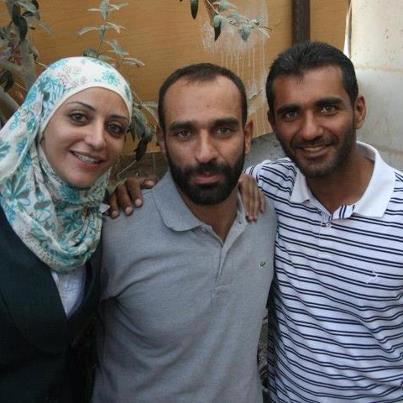
Shireen, Samer and Shadi Issawi
Palestine Information Center – 25/02/2013
RAMALLAH — The Israeli Magistrate Court in occupied Jerusalem extended on Sunday the remand of Shadi Issawi, the brother of hunger striker Samer Issawi, and did not allow him to see his lawyer.
Shireen Issawi, the sister of Shadi and a lawyer, said that the arrest of Shadi and extending his remand fell in line with pressures on Samer to end his seven months hunger strike.
She charged the Israeli occupation authorities (IOA) with targeting all members of Samer’s family, recalling that the IOA razed the home of her third brother Rafat at the start of the year and cut water supplies to her family home in addition to detaining her and her fourth brother Firas for a period of time.
Related articles
- Shireen Al-Issawi: PA did not take prisoners’ issue to the UN (alethonews.wordpress.com)
- Samer Issawi sentenced to 8 months in prison (alethonews.wordpress.com)
Minister: Autopsy shows torture killed Jaradat
Ma’an – 25/02/2013
BETHLEHEM – An autopsy has revealed that Arafat Jaradat died of extreme torture in Israeli custody and did not have a cardiac arrest, the PA Minister of Detainee Affairs said Sunday.
At a news conference in Ramallah, Issa Qaraqe said an autopsy conducted in Israel in the presence of Palestinian officials revealed that 30-year-old Jaradat had six broken bones in his neck, spine, arms and legs.
“The information we have received so far is shocking and painful. The evidence corroborates our suspicion that Mr. Jaradat died as a result of torture, especially since the autopsy clearly proved that the victim’s heart was healthy, which disproves the initial alleged account presented by occupation authorities that he died of a heart attack,” Qaraqe said.
A spokeswoman for Israel’s Prison Authority said Saturday that Jaradat had apparently died of cardiac arrest in Megiddo prison. An emergency service team had tried to resuscitate him but failed, she said.
Qaraqe described the claim as a fabrication and called for a committee to investigate those responsible for Jaradat’s death.
The minister said Jaradat had sustained injuries and severe bruising in the upper right back area and severe bruises of sharp circular shape in the right chest area.
The autopsy revealed evidence of severe torture and on the muscle of the upper left shoulder, parallel to the spine in the lower neck area, and evidence of severe torture under the skin and inside the muscle of the right side of the chest. His second and third ribs in the right side of the chest were broken, Qaraqe said, and he also had injuries in the middle of the muscle in the right hand.
Jaradat’s heart was in good condition and there were no signs of bruising or stroke, the minister added.
Israel’s Health Ministry said the injuries found in the autopsy could have been caused by the medical emergency team’s efforts to resuscitate Jaradat.
“These initial findings are not enough to determine the cause of death,” the Israeli ministry said, adding that further test results were not yet in. An Israeli police spokesman said the investigation into Jaradat’s death was still ongoing.
Qaraqe’s deputy, Ziyad Au Ain, urged any doctors, including Israeli doctors, who doubted that Jaradat was tortured to death to view his body in Al-Ahli Hospital in Hebron.
“Jaradat died due to torture and not a stroke or heart attack,” he said, adding that those responsible must be sued either through Interpol or the International Criminal Court.
Palestinian Prisoners Society president Qaddura Fares added that the autopsy revealed seven injuries to the inside of Jaradat’s lower lip, bruises on his face and blood on his nose.
After the autopsy, Jaradat’s body was transferred to the Palestinian Red Crescent at the Tarqumiya crossing west of Hebron, and taken to the Al-Ahli Hospital. He will be buried on Monday in his hometown Sair.
Jaradat’s lawyer Kameel Sabbagh said he was tortured by Israeli interrogators.
Sabbagh, who works for the prisoners ministry, was present at Jaradat’s last hearing on Thursday, which an Israeli judge postponed for 12 days.
“When I entered the courtroom I saw Jaradat sitting on a wooden chair in front of the judge. His back was hunched and he looked sick and fragile,” Sabbagh said in a statement Sunday.
“When I sat next to him he told me that he had serious pains in his back and other parts of his body because he was being beaten up and hanged for many long hours while he was being investigated
“When Jaradat heard that the judge postponed his hearing he seemed extremely afraid and asked me if he was going to spend the time left in the cell. I replied to him that he was still in the investigation period and this is possible and that as a lawyer I couldn’t do anything about his whereabouts at this time.”
Sabbagh said Jaradat’s psychological state was very serious and that he informed the judge his client had been tortured. The judge ordered that Jaradat should be examined by the prison doctor but “this didn’t happen,” the lawyer added.
On Sunday, thousands of Palestinians protested the death across the West Bank and Gaza, and at least two protesters were injured by live fire in clashes with Israeli forces, including the 13-year-old son of a Preventive Security officer.
Dozens more were injured by rubber-coated bullets.
An Israeli military spokeswoman said soldiers used riot dispersal means against Palestinians hurling rocks at security forces.
Two residents from Burin arrested overnight: confrontations follow
ISM Media Group | Aletho News | February 25, 2013
Mahmoud Nasser Asaus (17) and Magdi Loai Najjar (24) were arrested last night by Israeli forces in the village of Burin and are now being held in Kishon Interrogation Centre in Haifa. Residents of Burin suspect this is the start of a wave of arrests following the Al-Manatir protest that took place In Burin at the beginning of February.
Several jeeps entered Burin at around 2.30am to raid Mahmoud and Magdi’s houses, taking them, handcuffed and blindfolded, to Huwwara military base. At 7am this morning they were transferred to Kishon Interrogation Centre where they are still being held.
These arrests come after the neighbourhood of Al-Manatir was established on a village’s hilltop threatened with confiscation by Israeli settlers. The protest camp was aimed at denouncing Israel’s grab of Burin’s land and to recover the hilltop which has been inaccessible for residents of Burin since 2007.
However, the neighbourhood of Al-Manatir, made up of metal huts and tents, was violently evicted by Israeli soldiers and border police on the same day it was established. Israeli forces protected and accompanied settlers from the nearby settlements of Bracha and Yitzhar; while they were stealing metal huts and throwing stones at Palestinian activists. Simultaneously, around twenty settlers attacked several Palestinian homes on the outskirts of Burin and chopped down one hundred olive trees. When Palestinians ran to the area to defend their homes, stone throwing between settlers and Palestinians ensued. Zakaria Najjar (17), was shot in the right leg with live ammunition by a settler.
During the eviction, eight people were arrested and three of them remained in Israeli prison for twelve days, finally being released without charges. Further reprisals took place in Burin the days following Al-Manatir. Ghassan (23) and Mohammed (19) Najjar were arrested for several hours and interrogated about the protest camp. In addition, the village was sealed off by military checkpoints. The hilltop continues to be inaccessible for residents of Burin.
Following last night’s arrests there have been further incursions into the centre of Burin today. The Israeli army again tried to raid the village resulting in confrontations that began at around midday. Tear gas and rubber coated steel bullets were fired directly into the gathering crowd; as yet no serious injuries have been reported. A further arrest was made by the Israeli authorities, Bahar Adnan Imran who is just 14 years old.
Related articles
- Israeli troops force out 200 from camp (morningstaronline.co.uk)
- Israeli Settlers Attack Palestinian Shepherds In Nablus, Hebron (imemc.org)
Lawyer: “Prior To His Death, Detainee Complained Of Pain Due To Ongoing Interrogation”
By Saed Bannoura | IMEMC & Agencies | February 24, 2013
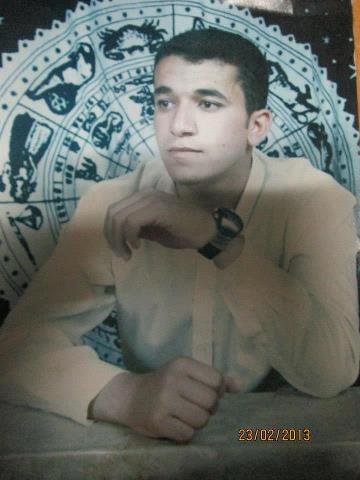 Attorney Kamil Sabbagh, who represented detainee Arafat Jaradat, who died Saturday at an Israeli interrogation facility, stated that Jaradat complained to him of sharp pain due to ongoing and extensive interrogation.
The lawyer said that he represented Jaradat during a court session that was held Thursday February 21.
The court session was the first time the detainee was able to see a lawyer since the army kidnapped him more than 12 days ago. The hearing was held at the Al-Jalama detention and interrogation center.
Sabbagh said that Jaradat complained of sharp pain in the back, and several other parts of his body. Jaradat told his lawyer that he was interrogated for several hours, every day, and repeatedly complained of sharp pain but was never seen by a physician.
The lawyer said that, during the court hearing, he told the military judge about the complaints made by Jaradat, and that the judge instructed the prison administration to grant him the needed medical attention, but the request was apparently ignored.
During the court hearing, the judge ordered Jaradat under interrogation for an additional 12 days.
Following the death of Jaradat on Saturday, several Israeli media agencies claimed that the detainee suffered a heart attack that led to his death.
Palestinian Minister of Detainees, Issa Qaraqe’, held Israel responsible for the death of Jaradat, and said that the detainee died only six days after the army kidnapped him on February 18.
Qaraqe’ demanded forming an international committee to investigate the death of Jaradat, and held Israel responsible for the lives of Palestinian detainees on hunger strike demanding an end to their illegal detention.
Hundreds of Palestinians held a protest in front of the home of Jaradat and chanted slogans against the Israeli occupation, Israel’s ongoing violations and attacks, and chanted for more solidarity with all Palestinian political prisoners held by Israel.
Protests have also been reported in different parts of the occupied territories.
Featured Video

Thomas Fazi: NATO’s Hybrid Warfare – Deception & Permanent War
or go to
Aletho News Archives – Video-Images
Book Review
The Zeolite Book — First Edition, 2026, Paperback
The volcanic mineral medicine will not patent — for the toxic burden medicine will not name
Lies are Unbekoming – October 30, 2026
 Zeolite is old. It is in Roman concrete that has held for two thousand years. It’s in the water filters of ancient cisterns. It’s in the stomachs of Pacific livestock whose keepers knew, somehow, that this grey crumbling rock made the animals healthier. It’s in Soviet clinical protocols from the 1960s. It’s in the standard emergency response to the Chernobyl explosion.
In 1986, after the Chernobyl reactor failure, the Soviet Union manufactured and distributed natural zeolite at industrial scale — for soil remediation, for livestock feed, for human consumption, for the cleanup itself. Karl Hecht, who had been director of the Institute for Experimental and Clinical Pathophysiology at the Charité of Humboldt University Berlin, spent the six decades after that building the clinical research base — on silicon’s role in human health, on zeolite’s clinical safety, on its applications in ageing. In 2018, Pavelić and colleagues published a comprehensive clinical safety review of natural clinoptilolite in Frontiers in Pharmacology. In 2019, Mastinu analysed its binding affinities. In the Western medical literature, these works sit largely uncited.
What has not been treated at book length, until now, is how a volcanic mineral with six decades of Soviet clinical work behind it, two major peer-reviewed Western reviews, and ongoing clinical use across the former Eastern Bloc, remains almost entirely absent from Western medical practice — and what the toxic burden it’s meant to address actually is.
The Zeolite Book gathers the Soviet clinical record, the Western peer-reviewed studies, three contemporary practitioner voices, and three serious counterviews into one honest treatment. That’s why the book runs to seven appendices. 288 pages, four parts, three practitioner voices, three counterviews, seven appendices. The honest treatment is the argument.
Blog Roll
 Aletho News
- UAE security forces tortured, killed journalist for opposing Israel normalization: Report
- They Compared the Spice to the Drug. The Spice Won — Again. (Part 2)
- Thomas Fazi: NATO’s Hybrid Warfare – Deception & Permanent War
- Wrong, AP and NPR: Europe’s 50,000 Heat Deaths Are a Computer-Model Estimate, Not a Real Body Count
- Questioning Your Doctor Is Now Considered A Psychological Problem (Seriously)
- London tourism expo promotes Israeli agency linked to theft of Palestinian land
- Dockworkers launch global strike against Israeli and US military shipments
- Europe facing gas price shock – Gazprom chief
- Ukraine continues recruiting people with disabilities
- Weaponized Journalism: 2021 Sayer Ji Interview with NPR
- If Americans Knew
- An error has occurred; the feed is probably down. Try again later.
- No Tricks Zone
- Germany’s Green Energy Transition Becoming Increasingly Expensive…Another 6 Trillion Euros!
- Sudden Stratospheric Warming, Powerful El Niño Combination May Lead To Extreme Europe Cold, Energy Crisis!
- Two New Studies Find Thwaites Glacier Melt Cannot Be Driven By Human Activity Or A Warming Ocean
- E-Cars Reduce CO2 Emissions By Only 41% Compared To Internal Combustion Engine Vehicles
- Predictions Made By Renowned Climate Professor Over Past Decades Have Been Proven To Be Poor
- New Study Suggests Large Regions Of The Pacific Ocean Have Been Cooling For The Last 80 Years
- Germany’s Green Energy Debacle: High Energy Costs Force Kahla Porzellan to Close After 182 Years!
- New Study: 50 Years Of The Most Aggressive ‘Net Zero’ Policies Can Only Affect The Global Climate By 0.03°C
- US September “Heat” Was No Record…Many Records Set Decades Ago
- Latest European Green Energy Debacle; Portugal’s Largest Flagship Solar Park Insolvent!

