Australia: Internet censorship plan gets the green light
ASHER MOSES
Sydney Morning Herald
December 15, 2009 – 11:13PM
The Federal Government has announced it will proceed with controversial plans to censor the internet after Government-commissioned trials found filtering a blacklist of banned sites was accurate and would not slow down the internet.
But critics, including the online users’ lobby group Electronic Frontiers Australia and the Greens communications spokesman Scott Ludlam, said the trial results were not surprising and the policy was still fundamentally flawed.
The Communications Minister, Stephen Conroy, said today he would introduce legislation just before next year’s elections to force ISPs to block a blacklist of “refused classification” (RC) websites for all Australian internet users.
The blacklist, featuring material such as child sex abuse, sexual violence and instructions on crime, would be compiled using a public complaints mechanism, Government censors and URLs provided by international agencies.
Senator Conroy also released results from a pilot trial of ISP-level internet filters, conducted by Enex Testlab, which he said found that blocking banned material “can be done with 100 per cent accuracy and negligible impact on internet speed”.
“Most Australians acknowledge that there is some internet material which is not acceptable in any civilised society,” he said.
“It is important that all Australians, particularly young children, are protected from this material.”
He said about 15 western countries had encouraged or enforced internet filtering, and there was no reason why Australians should not have similar protection.
It is not clear how – or if – the filters will distinguish between illegal RC material and that which is perfectly legal to view.
An earlier version of the Government’s top-secret list of banned sites was leaked on to the web in March, revealing the scope of the filtering could extend significantly beyond child porn.
About half of the sites on the list were not related to child porn and included a slew of online poker sites, YouTube links, regular gay and straight porn sites, Wikipedia entries, euthanasia sites, websites of fringe religions such as satanic sites, fetish sites, Christian sites, the website of a tour operator and even a Queensland dentist.
“Given the pilot’s modest goals, it was designed from the beginning to pass,” said EFA spokesman Colin Jacobs.
“Although it may address some technical issues, what it leaves out is far more important – exactly what will be blocked, who will decide, and why is it being attempted in the first place?”
Similarly, Senator Ludlam said: “Nobody said that filtering from a static list of URLs was going to slow things down too much unless the list gets huge, so I don’t think they’ve already proven anything that we don’t already know.”
The pilot trial report also noted that motivated people could circumvent any internet filters with ease, which Senator Ludlam and Jacobs said called the effectiveness of the proposal into question.
Ludlam said proving a technical case was not the same as proving the wisdom of going down the internet censorship track in the first place, which he said had always been two separate discussions.
“While the Government says that they will be relying on an evidence-based policy, we still haven’t seen evidence that this is going to play any meaningful role in preventing children from accessing harmful material online,” Senator Ludlam said.
Jacobs said: “Successful technology isn’t necessarily successful policy. We’re still yet to hear a sensible explanation of what this policy is for, who it will help and why it is worth spending so much taxpayer money on.”
Peter Coroneos, chief executive of the Internet Industry Association, said he would be meeting with his members tonight to discuss the report before formulating a response.
Senator Conroy said the Government would immediately undertake public consultations, starting today with the release of a discussion paper on additional measures to improve the accountability and transparency of processes that lead to sites being placed on the blacklist.
Some of the options raised include appeal mechanisms, notification to website owners of RC content and the review by an independent expert.
Why the Promise of Biofuels is a Lie

Photo – Der Speigel
By ROBERT BRYCE
February 19, 2009
For years, the US has been inundated with claims that it should follow Brazil’s lead on biofuels. These arguments have largely been made by a small, but influential group of neoconservatives who claim that the US should quit using oil altogether. They claim that using more ethanol – produced from sugar cane, or corn, or some other substance – will impoverish OPEC and America will once again be returned to prosperity.
But these claims wither in the face of a story by Clemens Hoges in the January 22 issue of the German magazine Der Spiegel. Hoges writes that sugar cane “is considered an effective antidote to climate change, but hundreds of thousands of Brazilian plantation workers harvest the cane at slave wages.” The story is one of several published in recent years that have exposed the brutality of the Brazilian sugar cane fields. But before looking at Der Spiegel’s coverage, let’s do a quick review of the Brazilian ethanol boosters.
Thomas Friedman, the Pulitzer Prize-winning columnist for the New York Times has frequently advocated the mirage of “energy independence.” And he has cited Brazil as a model. In an August 2005 column, he conflated the issues of oil and terrorism “we are financing both sides in the war on terrorism: our soldiers and the fascist terrorists,” he wrote. He went on to claim that many of the technologies needed for energy independence are “already here – from hybrid engines to ethanol.” He then quoted Gal Luft, the neoconservative who heads the Institute for the Analysis of Global Security and created Set America Free, a group that advocates “energy independence.” Luft claimed that Brazil’s success in cutting its oil imports was due to the fact that the South American country was “bringing hydrocarbons and carbohydrates to live happily together in the same fuel tank.” In Luft’s view, ethanol has brought “Brazil close to energy independence” and insulated it from higher oil prices.
(Luft’s claim completely ignores the fact that since 1980, Petrobras, Brazil’s national oil company, has been growing its oil production by an average of 9 percent per year thanks to its offshore drilling prowess. Since 1998, Brazil has doubled its oil production and is now producing about 2 million barrels of oil per day. Neither Friedman nor Luft bothered to mention that fact.)
In late 2005, in a speech to the National Press Club, Pennsylvania governor Edward Rendell said that “No longer is investing in alternative fuels a fringe idea….Brazil is perhaps the world’s greatest success story. Due to 30 years of hard work, research and investment, Brazil will not need one drop of imported oil this time next year. If anyone suggests to you that these ideas aren’t ready for prime time and cost too much, they are living in the past.”
Venture capitalist Vinod Khosla and former Senate minority leader Tom Daschle have touted Brazil’s “energy independence miracle.” In a May 2006 opinion piece in the New York Times, they said that ethanol “could set America free from its dependence on foreign oil” and that Brazil proves that “an aggressive strategy of investing in petroleum substitutes like ethanol can end dependence on imported oil.”
In October 2006, former president Bill Clinton while in California stumping for Proposition 87 (an alternative energy initiative that later failed) declared that the initiative would “move California toward energy independence with cleaner fuels, with wind and solar power.” He continued, “There are people who don’t believe you can do it. I do. Look at Brazil. Don’t you think you can do it if they did it? They run their cars on ethanol.” Clinton later provided a sound bite for the pro-Proposition 87 forces in which he declared that “If Brazil can do it, so can California.”
The biofuels madness continued with a May 6, 2008 editorial in the Chicago Tribune, titled “Food vs. fuel, a global myth.” The piece, written by Set America Free’s Luft, and his fellow traveler, Robert Zubrin, a right-wing zealot who advocates colonizing Mars, claimed, incredibly, that “farm commodity prices have almost no effect on retail prices.” The two went on to declare that “rather than shut down biofuel programs, we need to radically augment them, to the point where we can take down” the Organization of the Petroleum Exporting Countries.
A big reality check is in order.
First and foremost, over the past two years, 14 studies have found a direct link between the ethanol scam and higher food prices.
Second, Brazil is not the epicenter of ethanol production, the US is. In 2008, the US produced about 9.1 billion gallons of the fuel, all of it from corn. Brazil produced about 6.8 billion gallons. And while sugar cane may be a far better feedstock that corn, in terms of greenhouse gas emissions and energy balance, the key issue is one of labor. While US corn is harvested mechanically, the Brazilian sugar cane is harvested almost exclusively by hand. And it is dangerous, back-breaking work.
In 2007, London’s The Guardian newspaper ran a story which quoted human rights activists who said that the men who harvest sugar cane for ethanol production “are effectively slaves” and that Brazil’s ethanol industry was “a shadowy world of middle men and human rights abuses.” It cited figures provided by a Catholic nun, Sister Ines Facioli, who runs a support network in a small town about 200 miles west of São Paolo. She claimed that between 2004 and 2006, 17 cane workers died due to overwork or exhaustion. One laborer, Pedro Castro, told the Guardian’s Tom Phillips, that the hot climate, combined with the heavy protective clothing needed to protect his body from the sharp machete blades used to cut the cane, was like working “inside a bread oven.”
For their work, the average cane worker gets paid about $1 for every ton of sugar cane they cut. They often work 12-hour shifts. Their housing, according to Phillips’ article, consists of “squalid, overcrowded ‘guest houses’ rented to them at extortionate prices by unscrupulous landlords.” The average cane cutter makes less than $200 per month. And some, it appears, make nothing at all.
In July 2007, the Brazilian government freed 1,100 laborers who were found working in horrendous conditions on a sugar cane plantation in the northeastern state of Para. A story by the Associated Press said that the workers were forced to work 13-hour days and that they had no choice but to pay “exorbitant prices for food and medicine.” It then cited a source in Brazil’s labor ministry who claimed that many of the workers were “sick from spoiled food or unsafe water, slept in cramped quarters on hammocks and did not have proper sanitation facilities.” The government-backed raid of the plantation lasted three days. The plantation in question is owned by Para Pastoril e Agricola SA, which produces about 13 million gallons of ethanol per year. The workers were caught up in a situation known as debt slavery in which poor workers are taken to remote farms where they then rack up large debts to the plantation owners who force the workers to pay high prices for everything from food to transportation.
According to Land Pastoral, a group affiliated with Brazil’s Roman Catholic Church, about 25,000 workers in Brazil are living in slavery-like conditions, most of them in the Amazon, and many of them working in the sugar cane business. The 2007 raid is not the first. In 2005, 1,000 workers were found living in debt slavery on a sugar cane plantation in the Brazilian state of Mato Grosso.
The article in Der Spiegel makes it clear that little has changed over the past few years. Hoges reports that one worker he interviewed, Antonio da Silva, makes just $172 per month during the harvest season, which lasts about six months. During the rest of the year, he has to rely on charity to feed his family. Da Silva’s home in the village of Araçoiaba Nova, Hoges reports, is the same as it was five years ago. “They threw plastic tarps over a handful of branches to build the hut where they still live today. The door consists of scraps of cloth nailed to a board, and boards placed around a hole in the tarp form the window. The furniture, arranged on the bare earth floor, consists of the plank beds and a cabinet.”
The most compelling quote in the piece is from Father Tiago, a 66 year-old Scottish monk who has been working in Brazil for decades. The Scotsman makes clear what he thinks about the issue: “The promise of biofuel is a lie. Anyone who buys ethanol is pumping blood into his tank,” he said. “Ethanol is produced by slaves.”
The photos that accompany Hoges’ story should be viewed by everyone who retains the misguided belief that the US should emulate Brazil’s biofuels industry. Here’s the link.
Alas, it doesn’t appear the members of Congress are paying much attention. Last month, US Rep. Eliot Engel, a New York Democrat, announced that he would be pushing legislation aimed at eliminating the $0.54-per-gallon tariff on imported ethanol. Doing so, Engel said, “would enable U.S. refiners to purchase cheaper and more climate-friendly ethanol, no matter where it comes from. The result would be an overall increase in the supply of fuel, a decrease in its price, and a decrease in our dependency on petroleum from the Middle East.”
Sound bites like the one from Engel ignore basic arithmetic: Even if the US imported all of Brazil’s ethanol — all 6.8 billion gallons per year — that quantity would only provide the energy equivalent of about 1.4 percent of America’s total oil consumption.
Despite those numbers — despite the ongoing evidence of slavery in the Brazilian ethanol trade — the energy discussion in America remains stuck in an absurdist fantasy about energy independence and freedom from the sticky problems of the Persian Gulf. But given what has happened in the past few months with regard to rising food prices and the myriad other problems associated with biofuels, one thing is becoming perfectly clear: Ethanol isn’t the answer to our energy challenge. Ethanol makes it worse.
Edward G. Rendell, “An American Energy Harvest Plan: Jobs, Prosperity, Independence,” December 1, 2005.
Tom Daschle and Vinod Khosla, “Miles Per Cob,” New York Times, May 8, 2006.
California Progress Report, “President Clinton: Why I Support Proposition 87 and Why the Oil Companies are Wrong – The Complete Speech Delivered at UCLA,” October 14, 2006.
Shopfloor.org, “In California, A Bad Proposition,” November 3, 2006.
http://archives.chicagotribune.com/2008/may/06/food/chi-oped0506fuelmay06
http://www.ethanolrfa.org/industry/statistics/#B
https://www.spiegel.de/international/world/0,1518,602951,00.html
Tom Phillips, “Brazil’s ethanol slaves: 200,000 migrant sugar cutters who prop up renewable energy boom,” The Guardian, March 9, 2007.
Ibid.
Vivian Sequera, “Brazil Raid Frees Ethanol Plant Slaves,” Associated Press, July 3, 2007.
Clemens Hoges, The High Price of Clean, Cheap Ethanol,” Der Spiegel, January 22, 2009.
http://yonkerstribune.typepad.com/yonkers_tribune/2009/01/engel-outlines-energy-plan-for-the-future-1.html
Robert Bryce is the author of Gusher of Lies: The Dangerous Delusions of “Energy Independence” available from the carousel at the bottom of this page.
“Rotten” sea ice? – Not even in Denmark
Watts Up With That
December 14, 2009
There’s plenty of stories about how Arctic sea ice is now “rotten”. There’s darn few that talk about yearly comparisons or what other scientific outlets are saying about the claim.
As many WUWT readers know, 2007 was the minimum year of summer extent in sea ice, a year that is routinely held up as a cause for alarm. Another cause for alarm has been the “decline of multi-year sea ice”. Most recently we’ve gotten claims of “rotten ice” in the news media. That “rotten” ice is “duping the satellites” they say. This all from one fellow, Dr. David Barber on a ship that took a short expedition in the Arctic and observed what he called “rotten ice”. Here’s Dr. Barber using the poster child for sea ice loss in a presentation.

David Barber hypes polar bears – Image from University of Manitoba files
Seems that his “rotten” message resonated, even the media in Alaska (who can observe sea ice on their own) are saying it: New study: Arctic ice is rotten (Anchorage Daily News)
Over at the Greenbang Blog, they say that: ‘Rotten’ sea ice creates false impression of Arctic recovery
They cite:
Satellite data in 2008 and 2009 appeared to indicate that Arctic sea ice cover had started to grow again after reaching a record low, leading some to claim that global warming was reversing. However, University of Manitoba researcher David Barber found that wasn’t the case after he viewed the ice firsthand this September from an ice breaker travelling through the southern Beaufort Sea.
What the satellites had identified as thick, multiyear ice, it turned out, was in fact thin, “rotten” ice, Barber and his colleagues discovered.
This apparently was the conclusion from watching Dr. Barber’s YouTube video:
You can read Barber’s study here (Word DOC file)
So if the satellites are “duped” into seeing more ice than actually exists, then 2007 ice must have been really, really, rotten:
 From Cryosphere today – click to enlarge
Compare for yourself, here.
Looks like it has firmed up since then. So no matter how you spin it, there has indeed been improvement in sea ice in 2007. Going from “really, really rotten” in 2007 to simply “rotten” Arctic sea ice in 2009 is definitely an improvement.
One other note, if this “rotten ice” problem and satellite duping proposed by Dr. Barber is in fact real, I’d fully expect that the National Snow and Ice Data Center (NSIDC) would make some sort of announcement or post a caveat about it on the “Arctic Sea Ice News and analysis” web page where they present the satellite data. I couldn’t find anything on that page about “rotten ice” or satellite data being inaccurate.
Looking further, I used a Google search for “rotten” within NSIDC’s web site (available from their search tool in the upper right of their web page) reveals no recent documents or web pages using that word. Odd.
OK maybe Cryosphere Today? Nope nothing there either.
JAXA’s sea ice page? Their News page? Not a peep.
Nansen’s Arctic ROOS sea ice page? Or their news page? All quiet on the Arctic front.
Maybe the Danish Meteorological Institute (in Copenhagen no less) sea ice page? Surely, something must be “rotten” in Denmark, no? Alas, they don’t mention it either.
Gosh, the Arctic ice is rotten, the satellites are duped, and none of the major scientific organzations that track sea ice have anything to say about it?
It seems Dr. Barber’s conclusions are being left out in the cold by his peers.
Why is Democracy Now shielding “war for oil” against reality?
By M. Idrees – 12/15/09
In its headlines for December 14, Democracy Now followed the report on Blair’s confession about his committment to regime change in Iraq regardless of the absence of WMDs, with this:
Iraq Signs Oil Deals with 10 Foreign Companies
Blair’s comments come just as Iraq has signed a series of major oil deals. A two-day auction ended Saturday with ten foreign companies winning access to Iraq’s massive reserves. The oil giant Royal Dutch Shell won the rights to the Manjoon oilfield near Basra, one of the world’s largest. The US-based Exxon Mobil and Occidental Petroleum also submitted winning bids.
The wording is careful: it appears to suggest a connection between what Blair said and the Iraqi oil contracts. The war in other words was for oil. That is a remrkable conclusion to draw from news about an auction in which US companies were the big losers (hence DN’s careful choice of the words ‘foreign companies’). Unless Democracy Now is suggesting that the US waged a war for Russia, Norway and China — biggest winners in the auction — it is not clear why it continues to insist on the discredited “war for oil” argument? Why is it so difficult to admit who actually conceived the war?
But some could argue that this may be a mere reflection of the changing balance of power: that US oil majors are unable to secure contracts doesn’t necessarilty mean that the war wasn’t for oil.
Consider this excerpt from the news report about the auction:
The 10 deals the Iraqi Oil Ministry reached with foreign oil companies suggest that China, Russia, and European oil firms are poised to play a major role in refurbishing Iraq’s oil industry, crippled by decades of war and sanctions.
American companies walked away with stakes in just two of the 10 auctioned fields. Seven American companies had paid to participate in the second auction, which began Friday. The only one that submitted a bid lost. Two American companies reached deals for fields auctioned in June.
The meager representation of American oil giants in Iraq’s opening oil industry surprised analysts.
“Iraq finally opened its doors after six years of war, and instead of U.S. companies, you have Asians and Europeans leading the way,” said Ruba Husari, the editor of Iraq Oil Forum, an online news outlet. “It will be a long time before anything else will be on offer in Iraq.”
Concerns over security, underscored by massive coordinated bombings Tuesday, and political instability as the U.S. military withdraws, likely kept American oil companies from venturing more forcefully in Iraq, which has the world’s third-largest proven crude reserves, analysts said.
Now compare it to this piece by Anthony Sampson from December 2002:
While Washington hawks depict a war against Iraq as achieving security of oil supplies, Western oil companies are worried about the short-term danger and the supposed long-term benefits of intervention…
Oil companies dread having supplies interrupted by burning oilfields, saboteurs and chaotic conditions. And any attempt to redraw the frontiers could increase the dangers in both Iran and Iraq, as rivals seek to regain territory.
I hope you get my drift? So much for ‘war for oil’.
Palestinian Man Prevented By Jewish Municipality From Building On His Own Land
December 15, 2009 03:23 – by Saed Bannoura – IMEMC News
Aadel Suad, a Palestinian resident of the town of Mitzpe Ramon in southern Israel, has been prevented for twelve years from building on his own land, and continues to live in a temporary shack with his family.
When Suad first applied for a permit to build a home in 1997, he says a senior official told him “Don’t waste your time. We’ll keep you waiting for 30 years.”
He said that they made the reason very clear: they do not want Palestinians in their otherwise all-Jewish town.
According to Suad, “”We didn’t invade the plot and we didn’t take over the land. My grandfather has been here since the Turks. We have a land registry document proving ownership of three acres.”
The Israeli town of Mitzpe Ramon was founded in 1979 on formerly Palestinian land. Most of the former Palestinian residents were displaced, but Aadel Suad managed to hold onto the land that had been in his family for generations. The new municipality then redefined his land as a ‘development area’, and split his plot into two parts.
He was allowed to remain on his land with his family, but prevented him from building a home. The municipality repeatedly attempted to push him off his land and into another area of southern Israel, but he refused to accept the illegal confiscation of his land.
Now, after finally receiving his construction permit in 2007, he has again been refused the ability to build on his land, with the excuse that there is no sewage line in the area.
Suad told reporters of the most recent denial, “It’s clear that the threat I heard in 1997 is coming true. They don’t want us here. But I’ll keep fighting until my children and I live on our private land.”
The Nobel War Prize
Obama didn’t apologize for being a wartime president receiving a peace prize in Oslo—he laid the groundwork for battle, and outdid Bush in arguing for American supremacy.
by Thaddeus Russell
December 11, 2009
Much was made about the irony of awarding the Nobel Peace Prize to a president overseeing one war while escalating another. But with breathtaking boldness, in his speech accepting the award, Barack Obama marched past the irony and into a declaration of war on much of the rest of the world.
Liberal pundits John Nichols of The Nation and Joe Klein of Time praised Obama’s speech for being “exceptionally well-reasoned and appropriately humble” and for its “intellectually rigorous and morally lucid” qualities. Writing for The Daily Beast, Peter Beinart offered a fuller commendation by arguing that it rejected what he calls the Bush administration’s “moral chauvinism” and “self-righteousness” in foreign relations. According to Beinart, while the previous foreign-policy makers believed that they were instructing “our moral inferiors on how to behave,” Obama in his speech declared “that we are not inherently better than anyone else.”
Yet Obama’s central argument was precisely that national, religious, and “tribal” cultures which do not uphold the values of Americans (and some Europeans) are not only inferior to ours but also must be transformed—by any means necessary. Obama audaciously rejected not only the pacifism of Gandhi and his own purported role model, Martin Luther King, Jr., but also the concept that war is justified only in self-defense. And though some commentators have praised Obama for what they see as his commitment to multilateralism, his speech was as strident a call for American primacy in international relations as anything delivered by his predecessor.
Obama scolded those who hold “a reflexive suspicion of America” and gave primary credit to the United States rather than “international institutions” for saving the world from communism, fascism, and economic crisis. In a line that could have been delivered by any member of the infamously unilateralist Bush foreign policy team, Obama admonished his European audience that “the United States of America has helped underwrite global security for more than six decades with the blood of our citizens and the strength of our arms.”
Significantly, Obama defended his escalation in Afghanistan on “the recognized principle of self-defense” but then pledged to go “beyond self-defense”—with armed intervention when necessary—anywhere “the inherent rights and dignity of every individual” are denied. Establishing that a just use of military action “extends beyond self-defense or the defense of one nation against an aggressor,” Obama asserted his belief that “force can be justified on humanitarian grounds.”
The president then named several violators of “inherent rights”—Iran, Burma, Sudan, Zimbabwe, and The Democratic Republic of Congo—and warned that “there must be consequences” if diplomacy fails to reform them. Those rights, which include the freedom of speech and assembly, the right of people to “worship as they please,” and the right to democracy are, according to Obama, not only natural and God-given but also “universal aspirations.” Speaking for the seven billion inhabitants of the earth, he proclaimed that “we’re all basically seeking the same things.”
Obama dismissed the claim made in “some countries” that such statements are tantamount to cultural imperialism by calling it a “false suggestion that these are somehow Western principles, foreign to local cultures or stages of a nation’s development.”
But where did those principles originate? Obama cited the Universal Declaration of Human Rights adopted by the United Nations General Assembly in 1948. Yet representatives from only 48 of the world’s nearly 200 nations voted for the declaration, and it was written not by God or Mother Nature but by a Canadian law professor named Peter Humphrey.
More importantly, the rights enumerated in the Universal Declaration and the idea that they are inherent were invented in a particular time, in particular places, and by very particular human beings—specifically, during the 17th and 18th centuries, in Europe and America, by wealthy, powerful, white, male philosophers and politicians like John Locke and Thomas Jefferson. The idea that there are natural or God-given rights to speech, assembly, worship, and the vote simply did not exist before then. Moreover, were one to account for all the public statements and popular movements for the president’s idea of inherent rights over the last four centuries and even in recent decades, they would constitute only a tiny percentage of the earth’s population.
Polls taken in the contemporary Middle East, for example, show that an overwhelming majority reject at least one of Obama’s “universal aspirations.”
At the end of the speech the president went even farther in claiming grounds for military intervention, adding that “a just peace includes not only civil and political rights—it must encompass economic security and opportunity” as well as “swift and forceful action” against climate change. He ominously asserted that economic development “rarely takes root without security” and that “military leaders in my own country” believe that “our common security hangs in the balance” so long as climate change is not swiftly and forcefully addressed.
In a crowning irony, Obama attacked the believers of absolute, universal truth for “the murder of innocents.” No “Holy War”, he said, “can ever be a just war.” For “if you truly believe that you are carrying out divine will, then there is no need for restraint—no need to spare the pregnant mother, or the medic, or the Red Cross worker, or even a person of one’s own faith.” Such total adherence to belief is “incompatible with the concept of peace.”
Given Obama’s orders as commander-in-chief, their deadly consequences for civilians and U.S. soldiers, and his justifications for them, one might say, indeed.
Thaddeus Russell has taught history, philosophy, and American Studies at Columbia University, Barnard College, Eugene Lang College, and the New School for Social Research.
Zionist hawk calls for “tough diplomacy” toward Iran
Press TV – December 15, 2009
Israeli Defense Minister Ehud Barak has called for “tough diplomacy” and “tough sanctions” to persuade Iran to halt its uranium enrichment activities.
“We still believe it’s time for diplomacy, probably tough diplomacy, there is a need for tough sanctions, preferably based on Chapter 7 of the (UN) Charter,” Barack told reporters at a press conference in Vienna on Monday.
Iran faces pressure to stop enriching uranium, with the major powers claiming its civilian nuclear program is cover for a nuclear weapons program.
Along with the major powers, Israel — the only player in the Middle East with a nuclear arsenal — accuses Iran of trying to produce a nuclear weapon and maintains that a “nuclear Iran” is the prime existential threat to its security. Under such a pretext, it has threatened Iran with a military option.
However, unlike Israel, Iran is a signatory to the nuclear Non-Proliferation Treaty, and International Atomic Energy Agency inspectors have never found evidence that Iran’s civilian nuclear program has been diverted.
In addition, Iran has called for the total eradication of all weapons of mass destruction.

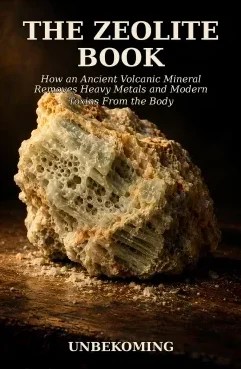 Zeolite is old. It is in Roman concrete that has held for two thousand years. It’s in the water filters of ancient cisterns. It’s in the stomachs of Pacific livestock whose keepers knew, somehow, that this grey crumbling rock made the animals healthier. It’s in Soviet clinical protocols from the 1960s. It’s in the standard emergency response to the Chernobyl explosion.


