British Army ‘waterboarded’ suspects in 70s
Evidence casts doubt on guilt of man sentenced to hang for killing soldier
* Ian Cobain
* guardian.co.uk, Monday 21 December 2009 21.52 GMT
Evidence that the British army subjected prisoners in Northern Ireland to waterboarding during interrogations in the 1970s is emerging after one of the alleged victims launched an appeal against his conviction for murder.
Liam Holden became the last person in the United Kingdom to be sentenced to hang after being convicted in 1973 of the murder of a soldier, largely on the basis of an unsigned confession. His death sentence was commuted to life imprisonment and he spent 17 years behind bars.
The jury did not believe Holden’s insistence that he made the confession only because he had been held down by members of the Parachute Regiment, whom he says placed a towel over his face before pouring water from a bucket over his nose and mouth, giving him the impression that he was drowning.
But now the Criminal Cases Review Commission (CCRC) has referred Holden’s case to the court of appeal in Belfast after unearthing new evidence, and because of doubts about “the admissibility and reliability” of his confession. The commission says it believes “there is a real possibility” his conviction will be quashed. After a preliminary hearing earlier this month, Holden’s appeal was adjourned to the new year.
However, the account that Holden gave at his trial is remarkably similar to those that have emerged since the CIA began using waterboarding techniques while interrogating al-Qaida suspects during the so-called war on terror.
Lawyers who have taken up his case have identified a second man who gave a similar account of being waterboarded after being arrested by detectives of the Royal Ulster Constabulary and questioned about the murder of a police constable. In a statement to a doctor in April 1978, this man said officers had put a towel over his face and poured water over his nose and mouth, and that “this was frightening and was repeated on a number of occasions”. He was eventually released without charge. The CCRC also has a statement taken from a third man who says he was waterboarded by the British army in the early 70s.
All of the allegations of waterboarding come from a period after March 1972, when the then prime minister, Ted Heath, banned five other notorious torture methods which were subsequently condemned by the European court of human rights as being inhuman and degrading.
Holden, a Roman Catholic, was 19 and a chef when he was detained during a raid by soldiers of the Parachute Regiment on his parents’ home in the Ballymurphy area of west Belfast in October 1972. Apparently acting on a tipoff from an informer, the soldiers accused Holden of being the sniper who, a month earlier, had shot dead Private Frank Bell of the regiment’s 2nd Battalion. Bell had just turned 18 and had joined the regiment six weeks earlier. He was the 100th British soldier to die in Northern Ireland that year.
When Holden came to trial in April 1973 he told the jury he had been playing cards with his brother and two friends in a public place at the time Bell was shot. He said that after being arrested in his bed the soldiers had taken him to their base on Black Mountain, west of Belfast, where he was beaten, burned with a cigarette lighter, hooded and threatened with execution.
Holden also gave a detailed account of being waterboarded, although he did not use that term. In a court report published the following day, the Belfast Telegraph said the defendant told the jury that he had been pushed into a cubicle where he was held down by six men, that a towel was placed over his head, and that water was then poured slowly over his face from a bucket. “It nearly put me unconscious,” Holden was quoted as saying. “It nearly drowned me and stopped me from breathing. This went on for a minute.” A short while later he was subjected to the same treatment again, he said.
A sergeant from the Parachute Regiment and a British army captain told the court that Holden had confessed to the shooting during an “interview”. The unnamed sergeant said Holden had wanted to confess to the murder because “he wanted to get it off his chest”, while the officer said the teenager had told him that he had left the IRA a short while later because he felt such remorse.
The jury took less than 75 minutes to convict Holden of capital murder, and the judge, Sir Robert Lowry, told him: “The sentence of the court is that you will suffer death in the manner authorised by law.” The then Northern Ireland secretary, William Whitelaw, commuted the sentence the following month, and the death penalty was abolished in Northern Ireland shortly afterwards. Holden did not appeal, however, with relatives saying at the time that he believed his trial had been “rigged” and a “farce”.
He was eventually released from prison in 1989.
Holden’s solicitor, Patricia Coyle, said: “At trial Mr Holden gave compelling evidence that the alleged confession was obtained by the army using water torture. He spent 17 years in jail. He is looking forward to the court hearing his appeal.”
The new evidence that the CCRC has submitted to the court of appeal is being kept secret. The CCRC is unwilling to discuss this material, other than to say that it has not yet been disclosed at the request of the public body from which it was obtained. Holden’s lawyers are now asking for it to be disclosed.
The Ministry of Defence said it was unable to confirm whether British service personnel had received instruction in waterboarding techniques as part of their counterinterrogation training at that time, and it would not disclose whether personnel currently receive such instruction “for reasons of operational security”.
There is evidence that such instruction has been given, however. In 2005 Rod Richard, the former Welsh Office minister, told a Welsh newspaper that he had been waterboarded during his counterinterrogation training as a Royal Marines officer in the late 60s.
The Guardian has spoken to a former Royal Marines officer who says that he and his fellow officers and their men were all waterboarded at the end of their escape and evasion training at Lympstone, Devon, in the late 60s and early 70s. “You were tied to a chair and they would tip you over on your back, put a towel over your face and pour water over you. I can’t recall what we called it – not waterboarding – but it produced a drowning sensation and it was pretty unpleasant.”
Seven months before Holden was detained by British soldiers, the Heath government had publicly repudiated and banned five “interrogation techniques”. RUC officers had learned the techniques – hooding, sleep deprivation, starvation and the use of stress positions and noise – from British military intelligence officers, but Heath assured the Commons that they “will not be used in future as an aid to interrogation”.
There were subsequently unconfirmed allegations that the British army had experimented with other methods of torture, including electric shocks, and the use of drugs. Towards the end of the decade, Amnesty International was reporting that terrorism suspects were again being mistreated, this time by RUC detectives, “with sufficient frequency to warrant the establishment of a public inquiry”.
A number of Republican former prisoners have told the Guardian that waterboarding was used as a form of punishment, as well as a means of extracting confessions.
World’s Sole Military Superpower’s 2 Million-Troop, $1 Trillion Wars
By Rick Rozoff | December 21, 2009
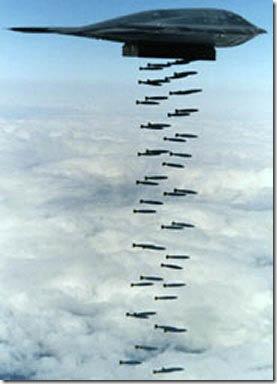 With a census of slightly over 300 million in a world of almost seven billion people, the U.S. accounts for over 40 percent of officially acknowledged worldwide government military spending with a population that is only 4 percent of that of the earth’s. A 10-1 disparity.
In addition to its 1,445,000 active duty service members, the Pentagon can and does call upon 1.2 million National Guard and other reserve components. As many as 30% of troops that have served in Afghanistan and Iraq are mobilized reservists. The Army National Guard has activated over 400,000 soldiers since the war in Afghanistan began and in March of 2009 approximately 125,000 National Guard and other reserve personnel were on active duty.
The Defense Department also has over 800,000 civilian employees at home and deployed worldwide. The Pentagon, then, has more than 3.5 million people at its immediate disposal excluding private military contractors.
After allotting over a trillion dollars for the wars in Afghanistan and Iraq alone and packing off more than two million of its citizens to the two nations, the U.S. military establishment and peace prize president have already laid the groundwork for yet more wars. Boeing, Raytheon and General Electric won’t be kept waiting.
In his Nobel Peace Prize acceptance speech on December 10 the president of the United States appropriated for his country the title of “the world’s sole military superpower” and for himself “the Commander-in-Chief of the military of a nation in the midst of two wars.”
This may well have been the first time that an American – and of course any – head of state in history boasted of his nation being the only uncontested military power on the planet and unquestionably the only time a Nobel Peace Prize recipient identified himself as presiding over not only a war but two wars simultaneously.
As to the appropriateness of laying such claims in the venue and on the occasion he did – accepting the world’s preeminent peace award before the Norwegian Nobel Committee – Barack Obama at least had the excuse of being perfectly accurate in his contentions.
He is in fact the commander-in-chief in charge of two major and several smaller wars and his nation is without doubt the first global military power which for decades has operated without constraints on five of six inhabited continents and has troops stationed in all six. United States armed forces personnel and weapons, including nuclear arms, are stationed at as many as 820 installations in scores of nations.
The U.S. has recently assigned thousands of troops to seven new bases in Bulgaria and Romania [1], deployed the first foreign troops to Israel in that nation’s history to run an interceptor missile radar facility in the Negev Desert [2], and last week signed a status of forces agreement with Poland for Patriot missiles (to be followed by previously ship-based Aegis Standard Missile-3s interceptors) and U.S. soldiers to be stationed there. The troops will be the first foreign forces based in Poland since the dissolution of the Warsaw Pact in 1991.
The U.S., whose current military budget is at Cold War, which is to say at the highest of post-World War II, levels, also officially accounts for over 41% of international military spending according to the Stockholm International Peace Research Institute’s report on 2008 figures: $607 billion of $1.464 trillion worldwide. On October 28 President Obama signed the 2010 National Defense Authorization Act with a price tag of $680 billion, including $130 billion for the wars in Afghanistan and Iraq.
That figure excludes military spending outside of the Department of Defense. The American government has for several decades been the standard-bearer in outsourcing to private sector contractors in every realm and the Pentagon is certainly no exception to the practice. According to some estimates, American military and military-related allotments in addition to the formal Pentagon budget can bring annual U.S. defense spending as high as $1.16 trillion, almost half of official expenditures for all of the world’s 192 nations, including the U.S., last year.
The U.S. also has the world’s second largest standing army, over 1,445,000 men and women under arms according to estimates of earlier this year, second only to China with 2,255,000. China has a population of over 1.325 billion, more than four times that of America, and does not have a vast army of private contractors supplementing its armed forces. And of course unlike the U.S. it has no troops stationed abroad. India, with a population of 1.140 billion, has active duty troop strength smaller than that of the U.S. at 1,415,000.
The U.S. and Britain are possibly alone in the world in deploying reservists to war zones; this last February the chairman of the U.S. Joint Chiefs of Staff Admiral Michael Mullen acknowledged that 600,000 reserves have been called up to serve in the area of responsibility of the U.S. Central Command, in charge of the Afghan and Iraqi wars, since 2001. In addition to its 1,445,000 active duty service members, the Pentagon can and does call upon 1.2 million National Guard and other reserve components. As many as 30% of troops that have served in Afghanistan and Iraq are mobilized reservists. The Army National Guard has activated over 400,000 soldiers since the war in Afghanistan began and in March of 2009 approximately 125,000 National Guard and other reserve personnel were on active duty.
The Defense Department also has over 800,000 civilian employees at home and deployed worldwide. The Pentagon, then, has more than 3.5 million people at its immediate disposal excluding private military contractors.
In the last 48 hours two unprecedented thresholds have been crossed. On the morning of December 19 the U.S. Senate met in a rare Saturday morning session to approve a $636.3 billion military budget for next year. The vote was 88-10, as the earlier vote by the House of Representatives on December 16 was 395-34. In both cases the negative votes were not necessarily an indication of opposition to war spending but part of the labyrinthine American legislative practices of trade-offs, add-ons and deal-making on other, unrelated issues, what in the local vernacular are colorfully described as horse-trading and log-rolling among other choice terms. A no vote in the House or Senate, then, was not automatically a reflection of anti-war or even fiscally conservative sentiments.
The Pentagon appropriation included another $101 billion for the wars in Afghanistan and Iraq (Obama signed the last formal Iraq and Afghanistan War Supplemental Appropriations, worth $106 billion, in July), but did not include the first of several additional requests, what are termed emergency spending measures, for the Afghan war. The first such request is expected early next year, more than $30 billion for the additional 33,000 U.S. troops to be deployed to the war zone, which will increase the number of American forces there to over 100,000.
On the day of the Senate vote Bloomberg News cited the Congressional Research Service, which had tallied the numbers, in revealing that the funds apportioned for the wars in Afghanistan and Iraq have now pushed the total expenditure for both to over $1 trillion. “That includes $748 billion for spending related to the war in Iraq and $300 billion for Afghanistan, the research service said in a Sept. 28 report.”
The new Pentagon spending plan “includes $2.5 billion to buy 10 additional Boeing Co. C-17 transports that weren’t requested by the Pentagon. Chicago-based Boeing also would benefit from $1.5 billion for 18 F/A-E/F Super Hornet fighters, nine more than the administration requested.”
Funding for military aircraft not even requested by the Defense Department and the White House or for larger numbers of them than were is another curious component of the American body politic. That arms merchants (and not only domestic ones) place their own orders with the American people’s alleged representatives – the current Deputy Secretary of Defense, William Lynn, was senior vice president of Government Operations and Strategy for Raytheon Company prior to assuming his new post – is illustrated by the following excerpts from the same report:
“Defense Secretary Robert Gates recommended April 6 that the C-17 program be terminated once Boeing delivers the last of 205 C-17s in late 2010. Boeing, the second-largest defense contractor, has said its plant in Long Beach, California, will shut down in 2011 without more orders.
“The budget also includes $465 million for the backup engine of the F-35 Joint Strike Fighter. The engine is built by Fairfield, Connecticut-based General Electric Co. and London-based Rolls Royce Plc. The administration earlier threatened to veto the entire defense bill if it contained any money for the engine.” [3]
The Pentagon and its chief Gates may win battles with the Congress and even the White House when they relate to the use of military force abroad, but against the weapons manufacturers and the congressmen whose election campaigns they contribute to the military brass will come off the losers.
In addition to the nearly two-thirds of a trillion dollar annual Pentagon war chest, the ongoing trillion dollar Broader Middle East war is a lucrative boon to the merchants of death and their political hangers-on.
On December 18 a story was posted on several American armed forces websites that U.S. soldiers have been sent to Afghanistan and Iraq 3.3 million times since the invasion of the first country in October of 2001. The report specifies that “more than 2 million men and women have shouldered those deployments, with 793,000 of them deploying more than once.”
The break-down according to services is as follows:
More than 1 million troops from the Army.
Over 389,900 from the Air Force.
Over 367,900 from the Navy.
More than 251,800 Marines.
This past October alone 172,800 soldiers, 31,500 airmen, 30,000 sailors and 20,900 Marines were dispatched to the two war zones. [4]
The bulk of the U.S.’s permanent global war-fighting force may be deployed to Afghanistan and Iraq, but enough troops are left over to man newly acquired bases in Eastern Europe, remain in Middle East nations other than Iraq, be based on and transit through the Manas Air Base in Kyrgyzstan, take over seven new military bases in Colombia, run regional operations out of America’s first permanent base in Africa – Camp Lemonier in Djibouti, where 2,400 personnel are stationed – and engage in counterinsurgency campaigns in the Philippines, Mali, Uganda, Yemen and Pakistan.
Recently a U.S. armed forces newspaper reported in an article titled “AFRICOM could add Marine Air Ground Task Force” that “A 1,000-strong Marine combat task force capable of rapidly deploying to hot spots could soon be at the disposal of the new U.S. Africa Command.”
The feature added that a Marine unit previously attached to the newly launched AFRICOM has “already deployed in support of training missions in Uganda and Mali,” whose armies are fighting the Lord’s Resistance Army and Tuareg rebels, respectively. [5]
In Yemen, Houthi rebel sources “accused the U.S. air force [on December 15] of joining attacks against them, and killing at least 120 people in a raid in the north of the poor Arab state.”
Their information office said “The savage crime committed by the U.S. air force shows the real face of the United States.” [6]
According to ABC News “On orders from President Barack Obama, the U.S. military launched cruise missiles early Thursday [December 17] against two suspected al-Qaeda sites in Yemen,” [7] to complement mounting missile attacks in Pakistan.
The Houthi rebels are religiously Shi’ia, so any attempt at exploiting an al-Qaeda rationale for bombing their villages is a subterfuge.
At the same time the Commander of U.S. Air Forces in Europe and NATO Allied Air Component, General Roger Brady, fresh from a tour of inspection of the Caucasus nations of Azerbaijan and Georgia, was at the Adazi Training Base in Latvia to meet with the defense ministers of that nation, Estonia and Lithuania and plan “closer military cooperation in the security sector between the Baltic States and the USA which also included joint exercises in the Baltic region.” [9] All five nations mentioned above – Azerbaijan, Estonia, Georgia, Latvia and Lithuania – border Russia.
During the same week’s summit of the Bolivarian Alliance for the Peoples of Our America (ALBA) in Havana, Cuba, the host country’s president Raul Castro said of the latest Pentagon buildup in Colombia that “The deployment of [U.S.] military bases in the region is…an act of aggression against Latin America and the Caribbean.” [9]
Less than a week later the government of Colombia, the third largest recipient of American military aid in the world, announced it would construct a new military base near its border with Venezuela. “Defense Minister Gabriel Silva said [on December 18] that the base, located on the Guajira peninsula near the city of Nazaret, would have up to 1,000 troops. Two air battalions would also be activated at other border areas….Army Commander General Oscar Gonzalez meanwhile announced [the following day] that six air battalions were being activated, including two on the border with Venezuela.” [10]
After allotting over a trillion dollars for the wars in Afghanistan and Iraq alone and packing off more than two million of its citizens to the two nations, the U.S. military establishment and peace prize president have already laid the groundwork for yet more wars. Boeing, Raytheon and General Electric won’t be kept waiting.
Notes
1) Bulgaria, Romania: U.S., NATO Bases For War In The East
Stop NATO, October 24, 2009
http://rickrozoff.wordpress.com/2009/10/25/bulgaria-romania-u-s-nato-bases-for-war-in-the-east
2) Israel: Forging NATO Missile Shield, Rehearsing War With Iran
Stop NATO, November 5, 2009
http://rickrozoff.wordpress.com/2009/11/05/israel-forging-nato-missile-shield-rehearsing-war-with-iran
3) Bloomberg News, December 19, 2009
4) Michelle Tan, 2 million troops have deployed since 9/11
December 18, 2009
5) Stars And Stripes, December 16, 2009
6) Reuters, December 16, 2009
7) ABC News, December 18, 2009
8) Defense Professionals, December 14, 2009
9) Russian Information Agency Novosti, December 14, 2009
10) Agence France-Presse, December 19, 2009
Bended Knees: Zionist Power in American Politics
By James Petras | December 20, 2009
“Obama wants to see a stop to settlements: Not some settlements, not outposts, not natural growth exceptions”. – Secretary of State, Hillary Clinton, May 2009
“What the prime minister has offered in specifics of a restraint on the policy of settlements…..is unprecedented, there has never been a precondition, it’s always been an issue within negotiations.” – Hillary Clinton, BBC, November 1, 2009 (my emphasis)
“The US administration understands what we have always said … that the real obstacle to negotiations is the Palestinians (calling for a freeze on settlements)”. – Israeli Minister of Science and Technology Daniel Hershkowitz, November 1, 2009 (my addition).
“America, stop sucking up to Israel!” – Gideon Levy, Israeli journalist, Haaretz, November 1, 2009.
“US Zionists are sticking it to America, 24/7”, Anonymous Staff Official, Washington D. C., – October 31, 2009.
Introduction:
The discussion of Zionist Power Configuration (ZPC) in the US political system revolves around several essential issues, including:
- The claims by the ZPC that it represents Jewish opinion and values as well as its authority to speak for the interests of the American people.
- Measuring the power of the ZPC and determining its influence over policy, appointments and political institutions.
- The question of whether the ZPC is a legitimate part of the US political system, another lobby, or something very different, an unregistered agent of a foreign power (Israel).
- The scope and depth of the ZPC influence in US politics beyond the focus on its “lobbying” in Washington on a “single issue”.
- The organizational weapons and techniques utilized by the ZPC to maximize influence and deny voice and influence to critics of Israel and itself.
- The similarities of the organizational linkages of the Israel-Zionist relationship to the Russian – Stalinist Communist Parties of the 1930’s.
Method: Public Records, Ethnic Neutral Sources and Citations
The case against the Zionist Power Configuration is based on the open record of publications, speeches, articles, interviews and sources available to the general public (and any interested reader). Many facts and data are drawn from Zionist and Israeli sources as well as mainstream publications and writings by critical journalists and analysts.1 We do not privilege the statements by Jews, whether they are critics or supporters of the State of Israel, as most “progressive” writers do. The pursuit of truth is not an “ethnic science”, an approach that smacks of Nazi and Zionist racial theories. Indeed, nothing reveals the extreme Zionist power or cultural hegemony over the debate on Israel and American Zionism so much as the constant reliance, reference and citation of the “Jewish” authorship of critical articles, even when publications by non-Jews are better documented, of earlier publication, and better argued.
The ethnic (Jewish) label attached to writings and intellectual and political activity is selectively applied: the ethnic labels are applied to ‘positive outcomes’ as part of a general campaign exalting the “superiority” of the “race”; and disregarded in the face of ‘negative outcomes’ and activities (e.g. financial swindles, Russian oligarchs, espionage agents). In fact the “double standard” is buttressed by savage attacks by the ZPC on those who, following the ethnic labeling tradition, actually mention the Jewish background of mediocrities and war criminals as well as peace and justice advocates.
We will begin by questioning and challenging the representativeness of the ZPC in the United States today.
Zionists and the Jewish Communities in America
The 51 Presidents of the Major American Jewish Organization (PMAJO) claim to speak for all Jews in the US.2 A major study in the north Boston region found that less than 25% of Jews belong to a synagogue, fewer (10%) contribute to the Jewish Federation and over 50% do not accept rabbinical Zionist precepts against inter-marriage with non-Jews.3 According to the Jewish Telegraph Agency (12/4/2009) conservative synagogues have declined by almost 25% from 800 to 650 over the past decade. Even more striking many prominent individuals who may be of Jewish parentage, no longer consider themselves “Jews” despite frequent claims by Zionists that their achievements are a product or a result of their being “Jewish”. Near majorities of young people of Jewish ancestry do not identify with Judaism and are critical or indifferent to Zionist appeals for Israel. They have no involvement in Jewish centered civic activities.4 A small, but vocal, group of Jews are organized and active critics of the entire Zionist apparatus, rejecting the idea of Israel as an exclusive ethno-religious state and supporting a secular democratic republic in Palestine.5 In addition several Orthodox Jewish sects view the ‘state of Israel’ as a form of blasphemy and call for its destruction.6
The “51” misrepresent their actual numbers and claim to speak for 6 million US Jews. At best they may speak for less than half of the imputed population and even then their support waxes and wanes according to the issue, the timing and the place and varies in intensity. The power of the “51” is not a result of its representativeness of the Jewish community at large, but the location of its followers in the power structure and the intensity and quasi-religious fervor of their activists. Their political power resides in their singular forces in pursuit of the interests of the State of Israel and the control and influence in media; their nationwide networks and the wealth and financial power of contributors. Their capacity to browbeat apathetic Jews into making contributions and lending support adds organizational muscle. Their willing use of force, money and media slander intimidates any and all critics, including dissident politicians, media, journalists and professors.7
At most there are probably no more than 500,000 Jews who actively back the “51” – but what a half million! Given the low level of political participation of the US population in general, the relative low salience of Middle East issues to most Americans and the one-sided pro-Israel mass media propaganda, which misinforms the public, the Zionist zealots have little competition. They have a free hand in penetrating and influencing political, social and cultural institutions in line with the policies dictated by their Israeli influenced leaders among the “51”.
The issue of the limited representativeness of the Zionist organization must be separated from the exercise of power. By leveraging non-Zionist, non-Jewish civic organizations, political institutions, pension funds, trade unions etc. the ZPC magnifies its power beyond its numbers.8
The limited representativeness of the “51” is compensated by the silence and apathy of the majority of Jews and non-Jewish/Jews, who either are not willing to challenge ZPC claims or are immersed in private concerns, careers or other unrelated civic issues.
The ‘51’s hundreds of thousands of activists are strategically placed in institutions, as well as geographically, with a centralized command capable of mobilizing money, media attention and political leverage in any priority, political, cultural or social arena.9 The ‘51’ organizations are not merely a “lobby” in the sense of having paid officials operating to influence congressional votes.10 They include religious, civic, charitable, ideological, cultural and social organizations unified and unconditionally committed to following the zigzags of Israeli political directives.11 The actual structure resembles a ‘power configuration’ that reaches from small chapters in municipalities to statewide confederations, as well as national organizations, each with its own budget, its own ideological watchdogs and appropriate levers of power.
The power for Israel is exercised by elected and appointed Zionist officials, especially those in positions that have any relevance to Israeli interests. These “interests” include direct aid to Israel, sanctions and wars against Israel’s Middle East and Asian adversaries, American pension fund investments in Israel, boycotts of companies trading with Israeli-designated adversary countries and many other strategic concerns.
The key to the power of the Zionist Power Configuration is that it is a mass grassroots organization, bolstered by the financial support by scores of millionaires and dozens of billionaires and a complicit mass media. These political resources translate into tremendous leverage over the far more numerous non-Zionist electorates, the mass media spectators and the upwardly mobile politicians.
The ZPC illustrates clearly how “numbers” in the abstract do not count,12 especially in a permeable electoral system like the US, where money, organization, discipline and ethno-religious fanaticism define the boundaries, issues and acceptable policies.
The ZPC as Foreign Agents of the Israeli State
The recent decision of the US Congress to repudiate (HR 867) the findings of Israeli war crimes in the official Final Report of the United Nations’ Fact Finding Mission on the 2009 Gaza Conflict by a vote of 344 – 36 is a measure of the power of the ZPC.13 The report, also known as the “Goldstone Report”, after its principle author Justice Richard Goldstone, was released on September 15, 2009, amid a carefully orchestrated campaign to discredit its findings and its authors. What is even more important than the US Congressional vote of condemnation is the fact that the campaign was publicly ordered from Israel, directed by the Presidents of the ‘51’ and obediently and enthusiastically carried out by several hundred thousand Zionist activists, throughout the country. The ‘51’ and the mass of Zionist zealots were openly defending Israeli state terror and crimes against humanity. Their defense of war crimes never evoked a second thought. What mattered was their ability to pressure, threaten, cajole and promise future funds to Congressional representatives in order to secure their vote against Justice Goldstone. Blind obedience to Israeli dictates was evident in the fact that many Congresspersons proudly confessed to never having even read the Goldstone Report and that none dared question the egregious fabrications, which its two uber-Zionist Congressional sponsors, (Representatives H.L. Berman, D-California and G.L. Ackermann, D-New York), of the House Resolution 867, concocted.14 The US Congress, in fact, almost unanimously rejected the eminent Justice Goldstone’s request to present his findings in person.
In the UN National Assembly, the Zionists were able to leverage the US to vote against the Goldstone Report, which in turn secured the vote of several Eastern European client states, insignificant island dependencies and the predictable Western European “Allies”. This amounted to a total of 18 votes against the 114 UN members who endorsed the Report’s thorough documentation of Israeli war crimes and state terrorism, an endorsement which represented over 80% of the world’s population.15
The ZPC is powerful but not omnipotent. It controls the US Congress and Executive and has decisive influence in the mass media, but there are important fissures in the monolith, as a number of Jewish organizations and individuals, revolted by Israel’s mass killings in Gaza and the ZPC unconditional support, have spoken out in support of the Goldstone Report.16 More importantly, major national trade/union federations in Canada, Ireland, Great Britain, France and Italy, along with numerous human rights organizations, support a global boycott and disinvestment campaign against Israeli products.17 Judicial processes are proceeding in various European countries to arrest and put on trial top Israeli officials involved in the Gaza massacre.18
The United States, under the tutelage of the ZPC, remains as the center of Israeli power and the sole reliable backer of Israeli war aims in the Middle East, especially with regard to Iran. The power of Israel over Washington’s Middle East policy is in direct relation to the strategic influence of the ZPC. The denial of the power of the ZPC by seemingly “progressive” and “leftist” writers and journalists has been one of the principal obstacles undermining efforts to effectively counter US government support for Israeli war crimes, the expansion of colonial settlements in the West Bank and the military/sanctions policies toward Iran.19
Israeli Power over US Middle Policy: The Centrality of the ZPC.
The manifestations of Israeli power over the US are public, visible, outrageous and unprecedented in the annals of US foreign relations.20 Israeli power is wielded directly through its subordinated political arm, the ZPC, which in turn facilitates the direct intervention of the Israeli state in the internal politics of the US. Let us examine several crucial empirical indicators of Israeli power in the US.
On November 9, 2009, Israeli Prime Minister Benjamin Netanyahu addressed the mass based Jewish Federation (JF) of North America General Assembly and thanked US President Obama and the US Congress for repudiating the Goldstone Report. The Israeli head of state then told his US followers to increase their efforts to influence US policy to “stop Teheran from realizing its nuclear ambitions”.21 Ambassador to the United States, Michael Oren, told the same Jewish Federation to “press for sanctions on Iran and condemn the findings of the United Nations commission on Gaza.22 Speaking as a tribal chieftain dictating orders to the loyal overseas followers, Oren stated, “Our strength derives from the belief that we have a right to independence in our tribal land, the land of Israel…”23 Israel is the only country that can intervene in the internal politics of the US, counting on a powerful political organization, to shape US policy to serve its state interests.
By drawing on the now discredited myth that American Jews’ tribal ancestry is rooted in Israel, rather than Central Asia, Khazaran, reinforces the idea that Israel and not the United States – is the true ‘homeland’ of American Jews and therefore it is their right and duty to obey the dictates of the Israeli state.24 Each year dozens of Israeli state officials visit the US and directly intervene in US political debates, congressional hearings and executive policy making – with nary a whisper of protest, let alone censure from the US State Department. Any other country’s officials who so flagrantly intervene in US politics would be declared persona non grata and expelled from the country. In contrast, because of the power of the ZPC, Israeli civilians and military officials are invited to intervene in US policy making, to set the agenda for numerous Zionist officials in and out of public office and to bludgeon and praise those who criticize or oppose Israeli dictates.25 The repeated public statements by Israeli officials that the primary loyalty of American Jews is to Israel and its policies – in other words, that they should act as a fifth column for Israel – is incompatible with the notion of citizenship everywhere except for this small group in the US.26 One could imagine the outcry (and brutal reprisals) if any political leader from a Moslem country called on their co-religionists to pursue its state interests. What is striking then about the ZPC is that it openly and publically organizes meetings, follows orders and pursues policies dictated by Israeli public officials and yet is not registered as a foreign agent, let alone prosecuted for acting, by its own admission, on behalf of a foreign power.27
The ZPC: Lobby or Unregistered Foreign Agents?
Based on its organizational structure and political aims, the pro-Israel social-political configuration cannot be reduced to a common “lobby”. The mass activist organizational structure encompassing and penetrating civic, political, cultural institutions and media outlets resembles a power configuration that works within and outside of Washington to shape political decisions relevant to Israel.28 Equally important it plays a major role in shaping the opinions and behavior of public opinion and civic society organizations. Secondly, unlike American lobbies, it acts to shape US foreign policy in the interest of a foreign military power, up to and including decisions on promoting war and imposing sanctions against Israel’s opponents, prejudicing the lives and security of thousands of American working people and taxpayers. Thirdly, the term “lobby” does not ordinarily encompass the virulent repressive activities pursued by the ZPC against critical writers, cultural figures, academics and others in American society who question Israeli policy. The ZPC not only acts a foreign agent for Israel today, but has been openly doing so over fifty years.29 In the 1960’s the Justice Department attempted to enforce the 1938 Foreign Agents Registration Act (FARA) against the current American Israel Public Affairs Committee (AIPAC)’s predecessor, the American Zionist Council (AZC), but was blocked by pro-Israel politicians.
The ZPC not only publicly gives unconditional support to Israeli policy but engages in espionage on behalf of Israel as several prominent members of the ZPC and Mossad have testified. One of America’s leading experts on Israel’s “lobby” Grant Smith, who has amassed a vast archive of declassified official US documents on Israeli-Zionist activities in the US, cites numerous cases in which AIPAC purloined internal classified government documents in order to further Israeli trade privileges in the 1980’s.30 A leader of the Zionist Organization of America was implicated in the illegal transfer of US government uranium to Israel in 1956. In 2005 Steve Rosen and Keith Weissman, leaders in AIPAC, admitted to receiving a confidential document relating to US-Iran policy, transmitting it to an Israeli embassy official.31 From 1979 to 1985, senior US Army Weapons Engineer Ben-ami Kadish, an American Zionist and former member of the fanatical Jewish Haganah militia in British Mandate Palestine, handed critical confidential documents on an enormous number of US weapons systems over to agents from the Israeli embassy.32 These were then believed to have been passed to the Soviet Union in order to influence their policy on immigration to Israel. Under the influence of the Zionist-infested Justice Department, Kadish got off with a $50,000 fine and not a single day in jail – for handing scores of crucial US military secrets to Israel.
Ben-ami Kadish’s fellow spy, American Zionist Jonathan Pollard, shared the same Mossad handler in the 1980s. Pollard, who worked as an analyst for US Naval intelligence, provided the Israelis with crate-loads of classified military and intelligence documents filled with top secret information on US policy in the Middle East, weapons systems, US agents in the Soviet Union and any and all relevant strategic objects of interest to his Israeli handlers.33
On October 29, 2009, the Justice Department charged Stewart David Nozette, a Defense Department scientist, with attempting to transmit classified information to an Israeli Mossad agent. Nozette, an American Zionist, did not act strictly out of tribal loyalties to the Jewish State. Like Pollard, he asked for money and an Israeli passport (Boston Globe 10/20/09). According to former Mossad agent Victor Ostrtovsky, the spy agency recruits thousands of overseas Zionist sayanim (Hebrew for ‘helpers’) who “must be 100 percent Jewish” for Israeli Mossad operations, which may include terrorism. (See Ostrovsky, By Way of Deception (New York: St Martin’s Press 1990, pp 86 – 88). In 2001 Fox News investigative reporter, Carl Cameron, reported that scores of Israeli spies were rounded up and deported in the aftermath of 9/11, including five Mossad agents videoing the World Trade Center bombing.34
Industrial and political spying is not uncommon among states, even between allies. What is striking is that representatives of an organized ethno-religious group, the major American Zionist organizations, have expressed sympathy and solidarity with such spies as Ben-ami Kadish, Jonathan Pollard and others, even defending their acts of espionage as a significant contribution to US – Israeli relations.35 The implication, or better still, the explication for this perverse thinking is that for the leading American Zionist organizations, spying for Israel, is part and parcel of their primary loyalty to the Jewish state. Zionist primary loyalty to Israel is not confined to mainline American Jewish organizations.
During the Rosen-Weissman trial, numerous prominent Jewish leftist (including Democracy Now’s Amy Goodman) publicly defended the procuring of confidential documents and their handing over to a foreign (Israeli) government as a matter of “free speech” and “freedom of the press”.36 Rosen in his civil suit again his firing by AIPAC (to deflect FBI investigators) claimed that his dealing of US government documents to Israeli officials was “common practice” AIPAC officials.37
Top Zionist leaders in the Bush and Obama administration have a long history of work for and with Israel, including in some cases activity, which has caused them to lose security clearances and/or to come under investigation.38 Two top Pentagon officials in the Bush administration, Former Undersecretary of Defense Paul Wolfowitz and Assistant Secretary of Defense, Douglas Feith are cases in point. Obama’s chief of staff, Rahm Emmanuel spent time in the Israeli armed forces and has long been suspected of ties to Mossad.39 Stuart Levey, a top US Treasury Department official involving in enforcing sanctions against Iran, has spent nearly a decade in close collaboration with MOSSAD, a point he brags about.40 During the Bush (Jr.) Presidency, non-Zionist officials in the Pentagon and CIA complained of being sidelined by top Zionist officials, who set up their own intelligence offices run by their own fellow Zionist policymakers.41 Wolfowitz and Feith set up the Pentagon’s Office of Special Plans run by Abram Shulsky. Colonel Karen Kwiatkowski, an official in the Pentagon at the time, complained of being marginalized and supplanted by Israeli officers who had unfettered access to the highest Pentagon officials.42 The November 2007 United States National Intelligence Estimate Report (NIE) on the Iranian nuclear program was savaged by all the major Jewish American organizations, and their cohorts in Congress and the Executive branch because the report concluded that Iran had suspended its nuclear weapons development since 2003.43 The major Zionist organizations and their supporters in the US government favored Israeli intelligence disinformation claiming an active nuclear weapons program that threatened US security. In short order the NIE report, prepared by 16 major US Government intelligence agencies, was pushed aside and US policy followed the lead of the Zionist-backed Israeli claims of a “secret” Iranian weapons program despite the absence of any hard data.
Leveraging Power
The key to Zionist power in shaping US policy toward the Mid-East, Arab-Muslim relations and toward “third parties” affecting Israeli policy is the combined influence of Zionists in executive offices (Treasury, State, National Security, Pentagon, etc.) and Congress, especially leading committees relevant to Israeli interests, and as well as the mass organizations in civil society (the ‘51’ major American Jewish organizations) and Zionist control over the mass media.44 Zionist power and control in these crucial areas spreads out into influencing academic activity, including the repression of Israeli critics, the censoring of publications, manipulation of professional societies, trade unions and state and union pension funds, whose members are overwhelmingly neither Jewish nor Zionist.
The result is that the Zionist Power Configurations automatic and unquestioning support for the crimes and treason, including Zionist espionage for Israel within the US and the universally-condemned Israel war crimes, goes uncontested in the mass media, the Congress, and even the small political and literary journals on the ‘Left’. This uncontested support of espionage by foreign power acting through public organizations is unique in US history. In the past organizations acting as surrogates for a foreign power were condemned, ostracized, suppressed, prosecuted and subject to mass public outrage. It is a “tribute” to the power of ZPC that none of that occurs today. As a footnote to history, it is the first time that practically all Marxist journals, monthlies, bi-monthlies, quarterlies and annuals and their leading contributors have avoided a serious critique of the ZPC. On the contrary, the sparse articles which purport to deal with Middle East policies cover-up the role of the ZPC in shaping US policy.45
There is evidence that, even in the most radical publications of “critical writing”, fellow traveling editors, who otherwise claim “internationalist” and “working class” allegiances, are not willing to confront the ZPC war makers who promote wars in the Middle East, funded by American taxpayers and fought by 99.9% non Jewish/non-Zionist working class Americans in uniform.
The Interlocking Directorate: Establishing Zionist Hegemony
Several critical analysts have identified some of the key issues and institutions under Zionist influence.46 Some have identified AIPAC as an influential pro-Israel lobby. Others have noted the pro-Israel bias of the mass media.47 A very few have even identified Zionist predominance in media ownership.48
Others, especially during the Bush presidency, noted the influence of key Zionists in the Pentagon, especially their role in promoting the US invasion of Iraq.49 The narrow focus of their otherwise valuable critiques fails to account for structural continuities over time and place: the long-term, large-scale presence of unconditional Israel Firsters across administrations especially over the past two decades. Moreover, while case studies of Zionist influence over specific policy issues, such as the recent Congressional repudiation of the Goldstone Report and support for Israeli war crimes, are useful, the larger theoretical and empirical phenomenon of the growing chain of issues over ever more extended policy areas of interest to Israel (and therefore the ZPC) is ignored.50 In a word, the problem of ZPC power in the US is not confined to a single issue lobby. This narrow approach obfuscates the systemic role of the ZPC in effectively disenfranchising the great majority of the American wage and salaried people (at the expense of their living standards), increasing war taxes for the middle class and blocking investment opportunities for corporate America in countries designated (by Israel) as “security threats” (adversaries of Israeli colonial expansion).
The career patterns of leading Zionists include movers from business (Wall Street, Corporate law firms) to government; another pattern involves Zionist academics who move to the executive branch and then on to corporate or Zionist think tanks. Others follow a career combining academic – propagandist – journalist policy consultant positions, often prominent on the television political ‘talk’ shows. The leading media moguls combine roles as CEO’s – propagandists – and Israel advocates. The overlap of career positions creates a network of shared ideologies, defined by ‘what is best for Israel’ (Israel First). The shared “world view” creates a cohesive group that sets the boundaries of US policy debate. Congressional behavior, Executive policy makers and intellectual discourse are confined by these ZPC-determined parameters. In effect pro-Israel career patterns and projections of power have established a kind of Judeo-Zionist hegemony of US public life.
Ethno-sizing Truth
One of the extreme manifestations of Zionist-Jewish hegemony is found in the fear and trepidation with which critics of Israeli policy approach the issue. Most seek to “Judaize” any criticism, instead of seeking and citing truth, facts or analyses on their own merits. They support their statements by citing Israeli sources and Jewish writers, even if earlier non-Jewish, non-Israeli writers and analysts have raised the same issues and may have provided a more systematic and consequential critique.51 This “tactic” of seeking to play off critical Jews against the ZPC and Israel is debatable if not counter-productive, regressive and serves to re-enforce the pervasive fear of the ZPC. The proponents of this approach, assuming they are not ignorant of non-Jewish critics, argue that by citing the Jewish background of the critics of Israel, they disarm the ZPC charge of “anti-Semitism”. They further argue that by putting an ethnic ‘spin’ or ‘ethnicizing’ the critique they are responding to “Jewish sensibilities” and are more likely to get a hearing from Jews and their sympathizers.52
These arguments are plausible but deeply flawed. Committed Zionists, meaning the entire ZPC, dismiss Jewish and non-Jewish critics with equal ferocity: the former as “self-hating Jews”, the latter as “anti-Semites”. Sacrificing truth and principled criticism to shield “Jewish sensibilities” means refraining from challenging their residual tribal sympathies to a ‘Zion-centric’ view of the world. If the central problem is Zionist hegemony of US culture and especially foreign policy in the Middle East (and wherever else Israel dictates), it ill behooves us to pander to amorphous ‘special sensitivities’ of the few Jewish dissidents who demand ethnically-based critiques.
Demystifying a Racial Doctrine:
The big challenge for opponents of Judeo-Zionist hegemony is demystifying its ideological bases. Zionists and their media camp followers always highlight “Jewishness” and the disproportionate number of notable, successful scientists and public figures with whom the Zionists self-identify (even if the said individuals have no identification with anything remotely “Jewish” beyond some distant ancestry). In contrast, to highlight the “Jewishness” (and Israel-centricity) of notorious swindlers, spies, warmongers, gangsters, drug or arms traffickers is be labeled anti-Semitic. Selective ethnic identity is crucial to maintaining and perpetuating the racist myth of Jewish superiority and the corollary of power and prestige, based on special meritorious qualities. One of the key components of Zionist-Jewish ideology and Israeli power is precisely the racist myth of the Jewish moral and intellectual superiority – not the guns, money and backing of Washington and the ZPC’s central location within the US elite social structure.
There are two options for those interested in demystifying Zionist-Jewish hegemony: One could eliminate all ethnic labels or one could insist that labels be applied to all individuals including the most nefarious, grotesque and embarrassing.
Networks, which work for Israel, enhance Jewish-Zionist prestige while providing emotional gratification and vicarious pleasure in sharing the thrill of Israel’s bloody military victories and its forceful expansion of the “fatherland”. Not a few careers have advanced through the “contacts” made at the national and regional Zionist meetings. This is especially the case for many, otherwise mediocre, political candidates facing competitive elections. Active membership in a powerful Zionist organization may protect the careers of lackluster, or even incompetent, performers in some academic or professional settings where the threat of a lawsuit charging anti-Semitism can ensure contract renewal.
Zionist racist ideology, with its implicit and explicit emphasis on Jews as “special people” ordained by God, as well as the media’s bias toward presenting a selectively positive ethno-religious identity, provides symbolic gratification to lower middle class Jews, who sell Israel bonds, write letters to politicians, heckle critics of the Jewish state and march under the flag of Israel. They are likely to play a role at the grassroots level in bullying family members, neighbors and colleagues to join the cause or refrain from voicing criticism of Israel. Recently, more than a few Seders have led to family bust-ups over issues like the massacre of Palestinian civilians in Gaza, the Goldstone Report and the Ben-ami Kadish spy episode.
The success of the ZPC in projecting power and shaping US policy depends, in large part, on the financial clout of its millionaire financiers, its penetration of the state apparatus and the interlock of the corporate-political directorate. However, equally important is the grassroots work of hundreds of thousands of middle and lower middle class activists. The effective exercise of power by the Zionist elites is based on the vertical ties between the leaders and followers, especially in mobilizing for Israel’s high priority campaigns promoting dubious causes – like Israeli repudiation of moderate US policies toward Jewish colonial settler expansion or calls for more restraint from killing civilians in Palestine and elsewhere. It is highly unlikely that any changes can be induced among the Zionist elite; but there are reasons to believe that some sections of the rank and file can be influenced by anti-Zionist Jews and non-Jews. This is especially true at a time when Israeli political leaders have embraced such openly ultra-rightist postures.
Zionist Hegemony is Vulnerable
Several developments encourage the hope that these vertical links can be weakened. Over the past 5 years, numerous articles, books and videos critical of Israel have broken through Zionist censorship. Equally important, the emergence of new activist Jewish anti-Zionist organizations and the vast increase in member organizations supporting a boycott and divestment campaign against Israeli products, companies and cultural institutions have broken the ZPC stranglehold on public opinion.54 Faced with growing opposition in civil society the ZPC has escalated its repressive efforts to ban publication of critical authors, fire academics and savage journalists and politicians.55 Simultaneously a concerted effort has been made to encourage its ideological ‘attack dogs’ in academia suppress any critical discussion of the issues that most discredit the Israeli state, namely the recent Israeli massacres in Gaza, the brutal expansion of settlements in the West Bank, the Goldstone Report on Israeli war crimes and Israel’s well-orchestrated push for war against Iran.56
Zionist Intellectuals: In Defense of Terror:
The ZPC has long established a near stranglehold on the major media outlets for opinion and analysis on the Middle East and especially on issues, which Israel’s foreign office has given high priority. As a result Israel First academics and pundits monopolize the editorial and opinion pages of the Washington Post, the Murdoch chain, the Wall Street Journal, the New York Times, the Los Angeles Times, the Chicago Tribune, Newsweek, and other print outlets.57 The spread of Zionist extremism is evident in two recent feature articles published by Newsweek (December 21, 2009), glorifying the neo-fascist head of the Israeli secret police, Mossad, Meir Dagan for his success in assassinating political adversaries in violation of national boundaries and his close ties with US Treasury official and Zionist zealot Stuart Levey, who is in charge of blackmailing Iran’s trade and investment partners, in order to strangle the Iranian economy and impoverish seventy million of its people. The Newsweek authors of these articles are rightwing Israel and US Zionists. Notorious Zionist news anchors, like Ted Koppel and Wolf Blitzer, parrot the Israeli-ZPC line in the major media (Fox News, CBS, NBC, ABC, CNN, BBC) as well as secondary outlets (National “Public” Radio).58 The result is self-styled “experts” of dubious loyalty to America, but with strong ties to Israel and Zionist propaganda institutes, grind out opinion pieces which defend the Israeli regime’s most atrocious war crimes and land grabs.59 Numerous professors from the most prestigious universities hack out op-ed pieces defending Israel’s assault on Gaza, fabricating judicial precedents, and citing “Just War” theory.60 Israeli Prime Minister Benyamin Netanyahu, when confronted by near universal support for the Goldstone Report, ordered the ZPC to denigrate Justice Goldstone, the basis and legality of the Report and falsify its contents. When the extreme militarists, like Netanyahu, passed the word to Israel’s mouthpieces in North America, they unleashed the ZPC’s entire stable of academics, journalists and propagandists. Over one hundred op-ed pieces in the major media savaged the Report, slandered Goldstone and defended Israeli terror attacks, which destroyed the entire human infrastructure of the Gaza.61 No Israeli crime was too great to cause any Harvard, Yale, Princeton or John Hopkins Zionist academic to rethink their blind subordination to the Jewish state. They parroted Netanyahu’s line that the massacre of over one thousand civilians and the brutalization of hundreds of thousands was an exercise of “Israel’s right to self-defense”. Few of the Jewish and non-Jewish academics, who dared to criticize Israel’s terrorist policy, cited the weakest section of the Goldstone Report – its amalgamating Israel’s all-out terror bombing of Palestinian neighborhoods, schools, hospitals, mosques and farms, with Hamas’ futile and ineffective retaliatory rockets falling mostly on empty Israeli fields. Few if any raised their voices against the domestic propaganda arm of Israeli war crimes – the Presidents of the 51 Major Jewish American Organizations. Needless to say, with few domestic critics willing to even identify their opponents, the ZPC secured over 90% of the US Congress in favor of Israel’s repudiations of the Goldstone Report, which they had never even read.62
What is striking about the vast majority of Zionist academic apologists of terrorism is their shoddy scholarship, their tendentious and illogical arguments and de-contextualized analogies. Their ‘persuasiveness’ is based on the fact that their ‘line’ is reinforced by the mass media and enforced by the ZPC’s political thuggery and character assassination of potential critics. Their repeated presence in the media gives the appearance of legitimacy in defending violations of international law. Their prestigious positions provide a veneer of expertise or knowledge even as their research in the region is based on flawed premises, including disproved religious legends and colonial mythology.63 As Zionist academics become more deeply involved in justifying the expansionist Zionist claims, Israeli conquests and brutal militarism, there is an accompanying marked deterioration of intellectual standards. Over time prestigious positions become linked with mediocrity. Academic degrees, awards and badges of merit are harnessed to hack writing and political hatchet jobs. Noted critics, who exempt Israeli war crimes and terror, are still published by prestigious publishers, despite their shabby intellectual output. Promotions and academic chairs are secured by eminently distinguished apologists of dubious morality. Their blind support and defense of the practices of a terror state puts the lie to their claims to high ethical and scholarly standards.
The American Zionist academic elite fits Adorno’s authoritarian personality: at the throat of the American polity and at the feet of the Israeli – ZPC elite.64 Arrogant posturing, angry polemics and emotional ejaculations cover up for their lack of substantive arguments. Where bullying fails, soothing rhetoric which speaks to values, dialogue and cooperation accompanies a blind eye to the relentless Israeli uprooting of Arab residents from Palestinian/Jerusalem. Princeton academics cite classical political theorists in defense of gun-toting Jewish settlers who brutalize shepherds, threaten school girls and up-root centuries-old Palestinian olive groves.
The Globalization of Zionist Power
From the Israeli fatherland to the nerve centers of Zionist power in the US, using the experiences and drawing on the support of the ZPC, pro-Israel influence has spread to important political institutions in England, Canada, France, Netherlands, Russia and more recently South America. In England, leaders and deputies from both the Conservative and Labor party accept millions in campaign funds from billionaire Zionists, paid junkets to Israel and other payoffs in exchange for supporting Israel’s most egregious acts of violence in Lebanon, Gaza and the West Bank.65 Zionist front groups like the “Conservative Friends (flunkeys) of Israel” and “Labor Friends (flunkeys) of Israel” ensure that the incumbent regimes and the opposition put Israeli trade and militarist interests at the center of British Middle East Policy.66
In Canada under the Conservative Harper regime, Zionists have secured unprecedented influence and diplomatic and material support for Israel’s top priorities.67 These include support for the annexation of most of Palestinian East Jerusalem; repudiation of the Goldstone Report; support for Israeli war crimes during the 2008/09 invasion of Gaza; Israel’s invasion of Lebanon and pending legislation criminalizing criticism of Zionism as “anti-Semitism” among a host of other pro-Israel acts, decrees and trade privileges. The opposition Liberal and New Democratic parties compete with the Conservatives in pandering to the pro-Israel power configurations in order to secure campaign financing from millionaire real estate, financial and media moguls. In contrast, major Canadian trade unions and anti-Zionist Jewish campus and community organizations have organized boycotts of Israeli goods and academic organizations serving the bloody occupation. In France, life-long Zionist zealot, Foreign Minister Bernard “Bernie” Kouchner, has embraced Netanyahu’s extreme position of “unconditional negotiations” which allows massive land seizures and the construction of ‘Jews-only’ apartment complexes on illegally confiscated Palestinian land to continue while endless inconsequential “peace” negotiations take place.68 This position has been supported by uber-Zionist Secretary of State, Hillary Clinton.
In Russia, eight of the top nine billionaire oligarchs have claimed dual Israeli citizenship. They illegally and violently seized hundreds of billions of dollars worth of formerly state-owned mines, factories and banks, and then transferred part of their illicit fortunes to overseas banks in Israel, the US, London and the money-laundering offshore island states and tax-havens. Zionist power peaked during the debauched Presidency of Yeltsin in the 1990’s, but residual influence is evident in the Putin-Mevedev regime. This is particularly apparent in the US- Russian accords to increase sanctions on Iran, a policy that jeopardizes billions of dollars in Russian investments and trade with Iran. Russia has resolutely refused to pressure Israel over its colonial settlement expansion. In a similar manner, Israel retains a decisive influence over Holland and Germany’s Middle East policy, via the exploitation of the Holocaust Memory, the Ann Frank legacy and the pressure of pro-Israel economic sectors.
The newest example of the “globalization” of Zionist power and the drive for new Israeli spheres of influence is found in Latin America. Major US Zionist organizations have contributed substantial financial resources to building, advising and orienting their counterparts, especially in Argentina, Brazil and Peru, while engaging in a systematic effort to curry favor with the US by demonizing President Chavez for his forthright defense of Palestinian rights and condemnation of Israel’s crimes against humanity during its blitz of Gaza.69 For these acts of courage the 51 US Jewish organizations branded Chavez an “anti-Semitic”, even going so far as to accuse him of fomenting an assault on a Jewish community center in Caracas. When the arsonists were arrested, the assault was revealed to have been carried out by center employees hired by the local Jewish notables.70
Global Zionism has targeted Argentina and Brazil. Argentinean Jews have a history of ambiguous feelings toward the state of Israel and Zionism. Early twentieth century Jews established farming and cattle ranches – the legendary “Jewish Gauchos”– while urban artisans and working class Jews were active in socialist, anarchist, communist and left wing Yiddish organizations. The mid-century generation (1940-60) of professionals, businesspeople, academics and bankers divided between leftist anti-Zionists and Zionists. Both suffered attacks from the pro-fascist sectors of the dominant mass-based populist Peronist regime. The 1960’s to 1970’s saw a profound generational split – characteristic of all Argentinean society – especially under the military dictatorships of (1966 – 1973) and (1976 – 82). A significant contingent of university-based students and professors, psychologists and professionals of Jewish ancestry joined urban guerrillas and radical mass movements and suffered “disproportionate” number of deaths by torture and ‘disappearances’. During the worst years of terror, the Israeli government retained relations with the bloodiest of the military regimes (Videla, 1976), overlooking its anti-Semitic proclivities in order to trade in arms and military technologies. At the same time, Israel promoted Jewish immigration to Israel, securing passage of Zionist and non-Zionist Jews to Israel.
The decimation of the generation of young non-Zionist Argentine revolutionaries of Jewish ancestry and the subsequent post-dictatorial neo-liberal electoral regimes, saw the rise of new groups of wealthy Argentine Zionist Jews who grew to dominate local community organizations. They deepened ties with Israel and more recently established extensive links with the US ZPC. Once again, however, under the pro-Israel Menem regime (1980-90) anti-Semitic terrorists bombed a major Jewish civic center killing and maiming scores of Jews in downtown Buenos Aires. Investigations of police complicity were aborted by the Menem regime. Israel ‘overlooked’ Menem’s “negligence” and instead exploited Jewish fear to offer extremely favorable terms for Argentine Jews to immigrate (including paid travel, subsidized housing in the occupied territories – education, jobs etc.).71 The decline of leftwing activity during the1980’s and 1990’s was accompanied by the de-radicalization of secular Jewish offspring, especially in the professional classes. With de-industrialization, Jews, who had formed the backbone of the previous progressive national bourgeoisie, turned to emigration, finance, real estate and Zionism.72 The severe depression and financial crash of 2001 – 2002 led to the mass impoverishment of all Argentines (poverty levels hit 50% in December 2001 – 2002) including otherwise prosperous middle class Jews.73 They joined the popular mass neighborhood assemblies calling for the return of their savings, the end of neo-liberal policies and politicians and the restoration of their jobs.
The subsequent economic recovery and commodity boom (2003 – 2008) led to a sharp de-radicalization and the ascendance of Jewish Zionist bankers, real estate and media moguls as principle leaders in the Argentine community. Their influential role in business and the center-left Kirchner regime led to a shift toward closer relations with the ZPC – including increased efforts to include Israel as a member of the regional integration treaty MERCOSUR.74 From the US side, the ZPC – especially the ADL and AIPAC, through their servile Secretary of State Clinton and US Congressional clients, fabricated an Islamic Iranian terrorist conspiracy in Latin America, especially in the region of the Argentine-Brazilian – Paraguayan frontier. On October 27, 2009, Zionist Congressman Elliot Engle, head of the Subcommittee on Western Hemispheric Affairs of the Foreign Relations Committee, opened hearings focusing on “Iran’s expanding influence in Latin America”, calling new trade ties between Iran and Brazil a threat to the region and the security of the US”.75
Faced with the leftist regimes in Venezuela, Bolivia and Ecuador opposed to US and Israeli colonial wars and with Brazil and Argentina’s public opposition to Israel’s crimes in Gaza, Israel launched its US and Latin American agents on a propaganda blitz to counter the overwhelming public rejection of Israeli policies. President Shamir followed a disastrous failed tour by thuggish Zio-fascist Foreign Minister Lieberman, gaining trade and investment concessions in Brazil and Argentina.76 Shamir’s visit benefited especially through the contacts and leverage of local millionaire and billionaire Zionist business leaders. Nevertheless, Brazil, which has major trade and investment ties especially in gas and oil with Iran, has no intention of pandering to Israel.77 In Argentina, the Zionist connection continues to limit any major openings to the Arab-Iranian investments.
Overall, the Zionist offensive and expanding local power base has resulted in mixed results: a major outflow of supporters in Venezuela and diminished influence in Bolivia and Ecuador. In contrast, Zionists have increased their influence in Brazil and Argentina.
The enormous growth of Israeli power in Europe and the US, and the new Zionist offensive in Latin America is part of the “globalization” of Zionism. But the process is not linear. An especially hard sell for overseas Zionists are the repeated horrendous massacres by Israeli military forces, the blatant dispossession of Palestinians and the aggressive militarism pushed by the ZPC and Israel in the Middle East and South Asia. As a result, public hostility is growing world-wide; and there is a profound disconnect between the 80% to 90%of Israeli Jews who defend Gaza war crimes and land seizures and the rest of the world.78 This is evidenced by the United Nations General Assembly vote on the Goldstone Report, which was endorsed by an almost ten to one margin. Moreover, in the case of the leftist regimes in Latin America, there is a significant reversal of Zionist influence. There are equally important cracks in the Zionist monolith among North American Jews and former Zionist fellow travelers. The continued “failure of the nerve” or “intellectual treason”79 of the American left academics and their “Marxist” journals to even discuss the role of the ZPC in making war policy has not stopped a breakthrough of Zionist critics, even in some mass media outlets.
Jewish-Zionist Cultural-Political Hegemony in the US
Jewish Zionist hegemony over the political narrative in the US has grown in recent years, evidenced by the support or, at most, tepid criticism, found in the major literary and political journals and magazines.80 In the beginning the ZPC imposed their view that Israeli conquest and wars against the native people of Palestine and its Muslim neighbors was a war of “national liberation” or “independence”. This first phase culminated with Jewish-Zionist success in convincing President Johnson to cover up Israel’s bombing of the USS Liberty during the Seven Day War.81 From the 1970-90 Zionist-Jewish hegemony extended from its traditional bastion in the film, TV and radio mass media to a whole series of former left-of-center and conservative weekly and monthly publications and the establishment of new publications on the far right.82 The formerly liberal New Republic became a pulpit for virulent attacks on any critics of Israel.83 Commentary, formerly a liberal cultural journal, became a mouthpiece for neo-conservative apologists of Israeli wars … and war crimes …The conservative National Review moved firmly into the ‘Israel First’ camp, purging any critical dissent on Israel and its unconditional supporters in the US. As Zionist hegemony in intellectual and popular cultural print and mass media was established, committed Israel-firsters gained influential positions in US State Department and foreign policy apparatus.84 “Think Tanks”, thinly veiled propaganda mills, produced pro-Israel position papers.85 Their staff elbowed their way into the mass media as “experts” and into foreign policy advisory positions serving various politicians and Administrations. They rose to the highest levels of government in the Clinton Administration and expanded further during the Bush-Obama regimes.86 Zionist entry into key positions of structural political power mirrored their long march through the cultural institutions. Their influence was reinforced by billionaire Jewish-Zionists’ contributions to established think tanks, like the Brookings Institute, and to both political parties. Contributions influenced the nominations and candidates for office from local mayors to the Presidency of the United States.
It is estimated that as high as 60% of Democratic Party contributions came from Israel First benefactors, securing an automatic 90% Congressional vote on whatever issue the Israeli Foreign Office marks as priority for its US Fifth Column.87 With very rare exceptions neither liberal, progressive, radical or “Marxist” writers, academics, editors, journalists broach the issue of Zionist-Jewish cultural-political hegemony, nor its economic structural underpinnings.88 The “left” is equally hegemonized by Zionist-Jewish influence, to the point that not a few join the vile ad hominem chorus slandering critics of the ZPC as “veering on anti-Semitism”.89
Even today, at the end of the first year of the Obama regime, the Zionist presence in strategic positions in foreign policy making has been ignored by leftist and liberal critics of US Middle East policy. Few, if any critics, look at the structural determinants of that policy. One is more likely to find “data” in the business press. For example, an article in the Financial Times, criticizing President Obama and Secretary of State Hillary Clinton’s “inconsistent” position on Israeli settlements in Palestine’s West Bank, points to the “…problems with the administrations message – including its inconsistent policy on Israel-Palestine – can be traced back to the White House, where Chief of Staff Rahm Emanuel (dual Israeli-US citizen) keeps a firm grip on foreign policy. Some ex-diplomats say they have never seen power so centralized … Mrs. Clinton’s own deputy, Jim Steinberg, is widely perceived as a White House enforcer, who polices even relatively minor policy statements that often leave (sic) State Department spokesmen (sic) mouthing near meaningless talking points.”90 Emanuel has been active in the Israeli military and is suspected of ties to its spy agency (MOSSAD). Steinberg is just a high powered “native born” Israel- firster, marginalizing the State Department from any alternative policies to pandering to Israel and its US Fifth Column.
Hegemonized American liberals and leftists maintain their “support” for Israel on the basis of the fiction that the “bad” Israelis are the fanatical Likud party leaders while Labor and Kadima party leaders and the Israeli people want peace and a just settlement. Unfortunately for these supporters of “progressive” Zionism, the Defense Minister Barak who directed the bloody massacre in Gaza is the leader of the Labor Party and is backed by his party in support of all the new aggressive Israeli land seizures and colonial settlements. The genocidal wars and violent settlements have the support of the vast majority of the Israeli Jewish population. Public opinion polls carried out by the Israel National News published in mid-November 2009 reveals that 53.2% of Israeli’s say the solution to the conflict with the Palestinian people is their forceful dispossession and ethnic cleansing – “transfer” is the Zionist euphemism for a crime against humanity.91 Such are the “just wars” receiving unconditional support by the ‘51’ Presidents of the Major American Jewish Organizations.
The point is that not even the Israeli-Jewish majority’s embrace of a totalitarian final solution shakes Zionist hegemony in the US. The embrace of inconvenient positions, such as genocide approval, is not publicized in the Zionist mass media. Instead we continue to hear the chattering classes mouthing the clichés of a “dialogue” and “negotiated solution” between the expropriators and the dispossessed.
The question of Zionist cultural and political hegemony, where it has even been acknowledged by non-Jews and Jews, revolves around several mistaken partially distorted conceptions. One key idea held by anti-Semites and Zionists alike is that Jews possess special qualities (“blood” or “genetic”). Many cite the importance of a Jewish historical tradition, which emphasizes education and learning. Others still, claim success and power comes from knowledge, merit and achievement. Recent studies refute the idea of a special, unique Jewish “gene pool” – as most contemporary Askanazi Jews are descendants of Central Asian Khazari converts to Judaism in the 8th Century A.D., who subsequently were pushed into Eastern Europe by the Mongols and beyond.92 Israelis are not descendants of the ancient Jews of Israel, many of whom converted to Christianity and later Islam and whose descendants are most certainly the modern-day Palestinians (as conceded by early Zionists myth-makers, like David Ben-Gurion).
Secondly, for over one thousand years Jewish “scholarship” revolved around sterile debates and exegeses of the minutiae of the Talmud and bodies of law based on religious myths. Critical philosophers like Spinoza were looked at as renegades. The rise of scholarship and scientific thinking among Jews coincided with the growth of the Enlightenment and the establishment of liberal laws, which opened doors for promising Jewish scholars, scientists to break out of the sterile confines of the Rabbinal intellectual ghettos. Many of the great thinkers were called “Jews” because of their ancestry, like Spinoza, Karl Marx and Leon Trotsky although they did not practice Judaism nor identify as “Jews”. Recognition and success of Jews came from business and financial activity as well as from occupations like money managers in the West and overseers of feudal lords in Poland.93 A Jewish authored scholarly history of the Jewish people was not written till the 19th century and even then it treated biblical legends as fact.94
Equally questionable is the notion that the rise of Jewish-Zionist hegemony is a product of “merit” or “achievement”. But here we must distinguish between the mass of Jews who occupy middle or lower middle class positions in society and those few individuals who have made major contributions. Moreover it is important to not confuse the rise of individuals to economic power through the exploitation of labor, the extraction of rent from tenants and speculation, and achievement through “merit”, namely, skills applied to advancing knowledge for the greater good of working people. Zionists’ “superior race” theorists lump successful Wall Street speculators with innovative scholars as examples of “Jewish superiority” justifying or “explaining” hegemony. Zionist race theories, which claim a homogeneous ‘Jewish’ people bound by common history and horizontal and vertical ties, is more an ideological manifesto ignoring profound class and even ideological divisions (at least in the past and perhaps emerging today).
Jewish-Zionist hegemony in the US is the result of a supra or meta-historical mythology with mystical religious foundations in the Old Testament. The rise of American Zionism is tied to a virulent exclusivist tribal religious loyalty to Israel as the “mother state”. The driving force of US Zionism is the subordination of US civil society organizations and the instrumentalization of the US military and economic resources to service Israeli colonial expansion and projections of power in the Middle East.
What needs to be understood is that the present subjection of our Middle East policy to the Zionist Power Configuration is a result of the latter’s accumulation of power and political-cultural conditions within the US, which weakened the articulation of alternative values and policies and a defense of American working class interests embodied in a democratic foreign policy.
The Decline of US National Identity and Working Class Politics
The rise of Zionism, as a virulent form of tribal-religious identity linked to a foreign state and its successful exercise of hegemony within US society, has been facilitated by the abdication by the US ruling class ‘establishment’ of any ‘national’ identity and its interlocking economic ties with Zionist power brokers in strategic economic sectors.
The “globalization” of US capitalism, the process of world wide empire building, has shifted the focus of the US ruling class toward international issues, as the center of its concerns, even as it intervenes in domestic economic policies to secure state protection, subsidies and bailouts, none which trespass on Zionist priorities. Going “global” and the emergence of “global consciousness” has worked against challenging the Zionist pursuit of the colonial agenda of the state of Israel. The ZPC has filled a ‘power vacuum’ left by the ‘globalized elite’ and has been able to instill and impose a Zionist conception of US “national interest” relatively uncontested.
The rise of the Zionist business elites into the top echelon of investment banking, financial institutions, real estate and insurance led to the inter-mixing of Zionist and non-Zionist members of the ruling class, in which one side had a deep and abiding political commitment to Israel, while the other sector gave exclusive primacy to the accumulation of wealth and guaranteeing that state economic policy ensured profits, a deregulated financial sector and bank bailouts, policies which they shared with their Zionist partners. Given the low salience of Israeli politics, the non-Zionist sectors of the ruling class were not willing or able to engage in a fight with their Zionist financial colleagues.95
However, there are divisions, both in government and within policy advisory bodies, over Zionist control. As mentioned earlier, the 16 major intelligence agencies issued a report on Iran’s nuclear program in late 2007, which debunked the Israeli-Zionist claims of an active Iranian nuclear weapons program. Likewise a Pew Foundation Study of the Council on Foreign Relations, taken between October 2 – November 16, 2009, found that over two-thirds of its members (67 percent) believe the US favored Israel too much – yet the same percentages [of the general population, which is more thoroughly influenced by mass media] claimed Obama is “striking the right balance” and “Iran is a major threat to US interest” (Jeff Blankfort “What the US Elite Really Thinks About Israel” Counterpunch 12/8/09). What is striking about these ‘dissident’ opinions within the policy elite is that they have had no impact on Obama’s subservience to Israel on all major issues promoted by the ZPC. Whatever the CFR “really thinks” has not “really” affected the power of the ZPC to shape policy via its stooges in Congress and its assets in State (Clinton) and Treasury (Stuart Levey). In other words, Zionist power at the top is uncontested and free to work the lower echelons of the political system and class structure for its own interest. This includes the wholesale purchase of political parties and the retail buyout of congressional politicians on key foreign policy committees. The latter is facilitated by the success of the Israel- first Political Action committees (PAC) which promote the selection of Zionist Congress people to key committee posts. Four of the top fifteen Congress people funded by Wall Street speculators are Zionists. Eleven of the top fifteen are Democrats, who receive 60% of their contributions from Zionist multi-millionaires in Los Angeles, New York, and south Florida and other metropolitan centers.96
The political class, party leaders, executive and congress people, have also eschewed pro-American working class economic policies, endogenous growth and the avoidance of foreign entanglements (interventionism). The political class – particularly its dominant sector – favors military driven empire building – undermining any popular democratic definition of ‘national interest’. Moreover, the military nature of empire building resonates with the Zionist-Israeli projection of regional military power and hegemony. Military-driven imperialism weakens any effort to develop alternative US overseas economic interests and policies, especially with Moslem and Middle East oil countries, to counter Israeli-Zionist policies designed to privilege Israeli military expansion and colonial interests.
If the majority of the US ruling class has surrendered to the Zionist definitions of US Middle East policy, and facilitated the rise of Zionist hegemony, the decline of the values embedded in working class solidarity and defense of republican virtues and interests has opened the door for the minority of Zionist cadres to influence mass culture and civil society organizations and divert American trade union pension funds to Israeli investments with no opposition. For decades, predominantly Afro-American and Hispanic female workers in garments, textiles and related activities have been members of trade unions run by Zionist functionaries, who channeled hundreds of millions of member pension funds and dues into purchasing Israel bonds, rather than building co-operative housing as was done previously when the union workers were mostly Jews. Many current (minority) leaders of trade unions and Afro-Hispanic ethnic organizations have been co-opted by the ZPC though junkets to Israel and subjected to propaganda campaigns promoting Israeli interests. In universities, municipal politics, professional associations, Israel- firsters operate to stifle any debate, let alone criticism, of Israeli war crimes. Zionists in America are the most pernicious force eliminating debate on American democratic foreign policy options in the Middle East and favoring unconditional submission to Israel. Millions of individuals, who may question the “Israel First” option, are frightened, intimidated and/or unwilling to face the onslaught of organized, zealous Zionist-Jewish notables, who can and will influence their employers and jeopardize their jobs and promotions.
Conclusion: Alternatives to Zionist Hegemony
In other countries, especially where independent class conscious trade unions, autonomous and organized anti-Zionist professional and academic groups exist, Zionist power in civil society is contested, challenged and its heinous blackballing of critics is weakened. Where internationalist movements are strong, as in support for Palestinian resistance to Israeli colonialism, the local ZPC has not been able to use their economic power and media ownership to impose their hegemony over civil society. This is especially true in those locales where the international solidarity movement is active in impacting society.
While there are pockets of international solidarity among some universities and trade unions in the US, especially the dock and warehouse workers in San Francisco, the major potential counterweight to Zionist Israel First hegemony in the US would be in a revival of patriotic working class consciousness. America’s “special relationship” with Israel has been at an enormous cost to the working class, amounting to over $1.5 trillion dollars in foreign aid, loan guarantees, hijacked technological innovations, lost overseas investment opportunities, not to mention the wars on Israel’s behalf and the lost lives in fighting Israel’s war in Iraq. There is a ‘material base’ for a mass patriotic working people’s revolt against the crass submission of the entire political class to the ZPC and its patrons in Tel-Aviv. But today tens of millions of Americans are disillusioned with “patriotic” appeals, whose purpose is to promote imperial wars (including ironically wars for Israel) at the expense of their living standards. Right wing pro-capitalist politicians use patriotic rhetoric to deflect attention from the domestic failures of capitalism and the massive transfers of wealth to Goldman-Sachs and other Wall Street speculators. The devaluation of “patriotism” is evident in the right wing’s perverse manipulation of ‘nationalism’ to turn native born workers against immigrant workers, instead of against the ZPC’s costly pro-Israel agenda. This, in turn, hinders the growth of a national popular movement against the Wall Street speculators at home and the wars for Israel and Empire abroad.
What is striking about the lack of mass based movements against Wall Street is the fact that literally less than 5% of the population even trusts the financial sector. A vast outpouring of letters and protests denounced Obama’s initial bank bailout plan, forcing a temporary postponement. Unorganized mass resentment persists and is smoldering, waiting for effective popular organization.
Likewise, family and relatives of the Zionist power configuration, in and out of the government, who promote US wars for Israel in the Middle East, are rarely to be found in the Armed Forces, least of all at the front lines (or for that matter in any war zone). If we exclude non-Zionist Jews – mostly immigrants from the former Eastern Bloc and USSR – the figure would be one-thirtieth of one percent. It is a biting irony that more American Zionists are more eager to join the Israeli ‘Defense’ Forces than to put on an American uniform. Yet Zionists in public office, in the Pentagon, executive branch and the White House, who design and promote war policies and military-driven sanctions, are in the forefront of shedding American working class lives, especially now when jobless American workers, including many minorities, are forced to seek employment in the military. A soldier’s anti-war movement could be organized and energized under the banner: “A Zionist war is a not the American workers’ fight” if the left and pacifists were not so beholden to their Jewish colleagues ‘sensibilities”. The anti-war leaders have been reluctant to raise the issue of the Zionist/ Israeli influence in promoting US war policies.
Genuine patriotic solidarity is weak at the top and bottom, lacking any meaningful recall of our anti-colonial, anti-slavery, anti-imperialist and anti-fascist identity. In contrast, the Zionist fifth column is driven by a powerful mythological-tribal race-driven identity, which in some cases is religiously driven and in others embedded in a deep-rooted secular sense of racial superiority.
Israeli hegemony, embedded in a Zion-centric cultural universe, has not been challenged by Anglo-America’s flaccid intellectuals. Their intellectual cowardice is covered by a thin veneer of “cosmopolitan” impotence. Their pusillanimous silence and even complicity is intended to ‘protect the sensitivities’ of their Zionist colleagues regarding any forthright critique of Zionist power in America. Only a revived working class movement, which recovers its historical memory of class solidarity and inspires the popular imagination with an independent American republic free from foreign dictates, will be able to displace Zionist hegemony and Wall Street pillage.97
Our study raises several central questions that need to be addressed by Americans concerned about Zionist power and hegemony over public debate regarding US wars for Israel in the Middle East.
Can we oppose Israeli war crimes and expansion and US government support of Israel by confronting the ZPC?
Can we open a debate on US, Middle East policy by fighting Zionist authoritarianism, witch hunts and hate crimes?
Can we discuss and propose a democratic foreign policy, which opposes military intervention, sanctions and economic blockades, by tackling American militarists and Israel’s foreign agents?
If we answer in the affirmative, what can be done?
What practical measures can be pursued and supported?
We can educate the American public about the Obama regime’s charade – of talking peace to the American people while supporting the Israeli war machine; of talking about an evenhanded Middle East policy while appointing committed Zionists to top policy positions.
We can demand the Justice Department enforce the Foreign Agents Registration Act toward the ‘51 Presidents of Major American Jewish Organizations’ and especially AIPAC.
We should oppose all dual citizens’ appointments to key policy-making posts.
We should demand that Undersecretary of Treasury and Israel- firster Stuart Levey be investigated and prosecuted for gross malfeasance of office for his refusal to investigate the illegal billion-dollar money laundering operations by US Zionists in the funding of illegal Jewish settlements in the West Bank and for his promotion of economic sanctions against trade with Iran, which have cost US workers thousands of jobs and the crippled US economy billions of dollars in lost trade.
We should oppose military and economic aid to Israel, especially when the average per capita income of Israelis exceeds that of 40% of Americans.
We should demand the end of trade privileges for Israel in light of the US’ multi-billion dollars trade deficit with Israel, which has destroyed tens of thousands of American jobs in industry and services.
We should combat widespread Zionist hate propaganda, organized and publicized by the ZPC, against Muslim Americans and Arab Americans, their cultural foundations and charities.
We should demystify Zionist claims that the Jews’ ancestral homeland is Israel, rather than North Africa and Central Asia, and that there is no historic basis for the Right of Return.
We should support the class and popular struggle against finance, real estate and insurance billionaires (Wall Street) for their pillage of the American economy and exploitation of American workers and for their corruption of American politicians to serve their interests and US and Israeli war aims.
- Note: James Petras’ last book, Global Depression and Regional Wars (Atlanta, Clarity Press, 2009) is the third in a series, including Zionism, Militarism and the Decline of US Power (Atlanta, Clarity Press 2008) and The Power of Israel in the United States (Atlanta, Clarity Press 2006), analyzing the influence of militarism and Zionism in American foreign policy.
1 The major sources which inform this article include: The Daily Alert a bulletin published daily by the 51 Presidents of Major American Jewish Organizations; press releases and reports published by the American Israel Public Affairs Committee, The New York Times, Washington Post, the Wall Street Journal, the Financial Times and the Boston Globe; the US Congressional Research Services. The mailings of articles from a plethora of publications by Sid Shoniad were of enormous help, though, of course, the analysis and interpretations found in this article are solely my responsibility, Web sites such as Information Clearing House (www.informationclearinghouse.info), Al Jazeera and the BBC were also consulted on a daily basis.
2 The claim is found on the webpage of the Daily Alert the official propaganda vehicle of the Presidents.
3 See the report prepared by the Jewish Community Task Force published in the Boston Globe, Sept. 20, 2009. See Elliott Abrams on the “threat” of intermarriages, Faith and Fear: How Jews can Survive in Christian America, (NY Free Press 1999). See Natan Sharansky “Assimilation is Eating the Jews”, (Haaretz, 11/8/09)
4 In the face of faltering interest in Israel among young Jews, the Anti-Defamation League, Bnai Brth, Chabad House and Hillel have organized all-expenses-paid summer junkets to Israel – with mixed results.
5 See Stephan Lendman, Jewish Opposition to Zionism Dec. 7, 2009 at lendmanstephen@sbcglobal.net. The list includes over a dozen secular and religious groups..
6 See Yakov Rabkin, Jewish Opposition to Zionism (Halifax: Fernwood 2006) for a religious critique of Israel and its overseas Zionist supporters. For a secular version see Israel Shahak Jewish History, Jewish Religion (London Pluto Press 2002).
7 See Barbara Yaffe “Over-the-top criticism of Israel is the new face of anti-semitism: Vancouver Sun, December 2, 2009. Systematic campaigns to fire critics of Israel by the ‘51 Presidents’, especially the ADL, led to the firing of Professor Norman Finklestein and prolonged academic harassment for Professor Robinson at the University of California at Santa Barbara and Nadia Abu El-Haj at the University of Chicago/Barnard, as well as numerous other writers and academics in Middle Eastern studies programs at Columbia and UCLA. See Stephan Lendman, “Will Congress Criminalize Israel Criticism”, Dec. 4, 2003. lendmanstephen@sbcglobal.net.
8 A handbook put by Congregation of Conservative synagogues details the precise tactics in pressuring civic and political groups and leveraging them to support the Israeli state line.
9 For a detailed account see my The Power of Israel: The United States (Atlanta Clarity Press 2006) especially Ch 1-3. Rulers and Ruled in the US Empire (Atlanta Clarity Press 2007) especially Ch 8 – 10; Zionism, Militarism and the Decline of US Power (Atlanta Clarity Press 2008); Global Depression and Regional Wars (Atlanta Clarity Press 2009) Ch 9 – 11.
10 In their otherwise fine book The Israel Lobby and US Foreign Policy (New York: Farrar, Straus, and Giroux 2007), the authors John Mearsheimer and Stephen Walt confine their analyses to Washington and political pressure on the legislative branch by neo-conservative Zionist Jews, (see Ch 4 “What is the ‘Israel’ Lobby”, pp 111 – 150). Needless to say the entire spectrum of Zionists from the Left to Right attempted to trash the book, fabricating non-facts, ad hominem slanders and minimizing the scope and depth of the findings.
11 A survey of the Daily Alert, the propaganda organ of the ‘51’, between January 2001 to December 3, 2009 – namely over 2500 issues — revels nary a single critical article on any Israeli action. Even more revealing, every issue echoes the policy line of the Israeli government, defends every Israeli massacre, military invasion and dispossession of Palestinians and condemns every human rights group, country, and political leader who criticize Israel in the best fashion of the hardest line unconditional Stalinist apologist of the Soviet purge trials of the 1930’s.
12 Pluralist political theorists emphasize the importance of numerical weight of the working class electorate as a counterweight to the great concentrations of wealth, property and media power of the capitalist class under the misconception that unorganized masses are an equal power to an organized financial oligarchy. The classic formulation of pluralist theory is found in Robert Dahl, Who Governs (New Haven: Yale University Press 1961).
13 Between the publication of the Goldstone Report in the fall of 2009 to the end of November, the Daily Alert published an average of three articles a day defending Israel war crimes, viciously attacking the Report, and slandering the author, Richard Goldstone, drawing on articles from the Washington Post, the Wall Street Journal, the New York Times, the Jerusalem Post and the entire stable of Israel-First “experts” housed in the Zionist think tanks. Once Netanyahu established trashing the Goldstone Report as a ‘number-one’ priority, the entire international Zionist propaganda network went into full gear, especially in North America. The Daily Alert published over 30 articles savaging the ‘Report’. Its affiliates went into overdrive securing over 80% of Congressional support demanding that President Obama reject the Report and veto its approval by the Security Council. Netanyahu and his American agents succeeded – overfilling their quota of articles published in all the US mass media and securing submissive Congressional votes. See also Paul Craig Roberts “Israel Lobby Routs Obama”, Information Clearing House (www.informationclearinghouse.info) November 12, 2009.
14 According to Aljazeera.Net, November 4, 2009, Steven Rothman, a prominent Zionist Democratic congressman from New Jersey claimed to have read only the 20 page executive summary of the Report, prepared by the office of his fellow-Zionist Congressman Berman (D-California), instead of the full 575 page report, – a summary full of errors, lies and distortions, which were pointed out by Justice Goldstone.
15 See Thalif Deen “U.N. Affirms Israel-Hamas War Crimes Report” Inter Press News Service, (www.informationclearinghouse.info) November 6, 2009.
16 Jewish anti-Zionist organizations in North America, including Independent Jewish Voices, have played an important role in building the Boycott Disinvestment and Sanctions (BDS) movement against Israeli war crimes: See their web site, www.independentjewishvoices.ca
17 For articles and reports on the BDS among trade unions, see independentjewishvoices.ca
18 Trials on Israeli war criminals are scheduled in Belgium, Spain and possibly the UK.
19 Among the publications we can include the Nation, the Progressive and Mother Jones as well as all the Marxist quarterlies,
20 The Zionist Fifth Column and their apologists claim that analysts, academic researches and journalists who document the power of Israel in the US, are reminiscent of past “anti-Semitic conspiracy theorists writing about secret Jewish cabals”. This slander of empirical researchers overlooks the fact that most studies rely on public documents, including boasts by the Zionist organizations themselves, as well as the testimony of ex-functionaries of AIPAC. This slander is part of the campaign led by the “anti” Defamation League; Abe Foxman, to intimidate and discredit serious research.
21 Haaretz 11/10/09.
22 ibid.
23 ibid
24 Shlomo Sand The Invention of the Jewish People (London: Verso 2009) Ch 3 and 4. Arthur Koestler The Thirteenth Tribe: The Khazan Empire and its Heritage (New York: Random House 1976).
25 The annual AIPAC meetings, attended by the vast majority of congressmen and executive officials, sponsor the participation Israel’s top officials, who literally dictate top Israeli priorities to be implemented by the Zionist delegates and their congressional flunkies in the audience.
26 See Grant Smith Foreign Agents (IREP Washington 2008)
27 From the early 1950’s to the mid 1960’s, the US Justice Department (especially under Robert Kennedy) sought to have the forerunner of AIPAC (American Zionist Council) register as a foreign agent. Influential Zionists undermined his efforts. See Grant Smith, “The Justice Department’s Battle to Register the Israel Lobby as Agents of a Foreign Power” in America’s Defense Line (Washington: Institute for Research: Middle Eastern Policy 2008).
28 See my Power of Israel in the United States (2006) cc 5 – 8; Lenni Brenner Jews in America Today (New Jersey: Lyle Stuart 1986) Ch 3 Lee O’Brien American Jewish Organizations and Israel (Washington D.C: Institute for Palestinian Studies 1986).
29 Declassified documents of the US Justice Dept. revealing the role of the major Zionist organization (American Zionist Council) as Israeli foreign agents can be found in Grant Smith Declassified Deceptions (Washington: IRMEP 2007) pp183 -200. Grant Smith Foreign Agents IRMEP 2007: Washington D.C.) Ch. 1
30 Grant Smith Spy and Trade (1Rmep: Washington D.C. 2008) See pp 66 passion “Military Industrial Espionage” and pp 120 – 138 for unclassified FBI documentation.
31 Forward, December 23, 2005.
32 For a complete inventory of Kadish’s theft of strategic weapons secrets see Grant Smith Spy Trade, pp 80, 85, 115.
33 See Grant Smith Spy Trade, pp 19, 43, 46, 60, 66, 67, 69, 74, 80, 122, 154.
34 See Carl Cameron Investigates (Part 1-4) Fox New Network, December 17, 2001, available at http://www.informationclearinghouse.info/article5133.htm
35 James Petras Zionism, Militarism and the Decline of US Power (Clarity Press: Atlanta 2008) p 156.
36 The Washington Post, New York Times, and a coalition of 125 rabbis attacked the AIPAC, Rosen-Weissman spy trial as “anti-Semitic” while Amy Goodman and liberal-left pundits charged it was a violation of the First Amendment. See Grant Smith Spy Trade pp 117 – 119. Grant Smith Foreign Agents, pp 134-145.
37 Petras, Zionism, Militarism and Decline of US Power, p 156.
38 See Grant Smith Declassified Deceptions, p 229.
39 James Petras “Barack Obama: America’s First Jewish President” Information Clearinghouse, January 31, 2008.
40 James Petras Global Depression and Regional Wars (Atlanta: Clarity Press 2009) Ch 10, pp 153-155. Jewish Telegraph Agency, April 27, 2009.
41 Colonel Karen Kwiatkowski, a middle level official in the Pentagon eventually resigned in protest.
42 ibid.
43 Between November 2007 and January 2008, The Daily Alert, propaganda mouthpiece of the ‘51’ Zionist organizations, reproduced over two dozen articles from the major media condemning the November 2007 US National Intelligence Estimate and parroting Israeli disinformation on Iranian nuclear bomb.
44 Mearsheimer and Walt The Israel Lobby Ch 6, Dominating Public Discourse, pp 168-196, Lee O’Brien American Jewish Organizations and Israel Ch 5.
45 Despite the general consensus among most Washington observers and congressional staff people regarding the power of what they call the Israel Lobby and despite the enormous influence of known Zionists in important foreign policy positions over the past 20 years (in the Clinton, Bush and Obama regimes) one looks in vain for any critical essays on Zionist power in the New Left Review, New Politics, Against the Current, Socialist Register, International Socialist Review, Critique etc. If anything, when a book appears, like Mearsheimer and Walt’s The Israel Lobby or my The Power of Israel in the US, we are much more likely to receive a more balanced review in libertarian conservative publications like antiwar.com and informationclearinghouse.info, than from what appear to be Marxist…Zionist fellow travelers. Exceptional cases of critiques of Zionist power have appeared in Canadian Dimension and Z Magazine, though I am told that “left” Zionists readers have complained and threatened to cancel subscriptions and/or contributions.
46 See Alex Cockburn and Jeffrey St. Clair The Politics of Anti-Semitism (Oakland: AK Press 2003).
47 Mearsheimer and Walt, The Israel Lobby op cit.
48 Several publications have enumerated the media outlets, which parrot the political line of the ZPC and the Israeli regime, principally the Wall Street Journal, the Washington Post (and with occasional minor deviations) the New York Times, the Chicago Tribune, The New York Post, The Sun, as well as CNN, CBS, NBS and, of course, Murdoch’s Fox News. However, these studies lack a systematic analysis of the organizational links between the pro-Zionist/Israel message, the media owners, editors and directors and their ties to the ZPC. Glimpses of the Zionist Power Configuration in the media appear in the writings of Edward Herman, Norman Finklestein, Grant Smith, Alexander Cockburn, Joel Kovel, Mearsheimer and Walt. A general resume is found in Edward Abboud Invisible Enemy/Virginia: Vox 2003) Ch 4, 49.
49 Most of the essays, which identified Zionist zealots in power positions in the Bush regime, have been published in the website, antiwar.com. The authors include Justin Raimundo, Philip Giraldi, Paul Craig Roberts, Alison Weir and Jonathan Cook.
50 Exceptions include Edward Said’s writings, Edward Tivnan, The Lobby, Grant Smith Spy and Trade. See also Edward Said and Christopher Hitchens editors, Blaming the Victim (London: Verso 1988).
51 Privileging “Jewish” or “Israeli” sources is the favorite device of writers across the political spectrum and includes non-Jews and Jewish critics in all the progressive blogs and published work.
52 This is an argument that I have heard and read from some of the leaders of newly formed Jewish organizations critical of Israel. One wonders whether this is not a replay of the exclusivist outlook featured in the rabbinical canon: keeping the ‘dirty wash’ in the family.
53 See Stephen Lendman, “Jews Against Zionism”, December 7, 2009 at lendmanstephen@sbcglobal.net.
54 The major trade unions supporting the Boycott, Divestment and Sanctions Movement include Canadian public sector unions, Irish trade union confederation, British, Italian, French, Greek and Spanish trade unions.
55 In recent times the most notorious effort by the US and Canadian ZPC to blackball and oust academic critics of Israel revolve around the tenure case of Norman Finklestein at DePaul University and the censure of William Robinson at UC Santa Barbara. The ZPC succeeded in securing the ouster of Finklestein despite strong faculty support and several major book publications but failed in the Robinson case. In Canada the ZPC has set up a nationwide campaign to ban activities around the anti-apartheid issue on university campuses.
56 Daily Alert has re-published over two dozen op-ed pieces from in the Washington Post, Wall street Journal and Zionist think-tanks in Washington defending Israel violations of international law from November 1 to December 7, 2009.
57 The scorecard is pro-Israel articles 49 to 1 article critical between October – November 2009.
58 From September 1 to December 1, none of the above mentioned media allowed a single critical non-Zionist commentator to present a view favorable of the Goldstone Report.
59 Ultra-Zionist academics holed up in so called prestigious Ivy league universities include Michael Walzer at Princeton, and Dershowitz at Harvard, Friedman at University of London, Kagan at Yale, Cohen at Johns Hopkins and a flock of others penning apologies for Israeli state terror.
60 See the excerpts in the Daily Alert from September through December 2009.
61 Michael Walzer, Just Wars and Unjust Wars (New York: Basic Books 2006. President Obama’s address to the Nobel Peace Prize committee in December 2009 relied heavily on Walzer’s “Just War” polemic
62 When Goldstone forwarded his reply to Congressman Berman detailing the lies and distortions in the latter’s ‘summary’, which accompanied a US Congressional resolution defending Israeli war crimes, Berman merely repeated his fabrications. Such are our contemporary “Stalinists” who know only one “truth” – how to parrot and defend the Israeli party line. What is amusing is how few of the lifelong Jewish anti-Stalinist writers have raised any questions about the neo-Stalinist Zionists in their midst….
63 The combination of scientist, racist and ideologue among Zionist advocates of the biblical myths is not uncommon among twentieth century colonial and imperial regimes. On Israeli-Zionist fabricated racial myths see Nadia Abu El-Haj, Facts on the Ground op cit; Joel Zerulavel, Recovered Roots (Chicago: University of Chicago Press 1995) Ch2, 3; Israel Shahak Jewish History, Jewish Religion (London: Pluto Press 1994) Ch 2 -4.
64 Theodore Adorno et al The Authoritarian Personality (New York: Basic Books 1950). It is curious that very few psychological-clinical studies of Zionist socio-pathological behavior have been produced. Jewish psychologists and sociologists, many of whom claim expertise in the ‘psychology of terrorism’ and the effects of fear on civilian populations, are especially prominent in their embrace of Israeli crimes against humanity. Given the large number of Jewish psychiatrists and psychologists, this suggests how important ideology is in defining scientific projects.
65 According to the Guardian (November 16, 2009), 50% of MP’s in the shadow cabinet are Conservative Friends of Israel who have received ten million pounds over the past 8 years. The British television Channel 4 documentary program Dispatches broadcast ‘Inside the Pro-Israel Lobby’ with investigative journalist Peter Osborne, from November 16-20, 2009. This astonishing report revealed the deep penetration of the three major parties by the Zionist Power Configuration and the centrality of lobby funding in securing British defense of Israeli policies and war crimes. Zionist control of the British mass media is as pervasive as in the US: the International Television (ITV) network’s two most influential companies, Carlton Communications and Granada Media Plc, are under Zionist management and ownership. The BBC TV has turned from being a fairly objective news outlet to being a cheap propagandist over the past half decade, under the direction of managing director Tony Cohen. Zionist ownership of the principal dailies include The Daily Express, the Daily Star and the Murdoch chain (The Sun, The Times, The News of the World) which controls over 80% of British readership.
66 Channel 4 op cit.
67 See the web site independenjewishvoices.ca for complete coverage of the Canadian government’s close ties with the leading Zionist organizations, its pursuit of Israel’s agenda and moves to criminalize criticism of Israel. See also the news report on the Canadian Jewish Congress Vancouver Sun, Dec. 2, 2009.
68 New York Times November 11, 2009.
69 See Eric Wingerter and Justin Delacour, “Playing the Anti-Semitism Card against Venezuela” http://www.venezuelanalysis.com, Sept. 4, 2009.
70 ibid.
71 Interviews with Argentine Jewish immigrants to Israel, April – May 2004, March 2006.
72 The Argentine Communist Party was said to have a greater representation of members in the financial sector than any other party in the world. Its Jewish members were more likely from the Co-operative Banks than the meat packing or car manufacturing sector – Interviews, March 2006.
73 Interviews Buenos Aires, April – May 2002.
74 President Cristina Fernandez met with President Shamir and Abe Foxman of the ADL in Buenos Aires and with the top Zionist leaders during a visit to New York, before and after speaking at the United Nations. Fernandez is the leading proponent of Israel’s privileged status in MERCOSUR.
75 Engel’s threats had little impact: Brazil signed over 20 trade and investment agreements with Iran and Lula dismissed US Zionist efforts to dictate foreign policy to the dustbin of history. On December 4, 2009, Secretary of State Clinton threatened dire consequences for countries developing economic ties with Iran, targeting Brazil, Bolivia and Venezuela (La Jornada December 4, 2009). President Evo Morales of Bolivia charged the US has no authority to speak against terrorism since it is the biggest practioner (La Jornada, December 13, 2009).
76 Avi Lieberman’s visit was an Israeli foreign policy disaster, provoking major protests in Argentina and Brazil, as well as a very cold reception from heads of state.
77 Most heads of state, especially the new center-left regimes governing most of the region, have unpleasant memories of Israel’s close ties with the bloody dictatorships of the 1970’s and 1980’s. Israel provided intelligence, military advisers and arms to the genocidal Somoza regime in Nicaragua, Rios Mont terror state in Guatemala and the death squad regime in El Salvador. Israel had a special relation with Argentina following the bloody military coup in 1976, replacing the US as the main military supplier, overlooking the murderous campaign against all Argentine progressives including many Jews, who were taunted by anti-Semitic torturers. Bishara Bahbah Israel and Latin America (New York: St. Martins Press 1986) Ch 3, 4 5.
78 The Israeli-Jewish media, with the rare exception of an occasional article in Haaretz, was vehement in support of the rape of Gaza, as was the Israeli-Jewish public reported in a number of polls published in January 2009. Dozens of Israeli democratic stalwarts took beach chairs, picnic baskets and binoculars to survey the terror bombing of Gaza from adjoining hills.
79 Julian Benda, The Betrayal of the Intellectuals, (Boston: Beacon Press 1955).
80 Under moderate pro-Israelite editors, The New Yorker, the New York Review of Books, the Nation and Progressive have “debated” the pro and con of Obama’s pro-Israel policies avoiding any mention of the Zionist penetration of its Mid-East policy apparatus.
81 See Stephan Green Taking Sides (New York: Morrow 1984) Ch. 9. James Bamford, Body of Secrets (New York: Doubleday 2001). James Ennes, Assault on the Liberty (New York: Random House 1980).
82 These include the National Review and the Daily Standard on the right, the New Republic on the liberal left, and the New Yorker which publishes Seymour Hersh’s exposes and hack jobs on the critics of the Zionist power structure.
93 The transformation of Jewish liberalism into virulent Zionist extremism is evident subsequent to the take-over of the New Republic by Martin Peretz in 1974 and Norman Podhoretz “right turn” at Commentary in the early 1960’s. The Seven Day War and Israel’s military victory was a major factor in bringing out all the chauvinists strains latent within many formerly liberal and progressive Jews who subsequently combined liberal domestic politics with blind support for the most extremist measures adopted by the Jewish state.
84 Under Bush see by Power of Israel in the United States, Ch1, 2 and under Obama see my Global Depression and Regional Wars, Ch 9, pp 131 – 135 and pp 151 – 158.
85 See Mearscheimer and Walt The Israel Lobby Ch 6, esp. 175 – 178. At least eleven “think tanks” function directly under Zionist control in the greater Washington/NYC area.
86 See Grant Smith, The Spy Trade, pp. 111 – 113; The Power of Israel in the United States, Ch.2. Prominent Zionists in top policy positions making Middle East policy under Clinton included Dennis Ross, Martin Indyk, Richard Holbrook, Lawrence Summers, Robert Rubin, Madeline Albright, Eliot Cohen and a host of other political advisers.
87 See Mearscheimer and Walt Israel Lobby pp. 153-62, 163-64.
88 Among the leading left academics ignoring ZPC influence in the lead-up to the Iraqi war and Iranian sanctions include Perry Anderson, Robert Brenner, Norm Chomsky, Howard Zinn, among a long list of who’s who in the Anglo-American left.
89 One prominent progressive rabbi suggested to me that my critique of the ZPC was “veering on Anti-Semitism”; others have even raised the idea that identifying organized Zionist influence over US Middle East policy “reads like the Protocols of Zion”. See Norman Finklestein on the abuse of the anti-Semitic “blood libel” (to quote Israel’s prime minister) in The Holocaust Industry, Verso 2003, especially Ch. 3, and Joel Kovel, Overcoming Zionism, Ann Arbor Pluto Press, 2007, Ch 1 – 3.
90 Financial Times November 21/22, 2009, P2.
91 Information Clearing House, November 20, 2009.
92 Shlomo Sand The Invention of the Jewish People, op.cit. Ch 5, pp 256-279. Israeli-Jewish “scientist”, engage in the same type of pseudo research in “Jewish genes” that their German Nazi counterparts researched on the “Aryian Genes” practiced in the 1930’s. Totalitarian ideology guides research in defense of genocide and ethnic expulsion. ZPC objections to the Nazi comparisons would be better directed at Israeli state funded Jewish gene research.
93 See Albert Lindemann, Esau’s Tears: Modern Anti-Semitism and the Rise of the Jews (Cambridge (UK): Cambridge University Press 1997) pp. 59. Lindemann’s historical survey of the socio-economic position of Jews is a balanced account describing the power, wealth and property of Jews in Europe, as well as their persecution and dispossession. The study puts the lie to the Zionist notion that “Jews” suffered oppression and persecution for 2000 years. The question is: Which class of Jews was persecuted in which countries, under which regimes in what time frame. For example Lindemann details the extraordinary political, media, financial and commercial power of Jews in Hungary (Budapest), Austria (Vienna), Germany (Berlin) during the fifty years before the 1920’s. See pp. 119, 138, 188, 189-190.
94 Shlomo Sand The Invention of the Jewish People, Ch.2.
95 See James Petras’ Zionism, Militarism and the Decline of US Power (Atlanta: Clarity Press 2008) Ch 1-2; James Perkins Rulers and Ruled in the US Empire, Ch 8, 10.
96 My calculations based on Congressional reports on campaign funding.
97 While liberal critics of the “Israel Lobby” posit a notion of the “national interest” without any clarification of which class interests in the nation are central, our perspective defines the national interest in terms of what benefits the wage and salaried classes.
James Petras, a former Professor of Sociology at Binghamton University, New York, owns a 50-year membership in the class struggle, is an adviser to the landless and jobless in Brazil and Argentina, and is co-author of Globalization Unmasked (Zed Books). Petras’ most recent book is Zionism, Militarism and the Decline of US Power (Clarity Press, 2008). He can be reached at: jpetras@binghamton.edu.
Where is the Palestinian Gandhi? In Israeli prison, of course!
By Jo Ehrlich | December 21, 2009
Palestinian Joke #134
Question: Where can Israel find the Palestinian Gandhi?
Answer: Exactly where they put him, in administrative detention.
Not that I’m in any way playing into the Palestinian Gandhi dialogue, I think its actually pretty diversionary/racist. But sometimes you have to laugh in order not to cry right?
Jamal Juma’, the director of the Anti-Apartheid Wall Campaign, also known as Stop the Wall, was summoned for interrogation on the night of December 15th. Jamal has been detained by the Israeli military and has not had access to a lawyer since the 16th of December. I was in the Stop the Wall Office on the 15th of December. I said hi to Jamal. I’ve met him on a couple of occasions. He is a quiet man with a commanding presence.
I read the news of his arrest last night, sitting in the home of another non-violent Palestinian activist, Musa Abu Maria of the Palestine Solidarity Project. He was not surprised to hear about Jamal’s arrest. He told me the story of his first arrest and time in prison. An IDF commander showed up at his home and asked him to come with him for a few hours to talk over a cup of tea. Musa asked if he could have a minute to say goodbye to his family. He knew what tea and talk were code words for. He was nineteen years old.
If past actions set precedence and they do. Jamal will likely not be charged with any crime (because he has not committed one) but will be held in prison for a long time (interrogated, tortured) without charges. Israel does this through a process called administrative detention that allows the state to hold Palestinians for periods of three months at a time (renewable indefinitely) without charges.
Mohammad Othman, another Stop the Wall executive member has been detained by Israel since September. His first administrative detention order expires this week. Jamal is set to be brought in front of a judge today.
Mohammad, Jamal and many of the scores of other Palestinian’s with orders of administrative detention, are in Israeli prisons not because they have committed a crime but because they are non-violent anti-occupation activists. Israel has begun to understand that non-violent activism in Palestine is a serious threat to the occupation. Those engaged in non-violent struggle often have an excellent analysis, they are determined and they are gaining traction domestically and platforms for spreading their message internationally. It scares the shit out of Israel so it is not surprising that they are responding with repressive military actions. This is a military occupation and it maintains itself by using the tactics military oppression.
Featured Video

Thomas Fazi: NATO’s Hybrid Warfare – Deception & Permanent War
or go to
Aletho News Archives – Video-Images
Book Review
The Zeolite Book — First Edition, 2026, Paperback
The volcanic mineral medicine will not patent — for the toxic burden medicine will not name
Lies are Unbekoming – October 30, 2026
 Zeolite is old. It is in Roman concrete that has held for two thousand years. It’s in the water filters of ancient cisterns. It’s in the stomachs of Pacific livestock whose keepers knew, somehow, that this grey crumbling rock made the animals healthier. It’s in Soviet clinical protocols from the 1960s. It’s in the standard emergency response to the Chernobyl explosion.
In 1986, after the Chernobyl reactor failure, the Soviet Union manufactured and distributed natural zeolite at industrial scale — for soil remediation, for livestock feed, for human consumption, for the cleanup itself. Karl Hecht, who had been director of the Institute for Experimental and Clinical Pathophysiology at the Charité of Humboldt University Berlin, spent the six decades after that building the clinical research base — on silicon’s role in human health, on zeolite’s clinical safety, on its applications in ageing. In 2018, Pavelić and colleagues published a comprehensive clinical safety review of natural clinoptilolite in Frontiers in Pharmacology. In 2019, Mastinu analysed its binding affinities. In the Western medical literature, these works sit largely uncited.
What has not been treated at book length, until now, is how a volcanic mineral with six decades of Soviet clinical work behind it, two major peer-reviewed Western reviews, and ongoing clinical use across the former Eastern Bloc, remains almost entirely absent from Western medical practice — and what the toxic burden it’s meant to address actually is.
The Zeolite Book gathers the Soviet clinical record, the Western peer-reviewed studies, three contemporary practitioner voices, and three serious counterviews into one honest treatment. That’s why the book runs to seven appendices. 288 pages, four parts, three practitioner voices, three counterviews, seven appendices. The honest treatment is the argument.
Blog Roll
 Aletho News
- UAE security forces tortured, killed journalist for opposing Israel normalization: Report
- They Compared the Spice to the Drug. The Spice Won — Again. (Part 2)
- Thomas Fazi: NATO’s Hybrid Warfare – Deception & Permanent War
- Wrong, AP and NPR: Europe’s 50,000 Heat Deaths Are a Computer-Model Estimate, Not a Real Body Count
- Questioning Your Doctor Is Now Considered A Psychological Problem (Seriously)
- London tourism expo promotes Israeli agency linked to theft of Palestinian land
- Dockworkers launch global strike against Israeli and US military shipments
- Europe facing gas price shock – Gazprom chief
- Ukraine continues recruiting people with disabilities
- Weaponized Journalism: 2021 Sayer Ji Interview with NPR
- If Americans Knew
- An error has occurred; the feed is probably down. Try again later.
- No Tricks Zone
- Germany’s Green Energy Transition Becoming Increasingly Expensive…Another 6 Trillion Euros!
- Sudden Stratospheric Warming, Powerful El Niño Combination May Lead To Extreme Europe Cold, Energy Crisis!
- Two New Studies Find Thwaites Glacier Melt Cannot Be Driven By Human Activity Or A Warming Ocean
- E-Cars Reduce CO2 Emissions By Only 41% Compared To Internal Combustion Engine Vehicles
- Predictions Made By Renowned Climate Professor Over Past Decades Have Been Proven To Be Poor
- New Study Suggests Large Regions Of The Pacific Ocean Have Been Cooling For The Last 80 Years
- Germany’s Green Energy Debacle: High Energy Costs Force Kahla Porzellan to Close After 182 Years!
- New Study: 50 Years Of The Most Aggressive ‘Net Zero’ Policies Can Only Affect The Global Climate By 0.03°C
- US September “Heat” Was No Record…Many Records Set Decades Ago
- Latest European Green Energy Debacle; Portugal’s Largest Flagship Solar Park Insolvent!

