U.S. Intelligence Found Iran Nuke Document Was Forged
By Gareth Porter*
WASHINGTON, Dec 28 (IPS) – U.S. intelligence has concluded that the document published recently by the Times of London, which purportedly describes an Iranian plan to do experiments on what the newspaper described as a “neutron initiator” for an atomic weapon, is a fabrication, according to a former Central Intelligence Agency official.
Philip Giraldi, who was a CIA counterterrorism official from 1976 to 1992, told IPS that intelligence sources say that the United States had nothing to do with forging the document, and that Israel is the primary suspect. The sources do not rule out a British role in the fabrication, however.
The Times of London story published Dec. 14 did not identify the source of the document. But it quoted “an Asian intelligence source” – a term some news media have used for Israeli intelligence officials – as confirming that his government believes Iran was working on a neutron initiator as recently as 2007.
The story of the purported Iranian document prompted a new round of expressions of U.S. and European support for tougher sanctions against Iran and reminders of Israel’s threats to attack Iranian nuclear programme targets if diplomacy fails.
U.S. news media reporting has left the impression that U.S. intelligence analysts have not made up their mind about the document’s authenticity, although it has been widely reported that they have now had a full year to assess the issue.
Giraldi’s intelligence sources did not reveal all the reasons that led analysts to conclude that the purported Iran document had been fabricated by a foreign intelligence agency. But their suspicions of fraud were prompted in part by the source of the story, according to Giraldi.
“The Rupert Murdoch chain has been used extensively to publish false intelligence from the Israelis and occasionally from the British government,” Giraldi said.
The Times is part of a Murdoch publishing empire that includes the Sunday Times, Fox News and the New York Post. All Murdoch-owned news media report on Iran with an aggressively pro-Israeli slant.
The document itself also had a number of red flags suggesting possible or likely fraud.
The subject of the two-page document which the Times published in English translation would be highly classified under any state’s security system. Yet there is no confidentiality marking on the document, as can be seen from the photograph of the Farsi-language original published by the Times.
The absence of security markings has been cited by the Iranian ambassador to the International Atomic Energy Agency, Ali Asghar Soltanieh, as evidence that the “alleged studies” documents, which were supposedly purloined from an alleged Iranian nuclear weapons-related programme early in this decade, are forgeries.
The document also lacks any information identifying either the issuing office or the intended recipients. The document refers cryptically to “the Centre”, “the Institute”, “the Committee”, and the “neutron group”.
The document’s extreme vagueness about the institutions does not appear to match the concreteness of the plans, which call for hiring eight individuals for different tasks for very specific numbers of hours for a four-year time frame.
Including security markings and such identifying information in a document increases the likelihood of errors that would give the fraud away.
The absence of any date on the document also conflicts with the specificity of much of the information. The Times reported that unidentified “foreign intelligence agencies” had dated the document to early 2007, but gave no reason for that judgment.
An obvious motive for suggesting the early 2007 date is that it would discredit the U.S. intelligence community’s November 2007 National Intelligence Estimate, which concluded that Iran had discontinued unidentified work on nuclear weapons and had not resumed it as of the time of the estimate.
Discrediting the NIE has been a major objective of the Israeli government for the past two years, and the British and French governments have supported the Israeli effort.
The biggest reason for suspecting that the document is a fraud is its obvious effort to suggest past Iranian experiments related to a neutron initiator. After proposing experiments on detecting pulsed neutrons, the document refers to “locations where such experiments used to be conducted”.
That reference plays to the widespread assumption, which has been embraced by the International Atomic Energy Agency, that Iran had carried out experiments with Polonium-210 in the late 1980s, indicating an interest in neutron initiators. The IAEA referred in reports from 2004 through 2007 to its belief that the experiment with Polonium-210 had potential relevance to making “a neutron initiator in some designs of nuclear weapons”.
The National Council of Resistance of Iran (NCRI), the political arm of the terrorist organisation Mujahedeen-e Khalq, claimed in February 2005 that Iran’s research with Polonium-210 was continuing and that it was now close to producing a neutron initiator for a nuclear weapon.
Sanger and Broad were so convinced that the Polonium-210 experiments proved Iran’s interest in a neutron initiator that they referred in their story on the leaked document to both the IAEA reports on the experiments in the late 1980s and the claim by NCRI of continuing Iranian work on such a nuclear trigger.
What Sanger and Broad failed to report, however, is that the IAEA has acknowledged that it was mistaken in its earlier assessment that the Polonium-210 experiments were related to a neutron initiator.
After seeing the complete documentation on the original project, including complete copies of the reactor logbook for the entire period, the IAEA concluded in its Feb. 22, 2008 report that Iran’s explanations that the Polonium-210 project was fundamental research with the eventual aim of possible application to radio isotope batteries was “consistent with the Agency’s findings and with other information available to it”.
The IAEA report said the issue of Polonium-210 – and thus the earlier suspicion of an Iranian interest in using it as a neutron initiator for a nuclear weapon – was now considered “no longer outstanding”.
New York Times reporters David Sanger and William J. Broad reported U.S. intelligence officials as saying the intelligence analysts “have yet to authenticate the document”. Sanger and Broad explained the failure to do so, however, as a result of excessive caution left over from the CIA’s having failed to brand as a fabrication the document purporting to show an Iraqi effort to buy uranium in Niger.
The Washington Post’s Joby Warrick dismissed the possibility that the document might be found to be fraudulent. “There is no way to establish the authenticity or original source of the document…,” wrote Warrick.
But the line that the intelligence community had authenticated it evidently reflected the Barack Obama administration’s desire to avoid undercutting a story that supports its efforts to get Russian and Chinese support for tougher sanctions against Iran.
This is not the first time that Giraldi has been tipped off by his intelligence sources on forged documents. Giraldi identified the individual or office responsible for creating the two most notorious forged documents in recent U.S. intelligence history.
In 2005, Giraldi identified Michael Ledeen, the extreme right-wing former consultant to the National Security Council and the Pentagon, as an author of the fabricated letter purporting to show Iraqi interest in purchasing uranium from Niger. That letter was used by the George W. Bush administration to bolster its false case that Saddam Hussein had an active nuclear weapons programme.
Giraldi also identified officials in the “Office of Special Plans” who worked under Undersecretary of Defense for Policy Douglas Feith as having forged a letter purportedly written by Hussein’s intelligence director, Tahir Jalail Habbush al-Tikriti, to Hussein himself referring to an Iraqi intelligence operation to arrange for an unidentified shipment from Niger.
*Gareth Porter is an investigative historian and journalist specialising in U.S. national security policy. The paperback edition of his latest book, “Perils of Dominance: Imbalance of Power and the Road to War in Vietnam”, was published in 2006.
‘I will pay the price for this testimony when I return’
December 28, 2009
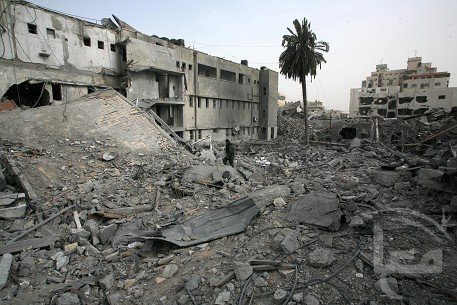
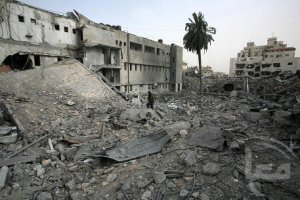 The Saraya prison and police compound was
bombed the second day of the war [MaanImages]
Bethlehem – Ma’an – An estimated 300 Palestinians were killed in the first 48 hours of Israel’s winter assault on the Gaza Strip, which entered its second day one year ago today.
With an increased focus on Rafah, Israeli warplanes bombarded around 100 more targets on 28 December 2008, leaving about 70 more Palestinians dead, and raising the child death toll to 22 and the civilian toll to 60, including nine women.
Israeli jets struck Islamic University in Gaza City, the offices of de facto Prime Minister Ismail Haniyeh, and the Saraya prison, ironically killing four members of Hamas’ domestic rival Fatah, as well as three mosques and 11 homes and apartments.
Fires engulfed Rafah after Israeli missiles hit underground fuel pipelines in some 40 sorties on the Strip’s tunnel network. Fleeing the flames, terrified residents of Gaza’s south attempted by the hundreds to escape to Egypt, but were prevented from leaving by Egyptian security forces. A Palestinian and an Egyptian policeman were killed in the ensuring chaos; at least 10 others were hurt.
West Bank protest
Palestinians in the West Bank, horrified by the numbers of dead and more than 1,000 injured, protested against the operation on its second day. Palestinian Authority security forces broke up a demonstration in Ramallah when activists urged support for Hamas, while Israeli forces shot dead three demonstrators nearby.
“There was a significant increase in the use of force by Israeli security forces during demonstrations in the West Bank after the start of the Israeli operations in Gaza,” according to the final report of the UN Fact Finding Mission on the Gaza Conflict. “The degree of force used against protests during the previous year had already been high … New tactics and weapons used by the Israeli security forces aimed at suppressing the popular movement have resulted in deaths and injuries.”
In July 2009, two witnesses, Mohamed Srour and Jonathan Pollak, described to the UN investigators in Geneva the fatal shooting of the two young men from the West Bank village of Ni’lin during a demonstration against the Gaza operation. Srour, elected mayor in 2005, was himself shot in the leg during the same protest.
“This demonstration was like any other demonstration. These demonstrations always took place and were peaceful demonstrations,” Srour explained. “And there was the presence of Israeli and foreign supporters and very high-level MPs. So it was very clear that this demonstration was a peaceful one.”
As the protest was winding down, Israeli forces used tear gas and stun grenades to disperse the crowd. The two young men who died were part of a small group of demonstrators, some of whom had thrown stones at the soldiers. In video footage, four or five soldiers appeared to be casually walking around and not seemingly threatened. Dozens of rounds of live ammunition were fired in the direction of the group of young men, hitting three of them within minutes of each other.
“Unfortunately, I have experienced, and it’s very easy to distinguish between, the shooting of rubber bullets and tear gas and between live ammunition,” recounted Pollak, an Israeli activist. “When I told them that it’s live ammunition, they didn’t believe me. They said, ‘No, it’s just blanks that they’re shooting. And they’re not going to shoot us.'”
Mohamed Khawaja was shot in the forehead; Arafat Khawaja, who had turned to run away, was shot in the back, and Srour was shot in the leg. Subsequently, an ambulance was prevented from reaching the victims, who had to be carried some distance and were eventually put onto a pick-up truck, at which the army fired tear gas.
“There were shouts that another person was shot. People said, ‘Call the medics. There’s another person wounded.’ And we put Mohamed on the ground. Some people stayed with him and I ran back immediately.
“And then I saw Arafat Khawaja being carried. And there weren’t enough people carrying him. His head was slinging back, and I grabbed his head and my hand was covered with his blood. He was shot in the back. … I got to him and I looked back. And I saw Mohamed being shot – I saw Mohamed fall down. And people were shouting that another person was shot.
[…]
“We dropped Arafat on the floor by mistake. And we weren’t far at all from Mohamed. And people grabbing him ran before, like ran and passed up. And I could see that his face was all bloody. And the wound was in the vicinity of his eye. I mean, I would say, at the moment, I thought that the bullet went through is eye. I’m not sure if that’s true. …
“There was no ambulance there because it was prevented from entering the village at the entrance, at the roadblock in the entrance. His blood kept gushing from this back and his legs were a bit higher so it, it dripped, through the back of his head. He was shot in the back, which, I mean, I would tend to say murder because he was with his back to the soldiers and absolutely not endangering anyone. But, I assume, legally it can not be called murder because we can’t prove intent. But in the least, it’s willful killing.”
Added Srour, “There was no care, whatsoever, for human life.”
No reply
According to South African jurist Richard Goldstone’s final report, “The Mission has asked the Government of Israel to explain the increased use of live ammunitions during demonstrations in the West Bank, but has received no reply.”
Both Srour and Pollak said that by the second day of the war, the atmosphere encountered with soldiers and border police had already become markedly different from the situation before the operations in Gaza.
“The atmosphere of the incident, and during and after the start of the war generally, was that all checks and balances had been removed. The soldiers were saying things related to the Gaza war, taunting things like, ‘It’s a shame we’re not in Gaza killing Arabs,'” Pollak said. “They were taunting us. They were cursing at us. They were laughing about what was happening in Gaza at the same time. This was the second day of the war, of the assault. And people were unbelievably angry.”
Israeli forces arrested Srour at the Allenby crossing upon his return to the West Bank on 20 July. He was subsequently released on bail. Israel’s Permanent Representative to Geneva said the arrest was unrelated to his appearance at the public hearing days earlier.
During his testimony, however, Srour had expressed fear Israel would retaliate for his remarks at the UN. “I know full well that I will pay the price for this testimony when I return at Israeli crossing points in my journey of return after this hearing,” he said.
At least 800 Israeli protesters, most of them of Palestinian descent, were arrested during the Gaza war.
Among the UN report’s final recommendations is “that the Government of Israel should cease actions aimed at limiting the expression of criticism by civil society and members of the public concerning Israel’s policies and conduct during the military operations in the Gaza Strip. The Mission also recommends that Israel should set up an independent inquiry to assess whether the treatment by Israeli judicial authorities of Palestinian and Jewish Israelis expressing dissent in connection with the offensive was discriminatory, in terms of both charges and detention pending trial. The results of the inquiry should be made public and, subject to the findings, appropriate remedial action should be taken;
“The Mission recommends that the Government of Israel should refrain from any action of reprisal against Palestinian and Israeli individuals and organizations that have cooperated with the United Nations Fact Finding Mission on the Gaza Conflict, in particular individuals who have appeared at the public hearings held by the Mission in Gaza and Geneva and expressed criticism of actions by Israel.”
Featured Video

Thomas Fazi: NATO’s Hybrid Warfare – Deception & Permanent War
or go to
Aletho News Archives – Video-Images
Book Review
The Zeolite Book — First Edition, 2026, Paperback
The volcanic mineral medicine will not patent — for the toxic burden medicine will not name
Lies are Unbekoming – October 30, 2026
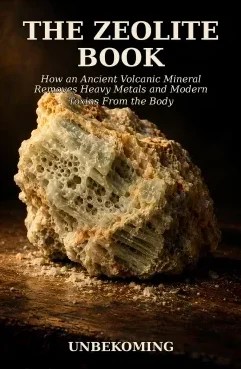 Zeolite is old. It is in Roman concrete that has held for two thousand years. It’s in the water filters of ancient cisterns. It’s in the stomachs of Pacific livestock whose keepers knew, somehow, that this grey crumbling rock made the animals healthier. It’s in Soviet clinical protocols from the 1960s. It’s in the standard emergency response to the Chernobyl explosion.
In 1986, after the Chernobyl reactor failure, the Soviet Union manufactured and distributed natural zeolite at industrial scale — for soil remediation, for livestock feed, for human consumption, for the cleanup itself. Karl Hecht, who had been director of the Institute for Experimental and Clinical Pathophysiology at the Charité of Humboldt University Berlin, spent the six decades after that building the clinical research base — on silicon’s role in human health, on zeolite’s clinical safety, on its applications in ageing. In 2018, Pavelić and colleagues published a comprehensive clinical safety review of natural clinoptilolite in Frontiers in Pharmacology. In 2019, Mastinu analysed its binding affinities. In the Western medical literature, these works sit largely uncited.
What has not been treated at book length, until now, is how a volcanic mineral with six decades of Soviet clinical work behind it, two major peer-reviewed Western reviews, and ongoing clinical use across the former Eastern Bloc, remains almost entirely absent from Western medical practice — and what the toxic burden it’s meant to address actually is.
The Zeolite Book gathers the Soviet clinical record, the Western peer-reviewed studies, three contemporary practitioner voices, and three serious counterviews into one honest treatment. That’s why the book runs to seven appendices. 288 pages, four parts, three practitioner voices, three counterviews, seven appendices. The honest treatment is the argument.
Blog Roll
 Aletho News
- UAE security forces tortured, killed journalist for opposing Israel normalization: Report
- They Compared the Spice to the Drug. The Spice Won — Again. (Part 2)
- Thomas Fazi: NATO’s Hybrid Warfare – Deception & Permanent War
- Wrong, AP and NPR: Europe’s 50,000 Heat Deaths Are a Computer-Model Estimate, Not a Real Body Count
- Questioning Your Doctor Is Now Considered A Psychological Problem (Seriously)
- London tourism expo promotes Israeli agency linked to theft of Palestinian land
- Dockworkers launch global strike against Israeli and US military shipments
- Europe facing gas price shock – Gazprom chief
- Ukraine continues recruiting people with disabilities
- Weaponized Journalism: 2021 Sayer Ji Interview with NPR
- If Americans Knew
- An error has occurred; the feed is probably down. Try again later.
- No Tricks Zone
- Germany’s Green Energy Transition Becoming Increasingly Expensive…Another 6 Trillion Euros!
- Sudden Stratospheric Warming, Powerful El Niño Combination May Lead To Extreme Europe Cold, Energy Crisis!
- Two New Studies Find Thwaites Glacier Melt Cannot Be Driven By Human Activity Or A Warming Ocean
- E-Cars Reduce CO2 Emissions By Only 41% Compared To Internal Combustion Engine Vehicles
- Predictions Made By Renowned Climate Professor Over Past Decades Have Been Proven To Be Poor
- New Study Suggests Large Regions Of The Pacific Ocean Have Been Cooling For The Last 80 Years
- Germany’s Green Energy Debacle: High Energy Costs Force Kahla Porzellan to Close After 182 Years!
- New Study: 50 Years Of The Most Aggressive ‘Net Zero’ Policies Can Only Affect The Global Climate By 0.03°C
- US September “Heat” Was No Record…Many Records Set Decades Ago
- Latest European Green Energy Debacle; Portugal’s Largest Flagship Solar Park Insolvent!

