US Aids S. Sudan Secession
IslamOnline.net & Newspapers
“The United States government, one of their goals now, is to make sure southern Sudan in 2011 is a viable state,” Gatkuoth said. (Washington Times)
12/25/09 — CAIRO — The United States is pouring hundreds of millions of dollars into the pocket of South Sudan government to help it prepare for secession from the North.”The United States government, one of their goals now, is to make sure southern Sudan in 2011 is a viable state,” Ezekiel Lol Gatkuoth, representative of South Sudan in Washington, told The Washington Times Friday, December 25.
Washington offers $1 billion in annual aid to South Sudan.
The majority of the money is used to build roads, train police and professionalize a separate army in preparation for the Christian-majority region’s secession in 2011, said Gatkuoth, who also heads South Sudan’s mission to the UN.
Southern Sudanese will vote in a referendum in 2011 on whether to secede from the Muslim north.
The referendum is part of the 2005 north-south peace deal, which ended a two-decade civil war between the north and south.
The accord established an interim period, with a coalition government between the Muslim north and mostly Christian south and the sharing of oil wealth.
Last month, South Sudan President Salva Kiir publicly called for secession from Sudan.
Though southern officials have not concealed their intention to vote for secession, the region still lack the basics of a viable state.
The region is also plagued by tribal clashes, which have killed at least 2,500 people and displaced more than 350,000 others this year.
The International Crisis Group on Tuesday criticized South Sudan police for failing to keep security and end tribal clashes in the region.
War Again
Gatkuoth accused the Khartoum government of stumbling efforts of the South to secede.
“I do not think the North is ready to allow the South to go and have its independent state,” he said.
The southern official said that the next 12 months would be crucial in determining the fate of the country.
“In 2010, we either make it or break it,” he said.
“An election can lead to war if you feel cheated.”
The ruling Sudanese National Congress Party (NCP) and the Sudan People’s Liberation Movement (SPLM) agreed Wednesday to review a disputed law on the 2011 referendum.
Parliament has passed the law even though SPLM walked out of the assembly objecting to an amendment allowing southerners living in the north to vote in the January 2011 referendum.
Gatkuoth threatened that the South will take up arms again if Khartoum government tried to postpone the 2011 referendum.
“Even if you postpone that for one day, the people of southern Sudan will not accept it.” 
Israel returns to Assassinations Policy
December 26th, 2009 | By Ziad Khalil Abu Zayyad
Six Palestinians were killed in two separate incidents by the Israeli forces in Gaza and the West Bank. Three of the Palestinians were assassinated in Nablus at the West Bank. According to Israeli sources, Ghasan Abu Sharkh, Raed Sarkaji and Anan Suboh took part in the last attack which resulted in killing an Israeli settler in the West Bank.
The Israeli troops entered Nablus while being directed by the Israeli Intelligence Service “Shabak” in order to assassinate the three Palestinians who are known as leaders of Fatah movement in the Palestinian territories. Israel considered this operation a success since it came only 48 hours after the attack on the Israeli’s car in the West Bank. The Palestinian authority considered this operation another act made by the Israeli government in order to destroy the peace process and the efforts made by the United States and the international community in order to renew the negotiations.
In another incident Israel killed three Palestinians in Gaza who were trying to infiltrate through Erez Checkpoint into the Israeli territories. According to Aljazeera correspondent the three Palestinians were Bedwins searching for metal and building material in order to get it back for recycling and use in Gaza.
The Israeli operation in the West Bank is considered a serious development in the area since it may bring more reactions from the Palestinian side and end in a new round of violence between the two sides. Although the Palestinian security forces are applying everything which was asked from them in matters of security, Israel continues to take law in its hands and even implements public executions claiming that this is a legal punishment for those who were involved in terrorist attacks against Israelis.
In Israel’s operation in the West Bank anti tank rockets and heavy weapons were used to target buildings full of civilians. The Israeli forces stormed into Anan Suboh’s house and stayed inside it for several hours before executing him which leaves more questions about the real Israeli intentions for this operation. The mission was not to arrest the Palestinian activists but instead to investigate with them and immediately execute them no matter what. Ghasan Abu Sharkh did not show any kind of resistance and despite this he was shot at his head immediately. Raed Sarkajy’s wife was injured while she was sleeping beside him on their bed. The Israeli forces attacked the room and shot both of them although there wasn’t any kind of resistance from inside the house.
The whole operation sends one message which Israel wants the Palestinians to understand clearly: Israel is ready to execute anyone without a court or a respect for the Palestinian authority’s presence at the West Bank. The Israeli assassinations were criticized by several International organizations for its ruthlessness and illegality. Israel is not only violating the security arrangements and attacking civilian areas but it also starts such operations with a target of killing those who are considered suspects ignoring the part of court of law and justice.
The Israeli army and Intelligence may consider this operation a successful one since it proves that Israel is holding the West Bank as it wants. However, the result of such operations will prove that the Israeli policy will only bring failure and more reactions which may return the area into a new circle of violence.
These six Palestinians were killed in the day when the Palestinians remember the 1,600 victims who died in Israel’s war on Gaza. Since the war and until today Israel continues to depend on its security plans in dealing with its conflict with the Palestinians. The only result which they are bringing on the Israeli people is more anger and hatred within the Palestinians who are suffering until today.
Russia: No proof of military N-plans in Iran
Press TV – December 26, 2009
As Western powers batten down the hatches and prepare sanctions against Tehran, a senior Russian official says there still is no proof of an Iranian nuclear weapons program.
In remarks published on Friday, deputy Russian foreign minister Alexander Saltanov reiterated that Moscow is not convinced that Iran seeks to weoponize its nuclear program, and moreover he has not been shown any corroborative evidence confirming that the country has any such plans.
“Russia has no concrete information that Iran is planning to construct a weapon. It may be more like Japan, which has nuclear readiness but does not have a bomb,” Primakov told The Jerusalem Post.
In order to pressure Iran into halting its nuclear work, Washington and a number of European countries have vowed to push for new UN sanctions early next year.
But the calls for renewed pressure were once again snubbed by China and Russia.
Saltanov said while “Iran has a positive potential” to cooperate with the West on its nuclear case, it is most evident that a military solution against the Tehran government would only make matters worse.
“If Israel attacks Iran it will cause great instability and will only postpone the Iranian program, not end it,” noted the Russian official.
Israel routinely threatens to bomb Iran’s enrichment sites, arguing that the country’s nuclear work is a mortal threat to Tel Aviv, which ironically is reported to have the Middle East’s sole nuclear arsenal and 200 nuclear warheads at its disposal.
This is while Iran, unlike Tel Aviv, is a signatory of the nuclear Non-Proliferation Treaty (NPT) and has opened its nuclear facilities to routine inspections by the UN nuclear watchdog.
In response to Israeli war threats, Tehran warns that if Tel Aviv steps out of line, it will close the strategic Strait of Hormuz to maritime traffic, including the 15 or so supertankers that sail through on a daily basis to deliver the world’s oil supplies.
A recent report by the US Office of Naval Intelligence (ONI) has confirmed that if the United States or Israel decide to bomb Tehran’s nuclear sites, Iran’s naval modernization and maritime capabilities have reached a point where it can shut down the strategic Strait of Hormuz.
“Given the importance of the Strait, disrupting traffic flow or even threatening to do so may be an effective tool for Iran,” said the intelligence report, which was revealed by Joseph Farah’s G2 Bulletin in November.
It notes that while Iran’s ability to shut down the Strait of Hormuz may be transitory, the impact would undoubtedly have far-reaching consequences for the already-fragile world economy.
“[World economies would suffer] a serious economic impact from a sustain closure of the Strait of Hormuz due to greatly reduced supplies of crude oil, petroleum supplies and (liquefied natural gas),” ONI said.
Featured Video

Thomas Fazi: NATO’s Hybrid Warfare – Deception & Permanent War
or go to
Aletho News Archives – Video-Images
Book Review
The Zeolite Book — First Edition, 2026, Paperback
The volcanic mineral medicine will not patent — for the toxic burden medicine will not name
Lies are Unbekoming – October 30, 2026
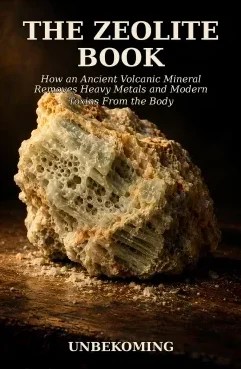 Zeolite is old. It is in Roman concrete that has held for two thousand years. It’s in the water filters of ancient cisterns. It’s in the stomachs of Pacific livestock whose keepers knew, somehow, that this grey crumbling rock made the animals healthier. It’s in Soviet clinical protocols from the 1960s. It’s in the standard emergency response to the Chernobyl explosion.
In 1986, after the Chernobyl reactor failure, the Soviet Union manufactured and distributed natural zeolite at industrial scale — for soil remediation, for livestock feed, for human consumption, for the cleanup itself. Karl Hecht, who had been director of the Institute for Experimental and Clinical Pathophysiology at the Charité of Humboldt University Berlin, spent the six decades after that building the clinical research base — on silicon’s role in human health, on zeolite’s clinical safety, on its applications in ageing. In 2018, Pavelić and colleagues published a comprehensive clinical safety review of natural clinoptilolite in Frontiers in Pharmacology. In 2019, Mastinu analysed its binding affinities. In the Western medical literature, these works sit largely uncited.
What has not been treated at book length, until now, is how a volcanic mineral with six decades of Soviet clinical work behind it, two major peer-reviewed Western reviews, and ongoing clinical use across the former Eastern Bloc, remains almost entirely absent from Western medical practice — and what the toxic burden it’s meant to address actually is.
The Zeolite Book gathers the Soviet clinical record, the Western peer-reviewed studies, three contemporary practitioner voices, and three serious counterviews into one honest treatment. That’s why the book runs to seven appendices. 288 pages, four parts, three practitioner voices, three counterviews, seven appendices. The honest treatment is the argument.
Blog Roll
 Aletho News
- UAE security forces tortured, killed journalist for opposing Israel normalization: Report
- They Compared the Spice to the Drug. The Spice Won — Again. (Part 2)
- Thomas Fazi: NATO’s Hybrid Warfare – Deception & Permanent War
- Wrong, AP and NPR: Europe’s 50,000 Heat Deaths Are a Computer-Model Estimate, Not a Real Body Count
- Questioning Your Doctor Is Now Considered A Psychological Problem (Seriously)
- London tourism expo promotes Israeli agency linked to theft of Palestinian land
- Dockworkers launch global strike against Israeli and US military shipments
- Europe facing gas price shock – Gazprom chief
- Ukraine continues recruiting people with disabilities
- Weaponized Journalism: 2021 Sayer Ji Interview with NPR
- If Americans Knew
- An error has occurred; the feed is probably down. Try again later.
- No Tricks Zone
- Germany’s Green Energy Transition Becoming Increasingly Expensive…Another 6 Trillion Euros!
- Sudden Stratospheric Warming, Powerful El Niño Combination May Lead To Extreme Europe Cold, Energy Crisis!
- Two New Studies Find Thwaites Glacier Melt Cannot Be Driven By Human Activity Or A Warming Ocean
- E-Cars Reduce CO2 Emissions By Only 41% Compared To Internal Combustion Engine Vehicles
- Predictions Made By Renowned Climate Professor Over Past Decades Have Been Proven To Be Poor
- New Study Suggests Large Regions Of The Pacific Ocean Have Been Cooling For The Last 80 Years
- Germany’s Green Energy Debacle: High Energy Costs Force Kahla Porzellan to Close After 182 Years!
- New Study: 50 Years Of The Most Aggressive ‘Net Zero’ Policies Can Only Affect The Global Climate By 0.03°C
- US September “Heat” Was No Record…Many Records Set Decades Ago
- Latest European Green Energy Debacle; Portugal’s Largest Flagship Solar Park Insolvent!


