PetroChina Wins Approval for $1.8 Billion Canadian Acquisition
Dec. 30 (Bloomberg) — PetroChina Co. won the approval of the Canadian government for its C$1.9 billion ($1.8 billion) bid to buy a stake in two Alberta oil-sands projects, its biggest North American acquisition.
The purchase by China’s largest oil company of a 60 percent share in Athabasca Oil Sands Corp.’s MacKay River and Dover oil- sands projects “is likely to be of net benefit to Canada,” Industry Minister Tony Clement said in a statement yesterday.
Chinese oil companies have spent at least $13 billion on overseas assets since December last year as they take advantage of lower valuations caused by the economic slowdown. PetroChina has said it plans to boost acquisitions after paying at least $3.6 billion this year to buy Singapore Petroleum Corp., a stake in a Nippon Oil Corp. plant and a venture in Kazakhstan.
“Upstream crude oil assets that are for sale are hard to come by now, especially the big ones, so they can try to buy oil-sands projects,” Grace Liu, an analyst with Guotai Junan Securities Co., said by telephone from the southern Chinese city of Shenzhen. “It’s part of their strategy to expand overseas and diversify their portfolio.”
The transaction was initially scheduled to close on Oct. 31 after PetroChina agreed on Aug. 31 to acquire control of the oil-sands projects. Canada was still reviewing the investment, the National Post reported on Dec. 19, citing Clement.
“To successfully compete in a globalized economy, we need to attract international investment, which can create jobs, raise our level of competition, and develop Canada’s long-term economic prospects,” Clement said yesterday.
Company Commitments
As part of the approval, PetroChina committed to invest at least C$250 million in the projects and boost employment over three years, keep a head office for the projects in Alberta for five years and ensure that a majority of the executives working on the projects are Canadian. As well, PetroChina said it will remain publicly traded as long as it controls the projects.
PetroChina has risen 36 percent in Hong Kong trading this year, lagging behind the 49 percent gain in the benchmark Hang Seng Index. The stock fell 1.1 percent to HK$9.24 today.
PetroChina will provide funding for future extractions of oil sands under the deal, Athabasca, a closely held company based in Calgary, said on Aug. 31. PetroChina may deploy methods it has used in northeastern China heavy-oil projects to unlock oil trapped in Alberta sands, Athabasca said.
“Development costs for oil sands are usually high, so it’s hard to tell now the value of the projects,” Liu said.
Expanding Exploration
Liu Weijiang, a Beijing-based spokesman for PetroChina’s parent, China National Petroleum Corp., couldn’t be immediately reached on his office and mobile phones for comment today.
China National Petroleum said on Oct. 19 that PetroChina will focus on expanding exploration and boosting overseas cooperation next year as China’s energy demand rises.
The company said on Sept. 9 that it will receive a $30 billion loan from state-run China Development Bank to fund overseas expansion as China steps up its hunt for oil and gas resources.
Oil consumption in China, the world’s second-biggest energy user, doubled in the last decade to 8 million barrels a day in 2008, according to BP Plc’s Statistical Review.
—Chua Baizhen, with assistance from Alexandre Deslongchamps in Ottawa. Editors: Ryan Woo, Paul Badertscher.
To contact the reporter on this story: Baizhen Chua in Beijing at bchua14@bloomberg.net
Turkey’s Welcome Voice of Support
By Jeremy Salt | December 30, 2009
Is Turkey’s relationship with Israel going through a rocky patch or has it passed the point of no return?
A week in politics is a long time, and all the rest of it, but it does seem that Turkish foreign policy has undergone a sea change since the election of the Justice and Development Party (AKP) in 2002. Continuing difficulties in relationships with that amorphous package known as ‘the west’ is one reason. Excitement at the prospect of joining the EU has given way to cynicism. Angela Merkel is against accession, so is Sarkozy and so is the Pope (although he says different things at different times to different audiences). Criticism and often insults continue in the European Parliament and in European governments, no matter what Turkey does to try to meet European human rights standards. So it is probably fair to say that many if not most Turks are pretty fed up with the EU and as they have gained confidence in themselves and their country, many of them have concluded that, actually, we can do quite well without the EU.
As for the United States, since 1945 it had no more reliable friend in the Middle East region. For half a century Turkey gave all the US wanted, from military and electronic surveillance bases to troops for Korea and membership of NATO. The scales began to fall from Turkish eyes in 1964 when Lyndon Johnson sent a note warning Turkey not to even think of intervening at a time of high tension between Greeks and Turks in Cyprus. Israel aligned itself with the US and refused to support the Turkish position. During the 1967 war Turkey responded to the actions of both countries by refusing to allow US aircraft flying arms supplies to Israel to use Turkish air space or bases. From the 1960s it adjusted its position in the western ‘camp’ to develop a more purposeful relationship with the Soviet Union.
Its stance in the Cold War changed. Still, up to the advent of the AKP government the two countries had forged what many (incorrectly) regarded as an ‘alliance’. The same word was used to describe the developing relationship with Israel. In 1998 Daniel Pipes described the relationship between the two countries as the ‘birth of a new Middle East alliance’. This it never was but certainly the links between the two countries, especially between the military high commands and the intelligence services, were close.
The two decades between the military coup of 1980 and the electoral success of the AKP in 2002 marked the high point of the relationship between Turkey and Israel. Constitutional life in Turkey was not resumed until 1983, with some banned politicians prevented from returning to the political arena for several years after that. The continuing strength of the military in politics ensured the stability of the ‘defence’ relationship with Israel. From the late 1980s to the late 1990s all the centre-right governments in power endorsed the relationship with Israel. Between 1994 and 1997 the two countries signed 19 agreements, mostly dealing with ‘defence’ matters. Twelve of them were initialled during the Prime Ministership of the Islamist Necmettin Erbakan, who was finally squeezed out of power in 1997 at the tail end of a ‘soft’ or ‘post modern’ coup by the military. It is certain that Erbakan, a strong Islamist and critic of Israel, would never have willingly gone along with these agreements. They were more or less imposed on him. Furthermore, they were signed by the chief of staff and not the Defence Minister and never ratified by parliament, because of a confidentiality clause signed by previous Prime Minister Tansu Çiller in 1994, which prevented parliamentarians from knowing the detail of what was in them. In the view of critics within the AKP party, the agreements are therefore unconstitutional.
Between 1997 and 2002 the relationship with Israel moved ahead in strength. In 2002 the two countries signed a $1 billion agreement under which Israel would modernise Turkey’s M-60 A1 tanks by 2003. This was subsequently pushed back to 2007 but the work has still not been completed. As the cost of refurbishing a single tank has been put at $4.5 million, it has been pointed out that Turkey could have bought Leopard tanks from Germany for $1 million apiece. It has also been pointed out that Turkey’s own ASELSAN company modernised 162 Leopard tanks for a total cost of $160 million.
These military contracts have been caught up in the sea change which seems to have taken place in Turkish foreign policy. Partly this is the consequence of factors already mentioned, i.e. the foot-dragging of the EU on accession; the continuing criticism of Turkey at the highest levels of European government; the open opposition of the heads of governments whose support Turkey must have before entering the EU; and the chicanery over Cyprus, where the Greek south was given a guarantee that it would be admitted to the EU whatever the outcome of a referendum on the unification of the island. Of course the Greeks voted ‘no’ (75 per cent against) and were admitted while the Turks in the north voted ‘yes’ (65 per cent for) and were kept out.
In the context of the relationship with the US, in 2003 the Turkish parliament voted against allowing Turkish territory, ports and military bases to be used for the opening of a second front in Iraq. Colin Powell was visibly irritated. Signals were sent out that unless Turkey cooperated with the US against Iraq the Kurdish question would be activated. Indeed, the US and Britain had already created a difficult situation for Turkey by creating a ‘safe haven’ for the Iraqi Kurds without taking responsibility for policing it. In the 1990s the Turkish military had adopted a policy of the hot pursuit of PKK (Kurdistan Workers’ Party) fighters returning to bases in northern Iraq after launching attacks inside Turkey. The US showed no signs of taking Turkish interests into consideration when creating a regional government of Kurdistan and did nothing to stop the PKK until Turkey threatened to resume the policy of hot pursuit. Up till this point both the US government and the Kurdish regional government had said there was nothing they could do. The situation remains fluid to this day with both the PKK and PEJAK, its Iranian counterpart (openly supported by the US) operating from bases in the Kandil mountains. In the meantime, Turkey has acknowledged the reality and is dealing with the regional Kurdish government.
Turkey is not the country that it was two decades ago. This is not just because of the cultural revolution which has changed the way Turks see themselves, or the way they see the outside world and their place in it but because of demographics. The Islamists rose to power (first as Necmettin Erbakan’s National Salvation Party in the 1970s and then as the Refah Party in the 1980s) on the shoulders of the people of eastern Anatolia. Implicitly part of a broader ‘east’ (Ottoman, Arab and Muslim world) on which the Turkish republic turned its back in 1923, their interests and needs were largely neglected by the parties which governed Turkey until the advent of the Refah Party. It was they who were in most need of the social services the state was not delivering. Their culture was more conservative, more mosque-centred than Turks of the west and they were moving westward in large numbers – hence the shock delivered to the mainstream parties when the Refah party did well at municipal elections even in western Turkey in 1994, following this with victory at the national level. The banning of Refah and the arrest of its leading figures (including Erdogan) was an attempt to stop a tide which could not be stopped by constitutional means (an attempt was made but failed).
Since its first election the AK party has consolidated its hold as the governing party. It has brought substantial change to the country’s foreign policy profile. The close relationship with the US and the close relationship and the close if difficult relationship with the EU both continue, but Turkey is also striking out on its own. More confident of its place in the world, it seems no longer willing to play the western game in the Middle East. It has normalised its relationship with Syria to the point where it is now planning joint military exercises with Syria. As for Iran Turkey is not buying into the campaign of sanctions and exclusion orchestrated by the US for the benefit of Israel, Erdogan remarking recently that Iran was Turkey’s ‘friend’. On the question of Palestine Erdogan has spoken out forcefully and consistently. He says he has the people behind him and there is no doubt that he is right.
Turks have been disgusted by Israeli and western violence in the Middle East since the attack on Iraq in 1991 and the massive civilian toll caused by war and sanctions which followed. They were outraged by Israel’s attack on Lebanon in 2006, especially by the killing of hundreds of children, so it was no surprise that their anger boiled over again during the Israeli onslaught on Gaza from December 2008 to January 2009.
Below the citadel in old Ankara the taxi drivers plastered the front pages of Turkish newspapers showing photographs of children killed by the Israelis on the rear windows of their cars. Shop owners put posters in their windows – ‘we are all Palestinians’ – and textile manufacturers turned out scarves with Palestinian and Hamas motifs. In the tourist cities of the south shop owners said Israelis would not be welcome. Travelers talking to taxi drivers or waiters will find no support for Israel but only condemnation. Its murderous attacks on civilians in Lebanon, Gaza and the West Bank have stimulated interest in all aspects of the Palestine question as never before.
Erdogan was further personally angered by the fact that the attack on Gaza was launched without warning while he was trying to broker quiet negotiations between Israel and Syria. The Turkish Prime Minister has been willingly to speak out where most other world leaders hold their tongues. In Sharon’s time he described Israel as a terrorist state. He has called it a ‘persecutor’ and described its crimes as being worse than those committed by the government of Sudan in Darfur. At the Davos economic summit in January 2009, he walked out of a televised debate after being cut off while trying to respond to Shimon Peres’ justification of Israel’s actions in Gaza. ‘When it comes to killing you know well how to kill’ he remarked. Amr Moussa, the Arab League Secretary-General, also taking part in the debate, had said nothing as Peres attempted to pin all blame for Israel’s atrocities on Hamas. The contrast was very striking.
Speaking before the UN General Assembly in September 2009, Erdogan was the only head of government to refer to Gaza, remarking afterwards in discussion with reporters that war criminals should be held accountable for their crimes. His government shares his views. Ahmet Davutoglu, the Minister for Foreign Affairs, refused to visit Israel on being told that he would not be allowed to go to Gaza.
In October the Anatolian Eagle joint military exercise (Turkey, the US, Italy and Israel) was cancelled after Turkey refused to take part alongside Israel. The reason was Israel’s attack on and continuing blockade of Gaza, with Turkey making it plain that relations with Israel could not improve until it changed its attitude. Turkey recently cancelled one military contract with Israel and has sent out signals that it is ready to cancel others unless Israel complies with the terms of agreements signed long ago. Non-fulfilment by Israel and warnings by Turkey are clearly political in nature but Erdogan is showing no signs of backing off. In early December Barack Obama reportedly ‘rebuked’ him for his ‘anti-Israel’ rhetoric on the grounds that it damaged Turkey’s profile.
This might be true of Washington but it is not true across the Middle East and around most of the world. Turkey’s strong stand against Israel’s disgraceful behavior have won it kudos across the Arab world. Erdogan has made it plain that Turkey is not interested in joining the campaign against Iran. He told an Egyptian reporter there would be an ‘earthquake’ if Israel violated Turkish air space to spy on Iran. This would seem to preclude any possibility of Turkey allowing itself to be used for a military attack, and again there is no doubt at all that the great majority of the Turkish people support the Prime Minister’s views.
Turkey has now turned into a conundrum for Israel and the US. They are critical of its apparent change but their reaction indicates that they are unsure of how to react. Barak Obama’s criticism and Avigdor Lieberman’s crude and contemptuous rejection of Turkey as a possible broker in talks with Syria can be taken with a grain of salt. Too much is involved for either the US or Israel to take actions they might later regret. Temporarily or permanently Israel may /have lost a strategic ally in the Middle East but it needs Turkish water and the oil being pumped into Turkey’s southeastern ‘energy hub’. The Medstream pipeline project – currently the subject of feasibility studies – would bring water, oil, natural gas and fibre optics to Israel from Turkey’s southeastern Mediterranean coast. In other words, while Israel has cards in its hand that it can play, it has a lot to lose by offending Turkey.
For the Palestinians, Turkey, its people and its outspoken Prime Minister have emerged as strong champions of their cause on the world stage at a time when the rest of the ‘international community’ seems to be shutting its eyes.
– Jeremy Salt is associate professor in Middle Eastern History and Politics at Bilkent University in Ankara, Turkey. Previously, he taught at Bosporus University in Istanbul and the University of Melbourne in the Departments of Middle Eastern Studies and Political Science. Professor Salt has written many articles on Middle East issues, particularly Palestine, and was a journalist for The Age newspaper when he lived in Melbourne. He contributed this article to PalestineChronicle.com.
Witnesses: Soldiers assault four workers
30/12/2009 12:48
 [Maan Images – Archive]
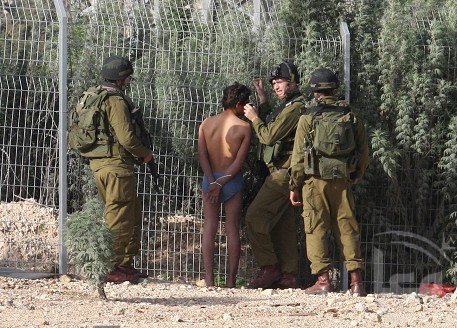
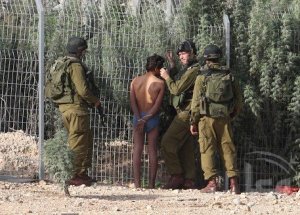
Bethlehem – Ma’an – Israeli soldiers assaulted four Palestinian workers on Tuesday night in the West Bank village of Al-Walajah, near Bethlehem, witnesses told Ma’an.
Residents of the village described how the soldiers broke the legs of three men, and arrested a fourth, taking him to an unknown detention center. Three of the men were dragged to a field in Al-Walajah, the witnesses added.
The reason for the reported assault was unclear.
Residents of Al-Walajah said three of the men were taken to the hospital in the neighboring town of Beit Jala.
One of the men was identified as Anees Kabha, a resident of the northern West Bank.
A military spokesman said he was not aware of any reported incident, and that the area was under the jurisdiction of the border police.
Palestine to Security Council: Israel must stop its state terrorism
December 30, 2009 – 10:34 | IMEMC & Agencies
A Palestinian official has urged the Security Council to compel Israel to stop its illegal settlement activities and to act in a responsible manner so that the peace process can resume, warning that failure to do so will have far-reaching consequences for the whole region.
In a letter to the UN Secretary-General and the Security Council, Palestinian Charge d’Affaires Feda Abdelhady-Nasser said “it is imperative that the international community, including the Security Council give due attention to the grave situation in the occupied Palestinian territory, including East Jerusalem, and that timely measures and action be undertaken to compel Israel, the occupying power, to cease forthwith its illegal colonization campaign and all other illegal policies and to instead finally commit to the pursuit of peace.”
“For all of these war crimes, acts of state terrorism and systematic human rights violations committed against the Palestinian people, Israel, the occupying power, must be held accountable and the perpetrators must be brought to justice,” she said.
She said Israel’s rabid and illegal colonization campaign throughout the West Bank, including East Jerusalem, is not only further destabilizing the fragile situation on the ground but is gravely undermining prospects for a resumption of the peace process.
She recalled that earlier this month extremist settlers committed arson in a mosque in the village of Yasouf, near the city of Nablus, in addition to ongoing acts of provocation by other extremist settlers in East Jerusalem, particularly in and around the compound of the Al-Haram Al-Sharif.
“Such lawlessness and impunity have clearly been fostered and fuelled by the military, financial and physical reinforcements and incentives provided to the settlers by the Israeli government, including its absolute failure to hold the settlers accountable for their crimes,” she noted.
She said that Israeli Prime Minister Benjamin Netanyahu’s 10-month moratorium on settlement activities was only meant to distract the international community while the illegal settlement campaign is going on.
“The Israeli agenda is clear: to create as many facts on the ground as possible aimed at altering the demographic composition, character and status of the occupied territory in order to prejudge the outcome of any final peace settlement,” she indicated.
The continuation of all such illegal Israeli actions and provocations, she warned, will only further ratchet up tensions and cause the further destabilization of an already fragile situation, with far-reaching consequences not only for the prospects of peace but for the region as a whole.
Protesters reject Egypt’s Gaza offer
30/12/2009 – 14:15
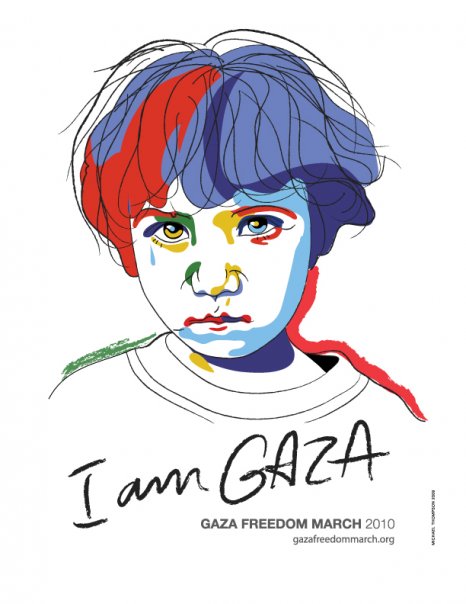 Bethlehem – Ma’an – The organizers of the Gaza Freedom March rejected an Egyptian offer on Wednesday to allow 100 out of 1,300 supporters into the Gaza Strip.
“We flatly reject Egypt’s offer of a token gesture. We refuse to whitewash the siege of Gaza,” said Ziyaad Lunat a member of the march’s Coordinating Committee in a statement.
“Our group will continue working to get all 1,362 marchers into Gaza as one step towards the ultimate goal for the complete end of the siege and the liberation of Palestine,” he added.
The Freedom March will walk the 41 kilometers from the southern end of Gaza at the Rafah crossing to the northern end at Israel’s Erez crossing; the march was scheduled to take place on Thursday.
Some organizers reportedly welcomed the Egyptian offer.
“It’s a partial victory,” said Medea Benjamin, American activist one of the March’s organizers, as quoted by AFP. “It shows that mass pressure has an effect.”
According to AFP, the Egyptian government offered to allow the organizers to choose who would enter Gaza. The group of 100 was due to travel to the Rafah border crossing on Wednesday morning.
Others denounced the move as divisive and vowed to continue protests.
On Monday, organizers said around 40 American demonstrators were detained by Egyptian forces at the US Embassy in Cairo where they went to seek assistance in their bid to enter Gaza.
The group staged other protests outside the French Embassy and the local UN headquarters. Some members of the group have been on a hunger strike.
The march was organized to call attention to the Israeli-led blockade of the Gaza Strip, which has prevented reconstruction of the territory from last winter’s military offensive which left 1,400 Palestinians and 13 Israelis dead.
‘Japan ready for nuclear cooperation with Iran’
Press TV – December 30, 2009 01:46:05 GMT
The Japanese ambassador to Iran has said Tokyo is ready to cooperate with Iran in the field of nuclear energy.
During a meeting with MP Alaeddin Boroujerdi in Tehran on Tuesday, Ambassador Akio Shirota also called for the expansion of ties between Iran and Japan in various spheres, the Fars news agency reported.
Boroujerdi, who is the chairman of the Iranian Parliament’s National Security and Foreign Policy Committee, said that the Iranian nation has no negative sentiments about Japan and this could help efforts to expand ties between the two countries.
“Iran and Japan have many opportunities for strengthening their friendly ties, and these opportunities should help them attain their common goals,” Boroujerdi added.
Gingrich: ‘It is time to go to profiling of dangerous people.’
Think Progress |12-29-2009
Yesterday on Twitter, former Republican House Speaker Newt Gingrich called for more profiling in light of the failed terrorist attack on Christmas Day:

Gingrich then added another tweet, writing, “We need a new policy of systematically going after terrorists that involves explicit profiling and explicit discrimination for behavior.” He also promised more details on an “aggressive strategy” in his next newsletter. As ThinkProgress reported this week, the right wing has used the failed airline bombing to renew its call for ethnic profiling — even though it’s been proven to be ineffective. Radio host Mike Gallagher recently said, “There should be a separate line to scrutinize anybody with the name Abdul or Ahmed or Mohammed,” and Rep. Peter King (R-NY) raised the idea of profiling people based on their religions.
The ‘war’ for legitimacy is a war Israel may never win
By Adam Horowitz | December 29, 2009
While there is no doubt that Israel holds military superiority over any possible armed force it might go to war with, there is another threat that Israel appears to have no response for – moral outrage. The Jerusalem Post covers a new report which outlines Israel’s true Achilles heal. From the article “Hubs of delegitimization“:
A new report by the Reut Institute, a Tel Aviv-based national security and socioeconomic policy think tank, maps out the “new battlefield” in which Israel finds the legitimacy of its very existence attacked by a wide array of organizations and individuals in global centers like London, Toronto, Brussels, Madrid and Berkeley.
The report, which also makes recommendations for possible remedies, is to be presented next week to Israeli diplomatic officials, and will also be presented at the Herzliya Conference in January. The report’s authors spent two weeks in London interviewing some 45 people, including members of Muslim groups and anti-Zionist Jewish organizations, and academics, journalists, pollsters, jurists, activists and politicians.
Beginning with Israel’s traditional strategic concept, conceived by David Ben-Gurion, which posits that to win its wars, the IDF would have to take the fight to its enemies, the Reut report posits that increasingly, Israel cannot “win” its wars in the traditional sense as it is not up against conventional Arab armies, and there is no decisive victory over an enemy army to be had.
While there is still a physical existential threat posed by certain enemies (including unconventional terrorism), the new front focuses its attack on Israel’s political legitimacy, painting Israel as a pariah state, exhausting Israeli society, burdening its economy, and mobilizing Israel’s Arab minority as an anchor in the struggle against the Jewish state.
The key concept for this “Resistance Network” is overstretching Israel along the fault lines of demography, democracy (binational state vs a state of the Jewish people), Jewish identity and territory.
What does it mean that Israel views challenges to racist demographic priorities and simple calls to democracy as an existential threat? It is also interesting to note that later in the article the think tank’s recommendations ape the Israel settler “price tag” strategy for dealing with opponents (“establish a ‘price tag’ for attacking Israel and punish boycotters”).
At least this report seems honest about the near impossible task at hand – trying to sell Israel’s apartheid system to a liberal international public. Often times when Israel’s supporters try this it comes off looking like a sad joke. Like this op-ed in today’s Haaretz, where an Israeli settler compares herself to Rosa Parks:
Despite the fury and the insult, let’s not turn to violence. There is a simple, natural solution that is full of life – continuing to build. That will perhaps embarrass the prime minister in front of U.S. President Barack Obama, but that’s precisely the point. A person with a manual cement mixer in Samaria can change history. Sometimes the man in the field can be a lot stronger than the great leaders. Just like Rosa Parks.
Arguments like this are going to make the Reut Institute’s work much harder.
The Hidden Cost of War
In 2003 Donald Rumsfeld estimated a war with Iraq would cost $60 billion. Five years later, the cost of Iraq war operations is over 10 times that figure. So what’s behind the ballooning dollar signs? Joseph E. Stiglitz and Linda J. Bilme’s exhaustedly researched book, “The Three Trillion Dollar War: The True Cost of the Iraq Conflict,” breaks down the price tag, from current debts to the unseen costs we’ll pay for years to come.
Israel Rules
By Paul Craig Roberts | December 28, 2009
On Christmas eve when Christians were celebrating the Prince of Peace, the New York Times delivered forth a call for war. “There’s only one way to stop Iran,” declared Alan J. Kuperman, and that is “military air strikes against Iran’s nuclear facilities.” [There’s Only One Way to Stop Iran, December 23, 2009]
Kuperman is described as the “director of the Nuclear Proliferation Prevention Program at the University of Texas at Austin,” but his Christmas eve call to war relies on disinformation and contradiction, not on objective scholarly analysis.
For example, Kuperman contradicts the unanimous report of America’s 16 intelligence agencies, the reports of the International Atomic Energy Agency, and Russian intelligence with his claim that Iran has a nuclear weapon program. Astonishingly, it does not occur to Kuperman that readers might wonder how an academic bureaucrat in Austin, Texas, has better information than these authorities.
Kuperman is so determined to damn President Obama’s plan to have other countries enrich Iran’s uranium for Iran’s nuclear energy program and medical isotopes that Kuperman commits astounding blunders. After claiming that Iran has a “bomb program,” Kuperman claims that “Iran’s uranium contains impurities” and that Ahmadinejad’s threat “to enrich uranium domestically to the 20 percent level . . . is a bluff, because even if Iran could further enrich its impure uranium, it lacks the capacity to fabricate the uranium into fuel elements.”
What was the New York Times op ed editor thinking when he approved Kuperman’s article? Iran, Kuperman writes, needs “90 percent enriched uranium” to have weapons-grade material, but cannot reach 20 percent or even make fuel elements for its nuclear energy. So, how is Iran going to produce a bomb? Yet, Kuperman writes that “we have reached the point where air strikes are the only plausible option with any prospect of preventing Iran’s acquisition of nuclear weapons. The sooner the United States takes action, the better.”
It could not be made any clearer that, as with the US invasion of Iraq, a military attack on Iran has nothing to do with weapons of mass destruction. An “Iranian nuke” is just another canard behind which hides an undeclared agenda.
One wonders about Kuperman’s non-proliferation credentials. How does a wanton military attack on a country encourage non-proliferation? Aren’t America’s bullying, threats and acts of war more likely to encourage countries to seek nuclear weapons?
At the end of the first decade of the 21st century, the United States has wars ongoing in Iraq where the ancient Chaldean Christian community was destroyed—not by Saddam Hussein but by the neoconservatives’ illegal invasion of Iraq—in Afghanistan, Pakistan, Yemen, and Sudan. The US initiated a war, which it lost, between its puppet ruler in the former Soviet province of Georgia and Russia.
The US, the world’s greatest supporter of terrorism, is the main financier of terrorist groups that stage attacks within Iran, and US money succeeded in financing protests against President Ahmadinejad’s re-election and in dividing the ruling Islamic clerics. It was American money, weapons, and diplomatic cover that enabled the Israeli war crimes against the Lebanese people during 2006 and against Palestinian civilians in Gaza during 2008-2009, crimes documented in the Goldstone Report.
Iran has never interfered in US internal affairs, but the US has a long record of interfering in Iranian affairs. In 1953 the US overthrew Iran’s popular prime minister, Mohammed Mosaddeq and installed a puppet who tortured Iranians who desired political independence.
Despite this and other American offenses against Iran, Ahmadinejad has repeatedly expressed Iran’s interest to be on friendly terms with the United States, only to be repeatedly rebuffed. The US wants war with Iran in order to expand US world hegemony.
One might expect a non-proliferation expert to take history into account, but Kuperman fails to do so. Kuperman also has nothing to say about Israel’s, India’s and Pakistan’s nuclear weapons. Unlike Iran, none of these countries are signatories to the Nuclear Non-Proliferation Treaty. Israel, India, and Pakistan all developed their nuclear weapons in secret, and many experts believe Israel had American help, an act of treason. All three countries have been rewarded by Washington despite their perfidy. Why is Kuperman concerned about Iran, which submits to the IAEA inspections, but is unconcerned with Israel, a country that has never permitted a single inspection?
The answer is that the Israel Lobby, the US military-security complex, and the “Christian” Zionists have succeeded in demonizing Iran. Every real expert knows that an Iranian nuclear weapon would have no function other than deterring an attack on Iran. Ever since the US lost its monopoly on nuclear weapons, after using them offensively and pointlessly against a defeated Japan, nuclear weapons have served no purpose other than deterrence.
The US has no conflicting economic interests with Iran. Iran is simply a supplier of oil, an important one. A US attack on Iran, such as the one advocated by Kuperman, would most likely shut down oil flows to the West through the Strait of Hormuz. This might benefit refiners, who sell gasoline to the West and could charge enormous prices, but no one else would benefit.
Adding to the war cry are congregations of fake Christians. A great number of them, organized by someone’s money under the banner, “Christian Leaders for a Nuclear-free Iran,” has written to Congress demanding sanctions against Iran that amount to an act of war. The roll call includes the “Christian” Zionist John Hagee, who, according to reports, denigrates Jesus Christ and preaches to his illiterate congregation that it is God’s will for Americans to fight and die for Israel, the oppressor of the Palestinian people.
Among the signatories of the “Christians” demanding an act of war against Iran, are Dr. Pat Robertson, president of Christian Broadcasting Network, Nixon-era criminal Chuck Colson, and Richard Land, president of Ethics and Religious Liberty Commission, Southern Baptist Convention. Obviously, for southern Baptists ethics means murdering Islamists, and religious liberty excludes everyone but “Christian” Zionists.
It is a simple matter for an educated person to make fools of these morons who profess to be Christians. However, these morons have vast constituencies numbering in the tens of millions of Americans. There are, in fact, more of them than there are intelligent, informed, moral, and real Christian Americans.
The votes of the morons will prevail.
In the second decade of the 21st century, America’s Zionist wars against Islam will expand. America’s wars in behalf of Israel’s territorial expansion will complete the bankruptcy of America. The Treasury’s bonds to finance the US government’s enormous deficits will lack for buyers. Therefore, the bonds will be monetized by the Federal Reserve. The result will be rising rates of inflation. The inflation will destroy the dollar as world reserve currency, and the US will no longer be able to pay for its imports. Shortages will appear, including food and gasoline, and “Superpower America” will find itself pressed to the wall as a third world country unable to pay its debts.
America has been brought low, both morally and economically, by its obeisance to the Israel Lobby. Even Jimmy Carter, a former President of the United States and Governor of Georgia recently had to apologize to the Israel Lobby for his honest criticisms of Israel’s inhumane treatment of the occupied Palestinians in order for his grandson to be able to run for a seat in the Georgia state senate.
This should tell the macho super-power American tough guys who really runs “their” country.
U.S Soldiers against war and racism
If there was no racism soldiers would realize that they have more in common with the Iraqi people than with the billionaires who send us to war.
New West Bank Roadblock Cripples Agriculture
International Solidarity Movement – December 28, 2009

The Israeli army erected a giant earth mound across a crucial agricultural road in the northern West Bank village of Madama this week. The road block severely limits hundreds of farmers’ access to their lands, making transport by vehicle all but impossible. The intentional crippling of the village’s chief economy comes as settler violence continues unabated in the region.
Four Israeli military jeeps and one Caterpillar bulldozer entered the village on Wednesday night to construct the road block. The targeted dirt road cuts directly underneath the speedy settler road leading west from Yitzhar settlement, where a tunnel was constructed to allow the road’s continuation to farmers’ land. The bulldozer quickly moved massive mounds of earth across the road underneath the bridge, entirely blocking it and removing the possibility of access to cars and tractors by village farmers.
ISM activists visited Madama to witness families clambering over the earth mound on foot and herding, with great difficulty, donkeys and flocks of sheep and goats across the blockage. The prevention of tractor access is critical now especially, as Palestine enters its wet season and land must be ploughed to become fertile for the new year. Approximately 500 of Madama’s farmers hold land on the other side of the road block, whose economic livelihood is severely threatened by this senseless impediment.
The road overhead, linking Israeli settlers effortlessly with their homes and work outside the settlements, cuts deeply through Madama’s land, as it has done since it was built 10 years ago. Two homes, belonging to Yasser Taher’s family, are now isolated on the other side of the highway, marking them as prime targets for settler and military harassment, leaving children traumatised and inevitably forcing the majority of the family to move to a safer home within Madama.
Madama resident Abed Al-Aziz Zeiyada became the latest victim in an endless series of settler incursions as he drove his taxi home on Friday night. Settlers of Yitzhar settlement, waiting on the side of the road, hurled rocks at his car and destroyed the windscreen. When Zeiyada reached Huwara, now without a windscreen in his car, he was stopped by Israeli forces at a flying checkpoint. Showing them the unmistakeable damage, Zeiyada was refused assistance by Israeli soldiers. He returned to Madama and paid a 700 shekel bill for the window to be fixed the next day.
Residents of Madama always have one eye fixed on the settlements that loom over the village; Bracha to the north, and Yitzhar to the south. Yitzhar alone is built on 1000 dunums of Madama’s land, including all of its water wells. Villagers are forced to spend vast amounts of their income on water, a 90-litre tank costing a crippling 125 shekels.
Featured Video

Rewriting the risk? Inside the government’s vaccine safety messaging
or go to
Aletho News Archives – Video-Images
Book Review
“Davos Can Really Replace the UN”
Inside the book that maps the architecture behind global governance — from the Epstein files to the Pact for the Future
Lies are Unbekoming | April 1, 2026
On June 13, 2019, the United Nations and the World Economic Forum signed a partnership deal to “accelerate the implementation of the 2030 Agenda for Sustainable Development.” That same evening, WEF president Börge Brende — Norway’s former Foreign Minister — had dinner with Jeffrey Epstein at Epstein’s Manhattan townhouse. The Epstein files, released January 2026, contain an exchange between the two from the previous year. Epstein to Brende: “Davos can really replace the UN. C21, cyber, crypto . genetics… intl coordination.” Brende back to Epstein: “Exactly — we need a new global architecture. World Economic Forum (Davos) is uniquely positioned — public private.”
The next day, the UN General Assembly adopted the framework for restructuring global governance.
That sequence — the partnership signing, the Epstein dinner, the candid admission about replacing the UN with a public-private architecture, and then the formal adoption — opens Jacob Nordangård’s The Digital World Brain. Pages two and three. Footnoted to the UN resolution number, the Epstein files, and the General Assembly record.
I keep coming back to it because it captures what this book does that almost nothing else in the independent research space manages. I’ve followed Jacob’s work for years now and interviewed him about his research. Each book peels back another layer of the same institutional architecture, and each time I think he’s reached the limit of what can be documented, the next one goes further. Nordangård doesn’t speculate. He doesn’t editorialize much. He lays institutional actions next to each other in chronological order and lets the pattern announce itself. … continue
Blog Roll
 Aletho News
- How I fell foul of the BBC thought police
- The End of NATO
- 37 days of war on Iran cost US staggering $42bln, tracker shows
- Baghdad tells Asian refiners, traders to begin loading Iraqi crude amid Iranian exemption
- Under fire, Moscow and Tehran close ranks
- Iran, US receive Pakistan-mediated plan for ceasefire then final deal
- Iran submits demands for end to war as mediators scramble ahead of Trump deadline
- Iran Threatens Retaliatory Strike on Stargate AI Project in UAE
- US sent ‘a lot’ of arms to Iranian protesters – Trump
- Barak Ravid Launders Deception To Allow Trump To Back Off Of His Power Plant Threat – Again
- If Americans Knew
- U.N. experts demand Israel release prominent Gaza doctor after reports of ‘severe torture’
- Israel’s Latest Genocide Is Against the Shias of Lebanon. Why Is the World Silent?
- How Eliot Cohen’s influence over U.S. war-making paved the way for Trump’s war crimes in Iran
- Israelis don’t pay for the weapons we ‘sell’ to them — US taxpayers do
- While Distancing from AIPAC, Most 2028 Democratic Hopefuls Are Still Embracing Israel
- A brief history of the Israeli nuclear program, the open secret at the heart of the Iran war
- Israeli Settlers Killed a Palestinian Farmer on His Own Land, in Front of His Father. Yes, Again
- The US-Israeli War on Science is an Assault on our Future
- 100+ International Law Experts Say US Strikes on Iran Violate UN Charter, Could Be War Crimes
- ‘Vile, Horrifying, Evil’: Trump Threatens to Bomb Nation of 90 Million People ‘Back to the Stone Ages’
- No Tricks Zone
- An Inconvenient Tree: Uncovered In Alps… Europe Much Warmer Than Today 6000 Years Ago
- New Study Reports A 60% Slowdown In Greenland’s Ice Loss Rate In The Last Decade
- Low Intensity Tornado Wrecks Major Solar Farm, Creating A Potential Toxic Dump
- New Study Finds Warming Saves Lives…Cold Temperatures 12 Times More Deadly Than Excess Heat
- German Science Blog Accuses PIK Climate Institute Of Hallucinating Climate Tipping Points
- Devastating Assessment Of Comirnaty Vaccine By Former Senior Pfizer Europe Toxicologist
- New Study: CO2 Is ‘Effectively Negligible’ As An Explanatory Climate Change Factor Since 2000
- Former Pfizer Toxicologist Dr. Helmut Sterz Tells Bundestag Hearing Pfizer Vaccine Should Have Never Been Approved
- Energy Expert: Germany’s Nuclear Phaseout Was A “500 Billion Euro Mistake”
- New Research: South Australia’s Mid-Holocene Sea Surface Temperatures Were 4°C Warmer Than Today
 Aletho News