US drones killed 2,200 in Pakistan: Islamabad
Press TV – March 23, 2015
US drone strikes on Pakistani soil over the past decade have claimed the lives of some 2,200 people, Press TV quotes Islamabad
According to figures presented in a report by Pakistani lawmakers, 2,199 people have been killed and 282 others injured in the US drone attacks in Pakistan.
Nearly 210 houses and 60 vehicles have also reportedly been damaged.
The families of 43 of the dead and seven of those injured have received compensation so far, according to the report.
However, rights activists say Islamabad has not revealed the actual number of deaths, which many say is more than 3,000 and possibly as many as 4,000.
“The majority of the people who got killed were the citizens of Pakistan and I don’t think that this [report] is a final truth. There are still numbers that are out there and I hope those numbers also come out and that will push this number of 2,200 to a much higher numerical level,” political analyst Tariq Pirzada said.
Islamabad has so far failed to provide accurate information regarding the identity of those killed in the drone strikes.
Although evidence on the ground indicates civilians are the main victims of the strikes over the years, the Pakistani government reports that most of those killed are militants.
Islamabad has also said it cannot determine the actual number of civilian deaths as a result of its ongoing ground and air offensives against the militants in the tribal areas.
The Pakistani government has been criticized for allowing the US to carry out its illegal drone strikes near the country’s border with Afghanistan.
The aerial attacks, initiated by former US president, George W. Bush in 2004, have been escalated under President Barack Obama.
Obama has defended the use of the controversial drones as “self-defense.” Washington claims the targets of the drone attacks are militants.
The United Nations and several human rights organizations have identified the US as the world’s number-one user of “targeted killings,” largely due to its drone attacks in Pakistan and Afghanistan.
Anti-base Okinawa governor blocks relocation of US Marines
RT | March 23, 2015
Okinawa’s governor ordered a halt to an underwater survey needed for reclamation of land for a new $8.6-billion base, which would host US troops after the Futenma facility on the island is closed.
Takeshi Onaga is delivering on the promise he made to voters to oppose the construction, after his election last November. At a media conference on Monday, he announced that defense ministry contractors must stop the survey due to the damage it’s causing to corral reefs. If they don’t, Onaga said he would revoke approval for drilling operations given by his predecessor in December 2012 within days.
The survey is necessary for the eventual construction of an off-shore runway for the future US military base in the less populous area of northern Okinawa, which would house thousands of troops after the closure of the Futenma base in the south.
The facility is viewed by locals as a source of noise, pollution and crime. Opposition to its presence flared up after the rape and abduction of a 12-year-old girl by three US servicemen in 1995.
In 1996, Tokyo and Washington agreed to shut the base down, but construction of a replacement stalled due to local resistance.
Onaga’s move coincides with the announcement of Prime Minister Shinzo Abe’s visit to the US in late April. Abe, who supports the construction of the new base, is expected to be praised for his determined position to oppose Chinese influence in the region.
Chief Cabinet Secretary Yoshihide Suga told journalists the Japanese government was examining Onaga’s documents. He called the governor’s steps “extremely regrettable.”
“We are going to continue with construction work without delay,” the spokesman said.
Read more: Anti-US military base candidate wins Okinawa governor race
Crimeans Keep Saying No to Ukraine
By Robert Parry | Consortium News | March 22, 2015
A central piece of the West’s false narrative on the Ukraine crisis has been that Russian President Vladimir Putin “invaded” Crimea and then staged a “sham” referendum purporting to show 96 percent support for leaving Ukraine and rejoining Russia. More recently, Assistant Secretary of State Victoria Nuland claimed that Putin has subjected Crimea to a “reign of terror.”
Both elements have been part of the “group think” that dominates U.S. political and media circles, but this propagandistic storyline simply isn’t true, especially the part about the Crimeans being subjugated by Russia.
Consistently, over the past year, polls conducted by major Western firms have revealed that the people of Crimea by overwhelming numbers prefer being part of Russia over Ukraine, an embarrassing reality that Forbes business magazine has now acknowledged.
An article by Kenneth Rapoza, a Forbes specialist on developing markets, cited these polls as showing that the Crimeans do not want the United States and the European Union to force them back into an unhappy marriage with Ukraine. “The Crimeans are happy right where they are” with Russia, Rapoza wrote.
“One year after the annexation of the Ukrainian peninsula in the Black Sea, poll after poll shows that the locals there — be they Ukrainians, ethnic Russians or Tartars are all in agreement: life with Russia is better than life with Ukraine,” he wrote, adding that “the bulk of humanity living on the Black Sea peninsula believe the referendum to secede from Ukraine was legit.”
Rapoza noted that a June 2014 Gallup poll, which was sponsored by the U.S. government’s Broadcasting Board of Governors, found that 82.8 percent of Crimeans said the March 16 referendum on secession reflected the views of the Crimean people. In the poll, when asked if joining Russia would improve their lives, 73.9 percent said yes and only 5.5 percent said no.
A February 2015 poll by German polling firm GfK found similar results. When Crimeans were asked “do you endorse Russia’s annexation of Crimea,” 93 percent gave a positive response, with 82 percent saying, “yes, definitely.” Only 2 percent said no, with the remainder unsure or not answering.
In other words, the West’s insistence that Russia must return Crimea to Ukraine would mean violating the age-old U.S. principle of a people’s right of self-determination. It would force the largely ethnic Russian population of Crimea to submit to a Ukrainian government that many Crimeans view as illegitimate, the result of a violent U.S.-backed coup on Feb. 22, 2014, that ousted elected President Viktor Yanukovych.
The coup touched off a brutal civil war in which the right-wing regime in Kiev dispatched neo-Nazi and other extremist militias to spearhead a fierce “anti-terrorism operation” against resistance from the ethnic Russian population in the east, which – like Crimea – had supported Yanukovych. More than 6,000 Ukrainians, most of them ethnic Russians, have been killed in the fighting.
Despite this reality, the mainstream U.S. news media has misreported the crisis and distorted the facts to conform to U.S. State Department propaganda. Thus, many Americans believe the false narrative about Russian troops crushing the popular will of the Crimean people, much as the U.S. public was misled about the Iraq situation in 2002-03 by many of the same news outlets.
Or, as Forbes’ Rapoza put it: “At some point, the West will have to recognize Crimea’s right to self rule. Unless we are all to believe that the locals polled by Gallup and GfK were done so with FSB bogey men standing by with guns in their hands.” (The FSB is a Russian intelligence agency.)
The GfK survey also found that Crimeans considered the Ukrainian media, which has been wildly anti-Russian, unreliable. Only 1 percent said the Ukrainian media “provides entirely truthful information” and only 4 percent said it was “more often truthful than deceitful.”
So, the people at the frontline of this conflict, where Assistant Secretary Nuland, detected a “reign of terror,” say they are not only satisfied with being restored to Russia, which controlled Crimea since the 1700s, but don’t trust the distorted version of events that they see on Ukrainian TV.
Practical Reasons
Some of the reasons for the Crimean attitudes are simply pragmatic. Russian pensions were three times larger than what the Ukrainian government paid – and now the Ukrainian pensions are being slashed further in compliance with austerity demands from the International Monetary Fund.
This month, Nuland boasted about those pension cuts in praising the Kiev regime’s steps toward becoming a “free-market state.” She also hailed “reforms” that will force Ukrainians to work harder and into old age and that slashed gas subsidies which had helped the poor pay their heating bills.
Last year, the New York Times and other U.S. news outlets also tossed around the word “invasion” quite promiscuously in discussing Crimea. But you may recall that you saw no images of Russian tanks crashing into the Crimean peninsula or an amphibious landing or paratroops descending from the skies. The reason was simple: Russian troops were already in Crimea.
The Russians had a lease agreement with Ukraine permitting up to 25,000 military personnel in Crimea to protect the Russian naval base at Sevastopol. About 16,000 Russian troops were on the ground when the Feb. 22, 2014 putsch occurred in Kiev – and after a crisis meeting at the Kremlin, they were dispatched to prevent the coup regime from imposing its control on Crimea’s people.
That Russian intervention set the stage for the March 16 referendum in which the voters of Crimea turned out in large numbers and voted overwhelmingly for secession from Ukraine and reintegration with Russia, a move that the Russian parliament and President Putin then approved.
Yet, as another part of its false reporting, the New York Times claimed that Putin denied that Russian troops had operated inside Crimea – when, in fact, he was quite open about it. For instance, on March 4, 2014, almost two weeks before the referendum, Putin discussed at a Moscow press conference the role of Russian troops in preventing the violence from spreading from Kiev to Crimea. Putin said:
“You should note that, thank God, not a single gunshot has been fired there. … Thus the tension in Crimea that was linked to the possibility of using our Armed Forces simply died down and there was no need to use them. The only thing we had to do, and we did it, was to enhance the defense of our military facilities because they were constantly receiving threats and we were aware of the armed nationalists moving in. We did this, it was the right thing to do and very timely.”
Two days after the referendum, which recorded the 96 percent vote in favor of seceding from Ukraine and rejoining Russia, Putin returned to the issue of Russian involvement in Crimea. In a formal speech to the Russian Federation, Putin justified Crimea’s desire to escape the grasp of the coup regime in Kiev, saying:
“Those who opposed the [Feb. 22] coup were immediately threatened with repression. Naturally, the first in line here was Crimea, the Russian-speaking Crimea. In view of this, the residents of Crimea and Sevastopol turned to Russia for help in defending their rights and lives, in preventing the events that were unfolding and are still underway in Kiev, Donetsk, Kharkov and other Ukrainian cities.
“Naturally, we could not leave this plea unheeded; we could not abandon Crimea and its residents in distress. This would have been betrayal on our part.”
But to make it appear that Putin was denying a military intervention, the Times and other U.S. news outlets truncated Putin’s statement when he said, “Russia’s Armed Forces never entered Crimea.” The Western press stopped there, ignoring what he said next: “they were there already in line with an international agreement.”
Putin’s point was that Russian troops based in Crimea took actions that diffused a possibly violent situation and gave the people of Crimea a chance to express their wishes through the ballot. But that version of events didn’t fit with the desired narrative pushed by the U.S. State Department and the New York Times. So the problem was solved by misrepresenting what Putin said.
But the larger issue now is whether the Obama administration and the European Union will insist on forcing the Crimean people – against their will – to rejoin Ukraine, a country that is rapidly sliding into the status of a failed state and a remarkably cruel one at that.
~
Investigative reporter Robert Parry broke many of the Iran-Contra stories for The Associated Press and Newsweek in the 1980s. You can buy his latest book, America’s Stolen Narrative, either in print here or as an e-book (from Amazon and barnesandnoble.com).
Eight Great Reads at the Journal of 9/11 Studies
By Kevin Ryan | Dig Within | March 22, 2015
 This summer will mark the ninth anniversary of the Journal of 9/11 Studies. In that time, my co-editors and I have published over 150 peer-reviewed articles and letters addressing various aspects of the 9/11 crimes. Although it’s been hard, thankless work at times, the job of co-editor has also been rewarding and I’ve learned a great deal.
Through publishing articles in mainstream journals, I’ve learned that our peer-review process is at least as rigorous as that of others. At our Journal, submissions often fail to pass the editor’s initial assessment and are never reviewed. Of those remaining, dozens have failed to make it through the peer-review process to become published. It’s definitely a disappointment when that happens but it’s important that whatever we publish lives up to certain standards. The end result is a treasure-trove of reliable research, freely available on the web.
For example, here are six articles and two letters that should be widely read.
Intersecting Facts and Theories on 9/11, by Joseph P. Firmage
This short article was published in August 2006. It presents a comparison of competing theories for what happened on 9/11 with respect to known facts. The comparison clearly shows that the “create a new reality” theory, in which U.S. officials were involved in the attacks, is by far more sensible than other possibilities.
118 Witnesses: The Firefighter’s Testimony to Explosions in the Twin Towers, by Graeme MacQueen
This highly influential article focuses on eyewitness testimonies to the World Trade Center (WTC) destruction. The testimonies were collected by New York City officials after 9/11 and then kept secret for nearly four years. Professor MacQueen delves into these explosive eyewitness accounts in a way that makes clear why officials did not want the public to see them.
Extremely high temperatures during the World Trade Center destruction, by Steven E. Jones, et.al
This lucid article from January 2008 was a breakthrough in 9/11 research. Establishing the WTC thermite theory on a firm grounding of experimental evidence, it set the stage for a series of scientific articles that were published in multiple journals. In the future, this breakthrough article may be seen as one of the greatest contributions to forensic science.
Obstacles to Persuasion: Lessons from the Classroom, by Mark Vorobej
This article from December 2008 is from a professor of philosophy who examined the responses of university students as they were exposed to alternative explanations for 9/11. In a five-week segment of his course on Argumentation Theory, Professor Vorobej was able to lead his students to objectively examine 9/11 from different perspectives while fostering further, constructive debate.
Falsifiability and the NIST WTC Report: A Study in Theoretical Adequacy, by Anonymous and F. Legge
In March 2010, we published this examination of the scientific principle of falsifiability in light of U.S. government reports on the WTC destruction. This often-overlooked article is well constructed and provides detail on why the official reports failed to meet some of the most critical requirements of the scientific method.
Letter on the 11th anniversary of 9/11, by Lorie Van Auken
A series of nine letters was published on the tenth anniversary of 9/11. The letters came from leading researchers, activists, and legal experts around the world. Perhaps the most compelling contribution was that of Lorie Van Auken, whose husband Kenneth was killed in the north tower on 9/11.
Letter to the Royal Society from Architects and Engineers for 9/11 Truth, from the Board of Directors, AE911Truth
In June 2012, we published a letter that was sent from the board of directors of AE911Truth to Paul Nurse, president of the Royal Society in England. The letter emphasized how the official account for what happened at the WTC was in direct contradiction to the laws of motion described by one of the Royal Society’s most famous members—Sir Isaac Newton.
The “Strategy of Tension” in the Cold War Period, by Daniele Ganser
In May 2014, Swiss historian Daniele Ganser contributed this updated version of a previously published article. Dr. Ganser’s article provides important historical perspective for considering what happened on 9/11. His conclusion, based on historical fact, is that objections to U.S. government or military involvement in 9/11 are based on unsupportable, a priori arguments.
These eight papers are just a sampling of the wide-range of peer-reviewed research and commentary available at the Journal of 9/11 Studies. If you want to learn more about that fateful day through an evidence-based approach, the Journal is a great resource. For anyone interested in contributing, we continue to seek out new perspectives that have not yet been expressed. Guidelines for submission are published at the website.
Egyptian detainees complain of torture
Mada Masr | March 22, 2015
The Freedom to the Brave group published on Saturday a leaked letter from detainees in the Abu Zaabal Prison in which they complain they were subjected to torture and beating over the past few days.
“All the political prisoners were tortured and the cells were raided by masked central security forces which created panic,” the letter read. “We were attacked with batons and dogs, which led to several injuries and others passed out due to tear gas.”
Fifteen detainees were reportedly taken from their cells and tortured for three hours in front of the others. They were stripped of their clothes and forced to utter profanities, the detainees claimed.
The letter was written by detainees who were arrested on the fourth anniversary of the January 25 revolution for staging protests.
According to Ali Halabi, an activist who has been following the case of the January 25 detainees, it all began when prison forces attacked Ahmed Gamal Zeyada, a journalist, and other detainees tried to protect him.
“After that the cells were raided by masked forces with dogs and they destroyed the property of detainees as well as torturing them,” he told Mada Masr.
The detainees were then kept in the disciplinary room in their underwear for four days.
Reports of torture weren’t limited to Abu Zaabal Prison, but similar cases in Borg al-Arab Prison were reported as well. According to families of detainees, attacks go well beyond verbal assaults, which even the families are subjected to.
“The detainees and even their families are treated badly during visiting hours,” Mostafa al-Attar, brother of detainee Karim al-Attar told Mada Masr. “As soon as we arrive at the prison, security forces start treating us like sheep, ordering us to move from one place to another using profanities.”
Attar said that the detainees are held in confined spaces and are subjected to searches every few days, when their blankets may be burned and possessions destroyed.
“We know they are subjected to much more than that,” Attar said. “They don’t tell us, but they always look broken and they often cry suddenly.”
Kamal Abbas, member of the National Council for Human Rights, told Mada Masr that the council has received numerous reports from different prisons, especially Abu Zaabal and the appeals prisons. Such information includes forcing detainees to stand for hours.
The National Council for Human Rights issued a report last week saying that the Interior Ministry is hindering their visits to prisons, adding that it is prepared to join the prosecution in Shaimaa al-Sabbagh’s case.
“The Interior Ministry has been deliberately obstructing our visit to the prisons for over four months,” Abbas said, “and it denies any reports of torture.”
The council is required to obtain approval for visits from the general prosecution, and the Interior Ministry is required to arrange the visits.
However, Abbas says these rules are ineffective. “Is it realistic for the Ministry of Interior to facilitate a visit for us to ascertain whether or not it is torturing detainees?” he asked.
Abbas explained that the council has long called on previous and current governments to abide by the constitution, which stipulates that visits are by notification and not authorization.
The council’s last visit, Abbas said, was to the January 25’s fourth anniversary detainees. He confirms they had been subjected to torture and beating when they arrived at the prison.
Mada Masr contacted media and human rights officials at the Interior Ministry for comment to no avail.
The Golden Age of Black Ops
Special Ops Missions Already in 105 Countries in 2015
By Nick Turse | TomDispatch | January 20, 2015
In the dead of night, they swept in aboard V-22 Osprey tilt-rotor aircraft. Landing in a remote region of one of the most volatile countries on the planet, they raided a village and soon found themselves in a life-or-death firefight. It was the second time in two weeks that elite U.S. Navy SEALs had attempted to rescue American photojournalist Luke Somers. And it was the second time they failed.
On December 6, 2014, approximately 36 of America’s top commandos, heavily armed, operating with intelligence from satellites, drones, and high-tech eavesdropping, outfitted with night vision goggles, and backed up by elite Yemeni troops, went toe-to-toe with about six militants from al-Qaeda in the Arabian Peninsula. When it was over, Somers was dead, along with Pierre Korkie, a South African teacher due to be set free the next day. Eight civilians were also killed by the commandos, according to local reports. Most of the militants escaped.
That blood-soaked episode was, depending on your vantage point, an ignominious end to a year that saw U.S. Special Operations forces deployed at near record levels, or an inauspicious beginning to a new year already on track to reach similar heights, if not exceed them.
During the fiscal year that ended on September 30, 2014, U.S. Special Operations forces (SOF) deployed to 133 countries — roughly 70% of the nations on the planet — according to Lieutenant Colonel Robert Bockholt, a public affairs officer with U.S. Special Operations Command (SOCOM). This capped a three-year span in which the country’s most elite forces were active in more than 150 different countries around the world, conducting missions ranging from kill/capture night raids to training exercises. And this year could be a record-breaker. Only a day before the failed raid that ended Luke Somers life — just 66 days into fiscal 2015 — America’s most elite troops had already set foot in 105 nations, approximately 80% of 2014’s total.
Despite its massive scale and scope, this secret global war across much of the planet is unknown to most Americans. Unlike the December debacle in Yemen, the vast majority of special ops missions remain completely in the shadows, hidden from external oversight or press scrutiny. In fact, aside from modest amounts of information disclosed through highly-selective coverage by military media, official White House leaks, SEALs with something to sell, and a few cherry-picked journalists reporting on cherry-picked opportunities, much of what America’s special operators do is never subjected to meaningful examination, which only increases the chances of unforeseen blowback and catastrophic consequences.
The Golden Age
“The command is at its absolute zenith. And it is indeed a golden age for special operations.” Those were the words of Army General Joseph Votel III, a West Point graduate and Army Ranger, as he assumed command of SOCOM last August.
His rhetoric may have been high-flown, but it wasn’t hyperbole. Since September 11, 2001, U.S. Special Operations forces have grown in every conceivable way, including their numbers, their budget, their clout in Washington, and their place in the country’s popular imagination. The command has, for example, more than doubled its personnel from about 33,000 in 2001 to nearly 70,000 today, including a jump of roughly 8,000 during the three-year tenure of recently retired SOCOM chief Admiral William McRaven.
Those numbers, impressive as they are, don’t give a full sense of the nature of the expansion and growing global reach of America’s most elite forces in these years. For that, a rundown of the acronym-ridden structure of the ever-expanding Special Operations Command is in order. The list may be mind-numbing, but there is no other way to fully grasp its scope.
The lion’s share of SOCOM’s troops are Rangers, Green Berets, and other soldiers from the Army, followed by Air Force air commandos, SEALs, Special Warfare Combatant-Craft Crewmen and support personnel from the Navy, as well as a smaller contingent of Marines. But you only get a sense of the expansiveness of the command when you consider the full range of “sub-unified commands” that these special ops troops are divided among: the self-explanatory SOCAFRICA; SOCEUR, the European contingent; SOCKOR, which is devoted strictly to Korea; SOCPAC, which covers the rest of the Asia-Pacific region; SOCSOUTH, which conducts missions in Central America, South America, and the Caribbean; SOCCENT, the sub-unified command of U.S. Central Command (CENTCOM) in the Middle East; SOCNORTH, which is devoted to “homeland defense”; and the globe-trotting Joint Special Operations Command or JSOC — a clandestine sub-command (formerly headed by McRaven and then Votel) made up of personnel from each service branch, including SEALs, Air Force special tactics airmen, and the Army’s Delta Force, that specializes in tracking and killing suspected terrorists.
And don’t think that’s the end of it, either. As a result of McRaven’s push to create “a Global SOF network of like-minded interagency allies and partners,” Special Operations liaison officers, or SOLOs, are now embedded in 14 key U.S. embassies to assist in advising the special forces of various allied nations. Already operating in Australia, Brazil, Canada, Colombia, El Salvador, France, Israel, Italy, Jordan, Kenya, Poland, Peru, Turkey, and the United Kingdom, the SOLO program is poised, according to Votel, to expand to 40 countries by 2019. The command, and especially JSOC, has also forged close ties with the Central Intelligence Agency, the Federal Bureau of Investigation, and the National Security Agency, among others.
Shadow Ops
Special Operations Command’s global reach extends further still, with smaller, more agile elements operating in the shadows from bases in the United States to remote parts of Southeast Asia, from Middle Eastern outposts to austere African camps. Since 2002, SOCOM has also been authorized to create its own Joint Task Forces, a prerogative normally limited to larger combatant commands like CENTCOM. Take, for instance, Joint Special Operations Task Force-Philippines (JSOTF-P) which, at its peak, had roughly 600 U.S. personnel supporting counterterrorist operations by Filipino allies against insurgent groups like Abu Sayyaf. After more than a decade spent battling that group, its numbers have been diminished, but it continues to be active, while violence in the region remains virtually unaltered.
A phase-out of the task force was actually announced in June 2014. “JSOTF-P will deactivate and the named operation OEF-P [Operation Enduring Freedom-Philippines] will conclude in Fiscal Year 2015,” Votel told the Senate Armed Services Committee the next month. “A smaller number of U.S. military personnel operating as part of a PACOM [U.S. Pacific Command] Augmentation Team will continue to improve the abilities of the PSF [Philippine Special Forces] to conduct their CT [counterterrorism] missions…” Months later, however, Joint Special Operations Task Force-Philippines remained up and running. “JSOTF-P is still active although the number of personnel assigned has been reduced,” Army spokesperson Kari McEwen told reporter Joseph Trevithick of War Is Boring.
Another unit, Special Operations Joint Task Force-Bragg, remained in the shadows for years before its first official mention by the Pentagon in early 2014. Its role, according to SOCOM’s Bockholt, is to “train and equip U.S. service members preparing for deployment to Afghanistan to support Special Operations Joint Task Force-Afghanistan.” That latter force, in turn, spent more than a decade conducting covert or “black” ops “to prevent insurgent activities from threatening the authority and sovereignty of” the Afghan government. This meant night raids and kill/capture missions — often in concert with elite Afghan forces — that led to the deaths of unknown numbers of combatants and civilians. In response to popular outrage against the raids, Afghan President Hamid Karzai largely banned them in 2013.
U.S. Special Operations forces were to move into a support role in 2014, letting elite Afghan troops take charge. “We’re trying to let them run the show,” Colonel Patrick Roberson of the Afghanistan task force told USA Today. But according to LaDonna Davis, a spokesperson with the task force, America’s special operators were still leading missions last year. The force refuses to say how many missions were led by Americans or even how many operations its commandos were involved in, though Afghan special operations forces reportedly carried out as many as 150 missions each month in 2014. “I will not be able to discuss the specific number of operations that have taken place,” Major Loren Bymer of Special Operations Joint Task Force-Afghanistan told TomDispatch. “However, Afghans currently lead 96% of special operations and we continue to train, advise, and assist our partners to ensure their success.”
And lest you think that that’s where the special forces organizational chart ends, Special Operations Joint Task Force-Afghanistan has five Special Operations Advisory Groups “focused on mentoring and advising our ASSF [Afghan Special Security Force] partners,” according to Votel. “In order to ensure our ASSF partners continue to take the fight to our enemies, U.S. SOF must be able to continue to do some advising at the tactical level post-2014 with select units in select locations,” he told the Senate Armed Services Committee. Indeed, last November, Karzai’s successor Ashraf Ghani quietly lifted the night raid ban, opening the door once again to missions with U.S. advisors in 2015.
There will, however, be fewer U.S. special ops troops available for tactical missions. According to then Rear-, now Vice-Admiral Sean Pybus, SOCOM’s Deputy Commander, about half the SEAL platoons deployed in Afghanistan were, by the end of last month, to be withdrawn and redeployed to support “the pivot in Asia, or work the Mediterranean, or the Gulf of Guinea, or into the Persian Gulf.” Still, Colonel Christopher Riga, commander of the 7th Special Forces Group, whose troops served with the Combined Joint Special Operations Task Force-Afghanistan near Kandahar last year, vowed to soldier on. “There’s a lot of fighting that is still going on in Afghanistan that is going to continue,” he said at an awards ceremony late last year. “We’re still going to continue to kill the enemy, until we are told to leave.”
Add to those task forces the Special Operations Command Forward (SOC FWD) elements, small teams which, according to the military, “shape and coordinate special operations forces security cooperation and engagement in support of theater special operations command, geographic combatant command, and country team goals and objectives.” SOCOM declined to confirm the existence of SOC FWDs, even though there has been ample official evidence on the subject and so it would not provide a count of how many teams are currently deployed across the world. But those that are known are clustered in favored black ops stomping grounds, including SOC FWD Pakistan, SOC FWD Yemen, and SOC FWD Lebanon, as well as SOC FWD East Africa, SOC FWD Central Africa, and SOC FWD West Africa.
Africa has, in fact, become a prime locale for shadowy covert missions by America’s special operators. “This particular unit has done impressive things. Whether it’s across Europe or Africa taking on a variety of contingencies, you are all contributing in a very significant way,” SOCOM’s commander, General Votel, told members of the 352nd Special Operations Group at their base in England last fall.
The Air Commandos are hardly alone in their exploits on that continent. Over the last years, for example, SEALs carried out a successful hostage rescue mission in Somalia and a kidnap raid there that went awry. In Libya, Delta Force commandos successfully captured an al-Qaeda militant in an early morning raid, while SEALs commandeered an oil tanker with cargo from Libya that the weak U.S.-backed government there considered stolen. Additionally, SEALs conducted a failed evacuation mission in South Sudan in which its members were wounded when the aircraft in which they were flying was hit by small arms fire. Meanwhile, an elite quick-response force known as Naval Special Warfare Unit 10 (NSWU-10) has been engaged with “strategic countries” such as Uganda, Somalia, and Nigeria.
A clandestine Special Ops training effort in Libya imploded when militia or “terrorist” forces twice raided its camp, guarded by the Libyan military, and looted large quantities of high-tech American equipment, hundreds of weapons — including Glock pistols, and M4 rifles — as well as night vision devices and specialized lasers that can only be seen with such equipment. As a result, the mission was scuttled and the camp was abandoned. It was then reportedly taken over by a militia.
In February of last year, elite troops traveled to Niger for three weeks of military drills as part of Flintlock 2014, an annual Special Ops counterterrorism exercise that brought together the forces of the host nation, Canada, Chad, France, Mauritania, the Netherlands, Nigeria, Senegal, the United Kingdom, and Burkina Faso. Several months later, an officer from Burkina Faso, who received counterterrorism training in the U.S. under the auspices of SOCOM’s Joint Special Operations University in 2012, seized power in a coup. Special Ops forces, however, remained undaunted. Late last year, for example, under the auspices of SOC FWD West Africa, members of 5th Battalion, 19th Special Forces Group, partnered with elite Moroccan troops for training at a base outside of Marrakech.
A World of Opportunities
Deployments to African nations have, however, been just a part of the rapid growth of the Special Operations Command’s overseas reach. In the waning days of the Bush presidency, under then-SOCOM chief Admiral Eric Olson, Special Operations forces were reportedly deployed in about 60 countries around the world. By 2010, that number had swelled to 75, according to Karen DeYoung and Greg Jaffe of the Washington Post. In 2011, SOCOM spokesman Colonel Tim Nye told TomDispatch that the total would reach 120 by the end of the year. With Admiral William McRaven in charge in 2013, then-Major Robert Bockholt told TomDispatch that the number had jumped to 134. Under the command of McRaven and Votel in 2014, according to Bockholt, the total slipped ever-so-slightly to 133. Outgoing Defense Secretary Chuck Hagel noted, however, that under McRaven’s command — which lasted from August 2011 to August 2014 — special ops forces deployed to more than 150 different countries. “In fact, SOCOM and the entire U.S. military are more engaged internationally than ever before — in more places and with a wider variety of missions,” he said in an August 2014 speech.
He wasn’t kidding. Just over two months into fiscal 2015, the number of countries with Special Ops deployments has already clocked in at 105, according to Bockholt.
SOCOM refused to comment on the nature of its missions or the benefits of operating in so many nations. The command would not even name a single country where U.S. special operations forces deployed in the last three years. A glance at just some of the operations, exercises, and activities that have come to light, however, paints a picture of a globetrotting command in constant churn with alliances in every corner of the planet.
In January and February, for example, members of the 7th Special Forces Group and the 160th Special Operations Aviation Regiment conducted a month-long Joint Combined Exchange Training (JCET) with forces from Trinidad and Tobago, while troops from the 353rd Special Operations Group joined members of the Royal Thai Air Force for Exercise Teak Torch in Udon Thani, Thailand. In February and March, Green Berets from the 20th Special Forces Group trained with elite troops in the Dominican Republic as part of a JCET.
In March, members of Marine Special Operations Command and Naval Special Warfare Unit 1 took part in maneuvers aboard the guided-missile cruiser USS Cowpens as part of Multi-Sail 2014, an annual exercise designed to support “security and stability in the Indo-Asia-Pacific region.” That same month, elite soldiers, sailors, airmen, and marines took part in a training exercise code-named Fused Response with members of the Belizean military. “Exercises like this build rapport and bonds between U.S. forces and Belize,” said Air Force Lieutenant Colonel Heber Toro of Special Operations Command South afterward.
In April, soldiers from the 7th Special Forces Group joined with Honduran airborne troops for jump training — parachuting over that country’s Soto Cano Air Base. Soldiers from that same unit, serving with the Afghanistan task force, also carried out shadowy ops in the southern part of that country in the spring of 2014. In June, members of the 19th Special Forces Group carried out a JCET in Albania, while operators from Delta Force took part in the mission that secured the release of Army Sergeant Bowe Bergdahl in Afghanistan. That same month, Delta Force commandos helped kidnap Ahmed Abu Khattala, a suspected “ringleader” in the 2012 terrorist attacks in Benghazi, Libya, that killed four Americans, while Green Berets deployed to Iraq as advisors in the fight against the Islamic State.
In June and July, 26 members of the 522nd Special Operations Squadron carried out a 28,000-mile, four-week, five-continent mission which took them to Sri Lanka, Tanzania, and Japan, among other nations, to escort three “single-engine [Air Force Special Operations Command] aircraft to a destination in the Pacific Area of Responsibility.” In July, U.S. Special Operations forces traveled to Tolemaida, Colombia, to compete against elite troops from 16 other nations — in events like sniper stalking, shooting, and an obstacle course race — at the annual Fuerzas Comando competition.
In August, soldiers from the 20th Special Forces Group conducted a JCET with elite units from Suriname. “We’ve made a lot of progress together in a month. If we ever have to operate together in the future, we know we’ve made partners and friends we can depend upon,” said a senior noncommissioned officer from that unit. In Iraq that month, Green Berets conducted a reconnaissance mission on Mount Sinjar as part an effort to protect ethnic Yazidis from Islamic State militants, while Delta Force commandos raided an oil refinery in northern Syria in a bid to save American journalist James Foley and other hostages held by the same group. That mission was a bust and Foley was brutally executed shortly thereafter.
In September, about 1,200 U.S. special operators and support personnel joined with elite troops from the Netherlands, the Czech Republic, Finland, Great Britain, Lithuania, Norway, Poland, Sweden, and Slovenia for Jackal Stone, a training exercise that focused on everything from close quarters combat and sniper tactics to small boat operations and hostage rescue missions. In September and October, Rangers from the 3rd Battalion, 75th Ranger Regiment deployed to South Korea to practice small unit tactics like clearing trenches and knocking out bunkers. During October, Air Force air commandos also conducted simulated hostage rescue missions at the Stanford Training Area near Thetford, England. Meanwhile, in international waters south of Cyprus, Navy SEALs commandeered that tanker full of oil loaded at a rebel-held port in Libya. In November, U.S. commandos conducted a raid in Yemen that freed eight foreign hostages. The next month, SEALs carried out the blood-soaked mission that left two hostages, including Luke Somers, and eight civilians dead. And these, of course, are only some of the missions that managed to make it into the news or in some other way onto the record.
Everywhere They Want to Be
To America’s black ops chiefs, the globe is as unstable as it is interconnected. “I guarantee you what happens in Latin America affects what happens in West Africa, which affects what happens in Southern Europe, which affects what happens in Southwest Asia,” McRaven told last year’s Geolnt, an annual gathering of surveillance-industry executives and military personnel. Their solution to interlocked instability? More missions in more nations — in more than three-quarters of the world’s countries, in fact — during McRaven’s tenure. And the stage appears set for yet more of the same in the years ahead. “We want to be everywhere,” said Votel at Geolnt. His forces are already well on their way in 2015.
“Our nation has very high expectations of SOF,” he told special operators in England last fall. “They look to us to do the very hard missions in very difficult conditions.” The nature and whereabouts of most of those “hard missions,” however, remain unknown to Americans. And Votel apparently isn’t interested in shedding light on them. “Sorry, but no,” was SOCOM’s response to TomDispatch’s request for an interview with the special ops chief about current and future operations. In fact, the command refused to make any personnel available for a discussion of what it’s doing in America’s name and with taxpayer dollars. It’s not hard to guess why.
Votel now sits atop one of the major success stories of a post-9/11 military that has been mired in winless wars, intervention blowback, rampant criminal activity, repeated leaks of embarrassing secrets, and all manner of shocking scandals. Through a deft combination of bravado and secrecy, well-placed leaks, adroit marketing and public relations efforts, the skillful cultivation of a superman mystique (with a dollop of tortured fragility on the side), and one extremely popular, high-profile, targeted killing, Special Operations forces have become the darlings of American popular culture, while the command has been a consistent winner in Washington’s bare-knuckled budget battles.
This is particularly striking given what’s actually occurred in the field: in Africa, the arming and outfitting of militants and the training of a coup leader; in Iraq, America’s most elite forces were implicated in torture, the destruction of homes, and the killing and wounding of innocents; in Afghanistan, it was a similar story, with repeated reports of civilian deaths; while in Yemen, Pakistan, and Somalia it’s been more of the same. And this only scratches the surface of special ops miscues.
In 2001, before U.S. black ops forces began their massive, multi-front clandestine war against terrorism, there were 33,000 members of Special Operations Command and about 1,800 members of the elite of the elite, the Joint Special Operations Command. There were then also 23 terrorist groups — from Hamas to the Real Irish Republican Army — as recognized by the State Department, including al-Qaeda, whose membership was estimated at anywhere from 200 to 1,000. That group was primarily based in Afghanistan and Pakistan, although small cells had operated in numerous countries including Germany and the United States.
After more than a decade of secret wars, massive surveillance, untold numbers of night raids, detentions, and assassinations, not to mention billions upon billions of dollars spent, the results speak for themselves. SOCOM has more than doubled in size and the secretive JSOC may be almost as large as SOCOM was in 2001. Since September of that year, 36 new terror groups have sprung up, including multiple al-Qaeda franchises, offshoots, and allies. Today, these groups still operate in Afghanistan and Pakistan — there are now 11 recognized al-Qaeda affiliates in the latter nation, five in the former — as well as in Mali and Tunisia, Libya and Morocco, Nigeria and Somalia, Lebanon and Yemen, among other countries. One offshoot was born of the American invasion of Iraq, was nurtured in a U.S. prison camp, and, now known as the Islamic State, controls a wide swath of that country and neighboring Syria, a proto-caliphate in the heart of the Middle East that was only the stuff of jihadi dreams back in 2001. That group, alone, has an estimated strength of around 30,000 and managed to take over a huge swath of territory, including Iraq’s second largest city, despite being relentlessly targeted in its infancy by JSOC.
“We need to continue to synchronize the deployment of SOF throughout the globe,” says Votel. “We all need to be synched up, coordinated, and prepared throughout the command.” Left out of sync are the American people who have consistently been kept in the dark about what America’s special operators are doing and where they’re doing it, not to mention the checkered results of, and blowback from, what they’ve done. But if history is any guide, the black ops blackout will help ensure that this continues to be a “golden age” for U.S. Special Operations Command.
Copyright 2015 Nick Turse
Ukraine oligarchs ‘top cash contributors’ to Clinton Foundation prior to Kiev crisis
RT | March 22, 2015
From 2009 up to 2013, the year the Ukrainian crisis erupted, the Clinton Foundation received at least $8.6 million from the Victor Pinchuk Foundation, which is headquartered in the Ukrainian capital of Kiev, a new report claims.
That places Ukraine as the leading contributor among foreign donators to the Clinton Foundation.
In 2008, Viktor Pinchuk, who made a fortune in the pipe-building business, pledged a five-year, $29-million commitment to the Clinton Global Initiative, a program that works to train future Ukrainian leaders “to modernize Ukraine.” The Wall Street Journal revealed the donations the fund received from foreigners abroad between 2009-2014 in their report published earlier this week .
Several alumni of the program have already graduated into the ranks of Ukraine’s parliament, while a former Clinton pollster went to work as a lobbyist for Pinchuk at the same time Clinton was working in government.
The Pinchuk foundation said its donations to the Clinton-family organization were designed to make Ukraine “a successful, free, modern country based on European values.” It went on to remark that if Pinchuk was hoping to lobby the US State Department about Ukraine, “this cannot be seen as anything but a good thing,” WSJ quoted it as saying.
However, critics have pointed to some disturbing aspects regarding the donations, including the coincidence of the Ukrainian crisis, which began in November 2013, and the heavy amount of cash donations being made to the Clinton Foundation on behalf of wealthy Ukrainian businessmen. In any case, given that Hillary Clinton appears to be considering a possible run in the next presidential elections, more scrutiny will be devoted to her past work with the charity that bears the Clinton name.
First, as already mentioned, Clinton was serving as the US secretary of state at the time that the donations to her family’s charity were being made. Although it is true that the Clinton Foundation refused donations directly from foreign governments while Clinton was serving in the Obama administration, the door remained wide open to donations from public citizens like Pinchuk, who has advocated on behalf of stronger ties between Ukraine and the European Union.
Political connections in the Pinchuk family run deep. Not only did Viktor Pinchuk serve two terms as a Ukrainian parliamentarian, but his wife is the daughter of former Ukrainian President Leonid Kuchma.
After being introduced to former US President Bill Clinton by Doug Schoen, a political analyst and pollster who has worked for both Clintons, Pinchuk and his wife began making donations to Clinton-family charities, WSJ reported.
During Hillary Clinton’s time at the State Department, Schoen began work as a congressional lobbyist for the Ukrainian oligarch. Schoen defended his lobbying activities, saying there was no connection to Pinchuk’s hefty donations.
“We were not seeking to use any leverage or any connections or anything of the sort relating to the foundation,” he said.
Schoen said he and Viktor Pinchuk met on several occasions with Clinton aides including Melanne Verveer, a Ukrainian-American who holds membership in the influential Council on Foreign Relations, as well as the Trilateral Commission.
The purpose of these meetings, according to Schoen, was to encourage the US government to pressure Ukraine’s former President Viktor Yanukovich to release his jailed predecessor, Yulia Tymoshenko.
Whatever the case may be, Ukraine entered a period of severe crisis on November 21, 2013, when Yanukovich suspended plans for the implementation of an association agreement with the European Union. The announcement triggered mass protests that led to Yanukovich fleeing Kiev on February 22, 2014.
Social unrest eventually consumed the country, as the eastern part of the country attempted to gain more independence from Kiev. Recently, both sides have agreed to a tense ceasefire, hammered out last month in Minsk, Belarus by the leaders of Ukraine, Russia, France, and Germany.
Read more: Putin in film on Crimea: US masterminds behind Ukraine coup, helped train radicals
Syrian Terrorists Ask Israel for Support, Welcome Netanyahu’s Victory
Prensa Latina | March 21, 2015
Damascus – Ringleaders of terrorist groups deployed on Syrian territory asked Israel to maintain its logistical and military support and send messages of congratulation for the recent election of Israeli Prime Minister Benjamin Netanyahu.
As highlighted by the website HispanTV today, the congratulations were sent through Israeli lawmaker Mendi Safadi, who acts as a mediator between Tel Aviv and Syrian opposition armed groups.
“We received with great hope and joy the news of his victory,” said one of the congratulatory messages sent by Syrian terrorists to the Likud party, winner of the elections in which Netanyahu was reelected.
The website also quoted another message asking the Zionist prime minister to “build better relationships at all levels between Syrian anti-government armed groups and Tel Aviv.”
Among the groups that congratulated Netanyahu are Al-Nusra Front (al-Qaeda branch in Syria), the Free Syrian Army and other extremist armed groups.
Israel provides military, logistic and, particularly, medical services, offering their hospitals to armed rebels wounded in combat, violating Resolution 2170 of the Convention on the Separation of Forces and UN Security Council’s resolutions to fight terrorism.
Since the Syrian crisis began in March 2011, Israel has invested nearly 10 million dollars in medical services for armed groups trying to overthrow the Syrian government.
The holy grail of conspiracies
Xymphora | March 22, 2015
One of the most interesting areas of conspiracy theory is the possibility of the planting of false information by government authorities, for motives including confusing or embarrassing the conspiracy theorists, promoting government-sponsored conspiracy theories, or entrapment.
“Is Matt DeHart Being Prosecuted Because FBI Investigated CIA for the Anthrax Leak?”:
“. . . there’s something odd about how this was allegedly leaked.
According to Buzzfeed, the anthrax investigation came in one unencrypted folder with the ag document and a document on drone targeting the source of which he thinks he knows (it would like have been a former colleague from the ANG).
How would it ever be possible that the same person would have access to all three of those things? While it’s possible the ag admission ended up in the government, even a DOJ investigation into such an admission would be in a different place than the FBI anthrax investigation, and both should be inaccessible to the ANG people working on SIPRNet.
That is, this feels like the Laptop of Death, which included all the documents you’d want to argue that Iran had an active and advanced nuclear weapons program, but which almost certainly would never all end up on the same laptop at the same time.
And, given DeHart’s belief reported elsewhere this was destined for WikiLeaks, I can’t help but remember the Defense Intelligence Agency report which noted that WikiLeaks might be susceptible to disinformation (not to mention the HB Gary plot to discredit WikiLeaks, but that came later).
This raises the possibility that the Wikileaks.org Web site could be used to post fabricated information; to post misinformation, disinformation, and propaganda; or to conduct perception management and influence operations designed to convey a negative message to those who view or retrieve information from the Web site
That is, given how unlikely it would be to find these juicy subjects all together in one folder, I do wonder whether they’re all authentic (though DeHart would presumably be able to assess the authenticity of the drone targeting documents).”
Unlike World Hero Guccifer, DeHart didn’t go looking for this stuff – it just appeared one day on his secret server. There is an explanation in the BuzzFeed article for why he wasn’t suspicious at the combination of information:
“Matt says he thought of his fellow airmen, some of whom knew about the Shell. “I’m not going to say who I think it was, but there was a lot of dissatisfaction in my unit about cooperating with the CIA,” he says. Intelligence analysts with the proper clearance (such as Manning and others) had access to a deep trove of sensitive data on the Secret Internet Protocol Router Network, or SIPRNet, the classified computer network used by both the Defense and State departments.”
Thus, this could be:
- a completely legitimate and accurate compilation of various files assembled by someone with enough of a security clearance – and the Manning case shows that the complexities of the American classification system, a symptom of trying to juggle so many secrets while allowing access to the secrets by some in government, is a mess;
- a mix of true and false data, either by a mistake by the leaker, or an intentional government trick; or
- the planting of completely false information by the government or some private trickster.
I wouldn’t put the CIA high on the list of suspects for the anthrax attacks, but we know it is one of the jobs of the CIA to take the fall for various discovered wrongdoings by other parts of the American government (and never forget the obvious Zionist component to the anthrax conspiracy).
A Family Business of Perpetual War
By Robert Parry | Consortium News | March 20, 2015
Neoconservative pundit Robert Kagan and his wife, Assistant Secretary of State Victoria Nuland, run a remarkable family business: she has sparked a hot war in Ukraine and helped launch Cold War II with Russia – and he steps in to demand that Congress jack up military spending so America can meet these new security threats.
This extraordinary husband-and-wife duo makes quite a one-two punch for the Military-Industrial Complex, an inside-outside team that creates the need for more military spending, applies political pressure to ensure higher appropriations, and watches as thankful weapons manufacturers lavish grants on like-minded hawkish Washington think tanks.
Not only does the broader community of neoconservatives stand to benefit but so do other members of the Kagan clan, including Robert’s brother Frederick at the American Enterprise Institute and his wife Kimberly, who runs her own shop called the Institute for the Study of War.
Robert Kagan, a senior fellow at the Brookings Institution (which doesn’t disclose details on its funders), used his prized perch on the Washington Post’s op-ed page on Friday to bait Republicans into abandoning the sequester caps limiting the Pentagon’s budget, which he calculated at about $523 billion (apparently not counting extra war spending). Kagan called on the GOP legislators to add at least $38 billion and preferably more like $54 billion to $117 billion:
“The fact that [advocates for more spending] face a steep uphill battle to get even that lower number passed by a Republican-controlled Congress says a lot — about Republican hypocrisy. Republicans may be full-throated in denouncing [President Barack] Obama for weakening the nation’s security, yet when it comes to paying for the foreign policy that all their tough rhetoric implies, too many of them are nowhere to be found. …
“The editorial writers and columnists who have been beating up Obama and cheering the Republicans need to tell those Republicans, and their own readers, that national security costs money and that letters and speeches are worse than meaningless without it. …
“It will annoy the part of the Republican base that wants to see the government shrink, loves the sequester and doesn’t care what it does to defense. But leadership occasionally means telling people what they don’t want to hear. Those who propose to lead the United States in the coming years, Republicans and Democrats, need to show what kind of political courage they have, right now, when the crucial budget decisions are being made.”
So, the way to show “courage” – in Kagan’s view – is to ladle ever more billions into the Military-Industrial Complex, thus putting money where the Republican mouths are regarding the need to “defend Ukraine” and resist “a bad nuclear deal with Iran.”
Yet, if it weren’t for Nuland’s efforts as Assistant Secretary of State for European Affairs, the Ukraine crisis might not exist. A neocon holdover who advised Vice President Dick Cheney, Nuland gained promotions under former Secretary of State Hillary Clinton and received backing, too, from current Secretary of State John Kerry.
Confirmed to her present job in September 2013, Nuland soon undertook an extraordinary effort to promote “regime change” in Ukraine. She personally urged on business leaders and political activists to challenge elected President Viktor Yanukovych. She reminded corporate executives that the United States had invested $5 billion in their “European aspirations,” and she literally passed out cookies to anti-government protesters in Kiev’s Maidan square.
Working with other key neocons, including National Endowment for Democracy President Carl Gershman and Sen. John McCain, Nuland made clear that the United States would back a “regime change” against Yanukovych, which grew more likely as neo-Nazi and other right-wing militias poured into Kiev from western Ukraine.
In early February 2014, Nuland discussed U.S.-desired changes with U.S. Ambassador to Ukraine Geoffrey Pyatt (himself a veteran of a “regime change” operation at the International Atomic Energy Agency, helping to install U.S. yes man Yukiya Amano as the director-general in 2009).
Nuland treated her proposed new line-up of Ukrainian officials as if she were trading baseball cards, casting aside some while valuing others. “Yats is the guy,” she said of her favorite Arseniy Yatsenyuk.
Disparaging the less aggressive European Union, she uttered “Fuck the EU” – and brainstormed how she would “glue this thing” as Pyatt pondered how to “mid-wife this thing.” Their unsecure phone call was intercepted and leaked.
Ukraine’s ‘Regime Change’
The coup against Yanukovych played out on Feb. 22, 2014, as the neo-Nazi militias and other violent extremists overran government buildings forcing the president and other officials to flee for their lives. Nuland’s State Department quickly declared the new regime “legitimate” and Yatsenyuk took over as prime minister.
Russian President Vladimir Putin, who had been presiding over the Winter Olympics at Sochi, was caught off-guard by the coup next door and held a crisis session to determine how to protect ethnic Russians and a Russian naval base in Crimea, leading to Crimea’s secession from Ukraine and annexation by Russia a year ago.
Though there was no evidence that Putin had instigated the Ukraine crisis – and indeed all the evidence indicated the opposite – the State Department peddled a propaganda theme to the credulous mainstream U.S. news media about Putin having somehow orchestrated the situation in Ukraine so he could begin invading Europe. Former Secretary of State Clinton compared Putin to Adolf Hitler.
As the new Kiev government launched a brutal “anti-terrorism operation” to subdue an uprising among the large ethnic Russian populations of eastern and southern Ukraine, Nuland and other American neocons pushed for economic sanctions against Russia and demanded arms for the coup regime. [See Consortiumnews.com’s “What Neocons Want from Ukraine Crisis.”]
Amid the barrage of “information warfare” aimed at both the U.S. and world publics, a new Cold War took shape. Prominent neocons, including Nuland’s husband Robert Kagan, a co-founder of the Project for the New American Century which masterminded the Iraq War, hammered home the domestic theme that Obama had shown himself to be “weak,” thus inviting Putin’s “aggression.”
In May 2014, Kagan published a lengthy essay in The New Republic entitled “Superpowers Don’t Get to Retire,” in which Kagan castigated Obama for failing to sustain American dominance in the world and demanding a more muscular U.S. posture toward adversaries.
According to a New York Times article about how the essay took shape and its aftermath, writer Jason Horowitz reported that Kagan and Nuland shared a common world view as well as professional ambitions, with Nuland editing Kagan’s articles, including the one tearing down her ostensible boss.
Though Nuland wouldn’t comment specifically on her husband’s attack on Obama, she indicated that she held similar views. “But suffice to say,” Nuland said, “that nothing goes out of the house that I don’t think is worthy of his talents. Let’s put it that way.”
Horowitz reported that Obama was so concerned about Kagan’s assault that the President revised his commencement speech at West Point to deflect some of the criticism and invited Kagan to lunch at the White House, where one source told me that it was like “a meeting of equals.” [See Consortiumnews.com’s “Obama’s True Foreign Policy ‘Weakness.’”]
Sinking a Peace Deal
And, whenever peace threatens to break out in Ukraine, Nuland jumps in to make sure that the interests of war are protected. Last month, German Chancellor Angela Merkel and French President Francois Hollande hammered out a plan for a cease-fire and a political settlement, known as Minsk-2, prompting Nuland to engage in more behind-the-scenes maneuvering to sabotage the deal.
In another overheard conversation — in Munich, Germany — Nuland mocked the peace agreement as “Merkel’s Moscow thing,” according to the German newspaper Bild, citing unnamed sources, likely from the German government which may have bugged the conference room in the luxurious Bayerischer Hof hotel and then leaked the details.
Picking up on Nuland’s contempt for Merkel, another U.S. official called the Minsk-2 deal the Europeans’ “Moscow bullshit.”
Nuland suggested that Merkel and Hollande cared only about the practical impact of the Ukraine war on Europe: “They’re afraid of damage to their economy, counter-sanctions from Russia.” According to the Bild story, Nuland also laid out a strategy for countering Merkel’s diplomacy by using strident language to frame the Ukraine crisis.
“We can fight against the Europeans, we can fight with rhetoric against them,” Nuland reportedly said.
NATO Commander Air Force Gen. Philip Breedlove was quoted as saying that sending more weapons to the Ukrainian government would “raise the battlefield cost for Putin.” Nuland interjected to the U.S. politicians present that “I’d strongly urge you to use the phrase ‘defensive systems’ that we would deliver to oppose Putin’s ‘offensive systems.’”
Nuland sounded determined to sink the Merkel-Hollande peace initiative even though it was arranged by two major U.S. allies and was blessed by President Obama. And, this week, the deal seems indeed to have been blown apart by Nuland’s hand-picked Prime Minister Yatsenyuk, who inserted a poison pill into the legislation to implement the Minsk-2 political settlement.
The Ukrainian parliament in Kiev added a clause that, in effect, requires the rebels to first surrender and let the Ukrainian government organize elections before a federalized structure is determined. Minsk-2 had called for dialogue with the representatives of these rebellious eastern territories en route to elections and establishment of broad autonomy for the region.
Instead, reflecting Nuland’s hard-line position, Kiev refused to talk with rebel leaders and insisted on establishing control over these territories before the process can move forward. If the legislation stands, the result will almost surely be a resumption of war between military forces backed by nuclear-armed Russia and the United States, a very dangerous development for the world. [See Consortiumnews.com’s “Ukraine’s Poison Pill for Peace Talks.”]
Not only will the Ukrainian civil war resume but so will the Cold War between Washington and Moscow with lots of money to be made by the Military-Industrial Complex. On Friday, Nuland’s husband, Robert Kagan, drove home that latter point in the neocon Washington Post.
The Payoff
But don’t think that this unlocking of the U.S. taxpayers’ wallets is just about this one couple. There will be plenty of money to be made by other neocon think-tankers all around Washington, including Frederick Kagan, who works for the right-wing American Enterprise Institute, and his wife, Kimberly, who runs her own think tank, the Institute for the Study of War [ISW].
According to ISW’s annual reports, its original supporters were mostly right-wing foundations, such as the Smith-Richardson Foundation and the Lynde and Harry Bradley Foundation, but it was later backed by a host of national security contractors, including major ones like General Dynamics, Northrop Grumman and CACI, as well as lesser-known firms such as DynCorp International, which provided training for Afghan police, and Palantir, a technology company founded with the backing of the CIA’s venture-capital arm, In-Q-Tel. Palantir supplied software to U.S. military intelligence in Afghanistan.
Since its founding in 2007, ISW has focused mostly on wars in the Middle East, especially Iraq and Afghanistan, including closely cooperating with Gen. David Petraeus when he commanded U.S. forces in those countries. However, more recently, ISW has begun reporting extensively on the civil war in Ukraine. [See Consortiumnews.com’s “Neocons Guided Petraeus on Afghan War.”]
In other words, the Family Kagan has almost a self-perpetuating, circular business model – working the inside-corridors of government power to stimulate wars while simultaneously influencing the public debate through think-tank reports and op-ed columns in favor of more military spending – and then collecting grants and other funding from thankful military contractors.
To be fair, the Nuland-Kagan mom-and-pop shop is really only a microcosm of how the Military-Industrial Complex has worked for decades: think-tank analysts generate the reasons for military spending, the government bureaucrats implement the necessary war policies, and the military contractors make lots of money before kicking back some to the think tanks — so the bloody but profitable cycle can spin again.
The only thing that makes the Nuland-Kagan operation special perhaps is that the whole process is all in the family.
~
Investigative reporter Robert Parry broke many of the Iran-Contra stories for The Associated Press and Newsweek in the 1980s. You can buy his latest book, America’s Stolen Narrative, either in print here or as an e-book (from Amazon and barnesandnoble.com).
Why the Low Fat Diet Makes You Fat (and Gives You Heart Disease, Cancer and Tooth Decay)
Book review by Dr Stuart Jeanne Bramhall | February 12, 2015
The Truth About Animal Fat: What the Research Shows
 The Big Fat Surprise: Why Butter, Meat and Cheese Belong in a Healthy Diet lays out the scientific case why our bodies are healthiest on a diet rich in saturated fat from animal products. Analyzing study after study, Nina Teicholz leaves no doubt that the number one cause of the global epidemic of obesity, diabetes and heart disease is the low fat high carbohydrate diet doctors have been pushing for fifty years.
Blaming the Victim
My initial reaction on learning how the low fat diet became official government policy was to feel ripped off and angry. For decades, the medical establishment has been blaming fat people for being obese, portraying them as weak willed and lacking in self control. It turns out the blame lay squarely with their doctors, the American Heart Association (AHA), the US Department of Agriculture (USDA), Congress and the food manufacturers who fund the AHA (Proctor and Gamble, Nabisco, General Foods, Heinz, Quaker Oats and Corn Products Refining Corporation) for foisting a diet on them that increases appetite and weight gain.
The low fat diet is based on a “theory” put forward in the 1950s that heart disease was caused by elevated cholesterol levels – and a few deeply flawed epidemiological studies. In other words, the low fat diet is a giant human experiment the medical profession conducted on the American public while attempting to prove that saturated animal fats cause heart disease. Fifty years of research would show the exact opposite: not only do low fat high carbohydrate diets increase the risk of cardiac death, but they’re also responsible for a myriad of other health problems, with obesity and diabetes being the most problematic.
The studies Teicholz cites also debunk the myth that animal fat increases the risk of breast and colon cancer.
Heart Attacks Rare Prior to 1900
Coronary artery disease and heart attacks were virtually unknown prior to 1900. When Ancel Keys, the father of the low fat diet, began his anti-fat crusade in the 1950s he claimed that industrialization and an improved standard of living had caused Americans to switch from a plant based diet to a diet that was higher in animal fats. This was total rubbish. Prior to 1900, Americans had always eaten a meat-based diet, in part because wild game was much more plentiful in North America than in Europe. Early cookbooks and diaries reveal that even poor families had meat or fish with every meal. Even slaves had 150 pounds of red meet a year, which contrasts unfavorably with 40-70 pounds of red meat in the current American diet.
What changed in the twentieth century was the introduction of cheaper vegetable fats into the American diet, starting with margarine and Crisco in the early 1900s.
Keys was also responsible for the theory, again without research evidence, that high cholesterol levels cause heart disease. This was also rubbish. Fifty years of research negates any link between either total cholesterol or LDL* cholesterol and heart disease. In study after study the only clear predictor of heart disease is reduced HDL. The same studies show that diets high in animal fats increase HDL, while those high in sugar, carbohydrates and vegetable oils reduce HDL.
Teicholz also discusses the role of statins (cholesterol lowering drugs) in this context. Statins do reduce coronary deaths, but this is due to their anti-inflammatory effect – not because of their effect on cholesterol.
Researchers Silenced and Sidelined
For decades, researchers whose findings linked low fat diets with higher rates of heart disease, cancer, stroke and tooth decay were systematically silenced and sidelined. As frequently happens with doctors and scientists who challenge the powerful health industry, their grants were cut off and, in some cases, their careers destroyed.
For fifty years, the medical establishment simply ignored the growing body of research linking the high sugar/carbohydrate component of the low fat diet to heart disease, as well as those linking vegetable oils to cancer. Vegetable oils oxidize when cooked, leading to the production of cancer causing compounds such as aldehyde, formaldehyde and 4-hydroxnonene (HCN). Unsurprisingly diets in which vegetable oils (other than olive oil) are the primary fat are linked with an increased incidence of cancer. Several studies overseas have found high levels of respiratory cancer in fast food workers exposed to superheated vegetable oils.
The Atkins Diet
The Big Fat Surprise includes a long section on the Atkins diet, a popular high fat/protein low carbohydrate weight reduction diet in the 70s and 80s. The use of a high fat low carbohydrate diet for weight loss dates back to 1862 and was heavily promoted by Sir William Osler in his 1892 textbook of medicine. According to Teicholz, recent controlled studies totally vindicate Dr Robert C Atkins, who was ridiculed as a dangerous quack during his lifetime. They also debunk claims that high levels of protein in the Atkins diet cause kidney damage. In addition to being perfectly safe, controlled studies show it to be extremely effective for weight loss and treating diabetes.
The USDA and AHA Quietly Reverse Themselves
As Teicholz points out in her conclusion, the nutrition researchers who blindly pursued their anti-fat campaign – and politicians and corporate funders who supported them – have done Americans an immense disservice by creating a virtual epidemic of obesity and diabetes.
A few years ago, the tide began to turn, largely due to the 29,000 subject Women’s Health Initiative launched in 1993. In 2013, the USDA and AHA quietly eliminated fat targets from the dietary recommendations. Because they made no real effort to publicize their change of heart, many doctors are still giving their patients the wrong dietary advice and hounding them about their cholesterol levels.
Dump the Skim Milk
The take home lesson from this book is that it’s virtually impossible to eat too many eggs or too much red meat, cheese, sausage and bacon. Americans (and their overseas English-speaking cousins) need to dump the skim milk and margarine down the sink because whole milk and butter are better for you. People need to go back to cooking with lard, bacon drippings and butter. Cooking with vegetable oils can give you cancer.
Anyone with a weight problem needs to totally eliminate sugar and carbohydrate (the Atkins diet recommends less than half a slice of bread a day).
And if your doctor hassles you about your cholesterol tell him or her to read this book.
*LDL (low density lipoprotein) is referred to as “bad cholesterol” due to its alleged link to heart disease. HDL (high density lipoprotein) or “good cholesterol” appears to provide some protective effect against heart disease.
Monsanto shuns WHO verdict that Roundup ‘probably’ causes cancer
RT | March 21, 2015
The active ingredient in the world’s most widely-used Roundup herbicide has been classified as “probably” carcinogenic to humans by a branch of the World Health Organization. The agrochemical giant Monsanto, has immediately rejected the new conclusions.
The International Agency for Research on Cancer (IARC), in their latest study said that there was “convincing evidence” that glyphosate in Roundup can cause cancer in lab animals.
St. Louis-based Monsanto was not pleased with WHO conclusions, claiming that scientific data does not support their assumptions and urging the health watchdog to hold a meeting to explain the findings.
“We don’t know how IARC could reach a conclusion that is such a dramatic departure from the conclusion reached by all regulatory agencies around the globe,” Philip Miller, Monsanto’s vice-president of global regulatory affairs, said in a brief statement released soon after the report was published.
The study, published Friday in the journal Lancet Oncology also said it found “limited evidence” that glyphosate was carcinogenic in humans for “non-Hodgkin lymphoma.” The conclusion of the research was based on studies of exposure to the chemical in the United States, Canada, and Sweden that date back to 2001.
According to the study, Glyphosate is used in more than 750 different herbicides in air dissemination during spraying, in water and in food. IARC said glyphosate was traced in the blood and urine of agricultural workers.
IARC has four levels of classifications for cancer agents. Glyphosate now falls under the second level of concern known as ‘probable or possible carcinogens.’ The other agents are classified either as carcinogens, ‘probably not carcinogenic’ or ‘not classifiable’.
Glyphosate, which was invented by Monsanto back in 1974, is a broad-spectrum herbicide used to kill weeds, especially annual broadleaf weeds and grasses known to compete with commercial crops.
In the US the herbicide is considered safe since 2013, when Monsanto received approval from the US Environmental Protection Agency (EPA) for increased tolerance levels for glyphosate. In its original assessment the US watchdog said glyphosate can “be used without unreasonable risks to people or the environment.” The EPA said it would consider IARC’s evaluation.
A German government evaluation conducted for the European Union last year also found the herbicide safe to use. “The available data do not show carcinogenic or mutagenic properties of glyphosate nor that glyphosate is toxic to fertility, reproduction or embryonal/fetal development in laboratory animal,” the German Federal Institute for Risk Assessment said.
Monsanto insists that “all labeled uses of glyphosate are safe for human health,” according to Miller.
Glyphosate is mainly used on genetically modified corn and soybeans, thus the general public is unlikely to face the greatest risk of exposure, according to the report.
However, “home use” is not the issue, said Kate Guyton of IARC.
“It’s agricultural use that will have the biggest impact. For the moment, it’s just something for people to be conscious of.”
Last month, a leading US environmental group, the Natural Resources Defense Council (NRDC), filed a lawsuit against the Environmental Protection Agency, accusing regulators of dismissing the dangers of glyphosate.
In a recent report by the Center for Food Safety, the heavy proliferation of Roundup was linked to a drastic 90-percent drop in the population of monarch butterflies in the US. Roundup has become a leading killer of Glyphosate-sensitive milkweed plants – the only spots where monarchs lay eggs, as the plant is the only food source for monarch larvae.
Featured Video
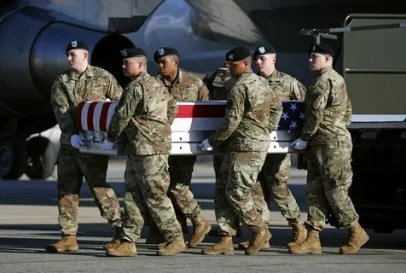
American Military Failure in Afghanistan
or go to
Aletho News Archives – Video-Images
Frlom the Archives
The Fiction of the Jewish History in Palestine
By Hasan Afif El-Hasan | The Palestine Chronicle | April 8, 2011
Prime Minister Benjamin Netanyahu told NNC Pierce Morgan on March 18, 2011 that he might agree to a Palestinian state through negotiations. And he added, “We will make territorial concessions although it is very painful to do that in our ancestral land.” Netanyahu was not talking about Poland where his ancestors lived. He was talking about Palestine where generations of its indigenous population ancestors lived, cultivated the land and are buried.
By the end of the nineteenth century, Zionism created a new Jewish identity of blood and soil. To mobilize their followers and supporters and appeal to their emotions, the Zionists created myths. Zionism started as a tribal religion without god, but in order to fulfill its function as a unifying force, Zionism required external religious and race symbols, not inner content. Its leaders regarded metaphysical religious belief and purity of race as having value in itself. They created a divine paradisiacal state of merger with the gods. Despite his non-religious ideology, Herzl’s writings were replete with religious references. The Jews should settle in Palestine because, in his words, “the Temple will be visible from long distance, for it is only our ancient faith that has kept us together”.
The Zionists and their supporters have invested tremendous financial and scholarly resources to work within the Hebrew Bible historical narratives to affirm the links between the intrusive Zionist population and the ancient Israelite past, and by doing so assert the right of that population to the land. The political end-game shaped the investigation and the outcome. Tracing the roots of Israel’s ethnic state in biblical antiquity is effectively to silence the indigenous Palestinian claim to the past and therefore to the land. The Biblical scholarship employs a bewildering array of terms for the region: “the Holy Land”, “the Land of the Bible”, “Eretz Israel”, “the Land of Israel”, or “Judah and Samaria.” To the casual reader these names appear interchangeable, but they all imply connection to ancient Israel.
Biblical narratives or poems that cannot be supported by archeology and common sense are treated by the Zionists and their supporters as historical language. … continue
Blog Roll
 Aletho News
- Hezbollah Returns: It Didn’t Start a War, It Is Ending One
- EU states seek ‘talks’ with Iran for access to Strait of Hormuz: Report
- Trump on Hormuz: “Others must take care of it” after US falters
- Who Is closer to collapse?
- A War that Backfired: Why the US-Israeli Campaign Is Strengthening Iran
- How Zionist Control Is Hurting US Interests
- Iran warns it may target US missile launch sites in UAE cities
- American Military Failure in Afghanistan
- Friendly Skies of Georgia: Are Israeli-Linked Drones Launching False Flags from Georgian Territory?
- The Three Big Lies about Mammography Screening
- If Americans Knew
- No let-up in attacks on Gaza as Israel takes on Iran, Lebanon – Not a ceasefire Day 155
- ‘Of Course’: IDF Drops Case Against Soldiers Accused of Raping Palestinian Prisoner
- Don’t Fall for the Regime Change Talk. Israel Is ‘Mowing the Lawn’ in Iran
- Will Israel and the US wreck the Gulf States along with Iran?
- US so far burned through ‘years’ of munitions in Iran war: Report
- How the Israeli Tail Wags the American Dog
- Outdated intel likely led to deadly U.S. strike on Iranian elementary school, sources say
- Pentagon insider says high U.S official Douglas Feith reported to Netanyahu
- In fond memory of Walid Khalidi, the historian of Palestine
- 6 more Americans killed, as Israel ‘mows the lawn’ in Iran – Not a ceasefire Day 154
- No Tricks Zone
- Storing Green Energy To Last Germany 10 Days Would Require A 60-Million Tonne Battery
- New Studies: UK Sea Levels Were 4 Meters Higher Than Today During The Mid-Holocene
- Destructive Green New Deal: German Energy And Metal Group Warns Of Drastic Crisis
- New Study Documents A 20-Year Pause In Arctic Sea Ice Decline – Driven By Internal Variability
- Wake-up Call: Survey Shows Majority Of Germans Now Favor Postponing Climate Targets!
- Televised! Leading German Political Candidate Tells Schoolchildren CO2 Makes Sun Hotter!
- New Study: A Century Warming Of 1.1°C Is ‘Commonplace’ And ‘Not Unusual’ During This Interglacial
- New Study: ‘Internal Noise’ And Volcanic Forcing Can Trigger 10-15°C Warming Within Decades
- Glaciers Worldwide Are Suddendly Surging, Experts Blame Warming!
- Surprising Discovery: Sahara Is Greening…Billions Of Trees Where Once Thought To Be Barren
 Aletho News