Double standards, one rule for all – except Palestinians
International Solidarity Movement | September 27, 2015
Nabi Saleh, occupied Palestine – On the 28th of August, Mahmoud Tamimi was arrested in Nabi Saleh during the weekly non violent demonstration. Every Friday, just after the prayer, the residents demonstrate against the expansion of the illegal settlement of Halamish which has continuously confiscated Palestinian land as well as the only water source of the village: ‘Ain al-Qaws.
During the Friday march towards the expropriated lands the residents were stopped by Israeli forces using excessive brutality, shooting tear gas, rubber coated steel bullets, live ammunition and sound grenades against civilians. Additionally, demonstrators are often arrested and beaten up.
On the 28th of August, in the course of the demonstration I, as a foreigner, was arrested by Israeli forces together with the 19-year old Palestinian Mahmoud Tamimi.
Both of us have been brutally beaten by the soldiers with punches, kicks and the butts of their guns. Both of us were arrested and secluded for 6 hours, kept blindfolded and handcuffed in a small room in a military base.
Afterwards, we were taken to the police station based in the illegal settlement of Ben Yamin and, at that point, our paths were divided: he was brought to the military prison of Ofer and I was brought to “Ramle” near Tel Aviv.
Within a few days, my predicament was positively solved: I was acquitted from the charges of throwing stones and other objects, and returned to be a free citizen. Regarding Mahmoud, although the charges were exactly the same, because he’s Palestinian, the situation is completely different: in fact Mahmoud is still under arrest in Ofer military prison and is waiting to attend his first hearing, to be held on the 28th of October, that is 60 days after his arrest. In my case, the first hearing took place the day after my arrest.
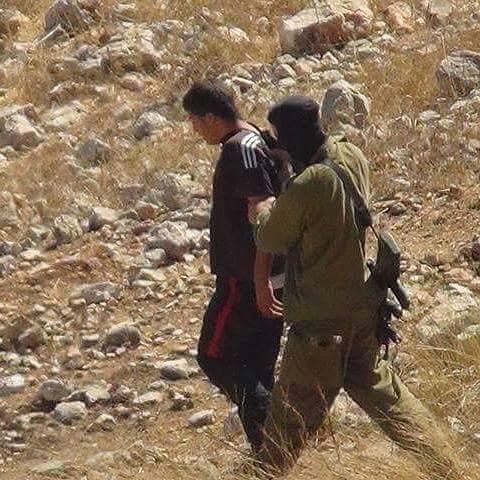
Israeli soldier arresting Mahmoud
Mahmoud is now under threat of a penalty of a minimum of 7 months which, under the practice of military law and consequently administrative detention used on the Palestinians of the West Bank, this sentence can be arbitrarily renewed for additional 6 month periods of imprisonment.
The absolute asymmetry of treatment endured by me and Mahmoud is a blatant demonstration of the discriminatory laws applied by Israel for over 40 years towards the Palestinians. According to the International law, the application of military laws in occupied territories is completely illegitimate.

Israeli soldiers use brutal force on Mahmoud
Mahmoud will be accused by military personnel covering the role of persecutors and will be judged by some other military personnel covering also the role of judges. He doesn’t have the right to be tried in front of a civilian court, although Mahmoud is a civilian – and not a soldier. All of this because he’s a Palestinian.
Even if the evidence does not indicate his guilt, just the fact that he’s in a military court with both the prosecutor and the judge from the military, will most likely result in a guilty verdict. The procedures in military court are not about establishing the truth, the possibility of establishing a defense is extremely slim, justice simply isn’t done in a military court. It’s about punishment, punishment to weaken the Palestinian resistance to an illegal occupation, even if this resistance is non-violent.

Mahmoud in court
Within this system, it must be said, settlers from illegal settlements in the West Bank are judged in front of civilian courts, not military courts – just because they have a different status: they are not Palestinians.
In my case, hard evidence would be required to bring charges against me, for Mahmoud in contrast, as a Palestinian, no evidence is required at all. All the trial is only based on the statement of 18-year old soldiers.
Of course, when an international is unjustly beaten and arrested the media reacts with utter disapproval attracting the medias’ attention and causing the civil society’s indignation. When it’s a Palestinian receiving the exact same treatment, however, the reaction is quite different. Mahmoud‘s case seems to be totally forgotten. Currently he is still rotting in a prison cell in Ofer military prison, while being entirely ignored by the media and the international community.
Mahmoud Tamimi is only 19 years old, he has 2 brothers and a sister. His uncle is Rushdie Tamimi, one of Nabi Saleh’s martyrs killed by the Israeli forces 3 years ago on the 19th of November. He died following an intense shooting during which he was inured in the thigh and the stomach. Rushdie is already the second martyr in a village which counts only 500 inhabitants. Considering the dimension of the village, they are indeed suffering from significant losses. However, we must keep in mind that in the Occupied Palestinian Territories the violence and the killings are daily and are perceived by the so called civilized world as casualties of a 60 year old conflict.
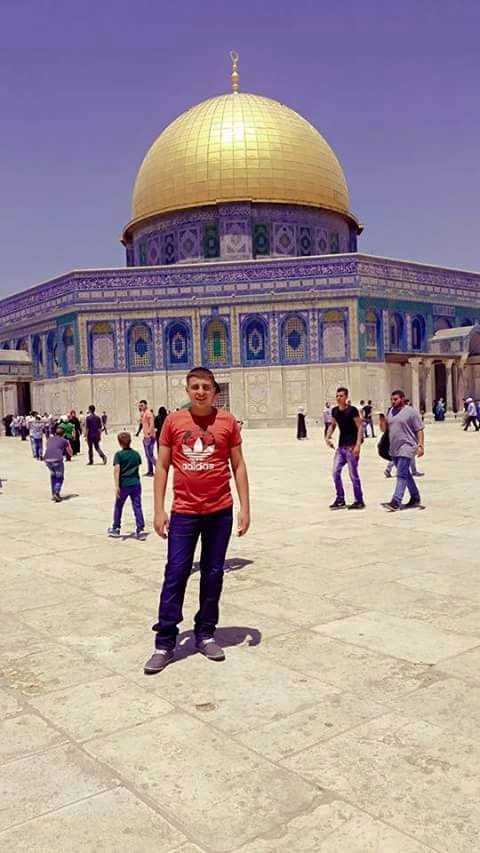
Mahmoud at al-Aqsa mosque
Let’s take a stand and spread Mahmoud’s story, let’s not forget him. We should show the world that the treatment a Palestinian youth receives – and thus the live of a Palestinian – is not less worth reporting about in the media and has to receive as much attention and result in an outcry as that of an Italian citizen. Let this not be about the rare case of an international being maltreated by Israeli forces, but about the every-day harassment, violence, illegal detentions and arrests of Palestinians.
On the Trail of Turkey’s Terrorist Grey Wolves
By Martin A. Lee | Consortium News | 1997
In broad daylight on May 2, 1997, 50 armed men set upon a television station in Istanbul with gunfire. The attackers unleashed a fusillade of bullets and shouted slogans supporting Turkey’s Deputy Prime Minister Tansu Ciller. The gunmen were outraged over the station’s broadcast of a TV report critical of Ciller, a close U.S. ally who had come under criticism for stonewalling investigations into collusion between state security forces and Turkish criminal elements.
Miraculously, no one was injured in the attack, but the headquarters of Independent Flash TV were left pock-marked with bullet-holes and smashed windows. The gunfire also sent an unmistakable message to Turkish journalists and legislators: don’t challenge Ciller and other high-level Turkish officials when they cover up state secrets.

Former Turkish Prime Minister Tansu Ciller
For several months, Turkey had been awash in dramatic disclosures connecting high Turkish officials to the right-wing Grey Wolves, the terrorist band which has preyed on the region for years. In 1981, a terrorist from the Grey Wolves attempted to assassinate Pope John Paul II in Vatican City.
But at the center of the mushrooming Turkish scandal is whether Turkey, a strategically placed NATO country, allowed mafiosi and right-wing extremists to operate death squads and to smuggle drugs with impunity. A Turkish parliamentary commission is investigating these new charges.
The rupture of state secrets in Turkey also could release clues to other major Cold War mysteries. Besides the attempted papal assassination, the Turkish disclosures could shed light on the collapse of the Vatican bank in 1982 and the operation of a clandestine pipeline that pumped sophisticated military hardware into the Middle East — apparently from NATO stockpiles in Europe — in exchange for heroin sold by the Mafia in the United States.
The official Turkish inquiry was triggered by what could have been the opening scene of a spy novel: a dramatic car crash on a remote highway near the village of Susurluk, 100 miles southwest of Istanbul. On Nov. 3, 1996, three people were crushed to death when their speeding black Mercedes hit a tractor.
The crash killed Husseyin Kocadag, a top police official who commanded Turkish counter-insurgency units. But it was Kocadag’s company that stunned the nation. The two other dead were Abdullah Catli, a convicted fugitive who was wanted for drug trafficking and murder, and Catli’s girlfriend, Gonca Us, a Turkish beauty queen turned mafia hit-woman.
A fourth occupant, who survived the crash, was Kurdish warlord Sedat Bucak, whose militia had been armed and financed by the Turkish government to fight Kurdish separatists. At first, Turkish officials claimed that the police were transporting two captured criminals.
But evidence seized at the crash site indicated that Abdullah Catli, the fugitive gangster, had been given special diplomatic credentials by Turkish authorities. Catli was carrying a government-approved weapons permit and six ID cards, each with a different name. Catli also possessed several handguns, silencers and a cache of narcotics, not the picture of a subdued criminal.
When it became obvious that Catli was a police collaborator, not a captive, the Turkish Interior Minister resigned. Several high-ranking law enforcement officers, including Istanbul’s police chief, were suspended. But the red-hot scandal soon threatened to jump that bureaucratic firebreak and endanger the careers of other senior government officials.
Grey Wolves Terror
The news of Catli’s secret police ties were all the more scandalous given his well-known role as a key leader of the Grey Wolves, a neo-fascist terrorist group that has stalked Turkey since the late 1960s.
A young tough who wore black leather pants and looked like Turkey’s answer to Elvis Presley, Catli graduated from street gang violence to become a brutal enforcer for the Grey Wolves. He rose quickly within their ranks, emerging as second-in-command in 1978. That year, Turkish police linked him to the murder of seven trade-union activists and Catli went underground.
Three years later, the Grey Wolves gained international notoriety when Mehmet Ali Agca, one of Catli’s closest collaborators, shot and nearly killed Pope John Paul II in St. Peter’s Square on May 13, 1981. Catli was the leader of a fugitive terrorist cell that included Agca and a handful of other Turkish neo-fascists.
Testifying in September 1985 as a witness at the trial of three Bulgarians and four Turks charged with complicity in the papal shooting in Rome, Catli (who was not a defendant) disclosed that he gave Agca the pistol that wounded the pontiff. Catli had previously helped Agca escape from a Turkish jail, where Agca was serving time for killing a national newspaper editor.
In addition to harboring Agca, Catli supplied him with fake IDs and directed Agca’s movements in West Germany, Switzerland, and Austria for several months prior to the papal attack. Catli enjoyed close links to Turkish drug mafiosi, too. His Grey Wolves henchmen worked as couriers for the Turkish mob boss Abuzer Ugurlu.
At Ugurlu’s behest, Catli’s thugs criss-crossed the infamous smugglers’ route passing through Bulgaria. Those routes were the ones favored by smugglers who reportedly carried NATO military equipment to the Middle East and returned with loads of heroin. Judge Carlo Palermo, an Italian magistrate based in Trento, discovered these smuggling operations while investigating arms-and-drug trafficking from Eastern Europe to Sicily.
Palermo disclosed that large quantities of sophisticated NATO weaponry — including machine guns, Leopard tanks and U.S.-built Cobra assault helicopters — were smuggled from Western Europe to countries in the Middle East during the 1970s and early 1980s. According to Palermo’s investigation, the weapon delivers were often made in exchange for consignments of heroin that filtered back, courtesy of the Grey Wolves and other smugglers, through Bulgaria to northern Italy.
There, the drugs were received by Mafia middlemen and transported to North America. Turkish morphine base supplied much of the Sicilian-run “Pizza connection,” which flooded the U.S. and Europe with high-grade heroin for several years.
[While it is still not clear how the NATO supplies entered the pipeline, other investigations have provided some clues. Witnesses in the October Surprise inquiry into an alleged Republican-Iranian hostage deal in 1980 claimed that they were allowed to select weapons from NATO stockpiles in Europe for shipment to Iran. [Iranian arms dealer Houshang Lavi claimed that he selected spare parts for Hawk anti-aircraft batteries from NATO bases along the Belgian-German border. Another witness, American arms broker William Herrmann, corroborated Lavi’s account of NATO supplies going to Iran. [Even former NATO commander Alexander Haig confirmed that NATO supplies could have gone to Iran in the early 1980s while he was secretary of state. “It wouldn’t be preposterous if a nation, Germany, for example, decided to let some of their NATO stockpiles be diverted to Iran,” Haig said in an interview. For more details, see Robert Parry’s Trick or Treason. ]A Vatican Mystery
Italian magistrates described the network they had uncovered as the “world’s biggest illegal arms trafficking organization.” They linked it to Middle Eastern drug empires and to prestigious banking circles in Italy and Europe.
At the center of this operation, it appeared, was an obscure import-export firm in Milan called Stibam International Transport. The head of Stibam, a Syrian businessman named Henri Arsan, also functioned as an informant for the U.S. Drug Enforcement Administration, according to several Italian news outlets.
With satellite offices in New York, London, Zurich, and Sofia, Bulgaria, Stibam officials recycled their profits through Banco Ambrosiano, Italy’s largest private bank which had close ties to the Vatican until its sensational collapse in 1982. The collapse of Banco Ambrosiano came on the heels of the still unsolved death of its furtive president, Roberto Calvi, whose body was found hanging underneath Blackfriar’s Bridge in London in June 1982.
While running Ambrosiano, Calvi, nicknamed “God’s banker,” served as advisor to the Vatican’s extensive fiscal portfolio. At the same time in the mid- and late 1970s, Calvi’s bank handled most of Stibam’s foreign currency transactions and owned the building that housed Stibam’s Milanese headquarters.
In effect, the Vatican Bank — by virtue of its interlocking relationship with Banco Ambrosiano — was fronting for a gigantic contraband operation that specialized in guns and heroin. The bristling contraband operation that traversed Bulgaria was a magnet for secret service agents on both sides of the Cold War divide.
Crucial, in this regard, was the role of Kintex, a Sofia-based, state-controlled import-export firm that worked in tandem with Stibam and figured prominently in the arms trade. Kintex was riddled with Bulgarian and Soviet spies — a fact which encouraged speculation that the KGB and its Bulgarian proxies were behind the plot against the pope.
But Western intelligence also had its hooks into the Bulgarian smuggling scene, as evidenced by the CIA’s use of Kintex to channel weapons to the Nicaraguan Contra rebels in the early 1980s. The Reagan administration jumped on the papal assassination attempt as a propaganda opportunity, rather than helping to unravel the larger mystery.
Although the CIA’s link to the arms-for-drugs traffic in Bulgaria was widely known in espionage circles, hard-line U.S. and Western European officials promoted instead a bogus conspiracy theory that blamed the papal shooting on a communist plot.
The so-called “Bulgarian connection” became one of the more effective disinformation schemes hatched during the Reagan era. It reinforced the notion of the Soviet Union as an evil empire. But the apparent hoax also diverted attention from extensive — and potentially embarrassing — ties between U.S. intelligence and the Turkey’s narco-trafficking ultra-right.
Fabrication of the conspiracy theory might have even involved suborning perjury. During his September 1985 court testimony in Rome, Catli asserted that he had been approached by the West German BND spy organization, which allegedly promised him a large sum of money if he implicated the Bulgarian secret service and the KGB in the attempt on the pope’s life.
Five years later, ex-CIA analyst Melvin A. Goodman disclosed that his colleagues, under pressure from CIA higher-ups, skewed their reports to try to lend credence to the contention that the Soviets were involved. “The CIA had no evidence linking the KGB to the plot,” Goodman told the Senate Intelligence Committee.
Friends of the Wolves
Duane “Dewey” Clarridge, the CIA station chief in Rome at the time of the papal shooting, had previously been posted in Ankara. Clarridge was the CIA’s man-on-the-spot in Turkey in the 1970s when armed bands of Grey Wolves unleashed a wave of bomb attacks and shootings that killed thousands of people, including public officials, journalists, students, lawyers, labor organizers, social democrats, left-wing activists and ethnic Kurds. [In his 1997 memoirs, A Spy for All Seasons, Clarridge makes no reference to the Turkish unrest or to the pope shooting.]
During those violent 1970s, the Grey Wolves operated with the encouragement and protection of the Counter-Guerrilla Organization, a section of the Turkish Army’s Special Warfare Department. Headquartered in the U.S. Military Aid Mission building in Ankara, the Special Warfare Department received funds and training from U.S. advisors to create “stay behind” squads comprised of civilian irregulars.
They were supposed to go underground and engage in acts of sabotage if the Soviets invaded. Similar Cold War paramilitary units were established in every NATO member state, covering all non-Communist Europe like a spider web that would entangle Soviet invaders. But instead of preparing for foreign enemies, U.S.-sponsored stay-behind operatives in Turkey and several European countries used their skills to attack domestic opponents and foment violent disorders.
Some of those attacks were intended to spark right-wing military coups. In the late 1970s, former military prosecutor and Turkish Supreme Court Justice Emin Deger documented collaboration between the Grey Wolves and the government’s counter-guerrilla forces as well as the close ties of the latter to the CIA.
Turkey’s Counter-Guerrilla Organization handed out weapons to the Grey Wolves and other right-wing terrorist groups. These shadowy operations mainly engaged in the surveillance, persecution and torture of Turkish leftists, according to retired army commander Talat Turhan, the author of three books on counter-guerrilla activities in Turkey.
But the extremists launched one wave of political violence which provoked a 1980 coup by state security forces that deposed Prime Minister Bulent Ecevit. The Turkish security forces cited the need to restore order which had been shattered by rightist terrorist groups secretly sponsored by those same state security forces.
Cold War Roots
Since the earliest days of the Cold War, Turkey’s strategic importance derived from its geographic position as the West’s easternmost bulwark against Soviet communism. In an effort to weaken the Soviet state, the CIA also used pan-Turkish militants to incite anti-Soviet passions among Muslim Turkish minorities inside the Soviet Union, a strategy that strengthened ties between U.S. intelligence and Turkey’s ultra-nationalists.
Though many of Turkish ultra-nationalists were anti-Western as well as anti-Soviet, the Cold War realpolitik compelled them to support a discrete alliance with NATO and U.S. intelligence. Among the Turkish extremists collaborating in this anti-Soviet strategy were the National Action Party and its paramilitary youth group, the Grey Wolves.
Led by Colonel Alpaslan Turkes, the National Action Party espoused a fanatical pan-Turkish ideology that called for reclaiming large sections of the Soviet Union under the flag of a reborn Turkish empire. Turkes and his revanchist cohorts had been enthusiastic supporters of Hitler during World War II.
“The Turkish race above all others” was their Nazi-like credo. In a similar vein, Grey Wolf literature warned of a vast Jewish-Masonic-Communist conspiracy and its newspapers carried ads for Turkish translations of Nazi texts.
The pan-Turkish dream and its anti-Soviet component also fueled ties between the Grey Wolves and the Anti-Bolshevik Bloc of Nations (ABN), a CIA-backed coalition led by erstwhile fascist collaborators from East Europe.
Ruzi Nazar, a leading figure in the Munich-based ABN, had a long-standing relationship with the CIA and the Turkish ultra-nationalists. In the 1950s and 1960s, Nazar was employed by Radio Free Europe, a CIA-founded propaganda effort.
When the Soviet Union collapsed in 1991, the shifting geopolitical terrain created new opportunities — political and financial — for Colonel Turkes and his pan-Turkish crusaders. After serving a truncated prison term in the 1980s for his role in masterminding the political violence that convulsed Turkey, Turkes and several of his pan-Turkish colleagues were permitted to resume their political activities.
In 1992, the colonel visited his long lost Turkish brothers in newly independent Azerbaijan and received a hero’s welcome. In Baku, Turkes endorsed the candidacy of Grey Wolf sympathizer Abulfex Elcibey, who was subsequently elected president of Azerbaijan and appointed a close Grey Wolf ally as his Interior Minister.
The Gang Returns
By this time, Abdullah Catli was also back in circulation after several years of incarceration in France and Switzerland for heroin trafficking. In 1990, he escaped from a Swiss jail cell and rejoined the neo-fascist underground in Turkey.
Despite his documented links to the papal shooting and other terrorist attacks, Catli was pressed into service as a death squad organizer for the Turkish government’s dirty war against the Kurds who have long struggled for independence inside both Turkey and Iraq.
Turkish Army spokesmen acknowledged that the Counter-Guerrilla Organization (renamed the Special Forces Command in 1992) was involved in the escalating anti-Kurdish campaign. Turkey got a wink and a nod from Washington as a quid pro quo for cooperating with the United States during the Gulf War.
Turkish jets bombed Kurdish bases inside Iraqi territory. Meanwhile, on the ground, anti-Kurdish death squads were assassinating more than 1,000 non-combatants in southeastern Turkey. Hundreds of other Kurds “disappeared” while in police custody. Human Rights Watch, Amnesty International and the European Parliament all condemned the Turkish security forces for these abuses.
Still, there was no hard evidence that Turkey’s security forces had recruited criminal elements as foot soldiers. That evidence surfaced only on Nov. 3, 1996, when Catli died in the fateful auto accident near Susurluk.
Strewn amidst the roadside wreckage was proof of what many journalists and human rights activists had long suspected — that successive Turkish governments had protected narco-traffickers, sheltered terrorists and sponsored gangs of killers to suppress Turkish dissidents and Kurdish rebels.
Colonel Turkes confirmed that Catli had performed clandestine duties for Turkey’s police and military. “On the basis of my state experience, I admit that Catli has been used by the state,” said Turkes. Catli had been cooperating “in the framework of a secret service working for the good of the state,” Turkes insisted.
U.S.-backed Turkish officials, including Tansu Ciller, Prime Minister from 1993-1996, also defended Catli after the car crash. “I don’t know whether he is guilty or not,” Ciller stated, “but we will always respectfully remember those who fire bullets or suffer wounds in the name of this country, this nation and this state.”
Eighty members of the Turkish parliament urged the federal prosecutor to file charges of criminal misconduct against Ciller, who was serving as Turkey’s Foreign Minister, as well as Deputy Prime Minister. They asserted that the Susurluk incident provided Turkey “with a historic opportunity to expose unsolved murders and the drugs and arms smuggling that have been going on in our country for years.”
The scandal momentarily reinvigorated the Turkish press, which unearthed revelations about criminals and police officials involved in the heroin trade. But journalists also were victims of death squads in those years. The violent attack on Independent Flash TV was a reminder. Prosecutors have faced pressure, too, from superiors who are not eager to delve into state secrets. [Ultimately, the corruption case against Ciller was covered up.]
Across the Atlantic in Washington, the U.S. government did not acknowledge any responsibility for the Turkish Frankenstein that U.S. Cold War strategy helped to create. When asked about the Susurluk affair, a State Department spokesperson said it was “an internal Turkish matter.” He declined further comment.
Correcting America’s mistakes in Syria, a wish list
By Camille Alexandre Otrakji
Dear American friends who are reporting on, analyzing, or advising decision makers on Syria,
No one is expecting you to “Support Assad”, just like you really shouldn’t have wasted the past four years committed to supporting Assad’s adversaries and opponents.
- You started (summer 2011) by working with your allies (especially the French) to pass a security council resolution that would authorize you to use force in Syria against the Syrian army. You only stopped after repeated vetoes by Russia and China.
- You recognized the Syrian National Council as “legitimate representative of the Syrian people”, then you recognized the Syrian National Coalition. Both groups included opposition characters that were selected and managed by you, the French and your Gulf Arab state allies. “The Syrian people” had zero input in the selection process. Both groups included secular faces but the real power behind them was the Muslim Brotherhood, an organization with a criminal past and present … An organization that refused to support war on ISIS. An organization that bullied then alienated many of the liberals, women and minorities in Syrian opposition.
- You boycotted (or rarely interacted with) millions of Syrians who supported their government against your favorite side in the Syrian conflict (“the opposition”). Syrian visa applicants who did not support “the revolution” in US consulates had to answer and almost apologize to your immigration officers who asked them why are they not on America’s side in the Syrian conflict.
- Your media and analysts simply followed your state department’s directives. CNN and the Washington post mobilized in favor of anyone who would carry arms against the Syrian army. CFR and other think tanks discussed openly the need to work with Al-Qaeda (Annusra) in order to defeat the regime. Large numbers of American activists (a mix of those naturally inspired, and many others who are paid to write against Assad) worked relentlessly on social media platforms to attack, humiliate and discredit any Syrian or non Syrian who advocated dialogue as a way to end the conflict. Your passionate warmongers included the leftists (“we are here to help the Syrian people”) and the neocons (“We should teach Assad a lesson”).
- You know that there is no proof and there is no logic behind accusations that “Assad” used chemical weapons, yet you continued to use it as a pressure tool against Assad, despite the resulting escalation in hate and violence among the Syrian people that your regime-demonization propaganda was contributing to.
The United States does not need to do a 180 degree turn (and it will not). Here is how a 90 degree adjustment can lead to a more constructive role in the exceptionally complex and dangerous Syrian crisis.
- Do not recognize ANYONE of being the legitimate representative of the Syrian people. There are millions of Syrians who support Assad/government/the army. There are millions of Syrians who support the opposition. There are millions of Syrians who do not care about politics. They just want to go back to normal life.
- Everyone contributed to violence. No, Assad is not the main culprit. Before 2011, he ruled Syria for 11 years without killing anyone. He reduced the number of political prisoners from an estimated 1,300 in 2001, to an estimated 200 in 2010. Everyone, starting with the United States, is responsible for what happened after 2011. If you are not planning to demonize yourself, please try to realize that it is only fair to not demonize anyone. If you want a quantification of the size of your responsibility, try to imagine the recently revealed (by the Washington Post ) details about your covert CIA Syria annual budget of $1 billion… Did you buy anything good with that yearly investment?
- If you insist on calling Assad “The ruthless Syrian dictator”, please make sure you call Syrian opposition figures “ruthless corrupt, weak, naive, sectarian, vengeful, and utterly useless Syrian opposition figure”. Or better, avoid the negativity on both sides.
- Forget the past. If your allegations (unproven) of a Syrian role in the attack on US marines in Beirut in 1983 (32 years ago) is still bothering you, why not take it out on the Saudis for their more certain role in 9/11, or why not first punish yourself for the millions of Iraqis who died because of “mistakes” by previous US administrations… you lost hundreds. others lost millions … they are not seeking revenge.
- The end does NOT justify the means. If you are dying to spread democracy, remember that there are millions of other ideologues who are equally eager to spread communism, or their fanatic interpretations of Islam … Everyone believes in salvation through his ideology.
- Democracy is not working too well in most countries. Lebanon and Iraq (your democratic allies in the Arab world) are even more corrupt than authoritarian Syria. Instead of promoting democracy, try to promote the foundations on which democracy can be later successfully established. Promote the separation of religion and state in Syria. Promote tolerance and respect of opinions that differ. Promote women’s rights. Promote freedom of speech (which Lebanon and Iraq have, and so should Syria).
- Reopen your embassy in Damascus. This time direct your diplomats (and security officers) to work for peace and reconciliation. U.S. interests will be better served that way. Regime supporters, rational opposition, and the larger segment of Syrians who are neutral, will all thank you.
- Close the Facebook page of the US embassy in Damascus, or replace its current immature editor(s).
- Call on all sides to join you in admitting their mistakes. Everyday that you all wait before you radically change, hundreds of innocent Syrians will die.
- When you work with regional and international actors, please try to respect the desires of the majority of Syrians who do not wish to become an American, Russian, Iranian, Saudi, Turkish or Qatari satellite. There will be a long term, costly, resistance to any proposal that gives outside powers an exceptional influence in Syria. Please do not waste time and innocent lives. Syrians do not wish to be a Jordan or a Lebanon. You do not want Syria to be a bigger Lebanon that borders (and constantly exports its problems to) your allies to the north, east, south and east or Syria.
- You want what’s good for the Syrian people? While it is hard to find a clear majority of Syrians agreeing on the question of regime change, there is little doubt that the vast majority of Syrians want the Golan Heights back (illegally occupied by Israel since 1967). They want economic prosperity… ending torture … freedom of press with responsibilities (no sectarianization, no promotion of hate or violence… ), they want to fight corruption … they want a more accountable government. You surely can help by pressuring Israel to return the Golan, by economic assistance to Syria, and by pressuring the Syrian government AND Syrian opposition to respect those truly popular demands (and not only the issues the US and its Syrian opposition allies always used to demonize the regime and only the regime).
- Oh … can you start by ending economic sanctions that you placed in 1979 (to punish Syria for its resistance to the Camp David accord)? … you are not hurting “the regime” with those sanctions … you are killing innocent Syrians instead. Remember that your sanctions killed hundreds of thousands of Iraqi children during the nineties.
Here is the the preamble to the 1789 American constitution: “We the People of the United States, in Order to form a more perfect Union, establish Justice, insure domestic Tranquility, provide for the common defense, promote the general Welfare, and secure the Blessings of Liberty to ourselves and our Posterity, do ordain and establish this Constitution for the United States of America.”
Eighty one years later (on February 3, 1870) the 15th amendment that granted African Americans the right to vote was ratified.
One hundred and thirty one years later (on August 18, 1920), the 19th amendment that guarantees all American women the right to vote was ratified.
Please be careful with Syria. Change takes time and planning. It takes a favorable regional environment… and it takes realism. 120-min Hollywood or Disney fairy tale movies (“the Arab Spring”) are not going to lead to a happy ending in a country as complex as Syria.
Time for President Obama to Free Simon Trinidad
By Tom Burke | teleSUR | September 24, 2015
September 24 marks the day one year ago when the National Victims Table was set up as an important part of the Colombian peace process. Exactly one year later, the Revolutionary Armed Forces of Colombia – People’s Army (FARC-EP) and the Colombian government of Manuel Santos are announcing an agreement on victims and justice, a bilateral ceasefire, and a signing date for the peace agreement.
It is a big step forward for the Colombian peace process, with the issues of prisoners, setting aside arms, and then implementation to be agreed upon next. Although the number of Colombian political prisoners is around 7000, there is one prisoner who stands out because he is held under cruel and unusual circumstances. That is FARC negotiator Simon Trinidad (aka Ricardo Palmera).
Held for 11 years as a political prisoner of the U.S. Empire, the 65-year-old Trinidad is in solitary confinement at the Florence Supermax in Colorado, the “Guantanamo of the Rockies.” Trinidad is a good man who embodies the struggle of the Colombian people for freedom, and the FARC say that without him, they will not sign an agreement.
It is President Barack Obama who can set Simon Trinidad free, to take his rightful place at the Colombian peace negotiations. President Obama can send a loud and clear message that the U.S. backs the peace process. For President Obama, the time to act is now, and it is likely to add momentum to the peace process.
Earlier this week, I marched with thirty-five activists from nine U.S. cities on a rural highway in the Rocky Mountains to demand, “Free Simon Trinidad! Peace for Colombia!” We marched to the modern underground dungeon where prisoners can be held with no human contact for years on end. Across from the guardhouse of the Colorado supermax, we held signs saying, “President Obama free Simon Trinidad!” and “Send Simon Trinidad to peace talks!”
As we marched back up Highway 67 to the small town of Florence, I kept thinking how strange it is, surreal in fact, that our efforts to end the U.S. war and intervention brought us to this place. The scenery is beautiful and breathtaking, but when you think of the men being held underground with no access to sunlight or fresh air, and no other human to talk to, the prison seems doubly vicious, consciously dehumanizing. Only the strongest of people, someone like Simon Trinidad, can persevere under these conditions.
With September 24 being the starting date of the National Victims Table, that date has great significance for me and my friends who organize solidarity with Colombia and Simon Trinidad in particular. For I am one of the Antiwar 23, raided by the FBI in Chicago, Minneapolis, and Grand Rapids, five years ago today. Over 100 FBI agents raided seven homes, scaring our children, and taking away our computers, phones and boxes of whatever else they wanted. When I left our house to write a press release, I realized I was being followed. I drove to my wife’s job where the FBI subpoenaed us to the grand jury in Chicago. It was shocking. Like all of the Antiwar 23, we refused to appear. No witch hunts for us.
I don’t like to think of myself as a victim, but the U.S. government did target us because of our effective organizing. The U.S. government claimed the Antiwar 23 were sending money and providing material support to the FARC and PFLP. The FBI said we faced 15-year prison sentences. However, when the U.S. government spy could not find any evidence, she and her FBI handlers attempted to create a crime. It did not work. We are still organizing solidarity, such as the campaign for a Palestinian American women’s leader “Justice for Rasmea Odeh”.
Over time we learned that the U.S. government political repression began when we protested outside the four trials of Colombian revolutionary Simon Trinidad. Our small group of solidarity activists did our part to expose the injustice of the four trials of Simon Trinidad and the U.S. government was angry with us. We protested and reported to the media on the unfair procedures and rulings. We were there in the courtroom when the cheating Judge Hogan was forced to step down after the first trial. We helped turn what should have been the triumph of the Empire, into a shameful display of corruption.
Today, I find September 24 to be a day for reflection and for re-dedication to the cause of stopping U.S. war and intervention in Colombia and everywhere else too. Plan Colombia is a colossal failure and needs to be brought to an end. We will continue to act in solidarity with the people of Colombia for a lasting peace with justice. We say “Free Simon Trinidad! Peace for Colombia!” Now is the time for President Obama to act.
Tom Burke is the spokesperson for the National Committee to Free Ricardo Palmera (Simon Trinidad)
Background: Who is Simon Trinidad?
Russia, Iran, Iraq & Syria setting up ‘joint information center’ to coordinate anti-ISIS operations
RT | September 26, 2015
Russia, Iran, Iraq and Syria have agreed to establish a joint information center in Baghdad to coordinate their operations against Islamic State (IS, formerly ISIL/ISIS) militants, according to sources.
“The main goal of the center will be gathering, processing and analyzing current information about the situation in the Middle East – primarily for fighting IS,” a military-diplomatic source told Russian news agencies on Saturday.
The information center in the Iraqi capital will be headed by an officer of one of the founding countries on a rotating basis. Rotation will take place every three months. According to the source, Iraq will run the center for the next three months.
Russia, Iran, Iraq and Syria may also use the information center to coordinate anti-IS combat plans, the source said, adding that the agreement is a milestone for uniting the region’s countries in the war on terrorism – primarily on Islamic State militants.
On Friday, the US TV-Channel Fox News reported the four countries were establishing a “coordination cell” in Baghdad, but Dmitry Peskov, spokesman for Vladimir Putin, denied this. “We have already said there are many reports which are not true,” he told news agencies.
Recent media reports indicate Russia is boosting its cooperation with Syria and other Middle East countries in the fight against terrorism.
Western media say Russia is sending warplanes and tanks to Syria and building a military base in Latakia, but Russian officials deny this, saying Moscow is continuing to supply Syria with weapons in accordance with bilateral contracts.
“Russia has never made a secret of military-technical cooperation with Syria. Our country has long been supplying weapons and military equipment to Syria under the existing bilateral contracts,” Foreign Ministry spokeswoman Maria Zakharova said in a statement on September 9.
Syria hopes that Russia’s counter-terror policy will be more effective than the US-led anti-IS coalition.
“Moscow is acting within the framework of international law, respecting the sovereignty of our country and in coordination with Syria,” Syrian Foreign Minister Walid Muallem told RT. “We do not hide anything under the table. We regard Russia as our friend and strategic ally which is honest in its actions.”
Russia has long insisted on the creation of an international anti-terrorist coalition, to coordinate the efforts with the Syrian Army in combating the jihadists on the ground.
War criminal Poroshenko not welcome in New York!

Protest!
Tuesday, September 29, 4:30 to 6:30 pm
116th St. & Broadway, Manhattan
Facebook event page
Columbia University has invited Ukrainian President Petro Poroshenko to speak. Who is he?
- Oligarch selected in fraudulent election
- Fascist collaborato
- Violator of Minsk 2 ceasefire agreement of Feb 12, 2015
- Enforcer of IMF austerity
- Jailer of journalists and oppositionists
Poroshenko is responsible for:
- 7,000-plus deaths in Donbass region
- More than 1.3 million refugees and displaced persons
- Thousands of political prisoners
In mid-September, the Pentagon announced that it will expand its training of active duty military forces in Ukraine, after a successful test run training the fascist Azov Battalion.
The head of NATO and U.S. Senator John McCain are presently in Ukraine, shoring up the regime and its integration into the NATO war machine. Police agencies like the Texas Rangers and CHP are training local security forces in how to put down resistance.
Some 90,000 Ukrainian troops are stationed on the border with Donetsk and Lugansk, in open violation of the Minsk-2 peace agreement. The biggest NATO war games EVER are starting in the Black Sea, an open provocation against Russia at this moment when tensions are high over Syria.
 But at the United Nations next week, all we will hear are lies about how Russia is the aggressor in Ukraine!
- Tell Obama and John McCain: Stop U.S.-NATO aid to genocidal regime in Ukraine!
- Stand with Donetsk and Lugansk People’s Republics and antifascists in Ukraine!
Called by Solidarity with Ukraine Antifascists Committee/International Action Center
Indigenous peoples bear the brunt of global greenwash
By Amy Dickens | Ecologist | September 23, 2015
In Paraguay’s vast Chaco region, the familiar sounds of the forest are being drowned out by the rumble of heavy machinery. “Where jaguars once trod, now there are just the tracks of bulldozers”, protests Porai Picanerai, a member of the Ayoreo tribe.
His people are being chased from their ancestral lands by Brazilian corporation Yaguarete Pora. While some Ayoreo remain hiding in the forest, living in fear and isolation, those forced out are vulnerable to disease and illness.
The Chaco is experiencing rapid deforestation thanks to companies like Yaguarete Pora, who are illegally clearing vast swathes of land for cattle ranching. Ironically, having promised a small, protected nature reserve, they continue to oust the forest’s most accomplished conservationists, its tribal people.
In spite of this, the company proudly flaunt the logo of the largest corporate responsibility initiative on the planet, the United Nations Global Compact.
This voluntary agreement advocates ten fundamental corporate responsibility principles, including the provision that “businesses should support and respect the protection of internationally proclaimed human rights.”
Though Yaguarete clearly defy this responsibility, the Compact’s lax membership requirements allow corporations to engage in bad practices while sporting the UN seal of approval.
Such is the hypocrisy of 21st century greenwashing. With pressure mounting on companies to endorse high standards of corporate responsibility, many are failing to deliver. To mask the truth, companies frequently greenwash their activities by participating in seemingly eco-friendly ventures that disguise the true extent of the environmental and human damage they are causing.
With conservation and intergovernmental organisations cosying up to big business, the greenwash is increasingly sophisticated, posing an ever-greater threat to the lives of tribal peoples. Because their livelihoods depend on their unique local environments, this greenwashing poses a grave threat to their survival.
Corporate greenwashing is destroying tribal peoples
The Aurora Pacific Economic Zone and Freeport (APECO) in Casiguran, the Philippines, is a 12,923 hectare area currently being developed into a self-sufficient commercial hub and special economic zone.
The project promises to bring “modernity with a touch of green” to Casiguran, boasting plans for eco-friendly features including a Marine Sanctuary and Mangrove Development Zone. For all this talk, the situation on the ground tells a dramatically different story.
If completed, APECO will strip 3,000 small farms and indigenous Agta households of their land. The Agta have reported intimidation, interrogation and assassination attempts relating to the project, which are further jeopardising a population already plagued by malnutrition and homicide.
What’s more, APECO’s ‘green’ promises appear entirely forgotten, as mangrove destruction and illegal logging are destroying the local ecosystem. The Agta’s message is simple: “The most important thing here is our land. If we don’t have it, then we won’t survive.”
Conservation organizations – the ultimate greenwash
Regrettably, corporate greenwashing at the expense of tribal peoples is widespread and recurrent. As if this wasn’t bad enough, an even more worrying trend has emerged.
Increasingly, well-known conservation groups are collaborating with companies to establish ‘green’ projects like the Roundtable on Sustainable Palm Oil (RSPO).
RSPO, an association of palm oil industry stakeholders, was established with the objective of making sustainable palm oil the international norm. It is backed by prominent conservation organizations including Conservation International, the World Resources Institute, and founding member WWF.
Despite these reputable [sic] credentials, there’s a catch. Among RSPO’s members is Wilmar International, whose former subsidiary PT Asiatic Persada is responsible for the forced eviction of the Batin Sembilan from their homes in Jambi province of Sumatra, Indonesia.
The tribe have been arrested, attacked and murdered as their ancestral lands give way to palm oil plantations. Accusations of Wilmar’s bribery blighted negotiations to settle the dispute and culminated in the sale of PT Asiatic Persada, leaving the Batin Sembilan without recourse for their suffering.
Wilmar’s participation in RSPO shows that companies who feign social responsibility are still welcome in ‘green’ initiatives. Indeed, by cosying up to big businesses, which push for lenient responsibility standards, conservation groups enable companies to mask exploitative practices whilst gaining credibility for participating in sustainable projects.
This brand of greenwashing spells danger, not only for tribal peoples but also for conservation groups, who run the risk of guilt by association. So long as these organizations remain indifferent to corporate deception, their loyalty and integrity is called into question.
Hypocrisy at the highest level
Greenwashing can even implicate the institutions and funding bodies responsible for global development. Though these international organizations advocate sustainability, they frequently support projects that undermine this ethos.
As a case in point, in the early 1990s the Global Environmental Facility (GEF), a newly-established World Bank program, struck an agreement with the Cameroon government to conserve a 6 million acre area of rainforest. Yet as one indigenous Baka man observed, “those who now claim they are conserving the forest are the same people pillaging our forests.”
This agreement masked a hefty World Bank loan to fund the logging of a further 3.5 million acres of forest. For the Baka hunter-gatherers and their neighbours, this proved disastrous. Unable to claim their land rights, and prohibited from entering the protected forest to gather resources, they have struggled to survive. In Republic of the Congo, the Baka and Mbenjele suffered a similar fate at the hands of another GEF project.
Such institutional double-dealing delivers a damaging twin blow to tribal peoples – first, their environment is destroyed by commercial activity, and then conservation projects deny them access to their surviving lands and resources.
The World Bank’s conflicted sponsorship doesn’t end there. Today, the Bank is set to profit from its investment in the controversial UN REDD+ scheme, which encourages carbon offsetting to maintain a global equilibrium. Simultaneously, billions of dollars are lent to companies in the extractive industries, the most highly polluting sector.
This has led some to dub the World Bank a ‘climate change profiteer‘.
What next for tribal peoples?
It’s evident that greenwashing is evolving, and with it the challenges that tribal people face. As conservation and development organizations collaborate with irresponsible corporations, the distinction between protector and perpetrator becomes blurred.
This results in indigenous rights violations going unpunished, while organizations that should be working with tribal peoples to protect the environment are discredited. If green initiatives are to live up to their word, they must respect the land ownership rights of tribal peoples and legally obtain free, prior and informed consent.
Environmental groups must also insist on greater transparency among corporate participants. Until then, greenwashing will continue to mask the destruction of the world’s last refuges for tribal peoples.
How To Solve The European Migrant/Refugee Crisis – 5 Simple Steps
Storm Clouds Gathering | September 25, 2015
The refugee crisis in Europe could be easily solved. The problem is that the real solution would not suit the the political establishment of the United States or Western Europe. We’ve distilled what needs to be done down to 5 simple steps.
- Stop funding and arming rebel groups attempting to overthrow the Syrian government. It’s well established that these weapons have been ending up in the hands of ISIS and its affiliates. This has caused nothing but chaos and destruction. Money being funneled into these shady operations should be immediately redirected to an intensive reconstruction effort.
- Pressure Turkey and Jordan to cut off ISIS supply routes, and impose sanctions on any country facilitating the sale of oil from IS territory or allowing funds or materials to reach them. No army can function if their supply chain is broken. It’s not an accident these routes start at the Turkish and Jordanian borders.
- Support the Syrian government. An entire year of U.S. airstrikes in Syria have utterly failed to destroy or even significantly weaken ISIS. Of course this is because the real strategy isn’t to bring ISIS down, but rather to contain them and allow them to weaken Assad gradually. If Washington really wanted to stop this group, they would take a hint from Russia and provide the Syrian government with weapons, training and logistical support to enable them to push ISIS back. This means Washington and its allies would have to officially abandon all plans for a forced regime change. They might not like Assad, but the majority of the citizens of Syria support him. In fact he has more support within his country than Obama or the U.S. congress have in America. And at various intervals he’s had more support than Congress and Obama combined. Any government installed after a U.S. backed regime change will be viewed as a puppet government, and will therefore lack the legitimacy needed to stabilize the region. If you need evidence of this, just look at Afghanistan or Iraq.
- Provide direct assistance to rebuild housing, infrastructure and businesses destroyed by the conflict. In the short term temporary refugee camps should be set up in areas outside of the conflict zone, and food and medical supplies shipped in on a regular basis. Yes this will cost money, but so has the five year regime change push that created the problem in the first place.
- Return the refugees to these stabilized regions. It is in no one’s interest to flood Europe with masses of unemployed refugees. Doing so will only lead to heightened tensions and will strengthen xenophobic movements. These people don’t need to be transplanted into the ghettos of Europe, they need their homes back.
Israeli occupation forces injure 3 with live fire near Bethlehem
Ma’an – September 26, 2015
BETHLEHEM – Three Palestinian youth were injured by live Israeli fire during clashes that erupted in the town of Tuqu in southeastern Bethlehem on Friday.
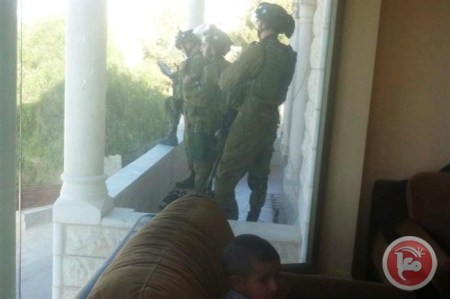
Locals told Ma’an that Israeli military forces arrived to the town and were deployed onto the rooftops of resident’s homes, targeting youth with bullets and tear-gas.
Clashes had erupted between the youth and Israeli forces around the town’s municipality building when Israeli soldiers fired live ammunition and rubber-coated steel bullets, injuring the three youth in the legs with live fire, locals said.
The youth received aid at the town’s medical clinic before being taken to the Beit Jala Governmental Hospital by Palestinian Red Crescent ambulances.
Their injuries were reported as moderate.
An Israeli army spokesperson told Ma’an that clashes with the forces began after “about 30 rioters” started throwing rocks near the main road outside the town.
The clashes then moved inside of the town and Israeli forces responded to the youth throwing rocks with “riot dispersal means,” the spokesperson said.
 When “rioters refused to respond,” the forces fired .22 caliber rounds and confirmed three hits, the spokesperson added.
The spokesperson had no reports of Israeli soldiers entering private homes and deploying on rooftops.
Earlier Friday, the chief of police in the Nablus district and his three-year-old daughter were injured after being shot by Israeli forces with rubber-coated bullets during a raid in the village of Kafr Qaddum in Qalqiliya.
A weekly average of 39 Palestinians have been injured by Israeli forces since the start of 2015. The majority of injuries sustained by Palestinians occur during unarmed demonstrations.
Rights organizations have argued that methods of crowd control used by Israeli forces often result in excessive and sometimes fatal use of force.
Featured Video

America Racing to Strategic Defeat in Iran
or go to
Aletho News Archives – Video-Images
From the Archives
Should Europeans ‘Thank’ the Americans for Destroying Nord Stream?
By Robert Bridge | Strategic Culture Foundation | September 29, 2022
With an investigation continuing into the destruction of the Nord Stream gas pipeline that provided energy supplies to Europe from Russia, there appears to be just one prime suspect, and that should surprise nobody.
Following the sabotage of the Nord Stream 1 and 2 gas pipelines, former Polish Foreign Minister Radoslaw Sikorski already seemed to know the identity of the perpetrator when he tweeted out: “Thank you, USA.”
At first glance, it seemed that Sikorski was speaking sarcastically, berating Washington for carrying out an attack that will have severe repercussions for the people of Europe. After all, how could anyone see any good coming from the termination of Europe’s primary source of gas reserves with winter just around the corner? It was Sikorski’s homeland of Poland, after all, that urged its citizens to collect firewood in the face of dwindling gas reserves.
In fact, the Polish diplomat was speaking one-hundred percent literally… continue
Blog Roll
 Aletho News
- Growing insecurity, soaring prices fuel protests in north as regime bans evacuation: Sources
- Iran denies responsibility for ‘depraved’ attack on Kuwait desalination plant
- Bring The Troops Back. End This War Now!
- Can we please stop calling Israel the ‘only democracy in the Middle East’ now?
- US should start removing its troops from Germany, proposes AfD co-leader Chrupalla
- Iran Red Crescent: 600 educational centers attacked in US-Israeli ‘war crimes’
- Russian Oil Tanker Arrives in Cuba Amid U.S. Blockade
- America Racing to Strategic Defeat in Iran: Lt Col Daniel Davis
- FTC Warns Visa, Mastercard, PayPal, Stripe Over Political Debanking
- Russian tanker approaches Cuba despite US oil blockade
- If Americans Knew
- As Iran targets US military bases, will they be relocated to Israel? Not a ceasefire Day 171
- Will Trump Go Kamikaze?
- Is the University of Florida Shutting Down College Republicans over Israel Criticism?
- Jewish extremist arrested over alleged plot to firebomb Palestinian activist Nerdeen Kiswani’s home
- More than half of Palestinian child detainees have no charges
- The More Murderous Israel Gets, The More We Hear About “Antisemitism”
- Land Day and the Palestinian struggle after 30 months of genocide
- The Iran War Is About Palestine
- Israeli soldiers echo settler ideology, talk of revenge after targeting Palestinians and detaining CNN crew in the West Bank
- Israeli Policies Threaten Future of Christian Schools in Jerusalem
- No Tricks Zone
- New Study Finds Warming Saves Lives…Cold Temperatures 12 Times More Deadly Than Excess Heat
- German Science Blog Accuses PIK Climate Institute Of Hallucinating Climate Tipping Points
- Devastating Assessment Of Comirnaty Vaccine By Former Senior Pfizer Europe Toxicologist
- New Study: CO2 Is ‘Effectively Negligible’ As An Explanatory Climate Change Factor Since 2000
- Former Pfizer Toxicologist Dr. Helmut Sterz Tells Bundestag Hearing Pfizer Vaccine Should Have Never Been Approved
- Energy Expert: Germany’s Nuclear Phaseout Was A “500 Billion Euro Mistake”
- New Research: South Australia’s Mid-Holocene Sea Surface Temperatures Were 4°C Warmer Than Today
- Storing Green Energy To Last Germany 10 Days Would Require A 60-Million Tonne Battery
- New Studies: UK Sea Levels Were 4 Meters Higher Than Today During The Mid-Holocene
- Destructive Green New Deal: German Energy And Metal Group Warns Of Drastic Crisis
 Aletho News