Turkey’s Erdogan files $32k lawsuit against opposition leader who called him a ‘dictator’
RT | January 18, 2016
Attorneys for Turkish President Tayyip Erdogan have filed a lawsuit against a major opposition leader for stating that Erdogan is a dictator, presidential sources and the opposition party told Reuters. The president is reportedly seeking $32,000 in damages.
Republican People’s Party (CHP) leader Kemal Kilicdaroglu made the controversial comment on Saturday, just one day after Erdogan urged prosecutors to investigate academics who signed a declaration criticizing military action in the country’s mainly Kurdish southeast. Twenty-seven of the signatories were briefly detained.
“Academics who express their opinions have been detained one by one on instructions given by a so-called dictator,” he said during a speech to his party’s 35th General Congress in Ankara, referring to those who have signed petitions opposing the military crackdown on the outlawed Kurdistan Workers’ Party (PKK) and urging an end to curfews.
“You may not agree with the content of the declaration. We also have issues with it, we also have our disagreements. But why limit freedom of speech?” Kilicdaroglu added.
Erdogan’s lawyers are seeking 100,000 lira (US$32,000) in damages, according to Turkish media.
A petition presented to the public prosecutor’s office also asked for a civil lawsuit to be launched against the CHP, Turkey’s Anadolu agency reported. The biggest opposition party in Turkey, with 134 seats in the 550-member Turkish parliament, the CHP, has been led by Kilicdaroglu since May 2010.
In addition to the lawsuit, an attorney from the Ankara prosecutor’s office has also launched an investigation into Kilicdaroglu’s comments on charges of “openly insulting the president,” local media reported.
In Turkey, insulting the president is a crime punishable by up to four years in jail. Although Kilicdaroglu has immunity from prosecution because he is a lawmaker, parliament could vote by a simple majority to remove that protection.
It’s not the first time that Erdogan and Kilicdaroglu have clashed. In June 2015, Erdogan filed a 100,000 lira ($32,000) lawsuit against the CHP leader for “mental anguish” following a public spat over claims that there were golden toilet seats installed in the presidential palace.
Israeli violence continues as Palestinians protest recent killing of protester in Bethlehem

Medics standing in front of the ambulance with a broken windshield
International Solidarity Movement | January 17, 2016
Bethlehem, Occupied Palestine – This Friday, on the 15th of January, hundreds of Palestinians gathered on the main street of Bethlehem to protest against the recent killing of Srour Ahmad Abu Srour, who was killed by Israeli forces in nearby Beit Jala last Wednesday. Israeli forces fired tear gas, rubber-coated metal bullets and live ammunition at the protesters.
On Wednesday afternoon, 21-year-old Srour Ahmad Abu Srour, origanally from Aida refugee camp, was killed during protests against the Israeli military invasion of the western part of Bethlehem, Beit Jala. Palestine News Network reported that 4 Israeli army jeeps entered Beit Jala and set up a flying checkpoint and started raiding homes and shops on the busy Al-Sahl street in Beit Jala. Srour Ahmad Abu Srour was hit in his chest by a live bullet, and later succumbed at Beit Jala public hospital. The director of the Red Crescent ambulance and emergency crew in Bethlehem, Mohamed Awad, said that many young men were injured by rubber-coated metal bullets or by suffocation due to the large amount of tear gas fired during the protest.
Every day since the killing of Srour Ahmad Abu Srour, Palestinians from Bethlehem have marched the streets in protests of Israel’s ongoing violence. On this Friday demonstration Israeli forces entered the streets of Bethlehem and fired hundreds of tear gas canisters towards the protesters. Protesters, passersby and residents of the neighborhood were severely affected by the amount of tear gas that was fired. One passerby was taken away from the scene in an ambulance due to the excessive inhalation of tear gas.
Two injuries by rubber-coated metal bullets were reported, one of which was a journalist. One protester was shot in his lower leg with live ammunition, and was taken to hospital.
According to medics, 5 people were injured with rubber-coated metal bullets and 5 people with live ammunition during protests in Bethlehem with its surrounding villages. One medic was injured when a rubber-coated metal bullet was fired at the windshield of his Ambulance during protests in near by Em Rokbaa.
Bolivia Gives Green Light for Trial of Ex-President
teleSUR – January 17, 2016
The probe involves 12 former state officials in total, including opposition leader Samuel Doria Medina, over alleged economic crimes.
The Bolivian National Assembly approved Saturday the decision to probe former President Gonzalo Sanchez de Lozada over “prejudicial contracts to the State, anti-economic behavior and unfulfillment of duty,” the Congress presidency said in a report sent to AFP.
Sanchez de Lozada, who is a fugitive from Bolivia’s justice system is currently living in the United States since he was accused in 2006 for violation of human rights. He was governing Bolivia during the privatization of various state-run companies, particularly the railway firm ENFE in 1995.
Sanchez Lozada is accused of having under-sold the state shares for an amount of US$13 million, while its value was estimated to reach US$29 million.
Lawmakers approved a report issued by the legislative commission of justice, which was issued after a year investigation into the capitalization and privatizations of public companies carried out between 1990-2001.
The General Attorney’s Office will now be in charge of the judicial proceedings before the country’s Supreme Court.
Sanchez de Lozada fled to the United States in 2003, after riots and clashes with security forces resulted in the death of 60 people, known as the “Black October massacre” ending de facto his presidential term.
The United States granted him asylum, while the Bolivian government is still demanding the U.S. extradite him.
Transparency is Expensive — NYPD Charges News Network $36,000 For Body Camera Footage
By John Vibes | The Free Thought Project | January 18, 2016
New York, NY – In the wake of growing controversy surrounding police violence, more police departments are equipping their officers with body cameras. However, while police-worn body cameras can bring extra evidence into cases on both sides, they are far from a fix for police brutality. The main obstacle with these cameras is the fact that the footage is still entirely controlled by police departments.
The officer in the field has an opportunity to turn the camera on and off at their discretion. The cops in the office then have a second opportunity to edit the footage or redact parts that might make the officer look bad or incriminate them. Additionally, police departments are often guilty of withholding body camera footage from victim’s families and news organizations.
In one recent case, the NYPD charged a TV news network $36,000 for body camera footage, stating that it would cost them that much to prepare the footage for the network. The network is now suing the police department, stating that the high price undermines the transparency that body cameras have been promised to bring. Charging obnoxious prices for the release of body camera footage is just another trick that the police use to keep their activities from going public.
According to the lawsuit, filed by Time Warner Cable News NY1:
“[NYPD] denied NY1’s request for unedited footage without specifying what material it plans to redact, how much material will be excluded from disclosure, or how the redaction will be performed. Instead, Respondents suggested that they may provide NY1 with edited footage, but only on the condition that NY1 remit $36,000.00, the alleged cost to the NYPD of performing its unidentified redactions.”
The lawsuit also stated that the NYPD’s policy was “counter to both the public policy of openness underlying FOIL (Freedom of Information Law), as well as the purported transparency supposedly fostered by the BWC (body worn camera) program itself.”
The police department claims that their fee is “reasonable” considering the time and effort required to edit the footage.
In a response to NY1, the NYPD sent a letter explaining their costs.
“The RAO’s estimate of the cost of processing a copy of the BWC footage was reasonable based on an estimate that the total time of footage recorded during the five weeks specified in the FOIL request was approximately 190 hours, and in addition to the 190 hours required to view the recordings in real time, an additional 60% (or 114 hours) will be required to copy the BWC footage in a manner that will redact the exempt portions of the BWC footage, for a total of approximately 304 hours. The lowest paid NYPD employee with the skills required to prepare a redacted copy of the recordings is in the rank of police officer, and the costs of compensating a police officer is $120 per hour. Multiplying $120 by 304 hours equals $34,480 which closely approximates the amount estimated by the RAO. This approximate cost does not include the time required to locate and collate the recordings, for which no charge is made, as that time is a part of the search for responsive records, and not a part of the time required for copying. In sum, the copying cost, as estimated by the RAO, is reasonable and commensurate with the breadth of the FOIL request.”
Even if their claims are true, which they most likely are not, having the police handle body camera footage “in house” is obviously not the best option for transparency or cost, considering the inflated budgets that police officers enjoy.
Many advocates for police accountability suggest that body camera footage should be open source, and in the hands of the people and not the police. This could likely be handled by teams of volunteers and donors who could keep the project running without a large budget.
When there is a project that has enough support, it will usually receive sufficient donations from individuals, businesses and charity organizations to keep the program operating. We saw this in the U.S. a few years back, when the government pulled the plug on funding for the SETI space program. This was a program that many people still wanted despite the government’s decision to cut funding. In fact, they wanted it around so badly that over 2,400 different donations were received in a single week, easily surpassing their goal of $200,000.
If put in the hands of the public, police body camera footage could work in the same way, but this option has been unanimously rejected by police departments across the country.
At Least 26 Dead After Saudi-Led Airstrikes Hit Sanaa Police Headquarters
Press TV – January 18, 2016
Dozens of people have been killed in a series of air raids by Saudi Arabia on police buildings in the Yemeni capital of Sana’a as well as other areas across the war-torn Arab state.
Medical sources and police said on Monday that the overnight air strikes hit a local police building and the headquarters of the traffic police in the Yemeni capital, killing at least 26 people and injuring scores more.
Saudi fighter jets also targeted several locations in the southern province of Ta’izz, with reports suggesting that three civilians were killed in an air raid on a house in Dhubab district.
Similar assaults were also reported on schools in the same area, with no immediate account available on the potential casualties.
Saudis also targeted a livestock unit in the northwestern coastal province of Hudaydah, inflicting heavy losses on the facility, which was described by the local sources as one of the biggest producers of dairy products in Yemen.
Yemen’s al-Masirah TV said Saudi warplanes also carried out attacks in the western province of Amran, while residential areas also came under attack in the northern province of Jawf.
Saudi Arabia says its military campaign, which started on March 26, is meant to undermine the Ansarlluah movement and restore power to the fugitive former president, Abd Rabbuh Mansur Hadi.
Yemenis say, however, that the attacks are aimed at destroying Yemen’s wealth and fragile infrastructure.
More than 7,500 people have been killed in more than nine months of incessant air strikes, while millions more are reported to have been stranded across the country.
US State Department Has ‘No Comment’ on Legality of New Iran Sanctions
Sputnik – 18.01.2016
The US Department of State has no comment on the recent accusation of Tehran on the “illegal” nature of the new US sanctions against entities involved in ballistic missile procurement for Iran, the Office of Press Relations told Sputnik on Monday.
Earlier on Monday, Iranian Foreign Ministry’s spokesperson Hossein Jaberi Ansari stated the US sanctions have “no legal or moral legitimacy.” Moreover, the country’s foreign ministry said that Tehran will reply on the sanctions by a more robust approach to the national ballistic missile program and its national defense and security capabilities.
“We have no comment on this,” the press relations office said, highlighting the country’s President Barack Obama’s Sunday statement on Iran.
On Sunday, Obama stated that the nuclear agreement reached by Iran and world powers in July proved possibilities of US diplomacy.
On the same day, the US Treasury Department sanctioned 11 entities and individuals, including six Iranians and one Chinese citizen, over their involvement in procurement on behalf of Iran’s ballistic missile program.
In November, media reported that Iran allegedly tested a surface-to-surface Emad (Pillar) missile in violation of a UN Security Council resolution.
The United States has earlier weakened sanctions targeting Iran as global nuclear watchdog IAEA verified on Saturday Tehran’s compliance with a nuclear agreement reached last July.
When Peace Breaks Out With Iran…
By Ron Paul | January 17, 2016
This has been the most dramatic week in US/Iranian relations since 1979.
Last weekend ten US Navy personnel were caught in Iranian waters, as the Pentagon kept changing its story on how they got there. It could have been a disaster for President Obama’s big gamble on diplomacy over conflict with Iran. But after several rounds of telephone diplomacy between Secretary of State John Kerry and his Iranian counterpart Javad Zarif, the Iranian leadership – which we are told by the neocons is too irrational to even talk to – did a most rational thing: weighing the costs and benefits they decided it made more sense not to belabor the question of what an armed US Naval vessel was doing just miles from an Iranian military base. Instead of escalating, the Iranian government fed the sailors and sent them back to their base in Bahrain.
Then on Saturday, the Iranians released four Iranian-Americans from prison, including Washington Post reporter Jason Rezaian. On the US side, seven Iranians held in US prisons, including six who were dual citizens, were granted clemency. The seven were in prison for seeking to trade with Iran in violation of the decades-old US economic sanctions.
This mutual release came just hours before the United Nations certified that Iran had met its obligations under the nuclear treaty signed last summer and that, accordingly, US and international sanctions would be lifted against the country.
How did the “irrational” Iranians celebrate being allowed back into the international community? They immediately announced a massive purchase of more than 100 passenger planes from the European Airbus company, and that they would also purchase spare parts from Seattle-based Boeing. Additionally, US oil executives have been in Tehran negotiating trade deals to be finalized as soon as it is legal to do so. The jobs created by this peaceful trade will be beneficial to all parties concerned. The only jobs that should be lost are the Washington advocates of re-introducing sanctions on Iran.
Events this week have dealt a harsh blow to Washington’s neocons, who for decades have been warning against any engagement with Iran. These true isolationists were determined that only regime change and a puppet government in Tehran could produce peaceful relations between the US and Iran. Instead, engagement has worked to the benefit of the US and Iran.
Proven wrong, however, we should not expect the neocons to apologize or even pause to reflect on their failed ideology. Instead, they will continue to call for new sanctions on any pretext. They even found a way to complain about the release of the US sailors – they should have never been confronted in the first place even if they were in Iranian waters. And they even found a way to complain about the return of the four Iranian-Americans to their families and loved ones – the US should have never negotiated with the Iranians to coordinate the release of prisoners, they grumbled. It was a show of weakness to negotiate! Tell that to the families on both sides who can now enjoy the company of their loved ones once again!
I have often said that the neocons’ greatest fear is for peace to break out. Their well-paid jobs are dependent on conflict, sanctions, and pre-emptive war. They grow wealthy on conflict, which only drains our economy. Let’s hope that this new opening with Iran will allow many other productive Americans to grow wealthy through trade and business ties. Let’s hope many new productive jobs will be created on both sides. Peace is prosperous!
Saudis splurging to rally support against Iran
Press TV – January 17, 2016
Saudi Arabia pledged the Somali government USD 50 million in aid on the same day Mogadishu declared it had severed ties with Iran, a report says.
According to a document from the Saudi embassy in Nairobi, Kenya, to the embassy of Somalia there, the regime in Riyadh pledged USD 20 million in budget support to Mogadishu and USD 30 million for investment in the African country, Reuters reported Sunday.
The news agency quoted diplomats as saying that the financial support is “the latest sign of patronage used by the kingdom to shore up regional support against Iran.”
“The Saudis currently manage to rally countries behind them both on financial grounds and the argument of non-interference,” a diplomat said. Iran has repeatedly denied the Saudi allegations of interference in the affairs of other countries.
On January 2, Saudi Arabia announced the execution of prominent cleric Sheikh Nimr al-Nimr and 46 other people. Nimr was a critic of Riyadh. After that, protesters gathered outside the Saudi embassy in the Iranian capital, Tehran, and the consulate building in the city of Mashhad. Some people attacked the Saudi diplomatic missions during the protests. Iranian authorities strongly condemned the attacks and some 60 people were detained.
Riyadh severed its ties with Tehran on January 3.
Somalia was among those countries that declared they were cutting diplomatic relations with Iran. Bahrain, Sudan, Djibouti and Comoros also have severed ties with Iran. Kuwait and the United Arab Emirates recalled ambassadors.
The Somali government has not confirmed or denied the pledge, but Mogadishu claims the Saudi support for Somalia, which has been long-running, is not related to the decision to break diplomatic ties with Iran. The Saudi Foreign Ministry did not respond to requests for comment.
Portuguese Court Demands CIA Agent Extradition to Italy for Rendition Crime
Sputnik – 16.01.2016
A Portuguese court of appeals has ordered the extradition of a former CIA officer who was convicted in absentia for her alleged role in the rendition of a suspected terrorist.
Sabrina De Sousa could face four years in jail.
The dual American and Portuguese citizen traveled to Lisbon in April with her husband. When she attempted to fly to the Indian state of Goa to visit her ailing mother in October, she set off a travel-alert indicating she was wanted in Italy. Authorities then arrested her and seized the dual citizen’s American and Portuguese passports.
De Sousa was charged in 2005 for her alleged role in the kidnapping of suspected terrorist and Egyptian cleric Hassan Mustafa Osama Nasr, also known as Abu Omar. More than 20 other Americans including CIA officials were also convicted in the operation.
After Omar’s release, the cleric said he had been snatched off the streets of Milan after leaving his apartment on Feb. 17, 2003. He said he was thrown into a van, and flown to Egypt where he underwent torture including beatings and electrocution.
Judge Sergio Silocchi reads the sentence of the appeal trial on a CIA-led kidnapping of an Egyptian terror suspect, Muslim cleric Osama Moustafa Hassan Nasr, also known as Abu Omar, at the Milan’s court, Italy, Wednesday, Dec. 15, 2010.
At the time, De Sousa was registered in Italy as a State Department official at the U.S. Consulate in Milan. However, she was actually a CIA officer.
She maintains that she was chaperoning her son’s ski trip the day Omar was taken. She also says the operation was approved and carried out by higher-ranking CIA officials, who had the backing of Italy’s intelligence community.
She admits she was a translator for the team that led the capture and coordinated with Italian authorities.
Following her charges, De Sousa sued the CIA and the Justice Department for not invoking diplomatic immunity on her behalf. Later in 2009, 23 Americans also were convicted by Italian courts in absentia. None has served prison terms.
During an interview Friday with the Washington Post, De Sousa said she plans to appeal the ruling to Portugal’s Supreme Court.
“I am really shocked,” De Sousa told the Post. “From what I understood, extradition was off the table because it was a trial in absentia. I was not served or told of the charges against me and had zero opportunity to defend myself adequately because the U.S. did not acknowledge the rendition took place and the evidence was classified. Italy also covered all pertinent evidence with ‘state secrets.’”
Featured Video
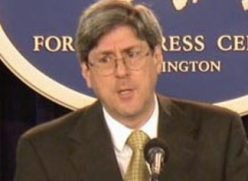
Pentagon insider says high US official Douglas Feith reported to Netanyahu
or go to
Aletho News Archives – Video-Images
Frlom the Archives
Who’s to blame for the Iraq war?
A not-so-trivial quiz
By Maidhc Ó Cathail | 14 March 2010
Maidhc Ó Cathail names and shames the top 19 politicians, academics and policy makers – all con men and all Zionist Jews – who lied and conspired to steer the US toward aggression against the Iraqi people. … continue
Blog Roll
 Aletho News
- ‘Not our war’: Trump’s naval coalition to reopen Strait of Hormuz dead in the water
- Iran declares support centers for USS Gerald R. Ford legitimate targets
- Moscow issues warning over Trump’s Golden Dome plan
- Brussels wants ‘our sons to die for Ukraine’ – Orban
- Where in the World Is Benjamin Netanyahu? On the Move or Out of Sight?
- Pentagon insider says high US official Douglas Feith reported to Netanyahu
- The Sludging of Rural America
- Lawyers’ groups demand end to British military bases in Cyprus
- CIA Assessment: The Resistance Cannot Be Crushed
- Hezbollah Returns: It Didn’t Start a War, It Is Ending One
- If Americans Knew
- Predictions of another 9/11, amid Israel-US killing spree – Not a ceasefire Day 157
- As US-Israel war on Iran rages, Gaza faces massive dust storm – Not a ceasefire Day 156
- No let-up in attacks on Gaza as Israel takes on Iran, Lebanon – Not a ceasefire Day 155
- ‘Of Course’: IDF Drops Case Against Soldiers Accused of Raping Palestinian Prisoner
- Don’t Fall for the Regime Change Talk. Israel Is ‘Mowing the Lawn’ in Iran
- Will Israel and the US wreck the Gulf States along with Iran?
- US so far burned through ‘years’ of munitions in Iran war: Report
- How the Israeli Tail Wags the American Dog
- Outdated intel likely led to deadly U.S. strike on Iranian elementary school, sources say
- Pentagon insider says high U.S official Douglas Feith reported to Netanyahu
- No Tricks Zone
- Storing Green Energy To Last Germany 10 Days Would Require A 60-Million Tonne Battery
- New Studies: UK Sea Levels Were 4 Meters Higher Than Today During The Mid-Holocene
- Destructive Green New Deal: German Energy And Metal Group Warns Of Drastic Crisis
- New Study Documents A 20-Year Pause In Arctic Sea Ice Decline – Driven By Internal Variability
- Wake-up Call: Survey Shows Majority Of Germans Now Favor Postponing Climate Targets!
- Televised! Leading German Political Candidate Tells Schoolchildren CO2 Makes Sun Hotter!
- New Study: A Century Warming Of 1.1°C Is ‘Commonplace’ And ‘Not Unusual’ During This Interglacial
- New Study: ‘Internal Noise’ And Volcanic Forcing Can Trigger 10-15°C Warming Within Decades
- Glaciers Worldwide Are Suddendly Surging, Experts Blame Warming!
- Surprising Discovery: Sahara Is Greening…Billions Of Trees Where Once Thought To Be Barren
 Aletho News