‘Year of kicking Russia in the ass’: US Senator Graham urges more Russia sanctions
RT | February 19, 2017
 Senator Lindsey Graham (R-SC) has said that 2017 is going to be “the year of kicking Russia in the ass” as he threatened Moscow with a new round of sanctions over Moscow’s alleged US election interference.
Speaking at the Munich Security Conference on Sunday, the Republican senator referred to accusations by both Republicans and Democrats: that Kremlin-backed hackers conspired to rig the 2016 US presidential election at the expense of Hillary Clinton, adding that a bipartisan investigation is due to get underway.
“If you’re worried that we’re not going to look long and hard at what Russia did in our election because Trump won and the Republicans are in charge, you don’t need to worry about that,” the South Carolina lawmaker told delegates from around the world. “I promise everybody in this room that Congress is going to take a long, hard look at what Russia did to undermine our elections, so they’ll be better prepared when they come your way.”
If the investigation turned up any evidence of Russian interference there would be consequences, Graham warned.
“So we’ve introduced Russia sanctions for interfering in our election, apart from what they did in Crimea, we’re going to have a vote on it. It’s going to be bipartisan, we’re going to get north of 75 votes and my goal is to put it on Trump’s desk and I hope he will embrace the idea that as the leader of the free world, he should be working with us to punish Russia.”
Graham said he believed Moscow would try to influence the upcoming elections in Europe. “To our German friends, you’re next. To our friends in France, they’re coming after you. And to my friend Mr. Lavrov, I hope you finally suffer some consequences for what you and your regime have been doing to democracies, and 2017 is going to be the year of kicking Russia in the ass in Congress,” he told delegates at the Bayerischer Hof Hotel on Sunday.
Moscow has consistently denied all allegations of any state-backed hacking while cybersecurity and intelligence experts have said there is no evidence for these claims.
“If I was the Chinese and I wanted to make it look like the Russians did it, I would use Russian language within the code, I would use Russian techniques of breaking into the organization,” cybersecurity pioneer John McAfee told RT in December, adding that “there simply is no way to assign a source for any attack.”
Israeli university to be established on Palestinian land in Salfit
Palestine Information Center – February 19, 2017
SALFIT – Israeli forces have leveled Palestinian lands in Mesha village, to the west of Salfit province, in favor of illegal settlement expansion.
Speaking with PIC, head of Mesha village council, Sabah Amer, said Palestinian lands have been increasingly seized and leveled by the Israeli occupation forces and authorities as part of underway endeavors to expand the Qana and She’ari Tekva illegal outposts.
Researcher Khaled Maali also said Palestinian lands in the area have been confiscated to establish an Israeli university at the expense of Palestinian lands, referring to the establishment of an Israeli university in Ariel outpost, at which nearly 25,000 Israeli settlers have been enrolled, as another case in point.
According to Maali, such moves contravene international humanitarian law, the Fourth Geneva Convention, and the Hague Convention, which prohibit the establishment of government institutions on occupied land.
Maali added that the swift pace of illegal settlement construction led to the dismemberment of over 90% of Palestinian lands in Mesha village and the isolation of Palestinian communities behind the apartheid fence. Serious damage has also been wrought on olive trees grown by Palestinian farmers in the area.
Mesha is surrounded by three illegal Israeli settlement outposts, including Qana and She’ari Tekva.
Foreign-Funded NGOs in Ecuador: Trojan Horse for Intervention?
teleSUR | February 18, 2017
Ecuador has come under fire for scrutinizing non-profits like Accion Ecologica, many of whom get millions from Europe and North America.
Ecuador, the tiny South American nation sandwiched between Colombia and Peru, rarely makes waves in the English-speaking world’s corporate mediascape. Last year, news traveled far on at least two occasions.
First, with an earthquake that killed at least 673 people. Second, when the government moved to investigate and potentially dissolve a nonprofit called Accion Ecologica in connection with deadly violence between members of an Amazonian tribe and police sent to protect a Chinese-operated mining project.
Ecologists and prominent activists friendly to the group, including heavy-weights such as Naomi Klein, called out what they characterized as a callous repression and criminalization of Indigenous people protecting the unparalleled richness of the Amazon and alleged state prejudice against an underdog non-profit organization that was only there to save the rainforest and its inhabitants.
Ecuador’s socialist government, on the other hand, sees the “underdog” label as misplaced.
NGOs may be seen as do-gooders, but that’s not always the case. As a country historically vulnerable to the whims of powers in the North, Ecuador has, under the administration of the outgoing President Rafael Correa, put up a guard against a new kind of public diplomacy from abroad that focuses on gaining the favor of civil society to indirectly execute their political priorities.
NGOs are flagged when they operate outside the bounds of the law and their stated objectives, indicators of potential pressure from outside funders to protect their interests rather than those of nationals.
“We’re an Ecuadorean NGO, born here in Ecuador and working for 30 years in the defense of the rights of the environment and of communities across the country, and for that work we are very well known, even at an international level,” Alexandra Almeida, president of Accion Ecologica, told teleSUR.
“But that doesn’t mean that a foreign organization could manipulate us with anything — with funds, with nothing — that’s how we operate.”
NGOs have rarely had to justify their work to anyone, let alone prove that they act for the good of the people only. But Ecuador is not an ordinary country. Rich in resources but export dependent, authorities are attempting to manage the many foreign hands trying to pull the country’s development in their favor.
Silent Action Meets Loud Reaction
This government is the first to scrutinize NGOs, but their scrutiny has not been limited to Accion Ecologica.
In 2012, Ecuadorean President Rafael Correa boldly declared that NGOs have been entering the country like never before during the previous decade. Many, backed by foreign states and foreign money, are out to destabilize the state, Ecuadorean leaders stated.
“Their interest is not the country, impoverished sectors, natural resources or strengthening democracies,” said Paola Pabon, director of the National Ministry of Political Management, which is responsible for tracking NGOs, in an interview with teleSUR last year. “What interests them is having control over governments, having influence over civil society to create elements of destabilization.”
Executive Decree 16, which went into effect in 2013, created a system to catalogue the financing, decision-making and activities of every registered social organization — a total of over 46,000 in the country, including non-profits, unions and community organizations, among others.
The resulting action saw 26 foreign NGOs expelled from the country for a lack of transparency and compliance with national law; in brief, for declaring themselves “non-governmental organizations” while acting on behalf of foreign governments. Among the more high-profile cases was Samaritan’s Purse, an evangelical missionary relief organization that received funding and support from USAID. Fifteen others were given two weeks to get their activities in order.
A handful of Indigenous organizations, which had previously mobilized against Correa’s government, attacked the decree via the Constitutional Court. Two years later, Ecuador reformed the regulations with Executive Decree 739, which fine-tuned the reasons for closing an NGO — the main one, “diverting from stated objectives” — and, caving to demand, eliminated the requirement for organizations to register projects financed from abroad.
Donor Nations: Generous or Greedy?
The trend that prompted Ecuador’s law was not without precedent.
Through the U.S. Agency for International Development, known as USAID, and the linked but publicly independent National Endowment for Democracy, known as NED, the United States pumped over US$100 million into Venezuela to create 300 new organizations credited with contributing to the coup d’etat against Hugo Chavez in 2002. In a similar move, USAID admitted that it tried to provoke a “Cuban Spring” by setting up Zunzuneo, a kind of Cuban Twitter, to circulate calls to protest.
The most common nonprofits close to foreign governments and private interests are those that stand tallest against their states. In Ecuador, that tends to be groups that work closely with Indigenous communities, with those protecting their right to their land and with those defending women and the environment. Funding by private foundations and corporations, while more widespread, is far less transparent and tougher to quantify. Big names like the Ford Foundation and Open Society, however, are well known for injecting funds into NGOs in the global south to advance specific political visions.
But the United States isn’t the only country to have funneled funds to Ecuador through NGOs.
Official numbers from Ecuador’s Chief Administrative Office of International Cooperation, or SETECI, show that since Correa assumed office in 2007 until 2015, foreign NGOs have managed over US$800 million from abroad. Top givers include the U.K. and Spain, followed by several European states.
No one, however, beats the United States. In that same period, the U.S. sent over twice the amount of money of the next-highest donor, with a total of over US$282 million and 780 projects, or 35 percent of all funding.
Of those funds, which only count NGOs based abroad that invested in local or regional projects, 13 went to projects in the Amazon led by non-profits like Care International, the Wildlife Conservation Society, the World Wildlife Fund, the Carnegie Endowment for International Peace and the Mitsubishi Corporation Foundation for the Americas. Projects based in Morona Santiago, the province where the anti-mining protests that led to the death of a police officer broke out, brought in over US$1 million from the U.S. since 2007.
The flow of funds is indicative of a broader attitude between receiver and giver, who “take advantage of the assumption that they have a perfect democracy, which is completely false – there’s a paternalistic attitude that must be regulated,” said Fernando Casado, research fellow at the National Institute for Higher Studies on public administration in Ecuador and Venezuela. Conversely, a flow in the opposite direction would immediately raise suspicion from developed countries, he added.
Yet money itself doesn’t tell the full tale: the funds are tied directly to foreign policy objectives, Casado told teleSUR. “The powers of the North have changed strategy.”
Each state has its own way. Germany, which has had 151 NGO projects in Ecuador since 2007, is known for meddling in affairs of developing countries through its Federal Ministry for Economic Cooperation and Development, or BMZ. When SETECI found that three-quarters of its funds went toward stopping another mining project in the Amazon’s Yasuni region last March, it kicked the German agency out of Ecuador.
The United States has several agencies do its work, the most prominent being USAID, NED — funded through money allocated to USAID by Congress — and the Broadcast Board of Governors. The stated missions: to promote development, democracy creation and a free press, respectively, while strictly adhering to U.S. foreign policy priorities.
“We should not have to do this kind of work covertly,” said former head of NED Carl Gershman on CIA missions to the New York Times in 1986. “It would be terrible for democratic groups around the world to be seen as subsidized by the CIA. We saw that in the 60s, and that’s why it has been discontinued. We have not had the capability of doing this, and that’s why the endowment was created.”
What Givers Want
The “work” the United States has set out for Ecuador — according to a 2016 Office of Inspector General report on the U.S. embassy leaked by WikiLeaks — is “to mitigate the effects of the contentious political environment created by the Ecuadorean Government” with the help of other government agencies, which play a “critical role.”
The report, intended for the eyes of the BBG and Congress, said the embassy was “actively engaged with civil society leaders and nongovernmental organizations to increase Ecuadorean awareness of and support for U.S. policies and values, promote Ecuadorean civil society and government accountability, and strengthen environmental initiatives.”
To set up a climate conducive to U.S. meddling, the U.S. Government Accountability Office included Ecuador on a shortlist with Colombia, Egypt and the West Bank/Gaza the year Correa was elected to closely study public opinion in “specific, targeted public awareness campaigns.”
It also either commissioned or was the beneficiary of a study from Stratfor, a secretive intelligence company contracted by the State Department and the U.S.’s multinational titans, which evaluated the extent to which Ecuador is manipulable by NGOs. The 2013 report, leaked by WikiLeaks, focused especially on how NGOs can influence trade policy and corporate regulation. Its conclusion: based on a scale likely defined in relation to other developing nations, Ecuador is fairly resilient to NGO pressure but has submitted in certain instances.
USAID sends hundreds of millions to local projects in Ecuador, some less explicitly political, but some indirectly benefiting opposition groups, according to U.S. Ambassador in Ecuador Adam Namm. BBG affiliate, TeleAmazonas, has been accused of fomenting strong opposition rhetoric against Correa. And the NED spends over US$1 million annually on dozens of local programs with broad objectives like “promoting citizen oversight of elected officials,” “monitoring due process and the independence of the judicial system,” “monitoring the use of public resources in government advertising” and “facilitating dialogue and consensus on democracy.”
Both Germany’s BMZ and USAID are back in Ecuador following a deluge of NGO activity after the April earthquake. The workload of the National Ministry of Political Management has peaked ever since, said Pabon.
The Sneaky Alliance With Mother Earth
One pet project of USAID was the Conservation in Managed Indigenous Areas, or Caiman, which ended before Correa took office but was among several USAID programs to conserve the country’s biodiversity and promote alliances between Indigenous communities and private businesses.
Caiman worked with various groups working in ecological and Indigenous rights, including Accion Ecologica. For several years, Caiman had Accion Ecologica help them battle against the Ministry of the Environment and train park rangers to oppose contamination from oil and mining.
Whether or not USAID or foreign foundations have funded Accion Ecologica directly is unclear. Unlike many others in the industry, the non-profit does not publish its financial information on its website, and refused multiple requests from teleSUR for copies of audits. When asked, the organization’s president said she does not know specifics on foreign funders and could not answer.
Almeida did say that Accion Ecologica receives funds from Europe — from individuals, “small organizations, alliances, groups that form” around fundraising events on ecological issues. She did not say how much or cite specific names but mentioned Italy and Belgium.
A 2012 investigation from Andes, an Ecuadorean state publication, found that both Accion Ecologica and the Regional Foundation of Human Rights Advising, another powerful nonprofit, are financed by the European Commission, Oilwatch, the Netherlands embassy and a few international ecological networks. Almeida said the accusations were false.
While Europe may be the principal interested party in the success of Accion Ecologica, the U.S. is also well known to have played an active role in similar battles.
In 2013, the year after Correa took the lead against foreign NGOs and a year before he expelled USAID, Bolivia accused USAID of spending US$22 million to divide Indigenous groups on the exploitation and nationalization of oil in their lands.
“Since the right can’t find arguments to oppose the process of change, it now turns to campesino, Indigenous and native leaders who are paid by several NGOs and foundations with perks to foment a climate of conflict with the national government to deteriorate the process of unification that the country is experiencing,” said Morales as he gave USAID the boot.
Beyond Accion Ecologica
“Theoretically speaking, NGOs shouldn’t exist,” said Casado. NGOs operate within a logic of narrowing, minimizing and weakening the role of the state so they can keep filling holes in public services and keep their jobs, which are at risk of disappearing if the state works as it should, added Casado.
“They elect themselves representatives of civil society in general,” and yet their role is limited and entirely reliant on and responsive to funding, which at the end of the day remains in their pockets. Other social organizations and popular movements, said Casado, operate only on conviction.
If an NGO is completely free to operate without regulations, a country would open itself to any corporate and foreign interest that found an open hand, he argued. Latin America is intimately familiar with that process — of consolidating power in the monied class — and NGOs back similar corporate interests, only with a more benevolent face.
It’s near-impossible to identify the perfect case of foreign intrusion — and, as in Accion Ecologica’s case, near-impossible to prove. Multiple factors are always at play, from the ideology of individual members to the decision-making process to however events play out on the ground. Casado said that the first step to uncovering hidden interests is financial transparency — a move that faces stiff opposition precisely for the interests that it could reveal.
Ecuador’s answer is to carefully collect records and draw a clear line between what is acceptable and what is not. Foreign NGOs, state the decree, cannot participate “in any form of party politics, any form of interference or proselytism, any threat to national security or public peace or any other activity not permitted under their migratory status.”
Case Closed?
When Accion Ecologica testified before the Interior Ministry and the Ministry of the Environment, it argued that it had been doing the same work — protecting the rainforest — for decades, always in a peaceful manner. The evidence presented showing they provoked violence through a series of tweets in and around the time of violent clashes was “a bit absurd, very absurd,” said Almeida.
In the end, the government’s case did not hold, and the Environment Ministry concluded there was not enough credible evidence to shut down the group. Accion Ecologica credited “pressure” from its supporters, as its representatives continue to urge for a deregulation of NGOs.
“It’s not only NGOs, but also any organization that will be at risk, especially their right to free expression and the right to free association” if the decree regulating NGOs remains intact, said Almeida.
Her position echoes those taken up by opposition politicians, whose one commonality is their depiction of Correa’s government as one systematically trouncing on citizens’ rights and freedoms.
In an election year, rhetoric makes the difference.
Dianileysis Cruz contributed reporting.
US Lawmakers Introduce Legislation to Unleash Nuclear Arms Race in Europe
By Andrei AKULOV | Strategic Culture Foundation | 19.02.2017
The INF Treaty was a major breakthrough to halt and reverse the Cold War-era nuclear arms race in Europe. There are growing signs that the treaty is in jeopardy. A possible US unilateral withdrawal and failure to resolve the compliance dispute could impede efforts to save the arms control regime from being eroded.
On February 16, Senator Tom Cotton (R-Arkansas), along with Senators Ron Johnson (R-Wisconsin) and Marco Rubio (R-Florida) introduced the Intermediate-Range Forces Treaty (INF) Preservation Act, legislation that would allow the United States to develop new intermediate-range missiles. Congressmen Ted Poe (R-Texas) and Mike Rogers (R-Alabama) introduced companion legislation in the House of Representatives.
Accusations of Russia violating the INF Treaty, not backed up by any evidence, were used as a pretext for introducing the measure. For instance, the New York Times has recently published report saying that Russia «has secretly deployed» a new nuclear-capable intermediate-range cruise missile, the SSC-8, in apparent violation of the 1987 treaty. «This legislation will give President Trump the tools he needs to show our friends and adversaries alike that ‘peace through strength’ is back», said Mike Rogers.
The INF Treaty is a key agreement between the United States and the Soviet Union which put a seal on the Cold War era. It eliminated all nuclear and conventional ground-launched ballistic and cruise missiles with intermediate ranges, defined as between 500-5,500 kilometers (3000-3400 miles).
If the bill becomes a law, it won’t add to US or NATO security. America has real interest in preserving the treaty in force. It has sound reasons for doing so. One of them is that US NATO allies greatly value the INF and want it to remain effective. A US withdrawal would raise concern on their part.
With no hard evidence of non-compliance produced, the US will be held responsible by international community for ending the treaty. If Washington possessed facts to substantiate the claim that Moscow is in violation of the treaty, it would have been provided them a long time ago.
The bill says the US is to «develop» new systems. But even if a decision were taken to return obsolete Pershing-2s and long-range Tomahawks, it would take time and effort. On its part, Russia can easily increase the range of existing Iskander missiles.
Developing new US systems would impose a new burden on an already stretched defense budget. Funding a new expensive program would draw funds from other accounts, such as new conventional weapons, the upgrade of strategic nuclear forces, the ballistic missile defense (BMD), you name it. Today, the US national debt is about $20 trillion and the clock is ticking.
Even if the provision of the bill is carried out and a new intermediate range system is in place, the US will face a tall order in finding an ally willing to host it and become a target for a pre-emptive strike by Russian armed forces. Such deployments would be viewed as extremely provocative to Moscow.
Even in the 1980s it was a close thing. Those days the plans to deploy INF forces met fierce domestic political and public opposition. A controversial decision would tear NATO apart at the time the US and its European allies don’t see eye to eye on many issues.
The same applies to deployment plans in the Pacific. Japan would worry about deteriorating the relationship with Russia and China. South Korea would fear such a deployment might disrupt its improving relations with China.
The times have changed. Today, Russia possesses cutting edge S-400 aid defense systems capable of countering not only ballistic but also cruise missiles with an operational range of 3,000−3,500 km (1,864-2,174 mi).
The Russian military is gearing up to test the first prototypes of its next-generation S-500 Prometey air and missile defense system. The weapon has no analogues in the world. S-500 is the fifth generation system capable of destroying intercontinental ballistic missiles and spacecraft, hypersonic cruise missiles and airplanes at speeds of higher than Mach 5. Its response time is only 3-4 seconds, just think about it! It can detect and simultaneously attack up to ten ballistic missile warheads out at 600 km flying at speeds of twenty-three thousand feet per second. The system can engage targets at altitudes of about 125 miles, including incoming ballistic missiles in space at ranges as great as 400 miles. Evidently, Russia has the means to counter the threat. It puts into doubt the effectiveness of any future intermediate range weapon the US would develop in accordance with legislation in question.
The end of INF treaty would provoke other states into an arms race the US cannot control.
The bill is introduced at the time the world is facing the most serious and comprehensive crisis in the fifty-year history of nuclear arms control. Since pulling out from the 1972 ABM Treaty, the US has been taking one step after another to undermine the arms control regime that has served as a pillar of international security for dozens of years. Now the US Congress is on the brink of unleashing an arms race with dire consequences for America itself.
Does it all make sense? Russia has recently announced its goal to shift from nuclear to conventional deterrence to make the world safer.
The recent initiative Germany, supported by leading the leading European partners, provides a new chance to address the problems of European security. With so many controversial issues on the agenda, Helsinki-2 would be the right way to launch discussions on creating a security regime from Lisbon to Vladivostok – something Moscow proposed a few years ago.
There are opportunities to seize and turn the tide as arms control is unraveling. Instead, a group of US lawmakers has introduced legislation to quash all hopes for a better world. Never before has the arms control regime been threatened so much. Voting for the bill means shooting yourself in the foot. The US will undermine its own security and create huge problems to overcome.
Hopefully, there will be enough sober-minded members of Congress to prevent the measure from becoming a law.
The Did-You-Talk-to-Russians Witch Hunt
By Robert Parry | Consortium News | February 18, 2017
In the anti-Russian frenzy sweeping American politics and media, Democrats, liberals and mainstream pundits are calling for an investigative body that could become a new kind of House Un-American Activities Committee to hunt down Americans who have communicated with Russians.
The proposed commission would have broad subpoena powers to investigate alleged connections between Trump’s supporters and the Russian government with the apparent goal of asking if they now have or have ever talked to a Russian who might have some tie to the Kremlin or its intelligence agencies.
Such an admission apparently would be prima facie evidence of disloyalty, a guilt-by-association “crime” on par with Sen. Joe McCarthy’s Cold War pursuit of “communists” who supposedly had infiltrated the U.S. government, the film industry and other American institutions.
Operating parallel to McCarthy’s Red Scare hearings was the House Un-American Activities Committee (or HUAC), a standing congressional panel from 1945-1975 when it was best known for investigating alleged communist subversion and propaganda. One of its top achievements was the blacklisting of the “Hollywood Ten” whose careers in the movie industry were damaged or destroyed.
Although the Cold War has long been over – and Russia has often cooperated with the U.S. government, especially on national security issues such as supplying U.S. troops in Afghanistan – Democrats and liberals seem ready to force Americans to again prove their loyalty if they engaged in conversations with Russians.
Or perhaps these “witnesses” can be entrapped into perjury charges if their recollections of conversations with Russians don’t match up with transcripts of their intercepted communications, a tactic similar to ones used by Sen. McCarthy and HUAC to trip up and imprison targets over such secondary charges.
Ousted National Security Advisor Michael Flynn has already encountered such a predicament because he couldn’t recall all the details of a phone conversation with Russian Ambassador Sergey Kislyak on Dec. 29, 2016, after Flynn took the call while vacationing in the Dominican Republic.
When Obama administration holdovers at the Justice Department decided to gin up a legal premise to go after Flynn, they cited the Logan Act, a law enacted in 1799 to prohibit private citizens from negotiating with foreign adversaries but never used to convict anyone. The law also is of dubious constitutionality and was surely never intended to apply to a president-elect’s advisers.
However, based on that flimsy pretext, FBI agents – with a transcript of the electronic intercept of the Kislyak-Flynn phone call in hand – tested Flynn’s memory of the conversation and found his recollections incomplete. Gotcha – lying to the FBI!
Under mounting media and political pressure, President Trump fired Flynn, apparently hoping that tossing Flynn overboard to the circling sharks would somehow calm the sharks down. Instead, blood in the water added to the frenzy.
Iran-Contra Comparison
Some prominent Democrats and liberals have compared Trump-connected contacts with Russians to President Richard Nixon’s Watergate scandal or President Reagan’s Iran-Contra Affair, an issue that I know a great deal about having helped expose it as a reporter for The Associated Press in the 1980s.
The key difference is that Iran-Contra was an unconstitutional effort by the Reagan administration to finance an illegal war against Nicaragua’s Sandinista government in defiance of a congressional ban. The Trump-connected communications with Russians – to the degree they have occurred – appear to have been aimed at preventing a new and dangerous Cold War that could lead to a nuclear holocaust.
In other words, Iran-Contra was about enabling a paramilitary force to continue its brutal marauding inside a country that was no threat to the United States while the current “scandal” is about people trying to avoid hostilities between two nuclear superpowers, an existential threat that many mainstream and liberal pundits don’t want to recognize.
Indeed, there is a troubling denial-ism about the risks of an accidental or intentional war with Russia as the U.S. media and much of Official Washington’s establishment have lots of fun demonizing Russian President Vladimir Putin and jabbing the Russians by shoving NATO troops up to their borders and deploying anti-ballistic missiles in Eastern Europe. For some crazy reason, the Russians feel threatened.
False Narratives
This Russia-bashing and Russia-baiting have been accompanied by false narratives presented in the major U.S. newspapers, including The New York Times and The Washington Post, to justify increased tensions.
For instance, the Post’s senior foreign affairs writer Karen DeYoung on Friday described the civil war in Ukraine this way: “That conflict began when Russia invaded and annexed Crimea in 2014, then backed separatists in eastern Ukraine in what has become a grinding war, despite a deal to end it, called the Minsk agreement, negotiated with Putin by the leaders of France and Germany.”
But DeYoung’s synopsis is simply not true. The crisis began in the fall of 2013 when Ukraine’s elected President Viktor Yanukovych backed out of what he regarded as a costly and unacceptable association agreement with the European Union, a move which prompted protests by Ukrainians in Kiev’s Maidan square.
The Obama administration’s State Department, U.S. neocon politicians such as Sen. John McCain, and various U.S.-backed “non-governmental organizations” then stoked those protests against Yanukovych, which grew violent as trained ultra-nationalist and neo-Nazi street fighters poured in from western Ukraine.
In early 2014, a coup to overthrow the democratically elected Yanukovych took shape under the guidance of U.S. Assistant Secretary of State Victoria Nuland and U.S. Ambassador to Ukraine Geoffrey Pyatt who were caught in a phone call in late January or early February 2014 conspiring to impose new leadership inside Ukraine.
Nuland disparaged a less extreme strategy favored by European diplomats with the pithy remark: “Fuck the E.U.” and went on to declare “Yats is the guy,” favoring Arseniy Yatsenyuk as the new leader. Nuland then pondered how to “glue this thing” while Pyatt ruminated about how to “midwife this thing.”
On Feb. 20, 2014, a mysterious sniper apparently firing from a building controlled by the ultranationalist Right Sektor killed both police and protesters, setting off a day of violence that left about 70 people dead including more than a dozen police.
The next day, three European governments struck a deal with Yanukovych in which he agreed to early elections and accepted reduced powers. But that political settlement wasn’t enough for the U.S.-backed militants who stormed government buildings on Feb. 22, forcing Yanukovych and his officials to flee for their lives.
Instead of standing by the Feb. 21 agreement, which the European nations had “guaranteed,” Nuland pushed for and got U.S. allies to accept the new post-coup regime as “legitimate,” with Yatsenyuk becoming prime minister and several top government posts given to the ultranationalists and neo-Nazis.
Spreading Violence
In the ensuing days, the right-wing violence spread beyond Kiev, prompting Crimea’s legislature to propose secession from Ukraine and readmission to Russia, whose relationship to the peninsula dated back to Catherine the Great.
Crimea scheduled a referendum that was opposed by the new regime in Kiev. Russian troops did not “invade” Crimea because some 20,000 were already stationed there as part of a basing agreement at the Black Sea port of Sevastopol. The Russians did provide security for the referendum but there was no evidence of intimidation as the citizens of Crimea voted by 96 percent to leave Ukraine and rejoin Russia, a move that Putin and the Russian duma accepted.
Eastern Ukrainians tried to follow Crimea’s lead with their own referendum, but Putin and Russia rejected their appeals to secede. However, when the Kiev regime launched an “Anti-Terrorism Operation” against the so-called Donbass region – spearheaded by ultra-nationalist and neo-Nazi militias – Russia provided military assistance so these ethnic Russians would not be annihilated.
Karen DeYoung also framed the Minsk agreement as if it were imposed on Putin when he was one of its principal proponents and architects, winning its approval in early 2015 at a time when the Ukrainian military was facing battlefield reversals.
But Assistant Secretary Nuland, working with Prime Minister Yatsenyuk and the Ukrainian parliament, sabotaged the agreement by requiring the Donbass rebels to first surrender which they were unwilling to do, having no faith in the sincerity of the Kiev regime to live up to its commitment to grant limited autonomy to the Donbass.
In other words, Kiev inserted a poison pill to prevent a peaceful resolution, but the Western media and governments always blame the Minsk failure on Putin.
If Karen DeYoung wanted to boil all this history down to one paragraph, it might go: “The Ukraine conflict began when U.S. officials supported the violent overthrow of elected President Viktor Yanukovych, prompting Crimea to rejoin Russia and causing ethnic Russians in the east to rise up against the U.S.-backed coup regime in Kiev, which then sought to crush the rebellion. The Kiev regime later torpedoed a peace deal that had been hammered out by Russian, Ukrainian and European negotiators in Minsk.”
But such a summary would not have the desired propaganda effect on the American people. It would not present the U.S.-backed side as the “white hats” and the pro-Russia side as the “black hats.”
The simple truth is that the story of Ukraine is far more complex and multi-sided than The Washington Post, The New York Times and most mainstream U.S. news outlets want to admit. They simply start the clock at the point of Crimea’s rejection of the post-coup regime and distort those facts to present the situation simply as a “Russian invasion.”
A Whipped-Up Hysteria
The major media’s distortion is so egregious that you could call it a lie, but it is a lie that has proved very useful in whipping up the current anti-Russian hysteria that is sweeping Official Washington and that has given birth to a New Cold War, now accompanied by a New McCarthyism that deems anyone who doesn’t accept the “groupthink” a “Russian apologist” or a “Moscow stooge.”
Since last November’s election, this New McCarthyism has merged with hatred toward Donald Trump, especially after the outgoing Obama administration lodged unproven accusations that Russia undercut Hillary Clinton’s campaign by hacking into the emails of the Democratic National Committee and those of her campaign chairman John Podesta – and slipped that information to WikiLeaks.
Those emails showed how the DNC undercut the rival campaign of Sen. Bernie Sanders and revealed the contents of Clinton’s speeches to Wall Street banks as well as pay-to-play aspects of the Clinton Foundation, information that Clinton wanted to keep from the voters.
But no one thought the emails were a major factor in the Clinton-Trump race; indeed, Clinton blamed her stunning defeat on FBI Director James Comey’s last-minute decision to reopen and then re-close his investigation into security concerns about her use of a private email server as Secretary of State.
But the script on how Clinton lost was flipped during the Trump transition as President Obama’s intelligence agencies floated the Russia-hacked-the-election scenario although presenting no public evidence to support the claims. WikiLeaks representatives also denied getting the material from Russia, suggesting instead that it was leaked by two different American insiders.
A Ministry of Truth
Still, during the post-election period, the anti-Russian hysteria continued to build. In November, The Washington Post highlighted claims by an anonymous group called PropOrNot accusing some 200 Web sites, including Consortiumnews.com and other major independent media outlets, of disseminating Russian “propaganda.”
The New York Times joined in the frenzy by calling for leading technology companies to marginalize Web sites that are deemed to be publishing “fake news,” a vague term that was applied not just to intentionally false stories but to information that questioned official narratives, no matter how dubious those narratives were. The New McCarthyism was morphing into a New Orwellianism.
The movement toward a Ministry of Truth gained further momentum in December when Congress passed and President Obama signed a military authorization bill that included a new $160 million bureaucracy to identify and counter alleged “Russian propaganda.”
The anger of Democrats and liberals toward President Trump in his first month has added more fuel to the Russia-bashing with some Democrats and liberals seeing it as a possible route toward neutralizing or impeaching Trump. Thus, the calls for a full-scale investigation with subpoena power to demand documents and compel testimony.
While the idea of getting to the full truth has a superficial appeal, it also carries dangers of launching a witch hunt that would drag American citizens before inquisitors asking about any contacts – no matter how innocuous – with Russians.
In the late 1940s and early 1950s, HUAC also claimed that all it wanted was the truth about whether some Americans were allied with or sympathetic to Moscow. Sen. Joe McCarthy offered a similar rationale when he was trying to root out “disloyal” Americans with the question, “are you now or have you ever been a communist?”
That Democrats and liberals who hold the McCarthy era in understandable disdain would now seek to rekindle something similar reeks of rank opportunism and gross hypocrisy – doing whatever it takes to “get Trump” and build an activist movement that can revive the Democratic Party’s flagging political hopes.
But this particular opportunism and hypocrisy also carries with it the prospect of blindly ramping up tensions with Russia, diverting more taxpayer money into the Military-Industrial Complex and conceivably sparking – whether planned or unplanned – a nuclear Armageddon that could eliminate life on the planet. Perhaps this anti-Trump strategy should be rethought.
Investigative reporter Robert Parry broke many of the Iran-Contra stories for The Associated Press and Newsweek in the 1980s.
‘Any Israeli Attempt to Undermine Lebanese Sovereignty will Meet an Appropriate Response’
Al-Manar – February 18, 2017
Lebanese President General Michel Aoun deemed on Saturday that “the message content of Israel’s Delegate at the United Nations, Danny Danon, poses a threat to Lebanon,” adding that “the international community ought to pay attention to the possible Israeli hostile intentions against Lebanon.”
Speaking before his interlocutors at Baabda Palace this afternoon, Aoun asserted that “any Israeli attempt to undermine the sovereignty of Lebanon shall be confronted with the appropriate response.”
The President stressed that “Israel must comply with Security Council resolutions before any other, yet it still refuses to implement Resolution #1701 and the transition from the cessation of hostilities to a ceasefire stage, despite the fact that more than 11 years have passed since the release of said Resolution.”
“Israel still occupies Lebanese territories in the northern part of Ghajar, Shebaa Farms and Kfar Shouba Hilltops, while effecting daily violations of the Blue Line and Lebanese sovereignty by air and sea,” Aoun went on to indicate.
“In addition, half a million Palestinians are still forced to stay away from their homeland, hosted by Lebanon in the absence of their right to return to their land and property, which constitutes an act of aggression against Lebanon and its people,” he added.
“This act of aggression falls under the content of Article 51 of the UN Charter, which gives Lebanon and its people the natural right to defend their land,” Aoun underscored.
The President concluded that “Lebanon, which has respected all obligations towards the United Nations and its labor force in the South, views the Israeli message to the United Nations as a blatant attempt to threaten the security and stability enjoyed by the southern towns and villages located within the international area of operations, and therefore, bears full responsibility for any aggression against Lebanon.”
Source: NNA
Canada court ruling violates international law: Iran
Press TV – February 19, 2017
Tehran has rejected a recent ruling issued by Canada’s Ontario Superior Court of Justice against Iran, saying the verdict violates international law.
“This ruling contravenes the basic principles of the legal impunity of governments and their assets, and is unacceptable,” Foreign Ministry spokesman Bahram Qassemi said on Sunday.
Justice Glenn Hainey ruled on February 8 that the Islamic Republic had to pay $300,000 in legal costs to those who claim to be victims of Iranian support for resistance groups.
The plaintiffs had sought compensation in the Ontario court under Canada’s Justice for Victims of Terrorism Act. The verdict has given Iran 30 days to pay the sum.
Qassemi said the Islamic Republic has already conveyed its expression of formal protest to the Canadian government and reserved the right to take political and legal measures in that regard.
In June 2016, the same court ordered $13 million in non-diplomatic Iranian assets to be given to three groups of plaintiffs.
The decision was similar to US Supreme Court’s ruling in April 2016 to hand over $2 billion in Iran’s frozen assets to American families of those killed in the 1983 bombing of US Marine Corps barracks in Beirut and other attacks.
Iran’s President Hassan Rouhani announced at that time that the country had filed a lawsuit against the US with the International Court of Justice (ICJ) – the principal judicial organ of the United Nations.
Earlier this month, Iran’s Presidential Office said in a statement that the lawsuit had been officially put in motion.
Washington’s seizure of Iran’s assets is against the Treaty of Amity, Economic Relations, and Consular Rights which was signed by the two countries in August 1955 – referred to as the 1955 Treaty – and is “still effective,” the statement added.
US Lawmakers Want North Korea Back on Terrorism Sponsor List
Sputnik – 19.02.2017
A group of US lawmakers is seeking to return North Korea to the list of states that sponsor terrorism and give it once again the less-than-honorable title of terrorist state. US President George W. Bush took North Korea off the list some nine years ago in order to support talks about North Korea’s nuclear program and to offer sanctions relief in exchange for North Korean concessions.
Now, according to the lawmakers, the alleged assassination of Kim Jong Nam shows that North Korea is practicing state terrorism. The lawmakers are not short on aggressive rhetoric.
“The murder once again highlights the treachery of North Korea,” said Senator Cory Gardner of Colorado, who also chairs a Senate panel on Asia.
“We should never have taken North Korea off the state sponsor of terrorism list,” Democratic Representative Brad Sherman of California told a Congressional hearing Thursday.
“It is time to put little Kim back on that list because he is a world terrorist and a threat to world peace,” said the bill’s Republican sponsor, Representative Ted Poe of Texas.
So far, no official conclusions have been made by the investigation as to who really killed Kim Jong Nam, or why. Experts say until the investigation is complete, making allegations would be “irresponsible.”
According to military.com, North Korea was first put on the list of terrorist states back in 1987, after a bomb explosion destroyed the South Korean Boeing 747 known as Korean Air Flight 858. The US State Department treated the incident as a state-sponsored act of terrorism.
North Korea was removed from the list by US President George W. Bush in 2008, “to smooth the way for aid-for-disarmament negotiations,” the website reads.
If the hawkish lawmakers are to put the country back on the list, they will have to provide solid evidence that the country’s government “repeatedly” supported international acts of terrorism.
However, that is going to prove quite a challenge, since back in 2016 the US State Department officially declared that North Korea “is not known to have sponsored any terrorist acts” since the plane attack 30 years ago. This statement came as a response to another attempt to relist North Korea as a terrorist state in June 2016.
But the lawmakers insist that North Korea’s record be reviewed again. According to Gardner, there is evidence of North Korean “actions and relationships that would meet the criteria of state sponsor of terror.”
It should be noted that US officials repeatedly claimed that there was “evidence” of alleged Russian meddling with US presidential elections in 2016, though it has presented precious little to the public.
North Korea is one of the most sanctioned countries in the world. Its aspiration to secure nuclear weapons in conjunction with its official status as a communist state has caused the United States and the UN to impose numerous sanctions, which severely reduce the country’s trade options. However, each round of sanctions also erodes the space for diplomacy.
Sanctions so far have not prevented North Korea from obtaining nuclear weapons, but they do affect the standard of living of the common people in the country.
Featured Video
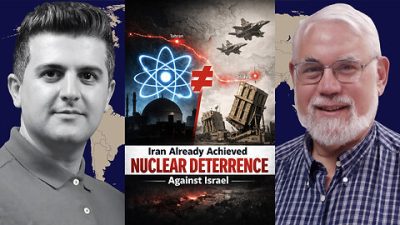
Prof. Ted Postol: Iran Already Achieved Nuclear Deterrence Against Israel
or go to
Aletho News Archives – Video-Images
From the Archives
How the occupied mentality syndrome works
Saudi Arabia on the American chessboard – Part 3
By B. J. Sabri | American Herald Tribune | June 27, 2016
Read part 2: “The occupied mentality Syndrome“
Previously I argued whether Saudi Arabia’s repeated involvements in U.S. interventions and wars stem from free national will or in response to a specific condition. For starters, in Saudi Arabia there is no national will. In Saudi Arabia, the national will is the will of the Al Saud clan. Still, when a major Arab state allies itself with a superpower that committed unspeakable crimes against humanity in almost every Arab country, then something is wrong. This fact alone should compel us to examine the U.S.-Saudi relation for one exceptional reason. As a result of the U.S.-Saudi wars, hundreds of thousands of people in Afghanistan, Iraq, Iran, Libya, Syria, Yemen, and Somalia have lost their lives. Millions became displaced in their own homelands. And millions more rendered refugees.
Attributing the Saudi policies to the bonds of “partnership” with the U.S. is frivolous. There are no bonds between these two thugs except those of business, military deals, secret plots, and wars. Proving this point, bonds such as these have no space for the American and Saudi peoples to share significant cultural or societal exchanges. If partnership is not the reason for the Saudi contribution to the U.S. strategy of empire and imperialism, then another reason must exist.
This leads to three possibilities. … continue
Blog Roll
 Aletho News
- NIAID/NIH and USDA Fund Bioengineered Chimeric Influenza Viruses Built Using Pandemic H1N1 Components: Journal ‘Science Advances’
- Hezbollah hits Israeli warship off Lebanon’s coast, sets it aflame
- Iran slams US strikes on B1 bridge, Mahshahr petrochemical plants as ‘blatant acts of state terrorism’
- In letter to UN chief, Araghchi warns of dire consequences of US-Israeli attacks on Iran’s nuclear facilities
- Why the CIA conspiracy to invade Iran with Kurdish militias failed
- Why Are Upbeat US Claims About Mission to Rescue Pilot ‘Highly Questionable’?
- Aircraft destroyed during US ‘rescue’ of downed F-15 pilot cost more than $100 million each
- Washington University removes professor who condemned US-Israeli war on Iran
- Russia Warns of Retaliation as UK Authorizes Seizure of Vessels
- Serbia thwarts plot to bomb Russia-Hungary gas pipeline – Vucic
- If Americans Knew
- In Iran, Israel-US take aim at “reason, research, and freedom of thought” – Daily Update
- US loses planes over Iran, Israel downgrades Lebanon war goals – Daily Update
- Israel Is Blocking Palestinians from Easter at Church Where Jesus Resurrected
- Plot to assassinate Palestinian activist follows harassment campaign promoted by Zionist groups and elected officials
- Prominent New York synagogue hosts presentation on why U.S. Jews should support the ethnic cleansing of Gaza
- Tapper vs. Piker: Is the CNN Anchor Auditioning for David Ellison?
- Shouldn’t Democrats Be Able to Condemn Genocide?
- Israel-US kill negotiators, destroy civilian structures, but Iran’s military capabilities still largely intact – Daily Update
- ‘War crime’: Global condemnation as Israeli ministers celebrate death penalty law targeting Palestinian prisoners
- 7 Ways Israel Is Turning Lebanon Into Gaza
- No Tricks Zone
- An Inconvenient Tree: Uncovered In Alps… Europe Much Warmer Than Today 6000 Years Ago
- New Study Reports A 60% Slowdown In Greenland’s Ice Loss Rate In The Last Decade
- Low Intensity Tornado Wrecks Major Solar Farm, Creating A Potential Toxic Dump
- New Study Finds Warming Saves Lives…Cold Temperatures 12 Times More Deadly Than Excess Heat
- German Science Blog Accuses PIK Climate Institute Of Hallucinating Climate Tipping Points
- Devastating Assessment Of Comirnaty Vaccine By Former Senior Pfizer Europe Toxicologist
- New Study: CO2 Is ‘Effectively Negligible’ As An Explanatory Climate Change Factor Since 2000
- Former Pfizer Toxicologist Dr. Helmut Sterz Tells Bundestag Hearing Pfizer Vaccine Should Have Never Been Approved
- Energy Expert: Germany’s Nuclear Phaseout Was A “500 Billion Euro Mistake”
- New Research: South Australia’s Mid-Holocene Sea Surface Temperatures Were 4°C Warmer Than Today
 Aletho News