Sudan: US conditioning removal from terror list on normalisation with Israel
MEMO | September 7, 2020
The United States (US) has conditioned Sudan’s removal from a list of states sponsors of terrorism on its normalisation of diplomatic ties with Israel, Sudanese Foreign Minister, Omer Ismail, announced yesterday.
“US Secretary of State Mike Pompeo combined, during his visit to Khartoum in late August, the two files of the normalisation and the removal of Sudan from the terror list,” Ismail told local Al-Tayyar newspaper, adding that it was “important to fulfil defined conditions for normalisation, even if it is the will of Sudan.”
He stressed that his country’s transitional government did not have the “authority to make such a decision [to normalise ties with Israel],” referring to remarks made by the Sudanese Prime Minister Abdullah Hamdok during Pompeo’s recent visit to Khartoum.
Sudan has been widely tipped to be the next Arab country that would normalise ties with Israel after the United Arab Emirates (UAE) agreed to do so as part of a US-brokered agreement in mid-August.
Shtayyeh: PA Ready to Talk with Israel Based on International Resolutions
Palestine Chronicle | September 7, 2020
Palestinian Authority Prime Minister Mohammed Shtayyeh said on Sunday that the leadership is ready to return to a political track with Israel based on international resolutions and agreements already signed by the two sides, the Palestinian news agency WAFA reported.
Shtayyeh made his comments during a meeting with the German Minister of State Niels Annen in Ramallah.
The PA official praised Germany’s rejection of Israel’s annexation plans and support for the two-state solution. He stressed that the solid international and Arab position and the will of the Palestinian leadership and people combined to thwart the plans.
Shtayyeh also reiterated the PA’s readiness to return to the political track based on clear terms of reference, including signed agreements with Israel and international law as well as resolutions recognized by the global community.
“If the annexation stops,” he said, “we will not allow the continuation of the status quo, whereby [illegal] settlements and the undermining of the establishment of a Palestinian state continue.” He called on Germany to play a role in ending the status quo through a serious political track.
Palestinian-Israeli talks have been stalled since 2014 after the failure of the then US Secretary of State John Kerry to get the two sides to reach a peace agreement. PA President Mahmoud Abbas announced on May 19 that the PA is canceling all agreements with Israel and the US, as a direct response to Israel’s annexation plans.
Last week, Abbas called for an international peace conference under the UN umbrella and based on new talks with Israel launched from the Arab Peace initiatives.
Imposing sanctions on Russian officials for the alleged poisoning of Alexey Navalny is ‘absurd’ & ‘unacceptable’ says Kremlin
By Jonny Tickle | RT | September 7, 2020
The Kremlin has ridiculed the suggested creation of a ‘Navalny List’ that would impose more sanctions on Russians, following accusations that Moscow is responsible for the alleged poison attack on opposition figure Alexey Navalny.
On Saturday, the American conservative journalist Bret Stephens wrote in the New York Times that the US should pass a ‘Navalny Act,’ similar to the 2012 Magnitsky Act, in order to punish Russian authorities for the poisoning of the political blogger.
“There are many absurd initiatives, both on the right and on the left,” said Kremlin spokesman Dmitry Peskov, explaining that it is “unacceptable” to associate the Russian leadership with the alleged attack on Navalny.
According to Stephens, the proposal has been backed by vulture capitalist Bill Browder, who is wanted on criminal charges in Russia, who suggested that a long list of officials should be punished simultaneously by the United States, United Kingdom, Canada, the European Union, and Australia. Browder is best known for pushing governments worldwide to impose sanctions in retaliation for the death of Russian auditor Sergei Magnitsky, who died in a Moscow prison in 2009, eight days before he was due to stand trial for alleged financial offenses.
Since Magnitsky’s death, Browder has courted politicians from all corners of the globe to punish those he deems responsible. In 2012, this prompted the US to adopt the Magnitsky Act, which allowed the US to sanction numerous Russian officials and businessmen over alleged human rights violations. Despite allegations that Browder has fabricated parts of the auditor’s story, which have been largely ignored by US/UK media, similar legislation has also been passed in Canada and Britain.
“It would be strange if a person like Browder, who is wanted by Russia for tax and other crimes, did not agree with such absurd proposals,” Peskov pointed out.
Navalny, a well-known protest leader and anti-corruption campaigner, was taken ill on August 20 during a flight from Tomsk to Moscow, which was forced to land in the Siberian city of Omsk. After being taken to the hospital, Navalny’s associates asked that he be transferred for treatment in Germany. Two days later, he landed in Berlin, where on Monday he was described as steadily emerging from a medically induced a coma in that city’s Charité clinic. According to the German authorities, the opposition figure was poisoned with a nerve agent from the Novichok group.
Political pardon given by Maduro may be a checkmate against Venezuelan opposition
By Lucas Leiroz | September 7, 2020
In Venezuela, Juan Guaidó no longer appears to be the leader of the opposition. The forgiveness of 110 opponents by President Nicolás Maduro completely fragmented the political wing opposing the regime, which, in practice, removes from Guaidó the “monopoly” of militancy against the government. Maduro’s decision to forgive as many opponents as possible seems particularly strategic in an election year. For the December 2020 parliamentary elections, Maduro’s allies represent the only unified and solidly based political wing in the country, while currently his opponents are fragmented into several factions.
Another oppositionist leader, Henrique Capriles has already announced that he will dispute the elections. In recent times, after a long period of silence and inactivity, Capriles has occupied an increasingly prominent place in Venezuelan politics, diminishing Guaidó’s influence on the opposition. Capriles seems to have a more interesting political alternative for some opposition groups than the proposal by Guaidó, who is a politician absolutely aligned with external interests and who openly defends Venezuela’s total subordination to Washington.
Perhaps this was the reason for the fall of Guaidó’s political strength. 2020 was for the opposition leader the year of his abrupt fall. On February 5, Guaidó attended a conference at the Capitol in Washington DC and was applauded by Donald Trump, Nancy Pelosi and everyone in attendance. At that time, the illusion that Guaidó was in fact the president of Venezuela was fully consolidated. Guaidó himself believed to be the country’s president, which was the starting point of his downfall.
It seemed inevitable that the invention of the “Guaidó’s presidency” would result in the opposition being closed to the Venezuelan political reality. The history of the opposition leader, since his recognition in January 2019 by Trump, is a succession of errors and deficiencies that denounce his total inability to lead the country. The most notable mistakes so far have been his explicit participation in the landing of Colombian mercenaries on the Venezuelan coast and the leakage of his connections with drug trafficking in South America, which has greatly weakened his public image inside and outside Venezuela.
Guaidó’s decline, at first, had little impact on the Venezuelan opposition, as there was his “recognition” as the country’s president. But this illusion could not last long. The proximity of the parliamentary elections in December aroused in the Venezuelan opposition a strong wave of political realism and led different factions to assume the obvious truth: Guaidó is not the president of the country. This fact becomes even more evident when Maduro pardons and legalizes more than one hundred opponents, creating ties of cordiality in internal disputes – something that Guaidó still refuses to accept. Then a scenario was created in which the opposition is divided between those who recognize the legitimacy of the government and oppose it politically in the elections and, on the other hand, Guaidó, who recognizes himself as president with American support. This new scenario will completely change the way in which political disputes in Venezuela will take place and may even destabilize the opposition’s international alliances.
How long will Washington invest in Guaidó as its ally in opposing Maduro? What makes Guaidó more interesting than, for example, the political figure of Capriles or any other politician who will announce his candidacy for the December elections? Guaidó will not run in the parliamentary elections because he believes he is the president of the country, while other politicians will run and will be able to make real and effective opposition against Maduro. Will international actors interested in the fall of the government really continue to fuel the illusion that Guaidó is the president rather than supporting opponents within Parliament? It is a question that remains unanswered, but we can predict the outcome.
Indeed, there is no future for the Venezuelan opposition as it is today. The entire political wing that opposes Maduro is absolutely fragmented, with no unity of thought among its representatives, much less a solid national project. The only thing in common that opponents want is to overthrow Maduro, but that will not happen so easily. The Venezuelan government remains strong and well-structured, with an effective political apparatus at its disposal, which cannot be seen in the opposition. Opponents’ political forgiveness was a checkmate for the next elections. The weakness of the opposition became clear and all of its representatives were disadvantaged: Guaidó lost political strength and will possibly be without international alliances; the other opponents have broken ties with Guaidó and are not strong enough to face the government, even though they may run for election.
Lucas Leiroz is a research fellow in international law at the Federal University of Rio de Janeiro.
NATO jets routinely imitate MISSILE STRIKES against Russia – defense minister
RT | September 7, 2020
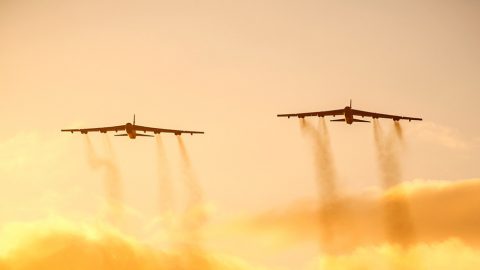
The US and NATO air forces have not only increased their surveillance activities along Russia’s borders, but now also routinely train for potential strikes on the country’s soil, Defense Minister Sergey Shoigu said.
Speaking to Russian TV on Sunday, Shoigu noted a sharp increase in foreign surveillance and training flights testing the country’s borders and air defenses. Last month such activities increased by some 30 percent compared to last August. Moreover, the bloc’s aircraft have been actively training in conducting air strikes, routinely performing mock missile launches on targets within the country, Shoigu revealed.
“The most alarming is that if earlier – even though not that frequently – there were mainly reconnaissance aircraft, they’ve now begun regular training flights with large numbers of planes, during which the mock missile strikes are conducted.”
Over the past few weeks, several incidents between Russian and NATO planes occurred in close proximity to the country’s borders. The latest took place Friday, when three nuclear-capable US Air Force B-52H strategic bombers approached Russia’s border through Ukrainian airspace. The bombers were intercepted by eight fighter jets and warned away from the border.
Another incident involving US strategic bombers occurred late in August, when a B-52H was intercepted by a Russian Su-27 fighter jet over the Baltic Sea. The altercation prompted a wider international scandal, as another NATO country – Denmark – claimed the Russian plane violated the country’s borders while chasing the US plane. Moscow, however, has firmly denied the accusations, insisting that the interception was made in accordance with all international rules.
The Oklahoma City Bombing Story You Were Never Told About
By S.M. Gibson – ANTIMEDIA – April 19, 2018
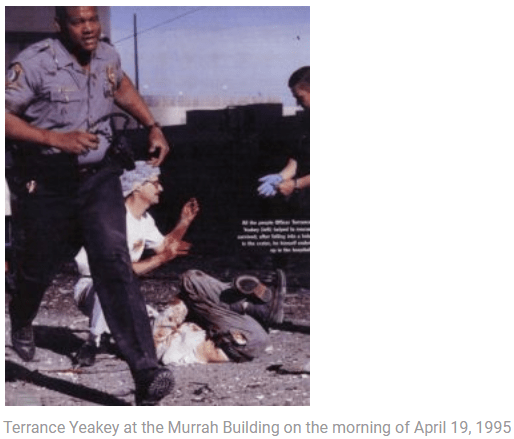
Sgt. Terrance Yeakey was an Oklahoma City Police Officer, a first responder to the OKC bombing, and an American hero. Officer Yeakey, known to friends as Terry, saved the lives of eight people from the Alfred P. Murrah building on the morning of April 19, 1995.
Terry was a few blocks away from Timothy McVeigh and the now infamous Ryder truck-which was brimming with explosives-when it detonated and erased the lives of 168 people, including 19 children. Yeakey rushed to the blast site, and without regard for his own life, began pulling people from the rubble one by one.
Instead of being showered with accolades by his government for his heroic efforts, Terrance was silenced for what he witnessed in the direct aftermath of one of largest mass murders that the United States has ever seen.
No one is quite sure what Terry actually observed at the Murrah building that April morning, but according to all indications, whatever it was he witnessed did not sync up with the official narrative released by the United States government.
Officer Yeakey began compiling evidence against the tale put out by federal officials and stored his findings in a storage facility outside of El Reno, Oklahoma. The data he was accumulating was also in direct contradiction to “the facts” being reported by media outlets worldwide. According to friends and family, Terry began being intimidated by federal authorities because of his personal pursuit for truth and the information which he possessed. He was being pressured to put an end to his independent investigation.
Terry’s last known words were, “As soon as I shake these Feds that are following me, I’ll be back and we’ll go to dinner.”
He never came back.
The officer’s body was found the next day in a field one mile from his abandoned vehicle. He had been bound, repeatedly cut, strangulated, brutally tortured and killed execution style with a single bullet that entered his right temple at a 45 degree angle. No gun was found at the scene.
His official cause of death was suicide.

I’m not going to suggest that you believe in an elaborate government conspiracy surrounding the Murrah Building bombing based on this one incident, but with that said, Officer Yeakey’s story deserves to be told. What did he know? What really happened that morning in Oklahoma City? Why was he silenced? If we truly respected the lives of police officers, maybe it’s time we find out the answers to these questions.
If not for Terry and his family, then do it for the future of everything you hold dear.
Please watch the extremely informative and startling video below about Officer Yeakey and learn in more detail about the events that surrounded Terry’s death.
Venezuela: Operation Gedeon Organizers Arrested in Colombia
By Ricardo Vaz | Venezuelanalysis | September 5, 2020
Mérida – Colombian security forces announced the arrest of four Venezuelan citizens on Thursday.
Rayder Alexander Russo Marquez, Juvenal Sequea Torres and Juven Jose Sequea Torres were captured in Bogota, while Yacsy Alexandra Alvarez Mirabal was detained in Barranquilla. The operation was jointly carried out by the Colombian attorney general’s office, police, army and migration services, with assistance from the FBI.
Colombian President Ivan Duque held a press conference after the arrests, claiming that the four were “criminals” paid by the Venezuelan government to “destabilize” the country.
The comments drew a sharp rebuke from Caracas, with Foreign Minister Jorge Arreaza condemning the “nerve” of the Colombian president.
“What nerve from Ivan Duque. Now it turns out that Venezuelan deserting mercenaries were going to destabilize Colombia,” he wrote ironically on Twitter. “We gave the Colombian government information about these terrorists and it chose to do nothing.”
According to Venezuelan authorities, Russo, the Sequea brothers and Alvarez participated in the “Operation Gedeon” failed paramilitary incursion. On May 3 and 4, two speed boats carrying armed men were intercepted by security forces. Search operations in the following days led to over 40 arrests.
The 60-man Operation Gedeon was orchestrated by former US Green Beret Jordan Goudreau, who was hired by the Juan Guaido-led Venezuelan opposition, and intended to take over strategic locations in the capital and capture several high-ranking figures, including President Nicolas Maduro.
Two other US citizens, fellow former Green Berets Airan Berry and Luke Denman, were arrested in the operation, as was a third Sequea brother, Antonio.
The Venezuelan government sustains that Russo, Juvenal and Juven Sequea took part in the Northern Colombia-based training camps where the coup attempt was prepared. The Sequea brothers took part in the April 30, 2019 failed coup attempt before deserting from the Bolivarian National Guard. Russo, aka “Teniente Pico” is accused of involvement in the August 2018 assassination attempt against Maduro.
For her part, Alvarez is said to have been behind the logistics of the operation as well as functioning as liaison between the Americans and retired Major General Cliver Alcala, another organizer behind Operation Gedeon. Alcala, who had been responsible for previous armed incursion attempts featuring Venezuelan deserters, surrendered to US authorities after being indicted on drug charges.
The US and its “Humanitarian” War for Central Asia
By Vladimir Odintsov – New Eastern Outlook – 06.09.2020
Despite the failure of the color revolution campaign organized by Washington, the United States and its allies show no signs of moving their attention away from Central Asia. The countries in the region continue to receive so-called “assistance” that permeates all spheres of life of the republics, implanting foreign values, undermining the authorities and interfering in internal affairs, actively trying to tear these states away from Russia and China.
Since the countries of Central Asia’s (CA) proclamation of independence, various international donors have expanded their participation in the region by providing official state and international assistance for development, which has reached more than 25 billion US dollars since 1991. The largest recipient of such aid in the region is Kyrgyzstan, which has received about $ 8.1 billion, followed by Tajikistan ($ 5.9 billion), then Uzbekistan ($ 5.8 billion), and Kazakhstan ($ 4.2 billion). The country that has received the least amount of aid since 1991 was Turkmenistan (803.45 million US dollars). But this is only direct state and international assistance.
In addition, the so-called “assistance” is afforded through various foundations, NGOs, including USAID, NDI, Soros Foundation, Freedom House, Foundation to Promote Open Society, Civil Society Development Association and others, as well as embassies of Western countries. Recently, the well-known abbreviation NED (National Endowment for Democracy), has been mentioned more and more often in the media.
Fearing the restoration of the “Soviet regime” in the states of Central Asia and the strengthening of Russia and China’s influence, the United States in its activities in the region increasingly began to focus on the “humanitarian” areas, including, first of all, the “educational presence”, strengthening of influence on society through various controlled NGOs, establishing control over the press and, through Washington-funded information platforms, influencing the creation of an ideological and propaganda background beneficial to the United States.
The “educational presence” is viewed in Washington as the most important stage in the preparation of the future political and business elite in the states of interest to the United States, and is mainly carried out through “flagship” universities, the activities of cultural sections of American embassies, exchange programs and educational grants.
In recent years, the United States has especially actively used the following as “flagship” universities: American University of Central Asia (AUCA, Bishkek). Kazakh American University (KAU, Alma-Ata) and the Kazakhstan Institute of World Economy and Entrepreneurship (KIMEP, Alma-Ata).
The focus of such “flagship” universities in educating future leaders of the region’s countries close to the United States is not even hidden in the official announcement of the American University of Central Asia, which states that it was founded in 1993 to “educate future leaders for democratic transformations in Central Asia.” It became the first university in Central Asia to issue US accredited liberal arts degrees through a partnership with Bard College in the United States of America. It is worth noting that AUCA is not accountable to the Ministry of Education and Science of Kyrgyzstan, it has an American Board of Trustees, and since May 2019 it has been headed by American political scientist, an expert on Russian politics, Andrew Kuchins.
Other flagship US universities are predominantly located in Kazakhstan. One of them is the private Kazakh-American University, which is a multi-level educational complex with a kindergarten, school, bachelor’s and master’s degrees. KAU was established in 1997 to “train professionals focused on leadership and aimed at the industrial and innovative development of the Republic of Kazakhstan,” as follows from the official presentation of this university. Another pivotal US university in Central Asia is KIMEP, the oldest and largest private university operating according to the North American model of education in Central Asia for the same purpose of educating the future leaders of the region by their own model. Another important institution of higher education providing the “educational presence” of the United States is Narxoz University (formerly the Alma-Ata Institute of National Economy) in Kazakhstan, which is headed by American Andrew Wachtel, current member of the US National Academy of Sciences, former president of AUCA.
In addition, the United States has a network of partner universities in the region. At the same time, in a number of higher educational institutions of Kazakhstan, Kyrgyzstan, Tajikistan, Turkmenistan, there are so-called “American sections”, which are essentially US Embassy’s external units, where appropriate work is carried out with the youth of Central Asia, aimed at achieving American foreign policy and foreign economic goals. The American Council for Cooperation in Education and Language Learning (ACCELS) operating in the region is subordinated to the same goals, which, by this Council’s own definition, is called upon to “educate specialists who are able to spread American ideas in the field of business, public administration, to plant the American educational system, to promote positive image of the USA.”
For a more productive outreach to student youth, American diplomats actively communicate with various higher educational institutions of the region, often speak there, participate in institute conferences, invite individual students to some protocol events at the US Embassy, thereby demonstrating an interest in the fate of the future leaders of the CA countries. In carrying out such activities, representatives of American embassies have the opportunity to spot the brightest students, mark them with individual grants and invite them to participate in exchange programs funded by the State Department, and with the support of American corporations or other “interested” US institutions, including US intelligence agencies.
Thus, the “educational presence” is effectively used in the “humanitarian struggle” of the United States for Central Asia, to increase the loyalty of Central Asian citizens to America, especially the most ambitious and brilliant representatives of regional youth. Thus, actively interfering in the domestic affairs of the Central Asian countries and influencing them.
Russia Not Interested in Arms Race, Defence Minister Says
Sputnik – 05.09.2020
According to the Russian military, NATO has increased its aerial surveillance efforts near the Russian border by 30 percent compared to the previous year.
Russia is not interested in an arms race, but is forced to combat capabilities in response to unfriendly actions by NATO, Russian Defence Minister Sergei Shoigu said on Saturday.
“All measures taken are aimed exclusively at strengthening the defense, are limited in scale and correspond to modern military dangers”, Shoigu told reporters.
“We are not interested in the arms race. To reduce tensions, we intend to adhere to the maximum openness regarding military activity”, the minister said adding that the relevant information is being posted on the Defence Ministry’s website, while briefings are held for military attaches and media.
Shoigu pointed out that Russia had offered NATO a reduction in the number of drills amid the pandemic to prevent further difficulties, but the alliance responded negatively.
“The military leadership of Russia has repeatedly proposed to agree on joint measures in order to prevent further complications in relations”, Shoigu said.
According to the minister, these measures include transferring military drills to the inland exercise areas from the contact line between Russia and NATO, agreeing on the minimum permissible distance of approach of ships and aircraft, reducing the number of exercises and other activities of the Russian armed forces and the joint armed forces of NATO during the pandemic.
“These initiatives are still relevant. However, Brussels perceives them negatively. NATO is not yet ready to work together constructively to enhance regional stability”, Shoigu added.
The minister said that the North Atlantic Alliance has recently intensified its aerial surveillance efforts.
“The intensity of NATO’s air reconnaissance near the Russian border increased by more than 30 percent compared to the last year, in August of the last year, [there were] 87 flights, now about 120”, Shoigu told reporters following the end of the International Army Games.
According to the minister, from 23 August to 2 September, Russian jets were scrambled at least 10 times to intercept foreign planes over the Baltic, Barents, and Black seas.
Russian Foreign Minister Sergey Lavrov said in late August that Moscow has repeatedly offered NATO to start de-escalating military tensions, but the alliance has not demonstrated its readiness for similar steps. “Russia has already abandoned large-scale exercises near the borders of NATO countries, and moved large-scale military drills inland”, Lavrov said.
Shoigu expressed hopes that the alliance’s stance would change in the future.
Featured Video
Daniel Davis: U.S. Military Options & War Narrative Collapse
or go to
Aletho News Archives – Video-Images
Book Excerpt
“Vaccines Do Not Cause Autism!” The Science is Settled. Right?
ICAN urges the IACC to actually study infant vaccines and autism
 By Aaron Siri | Injecting Freedom | March 16, 2026
On behalf of ICAN, we just sent a copy of chapter 11 of Vaccines, Amen to the newly appointed members of the federal Interagency Autism Coordinating Committee (IACC).
If you haven’t already read this chapter, you can read the whole thing in the attached letter. I trust that after you read it, you’ll see why the statement “vaccines do not cause autism” is a belief, not science!

IACC Public Comment Letter
1.53MB ∙ PDF file
Includes chapter 11 of Vaccines, Amen
Blog Roll
 Aletho News
- Washington’s War on Cuba Is Older Than You Think
- Daniel Davis: U.S. Military Options & War Narrative Collapse
- Protesters call on Brussels university to cut partnership with Israeli defense-linked firm
- Weapons makers cash in on Trump’s Iran war
- Why Trump’s anti-Iran naval coalition in Strait of Hormuz is doomed to fail
- IRGC says regional energy sites linked to US will be reduced to ashes
- Qatar condemns ‘dangerous’ Israeli attack on gas field
- Iran made ‘unexpectedly substantial’ offer during Geneva talks, US envoys ‘dragged’ Trump into war: Report
- Russia condemns Israel’s attack near Bushehr plant, files complaint
- Russia Strongly Condemns Actions Aimed at Harming Health of Iranian Leadership – Kremlin
- If Americans Knew
- How ignorance, misunderstanding and obfuscation ended Iran nuclear talks
- Israeli media reports grotesque settler attack in West Bank
- UK security adviser attended US-Iran talks and judged deal was within reach
- Tucker Carlson says ‘neocons’ will try to destroy Joe Kent over resignation
- Lebanon death toll exceeds 900, another assassination in Iran, bombing in Gaza – Not a ceasefire Day 159
- Trump’s counterterrorism chief, whose own wife was killed by ISIS, quits over Iran War saying Tehran posed ‘no imminent threat’
- Here’s what US could fund instead of Bibi’s war on Iran
- Israel Killed Over a Dozen Lebanese Paramedics in Three Days, Now Claiming That Ambulances Are “Hezbollah” Targets
- War on Iran: These are the heritage sites devastated by US and Israeli attacks
- Four news stories from Israeli media that illustrate Israeli “justice”
- No Tricks Zone
- Energy Expert: Germany’s Nuclear Phaseout Was A “500 Billion Euro Mistake”
- New Research: South Australia’s Mid-Holocene Sea Surface Temperatures Were 4°C Warmer Than Today
- Storing Green Energy To Last Germany 10 Days Would Require A 60-Million Tonne Battery
- New Studies: UK Sea Levels Were 4 Meters Higher Than Today During The Mid-Holocene
- Destructive Green New Deal: German Energy And Metal Group Warns Of Drastic Crisis
- New Study Documents A 20-Year Pause In Arctic Sea Ice Decline – Driven By Internal Variability
- Wake-up Call: Survey Shows Majority Of Germans Now Favor Postponing Climate Targets!
- Televised! Leading German Political Candidate Tells Schoolchildren CO2 Makes Sun Hotter!
- New Study: A Century Warming Of 1.1°C Is ‘Commonplace’ And ‘Not Unusual’ During This Interglacial
- New Study: ‘Internal Noise’ And Volcanic Forcing Can Trigger 10-15°C Warming Within Decades
 Aletho News