The Uyghur Tribunal: Inciting Hatred Against China
By Christopher Black – New Eastern Outlook – 22.06.2021
The fascists are very active these days and one of the proofs of this dark shadow looming over the world is the recent so-called “peoples’ tribunal” put on in London over three days in early June. Otherwise called the “Uyghur Tribunal,” it is headed by Sir Geoffrey Nice, Q.C, the Machiavellian British barrister, knighted by the Queen for his services to Britain, who became notorious for trying to frame-up Yugoslavia’s President Milosevic at the Yugoslav War Crimes Tribunal.
This new ‘tribunal’ follows on the China Tribunal also headed by Nice and also based in London, which focused on fabricated allegations of forced organ trafficking by China. This second tribunal focuses on fabricated allegations against China concerning the treatment of Uyghurs in the Chinese province of Xinjiang. The allegations before both of these ‘tribunals’ have one objective; to slander the Communist Party of China and to undermine China as a developing and sovereign nation.
The ‘tribunal’ is part of the propaganda matrix being constructed by NATO, led by the USA and UK, which has the objective of manipulating people’s minds to generate hatred and hostility towards China to, at the least, hinder its trade and development, at worst, to prepare the minds of people for war. In that sense this ‘tribunal’ is nothing less than a part of the preparation for war, and can be seen, under international criminal law, as part of a conspiracy to engage in the supreme war crime, the crime of aggression.
The same tactics are being applied to Russia with all the false allegations being made by the Americans against Russia, allegations that Joe Biden shamefully repeated in his meeting with President Putin in Geneva, as if he was king of the world dressing down a wayward vassal. No wonder that meeting was cut short. Only a fly on the wall can tell us what was really said and happened in Geneva, but who can imagine the Russians sitting there for long having to listen to a lecture on how they should stop doing what they are not doing “or face the consequences.” How can any serious person sit there and not either laugh out loud or become angry at the absurdity of it? But of course that is the spin in the western media, the spin that Biden put on the meeting; that he “talked tough to Putin.” Bluster and lies is the American way.

The bluster and lies continued at the Uyghur tribunal over the three days of “hearings” that took place from June 4 to 7 which were staged as a piece of theatre, even to the extent of the organisers selling tickets to attend. It was all acted out by a company of roaming players who go from one forum to another playing their roles, speaking their lines on cue from a script written by shadowy men and women in shadowy rooms in London and Washington.
Geoffrey Nice not only is chair of the two tribunals dealing with China and persecutor of President Milosevic, he is also a co-author of the Caesar Report on Syria, produced by the NATO backed Centre For Justice and Accountability so-called, another propaganda outfit focused on slandering Syria, along with his friend, former US Ambassador For War Crimes, Stephen Rapp. He seems to be NATO’s ever eager go-to lawyer when they need some propaganda put out to justify their wars
One of Nice’s most notorious crimes in the Milosevic show trial at the ICTY was to deliberately mislead the judges and the world by stating that the Kosovo Field speech made by Milosevic proved Milosevic was for a Greater Serbia. But Milosevic produced the real speech proving that he had said the exact opposite of what Nice claimed, that he had called for inter-ethnic tolerance. Nice was proved to be a liar. But the judges did nothing to him. He was allowed to continue spewing lies day after day throughout that show trial because NATO wanted the show to go on and Nice was their chosen circus ringmaster. So, it is no surprise that he was chosen to be ringmaster of this new propaganda circus.
This ‘tribunal’ claims to be independent. Yet it is neither a “tribunal’ nor independent. It has no legal or other authority. It certainly has no moral authority when we look at its funding and the experts called upon to give their ‘evidence,’ for we see clearly the connections between it, the NATO governments and western financial interests.
Much of its funding comes from the World Uyghur Congress whose affiliations with the CIA and funding by the National Endowment For Democracy are well known. In fact it was the World Uyghur Congress that asked Geoffrey Nice to set up the tribunal, according to him, and it provided the initial funding, so that we see right at the beginning, that the US government, through the CIA and NED, is directly involved with the Nice tribunal. Let us look at some of the others involved.
There is Nick Vetch, an extremely rich British businessman, who is founder and CEO of BigYellow a large UK storage company, which, in turn, has some of its shares owned by US financial companies such as Blackrock Inc, Standard Life Aberdeen, American Financial Group and others. Vetch is also a director of the Global Human Rights Fund, a UK “human rights’ organisation, which appears to provide some funding to the Nice tribunal. He is also a member of Nice’s China Tribunal.
Vetch’s connection to the Fund indicates who is behind his activities since the Global Human Rights Fund in turn gets its funding from the European Union, the Swedish Government, the Ford Foundation, George Soros, The Rockefeller Foundation, and other US corporate-backed foundations. The Chair of the Fund is Chris Canavan, managing director of Lion’s Head Global Partners, formerly Director of Global Policy Development for the Soros Fund, formerly senior official with Goldman Sachs Bank in New York and a lifetime member of the US Council on Foreign Relations.
He who pays the piper calls the tune.
Other members of the ‘tribunal’ are members of the British Establishment, and aside from anti-China credentials seem to be brought in to add some credibility to the proceedings. They include Dame Parveen Kumar, a UK doctor and member of the British Establishment, Ambreeana Manji, UK law professor who once worked for the British Institute in East Africa, Tim Clark, a UK lawyer and senior director of Vetch’s company Big Yellow and who is also an adviser to G3, which claims to be ‘one of the leading international strategic advisory groups’. Based in London, G3 seems to be an intelligence group with murky connections.
The list includes Ramindar Kaur, social anthropologist, writer, and “human rights” activist who is also deeply immersed in the British establishment. She is a Fellow of the Royal Society and head of a number of government studies on UK social issues. There is Dr. David Lynch, a specialist on cancer at University College London, Audrey Osler, Professor of education and human rights, University of Leeds, an advocate of using human rights education to achieve changes in world societies, and Catherine Roe, who began her career as a British diplomat, specialising in multilateral negotiations and who is now a Trustee of the Institute of International Strategic Studies.
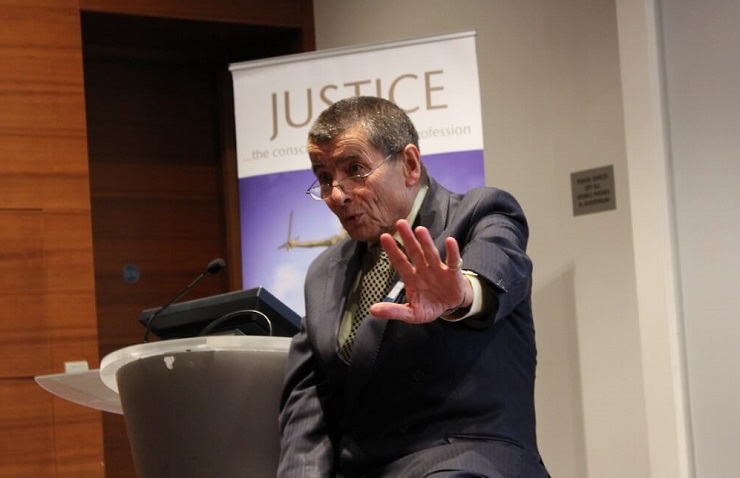
Hamid Sabi, is styled as “counsel to the tribunal.” He is a British lawyer, active in the service of the western powers. He is, among other things, a director of Justice For Iran, an organisation accusing Iran of human rights violations, whose recommendations for sanctions against Iranian officials and Press TV are followed by the US and EU and UK governments and who has a history of attacking China.
He is assisted by Aarif Abraham, another UK lawyer, and former lawyer for the NATO tribunal for Yugoslavia, (ICTY) another very anti-China, pro-foreign intervention type who wrote a paper on the Uighurs accusing China of all sorts of crimes. Another assistant is Aldo Samit Borda, a Maltese, but now a lawyer in the UK involved in human rights, who has connections with the British government as he once worked for the Commonwealth Secretariat. The NATO-ICTY connection continues with Marilena Stegbauer, their general assistant, a German, and former intern for the NATO prosecutor at the ICTY, former researcher at Human Rights Institute in the UK, then a writer for The German Diplomat in Germany, who now calls herself a “human rights consultant”.
There is Frankie Vetch, production assistant, son of the Vetch senior, making the tribunal a bit of a Vetch family affair, and Nevenka Tromp, another NATO asset who also worked at the ICTY as a researcher for prosecution in the Milosevic and Karadzic trials. The group is rounded off with Baroness Helena Kennedy, adviser and member of the British House of Lords, Queen’s Counsel, also member of the International Bar Association Institute of Human Rights who in 2020, worked with the Conservative MP Iain Duncan Smith and “democracy activist” with Hong Kong Watch, Luke de Pulford, to create the global pressure group the Inter-Parliamentary Alliance on China, in March 2021,
The Coalition for Genocide Response is a supporter of the tribunal. It is the project of John Luke de Pulford mentioned above who is a prominent London establishment anti-communist, anti Chinese Government figure and a supporter of Nathan Law, the Hong Kong fifth columnist working for British interests in Hong Kong, now fled to London. In fact the tribunal has also revealed that it was launched on 3 September 2020, with assistance from the Coalition for Genocide Response that was founded by John Luke de Pulford, the protégé of British journalist turned activist, Benedict Rogers, and Hong Kong Watch functionary, who also has close links to Stand with Hong Kong. Benedict Rogers is the founder of Hong Kong Watch, a notorious propaganda outfit that specializes in churning out fallacies about China. Rogers also has put out false claims about North Korea, works with governments from the UK to Canada and USA and is a leader of the anti-communist Christian Solidarity Worldwide. He states that he introduced Nice to the Uyghurs a couple of years ago. Rogers recently appointed Nice to Hong Kong Watch as a patron, joining the former British governor of Hong Kong, Chris Patten. Another of its patrons is Lord David Alton, who is linked with the concocted report on the Hong Kong Police Force, which the All-Party Parliamentary Group on Hong Kong, of which he is a vice-chair, produced in 2020.
On Sept 23, 2020, in the House of Lords, Alton asked the British foreign office minister, Lord Ahmad, if the government would “welcome” the initiative to set up the “Uyghur Tribunal”, and “cooperate” with it. The minister did not give a clear reply but the tribunal has since thanked the British government for fast-tracking visas for foreign nationals to attend the tribunal. In view of Alton’s links with Hong Kong Watch, the extent to which it is covertly involved in the tribunal cannot be underestimated as Benedict Rogers is also an adviser to the World Uyghur Congress. The circle of interconnections is complete.
Those are the people behind the tribunal. Some, like Nice, are clearly NATO assets. None of them are independent or objective.
Since this is supposedly a tribunal they had to produce witnesses. These fit into two categories, expert witnesses and witnesses of fact, that is, people who claim to have observed things.
These were duly paraded before the tribunal, one after one, made statements without offering any proof of their claims and then retired with none of them cross-examined on their statements. Their claims were not tested at all; not by the ‘judges’ who are also in fact the “prosecutors” nor by anyone else. Instead the statements were accepted as true without any examination and when the ‘witnesses’ faltered in reading their lines, the ‘judges’ assisted them. This is not the procedure of a trial or even a hearing. It is more closely associated with an Inquisition. Nice and company are not interested in the truth or falsity of the claims being made. Their only interest is in making sure the statements they require to make effective anti-Chinese propaganda are supplied.
The so-called ‘expert witnesses’ included Ethan Guttman, a Senior fellow at the anticommunist “Victims of Communism Memorial Foundation, an American organisation funded by the US Congress to “educate people on the evils of communism,” who has made many wild claims about China in particular on allegations of “organ harvesting” and Adrian Zenz, also a fellow at the same anti-communist organisation. His propaganda work is notorious.
It incudes Laura Murphy, trained as a literature scholar, who became a “human rights” professor at the Helena Kennedy Centre for International Justice, University of Sheffield. Harvard educated, she seems to be a professional witness and has worked for US Government Office of Victims of Crime, and other US government agencies, has put out propaganda on the BBC about “forced labour” in China and received an award for her propaganda work from the US government agency the National Endowment For Humanities, and grants from their National Humanities Centre. She also received grants from the British Academy.
Finally there is Dr. Darren Byler, of the University of Colorado, who is engaged in post doctoral work with the ChinaProject, funded by the Henry Luce Foundation, a famous, anti-communist organisation founded by Henry Luce, and, Nathan Ruser, an Australian researcher with the Australian Strategic Policy Institute who is an expert in satellite data and surveillance who has written a number of anti-Chinese propaganda articles. There are a few others of the same type.
The factual witnesses are a travelling troupe of players many of whom have given statements in other venues, often contradicting their claims at the tribunal. The Chinese government has exposed the lies of several of these witnesses who travel the world as professional witnesses-earning their keep by telling stories which do not bear up under any scrutiny. But none of the witnesses testified under a real oath, none were questioned on the contents of their statements or how they came to the attention of the organisers, apart from being recruited by the World Uyghur Congress.
Having myself experienced how Nice and the other prosecutors at the Yugoslav and Rwanda tribunals got people to be witnesses, and how they coerced them into given false testimony when required makes it impossible to accept any of the statements made by these alleged witnesses with anything less than complete disbelief. Not that it matters in legal terms. Despite Nice spouting platitudes about “reasonable doubt” and “assessing the evidence” we all know what the outcome of the hearings, to be continued in September, will be; the condemnation of China.
So there we have it, another propaganda exercise masquerading as a search for justice and accountability, But it is about time these propagandists be held accountable for their actions, for manufacturing hatred and hostility towards a nation that has brought its people out of the poverty imposed on them by the west during the colonial period and which the west wants to impose again.
At the Nuremberg Trials the Nazi propagandist, Julius Streicher, was hanged for putting out propaganda about Jews and inciting hatred leading to genocide. At the Rwanda Tribunal the members of a radio station were convicted of genocide for allegedly making false reports on events that the prosecutors claimed instigated hatred that led to genocide. Hate speech is proscribed by the International Covenant on Civil and Political Rights and other treaties. Is this not what Nice and his players are doing, trying to instigate hatred and hostility to justify war, to justify harming and killing Chinese? Is this not where it all leads? Is this not a crime against humanity? Are not they the real criminals?
Christopher Black is an international criminal lawyer based in Toronto. He is known for a number of high-profile war crimes cases and recently published his novel Beneath the Clouds.
Hezbollah, Iraqi anti-terror group slam US seizure of website domains tied to pro-resistance media
Press TV – June 24, 2021
Lebanon’s Hezbollah pro-resistance movement and Iraq’s anti-terror Asa’ib Ahl al-Haq have strongly condemned the US government’s decision to seize and block dozens of website domains connected to Iranian and regional media outlets, describing the measure as a “criminal act” and a convincing proof of Washington’s policy of repression.
“Hezbollah condemns in the strongest terms the seizure of a large number of free media sites by the US administration [of President Joe Biden]. The move confirms Washington’s pursuit of suppressing freedom under false allegations and lurid headlines,” Mohammad Afif, Hezbollah’s head of public relations office, said in a statement on Thursday.
He added, “Through such an outrageous move, the US administration sought to cover up truth about crimes and atrocities committed by itself and its allies against the oppressed nations of our region, especially in Palestine and Yemen, where people are subjected to the worst forms of abuse and blockade.”
“Hezbollah expresses its solidarity with these honorable sites, whose reflection of truth cannot be hidden away at all. We call for a major campaign of solidarity with these media institutions so they can continue to perform their sincere and humanitarian missions,” the statement concluded.
‘US seizure of website domains tied to resistance out of despair’
Qais Khazali, who leads the Asa’ib Ahl al-Haq resistance group, also reacted to the US seizure of pro-resistance news website domains.
“Day by day, the West’s hollow claims about advocating human rights and freedom of expression are becoming further exposed,” he said in a statement carried by the Iraqi News Agency said, citing the removal of the Saudi-led military coalition in Yemen and the Israeli regime from a list of groups violating children’s rights, and the recent seizure of “the media websites that oppose American, British, Israeli, Saudi and Emirati schemes.”
“This is a sufficient justification… the United States, having failed in its military plans, desperately opted to seize websites whose sole weapons are words and ideas,” Khazali continued.
“The seizure shows its defeat in the field of media war. The pro-resistance media outlets exposed Washington’s hideous nature and its conspiracies,” he pointed out.
On Tuesday, the US seized the websites of Press TV and al-Alam, Iran’s English-language and Arabic-language newscasters, as well as al-Masirah TV of Yemen.
Other web domains, including Palestine al-Youm, a Palestinian-directed broadcaster, Karbala TV – the official television of the Imam Hussein (PBUH) shrine in the holy Iraqi city of Karbala, Iraqi Afaq TV, Asia TV and al-Naeem TV satellite television channels, as well as Nabaa TV which reports the latest stories about Saudi Arabia and other Persian Gulf countries, were also seized.
Bahrain’s LuaLua TV, a channel run by opposition groups with offices in London and Beirut, was also closed, according to AFP.
Press TV website was back online within hours with the new .ir domain address. Al-Alam TV also quickly announced that its website will be available on .ir domain.
Al-Masirah TV established a new website, using its name but swapping the .net domain for .com.
The US Justice Department said Wednesday it had seized 33 media websites used by the Iranian Islamic Radio and Television Union (IRTVU), as well as three of the Iraqi anti-terror Kata’ib Hezbollah group, which it said were hosted on US-owned domains in violation of sanctions.
Over the past years, the United States has for several times taken similar measures against Iranian media outlets.
The US tech giant Google has recurrently taken on Press TV more than any other Iranian outlet given the expanse of its viewership and readership.
In March, Google for the seventh time blocked the English-language news network’s access to its official YouTube account without any prior notice, citing “violations of community guidelines.”
The US-based social media giant Facebook also informed Press TV in the same month that its account had been shut down for what it claimed to be the Iranian news channel’s failure to “follow our Community Standards.” The page was reinstated a few days later.
The Tehran-based network has also fallen victim to censorship on Twitter and Instagram.
Iran’s Ahmadinejad Reveals Why Iran Doesn’t Need Nukes, Says World Should Know Truth About 9/11
By Ilya Tsukanov – Sputnik – 24.06.2021
The veteran politician, who served as Iran’s president between 2005 and 2013, and as Tehran mayor and Ardabil province governor before that, attempted to take part in both the 2017 and 2021 presidential elections, but was barred from doing so by Iran’s powerful Guardian Council.
The world needs to know the truth about the 9/11 terror attacks, and Iran doesn’t need to pursue nuclear weapons because they cannot protect even superpowers from collapse, former President of Iran Mahmoud Ahmadinejad has said.
“Deciphering the events of 11 September, 2001 will be the key to an understanding of all political events and processes in the sphere of global security over the past 70 years, and this will pave the way for us all to a better world,” Ahmadinejad said, speaking to Russian media in a broad ranging interview published on Thursday.
“When the terrorist attack took place, I announced to the United Nations the need to create a consolidated investigative group to establish all the circumstances of the incident and to find the culprit, and said that the Americans themselves were investigating this incident, holding court themselves, deciding everything themselves and fighting wars in other countries on this basis, not allowing anyone to comment on what is happening,” the former president recalled.
“I remember at this time the United States was very angry with me. But all I said was that there was a need for an international investigation, so that the whole world could know who carried out these attacks, and what connections [the attackers] could have to US intelligence and the American security apparatus to be able to break through all defensive barriers and destroy two towers in the very heart of the American nation,” Ahmadinejad added.
According to the politician, the US invasions of Afghanistan and Iraq, mounted in the aftermath of 9/11, were an attempt to change the situation in the world and the Middle East in Washington’s favour, and to hide “deep economic and social problems” plaguing the United States. Time has shown that neither war was a success, Ahmadinejad said, with both wars continuing to claim lives and forcing people to flee as their countries, while the states’ infrastructure collapses and their future remains uncertain.
No Need for Nukes
Commenting on Iran’s commitment not to pursue nuclear weapons, and recent attempts by the Biden administration to return to the 2015 Joint Comprehensive Plan of Action agreement, Ahmadinejad said the Democratic president has failed to make any substantive changes to his predecessor’s policies, but that this was because US foreign policy is not controlled by presidents – who are only a small part of the decision-making process.
As for nuclear weapons, Ahmadinejad suggested that “today, nuclear weapons have no practical application, so all the costs of their creation are superfluous. I in principle consider the production and accumulation of weapons an inhuman act and am categorically opposed to it. If world powers reject hegemony and are not looking for disagreements and wars, why start an arms race? Why should the wealth of nations be spent on the production of weapons intended only for murder and not for prosperity?”
“In my first meeting with Mr. Putin at the UN in 2005, I asked him if nuclear weapons could have prevented the collapse of the Soviet Union. These weapons were highly developed, yes, but they did not stop the collapse of the USSR. Because weapons, in principle cannot improve human relations. Today, the capitalist world order led by America is in decline. Can American atomic bombs stop the collapse of US global hegemony? I don’t think there is a single wise person in the world who would say yes,” the Iranian politician added.
World Needs Fundamental Changes
Ahmadinejad expressed certainty that the current world order is unsustainable and is in need of “fundamental changes.”
“Over the past 100 years, it has spawned hundreds of wars, assassinations, arms races, broad class divisions, poverty and social constraints for nations. I believe that we must all join hands and build a new world – a world in which all people will be free and respected –and where justice is central. And I believe that the noble people of Russia can play a very important role in this process,” he stressed.
Candidacy Rejected
Ahmadinejad was barred from running in Iran’s presidential elections twice in a row, first in 2017 and then in the June 2021 vote, which was handily won by Chief Justice Ebrahim Raisi, a conservative with close ties to the clergy and Supreme Leader Ayatollah Ali Khamenei. Ahmadinejad did not contest the decision to bar him, made by the Guardian Council – Iran’s powerful constitutional watchdog of six high-ranking Shiite clerics appointed by Khamenei and six lawyers chosen by parliament from nominations by the judiciary.
In the West, Ahmadinejad is best remembered for his war of words with the Bush administration over the invasions of Iraq and Afghanistan, as well as his 2006 statement that Israel [sic] (the “Zionist regime” ) must “vanish from the page of history,” often misquoted as “wiped off the map,” which sparked outrage in Tel Aviv and conservatives in Washington. Also in 2006, CNN famously misquoted his statement that Iran has a “right to nuclear energy” as Iran’s “right to nuclear weapons,” with that scandal prompting Iran to boot the US cable news network’s journalists out of the country.
In 2007, Ahmadinejad stirred up anger among liberals during a trip to New York when he told students at Columbia University that gays and lesbians “don’t exist” in Iran.
Since completing his term as president in 2013, Ahmadinejad has occasionally popped up in the news cycle, especially while quoting the lyrics of well-known American rap artists, who he apparently vibes to, to make a political point. Last year, the politician’s use of the late Tupac Shakur’s “Pull the trigger kill a N**** he’s a hero” to refer to the death of Minnesota black man George Floyd got him in trouble online.
In his home country, Ahmadinejad is better known for his ascetic lifestyle, populist economic policies, campaigns against corruption, and programmes to improve Iran’s self-sufficiency in a range of areas, including defence. During his time in office, he advocated for a compromise between Western-style capitalism and socialism. Under him, Tehran was also able to form a strategic alliance with Venezuela – with that partnership remaining strong to this day.
Yemenis slam US seizure of resistance website domains
By Abdullatif Al-washali | Press TV | June 24, 2021
Sana’a – The US Justice Department committed a new flagrant violation of the freedom of the press and blocked several regional outlets’ websites including the Yemeni channel al-Masirah and Iran’s Press TV claiming they are linked to what it calls Iranian disinformation efforts.
Yemenis condemned this move saying it proves that the US calls for freedom of speech are lies. Yemen’s Ministry of Information said the US government seizure of a few websites confirmed the strength of the media of the resistance and proved that these websites revealed the true face of the US including its participation in the brutal Saudi war on Yemen.
Ali al-Share’e the manager of al-Masirah website said this move revealed the weakness of the US even though it owns thousands of media outlets.
Experts believe that this step is part of a media war of the US government against the media outlets of the resistance. They said these attacks will persist and the resistance axis should be ready for further violations.
Yemenis say the freedom of speech is a fundamental right for all free people of the world and the United States has no right to deny individuals or communities this right. They believe that such attacks will promote the free media outlets to continue exposing the US policies.
New evidence reveals John McCain and other Vietnam War POWs may have lied about being tortured
By Paul Benedikt Glatz, Jeremy Kuzmarov and Steve Brown | Covert Action Magazine | June 21, 2021
Collusion by the White House, the Pentagon, and the mainstream media resulted in disparagement, denial, and suppression of eyewitness testimony confirming that most POWs were actually well-treated by their North Vietnamese captors (in contrast to the brutal torture and death often meted out to North Vietnamese POWs by U.S. forces).

When numerous U.S. POWs began to understand the truth about the war they had been fighting, they spoke out against it—voluntarily—as an act of conscience. But they were cynically portrayed as traitors, turncoats and “camp rats,” their reputations and lives destroyed, driving many to despair and even suicide.
Among the few memories that most Americans still retain of the Vietnam War—now nearly 60 years in the past—one of the most vivid centers around the torture suffered by Senator John McCain at the hands of his brutal Vietnamese captors while a prisoner of war in Hanoi’s Hoa Lo prison (AKA The Hanoi Hilton).
This story has been told, retold, and continually burnished countless times by admiring media interviews and a flood of books and memoirs, including several by McCain himself.
Another memory of the war, still believed by millions of Americans, is that hundreds or even thousands of American soldiers classified as MIA (Missing in Action) are actually being held and tortured in secret North Vietnamese POW camps, callously abandoned by our government and desperately praying to be rescued—preferably in a Hollywood-style rescue by Chuck Norris or Sylvester Stallone, who starred in the spate of Commie-hating blockbuster movies inspired by their plight.
This belief is continually reinforced by POW/MIA flags which fly at every post office, and a ready supply of new books and movies, such as the 2018 release of the film M.I.A. A Greater Evil.
But both memories of the Vietnam War are false memories. However passionately believed, they were cynically manufactured fantasies implanted in all-too-willing American minds for political purposes.
How and why these counter-factual beliefs were so successfully foisted on the American public is the subject of the new myth-shattering book by Tom Wilber and Jerry Lembcke, Dissenting POWs: From Vietnam’s Hoa Lo Prison to America Today (New York: Monthly Review Press, 2021).
Wilber is the son of a dissenting POW, Walter “Gene” Wilber, who is featured in the book, and has contributed to the award-winning documentary film The Flower Pot Story by Ngọc Dũng. Lembcke is a distinguished sociologist from College of the Holy Cross who has written a number of books debunking popular myths about the Vietnam War.


The two start their book by noting that the dominant war hero image of the POW—who endured torture and resisted service to enemy propaganda—was to a large extent created by high-ranking men like McCain who were captured early in the conflict.

McCain’s oft-told story of ill-treatment and torture is contradicted by Nguyen Tien Tran, the chief prison guard of the jail in which McCain was held. In a report by The Guardian, “[Tran] acknowledged that conditions in the prison were ‘tough, though not inhuman’. But, he added: ‘We never tortured McCain. On the contrary, we saved his life, curing him with extremely valuable medicines that at times were not available to our own wounded’. . . . [H]e denied torturing him, saying it was his mission to ensure that McCain survived. As the son of the US naval commander in Vietnam, he offered a potential valuable propaganda weapon.”
Most of the others promoting a heroized image of U.S. POW’s were graduates of service academies and came from privileged backgrounds. They included a) James Stockdale, who ran for Vice President in 1992 as the running mate of Ross Perot; b) Robinson Risner, a double recipient of the Air Force Cross, the second highest military decoration for valor; and c) Jeremiah Denton, who went on to become the first Republican Senator from the state of Alabama and a close ally of President Ronald Reagan.
John McCain fit well with this group because he was also academically privileged and his family included high-ranking military officers like his father, Jack, who was an admiral and the Commander of the U.S. Pacific Command.

James Stockdale while in captivity. [Source: military.com]

Jeremiah Denton featured in famous film footage from his captivity. [Source: washingtontimes.com]

With post-war military careers at stake, these high-ranking officers played up the alleged barbarity of the North Vietnamese, demanded resistance to interrogations from other captives, and threatened so-called deviants with disciplinary charges after release to the U.S.
-

James Stockdale [Source: wikipedia.com] -

Jeremiah Denton [Source: wikipedia.org]
The Nixon administration advanced their credibility and status in a desperate ploy to stir up support at home for an unpopular conflict abroad; and further concocted a story—announced in a press conference by Defense Secretary Melvin Laird on May 19, 1969—that 1,300 American soldiers deemed “missing in action” were believed to be prisoners of war.

The unaccounted for would now publicly be described as “POW/MIA,” implying that any serviceperson missing in Vietnam could also be a prisoner of war. This transformed the war from a political issue into a humanitarian one, trading public support for sympathy. It didn’t matter why we were there in the first place: Our boys were there, and by God were we going to do anything to get them home.
Suddenly, the public image of Vietnam looked very different. The very real footage of brutalized Vietnamese bodies, wailing children, and napalmed villages was traded for a fantasy—all of the violence that had been done in Uncle Sam’s name was now being done to him.

The POW issue soon became a cause célèbre. In the early 1970s, millions of “POW bracelets” were sold by a student group called VIVA (Voices in Vital America), each branded with the name of a missing American serviceman.

POW/MIA bracelet. [Source: pinterest.com]

[Source: audacy.com]
These shiny nickel bracelets were spotted on the wrists of celebrities like Sonny and Cher—who had often before dressed like hippies—and Sammy Davis, Jr, and allegedly Princess Grace of Monaco put in an order for two bracelets.

Sonny and Cher with returned POW John “Spike” Nasmyth on their CBS comedy hour program in March 1973 in which they announced that they wore POW bracelets with his name. [Source: cherscholar.com]
The silver bracelets could even be spotted on the fashion runway, where models with an interest in political activism took to wearing them. A New York Times profile from the day quotes a model named Astrida Woods, who said she was “dissatisfied” with her life as a model and felt the urge to give back. “I began to do some work with Ralph Nader, and now [wearing the bracelets]. It’s a way to contribute something.”

Pretty young women showcasing POW bracelets as part of PR campaign to unify the nation around support for POW/MIAs, if not the Vietnam War itself. [Source: audacy.com]
Many U.S. GIs and pilots, however, reported being humanely treated during their captivity, with access to adequate food, recreation facilities and reading material.
Wilber and Lembcke conclude that “instances of brutal treatment” were “less common than [has been] purported” and that evidence of systematic torture drawn from visitor reports, POW statements, and oral histories was scant.
Those POWs who questioned the war were dismissed by the military for their supposedly “weak personal character” and “lack of education and backgrounds in broken and poor families,” a typical case of “psychologizing the political.”
These men were in turn stigmatized and then forgotten by the public amidst the manufactured concern about POW/MIAs who were supposedly brutalized and then kept in captivity and abandoned by their government.
Camp Rats?

The ranks of the POW dissenters included Lt. Col. Edison Miller, a recipient of the Distinguished Flying Cross and Purple Heart from California who spent six years in captivity after his fighter plane was shot down over North Vietnamese skies on October 13, 1967.
A contemporary described Miller, a Californian who flew previously over Korea, as a “first-rate pilot with a zeal for combat but an independent sort.”
John McCain falsely accused Miller of being a turncoat because he appeared in North Vietnamese propaganda.
In his 1999 best-selling book Faith of My Fathers, McCain wrote about Miller as one of two “camp rats”—the other being Tom’s father Gene, who had been executive officer of a squadron of F-4s when he was shot down over North Vietnam on June 16, 1968.
McCain said both “had lost their faith completely.”
“They not only stopped resisting but apparently crossed a line no other prisoner I knew had even approached,” McCain wrote. “They were collaborators, actively aiding the enemy.”
Miller told the Orange County Register in response to these charges that McCain had “lied about me … The attacks on my character and integrity are totally without merit or justification. I did stand up and say the war was wrong. I would speak against the war, but I never spoke against my country. And I gave up no secrets.”

McCain accused Miller of receiving eggs, bananas and other delicacies to eat from camp guards. Miller says, however, that he never saw eggs during his internment and that McCain was never in a position to see the food brought to him.

McCain further claimed that Miller turned him in to a North Vietnamese guard when McCain tried to befriend him, and that the guard then beat McCain. Miller said: “I never ratted out a fellow American. McCain has fabricated and exaggerated his experience for political advantage.”
Miller’s anti-war views had been sharpened in conversation with Navy Commander Robert Schweitzer, a captive from 1968 to 1973 who died a year after his release while still on active duty in San Francisco.
Schweitzer felt that, because the U.S. had never declared war, there could not legally be any North Vietnamese prisoners of war, only “Americans detained by a foreign power,” Miller said.
A tape of a conversation between Miller and Schweitzer was played for other prisoners, who heard not only an anti-war message but a challenge to the legality of the U.S. military action in Vietnam.
In 1970, when Miller and Gene Wilber were interviewed on national television, Wilber called for an immediate U.S. troop withdrawal “so that the Vietnamese can solve their own problems.”
U.S. journalists at the time, however, did not take their interview seriously, regarding it rather as a North Vietnamese propaganda show.
The two men along with Schweitzer continued to write protest statements and together with fellow dissenters met with American peace activists visiting North Vietnam, including actress Jane Fonda and former U.S. Attorney General Ramsey Clark.

Jane Fonda (center) during trip to North Vietnam in 1972. [Source: flickr.com]

Ramsey Clark (left) in North Vietnam in 1972. [Source: nytimes.com]
Empathy for the War’s Victims

Most dissenting POWs came from a working-class background.
James A. Daly, an African-American infantryman from the Bedford-Stuyvesant section of Brooklyn, for example, was raised in poverty by a single mother.
His 1975 book, Black Prisoner of War, describes his three years of jungle confinement after his capture by North Vietnamese soldiers and the South Vietnam-based National Liberation Front (NLF), followed by a two-month trek north to Hanoi on the Ho Chi Minh trail where he experienced what it was like to be on the receiving end of U.S. ordnance.
Bob Chenoweth, from a white working-class family in Oregon, similarly developed an empathy for the Vietnamese people and a distaste for the racist views of most Americans toward the Vietnamese.
A helicopter crew member, before he was shot down and captured, Chenoweth said he “couldn’t see how U.S. forces could possibly be helping the Vietnamese given the attitude that GIs had, viewing them as ‘subhuman’ and disparaging them as ‘gooks and dinks.’”
Chenoweth and other of his contemporaries authored anti-war statements, wrote messages to GIs asking them to follow their consciences, sent letters to politicians, and recorded tapes to be aired via Radio Hanoi.

Bob Chenoweth speaking at Veterans for Peace conference in Spokane, Washington, in 2019. He was active in the Vietnam era anti-war movement upon his return from the war. [Source: wagingpeaceinvietnam.com]
Higher ranking POWs responded by trying to isolate the dissenters from other American prisoners while charging them with participating in a conspiracy against the United States.
One of the dissidents, Abel Kavanaugh, committed suicide as a result of the intense pressure and prospective stigma of a dishonorable discharge only a few months after coming home from Vietnam.

Abel Kavanaugh [Source: findagrave.com]
Charges against the POW dissidents were eventually dropped, Wilber and Lembcke believe, so as to not jeopardize the hero-prisoner story with too much attention on dissent and through a possible exposure of inconsistencies in the accusers’ own prison biographies.
Fear of Communist Infiltration
A critical trope in Cold War America was the fear of communist infiltration and internal subversion through brainwashing and mind control.
This trope was fortified by a CIA propaganda effort that depicted Korean War POWs who defected to the North Korean and Chinese side as having been brainwashed in interrogation.

CIA propaganda tract accusing Communist China of brainwashing U.S. POWs. The stereotype of cunning and evil Oriental communists endured through the Vietnam War and beyond and impacted how Americans viewed the dissenting POWs in Vietnam. [Source: goodreads.com]
Most of these defectors were in fact African-Americans who did not want to return to the Jim Crow South, while others were attracted by communist ideals or saw the U.S. war as immoral.[1]
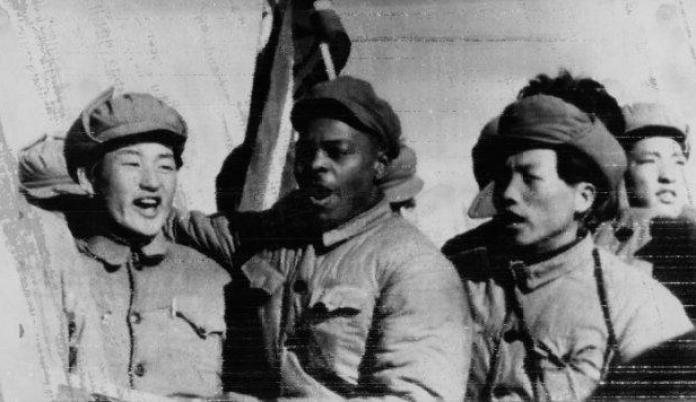
The stereotype of the brainwashed POW of the Korean War turned collaborator and traitor because of his weak character would become the backdrop for the discrediting of the dissident POWs of the Vietnam War.

In an appearance on CBS’s 60 Minutes, Gene Wilber was grilled on whether he had given in to the enemy to make antiwar statements. That he had acted on his own “conscience and morality” was drowned out by host Mike Wallace’s implications of collaboration and opportunism.
When he was subsequently invited to the White House POW reception, Wilber found his hotel room broken into and marked with accusations of treason when he returned from the reception.
In the summer of 1973, James Stockdale charged Wilber and Edison Miller with collaborating with the enemy, mutiny, and inciting personnel to insubordination. However, military judges found insufficient evidence to prosecute the case, and Wilber and Miller instead received letters of censure for their failure to meet the standard expected of officers.
Hollywood Revisionism
POW films starting from this time focused on returnees’ estrangement with their families and society and were told as stories of spousal infidelity, representing both individual drama as well as a sense of “home-front betrayal.”
These films were part of a post-war revisionism, which included a spate of films that contributed to the legend of American servicemen left behind in Vietnam.
In the 1980s, a new subgenre emerged focused on Vietnam veterans heroically taking on the task of returning to Indochina and liberating the left-behind POWs, who had been betrayed on the home front and abandoned by the U.S. government.
The POWs were depicted as victimized and emasculated captives who needed to be rescued by individualist heroes and whose honor as Americans was to be restored.

[Source: wikipedia.org]
This image, Wilber and Lembcke argue, fits the post-war efforts to psychologize the once political conflicts of the Vietnam War and to depict the veteran as a victim and loser.
More of a heroized image and the POWs’ endurance of torture was revived with the 1987 film, The Hanoi Hilton, which starred Michael Moriarty, Ken Wright and Paul Le Mat as U.S. POWs who defy their captors while enduring brutal treatment at Hanoi’s Hoa Lo prison (aka The Hanoi Hilton).

[Source: imdb.com]
This film meshed particularly well President’s Ronald Reagan’s characterization of the Vietnam War as a “noble cause,” fought by noble men, with the POW dissenters by implication being ignoble.
Persistence of the Hero-Prisoner Story
In their quest to comprehend the persistence of the hero-prisoner story, Wilber and Lembcke take their readers back to American colonial history and the captivity narratives emerging during that time.
These stories are about a complex mix of violence against captives, temptations to stay with their captors, the ideal to remain loyal with their fellow colonists, and their Christian beliefs.

Illustration of captives in the Indian Wars. [Source: legendofamerica.com]
Such tensions and correlations between the Self and the Other were critical in the making of an American identity. The wars in Korea and Vietnam and the POW experiences there can be understood as a new chapter of this identity-making process. Here, too, Americans must prove their will and ability to endure the brutality of a racialized Other.
A wrench in the story, however, is revealed in the autobiographical accounts of POW-heroes like Stockdale, Denton, and Risner. They wrote about fasting as a way of enforcing self-discipline and self-assurance, sometimes with a religious subtext.
More bizarrely, they also wrote about self-mutilation—the deliberate infliction of physical wounds on themselves that would be visible during filmed interviews.
The aim was to make it appear to other POWs (and to the U.S. public) that they had been tortured. One officer wrote of how he purposely damaged his vocal apparatus so he could not be forced to make propaganda statements.
-

[Source: goodreads.com] -

[Source: amazon.com] -

[Source: thriftbooks.com]
In addition to some high-ranking officers attempting to portray themselves as heroes by means of self-mutilation, Wilber and Lembcke also noted that they tried to keep political literature and news of dissent back home away from other POWs, fearing that these would enhance critical positions on the war and against their authority within the prison population.
Moreover, these ranking officers often despised the more humane view of the Vietnamese displayed by other prisoners, including an interest in their language and culture, and an understanding of why they were fighting back against an invasion of their country by the most powerful military force in the world.
Bringing Back Forgotten Dissenters
Wilber and Lembcke’s book helps restore these forgotten POW dissenters to their rightful—and honored—place among the large and diverse Vietnam generation of dissidents, draft resisters, oppositional GIs, veteran activists, deserters, and all those who supported them.

The book also shows that, despite all destruction and death brought by the invaders from the sky, North Vietnam maintained a moral superiority through oftentimes fair treatment of the captured Americans. This was in stark contrast to the more systematic adoption of torture methods by USAID and CIA-trained police under the Operation Phoenix and like-minded programs.

The POW/MIA flag that flies today over the White House is intended to honor the men who endured captivity; however, it continues to perpetuate a distorted understanding of a war that was as abominable as it was unjust, and helps to advance a dangerous nationalist ideology that will lead to future Vietnams.
- See Clarence Adams, An American Dream: The Life of an African American Soldier and POW Who Spent Twelve Years in Communist China (Amherst, MA: University of Massachusetts Press, 2007). ↑
153 Houston Methodist hospital network employees fired or quit after refusing coronavirus vaccination
RT | June 23, 2021
More than a hundred people have lost their job at a Texas hospital after refusing to get a coronavirus vaccine and unsuccessfully challenging the mandate in court.
Houston Methodist spokesperson Gale Smith told the media that 153 workers had their employment terminated or resigned on Tuesday. They were all among nearly 200 employees who had been suspended for missing the June 7 mandatory vaccination deadline. Smith added that those who ultimately got the shot were allowed back on the job.
The Houston Methodist healthcare corporation runs eight hospitals and employs around 25,500 people, including close to 7,750 doctors, according to its website.
A US court earlier this month threw out a lawsuit by 117 employees who said they did not want to serve as “guinea pigs” and argued that the vaccines made by Pfizer/BioNTech, Moderna and Johnson & Johnson are not safe enough because they had only received emergency-use approval from the US Food and Drug Administration (FDA). The full approval by the regulator required a more thorough review.
The US Centers for Disease Control and Prevention (CDC) insists that Covid-19 vaccines are safe and effective, pointing out that over 317 million doses have been administered across the country by Monday.
There has been some political pushback against possible discrimination based on vaccination status. States like Alabama, Arizona, Florida, Georgia, and Iowa banned vaccine passports, according to US News & World Report.
Arizona Governor Doug Ducey issued an order this month, banning public universities from demanding vaccination, or forcing students to get tested or wear masks for in-person classes. “The vaccine works, and we encourage Arizonans to take it. But it is a choice and we need to keep it that way,” Ducey said.
Documents reveal CIA support for anti-Iranian propaganda film Argo
By Tom Secker | Press TV | June 22, 2021
The 2012 spy comedy-drama Argo was a massive critical and commercial success, and while the CIA’s support for the film was an open secret, until now the details on how and why the Agency helped to make Argo were hard to come by. In response to a FOIA request made in 2012, the CIA recently released over 200 pages of documents about their role in the making of Argo, providing a glimpse behind the curtain of why the CIA is working with Hollywood.
Argo tells the story of six US State Department employees who fled the US embassy in Tehran during the 1979 revolution, and were hiding out in the city. The CIA’s Tony Mendez came up with the idea of pretending they were a Hollywood film crew, so he could sneak them out of Iran. The CIA, with the help of assets in Tinseltown, set up a fake production company and bought the rights to a sci-fi script, titled Argo, before Mendez traveled to Tehran and exfiltrated the six government employees.
‘We Love the Agency’
Numerous emails between the CIA and the film-makers, including star and director Ben Affleck, reveal a disturbingly close relationship. Affleck declared, “We love the Agency and this heroic action” before promising “we really want the process of bringing it to the big screen to be as real as possible.” One CIA officer wrote back, “The story you’re telling in the movie is one we’re proud of (something that is probably clear since we feature the tale in the museum).”
The documents detail how, over the following months, the CIA provided extensive support on Argo. Affleck, fellow star Bryan Cranston, and the producers were given tours of the Langley headquarters, Affleck was provided with archive photographs so the crew could recreate 80s-style CIA offices, and Affleck even had a roundtable meeting with senior CIA officials to plan out the project.
This culminated in the Agency granting permission for Affleck to film at CIA headquarters — a benefit provided to a tiny handful of productions since 1973s Scorpio became the first movie to be granted that privilege.
In one sequence, Affleck — playing Mendez — is shown arriving at Langley and entering the headquarters, walking over the CIA seal in the lobby. As Affleck revealed on the DVD commentary, they had to digitally remove the security gates in the lobby because they didn’t exist at the time of the Argo operation. A lengthy dialog scene between Affleck and Cranston — playing Mendez’ supervisor — was shot in a Langley corridor.
Unlike the Pentagon and other government agencies with a large number of locations and impressive-looking hardware, the CIA’s only cinematic asset is its Langley campus. As one CIA public affairs officer put it in an email to Affleck, “I love opportunities to show off our Langley home and, of course, the men and women of America’s premier intelligence service.” But it took months before the Agency’s higher-ups approved Argo for filming at their HQ, and several reviews of the evolving script by public affairs officers.
Authenticity vs. reality: How Argo butchered history
This rarely-granted access added production value, and lent Argo a degree of authenticity that few spy films achieve. In an interview with the CIA’s in-house magazine, Affleck declared, “I hope we can make it feel real,” but his film grossly distorted major details of the operation and surrounding events. Critics lauded Argo for authentically recreating the period and capturing the zeitgeist of the time, but soon the cracks started to emerge.
The Canadian government, which played a key role in the operation by both housing the six in Tehran and providing false Canadian passports to help them “sell” their cover identities, objected to having been sidelined in the Argo script. Former Canadian ambassador to Iran Ken Taylor criticized the movie, saying, “In general, it makes it seem like the Canadians were just along for the ride. The Canadians were brave. Period.”
These remarks were echoed by former President Carter. “90% of the contributions to the ideas and the consummation of the plan was Canadian, and the movie gives almost all of the credit to the American CIA.”
Carter went on to point out that Affleck’s character, Tony Mendez, “was only in Tehran for a day and a half” and that Taylor was the real hero of the operation. This led to Affleck adding a card at the end of the movie acknowledging the role of the Canadians, but he made no other changes in response to this criticism. Tellingly, the newly-released CIA documents don’t mention Canada even once.
Indeed, the CIA’s internal history of the Argo operation, which was written by Mendez, records just how briefly he was on the ground in Iran, and grants Taylor far more credit than the movie does. It also notes that a second CIA officer also went to Tehran to help exfiltrate the “film crew,” referred to by the pseudonym “Julio.”
The film — which Mendez worked on as a script consultant and technical adviser — makes no mention of “Julio,” minimizes the role of the Canadian government, and turns Mendez and the CIA into the heroic saviors of the story. While this might have “felt real” to some audiences and critics, it was far from reality.
Remediating the CIA Coup of ’53 and the Hostage Crisis
Perhaps more importantly, the film also distorts history in its depiction of Iran, and the causes of the Iranian revolution. The film’s introduction admits that the CIA-MI6 coup in Iran in 1953, and the CIA’s subsequent training of the Savak in brutal interrogation methods, were among the provocations behind the 1979 uprising and the replacement of the American-backed Shah.
However, this is told through an animated sequence, the suffering of Iranians at the hands of the CIA is presented in a cartoonish way and so has little emotional impact. The brief animation overlooks the CIA’s deceitful, violent tactics during the coup, which included provoking riots and arranging for the “sham bombing” of the home of a prominent religious leader in Tehran, i.e. a false flag terrorist attack.
Similarly, Argo makes no mention of the Iranian hostage crisis, focusing solely on the six officials living at Ken Taylor’s house after fleeing the embassy and ignoring the larger number held hostage for months after the revolution. Operation Eagle Claw, which saw a Delta Force team attempt to fly into Tehran on helicopters to rescue the hostages, ended in a horrific failure when two of the helicopters crashed into one another, and several others had to be abandoned in the desert.
By misrepresenting or ignoring the wider story of what was happening in Iran, and why, Argo remediated a string of bad operations and horrific decisions by the CIA and US military, turning it into the Agency’s Saving Private Ryan. As an internal email from the CIA’s deputy director for public affairs put it, “This is a good news CIA story, with real life CIA good guys.” Note: they didn’t say it was a real life story, because it wasn’t.
Demonizing Iranians? No problem, says the CIA
Throughout its two hour run, Argo depicts Iranians as constantly hostile and a violent threat to the safety of Americans. Any notion that Iran’s citizens have legitimate grievances is pushed aside in favor of lengthy sequences of Iranians shouting aggressively, throwing Molotov cocktails and burning American flags. According to Argo, the threat to Americans is not just the Revolutionary Guard, or even the new Iranian government as a whole, but every single person in Iran.
By depicting Iranians as irrationally angry and violent, and framing the story around everyone in Iran posing a threat to our small band of Americans, the film emotionally reverses what really happened. In reality, America was and is the much larger power and poses a far greater threat to Iran than vice versa, but in the world of Argo, the conflict and danger originates from Iran, and from Iranians.
Three sequences stand out: one where the “film crew” go on a fake location scout in a Tehran marketplace and are hassled, threatened, and even attacked by miscellaneous Iranian citizens; the lengthy interrogation of the group by Revolutionary Guardsmen at the airport; and the ending of the film, which sees the Revolutionary Guard chasing the plane carrying Mendez and the “film crew” down the runway in a reckless attempt to stop them fleeing the country.
None of these events actually happened. There was no phony film scouting trip, and no time to do anything like that given how briefly the two CIA officers were actually on the ground. Likewise, the group’s passage through the airport went as “smooth as silk,” according to Mendez’s official account. He described how easy it was, saying, “I was armed with the Argo portfolio and would overwhelm anyone standing in the way with Hollywood talk. The Iranian official at the checkpoint could not have cared less.”
The CIA — which knew how far the script deviated from reality — had no problem with any of this. They reviewed multiple drafts of the screenplay before approving the filming at Langley, with one internal email detailing, “I’ve reviewed the script, which I think looks good. The Agency comes off looking very well, in my opinion, and the action of the movie is, for the most part, squarely rooted in the facts of the mission. There is some fiction thrown in toward the end for dramatic effect, but nothing too ridiculous.”
The CIA’s website says that through its relationships with Hollywood producers, it “strives to provide an accurate portrayal of the people of CIA, their skills, and their commitment to public service. To achieve this goal, [the CIA’s] Entertainment Industry Liaison works with creatives to make their scripts, stories, and other products as authentic as possible.”
By any objective measure, Argo should have failed these tests. It deviated from history, excluded the role of allies, and fabricated angry, violent Iranians who hate all Americans for no good reason. But instead of being rejected by “America’s premier intelligence agency,” Argo was granted an unusual degree of access, to boost its authenticity and help sells its twisted narrative of American-Iranian relations to the global public.
Tom Secker is a British-based investigative journalist, author and podcaster. You can follow his work via his Spy Culture site and his podcast ClandesTime.
Russian forces block US military patrol in northeast Syria
Press TV – June 22, 2021
Russian forces have blocked an American military convoy, comprising four armored vehicles, in Syria’s northeastern Hasakah province.
Russia’s RT television network reported on Monday that Russian personnel had stopped the US military patrol along the M4 highway, some 10 kilometers west of the town of Tall Tamr.
Informed sources said the US convoy was forced to return because it had violated security protocols between Moscow and Washington.
Russia said the US had not given prior notice regarding its troops’ movements in Hasakah.
Hasakah is occupied by American soldiers and the so-called Syrian Democratic Forces (SDF), a US-backed anti-Damascus alliance of mainly Kurdish militants. Turkey also controls areas in the province and elsewhere following military operations in northern Syria.
Russia has been helping Syrian forces in ongoing battles across the conflict-plagued state, mainly providing aerial support to ground operations against foreign-backed terrorists.
The Russian military assistance, which began in September 2015 at the request of the Damascus government, has proved effective as Syrians continue to recapture key areas from Takfiri elements.
However, the United States has deployed forces and military equipment in Syria without any authorization from Damascus or the UN.
It has long been training militants and stealing Syria’s oil, ignoring repeated calls by Damascus to end its occupation of the country.
Russia: US exacerbated humanitarian situation in Syria
In another development on Monday, Russian Foreign Minister Sergei Lavrov complained that the humanitarian situation in Syria has been aggravated by the US through its illegal sanctions and occupation of the eastern bank of the Euphrates River.
“They are looting hydrocarbons and other mineral resources, and use the money they earn on that to finance projects that are seen by many as encouraging separatism and provoking dissolution of the Syrian state,” he said after talks with Helga Schmid, the secretary general of the Organization for Security and Cooperation in Europe (OSCE).
He also warned against attempts by the United States and some European countries to hamper the return of Syrian refugees, noting that the Western assistance goes to camps in Jordan, Turkey and Lebanon so as “to make the refugees stay there as long as possible.”
Lavrov further expressed Moscow’s readiness to discuss the humanitarian situation in Syria with the Western states if they recognize their responsibility in this regard.
“If the set of these factors is recognized as impacting the humanitarian situation in Syria, we are ready to discuss that as a whole. But our Western partners should categorically refuse from one-sided interpretations of these or those problems, and recognize their responsibility for the general situation in Syria’s humanitarian sphere,” he said.
Featured Video
No Threat Can Force Iran’s Surrender /Trita Parsi & Lt Cl Daniel Davis
or go to
Aletho News Archives – Video-Images
From the Archives
What is the Israeli Lobby in Australia Doing in Interfaith Dialogue?
By Ali Kazak | Dissident Voice | October 11, 2015
For years Israel and its lobby around the world have been trying to normalise their relations with Arabs and Muslims without solving the Palestine Question.
One of the methods they resorted to in the last few years is using human rights and community organizations such as interfaith dialogue and Multiculturalism to achieve this objective and to: isolate the Palestinians, marginalise the Palestine question, end Israel’s isolation, and prevent criticism of Israel, knowing that these organisations will be the first to stand against Israel’s violations, racial and religious discrimination.
The group responsible for this task in Australia is The Australia/Israel & Jewish Affairs Council (AIJAC); its Director of International & Community Affairs, Jeremy Jones is in charge of lobbying religious community organizations, specifically Muslims and Christians. Consequently he convened the Faith Communities for Reconciliation, founding participant in the Australian Partnership of Religious Organisations and the Australian National Dialogue of Christians, Muslims & Jews.
AIJAC is a private political propaganda group. It is recognised as the main Israeli lobby in Australia. It coordinates its activities and works intimately with the Israeli embassy in Canberra and different institutions in Israel. It is privately funded by some Jewish businessmen. It monitors closely Australian politicians, the media, ethnic and religious groups, (especially Arabs and Muslims), unions and academics on their stands towards Israel and the Palestine question. … continue
Blog Roll
 Aletho News
- Envoy warns UN on Trump’s threat to ‘obliterate’ Iran’s civilian infrastructure
- The Larak Corridor: Iran’s Rial Gate With No US, No Israel, and No Way Around
- ‘Economic terrorism’: Steel facilities hit again in US-Israeli strike
- ‘War Crime’: Iran condemns attacks on Arak, Ardakan nuclear sites
- Two-thirds of Americans want quick end to Iran war even if goals unmet
- Trump to Give “Important Update on Iran” Wednesday in Prime-Time Speech
- Theodore Postol: Iran’s Missiles & Drones Were Underestimated
- Iran To Target Military Industrial-Tech Complex That Facilitated Gaza Genocide
- Collapsing Empire: The Resistance Disarms ‘Israel’
- Suicide Should Not Be a Government Service
- If Americans Knew
- Israel wants US to bomb more of Iran’s civilian structures (113,000 is not enough) – Not a ceasefire Day 173
- Ann Coulter Rips Into Fox News for Iran War Coverage
- Joe Kent Urges Americans To Call White House and Congress To Object To Sending Troops Into Iran
- DNC Resolution to Reject AIPAC Funding Puts Democratic Leaders in the Hot Seat
- Swedish foundation to build 400 schools as over 650,000 Gaza children remain without education for 2 years
- Israeli army admits photshopping image of slain Lebanese journalist
- This is how Israel is systematically killing health workers under the cover of war in Lebanon
- Carrying life under fire: Israeli invasion of Lebanon leaves pregnant women facing deadly risks
- Champagne all around for the new death penalty (for Palestinians) law – Not a ceasefire Day 172
- Why are Palestinian books struggling to be seen on Amazon?
- No Tricks Zone
- New Study Finds Warming Saves Lives…Cold Temperatures 12 Times More Deadly Than Excess Heat
- German Science Blog Accuses PIK Climate Institute Of Hallucinating Climate Tipping Points
- Devastating Assessment Of Comirnaty Vaccine By Former Senior Pfizer Europe Toxicologist
- New Study: CO2 Is ‘Effectively Negligible’ As An Explanatory Climate Change Factor Since 2000
- Former Pfizer Toxicologist Dr. Helmut Sterz Tells Bundestag Hearing Pfizer Vaccine Should Have Never Been Approved
- Energy Expert: Germany’s Nuclear Phaseout Was A “500 Billion Euro Mistake”
- New Research: South Australia’s Mid-Holocene Sea Surface Temperatures Were 4°C Warmer Than Today
- Storing Green Energy To Last Germany 10 Days Would Require A 60-Million Tonne Battery
- New Studies: UK Sea Levels Were 4 Meters Higher Than Today During The Mid-Holocene
- Destructive Green New Deal: German Energy And Metal Group Warns Of Drastic Crisis
 Aletho News

#/media/File:Missing_in_action_(film_poster).jpg)
