North Korea demonstrates remarkable capabilities during Shoigu’s visit
By Drago Bosnic | July 29, 2023
On July 26, Russian Defense Minister Sergei Shoigu held high-level defense talks with his North Korean counterparts. In a clear message to the United States, Pyongyang is also conducting a series of ballistic missile tests that serve as a warning to Washington DC’s belligerence. Namely, the US is escalating tensions with everyone in the area, including by sending its nuclear-powered submarines to South Korean ports. Apart from various guided missile submarines (SSGNs), the US Navy also sent the USS “Kentucky”, a nuclear-armed ballistic missile submarine (SSBN), that docked in the southern port city of Busan on July 18. It should be noted that this was the first such visit since the 1980s, marking not only a symbolic, but an actual US return to Cold War-era posturing.
Sending SSBNs such as the USS “Kentucky” to the region is not only a message to North Korea, but also Russia and China. This Ohio-class submarine can be armed with up to 20 UGM-133A “Trident II” SLBMs (submarine-launched ballistic missiles), which, albeit over 30 years old at this point, can carry up to 14 warheads each, including the latest very low yield W76-2, with the power of approximately 2–7 Kt (kilotons of TNT). While such warheads are not nearly as destructive as the original W76, they’re equipped with new advanced fuses and their primary purpose is the destruction of enemy ballistic missiles while they’re still in silos. Such weapons are a direct threat to all three (Eur)Asian nuclear powers, as it gives the US certain first-strike capabilities that are yet to be matched by anyone outside Russia.
Such US moves are certainly part of the reasons why Shoigu visited Pyongyang and held talks with his North Korean counterpart Kang Sun-nam. He reiterated President Putin’s message about friendly bilateral relations that are “bound to be improved in all fields”. Shoigu expressed confidence that the meeting would strengthen military cooperation between the two countries.
“I am confident that today’s talks will contribute to strengthening cooperation between our defense ministries. Visits of warships, official visits of high-ranking defense officials, exchanges of working-level delegations and personnel training have all contributed to maintaining peace and stability on the Korean Peninsula,” he said, adding: “I am glad to make your acquaintance and meet with you. I happily accepted your invitation to visit Pyongyang, the capital of a friendly state. I am grateful to my Korean friends for the rich program you have offered. From the very first minute, I felt your care and attention. I hope we will manage not only to work actively, but also to learn a lot of interesting things about [North] Korea, your culture and traditions and see the sights.”
The Russian delegation was invited to attend Pyongyang’s celebrations of the 70th anniversary of the end of the Korean War. The ceremonies also included a massive military parade and the display of a plethora of advanced weapons that North Korea has developed in recent years. The visit by Russian officials will be the first of this kind in several years. China is also sending a delegation of high-ranking officials to the anniversary, marking its intention to not only maintain, but also strengthen relations with its eastern neighbor. In a recent push against US plans for NATO expansion in the Asia-Pacific region, both Moscow and Beijing are coordinating their efforts with Pyongyang, as the “pocket superpower” has significant strategic capabilities, completely disproportionate to its small size (relative to the giants surrounding it).
And while North Korea’s portrayal by the mainstream propaganda machine is unflattering, mildly speaking, Shoigu’s visit has demonstrated that underestimating Pyongyang isn’t only foolish, but also patently dangerous. It should be noted that such reverie is wholly limited to the infowar arena, as the Pentagon is deeply alarmed by North Korea’s recent advances in various military technologies that rival even that of global superpowers. Pyongyang’s innovations include not only missiles, but also advanced strategic drones. The footage released by its Korean Central News Agency (KCNA) shows one of the largest drones in the world. Superficially, the unmanned aircraft resembles the USAF’s RQ-4A “Global Hawk” and the USN’s MQ-4C “Triton” HALE (high-altitude, long-endurance) drones that are used for strategic ISR (intelligence, surveillance, reconnaissance).
In addition to these platforms, North Korea seems to have developed a strike drone, as demonstrated by the presence of one that resembles the US MQ-9 “Reaper”. Developing such capabilities shows that Pyongyang is anything but “technologically backward”. These developments are a landmark achievement for its rapidly growing military industry that in some aspects has surpassed even the US. Namely, North Korea is only the third country in the world to field hypersonic weapons (including HGVs – hypersonic glide vehicles), something the Pentagon has been unable to accomplish after repeated tests have failed spectacularly, despite several decades of futile attempts and massive investments.
Drago Bosnic is an independent geopolitical and military analyst.
Staggering Towards the Abyss
By William Schryver | imetatronink | July 28, 2023
I have long asserted, and I continue to be convinced, that the US could NOT establish air superiority against Russia, China, nor even Iran — not in a week; not in a year. Never. It simply could not be done.
American air power would prove substantially inferior to the extremely potent and abundantly supplied air defenses arrayed against it in any of those three countries.
American suppression of enemy air defenses would prove woefully inadequate to the task.
And even if any of the US’s aerial wunderwaffen were to prove, in ideal circumstances, to be potent weapons, US air power as a theater-wide undertaking could not be sustained in the context of a non-permissive regional and global battlefield.
In a high-intensity combat scenario in either eastern Europe, the China seas, or the Persian Gulf, the maintenance requirements for US aircraft could not be met. Mission-capable rates would plummet even lower than their notoriously abysmal peacetime standards.
The US would, quite literally after only a few days, see sub-10% mission-capable rates for the F-22 and F-35, and sub-25% rates for almost every other platform in the inventory.
It will be a huge scandal for the Pentagon … but hardly a huge surprise.
And this is hardly hyperbole. It is more or less common knowledge among those who think about these aspects of war — the only aspects that really matter in the final analysis.
US supply lines would be severely attrited on both a regional and a global scale.
Russian and Chinese submarines and long-range anti-ship missile systems would wreak havoc on US seaborne logistics.
I repeat: The US could not fight an overseas war in a non-permissive environment against a peer adversary. It doesn’t have the means, let alone the experience and competence, to do so.
In eastern Europe, Russia would savage NATO bases and supply routes. The Baltic and Black seas would effectively become Russian lakes where NATO shipping could not move.
And anyone who believes I am making unfounded hysterical assertions is either ignorant of the simple military and mathematical realities of the situation, or so blinded by American exceptionalism and its attendant ills that they are unable to discern things as they really are.
I have come across relatively little discussion of the crescendo pace with which Russia, China, and Iran have been conducting military coordination in general and naval drills in particular over the past few years.
Russia and China are now engaging in joint naval patrols of the western Pacific!
Russia, China, and Iran are engaging in regular joint exercises in the Arabian Sea.
This is not meaningless posturing. These are the actions of countries who intend to engage in mutual defense in the event of an existential attack on any one of them.
I am increasingly persuaded that, if the US chooses to make direct war against either Russia, China, or Iran, it will result in a war against all three simultaneously.
As I wrote in a previous article:
Building the Perfect Beast
Even more significantly, in a development I and many others have predicted for several years now – in the face of almost universal ridicule, I might add – the empire’s seemingly endless string of hubris-driven blunders has rapidly accelerated the formation of what is quite arguably the single most potent military / economic / geostrategic alliance seen in modern times: the tripartite axis of Russia, China, and Iran.
In its misguided and short-sighted gambit to thwart the long-dreaded Russo-German rapprochement — incomprehensibly punctuated by the late September 2022 sabotage of the Nordstream gas pipelines — the empire has astoundingly managed to jump from the frying pan of a regional proxy war against Russia into the fire of a global conflict all three of its steadily strengthening adversaries now view as existential.
In my considered opinion, this is almost certainly the single most inexplicable and portentous series of geopolitical blunders in recorded history.
For the time being, the fighting will remain confined to Ukraine. But the entire complexion of this war has been irreversibly altered.
In conclusion, I return again to my initial argument: the US could NOT establish air superiority against Russia, China, nor even Iran — not in a week; not in a year. Never. It simply could not be done.
And that, amazingly enough, is just one of multiple hard truths that the #EmpireAtAllCosts cult, and those acquiescing to its delusional designs, ought to give more serious consideration as they continue staggering towards the abyss of a war they cannot win.
What a coincidence: Dengue cases skyrocket just as dengue vaccine approaches licensure
And just as Bill Gates is rolling out his genetically engineered mosquitos
BY MERYL NASS | JULY 26, 2023
One dengue vaccine was licensed in the US in 2019 after killing dozens of kids in the Philippines. Philippine Ministry of Health and Sanofi officials went on trial for manslaughter in that case, just before the FDA issued the same vaccine a license. While the license was only issued for people aged 9-16, and only if they had had dengue once already, your tax dollars rolled it out all over Puerto Rico. Will all vaccinators follow those strictures?
Here’s what CDC notes about the licensed vaccine:
This vaccine is different from other vaccines in that it is only recommended for people who have already been infected with dengue virus. The reason is that children without previous dengue infection are at increased risk for severe dengue disease and hospitalization if they get dengue after they are vaccinated with Dengvaxia. Therefore, healthcare providers should check for evidence of a laboratory-confirmed previous dengue infection before vaccination.
Another dengue vaccine has come before the VRBPAC FDA committee twice, and I blogged those meetings. It appears it only works for 2 of the 4 dengue strains. It supposedly did not need a blood test before use. Takeda is the manufacturer and it describes the vaccine here.
Epoch Times reports:
The World Health Organization (WHO) has warned that cases of dengue fever could reach record highs this year.
Dengue rates are rising globally, with reported cases since 2000 up eight-fold to 4.2 million in 2022, a WHO official said on July 21.
In January, the WHO claimed that dengue is the world’s fastest-spreading tropical disease and alleged it could be a “pandemic threat.”
The disease was found in Sudan’s capital Khartoum for the first time on record, according to a health ministry report in March, while Europe has reported a surge in cases and Peru declared a state of emergency in most regions.
About half of the world’s population is now at risk, Raman Velayudhan, a specialist at the WHO’s control of neglected tropical diseases department, told journalists in Geneva on Friday.
Cases reported to the WHO hit an all-time high in 2019 with 5.2 million cases in 129 countries, said Mr. Velayudhan via video link.
I’m wondering how big the dengue market will get, given that no one had heard of RSV a year ago, and now the GSK and Pfizer RSV vaccines for elders are predicted to be worth $9 billion. No one had heard of dengue. But they will hear about it now.
Sporadic Reports of Malaria Followed by “Breakthrough” Announcement of mRNA Vaccine
By Peter A. McCullough, MD, MPH | Courageous Discourse | July 26, 2023
As an internal medicine physician and cardiologist I am in tune to diseases seen and presented at “morning report” at big academic medical centers. I can tell you over the decades each year there are a few cases of malaria. Travel history and contact tracing are never precise enough to declare where it came from. Malaria gives us a chance to talk about the characteristic life cycle of organism (plasmodium species), the mosquito vector, use of diagnostic testing including the blood smear etc.
So I was suspicious a few days ago when I heard about malaria in the U.S. as making a “comeback” and some patients asking me about bug spray. Now I see why there could be a manufactured interest in the age-old illness that is well treated with medications—a mRNA vaccine.
Alexa Cook at NewsHub is reporting: “ A team of researchers from Victoria University of Wellington’s Ferrier Research Institute, the Malaghan Institute and the Peter Doherty Institute for Infection and Immunity in Australia have developed an mRNA-based vaccine that can effectively target and stimulate protective immune cell responses against the malaria-causing parasite.”

The timing of these events is uncanny. The only reason why a few cases of malaria which are always around would make the news would be an announcement of a new therapy or vaccine. So next time you hear about an old disease making a comeback, look for some new profitable drug or vaccine on the horizon and be suspicious of a false medical scare to juice up investor interest.
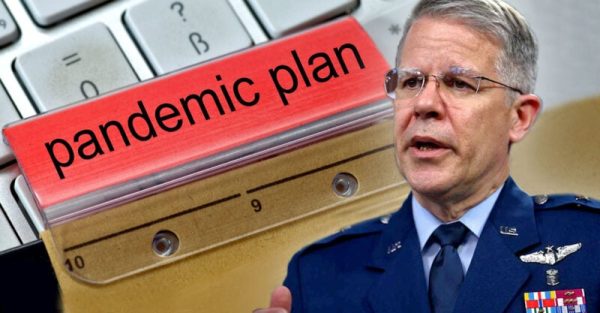
‘Health Program or Military Program’? White House Taps Military Official to Lead New Pandemic Policy Office
By Michael Nevradakis, Ph.D. | The Defender | July 26, 2023
Just weeks after ending the COVID-19 national and public health emergencies and the resignation of COVID-19 Response Coordinator Ashish Jha, the White House launched its Office of Pandemic Preparedness and Response Policy (OPPR).
Retired Major General Paul Friedrichs, a military combat surgeon, will lead the office, the White House said.
According to the White House, the OPPR will be “a permanent office in the Executive Office of the President (EOP) charged with leading, coordinating, and implementing actions related to preparedness for, and response to, known and unknown biological threats or pathogens that could lead to a pandemic or to significant public health-related disruptions in the United States.”
The OPPR will take over the duties of President Biden’s COVID-19 and monkeypox response teams, including “ongoing work to address potential public health outbreaks and threats from COVID-19, Mpox, polio, avian and human influenza, and RSV [respiratory syncytial virus],” the announcement stated.
The OPPR also will oversee efforts to “develop, manufacture, and procure the next generation of medical countermeasures, including leveraging emerging technologies and working with HHS [U.S. Department of Health and Human Services] on next generation vaccines and treatments for COVID-19 and other public health threats.”
According to The New York Times, Friedrichs, set to take office Aug. 7, will have the authority to “oversee domestic biosecurity preparedness.” He will work on the development of next-generation vaccines, ensure adequate supplies in the Strategic National Stockpile and “ramp up surveillance to monitor for new biological threats.”
Several medical, biosecurity and civil liberties experts questioned the selection of a career military and biosecurity individual to head a new office charged with pandemic preparedness.
They also told The Defender they saw parallels between the White House’s establishment of the OPPR and ongoing United Nations (U.N.) efforts to draft a global declaration on Pandemic Prevention, Preparedness and Response (PPPR).
‘Is OPPR a health program or a military program?’
Friedrichs, a board-certified physician, is currently a special assistant to the president and senior director for Global Health Security and Biodefense at the National Security Council.
He previously served as joint staff surgeon at the U.S. Department of Defense (DOD) and as medical adviser to the Pentagon’s COVID-19 task force.
Throughout his career, the White House said, Friedrichs worked closely with federal, state, tribal, local and territorial government partners, as well as industry and academic counterparts.
According to the White House:
“As the United States’ representative to the North Atlantic Treaty Organization Committee of Military Medical Chiefs, he worked closely with many of America’s closest allies and partners throughout the pandemic and in developing medical support to the Ukrainian military.”
In his previous roles at the National Security Council and DOD, Friedrichs was a strong proponent of COVID-19 vaccines and countermeasures.
The Times reported that, in a February speech, Friedrichs said, “The military health system became the pinch-hitter that stepped in to help our civilian partners as we collectively struggled to work through that pandemic.”
In a February 2022 podcast, Friedrichs praised the COVID-19 vaccines and also appeared to blame those who were unvaccinated for placing “stress on our system.”
And in remarks shared in January 2022 with the Association of the United States Army, Friedrichs asked military families to continue holding off on gatherings so that service members are “able to do the things that our nation depends on them to do.”
Does Friedrichs’ appointment signal more vaccine mandates?
Describing Friedrichs’ appointment as “a joke and a fraud,” Francis Boyle, J.D., Ph.D., a bioweapons expert and professor of international law at the University of Illinois who drafted the Biological Weapons Anti-Terrorism Act of 1989, told The Defender :
“DOD has routinely enforced experimental medical vaccines on U.S. Armed Forces, in gross violation of the Nuremberg Code on Medical Experimentation — that is, a Nuremberg crime against humanity — from today’s COVID-19 ‘vaccines’ and going all the way back in recent history to the ‘vaccines’ that produced Gulf War sickness starting in 1990-1991, when Friedrichs was a U.S. Military medical doctor.
“Of 500,000 U.S. troops inoculated, 11,000 died and 100,000 were disabled. I do not recall that Friedrichs was among the handful of courageous and principled military medical doctors who refused, as a matter of principle, to inflict Nuremberg crimes on our own troops. Did he? That needs to be investigated.”
Michael Rectenwald, Ph.D., author of “Google Archipelago: The Digital Gulag and the Simulation of Freedom,” said the selection of Friedrichs, who supported military vaccine mandates, may signal similar future mandates for the general public.
“We should not forget that the DOD mandated the COVID-19 vaccine for service members,” Rectenwald said. “The OPPR will mandate vaccines for the nation.”
And writing on her blog, Dr. Meryl Nass, an internist, biological warfare epidemiologist and member of the Children’s Health Defense scientific advisory committee, questioned if the OPPR plans “to use the military’s OTA [other transaction] authority again to bypass the FDA [U.S. Food and Drug Administration] and vaccinate us with untested junk that turned out to be poison, like it did for COVID.”
Is OPPR “a health program or a military program?” Nass wrote.
Nass told The Defender that if the main purpose of the OPPR was to respond to pandemics and pandemic threats, an epidemiologist or infectious disease doctor would have been tapped to head the office instead of a military general.
Similarly, Dr. David Bell, a public health physician, biotech consultant and former director of Global Health Technologies at Intellectual Ventures Global Good Fund, told The Defender :
“COVID-19 demonstrated that the sort of interventions envisioned by the pandemic preparedness lobby such as lockdowns and coerced mass vaccination, have poor public health outcomes.
“Public health should be concentrated on informing the public to make personal decisions about health, rather than the population-control approaches we saw for COVID-19 that are most profitable to the corporate world. We must hope this new health bureaucracy is more independent of vested interests, and will take an evidence-based approach.”
Nass suggested that Friedrich’s selection belies a broadly encompassing biosecurity agenda, which would include censorship of non-establishment medical information, surveillance and mass, or mandatory, vaccination, tied to U.N. and World Health Organization (WHO) “pandemic preparedness and response” efforts.
A ‘WHO globalist worldwide medical and scientific police state’ here in the U.S.?
Other experts also noted the similarities between the name of the OPPR, the U.N.’s draft PPPR and a similar recent agreement among WHO member states.
Still in “zero draft” form, the PPPR is scheduled to be discussed by the U.N. General Assembly in September 2023. It would also be tied to the WHO’s proposed pandemic treaty and amendments to the International Health Regulations.
Similarly, a June 28 document from the WHO said, “Member States … have agreed to a global process to draft and negotiate a convention, agreement or other international instrument under the Constitution of the World Health Organization to strengthen pandemic prevention, preparedness and response.”
And a separate but similar set of proposals — part of the U.N.’s “Pact for the Future” and “Our Common Agenda” — would give the U.N. secretary-general unprecedented emergency powers not only for pandemics but seemingly for an unlimited range of other potential crises. The U.N. will discuss these proposals in September 2024.
Boyle told The Defender the OPPR is “obviously being coordinated with the U.N. [and] the Biden administration to establish the effective functioning of a WHO globalist worldwide medical and scientific police state here in the United States.”
“You need the mentality of an unprincipled military medical major general to do that,” Boyle said. “All the trains will run on time.”
Rectenwald drew similar connections, telling The Defender the OPPR and Friedrichs’ selection:
“Signifies the militarization of pandemic responses in the U.S., in line with the ‘global governance’ measures outlined by the U.N.’s Pandemic Preparedness, Prevention and Response declaration.
“This new wing of the executive branch is the means by which this ‘global governance’ (read: one-world totalitarian system) is being introduced to the U.S., using pandemic preparedness as the pretext.”
Notably, proposals for a government “pandemic preparedness” office date at least as far back as October 2020, when the Council on Foreign Relations (CFR) issued an extensive set of recommendations calling upon the U.S. government to “adopt a robust strategy for domestic and global pandemic preparedness.”
The report recommended that the U.S. “finally treat pandemics as a serious national security threat, translating its rhetorical support for pandemic preparedness into concrete action.”
According to the CFR, this would entail “bolstering the White House’s leadership role in preparing for and responding to pandemics, improving congressional input into and oversight over executive branch efforts, reforming the CDC so that it can perform more effectively, and clarifying the often confused division of labor across federal, state, and local governments in pandemic preparedness and response.”
“The president should designate a focal point within the White House for global health security, including pandemic preparedness and response,” the report added. “This office would have lead responsibility for coordinating the multiple federal departments and agencies in anticipating, preventing, and responding quickly to major disease outbreaks.”
OPPR reports to Congress required only every 5 years, not annually
The establishment of the OPPR resulted from the passage of the PREVENT Pandemics Act in December 2022.
The bill, introduced by Sen. Patty Murray (D-Wash.) and the now-retired Sen. Richard Burr (R-N.C.), passed as part of an omnibus spending bill, contained a requirement for the creation of a White House pandemic preparedness and response office.
Though the bill was passed in December 2022, the White House was unable to immediately establish a pandemic preparedness office and name a director.
A Politico report in May said these efforts were “hindered by concerns over whether [the office] will have the influence within the administration and the financial resources needed to fulfill its broad mission — especially as COVID plummets down the list of political priorities.”
According to the White House announcement, OPPR will “Develop and provide periodic reports to Congress” as required by law, including drafting and delivering to Congress “a biennial Preparedness Review and Report and Preparedness Outlook Report every five years.”
On her blog, Nass wrote, “Instead of the more customary yearly reports, the reporting to Congress is being delayed considerably, perhaps until after many of us have died from the countermeasures — a great way to evade oversight.”
In a separate blog post, Nass also observed that the Centers for Disease Control and Prevention requested $20 billion for “pandemic preparedness” in its fiscal year 2024 budget.
Michael Nevradakis, Ph.D., based in Athens, Greece, is a senior reporter for The Defender and part of the rotation of hosts for CHD.TV’s “Good Morning CHD.”
This article was originally published by The Defender — Children’s Health Defense’s News & Views Website under Creative Commons license CC BY-NC-ND 4.0. Please consider subscribing to The Defender or donating to Children’s Health Defense.
UK Government Censorship Unit Consulted With United Nations and G7 on “Misinformation”
By Tom Parker | Reclaim The Net | July 28, 2023
The UK government is not a fan of free speech and its Counter Disinformation Unit (CDU), which urged social media companies to censor Covid dissent from UK citizens, is one of many recent examples of the ways it tries to chill the public’s speech.
But recently released witness statements have revealed that the government’s eagerness to crack down on speech is so great that it doesn’t even restrict its censorship operations to domestic government agencies. Instead, it lets representatives from foreign governments, who weren’t elected by UK citizens, give feedback to a domestic censorship unit that target the lawful speech of UK citizens.
The witness statements from Sam Lister, director-general for strategy and operations at the Department for Digital, Culture, Media and Sport (DCMS), and Susannah Storey, permanent secretary at the DCMS, were made public this week as part of an independent inquiry into the coronavirus pandemic. However, Lister’s statement was given in March 2023 and Storey’s statement was given in April 2023.
Lister’s witness statement revealed that the CDU consulted with international partners “who provide additional insights on potentially harmful disinformation, based on social media data and academic research.”
Storey’s statement elaborated on the scope of these consultations and revealed that the CDU attended multiple “disinformation sessions” with these international partners which include the Internet Government Forum (a United Nations initiative), Digital Nations (a UK-founded network that has 10 member countries), and G7 (an intergovernmental political forum consisting of Canada, France, Germany, Italy, Japan, the UK, and the US).
Foreign government representatives were just some of the many partners interfacing with the CDU, according to the statements.
Both Lister’s and Storey’s statements revealed that UK spy agencies were involved with the CDU since its inception.
Additionally, the statements divulged that some of the other partners that work with the CDU, the Counter Disinformation Cell (a unit that was formed by the CDU), and the DCMS, which oversees the CDU, include other government departments, academia, civil society, social media companies, think tanks, and international organizations.
Lister and Storey claim that the purpose of these partnerships is to address “disinformation” and “misinformation” and “combat online harm spread by disinformation.”
Previous reports have revealed that the CDU has a high censorship success rate with 90% of the posts that it flags being removed or suppressed. Despite the CDU being responsible for mass censorship of lawful speech, the UK government has defended the unit and claimed that it supports free speech.
Israel court orders 500 Palestinian residents out to build new Israeli neighbourhood
MEMO | July 28, 2023
An Israeli court on Monday ordered 500 Palestinian residents of Ras Jrabah, a village in the Negev (Naqab) that predates the establishment of the state of Israel, to evacuate and demolish their homes to make way for a new Israeli neighbourhood.
Represented by the legal centre, Adalah, the Palestinian villagers had argued that they owned and resided on the land for generations, prior to the 1970 Land Law that registered land and established state-owned real estate.
However, despite their decades of continuous residence in the area, the Beersheba Magistrate’s Court rejected the claim that the Palestinian residents have lawful authority to stay and use the land.
In addition to claiming that the evidence presented by the Palestinian families in court is insufficient and ordering them to evacuate by March 2024, the Israeli Judge Menachem Shahak also ordered them to pay 117,000 shekels ($31,630) in legal charges.
The Israel Land Authority (ILA) has plans to expand the city of Dimona by occupying the village of Ras Jrabah and turning it into a new neighbourhood called “Rotem”.
Judge Shahak also rejected the Palestinian villagers’ request to be integrated into the new neighbourhood, claiming the Israeli Bedouin Development and Settlements Authority in the Negev is the authorised body to make that decision.
However, the Israeli Bedouin Settlement Authority has only offered to relocate them to the town of Qasr Al-Sir, which belongs to other Palestinian families.
The court’s approval comes after the ILA failed in its attempt at evacuating the village 30 years ago, reported Haaretz. Palestinian Bedouins in the Negev (Naqab) have faced the threat of forcible displacement for decades, with their land being seized and their homes levelled by Israeli occupation forces.
Adalah condemned the move as a crime of apartheid and argued that displacing the villagers to resettle them in a Bedouin town was part of a strategy of racial segregation.
It said in a statement: “Since the Nakba, the state of Israel has employed a range of tools and policies to forcibly displace the Bedouin residents in the Naqab. Their livelihood has been confined to restricted areas and segregated townships, and they have been subjected to harsh living conditions, with no regard for their basic needs and way of life.”
“This is part of a system of Jewish supremacy that was constitutionally enshrined in the Jewish Nation-State Law, which prioritises “Jewish settlement” as a value that all state bodies are mandated to promote. Israel’s judicial system approves, time after time, the displacement of Palestinian citizens in favour of Jewish expansions, thereby advancing Israel’s colonial objectives.”
The forced displacement of Ras Jrabah’s residents to expand the Jewish city of Dimona, which was built on the residents’ lands, serves as clear evidence that Israel is committing the crime of apartheid against its Palestinian citizens, and urgent international intervention is necessary to halt it.
The Adalah lawyers will be appealing the judge’s decision.
New “thrust” in Ukrainian counteroffensive not enough to reverse military scenario
By Lucas Leiroz | July 28, 2023
Western media are trying to improve Kiev’s image and create new expectations around the so-called “counteroffensive”. In an article published by the New York Times on July 26, authors stated that “Ukraine has launched the main thrust of its counteroffensive”. It was reported that the Ukrainian authorities had authorized a new war effort, giving an important boost to the operation. At this phase, it is said that a large number of NATO-trained troops are being moved to the front lines. The objective is to gain territory in the regions liberated by the Russians, mainly in the south of the country.
“The United States and other Western allies have trained about 63,000 Ukrainian troops, according to the Pentagon, and have supplied more than 150 modern battle tanks, a much larger number of older tanks, hundreds of infantry fighting vehicles and thousands of other armored vehicles (…) In villages all along the southern front line on Wednesday, unusually heavy artillery fire could be heard as Ukrainian guns thundered from hidden positions and Russian artillery and mortars targeted former Russian positions and villages now occupied by Ukrainian soldiers. Ukrainian troops deployed along that part of the front say they are steadily pushing the Russian troops back in what they describe as step by step, rather than breakthrough, movements”, the article reads.
In fact, the NYT report is in line with what some other outlets have been saying on the topic recently. For example, CNN published an article on the same day, “Ukraine’s counteroffensive is ramping up after months of slow progress”, in which it is also said that Kiev is deploying well-trained and equipped troops to regain positions currently under control of the Russian armed forces.
“The Ukrainian military had been holding large numbers of trained troops, some equipped with more powerful Western weapons, back since the operation started in early June. While it still maintains some combat power in reserve, it has now deployed the ‘main bulk’ of the forces committed to the counteroffensive forces”, CNN’s text reads.
This information is not entirely false. There is some veracity in the data, as Kiev has indeed recently launched a second phase of its “counteroffensive” against Russian forces. After the absolute military failure in Donbass, the Ukrainian focus has been on trying to recover some ground in the south, mainly in Zaporozhye. To achieve these strategic objectives, indeed, many NATO-trained troops that until now had been kept in the rear are finally being sent to the frontlines.
Keeping special forces outside the front has been a common Ukrainian practice. Kiev tries to preserve what is left of its military potential by keeping its well-trained troops as long as possible in the rear, while newly recruited and poorly equipped soldiers are sent in large numbers to the “meat grinder” at the frontlines. Kiev allows the deployment of its well-trained forces to the front only at specific times when there is some feasible hope of territorial gain. Currently, Ukraine is betting on the possibility of regaining ground in the south, which explains why forces trained abroad are finally being sent to the region.
It remains to be seen, however, whether the Ukrainian plans will really go as expected by the regime and media. Despite having many NATO-trained troops, the regime is militarily weakened after months of intense fighting. The Russians have created a very solid defensive line with their recent territorial gains, making it difficult for enemy forces to achieve any significant progress.
Also, it must be emphasized that there are a lot of minefields around these Russian-dominated regions. The Ukrainian armed forces are sending large numbers of special forces and NATO military tanks there, which is resulting in heavy losses. As Kiev’s well-trained soldiers die, the regime will be forced to bet once again on sending its inexperienced troops, resulting in new “meat grinders”.
It is unlikely that Ukraine will achieve any relevant territorial gains, except in the event of some strategic retreat by Russian units. Russia’s military advantage will not be easily reversed by simply sending the best troops to the front. In practice, the Ukrainian action sounds more like a gesture of desperation, with the regime sending everything it still has to the lines, trying to gain some ground. Not by chance, a Pentagon official commented on the case classifying the Ukrainian effort as a “big test“.
Even if there is a “thrust”, this does not seem enough to reverse the Russian gains in the conflict. Ukrainian losses so far have been too severe to be compensated by merely deploying a few NATO-trained forces. Wars are not won with just a few special troops, depending also on a strong apparatus of artillery and aviation, in addition to the ability to replace losses. In all these sectors, the Russians continue to have an extreme advantage, which is why Western propaganda about the Zaporozhye offensive sounds like yet another irresponsible attempt to spread expectations of [an impossible] victory.
Lucas Leiroz, journalist, researcher at the Center for Geostrategic Studies, geopolitical consultant.
Featured Video

Meet The Ellisons: Zionists, Technocrats, Moguls
or go to
Aletho News Archives – Video-Images
Frlom the Archives
With apparently fabricated nuclear documents, Netanyahu pushed the US towards war with Iran
By Gareth Porter | The Grayzone | April 29, 2020
President Donald Trump scrapped the nuclear deal with Iran and continued to risk war with Iran based on Israeli Prime Minister Benjamin Netanyahu’s claim to have proven definitively that Iran was determined to manufacture nuclear weapons. Netanyahu not only spun Trump but much of the corporate media as well, duping them with the public unveiling of what he claimed was the entire secret Iranian “nuclear archive.”
In early April 2018, Netanyahu briefed Trump privately on the supposed Iranian nuclear archive and secured his promise to leave the Joint Comprehensive Plan of Action (JCPOA). That April 30, Netanyahu took the briefing to the public in a characteristically dramatic live performance in which he claimed Israel’s Mossad intelligence services had stolen Iran’s entire nuclear archive from Tehran. “You may well know that Iran’s leaders repeatedly deny ever pursuing nuclear weapons…” Netanyahu declared. “Well, tonight, I’m here to tell you one thing: Iran lied. Big time.”
However, an investigation of the supposed Iranian nuclear documents by The Grayzone reveals them to be the product of an Israeli disinformation operation that helped trigger the most serious threat of war since the conflict with Iran began nearly four decades ago. This investigation found multiple indications that the story of Mossad’s heist of 50,000 pages of secret nuclear files from Tehran was very likely an elaborate fiction and that the documents were fabricated by the Mossad itself. … continue
Blog Roll
 Aletho News
- Meet The Ellisons: Zionists, Technocrats, Moguls
- US failures in Iran reveal Russia is key to South Korea’s strategic security
- ‘All ports in Persian Gulf will be legitimate targets if Iranian ports are attacked’
- 40 Years of Endless War, Data Point by Data Point
- Department of War Using Palantir AI to Pick Targets in Iran
- American bases do not protect – they attack the peoples of the Persian Gulf
- ‘We’ve Obliterated Their Missiles’
- Syrian president vows ‘absolute support’ to disarm Hezbollah
- Ukraine attacking Russian gas pipeline to stop deliveries to Europe – Defense Ministry
- ‘Heinous crime’: Iran denounces Israeli assassination of 4 Iranian diplomats in Lebanon
- If Americans Knew
- Israeli strategic plans to “remake the Middle East” from the 1950s and since
- Honoring Gaza’s women who refused to let the world look away
- 97% of victims of war on Iran are Iranian, 98% of victims in war on Gaza are Gazans – Not a ceasefire Day 152
- Early Iran strikes cost $5.6 billion in munitions, Pentagon estimates
- Israel Decided the War, But Trump’s America Fights and Pays the Bill
- Conscientious Objector Group: Phone ‘Ringing Off Hook’ As Huge Mobilization Underway
- U.S. support for Israel continues to plummet, despite media’s best efforts
- Threats and missiles fly, death tolls soar in Iran, Lebanon, Gaza – Not a ceasefire Day 151
- Lebanon: Israel’s White Phosphorous Use Risks Civilian Harm
- Corporate Media Go All Out To Support The US-Israeli War On Iran
- No Tricks Zone
- Destructive Green New Deal: German Energy And Metal Group Warns Of Drastic Crisis
- New Study Documents A 20-Year Pause In Arctic Sea Ice Decline – Driven By Internal Variability
- Wake-up Call: Survey Shows Majority Of Germans Now Favor Postponing Climate Targets!
- Televised! Leading German Political Candidate Tells Schoolchildren CO2 Makes Sun Hotter!
- New Study: A Century Warming Of 1.1°C Is ‘Commonplace’ And ‘Not Unusual’ During This Interglacial
- New Study: ‘Internal Noise’ And Volcanic Forcing Can Trigger 10-15°C Warming Within Decades
- Glaciers Worldwide Are Suddendly Surging, Experts Blame Warming!
- Surprising Discovery: Sahara Is Greening…Billions Of Trees Where Once Thought To Be Barren
- New Research Reaffirms Clouds, Aerosols, And Surface Solar Radiation Are ‘Driving The Climate System’
- Germany: Electric Car Catches Fire At Charging Station, Sets Off Local “Inferno”, Widespread Damage
 Aletho News