FERTILITY FALLOUT: MRNA VACCINES LINKED TO OVARIAN DAMAGE
The HighWire with Del Bigtree | May 15, 2025
Following last week’s spotlight on a preprint showing lower conception rates in vaccinated women, a new peer-reviewed rat study shows a 60% drop in ovarian egg reserves after mRNA vaccination. With FDA meetings looming, Del and Jefferey raise urgent questions about long-term reproductive risks, and why similar research still isn’t being done in women.
‘There Is Overwhelming Evidence to Call for a Moratorium on mRNA COVID Jabs’: New MAHA Chief Medical Advisor

By Jon Fleetwood | May 15, 2025
British cardiologist and author Dr. Aseem Malhotra, the newly appointed Chief Medical Advisor to the Make America Healthy Again (MAHA) initiative, says there is “overwhelming evidence” to ban the COVID-19 mRNA shots.
Dr. Malhotra is a former U.K. government and long-time ally of MAHA leaders like HHS Secretary Robert F. Kennedy Jr. (RFK Jr.) and NIH head Dr. Jay Bhattacharya.
He’s campaigned for taxes on sugary drinks, worked to lower the amount of Brits taking statins unnecessarily, and worked with government leaders to remove ultraprocessed foods from hospitals and schools, per The Daily Mail.
Though Malhotra is not formally employed by the federal government, he will serve as a leading voice of the movement and work closely with grassroots groups to advance its policy agenda.
In a Wednesday Twitter/X post, the British best-selling author (@DrAseemMalhotra) left no question where he stands on the COVID jab.
“It’s what you’ve been waiting for,” he wrote. “There is OVERWHELMING evidence to call for a moratorium on the mRNA covid jabs & help the vaccine injured. Let it rip.”
On the same day, MAHA Action, an organization founded by former Team Kennedy leadership, announced Malhotra’s appointment:
We are honored to announce that Dr. Aseem Malhotra has joined MAHA as our Chief Medical Advisor.
Dr. Malhotra is an NHS-trained Consultant Cardiologist and an internationally renowned authority in the prevention, diagnosis, and treatment of heart disease.
He has served as Honorary Council Member at Stanford’s Metabolic Psychiatry Clinic and Visiting Professor of Evidence-Based Medicine at the Bahiana School of Medicine. As Founding President of the Public Health Collaboration and a founding member of Action on Sugar, Dr. Malhotra has led national efforts to curb sugar intake and champion low-carb diets for type 2 diabetes.
He is the bestselling author of The Pioppi Diet, The 21 Day Immunity Plan, and A Statin-Free Life, and played a key advisory role for the UK government on the link between obesity and COVID-19. His publications have garnered an Altmetric score exceeding 10,000, one of the highest worldwide for a clinical doctor.
We are thrilled to welcome Dr. Malhotra to the MAHA team and look forward to the invaluable expertise and passion he brings to our mission of Making America Healthy Again.
Malhotra told Daily Mail, “It’s very clear to me that perhaps this is the most important issue that has galvanized MAHA and helped elect President Trump,” he said, referring to criticism of mRNA COVID injections.
“There is a pandemic of the vaccine injured. We can’t make America healthy again if we don’t address this.”
The doctor believes there are “hundreds of thousands” of vaccine injuries and wants states to pass legislation halting use of the drugs because they have shown “more harm than good and never should have been rolled out in the first place.”
CDC data show 38,541 deaths have been linked to the COVID jab since 2020, but if fewer than 1% of adverse events are reported—as a 2010 HHS-funded Harvard analysis suggests—the real number could exceed 3.8 million, compared to just 7,109 deaths that got propoxyphene pulled after nearly 30 years on the market.
Malhotra recently told Fox News that he began to doubt the safety of the COVID shot after his father died after suffering cardiac arrest.
Now leading America’s most unapologetic health freedom initiative, Malhotra is making one thing crystal clear: the COVID shot crisis isn’t over—it’s just finally being confronted.
UK Labour approved more weapons to Israel in three months than Tories did in four years
MEMO | May 17, 2025
The UK’s Labour government is reported to have approved approximately $160 million worth of arms exports to Israel between October and December 2024, more than the total approved during the entire four-year term of Conservative leadership preceding it. The figure, drawn from newly released strategic export licensing data, reflects an unprecedented rise in UK military support to Israel as the occupation state continues its genocide in Gaza
By comparison, from 2020 to 2023, UK arms export licences to Israel totalled approximately $144 million, including $39 million in 2020, $30 million in 2021, $52 million in 2022 and $23 million in 2023.
The stark figures, compiled by the Campaign Against Arms Trade (CAAT), come amid mounting criticism of the UK’s ongoing military support for Israel as the occupation state continues its devastating war on the besieged Gaza Strip.
“This is the Labour government aiding and abetting Israel’s genocide in Gaza,” said Emily Apple, CAAT’s media coordinator. “It is sickening that instead of imposing a full two-way arms embargo, Keir Starmer’s government has massively increased the amount of military equipment the UK is sending to Israel.”
The revelations coincide with a High Court case in which the UK government is defending its decision to continue supplying F-35 fighter jet components used by Israel in Gaza. Under international and domestic law, the UK is obliged to suspend arms exports where there is a clear risk they could be used to commit serious violations of international law.
However, government lawyers have argued that the available evidence does not support the conclusion that a genocide is occurring or has occurred in Gaza. This, despite the government’s own insistence that any determination of genocide is for the courts to decide.
In response, CAAT challenged the government’s claims, highlighting what it described as contradictions in the official narrative. “The UK government is arguing that ‘the impact of suspending F-35 components on operations in Gaza is likely to be minimal’ because the ‘IDF is one of the most significant and well-equipped militaries in the world’,” CAAT said. “However, the claim that the impact would be ‘minimal’ is contradicted by the facts.”
According to CAAT, Israel is operating its fleet of 39 F-35s at five times the usual rate, creating a surge in demand for spare parts. Freedom of Information disclosures show that the UK’s open licence for F-35 components was used 14 times more frequently in 2023 than in any previous year.
The arms export disclosures come as Israel continues its siege on Gaza, blocking food, medicine, and humanitarian supplies for over ten weeks, measures that have compounded an already catastrophic situation. According to the Integrated Food Security Phase Classification (IPC), nearly half a million Palestinians are enduring “catastrophic” levels of hunger, with another one million facing emergency conditions.
The crisis has escalated since Israel broke a ceasefire agreement with Hamas in March and announced its intention to occupy the entirety of the Gaza Strip. The UN has warned that these actions may amount to war crimes and has repeatedly called for a ceasefire and unrestricted humanitarian access.
Despite these warnings, the UK continues to supply weapons to Israel, a move legal experts say could render British officials complicit in the atrocities being committed. Human rights groups have condemned the UK’s position as morally indefensible and legally precarious.
Call for international probe into the fate of forcibly disappeared Gazans
Palestinian Information Center – May 17, 2025
GAZA – The Palestinian Center for the Missing and Forcibly Disappeared Persons (PCMFD) said that Israel is practicing arbitrary detention, enforced disappearance, and extrajudicial killings against civilians in the Gaza Strip, calling for an international investigation.
In a statement issued on Saturday, the center condemned Israel for withholding information about the forcibly disappeared from their families and preventing them from knowing the fate and whereabouts of their loved ones, which compounds the suffering of thousands of families in Gaza.
The center called on the UN and the international community to open an independent investigation to reveal the fate and whereabouts of thousands of detainees from the Gaza Strip and to hold Israel accountable for its crimes against them.
The statement stressed that enforced disappearance is a crime against humanity under international law and cannot be tolerated or overlooked, calling for the activation of the mandate of the UN Committee on Enforced Disappearances and for Israel to be compelled to reveal the fate of those detained and disappeared during the military aggression in Gaza.
PCMFD also called for the inclusion of the issue of missing Palestinians in the work of the Human Rights Council and the UN General Assembly as an urgent humanitarian issue requiring immediate international action.
Thousands of families in Gaza continue to live in painful limbo, amid the absence of any effective international body tracking the fate of the disappeared and missing, it pointed out, stressing the need to break the silence and act before it is too late.
According to a report by the Palestine Center for Prisoner Studies, the Israeli occupation army carried out field executions of Gazan prisoners who were captured during the war. About 43 prisoners executed by the occupation army have been identified, while it continues to conceal the names of dozens of prisoners who were executed in various ways.
All estimates and testimonies from families and residents of Gaza indicate that the Israeli occupation army has arrested more than 11,000 citizens since the onset of the war on Gaza, subjecting them to all forms of abuse and torture and executing a large number of them.
The Palestine Center revealed that Israel opened new detention camps under army control to accommodate the large numbers of detainees after October 7, and practiced all forms of internationally prohibited torture inside them, in addition to immoral practices that reached the level of rape, depriving prisoners of the basic life essentials, amid an unprecedented policy of starvation. It warned of the continued martyrdom of prisoners in Israeli prisons as a result of such repressive and criminal practices.
The center called on the international community and human rights institutions to intervene immediately and form committees of inquiry to document the crimes of murder and torture against prisoners, to pressure Israel to stop these violations, and to demand that the International Criminal Court bring Israeli officials to trial as war criminals for their direct responsibility for these crimes and for providing cover for their perpetrators.
The High Human Cost of Syria Sanctions
By Rick Sterling | Dissident Voice | May 17, 2025
On May 13, U.S. President Trump announced he is ordering the removal of sanctions on Syria.
Some of the U.S. sanctions can be quickly terminated because they were issued by Executive Order. Other sanctions, including the extremely damaging 2019 “Caesar” sanctions, were imposed by Congressional legislation and may require Congressional action to terminate.
The Syrian people are joyous at the prospect of the end of their country’s economic nightmare. In 2010, before the conflict began, Syria was a middle-income country with free education, free healthcare, and no national debt. It was largely self-sufficient in energy and food. After fourteen years of war, occupation, and strangulating Western sanctions, the U.N. reports that “nine out of ten Syrians live in poverty and face food insecurity”.
Why Syria Was Targeted
In 2007, the former Supreme Allied Commander of NATO, General Wesley Clark, publicly revealed that Washington neo-cons had a hit list of seven countries to be overthrown in the wake of 9-11. The list included Iraq, Libya, Somalia, Sudan, Lebanon, Syria, Iran.
The list is essentially the same as that identified by Benjamin Netanyahu in his 1995 book Fighting Terrorism: How Democracies Can Defeat the International Terrorist Network. The premise of this book is that Palestinian and Lebanese resistance movements are “terrorist,” and any nation that supports them should be overthrown. He targets Iran, Libya, Syria, and Sudan for supporting Palestinian rights and says. “Take away all this state support, and the entire scaffolding of international terrorism will collapse into dust.”
In 2007, Democratic Party leader Nancy Pelosi visited Syria and tried to persuade Assad to end Syria’s support of the Palestinian and Lebanese resistance movements. When Assad would not comply with US and Israeli wishes, Syria was marked for regime change. The Netanyahu and neo-conservative hit list had somehow been adopted by the Western foreign policy establishment. This was confirmed by the former French Foreign Minister Roland Dumas. In a 2013 interview he says, “I went to England almost two years before the start of hostilities (2011). I met British officials, some of whom are friends of mine. They confessed, while trying to persuade me, that preparations for something were underway in Syria. This was in England, not the US. Britain was preparing gunmen to invade Syria… This operation goes way back. It was prepared, conceived, and planned for the purpose of overthrowing the Syrian government because … this regime has an anti-Israeli stance.”
Hybrid Warfare against Syria
The overthrow of the Syrian government was not easy. It involved massive funding from seven countries (USA, UK, France, Turkey, Saudi Arabia, Qatar, UAE). In the early years, the CIA budget alone was $1 billion per year. The campaign included military, diplomatic, media/information and economic warfare.
The regime change operation began in March 2011. While part of the population was hostile to the Assad dynasty, the majority supported the government and a secular Syria. The opposition came largely from sectarian jihadist elements, including the Muslim Brotherhood. Hundreds of factions and cells were supplied and funded by a host of countries, including Qatar, Saudi Arabia, Turkey, the U.S., and the UK. Thousands of foreigners were recruited and provided access to Syria.
The political and media war on the Assad government was intense. Historian Stephen Kinzer wrote, “Coverage of the Syrian war will be remembered as one of the most shameful episodes in the history of the American press.”
Accusations that the Assad government used chemical weapons against civilians were widely broadcast in the West. They were used to justify Western bombing attacks on Syria. Acclaimed U.S. investigative journalist Seymour Hersh uncovered evidence that the chemical weapons attacks were by the opposition, aided by Turkey, NOT by the Assad government. He had to go abroad to have the explosive article published.
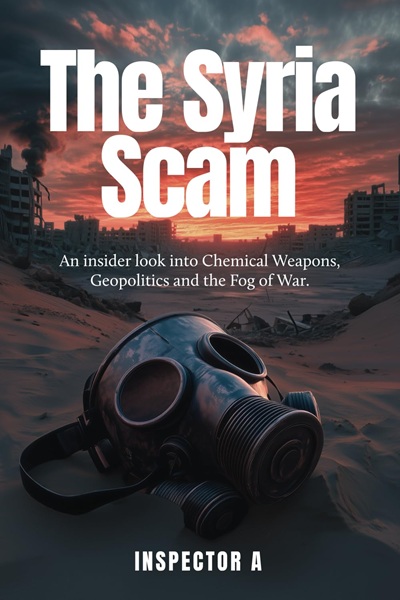 The dubious chemical weapons accusations and US driven political corruption of the Organization for the Prohibition of Chemical Weapons (OPCW) are now exposed in a February 2025 book by one of the technical professionals from the OPCW. The book is titled The Syria Scam: An insider look into Chemical Weapons, Geopolitics and the Fog of War.
By the end of 2018, the Syrian army had largely defeated the diverse jihadists. However, instead of conquering or expelling the opposition, Syria allowed them to have a safe haven in Idlib province on the border with Turkey. With Turkey, Iran and Russia seeking to find a solution through the Astana Accords, the conflict was frozen, and the jihadists were allowed to regain strength. Hayat Tahrir al Sham (HTS) became the de facto leader of the opposition factions and the government of Idlib.
The Frozen Conflict
In 2019, the U.S. turned the screws on Syria and escalated attacks on Lebanon. The extreme Caesar sanctions did what they were intended to do. They crushed the Syrian currency and economy, made it impossible to rebuild, and impoverished the vast majority of Syrians. The spreading poverty and inability to counteract it led to widespread demoralization and dissatisfaction. With consummate cynicism, the “Caesar” sanctions were named the “Caesar Civilian Protection Act”.
Meanwhile, in the HTS safe haven of Idlib province on the Turkish border to the north, conditions were very different. Although HTS was designated a terrorist organization in the U.S. and the West, they were helped economically. The HTS fighters were trained and supplied with modern military weaponry, including drones, sophisticated communications equipment, etc.. Very recently, when people from Damascus traveled to Idlib, they were shocked to find new highways, Wi-Fi widely available, and electricity 24 hours a day. Teacher salaries are ten times higher in Idlib than in Damascus.
The Fall of Damascus
With a demoralized population and Syrian army, the Assad government fell in a few weeks, and HTS, led by Ahmad Al Sharaa, took power on 8 December 2024. The new leader of Syria has been greeted and endorsed by the Gulf monarchies and Western countries that paid for and promoted the overthrow in Syria: the UK, Germany, France, Saudi Arabia, Qatar, and of course, Turkey.
Since the change, there have been numerous sectarian massacres of Alawites and Christians along the coast.
There have been attacks on Druze in Damascus. To date, there have been no punishments for the massacres of civilians. A nun reports, “there is no security” in Damascus or elsewhere in Syria.
Meanwhile, Israel has invaded and occupied all of the Golan and parts of southern Syria. They have built military bases in Quneitra and other strategic locations. Israel has carried out a bombing blitzkrieg, destroying all known Syrian ammunition depots. Israel can now fly over any part of Syria at will.
Instead of condemning the Israeli violation of Syrian land and airspace, Ahmad al Sharaa has criticized Iran and Hezbollah. In recent weeks, the new Syrian regime has arrested Palestinian leaders and closed their offices in Damascus. The normalization of relations with the Zionist state has begun.
Lifting Sanctions on Syria
Of course, the sanctions on Syria should be lifted. They never should have been imposed.
U.S. sanctions, known officially as “unilateral coercive measures”, are condemned by the vast majority of world nations. Over 70% of the world’ nations say that US sanctions are “contrary to international law, international humanitarian law, the Charter of the UN and the norms and principles governing peaceful relations among States.”
Without exaggeration, the West and their allies sponsored terrorism in Syria through Al Qaeda and other fanatical violent terrorist groups. They destroyed a once prosperous and independent nation. With a diverse Syrian population ruled by a sectarian leadership prone to violence, there may be more dark days ahead. While Israel, Turkey and the Gulf monarchies are pleased with the removal of the Assad government, a very heavy price has been paid by the majority of Syrians. And the cost is ongoing.
Trump’s Middle East theatricals were all about putting Bibi in his place
By Martin Jay | Strategic Culture Foundation | May 16, 2025
Was it Bill Clinton in the White House with Benjamin Netanyahu who, in a press conference, muttered those vulgar and certainly immortal words “who’s the f*** superpower around here?” The question was really about whether the U.S. is running Israel and its activities in the Middle East or it is in fact Israel which is running the U.S.
In recent months in both the Biden administration and the Trump one which followed, many pundits have claimed that Israel is in control of U.S. foreign policy, with some even going as far as speculating that this control even goes beyond the Middle East itself. This cabal of online commentators made so much of how Trump adjusted Bibi’s seat when he sat down in the Oval Office.
We can see now though that this idea of the tail wagging the dog, even if once it might have been true to some extent, has now been dealt with head on by Trump.
His visit to the Middle East and his impressive speech in Saudi Arabia which mocked the bellicose approach to bombing civilians was a direct message to Netanyahu in Israel: America is back.
Trump is literally taking control of U.S. foreign policy in the region and pushing back Israel’s attempts to bomb its way to peace, whether this be in Gaza, Lebanon, Syria or, of course, in Iran.
The move comes at a tough time in the region where the country which seemed to bring about a revolution with the Arab Spring – Tunisia – is falling into an abys as it becomes a leading example of a dictatorship which knows no limits on its brutal suppression.
For Netanyahu, a number of pundits now are pointing to the “clear light” between Trump and him with some claiming that these two leaders aren’t even talking anymore. Trump defied him by talking to Iran, negotiating with the Houthis and now scrapping sanctions in Syria.
Israel cannot even dream of attacking Iran with the U.S. help and so a big part of Netanyahu’s mojo has been removed. And now Trump is calling the shots on aid to Gaza, but stopped short of calling for the Palestinians to have their own state.
Yet his move on Syria is telling. Israel’s plans were always to have head-chopping extremists running the show – which they backed in the Syria civil war – with a constant mayhem present so that they can always take advantage of the chaos while ensuring that the path which once stood between Tehran and Beirut is always blocked.
Trump’s announcement that all sanctions will be lifted will not be welcomed by Bibi who will see the move as a stunt by the Donald to demonstrate who is running the show, although the announcement itself might prove to be premature.
Senator Lindsey Graham states only Congress can change the country’s designation as a “state sponsor of terror” and that Trump must make his case to Congress for that to happen.
“That report has not been received, and Congress has the opportunity to review this action if it chooses. The designation of Syria as a state sponsor of terrorism has tremendous ramifications apart from the sanctions,” Graham stated. The senator stated that he is sure that Congress must be informed before sanctions are lifted, and the legislative body would then “make an informed decision on whether or not it should approve the change in designation.” But he also stated that Israel’s opinion matters and that Congress would consult Netanyahu so it’s fair to say that Syria’s fate is still yet to be decided regardless of whatever Trump has said at the podium in Riyadh. It would appear that Bibi and Trump are set to clash now and we shouldn’t be surprised at what resources Trump will deploy to show Israel’s leader that Trump is both serious about peace in the region but also that Israel must put aside its warmongering – which may well include even supporting a two-state solution, pushed more recently by France and the UK. And then we will see who is the f*** super power and who is the client state. Almost certainly the fate of Syria and Gaza will be used as a rod for Bibi’s back until he succumbs to Trump’s rule.
Russia outlines ceasefire conditions in Istanbul talks with Ukraine
Al Mayadeen | May 17, 2025
The Russian Ministry of Defense has revealed the conditions presented by Moscow during the Istanbul negotiations with Kiev, as shared by the Clash Report platform on social media.
The outlined terms reflect Russia’s position on a potential settlement in Ukraine, with an immediate ceasefire as the primary demand.
Russia’s ceasefire conditions
Neutrality modeled on Austria
The first condition proposed by Moscow is that Ukraine adopt a neutral status, similar to Austria’s model. This would prohibit the presence of foreign troops or non-Ukrainian military bases on Ukrainian territory, effectively excluding NATO or other military alliances from operating within the country.
No foreign troops or bases in Ukraine
Moscow emphasized that neutrality must be comprehensive, with Kiev legally committing to reject the stationing of foreign forces and equipment.
Territorial demands and border recognition
Among the key demands, Russia requires Ukraine to formally recognize its constitutional claims over five regions: Donetsk, Lugansk, Kherson, Zaporizhzhia, and the Crimean Peninsula.
The Russian Defense Ministry stressed that the immediate ceasefire is contingent upon the complete withdrawal of Ukrainian forces from all five regions claimed by Russia.
Renunciation of war compensation claims
Moscow is also seeking a mutual legal renunciation of any compensation claims related to war losses, including economic damage and human casualties.
Protection of Russian-speaking citizens
Russia demands that Ukraine commit to European standards on minority rights, specifically to safeguard the rights of Russian-speaking citizens. In addition, Moscow calls for an end to what it terms “nationalist propaganda” within Ukrainian society.
Russia, Ukraine agreed to exchange ceasefire conditions
Later on Saturday, Kremlin spokesman Dmitry Peskov said Russia and Ukraine have agreed to exchange the lists of ceasefire conditions, noting that the Russian side is working on the matter.
The Russian side has prepared such a list and will hand it over, with exchange with the Ukrainian side,” he told reporters.
At the same time, the work on the resolution of the conflict in Ukraine has just started and it will be continued, he added.
Change in Russian delegation to negotiations not being discussed
Peskov pointed out that a change in the composition of the Russian delegation to the negotiations with Ukraine is not being discussed, emphasizing the importance of implementing the agreements reached during the recent Russia-Ukraine talks in Istanbul.
The Kremlin spokesperson also asserted that the ongoing negotiations “are and should be held in a closed format.”
Putin-Zelensky meeting possible if certain agreements reached
The Russian diplomat highlighted that a meeting between Russian President Vladimir Putin and his Ukrainian counterpart Volodymyr Zelensky is possible if delegations of both countries reach certain agreements.
“Such a meeting as a result of the work of the delegations of the two sides is possible when certain agreements of these delegations are reached,” he said.
Elsewhere, Peskov also said that Moscow considers the candidacy of Kiev’s signatory as the main and fundamental thing when signing documents between the Russian and Ukrainian delegations during the negotiations.
First direct talks since 2022
Russia and Ukraine held their first direct peace talks in over three years on Friday in Istanbul, reaching a key agreement on a large-scale prisoner exchange but making little headway on a ceasefire or broader political settlement.
The 90-minute meeting marked the first direct diplomatic engagement between Moscow and Kiev since 2022 and came amid continued hostilities and mounting international calls for a de-escalation of the conflict.
Both sides emerged from the session expressing cautious openness to further dialogue, though no immediate breakthrough was achieved on halting the war, now in its third year.
Ukraine entered the talks seeking an unconditional ceasefire, hoping to bring relief to areas devastated by the conflict and to ease the humanitarian crisis affecting millions.
Russia, however, dismissed the demand, and both sides instead agreed to present their respective “visions” for a potential ceasefire at a later stage, according to Russian lead negotiator Vladimir Medinsky.
Prisoner exchange agreement reached
The only concrete outcome of the talks was an agreement to exchange 1,000 prisoners from each side. Both delegations hailed the deal as a positive humanitarian step.
Ukrainian Defense Minister and chief negotiator Rustem Umerov described the agreement as a “great result”, noting that it set the stage for further negotiations.
Ukraine pushes for Putin-Zelensky summit
Kiev pushed for a direct meeting between Ukrainian President Volodymyr Zelensky and Russian President Vladimir Putin. Ukraine’s Foreign Ministry spokesperson Georgiy Tykhy stressed that progress would require “a meeting of leaders.”
Russia acknowledged Ukraine’s request for a summit but did not commit. Putin declined to attend the talks in Turkey, instead dispatching a lower-level delegation. Zelensky accused Putin of being “afraid” to engage directly and said Moscow was not approaching the talks “seriously”.
Rubio urges ‘peaceful end to the war’
Ahead of the negotiations, Ukrainian representatives met with US Secretary of State Marco Rubio, Trump’s special envoy Keith Kellogg, and national security advisors from Britain, France, and Germany.
State Department spokesperson Tammy Bruce said Rubio had urged “a peaceful end to the war” and emphasized that “the killing needs to stop.”
Speaking at a European summit in Albania, Zelensky called on the international community to impose further sanctions on Russia if the talks failed to yield results, warning of global consequences should diplomatic efforts collapse.
Preliminary talks in Istanbul are a start… the real show to come is Trump and Putin
Strategic Culture Foundation | May 16, 2025
The talks in Istanbul this week provide a prospect for peace. It bears emphasizing that the three-year proxy war could have been avoided if diplomacy had been permitted by Washington in early 2022 instead of being sabotaged.
Three years on, we have a new president in the White House, and there appears to be a more enlightened policy. Or maybe it’s an implicit admission that the U.S. proxy war agenda is a failure and can’t go on.
In any case, Trump and his envoys are unequivocally saying that they want to stop the bloodshed in Ukraine. That’s a big change from his predecessor, Joe Biden, who vowed to back Ukraine for as long as it takes in a fantastical, reckless pursuit to strategically defeat Russia.
It was the Biden administration, along with the British government, that intervened to scupper nascent peace talks in March 2022 between Russia and Ukraine for a peace deal. Washington and London coaxed the Kiev regime to fight on with promises of more weapons.
The result: three more years of intense conflict, which have caused millions of casualties, mainly on the Ukrainian side. The proxy war has come perilously close to provoking an all-out world war between nuclear powers.
Trump appears to want peace. If he is genuine in that intention, then the American president will have to address the root causes of the conflict. Russia has consistently explained the deeper causes of NATO aggression and the militarization of Ukraine as a hostile bridgehead on its borders since the CIA-orchestrated coup in Kiev in 2014.
The American president has shown petulance at times, urging Ukraine and Russia to get down to a peace deal. He has even threatened Russia with more (futile) economic sanctions. What the Trump administration needs to understand is that resolving deep causes of conflict requires commensurate negotiations and a realistic commitment to lasting geopolitical security arrangements.
The talks in Istanbul this week to explore a peaceful resolution were initiated by Russian President Vladimir Putin in an announcement last week.
Russia’s delegation was led by Putin’s senior aide, Vladimir Medinsky. That speaks of consistency and commitment. Medinsky led the peace talks three years ago in Istanbul, which were then sabotaged in April 2022 by the American and British intervention.
This week, the Russian side held preliminary bilateral talks with the Americans led by Secretary of State Marco Rubio. Subsequently, the Russian and Ukrainian delegates engaged in a meeting convened by Turkish diplomats. It was the first direct encounter between Russian and Ukrainian officials since the March 2022 negotiations.
It is not clear if follow-up meetings will take place. But at least one might say that talks took place.
The key to any prospect of ending the conflict depends on Washington demonstrating the requisite commitment. Trump said this week again that he would like to hold a summit with Putin as “soon as possible.” The Kremlin has also said that a formal presidential meeting is desirable.
Kremlin spokesman Dmitry Peskov cautioned that there must first be adequate preparation for meaningful discussions. That implies that any top-level meeting must be cognizant of Russia’s demands for a resolution, one that deals with the historic, systematic causes of the proxy war.
Western politicians and media denying Russia’s perspective are delusional or duplicitous. To claim that the conflict is all about “unprovoked Russian aggression” against “democratic Ukraine” and “Russian expansionism” towards Europe is a travesty. It’s a bogus narrative that precludes peaceful resolution. Trump seems to be aware of that. But he needs to go beyond a superficial “peace broker” charade.
If Trump wants a gimmicky big summit with Putin for PR ratings, as his tour of the Middle East this week illustrates his egotistical wont, he can forget it.
The meetings this week in Turkey can be seen as preliminary technical discussions.
However, President Trump needs to take the lead. Appropriately, a peaceful resolution will only happen at the senior level of the U.S. and Russian governments. That’s because the United States is the primary protagonist in the proxy war against Russia.
It is clear from the antics and theatrics of the Kiev regime this week that there is no prospect of a meaningful, lasting peace if negotiations are confined to that level. Ukrainian President Vladimir Zelensky does not even have constitutional legitimacy after cancelling elections last year. His erratic behavior of grandstanding and mudslinging at the Russian diplomatic efforts proves that he is not capable of substantive negotiations.
The European leaders are also an impediment to achieving an authentic peace settlement. Even before delegations met this week in Istanbul, various non-entity European politicians were disparaging Russia’s diplomatic initiative. Macron, Starmer, Merz, Von der Leyen and Kallas were desperately trying to insult the Russian president, indulging Zelensky’s PR stunt demanding a face-to-face meeting with Putin in Istanbul.
The European Union also timed an announcement this week to double its supply of heavy-calibre munitions to Ukraine. Another provocation.
France’s Macron sought to impose a precondition for the talks by demanding a 30-day ceasefire. That was a flagrant attempt to sabotage the negotiations before they even started.
These people are not honest about ending the worst war in Europe since the end of World War Two. Disgracefully, they want the bloodshed to continue for their political survival and gratifying their obsessive Russophobic fantasies.
If Trump wants to end NATO’s proxy war against Russia, he will have to sideline the European naysayers and the Kiev puppet regime. Their involvement is counterproductive. One suspects that Trump already knows that.
An American and Russian agreement at the highest level is the only way to bring the war to an end. It is no use for the American side pretending that they are mere peace brokers. They are the main protagonist, not the European lapdogs nor the Kiev regime.
Preliminary talks are all very well. But they are just that. Preliminary. If the talks have any chance of succeeding, the American side must take responsibility for the war it started and fueled.
US House Judiciary Committee Warns EU and Poland’s Tusk Government Over Censorship Threat to US Free Speech
By Dan Frieth | Reclaim The Net | May 15, 2025
The US House Judiciary Committee is sounding the alarm over an escalating threat to free expression, warning that censorship efforts by Poland’s current government, coupled with the European Union’s regulatory framework, could extend their reach into American speech online.
In a letter addressed to EU Commissioner for Justice and Rule of Law Michael McGrath, Committee Chairman Jim Jordan and four congressional colleagues requested a briefing on how the EU plans to respond to what they described as disturbing developments under Prime Minister Donald Tusk.
We obtained a copy of the letter for you here.
Since coming to power in December 2023, Tusk’s government has launched legal actions against members of the conservative Law and Justice (PiS) party.
These efforts include removing the legal immunity of PiS leader Jarosław Kaczyński, pressing forward with criminal charges that appear politically motivated, and subjecting detainees to harsh treatment.
One former aide denied access to her attorney during questioning, reportedly suffered a fatal heart attack shortly after. Another case involved the arrest and alleged mistreatment of Father Michał Olszewski, a Catholic priest tied to the former justice minister.
The Judiciary Committee points to these incidents as evidence of a political strategy designed to suppress opposition speech ahead of Poland’s 2025 presidential election.
According to the letter, the pattern includes targeting conservative activists and media outlets. A key example is the Polish government’s threat to revoke the license of Telewizja Republika, a station known for criticizing the Tusk administration.
Lawmakers expressed concern that these actions are taking place without pushback from EU institutions. They argue that the European Commission, which was quick to condemn the previous PiS-led government for its alleged violations of democratic norms, has so far failed to hold Tusk’s coalition to the same standard. The result, the committee says, is a perceived double standard that undermines the EU’s credibility and emboldens further censorship.
Of particular concern is the potential for EU censorship laws to ripple beyond Europe. The Digital Services Act, which requires platforms to remove “misleading or deceptive content,” may end up influencing global content moderation practices. Because platforms typically apply one uniform set of rules, the DSA could effectively establish a worldwide censorship template. The committee warned that this might restrict Americans’ speech online as companies adjust to foreign legal requirements.
Supporting this concern, the committee cited documentation showing that Poland’s Ministry of Digital Affairs, through the National Research Institute, requested the removal of TikTok videos that criticized electric vehicles. The content in question was not overtly political, but the request demonstrates, in the committee’s view, a willingness to use regulatory power to suppress opinions the government dislikes.
This pattern of behavior, if left unchecked, could allow foreign governments to influence global information flows. The letter emphasized that such interference is unacceptable, particularly when it has the potential to impact the speech of American citizens. The concern is not merely theoretical; as the letter points out, the Tusk government accused foreign actors of electoral interference through online ads just one day after the Committee’s communication to the EU.
The letter was signed by Chairman Jim Jordan, Subcommittee Chairman Darrell Issa, and Representatives Chris Smith, Warren Davidson, and Andy Harris. Their message to Brussels is direct: silence in the face of repression is not neutrality. If left unchallenged, the EU’s regulatory apparatus and inaction on political censorship risk becoming tools for silencing voices far beyond Europe’s borders.
Russia, Ukraine prepare for peace by getting ready for war
By M. K. BHADRAKUMAR | Indian Punchline | May 17, 2025
May 16 will stand out as a turning point, for good or bad, in the Ukraine conflict. The main thing is, Russia-Ukraine ‘peace talks’ have resumed in Istanbul and will hopefully carry forward the threads of the draft agreement negotiated in March 2022. But caveats must be added. The fact that it took Turkish President Recep Erdogan three hours to persuade Ukrainian president Volodymyr Zelensky to green light the negotiations speaks for itself.
On the other hand, Zelensky showed remarkable flexibility by violating his own presidential decree banning any such negotiations on the part of Ukrainian officials other than himself with Russian officials. Turkey showed again that it remains a significant influencer in the Ukraine conflict.
The result was an extraordinary spectacle. Reports mention that the Russian delegation had not one but three meetings, in fact — with a Turkish-American team followed by a Turkish-American-Ukrainian team and culminating in an exclusive huddle with the Ukrainian team.
The ‘bilateral’ Russian-Ukrainian negotiations reportedly touched on the topics of ceasefire options in the Ukraine conflict; a major prisoner exchange; a potential meeting between Zelensky and Russian president Vladimir Putin; an agreement in principle to hold a follow-up meeting and so on.
The Ukrainian media reported that the Russian side repeated their demands for Kiev’s forces to vacate the remaining parts of the four eastern and southern regions that Moscow has annexed. Ukraine of course rejected the demand. Indeed, these talking points at the Istanbul meeting would have been a plateful for a meeting that lasted only for an hour and forty minutes.
Turkiye has joined as a stakeholder, as the pacemaking in Ukraine provides an opportunity for it to work closely with the US, which could have positive fallouts for the two main discords that put strains on it in the recent years — Syria and the Kurdish problem. The Kurdistan Workers’ Party (PKK) has taken a historic decision on May 12 to give up armed struggle and dissolve itself, which opens the possibility to end decades of political violence in Turkiye. The ‘peacemaker president’ in the White House can help Ankara to mediate a Kurdish settlement.
Turkiye has promoted the US’ normalisation with the Islamist government in Damascus. Trump’s meeting with Syrian President Ahmed al-Sharaa in Riyadh on Wednesday alongside the lifting of Washington’s sanctions against Syria, which shake up the geopolitics of the Middle East, will bring Turkiye and the US on the same page.
Notably, all this is happening against the backdrop of a ‘westernist’ tilt in the Turkish foreign policies during the past year following Erdogan’s re-election as president. Traditionally, the equations between Trump and Erdogan remained cordial and friendly. Suffice to say, Trump can expect Erdogan’s cooperation in the peacemaking in Ukraine talks, where the Turkish leader’s excellent equations with Zelensky are an added factor, which was on display in Ankara yesterday.
Erdogan held Zelensky’s hand through thick and thin. The high-tech Turkish drones supplied to Ukraine, which are to be manufactured locally, will significantly boost Kiev’s military capability. Turkiye, as the inheritor of the Ottoman legacy, is home away from home for an influential Tatar community. Tatar language is an Oghuz language descended from Ottoman Turkish. In fact, Turkey has refused to recognise Crimea as part of Russia. Ukrainian Defence Minister, a close associate of Zelensky, is an ethnic Tatar.
Moscow understands all this. Putin hastened to put behind the friction in Russo-Turkish relations in the downstream of the regime change in Syria last December to reach out to Erdogan on May 11 to discuss the direct talks between Russia and Ukraine in Istanbul. The Kremlin readout said Erdogan “expressed his full support for Russia’s proposal and emphasised his willingness to provide a venue for the talks in Istanbul. The Turkish side will offer all possible assistance in organising and holding talks aimed at achieving sustainable peace… The leaders have also expressed mutual interest in further expanding the bilateral ties in trade and investment and, in particular, implementing joint strategic projects in energy.”
Erdogan is a difficult interlocutor to handle but Putin has been largely successful in keeping the relationship stable and (mostly) predictable. The Turkish factor can be a game changer if at some point Zelensky ceases to be the captive of the CoW4 (the four European musketeers of the so-called ‘coalition of the willing’ — Britain, France, Germany and Poland.) Trust Erdogan to shift gears to an activist role.
On the whole, Russia has scored a diplomatic victory insofar as its initiative on ‘Ukraine direct talks without preconditions’ has found acceptability with Trump. The format of yesterday’s talks implied a resumption of the Russian-Ukrainian talks in Istanbul in 2022. Putin manoeuvred brilliantly to scatter the game plan of the CoW4 which strove to pull aside Trump incrementally and become party to continuing the war in Ukraine.
The CoW4 felt encouraged lately by a certain perception that Trump may impose draconian sanctions if Russia lacked sincerity of purpose. But so far, Trump has remained engaged with Putin. Last week, Trump stated that a breakthrough in the Ukraine conflict will be possible only out of a summit between him and Putin. Suffice to say, the dramatic happenings in Turkey yesterday signify a setback to the CoW4.
The leader of the Russian delegation and presidential aide Vladimir Medinsky (who also headed the Russian team at the talks in Istanbul in 2022) has told the media that Moscow is “satisfied” with the results of the talks and is ready to “resume contacts” with Kiev.
That said, Moscow will not let down its guard either. Putin held a briefing session on May 15 with the permanent members of the Security Council, Russia’s highest policymaking body, to deliberate on the upcoming Istanbul talks, which was attended by the members of the Russian negotiating group. The Kremlin readout stated that Putin “set tasks and charted the negotiating position” of the Russian delegation in Istanbul.
On the other hand, the Kremlin also asserted simultaneously that no matter the talks in Istanbul, Russia’s military operations in Ukraine shall continue. With immaculate timing, Putin chose May 15 to also make the stunning announcement of the appointment of Colonel-General Andrey Mordvichev (nicknamed “General Breakthrough”) as the Commander of the Russian Ground Forces.
Gen. Mordvichev has a tough reputation as the commander of the 8th Guards Combined Arms Army of Russia’s Southern Military District, which was heavily involved in the devastating 2022 siege of Mariupol, and in the Battle of Avdiivka in 2023-2024, a turning point in the conflict in Ukraine. Gen. Mordvichev’s appointment comes amidst reports claiming that Russia is preparing to launch a major new offensive in Ukraine. Ukraine claims that over 600,000 Russian troops are presently deployed in Ukraine.
But then, Zelensky is also moving on a dual track. Ukraine’s Finance Minister Sergeii Marchenko, 43, told a high-level panel at the European Bank for Reconstruction and Development annual meeting on March 14 in London, “To prepare for peace, you have to get ready for war. We have to plan. You may call me a cynic, but actually I’m just a Finance Minister.”
Germany: Police block activists from leaving country to attend Remigration Summit in Italy in major crackdown
Remix News | May 16, 2025
German activists leaving the airport for the Remigration Summit taking place in Milan on Saturday were stopped and detained at the airport, interrogated for hours, and issued with an exit ban from leaving the country.
The summit will be attended by well-known activists from across Europe, such as the Austrian author Martin Sellner, Dutch commentator Eva Vlaardingerbroek, and Belgian activist Dries Van Langenhove.
The latter currently faces a potential prison sentence for memes that were posted in a group chat seven years ago. However, not only are German police now cracking down on activists, even leaving the country for the event, but Italian police are also showing up at the hotels of activists attending the event.
Sellner has been putting out a video and posting updates on X on the various actions taken against activists involved in the summit.
“I know them, they are great guys, Generation Identity activists, who have been detained for hours by the German police. They were arrested at the airport in Munich. Two of them were arrested on the plane, where they tried to enter a plane to Milan, Italy, to attend a conference about remigration. And the German state now bans them from exiting Germany for several days until the conference is over. Bans them from exiting. They banned me from entering, and then they threw me out of several cities and basically crushed my readings, and now they’re banning their own citizens, EU citizens from exiting.”
Sellner says that the German government’s reasoning is “crazy,” arguing that allowing the activists to leave “would be detrimental to the German state, the reputation of the German state, if they would go outside and take part in those events, because this would look like the German state endorses those events.”
Sellner argues that the German state is headed into dark territory, mimicking the GDR, communist East Germany, with this exit ban.
“No, you are our property, and it’s our property, our citizens. If you go there, it’s bad for our reputation. That’s why we lock you in like nasty little children. The German state is going full GDR. That’s exactly what the GDR did with the Berlin Wall. They didn’t let their own citizens leave the country, and that’s the case right now. It would be now punishable by law if they try to exit to Italy, Austria, and Switzerland. They’re banned from going to Switzerland, Austria, and Italy for a certain amount of days. The German state can extend this at will.
Of course, they will take immediate legal measures. They have very good lawyers. You need good lawyers in Germany. If you’re an activist, if you’re posting memes on X, you need an excellent lawyer by now. But it’s really crazy. These laws exist, but they might be lying dormant for a while and now the German state is shutting down, switching off the democracy simulation, and moving up and activating the totalitarian mode, the GDR mode.
As for the German activists, six men and two women who were stopped at the airport, Sellner stated they were released after hours of interrogation. They must now report to the police station twice a day.
“Eight young Germans are now banned from LEAVING Germany. If they try it, they commit a crime. They have to check in daily at their local police station. If not, they have to pay an extra fine. The democracy simulation is shutting down,” wrote Sellner.
The explanation they were given for the exit ban was also delivered to them in written form. It reads:
“In the event of an exit from German right-wing extremists, there is a considerable risk of damage to the reputation of the Federal Republic of Germany due to the stays of German right-wing extremists who promote the transnational networking of the right-wing extremist scene, actively promote the inhuman ideology and give it more scope, thus harbors the risk of radicalization of other people and their trips for the development of financial resources and the like.”
Freilich also writes that “it is also due to the history of Germany that the arrival of the activist concerned gives the international impression that the Federal Republic of Germany supports the right-wing extremist ideas openly spread at the event or at least does not adequately address them.”
Essentially, the German state is attempting to make the argument that allowing the activists to attend the summit would be the equivalent of endorsing their beliefs and harming the reputation of Germany. If that is the standard, then apparently it could be argued that any activists Germany does not detain in the future for any conference is a sign that the German state officially endorses the contents of that conference? Such reasoning reaches into the realms of the absurd.
The exit ban on the activists not only applies to Italy, but also to countries like Switzerland and Austria, and will be in effect until May 17, just a minute before midnight.
The activists also shared photos of the last moments they had before they were detained at the airport.
Although Sellner says the Italian police are not involved in this travel ban, and it is the German police at fault, he recently also posted an update on X, noting that an activist staying in Milan was also visited by police and questioned at his hotel.
Sellner says that booking the Remigration Summit has been fraught with difficulties, as vendors and hotels have been continuously canceling on organizers, likely due to pressure from activists. Antifa groups are also active and may try to disrupt the conference, or even more importantly, physically attack those involved.
Featured Video
Yemen joins the war – Red Sea could be blocked next – Saudi regime at risk
or go to
Aletho News Archives – Video-Images
From the Archives
Should Europeans ‘Thank’ the Americans for Destroying Nord Stream?
By Robert Bridge | Strategic Culture Foundation | September 29, 2022
With an investigation continuing into the destruction of the Nord Stream gas pipeline that provided energy supplies to Europe from Russia, there appears to be just one prime suspect, and that should surprise nobody.
Following the sabotage of the Nord Stream 1 and 2 gas pipelines, former Polish Foreign Minister Radoslaw Sikorski already seemed to know the identity of the perpetrator when he tweeted out: “Thank you, USA.”
At first glance, it seemed that Sikorski was speaking sarcastically, berating Washington for carrying out an attack that will have severe repercussions for the people of Europe. After all, how could anyone see any good coming from the termination of Europe’s primary source of gas reserves with winter just around the corner? It was Sikorski’s homeland of Poland, after all, that urged its citizens to collect firewood in the face of dwindling gas reserves.
In fact, the Polish diplomat was speaking one-hundred percent literally… continue
Blog Roll
 Aletho News
- Growing insecurity, soaring prices fuel protests in north as regime bans evacuation: Sources
- Iran denies responsibility for ‘depraved’ attack on Kuwait desalination plant
- Bring The Troops Back. End This War Now!
- Can we please stop calling Israel the ‘only democracy in the Middle East’ now?
- US should start removing its troops for Germany, proposes AfD co-leader Chrupalla
- Iran Red Crescent: 600 educational centers attacked in US-Israeli ‘war crimes’
- Russian Oil Tanker Arrives in Cuba Amid U.S. Blockade
- America Racing to Strategic Defeat in Iran: Lt Col Daniel Davis
- FTC Warns Visa, Mastercard, PayPal, Stripe Over Political Debanking
- Russian tanker approaches Cuba despite US oil blockade
- If Americans Knew
- Israeli police block Catholic cardinal from entering Church of the Holy Sepulchre on Palm Sunday
- Israel is assassinating journalists again, more than any other nation, anywhere, ever – Not a ceasefire Day 170
- Over 300 US service members wounded, majority have brain injuries – Not a ceasefire Day 169
- Researchers at Human Rights Watch Resign Over Blocked Report on Palestinian Refugee Return
- Jewish Groups Are Backing a War Americans Don’t Want
- Eric Fingerhut Thinks He’s the President of the Jews
- Top Jewish Philanthropists, Rabbis Urge Israeli President to Take Action Against ‘Jewish Extremists’
- Don’t Be Fooled. Zionist Leaders Have Always Wanted to Control Southern Lebanon
- Israel’s widespread use of torture is a core element of its genocide against the Palestinian people
- In Israel’s War on Iran, Many Middle East US Bases Rendered “All But Uninhabitable”
- No Tricks Zone
- New Study Finds Warming Saves Lives…Cold Temperatures 12 Times More Deadly Than Excess Heat
- German Science Blog Accuses PIK Climate Institute Of Hallucinating Climate Tipping Points
- Devastating Assessment Of Comirnaty Vaccine By Former Senior Pfizer Europe Toxicologist
- New Study: CO2 Is ‘Effectively Negligible’ As An Explanatory Climate Change Factor Since 2000
- Former Pfizer Toxicologist Dr. Helmut Sterz Tells Bundestag Hearing Pfizer Vaccine Should Have Never Been Approved
- Energy Expert: Germany’s Nuclear Phaseout Was A “500 Billion Euro Mistake”
- New Research: South Australia’s Mid-Holocene Sea Surface Temperatures Were 4°C Warmer Than Today
- Storing Green Energy To Last Germany 10 Days Would Require A 60-Million Tonne Battery
- New Studies: UK Sea Levels Were 4 Meters Higher Than Today During The Mid-Holocene
- Destructive Green New Deal: German Energy And Metal Group Warns Of Drastic Crisis
 Aletho News