CRAZY New BLOOD PRESSURE Guidelines Could HURT MILLIONS
Dr. Suneel Dhand | November 4, 2025
This really needs to be discussed. Recommendations are way different from other advanced countries.
New Hypertension Guidelines: https://www.heart.org/en/health-topic…
Doctors of Ojais Channel:  / @doctorsofojais
Dr. Dhand’s Website: https://www.drsuneeldhand.com
UK Government Caught Hiding COVID Shot–Death Data “To Prevent Distress or Anger”
By Nicolas Hulscher, MPH | FOCAL POINTS | November 15, 2025
Today, The Telegraph revealed that the UK Health Security Agency (UKHSA) has refused to publish anonymized data that would likely show strong evidence of a link between COVID-19 “vaccines” and mass deaths.
According to the report, UKHSA justified the secrecy by claiming that releasing the figures could cause “distress or anger” among bereaved families if a connection were discovered.
Even more concerning: The same dataset — mapping vaccination dates to dates of death — was provided to pharmaceutical companies but NOT released to the public. UKHSA also claimed that publishing the numbers could “lead to misinformation” or impact vaccine uptake.
For two years, the campaign group UsForThem fought to obtain the anonymised dataset through FOI requests. UKHSA refused every time. Ultimately, the Information Commissioner sided with the agency, allowing the data to remain hidden indefinitely.
MPs and peers had already sounded the alarm last year, urging the government to release the data “immediately,” noting that it had been quietly shared with vaccine manufacturers.
Intentionally withholding critical vaccine-safety data carries serious legal consequences, including but not limited to Misconduct in Public Office, Corporate Manslaughter or Gross Negligence Manslaughter, breaches of statutory duties under public-health and disclosure laws, and potential Fraud by omission or abuse of position.
Epidemiologist and Foundation Administrator, McCullough Foundation
Support our mission: mcculloughfnd.org
Read More:
UK Government Wins 2-Year Battle to Withhold Data Linking COVID Vaccines to Excess Deaths
The intel scandal behind Prince Andrew’s twisted Epstein exploits
By Kit Klarenberg · The Grayzone · November 16, 2025
In an interview with The Grayzone, author Andrew Lownie details shocking findings of his research into Prince Andrew’s relationship with Jeffrey Epstein. Describing Andrew as his “Super Bowl trophy,” Epstein used the prince for intel, which he passed to foreign spy agencies. Lownie says further revelations threaten to “bury” the Royal Family.
Prince Andrew’s decades-long relationship with Jeffrey Epstein was “earlier, longer, and far more intimate than anyone has previously admitted,” historian Andrew Lownie told The Grayzone. Their friendship was so depraved that even Epstein, the self-proclaimed “king of kink,” was shocked by the Prince’s sexual appetites, according to Lownie’s new book, Entitled: The Rise and Fall of the House of York.
Based on years of research in BBC archives, interviews, and leaked emails, Lownie’s investigation provides a chilling portrait of a man shielded by royal privilege, addicted to sex from childhood, and ultimately undone by his alliance with the world’s most notorious pedophile. The historian reveals that Epstein not only supplied Andrew with a steady stream of underage girls, but also gathered intelligence from the prince, and dutifully passed it along to Mossad and other spy agencies.
“The Prince was a useful idiot who gave Epstein respectability and access to political leaders and business opportunities,” Lownie explained to The Grayzone. “Meanwhile, Epstein offered Andrew an opportunity to join the super rich and enjoy a lifestyle to which he had long aspired, an endless supply of women, a chance to make lots of money, and someone who would bankroll his lavish lifestyle as well as settle Sarah Ferguson’s debts.”
Lownie revealed that Epstein was able to gather a steady flow of sensitive intelligence from Andrew, including potential blackmail material which he could hawk to foreign governments. Epstein’s one-time ‘mentor,’ the serial fraudster Steven Hoffenberg echoed this account, claiming Epstein referred to Andrew as his “Super Bowl trophy.” While the British royal unwittingly spied on Epstein’s behalf, he simultaneously compromised himself, making him into a perfect tool.
For much of his life, Andrew enjoyed an astonishing level of protection and indulgence from his mother, Queen Elizabeth. A former worker interviewed by an Australian outlet divulged that royal staffers were terrified by the prince’s impunity, and largely avoided standing up to his compulsive bullying because “Her Majesty almost always backed him and he fully exploited that.”
Lownie told The Grayzone Andrew’s explosive tantrums at Buckingham Palace, which reduced some targets to tears, were a “virtually daily” occurrence.
A source close to Andrew revealed to Lownie that the prince began exhibiting unusual sexual tendencies when he was only eight years old. The problem only worsened when Andrew lost his virginity at age 11 after a friend’s father hired two escorts for the boys. Andrew reportedly informed the source that by the time he was 13, he had already slept with over half a dozen girls, leading the source to conclude that the prince had been “a victim of sexual abuse at a very young age.”
Thanks to Andrew and Epstein, the cycle of abuse allegedly continued with a number of young girls — most notably, Virginia Giuffre. When her allegations against the Prince became public in 2015, a BBC team secretly travelled across the US, reviewing police files, while interviewing the pair’s victims at length. Along the way, they unearthed emails between Andrew and Ghislaine Maxwell discussing Giuffre.
The emails offer no indication either were unaware of Giuffre, or any sense her allegations were bogus. Lownie says the BBC team’s lead investigator told him, “instead Andrew and Maxwell worked together to build a dossier about Virginia [Giuffre] to leak to the media.” In other words, the pair colluded to smear one of their victims in the court of public opinion, before legal action could be initiated. When a suit was finally initiated on her behalf, Andrew paid out handsomely rather than face scrutiny.
Lownie believes full disclosure of Andrew’s involvement with Epstein could permanently sink the House of Windsor. A former Buckingham Palace staffer told him, “they’d never be able to bounce back from it,” as the resultant scandal “would bury them for good.” Lownie’s source cautioned, “if the unconditional truth is ever released, the British public would try to impeach the Royal Family — after all, many of Andrew’s wrongdoings were done on the British taxpayer’s tab.”
Andrew’s sexual depravity shocks even Epstein
Canadian journalist Ian Halperin was the only reporter to interview Epstein at length before the financier’s death. He provided Lownie with exclusive access to his records. They show Epstein was surprisingly candid about his predilection for underage girls, to the extent of openly arguing pedophilia should be decriminalized. Along the way, the pedophile offered a number of explosive revelations about Andrew, who he described as his “closest friend in the world.”
In one email, Epstein insisted he and Andrew were “very similar,” as they were “both serial sex addicts” who’d even “shared the same women.” Andrew was “the only person I have met who is more obsessed with pussy than me,” he attested. Based on “reports” Epstein received from their mutual sexual conquests, Andrew was “the most perverted animal in the bedroom,” he wrote. Epstein expressed awe at the degeneracy of Andrew, who he said possessed “the dirtiest mind I’ve ever seen,” concluding: “He likes to engage in stuff that’s even kinky to me – and I’m the king of kink!”
Lownie also provides evidence that the depraved duo crossed paths far earlier than is claimed by Andrew. According to a statement by the prince after Epstein’s death, he insisted they met in 1999 and subsequently saw each other “probably no more than only once or twice a year.” In reality, Andrew’s private secretary places the start of their friendship in “the early 1990s,” Lownie explained. Flight logs from Epstein’s private jet, nicknamed the Lolita Express, reveal that Andrew’s occasional partner, Sarah Ferguson, travelled on the aircraft with her children as early as April 1998.
By 2000, the royal had become a fixture at elite Stateside social events hosted by Epstein and Ghislaine Maxwell, the publishing heiress who met Andrew during the 1980s at Oxford University. As their friendship developed, Andrew and Ferguson often stayed at Epstein’s palatial New York and Florida homes.
These trips have largely been concealed from the public, which is perhaps understandable given the purpose of his visits.
“Whenever Andrew was in town, I’d be picking up young girls who were essentially prostitutes,” Epstein’s personal driver, Ivan Novikov, recalled to Lownie. “One time I drove him and two young girls around 18 to the Gansevoort Hotel in the Meatpacking District. Both girls were doing lines of cocaine. Prince Andrew was making out with one of them.”
All the while, Epstein and Maxwell were insinuating themselves into the top echelons of the British aristocracy. According to one now-deleted British media report, Andrew invited Epstein and Maxwell to attend events at Windsor Castle and Sandringham in 2001, including Queen Elizabeth II’s 74th birthday that August. The article, which has since been scrubbed from London’s Evening Standard website, quoted a friend of Ferguson’s as saying Andrew’s lewdness was so undisguised that he “travels abroad with his own massage mattress.” According to the Evening Standard, the “very manipulative” Maxwell introduced Andrew to a “sex aid entrepreneur” at Donald Trump’s Mar-a-Lago.
The same piece described Andrew traveling around Phuket, Thailand with Maxwell, frequenting “sex bars in the area’s red light district”, and visiting Los Angeles with his friend and “self-confessed drug dealer” Brett Livingstone-Strong. During this time, Andrew was apparently so infatuated with Epstein and his clique that he opted to stay at the pedophile’s Miami beach mansion rather than attend his daughter Eugenie’s 12th birthday party at Disneyland Paris, Lownie reveals.
Andrew’s fall from grace
In May 2007, Epstein began negotiating an unusually lenient plea deal with Florida authorities after local police uncovered a trove of evidence implicating the financier in a national sex trafficking conspiracy. Finally, English-language media began scrutinizing the potentially pedophilic implications of the financier’s bond with Prince Andrew for the first time. Another since-deleted Evening Standard report on their friendship noted Epstein’s Florida mansion was filled with pictures of nude girls, with two cameras found hidden in clocks.
The net significantly tightened in December 2014, when lawyers filed court papers in Florida alleging Andrew was one of several prominent figures who’d raped Virginia Giuffre at Epstein’s arrangement. The pair purportedly had sex in London, New York, and on Epstein’s private island, Little Saint James. In the latter case, Giuffre claimed to have been involved in a “disgusting” orgy with Andrew, Epstein, and multiple girls who “all seemed and appeared to be under the age of 18.”
The filings also alleged Andrew had lobbied on Epstein’s behalf after his arrest, working to ensure he received a light sentence. Epstein repaid the favor by clearing Sarah Ferguson’s substantial debts. British media reacted with shock: “Prince Andrew may have been secretly filmed with underage girl he is alleged to have abused,” blared one mainstream headline. That day, a seemingly frantic Andrew emailed Maxwell: “Let me know when we can talk. Got some specific questions to ask you about Virginia Roberts.”
Buckingham Palace issued a firm denial, stating “any suggestion of impropriety” by Andrew “with underage minors is categorically untrue,” and that he “emphatically denied the Duke of York had any form of sexual contact or relationship with Virginia Roberts.” Until Epstein’s death, the British media seemingly accepted the royal line. But Andrew’s now-notorious November 2019 Newsnight interview revived public suspicions, and ignited a new wave of scrutiny.
Over the course of an hour-long grilling, the Prince offered a series of preposterous excuses for his friendship with Epstein, while failing to credibly explain his time with Giuffre. For example, he claimed her account of him sweating profusely while they danced together at a London night club couldn’t be true, as he was unable to sweat at all because he suffered a scientifically implausible “adrenaline overdose” during the Falklands war.
Next, Andrew attempted to justify a four-day December 2010 visit to Epstein in New York, during which paparazzi documented a young woman leaving his town house, and a friendly walk he enjoyed with the prince through Central Park. (The tweet below incorrectly dates the footage from 2011; it was filmed on December 6, 2010).
In his Newsnight interview, Andrew claimed he initiated the meeting to break off ties with the financier following his conviction for sex trafficking offenses. He insisted that he felt the need to end their connection in person, due to his “tendency to be too honourable,” but struggled to explain why this necessitated a four-night-long stay, replete with a dinner party in his personal honor.
The prince claimed he opted to stay at Epstein’s mansion as “it was… convenient” — apparently overlooking the British consulate and numerous upmarket hotels which could have provided an alternative to staying with a convicted sex offender.
Furor over Andrew’s performance erupted as soon as the interview was broadcast, with one royal observer dubbing it, “nuclear explosion level bad.” Yet the Prince was initially satisfied with his public self-immolation. The Guardian reported at the time that Andrew “was so pleased with how things had gone that he gave the Newsnight team a tour of the palace afterwards.”
Andrew’s British state protection crumbles
Days after the disastrous interview, Andrew’s ex-girlfriend disputed his account of the 2010 visit with Epstein, stating that the prince’s main purpose was to determine whether the financier had “any dirt on him.” The pair reportedly also discussed securing $200 million funding for mysterious energy company Aria Petroleum, prompting Epstein to inform close contacts at JP Morgan that the prince sought to represent the interests of a Chinese commercial entity.
From this point on, Andrew withdrew from public life. Under pressure from British Army apparatchiks, he was stripped of his military awards and decorations. Charities distanced themselves from the royal, while polls indicated a majority of Britons believed he should be extradited to the US to face questioning. In May 2020, Andrew permanently resigned all his public roles over his Epstein connections. In the meantime, pressure began building in the US for the Prince to speak to Giuffre’s lawyers and federal investigators.
In his Newsnight interview and subsequent official statements, Andrew claimed he was happy to assist with any investigation into Epstein’s abuse. But the American prosecutor who led investigations into the financier and his associates in New York, Geoffrey Berman, reported he was repeatedly stonewalled by Buckingham Palace. Contacting royal lawyers was difficult enough in the first place, he said, and he described their communications as having quickly devolved into an never-ending series of questions.
“What kind of an interview will it be? Are there any protections? Is there this? Is there that? And where do you want it to take place?” Berman recalled. “It was an endless email exchange, and it was clear we were getting the run-around. He was not going to sit down for an interview with us.” Finally, Berman asked the State Department to dispatch a mutual legal assistance treaty (MLAT) request to British police, demanding an interview with the prince.
US prosecutors “almost always got what we asked when we put in an MLAT request,” Berman recalled. “But that was not what happened with Prince Andrew. We got absolutely nowhere. Were they protecting him? I assume someone was.”
Andrew’s state-level protections began to dissolve, however, after a December 2020 investigation by the Daily Mail into Giuffre’s claim that Andrew had sex with her when she was just 17. His alibis for the dates in question had been incinerated.
In August 2021, Giuffre’s lawyers filed suit against Andrew in a US court for “sexual assault and intentional infliction of emotional distress.” The action raised the prospect of Andrew giving sworn testimony proving his inability to sweat on the witness stand. Members of the Royal Family, including Ferguson and their daughters Princesses Beatrice and Eugenie, also faced the threat of grilling under oath. Rather than go to court, the House of Windsor settled for as much as $16.3 million.
Andrew Prince no more as scandals proliferate
For the first time, Buckingham Palace began to firmly distance itself from Andrew. As Lownie recorded, the media was informed that the Queen would no longer bankroll his legal fees. After a lifetime of protecting her son from the consequences of his excesses, fear of further damaging admissions may have motivated the monarch’s decision.
Those fears were well-founded, as Lownie revealed that Andrew emailed Epstein in February 2011, months after claiming to have cut off all contact with the financier following their four day 2010 ‘farewell’ summit in New York.
In that email, Andrew promised to “keep in close touch,” stating, “we are in this together and will have to rise above it,” and promising, “we’ll play some more soon!!!” That same year, Sarah Ferguson expressed her affinity and gratitude to Epstein in a separate covert email exchange. Sources suggested to Lownie that Epstein had supplied her with hundreds of thousands of dollars, far in excess of the £15,000 she claims to have received from the serial sex abuser.
In a 2011 interview, Ferguson said “having anything to do” with Epstein had been a “gigantic error of judgment” on her part. She added, “I abhor paedophilia and any sexual abuse of children… what he did was wrong and… he was rightly jailed.” Shortly after though, she contacted Epstein claiming she “did not, absolutely not, say the ‘P word’ about you.” Ferguson apologised for letting him down, stating “you have always been a steadfast, generous and supreme friend to me and my family.”
This October 30, as furor over Epstein’s activities engulfed the Trump administration, Buckingham Palace issued a shock declaration. Prince Andrew will be stripped of his titles, honors, and stately home, and now simply be known as Andrew Mountbatten Windsor – in effect excommunicated from the British Royal Family for life. While no formal explanation for the unprecedented move was provided, it was clear they were determined to cleanse Epstein’s stain from their house.
“These censures are deemed necessary, notwithstanding the fact that he continues to deny the allegations against him,” the royal statement read. “Their Majesties wish to make clear that their thoughts and utmost sympathies have been, and will remain with, the victims and survivors of any and all forms of abuse.”
But Andrew’s erasure from the spotlight, termination of his assorted patronages and curtailment of public duties may have come too late. After years of alternating between silence over his sexual abuse or flatly denying the allegations, Buckingham Palace faces the threat of further disclosures. As Lownie makes clear in his newly released book, Entitled, new details of the prince’s perversions could discredit the royal family for good.
Is Trump protecting pedophiles in the Epstein files?
By George Samuelson | Strategic Culture Foundation | November 17, 2025
Following a batch of newly released emails from Jeffrey Epstein, the late child offender, it appears thus far that U.S. President Donald Trump is innocent of any wrongdoing. So why is he acting so suspicious?
On November 12th, the Democrats on the House Oversight Committee released some 20,000 emails from the files that suggested Donald Trump may have known more about Epstein’s underage sex-trafficking activities than he previously admitted.
In an email exchange between Epstein, who committed suicide in prison in 2019 while awaiting trial, and his accomplice Ghislaine Maxwell, Epstein notes that an alleged victim had “spent hours at my house” with Trump.
“I want you to realize that that dog that hasn’t barked is trump,” Epstein wrote in an April 2011 message to Maxwell, who is awaiting trial from federal prison in the United States.
“[Victim] spent hours at my house with him,, he has never once been mentioned,” he continues.
“I have been thinking about that…” Maxwell replied.
In another email between Epstein and journalist Michael Wolff from 2019, Epstein writes that [Victim] mara lago… [redacted]… trump said he asked me to resign, never a member ever.. of course he knew about the girls as he asked ghislaine to stop.’
While the email exchange looks tantalizingly close to some form of guilt on the part of the U.S. leader, it is not a smoking gun. That’s largely because the redacted ‘victim’ mentioned in the above email messages is none other than Virginia Giuffre, who was 17 years old when she was lured away from Trump’s Mar-a-Lago club to work for Jeffrey Epstein.
Giuffre, who committed suicide in April, was deposed in November 2016 as part of her lawsuit against Ghislaine Maxwell. In the course of the deposition she maintained that Trump never attempted to have sex with her. She also responded under oath that she never saw Trump at any of Jeffrey Epstein’s residences.
Over the years, Trump and Epstein had rubbed shoulders in elite social circles in New York and Florida. In a 2002 interview with New York magazine, Trump said he had known Epstein for 15 years, calling him a “terrific guy” who was “a lot of fun to be with.”
In that same interview, Trump added, “it is even said that he likes beautiful women as much as I do, and many of them are on the younger side.”
So, if there is nothing more to the story between the disgraced billionaire pedophile and the American president, why are Trump and other top officials so reluctant to release the remainder of the files to public scrutiny? (The White House said the emails “prove absolutely nothing”).
Is the U.S. leader covering for himself or for others in the knowledge that there may be far more incriminating revelations in other messages? The answer appears to be obvious and self-evident, but whatever the case may be, Trump is putting intense pressure on Republicans to block release of the remainder of the files now in possession of the Justice Department.
CNN reported that the White House summoned representative Lauren Boebert – one of four Republicans in the House who have signed a special discharge petition to release the files – to a meeting in the Situation Room with the attorney general, Pam Bondi, and FBI director, Kash Patel, to discuss her position. Trump failed to get a reversal from Boebert, as well as other lawmakers contacted by the White House, including South Carolina Republican Nancy Mace. But the administration had other cards to play, it seems.
Perhaps Republicans and Democrats alike were of the opinion that a conveniently timed government shutdown – the longest in history, in fact – would make the public forget about Mr. Epstein. If that was the goal it also failed. After the government reopened for business, the late swearing-in of the Democratic representative Adelita Grijalva brought the number of signatures on the discharge petition to the magic number of 218 required to force a vote on legislation demanding the release of all files on Epstein within 30 days.
Meanwhile, the U.S. president’s efforts to portray the files as part of an elaborate ‘Democrat Hoax’ is not working among his MAGA constituents, many of whom cast a vote for Trump specifically on the grounds that the files would be made public. In July, much to the anger and frustration of the Republican base, the Justice Department released a memo that pointed to a “lack of evidence” to continue with the investigation.
“This systematic review revealed no incriminating ‘client list,’” the memo said. “There was also no credible evidence found that Epstein blackmailed prominent individuals as part of his actions. We did not uncover evidence that could predicate an investigation against uncharged third parties.”
“No further disclosure would be appropriate or warranted,” the memo continued.
If the Trump White House was of the opinion that the American people would forget the Epstein case, they were sadly disappointed. They smelled a rat and they would not rest until the matter was brought to its final conclusion.
“The best-case explanation for the Trump administration on their mishandling of the Epstein case is rank incompetence,” said Senator Ron Wyden, Democrat of Oregon, in a statement. “But the much likelier explanation is that Trump and wealthy people around him have things to hide.”
Will those hidden things be brought to the light of day? Unfortunately, it seems very unlikely. Even if the discharge petition passes the House, it still needs to get through the Senate and be signed by Trump, who certainly does not want to be seen as the person left holding the hot potato. The question remains: how much will the Republicans suffer at the ballot box if they continue to ignore the Epstein case?
Swiss probe links Ali Abunimah detention to Israeli political pressure
Al Mayadeen | November 17, 2025
A Swiss parliamentary investigation has revealed that the detention and expulsion of Palestinian-US journalist Ali Abunimah in January were the result of political interference and undisclosed ties between senior Swiss officials and Israeli interests. The findings have raised alarms about institutional bias and shrinking space for Palestine advocacy in Europe.
The Control Commission of the Council of States released its report last week, confirming that Nicoletta della Valle, then-head of Switzerland’s federal police agency (Fedpol), personally intervened to impose an entry ban against Abunimah. The decision, investigators found, “deviated from standard practice” and was implemented in a manner they described as “unsatisfactory” and “particularly problematic.”
Abunimah, the executive director and co-founder of The Electronic Intifada, had entered Switzerland legally and was scheduled to speak at a public event before being detained without warning by plainclothes officers. He was held incommunicado for three days and deported without due process.
Della Valle’s ties to Israeli interests raise conflict concerns
The report detailed how Zurich police initially requested a ban before Abunimah’s arrival. Fedpol rejected the request after consulting intelligence and immigration agencies. However, following a phone call from the commander of Zurich’s cantonal police, della Valle reversed that decision, without new evidence, and verbally instructed her staff to enforce the ban after Abunimah had already entered the country.
Critics have pointed to Della Valle’s post-retirement role at Champel Capital, an Israeli investment firm with ties to high-ranking Israeli officials, including Major General Giora Eiland and politician Amir Weitmann. Both men are known for advocating extreme measures against Gaza and its population. Della Valle’s name has since been quietly removed from the firm’s website.
Abunimah said the findings confirmed that “serious irregularities and abuses of power” were carried out to suppress public criticism of “Israel’s” genocide in Gaza. He noted that the entry ban violated basic democratic rights and was politically motivated.
UN experts condemn growing restrictions on Palestine advocacy
International human rights bodies have condemned Abunimah’s detention and broader crackdowns on critics of the Israeli occupation in Europe.
Francesca Albanese, the UN Special Rapporteur on the Occupied Palestinian Territories, warned at the time of a “toxic climate” for freedom of speech, while UN Special Rapporteur on Freedom of Expression, Irene Khan, called the repression of Palestinian voices “alarming” and “unjustifiable.”
The parliamentary report reconstructs a clear pattern of intervention. Authorities confirmed that Abunimah posed no threat, but the entry ban was forced through via irregular backchannel influence. Della Valle’s personal directive to override procedural safeguards has become the centerpiece of a growing scandal.
Swiss Zionist lobbying under scrutiny following revelations
The case has intensified scrutiny of Swiss institutions and their connections to Zionist lobbying networks. Switzerland hosts a wide range of organizations affiliated with the global Zionist movement, including the Swiss Zionist Federation, KKL-JNF, Keren Hayesod, and the Jewish Agency’s Swiss branch, all of which have supported illegal settlement activity and lobbied for policies targeting Palestinian advocacy.
Parallel groups, such as the Switzerland-“Israel” Society (GIS), the Swiss Federation of Jewish Communities (SIG), and CICAD, as well as newer outfits like NAIN, have pushed for bans on the Palestinian Resistance in Gaza, cuts to UNRWA funding, and efforts to equate anti-Zionism with anti-Semitism.
Observers say these organizations shape political narratives and influence policymakers, enabling state repression of pro-Palestinian voices under the guise of combating hate speech.
Legal challenge underway
Abunimah is now taking legal action in Zurich and at the federal level, with his legal team preparing further filings based on the parliamentary commission’s findings. His case has become emblematic of growing concerns about freedom of expression in Europe and the ability of foreign-linked networks to suppress dissent through state institutions.
“These grave violations of democratic and human rights were carried out to prevent me from speaking at lawful public events, organized by Swiss citizens and residents, calling for an end to ‘Israel’s’ genocide in Gaza,” Abunimah said in a social media post.
Germany lifts arms export restrictions to ‘Israel’
Al Mayadeen | November 17, 2025
The German government announced it will lift restrictions on arms exports to “Israel,” a move set to take effect on November 24. The decision follows what Berlin described as a “stabilized” ceasefire in Gaza that has been in place since October 10.
Government Spokesperson Sebastian Hille confirmed the move, stating, “The restrictions on arms exports to Israel… will be lifted.” Hille added that the decision comes after reassessing conditions on the ground, claiming expectations for adherence to the ceasefire and the delivery of humanitarian aid.
The original suspension, introduced in August 2025, was framed by Chancellor Friedrich Merz as a response to “Israel’s” declared plans to occupy Gaza City, which he said complicated the justification for continued arms transfers.
At the time, Merz noted that it was “increasingly challenging” to reconcile the stated objectives of disarming Hamas and freeing captives with the military escalation.
Surge in exports since October 2023
Following the start of the war in October 2023, German arms exports to “Israel” surged dramatically. While export approvals in 2022 amounted to roughly €32 million, by October 2023, licenses worth €203 million had been greenlit, €198.68 million of which came after October 7.
Between October 2023 and May 2025, Germany approved €485.1 million worth of arms exports to “Israel,” covering everything from firearms and ammunition to tank engines, electronic systems, and naval equipment. These transfers filled critical gaps for “Israel,” especially as US manufacturers were strained by military commitments to Ukraine and European partners.
Germany became “Israel’s” second-largest arms supplier after the US, accounting for about one-third of its military imports during this period.
August ban: Loopholes, legal theater
The August 2025 announcement of halting military equipment exports appeared to mark a turning point, but closer scrutiny revealed that the so-called ban excluded existing contracts, which continued to be fulfilled.
Critically, the same day the halt was announced, Germany approved a €500 million export license for the INS Drakon, a Dolphin-class submarine. Government lawyers would later argue that the license had been approved earlier, despite evidence to the contrary.
Other loopholes also weakened the suspension’s impact. The restriction only applied to items “clearly usable in Gaza,” leaving space for shipments ostensibly intended for other regions. Additionally, German firms like Renk AG and Sig Sauer immediately explored relocating production to the US to bypass restrictions.
Between August 8 and September 13, Germany issued no new approvals. But within the next nine days, €2.46 million in “other military goods” was approved. Compared to the €250 million authorized between January and early August 2025, the actual disruption was minimal.
Despite mounting domestic pressure, 73% of Germans favored tighter arms controls, and over 30 NGOs demanded a full embargo. German courts routinely dismissed legal challenges to the exports, citing plaintiffs’ lack of standing and the confidential nature of licensing decisions.
A return to status quo
Despite headlines about a policy shift, the August suspension did little to interrupt Germany’s arms pipeline to “Israel”. Existing contracts were honored throughout the 108-day suspension. Critics, including the BDS movement and human rights groups, labeled the suspension a public relations gesture rather than a genuine policy change.
As of late November, Germany will resume full military cooperation with “Israel”, reaffirming what many see as its enduring commitment to the doctrine of Staatsräson, the idea that “Israel’s” security is a cornerstone of German foreign policy, irrespective of the legal and humanitarian implications.
Syria pledges to hand over hundreds of Uyghur militants to China: Report
The Cradle | November 17, 2025
The Syrian government plans to hand over Uyghur foreign fighters within its security forces to China, AFP reported on 17 November, ahead of Syrian Foreign Minister Asaad al-Shaibani’s first visit to Beijing.
The issue of the extremist foreign fighters from China’s majority Muslim Xinjiang province was expected to be on the agenda for Shaibani’s meeting with Chinese officials, a Syrian government source told AFP on condition of anonymity.
“Based on China’s request, Damascus intends to hand over the fighters in batches,” the source stated.
A Syrian diplomatic source elaborated further, telling AFP that “Syria intends to hand over 400 Uyghur fighters to China in the coming period.”
Shaibani became foreign minister after the group he helped found, Hayat Tahrir al-Sham (HTS), took power in Damascus in December of last year with help from the Turkiye, Israel, and the US.
Large numbers of extremist Muslim fighters traveled from Europe, Arab countries, Turkiye, and China to assist HTS, the former Al-Qaeda affiliate, to topple the government of former Syrian president Bashar al-Assad.
The CIA-led operation to topple Assad, known as Timber Sycamore, began in 2011. The effort involved sparking anti-government protests and flooding Syria with heavily armed and well-funded militants from Al-Qaeda and the Islamic State of Iraq (ISI).
Fighters from the Uyghur religious minority belong to the Turkistan Islamic Party (TIP), a group that aims to establish an Islamic state spanning Xinjiang and other parts of Central Asia.
After coming to Syria with the help of Turkish intelligence, the group helped HTS (formerly the Nusra Front) conquer Idlib governorate in northwest Syria in 2015.
In 2017, Syria’s ambassador to China said that between 4,000 and 5,000 Uyghurs were fighting in the country.
Uyghur fighters often took over homes of Christians and Druze, who were ethnically cleansed from Idlib, which became the base from which HTS launched its campaign to topple Assad last year.
The new Syrian army gave a prominent Uyghur militant from TIP a high-ranking position as brigadier general, while also integrating thousands of the group’s fighters.
The Chinese government has for years expressed concern about the TIP’s presence in Syria. On 31 December, a Chinese Foreign Ministry spokesperson called on all countries to “recognize the violent nature” of the TIP and “crack down on it.”
Western governments and rights groups claim that the Chinese government is repressing the Uyghur Muslims in China, including imprisoning large numbers in internment camps and prisons.
Turkish Hercules Crashes on Azerbaijan-Georgia Border
By Alexandr Svaranc – New Eastern Outlook – November 17, 2025
Unfortunately, airplane crashes are becoming a common feature of our time that leads to human casualties. Such incidents are caused by technical failures, human error, or external interference. It seemed nothing foreshadowed the destruction of the Turkish C-130 military transport aircraft, but…
Why did the Turks fly to Azerbaijan, and what happened on the journey back?
Türkiye is a strategic ally of Azerbaijan and made an exceptional (military and political) contribution to the success of the Azerbaijani side in the Second Karabakh War.
Incidentally, after 2020, Türkiye, Israel, and a few others began competing over who provided more support to Azerbaijan and played the key role in Baku’s victory. In the fall of 2024, President Recep Tayypi Erdoğan, verbally threatening Israel and the West with a “night invasion” by the heirs of Ottoman askeri, repeatedly recalled Türkiye’s experience in Nagorno-Karabakh. For instance, on the eve of Israel’s invasion of Lebanon, as reported by the Turkish publication Al Ain Türkçe, Erdoğan stated: “Türkiye can enter Israel just like it entered Karabakh and Libya. We will do the same to them. There is no reason not to do it. We just need to be strong so we can take these steps.”
In turn, President Ilham Aliyev publicly tried to convince everyone that, allegedly, nobody provided military assistance to Azerbaijan and that he alone secured the victory. Nevertheless, Baku always emphasized the moral and political support of Türkiye and Pakistan.
On the Israeli side, certain people, e.g., blogger Roman Tsypin, express a certain resentment in this regard. Tsypin believes that the decisive role in Azerbaijan’s military success in Karabakh belongs to Israel, thanks to its weapons, specialists, and medical assistance. However, Aliyev did not invite Netanyahu to the parade celebrating the 5th anniversary of the victory (although on November 8 he demonstrated his army’s power, equipped predominantly with Israeli weaponry: the Harop loitering drone and the Orbiter mini UAV, the Lora long-range tactical ballistic missile system, etc.). The Israeli expert forgot, however, to mention how Aliyev could have invited Netanyahu to Baku if seats on the podium next to him were “reserved” for Israel’s sworn enemies, namely Erdoğan and Sharif?
A group of Turkish military personnel arrived in Baku along with Turkish President R. Erdoğan (including an F-16 flight group with the Chief of the Air Force Staff, Sergeant Major General Ilker Aykut) to attend the parade at Azadliq Square on November 8. The group of the Turkish Air Force in F-16 fighters, which have been stationed at the Ganja airbase since the summer of 2020, participated in demonstration flights in the sky over the Azerbaijani capital, demonstrating Turkic solidarity and collective strength. But the celebration ended, and it was time for the guests to depart.
Groups of officers and technical staff of the Turkish Air Force who participated in the Baku parade returned home in two groups. The first group completed the journey as planned. The second group, consisting of 20 people, was returning on November 11 on a C-130 Hercules military transport aircraft (tail number 68-1609) from Ganja, which had delivered spare parts and technicians for servicing the F-16s to Azerbaijan. However, in Georgia, in the Signagi area, very close to the border of brotherly Azerbaijan (5 km), the Turkish military aircraft disappeared from radars 27 minutes after takeoff and reaching cruising speed, unexpectedly went into a spin, and crashed. The entire crew of 20 people perished (including the Chief of Staff of the Turkish Air Force, Sergeant Major General Aykut). What happened?
Probable causes and speculation
Regarding this aviation accident, Georgian law enforcement agencies initiated a criminal case under the article on violation of air transport safety rules resulting in death. Search and rescue operations were conducted at the scene, the bodies of the deceased Turkish military personnel were found, and the black boxes were delivered to the Kayseri airbase for a subsequent investigation into possible causes by Turkish specialists.
Recep Erdoğan called this tragedy a “heavy blow for the country,” demanding its cause be thoroughly investigated by examining all versions, and also called on the public for political vigilance, to avoid panic, and to exclude all speculation regarding assumptions about the military aircraft’s crash.
According to data from the Turkish newspaper Sözcü, the Turkish Air Force aircraft had a history of over half a century (57 years); it was manufactured in 1968 and initially served in the Saudi Arabian Air Force. In 2010, it was purchased for the Turkish Air Force and included in the 222nd “Rhinoceros” Squadron of the 12th Air Base in Kayseri, and in 2020, it underwent a scheduled major overhaul. Lockheed C-130 Hercules aircraft have been in service with Türkiyr since the 1960s and are considered the most reliable in their class. However, many of them have reached the end of their service life (50-60 years), are possibly technically obsolete, and recently (in October), the Turkish Ministry of Defense announced plans to replace the outdated C-130s with new C-130J Super Hercules models.
Theories regarding the incident’s causes may be split into three categories: technical malfunctions, human factors, and external impact.
In an interview with Milliyet, Turkish security expert Joshkun Bashbug ruled out pilot error, as the aircraft’s pilot was an experienced pilot, the flight took place during the day, the crew was well-rested, the technical personnel of the Turkish Air Force are professionally “one of the best in the world,” and the weather was good. In other words, the Turkish expert confidently denies human error.
Regarding technical malfunctions of the aircraft, considering its long service life, expert opinions differ. Video footage of the crash online shows the Turkish C-130 falling like a rock without its nose and tail sections. Former C-130 pilot Bulent Borali, in an interview with the Turkish TV channel A Haber, suggested that the rupture in the aircraft’s fuselage could be related to “corrosion, rust, or oxidation of the outdated metal,” or that the special cargo in the cabin was not properly secured and broke loose during flight, destroying the airframe.
However, this particular aircraft was, firstly, serviced by a highly qualified technical group of the Turkish military. Secondly, if the special equipment being transported shifted during turbulence, it could have torn off the tail section, but how did it damage the cockpit? Thirdly, the C-130 is not a supersonic aircraft by design and was not in critical flight conditions (i.e., it did not experience overloads, which, according to Russian military expert Alexey Levonkov, does not indicate wear and “metal fatigue”). Due to the absence of fire during the fall and smoke coming from the wings, Levonkov does not rule out technical issues in the C-130’s four engines.
As for suggestions of external impact, a variety of versions – even mystical ones – have emerged. Among Turkish experts, there is an opinion that the aircraft could have been shot down. In particular, this is noted by expert Abdulkadir Selvi of the Turkish newspaper Hürriyet.
Joshkun Bashbug does not rule out “a collision between two aircraft, sabotage, or any other attack.” Considering the unstable nature of the Caucasus and the absence of a peace between Azerbaijan and Armenia, his colleague Ibrahim Keles did not exclude accidental (unintentional) external interference. Since the C-130’s flight route did not enter Armenian airspace and ran directly from Azerbaijan to Georgia, but crashed 5 km from the border, the Azerbaijani air defense systems located in the border area may have been automatically activated, failing to recognize the friend-or-foe system, and become the cause of the lethal fire.
It should be noted that President Aliyev was the first foreign representative to offer his condolences to Erdoğan and express readiness to provide all possible assistance in search and rescue operations and the investigation of the incident. The prompt reaction of the Azerbaijani leader is, of course, primarily related to special relations with Türkiye. Meanwhile, there is obviously a moral aftertaste that the tragedy happened in connection with the invitation to the victory parade over Armenia in Karabakh (the war itself ended on the night of November 9-10, but for some reason Aliyev held the parade on November 8). Finally, President Aliyev has often been the first to express condolences when similar aviation tragedies occurred (for example, the downing of a Russian military helicopter on November 9, 2020, in the sky over Armenia by an Azerbaijani missile from Nakhchivan, or the crash of an Iranian military helicopter on May 19, 2024, carrying Iranian President Raisi after returning from a meeting with Aliyev in Nakhchivan).
The host of the Armenian publication ProArmenia, Nver Mnatsakanyan, notes that some Azerbaijani media outlets have begun spreading unbelievable versions about the causes of the Turkish plane’s crash in the sky over Georgia. An opinion is being floated (for example, by military expert Abuzer Abilov) about the alleged involvement of a Russian missile launched from the 102nd military base in Gyumri (Armenia), supposedly due to the recent escalation of Russian-Azerbaijani relations. But why would Russia so primitively spoil such effective partner relations with Türkiye, which has effectively become our “southern gateway” to Southeastern Europe against the background of SMO-related sanctions?
Finally, in Armenia itself, a number of experts (Araiyk Sargsyan, Vladimir Poghosyan) believe that the main cause of the Turkish C-130 aviation tragedy is mysticism—divine wrath in response to the aggression and mass deportation of the Armenian population of Karabakh—that it is revenge for the 4,000 dead soldiers for the shameful attack by the anti-Armenian coalition. Let us leave mysticism to mystics.
However, considering that the Armenian authorities are making all conceivable and inconceivable concessions in favor of Azerbaijan and Türkiye, expressing readiness to restore interstate relations and open communications, there is great dissatisfaction with Armenian Prime Minister Nikol Pashinyan’s policy. Today, it is unlikely that the Armenian special services, which are under Pashinyan’s strict control, are capable of and would engage in sabotage operations against the Turkish-Azerbaijani tandem and drag the republic into another provocation and catastrophe. But nobody can rule out the involvement of special services of interested foreign states (for example, from Middle Eastern and Asian countries) and radical representatives of the Armenian opposition.
If there was any external damage (or an explosion inside the aircraft), then the technical expertise should reveal its trace and mechanism. I hope a thorough investigation by the Turkish side will reveal the true causes of the tragedy, which, in peacetime, is especially regrettable.
Alexander SVARANTS, Doctor of Political Sciences, Professor, Turkologist, expert on Middle Eastern countries
Orban Exposes EU Politicians’ ‘War by 2030’ Talk As Dangerous Confession
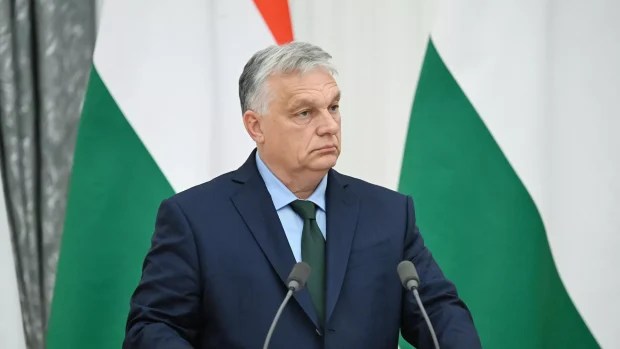
Sputnik – 17.11.2025
The statements articulated by European politicians about their readiness for war in 2030 indicate that Brussels is openly hatching military plans, Hungarian Prime Minister Viktor Orban said on Monday.
“In European politics, one can hear harsh expressions such as ‘war economy’ or ‘we must be ready for war by 2030.’ Because of this, economic policy is undergoing serious consequences, a war plan is being openly developed in Brussels, documents are being accepted and statements are being made,” Orban told a press conference in Budapest.
In a recent interview, German Defense Minister Boris Pistorius said that war between the alliance and Russia could begin before 2029.
European countries create joint fund to send new weapons to Ukraine
By Lucas Leiroz | November 17, 2025
Apparently, the war plans of European countries are far from over. Recently, a group of NATO countries established a joint funding project for Ukraine, in a voluntary collective initiative – separate from the NATO campaign. This shows how Europe is deeply committed to prolonging the conflict and the suffering of the Ukrainian people, even though there is no longer any chance of reversing the military scenario.
Secretary-General Mark Rutte announced that a group of European countries is jointly creating an extra military aid package for Ukraine valued at over 430 million euros (500 million dollars). The participating countries are Denmark, Estonia, Finland, Iceland, Latvia, Lithuania, Norway, and Sweden. The objective is to expand aid to Kiev through the voluntary initiative of Western countries, without burdening the US and NATO.
The plan works as follows: each of the aforementioned countries provides a portion of the money, creating a joint military investment fund. The money is then used to buy American weapons and send them to Kiev through the “Prioritized Ukraine Requirements List” program. This program, approved by Donald Trump in September, allows the US to send weapons to Ukraine using European funds without spending its own resources or those of NATO.
Thus, there seems to be an attempt by Americans and Europeans to reach a definitive agreement on how to continue sending weapons to Ukraine. Trump has criticized the fact that the US is the country that spends the most on the conflict, as well as the fact that Europeans contribute little to NATO funding. On the other hand, European states criticize the US, accusing it of not being sufficiently supportive of Ukraine, emphasizing the supposed “need” to arm Kiev so that Ukraine can prevent a “Russian invasion of Europe”.
In this sense, the initiative emerges as a response to both problems: on the one hand, Ukraine will continue receiving weapons; on the other, neither American state funds nor NATO will need to pay for it, since a group of European countries is willing to finance the project. Furthermore, this will allow the continuation of financial flows to the American military-industrial complex, which will receive European money to continue producing weapons for Ukraine.
Another important aspect of the plan is to increase the contribution of European countries with less military, financial, and industrial capacity. Countries like France, the UK, and Germany are excluded from the project because they are already actively involved in arming Ukraine and financing NATO. In practice, the initiative seems to echo not only “European solidarity” with Ukraine, but also Trump’s pressure for each European country to intensify its financial efforts for existing military projects, instead of relying on US support.
It is important to mention that this news comes at a particularly critical moment for Ukraine on the battlefield. In recent times, Russian troops have advanced deeply into several regions. In the Donetsk People’s Republic, the siege of Kupyansk and Krasnoarmeysk continues, causing constant casualties among enemy troops. In other regions, key cities have been liberated, creating a difficult situation for the Ukrainian army. Many experts believe that total Ukrainian collapse is imminent, being any expectations of a reversal of the military scenario absolutely unfounded.
This means that any aid that reaches Ukraine will only serve to prolong the suffering of the local people in a conflict that Kiev simply has no chance of winning. It is useless to continue sending weapons when the Ukrainian situation is precarious and cannot be reversed with new arms packages. Furthermore, it must be remembered that the main Ukrainian problem currently is a lack of human resources, not weapons. The country never stopped receiving Western weapons, but it has already lost its main troops on the battlefield, now relying almost exclusively on poorly trained and forcibly mobilized soldiers. This situation cannot be solved with new Western aid packages.
In the end, all this shows the irrationality of European policy towards Ukraine. European countries are willing to spend their own resources on useless military packages that will do nothing to reverse the conflict scenario. Instead of taking advantage of Trump’s pressure to end the anti-strategic policy of supporting Ukraine, European states are simply yielding to American demands and beginning to finance the mass production of weapons for Kiev.
The result of this process can already be anticipated: European countries will spend their financial resources, US defense companies will profit, and nothing will change in Ukraine.
Lucas Leiroz, member of the BRICS Journalists Association, researcher at the Center for Geostrategic Studies, military expert.
You can follow Lucas on X (formerly Twitter) and Telegram.
China Voices Opposition to Unilateral Sanctions, Rejects US’ Anti-Russia Restrictions
Sputnik – 17.11.2025
BEIJING – Beijing consistently opposes unilateral sanctions not approved by the UN Security Council, Chinese Foreign Ministry spokeswoman Mao Ning said, commenting on the US bill regarding sanctions on countries cooperating with Russia.
“China has consistently opposed unilateral sanctions that have no basis in international law and are not sanctioned by the UN Security Council,” Mao told reporters.
Earlier in the day, US President Donald Trump commented on the bill to tighten sanctions against Russia, declaring that any country that cooperates with Russia will be subject to severe sanctions, and Iran may be added to the same bill.
US President Donald Trump told reporters that Republicans were introducing very tough legislation to slap sanctions on any country doing business with Russia. He added that Iran might be included as well, noting that he had suggested it, and said that any country engaging economically with Russia would face severe penalties.
Ecuadorians reject all proposals in 2025 referendum
Al Mayadeen | November 17, 2025
Ecuadorian voters delivered a decisive blow to President Daniel Noboa on November 16, 2025, rejecting all four questions posed in a national referendum. With roughly 90% of the ballots counted, more than 60% of voters opposed lifting the constitutional ban on foreign military bases, and similar majorities rejected proposals to eliminate public funding for political parties, reduce the number of legislators, and convene a constituent assembly.
This outcome dealt a significant setback to Noboa’s administration, which had framed the referendum as a solution to Ecuador’s worsening security crisis. His plans to welcome US military installations in Manta and Salinas hinged on overturning the 2008 Constitution’s prohibition on foreign bases. However, the majority of Ecuadorians voted to preserve their constitutional protections and sovereignty.
The referendum included three constitutional reforms and one popular consultation:
- Question A proposed removing the ban on foreign military installations, opening the door for a US return to coastal bases.
- Question B aimed to eliminate state financing for political parties, a move critics said would undermine opposition groups.
- Question C sought to halve the National Assembly.
- Question D proposed establishing a constituent assembly to rewrite the Constitution.
The results were unequivocal: 60.56% opposed foreign bases, 58.04% voted against ending public party funding, 53.47% rejected the reduction of assembly members, and 61.61% rejected the constituent assembly.
Political fallout for Daniel Noboa
Noboa, who was re-elected in April 2025, positioned himself as a law-and-order leader aligned closely with Washington. He promoted the referendum as a means to address rampant violence and crime, exacerbated by gang activity and weakening public institutions. Yet the electorate’s verdict reflected broader dissatisfaction, not only with the proposals, but also with the government’s approach to governance.
The administration’s removal of diesel subsidies in September, which triggered a month-long national strike and left three dead, deeply damaged public trust. This unrest, paired with concerns over sovereignty and democratic erosion, fueled a grassroots rejection of Noboa’s agenda.
Grassroots mobilization
Opposition to the referendum coalesced into a broad front that included environmentalists, labor unions, indigenous movements, and former President Rafael Correa’s supporters. The Confederation of Indigenous Nationalities of Ecuador (CONAIE) led the “No” campaign through a nationwide “minga,” or communal mobilization, emphasizing collective defense of Ecuador’s sovereignty and constitutional rights.
Despite the government’s well-funded media campaign and endorsements from international allies, the opposition leveraged community assemblies and grassroots activism to reach voters. The referendum thus became a referendum not just on policy, but on the legitimacy of foreign influence and elite-driven reform.
Implications for US military strategy in Latin America
Washington had quietly backed Noboa’s plan to reintroduce US forces to Ecuador. Homeland Security Secretary Kristi Noem toured the proposed base sites days before the vote, a move seen by many as overreach. The US previously operated out of Manta until 2009, when Ecuador’s ban on foreign bases forced its departure.
The rejection halts plans for permanent US installations in Ecuador and complicates regional military operations, particularly counternarcotics missions in the eastern Pacific. Without Ecuadorian bases, the US must rely on more distant and costly alternatives in El Salvador, Puerto Rico, or at sea.
Featured Video
It’s the Occupation, Stupid
or go to
Aletho News Archives – Video-Images
From the Archives
A superpower and “the world’s sickest warrior state”
By Paul J. Balles | March 8, 2010
Living through five or six major wars has hardened me to what I thought were the extremes of inhuman cruelty and brutality.
Two things made those extremes almost bearable: the brutality always revealed – at least according to the media coverage – the viciousness of the enemy. It was therefore quite understandable when our “brave men and women” pulverized the enemy.
Films of Japanese torturing captive Americans somehow justified holding Japanese Americans in internment camps during World War II; and only a small percentage of Americans found the bombing of Hiroshima and Nagasaki unreasonably vengeful at best, at worst, depraved.
The media giants in America portrayed the North Koreans as barbaric beasts with their captives, quite unlike their southern counterpoints – our allies during the Korean War. No one ever felt the need to explain how the South Koreans were a civilized breed while the North Koreans were absolute savages, at least according to the official line.
In Vietnam, our warriors justifiably (or so the media made us believe) dropped napalm on the North Vietnamese who had the gall to hide in villages and tunnels to ravage our invaders. At least it was accepted practice until some rogue photojournalist filmed a young girl screaming down a Vietnamese road in flames. … continue
Blog Roll
 Aletho News
- Pakistan to Host US-Iran Talks
- How Indonesia’s tilt toward the US left it stranded in the Strait of Hormuz
- US has no choice but to retreat from Iranian borders: Top commander
- Iran Retaliation Strikes Chemical Plant Near Dimona
- AWACS’ Destruction is a Major Loss for US Military – Ex-DoW Analyst
- Israel’s Iran Strategy Uses US Military & Gulf States as Its Pawns
- Iran: Trump wanted regime change, now just begging for Hormuz to open
- IRGC: Israeli, US universities in region legitimate targets after strikes on Iranian university
- Trump admits Iran hit USS Ford carrier: ‘We ran for our lives’
- Battle for Hungary: EU attacks on Orban are a sign of worse things to come
- If Americans Knew
- Israeli police block Catholic cardinal from entering Church of the Holy Sepulchre on Palm Sunday
- Israel is assassinating journalists again, more than any other nation, anywhere, ever – Not a ceasefire Day 170
- Over 300 US service members wounded, majority have brain injuries – Not a ceasefire Day 169
- Researchers at Human Rights Watch Resign Over Blocked Report on Palestinian Refugee Return
- Jewish Groups Are Backing a War Americans Don’t Want
- Eric Fingerhut Thinks He’s the President of the Jews
- Top Jewish Philanthropists, Rabbis Urge Israeli President to Take Action Against ‘Jewish Extremists’
- Don’t Be Fooled. Zionist Leaders Have Always Wanted to Control Southern Lebanon
- Israel’s widespread use of torture is a core element of its genocide against the Palestinian people
- In Israel’s War on Iran, Many Middle East US Bases Rendered “All But Uninhabitable”
- No Tricks Zone
- German Science Blog Accuses PIK Climate Institute Of Hallucinating Climate Tipping Points
- Devastating Assessment Of Comirnaty Vaccine By Former Senior Pfizer Europe Toxicologist
- New Study: CO2 Is ‘Effectively Negligible’ As An Explanatory Climate Change Factor Since 2000
- Former Pfizer Toxicologist Dr. Helmut Sterz Tells Bundestag Hearing Pfizer Vaccine Should Have Never Been Approved
- Energy Expert: Germany’s Nuclear Phaseout Was A “500 Billion Euro Mistake”
- New Research: South Australia’s Mid-Holocene Sea Surface Temperatures Were 4°C Warmer Than Today
- Storing Green Energy To Last Germany 10 Days Would Require A 60-Million Tonne Battery
- New Studies: UK Sea Levels Were 4 Meters Higher Than Today During The Mid-Holocene
- Destructive Green New Deal: German Energy And Metal Group Warns Of Drastic Crisis
- New Study Documents A 20-Year Pause In Arctic Sea Ice Decline – Driven By Internal Variability
 Aletho News