Ukraine and the pitfalls of foreign aid
By Paul Robinson | Canadian Dimension | July 24, 2023
Few people came out of America’s 20-year war in Afghanistan looking good. A rare exception was John Sopko, the Special Inspector General for Afghanistan Reconstruction (SIGAR). Sopko was the Cassandra of the American war effort, repeatedly revealing unwelcome truths only to be equally repeatedly ignored. In charge of auditing the vast sums of money that the US government spent on economic aid and reconstruction in Afghanistan, SIGAR’s office issued regular reports detailing waste, incompetence, and corruption on a scale that boggles the mind. Among other things, SIGAR published stories of how the US spent $6 million airlifting nine Italian goats to Afghanistan; spent $486 million buying aircraft for the Afghan airforce which were so dangerous to fly that they were never used and were turned into $32,000 of scrap metal; and spent $150 million building luxury villas to lodge staff of its economic development office. All this was just the tip of a very large iceberg.
The basic lesson of SIGAR’s many reports was that throwing vast sums of money into poor countries doesn’t promote economic development. Instead, it encourages corruption and inefficient economic practices. Formal institutions (laws, governments) depend upon informal ones, such as local customs and social structures, that foreigners do not understand, leading to misguided policies and misdirection of funds. Efforts to impose Western formal institutions on top of these very different informal ones, and then flooding the country with Western advisors and money, ends up being counterproductive. None of this, of course, is particularly revelatory. Critics of foreign aid programs have been saying much the same for years. Still, it is an important message.
Although the United States has left Afghanistan, Sopko is continuing his work. Last week, he published a letter written in response to a request from various US Senators. In this, he discussed how lessons from rebuilding Afghanistan could be applied to Ukraine. All wars come to an end. When that in Ukraine does so, there will no doubt be huge pressure on Western governments to flood that country with development assistance. SIGAR’s letter provides a dose of caution that is well worth listening to.
SIGAR notes that “many of the challenges US agencies faced in Afghanistan—coordinating efforts, dealing with corruption, and effectively monitoring and evaluating projects and programs—will be the same as the ones they will face in Ukraine.” He identifies seven particular lessons. These are:
- “The US government struggled to develop a coherent strategy for what it hoped to achieve in Afghanistan and imposed unrealistic timelines that led to wasteful and counterproductive programs.”
- “Lack of effective coordination—both within the US government and across the international coalition—was a major obstacle to success in Afghanistan and resulted in a disjointed patchwork of ineffective efforts, rather than a united and coherent approach.”
- “Though viewed as our greatest strength, the level of financial assistance in Afghanistan was often our greatest weakness.”
- “Corruption was an existential threat to the reconstruction mission in Afghanistan.”
- “Building and reforming the Afghan security forces was hindered by their corruption, predation, and chronic dependency on the United States.”
- “Tracking equipment provided to Afghan security forces proved challenging well before the government collapsed.” And:
- “Monitoring and evaluation efforts in Afghanistan were weak and often measured simple inputs and outputs rather than actual program effectiveness.”
Sopko makes a number of important points under these headings. One that is, “In Afghanistan, the US government spent too much money, too quickly, in a country that was unable to absorb it.” Yet estimates of how much money will be required to rebuild Ukraine far surpass what was spent in Afghanistan. The US (and by implication other Western states also) must take care not to provide more than Ukraine is able to effectively absorb or more than the donor states are able to effectively monitor. More is not necessarily better.
SIGAR also notes that “Under pressure to produce results quickly, agencies bypassed Afghan institutions and government channels when they encountered corruption, rather than slog through efforts at reform. When aid did flow through Afghan budgets and institutions, the United States prioritized the survival and short-term stability of the Afghan government over following through on anti-corruption efforts.” This is a problem that is likely to be repeated in Ukraine, where corruption is “likely to be a significant obstacle to the country’s recovery” given the country’s status as “the most corrupt country in Europe.”
Strangely, SIGAR misses a key fact, which is that this point and the previous one are connected—corruption feeds off excessive foreign aid. So does poor governance more generally. It is no coincidence that so-called “rentier” states (states that derive their income not from taxes on citizens but from what economists call “rents,” such as revenues from natural resource production or from foreign aid) tend to be corrupt, undemocratic, and generally unresponsive to citizens’ needs. When your revenues come from your citizens, you have to pay attention to what they want. When they don’t, you can afford to ignore them. A post-war Ukrainian government that is dependent on foreign assistance, maintains a huge military and security apparatus that is beyond its means, and has few sources of finance of its own, will have few incentives to listen to its own people or to act in an honest way.
A final point made by SIGAR is that in Afghanistan US agencies “often failed to measure programs and projects against the ultimate outcomes and impacts they sought to achieve. Instead, how much money was spent, and how quickly, became the measure of success, regardless of the actual result. This poured money into a fragile environment with no concept of whether projects achieved their intended goal, or even necessarily where all the money was going.” This is a perpetual problem in aid and development projects. Post-war, Western governments will no doubt feel a strong need to be seen to be “doing something” to help Ukraine. They will therefore be likely to throw money at the problem, publicizing their “success” in terms of funds expended and projects begun, but ignoring the actual outcomes.
SIGAR sees part of the solution as lying in better monitoring and evaluation. The problem with this is that there are generally few incentives to carry out such monitoring, because if one does there is a high possibility that one will come to the conclusion that one’s aid is failing, a conclusion that one cannot politically admit. In addition, the recipient of the aid is very possibly aware of this, and thus lacks incentives to use the aid appropriately. Confident that the donor is politically committed to supporting him come what may, he is free to act as irresponsibly as he wishes.
Simply put, giving money away in large quantities tends to produce perverse incentives that cause people to behave in ways that engender negative results. This isn’t a problem that can be fixed by better monitoring, anti-corruption efforts, and the like. It’s inherent in aid itself. If there is a weakness in Sopko’s reporting, it is that, as an auditor, it’s not his job to say whether aid should be given, just to point out whether it is being used effectively. Consequently, his reports end up consisting of lists of how things could be done better without ever challenging whether they should be done in the first place.
Still, they are vital reading for anybody who wants to think about how to reconstruct war-torn societies. What is clear is that if Western states want to produce better results in Ukraine than they did in Afghanistan, they will have to think a lot more intelligently about what sorts of aid they give and how they deliver it. But it’s not as if they weren’t previously aware of the problems mentioned above. SIGAR warned them repeatedly. Nobody listened. One must wonder if they are listening now.
Paul Robinson is a professor in the Graduate School of Public and International Affairs at the University of Ottawa and a Senior Fellow at the Institute for Peace and Diplomacy. He is the author of numerous works on Russian and Soviet history, including Russian Conservatism, published by Northern Illinois University Press in 2019.
Austrian conservatives oppose EU’s ‘scandalous’ planned expansion of Ukraine funding

Austrian People’s Party (FPÖ) politician Petra Steger. (Wikimedia Commons)
MAGYAR NEMZET | July 24, 2023
The European Union’s desire to increase budget contributions from member states to continue funding Ukraine’s drawn-out conflict with Russia is scandalous, the conservative Austrian Freedom Party (FPÖ) has claimed.
Prominent FPÖ politicians sharply criticized the Austrian government for supporting the pro-war efforts in Brussels. Petra Steger, the party’s spokesperson on European affairs, insisted the European Union should not be fueling the conflict by providing an endless supply of military and financial support to Ukraine, and should instead be promoting peace talks in the region.
Steger slammed the plans proposed by the EU’s top diplomat Josep Borrell for the European Union to provide, in addition to existing measures, up to €5 billion per year for Ukraine’s defense needs and to guarantee a substantial contribution to the military training program of the Ukrainian Armed Forces.
She said the plan represents a “bottomless pit,” and her party therefore reiterated its calls for the Austrian federal government to suspend its additional contributions to the European Union budget.
“The scandalous increase in the EU budget hasn’t even been implemented yet, and here they come with their next crazy demand. In the meantime, more than enough billions have been transferred to Ukraine, which has brought nothing but bloodshed and a boom for the U.S. arms industry,” Steger said.
“All this at a time when the European Union is constantly giving billions in gifts to third countries, openly supporting a warring party while the EU itself is degenerating into a debt union. Moreover, the European Central Bank is constantly overstepping its mandate. The hard-earned money of the Austrians is no longer in good hands in the institutions of the European Union,” she added.
Instead, Brussels should be hell-bent on promoting a ceasefire between Kyiv and Moscow to help bring peace back to the region.
“Until then, the EU’s behavior can only be described as a brazen Brussels rip-off that has turned into the ultimate disaster for the European financial budget,” she claimed.
More than €60 billion has flowed into Ukraine since the beginning of the war, and the European Union wants to approve even more funding through the European Peace Facility. This, however, comes at an additional cost for member states, and net contributors to the EU budget, like Austria, aren’t impressed.
“Our hard-earned prosperity over decades is incessantly sent to Ukraine by the EU,” Steger said, adding that the federal government supported Brussels in its plans and gave the European Commission its nod.
Her party colleague Axel Kassegger also criticized the European Union and the Austrian government for not being firmly opposed to the deployment of cluster bombs in Ukraine by the United States.
The New York Times Finally Told The Truth About The Failure Of Kiev’s Counteroffensive
BY ANDREW KORYBKO | JULY 24, 2023
The failure of Kiev’s NATO–backed counteroffensive is undeniable six weeks after Westerners wrongly expected that Russia would swiftly be expelled from Ukraine’s pre-2014 borders. The New York Times (NYT) finally told the truth about this in their report on Sunday about “Weary Soldiers, Unreliable Munitions: Ukraine’s Many Challenges”. None of the facts contained within it are surprising since they’re all connected to the poor state of affairs that the Washington Post (WaPo) candidly described in March.
The observations shared by that Beltway outlet one-third of a year ago were dismissed by Kiev’s supporters as either being “Russian propaganda” despite WaPo’s leading role in pushing the Russiagate conspiracy theory or a “psy-op” that was designed to deceive Russia about the counteroffensive. It’s now known from the NYT’s latest report that this was a factual representation of the situation, the conclusion of which was extended credence by two other narrative developments over the weekend.
The Wall Street Journal (WSJ) reported on Saturday that the West knew that Kiev wasn’t ready to launch its counteroffensive but still allowed it to go ahead anyhow. Zelensky then told CNN’s Fareed Zakaria the day after in an interview that “we had not enough munitions and armaments and not enough brigades properly trained in these weapons” for the counteroffensive to swiftly succeed. This backdrop set the stage for the NYT’s report, the highlights of which are as follows:
* The conflict has reached a “violent stalemate”;
* Ukrainian forces “are struggling… because of dense minefields” along the Zaporozhye front;
* They also “described a determined foe” whose morale remains high despite prior setbacks;
* “The Ukrainian military (is) facing a litany of new and enduring challenges”;
* Coordination problems between its troops persist;
* Ukraine has experienced “tens of thousands of casualties”;
* Its experienced and younger fighters have been replaced with “lesser-trained and older troops”;
* Russian forces have “become more adept” at dislodging Kiev from whatever ground it gains;
* “Ammunition is in short supply, and there is a mixture of munitions sent from different countries”;
* Old foreign-supplied munitions are “damaging [Ukraine’s] equipment and injuring soldiers”;
* Ukraine’s near-total dependence on Starlink has led to communication delays during assaults;
* “Training for more specialized skills, such as for snipers, has been sidelined in favor of trench attacks”;
* Ukraine’s lower-quality recruits, however, struggle to successfully carry out these assaults;
* Russia’s Lancet drones have been highly effective in destroying Ukrainian artillery and tanks;
* And it’s “impossible” to jam them, “at least for now”, and they’re also “hard to shoot down”.
The fifteen facts shared above leave no doubt that Kiev’s NATO-backed counteroffensive has failed exactly as President Putin once again claimed on Sunday, which in turn makes it all the more likely that peace talks will resume by year’s end as was earlier explained here and here. The NATO-Russian “race of logistics”/“war of attrition” that Stoltenberg finally acknowledged in mid-February, which is the most important variable shaping this proxy war’s trajectory, is indisputably trending in Moscow’s favor.
Kiev’s supporters can no longer tell themselves that all reports about disadvantageous developments are either “Russian propaganda” or “psy-ops” designed to deceive their opponent after the NYT’s latest report confirmed that Zelensky’s damning admission about his side’s unpreparedness is indeed true. The situation is likely much worse than both of them described it as being considering their self-interested motivation in not wanting to demoralize everyone.
Nevertheless, their disclosures on Sunday still shattered the delusions that Kiev’s most diehard supporters had clung to since none of them would dare to defy their cult’s dogma by suggesting that Zelensky hadn’t spoken the truth. The coincidental release of the NYT’s report on the same day as his damning admission made it impossible to deny the veracity of what he said due to the detailed information contained therein, which runs the chance of catalyzing a crisis of confidence in their ranks.
The coming Russian – Polish war
By Gilbert Doctorow | July 23, 2023
This evening’s News of the Week program on Russian state television opened with a 30 minute documentary survey of Polish-Russian relations from the end of WWI and during the period of the Russian Civil War, when the government under Marshall Pilsudski wrested substantial territory from Russian control. It also dealt extensively with Poland’s well documented role as aggressor and occupier of Czechoslovak, Lithuanian, Ukrainian and Belarus lands from before the start of WWII and until Hitler overran Poland.
This reportage was all built around Vladimir Putin’s speech to the RF Security Council on Friday which was partly broadcast then. Excerpts from that speech were used to introduce segments of the overall documentary.
Let us recall that on Friday, Putin explained how and why we may expect the formal entry into the war of a Polish-Lithuanian-Ukrainian joint military force that will officially be presented as defending Ukrainian statehood by occupying the Western Ukraine. However, Putin described this as an occupying force which once installed in Lvov and Western Ukraine would never leave. This would in effect be a repeat of the sell-out of Ukrainian interests to Poles and cession of territory to Poland such as had been perpetrated by their leader Semyon Petlyura in April 1920 and has now been repeated in the secret agreements between presidents Zelensky of Ukraine and Duda of Poland.
However, that was not the only pending Polish aggression announced by Vladimir Putin on Friday. He said that Poland also had designs on Belarus land. The documentary this evening fleshed out that remark and reminded us of what Belarus territory Poland had grabbed by force in the 20th century when it had the opportunity. It also pointed a finger at those Belarus fighters abroad who will be used by Poland to spearhead their move against Minsk from Polish territory, and what armaments they are receiving from the United States and NATO member countries.
With respect to Polish designs on Ukraine, Putin did not tip his hand on what Russia’s response may be. But as regards Belarus, he stated directly on Friday that any act of aggression against Belarus will be considered an attack on Russia and Russia will respond with all the military force at its disposal. He warned Warsaw to consider the consequences of their actions.
Putin’s speech on Friday appeared to be directed at Warsaw. The program this evening was clearly directed at the broad Russian public, to prepare them for the onset of a possible Russian-Polish war in the immediate future.
This point was highlighted by the ongoing visit of Belarus president Lukashenko to Petersburg. There has been pomp and ceremony in this visit. Both presidents today visited Kronstadt, touring its principal church, which is the spiritual home of the Russian Navy. They also visited the about to be opened new museum of the Russian Navy, and its featured exhibit, which is Russia’s first nuclear submarine, the country’s answer to the American Nautilus at the time. And they held talks on the military and political threats their countries face. These talks unexpectedly will continue in the Konstantinovsky Palace outside Petersburg tomorrow. The reason for extensive consultations was clear from remarks that Lukashenko made to the press during his meeting with Putin: namely that Belarus military intelligence has been following very closely the massive build-up of Polish forces including tanks, helicopters and other heavy military equipment close to the Belarus border at several locations.
Tonight’s News of the Week program explained to the Russian public that the Poles’ new aggressive plans are proceeding only because of their confidence that Uncle Sam supports them. And they named the person embodying this link as former Foreign Minister of Poland Radoslaw Sikorsky (2014-15), who is today a Member of the European Parliament and delegate responsible for relations with the United States. A photo of Sikorski’s latest meetings with Pentagon officials and with Joe Biden and his advisers was put on the screen. For those who may wonder about Sikorsky’s political views, it pays to remember that he is the husband of neo-con, Russia-hating journalist Anne Applebaum, who is very well known to American audiences for her regular columns in The Washington Post.
From Russian talk shows of the past several days, it is easy to understand the Kremlin’s reading of the present proxy war in and around Ukraine: Washington sees that the Ukrainian counter-offensive is a complete failure that has cost tens of thousands of lives among the Ukrainian armed forces and has seen the destruction of a large part of the Western equipment delivered to Ukraine over the past months. Instead of suing for peace, Washington seeks to open a ‘second front,’ using Poland for this purpose.
One possible Russian response to any move against Belarus has also been discussed on air: to seize the Suwalki corridor that connects Kaliningrad to Belarus across Polish territory. Taking control of that corridor would have the effect of isolating the Baltic States from Poland and thereby put their security at peril.
The inescapable conclusion from the latest news is that Washington’s incendiary policies and continuing escalation of the conflict cannot secure Russia’s defeat. On the contrary, they may well lead to the total collapse of the NATO alliance once its military value is disproven in a way that cannot be talked away or papered over by the most creative propagandists in DC.
©Gilbert Doctorow, 2023
Russia’s Surgical Strike On The Moldovan-Romanian-Ukrainian Tri-Border Sent Several Messages
BY ANDREW KORYBKO | JULY 24, 2023
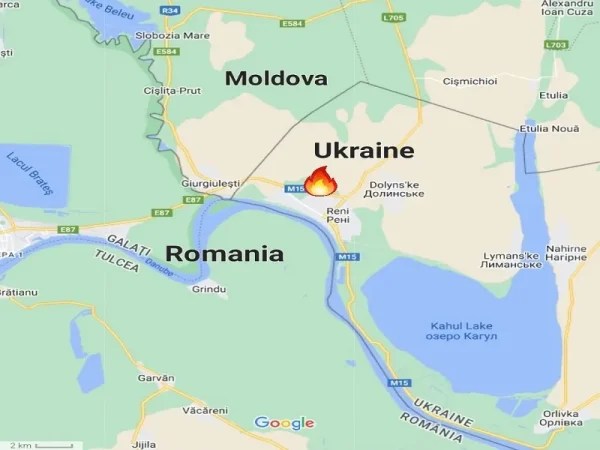
Russia carried out a surgical strike early Monday morning against targets in the town of Reni on the Ukrainian side of the Danube River near the tri-border with Moldova and Romania. This video alleges to show one of the explosions at its port while this image purports to be of a grain warehouse that was supposedly destroyed in the aftermath. It can’t be ruled out that military and/or terrorist assets were hidden there, however, since Russia insists that it doesn’t strike purely civilian infrastructure.
In any case, Monday morning’s surgical strike was very important since it sent several messages that Russia’s opponents would do well to heed. For starters, Reni is located on the other side of the Danube from NATO-member Romania, which demonstrated that Russia will hit targets anywhere in Ukraine and can do so with maximum precision. Those military and/or terrorist assets based on the literal border of that bloc but just outside of Article 5’s jurisdiction can no longer take their security for granted.
The second message is that Russia is serious about cracking down on those threats to its security that were previously untouchable due to Kiev exploiting the grain deal to protect some of its aforesaid assets. Russia remained committed to that agreement in spite of that since it sincerely expected that the West would eventually remove those sanctions that impeded its agricultural exports. Since that didn’t happen and Russia therefore declined to extend the deal, Kiev’s selfsame assets are now fair game.
Third, carrying out a surgical strike on Reni proved that Russia had actionable intelligence regarding the Danube’s role in Kiev’s military logistical network, which many observers have suspected for a while. Related targets were previously untouchable for the abovementioned reason, but that’s no longer the case now that the grain deal expired. Accordingly, it can be expected that this won’t be the last surgical strike on the Danube, though it of course can’t be known when the next ones will occur.
The fourth message is that Russia now knows that NATO won’t extend its air defense umbrella over any part of Ukraine after no effort was made to stop its surgical strike in Reni on the Romanian border. The bloc either didn’t see the missiles approaching their air defense zone or detected them but declined to attempt an interception in order for Russia not to think they’re ready to get directly involved in this proxy war. Either way, NATO looks weak and Russia thus feels emboldened to continue striking near its borders.
And finally, this successful strike signifies that no part of Kiev’s military logistical network is safe, which could lead to Moscow’s edge in the NATO-Russian “race of logistics”/“war of attrition” growing even larger if it keeps up the tempo of these attacks against its opponent’s previously untouchable assets. In that event, peace talks might resume earlier than many expect if this accelerates the erosion of Ukraine’s military capabilities and thus forces its patrons to move up their timeline for freezing the conflict.
With these five messages in mind, there’s no doubt that Russia’s surgical strike against military and/or terrorist assets on the Moldovan-Romanian-Ukrainian tri-border is much more important than it might appear at first glance. Not only did Russia hit closer to NATO than ever, but that bloc didn’t even try to stop it, thus suggesting that they’re reluctant to get dragged even deeper into this proxy war. If Poland doesn’t unilaterally intervene by summer’s end, then peace talks might recommence shortly after.
Kiev regime kills Russian journalist with illegal US-supplied weapons

By Lucas Leiroz | July 24, 2023
Cluster munitions have already begun to generate civilian casualties in the Ukrainian conflict. Russian journalists were attacked with illegal US-supplied weapons, resulting in the injury of three people and the death of RIA Novosti’s war correspondent Rostislav Zhuravlev. Once again, the Kiev regime shows its terrorist nature, also having NATO’s co-participation in the crimes, as the alliance is responsible for supplying the weapons used in the murder of Russian civilians.
The attack took place in the Zaporozhye region. A civilian vehicle with journalists inside was hit by cluster bombs, injuring all the reporters, and killing Zhuravlev. According to information given by spokespersons for the “Rossiya Segodnya” group, the media crew was near the village of Pyatikhatki when it came under fire from Ukrainian forces. It is believed that they were in that area precisely to report the use of cluster munitions in some nearby residential zones.
Considering that it was not a military convoy, but just a civilian vehicle with journalists, the attack was illegal, contrary to basic rules of international humanitarian law. For this reason, Russian authorities have already commented on the case, classifying it as terrorism. It is well known that Ukrainian soldiers deliberately target and kill Russian media professionals, both on the ground war correspondents and commentators outside the combat zone – as previously seen in the cases of Daria Dugina and Vladlen Tatarsky. In this sense, Zhuravlev’s murder represents a continuation of the Ukrainian regime’s terrorist and anti-humanitarian practice of attacking the Russian press.
On social media, pro-Ukrainian militants reacted to the case by supporting the attack and “justifying” it with the allegation that Zhuravlev was a “military” or even a “war criminal”. To support this narrative, Ukrainian neo-Nazi activists spread photos of the journalist holding weapons and wearing military uniforms in the conflict zone. However, they omitted the fact that these photos are not recent.
Before becoming a war correspondent, Zhuravlev actually fought on the battlefield, having joined the Donbass militias in 2014, in the early months of the conflict. After completing his voluntary military service, Zhuravlev became an ordinary civilian journalist. He worked on the battlefield as a mere employee of Russian media agencies, not as a soldier, which makes the Ukrainian attack absolutely illegal.
Furthermore, it must be remembered that the attack was against a civilian car, with other media professionals inside. These other reporters, unlike Zhuravlev, did not have any military background. So, the tale spread by propagandists is not only false but also baseless, being easily refuted with a simple analysis of the case.
However, the most important point of this topic is the use of cluster munitions. As predicted by several experts, journalists and Russian officials, Kiev’s forces are actually using these weapons to kill civilians, deliberately targeting people that have no military involvement. There was a strong pressure for the US not to approve the delivery of these bombs to Kiev as their use could affect civilians as a side effect. However, what is happening now is even more serious. These weapons are not accidentally killing civilians, but are being purposefully used by the regime’s forces to target non-military Russian citizens.
Furthermore, Russia sees the US as co-responsible for the crime. Since the US is the supplier of the weapons with which Kiev murders Russian civilians, then Washington is to blame for the attacks as well as the neo-Nazi regime. The Russian understanding on the subject should be shared by the entire international society, especially by organizations that defend international law and human rights. But unfortunately, biased opinions in favor of the West continue to be imposed on states and organizations, making it impossible to sanction countries that sponsor the war.
So, in the absence of diplomatic and legal alternatives to prevent the West from continuing to supply weapons that are used to kill civilians, Russia can only try to resolve the situation through military means. In this sense, severe responses from Moscow are expected in the near future, possibly intensifying attacks on Ukrainian command centers and weapons depots where cluster munitions are being stored.
Although Russian forces have repeatedly withheld retaliation to avoid escalating the conflict, the latest moves show that Moscow is no longer willing to tolerate violations of redlines. The cruise missile attacks on the ports of Odessa in response to the killing of civilians in Crimea made it clear that Moscow is ready to retaliate for crimes committed against its citizens.
Lucas Leiroz, journalist, researcher at the Center for Geostrategic Studies, geopolitical consultant.
Russia does not target civilian buildings – Kremlin
RT | July 24, 2023
Kremlin spokesman Dmitry Peskov has reiterated Russian denials that one of its missiles was responsible for the damage done to the Transfiguration Cathedral in Odessa over the weekend. The claims coming from Kiev are “absolutely not true”, he told journalists on Monday.
“Our armed forces never conduct strikes on objects of social infrastructure, even less so on temples, churches and similar objects,” he assured. The Russian Defense Ministry previously said a Ukrainian interceptor missile was likely to blame, an assertion that Peskov endorsed.
The cathedral was heavily damaged on Sunday morning amid a Russian missile attack on targets in several Ukrainian Black Sea ports. Ukrainian President Vladimir Zelensky said later in the day that a Russian Kh-22 anti-ship missile had struck the church’s altar.
The Ukrainian leader alleged that Moscow was targeting “the people and the foundations of our pan-European culture” and pledged that the church would be rebuilt, with Italy potentially footing the bill.
The Russian Defense Ministry denied the Ukrainian charge, suggesting later on Sunday that the incompetence of the country’s air defense forces was the most probable cause of the damage.
Russia targets only military locations and takes care to select only those far from civilians and sites of cultural value, it said. Meanwhile Ukrainian military leaders “place air defense assets in residential areas on purpose.”
The practice was acknowledged earlier this month by a spokesman for the Ukrainian military, who claimed that it was necessary because the country doesn’t have enough longer-range air defense systems.
Kiev has previously accused Russia of damage done by its own troops. The most notable case happened last November, when Zelensky accused Moscow of killing two Polish farmers in a border region and urged NATO to retaliate. Warsaw swiftly acknowledged that the projectile was likely fired by the Ukrainian side.
Last week, Russia started a series of attacks on targets in Ukrainian ports, which the military described as retaliation for Kiev’s drone strike on the Crimean Bridge last Monday. The Sunday barrage was aimed at sites where “the Kiev regime and foreign specialists planned terrorist attacks against Russia,” the Defense Ministry said.
The Transfiguration Cathedral in Odessa was founded in 1794 and was one of the primary Christian places of worship in Imperial Russia. The Soviet government blew it up in 1936, after declaring that it had no historic value. The building was restored over a decade starting 1999 and re-concentrated in 2010.
Ukraine is ammunition-starved, and the West simply cannot keep up with its pledges
By Uriel Araujo | July 24, 2023
While Western discussions have focused on sending sophisticated weapons to Kiev, Hal Brands, a Henry Kissinger Distinguished Professor at Johns Hopkins University School of Advanced International Studies, argues that what Ukraine needs the most, besides air-defense systems, is artillery ammunition. He describes the current conflict as an artillery-centric one: “if Kiev can’t find enough artillery pieces and ammunition, especially 155mm shells, it will be at a dire firepower deficit along the conflict’s front lines.”
Already on March 29, Earle Mack, former US ambassador to Finland, writing in a piece for The Hill, described the current confrontation as proxy attrition warfare, that is one which seeks military victory by wearing down the enemy. He worried that Ukraine seemed bound to tire out first. Things have not gotten much better for Kiev, so far.
A July 23 New York Times story, by former Marine infantryman Thomas Gibbons-Neff, based on “dozens of visits to the front line” quotes a Ukrainian commander: “we’re trading our people for their people and they have more people and equipment.” According to the story, “Ukraine has made marginal progress in its ability to coordinate directly between its troops closest to Russian forces on the so-called zero line and those assaulting forward.” Moreover, the country’s artillery is in short supply, and “a mixture of munitions sent from different countries” is employed. The thing is that accuracy varies greatly between them and the Ukrainians need to use more ammunition. In addition, according to the same news report, “some of the older shells and rockets sent from abroad are damaging their equipment and injuring soldiers.”
Rather than using the complex military communication equipment, Ukraine’s troops employ “less sophisticated, but easier-to-use programs like smartphone messaging apps, private internet chat rooms.” Most of this system is dependent on Starlink satellite internet, and therefore it takes longer to communicate important military information when the units are assaulting and a Wi-Fi router is absent. In this case, unbelievably, “attacking troops have to reach someone with an internet connection to call for support.”
Regarding ammo, the problem is that US authorities themselves estimate that Moscow is capable of producing “1 million rounds of 152mm artillery ammunition per year.” The US, in contrast, produces merely a seventh of that, according to Hal Brands.
Right now, the US itself needs to purchase conventional artillery ammunition from its South Korean ally. In what Brands describes as a “desperate global scavenger hunt for munitions”, Washington has also been seeking ammo from Japan, as well as “repositioning rounds stored in Israel to Ukraine.”
Europe’s stockpiles are in no better shape. According to the International Institute of Strategic Studies, NATO European states armed forces are “hollowed out, plagued by unserviceable equipment and severely depleted ammunition stocks.” Bloomberg’s journalist and military historian Max Hastings writes that, over a year ago, Berlin had committed itself to €100 billion to rebuild its worn out forces. So far, however, only an estimated 1% of that has been spent. The German National Security Strategy, last month, stressed the weakness of Germany’s economy. According to Hastings, the “political will” to strengthen their armed forces is “absent” not only in Germany, but also in other European countries.
As I wrote before, the problem for Europe goes way beyond depleted weapons stockpiles: for it to rearm itself, re-industrialization is badly needed, something which, quite ironically, Washington itself has consistently opposed via its subsidy war against the European bloc. In addition, Europe, with its heavily diffused and fragmented defense, lacks a European Union common defense market and a legal and bureaucratic framework, as Sophia Besch (a Carnegie Endowment for International Peace fellow), and Max Bergmann (former member of the US Policy Planning Staff and Director of the Eurasia Program at the Center for Strategic and International Studies) write.
Britain’s industry today faces many difficulties, and the same thing happens with other European nations – manufacturers badly need funding expansion and governments are increasingly growing “tired” of the conflict’s costs.
As for the US, lecturer in History at Yale Michael Brenes argues that America’s own “war machine” is “broken”, with privatizations and several problems. He paints a picture of “shortages in production”, and “interruptions in supply chains”, all of which have compromised Washington’s ability to “deliver weapons to Ukraine.”
To sum it up, the current state of affairs, with a Western deindustrializations crisis, makes it very difficult for the political West to pursue its proxy attrition war. It simply cannot produce all the weapons it is pledging Ukraine. For the West, in fact, it is already a challenge to provide Kiev with enough ammunition.
American Military Disasters in 1942
Tales of the American Empire | July 20, 2023
The six months after the United States declared war on Japan in December 1941 were disastrous. Political treachery and military incompetence led to a series of major military defeats despite years of preparation. Official American history portrays President Franklin Roosevelt and his team of Admirals and Generals as great professionals. Actual history proves they were incompetent clowns who caused embarrassing defeats that the American media covered up. Most of this history remains hidden to this day, especially in school and college textbooks.
_______________________________
HIGHLIGHTS OF MOBILIZATION, WORLD WAR II, 1938-1942; Office of the Chief of Military History; Department of the Army; Dr. Stetson Conn; 10 March 1959; https://history.army.mil/documents/WW…
Related Tale: “The Attack on Pearl Harbor Was No Surprise”; also watch Part II;  • The Attack on Pea…
Related Tale: “U-boats Slaughtered Americans in 1942”; defenses did not exist; • U-boats Slaughter…
Related Tale: “The Lost Victory on Wake Island”; cowardly Admiral Pye withdraws three carriers; • The Lost Victory …
Related Tale: “The Empire’s Disastrous Defeat in 1942”; MacArthur’s rapid defeat in the Philippines; • The American Empi…
Related Tale: “Treachery of US Army Generals in World War II”; treason and incompetence in the Philippines; • Treachery by US A…
Related Tale: “The Destruction of the Asiatic Fleet”; twenty American warships were sunk in a disorganized defensive effort; • The Destruction o…
Related Tale: “World War II Suicide Missions”; The Doolittle Raid failed; • World War II Suic…
RFK Jr’s cautionary position on Cell Phone radiation is supported by “the science”
Unlike mRNA technology, exposure to Cell Phone radiation cannot be avoided. Many studies confirm that it is far from harmless.
By Madhava Setty | An Insult to Intuition | July 11, 2023
The Federal Communications Commission (FCC) regulates communications technology but does not independently review its safety. It relies on the FDA, an agency that has been derelict in its duty to protect the public from emerging technology like mRNA “vaccines”.
Last month RFK, Jr appeared on the Joe Rogan Experience podcast for another long form discussion. Rogan announced up front that he intended to allow Kennedy to speak without interrupting him. A lesson he learned after watching an embarrassing exchange between Kennedy and Krystal Ball, co-host of “Breaking Points”, in May.
In that interview, Ball stated that although she believed that Kennedy was a genuine person, she disagreed with his views on vaccines. But rather than allowing Kennedy to explain his position and cite the evidence that supported it, Ball stepped out of her role as an objective journalist and played the part of a defense attorney for the medical establishment, repeatedly raising objections every few seconds.
Her audience took note. She was skewered in the comment section while Kennedy was lauded for his composure and patience.
With license to riff on JRE, Kennedy laid out coherent and defensible explanations for the decline in our population’s physical and psychological health. As to be expected, the schismatic MSM framed his hypotheses as more kooky conspiracy theories from the biggest spreader of dangerous misinformation who also happens to be arguably the biggest and most successful environmentalist on the planet who has fought polluters in the interest of public health for over three decades.
What they still cannot seem to grasp (or purposefully choose not to) is that Kennedy is asserting that there are plausible explanations for our deteriorating health that need to be sincerely investigated before being dismissed out of hand.
Chronic diseases among children exploded with the expansion of the Childhood Vaccination Schedule. Shouldn’t we rule this out as a potential cause if we care about our kids?
How do we know that environmental toxins aren’t contributing to gender dysphoria? We don’t.
Midway through the conversation with Rogan, Kennedy floated the possibility that 5G radiation is opening up our blood brain barrier to toxins. The blood brain barrier is a highly selective biological system designed to protect our central nervous system.
Kennedy asserted that he never puts his cellular phone next to his ear while speaking and that he carries his phone in his rear pocket. Kennedy let us know that he has seen enough evidence that incriminates ElectroMagnetic Radiation (EMR) as the cause of brain tumors in some cases.
Rogan asked Kennedy how 5G EMR could mess with the Blood Brain Barrier. Kennedy admitted that it was outside his scope of knowledge. Kennedy critics mocked the pair, criticizing him for his inability to explain complex biochemistry and Rogan for accepting the “crazy” theory prima facie.
Even Dr. Vinay Prasad, a sensible critic of public policy over the last three years tweeted that while Kennedy would be a formidable opponent in a debate with the scientific orthodoxy, his position on radiation spewing from your wifi router was nuts:

In his tweet above Prasad lets us know that he thinks Kennedy has made good points in his criticism of the pandemic response but is still prone to unsubstantiated opinions.
Prasad, a professor of Epidemiology and Biostatistics at UCSF, has been one of the saner voices coming from the medical establishment. He’s been critical of lockdowns, masking and the exaggeration of “long Covid”. He is a proponent of evidence-based medicine, peer-reviewed literature and meta-analyses of randomized controlled studies.
My biggest criticism of Prasad is that he doesn’t seem to acknowledge the bias in published literature nearly enough. I believe this has led him to reject the possibility of effective early treatment of Covid-19. Though I disagree with him on this subject, I acknowledge that he has investigated the evidence before coming to any conclusion.
For someone who prides himself on only taking stands that are backed by “good” data, Prasad’s blithe dismissal of the dangers of WiFi radiation is puzzling. I don’t think he has actually done any research into the topic. At the very least he hasn’t cited any data that proves that wifi technology is safe. Instead he is relying on his own common sense, which somehow in this case suffices for decisive proof.
Your wireless device exchanges vast amounts of information with cellular towers and wifi routers using electromagnetic waves. Download and upload speeds are dependent upon the frequency of the EM waves used. The higher the frequency, the more information that can be transferred in a given amount of time.
All good. Want quicker downloads of hi-def video? You’re going to need a system that relies on higher frequency photons.
The problem is that frequency of the EM waves is directly proportional to its energy. This fundamental relationship is known as the Planck-Einstein relation:
E = hv
Where v = frequency, h = Planck’s constant and E = Energy.

As you can see, our 3G phones from just a decade ago emit and receive EMR at frequencies 100x less than today’s 5G devices. The energy of photons emitted and received by our new phones is 100x greater than 3G phones, more or less.
Prevailing opinion assumes that photons are generally safe if their frequency is below a certain threshold, making it non-ionizing. Non-ionizing radiation cannot break chemical bonds. However with regard to the complex physiology of living beings where cellular function relies on tiny and ephemeral membrane potentials, this explanation is intuitively over simplistic.
The FCC has been busy auctioning 5G frequency bands to telecommunications companies:
“The FCC has made auctioning high-band spectrum a priority. The FCC concluded its first 5G spectrum auctions in the 28 GHz band; the 24 GHz band; and the upper 37 GHz, 39 GHz, and 47 GHz bands.”
Moreover they believe that this technology is vital for economic growth and needs to be pushed along:
“The FCC must update infrastructure policy to encourage investment in 5G networks. As Chairwoman Rosenworcel has said: ‘if we want broad economic growth and widespread mobile opportunity, we need to avoid unnecessary delays in the state and local approval process. That’s because they can slow deployment.’”
If the FCC is so clearly interested in the expansion of wireless technology, it must be safe, right?
Wrong.
Going down the Rabbit Hole…
The FCC has no formal body that investigates the safety of the technology it manages/regulates. The FCC takes its cues from the FDA and states:
“According to the FDA and the World Health Organization (WHO), among other organizations, to date, there is no consistent or credible scientific evidence of health problems caused by the exposure to radio frequency energy emitted by cell phones. The FDA further states that “the weight of the scientific evidence does not support an increase in health risks from radio frequency exposure from cell phone use at or below the radio frequency exposure limits set by the FCC”
This statement on the FCC website then directs us to this page from the FDA, “Scientific Evidence for Cell Phone Safety” where it is definitively stated:
“The state of scientific knowledge continues to demonstrate that:
- The current limit on radio frequency (RF) energy set by the Federal Communications Commission remains acceptable for protecting the public health. The FDA recently provided an updated assessment of the current limits based on the currently available scientific evidence (see Letter from the FDA to the FCC on Radiofrequency Exposure– PDF 74KB).
Okay. Now let’s look at this letter from the FDA that apparently provides an updated assessment of the available evidence.
It is a letter from Jeffrey Shuren, M.D., J.D., Director Center for Devices and Radiological Health at the FDA to Mr. Julius Knapp, Chief Office of Engineering and Technology at the FCC in response to Knapp’s request for guidance with regard to safety standards of 5G technology. This letter was written on April 14, 2019.
Here’s the key paragraph from the letter:

Dr. Shuran, from the FDA, assures the FCC that no changes to safety standards are warranted at this time.
The rodent study from the NTP mentioned is titled “Cell Phone Radio Frequency Radiation”. They summarize:
NTP conducted two-year toxicology studies in rats and mice to help clarify potential health hazards, including cancer risk, from exposure to RFR (Radio Frequency Radiation) like that used in 2G and 3G cell phones which operate within a range of frequencies from about 700–2700 megahertz (MHz). These were published as Technical Reports in November 2018.
The NTP studies found that high exposure to RFR (900 MHz) used by cell phones was associated with:
- Clear evidence of an association with tumors in the hearts of male rats. The tumors were malignant schwannomas.
- Some evidence of an association with tumors in the brains of male rats. The tumors were malignant gliomas.
- Some evidence of an association with tumors in the adrenal glands of male rats. The tumors were benign, malignant, or complex combined pheochromocytoma.
NTP scientists found that RFR exposure was associated with an increase in DNA damage. Specifically, they found RFR exposure was linked with significant increases in DNA damage in:
- the frontal cortex of the brain in male mice,
- the blood cells of female mice, and
- the hippocampus of male rats.
So… the latest safety guidelines with regard to 5G radiation cite a study from 2018 that found evidence of heart, brain and adrenal tumors in rodents that were associated with exposure to 2 and 3G cellphone radiation.
The study also showed an association of RFR with DNA damage. This is reasonable evidence that there is more to be understood about the safety of non-ionizing radiation.
Moreover, there are studies like this one that was done over 40 years ago demonstrating that periods of RFR exposure in the 1.3 GHz range do, in fact, make the blood brain barrier more permeable in rats. Still sound nutty to you, Dr. Prasad?
But there’s no cause for concern because Dr. Shuran says that “NTP’s experimental findings should not be applied to human cell phone usage.”
Most people in this country have abandoned their 2 and 3G devices years ago for ones that use the updated networks. Perhaps it’s time to do a few more studies around the technology that the FCC is so excited for us to enjoy.
Contrary to the public’s and the FDA’s complacency around this rapidly deployed technology, scientists from around the world have been urging the FCC to place a moratorium on the expansion of RFR bands required for 5G communications.
This is an excellent summary article that appeared in the Observations/Opinions section of Scientific American in 2019 around the time the FDA vouched for the technology: “We Have No Reason to Believe that 5G is Safe”.
Author Joel Moskowitz lays out a damning refutation of the FDA’s position citing over 500 studies that demonstrate biological effects from RFR from cellphones, celltowers, wifi routers and power lines. Furthermore, Moskowitz reports that:
- 240 scientists who have authored peer-reviewed, published papers on the topic have signed the International EMF Scientist Appeal, which calls for more stringent safety guidelines
- The World Health Organization’s International Agency for Research on Cancer (IARC) classified RFR as “possibly carcinogenic to humans” in 2011.
- There is no research on health effects of 5G technology. However, we have considerable evidence about the harmful effects of 2G and 3G. Little is known about the effects of exposure to 4G, a 10-year-old technology, because governments have been remiss in funding this research.
- There are 250 scientists and medical doctors who signed the 5G Appeal which calls for an immediate moratorium on the deployment of 5G
Beyond influencers like Dr. Prasad who call the potential risk of increasing EMR in our environment “nutty”, there is a clear campaign to frame any such danger as another “conspiracy theory”.
Articles like this one from the Science section of the NYT titled, “Your 5G phone won’t hurt you, but Russia wants you to think otherwise” attempt to convince us that EMR in the 5G band must be safe because publications like RT America (formerly known as Russia Today) say it isn’t.
The piece is a wonderful of example of propaganda from what is widely considered a reliable source of information among “educated” readers. It’s loaded with pseudoscience and citations that don’t actually substantiate the author’s thesis that 5G EMR is perfectly safe. It’s written for an audience that would rather be spoonfed than educated.
This was the article that opened my eyes to how far the Gray Lady would go to spin the truth. I was embarrassingly late to the game. I didn’t write a rebuttal until 2020:
What we are seeing today is an inexplicable abandonment of common sense. Highly profitable, international entities are granted the same rights as a defendant in a trial. They are innocent until proven guilty beyond any reasonable doubt.
Why is the standard of proof of harm for new technologies like mRNA therapies and 5G so high?
One may argue that the Covid shots afforded a brief period of protection from a highly survivable disease and should be given some latitude, but what is the life saving benefit of faster downloads?
Unlike the jabs, which could be avoided (albeit often impractically), every person is constantly being bombarded with higher frequency radiation whether they like it or not. Shouldn’t this technology meet an even greater standard of safety?
Indisputable – Covid ‘cures’ caused the excess deaths

By Serena Wylde | TCW Defending Freedom | July 21, 2023
‘Virologists have been exploiting us and screaming fire where there was none’: Dr Denis Rancourt giving his testimony to the National Citizens’ Inquiry in Ottawa, Canada.
This citizen-led, citizen-funded inquiry into Canada’s Covid-19 response, by definition cannot be commissioned or conducted impartially by the government whose responses and actions are the subject of the investigation. It has already held hearings in Vancouver, Ottawa and Quebec City at which scientific, medical, and legal experts have testified under oath, along with journalists and Canadian citizens who have pertinent testimony to offer. On May 17 Dr Rancourt, a scientist with a PhD in physics who has held key research positions in France and the Netherlands prior to becoming a physics professor and lead scientist at the University of Ottawa 23 years ago, gave his evidence.
For the last three years, with a team of statisticians and scientific researchers, he has been conducting a vast number of studies on all-cause mortality. These have focused on North America but have included other Western nations, resulting in more than 30 scientific reports. His findings appear conclusive, and establish that there was no particularly virulent pathogen on the planet in 2020; that excess deaths that year were entirely caused by the measures imposed against a fictitious threat, and then from 2021 onwards, by the vaccines.
He further concludes that none of the various ‘pandemics’ announced by the US and Canada since the Second World War was reflected in excess all-cause mortality. In other words, they too were fiction.
Importantly, at the inquiry hearings Dr Rancourt explained his focus on all-cause mortality data. It is because it contains no bias. It is a simple counting of deaths per age group, by sex, state, city and as a function of time. It enables one to spot and correlate events such as heatwaves, earthquakes, wars, economic depressions; anything that perturbs the population sufficiently to cause mortality. Its ‘power’ is that it provides a clear, unmanipulated picture of a given population.
During a 97-minute testimony he provided detailed evidence to show how he arrived at three core conclusions:
1. ‘If governments had done nothing out of the ordinary, if they had not announced a pandemic, not responded to a presumed new pathogen, done nothing more than what is usually done when there is high seasonal mortality in the winter, there would have been no excess mortality. There was the usual ecology of pathogens which we live with and are always present. People get ill, they recover, some die, but there was no pandemic that caused excess mortality beyond the historic trend, and that would have remained the case if we had just left things alone.’
2. The measures that governments applied were many different forms of assault, all of which contributed to excess mortality.
3. The Covid-19 vaccination campaign has caused huge excess mortality in clearly visible peaks which are seen directly associated with the roll-out of various vaccine doses to different age groups and in different jurisdictions, and likewise with the administration of boosters. The excess mortality occurs immediately following vaccination and lasts a few days, then the curve of mortality declines exponentially over a period of about two months. Dr Rancourt emphasises that it is not possible to have such an unusual pattern without it being causally connected to the injections.
Explaining why there was no pandemic of a viral respiratory disease, Rancourt shows that when one integrates the all-cause mortality in the ‘Covid’ period there were huge variations from area to area, which defies the hypothesis of viral spread.
The US excess mortality in this period was five times higher than that of neighbouring Canada proportionately to its population, which is epidemiologically impossible. These differences were also visible between US states, which means one has to look at social factors to explain the phenomenon. The excess deaths occurred mainly in the Southern states, which have a high incidence of seasonal bacterial pneumonia, and these infections went inadequately treated because during the ‘Covid’ period all Western nations cut antibiotic prescriptions by at least 50 per cent. Another strong population correlation factor was the number of people with disabilities. The US has a large number of registered disabled, and people who rely on outside support for everyday needs cannot function in a society in lockdown. It also has high numbers of poor people, and with the closure of churches, schools and community facilities, these populations were utterly stripped of their usual mechanisms of survival.
Excess mortality in 2020 in Europe was equally inconsistent with the notion of viral spread. Immediately after the pandemic was announced Lombardy in Italy became a hotspot, where hospitals put two people at a time on mechanical ventilators. But Italy’s crisis did not flow into Switzerland, nor did Spain’s high death toll cross the border into Portugal, and Alsace’s peak in Eastern France did not affect neighbouring Germany. This constitutes counter-evidence of a viral respiratory disease. Furthermore, although the lethality of ‘Covid’ was said to be exponential with age, mortality data shows no correlation with age.
Dr Mike Yeadon, who understands the biological effects of fear, told James Delingpole in their recent discussion: ‘Two mg of diazepam, a cup of tea and a biscuit, arm around the shoulder and give them an oxygen mask. I think most people would have gone home, but instead they admitted and murdered them.’
As the fraud began with the seeding of an idea of a pandemic, solid, irrefutable data is key in dismantling the illusion. This Dr Rancourt provided.
He completed his testimony with a plea to scientists and physicians to go back and look at the data of who is dying, and where and when, and what it correlates to. He believes there has to be a reset of thinking to recognise that virologists have been exploiting us and shouting fire where there was really nothing present. Clinicians and emergency staff have donned ‘Covid glasses’, he believes, making them see things as dangerous which at any other time would appear perfectly normal.
He postulates that the way to reset thinking is to use hard data that cannot be disputed, and that is all-cause mortality data. Unless this central data issue is addressed, he fears pandemics will be declared without basis, and populations will be assaulted at will.
Featured Video

“Historic Russia”: The Land Putin Will Not Give Back
or go to
Aletho News Archives – Video-Images
Book Review
Why the War on Conspiracy Theories Is Bad Public Policy
By Kevin Barrett • Unz Review • February 1, 2019
 A Review of Conspiracy Theories and Other Dangerous Ideas by Cass Sunstein (based on an earlier paper co-authored with Adrian Vermeule); In Defense of Troublemakers: The Power of Dissent in Life and Business by Charlan Nemeth; and Conspiracy Theories and the People Who Believe Them, edited by Joseph E. Uscinski
On January 25 2018 YouTube unleashed the latest salvo in the war on conspiracy theories, saying “we’ll begin reducing recommendations of borderline content and content that could misinform users in harmful ways—such as videos promoting a phony miracle cure for a serious illness, claiming the earth is flat, or making blatantly false claims about historic events like 9/11.”
At first glance that sounds reasonable. Nobody wants YouTube or anyone else to recommend bad information. And almost everyone agrees that phony miracle cures, flat earthism, and blatantly false claims about 9/11 and other historical events are undesirable.
But if we stop and seriously consider those words, we notice a couple of problems. First, the word “recommend” is not just misleading but mendacious. YouTube obviously doesn’t really recommend anything. When it says it does, it is lying. … continue
Blog Roll
 Aletho News
- BRITAIN’S WARNING: PREPARE FOR WAR
- “Historic Russia”: The Land Putin Will Not Give Back
- How the Cambridge Analytica scandal still haunts Mark Zuckerberg
- The Ongoing Cancellation Campaign Against a Dissenting Academic in Norway
- Yemen and ‘the Houthis’: Challenging Sami Hamdi’s Narrative
- No, Christians did not invent Zionism
- AIPAC-led lobbying network opens branches in Cypriot, Greek parliaments
- Araghchi blasts ‘parasitic’ alliance as US taxpayers pay for Israel’s war on Iran
- Easy fix for Europe’s chaos? Stop fueling war against Russia
- Putin’s key remarks on peace talks and Europe’s ‘schizophrenia’
- If Americans Knew
- An error has occurred; the feed is probably down. Try again later.
- No Tricks Zone
- Two New Studies Find Thwaites Glacier Melt Cannot Be Driven By Human Activity Or A Warming Ocean
- E-Cars Reduce CO2 Emissions By Only 41% Compared To Internal Combustion Engine Vehicles
- Predictions Made By Renowned Climate Professor Over Past Decades Have Been Proven To Be Poor
- New Study Suggests Large Regions Of The Pacific Ocean Have Been Cooling For The Last 80 Years
- Germany’s Green Energy Debacle: High Energy Costs Force Kahla Porzellan to Close After 182 Years!
- New Study: 50 Years Of The Most Aggressive ‘Net Zero’ Policies Can Only Affect The Global Climate By 0.03°C
- US September “Heat” Was No Record…Many Records Set Decades Ago
- Latest European Green Energy Debacle; Portugal’s Largest Flagship Solar Park Insolvent!
- Green Energy Debacle: German Expert Professor Fritz Vahrenholt Warns Of Severe Economic And Social Consequences
- Two More Paleo Reconstructions Affirm Meters-Higher Sea Levels Across Ireland, Brazil 7000-6000 Years Ago

