Muammar Gaddafi’s son assassinated in Libya amid reports of French ‘meddling’ in Africa
The Cradle | February 6, 2026
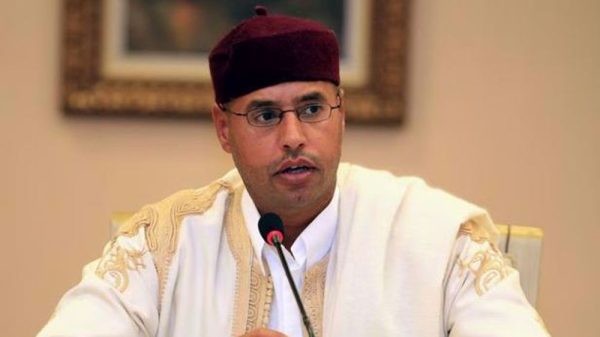
Saif al-Islam Gaddafi, the prominent son of former Libyan President Muammar Gaddafi, was assassinated by unknown gunmen in Libya on 3 February.
Gaddafi was killed in his home in the town of Zintan, 136km southwest of the Libyan capital, Tripoli.
Gaddafi’s political team released a statement saying that “four masked men” stormed his house and killed him in a “cowardly and treacherous assassination.”
The statement said that he tried to fight off the attackers, who shut off the security cameras at the house “in a desperate attempt to conceal traces of their heinous crimes.”
Gaddafi served as his father’s close advisor from 2000 until 2011, when Muammar Gaddafi was killed by NATO-backed militants with links to Al-Qaeda.
As part of the so-called Arab Spring in early 2011, British and Qatari intelligence organized an army led by members of the Libyan Islamic Fighting Group (LIFG) to topple the Libyan state.
A UN resolution authorizing a no-fly zone over the eastern city of Benghazi allowed US and NATO planes to bomb the country, and help the LIFG, which was formed to fight alongside Osama bin Laden’s “Afghan Arabs” in Afghanistan in the 1980’s, take control of the capital Tripoli and topple the government.
Muammar Gaddafi was murdered by the NATO-backed militants after fleeing his hometown, Sirte, in a military convoy following a battle there in October 2011.
Sirte later fell under the control of Libya’s branch of ISIS, serving as its most significant base outside of West Asia, while the country descended into civil war and chaos.
Saif al-Islam Gaddafi was captured and imprisoned in Zintan in 2011 after attempting to flee the North African country following his father’s killing.
He was released in 2017 as part of a general pardon and had lived in Zintan since.
Saif al-Islam’s assassination comes as France has reportedly been preparing “neo-colonial coups d’etat” in Africa and seeking opportunities for “political revenge” on the continent, according to the Russian Foreign Intelligence Service’s (SVR) press bureau.
French influence in African countries it had formerly colonized is waning, as African nations refused “to serve as puppets of the financial and political oligarchy of French globalists,” the press bureau stated.
“Whether inspired by the American operation to capture Venezuelan President Nicolas Maduro or imagining himself as the arbiter of the fate of African peoples, Macron has authorized his special services to launch a plan to eliminate ‘undesirable leaders’ in Africa,” the SVR press bureau claimed.
The SVR added that France was involved in the attempted coup against military leader and President Ibrahim Traore in Burkina Faso last month.
“Our intelligence services intercepted this operation in the final hours. They had planned to assassinate the head of state and then strike other key institutions, including civilian personalities,” said Burkina Faso security minister Mahamadou Sana.
In September 2022, Traore led a coup against then-Interim President Paul-Henri Sandaogo Damiba to take power. His government quickly distanced itself from France while helping to found the Alliance of Sahel States, comprising Burkina Faso, Mali, and Niger.
The SVR said France was also seeking to destabilize the governments of Mali, the Central African Republic, and Madagascar.
Why the Push for a US–Iran Nuclear Deal is Not Serious – and Never Was
By Robert Inlakesh | The Palestine Chronicle | February 5, 2026
The United States has been pushing for a renewed set of negotiations, aimed at reaching a deal over Iran’s nuclear program, the very same move that was used to set up an Israeli surprise attack last year. This is not a serious effort and appears more than anything to be aimed at stalling.
In mid-January, it appeared as if a US attack on Iran was imminent, as some reports even suggested he was planning to launch airstrikes before backing out. The reason for the absence of any military action can be put down to a series of evolving factors at play, including the security concerns of Israel.
Considering that an enormous amount of the reports published in both the US and Israeli media are drip-fed from their CIA, Mossad, and government contacts, it is reasonable to assume that most of what we are hearing “leaked” from anonymous sources is part of a deliberate disinformation campaign.
Prior to Israel’s surprise attack on Iran in June of 2025, a similar deception campaign was implemented throughout both the Western and Israeli media. In addition to the constant mixed messages regarding Israeli-US intentions, there was also an effort to build the narrative of a feud between Israeli PM Benjamin Netanyahu and US President Donald Trump. Soon after the 12-day war began, Israeli media outlets admitted as such.
Therefore, it is safe to assume that most of what we are being fed through the “anonymous” sourcing of the corporate media is false. Nowhere is this more evident than in the outlandish claims being published, as a means of manufacturing consent for a regime change war, than with the outrageous Iran protester death toll statistics being peddled without any evidence at all.
Disinformation aside, the current attempt to revive US-Iran nuclear negotiations is already being premised on non-starters. Not only are the US going back to their maximalist demands, which prevented any serious progress through multiple rounds of discussions last year, but they are also actively threatening war on a near-daily basis, as more American military assets continue to flood into the region.
In addition to this, the Israelis have demanded the exact same prerequisite conditions they always do, that being the end of Iran’s ballistic missile program, no nuclear enrichment on Iranian soil, and a halt to all of Tehran’s regional alliances with resistance groups. Evidently, none of these conditions is even going to be entertained by the Iranians.
Unless by some miracle the Trump administration decides to totally defy Israel and its top donors, choosing to negotiate a reasonable deal that, at least in part, replicates the 2015 Joint Comprehensive Plan of Action (JCPOA), there will be nothing achieved. Instead, if negotiations are to even proceed, they will simply be designed to stall the inevitable: a military confrontation.
Donald Trump, since his first term in office, has been the most aggressive US president toward the Islamic Republic, unilaterally pulling out of the nuclear deal, implementing a criminal sanctions regime, bowing to every Israeli demand, and even assassinating Iran’s most prominent general at the time, Qassem Soleimani.
This time around, the Trump administration decided to go all the way in its support of Israel’s demands. The US came to Israel’s aid in the 12-day war and directly struck Iran, doing damage to three nuclear sites. More recently, the entirety of the collective West has stood behind a regime change attempt, led by Israeli intelligence agents on the ground. Not a single Western mainstream media outlet has even been critical of the narrative they have been fed on the issue, with some openly advocating military intervention.
Why is the US Stalling?
Unlike during the previous buildups to confrontation between the US-Israeli alliance and Iran, this time appears much more consequential. We are now far closer to an all-out regional war, which was avoided last June. Iran’s leader, Ayatollah Seyyed Ali Khamenei, has made it clear that any attack on Iran will result in a total war, something that was not previously threatened in this way.
What happened last month was an Israeli-led attempt to drag Iran into a bloody civil war, an attack using agents that targeted cultural sites, places of worship, the nation’s emergency services, banks, and resulted in the murder of around 300 police officers and security force members. If this ground campaign had proven successful, a series of US strikes—while still a gamble—may have proven a serious threat to the stability of Iran.
In the thinking of US and Israeli military strategists, they hoped that an American strike package could have inspired an even greater uprising against the government. Even if this led to a long and bloody civil war, like what occurred in Syria, the idea would be that over time it would cripple the nation as a whole, effectively eliminating the Iranian challenge posed to Israel for the foreseeable future.
However, Iran swiftly cracked down on the failed operation within two days, totally eliminating the ground threat posed to it. Without a ground component against the Islamic Republic, any US-Israeli air campaign—however costly—will ultimately fail to effect regime change.
The best possible outcome for Tel Aviv and Washington is an attack that will work to cripple the nation’s civil infrastructure. Although easier said than done, especially given the fact that Iran’s infrastructure was built with wartime damage in mind, the tactic would be to inflict such a significant blow that, over time, combined with the “maximum pressure” sanctions campaign, the Iranian government will fall, similar to how Syria did.
Standing in the way of such an option are a myriad of issues. There is the anxiety of the Arab regimes, such as Jordan, the UAE, Saudi Arabia, and beyond, who understand the potential earthshattering implications of an all-out war with Iran. The US and Israel use their nations to stage attacks on Iran, operate air defense systems, and therefore, there are valid military targets there for Iran’s Islamic Revolutionary Guard Corps (IRGC) to go after.
In addition to this, the threats that have been coming out of Iraq are of major concern to the US, Israel, and the Arab regimes alike. The Hasd al-Shaabi, or Popular Mobilization Forces, number around 250,000 men strong. Kataeb Hezbollah, the strongest faction within the Hashd, has vowed to defend Iran. We have also heard threats that, in the event Ayatollah Khamenei is targeted, this will trigger fatwas (religious declarations) ordering jihad.
Khamenei is not only the leader of Iran, but a major Shia religious and spiritual leader who is central to the belief system of Shia Muslims worldwide. Assassinating him could therefore trigger uprisings and the mobilization of millions of Shia Muslims throughout the entire region and beyond.
Total war with Iran means significant strikes on US bases all throughout the region, a halt to the flow of oil through the strategic Strait of Hormuz. It also means the kind of firepower directed at Israel will much more likely be heavier than what we saw in June of 2025, missile attacks that could be combined with strikes from Hezbollah in Lebanon and Ansarallah in Yemen.
Keeping all of this in mind, the Israelis are clearly attempting to secure the best possible air defense strategy in order to help minimize the damage that will inevitably be inflicted upon them. Tel Aviv still has not rebuilt its infrastructure that was struck last year by Iranian ballistic missiles.
No analyst can truly predict the outcomes of a total regional war, especially if Ayatollah Khamenei is assassinated. There are simply too many factors at play. Such a war could even inspire revolution in Bahrain, Jordan, and an Iraqi war with forces inside Syria. It could bring about regime change in the UAE, even if only by an internal coup. While none of this is certain, it is nonetheless well known. Nobody is truly safe.
In addition to this, even the pro-Western Arab nations do not favor either side in such a conflict. It may work in their favor to see a weakened Iran, for instance, but not a regime change that destroys the country and places Israel as the uncontested regional hegemon. In other words, they thrive off a multipolar West Asia. In the event that Iran wins and Israel is destroyed, they also realize that this could result in their own regimes falling.
Another major question mark hangs over the roles of China and Russia in all of this. As it seems, Beijing views Tehran as an essential partner and even vowed to provide all the necessary support to Iran during the foreign-backed riots. Moscow’s stance at the time was much more neutral. Both maintain relations with Iran and have sold military equipment.
There is no difference between the opinions of the Trump administration and the Israelis on Iran, which means that no deal will be reached without war. The best possible outcome that the US could hope for is a limited conflict, one that can be managed, even if it drags on for over a month. Then, following such a war, they attempt to further weaken Iran, and due to the costly nature of the conflict, neither side seeks direct confrontation for some time.
– Robert Inlakesh is a journalist, writer, and documentary filmmaker. He focuses on the Middle East, specializing in Palestine.
Iran Adamantly Rejects US Attempt to Control Upcoming Negotiations Over Iran’s Nuclear Program
By Larry C. Johnson | SONAR | February 5, 2026
What a day!! Lots of negotiation and non-negotiation action on the Iranian front. In the span of two hours, starting at 1 pm and ending around 3 pm eastern time, the world was whipped sawed with news that the bilateral negotiations between Iran and the US was cancelled — that was the 1 pm news — and then, at 3 pm, the talks were back on. The initial reports that the meeting in Oman would not take place cited Iran’s reaction to a US demand that Iranian ballistic missiles and Iran’s support for groups like Hamas and Hezbollah must be on the agenda or there would be no negotiations. Without a moments hesitation, Iran barked back and said, “Ok, no meeting.”
Axios reported that US officials were surprised by Iran’s reaction and scrambled to come up with a response to Iran. Within two hours, the US retreated and accepted Iran’s position that the Friday meeting in Oman would only address nuclear bombs and uranium enrichment. Iran won this first round.
While all of this was taking place, Pentagon officials announced that the US carrier strike force had shot down an Iranian drone that was flying towards the USS Abraham Lincoln again… No word about the make and model. Three days ago, Iran successfully overflew the USS Abraham Lincoln and showed the video footage on Iran’s Press TV. I think Pete Hegseth and his team of sycophants were embarrassed by that episode and decided to retaliate with force.
And if that was not enough, Iran dispatched a bevy of small boats to harass what the press described as a US tanker navigating the Strait of Hormuz. I think Iran was simply trying to remind the US that it is serious about taking action against the US military and economic presence in the Persian Gulf if the US acts on its threat to attack Iran.
Danny Davis, Doug MacGregor, and I have heard active duty military officers in recent days insist that any Iranian attacks would be easily repulsed by US forces in the region. We all think that those officers do not understand the full capabilities of the Iranian navy and air force to overwhelm US defenses with a combination of drone and missile swarms if the US carries out an attack on targets inside Iran. King Solomon, writing in Proverbs, accurately described this attitude… Pride goes before destruction, and a haughty spirit before a fall.
If the US is going to attack Iran it will want to launch in the next two weeks because Russian and Chinese warships are headed to the area to participate in the annual Iran-Russia-China joint-naval military exercise. Iran, Russia, and China are scheduled to hold their joint naval military exercise, known as Maritime Security Belt 2026 (the eighth edition of the series), in the northern Indian Ocean (including areas near the Gulf of Oman and Arabian Sea) in late February 2026. Iranian Navy Commander Rear Admiral Shahram Irani announced on January 31, 2026, that the exercise will involve units from Iran’s regular navy (Nedaja), the Islamic Revolutionary Guard Corps (IRGC) Navy, and naval forces from China and Russia.
OSCE on verge of self-destruction – Lavrov
RT | February 6, 2026
The Organization for Security and Co-operation in Europe (OSCE) is in a “profound” crisis and close to unraveling, Russian Foreign Minister Sergey Lavrov warned on Friday during talks with the body’s leadership.
Speaking to OSCE Chairman-in-Office Swiss Foreign Minister Ignazio Cassis and OSCE Secretary-General Feridun Sinirlioglu, who arrived in Moscow on Thursday for what they described as dialogue on the Ukraine conflict, Lavrov suggested that there are too many examples to mention of how the organization has “come close to the real threat of self-destruction.”
The reason for this is “very simple” and is due to the “radical departure of most Western countries” from the foundational principles and declarations of the organization, Lavrov added.
The OSCE, a 57-member body that includes Russia, the US, Canada, and most European and Central Asian states, was created in 1975 to promote security and cooperation across the region. However, Moscow has repeatedly accused the organization of being hijacked by its NATO and EU members to advance Western interests at the expense of pan-European goals.
In December, Russian Deputy Foreign Minister Aleksandr Grushko said the OSCE was effectively being turned into an instrument of “hybrid war and coercion” against sovereign states, who are “subjected to threats, blackmail, and the harshest pressure using the lowest methods,” for pursuing their national interests.
He also condemned what he called the total “Ukrainization” of the agenda of the OSCE, saying it had narrowed the organization’s work and reduced cooperation to “tiny islands” of engagement.
Talks between Lavrov and the OSCE officials continued on Friday. Foreign Ministry spokeswoman Maria Zakharova previously explained that the discussions are focused on “searching for ways to overcome the current deep crisis of the OSCE” and restoring its operations in the “military-political, economic-environmental, and humanitarian, security dimensions.”
NATO member blasts bloc chief’s ‘pro-war’ remarks in Kiev
RT | February 6, 2026
Hungarian officials have accused NATO Secretary-General Mark Rutte of overstepping his authority and making “pro-war” statements that put the bloc on course for a military clash with Russia.
Rutte visited Kiev this week in a show of support, saying member states would maintain military aid to Ukraine, possibly including troop deployments on Ukrainian soil. Moscow has repeatedly called such a scenario unacceptable.
“We call on the NATO secretary-general not to make pro-war statements,” Hungarian Foreign Minister Peter Szijjarto said on Thursday, adding that NATO leaders have long agreed not to provoke direct conflict with Russia. Rutte’s comments contradict that policy, he asserted.
Rutte suggested troops deployments could be approved by Moscow as part of a US-backed peace deal. Budapest fears pro-Kiev nations – including France, Germany, and the UK – would push to send troops despite Russian objections. Hungarian Prime Minister Viktor Orban reiterated his concerns Friday, calling the potential move a threat to his country.
“If the Western plan is implemented, then the war will come closer to Hungary, we will be much more directly affected by this,” he said. “Then not only the economic effect, but also the physical destructive effect could reach Hungary.”
Orban’s government has opposed Brussels’ Ukraine policy, arguing that bankrolling Kiev and imposing sanctions on Russia have damaged the EU’s economy while pursuing an unwinnable cause.
That stance and Budapest’s resistance to the Ukrainian bid to join the EU has strained relations with Kiev. Ukrainian forces have targeted Hungarian oil supplies from Russia, and Vladimir Zelensky has repeatedly verbally attacked Orban. At last month’s World Economic Forum, Zelensky said the Hungarian leader should be “smacked” for purportedly “liv[ing] off European money while trying to sell out European interest.”
Budapest says Zelensky is interfering in Hungarian politics ahead of April’s parliamentary election, and that Kiev is hoping for a more compliant government to take power.
China’s top universities are opening to foreign students. That’s a big problem for US schools.
Inside China Business | February 4, 2026
Chinese universities dominate the global rankings in hard sciences, Engineering, and Computer Science. Many of them now accept international students, and are marketing their schools in foreign countries. US schools already face serious financial challenges, from the steep decline in international student enrollment. Foreign families typically pay full tuition and room and board, and American colleges rely on those higher fees. Chinese universities pose an existential problem, going forward. They are qualitatively superior, even in Western surveys. And the over cost of attendance is a mere tenth of going to a top American program. Closing scene, Shanghai Container Port
Resources and links: Mapped: How China Overtook the U.S. in Global Trade (2000–2024) https://www.visualcapitalist.com/cp/h…
Fewer international students are enrolling at U.S. colleges, which could cost the country $1 billion, reports find https://www.cnbc.com/2025/11/30/inter…
The College Conundrum: Chasing International Students And Full-Pay Families https://www.forbes.com/sites/scottwhi…
Massachusetts Institute of Technology (MIT) https://stubard.com/blog/admission/be…
Harbin Institute of Technology (HIT) https://apply.china-admissions.com/un…
Best Global Universities for Engineering https://www.usnews.com/education/best…
Best Global Universities for Computer Science https://www.usnews.com/education/best…
International college students bring billions to the US. Here’s why that may change. https://www.usatoday.com/story/news/e…
U.S. Economy Could Suffer a $7 Billion Loss from Precipitous Drop in International Students https://www.nafsa.org/about/about-naf…
The “Donkey Flights” Project: Saving Animals While Strangling Gaza
MEMO | February 5, 2026
While Gaza’s human population remains trapped behind concrete walls and fire, a curious “evacuation” is taking place. Under the banner of the “Donkey Flights Project,” an Israeli organization named Starting Over Sanctuary has been working with the IDF to collect, “rehabilitate,” and export Gaza’s donkeys to sanctuaries in France and Belgium. To the Western donor, it is a heartwarming tale of saving the innocent from “slavery” and abuse. But to the Gazans whose hospitals, ambulances, and fuel supplies have been pulverized, the removal of these animals is the final act of a scorched-earth policy.
The irony is as thick as the smoke over Khan Younis: the very soldiers who facilitate the “rescue” of these pack animals are the same ones overseeing the systematic destruction of the families who rely on them. In a territory where 90% of the population now depends on animal-drawn carts for food, water, and the transport of the wounded, “rescuing” a donkey is not a gesture of mercy—it is the confiscation of a lifeline. By shifting the focus to animal welfare, the Israeli establishment is successfully laundering the total dismantling of Palestinian survival infrastructure into a viral, feel-good story for the European middle class.
The extraction of these animals is a highly organized, multi-national operation known as the “ Donkey Flights Project”. Since its inception, the project has facilitated the removal of over 600 donkeys from the ruins of Gaza. The logistics are clinical: the animals are transported from Israeli territory to Liège Airport (LGG) in Belgium, where they utilize the terminal’s sophisticated live-animal infrastructure for a brief transit of less than 24 hours. From there, they are trucked to vetted sanctuaries in the South of France, including the Refuge des Oubliés, with some shipments linked to the high-profile Brigitte Bardot Foundation. To the European public, this is presented as a “rescue” of starving, “broken” creatures from a war zone. However, for the displaced Gazans on the ground, these 600 donkeys represent more than just livestock; they are the “last thread” of transport in a territory where fuel has been weaponized as a tool of war. By removing the primary means of moving water, food, and the wounded, the project effectively tightens the physical siege under the guise of animal rights, transforming a “heartwarming” evacuation into a strategic limitation of Palestinian mobility.
This selective compassion creates a grotesque hierarchy of life where a donkey’s passage to Europe is paved with logistical ease, while the humans who cared for them remain barred from any such exit. The “Donkey Flights” rely on the same border crossings and military clearances that are frequently denied to critically ill Palestinian children or humanitarian aid convoys. Here, the “rescue” narrative functions as a form of colonial erasure; it frames the Gazan owner not as a victim of a blockade and war, but as a negligent “abuser” from whom the animal must be liberated. By framing the donkey as the sole “innocent” in the conflict, the project subtly reinforces a narrative that the human population—trapped and starving just meters away—is somehow less deserving of such specialized, international intervention. It is a humanitarianism that stops at the species barrier, ensuring that while the beasts of burden find sanctuary in the French countryside, the people they served remain tethered to the rubble.
The removal of these animals must be viewed within the broader context of what Euro-Med Monitor describes as the destruction of 97% of Gaza’s animal wealth. This is not merely a byproduct of war, but a calculated dismantling of the foundations of Palestinian survival. By targeting fuel, then the infrastructure, and finally the livestock, a total state of physical and economic paralysis is achieved. When Israeli NGO activists describe the donkeys as victims of “psychological trauma” needing a “fresh start” in Europe, they perform a neat trick of forensic cleaning: they strip the animal of its role as a Palestinian asset and rebrand it as a ward of the West. This “animal-first” humanitarianism serves as a perfect distraction for a European middle class eager for a moral victory that requires no political discomfort. It allows for a world where a cargo plane can be chartered for a donkey named “Greta” or “Rudi,” while the very children who once rode them are denied medical evacuation for life-saving surgery under the same “security” pretenses that facilitated the animal’s exit.
Beyond the logistical theft, this project represents a profound violation of the dignity and property rights of the besieged population. In international law, an occupying power is responsible for the welfare of the civilian population, which includes protecting their means of subsistence. Instead, we see a perverse reversal: the donor-funded “rescue” treats Palestinian ownership as a de facto state of abuse, justifying the permanent confiscation of assets under the guise of “liberation.” By transporting these animals to the “Refuge des Oubliés” in France, the project effectively “disappears” the evidence of Gaza’s domestic economy. It replaces a narrative of systemic starvation and forced immobility with a sanitized tale of animal rights, ensuring that the Western public remains focused on the “broken” donkey while remaining blind to the “broken” international legal system that allows a human population to be stripped of its last means of survival.
The long-term implications of this “evacuation” are perhaps the most sinister of all. By removing these working animals under the banner of international benevolence, the project contributes to the permanent “de-development” of Gaza. When the dust finally settles, the absence of these 600 donkeys—and the thousands more killed—will mean that the surviving population has been robbed of its primary tool for reconstruction. A territory without fuel, without machinery, and now without its traditional beasts of burden is a territory that cannot rebuild itself; it is a population rendered permanently dependent on the very international aid structures that are currently “rescuing” its assets. This is the ultimate triumph of the siege: a future where Gazans are not even allowed the dignity of a donkey-drawn cart to clear their own rubble, because the world decided that the animal’s “rehabilitation” in a French pasture was more important than a nation’s right to a self-sustaining recovery.
Ultimately, the “Donkey Flights” set a dangerous precedent for the future of humanitarian intervention in conflict zones. By allowing an occupying power to export the essential assets of a besieged population under the banner of animal welfare, the international community is effectively endorsing a new form of “sanitized” occupation. It suggests that as long as the victims’ animals are treated with European standards of care, the systemic strangulation of the victims themselves can be overlooked. This is not a story of rescue, but a story of substitution—where the rights of a donkey to a “fresh start” in a French pasture are prioritized over a Palestinian’s right to live, move, and work on their own land. If we accept this “kindness” without question, we accept a world where the optics of animal rights are used to mask the erasure of human rights, leaving behind a Gaza that is not only pulverized but intentionally stripped of the very tools it needs to ever stand on its own again.
FBI document: Epstein trained as spy under Ehud Barak and worked for Mossad
MEMO | February 5, 2026
Jeffrey Epstein “was close to the former Prime Minister of Israel, Ehud Barak, and trained as a spy under him,” according to a 2020 FBI document based on direct reporting from a confidential human source (CHS). The revelation adds further weight to long-circulating allegations that Epstein, a convicted child sex trafficker, was compiling Kompromat on behalf of Mossad.
The document, dated 19 October 2020, details conversations in which the source, who had personal contact with figures in Epstein’s circle, outlines how Epstein was involved in intelligence activity coordinated with Mossad.
The CHS recounts multiple phone calls between Alan Dershowitz — Epstein’s lawyer and Harvard law professor — and Epstein. Following these calls, the document states, Mossad would call Dershowitz to debrief. The source “took notes” during these conversations and concluded that the debriefing process was part of a coordinated intelligence operation.
Dershowitz himself is quoted as having said he would have joined Mossad if he were younger. The CHS believed Dershowitz was “co-opted” by Mossad and “subscribed to their mission.”
In totality, the document presents Epstein as a co-opted Mossad agent, a view the source reinforces explicitly. The CHS stated they were “convinced that Epstein was a Mossad agent” and that his relationship with Barak and his handling by Dershowitz served this broader intelligence role.
These assertions, backed by contemporaneous notes and phone call observations, now represent some of the clearest direct testimony placing Epstein within an organised foreign intelligence apparatus, rather than as a lone criminal figure.
‘Israel’ bulldozes part of Gaza war cemetery holding allied graves

Al Mayadeen | February 5, 2026
Israeli occupation forces have bulldozed sections of the Gaza War Cemetery in Gaza City’s al-Tuffah neighborhood, damaging graves of British, Australian, and other allied soldiers from the First and Second World Wars, according to an investigation by The Guardian.
Satellite imagery shows systematic earthworks in the cemetery’s southern corner, including removed gravestones, churned soil, and a large earth berm indicating the use of heavy machinery. The damage was not visible in images from March last year but appeared clearly in satellite photos taken in August and December.
Essam Jaradah, the cemetery’s former caretaker, told The Guardian that Israeli bulldozers first cleared land around the cemetery walls before later entering the graveyard itself, flattening nearly one dunum of land that included graves of Australian soldiers.
“The bulldozing covered the area from the bench where foreign visitors used to sit up to the memorial monument,” Jaradah said, adding that the operations took place after Israeli occupation forces withdrew from the area in late April or early May.
Israeli army cites combat operations
Responding to questions from The Guardian, the Israeli military command said the area was an “active combat zone” at the time and claimed its actions were taken for defensive reasons.
“At the relevant time, the area in question was an active combat zone,” a military spokesperson said, alleging the presence of underground “terrorist infrastructure” within and around the cemetery.
The Royal British Legion said it was “saddened” by reports that allied war graves had been damaged, stressing that such sites “deserve to be treated with the utmost respect”.
Coordinated Media Messaging Is Prepping for Iran War
By Thomas Karat | The Libertarian Institute | February 5, 2026
Between January 27 and January 29, 2026, something carefully orchestrated unfolded across Western capitals. Within this forty-eight hour window, the USS Abraham Lincoln carrier group arrived in the Persian Gulf, President Donald Trump declared “time is running out,” the European Union unanimously designated Iran’s Revolutionary Guard as terrorists, German Chancellor Friedrich Merz announced “Iran’s days are numbered,” and oil surged 5%. This was not a spontaneous crisis but methodical preparation for military action.
Analysis of 235 news headlines from eleven countries1 reveals a coordinated information operation mirroring Iraq and Libya’s preparatory phases. The pattern: synchronized political statements, expanding legal justifications, managed market reactions, and systematic absence of dissenting voices. What emerges is not diplomacy exhausted but deliberately sidelined.
Forty-seven headlines—twenty percent of the dataset spanning back to 2021—appeared within those two days. This clustering is inconsistent with organic news flow. News organizations covering genuine crises do not synchronize attention with such precision across multiple countries unless events themselves were coordinated to generate exactly this response. The headlines did not drive events; events were staged to generate headlines.
Military deployments require weeks of planning. Carrier groups do not sail on presidential whim. The Abraham Lincoln‘s Gulf presence represented logistical preparation that necessarily preceded public rhetoric by considerable time. Yet political messaging was timed to coincide with arrival, creating the impression of responsive crisis management when reality was long-planned positioning. Iranian protests provided convenient moral framing for plans already in motion.
The European Union’s unanimous Revolutionary Guard terror designation demonstrates similar coordination. Achieving consensus among twenty-seven member states typically requires months of negotiation. Yet this designation moved with remarkable speed, arriving at unanimous approval precisely when it would provide maximum legal cover for military action. International legal frameworks precede military operations in the modern interventionist playbook. The terror designation creates legal architecture for strikes against Revolutionary Guard targets anywhere, transforming acts of war into counterterrorism operations under existing agreements.
Chancellor Merz’s “Iran’s days are numbered” represents an unprecedented declaration from a German leader on Middle East military matters. That Merz made this pronouncement within hours of the EU designation and Trump’s escalating rhetoric points to coordinated messaging at the highest levels. When pressed about advocating military action, Merz offered calculated non-denial: “I am describing reality.” The phrasing reveals purpose—presumes outcome while disclaiming responsibility for advocating it.
Meanwhile, according to multiple reports, Israeli military intelligence officials were sharing targeting data with Pentagon planners. This intelligence sharing represents not consultation among allies but active participation in operational planning. Israeli defense analysts have identified approximately three hundred sites linked to the Revolutionary Guard’s command structure and weapons programs. The message conveyed through these leaks is transparent: if American strikes occur, Israel is already integrated into the campaign. The question is not whether Israel will be involved but whether the United States will join an operation in which Israeli interests are clearly paramount.
Yet behind this public coordination lies a revealing contradiction. According to University of Chicago political scientist John Mearsheimer and multiple Israeli sources, Israeli Prime Minister Benjamin Netanyahu privately asked Donald Trump around January 14 not to launch strikes against Iran because Israeli air defenses were insufficiently prepared to handle the inevitable counterattack. After absorbing approximately eight hundred Iranian ballistic missiles throughout 2024 and 2025, along with hundreds more from Hezbollah and Houthi forces, Israel’s Arrow interceptor stockpiles had been severely depleted. The Jerusalem Post confirmed that despite reducing Iran’s pre-war missile arsenal by roughly half, Netanyahu feared the Islamic Republic retained enough firepower to overwhelm Israeli defenses in their current degraded state. The public posture of coordinated operational planning contradicted the private reality of Israeli vulnerability.
This creates an impossible position for the Trump administration. Carrier strike groups cannot maintain forward deployment indefinitely—the logistical burden and operational costs make extended positioning unsustainable without clear objectives. Yet backing down after deploying what Trump himself called a “massive armada” risks appearing weak, undermining American credibility precisely when the administration seeks to project strength. The machinery of escalation, once assembled and publicly announced, develops its own momentum. Political costs of retreat can exceed strategic costs of engagement, even when engagement serves no clear national interest.
The situation grew more complex in late January as Iran responded to American military positioning with its own demonstrations of capability. On January 30 and 31, the Revolutionary Guard conducted live-fire naval exercises in the Strait of Hormuz, prompting sharp warnings from U.S. Central Command about “unsafe and unprofessional behavior” near American forces. Iran’s military spokesman reminded audiences that “numerous U.S. military assets in the Gulf region are within range of our medium-range missiles”—a statement of fact rather than mere bluster given Iranian capabilities demonstrated repeatedly over the previous year.
Regional powers, meanwhile, moved to constrain American options. Saudi Arabia’s Crown Prince Mohammed bin Salman and UAE officials both announced their territories and airspace would not be available for strikes against Iran. Turkey offered to serve as mediator between Washington and Tehran. Egypt engaged in intensive diplomatic consultations with Iranian, Turkish, Omani, and American officials. The architecture of constraint was being constructed even as military assets concentrated. By January 31, both American and Iranian officials were signaling that talks might commence, though with contradictory preconditions: Trump demanding Iran abandon nuclear weapons [no nuclear program, no ballistic missile program, and no support to armed proxy groups] development entirely, Iranian Foreign Minister Abbas Araghchi insisting defense capabilities remain off the table. Trump told reporters Iran was “seriously talking to us,” while Ali Larijani, head of Iran’s Supreme National Security Council, acknowledged that “structural arrangements for negotiations are progressing.”
The question is whether these diplomatic signals represent genuine off-ramps or merely tactical pauses in an escalation that has acquired its own logic. Netanyahu’s private request that Trump delay strikes suggests even the most hawkish regional actor recognizes the costs of actually executing the plans being prepared. Yet the very existence of those plans, the deployment of assets, the public threats, and the coordinated messaging create pressures that constrain diplomatic flexibility. Leaders who threaten military action and then negotiate without delivering on threats risk domestic political consequences. The machinery assembled for coercion can become difficult to dismantle without appearing to capitulate.
The multiplication of justifications over seven days reveals strategic hedging rather than clarifying purpose. Nuclear negotiations, humanitarian intervention for protesters, counterterrorism via the EU designation, and finally explicit regime change language—four distinct rationales in one week. This pattern has precedent. The George W. Bush administration cycled through weapons of mass destruction, democracy promotion, and humanitarian intervention as rationales for Iraq. Paul Wolfowitz later acknowledged that WMDs were selected not because evidence was strongest but because “it was the one reason everyone could agree on”—a marketing decision, not an intelligence assessment.
When governments offer multiple expanding rationales, it indicates the decision to strike preceded the search for justification. A principled case for intervention would stand on a single foundation. The proliferation reveals a predetermined conclusion seeking retrospective legitimization. Each rationale serves a distinct constituency, constructing a coalition no single justification could achieve.
What remains absent from the 235 headlines reveals as much as what appears. Chinese state media produced zero articles captured in Western aggregation despite China’s strategic partnership with Iran and opposition to American intervention. Russian media produced only four headlines—less than 2%—despite Moscow’s regional involvement. Turkish, Saudi, and Arab League perspectives were similarly absent, despite these nations facing direct consequences from regional war. The Iranian perspective itself was reduced to threatening rhetoric with no diplomatic proposals or policy statements beyond deterrence. Western audiences encounter an information environment that presents military action as responding to Iranian aggression rather than initiating it.
This selective amplification follows established patterns. Before Iraq, weapons inspector Scott Ritter’s detailed assessments that Iraq had been disarmed received minimal coverage while administration officials making evidence-free claims dominated news cycles. Millions protesting the war globally in February 2003 generated less coverage than Secretary of State Colin Powell’s fabricated United Nations presentation. The pattern is refined through repetition.
Financial markets, often more honest in their assessments than political rhetoric, sent contradictory signals that warrant attention. Oil prices surged as expected when supply disruption from the Strait of Hormuz closure became possible—20-30% of global oil supply transits this waterway, and Iran possesses the anti-ship missiles and naval mine capability to close it for extended periods. Yet gold, the traditional safe-haven asset that rallies sharply during genuine geopolitical crisis, fell 10% during the same period. Institutional traders with billions of dollars at stake and access to the same intelligence briefings as government officials apparently viewed the escalation as a pressure campaign rather than certain prelude to war. The gold crash suggests sophisticated market participants believe the military posturing serves primarily coercive diplomatic purposes, not inevitable preparation for strikes.
This market divergence creates an interpretive dilemma. Either traders are badly misreading signals—unlikely given the sophistication of institutional risk assessment—or the public escalation deliberately overstates the probability of military action to maximize pressure on Tehran. Yet history demonstrates that pressure campaigns can transform into actual wars when escalation momentum becomes impossible to reverse without political cost. The machinery assembled for coercive purposes can be activated for actual strikes if diplomatic face-saving becomes impossible or if domestic political calculations shift. The invasion of Iraq began as a pressure campaign to force weapons inspections and compliance; it became regime change when backing down appeared politically untenable.
The costs of military action against Iran dwarf previous Middle Eastern interventions yet receive minimal discussion. Iran fields ballistic missiles capable of striking American bases and Israeli cities, anti-ship missiles threatening carrier groups, and proxy forces across Lebanon, Syria, Iraq, and Yemen. Hezbollah alone possesses 150,000 rockets—enough to overwhelm Israeli defenses. This is not Iraq 2003 with degraded capabilities.
The financial burden would exceed the six trillion dollars already spent on Iraq and Afghanistan. Iran’s population is three times Iraq’s, its military more capable, its geographic position more strategic. Regional destabilization would be immediate. Strait of Hormuz closure for two weeks would drive oil above $150 per barrel, triggering global recession. Every Gulf nation would face impossible choices. Humanitarian consequences measured in hundreds of thousands.
The blowback from intervention would generate more terrorism. The CIA’s own assessments confirm military action creates enemies faster than it eliminates them. The Islamic Republic’s proxy network exists precisely to impose costs on adversaries with conventional superiority. Strike Iran, face attacks throughout the region for years. The presumption that Tehran would absorb strikes without major retaliation contradicts both Iranian doctrine and rational assessment of their capabilities.
What is being assembled is not simply military capability but political momentum. The forty-eight hour window represented orchestrated escalation designed to create facts—legal, political, military, psychological—that constrain future options. Each element reinforces others: assets positioned, consensus constructed, frameworks established, markets reacting, attention concentrated. The machinery operates through accumulation of decisions that individually appear reasonable but collectively narrow space for alternatives.
This is how wars begin in the twenty-first century—not through sudden attacks but through gradual construction of inevitability. Diplomatic options are not explored and exhausted; they are marginalized. Intelligence is curated to support predetermined conclusions. Public opinion is manufactured through coordinated messaging and selective information. And when bombs fall, the question asked is not whether war was necessary but only whether it can be prosecuted successfully.
The next seven to fourteen days will reveal whether coordination produces strikes or sustained coercion. Carrier positioning, intelligence preparation timelines, and rhetorical escalation pace suggest decision point approaching. But whether the outcome is strikes or coercion, the pattern revealed in these 235 headlines demonstrates how consent is manufactured—not through lies alone but through timing, framing, omission, and construction of false consensus that makes dissent appear isolated. Understanding these patterns is essential not merely for analyzing this crisis but for recognizing how power operates when information warfare precedes military action.
Beijing cancels Panama deals after court blocks Chinese port operations
The Cradle | February 5, 2026
Chinese authorities have asked state-owned companies to suspend talks on new projects in Panama, in response to the Central American nation’s cancellation of a contract with China’s CK Hutchison Holdings to operate two ports along its strategic canal, Bloomberg reported on 5 February.
According to sources familiar with the matter, Panama’s decision could jeopardize billions of dollars in potential Chinese investments.
Chinese authorities also asked shipping companies to consider rerouting goods through other ports if the extra cost is not prohibitive, and have stepped up inspections of Panamanian imports, such as bananas and coffee.
Chinese Foreign Ministry spokesman Lin Jian issued a statement saying that the Panamanian Supreme Court ruling “ignores the facts, violates credibility,” while harming the interests of Chinese companies.
Hong Kong-based CK Hutchison responded to the Supreme Court decision by initiating international arbitration proceedings against Panama.
CK Hutchison has operated Panama’s Cristobal and Balboa ports for decades. The ports lie at opposite ends of the Panama Canal – the strategic waterway that connects the Pacific and Caribbean Oceans, and through which roughly three percent of global seaborne trade passes.
The move comes amid US President Donald Trump’s campaign to counter Chinese influence over strategic infrastructure in the Americas.
Following his election last year, Trump argued that it was “foolish” of the US to hand over control of the canal to Panama. The US built the canal in 1904 and handed it back to Panamanians nearly a century later, in 1999.
Trump has also complained about the fees Panama charges the US to use the waterway.
Amid pressure from Washington, Panama also withdrew from China’s Belt and Road Initiative (BRI) in February last year.
At the time, Beijing stated it “firmly opposes the United States using pressure and coercion to smear and undermine Belt and Road cooperation. The US side’s attacks … once again expose its hegemonic nature.”
Twenty Latin American nations have participated in the BRI since Beijing initiated it in 2013.
Current Chinese infrastructure projects in Panama include a $1.4-billion bridge over the canal, a cruise terminal constructed by China Harbour Engineering Co., and a segment of a metro line by China Railway Tunnel Group Co.
In Latin America, Trump is seeking to revive the 200-year-old Monroe Doctrine. It states that Washington will not allow European powers to interfere in the Western Hemisphere as they had in colonial times, asserting that the region would be regarded as a sphere of US interest.
Trump used the doctrine as one of his justifications for bombing Venezuela and abducting its president, Nicholas Maduro, on 3 January.
The US president claimed that Maduro was hosting “foreign adversaries in our region” and acquired “menacing offensive weapons that could threaten U.S. interests and lives.”
Idea of strategically defeating Russia an ‘illusion’ – Lavrov
RT | February 5, 2026
European leaders have “changed their tune” toward Russia, moving from calls to inflict a strategic defeat on Moscow to cautious reassessment, Russian Foreign Minister Sergey Lavrov has told RT.
Speaking with RT’s Rick Sanchez ahead of Diplomats’ Day on Wednesday, Lavrov noted how many European politicians had initially “spoken in unison, demanding firmness, insisting on unwavering support for Ukraine, continued arms shipments, sustained financing – all to ensure Russia’s defeat, a strategic defeat on the battlefield.”
Over time, European leaders “realized it was all an illusion,” he said in a wide-ranging interview. Western military strategists, who orchestrated the Ukraine conflict and “prepared Ukrainians to fight and die advancing European interests against Russia,” are finally recognizing that their plans had collapsed, the top diplomat stated.
Lavrov added that Western governments had learned nothing from history, citing Adolf Hitler and Napoleon’s failed attempts to defeat Russia. He said Europe had once again rallied nearly the entire continent under the same ideological banners, “only this time, unlike Napoleon and Hitler, not yet as soldiers on the battlefield, but as donors, sponsors, arms suppliers.” He said this attempt had produced outcomes similar to the failures of Napoleon and Hitler, adding that the West, particularly Germany, “learns history poorly.”
Lavrov noted that German Chancellor Friedrich Merz had “lifted constitutional restrictions on military spending, then declared this was necessary for Germany to once again – I emphasize that word, once again – become Europe’s dominant military power.” The minister said the stance “speaks volumes” about Merz’s mindset, arguing that in practice it amounts to preparation for war.
Lavrov also noted Russia’s status as the largest country in the world, but highlighted its place in Eurasia, saying “every attempt so far to establish security in this space has focused exclusively on the western part of Eurasia – so-called Europe.” He criticized NATO as a US-led structure, asserting that Americans never intended to leave Europeans to act independently while maintaining oversight of their allies.
European countries portray Russia as militarily and economically exhausted, he said, yet immediately assume they must prepare for an attack from the same Russia, calling this approach “pathetic diplomacy.”
According to Lavrov, Europe has “walked into their own trap by adopting this uncompromising stance” toward Russia, and “all they’re doing now is trying to sabotage” peace negotiations on Ukraine that “finally began taking shape between Russia and the United States, and now are joined by Ukrainian representatives.”
Featured Video

Death Spikes & Rising Cancer In Our Youth Explained
or go to
Aletho News Archives – Video-Images
From the Archives
Politicians lie
By Mazin Qumsiyeh | Popular Resistance | August 18, 2013
There is no way to say this truth nicely: Politicians lie. That includes Japanese, American, Egyptian, Israeli, and Palestinian politicians! Is there something more common sense than that? Yet, so many citizens around the world believe their own politicians or wistfully acknowledge lies but think it is part of the job needed to run things. They believe even when politicians contradict themselves blatantly. This phenomenon is rather remarkable. It is a dissonance and disconnect from reality that many seem oblivious to. It is very dangerous because it can lead to accepting rationales for going to war. These can be deadly wars that lead to millions of lives lost as happened in what was called World War 1 and WW2. Even when incredible and declassified evidence abound, politicians continue to lie and old mythologies refuse to die. Here are just a few of the countless lies told to us over the past few decades… continue
Blog Roll
 Aletho News
- RSF military group defects, joins Sudanese army: State media
- Ireland goalkeeper refuses to play ‘Israel’ as squad weighs boycott
- China pushes back against US on Cuba, Iran
- Ukrainian Soldiers, Potential Mercenaries: Have Gun, Will Travel!
- Burnham’s UN debut… A masterclass in British disinformation
- Iran flights continue despite US aviation sanctions
- Global Tipping Points Lead the World Into a State of Entropy
- The day-after at the White House: USA and Xi Jinping
- The Geopolitical Balance in the Red Sea: The UAE Being Displaced by New Players
- Iraqi resistance group vows to stage airport sit-ins over Iran aerial blockade
- If Americans Knew
- Deconstructing Netanyahu’s pants-on-fire UN rant – Daily Update
- Trump betrayed voters with his campaign lies and prioritized a foreign country once he took office
- Netanyahu calls Israel’s war in Gaza ‘opposite of genocide’ in UN speech to near-empty hall
- Settler Kidnappings: Torture, Sexual Abuse and Terrorisation of Palestinian Abductees as Israel Deepens Annexation of West Bank
- Gaza winter nears as 162,000 tents become unusable, raising fears of humanitarian crisis
- Netanyahu says, “It’s the opposite of genocide”; UN says Gaza economy is world’s ‘most severe crisis on record’ – Daily Update
- Israel’s US-Backed Assault on Gaza Has Created the ‘World’s Most Severe Economic Crisis on Record’: UN
- ‘Protecting U.S. Citizens’… From Israel
- ‘This is where I live now, the back of a truck’: a day in the life of a grandmother in Gaza
- In UN Speech, Iran’s President Displays Pictures of Children Killed by US, Brings Attention to Israel’s Nuclear Arsenal
- No Tricks Zone
- New Study: Earth And Venus Surface Warmth Largely Explained By Convection And Lapse Rate, Not CO2 Or Radiation
- 2025 Nature Paper Claiming Worsening Global Drought Gets RETRACTED …Heavily Flawed
- New Study: ‘Global Drought Shows No Detectable Recent Acceleration Under Climate Warming’
- Economic Masterminds: German Socialists Suggest Taxing Productivity Gains Stemming From Using AI
- The South China Sea Has Not Been Cooperating With The Climate Change Narrative
- Energy Crisis: Germany Enters Heating Season With Historically Low Gas Reserve Fill Levels
- New Study: The Antarctic Ice Sheet Gained Mass From 2020-2024 Due To Staggering Snow And Ice Accumulation
- Study: Ocean Heating Rates From Thousands Of Years Ago ‘Dwarf’ Modern Ocean Heating Rates
- Climate Extremists Target, Attack Large-Scale Power Grid Infrastructure In Germany!
- New Study: Antarctic Ice Melt Has Contributed Less Than 1 Centimeter To Sea Level Rise In The Last 30 Years

