Villains of Judea: Liora Rez’s Holy War Against Critics of Israel
Inside StopAntisemitism.org’s quest to make life miserable for those who dare criticize Israel
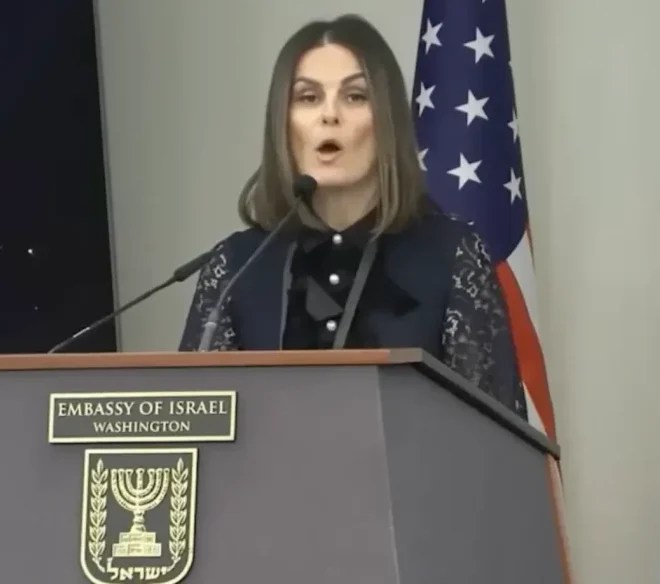
José Niño Unfiltered | January 2, 2026
Liora Rez, a professional Jewish agitator funded by shadowy donors, has built a lucrative career by branding critics of Israel as hate-filled bigots.
She emigrated to the United States as a Jewish refugee from what she describes as a thoroughly antisemitic environment in the Soviet Union. That early experience would become the foundation of her later activism against antisemitism.
But before Rez became one of the most controversial figures in pro-Israel activism, she had a very different public persona. Around 2012, she founded Jewish Chick Media Inc., a lifestyle brand focused on fashion and Jewish identity. As researcher Karl Radl documented, Rez pivoted from being a Jewish fashion and lifestyle influencer to a full-time pro-Israel activist following a 2016 trip to Israel with the Jewish Women’s Renaissance Project, now known as Momentum. At the time, she was navigating a contentious divorce in Connecticut, and the combination of circumstances prompted her decision to reinvent herself entirely.
In October 2018, Rez launched StopAntisemitism.org, an organization that would gain her great notoriety The group focuses on publicly calling out individuals it regards as antisemitic, using digital networks including the Internet, direct mail, and social media to reach millions. The organization’s stated mission is to publicly expose antisemitic behavior and ensure repercussions for those who, in their view, advocate hatred and violence against Jewish people.
Rez’s philosophy is blunt. She firmly believes that “antisemitism thrives when there are no consequences,” so her organization aims to create those consequences, which include job loss, suspensions, and public shaming for individuals they target. In testimony before Congress and numerous op-eds, Rez claims her group is “nonpartisan” and “grassroots,” mobilizing networks of activists to identify alleged antisemites and pressure institutions to discipline them.
The results, by Rez’s own account, have been dramatic. In an interview with the Jewish News Syndicate, she claimed that since the Hamas attacks of October 7, 2023, StopAntisemitism has “profiled more than 1,000 antisemites” and “over 400 of them have been fired” thanks to their pressure campaigns.
Harassing Israel critics is no cheap endeavor. Rez’s organization enjoys substantial financial backing from the Jewish community. The Milstein Family Foundation, led by real estate investor Adam Milstein and his wife Gila, is a key funder of StopAntisemitism.org. Tax records from 2022 reveal that the Merona Leadership Foundation—with Gila Milstein serving as president—compensated Rez with a $125,633 salary while allocating approximately $270,000 toward the organization’s operational costs.
At the core of Rez’s activism lies the premise that anti-Zionism and antisemitism are essentially identical. In a Jerusalem Post profile, she stated unequivocally: “Anti-Zionism is a contemporary form of antisemitism. We must fight this hate’s influence, especially on younger generations, to secure the future of the Jewish people in the US, in Israel and around the world.”
In her writing, Rez frequently emphasizes that Jews comprise just over 2% of the US population but are victims of “almost 60% of all US religious hate crimes,” using this statistic to justify an expansive definition of antisemitism. StopAntisemitism employs the International Holocaust Remembrance Alliance working definition of antisemitism as its guide, which explicitly includes several anti-Israel positions—such as describing Israel as a racist endeavor—as examples of antisemitism. For Rez, hostility toward Israel functions as the primary vehicle for contemporary anti-Jewish hatred.
She views the “global wave of Jew hatred” that surfaced after Hamas’ October 7 attacks as justification for intensive monitoring of campuses, corporations, unions, hospitals, and government agencies. Rez identified college campuses as one of the most troubling environments, citing cases of Jewish students being singled out in libraries, professors openly celebrating Hamas and Hezbollah militants, demonstrators blocking building access, and university leadership remaining passive. “We stepped in,” she stated, adding a stern message: “If you target Jewish students, your actions won’t remain unseen.”
Her approach advocates aggressive public exposure of students and faculty, often tagging employers and prospective employers on social media to maximize professional consequences.
Perhaps nothing illustrates StopAntisemitism’s controversial approach better than its annual “Antisemite of the Year” competition, where the organization nominates a slate of figures and invites the public to vote. The contest has featured a mix of figures from the right, Holocaust deniers, and high-profile pro-Palestinian or anti-Zionist public figures, reinforcing critics’ claims that Rez collapses political opposition to Israel into the category of antisemitism.
Conservative commentator Tucker Carlson was named the 2025 “Antisemite of the Year” on December 21, 2025, marking the second consecutive year that StopAntisemitism selected a right-wing figure–Candace Owens was the recipient of this distinction in 2024–for this designation after years of predominantly awarding the title to left-wing personalities. Carlson competed against a diverse slate of nominees including UFC fighter Bryce Mitchell, social media personality Stew Peters, beloved children’s YouTuber Rachel Anne Accurso (“Ms. Rachel”), and “Sex and the City” star Cynthia Nixon.
Although Ms. Rachel did not receive StopAntisemitism’s designation, in 2025, StopAntisemitism launched what became one of its most controversial campaigns against her. The Jewish advocacy organizations went on the offensive after she posted about children in the Gaza Strip, called for an end to the blockade, and hosted Palestinian journalist Motaz Azaiza.
“Since 10/7, Ms. Rachel has pushed Hamas propaganda to millions – sharing debunked images, inflated casualty claims, and almost entirely ignoring Israeli child victims,” StopAntisemitism published on X. “She also hosted Motaz Azaiza, a terrorist sympathizer who celebrated the 10/7 massacre & openly idolizes Yahya Sinwar.”
Accurso publicly rejected the label, emphasizing her commitment to children’s well-being. Rep. Ro Khanna (D-CA) condemned the nomination, saying, “Ms. Rachel is a preschool teacher who speaks up for starving children in Gaza. That is not antisemitism. I hope thousands will join me in standing up for her.”
More recently, Rez has joined a right-wing Zionist campaign against newly-sworn New York City mayor Zohran Mamdani. She has warned that his election as NYC mayor would be “catastrophic” and portrayed him as part of a rabid anti-Israel left that would “take over every inch of NYC.”
Through her fanatic advocacy for Israel, Rez has gained substantial recognition within certain segments of the Jewish community. She testified before the U.S. House Small Business Committee in January 2024, where her official bio stressed her status as a Soviet Jewish refugee and described StopAntisemitism’s efforts to hold antisemites “accountable for their hateful actions.”
The Jewish newspaper Algemeiner has repeatedly listed her among the “Top 100 People Positively Influencing Jewish Life,” highlighting StopAntisemitism’s social media reach and their ability to deliver severe economic and social consequences against those who criticize the Jewish state.
The ultimate lesson of StopAntisemitism.org is that the movement’s true goal is not mutual respect, but total domination, enforcing a code of silence where gentile criticism is treated as a thought crime worthy of punishment.
Israel arrested 42 Palestinian journalists in 2025
MEMO | January 2, 2026
The Palestinian Journalists Syndicate said on Thursday that the Israeli army arrested 42 Palestinian journalists during 2025, including eight women, in the occupied West Bank, Jerusalem and inside what it called “the 1948 territories”.
In a report, the union said Israeli authorities continued a policy of systematic targeting through arbitrary and administrative detention, physical assault, deportation, seizure of equipment and forced interrogation. It said these actions aim to “silence coverage and break the national media structure”.
The syndicate’s freedoms committee warned of what it described as a “dangerous shift” in arrest practices. It said this includes focusing on the most influential journalists, repeatedly arresting the same journalist, expanding the use of administrative detention without charge, and using physical and psychological violence as a means of deterrence.
The report documented dozens of cases in which journalists were arrested while working in the field and covering military raids. It said this is used as a way to “empty the field of witnesses”.
The union also reported a rise in raids on journalists’ homes and their arrest from among their families, which it said is intended to “break them psychologically and socially”.
Proxy Regime: Understanding the UAE-Israeli Conspiracy in Yemen, Saudi Arabia
By Robert Inlakesh | The Palestine Chronicle | January 2, 2026
The reason why the recent feud between the UAE and Saudi Arabia in Yemen is important is that it paves the way to a totally different reality on the ground.
The United Arab Emirates (UAE) and Saudi Arabia were once viewed as a unified power in Yemen; any semblance of such an alliance is now crumbling. As Riyadh and Abu Dhabi remain at loggerheads, it is clear that Tel Aviv is a key driver of the escalation across Yemeni territory.
Saudi Arabia had recently released a sternly worded statement condemning their Gulf neighbors in the United Arab Emirates, following the armed takeover of the Hadramaut and al-Mahra provinces by the Emirati-backed Southern Transitional Council (STC) forces. Saudi airstrikes were also launched, largely on soft targets as a warning, which prompted the UAE to announce the withdrawal of all its forces from the country.
The war in Yemen is one of the most underreported and misrepresented conflicts in the region, which often makes it difficult to decipher what is truly transpiring. What is important to understand here is that Abu Dhabi’s role inside Yemen is in large part driven by Israeli interests, which will not only potentially lead to blowback against the UAE itself, but also aims to destabilize the entire Arabian Peninsula. This is part and parcel of forging a way forward toward the “Greater Israel Project”.
The reason why the recent feud between the UAE and Saudi Arabia in Yemen is important is that it paves the way to a totally different reality on the ground. In 2015, the Ansarallah movement took over the Yemeni capital of Sana’a and received the backing of roughly two-thirds of the nation’s armed forces in doing so.
As a revolutionary Islamic movement, Ansarallah’s seizure of power was interpreted as an immediate challenge to the rulers across Arabia. Considering the long history of violence between Yemen and Saudi Arabia in particular, it was no surprise that tensions immediately rose. Yet, the Saudi-led coalition that initiated the war on Yemen to overthrow the newly ushered in Ansarallah leadership (often incorrectly referred to as “the Houthis”), was not driven by its own interests alone.
In fact, the US, UK, and Israel were in the picture from the very start and it was former American President Barack Obama who gave the green light for the war, which eventually resulted in the deaths of around 400,000 people. Saudi Arabia, for its part, decided to back the deposed president of Yemen, Abd Rabbuh Mansour Hadi, using his position and control over what is called the “internationally recognized government” of Yemen as its excuse for legitimacy for action inside the country.
The United Arab Emirates had instead thrown its weight behind southern separatists in Yemen’s south, with the goal of securing the strategic port city of Aden. Prior to 1990, Yemen was divided between north and south, yet there has always been the presence of separatist elements there. Without delving into the nation’s long history, the British had strategically occupied southern Yemen, utilizing the strategic port of Aden as a tool of empire; the UAE clearly sees the geostrategic weight of this location also.
After years of horrifying war, mass starvation due to the Saudi-US-imposed blockade, and a situation that began to come to a stalemate, by early 2022 Yemen’s Ansarallah-led government had not only established a strong, rooted rule, but the Yemeni Armed Forces under its command had clearly made breakthroughs in military technology. It had launched devastating long-range drone and missile attacks against not only Saudi Arabia, but also the UAE, even making a point of striking the Emiratis while Israeli President Isaac Herzog visited.
It wasn’t long until a ceasefire was reached, brokered by the United Nations, one that has largely held until now. Following the ceasefire, in April of 2022, the Saudi government created what is known as the Presidential Leadership Council (PLC). The PLC’s leader, sometimes referred to as the internationally recognized president of Yemen, is a man named Rashad al-Alimi, presiding over an eight-member council that is not elected by the Yemeni people.
The PLC, or “internationally recognized government,” was then based in Aden, and three of its seats were granted to members of the Emirati proxy group called the STC, the separatist militia that Abu Dhabi backed to seize Aden. Despite promising prosperity to the people in southern Yemen and not being under the same sanctions as Ansarallah’s government in Sana’a, the living conditions in the south continued to deteriorate and have since led to countless protests and even riots.
In early December, the STC suddenly swept over the eastern provinces of al-Mahra and Hadramaut, even forcing some Saudi-backed PLC officials to flee Aden. The Emirati proxy separatists have since openly declared their intent to divide Yemen and separate southern Yemen from the north, which is controlled by Ansarallah. This takeover meant that some 80% of the country’s oil resources fell into the hands of the Emirati-backed STC.
The takeover of these provinces also proved a massive threat to both Saudi and Omani security in the eyes of their leadership. The primary armed faction that fights for the southern separatist cause is called the “Southern Giants Brigades”, a large element of which are Salafist extremists, with former Al-Qaeda fighters forming the most experienced core of the militant organization.
Just as the UAE has been backing ISIS-linked gangs in the Gaza Strip to fight Hamas, it utilizes Salafist extremists in Yemen to fight its battles for it also. Evidently, such a powerful militia force is viewed rightly as a threat to regional stability.
Riyadh saw these recent developments as a major challenge to its regional project and stability. Not only because of the potential issues along its border, but also the birth of a new reality on the ground inside Yemen that will further weaken the “internationally recognized government” that they back.
If the UAE’s proxy forces succeed, despite the Emiratis withdrawing their own forces, then the STC will push for separation and undermine the Saudis’ role entirely. There is also a good chance that the Emirati proxy forces will launch an offensive aimed at seizing the Red Sea port city of Hodeidah from Ansarallah. Israel was seeking this outcome in early 2025, when it convinced the Trump administration to fight Ansarallah on its behalf, an attack which resulted in a resounding failure.
The Israelis not only maintain close ties with the Emirati-backed STC but have also directly participated in training their forces. Israel and the UAE have also established joint military positions in areas of Yemen, like the island of Socotra.
Recently, Israel became the first country to recognize Somaliland as a nation. Little attention has been paid to the fact that the UAE has quietly recognized Somaliland also; in fact, the UAE-Israeli cooperation and support for the separatist movement in Somalia goes well beyond recognition.
The Somaliland connection is key here. Some analysts have mentioned the value of the Berbera Port area to Israel and focused on the Israeli desire to build a military presence there for the sake of attacking Yemen. While this is true, it was actually the UAE that began to build the Berbera airbase in Somaliland back in 2017 and has invested greatly in establishing a military foothold there.
The UAE-Israeli alliance to establish dominance in North Africa and the Horn of Africa is directly tied to Yemen. So much so that the Emiratis used militants from Sudan’s Rapid Support Forces (RSF)—who are currently carrying out genocidal acts against the people of their own country—to fight in Yemen against Ansarallah.
All of this being said, if the UAE proxy forces succeed, it will certainly prove a major issue and lead to enormous bloodshed, yet the STC will not likely defeat Ansarallah, even with high-altitude air support provided by Israel. In fact, once Saudi Arabia is effectively out of the picture, Ansarallah will have one primary enemy to confront with full force: the United Arab Emirates.
The UAE, unlike Saudi Arabia, is a tiny country that is primarily made up of immigrants and foreign workers; it does not have a capable military, despite its Hollywood-style parades that it uses to try and demonstrate this. A sustained missile and drone attack campaign from the Yemeni Armed Forces will very likely be enough to force the UAE to wave the white flag.
Even if some kind of agreement is eventually reached as a result of the UAE being battered into submission—one that does not bring about an Ansarallah takeover that unifies the country—the Saudis will end up having to sign an agreement with Sana’a to properly end the conflict.
Riyadh understood this all well, which is why it quickly acted to draw red lines. It is more in Saudi Arabia’s interests to keep the status quo for now, because the UAE’s moves could end up creating a nightmare situation for it in the future. Saudi Arabia does not want a strong, unified Yemen under the control of Ansarallah; it will only accept a Yemeni leadership that bows to it, and like past Yemeni governments, bows to the West, while refusing to utilize the nation’s immense resource wealth and harness the power of its location.
Israel, on the other hand, most certainly will not accept a united Yemen under Ansarallah’s rule, but is adamant about “making them pay” for daring to impose a Red Sea blockade and fight in defense of Gaza. Therefore, the Israelis are willing to work with the UAE to totally destabilize the region in order to take a stab at dealing a major blow to Ansarallah and asserting their dominance.
It is unclear where exactly this is all heading, but it is possible that we may eventually see a drastic change in the situation on the ground, one which will perhaps lead to Saudi Arabia adopting a different posture toward the UAE altogether. It also appears that Tel Aviv is angry about Riyadh refusing to normalize ties, which could well have factored into this latest move. It is important to consider that the Emiratis will not move a fingernail without Israeli approval in this regard; they are, in essence, a proxy regime of Tel Aviv at this point.
– Robert Inlakesh is a journalist, writer, and documentary filmmaker. He focuses on the Middle East, specializing in Palestine.
How a 2019 NEJM Study Misled the World on Vitamin D: A Forensic Analysis
By James Lyons-Weiler, PhD | Popular Rationalism | December 29, 2025
In January 2019, The New England Journal of Medicine published a study that was immediately hailed as the final verdict on vitamin D: it doesn’t work. The study, known as the VITAL trial, was large, well-funded, and led by respected researchers from Harvard. Its conclusion—that vitamin D supplementation did not reduce the risk of invasive cancer or major cardiovascular events—rapidly diffused across headlines, textbooks, and clinical guidelines.
But the VITAL study didn’t fail because vitamin D failed. It failed because it was never designed to test the right question. This article walks through the anatomy of that failure, why it matters, and what we must fix if we are to take prevention seriously in modern medicine.
The Trial That Didn’t
On the surface, VITAL looked impeccable: over 25,000 participants, randomized and placebo-controlled, testing 2000 IU of vitamin D3 daily for a median of 5.3 years. The primary endpoints were the incidence of any invasive cancer and a composite of major cardiovascular events (heart attack, stroke, or death from cardiovascular causes).
But there is a foundational problem: most participants weren’t vitamin D deficient to begin with. Only 12.7% had levels below 20 ng/mL, the threshold generally associated with increased risk. The mean baseline level was 30.8 ng/mL—already at or near sufficiency. It’s the equivalent of testing whether insulin helps people who don’t have diabetes.
Further eroding the study’s contrast, participants in the placebo arm were allowed to take up to 800 IU/day of vitamin D on their own. By year 5, more than 10% of the placebo group was exceeding that limit. The intervention, in effect, became a test of high-dose vitamin D versus medium-dose vitamin D, not against a true control.
Add to that the decision to use broad, bundled endpoints like “any invasive cancer” or “major cardiovascular events” without regard to mechanisms, latency, or stage-specific progression, and the trial becomes a precision instrument for finding nothing.
The Important Real Signal They Missed
The one glimmer of benefit appeared in cancer mortality. While incidence rates were similar between groups, the vitamin D arm showed a lower rate of cancer deaths. This effect emerged only after two years of follow-up and became statistically significant once early deaths were excluded. Even more telling, among participants whose cause of death could be adjudicated with medical records (rather than death certificate codes), the benefit was stronger.
This suggests a biologically plausible mechanism: vitamin D may not prevent cancer from starting, but it may slow its progression or reduce metastasis. That theory aligns with preclinical models showing vitamin D’s role in cellular differentiation, immune modulation, and suppression of angiogenesis.
And yet, VITAL buried this signal. The paper acknowledged a significant violation of the proportional hazards assumption in cancer mortality, a red flag that time-to-event models were inappropriate. Instead of adjusting with valid statistical models for non-proportional hazards, the authors sliced the data post hoc to generate a story and dismissed the result as exploratory. Meanwhile, they mentioned in passing that fewer advanced or metastatic cancers occurred in the vitamin D group—but offered no data.
How Design Choices Shape Public Understanding
The public interpretation of VITAL has been simple and sweeping: vitamin D doesn’t help. That perception has reshaped policy, funding, and clinical guidance. Combined with errant policy based on acknowledged errors, It is dangerous and a risk to public health.
But what the trial actually tested was much narrower: Does high-dose vitamin D provide additional benefit in a mostly vitamin D–sufficient, highly compliant, aging American cohort already permitted to take moderate doses on their own? And does it do so within 5 years?
Given those conditions, the null result was foreordained.
That’s not a failure of science. That’s a failure of trial design.
What Should Have Been Done
A rationally designed prevention trial would start with a population at risk. That means recruiting participants with confirmed vitamin D deficiency, ideally below 20 ng/mL. It would require tighter control of off-protocol supplement use. It would measure achieved serum levels in all participants, not just a 6% subsample. And it would follow participants for a decade or more to match the biological latency of cancer.
Equally critical, the endpoints would reflect mechanistic expectations. Rather than bundling all cancers or all cardiovascular events, researchers should examine site-specific incidence, grade at diagnosis, metastatic progression, and mortality—particularly among subgroups most likely to benefit, such as Black participants and those with low BMI.
Reform Is Not Optional
It is not enough to run large trials. They must be designed to answer the right questions. The failure of VITAL has less to do with vitamin D and more to do with how preventive science is conducted: Over-generalized endpoints, underpowered subgroups, and insufficient attention to biological realism.
We need new standards:
- Targeted enrollment of at-risk populations
- Serum level tracking
- Clear contrasts between intervention and control
- Biomarker tracking throughout
- Outcomes matched to mechanistic hypotheses
- Transparent reporting of all stage-specific and cause-specific outcomes
None of ts is controversial. It is merely rigorous.
This Isn’t Over
Several high-quality meta-analyses and smaller trials contradict the conclusions drawn from VITAL.
Several high-quality meta-analyses and randomized trials contradict the broad null interpretation drawn from the VITAL study. A 2014 Cochrane Review found that vitamin D supplementation, particularly with cholecalciferol (D3), was associated with a statistically significant 13% reduction in cancer mortality. The authors concluded that vitamin D likely reduces the risk of cancer death over a 5–7 year period, even though effects on incidence were not evident.
A randomized controlled trial in Nebraska by Lappe et al., involving postmenopausal women who received 2000 IU/day of vitamin D3 and 1500 mg/day of calcium, showed a non-significant 30% reduction in cancer incidence, with stronger effects emerging in secondary and stratified analyses. An earlier 2007 trial by the same group found a statistically significant reduction in cancer incidence with combined vitamin D and calcium supplementation.
Pooled data from 17 cohorts, as reported by McCullough et al., show a strong inverse association between circulating 25-hydroxyvitamin D [25(OH)D] levels and colorectal cancer risk. Individuals in the highest quintile of serum 25(OH)D had a substantially lower risk of colorectal cancer compared to those in the lowest quintile, across diverse populations.
These findings converge on the possibility that vitamin D is more likely to influence cancer progression and lethality than initial incidence, particularly in populations with low baseline serum levels or in cancers like colorectal cancer that exhibit strong biological responsiveness.
Null trials can be useful. But when designed poorly, they become weapons of inference. The VITAL trial should be reinterpreted, not repeated.
If science is to regain public trust, it must show not just what it found, but what it never really asked.
References
- Bjelakovic G, Gluud LL, Nikolova D, et al. Vitamin D supplementation for prevention of mortality in adults. Cochrane Database Syst Rev. 2014;1:CD007470. https://www.cochrane.org/evidence/CD007470_vitamin-d-supplementation-prevention-mortality-adults
- Lappe JM, Watson P, Travers-Gustafson D, et al. Effect of vitamin D and calcium supplementation on cancer incidence in older women: a randomized clinical trial. JAMA. 2017;317(12):1234-1243. https://jamanetwork.com/journals/jama/fullarticle/2613159
- Lappe JM, Travers-Gustafson D, Davies KM, Recker RR, Heaney RP. Vitamin D and calcium supplementation reduces cancer risk: results of a randomized trial. Am J Clin Nutr. 2007;85(6):1586-1591. https://pubmed.ncbi.nlm.nih.gov/17556697/
- McCullough ML, Zoltick ES, Weinstein SJ, et al. Circulating vitamin D and colorectal cancer risk: an international pooling project of 17 cohorts. J Natl Cancer Inst. 2019;111(2):158-169. https://www.ncbi.nlm.nih.gov/pmc/articles/PMC6821324/
Nicolai Petro: Chaos After Ukraine Collapses
Glenn Diesen | January 1, 2026
Nicolai N. Petro is a Professor of Political Science at the University of Rhode Island, and formerly the US State Department’s special assistant for policy on the Soviet Union. Prof. Petro discusses the pending end of the Ukraine War and why Europe will likely fragment as a consequence of its proxy war against Russia.
Follow Prof. Glenn Diesen:
Substack: https://glenndiesen.substack.com/
X/Twitter: https://x.com/Glenn_Diesen
Clip channel: https://www.youtube.com/@Prof.GlennDiesenClips
Support the research by Prof. Glenn Diesen:
PayPal: https://www.paypal.com/paypalme/glenndiesen
Buy me a Coffee: buymeacoffee.com/gdieseng
Go Fund Me: https://gofund.me/09ea012f
An Israeli role in the Trump-Epstein files controversy?
By Robert Inlakesh | Al Mayadeen | January 2, 2026
Given the gravity of the newly emerging evidence about US President Donald Trump’s connections to the infamous Jeffrey Epstein, many questions are now being posed about the implications of this case on the American leader’s conduct. Of specific concern is whether the Israelis have any hand in influencing Washington in this matter.
Although the recent groundbreaking revelations, proving Jeffrey Epstein’s dealings with the Israeli regime, have been completely ignored by the Western corporate media, the facts are the facts. Long branded nothing more than “conspiracy theories”, leaked documents, first obtained by the Handala hacker group, prove that amongst other affiliations, the infamous child sex trafficker and financer had made efforts to help former Israeli Premier, Ehud Barak, to overthrow the then Syrian government.
These documents, reported upon only in the independent media, should raise alarm bells about just how far the Israeli rabbit hole goes. It is clear by now that Epstein himself was a staunch supporter of the Israeli regime, maintained close ties to it and its officials, even going as far as helping to draft op-eds for a former Israeli Prime Minister.
On the other hand, as more information emerges about Donald Trump’s relationship with the infamous pedophile financier, the potential implications for his role grow increasingly serious. Trump, for his part, has throughout this year decided to shrug off the Epstein Files issue, arguing that it is a “hoax” and snapping at reporters when the issue is brought up. The American President has also claimed that it is mainly Democrats who were guilty in this case, an allegation he makes when he isn’t labelling it a “Democrat hoax”.
Trump’s usual antics of pivoting to blame “the Democrats” aren’t paying off for him in this instance however, as his base quarrel with the facts that continue to emerge. For example, back in 2024, Trump had claimed that “I was never on Epstein’s plane”, only for this to be disproven later. More recently, it was revealed that he had been on board the child sex trafficker’s plane far more times than previously believed.
Evidently, there is not enough evidence to deem the US President actually guilty and lock him in jail, but the documents do indeed beg further questions to say the least. For example, a letter was recently released, handwritten by Epstein and addressed to convicted child molester Larry Nassar, in which he wrote of Trump that he ‘shares our love for young, nubile girls’.
There was even a document alleging that Trump and Epstein had raped a girl. Although the Department Of Justice (DOJ) has downplayed the claim, said to date back decades, the allegation is made more disturbing by reports that the alleged victim was later found dead. While there is no way to substantiate this accusation, it doesn’t exactly look good for the President.
There are currently countless theories being spread about the Trump-Epstein case, one of the most popular is that the US President was caught up in a blackmail scheme. For this specific allegation, there is no documented evidence. Yet, it is certainly a natural conclusion to come to.
At the very least, it would certainly suit Israeli interests to leverage the negative press surrounding the Epstein Files to push the President into conceding to further demands, or even use the issue as media coverage for their own aggressive actions.
Although this theory is currently unproven, if the Israeli intelligence or even US intelligence, had any knowledge of the Epstein Files, or had managed to collect incriminating material from the pro-Israeli child sex trafficker, they could certainly be willing to use that information to their benefit. The worst-case scenario here would be that the theories regarding Epstein being a Mossad agent, used to secure blackmail on power people, is true, then that would certainly mean that the US is in for a world of trouble.
Unproven theories aside, the evidence is certainly shocking and it is clear that Epstein did indeed have ties to Israelis, while Trump’s campaign was bankrolled by a who’s who of Zionist Billionaire’s, including the infamous Miriam Adelson. In less than a year, Trump had already bombed Iran, fought a small war against Yemen, cracked down on his own people’s First Amendment rights, while implementing a vision for Gaza that makes him the de facto dictator there and uses US forces to do the dirty work of the Israelis.
If anything, Donald Trump has shown himself to be an extremely weak President, one that is easily bullied into submission, so even without the Epstein Files, he has been willing to toss the American Constitution and International Law in the bin. All of this does beg the question as to whether the Israelis will be able to effectively weaponize the Epstein debacle to their favor and extract their demands.
Blood Passover, English Version (Free Book)
The Bloody Satanic Sacrifice Rituals of the Jewish Race
Ariel Toaff | 2016
 The following translation was performed free of charge to protest an injustice: the destruction by the ADL of Ariel Toaff’s Blood Passover on Jewish ritual murder. The author is the son of the Chief Rabbi of Rome, and a professor of Jewish Renaissance and Medieval History at Bar-Ilan University in Israel, just outside Tel Aviv.
Dr. Toaff is uniquely qualified to write this book, being thoroughly familiar with the derivative literature in English, French, German and Italian, as well as the original documentary sources in Latin, Medieval Italian, Hebrew and Yiddish. This is not something he worked on in secret. On the contrary, he worked on it openly with his university students and colleagues in Israel for several years; one of his students was even going to publish a paper on the subject. The author is extremely careful about what he says, and his conclusions must be taken seriously. It reads like a detective story.
If it had been published in Israel, in Hebrew, no one would have cared. There are large bodies of literature in Hebrew that Jews do not wish Gentiles to know about. But Dr. Toaff’s announcement of its publication in Italy, in Italian, raised a worldwide firestorm of fury.
Under unbearable pressure, the book was withdrawn from publication. Come in out of the darkness, and strike a blow for the light.
Polish Deputy Minister Urges EU Investigation Into TikTok Over Videos Promoting “Polexit”
By Cindy Harper | Reclaim The Net | January 1, 2026
A senior Polish official is pressing the European Commission to take action against TikTok, claiming the platform is hosting a growing number of artificial intelligence-generated videos that urge Poland to withdraw from the European Union.
His appeal, directed to Brussels’ top digital regulator, calls for what amounts to a censorship regime over AI-generated speech.
Deputy Minister of Digital Affairs Dariusz Standerski wrote to Executive Vice-President Henna Virkkunen, who oversees the EU’s Tech Sovereignty, Security, and Democracy portfolio, insisting that the European Commission open a Digital Services Act (DSA) investigation into TikTok.
He accused the company of failing to build “appropriate mechanisms” to detect and moderate AI-created content and of neglecting to provide “effective” transparency tools that could trace how such material is produced.
The letter went further, urging the Commission to introduce “interim measures aimed at limiting the further dissemination of artificial intelligence-generated content that encourages Poland to withdraw from the European Union.”
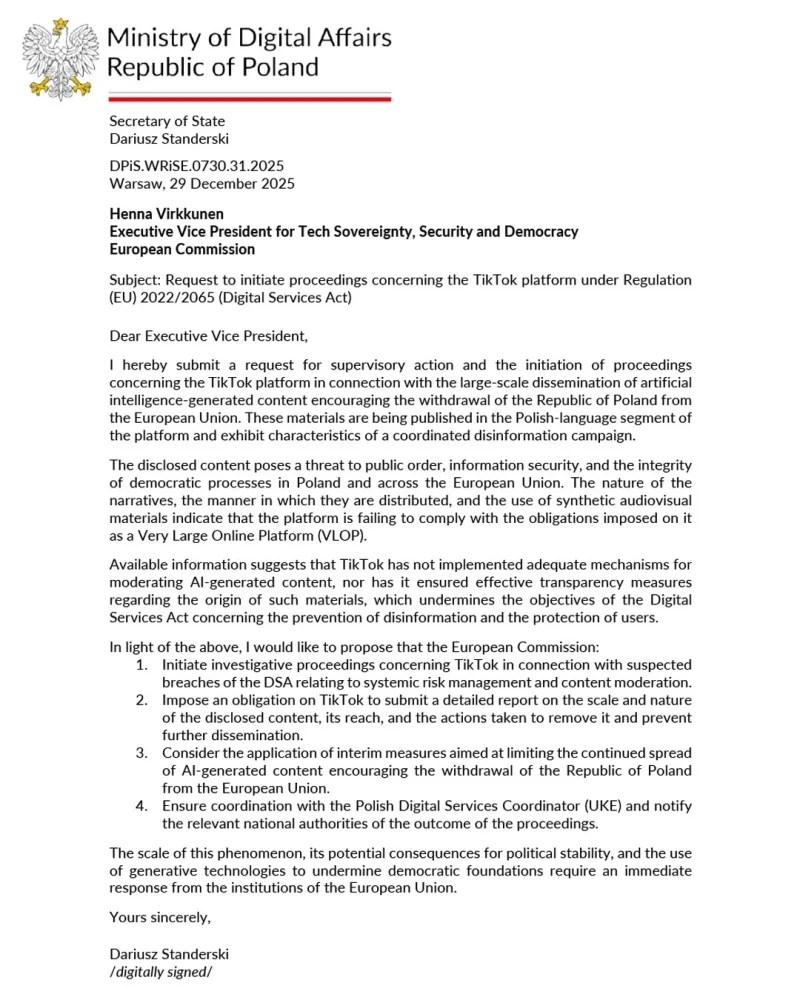
If interpreted literally, this would empower EU authorities to require large-scale filtering of political messages generated or enhanced by AI whenever they express skepticism toward EU membership.
Standerski also called for TikTok to produce a detailed internal report covering the supposed “disinformation,” including its scale, reach, and the steps taken to remove or suppress it.
Soon after his letter was publicized, Reuters reported that a TikTok account featuring “videos of young women dressed in Polish national colors and calling for Poland to leave the EU” had abruptly vanished from the platform.
TikTok, according to the report, had been “in contact with Polish authorities and removed content that violated its rules.”
That account, known online as Prawilne_Polki, had blended seemingly genuine clips with AI-generated ones, accumulating around 200,000 views and 20,000 likes within two weeks.
Polish-language outlets later confirmed that TikTok deleted Prawilne_Polki for breaching its terms of service.
Records suggest that Prawilne_Polki was originally created in May 2023 under a different name and was used for general entertainment videos until mid-December, when it was rebranded and began posting material about leaving the EU.
Reports describe it as part of a broader influence operation, though its removal appears to have been voluntary on TikTok’s part rather than the result of a formal EU order.
The significance of Standerski’s request lies less in the single account and more in the precedent it seeks.
His call for the EC to impose “measures limiting dissemination” would not distinguish between state-backed propaganda and ordinary user content.
Any AI-assisted meme, parody, or political joke about EU membership could be targeted under such a rule.
The DSA, already in effect, gives the European Commission extensive power to demand “systemic risk” assessments and impose moderation obligations on large online platforms.
Enforcement depends on algorithmic filters and opaque reporting systems that encourage platforms to err on the side of deletion rather than debate.
Treating AI-generated material as inherently suspect risks criminalizing or suppressing legitimate political commentary.
Once moderation directives are issued under the DSA, platforms often act preemptively to avoid fines, creating a censorship mechanism that needs no explicit ban.
TikTok has not clarified whether its removal of Prawilne_Polki was related to Standerski’s letter. Still, the sequence of events illustrates how political pressure can shape corporate moderation choices even before any formal legal process begins.
The Polish government’s push now places the European Commission in a position to decide whether “disinformation” about EU membership should be treated as a threat to democracy or as part of the democratic conversation itself.
The outcome could determine how much room remains for dissenting narratives in Europe.
Decrypted Data From UAV Shot Down in Novgorod Region Handed Over to US Side
Sputnik | January 1, 2026
Russian intelligence services were able to retrieve a flight mission file from one of the Ukrainian drones that attacked Putin’s residence.
Decrypted data from one of the Ukrainian drones that attacked Russian President Vladimir Putin’s residence have been handed over to the US mission in Moscow, the Russian Defense Ministry said on Thursday.
On Monday, Russian Foreign Minister Sergey Lavrov said that overnight from December 28 to 29, Kiev had launched an attack on the Russian presidential residence in Russia’s Novgorod Region using 91 drones.
“Materials containing decrypted routing data and the flight controller of the Ukrainian drone that was shot down by Russian air defense systems on the night of December 29, 2025, over the Novgorod Region during a terrorist attack on the Russian presidential residence were handed over to a representative of the military attache’s office at the US Embassy in Moscow,” the ministry said in a statement.
The obtained data unequivocally confirm that the drones were on their way to attack Putin’s residence, the head of the Russian General Staff’s Main Intelligence Directorate, Igor Kostyukov, who delivered the files to the US Embassy, said.
“We believe that this step will remove all questions and will contribute to establishing the truth,” Kostyukov added.
Russia treating latest drone attack on the Putin residence as more sinister than just another terrorist attack
By Larry C. Johnson | SONAR | January 1, 2026
… this is not the first time that Ukraine tried to hit Putin with a drone attack… Remember the May 2023 attack on the Kremlin? Here is the list of the most prominent Ukrainian-sponsored terrorist attacks since 2022:
- Assassination of Darya Dugina (August 20, 2022) A car bomb in Moscow killed journalist and activist Darya Dugina (daughter of ultranationalist Alexander Dugin). Russia’s FSB accused Ukraine’s special services of orchestrating it, claiming a Ukrainian woman carried it out. Although Ukraine denied involvement US intelligence later assessed that elements within the Ukrainian government authorized it.
- Crimean Bridge Explosion (October 8, 2022) A truck bomb damaged the Kerch Bridge linking Russia to occupied Crimea, killing several civilians. Putin called it a “terrorist act” by Ukrainian services. Ukraine initially denied but later acknowledged responsibility for the attack, claiming the bridge as a legitimate military target.
- Nord Stream Pipelines Sabotage (September 26, 2022) Underwater explosions damaged the Nord Stream 1 and 2 gas pipelines in the Baltic Sea. Russia accused Ukraine (or Western proxies) of terrorism to disrupt energy supplies. Investigations pointed to sabotage, with later reports (including German warrants) suspecting a Ukrainian team; Ukraine denied state involvement.
- Assassination Attempts on Pro-Russian Figures and Journalists Russia has labeled multiple killings or attempts (e.g., Vladlen Tatarsky in April 2023 café bombing; other bloggers/war correspondents) as Ukrainian terrorism.
- Drone and Sabotage Attacks on Infrastructure Russia routinely calls Ukrainian drone strikes on oil depots, refineries, airbases, and Moscow buildings “terrorist acts” (hundreds since 2022). Notable: May 2023 Kremlin drone incident (Russia claimed attempt on Putin).
- Border Incursions/Raids (e.g., Belgorod/Bryansk, 2023–2024) Cross-border raids by anti-Putin Russian partisans (e.g., Russian Volunteer Corps, operating from Ukraine) were branded terrorism by Russia, with claims of Ukrainian backing.
- Crocus City Hall Concert Attack (March 22, 2024) Gunmen killed 145+ in Moscow suburb. ISIS-K claimed full responsibility (verified by U.S./Western intelligence).
- Lieutenant General Igor Kirillov (December 17, 2024): Head of Russia’s Nuclear, Biological, and Chemical Protection Troops. Killed with his assistant by a bomb hidden in an electric scooter outside his Moscow apartment. Ukraine’s SBU claimed responsibility, calling him a “legitimate target” for alleged chemical weapons use. Russia classified it as terrorism.
- Lieutenant General Yaroslav Moskalik (April 25, 2025): Deputy head of the General Staff’s main operational department. Killed by a car bomb near Moscow. Russia blamed Ukrainian services.
- In Bryansk Oblast (May 31, 2025) (near Vygonichi): A highway/road bridge exploded and collapsed onto railway tracks just as a passenger train (Klimovo–Moscow route, carrying ~388 passengers) was passing underneath. The debris crushed parts of the train, killing at least 7 people (including the driver) and injuring 66–113 others (reports vary, including children).
- Lieutenant General Fanil Sarvarov (December 22, 2025): Head of the General Staff’s army operational training directorate. Killed by a bomb under his car in southern Moscow. R
So why has this latest attack by Ukraine sparked such fury on the part of the Russians? This is something more than orchestrated outrage. I think it is a combination of factors, starting with the fact that the attack began while Ukraine’s Zelensky was meeting with Donald Trump for the ostensible purpose of trying to craft a peace proposal for Russia. Whether Zelensky was witting of the plan is not relevant. This was an attack planned and executed with the assistance of Western intelligence, possibly including the CIA, and the timing and the intended target removed any doubt on the part of the Russians that the West could be trusted to negotiate an honest deal.
We still do not know if President Putin was at the residence… If he was, then it is not out of the question for the Russians to conclude that this was a deliberate attempt to kill Putin using the peace talks as a ruse. We will soon find out how pissed off the Russians are when they carry out their promise to retaliate. … Full article
Two dozen killed in Ukrainian strike on Russian New Year’s celebration – governor
RT | January 1, 2026
At least 24 people were killed and more than 50 injured in a Ukrainian drone strike on a café and a hotel during New Year’s Eve celebrations in the Black Sea coastal village of Khorly, the governor of Russia’s Kherson Region has said.
The attack took place shortly before midnight after a reconnaissance drone surveyed the area, Kherson Region Governor Vladimir Saldo said in a post on Telegram on Thursday. Three unmanned aerial vehicles then hit the crowded venue, triggering a massive fire that burned through the premises. One of the drones reportedly carried an incendiary mixture.
A child was among those killed, Saldo said. The medics are currently fighting for the lives of the wounded, he added.
The governor said that the attack can only be compared to the May 2014 Odessa massacre. At the time, Ukrainian ultra-nationalists who had supported the then-recent Western-backed coup in Kiev chased 42 anti-government protesters into the city’s Trade Unions House before setting the building on fire and burning all of them alive. “This is what the ‘peace’ that Zelensky claims to strive for looks like,” he wrote.
Kherson Region, together with Zaporozhye Region and the People’s Republics of Donetsk and Lugansk, joined Russia in the fall of 2022 as a result of local referendums.
Moscow Mayor Sergey Sobyanin said earlier that at least nine Ukrainian drones targeting the Russian capital had been shot down overnight. The mayor reported the first interception at 11:55pm local time just as Russian President Vladimir Putin’s traditional New Year’s address began.
The latest drone raids follow a failed drone attack by Kiev on Putin’s residence in Novgorod Region on December 28-29, which Russian Foreign Minister Sergey Lavrov has condemned as an act of “state terrorism.”
The Kremlin noted that the raid was aimed not only against the Russian leader, but also “against [US] President [Donald] Trump’s efforts to facilitate a peaceful resolution of the Ukraine conflict.”
Trump tells India to stop purchasing Iran oil, buy Venezuelan instead
Press TV – February 1, 2026
US President Donald Trump has told India to stop purchasing oil from Iran and instead supply its energy demands by buying crude from Venezuela.
“India is coming in, and they’re going to be buying Venezuelan oil as opposed to buying it from Iran. So, we’ve already made that deal, the concept of the deal,” Trump told reporters on board Air Force One on Saturday.
Earlier, Trump had threatened to slap fresh tariffs on India if New Delhi did not halt its purchase of oil from US adversaries.
However, New Delhi had resisted the threat, reminding the US president that Washington had no authority to determine the trading relations of other nations.
Trump is openly saying that he has taken full control of Venezuela’s oil industry following the US forces’ kidnapping of the South American country’s president, Nicolas Maduro.
Under the pretext of leading a cartel of drug and gun traffickers, Maduro was abducted from the presidential palace in Caracas last month and transferred to a prison facility in New York pending trial.
In the meantime, Trump has announced that the United States is controlling the proceeds of Venezuela’s oil sales. The Latin American country is among the top oil producers with the biggest proven reserves in the world.
“This Oil will be sold at its market price, and that money will be controlled by me, as President of the United States of America, to ensure it is used to benefit the people of Venezuela and the United States,” Trump wrote on his social media platform Truth Social earlier last month.
Legal experts say Trump’s claim to Venezuela’s oil reserves is unlawful. There is expert consensus that Venezuela’s oil proceeds belong solely to its people.
Featured Video

AIDS Inc. by Gary Null (2007)
or go to
Aletho News Archives – Video-Images
From the Archives
Clash of Civilization, Iran Part II
By Jamal Kanj – Intifada-Palestine.com – January 14, 2011
Israel’s survival kit is: perpetuate conflict, insecurity to rationalize collective hate and finally playing victim.
Devoid of conflict, Israel implodes internally; without hate, Zionism loses its justification; and playing eternal victim to continue blackmailing the West. Absence of this holy trinity, Israel ceases to exist.
From its inception, the house of Zion has mastered exploiting adversarial powers to advance Israel’s cause. For instance, their influence over the Democratic Party in the US began with President Truman’s bid for 2nd term election in 1948.
Responding to strong opposition from Secretary of State General George Marshall and Department experts urging against recognition of Israel, President Truman replied: “I’m sorry gentlemen but I have to answer to hundreds of thousands [Jewish voters] who are anxious for the success of Zionism. I do not have hundreds of thousands of [voting] Arabs among my constituents”
Zionists influence over liberal American politics was matched with the doctrinal school of Conservative theoreticians aligning the Republican Party’s platform with Israel’s objectives. The Neoconservative Zionists, coined Zioncons, invented the “Clash of Civilization” concept to fight Israel’s wars. … continue
Blog Roll
 Aletho News
- Mauritius denies landing permit to flight from Israel, forcing cancellation: Tour operator
- Israeli finance minister calls for genocidal war on West Bank, annexation of south Lebanon
- 12 Things Your Psychiatrist Was Trained Not to Tell You
- From Unipolar Universalism to Multipolar Civilizational Distinctiveness
- RSF military group defects, joins Sudanese army: State media
- Ireland goalkeeper refuses to play ‘Israel’ as squad weighs boycott
- China pushes back against US on Cuba, Iran
- Ukrainian Soldiers, Potential Mercenaries: Have Gun, Will Travel!
- Burnham’s UN debut… A masterclass in British disinformation
- Iran flights continue despite US aviation sanctions
- If Americans Knew
- Israel forces Gazans to live in constant peril – Daily Update
- Deconstructing Netanyahu’s pants-on-fire UN rant – Daily Update
- Trump betrayed voters with his campaign lies and prioritized a foreign country once he took office
- Netanyahu calls Israel’s war in Gaza ‘opposite of genocide’ in UN speech to near-empty hall
- Settler Kidnappings: Torture, Sexual Abuse and Terrorisation of Palestinian Abductees as Israel Deepens Annexation of West Bank
- Gaza winter nears as 162,000 tents become unusable, raising fears of humanitarian crisis
- Netanyahu says, “It’s the opposite of genocide”; UN says Gaza economy is world’s ‘most severe crisis on record’ – Daily Update
- Israel’s US-Backed Assault on Gaza Has Created the ‘World’s Most Severe Economic Crisis on Record’: UN
- ‘Protecting U.S. Citizens’… From Israel
- ‘This is where I live now, the back of a truck’: a day in the life of a grandmother in Gaza
- No Tricks Zone
- New Study: Earth And Venus Surface Warmth Largely Explained By Convection And Lapse Rate, Not CO2 Or Radiation
- 2025 Nature Paper Claiming Worsening Global Drought Gets RETRACTED …Heavily Flawed
- New Study: ‘Global Drought Shows No Detectable Recent Acceleration Under Climate Warming’
- Economic Masterminds: German Socialists Suggest Taxing Productivity Gains Stemming From Using AI
- The South China Sea Has Not Been Cooperating With The Climate Change Narrative
- Energy Crisis: Germany Enters Heating Season With Historically Low Gas Reserve Fill Levels
- New Study: The Antarctic Ice Sheet Gained Mass From 2020-2024 Due To Staggering Snow And Ice Accumulation
- Study: Ocean Heating Rates From Thousands Of Years Ago ‘Dwarf’ Modern Ocean Heating Rates
- Climate Extremists Target, Attack Large-Scale Power Grid Infrastructure In Germany!
- New Study: Antarctic Ice Melt Has Contributed Less Than 1 Centimeter To Sea Level Rise In The Last 30 Years

