Hundreds of Porsche cars immobilized in Russia
By Deng Xiaoci | Global Times | December 7, 2025
Hundreds of Porsche owners in Russia have reported that their cars had failed to start due to a widespread malfunction since November 28 with Russia’s largest Porsche dealer suggesting the possibility that the situation could be caused deliberately, while some German media outlets claimed that the issue emerged after the factory-installed alarm system was accidentally blocked via its satellite module.
Citing a statement by Porsche, Berliner Zeitung reported on December 6 that the malfunction was not caused by a design defect in the vehicles. Rather, the problems appear to be caused by the cars’ factory-installed security system. “In recent days, we have recorded an increase in customer inquiries. We assume that the cause does not lie in the design of the vehicles,” the company stated, the Berlin-based media reported.
Russia’s TASS News Agency reported on December 1 that the widespread starting failures were caused by a false activation of the factory-installed alarm system via the satellite module, Yulia Trushkova, Service Director at Russia’s largest automotive dealer group Rolf, told TASS.
The report said that the satellite connection as down across all models and engine types, meaning any vehicle can be immobilized.
“Similar situations also occur with Mercedes-Benz owners, but these are isolated cases — the cars do not turn into ‘bricks.’ Is the reason for such blockages known? Specialists are currently investigating this issue, and there is a possibility that it was done deliberately,” she concluded.
According to Daily Mail, the nationwide malfunction in Russia hit Porsche models, including prized Cayennes and Panameras, built since 2013, which are all equipped with the brand’s factory VTS satellite-security unit. The issue appeared to stem from the Vehicle Tracking System, or VTS, which is an onboard security module, it said.
Porsche VTS, a factory-installed option available on Porsche models, relies on satellites to track its location. It can send the owner alerts if there is any unauthorized movement. However, a system failure related to it may be shutting down the cars equipped with this technology, according to British Road & Track website.
Poland-based news site TVP World reported that some experts said the failures appear to be tied to the “blocking of the standard satellite alarm system”, which prevents engines from starting. It remains unclear whether the disruption stems from electronic-warfare interference or an issue with signals sent to the system, it added.
Porsche halted deliveries to Russia since 2022, but thousands of vehicles remain on the roads, per the report.
Ongoing geopolitical tensions between Germany and Russia have further fueled speculation surrounding the incident, Berlin-based WorkVision Media pointed out.
Cybersecurity Insiders, an online community for information security professionals, stated that the situation has raised serious concerns among the automotive community and cybersecurity experts, as hackers increasingly target critical infrastructure in new ways. By compromising vehicle immobilizers – systems linked to both tracking and security alarms – attackers can cause severe disruptions.
While the immediate impact appears limited to immobilizing or disabling of cars, the broader implications could involve the potential for safety hazards, including accidents caused by unauthorized control or remote manipulation of vehicles, the website warned.
Xiang Ligang, a veteran Chinese technology analyst, told the Global Times on Sunday that the situation clearly shows that a security loophole in Porsche’s design allowed this to happen, and it raised alarm for the whole automobile industry.
According to Xiang, intelligent-vehicle systems inevitably rely on data management and remote-control functions — technical challenges that all carmakers must confront. The situation unfolding in Russia, however, is a stark reminder of how vulnerable these systems can be.
He added that escalating geopolitical tensions and in fact de-coupling between the Russia and Germany make it increasingly difficult to meet security requirements in areas such as operating-system authentication, data verification, and cross-border data management. Under such conditions, even partners that are meant to cooperate on security matters must prioritize localized and compliant management of data and servers, he said.
Ukrainians mob vehicle to free men captured by draft officers
RT | December 7, 2025
Ordinary Ukrainians came to rescue people from conscription officers trying to force young males into a minibus in the middle of the day, a video that began circulating on social media on Saturday shows.
Reportedly filmed in the city of Odessa, the footage shows a crowd surrounding a vehicle belonging to military conscription officers and throwing tires at it, smashing its windows with a metal bar. In the clip, passersby can be heard saying, “The people have had enough!” and appears to show young men being pulled out through the shattered windows.
In response to a conscription officer’s objections, people shouted back that he should go to the front himself.
The video is the latest in a series of clips that have emerged online showing Ukrainian males being violently snatched from the streets by draft officers as Kiev experiences military setbacks and manpower shortages at the front. The term ‘busification’ has become widespread in the country, in reference to the minibuses used to transport involuntary recruits.
There have also been reports of injuries, torture, and deaths among those subject to forced mobilization, fueling public outrage and sparking protests. In October, the Ukrainian authorities urged people not to film or share videos of press gangs forcibly detaining men.
The exodus from Kiev’s armed forces is mounting. More than 21,000 soldiers deserted without leave in September alone – the highest monthly total since the start of the Ukraine conflict. According to a report by BBC Ukraine in October, this marked the largest single-month spike, based on the most recent data from the Prosecutor General’s Office.
In July, the Council of Europe’s commissioner for human rights, Michael O’Flaherty, sounded the alarm over “systematic and widespread” abuse by Ukrainian draft enforcers, urging the authorities in Kiev to properly investigate the incidents and prevent further human rights violations.
New NSS Signals US Ready to ‘Forget’ Ukraine, Snubs ‘Weak’ EU – Analyst
Sputnik – 07.12.2025
Donald Trump’s National Security Strategy (NSS) sketches a future in which the US is “ready to throw the current political leadership in Ukraine under the bus, much as several NATO countries and EU leadership expect,” believes retired US Air Force Lt. Col. Karen Kwiatkowski.
The US signals in the document, where Ukraine is downgraded to just four mentions, that it expects peace and some form of a “viable sovereign state” afterward, Karen Kwiatkowski, a former analyst for the US Department of Defense, tells Sputnik.
“This is a practical US acceptance that the cost of the US/NATO proxy war is not worth it,” stresses the analyst.
The NSS reflects a realization that “no NATO army or combination of armies can stop Russia’s advance or the achievement of its goals,” which include the end of the current neo-Nazi regime in Ukraine, she underscores.
NSS Puts Europe on Notice
Unprecedentedly, the NSS “directly alienates and demeans the current political leadership of the EU and many key NATO countries,” says the pundit.
The strategy depicts the EU as economically frail, politically fractured, and dependent on US support “for a price.”
The message to the EU hawks is: the US will not assist the European establishment in “holding off the new generation of nationalists and populists from taking power.”
According to Kwiatkowski, it is unlikely that the US deep state will “tactically and strategically aid European elites, through money, deals, and color revolutions, or even help with NATO expansion, as they have for the past 30 years.”
As for Europe’s policy toward Ukraine—if determined by the populist movements likely to prevail in coming European elections, it will “settle for a smaller, possibly landlocked Ukraine, and investment in Ukraine will not be charitable but geared primarily to recoup European economic losses.”
Amendments in US’s New Security Doctrine Largely Align With Russia’s Vision – Kremlin
Sputnik – 07.12.2025
The adjustments made to the new US National Security Strategy are largely consistent with Moscow’s vision, Kremlin spokesman Dmitry Peskov said on Sunday.
“The adjustments that we are seeing, I would say, are largely consistent with our vision,” Peskov told Russian journalist Pavel Zarubin.
On Friday, the White House published a new US national security doctrine that calls on Europe to take responsibility for its own defense. The document also suggests that the White House disagrees with European officials on their stance regarding the conflict in Ukraine.
Responsibility for the possible seizure of Russian assets will be shared by individuals and entire countries, Kremlin spokesman Dmitry Peskov also said.
“Listen, we will have both national responsibility and personal responsibility, personal and legal responsibility for these actions,” Peskov told Russian journalist Pavel Zarubin.
Peskov also recalled that the International Monetary Fund (IMF) opposed the seizure of Russian assets and urges caution to avoid negative repercussions on the international financial system.
“We hear that the International Monetary Fund has issued a statement addressing this issue with great caution and calling for such measures to avoid any negative impact on the international financial system. That is, even the IMF [opposes], and what is the IMF? It is what they created, it is the foundation of monetary policy in the monetary world. So it turns out that this foundation is now turning against its progenitors, saying ‘Come to your senses,’” he said.
Zelensky allies flee to Israeli-occupied territories as $100-million graft scandal erupts: Probe
Press TV – December 7, 2025
A damning investigation has revealed that the Ukrainian government under President Volodymyr Zelensky “systematically sabotaged” anti-corruption oversight across key state-owned companies, clearing the way for graft to proliferate during conflict with Russia.
The findings were collected as part of an investigation by The New York Times, which the paper published on Friday.
The results emerged just as two of Zelensky’s closest associates abruptly fled to the occupied territories amid accusations of a $100-million embezzlement scheme inside Energoatom, Ukraine’s state-owned nuclear power company.
According to the report, Zelensky’s administration repeatedly undermined the independent supervisory boards responsible for monitoring state spending and vetting major contracts.
The investigation showed that officials in Kiev “stacked boards with loyalists, left seats empty, or stalled them from being set up at all,” even rewriting corporate charters to limit external oversight.
These moves, the paper wrote, allowed hundreds of millions of dollars to be spent without scrutiny from experts.
The same pattern was documented across Energoatom, the electricity transmission operator Ukrenergo, and the Defense Procurement Agency, which oversees military acquisitions.
The NYT report landed amid a fast-moving scandal in which members of Zelensky’s inner circle were accused by anti-corruption prosecutors of stealing $100 million from Energoatom.
Rather than acknowledging responsibility for weakening oversight, the government shifted blame onto the very supervisory boards it had sidelined.
The scandal triggered the resignation of Zelensky’s controversial chief of staff, Andriy Yermak, late last month.
Hours before police raided his home, Yermak quietly departed for the occupied territories, where he holds “citizenship,” according to the Ukrainska Pravda outlet.
Yermak has long been regarded as Zelensky’s most influential advisor, shaping domestic politics, security decisions, and foreign policy.
A second key figure, businessman Timur Mindich, co-founder of Zelensky’s entertainment company Kvartal 95, was identified by investigators as the alleged main figure leading the embezzlement scheme.
Mindich also escaped to the occupied territories before authorities raided his luxury apartment, Ukrainian media reported.
A former Ukrainian government official told Fox News that Mindich maintained “an apartment with golden toilets in the same building as Zelensky.”
European officials acknowledged they were aware of the persistent corruption risks, but continued providing billions in aid.
“We do care about good governance, but we have to accept that risk,” said Christian Syse, Norway’s special envoy to Ukraine, “because it’s in our own interest.”
EU planning for war with Russia by 2030 – Orban
RT | December 7, 2025
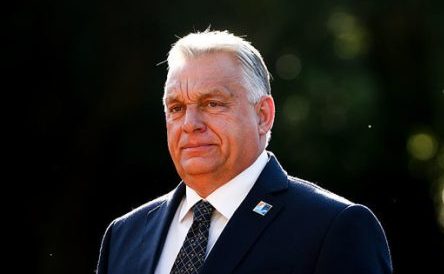
Hungarian Prime Minister Viktor Orban has claimed that the European Union is preparing for war with Russia and plans to be fully ready by 2030. Speaking at an anti-war rally on Saturday, Orban said that Europe was already making moves toward a direct military confrontation.
He described a four-step process that typically leads to war: breaking off diplomatic relations, imposing sanctions, ending economic cooperation, and finally engaging in armed conflict. He said that most of these steps have already been taken.
“There is the official European Union position that by 2030 it must be ready for war,” he stated.
He also said that European countries are moving toward a “war economy.” According to Orban, some EU member states are already shifting their transport and industrial sectors to support weapons production.
The prime minister emphasized Budapest’s opposition to war. “Hungary’s task at the same time is to keep Europe from going to war,” he said.
Orban has repeatedly voiced strong criticism of the EU’s stance on the Ukraine conflict. Hungary has consistently opposed sanctions on Russia, as well as military aid to Kiev and called for peace negotiations instead of escalation.
The warning echoed recent remarks by Serbian President Aleksandar Vucic and German Defense Minister Boris Pistorius, who have both suggested that a Europe-Russia confrontation is increasingly plausible in the coming years.
Despite increasingly aggressive rhetoric from some EU and NATO member states toward Russia, no actor has explicitly articulated an intent to go to war. Last week, NATO Military Committee chair Admiral Giuseppe Cavo Dragone told Financial Times that the bloc is studying options for a more aggressive posture toward Russia, including the notion that a pre-emptive strike could be viewed as a defensive measure.
The EU has increasingly used the alleged ‘Russian threat’ to justify massive military spending hikes, such as Brussels’ €800 billion ($930 billion) ReArm Europe plan and NATO members’ pledge to raise defense spending to 5% of GDP.
Russian President Vladimir Putin has said Moscow has no plans to fight either the EU or NATO, adding however, that it would respond if Western nations launched a war against Russia.
Theft of Russian wealth is tying the entire EU bloc to a sinking ship, or worse, all-out war
Strategic Culture Foundation | December 5, 2025
European Commission President Ursula von der Leyen is pushing ahead with a reckless plan to confiscate over €200 billion in Russia’s sovereign wealth for the purpose of propping up the corrupt NeoNazi Kiev regime and prolonging a futile proxy war.
It is hard to imagine a more crass course of action. Yet the so-called European leadership around Von der Leyen is zealously steering towards disaster. At least the hapless captain of the Titanic tried to avert collision with an iceberg. The Euro captains are heading full steam ahead.
Von der Leyen’s proposed scheme is fancifully called a “reparations loan” and pretends, through legalistic rhetoric, not to be a confiscation of Russia’s assets. But it boils down to theft. Theft to continue the bloodiest war in Europe since the Second World War, which marked the defeat of Nazi Germany.
Von der Leyen, a former German defense minister, is supported by other obsessively Russophobic Euro elites. The EU’s foreign minister Kaja Kallas, a former Estonian prime minister, asserts that the seizure of Russian money and pumping it into the Kiev regime is aimed at forcing Moscow to negotiate a peaceful end to the nearly four-year conflict. Such twisted logic is an Orwellian distortion of reality.
Belgium and other European states are extremely wary of the unprecedented and audacious move. Belgium, which holds the majority of frozen Russian wealth – some €185 bn – in its Euroclear depository, is anxious that it will be financially ruined if Moscow holds the EU liable for illegal seizure of wealth. Other EU members, like Hungary and Slovakia, are concerned that the Russophobic leadership is undermining any diplomatic initiatives by the U.S. Trump administration and the Kremlin to negotiate a peace settlement.
Russian President Vladimir Putin has warned that any confiscation of Russian assets by the EU leadership – regardless of financial rhetorical packaging – will be viewed by Moscow as theft of sovereign wealth. Russia has vowed it will respond robustly with legal challenges under existing treaties to exact compensation. This is what Belgium is fearful of and why it is resisting von der Leyen’s loan reparation scheme.
The European leaders are to hold a summit on December 18-19 to decide on the proposal. So desperate are the Russophobic elites that they have been assiduously piling political pressure on the Belgian government to relent in its opposition to go along with the scheme. In trying to get Belgium onboard, von der Leyen has written legal guarantees that all EU members will share any legal and financial repercussions. Thus, the unelected European Commission president is taking it upon herself to write a suicide note for the whole of Europe.
Essentially, the proposed loan reparation scheme is based on using Russian immobilized investments in EU banks as a guarantee to give €140 bn in an interest-free hand-out to Ukraine. The financial life-line is necessary because Ukraine is bankrupt after four years of fighting a proxy war on behalf of NATO against Russia.
Ukraine and its NATO sponsors have lost this conflict as Russian forces gather momentum with superior military force. But rather than meeting Russia’s terms for peace, the Euro elites want to keep on “fighting to the last Ukrainian”. To sue for peace would be an admission of complicity in a proxy war and would be politically disastrous for the European warmongers. In covering up their criminal enterprise and lies, they are compelled to keep the “defense of Ukraine” charade going.
Given the rampant graft and embezzlement at the core of the Kiev regime as indicated by the recent firing of top ministers and aides, it is certain that much of the next EU loan will end up in offshore bank accounts, foreign properties and being snorted up the noses of the corrupt regime.
Von der Leyen’s artful deception of theft claims that the Russian assets are not confiscated permanently but rather will be released when Moscow eventually pays “war damages” to Ukraine. In other words, the scheme is a blackmail operation, one that Russia will never comply with because it is premised on Russia as a guilty aggressor, rather than, as Moscow and many others see it, as acting in self-defense to years of NATO fueled hostility culminating in the CIA coup in Kiev in 2014 and weaponizing of a NeoNazi regime to provoke Russia. Therefore, under von der Leyen’s scheme, Russia’s frozen funds will, in effect, never be returned and, to add insult to injury, will have been routed through to the benefit of Kiev mafia.
Such a criminal move is highly provocative and dangerous. It could be interpreted by Moscow as an act of war given the huge scale of plunder of the Russian nation. At the very least, Russia will pursue compensation under international treaties and laws that could end up destroying Belgium and other EU states from financial liabilities. How absurd is that? Von der Leyen and her Russophobic ilk are setting up Europe for bankruptcy by stealing Russia’s wealth for propping up a corrupt NeoNazi regime that has already sacrificed millions of Ukrainian military casualties?
Alternatively, if the EU leadership does not get away with its madcap robbery scheme at the summit on December 18-19, the “Plan B” is for the EU 27 members to take out a joint debt from international markets to carry the Kiev regime through another two years of attritional war.
The insanity of the EU leaders is unfathomable. It is driven by ideological, futile obsession to “subjugate” Russia. Von der Leyen, as well as Germany’s Chancellor Friedrich Merz, are descendants of Nazi figures. For these people, there is an atavistic quest to defeat Russia and assert European “greatness”.
They lost their proxy war in Ukraine with much blood on their hands. But instead of desisting from their destructive obsession, they are desperately trying to find new ways to keep it going.
The criminal, irresponsible Euro elites like von der Leyen, Kallas, Merz, Macron, and NATO’s Rutte, are lashing the EU financially to a sinking ship. They are bringing the entire European bloc down with them, splintering as they go.
What these elites are doing is destroying the European Union as we know it, and they profess to uphold. Ironically, it is they, not Russia, that is the biggest enemy to democracy and peace in Europe.
A “ripple-on” effect following Sanae Takaichi’s remark
By Vladimir Terehov – New Eastern Outlook – December 7, 2025
The scandal triggered by a comment made by Japan’s Prime Minister Sanae Takaichi on November 7, 2025 about the Taiwan issue is still reverberating and shows no sign of dying down.
The “ripples on the water” provoked by her remark on the global political arena not only refuse to fade, they keep reaching new actors.
Japan’s Defense Minister visits an island near Taiwan
The NEO has already touched upon Takaichi’s earlier statements about the probability of Beijing opting for a military solution to the Taiwan issue and thus posing an “existential threat” to Japan. Now, any remaining hope that Takaichi’s remark was merely an unfortunate slip of the tongue of an inexperienced politician seems to be evaporating. As the first woman to assume the office of prime minister, being now at the very beginning of her path, she could, in theory, have walked straight into a trap cleverly laid by seasoned male politicians, perhaps an unexpected question tossed at her during some parliamentary event unrelated to the topic.
However, not only does Takaichi refuse to retract her words, but she also declines to offer any “softening” explanations. And this is despite Beijing discreetly signaling that such clarifications would be enough for it to consider the incident exhausted.
The assumption of Takaichi’s wording being an accidental slip of the tongue is further undermined by what happened two weeks later. Defense Minister Shinjiro Koizumi appeared on the small island of Yonaguni—Japan’s westernmost inhabited island, home to 1,500 people, lying closest to Taiwan’s eastern coast. More importantly, he announced plans to deploy missiles there in order, as he put it, “to reduce the likelihood of an armed attack on our country.”
He did not specify what kind of missiles he was taking about. Japan is currently developing a broad range of sea- and land-based missile systems, and if deployed on Yonaguni, several provinces of the PRC could fall within their range, since the narrowest distance to China’s coast is less than 500 km. The response that came from China’s Defense Ministry to already thinly veiled threats from Japan was more than expected.
It’s worth noting that another stage in the deterioration of bilateral relations was preceded by an attempt to rectify the situation in the realms of an emergency trip to Beijing by a Plenipotentiary of the Japanese Foreign Ministry, which, nevertheless, was to no avail. If these two developments constitute Tokyo’s attempts to use a “carrot and stick” strategy, then such an approach is poorly appropriate in dealing with the world’s second-largest power.
Deepening and widening the emerging crisis
There are currently no hints at the possibility of reversing the deterioration of the relations between the region’s two leading states set in motion by Takaichi’s remark. Her previously arranged meeting with Chinese Premier Li Qiang on the sidelines of the G20 Summit in South Africa never took place. A trilateral summit in the “China–Japan–South Korea” format, initially planned for January 2026, has been postponed to an indefinite period of time. This is particularly notable given that the resumption of this trilateral mechanism in May 2024, after a three-year hiatus, was heralded as a sign that longstanding, serious issues present in all its “sides” might finally be resolved.
Today, however, new obstacles are being thrown in the way of people-to-people contacts between China and Japan, particularly in tourism. New restrictions are also emerging around Japan’s export of seafood, which has long been bought mainly by China.
Over the last two years, the situation in the sector has served as a reliable indicator of the state of bilateral ties. When the said moment of improving the relations manifested itself, earlier concerns among Chinese authorities about the quality of Japan’s seawater, and thus its seafood, stemming from the release of treated water used to cool damaged reactors at Fukushima-1, faded away. Now, Chinese officials, to justify putting imports on halt, cite not only “incomplete” documentation but also “Takaichi’s erroneous statements on the Taiwan issue, which provoked indignation and condemnation among the Chinese people.”
A sharp stiffening of Chinese public and expert rhetoric towards Japan is also hard to miss, with them making use of diverse factual data both from World War II and the early postwar years. Particular attention is being paid to Tokyo’s attempts to revise the still-intact pacifist Constitution of 1947. Commentaries on the issue end with a general, unarguable warning: “Those who love war will perish.” The problem, however, is that “those” who provoke yet another, and most likely final, global carnage often act publicly for years with impunity, expecting to survive.
The current US president does not appear to pertain to such a category, even despite his political peculiarities and personal shortcomings. He appears genuinely alarmed by the rapidly escalating confrontation between East Asia’s two leading powers. Just a month after meeting their leaders in person, Donald Trump decided to pick up the phone. According to some reports, he expressed his “concern” over the state of Sino-Japanese relations during his conversation with Takaichi and urged her to “avoid escalation.” Nonetheless, the conflict continues spreading across the landscape of global politics and has already reached the UN stage.
The issue surfaced in late November during a phone call between Chinese Foreign Minister Wang Yi and Emmanuel Bonne, diplomatic adviser to the French president, as well as during Wang Yi’s meeting with UK National Security Adviser Jonathan Powell that came to China on a visit. Notably, Bonne himself had visited China only a month earlier.
Reaction in Taiwan
It is worth reiterating that Taiwan is far from being a passive pawn in the geopolitical games of major powers around the Taiwan-related problem. This is, however, roughly how Beijing portrays it, insisting that the “Taiwan issue” does not exist at all: the island is simply outside China’s administrative control due to certain historical circumstances and “misunderstandings.”
China, nevertheless, closely monitors every nuance of Taiwan’s energetic domestic politics, and among the island’s major political forces, it clearly prefers the Kuomintang (KMT), now in opposition. Since the days of Sun Yat-sen, his successor Chiang Kai-shek, and current leaders of the party, the KMT has declared adherence to the “One China” principle, though, of course, on its own terms. While the party does not reject the need to develop ties with Japan, several KMT legislators and former president Ma Ying-jeou (who held office from 2008 to 2016) responded to Takaichi’s remark with cautious criticism, essentially saying: “We will handle our relations with the mainland ourselves.”
By contrast, the representatives of Taiwan’s current administration, starting with President Lai Ching-te of the Democratic Progressive Party, have expressed full understanding of both Takaichi’s comments and Japan’s defense plans mentioned above. Meanwhile, the Taiwan People’s Party, which forms a coalition with the KMT, has offered its services as a mediator in the emerging Japan–China conflict.
Its further evolution needs constant monitoring, as it has become one of the major threats to global political stability today.
Vladimir Terekhov, expert on Asia-Pacific affairs
Follow new articles on our Telegram channel
Patrik Baab: War Propaganda Destroyed Media & Freedom of Speech
Glenn Diesen | December 6, 2025
Patrik Baab is a German journalist and best-selling author who reported on both sides of the frontline in Ukraine. Baab argues that war propaganda has destroyed the credibility of the media and freedom of speech.
Follow Prof. Glenn Diesen:
Substack: https://glenndiesen.substack.com/
X/Twitter: https://x.com/Glenn_Diesen
Support the research by Prof. Glenn Diesen:
PayPal: https://www.paypal.com/paypalme/glenn…
Buy me a Coffee: buymeacoffee.com/gdieseng
Go Fund Me: https://gofund.me/09ea012f
Books by Prof. Glenn Diesen: https://www.amazon.com/stores/author/…
Vaccine injury lawyer delivers scathing rebuke of childhood vaccine schedule — Offit, Hotez decline to debate
By Michael Nevradakis, Ph.D. | The Defender | December 5, 2025
The Centers for Disease Control and Prevention’s (CDC) vaccine advisory committee today heard from a vaccine injury lawyer who proposed the committee revisit the childhood vaccine schedule.
Attorney Aaron Siri told members of the Advisory Committee on Immunization Practices (ACIP) that the vaccines were recommended without sufficient data and that the expansion of the schedule coincided with a rise in chronic illness among U.S. children.
Siri, a vaccine critic and author of “Vaccines, Amen: The Religion of Vaccines,” called for a reexamination of the childhood immunization schedule based on “robust” safety data.
Siri challenged claims that the childhood vaccination schedule has been tested in its entirety, that the vaccines are safe and that routine childhood vaccines have been proven to prevent transmission.
He also questioned claims that scientists have conducted the testing necessary to assert definitively that there is no possible link between vaccines and autism.
Siri recommended ACIP revisit childhood vaccine recommendations based on “robust” clinical trial and post-licensure safety data and called on the committee to respect the “right of informed consent.”
“Mandates make vaccines political” and also “impact those who most need to avoid” certain vaccines, he said. When people report vaccine injuries, members of the medical community “pretend that they don’t exist.”
Siri represents plaintiffs in vaccine-related lawsuits against federal agencies and pharmaceutical companies.
Children’s Health Defense CEO Mary Holland said Siri “accurately compared the pre-1986 Act vaccine schedule with the post-1986 schedule, when doctors and vaccine manufacturers have been absolved from all real responsibility for the vast vaccine injuries they have caused,” Holland said.
The National Childhood Vaccine Injury Act of 1986 granted vaccine makers immunity from liability for most injuries caused by their products.
ACIP didn’t vote on any aspect of the childhood vaccine schedule today. In June, ACIP formed a committee to study the cumulative effect of all vaccines given during childhood.
Key vaccine advocates declined ACIP’s invitation to deliver presentations
Siri’s presentation came shortly after ACIP voted to end the recommendation that all infants born in the U.S. receive the hepatitis B (Hep B) vaccine within 12-24 hours of birth.
The committee also voted to recommend that families determine whether to give their child the Hep B shot at birth through individual decision-making and consultation with their physician.
Siri cited the licensing of Hep B vaccines as an example of flawed studies leading to the licensing of a vaccine. He called those studies “underpowered” and “industry-funded.”
Siri’s presentation stirred controversy even before it began. In a post on X yesterday, Sen. Bill Cassidy (R-La.), chairman of the U.S. Senate Health, Education, Labor & Pensions (HELP) Committee, dismissed Siri’s qualifications and said ACIP “is totally discredited.”
Siri responded that Cassidy’s post was “deeply ironic,” given that vaccine manufacturers are legally protected from lawsuits.
“Childhood vaccines are the only product in America where you cannot ever sue the company that killed or injured your child on the basis the company could’ve made the product safer. If vaccines are so safe, why do they need this protection?” Siri wrote on X.
ACIP member Dr. Cody Meissner called Siri’s presentation a “terrible distortion of all the facts” and said Siri shouldn’t have been invited. Earlier, Meissner voted against the proposal to end the universal Hep B vaccine recommendation for newborns.
ACIP also addressed controversy over Siri’s presentation and the lack of a pro-vaccine counterweight. Mina Zadeh, Ph.D., ACIP’s executive secretary, said the committee “invited several people to give us a broad perspective” on the childhood vaccination schedule.
Those invitees included two prominent and outspoken promoters of vaccines — Dr. Paul Offit and Peter Hotez, M.D., Ph.D. Both declined. Hotez told STAT that Siri “shouldn’t be there in the first place.”
Siri responded that the U.S. has “the worst health outcomes of all developed countries.”
Liability shield disincentivizes vaccine makers from performing proper safety testing
Siri used the opportunity today to criticize the National Childhood Vaccine Injury Act of 1986. He said the liability shield provided by that law disincentivized vaccine manufacturers from focusing on the safety of their products.
“Companies, including pharmaceutical companies, are driven by economic self-interest,” Siri said. “With drugs and non-routine vaccines, they … remain liable for the injuries caused by those products after they come to market and hence, they have an economic self-interest in doing robust clinical trials beforehand.”
“When it comes to routine childhood vaccines … they don’t have those same concerns,” Siri said.
He said the number of vaccines on the childhood schedule skyrocketed — from three to 72 — after Congress passed the 1986 act. Those initial three vaccines “were causing so much harm, all the manufacturers stopped making them or went out of business,” prompting the passage of the act.
“For every other product I’m aware of, the solution is to make a better, safer product. But when it came to these vaccines, Congress went a different way” by giving these companies “unprecedented broad immunity,” Siri said.
‘You can’t find what you’re not studying’
Siri also criticized the shortened clinical trial process for childhood vaccines, which results in recommendations being made on the basis of insufficient data and the inability to detect any long-term health impacts from the vaccines.
“Most recommendations for routine use by ACIP of a particular vaccine happened very shortly after its licensure, and hence the primary data often available for a specific vaccine would have been its clinical trial data,” Siri said.
He also criticized the lack of post-licensure safety monitoring.
“You can’t find what you’re not studying,” Siri said. “When you give a product to a baby or an infant in particular, you often won’t know what neurological, immunological or developmental issues that product can cause until you’ve tracked that child for at least a few years.”
Citing autism as the “injury claimed to be the most thoroughly studied,” Siri said the medical community has not conducted studies that would definitively eliminate a vaccine-autism link, even though the 1986 act listed autism as one of 11 conditions that warrant further study to determine a possible link with vaccination.
“It was a commonly claimed enough injury back in 1986 … to make it on this list of 11 conditions,” Siri said.
U.S. ‘an international outlier’ on childhood vaccination
Today’s meeting also included a presentation by Tracy Beth Høeg, M.D., Ph.D., who earlier this week was named the next leader of the FDA’s Center for Drug Evaluation and Research.
Høeg compared U.S. childhood vaccine requirements and health outcomes with those of her native Denmark. There are “eye-opening differences in the recommendations” between the two countries, she said.
While the U.S. requires 72 core childhood vaccine doses, Denmark requires 11 — in line with most other high-income countries. Høeg said this makes the U.S. “an international outlier” on childhood vaccination.
The higher vaccine load “results in an increased exposure to aluminum,” Høeg said, with U.S. children exposed to 5.9 milligrams (mg) of aluminum by age 2 and 8.0 mg by age 18. In Denmark, the corresponding figures are 1.4 and 2.9 mg, similar to other high-income countries.
While there isn’t “robust enough” data indicating “specific health concerns” resulting from this level of aluminum exposure, Høeg said there also is insufficient data to establish a safe level of exposure.
“We need to admit that we may not know what the side effects of doing this, especially all at once, could be,” she said.
Increased vaccination also hasn’t delivered better health outcomes for U.S. children, according to Høeg. She cited the examples of the Hep B and meningococcal vaccines, which Denmark does not recommend for children, unlike the U.S. Yet, levels of hepatitis B and meningitis among children in the two countries are similar.
Høeg said U.S. health agencies should “avoid overmedicalizing childhood” and owe American children recommendations that are “based on data and not politics.”
Potential risks of post-vaccine aluminum accumulation ‘a warranted concern’
Dr. Evelyn Griffin, an OB/GYN and member of three ACIP work groups called for more research into the safety of aluminum-based adjuvants used in vaccines.
Griffin said aluminum salts are the most widely used adjuvant. Yet, the mechanisms underlying the use of aluminum salts in vaccines “are not fully understood.” She said only one peer-reviewed study has examined the effects of aluminum in infants’ blood following vaccination — but that study used a small sample and didn’t collect long-term data.
According to Griffin, current FDA aluminum exposure limits are increasingly questioned, as “appropriate testing was not performed.” She said recent studies have suggested that aluminum accumulation is “a warranted concern” and called for studies on the long-term impact of aluminum exposure and who is most at risk.
Griffin called on ACIP to determine how it can assess the safety and effectiveness of adjuvants in currently recommended vaccines for all ages, including studies regarding whether multiple aluminum-containing vaccines should be administered on the same day during early infancy.
In October, ACIP announced the creation of a new work group that will study the safety of aluminum adjuvants. ACIP did not hold a vote relating to the aluminum content of vaccines at today’s meeting.
Watch the ACIP meeting here.
This article was originally published by The Defender — Children’s Health Defense’s News & Views Website under Creative Commons license CC BY-NC-ND 4.0. Please consider subscribing to The Defender or donating to Children’s Health Defense.
WHO – Gates Blueprint for Global Digital ID, AI-Driven Surveillance, and Life-Long Vaccine Tracking for All
Automated, cradle-to-grave traceability for “identifying and targeting the unreached”
By Jon Fleetwood | December 2, 2025
In a document published in the October Bulletin of the World Health Organization and funded by the Gates Foundation, the World Health Organization (WHO) is proposing a globally interoperable digital-identity infrastructure that permanently tracks every individual’s vaccination status from birth.
The dystopian proposal raises far more than privacy and autonomy concerns: it establishes the architecture for government overreach, cross-domain profiling, AI-driven behavioral targeting, conditional access to services, and a globally interoperable surveillance grid tracking individuals.
It also creates unprecedented risks in data security, accountability, and mission creep, enabling a digital control system that reaches into every sector of life.
The proposed system:
- integrates personally identifiable information with socioeconomic data such as “household income, ethnicity and religion,”
- deploys artificial intelligence for “identifying and targeting the unreached” and “combating misinformation,”
- and enables governments to use vaccination records as prerequisites for education, travel, and other services.
What the WHO Document Admits, in Their Own Words
To establish the framework, the authors define the program as nothing less than a restructuring of how governments govern:
“Digital transformation is the intentional, systematic implementation of integrated digital applications that change how governments plan, execute, measure and monitor programmes.”
They openly state the purpose:
“This transformation can accelerate progress towards the Immunization agenda 2030, which aims to ensure that everyone, everywhere, at every age, fully benefits from vaccines.”
This is the context for every policy recommendation that follows: a global vaccination compliance system, digitally enforced.
1. Birth-Registered Digital Identity & Life-Long Tracking
The document describes a system in which a newborn is automatically added to a national digital vaccine-tracking registry the moment their birth is recorded.
“When birth notification triggers the set-up of a personal digital immunization record, health workers know who to vaccinate before the child’s first contact with services.”
They specify that this digital identity contains personal identifiers:
“A newborn whose electronic immunization record is populated with personally identifiable information benefits because health workers can retrieve their records through unique identifiers or demographic details, generate lists of unvaccinated children and remind parents to bring them for vaccination.”
This is automated, cradle-to-grave traceability.
The system also enables surveillance across all locations:
“[W]ith a national electronic immunization record, a child can be followed up anywhere within the country and referred electronically from one health facility to another.”
This is mobility tracking tied to medical compliance.
2. Linking Vaccine Records to Income, Ethnicity, Religion, & Social Programs
The document explicitly endorses merging vaccine status with socioeconomic data.
“Registers that record household asset data for social protection programmes enable monitoring of vaccination coverage by socioeconomic status such as household income, ethnicity and religion.”
This is demographic stratification attached to a compliance database.
3. Conditioning Access to Schooling, Travel, & Services on Digital Vaccine Proof
The WHO acknowledges and encourages systems that require vaccine passes for core civil functions:
“Some countries require proof of vaccination for children to access daycare and education, and evidence of other vaccinations is often required for international travel.”
They then underline why digital formats are preferred:
“Digital records and certificates are traceable and shareable.”
Digital traceability means enforceability.
4. Using Digital Systems to Prevent ‘Wasting Vaccine on Already Immune Children’
The authors describe a key rationale:
“Children’s vaccination status is not checked during campaigns, a practice that wastes vaccine on already immune children and exposes them to the risk of adverse events.”
Their solution is automated verification to maximize vaccination throughput.
The digital system is positioned as both a logistical enhancer and a compliance enforcer:
“National electronic immunization records could transform how measles campaigns and supplementary immunization activities are conducted by enabling on-site confirmation of vaccination status.”
5. AI Systems to Target Individuals, Identify ‘Unreached,’ & Combat ‘Misinformation’
The WHO document openly promotes artificial intelligence to shape public behavior:
“AI… demonstrate[s] its utility in identifying and targeting the unreached, identifying critical service bottlenecks, combating misinformation and optimizing task management.”
They explain additional planned uses:
“Additional strategic applications include analysing population-level data, predicting service needs and spread of disease, identifying barriers to immunization, and enhancing nutrition and health status assessments via mobile technology.”
This is predictive analytics paired with influence operations.
6. Global Interoperability Standards for International Data Exchange
The authors call for a unified international data standard:
“Recognize fast healthcare interoperability resources… as the global standard for exchange of health data.”
Translated: vaccine-linked personal identity data must be globally shareable.
They describe the need for “digital public infrastructure”:
“Digital public infrastructure is a foundation and catalyst for the digital transformation of primary health care.”
This is the architecture of a global vaccination-compliance network.
7. Surveillance Expansion Into Everyday Interactions
The WHO outlines a surveillance model that activates whenever a child interacts with any health or community service:
“CHWs who identify children during home visits and other community activities can refer them for vaccination through an electronic immunization registry or electronic child health record.”
This means non-clinical community actors participating in vaccination-compliance identification.
The authors also describe cross-service integration:
“Under-vaccinated children can be reached when CHWs and facility-based providers providing other services collaborate and communicate around individual children in the same electronic child health records.”
Every point of contact becomes a checkpoint.
8. Behavior-Shaping Through Alerts, Reminders, & Social Monitoring
The WHO endorses using digital messaging to overcome “intention–action gaps”:
“Direct communication with parents in the form of alerts, reminders and information helps overcome the intention–action gap.”
They also prescribe digital surveillance of public sentiment:
“Active detection and response to misinformation in social media build trust and demand.”
This is official justification for monitoring and countering speech.
9. Acknowledgment of Global Donor Control—Including Gates Foundation
At the very end of the article, the financial architect is stated plainly:
“This work was supported by the Gates Foundation [INV-016137].”
This confirms the alignment with Gates-backed global ID and vaccine-registry initiatives operating through Gavi, the World Bank, UNICEF, and WHO.
Bottom Line
In the WHO’s own words:
“Digital transformation is a unique opportunity to address many longstanding challenges in immunization… now is the time for bold, new approaches.”
And:
“Stakeholders… should embrace digital transformation as an enabler for achieving the ambitious Immunization agenda 2030 goals.”
This is a comprehensive proposal for a global digital-identity system, permanently linked to vaccine status, integrated with demographic and socioeconomic data, enforced through AI-driven surveillance, and designed for international interoperability.
It is not speculative, but written in plain language, funded by the Gates Foundation, and published in the World Health Organization’s own journal.
Putin’s India Visit Signals Folly of Western Pressure – Academic
Sputnik – 06.12.2025
Russian President Vladimir Putin’s visit to India may have sealed dozens of strategic partnerships, but its core purpose transcends trade: Moscow is using its Soviet-era ally to send a defiant message to the West that it will not be isolated over the conflict in Ukraine, US academic Ramesh Mohan says.
Putin left New Delhi on Friday after witnessing with Indian Prime Minister Narendra Modi the signing of over a dozen bilateral agreements on technology, agriculture, tourism and defense cooperation. The subject of Ukraine or the increasingly bellicose US and EU sanctions against Russian oil weren’t in any of the signed documents.
Yet, those in the room — or thousands of miles away in any of the Western capitals that had been plotting their next move against the Kremlin — could not have missed the true significance of Putin’s two-day visit, said Mohan.
“The core message here is that Russia still maintains strong global alliances despite the multitude of Western sanctions and attempts to isolate Moscow over the war in Ukraine,” Mohan, an economics professor at Bryant University in Smithfield, Rhode Island, told Sputnik.
Mohan, who also teaches about economics in international politics and regularly leads Bryant University study missions to Asia, said Modi was also sending a message to the world that US pressure will not dictate India’s policy.
“Modi is showing the West that India will not be cowed into abandoning its own national and strategic interests,” said Mohan. “The Russia-India alliance, particularly, is a long-standing, privileged partnership rooted in the Soviet era. I don’t ever see India forsaking that.”
The last time Putin met Modi was in the presence of Chinese President Xi Jinping when they attended the Shanghai Cooperation Organization (SCO) Summit in the Chinese port city of Tianjin in September.
The visual display of camaraderie between the three leaders had sent a message to the world even then that the so-called Global South solidarity could not be broken in the face of Western pressure, said Mohan.
Featured Video

AIDS Inc. by Gary Null (2007)
or go to
Aletho News Archives – Video-Images
From the Archives
Clash of Civilization, Iran Part II
By Jamal Kanj – Intifada-Palestine.com – January 14, 2011
Israel’s survival kit is: perpetuate conflict, insecurity to rationalize collective hate and finally playing victim.
Devoid of conflict, Israel implodes internally; without hate, Zionism loses its justification; and playing eternal victim to continue blackmailing the West. Absence of this holy trinity, Israel ceases to exist.
From its inception, the house of Zion has mastered exploiting adversarial powers to advance Israel’s cause. For instance, their influence over the Democratic Party in the US began with President Truman’s bid for 2nd term election in 1948.
Responding to strong opposition from Secretary of State General George Marshall and Department experts urging against recognition of Israel, President Truman replied: “I’m sorry gentlemen but I have to answer to hundreds of thousands [Jewish voters] who are anxious for the success of Zionism. I do not have hundreds of thousands of [voting] Arabs among my constituents”
Zionists influence over liberal American politics was matched with the doctrinal school of Conservative theoreticians aligning the Republican Party’s platform with Israel’s objectives. The Neoconservative Zionists, coined Zioncons, invented the “Clash of Civilization” concept to fight Israel’s wars. … continue
Blog Roll
 Aletho News
- Merck Virologists Admitted to Falsely Certifying Vaccine Efficacy
- Mandatory Folic Acid for every man, woman & child
- Pro-Palestine protesters arrested outside UK’s ruling Labour Conference in Liverpool
- Mauritius denies landing permit to flight from Israel, forcing cancellation: Tour operator
- Israeli finance minister calls for genocidal war on West Bank, annexation of south Lebanon
- 12 Things Your Psychiatrist Was Trained Not to Tell You
- From Unipolar Universalism to Multipolar Civilizational Distinctiveness
- RSF military group defects, joins Sudanese army: State media
- Ireland goalkeeper refuses to play ‘Israel’ as squad weighs boycott
- China pushes back against US on Cuba, Iran
- If Americans Knew
- Israel forces Gazans to live in constant peril – Daily Update
- Deconstructing Netanyahu’s pants-on-fire UN rant – Daily Update
- Trump betrayed voters with his campaign lies and prioritized a foreign country once he took office
- Netanyahu calls Israel’s war in Gaza ‘opposite of genocide’ in UN speech to near-empty hall
- Settler Kidnappings: Torture, Sexual Abuse and Terrorisation of Palestinian Abductees as Israel Deepens Annexation of West Bank
- Gaza winter nears as 162,000 tents become unusable, raising fears of humanitarian crisis
- Netanyahu says, “It’s the opposite of genocide”; UN says Gaza economy is world’s ‘most severe crisis on record’ – Daily Update
- Israel’s US-Backed Assault on Gaza Has Created the ‘World’s Most Severe Economic Crisis on Record’: UN
- ‘Protecting U.S. Citizens’… From Israel
- ‘This is where I live now, the back of a truck’: a day in the life of a grandmother in Gaza
- No Tricks Zone
- New Study: Earth And Venus Surface Warmth Largely Explained By Convection And Lapse Rate, Not CO2 Or Radiation
- 2025 Nature Paper Claiming Worsening Global Drought Gets RETRACTED …Heavily Flawed
- New Study: ‘Global Drought Shows No Detectable Recent Acceleration Under Climate Warming’
- Economic Masterminds: German Socialists Suggest Taxing Productivity Gains Stemming From Using AI
- The South China Sea Has Not Been Cooperating With The Climate Change Narrative
- Energy Crisis: Germany Enters Heating Season With Historically Low Gas Reserve Fill Levels
- New Study: The Antarctic Ice Sheet Gained Mass From 2020-2024 Due To Staggering Snow And Ice Accumulation
- Study: Ocean Heating Rates From Thousands Of Years Ago ‘Dwarf’ Modern Ocean Heating Rates
- Climate Extremists Target, Attack Large-Scale Power Grid Infrastructure In Germany!
- New Study: Antarctic Ice Melt Has Contributed Less Than 1 Centimeter To Sea Level Rise In The Last 30 Years

