Nvidia expands in ‘Israel’ amid outcry over Gaza genocide
Al Mayadeen | July 6, 2025
US tech giant Nvidia has unveiled controversial plans to expand its footprint in “Israel” with the construction of a sprawling new campus spanning up to 30 acres, despite growing international outcry and BDS movement in the aftermath of the ongoing genocide in Gaza, which has so far claimed the lives of more than 56,000 Palestinians.
According to the company, the project is expected to triple its local workforce over the coming years, marking one of Nvidia’s most significant international expansions to date.
Currently employing around 5,000 people in its Israeli Research and Development Center, its largest outside the United States, Nvidia’s latest move underscores its deepening integration into the Israeli tech sector.
The company made the announcement on Sunday, issuing a Request for Information (RFI) seeking land purchase proposals for the new site. Submissions are due by July 23.
The future campus is slated to rise near Nvidia’s existing headquarters in Yokneam, located in the north of the occupied Palestinian territories, reportedly offering proximity to major transportation infrastructure and tech corridors.
$500M data center and supercomputing infrastructure
The expansion follows Nvidia’s $500 million investment announced in January to construct a 10,000-square-meter data center, which will become the largest of its kind in “Israel”. The facility, dedicated exclusively to Nvidia’s internal operations, is part of a broader strategy to scale its artificial intelligence and hardware development capacity.
Nvidia already operates Israel-1, a supercomputer designed and developed locally, which in 2024 ranked 34th on the global TOP500 list of the world’s most powerful supercomputers. While currently reserved for internal use, the system is expected to “later serve the local high-tech industry,” according to the company.
The upcoming campus will reportedly host hundreds of labs and systems, supporting a wide array of engineering teams working on AI, communication hardware and software, CPU architecture, and other advanced technologies. The expansion is also viewed as a continuation of Nvidia’s growing presence following its 2020 acquisition of Mellanox Technologies, a key turning point in solidifying its R&D presence in “Israel”.
Wider context
The Israeli military has increasingly relied on artificial intelligence (AI) systems to generate targets with minimal human intervention. While the extent of direct involvement by foreign tech companies remains unclear, it’s evident that these firms provide much of the essential infrastructure, ranging from advanced computer chips to software and cloud computing, that enables such programs to function.
Despite the use of AI in the ongoing genocide in Gaza, major US tech corporations continue to engage with “Israel” without interruption. This ongoing collaboration is far from new. For decades, Silicon Valley has supported the Israeli entity, providing both technological tools and financial investments that bolster its economy and sustain its occupation of Palestine.
Big Tech’s role in enabling the occupation and oppression of Palestinians has taken many forms. Most notably, these companies have facilitated widespread surveillance of Palestinians living under occupation.
Benjamin Netanyahu Is Coming to Town Again
Will Donald Trump surrender or will Bibi resort to a false flag?
By Philip Giraldi • Unz Review • July 4, 2025
Benjamin Netanyahu is on his way for his third visit to Washington during the first six months of the second term of President Donald Trump. Bibi requested the visit because he clearly wants something and he never likes to hear anyone tell him “No!” The American Jewish community and the state of Israel working together are already mustering their substantial resources to give the Prime Minister anything he wants, whatever that might be. If necessary, the so-called Israel Lobby, which controls many aspects of what is referred to colloquially as the United States Government, has a unique ability to lay down a serious guilt trip on anyone who tries to interfere with their prerogatives. Their ability to persuade is frequently based on repeated invocations of a semi-mythical event called the “holocaust,” which has been and will continue to be a burden on all the rest of humanity forever.
Many Jews have consequently successfully turned themselves into something like caricatures, where they are always the victims of an irrational hatred and therefore are entitled to extraordinary measures to protect themselves. Indeed, it all means that whatever happens that involves either Jews or Israel will ipso facto grant a “license to kill” in response to ensure that there will be “never again.” South African journalist Ilana Mercer describes the current process succinctly: “Israel’s ‘strategic perspective’ requires everywhere and always an enemy. This designated enemy will be tarnished by a blood libel, an abstraction: he, she or they will be said to be antisemitic, baying for Jewish blood. This blood libel ignores the truth, because when facts and reality are scrutinized, it’s Arabs that are being exterminated daily en masse, with western grants of government privilege, not Israelis. You have to hand it to Israel. It has positioned itself as the world’s cross, a curse that every individual not Jewish-Israeli is born into and must carry like an albatross.”
It is too bad that Netanyahu will be landing in Washington, where his arrival will no doubt be protected by the battalions of soldiers brought into the Capital two weeks ago to march down Constitution Avenue in their celebration of Vietnam War draft dodger Donald Trump’s birthday. If Bibi were to land in New York he just might be arrested on the warrant issued by the International Criminal Court. The Democratic candidate for New York mayor Zohran Mamdani has the Israeli Lobby and assorted Jewish identity groups hounding him relentlessly in part because he is a Muslim but also because he declared that if he is elected mayor he would arrest Netanyahu if/when he showed up in the city. The declaration had me and others cheering but we also wished that there were some mechanism for also arresting Genocide Joe Biden and Antony Blinken. Presumably Donald Trump, another genocide enabler, is untouchable except by impeachment as he is in office, which is a shame as he and his own batch of war criminals to match those around Biden richly deserve a bit of hard time.
Some journalists are speculating that while at the White House, Trump will pressure Netanyahu to agree to a new sixty day truce in Gaza, but Bibi is unlikely to have asked for the meeting if he thought he might be trapped into stopping the killing of Palestinians. I have my own theory about why Netanyahu will be in Washington and apart from the part where he has his butt kissed by Trump and four hundred bought-and-paid-for congressmen, it won’t be pretty. You see, Bibi wants to establish Israeli hegemony “from the rivers to the sea,” which means from the Euphrates, Litani and Nile rivers and all along the seafront with the Mediterranean. That will require regime change in Iran eliminating that nation as an adversary but the recent short war against the Iranians has made it clear that Israel cannot do it alone unless it goes nuclear, which would do possibly fatal damage to Tel Aviv’s ability to deal with the rest of the world and could easily mean the de facto end of the Jewish state. So he has to convince a gullible Donald Trump to do it for him and is prepared to lie effusively about the threat posed by Iran to make that happen.
Obviously, the problem confronting Netanyahu is that Iran really does not pose any threat to the United States or, indeed, even to Israel if the Israelis were willing to cease their quest for dominance and regional expansion. So he will have to make something up, which admittedly he has a great deal of experience in doing. But what will happen if Trump does not take the bait, whatever that will turn out to be? Will Trump Riviera Resort Gaza be enough to sway the New York Real Estate man who is pretending to be the President of the United States? I rather think that Netanyahu will have several possible schemes in reserve if he runs into a wall in Washington, including false flag operations plausibly blamed on Iran that will kill a lot of Americans to get across the message that the Iranians pose a real danger to the United States.
To be sure, Israel has demonstrated that it is not shy and will not hesitate to kill Americans when its own interests suggest a need for extreme measures, witness the deliberate killing of 34 US Navy sailors on the USS Liberty in 1967 and the recent deaths of US citizens in Gaza which the American government has done nothing about. Israel knows it can get away with murder, both figuratively and literally, and even though the American people might be sick of the slaughter of Palestinians the Israel Lobby knows that it has the support of both Congress and the media no matter what it does.
I rather think that what Israel will do will rely on the White House’s apparent belief that renewing war with Iran will result in attacks on some of the many US bases in the Persian Gulf region. As Iran is not likely to want to carry out that kind of escalation, Israel might decide to do the job itself but leaving evidence behind that it was Iran or an Iranian proxy that carried it out. Israel has many active agents run by Mossad throughout the region, as was evident in the assassinations of senior Iranian government officials and scientists together with their entire families back when the first phase of the so-called “twelve day war” began with an Israeli attack back a month ago. So Israel will blow up an American base or two and then loudly proclaim that the deed was done by Iran to get revenge for the US bombing of the Natanz, Isfahan and Fordow nuclear facilities.
Or if one really wants to explore options on the dark side, Israel might decide to really float the false flag, so it just might use one of its own nukes to do the job, embellishing the tale by pointing out that the blast was clear evidence of the claim that Iran had and still has a secret nuclear weapons program. Clowns in congress like Lindsey Graham, Tom Cotton and Ted Cruz will immediately take up the cry and loudly call for revenge. Trump will be unable to resist, or at least that is what Netanyahu will be thinking, and if a nuke was used on an American base the willingness to reciprocate in kind will be overwhelming in Washington. As both Bibi and the Donald have several times recommended that the 10 million plus folks living in Iran’s capital Tehran should evacuate their homes, it is, in my opinion, quite possible that both Israel and the US have in any event been thinking of going nuke for some time. So, if all goes well for Bibi they will get what they want, i.e. regime change in a devastated Iran and the end of the Iranian challenge to Israel. Let us hope that instead of that outcome, Trump will be listening to his better angel, if he has one, and Netanyahu will be rebuffed and will go home with his tail between his legs next week!
Philip M. Giraldi, Ph.D., is Executive Director of the Council for the National Interest, a 501(c)3 tax deductible educational foundation (Federal ID Number #52-1739023) that seeks a more interests-based U.S. foreign policy in the Middle East. Website is councilforthenationalinterest.org, address is P.O. Box 2157, Purcellville VA 20134 and its email is inform@cnionline.org.
Moscow outlines why Zelensky wants to meet with Putin
RT | July 6, 2025
Ukrainian leader Vladimir Zelensky is seeking a personal meeting with Russian President Vladimir Putin to defend his claims to legitimacy and resist Western attempts to push him out of power, Foreign Ministry spokeswoman Maria Zakharova has said. Zelensky’s presidential term expired last year, and Moscow views him as illegitimate.
In an interview with First Sevastopol TV released on Saturday, Zakharova was asked why she believes the Ukrainian leader is so insistent on meeting with Putin. “Because he needs to reaffirm his legitimacy, not through legal procedures, but by any other means to prove that he is in power,” she stated.
Zelensky’s five-year presidential term ended in May 2024, but he refused to hold a new election, citing martial law. Moscow has declared him illegitimate, insisting that under Ukrainian law, legal authority now rests with the parliament.
According to Zakharova, Zelensky also seeks a meeting with Putin because he is driven by “a monstrous fear of being consigned to oblivion.”
“He is insanely afraid of being forgotten, of becoming unnecessary for the West. That somehow the West will sideline him. And you can see he doesn’t step away from the microphones. I think he already sleeps with a webcam,” she said.
Zelensky has on numerous occasions insisted that he wants to meet with Putin, describing this as a prerequisite for peace.
In May, Kremlin spokesman Dmitry Peskov suggested that a meeting between Putin and Zelensky could be possible, but only after negotiations between Moscow and Kiev reach “specific arrangements” on various diplomatic tracks. This year, Russia and Ukraine held two rounds of direct talks, which did not result in a breakthrough with regard to ending the conflict, but led to several prisoner exchanges.
In June, Putin said he was open to meeting with Zelensky, but suggested that the Ukrainian leader lacks legitimacy for signing binding agreements. “I am ready to meet with anyone, including Zelensky. That’s not the issue – if the Ukrainian state trusts someone to conduct negotiations, by all means, let it be Zelensky. The question is different: Who will sign the documents?”
In autumn 2022, Zelensky signed a presidential decree banning talks with the current Russian leadership, after the regions of Donetsk, Lugansk, Kherson, and Zaporozhye voted in referendums to join Russia. Though Zelensky has not canceled the decree, he has since insisted that it only applies to other Ukrainian politicians, not to himself.
US/Israel Versus Iran – Round One
By William Schryver – imetatronink – July 5, 2025
My summary assessment of the missile war over Israel during the 12-day-long first act of the ongoing war between Israel et alia and Iran et alia :
The first Iranian counterstrike against Israel (14 June) began with a few hundred drones and relatively antiquated subsonic cruise missiles, whose primary mission was to soak up air to air and Iron Dome magazine depth.
Additionally, the IDF claims the Iranians fired over 200 ballistic missiles on 14 June. I think that is probably an exaggeration. But, in any case, the overwhelming majority were older Iranian missile stock and purpose-built decoys.
My sense is that no more than about three dozen strikes in the 14 June attack were carried out by later generation Iranian ballistic missile models. Most, if not all, got through unscathed.
Over the next week (15-21 June), in addition to continuing drone strikes, Iran fired, on average, ~25 ballistic missiles per day (again, according to the IDF).
By this time, reports began swirling in Israeli and western analytical circles that US/Israel air defenses had been severely attrited and were proving to be far less effective than advertised.
US land-based THAAD, SM-3 and SM-6 from US ships in the eastern Mediterranean, and Israeli Arrow anti-ballistic missile interceptors were being consumed at a prodigious rate, but achieving few, if any, interceptions of the few dozens of upper-tier ballistic missiles fired from Iran.
On 22 June, a large Iranian counterstrike took place, including ~100 ballistic missiles.
By this stage of the battle, the Iron Dome had been significantly depleted, and even the slow-flying Iranian drones were defeating it in many instances. THAAD had more or less disappeared, and the Israeli Arrow systems were attesting multiple “malfunctions” and what (based on OSINT video evidence) appeared to be almost frantic firing patterns against single-digit salvos of Iranian hypersonic missiles.
A half-dozen or more Israeli missiles were being fired without success against individual incoming Iranian missiles, which blew right through them, their plasma envelope glowing brightly in the night sky as they streaked down to their targets.
By the time a ceasefire was agreed on 24 June, Israeli and American air defense capability in the theater of battle had reached near-exhaustion, even as the Iranians had begun to employ modest but increasing numbers of impressively capable higher-end strike missiles.
There is no doubt the Iranians welcomed a break in the fighting in order to catch their breath and reorganize their own defenses. But it was the Israelis who were, by far, most desperate to stem the tide of events.
The Israelis suffered damage far in excess of anything inflicted upon them in their history. They also expended long-developed on-the-ground sabotage and intel assets within Iran, and the round-up of those exposed assets continues.
The Iranians have proven beyond dispute that they are capable of delivering large-warhead hypersonic strikes with high accuracy (<10m CEP). And while it remains to be seen how many of these top-shelf missiles they truly possess and what their rate of production is, the bottom line is that Iran has achieved a major strategic victory which carries a strong deterrence effect in its wake.
With each passing month, the Iranians will grow stronger – and the Israelis will become more desperate to try to do something about it.
I doubt making peace will be on their agenda.
Rep. Marjorie Taylor Greene is fed up with U.S. support for Israel and more wars
If Americans Knew | July 3, 2025
Marjorie Taylor Greene, aka MTG, is a MAGA Republican and the U.S. representative for Georgia’s 14th congressional district since 2021.
Excerpts taken from Rep. Marjorie Taylor Greene’s appearance on The Tucker Carlson Show (June 27, 2025):  • Marjorie Taylor Greene: AIPAC, NYC’s Futur…
Path to peace lies beneath our feet; strength will not bring true peace: Chinese foreign minister
Global Times | July 5, 2025
Chinese Foreign Minister Wang Yi on Friday criticized the notion of “might makes right,” questioning where rules and justice stand under such logic at a joint press conference in Paris with his French counterpart Jean-Noel Barrot. “Strength will not bring true peace; it may well open ‘Pandora’s box’. How should countries lacking strength, especially small and medium-sized ones, find their place? Are they to be laid out on the table, left at the mercy of others?” said Wang.
Wang, also a member of the Political Bureau of the CPC Central Committee, is visiting Europe from June 30 to July 6, at the invitation of High Representative for Foreign Affairs and Security Policy of the EU Kaja Kallas, Federal Foreign Minister of Germany Johann Wadephul, and Minister for Europe and Foreign Affairs of France Jean-Noel Barrot.
Responding to questions about China’s stance on the Iran nuclear issue and the current situation in the Middle East, Wang said that the Iran nuclear issue could have been a model for resolving international disputes through dialogue and negotiation. However, it has now triggered a new round of crisis in the Middle East. Despite hearing the knock of peace, the door to peace remains shut. China deeply regrets this outcome and believes there are profound lessons to be learned.
Wang reiterated China’s clear and consistent position on the Iran nuclear issue. “We value the repeated public commitments made by Iranian Supreme Leader that Iran will not develop nuclear weapons, and we also respect Iran’s right, as a signatory to the Treaty on the Non-Proliferation of Nuclear Weapons (NPT), to the peaceful use of nuclear energy,” he said.
Based on this, relevant parties should accelerate negotiations to reach a new international agreement on resolving the Iran nuclear issue, placing Iran’s nuclear activities fully under the strict supervision and safeguards of the International Atomic Energy Agency, Wang said.
He emphasized that the path to peace lies beneath our feet, and history will question the sincerity of all parties involved.
The Chinese foreign minister said that military conflicts between Israel and Iran should not be repeated as war cannot resolve the Iran nuclear issue, and preemptive strikes lack legitimacy. The excessive use of force will only escalate conflict and breed more animosity, warning that the US’s brazen bombing of a sovereign country’s nuclear facilities has set a dangerous precedent and if it leads to a nuclear disaster, the entire world will bear the consequences.
Wang also emphasized that the genuine resolution of the Iran nuclear issue cannot ignore the core issue in the Middle East, which is the Palestinian question. The humanitarian disaster in Gaza must not be allowed to continue. The Palestinian issue must no longer be marginalized. The legitimate aspirations of the Arab nation should be fulfilled as soon as possible, and the just voices of the broader Islamic world must be given due attention.
The “two-state solution” remains the only realistic path to resolving the chaos in the Middle East, and the international community should take more concrete and effective action to support this goal, Wang said.
Wang called for China and France, both as permanent members of the UN Security Council, to uphold justice and take responsibility by supporting conflict resolution through dialogue and negotiation, opposing double standards, and basing their positions on the merits of the matter itself. The UN and its Security Council should play their due role in promoting peace. China is willing to work with France to make unremitting efforts toward these goals.
Iran’s oil production at records not seen since 1978: Report
Press TV – July 5, 2025
Iran has reached a record in oil production that has not been seen in the country since 1978, when Mohammad Reza Pahlavi, the last Shah of Iran, was still in power, according to a recent report.
The report published on Thursday by Bloomberg said that Iran had produced about 4.3 million barrels per day (bpd) of crude plus another 725,000 bpd of other liquids in 2024.
The report cited figures from the UK Energy Institute and its Statistical Review of World Energy, which was published last month.
It said that an oil production of nearly 5.1 million bpd has not been seen in Iran since the last year of Shah’s reign when the oil industry in the country was still receiving huge investment and technology from Western companies.
However, it admitted that Iran has achieved a remarkable feat by raising its oil output to record levels at a time of increased American pressure.
“Developing its vast condensate and natural-gas liquids riches without foreign help wasn’t easy,” said the report by Javier Blas as he insisted that domestic companies, including those run by Iran’s elite military force the IRGC, have contributed to the country’s efforts over the past decade to develop its energy sector.
Iran has reported consistent rises in its oil production and exports since 2021, just two years after US President Donald Trump enforced a harsh regime of sanctions on buyers of Iranian oil during his first term in office.
Estimates suggest Iran’s oil exports, which mostly go to private buyers in China, have well exceeded 2.4 million bpd in recent months.
Bloomberg’s report said Iran’s rising oil exports and the revenues it generate would be key to the country’s reconstruction efforts after a recent Israeli aggression.
It also reiterated that Israel’s 12-day aggression against Iran, which ended on June 24, had failed to affect Iran’s massive oil industry and its daily operations.
Protesters in London defy ban to rally in support of Palestine Action

Palestine Action supporters outside London’s High Court in London, July 4, 2025. (Reuters)
Press TV – July 5, 2025
In a direct challenge to the British government’s new ban, protesters have gathered in central London to show solidarity with the pro-Palestinian campaign group, Palestine Action.
The group, which uses direct action against Israeli weapons factories in the UK and their supply chain, was officially designated a “terrorist organization” after a late-night legal bid to delay the move failed on Friday. The proscription came into force on Saturday.
Under the new legislation, membership of or public support for the group is now a criminal offense in the UK, punishable by up to 14 years in prison.
Protesters on Saturday gathered at Parliament Square, defying a warning from the Metropolitan Police, who said expressing support for the group “is a criminal offence.”
The demonstration, organized by campaign group Defend Our Juries, however, saw protesters holding signs and chanting in support of the pro-Palestine group.
Pictures from the rally showed protesters holding placards reading, “I oppose genocide, I support Palestine Action” in Westminster.
Police had warned that chanting slogans, wearing clothing, or displaying flags and signs in support of the group could lead to arrest under the Terrorism Act.
The Met said more than 20 people have been arrested in London.
In a letter addressed to Home Secretary Yvette Cooper, protesters said that they “refuse to be cowed into silence by your order.”
Palestine Action has focused much of its campaign on Elbit Systems UK, which it accuses of manufacturing and supplying weapons to the Israeli military amid the regime’s genocidal war on Gaza.
In its most recent action, activists stormed Guardtech, a subcontractor the group says provides “essential clean room services” to Instro Precision—a subsidiary of Elbit Systems, Israel’s largest arms producer.
Protesters blocked the company’s only entrance on Wednesday and covered it in red paint, symbolizing the blood shed by the Israeli regime in the Gaza Strip.
Palestine Action says Instro Precision cannot operate without Guardtech’s services, which are used to maintain the controlled environments necessary for producing radar kits and targeting systems.
Reacting to the ban on the group, a spokesperson for Palestine Action said, in a statement, “While London is rushing through Parliament absurd legislation to proscribe Palestine Action, the real terrorism is being committed in Gaza.”
It said that the activist group “affirms that direct action is necessary in the face of Israel’s ongoing crimes against humanity of genocide, apartheid and occupation, and to end British facilitation of those crimes.”
‘Act of terrorism’: Iran urges formation of fact-finding group for 1982 abductees in Lebanon
Press TV – July 5, 2025
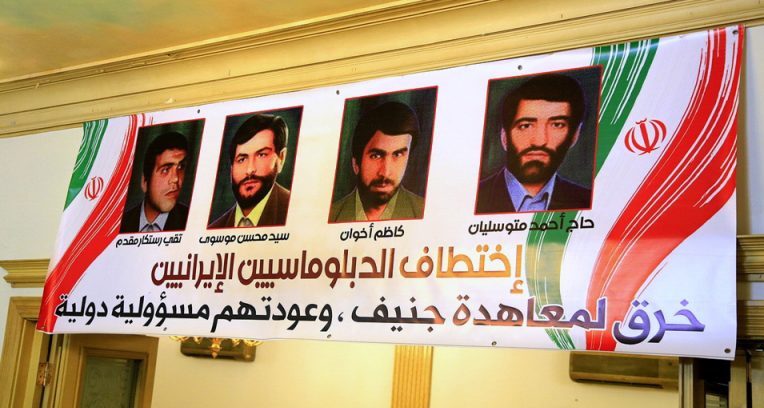
The Iranian Foreign Ministry has decried as an “act of terrorism” the 1982 kidnapping of four Iranian diplomats in Lebanon, reiterating the Islamic Republic’s call for the formation of a fact-finding group to determine the fate of the abductees.
The ministry said in a statement on the occasion of the 43rd anniversary of the abduction of the Iranian diplomats that the Israeli regime is responsible for the abduction and hostage-taking of its citizens, and continues to seriously pursue the matter with relevant international authorities.
On July 4, 1982, Ahmad Motovasselian, a military attaché at Tehran’s Embassy in Beirut, Mohsen Mousavi, the Iranian chargé d’affaires in Lebanon, Taqi Rastegar Moqaddam, an employee of the Embassy, and Kazem Akhavan, a photographer for the Islamic Republic News Agency (IRNA), were abducted by Israeli-affiliated armed groups.
“There is ample evidence, as repeatedly stated, and copious indications proving that the Iranian diplomats were abducted by an armed group inside Lebanon during the occupation of Lebanese soil by the Zionist regime, handed over to the occupying forces, and transferred to the occupied territories,” the statement said.
“The abduction of Iranian diplomats on July 4, 1982, in Beirut was not only an act contrary to international law and a flagrant violation of the 1961 Vienna Convention on Diplomatic Relations, but also constitutes an act of terrorism according to the Convention Against the Taking of Hostages (1979).”
The statement also expressed Tehran’s gratitude for the Lebanese government’s cooperation in following up on the status of the four abducted Iranian diplomats, including Beirut’s registration of the issue through correspondence with the then secretary-general of the United Nations in September 2008.
The Iranian Foreign Ministry, as the statement said, once again calls on the authorities of the Lebanese government, as well as the Secretary-General of the United Nations and the International Committee of the Red Cross and other competent international bodies, to fulfill their legal and humanitarian responsibilities in pursuing the case and to exert all their efforts to clarify the status of the abducted Iranian diplomats.
“In this framework, the proposal for the formation of a joint fact-finding committee between Iran and Lebanon, with the cooperation of the International Committee of the Red Cross, to pursue the matter and clarify the status of the abducted Iranian diplomats is once again emphasized,” the statement said.
The Iranian Foreign Ministry has repeatedly called for the Lebanese government, the UN, and the International Committee of the Red Cross to investigate the incident and determine the fate of the missing diplomats.
Lebanese militiamen from the Lebanese Forces Group admitted to the 1982 kidnapping of the four Iranian nationals who were on a diplomatic mission in North Lebanon. Investigations show that they were last handed to Israel at the time.
Although there is information about those who abducted the Iranian diplomats and their whereabouts, the fate of these Iranians is still shrouded in mystery, with their families and Iranian authorities believing they are still alive and languishing in Israeli jails.
Featured Video

Can the U.S. Afford to Annihilate Iran?
or go to
Aletho News Archives – Video-Images
From the Archives
Sanctions, War and the Policy of Dual Containment
By SASAN FAYAZMANESH | March 17, 2008
It is now nearly three decades since the Unites States adopted the policy of dual containment of Iran and Iraq. While much has been written about the containment of Iraq, there has been very little in-depth analysis of this policy when it comes to Iran. In a book that is going to be released on March 31, 2008, entitled The United States and Iran: Sanctions, Wars and the Policy of Dual Containment (Routledge), I attempt to address this shortcoming by investigating when and why the US policy of containment of Iran came about, how it evolved, and where it stands today.[1] To the extent that Israel has been involved in US policy making, the study will also include the role that Israel has played in the containment of Iran. Also, since the fate of Iran has been inextricably linked to that of Iraq, occasionally the investigation will overlap with the containment of Iraq.
The policy of dual containment of Iran and Iraq originated during the Carter Administration, but it was not until the Clinton Administration that the expression “dual containment” became popular. … continue
Blog Roll
 Aletho News
- Can the U.S. Afford to Annihilate Iran? /Seyed M. Marandi
- Elmo Sold mRNA Jabs to Your Toddler. Now They Are “Off-Label.”
- British state targets Palestine Action with yet another crooked trial
- Americans are paying the price to preserve Israel’s nuclear hegemony
- Resistance factions are necessary to ensure a permanent US Iraq withdrawal
- How Israel destabilizes the Middle East: Denying sovereignty and the right to exist
- Europe’s Establishment Is Embracing War – and Losing Voters
- NATO chief advocates war of aggression
- No Vote, No Representation, No State: Democracy, Israeli Style
- Zionist Bought Senate Blocks Information About American Citizens Killed By Israel
- If Americans Knew
- Israeli Soldiers Abduct At Least 22 Across Occupied West Bank
- Eight Palestinians Killed in Israeli Attacks on Gaza
- Israeli former leaders and security chiefs threaten legal action over ‘Jewish terrorism’
- Israel map in LA Times ad includes all land from the river to the sea
- Inside Lebanon’s 200-page dossier on Israeli war crimes
- Flydubai, genocide, settler violence, Trump abuse of power to deport – Daily Update
- Counting Antisemitic Incidents: What the ADL Audit Reveals — and Obscures
- Mamdani releases plan to combat antisemitism and hate crimes in New York City
- Iran’s Revolutionary Guards Publish Letter to the American People
- DMFI launches $1 million ad campaign supporting Virginia’s Elaine Luria
- No Tricks Zone
- Green Energy Debacle: German Expert Professor Fritz Vahrenholt Warns Of Severe Economic And Social Consequences
- Two More Paleo Reconstructions Affirm Meters-Higher Sea Levels Across Ireland, Brazil 7000-6000 Years Ago
- New Study: Earth And Venus Surface Warmth Largely Explained By Convection And Lapse Rate, Not CO2 Or Radiation
- 2025 Nature Paper Claiming Worsening Global Drought Gets RETRACTED …Heavily Flawed
- New Study: ‘Global Drought Shows No Detectable Recent Acceleration Under Climate Warming’
- Economic Masterminds: German Socialists Suggest Taxing Productivity Gains Stemming From Using AI
- The South China Sea Has Not Been Cooperating With The Climate Change Narrative
- Energy Crisis: Germany Enters Heating Season With Historically Low Gas Reserve Fill Levels
- New Study: The Antarctic Ice Sheet Gained Mass From 2020-2024 Due To Staggering Snow And Ice Accumulation
- Study: Ocean Heating Rates From Thousands Of Years Ago ‘Dwarf’ Modern Ocean Heating Rates

