War Fatigue Complicates West’s Aid to Ukraine
BY M. K. BHADRAKUMAR | INDIAN PUNCHLINE | OCTOBER 3, 2023
A pall of gloom descended on Europe as the long-feared uncertainty set in over the weekend as to how long would the collective West underwrite the proxy war in Ukraine. To lift their sagging spirit, some European foreign ministers impromptu took the train to Kiev to spend Monday with President Zelensky. It was an extraordinary sight of defiance of the call of destiny, as the war passed the 19-month mark.
A deal in Washington that averted government shutdown for now but cut funding for Kiev; the Polish election campaign in which the ruling Law and Justice party, until recently one of Ukraine’s staunchest supporters, has toyed with various measures such as questioning more arms deliveries and blocking agri-products from its neighbour in order to court voters; and, the stunning parliamentary election results in Slovakia catapulting a pro-Russian left-wing political party to power and signalling the first true political embodiment of “Ukraine fatigue” — suddenly, the West’s mantra of being by Ukraine’s side “for as long as it takes” feels seriously open to question.
CNN exaggerated, perhaps, while commenting that the above developments “appear to have thrown Ukraine and its war with Russia under the bus” — but only by a bit. The politics of the Ukraine war has crossed an inflection point and is poised for bigger things in the critical months ahead.
The White House has vowed to seek quick passage of a stand-alone Ukraine aid bill totalling $20.6 billion that the Biden administration has said is essential to fight Russia, but it will likely continue to face determined opposition, particularly from Republicans in Congress. At the root of it is the fierce polarisation in US politics, which now threatens to shake the balance of power in the Congress in a no-holds barred election year that looms ahead.
This does not mean stopping the US aid to Ukraine. The administration has enough resources to support Kiev over the next month and a half and, above all, it is too far-fetched to expect any serious changes in the Ukrainian direction of US foreign policy before the 2024 election. But the salience lies somewhere else — namely, the topic of assistance to Ukraine is frothing in the cauldron of disputes between Republicans and Democrats and is becoming inseparable from the tendentious issues of social programmes that tear apart the American society and become fodder for its combative politicians.
The Ukraine war has become a political football in the Beltway just over a year from the US presidential election, with questions mounting over aid approved by Congress that totals $100 billion so far, including $43 billion in weaponry. Simply put, for right–wing Republicans, financing Kiev is becoming a tool of political manipulation of the Biden Administration through which they hope to seize advantages and concessions. And Donald Trump is waiting in the wings.
Meanwhile, there is a vicious sub-plot playing out within the Republican Party itself in a bid to unseat the Republican House Speaker Kevin McCarthy next week by hardline Republican Matt Gaetz, one of a core of hard-right members of the party implacably opposed to any more aid for Ukraine.
In order to survive, McCarthy has threatened to link aid for Ukraine to funding to stop immigrants crossing the Mexican border, a key Republican demand. “I’m going to make sure that the weapons are provided for Ukraine, but they’re not going to get some big package if the border is not secure,” McCarthy told CBS ominously.
Most important, the wider signal to the world is damaging. European capitals are already nervously eyeing the possibility of a return to the White House by Trump. Josep Borrell, the European Union’s foreign policy chief and a major US partner in delivering aid to Ukraine, expressed surprise and regretted the US decision “deeply, thoroughly.”
Borrell said, “I have a hope that this will not be a definitive decision and Ukraine will continue having the support of the US.” Indeed, there is a wider problem — war fatigue among inflation-hit American voters.
In many ways, the victory of former Prime Minister Robert Fico’s left-wing populist Smer party in this weekend’s parliamentary election in Slovakia is also to be attributed to war fatigue. Fico has said no more weapons will go to Ukraine; questioned the logic of the EU’s Russia sanctions; praised Moscow; and blamed the NATO for causing the war, which he says, began after “Ukrainian Nazis and fascists started to murder Russian citizens in Donbas and Luhansk.” Economic anxieties further compound the societal Ukraine fatigue and the dramatic turn in Slovakian politics, which is likely to impact the West’s relations with Kiev.
Within the EU, Hungary and Austria will now have an ally in Slovakia, a frontline state, advocating an immediate cessation of hostilities in Ukraine and peace negotiations. Fico himself is a close ally of Hungarian Prime Minister Viktor Orban — and they could be joined by Poland if the ruling Law and Justice Party secures a fresh mandate, which seems likely, in the parliamentary election on October 15.
All indications are that Poland is veering away from its long-standing pro-Ukraine position. Poland’s PM Mateusz Morawiecki said recently, “we are no longer transferring any weapons to Ukraine because we are now arming ourselves with the most advanced weapons.”
Then, as the CNN wrote, “Beyond EU, within NATO there is an equivalent fear of the consequences of an expanding anti-Ukraine bloc… And both Hungary’s Orban and Slovakia’s Fico have declared themselves adamantly opposed to any move to welcome Ukraine into the alliance… The reality is the Ukraine counteroffensive, which will have to diminish with the advent of winter, has so far achieved little substantive progress on the battlefront. The arrival of newly-empowered anti-Ukraine parties in frontline states, together with waffling by leading Kremlin foes like the United States, all comprise a truly toxic mix.”
Looking ahead, further erosion of support for the Ukraine war can be expected and even a possible collapse of support for Ukraine across the collective West cannot be ruled out in the months ahead, especially if the Kremlin leadership finally decides to give a knockout punch to Ukraine’s military and/or orders the Russian forces to cross the Dnieper and take over Kiev and Odessa.
Even otherwise, the crunch time comes with the elections to the European Parliament on 6-9 June 2024. There is a clear possibility of anti-Ukraine parties winning a substantial bloc of votes in the elections. If and when that happens, the invidious conspiracy mooted by Germany and France to abolish the rule of unanimity required for taking major EU decisions (eg., Russia sanctions and their six-monthly renewal) will flounder.
Both Orban and Fico have declared their opposition to Russian sanctions. Suffice to say, the politics of the Ukraine war and Russia sanctions is entering uncharted waters, as Hungary allied with Slovakia — and potentially with Poland — would be in a position to complicate pro-Ukraine, anti-Russian efforts by the rest of the EU.
In the art of politics, American politicans originally patented “filibuster”, a political procedure in which one or more members of a legislative body prolong debate on proposed legislation so as to delay or entirely prevent decision, and European politicians are now inventing their own variant of it.
Orban has been practising it for a decade already, and with growing dexterity, to push through his nationalistic programme of “sovereign democracy” in Hungary. That is where the weekend’s Slovakian election and Fico’s return to power has the potential to become a defining moment in the politics of Ukraine war.
NATO-trained Ukrainian conscripts surrendering en masse
By Drago Bosnic | October 3, 2023
One of the many peculiarities of the special military operation (SMO) has been the rather small number of POWs (prisoners of war) on both sides (relative to the number of overall casualties). Reasons for this are manifold and include the way the conflict is being waged (the vast majority of casualties are the result of long-range strikes, primarily artillery and drones), widespread use of combat drugs, as well as the rabidly Russophobic propaganda that is being disseminated among the Kiev regime forces. This often results in instances of summary executions of Russian POWs by the Neo-Nazi junta troops or their unwillingness to surrender to the Russian military, as they are being fed propaganda that the Russians will treat them the same, even though evidence suggests otherwise.
However, it seems such trends are changing rapidly, particularly as the number of ideologically charged soldiers among the Kiev regime forces is going down due to the number of KIA/WIA/MIA (killed/wounded/missing in action). They have been increasingly replaced by forcibly conscripted regular Ukrainians who simply don’t see the conflict as their own. The fact that the commanding officers (COs) are effectively treating the soldiers as literal cannon fodder is also contributing to this, further resulting in low morale and even widespread insubordination. There were instances of Ukrainian soldiers even shooting their COs in order to avoid being sent into the meat grinder. Others are simply doing anything they can to leave the country and escape being sent to the frontlines.
In order to reduce the number of casualties on both sides, the Russian military has even set up special communication channels for Ukrainians willing to surrender. This has been giving results for several months already, particularly since the start of the much-touted counteroffensive of the Neo-Nazi junta troops. On October 2, the elite 1st Guards Tank Army of the Russian Battlegroup West captured two units composed of Ukrainian conscripts in the vicinity of Artyomovsk (previously known as Bakhmut) in the Donetsk People’s Republic (DPR). The units in question are the 77th Airmobile Brigade and the 56th Separate Motorized Brigade. Surprisingly, reports about the mass surrender of Ukrainian conscripts are also becoming more common in Western media, too.
Retired United States Army Colonel and former senior adviser at the Pentagon Douglas MacGregor has repeatedly reiterated that the number of surrendering Ukrainian conscripts keeps growing, particularly as the embattled Kiev regime is having trouble hiding the catastrophic losses in both manpower and equipment. According to both American and Ukrainian combat veterans, the NATO training they’ve been provided all these years has been proven detrimental to their fighting capabilities, resulting in higher casualties and lesser combat effectiveness. In fact, many Ukrainian soldiers have stated they’d be dead if they followed the much-touted NATO standards. Instead, they’re still largely relying on Soviet-era training, equipment and weapons, as these have been proven as much more effective.
Another reason for the high casualty ratio among the Neo-Nazi junta troops is the very limited training that Ukrainian conscripts have been given before being sent to the frontlines. The primary reason for this is the urgency of replacing previous losses, resulting in a vicious cycle that even the mainstream propaganda machine couldn’t ignore. Back in May, the Wall Street Journal reported that poor men from villages and small towns were sent to the frontlines after just two nights at a base. The report effectively admitted that the COs insisted that “conscripts learned on the battlefield to compensate for the almost total lack of training”. The overall result of this has been that conscript units now have up to 90% KIA/WIA/MIA, as reported by various local and global military sources.
Russian intelligence reports also indicate that Ukrainian conscript units are increasingly “trained” by the much-touted British Special Air Service (SAS), highly popularized in various shooter video games, particularly the Call of Duty series, a major NATO propaganda tool in recent years. The United Kingdom keeps insisting that their forces are supposedly not present in Ukraine, with Prime Minister Rishi Sunak even denying the claims of his own cabinet’s Defense Secretary Grant Shapps that British advisors will officially be sent to train the Neo-Nazi junta troops. It’s important to note that high-ranking Russian military intelligence officials (both retired and active) have pointed out the high frequency of the usage of English among military personnel embedded within the Kiev regime forces.
Namely, this is particularly true when it comes to the areas where the abortive counteroffensive is (still) being conducted. Apart from American special forces, this reportedly also includes SAS operatives. And while the mainstream propaganda machine keeps ridiculing Moscow’s claims about the presence of NATO personnel in Ukraine (either as mercenaries or under the direct command of the belligerent alliance) and decrying them as supposed “conspiracy theories” and “Russian disinformation”, battlefield information suggests otherwise. This is also further reinforced by NATO’s standard counterintelligence practice of denying that certain weapons will be delivered and then stating they “might be” delivered only to then announce they will be sent to the Neo-Nazi junta when the process has already been completed.
Drago Bosnic is an independent geopolitical and military analyst.
Kremlin Denies Reports About Russia’s Alleged Missile Tests in Arctic
Sputnik – 03.10.2023
MOSCOW – Kremlin spokesman Dmitry Peskov on Tuesday denied media reports alleging that Russia was planning to test a missile codenamed Burevestnik in the Arctic.
“No, I cannot [confirm this]. I do not know where the New York Times journalists got that idea from … Apparently, [they] need to take a closer look at the satellite images,” Peskov said when asked to comment on the allegations.
Peskov said that Russia remains committed to the international nuclear test ban regime, when asked to comment on remarks that the country should carry out a thermonuclear weapon test over Siberia to demonstrate its determination.
“This has never occurred in the past, so I don’t think that kind of discussion is possible now, from an official point of view,” the spokesman added.
Earlier this week, US media reported that satellite imagery suggested Russia was preparing or might have already carried out tests of the experimental nuclear-powered cruise missile in the Arctic.
Russia charges Ukrainian commanders with terrorism
RT | October 3, 2023
The Russian Investigative Committee has identified four senior Ukrainian military officials as the masterminds of over 100 “terrorist attacks” involving drones targeting civilian infrastructure.
In a statement on Tuesday, the agency said it has collected enough evidence to charge the four commanders in absentia with terrorism-related crimes. Russia will seek the arrests of the suspects, it said.
The committee named Ukrainian military intelligence chief Kirill Budanov, the commanders of the Air Force and the Navy, Nikolay Oleshchuk and Aleksey Neizhapa, as well as the commander of the 383rd drone regiment of the Air Force, Sergey Purdenyuk, as the culprits. Their alleged offenses took place between April 2022 and September 2023.
Russian officials regularly accuse Kiev of launching fixed-wing kamikaze drones at targets inside Russia. Senior Ukrainian officials publicly call those drones “unidentified,” but do little to deny their country’s responsibility for the attacks.
The semi-secret drone program was detailed in August by the British magazine The Economist. It explained how competing drone developers sometimes conduct operations that “appear to be PR projects designed to bring a prototype to the attention of procurement bosses, rather than having military value.”
There is also an aspect of psychological warfare in delivering “headline-making strikes” on civilian targets such as Moscow’s financial center, the article said.
Budanov, who is arguably the most media-engaged official among the four Ukrainians charged, told the same outlet last month that his agency sought to disrupt the Russian economy, including by forcing airports in Moscow and St. Petersburg to close during drone raids. He claimed the strikes caused “zero” civilian casualties in Russia, contrary to local reports.
UK’s former Defense Secretary wants more young Ukrainians on the battlefield
By Lucas Leiroz | October 3, 2023
Apparently, former British Defense Secretary Ben Wallace is convinced that Ukraine is “winning”. In an opinion article published in The Telegraph, Wallace endorsed the “need” for Ukraine to mobilize even more young people to participate in hostilities, stating that this is the only way to “finish the job”, leading the country to definitively defeat Russian troops.
More than 83,000 Ukrainians died during Kiev’s efforts to launch a “counteroffensive,” but Ben Wallace is still certain that Ukraine is winning, albeit slowly. Wallace highly values the few meters gained by Kiev’s forces close to the Russian defense lines, saying this is a clear example of how the Ukrainians are surprising the West. For Ben, the “victory” of the counteroffensive is a proof that NATO “underestimated” Ukraine’s power.
“Slowly but surely, the Ukrainian armed forces are breaking through the Russian lines. Sometimes yard by yard, sometimes village by village, Ukraine has the momentum and is pressing forward. The men and women of the Ukrainian army are, once again, proving to us in Nato how much we have underestimated them. First, the Establishment doubted their ability to defend their nation from the initial Russian invasion (…) They failed to spot in the Ukrainians the same spirit we possessed in 1939. ” Wallace said.
Obviously, from a strategic point of view, Ben’s assessment is absolutely wrong. Ukraine is making a big mistake by exchanging soldiers’ lives for some small territorial gains. According to the elementary principles of military science, the lives of soldiers must be preserved first, because lost territories can be recovered later if there are troops to continue fighting – while, on the other hand, conquered territories cannot be controlled in the long term if there are no more soldiers to protect them.
With their forces devastated, more than 400 thousand dead and even mobilizing teenagers, women, sick people and the elderly, the Ukrainians do not seem to be acting correctly in trying to make their counteroffensive a “victorious” move. Given the tens of thousands of casualties suffered in recent months, the most correct thing to do would be to retreat, reduce the intensity of the hostilities and try to regain strength to, if possible, launch new offensives in the future – or simply surrender, since it is difficult for Ukraine to recover from its losses. However, Kiev is incapable of thinking about its own strategies, being just a proxy state that obeys orders from the West.
With his words, Ben only emphasizes that the West is really interested in forcing Ukraine to fight until the ultimate consequences. As a “solution” to the enormous human costs of the counteroffensive, the former secretary suggests that Kiev simply recruit even more young people, stopping any government’s concern (if there is any) with the survival of the population and focusing entirely on the war efforts to “win the war” against the Russians.
“Ukraine can also play its part. The average age of the soldiers at the front is over 40. I understand President Zelensky’s desire to preserve the young for the future, but the fact is that Russia is mobilising the whole country by stealth. Putin knows a pause will hand him time to build a new army. So just as Britain did in 1939 and 1941, perhaps it is time to reassess the scale of Ukraine’s mobilisation”, Ben said.
Another “argument” used by Wallace is that young soldiers tend to be more focused on improving their skills and achieving better results on the battlefield. As an example, he mentions, without citing any evidence to prove the allegations, the case of a supposed young Ukrainian who had shot down two Russian helicopters:
“They take UK equipment and achieve success rates far beyond expectations. I remember visiting a secret location abroad, but outside Ukraine, as we prepared Ukrainian soldiers on how to use StarStreak air-defence missiles. They had a week to train on a system we take months to master. A British sergeant pointed to a young Ukrainian, barely out of his teens. ‘He won’t let go of the simulator, and he won’t stop training until he never misses,’ he said. That young man went on to down two Russian attack helicopters.”
As can be seen, Wallace’s rhetoric is fallacious. Russia is not “mobilizing the entire country by stealth”. On the contrary, only a small percentage of the Russian military potential is being used to conduct the special operation in Ukraine, with virtually no effects of the conflict on the country – as can be seen from the fact that the Russian economy is growing significantly. In fact, Ukraine is the only side that is using total mobilization methods, destructively affecting its own population, in addition to facing an unprecedented social, economic and institutional crisis. Ben deliberately reverses the logic of the conflict analysis to mislead his readers.
Furthermore, the argument that young people “train more” and “learn more” is similarly fallacious and unfounded. In practice, young people are the ones who die most on the battlefield, as they are the most inexperienced and incapable of facing high-risk situations. Increasing the mobilization of young people will not bring any advantage to Kiev – it will only result in the extermination of Ukrainian citizens in a new “meat grinder”.
However, Ben Wallace certainly does not believe in his own words. He is known for being a NATO “hardliner” and it was under his administration that the UK took escalatory measures such as sending radioactive weapons and long-range missiles to the neo-Nazi regime. What Ben Wallace wants is simply to see the conflict reach its ultimate consequences – even if that means exterminating all Ukrainian youth.
Lucas Leiroz, journalist, researcher at the Center for Geostrategic Studies, geopolitical consultant.
Russia raises military budget for 2024 by 70%: what does this mean?
By Gilbert Doctorow | September 30, 2023
It is always a pleasure to have an on-air chat with WION, the premier English-language global broadcaster of India. Yesterday was especially so when their program host posed a series of very relevant questions about the just announced Russian military budget for 2024 showing a 70% increase in spending over the current year. Naturally, one wonders about Russia’s intentions: how will these new funds be spent? On which weapons systems? What kind of message is Russia sending to the West by this increase? How will the increased military spending impact on social spending within Russia or, put another way, are guns and butter a sustainable political course?
In this introduction, I will not telescope my answers. I am hopeful that readers will watch the interview and follow the logic set out therein.
However, I can say here that I set out the key drivers for the increased spending. One is the latest Russian assumptions on when the war in Ukraine will end, on how it may escalate into a general Russia-NATO war as the Biden administration resists admitting defeat in Ukraine, which is possibly imminent, by expanding the conflict and introducing NATO forces on the ground. The second is the expenses related to the near doubling of the size of the Russian army now underway following the induction of 300,000 men one year ago by mobilization of reserves and the sign-up of more than 400,000 volunteers that we have seen since the start of this year.
As regards the other issues, such as the 6% of GDP that the new military budget represents, or the 2% overall budget deficit that Russia is now incurring, I explain in this interview why such figures cannot be commented upon as if in a vacuum but must be compared to what countries in the West are now experiencing, as well as to Russia’s own Soviet past.
©Gilbert Doctorow, 2023
Care homes – The evidence of harms
If you have a weak stomach don’t read this
By Carl Heneghan and Tom Jefferson | Trust the Evidence | September 30, 2023
We’ve written a lot about the systemic failings in government policy regarding care homes (see here, here and here).
However, a recent study on the transitions between hospitals and care homes caught our eye. The sort of study that bypasses the media: Two care home providers with 20 to 40 care homes each in the South West and the North East of England participated, and 70 participants were interviewed.

The study exemplifies the impact hospital discharge policies had: “… hospitals just wanted patients out, regardless of COVID status. To be brutally honest, they weren’t interested; they just wanted people out. In those early days, you know, it was very traumatic.”
And how hospitals desperately enacted a policy to clear the decks: “… we had a phone call from a nurse from the hospital to say that … this lady was lying beside somebody, less than two meters, who was COVID-positive.”
These instances highlight how thoughtless and reckless the government policies were. Driven by error-strewn modelling along with a chronic lack of capacity in the NHS, panic set in: hospitals would be quickly overwhelmed. Something had to be done to free up capacity – an easy target was found: the elderly and the most vulnerable and brutally the least able to stand up for themselves.
Hospital discharge service requirements were first published on 19 March,. On 2 April, the guidance said, “Some of these patients [admitted from a hospital or a home setting] may have COVID-19, whether symptomatic or asymptomatic. All of these patients can be safely cared for in a care home if this guidance is followed.
This policy, which saw discharges to care homes without testing, has been ruled unlawful by the High Court. In Gardner & Anor, R, Lord Justice Bean and Mr Justice Garnham found that government policy was “irrational” because it failed to consider the risk to elderly and vulnerable residents from asymptomatic transmission.
It took until 15 April to recommend testing and 14 days of isolation for admissions to care homes. Before this, negative tests were not required prior to transfers/admissions into the care home.
The study interviews show that care homes became no-go zones: “GPs or other healthcare professionals or multidisciplinary, like, podiatrists, everyone has difficulty coming to see the residents as of high demand or they can’t come for whatever reason, so COVID-19. They used to come, now they are no longer able to.”
The study also emphasises the inhumane practice of isolating vulnerable people ‘Strong feeling that isolating care home residents went against usual practice and, for some, was very hard to endure, especially when they needed human contact and emotional support from family and friends following a period of hospitalisation.’
We’ve written about “Confinement Disease”, which is likely more harmful than covid in care homes. ‘Among long-term care residents in the Southern Ile-de-France region, more than 24 covid deaths among 140 residents occurred in 5 days. None were due to acute respiratory distress syndrome, and death was mainly due to hypovolemic shock as residents were confined to their rooms for several days without assistance with eating and drinking.’
Confinement leads to feelings of being in prison: “… rather than keeping them in hospital we would send them [to the COVID-19 unit], and then once they’re 14 days clear, I know it’s 10 now, but it was 14, then they would go back to their original care home. But it’s just been carnage, to say the least.”
The study interviews also showed how degrading and impersonal confinement practices were “… so they couldn’t have their belongings until it had been left in a certain place and washed at a certain heat and 72 hours before you can have them back. You go in your room, and you can’t see anybody, and when you do, they’ve got masks and visors, and you cannot hear them, and you’ve got all of that.”
Socially distancing and isolating the most vulnerable comes with costs. The practice of rapidly discharging patients is unlawful, yet is anyone interested at a government level in how to better look after those in care?
Patients were discharged from high-resourced hospital settings – where some had time to do Tik-Tok dances – to low-resourced care homes, which worsened as staff went off in their droves—the opposite of what you need, as less care equates to more deaths. Then you isolate vulnerable people who can’t care for themselves – again, the polar opposite of what these people need, preventing much-needed personal care that can be life-saving. Even worse, at the end of life, were the restrictions on who could share that moment, hold a person’s hand as they drew their last breath, and prevent compassionate care at one of the most important times.
The potential for harm is exceptionally high in care homes; with quarantining, physical and mental deterioration occurs rapidly, and renal failure occurs swiftly in the face of dehydration – the ultimate price to be paid is a lonely death.
Nobel Winner Highlighted “Non-Trivial” Side Effects of mRNA Vaccines Including Auto-Immunity and Blood Clotting Risks

BY ROBERT KOGON | THE DAILY SCEPTIC | OCTOBER 2, 2023
In what seems like an inevitable development, scientists Katalin Karikó and Drew Weissman have been awarded the 2023 Nobel Prize in Medicine for their role in developing the mRNA technology underlying the Pfizer-BioNTech and Moderna COVID-19 vaccines, which were rolled out in late 2020.
But in a paper published as recently as 2018 and which is extensively quoted in an article at MedPageToday, none other than Drew Weissman warned that prior clinical trials of mRNA vaccines had produced results which were “more modest in humans than was expected based on animal models… and the side effects were not trivial”, including “moderate and in rare cases severe injection site or systemic reactions”.
Further summarising the paper by Weissman and three colleagues in Nature Reviews Drug Discovery, MedPageToday notes:
Their chief safety concerns, which they said should be closely watched in future trials, were about local and systemic inflammation, as well as keeping tabs on the “expressed immunogen” and on any auto-reactive antibodies.
“A possible concern could be that some mRNA-based vaccine platforms induce potent type I interferon responses, which have been associated not only with inflammation but also potentially with autoimmunity,” they wrote. “Thus, identification of individuals at an increased risk of autoimmune reactions before mRNA vaccination may allow reasonable precautions to be taken.”
The authors also noted that extracellular RNA could contribute to edema, and cited a study that showed it “promoted blood coagulation and pathological thrombus formation.”
The MedPageToday article is titled ‘Want to Know More About mRNA Before Your Covid Jab?‘ How many readers actually went ahead and got it after they knew?
Robert Kogon is the pen name of a widely-published journalist covering European affairs. Subscribe to his Substack and follow him on X.
Online Censorship: Canada Continues Crackdown
Most media services must now “register for regulation”
By Kit Knightly | OffGuardian | October 2, 2023
On Friday the Canadian Radio-television and Telecommunications Commission published new guidelines requiring media outlets to register with the service so their content can be “regulated”.
Under the new regulations all streaming services, social media companies and platforms that host podcasts would be [emphasis added]:
required to provide the CRTC with information related to their content and subscribership
This is the culmination of a “public consultation” launched back in May. For those unfamiliar with “public consultation”, it is a process by which government agencies use members of the public to tell them what they want to hear.
CRTC’s press release couches the move in faux-liberal talking points, referring to it as “modernising Canada’s broadcasting framework” and “ensuring online streaming services make meaningful contributions to Canadian and Indigenous content”, but that is clearly camouflage for an obvious power-grab.
It’s noteworthy that podcasting services are made a specific focus.
After all, these days anyone with a microphone and internet connection can start broadcasting whatever they want to whoever they want, with little to no “regulation” of their content. That’s a no-no for a burgeoning global dictatorship fixated on the world’s subjugation through the control of information.
Don’t be surprised if the Canadian government starts “reviewing content” from podcast services and saying things like…
“Podcast X is broadcasting hate speech/propaganda/misinformation about subject Y, you cannot stream any podcasts in Canada until X is removed from your service.”
That’s supposition, but hardly a stretch given the huge surge in censorship of all kinds from governments all around the world since the “pandemic”.
In fact, you can almost see this as a direct response to some of the propaganda failures of the mainstream media during the “pandemic”.
The alternative media was able to win a lot of battles during the Covid roll-out, and a push to “regulate” podcasts is a quasi-admission of this. As are the words of CRTC Chair Vicky Eatrides:
We are developing a modern broadcasting framework that can adapt to changing circumstances.
“Adapting to changing circumstances”… deliciously vague, but also fairly clear. They don’t have the power they need to regulate the growing voice of non-mainstream sources given rise by the internet.
The three measures announced on Friday are unlikely to be the last, the end goal is a fully “modernized” Broadcasting Act to be passed in late 2024.
What will that include? Who knows.
But considering the Canadian government has already blocked all news-sharing on social media, unpersoned and unbanked peaceful protesters, enforced “vaccines” and given a standing ovation to a literal member of the SS, you’d be forgiven for fearing the worst.
Israeli forces injure Palestinian school children in West Bank raid

Press TV | October 2, 2023
The Palestinian Ministry of Education has suspended classes in the village of Burqa due to the injury of a child in a raid by Israeli forces into a school.
Ghassan Daghlas, acting governor of the occupied West Bank city of Nablus, said on Monday the decision to close the school was to maintain the safety of students.
Local media reported that Israeli forces also directly fired stun grenades and tear gas canisters toward the Palestinian students inside the school during the raid a day earlier. Dozens of children also suffered from smoke inhalation.
Israeli forces also denied teachers of 27 schools access to classes in Masafer Yatta area, located south of the city of al-Khalil (Hebron). The regime forces placed barriers to block the roads leading to the education centers.
In recent months, Israeli forces have also demolished a number of schools across the occupied Palestinian territories.
The Palestinian Ministry of Education in an earlier statement said the demolition of schools was “a heinous crime.”
“These practices have become a flagrant violation of students’ right to safe and free education.”
Featured Video

Trita Parsi: Israel Set a Trap for Total War in the Region
or go to
Aletho News Archives – Video-Images
Book Review
Why the War on Conspiracy Theories Is Bad Public Policy
By Kevin Barrett • Unz Review • February 1, 2019
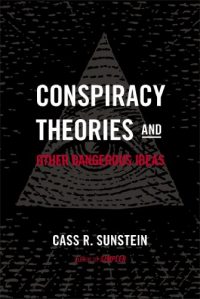 A Review of Conspiracy Theories and Other Dangerous Ideas by Cass Sunstein (based on an earlier paper co-authored with Adrian Vermeule); In Defense of Troublemakers: The Power of Dissent in Life and Business by Charlan Nemeth; and Conspiracy Theories and the People Who Believe Them, edited by Joseph E. Uscinski
On January 25 2018 YouTube unleashed the latest salvo in the war on conspiracy theories, saying “we’ll begin reducing recommendations of borderline content and content that could misinform users in harmful ways—such as videos promoting a phony miracle cure for a serious illness, claiming the earth is flat, or making blatantly false claims about historic events like 9/11.”
At first glance that sounds reasonable. Nobody wants YouTube or anyone else to recommend bad information. And almost everyone agrees that phony miracle cures, flat earthism, and blatantly false claims about 9/11 and other historical events are undesirable.
But if we stop and seriously consider those words, we notice a couple of problems. First, the word “recommend” is not just misleading but mendacious. YouTube obviously doesn’t really recommend anything. When it says it does, it is lying. … continue
Blog Roll
 Aletho News
- Easy fix for Europe’s chaos? Stop fueling war against Russia
- Putin’s key remarks on peace talks and Europe’s ‘schizophrenia’
- Trita Parsi: Israel Set a Trap for Total War in the Region
- Trump’s Iran war is on an Israeli leash
- Saudi oil boss issues global supply warning
- Riyadh Says Its Oil System Is Intact. The Numbers Say Otherwise.
- Trump and Netanyahu Want to “Finish the Job” on Iran
- US ‘one-sided dictation’ not Iran’s beliefs makes rational talks impossible: Baghaei
- Iran’s Next Strike May Not Explode. It Could Shut You Down /Col Doug Macgregor
- Iran: US political targets legitimate if assassinations return
- If Americans Knew
- DAILY UPDATE: Latest essential news on Palestine, Israel, & region
- The Israel Lobby’s Changing Fortunes
- AIPAC has become such a political liability that it’s shifting to a more “nimble” approach to buying politicians
- At least 160 Israeli settler attacks in 2 weeks
- Will Gaza’s Ancient Christian Community Disappear Forever?
- Israel’s vision of regional security rests on keeping Arab states weak
- Heidi Levine recounts how Palestinian youths helped save her in settler attack
- DAILY UPDATE: Latest essential news on Palestine, Israel, & region
- Trump’s Intensifying Sabotage of the ICC, for Israel’s Sake
- Israeli military detain US and UK volunteers in West Bank including Democratic NY politician Brad Lander
- No Tricks Zone
- E-Cars Reduce CO2 Emissions By Only 41% Compared To Internal Combustion Engine Vehicles
- Predictions Made By Renowned Climate Professor Over Past Decades Have Been Proven To Be Poor
- New Study Suggests Large Regions Of The Pacific Ocean Have Been Cooling For The Last 80 Years
- Germany’s Green Energy Debacle: High Energy Costs Force Kahla Porzellan to Close After 182 Years!
- New Study: 50 Years Of The Most Aggressive ‘Net Zero’ Policies Can Only Affect The Global Climate By 0.03°C
- US September “Heat” Was No Record…Many Records Set Decades Ago
- Latest European Green Energy Debacle; Portugal’s Largest Flagship Solar Park Insolvent!
- Green Energy Debacle: German Expert Professor Fritz Vahrenholt Warns Of Severe Economic And Social Consequences
- Two More Paleo Reconstructions Affirm Meters-Higher Sea Levels Across Ireland, Brazil 7000-6000 Years Ago
- New Study: Earth And Venus Surface Warmth Largely Explained By Convection And Lapse Rate, Not CO2 Or Radiation

