Venezuelan Navy Captain Dies in State Custody, Maduro Orders Investigation
By Lucas Koerner | Venezuelanalysis | June 30, 2019
Caracas – Venezuelan President Nicolas Maduro has ordered a probe into the death of a retired navy captain in the custody of Venezuelan intelligence officials on Saturday.
Captain Rafael Acosta Arevalo, 49, was transferred to Dr. Vicente Salas Military Hospital where he died at approximately 1 am Saturday morning, his lawyer told Bloomberg.
According to a statement by Venezuela’s Defense Ministry, Acosta was presented before a military judge at Caracas’ Fort Tiuna military base on Friday when he reportedly fainted, prompting the judge to order his immediate transfer to the health facility. No further details have been made public at the time of writing.
However, the opposition has disputed the official account, claiming that the navy officer died as a result of toture.
Venezuelan Attorney Tamara Suju, who serves as self-proclaimed “Interim President” Juan Guaido’s envoy to the Czech Republic, took to Twitter, alleging that Acosta “arrived at court in a wheelchair, presenting grave signs of torture.” Her comments were echoed in a statement by Guaido’s office calling for an “independent international forensics team” to investigate the death.
Acosta, who retired from active service a decade ago, was arrested by Venezuela’s Military Counter-Intelligence Command (DGCIM) on Wednesday on charges of terrorism and sedition, in connection to a purported coup plot revealed by Communciations Minister Jorge Rodriguez that same day.
Rodriguez presented an allegedly intercepted video conference showing Acosta extensively discussing the coup plans with other alleged conspirators, which included seizing arms stored at the Central Bank before mounting an assault on Miraflores Palace in order to “eliminate target 1 and target 2,” referring to President Maduro and National Assembly President Diosdado Cabello. The retired navy captain described the assassination of the president and the Socialist Party’s number two as a “decisive, striking, mediatized and internationally noteworthy act” that would win over military officials still ambivalent about the coup.
In a statement Saturday, Venezuela’s Communications Ministry indicated President Maduro ordered a “thorough and exhaustive investigation” into the incident.
For its part, the Attorney General’s office likewise issued a declaration announcing that the 86th Caracas Metropolitan Area prosecutor, with a specialty in human rights, had been assigned to conduct an “independent, objective, and impartial” probe into the death.
In response to the incident, US Assistant Secretary of State for Western Hemisphere Affairs Kimberly Breier took to Twitter Sunday, condemning the death as “a grim reminder of how Maduro & his Cuban advisers are persecuting the military & National Assembly.”
Meanwhile, the EU’s spokesperson for foreign affairs, Maja Kocijancic, termed the case “a stark illustration of the arbitrary nature of the judicial system in the country” and called for a “full and independent investigation.”
‘This Is Popular Resistance’: US War With Iran Spells Victory for Houthis in Yemen
Sputnik – June 27, 2019
If the US goes to war with Iran, the biggest losers will be the Saudi-led coalition fighting in Yemen, an Iranian scholar told Sputnik Wednesday. With the Houthis on the offensive already, an Iranian attack on Saudi infrastructure in the early hours of the war would open the door to Houthi invasion.
In recent months, the Houthi rebels in Yemen have stepped up their attacks on Saudi soil, launching ballistic missile attacks as well as drone strikes against nine different urban locations across southwestern Saudi Arabia. While the Saudis and their US allies have tried to point the finger at Iran, accusing it of waging a proxy war against Riyadh by way of its fellow Shiite Houthis, the truth is that for all their technical sophistication, the Saudi-led coalition’s war in Yemen has failed to destroy the resistance to its onslaught and instead steeled Yemeni resolve like never before.
Mohammad Marandi, an expert on American studies and postcolonial literature who teaches at the University of Tehran, told Radio Sputnik’s Loud and Clear Wednesday that as the US and Saudi Arabia have had Yemen under an effective state of siege for years, there has been “really no way for Iran to give them substantial support.”
“My assumption is that Iran does give them support, but that support is almost nothing compared to what the Saudis have and what the Emiratis have. It would be almost nothing in comparison.”
Indeed, Sputnik reported in February on multiple exposes by Amnesty International and CNN that showed the extent to which the United Arab Emirates has supplied its proxies in Yemen with Western-made weapons, including American MRAPs, Serbian machine guns and French-made LeClerc main battle tanks. Among the recipients of that aid was Al-Qaeda in the Arabian Peninsula, which controls substantial territory in southeastern Yemen.
Further, Sputnik reported last week that the type of anti-air missile used by Houthi forces to shoot down a US MQ-9 Reaper drone over Yemen earlier in the month, the Soviet-made SA-6 Kub, is so heavily proliferated across the world that US Central Command’s attempt to use it as proof of Iranian patronage is all but impossible.
“So the fact that the Yemeni people, despite the overwhelming support of Western countries for Saudi Arabia, and the infinite amount of money that the Saudis and the Emiratis have spent on waging war against the Yemeni people – the very fact that they’ve been able to stand up and to prevent the United States’ allies or their clients in the region from winning and taking the country shows that this is not a proxy war; this is a popular resistance,” Marandi said.
However, you wouldn’t be able to tell that if you read the Wall Street Journal on Tuesday.
“Yemen’s Houthi rebels have accelerated missile and drone attacks on Saudi Arabia in recent weeks, highlighting the kingdom’s military vulnerabilities in defending itself against an Iranian ally amid a crisis in US-Iran relations,” WSJ’s Jared Malsin wrote.
“Everything points toward the direction that Iran and the Houthis have teamed up for their mutual benefit to increase missile and drone attacks against targets in recent days and weeks,” Fabian Hinz, an independent analyst based in Germany, told the paper for the story.
Marandi told Sputnik the reason why the Western media and Western think tanks call it a proxy war is “because they want to escape the fact that they are not calling out their governments for the crimes against humanity that they are involved in. In other words, they want to create a moral equivalent between the Saudis and the Yemeni people who are being massacred so that they won’t be answerable in the eyes of public opinion.”
“So, they say it’s a proxy war, so it’s, you know, it’s two bad guys fighting each other. This way, when their governments give hundreds of millions of dollars, or in the case of the Europeans, tens of millions of dollars each of weapons to the Saudis or the Emiratis, they don’t have to feel ashamed about it, or they don’t have to shame their governments,” he said.
That said, Marandi told hosts Brian Becker and John Kiriakou that the tide was clearly turning against the Saudi-led alliance, which includes not only the UAE and the Yemeni government-in-exile, but also Sudan, which has sent thousands of warriors from its Janjaweed militia – the paramilitary group responsible for a large part of the genocide in Darfur – to fight in Yemen. Other countries, such as Senegal, have sent troops to fight with the coalition as well.
The conflict broke out slowly in Yemen beginning in September 2014, amid a rising tide of dissent. When Ansar Allah, a militia drawn from northern Yemen’s Zaidi Shiite Muslim minority that followed their late leader Hussein Badreddin al-Houthi, joined by supporters of former President Ali Abdullah Saleh, seized the capital of Sanaa in March 2015 and forced Yemeni President Abdrabbuh Mansur Hadi to flee the country, Hadi escaped to Riyadh, seeking help in returning to power. Saudi airstrikes began almost immediately.
The Houthis’ September Revolution rode on dissent over the outcome of the country’s 2011-12 revolution, part of the Arab Spring uprisings that saw Saleh thrown from power and Hadi, his vice president, assume Saleh’s former office. The revolution promised to address issues of chronic mass unemployment and a poor economy, as well as to restructure the country’s administration for the first time since North and South Yemen were reunited in 1990.
The Houthis helped make the 2012 revolution, but rejected the federalization proposed by Hadi as a move that would entrench, not alleviate, regional poverty. The final straw came in 2014, when a sharp spike in gas prices, combined with a slew of right-wing proposals by Hadi that included slashing social program funding, drove Saleh supporters into the streets and the ranks of the rising Houthis.
“Now, for the first time, we’re beginning to see the Yemenis go on the offensive, and they are striking vulnerable targets inside Saudi Arabia,” Marandi said. He predicted that in the event of an all-out war between the US and Iran, the Saudis and Emiratis would suffer such terrible consequences in just the first few hours of the conflict that the Houthis or other anti-Saudi Yemeni forces would immediately seize the opportunity and likely invade Saudi Arabia “within days.”
“There would be chaos in these countries,” Marandi noted. “Therefore, it’s not simply Iran. If the United States thinks they can wage a war against Iran and that it will be something manageable, they are deeply mistaken.”
Iran releases first photos of downed US drone’s wreckage
Press TV – June 21, 2019
Iran has released the first photos of the wreckage of a US spy drone which was shot down early Thursday after intruding into the Iranian airspace.
The IRGC Aerospace Force displayed parts of the doomed drone on Friday noon, refuting earlier claims by the US that the UAE was flying over international waters, and had not violated the Iranian airspace.

Wreckage of a US spy drone shot down by the IRGC air defense forces on Thursday morning as displayed on Friday. (Photo by IRIB News Agency)
The Islamic Revolution Guards Corps said Thursday it had shot down the unmanned US aircraft after it breached the country’s airspace.
Iran issued “numerous” warnings before shooting down the aircraft, Brigadier General Qader Rahimzadeh, the second-in-command of Iran’s Khatam al-Anbia Air Defense Base, said on Friday.
The last warning was issued at 3:55 am, ten minutes before the shoot-down, IRGC Aerospace Commander Brigadier General Amir Ali Hajizadeh said.
He made the remarks to reporters on the sidelines of an exhibition held in Tehran to showcase the drone’s wreckage.
US President Donald Trump initially issued a series of cataclysmic threats, insisting that the RQ-4 Global Hawk was flying over international waters when it was taken down by an Iranian missile.
However, the GPS coordinates released by Iran put the drone eight miles off the country’s coast, inside the 12 nautical miles from the shore, which is Iran’s territorial waters.

Wreckage of a US spy drone shot down by the IRGC air defense forces on Thursday morning as displayed on Friday. (Photo by IRIB News Agency)
Iranian Deputy Foreign Minister Abbas Araqchi earlier told the Swiss envoy that “there are irrefutable evidence about the presence of this drone in Iran’s airspace and even some parts of its wreckage have been retrieved from Iranian territorial waters.”
Swiss ambassador summoned
The Swiss envoy, whose country represents the US interests in Iran, was later summoned to the Iranian foreign ministry on Friday morning, and received an official note which he said will immediately deliver to the US.
In a meeting with an Iranian foreign ministry official, Swiss Ambassador Markus Leitner was asked to tell the US that the Islamic Republic is not after a war with any country, but the Iranian Armed Forces will give a “crushing response to any aggression.”
The Swiss envoy was told that the US will be held accountable for the consequences of such provocative measures.
“The Armed Forces of the Islamic Republic of Iran will show restraint as long as possible to preserve the security and tranquility of the sensitive region of the Persian Gulf and the Sea of Oman.
“But if the other side takes a provocative and unconsidered move, they will not hesitate to give a reciprocal response with unpredictable consequences,” the Iranian official noted, saying the response will be detrimental to all parties involved.
In a letter on Thursday, Iran’s Ambassador to the UN Majid Takht-Ravanchi told the United Nations that the international community needs to confront Washington’s destabilizing actions.
“Iran condemns, in the strongest possible terms, this irresponsible and provocative wrongful act by the United States, which entails its international responsibility,” he wrote in a letter addressed to UN chief António Guterres and the UN Security Council on Thursday.
Takht-Ravanchi wrote that Iran had the right to defend its sovereignty according to the world body’s Charter.
West’s black ops like virus, secretly destroying nations until it’s too late – Russian intel chief
RT | June 18, 2019
Western secret services are perfecting clandestine tools which are designed to weaken countries like viruses weaken bodies, the Russian foreign intelligence chief has said. This kind of warfare is currently used in Venezuela.
The criticism came from Sergey Naryshkin, who heads Russia’s foreign intelligence agency SVR. He said spies are constantly improving the tool used to dispose of governments that the West does not like.
“We are talking about creating a universal algorithm for conducting clandestine influence operations in a continuous manner and on a global scale,” he said. According to the official, this clandestine work “never stops and targets not only enemies, but also friends and neutral powers in the times of peace, crisis and war.”
It can be compared to the action of a virus; it can spend decades destroying a human organism without symptoms, and once diagnosed, often it’s too late to treat it.
The methods used to influence and destabilize other nations include creating network-oriented structures that can operate on a premise of public activism, art, science, religion or extremism, the Russian official said. After collecting data on the fault lines in a targeted society, those structures are used to attack those weak points in a synchronized assault, overwhelming the nation’s capability to respond to crises.
Simultaneously the perpetrators push a narrative through local and global media and social networks that claims that the only way to resolve problems is to replace the government of the victim nation with another one, possibly with direct foreign support.
“We can observe this scenario being implemented in Venezuela,” Naryshkin said.
The US is currently trying to replace Venezuela’s elected President Nicolas Maduro with another person, Juan Guaido, whom Washington recognized as the legitimate head of the South American nation.
Among others, the US backs his bid with economic sanctions against Venezuela and a massive diplomatic and media campaign in support of the pretender. Guaido’s attempts to actually seize power in Caracas have been futile, so far.
The Russian intelligence chief was speaking at an international security forum in Ufa, Russia, which is hosted by the Russian National Security Council. The event is meant for officials directly involved in policy making on security issues. Almost 120 nations are participating in this year’s gathering.
Ottawa hires hit man to overthrow Venezuelan government
By Yves Engler · June 17, 2019

Allan Culham
Meet the hired gun Ottawa is using to overthrow the Venezuelan government.
The brazenness of Ottawa’s intervention in the South American country’s affairs is remarkable. Recently Global Affairs Canada tendered a contract for an individual to coordinate its bid to oust President Nicolás Maduro. According to buyandsell.gc.ca, the Special Advisor on Venezuela needs to be able to:
“Use your network of contacts to advocate for expanded support to pressure the illegitimate government to return constitutional order.
“Use your network of civil society contacts on the ground in Venezuela to advance priority issues (as identified by civil society/Government of Canada).
Must have valid Government of Canada personnel TOP SECRET security clearance.”
The “Proposed Contractor” is Allan Culham who has been Special Advisor on Venezuela since the fall of 2017. But, the government is required to post the $200,000 contract to coordinate Canada’s effort to overthrow the Maduro government.
Culham is a former Canadian ambassador to Venezuela, El Salvador, Guatemala and the Organization of American States. During his time as ambassador to Venezuela from 2002 to 2005 Culham was hostile to Hugo Chavez’s government. According to a WikiLeaks publication of US diplomatic messages, “Canadian Ambassador Culham expressed surprise at the tone of Chavez’s statements during his weekly television and radio show ‘Hello President’ on February 15 [2004]. Culham observed that Chavez’s rhetoric was as tough as he had ever heard him. ‘He sounded like a bully,’ said Culham, more intransigent and more aggressive.”
The US cable quotes Culham criticizing the national electoral council and speaking positively about the group overseeing a presidential recall referendum targeting Chavez. “Culham added that Sumate is impressive, transparent, and run entirely by volunteers”, it noted. The name of then head of Súmate, Maria Corina Machado, was on a list of people who endorsed the April 2002 military coup against Chavez, for which she faced charges of treason. She denied signing the now-infamous Carmona Decree that dissolved the National Assembly and Supreme Court and suspended the elected government, attorney general, comptroller general, and governors as well as mayors elected during Chavez’s administration. It also annulled land reforms and reversed increases in royalties paid by oil companies.
After retiring from the civil service in 2015 Culham described his affinity for another leading hard-line opposition leader. Canada’s current Special Advisor on Venezuela wrote, “I met [Leopoldo] López when he was the mayor of the Caracas municipality of Chacao where the Canadian Embassy is located. He too became a good friend and a useful contact in trying to understand the many political realities of Venezuela.” But, López also endorsed the failed 2002 coup against Chavez and was convicted of inciting violence during the 2014 “guarimbas” protests that sought to oust Maduro. Forty-three Venezuelans died, hundreds were hurt and a great deal of property was damaged during the “guarimbas” protests. Lopez was also a key organizer of the recent plan to anoint the marginal opposition legislator Juan Guaidó interim president.
In his role as Canada’s ambassador to the OAS Culham repeatedly took positions viewed as hostile by the Chavez/Maduro governments. When Chavez fell gravely ill in 2013, he proposed the OAS send a mission to study the situation, which then Vice-president Maduro described as a “miserable” intervention in the country’s affairs. Culham’s comments on the 2014 “guarimbas” protests and support for Machado speaking at the OAS were also unpopular with Caracas.
At the OAS Culham criticized other left-of-centre governments. Culham blamed elected President Rafael Correa for supposedly closing “democratic space” in Ecuador, not long after a failed coup attempt in 2010. When describing the Honduran military’s overthrow of social democratic president Manuel Zelaya in 2009 Culham refused to employ the term coup and instead described it as a “political crisis”.
In June 2012, the left-leaning president of Paraguay, Fernando Lugo, was ousted in what some called an “institutional coup”. Upset with Lugo for disrupting 61-years of one-party rule, Paraguay’s ruling class claimed he was responsible for a murky incident that left 17 peasants and police dead and the senate voted to impeach the president. The vast majority of countries in the hemisphere refused to recognize the new government. The Union of South American Nations (UNASUR) suspended Paraguay’s membership after Lugo’s ouster, as did the MERCOSUR trading bloc. A week after the coup Culham participated in an OAS mission that many member countries opposed. Largely designed to undermine those countries calling for Paraguay’s suspension from the OAS, delegates from the US, Canada, Haiti, Honduras and Mexico traveled to Paraguay to investigate Lugo’s removal from office. The delegation concluded that the OAS should not suspend Paraguay, which displeased many South American countries.
Four years later Culham still blamed Lugo for his ouster. He wrote: “President Lugo was removed from office for ‘dereliction and abandonment of duty’ in the face of rising violence and street protests (that his government was itself instigating through his inflammatory rhetoric) over the issue of land rights. Violence in both the countryside and the streets of Asuncion threatened to engulf Paraguay’s already fragile democratic institutions. Lugo’s impeachment and removal from office by the Paraguayan Congress, later ratified by the Supreme Court, launched a firestorm of protest and outrage amongst the presidents of Paraguay’s neighbours. Presidents Rousseff of Brazil, Hugo Chavez of Venezuela and Cristina Kirchner of Argentina, were the chief defenders of Lugo’s right to remain in office.”
After retiring from the civil service Culham became more candid about his hostility to those trying to overcome extreme power imbalances in the hemisphere, decrying “the nationalist, bombastic and populist rhetoric that many leaders of Latin America have used to great effect over the last 15 years.” For Culham, “the Bolivarian Alliance … specialized in sowing its own divisive ideology and its hopes for a revolutionary ‘class struggle’ across the hemisphere.”
Culham praised the defeat of Cristina Kirchner in Argentina and Dilma Rousseff Brazil.
In a 2015 piece titled “So long, Kirchners” he wrote, “the Kirchner era in Argentine politics and economics is thankfully coming to an end.” (Kirchner is the front runner in the upcoming election.) The next year Culham criticized Brazilian President Dilma Rousseff’s bid to have UNASUR challenge her impeachment, which he celebrated as “a sign of change in Latin America”.
Culham denounced regional integration efforts. In a long February 2016 Senate foreign affairs committee discussion of Argentina, he denounced diplomatic forums set up by Brazil, Ecuador, Bolivia, Argentina, Venezuela and others to break from US domination of the region. “Since I’m no longer a civil servant”, Culham stated, “I will say that CELAC [The Community of Latin American and Caribbean States] is not a positive organization within the Americas. Mainly because it’s built on the principle of exclusion. It purposefully excludes Canada and United States. It was the product of President Chavez and the Chavista Bolivarian revolution.” Every single country in the hemisphere except for Canada and the US were members of CELAC.
Culham criticized left-wing governments position at the US dominated OAS. Culham bemoaned the “negative influence ALBA [Bolivarian Alliance for the Peoples of our America] countries have brought to the OAS” and said Argentina “often sided with Bolivarian revolution members” in their “negative agenda” at the OAS, which he called “very close to my heart”.
In his comments to the Senate committee Culham criticized Kirchner for failing to pay the full price to US “vulture funds”, which bought up the country’s debt at a steep discount after it defaulted in 2001. He described Kirchner’s refusal to bow down to highly predatory hedge funds as a threat to the “Toronto Stock Exchange” and labeled a Scotia Bank claim from the 2001 financial crisis a “bilateral irritant” for Canada.
Canadian taxpayers are paying a hardline pro-corporate, pro-Washington, former diplomat hundreds of thousands of dollars to coordinate the Liberal government’s bid to oust Venezuela’s government. Surely, there is someone in the House of Commons willing to inquire about Canada’s Elliot Abrams?
India & Israel Are Officially Diplomatic Allies At The UN
By Andrew Korybko | EurasiaFuture | 2019-06-12
India just made history at the UN earlier this week, but in what’s sure to be interpreted as an ignoble way by the supporters of the emerging Multipolar World Order. Encouraged by the massive mandate that he received after his resounding re-election last month, Modi gave the go-ahead for his government to break with decades of its post-independence political traditions by unprecedentedly supporting “Israel” at the global body and voting against granting consultative status to a Palestinian NGO that allegedly has ties with Hamas.
The self-professed “Jewish State’s” deputy chief of mission in India praised this diplomatic pivot by tweeting “Thank you #India for standing with @IsraelinUN and rejecting the request of terrorist organization “Shahed” to obtain the status of an observer in #UN. Together we will continue to act against terrorist organizations that intend to harm”, in what certainly signifies that Modi’s second term in office will see his country more determinedly siding with the fading Unipolar World Order at the multipolar one’s expense.
India had hithero been trying to make inroads with the Organization of Islamic Cooperation (OIC), but its hopes for future progress on this front have likely been dashed by the self-inflicted soft power damage that it just did by diplomatically allying with “Israel” at the UN. Although Resistance leader Iran continues to beg India to reconsider its decision to abide by the US’ unilateral sanctions regime against it, it’ll now be doing so with the full knowledge that the South Asian state is officially one of its hated “Israeli” foes’ key allies in thwarting the attempts of the Palestinians to have a greater global voice in publicizing their plight. This would make the Islamic Republic’s further outreaches to India even more humiliating than before, possibly raising the chance that it might finally give up in order to save “face” and protect its hard-earned and very proud reputation as the world’s leading anti-Zionist state.
In parallel with this, the global pivot state of Pakistan is now by default the most prominent pro-Palestinian voice in South Asia, especially after Minister for Human Rights Dr. Shireen Mazari recently promised that her country will continue supporting the Palestinians and urged all her Muslim counterparts to do so as well. The fact of the matter is that the Palestinian and Kashmiri causes are inseparable because they’re essentially one and the same — the indigenous Muslim majority of each region have been oppressed by foreign occupiers for decades and have yet to be granted the right to democratically decide their own political futures. Actually, it’s precisely because of these interlinked conflicts that India and “Israel” initially began to ally with one another because they play the same roles in each of them. Accordingly, they’ve increased military cooperation to such a point that “Israel” is now India’s second-largest military supplier and India is “Israel’s” top arms destination.
It therefore shouldn’t be any surprise that India decided to add an official diplomatic dimension to its already-existing military-strategic alliance with “Israel” by supporting it at the UN against the Palestinians. Seeing as how the Indian side hasn’t protested the “Israeli” deputy chief of mission’s tweet thanking it for “rejecting the request of terrorist organization ‘Shahed’” and vowing that “together we will continue to act against terrorist organizations that intend to harm”, it can be logically assumed that New Delhi informally regards Hamas and all those allegedly affiliated with it as “terrorists”, which is only natural considering how fast its alliances with the US and “Israel” are progressing. As such, whether it concerns Russia, China, Iran, or even the Palestinian cause nowadays, India is no longer practicing its over-hyped policy of “multi-alignment” but is instead decisively pivoting against each of the aforesaid multipolar forces despite still clinging to this slogan in an unconvincing attempt to cover its tracks.
Egypt, Jordan, Morocco to attend US-led Palestinian conference
MEMO | June 11, 2019
Egypt, Jordan and Morocco have informed the Trump administration they will attend a US-led conference in Bahrain this month on proposals for boosting the Palestinian economy as part of a coming US peace plan, US officials said on Tuesday, reports Reuters.
Egypt and Jordan’s participation is considered especially important since historically they have been key players in Israeli-Palestinian peace efforts and are also the only Arab states to have reached peace agreements with Israel.
However, Palestinian leaders’ decision to boycott the June 25-26 conference has raised doubts about its chances for success. They have shunned a broader diplomatic effort that US President Donald Trump has called the “deal of the century,” which they see as likely to be heavily tilted in favour of Israel and denying them a state of their own.
Despite that, White House senior adviser Jared Kushner, Trump’s son-in-law and a chief architect of the long-delayed peace plan, is pressing ahead with arrangements for the Bahrain meeting, where the economic components are expected to be unveiled as the first step in the plan’s rollout.
Acceptance of the invitation to the conference by Jordan and Egypt will bring to the table two countries that border both Israel and Palestinian areas.
Saudi Arabia, Qatar and the United Arab Emirates have previously confirmed their attendance, a White House official said.
The official declined to say what level of representation the countries would send. US officials have said they were inviting economic and finance ministers, as well as business leaders from the region and around the world.
Global financial bodies including the International Monetary Fund (IMF) and World Bank also plan to be present.
US officials have been vague about the timing for the second phase of their initiative, which would be the release of proposals for resolving the thorny political issues at the core of the Israeli-Palestinian conflict.
With Israel heading for new elections in September after Prime Minister Benjamin Netanyahu failed to meet a deadline to form a government, uncertainty is expected to further delay the full release of the plan.
Most experts are skeptical the Trump administration can succeed where decades of US-backed efforts have failed.
Nicaragua Approves Amnesty Law To Bring Peace
teleSUR | June 9, 2019
In an effort lead by the FSLN, to bring peace and reconciliation, Nicaragua’s National Assembly has approved a law that will provide amnesty for those involved with right-wing violence during the distabilization process last year.
The new law will grant a one off amnesty to those who committed crimes during the right-wing protests last year, it will apply equally to those with or without active cases against them. However, article 3 of the constitution states that the amnesty is conditional and will be withdrawn if the perpetrators re-offend.
The law was proposed by 70 lawmakers of the ruling Sandinista party, the FSLN, who hold a majority in the Assembly, Edwin Castro, a FSLN lawmaker said; “this is a sovereign act that seeks peace, reconciliation, that seeks forgiveness with justice, with reparation, and with no repetition.”
Castro continued; “it hurts us to have to grant amnesty to confessed assassins of policemen, to torturers of the San Jose school in Jinotepe, who murdered Bismarck Martinez, but we are aware that we have to put our country first.”
The right-wing opposition in Nicaragua, who have allegedly received funds and training from the U.S. government’s NED, have been responsible for a number of criminal offenses in their bid to overthrow the elected government led by Daniel Ortega. Most recently, the remains were found of an elderly Sandinista supporter, Bismarck Martinez, who was kidnapped and tortured to death in Jinotepe by opposition activists. Another high profile offense was in 2018 when demonstrators set fire to the leftist “Radio Ya” station whilst journalists were still inside.
However, the government hopes that they can bring peace to the country by granting amnesty on the condition of not re-offending. This is part of wider efforts to bring the country together, other initiatives have included the establishment of peace talks between government and the opposition, which the government has remained committed to despite the failure of the opposition coalition, Alianza Civica, to condemn US economic sanctions, which was an early request from the FSLN.
India’s Proposal For A Global “Terrorism” Conference Will Probably Backfire
By Andrew Korybko | EurasiaFuture | 2019-06-09
Indian Prime Minister Modi proposed a global “terrorism” conference while speaking in the Maldives during his first foreign trip following last month’s resounding re-election victory, but while this idea is obviously intended to contribute to his failed policy of “isolating” the global pivot state of Pakistan, it’ll probably backfire by drawing attention to his country’s policy of state terrorism against the Kashmiris, providing a platform for India’s new American-“Israeli”-Saudi allies to fearmonger about Iran, and putting Russia and the US in an awkward position for their diplomatic peacemaking ties with the Taliban.
Shifting The Blame For Regional Instability
Indian Prime Minister Modi is on his first foreign trip since winning a resounding re-election victory last month, during which time he told the Maldivian parliament that the world needs to urgently convene a global conference on “terrorism”. His supplementary remarks about “state-sponsored terrorism” and how some “people still try to create notions of ‘good terrorist, bad terrorist’” were interpreted as being aimed against the global pivot state of Pakistan’s political support for the Kashmiri freedom movement that India regards as “terrorists”, strongly insinuating that the intent behind Modi’s initiative is to contribute to his failed policy of “isolating” Islamabad. India also wants to deflect from the negative attention that it received worldwide after being exposed as the real rogue state in South Asia after it almost brought the region to the brink of nuclear war earlier this year following the suspicious Pulwama incident that it automatically blamed on Pakistan, desperately trying to continue pinning the blame on its neighbor for South Asia’s instability instead of taking responsibility for the being the reason behind this itself.
“Containing” China & Taking Revenge On Russia
Should this conference end up taking place, then it’s predictable that India will produce manufactured “evidence” in order to “prove” its point, exploiting the highly publicized opportunity to smear Pakistan’s reputation and provoke international concerns about investing in CPEC. This agenda has a much greater chance of succeeding if India convinces the US to impose unilateral sanctions against Pakistan on an “anti-terrorist” basis, understanding that the real purpose would be to indirectly sanction CPEC and consequently deal an asymmetrical blow to China in the so-called “trade war“. Furthermore, the negative attention that India hopes to heap upon Pakistan during that occasion could be weaponized to smear all of its targets’ partners by extention, including Russia, who New Delhi has been extremely angry with over the past few months after Moscow refused to take its side during the latest regional hostilities and instead opted to remain neutral as part of its balanced “Return to South Asia“. The news that President Putin might finally meet Prime Minister Khan during next week’s SCO Summit in Bishkek might have also motivated Modi to act as urgently as he did.
A Dose Of Modi’s Own Medicine
For as much as Indian strategists are expecting an optimistic outcome from Modi’s proposed global “terrorism” summit, there’s a very high likelihood that it’ll actually end up backfiring and causing many more problems than it’s worth. To begin with, Pakistan could use the international media coverage given to that event to draw attention to India’s use of state terrorism against the Kashmiri freedom movement that’s fighting for the right to their promised UN-mandated plebiscite to determine their political future. Not only that, but the “ModiMob” lynchings of dozens of Muslims over the past half-decade could be properly reframed as Hindu terrorist attacks if Pakistan plays its soft power cards right. In addition, the forthcoming event could also serve to remind the world of the testimony of convicted RAW Hybrid War operative Kulbhushan Jadhav after he admitted that he was tasked by his homeland to organize terrorist attacks in Pakistan, which could in turn lead to a wider discussion about India’s state sponsorship of the BLA and TTP terrorist groups .
Ranting About Iran & Talking Tough Against The Taliban
That’s not all, though, since the illusion of India’s “multi-alignment” would be ruined once and for all if its new American, “Israeli“, and Saudi allies exploit that platform to fearmonger about Iran, especially after New Delhi recently ditched it once Washington withdrew its sanctions waiver last month. Being responsible for sponsoring an anti-Iranian propaganda fest that raises the already high tensions in the Gulf would irreparably harm India’s reputation among the many countries of the emerging Multipolar World Order even if it endears it to the ones who are clinging to the fading unipolar one, showing without any doubt that New Delhi has made a decision to unapologetically pivot towards Washington. Nevertheless, India might also inadvertently harm its standing with the US if its representatives rant about the Taliban during that time, with whom Washington and Moscow are presently engaged in peacemaking diplomatic outreaches, but it might even stage a Bollywood-like drama to this effect to create some unconvincing ambiguity about its aforementioned pivot.
Concluding Thoughts
Modi thought that it would be a good idea to propose a global “terrorism” conference in order to put more international pressure on Pakistan, but upon further contemplation, it might be India itself that ends up coming under worldwide scrutiny if Islamabad takes advantage of this opportunity to raise awareness about New Delhi’s policy of state terrorism against the Kashmiris, the “ModiMob” Hindu terrorist lynchings of dozens of Muslims over the past half-decade, and Kulbhushan Jadhav’s confession that his homeland ordered him to organize terrorist attacks in Pakistan. Moreover, India’s reputation could be irreparably ruined in the eyes of the emerging Multipolar World Order if it sponsors an event that turns into an anti-Iranian propaganda fest for its US, “Israeli”, and Saudi allies to rant and rave against their rival, even if it stages a Bollywood-like drama by verbally attacking America’s peacemaking diplomatic ties with the Taliban to deflect from this fact. All told, more self-inflicted soft power harm than good might come out of India’s proposed global “terrorism” conference, though its strategists probably won’t realize this until after the fact.
US sees Turkey’s S-400 deal as fait accompli
By M. K. BHADRAKUMAR | Indian Punchline | June 8, 2019
Three developments in quick succession in the weekend bring closer to a flashpoint the brewing discord between the US and Turkey on account of the latter’s purchase of the S-400 air defence system.
First, Russia disclosed on Friday that the delivery of the S-400 missile defense system will begin within two months. Turkey has made the advance payments and the Turkish military personnel have completed their training in Russia to operate the system. It appears that the die is cast.
Second, Washington has reacted instantaneously, as if anticipating that Turkey is sticking to its decision despite immense American pressure.
The US Acting Defence Secretary Patrick Shanahan has addressed a letter to his Turkish counterpart Hulusi Akar — and simultaneously leaked it to the media — intimating that “Turkey will not receive the F-35 if Turkey takes delivery of the S-400. You still have the option to change course on the S-400.”
Shanahan added that “Turkish F-35 students currently in training” in the US will be sent back by July 31 and no new training programme for Turkish personnel is being scheduled “as we anticipate they would be recalled in the near future.” Meanwhile, in immediate terms, “To facilitate an orderly cessation of Turkish participation in the programmatic management activities of the F-35 program, we will not plan for Turkish participation in the annual F-35 Chief Executive Officer Roundtable on June 12, 2019 and planned updates to the program’s governing programs will proceed without Turkey’s participation.”
Shanahan referred to the Russia-related Countering America’s Adversaries Through Sanctions Act (CAATSA), but concluded that the two countries should endeavour to “manage this matter in a respectful way, to preserve other aspects of our deep security cooperation.”
Third, an innocuous-sounding US State Department readout on June 6 said: “Deputy Secretary of State John J. Sullivan met today with Greek Defense Minister Evangelos Apostolakis to reaffirm the U.S. and Greek commitment to cooperation that strengthens bilateral defense and security and NATO, and to continue discussions started at the December 2018 U.S.-Greece Strategic Dialogue. Deputy Secretary Sullivan underscored the strategic importance of the Eastern Mediterranean and Balkans and highlighted Greece’s role as a pillar of stability and key partner in the region.”
Considering that Turkey’s hostile relations with Greece are even more ancient than India-Pakistan enmity, it is at once apparent that Washington is hitting back at Turkey on the geopolitical plane. Turkey’s principal motivation to procure the S-400 missile defence system is its unmatched capability to threaten aircraft up to 200 miles away—giving it so-called anti-access/area-denial (A2AD) (A2AD) potential.
The Turkish motivation is comparable to India’s (except that India has problematic relationships with two countries.) In layman’s terms, Turkey’s interest in the S-400 needs to be understood in terms of its ongoing rivalry with fellow NATO member Greece, with which it has nearly fought a war over the island of Cyprus. The S-400’s anti-access capabilities strengthen Turkey’s hand in its security competition with Greece.
Quite simply, S-400 system is peerless. The Patriot system that the US has offered Turkey as an alternative is optimised for relatively short-range (less than 40 kms) ballistic missile defence, lacking in A2AD potential.
Like any divorce, this is going to be a messy affair. Out of all the issues complicating the Turkish-American relationship — starting with the US-backed failed coup d’état attempt in July 2016 to kill President Recep Erdogan and overthrow his nationalist government — the S-400 issue has surged as the coup de grâce.
To be sure, if the US cancels the collaboration with Turkey on the development and production of F-35 fighter jets, the latter will look for alternate sources of stealth technology. The fact of the matter is that Turkey seems unperturbed that it is parting ways with the US’ program to develop the F35 fighter and buy 100 planes. But Turkey would like the US to initiate the break-up so that it is free to develop options. In the Turkish assessment, F-35 has serious deficiencies.
Equally, Turkey (like India) has already stated its ambitions to develop a domestic stealth fighter and knows that the US will never transfer such cutting edge technology. In all probability, Turkey may approach Russia. Speculation is rife.
Quite obviously, all this has very serious implications for India, which merit a separate analysis.
Cyprus signs $9bn contract with Israel to extract gas
MEMO | June 7, 2019
Cyprus will earn $ 9.3 billion over 18 years thanks to the exploitation of the Aphrodite gas field under a renegotiated contract with Dutch-British Shell, US-based Noble, and Israeli company Delek, the Energy Minister for Cyprus, announced.
George Lakkotrypis told reporters that the reworking of the production contract guaranteed Cyprus an average annual income of $ 520 million over the life of the gas field.
“We believe it is a good contract under the current circumstances as it will allow the Republic of Cyprus to earn significant commercial revenues estimated at more than $ 9 billion throughout 18 years of the well’s production.”
Under the new deal, companies will commit to a short period for gas reserves exploitation. “Based on the development and production plan we discussed, we expect the first gas quantities to be extracted by 2024-2025,” he said.
Lakkotrypis explained that “the consortium was not previously bound to a deadline.”
Aphrodite gas field is the most significant development project on the island with about $ 7.9 billion invested in related infrastructure.
In 2011, Texas-based Noble Energy made its first discovery off the southern coast of Cyprus in the Aphrodite block, which is estimated to contain about 4.5 trillion cubic feet (127 billion cubic meters) of gas that have not been marketed yet.
The discovery of a vast offshore field in nearby Egyptian waters in 2015 raised more interest in exploring similar resources in Cypriot waters.
Cyprus aims to start pumping natural gas through a pipeline to an Egyptian gas liquefaction facility.
Cyprus has continued to explore marine energy resources despite the collapse of talks between the Turkish and Cypriot sides, in 2017, to end the division that lasted for decades in the island which north is occupied by Turkey.
The new agreement has angered Turkey, which seized the northern part of the island in 1974 following a coup sponsored by Greece’s military junta.
Accordingly, Turkey sent drilling vessels into Cyprus exclusive economic zone, last month, after it announced it would begin its energy exploration work.
In February, Exxon Mobil and Qatar Petroleum discovered a vast reserve of natural gas off the coast of Cyprus, estimated at five to eight trillion cubic feet.
Italian ENI and French Total are likewise involved in oil and gas exploration activities off Cyprus.
Roméo Dallaire denies Canadian genocide and distorts Rwanda’s
By Yves Engler · June 6, 2019
 Is Roméo Dallaire a genocide denier?
After a (question free) talk at Concordia University this week I followed the famous Canadian general out of the room to ask why he still supports ruthless dictator Paul Kagame. Kagame is the individual most responsible for the mass slaughter in Rwanda in mid-1994 since his forces invaded the country, engaged in a great deal of killing and blew up the presidential plane that unleashed the genocidal violence.
In 1996 Kagame’s forces invaded the Congo to overthrow the government in Kinshasa and when their installed president kicked them out they reinvaded in 1998, causing an eight country war that left millions dead. According to a 600-page report by the UN high commissioner for human rights, Rwanda was responsible for “crimes against humanity, war crimes, or even genocide” in the Congo.
With Dallaire refusing to answer my question I asked a Radio Canada journalist seeking to interview the former general to ask why he supports Kagame. The reporter was there to question Dallaire about the use of the term “genocide” in the Final Report of the National Inquiry into Missing and Murdered Indigenous Women and Girls. Dallaire said he had “a problem” with the use of the word “genocide” to describe what happened to First Nations. “Is that an act of genocide? Is it?” he said. “My definition of genocide, I read it very deliberately at the start of the Rwandan genocide, and it was a deliberate act of a government to exterminate deliberately, and by force and directly, an ethnicity or a group or an entity of human beings.”
Numerous media outlets picked up Dallaire’s comments. A La Presse headline read “Dallaire denounces the use of the term ‘genocide’” while Rebel Media’s The Ezra Levant Show reported on, “Rwandan genocide witness General Roméo Dallaire’s strong denouncement of Justin Trudeau’s agreement that the Missing and Murdered Indigenous Women findings indeed constitute a ‘genocide.’”
While Dallaire is opposed to labeling Canada’s dispossession of First Nations a genocide, he has repeatedly employed the term to describe rights violations in enemy states. In recent years he’s compared the situation of Darfuris in Sudan and Baha’i in Iran, as well as Syria and Libya, to Rwanda. If Western interventionists are targeting a nation Dallaire is happy to employ the “G” word or “R” comparison.
Interestingly, Dallaire’s criteria for a genocide — “a deliberate act of a government to exterminate deliberately” — better applies to indigenous people in Canada than to the Tutsi in Rwanda. Dispossessed of 99% of their land, Indigenous people have faced state-backed efforts to starve and sterilize them. They’ve also been made wards of the state, had their movement restricted and religious/cultural ceremonies banned. Residential schools and other so-called child welfare initiatives sought to eradicate their ways, or in the infamous formulation of the deputy superintendent of the Department of Indian Affairs from 1913 to 1932, Duncan Campbell Scott: “Our objective is to continue until there is not a single Indian in Canada that has not been absorbed into the body politic and there is no Indian question.”
Prior to confederation, British forces conquered today’s Nova Scotia through terror, putting the heads of Mi’kmaq soldiers on spikes and offering bounties to kill women and children. Founder of the Halifax fort, Lieutenant General Edward Cornwallis led the charge and by the mid-1760s the Mi’kmaq had been largely wiped out in Nova Scotia.
After British forces conquered Quebec General Jeffery Amherst’s forces gave indigenous chiefs in the Great Lakes region blankets and a handkerchief from a smallpox hospital. Commander of British forces in North America, Amherst wrote: “You will do well to try to inoculate the Indians by means of blankets as well as to try every other method that can serve to extirpate this execrable race.”
By the 1820s the Beothuk in Newfoundland were extinct. On the West Coast in 1862 colonial officials are accused of enabling the spread of smallpox among First Nations, which devastated the indigenous population.
Unlike the Tutsi in Rwanda, indigenous people in Canada didn’t end up in power after the “genocide”. Nor did Jews in Germany, the Herero in Namibia, Armenians in Turkey, Maya in Guatemala, etc. Rwanda is a peculiar case where the minority — 10% of the population — targeted for extermination ended up ruling after the bulk of the violence subsided.
That’s partly because the genocidal killings were not a long planned attempt to exterminate all Tutsi, which even the victors’ justice dispensed by the International Criminal Tribunal for Rwanda (ICTR) effectively concluded. Instead, it was the outgrowth of a serious breakdown in social order that saw hundreds of thousands slaughtered by relatively disorganized local ‘militias’ fearful of the Kagame-led foreign invasion that eventually conquered Rwanda and drove a quarter of the population out of the country. Probably an equal — and possibly a greater — number of Hutu were killed.
Dallaire has propagated a wildly simplistic account of the tragedy that gripped Rwanda and Burundi in the mid-1990s. He has promoted the Kagame-inspired fairy tale used to justify a brutal dictatorship in Rwanda and its expansionism in the region (as well as Western liberal imperialism). According to the most outlandish aspect of this story, Hutu extremists murdered the Hutu presidents of Rwanda and Burundi and much of the Hutu-led Rwandan military command, weakening the Hutu government to its most frail point in three decades, and then decided to begin a long planned systematic extermination of Tutsi. In this depiction of Rwanda’s tragedy, the individual most responsible for unleashing the genocidal violence is the hero who ended “the Genocide”.
Dallaire is not innocent of Kagame’s violence. In his 2005 book Le Patron de Dallaire Parle (The Boss of Dallaire Speaks), Jacques-Roger Booh Booh, a former Cameroon foreign minister and overall head of mid-1990s UN mission in Rwanda, claims Dallaire had little interest in the violence unleashed by Kagame’s RPF despite reports of summary executions in areas controlled by them. Booh Booh says Dallaire turned a blind eye to RPF weapons coming across the border from Uganda and he believes the UN forces under Dallaire’s command may have even transported weapons directly to the RPF, “becoming an objective ally of one of the parties in the conflict.”
Dallaire’s criticism of the Final Report of the National Inquiry into Missing and Murdered Indigenous Women and Girls is consistent with his political interventions. He has long been a cheerleader for Canadian and Western domination of the world. As I detail in this article, the former general opposed calls to withdraw Canadian soldiers from Afghanistan, supported the overthrow of Haiti’s elected government in 2004 and bombing of Libya in 2011. He has also called for increased military spending and for Canada to join US ballistic missile “defence”. Now he appears to be denying a genocide perpetrated by a government he represented in the Senate and worked for in the military. Boil it all down and it simply becomes: ‘Our side is good and our enemies are bad.’
But, of course, this is what passes for foreign policy in Canada.
Featured Video
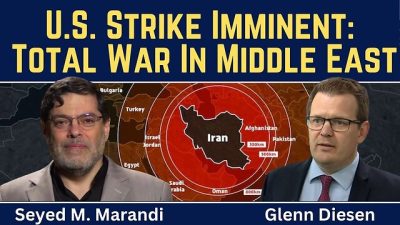
Seyed M. Marandi: Toward Total War in the Middle East
or go to
Aletho News Archives – Video-Images
From the Archives
The Geopolitics behind the War in Yemen (I)
By Mahdi Darius NAZEMROAYA | Strategic Culture Foundation | 30.03.2015
The United States and the Kingdom of Saudi Arabia became very uneasy when the Yemenese or Yemenite movement of the Houthi or Ansarallah (meaning the supporters of God in Arabic) gained control of Yemen’s capital, Sanaa/Sana, in September 2014. The US-supported Yemenite President Abd-Rabbuh Manṣour Al-Hadi was humiliatingly forced to share power with the Houthis and the coalition of northern Yemenese tribes that had helped them enter Sana. Al-Hadi declared that negotiations for a Yemeni national unity government would take place and his allies the US and Saudi Arabia tried to use a new national dialogue and mediated talks to co-opt and pacify the Houthis.
The truth has been turned on its head about the war in Yemen. The war and ousting of President Abd-Rabbuh Manṣour Al-Hadi in Yemen are not the results of «Houthi coup» in Yemen. It is the opposite. Al-Hadi was ousted, because with Saudi and US support he tried to backtrack on the power sharing agreements he had made and return Yemen to authoritarian rule. The ousting of President Al-Hadi by the Houthis and their political allies was an unexpected reaction to the takeover Al-Hadi was planning with Washington and the House of Saudi. … continue
Blog Roll
 Aletho News
- Pakistan-Iran talks secure LNG shipment to Islamabad through Hormuz
- Black Sea grain crisis puts global wheat supplies under pressure
- IRGC air defenses destroy another US MQ-1 drone over Strait of Hormuz
- Imran Khan’s entire immediate family detained in Pakistan ahead of mass protest demanding his release
- EU nation detains former presidential frontrunner
- Leaked: Britain’s Sham Conviction Of Hashim Thaci
- Seyed M. Marandi: U.S. Strike Imminent – Toward Total War in the Middle East
- Russia Voted Under Fire. Washington Is Loading the Tankers.
- 12 Things Your Oncologist Was Trained Not to Tell You
- Anthrax Attacks Paved Way for COVID-Era ‘Junk Drugs and Vaccines’
- If Americans Knew
- Israeli Attacks in Gaza Kill at Least Seven Palestinians Over Three Days, including Woman and Child
- Trump’s militarization of Washington DC as he pursues Israel’s war against Iran
- Why Israel Fears This Searing New Documentary
- Huckabee aide solicited cash gifts from Israelis
- This isn’t sci-fi, AI is already killing people
- ‘The Most Brutal Thing’: Investigation Reveals Execution of Elderly Woman in Rafah
- Inside Israel’s ‘soft’ ethnic cleansing plan for Gaza through the eyes of its victims
- New online database tracks pro-Israel political donations in the United States
- Israeli president pardons soldier convicted for killing wounded Palestinian
- Singer Ed Sheeran says his ‘heart broken’ by Gaza devastation, addresses Macklemore controversy
- No Tricks Zone
- 2025 Nature Paper Claiming Worsening Global Drought Gets RETRACTED …Heavily Flawed
- New Study: ‘Global Drought Shows No Detectable Recent Acceleration Under Climate Warming’
- Economic Masterminds: German Socialists Suggest Taxing Productivity Gains Stemming From Using AI
- The South China Sea Has Not Been Cooperating With The Climate Change Narrative
- Energy Crisis: Germany Enters Heating Season With Historically Low Gas Reserve Fill Levels
- New Study: The Antarctic Ice Sheet Gained Mass From 2020-2024 Due To Staggering Snow And Ice Accumulation
- Study: Ocean Heating Rates From Thousands Of Years Ago ‘Dwarf’ Modern Ocean Heating Rates
- Climate Extremists Target, Attack Large-Scale Power Grid Infrastructure In Germany!
- New Study: Antarctic Ice Melt Has Contributed Less Than 1 Centimeter To Sea Level Rise In The Last 30 Years
- Fear Of Debate: Alarmist German Climate Scientist Calls On Mainstream Media To Discredit Skeptic Voices
 Aletho News