US lawmakers introduce resolution for re-entry into Iran nuclear deal
Press TV – July 16, 2019
Lawmakers in the Democratic-controlled US House of Representatives are introducing a resolution to for Washington’s re-entry into the Iran nuclear deal, which President Donald Trump quit.
Reps. Barbara Lee (D-CA), David Price (D-NC), and Jan Schakowsky (D-IL) introduced the resolution Tuesday, urging the administration to re-enter the Joint Comprehensive Plan of Action (JCPOA).
“Trump’s Iran policy is responsible for this self-inflicted crisis,” said Lee (pictured below). “As someone who played a key role in building Congressional support for the JCPOA, it is disappointing to find ourselves dangerously close to a military confrontation with Iran because of the administration’s disastrous decision to unilaterally withdraw from the Iran deal on May 8, 2018. “

She further called on the administration to avoid military confrontation with Iran.
“We need serious and sustained diplomatic engagement to remove us from the path to war and on to a path of peace and diplomacy, and that’s what this critical resolution calls for,” she asserted.
Price, meanwhile, noted that the US unilateral pressure has failed to bring Iran to the negotiating table, an idea formerly reiterated by Iranian Foreign Minister Mohammad Javad Zarif, calling on Americans to “try respect” rather than anti-Iran threats.
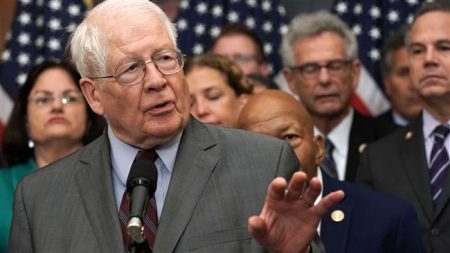
“If we look at current events, we see that President Trump’s rash decision to pull the US out of the Iran nuclear agreement has brought us no closer to bringing Iran to the negotiating table – it’s only emboldened Iranian hardliners, incentivized Iran to return to previously prohibited nuclear activity, and threatened our own credibility and leadership,” said the North Carolina congressman (pictured above).“This resolution sends a strong message from Congress to the administration: we must return to the JCPOA, and we must return to meaningful diplomatic engagement—peace, security, and United States leadership is at stake.”
Schakowsky, on the other hand, asserted that Trump has no Iran strategy or “vision in the Middle East.”
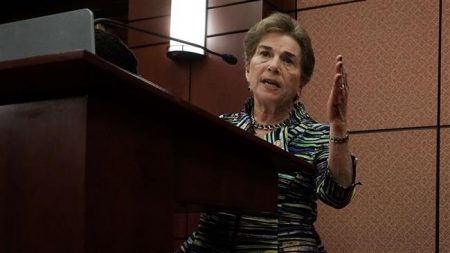
“With no strategy in Iran and no vision in the Middle East, President Trump’s reckless decision to pull out of the JCPOA has increased tensions around the world, pushed the United States closer to armed conflict with Iran, and severely diminished US leadership and leverage,” Schakowsky (pictured above) said. “We have been isolated from allies, have opened the door for Iran to become non-compliant, and have dissuaded other nations from negotiating agreements with the United States. It is time to bring Iran back into compliance, rejoin the JCPOA, and work with allies and partners on a diplomatic track to eliminate the threat of a nuclear Iran.”
The United States has quit the internationally backed nuclear deal and re-imposed illegal sanctions on Iran, which has responded by reducing its commitments under the agreement.
The UK, Germany, Russia, China and France are also signatories to the deal, inked after years of tough negotiations in 2015.
Turkey undeterred by US sanctions threat
By M. K. BHADRAKUMAR | Indian Punchline | July 16, 2019
The loss of Istanbul to an opposition candidate in Turkey’s recent local elections was hyped up by many American commentators, especially pro-Israeli analysts, as marking the end of President Recep Erdogan’s 17-year long dominance in the country’s politics ever since his stunning victory in the 2002 general election.
The main agenda behind the doomsday predictions and the ‘psywar’ was to rattle Erdogan, soften him up and force him to jettison his staunchly anti-Zionist policy and his open support for the Palestinian cause, his proximity to Russian President Vladimir Putin — overall, his independent foreign policies. In particular, Washington targeted Erdogan’s decision to purchase the S-400 missile system from Russia.
However, Erdogan has sprang a surprise on the US by going ahead with the S-400 deal, openly defying the threat of sanctions. The delivery of the missile began five days ago and almost every day, Russian military transport aircraft are landing in Ankara ferrying consignments related to the S-400 ABM system.
Not only that, Erdogan is giving the Americans the middle finger by announcing that President Trump has told him in a private conversation in Osaka on the margins of the recent G20 summit that there isn’t going to be any sanctions, no matter what the US officials would be saying.
According to Bloomberg, Trump’s team has settled on a sanctions package and plans to announce it later this week once POTUS approves it. On the other hand, Erdogan said on Sunday that Trump has the authority to waive sanctions on Turkey and “since this is the case, it is Trump who needs to find the middle ground.”
But US Secretary of State Mike Pompeo firmly told the Washington Post in an interview published late on Sunday that “the law requires that there be sanctions and I’m confident that we will comply with the law and President Trump will comply with the law”.
It seems Erdogan is playing chicken. He disclosed over the weekend that the Russian system will be deployed and ready only by April next year. At the same time, he has also mentioned the possibility of ‘co-production’ of the Russian system in Turkey. In his words, “The S-400s are the strongest defence system against those who want to attack our country. God willing, we are doing this as a joint investment with Russia, and will continue to do so.”
Certainly, Erdogan doesn’t look as if he is cowed down by the defeat of his party’s candidate in the mayoral election in Istanbul. He is unperturbed by the propaganda against him by the US media and think tankers. Nor is his behaviour showing as if he is on the run.
All factors taken into account, it cannot be ruled out that Trump may waive or postpone the sanctions against Turkey, a country where the US president has significant business interests. What can be predicted with certainty is that Erdogan will react strongly to any US sanctions.
Erdogan has several options on the table — ranging from evicting the US military from its bases in Turkey (which of course will entail the removal of the 60 nuclear bombs as well) to the launch of the much talked about military operations against the Kurdish militia in northern Syria.
In the latter case, if Turkey decimates the Kurdish fighters, the US will be left with no proxies / allies in Syria and any form of continued American military presence in the Euphrates region will become difficult to maintain. That of course will hit Israeli interests very badly. The Pentagon is already nervous.
All the evidence suggests that Erdogan has made a strategic decision that Turkey’s future lies in Eurasian integration and the current sparring is a shadow play. His recent meeting with Chinese President Xi Jinping soon after the G20 summit on Osaka — and in Beijing — and his strong endorsement of Chinese policies on the Uighur problem can only be seen as a deliberate, well-calculated move to ensure that there are no contradictions in Turkey’s gravitation to the East.
In particular, Erdogan visualises that China’s Belt and Road presents just the alternative he needs to revive the Turkish economy and withstand western pressure. The Chinese Communist Party tabloid Global Times commented that Erdogan’s meeting with the Chinese leadership “marked political consensus between China and Turkey on a deeper level of understanding. China’s policies on Xinjiang are part of its internal affairs that no other country has a right to interfere with. Erdogan’s remarks on the Xinjiang question are the premise and guarantee for upgrade of bilateral cooperation.”
In an op-ed in the Global Times on the eve of his arrival in Beijing, Erdogan wrote, “Turkey shares China’s vision when it comes to serving world peace, preserving global security and stability, promoting multilateralism, and upholding the principle of free trade. The world seeks a new, multipolar balance today. The need for a new international order, which will serve the interests of all humanity, is crystal clear. Turkey and China, the world’s most ancient civilisations, have a responsibility to contribute to building this new system.”
Clearly, Erdogan couldn’t care less anymore about US sanctions. Read a commentary by Xinhua entitled Erdogan’s visit sign of aligned Turkish-Chinese interests: experts.
Iran Ready to Hold Talks With US if Sanctions Lifted – Rouhani
Sputnik -July 15, 2019
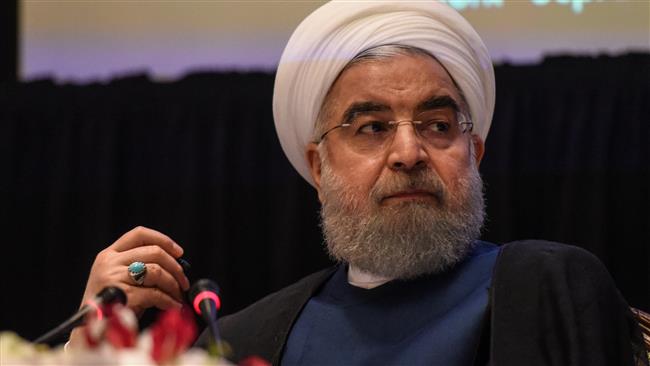
Iran is ready to hold negotiations with the United States if Washington lifts sanctions and gives up “bullying,” Iranian President Hassan Rouhani said on Sunday.
Earlier in the day, Berlin, Paris and London called for a dialogue between all parties of the Joint Comprehensive Plan of Action (JCPOA), saying the deal risks falling apart due to the US sanctions against Iran and Tehran’s decision to partially discontinue its obligations and.
“We are always ready for negotiation. I tell you this hour and this moment to abandon bullying and lift the sanctions and return to logic and wisdom. We are ready,” Rouhani said, as quoted by the Mehr news agency.
Rouhani added that Iran shifted its approach from “strategic patience” to “reciprocal action” and would respond in kind to any of Washington’s steps related to the nuclear deal.
On May 8, 2018, US President Donald Trump unilaterally withdrew his country from the JCPOA and imposed several consecutive rounds of economic sanctions on Iran. A year later, Tehran announced its own decision to partially suspend obligations under the deal and giving the other signatories – France, Germany, the United Kingdom, Russia, China and the European Union – 60 days to save the accord by facilitating oil exports and trade with Iran.
On July 7, as the deadline expired, Iranian Deputy Foreign Minister Seyed Abbas Araghchi announced that his country was ready to begin enriching uranium beyond the 3.67 percent level set in the JCPOA, adding that Tehran would go on gradually abandoning its nuclear commitments every 60 days.
Foreign Ministry: No ongoing negotiations between Iran, US at any level
Press TV – July 14, 2019
The spokesman for Iran’s Foreign Ministry says there are no ongoing talks between the Islamic Republic and the United States at any level, denying certain media reports in this regard.
Speaking to reporters on Sunday, Abbas Mousavi said, “The Islamic Republic of Iran is engaged in no negotiations with the American officials at any level.”
Mousavi was reacting to recent reports by certain social and other media outlets alleging that Iran has been in talks with the US through Russian mediation. They went as far as claiming that the talks were being conducted between the two countries’ foreign ministers.
Rumors about clandestine Iran-US talks come at a time that Iranian officials at various levels have said time and again that there would be no talks with Washington after the United States unilaterally left a nuclear deal with Iran, officially known as the Joint Comprehensive Plan of Action (JCPOA), and re-imposed tough sanctions against the country, which had been lifted under the deal.
On May 29, Leader of the Islamic Revolution Ayatollah Seyyed Ali Khamenei ruled out the possibility of talks between Tehran and Washington, saying such negotiations will be “fruitless,” “harmful,” and “a total loss.”
“The Islamic Republic of Iran will absolutely not sit for talks with America … because first, it bears no fruit and second, it is harmful,” the Leader said in a meeting with a number of university professors, elites and researchers in Tehran.
The Leader referred to negotiation as a tactic used by Americans to complement their strategy of pressure. “This is actually not negotiation; it’s rather a means for picking the fruits of pressure.”
The only way to counter this trick, he said, is to utilize the means of pressure available for use against Americans. “If they are used properly, the Americans will either stop or decrease pressures.”
on May 26, Iranian Deputy Foreign Minister for Political Affairs Abbas Araqchi met with Omani State Minister for Foreign Affairs Yusuf bin Alawi bin Abdullah in Muscat, categorically rejecting recent claims about the beginning of negotiations between the Islamic Republic and the United States with the goal of reducing tensions between the two sides.
Rejecting all reports about any form of direct or indirect talks with the United States, the Iranian diplomat emphasized, “The Islamic Republic of Iran is ready to establish balanced and constructive relations with all countries in the Persian Gulf region based on mutual respect and interests.”
Earlier in April, Iran’s President Hassan Rouhani said Washington’s claims of seeking negotiations with Iran were “mere lies” and that the United States, in fact, intended to force the Iranian nation to its knees.
Contrary to what some are trying to promote, “the US does not possess the willingness for negotiations at all,” the president told a cabinet session in Tehran.
“The actions that it is taking are aimed at defeating the Iranian nation” and “making a return” to Iran, he added, referring to Washington’s ample presence and influence in the country prior to the Islamic Revolution in 1979.
Turkey receives more S-400 parts as US holds off retaliation ‘until after coup attempt anniversary’
RT | July 14, 2019
Additional S-400 air defense components have arrived in Turkey, as Washington remains unusually silent while reportedly contemplating the proper timing and degree of pain it wants to inflict on its NATO ally for disobedience.
An Ilyushin Il-76 cargo plane landed at Murted Turkish Air Force base just outside Ankara on Saturday with the latest batch of the S-400 parts, the country’s Defense Ministry confirmed, a day after three gigantic Antonov An-124 jets delivered the first components of the defense system. The cargo was welcomed by a large number of military personnel and offloaded by heavy-duty military trucks into secure hangars.
Despite the lack of immediate reaction from Washington, the White House currently working on a sanctions package which will be invoked under the Countering America’s Adversaries through Sanctions Act (CAATSA), sources familiar with the matter told Bloomberg. The content and the degree of the punitive measures has reportedly already been carefully debated between State Department and National Security Councils officials together with the Pentagon.
Now, it is up to Trump to sign off on the package, which however is unlikely to come before the end of next week, as the administration allegedly wants to “wait until after Monday’s anniversary” of the Turkey military coup attempt as to “avoid fueling further speculation” about Washington’s possible involvement.
Turkey’s President Recep Tayyip Erdogan blamed the failed July 15, 2016 rebellion on a cleric living in the US under CIA protection, and – amid souring relations with Washington which accused him of a brutal and undemocratic crackdown on the coup plotters – began increasingly turning towards Russia for defense supplies.
Bolivia’s Campesino Union Slams Opposition Protests as ‘Total Failure’
teleSUR | July 9, 2019
The head of Bolivia’s Indigenous Campesino union, the country’s largest social movement, has said opposition protests held Tuesday in the city of Santa Cruz have been a “total failure” after opposition parties mobilized in the eastern city against leftist President Evo Morales, attempting to block the region’s main roads, calling for the resignation of the country’s electoral council.
Teodoro Mamani of Bolivia’s Campesino union and Hugo Torres of the main Labor union federation have dismissed protests, supported by all the main opposition candidates standing at the upcoming elections. Speaking to state media, the two social movement leaders characterized the events as a “total failure”.
This comes after the largest pro-opposition media outlet in the city, El Deber, reporting that all public sector workers and services are operating normally without any staff absences.
The only difficulties reported have been of workers at the ministry of justice arriving by foot, and one person even arriving by horse, due to partial roadblocks near the building. However, workers at regional tax and migration offices were able to arrive normally, despite opposition attempts to block public transport.
State media reported that by midday Bolivian time, only one major road had been entirely blocked by protesters, the newly built freeway in Yapacani that connects Santa Cruz to the city of Cochabamba.
In La Paz, lawmakers from Morales’ ruling ‘Movement Towards Socialism’ (MAS) denounced the protests, David Ramos, former labor union leader, now legislator said: “It is not a mobilization for popular or social demands, it is a political mobilization whose aim is to destabilize, conspire and boycott the democratic system in our country”
Another MAS lawmaker, Edwin Muñoz, reported early in the morning on the roadblocks he saw, saying, “Right now, because of the route we took, we have seen luxury cars blocking some avenues and roundabouts, where four or five young people are there causing an inconvenience”
Protesters oppose the decision by the country’s electoral authorities to allow current Evo Morales to stand for a third term in elections being held in October 2019 despite term limits regulations in the country.
Morales hopes to continue the government’s current approach, that through state investment, nationalization of natural resources and strategic industries, has turned Bolivia into the fastest growing economy in the region.
RELATED:
Bolivia: Main Opposition Candidate Accused of Taking US Funds
Norway, Bachelet, and the Twilight of Guaido’s Insurrection
By Ociel Lopez | Venezuelanalysis | July 10, 2010
Guaido’s uprising is going through its terminal phrase. He does not yet appear to have reached his end as leader, as he still produces and consolidates an important consensus among the opposition. What has decisively failed is his attempt to form a government without elections with the backing of the hawks in Washington. In almost six months since his self-swearing in as “interim president,” it has become palpable that his governing is truly impossible. The coup de grace was delivered by Michelle Bachelet when she visited the National Assembly, of which he is president and a deputy. The UN high commissioner for human rights did not recognize him as president of the republic, but she did propose a roadmap for pressuring the Maduro government, which Guaido accepted even though it represents a deviation from Washington’s strategy.
The Trump administration invested a large part of its political and diplomatic capital in overthrowing Maduro, especially in the first six months of 2019. And it didn’t achieve it. Pence, Pompeo, Bolton, and Abrams squandered a valuable amount of time with disastrous results. Since talks began in Norway, the hawks have opted to wash their hands of the matter and leave Guaido to his own fate.
The fracture in the opposition deepens with every defeat. The faction of the opposition favored by the US government is stronger online than it is in the streets, where it grows weaker every day. Voluntad Popular (VP), Leopoldo Lopez and Juan Guaido’s minoritarian radical party with only 14 seats in the 165-seat legislature, was chosen by the hawks to lead a new offensive that has not only been defeated on its own terms, but VP has been accused of “appeasement” by its own radical sectors after promoting dialogue with the Maduro government under the auspices of Norway. As the Venezuelan popular saying goes, “they were left without the goat and without the leash.” That is, the much-anticipated invasion never came and the actors that could maneuver in the national political sphere, namely the large opposition parties, were displaced by those who imposed a media-driven politics that looks to foreign powers for solutions. And now what?
The anti-government march on July 5 demonstrated that the opposition now does not even mobilize the bases of its own parties. Looking at the social media feeds of the most radical and mobilized opposition currents, it’s clear that they blame Guaido for failing in his attempt to govern and for his inefficient endeavor to secure foreign military intervention. Also weighing heavy are the allegations of corruption on the part of his team in the provision of humanitarian aid, exposed by opposition media outlets.
From January of this year, when Guaido swore himself in, it was foreseeable that street mobilizations would not be enough to oust Maduro, not even those of January 23, whose widespread support was even evident in hardcore protests in some Caracas barrios. What was anticipated was some kind of direct action by the US armed forces, or those of a neighboring country, so that the escalation of the conflict in the media actually reached the national territory. The climax, which took place on February 23 around the attempted forced entry of humanitarian aid, quickly petered out. The same thing happened on April 30 with the coup attempt. They were very weak movements that drew Maduro and the armed forces closer together – the opposite of what was sought.
But the decline of Guaido does not mean a definitive victory for Chavismo. It can even debilitate it as we will see.
Bachelet’s report
The three-day visit to Venezuela by UN High Commissioner for Human Rights and former Chilean President Michelle Bachelet on June 19-21 and subsequent release of her report on July 5 can be read as a change of scene in the Venezuelan conflict.
During her stay, Bachelet met with President Maduro in the presidential palace and with Juan Guaido in the National Assembly. This may surprise us if we remember that since January over fifty foreign governments have recognized Guaido as “interim president,” although he has not been able to exercise any functions beyond naming “ambassadors.” Bachelet put an end to the farce and showed things as they really are, something which the international community has not dared to do: she removed the virtual throne from under Guaido and recognized Maduro as the only president.
Bachelet’s report effectively displaces the conflict to the political arena because it is accepted enthusiastically by the opposition, even though the document doesn’t repeat its mantra of the “end of the usurpation,” and is welcomed by Maduro, who made two important gestures: the release of 22 “political prisoners” and the rumored proposal for Bolivarian deputies to return to their seats in the National Assembly, which they had abandoned since the emergence of the National Constituent Assembly in August 2017. In this way, Maduro opens up the possibility of negotiation, in which the Norway experience can play a pivotal role.
The report presents interesting options for both parties in the conflict. For Maduro, it legitimates his refusal to recognize Guaido’s “interim presidency” and it sidelines Washington in the dispute for hegemony over the Venezuela question. For the opposition, which suffered another defeat and internal division following Bachelet’s recognition of Maduro, the report allows it to double down on its call for foreign military intervention. The radicals on either side have simultaneously launched a broadside of criticisms at the ex-president, but significant sectors in both camps have recognized the legitimacy of the report, which sets the table for Norway-mediated talks.
Chavismo in its trench
The elements of cohesion in Chavismo are more external than internal. Chavismo closes ranks when confronting an enemy force of the proportions of the governments of the US or Colombia, or when the opposition resorts to violence. Once the “Guaido effect” is exposed as an impotent act, the Maduro government is left standing without tangible opponents and begins to face a crisis situation in which it is itself completely helpless. That is when the seams in the institutional armor covering the government become visible, due to its inability to control an economy that is already liberalized.
What has also become apparent recently is the government’s lack of control over state security forces. Obviously, Chavismo resents having to confront situations like the death by alleged torture of Captain Acosta Arevalo on June 29, as well as the arrest of grassroots Bolivarian militant Jose Ramon Rodriguez on July 5. In the first case arrests have been made, and in the second, Ramon Rodriguez has been freed. However, the accusations of grave misconduct on the part of the security forces, detailed in the Bachelet Report, are a concern shared by some currents of Chavismo.
Other sectors, including the United Socialist Party of Venezuela, reject the Bachelet report. Even now Maduro has demonstrated – and Bachelet has recognized it – that he is making moves to set the stage for negotiations: is there movement towards a power-sharing agreement or rather tactical maneuvers to remain in power?
Regardless, it is undeniable that negotiations driven by Norway open the way for a scenario that can overcome the stalemate in the internal political game. A shift in political and diplomatic relations is needed in order to extricate Venezuela from its current economic quagmire, which is impacting the region.
Ociel Alí López is a Venezuelan researcher who has published numerous written and multimedia works. He is dedicated to analyzing Venezuelan society for several European and Latin American media outlets. He is a co-founder of alternative Venezuelan state television station Avila TV in 2006. He is the recipient of the CLACSO/ASDI researcher prize and the Britto Garcia literature award.
Despite talk of promoting democracy Trudeau in bed with repressive monarchy
By Yves Engler · July 8, 2019

UAE foreign minister Sheikh Abdullah bin Zayed with Justin Trudeau
Given his personal history perhaps it is no surprise that Justin Trudeau is fond of monarchies.
The United Arab Emirates is a repressive monarchy that pursues violent, anti-democratic, policies in its region. Despite this — or maybe because of it —Trudeau’s Liberal government has strengthened ties to the federation of seven Emirates. And unlike Canada’s claims to be promoting democracy in Venezuela or the Ukraine, there has been little mention of this in the media or scrutiny in Parliament.
The UAE has propped up the Transitional Military Council in Sudan that has faced massive protests calling for civilian rule. Two months ago the oil rich country put up half of a $3 billion package (with Saudi Arabia) to support Sudan’s military rulers and the head of the military council visited powerful Crown Prince Mohammed bin Zayed al-Nahyan in Abu Dhabi in late May. Many pro-democracy activists believe the UAE and Saudi Arabia pushed Sudan’s military to destroy a major protest site that left dozens dead at the start of June.
Abu Dhabi fears democracy in Sudan for various reasons. One immediate concern is the likelihood that a government in Khartoum representing the popular will would withdraw the 10,000 Sudanese soldiers in Yemen. The UAE has played a key role in the war in Yemen, which has left 100,000 dead, millions hungry and sparked a terrible cholera epidemic.
In Libya the UAE was recently caught delivering weapons to warlord Khalifa Haftar in violation of UN sanctions. Abu Dhabi has financed and supported Haftar’s bid to seize the Libyan capital by force. The Tripoli-based Government of National Accord said a UAE F-16 fighter jet was responsible for bombing a migrant detention centre that left some 50 people dead last week.
Elsewhere in the region the UAE has engaged in a two year blockade of Qatar designed to force Doha to heed their and close ally Saudi Arabia’s belligerent, anti-democratic, position towards Iran, Egypt and elsewhere. In recent years UAE helped crush Bahrain’s 2011 uprising, dispatched forces to Libya to support the NATO war and financed the return of military rule to Egypt in 2013. Abu Dhabi also plowed hundreds of millions of dollars of weaponry and other forms of support to Al Qaeda linked rebels in Syria.
Domestically, the UAE is a repressive monarchy that outlaws labour unions and hangs/stones individuals to death. The country heavily restricts religious freedoms and women’s rights. Recently, the wife (one of six) of Dubai’s ruler Sheikh Mohammed bin Rashid Al Maktoum sought asylum in the UK fearing for her life.
From what I could find the Trudeau government has stayed mum on Abu Dhabi’s efforts to derail democracy in Sudan. Nor have they made any comment on its violation of UN sanctions in Libya. Over four years they’ve barely made a peep about the UAE’s bombing and troops in Yemen. Instead of challenging the monarchy’s egregious policies, the Liberals have deepened ties to the Gulf Kingdom.
On July 1 officials from the two countries highlighted “the bond between Canada and the United Arab Emirates” by raising a Canadian flag-inspired display on Abu Dhabi’s Burj Khalifa, the world’s tallest building. Ten days ago, the government announced that Canada would participate in Expo 2020 Dubai. International trade minister Jim Carr declared, “our presence at Expo 2020 affirms the vitality of Canada-UAE relations.”
A UAE delegation led by Minister of Energy and Industry Suhail bin Mohammed Faraj Faris Al Mazrouei attended the International Economic Forum of the Americas in mid-June. At the Montréal conference Al Mazrouei met economic development minister Navdeep Bains and trade minister Jim Carr. During the opening of the last UN General Assembly session Trudeau met UAE foreign minister Sheikh Abdullah bin Zayed and he visited foreign minister Chrystia Freeland in Ottawa last May.
Despite their violence in Yemen, the Trudeau government has deepened military ties to the UAE. There are a small number of Canadian troops in the UAE and Royal Canadian Navy vessels in the region regularly coordinate with their Emirates counterparts. Last week Canada’s ambassador in Abu Dhabi, Masud Husain, met defence minister Mohammed bin Ahmed Al Bowardi. Canada’s Defence Minister Harjit Sajjan also met Al Bowardi there in April. According to Emirates News Agency, Canadian and UAE officials discussed “cooperation in the military and defence sectors” and “current regional and international developments.” In December 2017 Sajan traveled to the Gulf State to sign the Canada-UAE Defence Cooperation Arrangement.
According to Radio Canada International, the Canada–UAE defence accord “will make it easier for the Canadian defence industry to access one of the world’s most lucrative arms markets.” During the last four years the Trudeau government has promoted arm sales at the Abu Dhabi-based International Defence Exhibition and Conference (IDEX). With support from “15 trade commissioners and representatives from the Government of Ontario, National Defence, Global Affairs Canada, and the Canadian Commercial Corporation”, 50 Canadian arms companies flogged their wares at IDEX in February. To help the arms companies move their products, commander of the Bahrain-based Combined Task Force 150, Commodore Darren Garnier, led a Canadian military delegation to IDEX.
In February of last year Parliamentary Secretary to minister Bains, David Lametti, who is now Justice Minister, promoted Bombardier’s delivery of surveillance planes to the UAE. Montreal-based flight simulator company CAE trains UAE Air Force pilots at a facility in Abu Dhabi. Some UAE pilots bombing Yemen also likely trained at NATO’s Flying Training in Canada, which is run by CAE and the Canadian Forces.
As Anthony Fenton has documented in detail on his fantastic Canada-Gulf focused Twitter handle, armoured vehicles made by Canada’s Streit Group in the UAE have been repeatedly videoed in Yemen. At IDEX 2019 Streit Group officials were photographed pitching their Sherp All-terrain military vehicle to UAE officials.
After a high profile diplomatic spat with Saudi Arabia last August Canadian officials privately worried it would negatively impact relations with UAE. That didn’t happen, of course. In fact, the spat may have spurred closer ties to Saudi Arabia’s main regional ally.
It’s time for some mainstream journalists and parliamentarians to devote a little attention to the Trudeau’s government hypocritical embrace of the UAE monarchy.
Iran’s shock therapy breaks JCPOA stalemate
By M. K. BHADRAKUMAR | Indian Punchline | July 8, 2019
A series of announcements in Tehran through the past week took the situation around the 2015 Iran nuclear deal (known as the JCPOA) — and the US-Iranian standoff — to an inflection point.
On July 1, it transpired that Iran has exceeded the limit of enriched uranium stockpile under the JCPOA, which is 300 tons. On July 8, Tehran announced a rollback in its obligations under the JCPOA by starting to enrich uranium to a higher purity than 3.67% that would fulfil the needs of its power plants. (Iran had previously said that it needed 5% enrichment for its Bushehr Nuclear Power Plant (NPP) and 20% for Tehran research reactor.)
A criticality has been reached. The Iranian Foreign Ministry’s Fact Sheet outlines how this came about.
Tehran has characterised the past week’s moves as remedial steps under Para 36 of the JCPOA, which it is entitled, to protect its interests. Tehran also says these are reversible steps if only the E3 (Britain, France and Germany) comply with the JCPOA.
Tehran has forewarned that every 60 days, it might otherwise make further moves to jettison its commitments under the JCPOA. Nonetheless, Tehran also acknowledges that although the E3 are yet to meet Iran’s demands, especially in regard to a non-dollar direct payment channel known as INSTEX, certain efforts in that direction are continuing, and they could still bear fruit.
Equally, talks are going on with China and the UK regarding the redesign of Arak reactor (which the US had originally undertaken to carry out under the JCPOA) although Iran has the technology to redesign the reactor on its own if these talks do not show results.
All in all, Tehran has taken certain modest steps that do not even remotely amount to a surreptitious dash for nuclear weapons. On the contrary, these moves are transparent and there is no attempt to restrict the IAEA inspectors’ access to Iran’s nuclear facilities. Nor is Tehran challenging the IAEA intrusive safeguards.
This is crucial. In sum, Tehran has given a two-fold signal. One, the costs for the US’‘maximum pressure’ policy is going to steadily rise, as Tehran will steadily counter-escalate. Two, the remaining signatories to the JCPOA (E3, Russia and China) cannot waffle any longer and must reciprocate Iran’s impeccable compliance with the JCPOA by providing it with an economic lifeline.
Again, there is a hidden message too. Much as Iran is inch by inch distancing itself from the JCPOA — although reluctantly and with caveats — it is not conspiring to kill the 2015 deal. Curiously, Iran’s principal drive still is to somehow bring the US back into the JCPOA. And Tehran takes seriously Trump’s stated aversion to war.
The bottom line, therefore, remains where it was: Does the Trump administration have the intellectual capacity and sensitivity to fathom the Iranian (Persian) culture and psyche? Does it get the point that Iranians never negotiate under threats?
The good part, paradoxically, is that Trump has overplayed his cards and is left with few options today aside a military strike that would have incalculable and catastrophic consequences. The US’ maximum pressure strategy has effectively driven Iran to the pre-2015 position. On the other hand, the regime-change project piloted and uttered by National Security Advisor John Bolton and extravagantly funded by the State Department has flopped.
There is no sign of an uprising in Iran against the authorities. Of course, there is dissent within Iran, but then, it was always there and will always be there — but is far from life-threatening for the regime.
Unfortunately, it is being overlooked that the negotiations leading to the 2015 deal were only possible after the US unequivocally jettisoned the ‘regime change’ agenda towards Iran and, secondly, after the US conceded that Iran shall have the right to enrich uranium like any non-weapon member state of Nuclear Non-Proliferation Treaty.
That is to say, if President Trump is serious about negotiating with Tehran, he needs to abandon the ‘maximum pressure’ approach by at least freezing the escalation ladder and offering economic reprieve by suspending some of the sanctions. One way could be by allowing the INSTEX — Europe’s trade channel for doing business with Iran despite US sanctions — to become really functional in the coming days. Trump can do this if he wants to, by simply feigning indifference to the INSTEX providing the mechanism for European, Russian, Turkish, Chinese or Indian companies to resume trading activities with Iran.
This brings us to the phone conversation between French President Emmanuel Macron and Iranian President Hassan Rouhani on Saturday. For sure, Macron is acting as an intermediary between Trump and Rouhani to facilitate negotiations. The French have clarified that there is no move to trigger the nuclear deal’s dispute resolution mechanism for now — “It’s not an option at this moment” — although Macron said Tehran’s announcement on Sunday amounted to a ‘violation’ of the JCPOA.
Hectic behind-the-scenes consultations are taking place even as an emergency meeting of the IAEA is scheduled in Vienna on Wednesday at US request. Iran’s cooperation with the highly intrusive IAEA inspections of its nuclear facilities is the focal point. Iran will attend the meeting.
Macron sounded out Rouhani on Saturday about American officials being present during the future talks between Iran and the remaining parties to the JCPOA — ‘4+1’ (China, Russia, Britain, France and Germany). Rouhani concurred with the rider that it shouldn’t mean re-negotiation of the JCPOA. He added that Tehran will not object to the US participation in 4+1 meetings, provided the Trump administration removes the sanctions.
The chances are that these high-level exchanges and discussions on new ideas and initiatives may open the door to the pathway leading to the formation of new talks involving the US and Iran.
Russia Vows Mirror Response to Mid-Range Missile Deployment in NATO Countries
Sputnik – July 5, 2019
Russia will provide a mirror response to the deployment of mid-range and low-range missiles in NATO nations in Europe, according to the First Deputy Chair of the Russian Federation Council, Vladimir Dzhabarov.
Meanwhile, Russia’s permanent mission to the alliance said Friday, after a meeting of the NATO-Russia Council, that Moscow considers NATO’s attempts to blame the destruction of the Intermediate-Range Nuclear Forces (INF) Treaty on Moscow groundless.
“We pointed to the fact that attempts to pin the blame over the destruction of the INF Treaty on Russia were groundless”, the mission said in a statement.
Russia stressed the need for restraint, the mission said. Russia confirmed that, should the United States quit the treaty, Moscow did not plan to install any “relevant weapons in Europe and other regions as long as there are no US missiles of short and medium range there.”
“We stressed that further inflaming the political and military situation in Europe carried real risks”, the statement said. “We have called on the NATO countries to make a similar statement”, the mission added.
Russia and NATO exchanged, at the NATO-Russia Council meeting, information on military exercises and called to boost military contacts, Russia’s Permanent Mission to NATO added
“The Parties had an information exchange on important exercises of NATO and Russia to increase the predictability of military activities and prevent misperceptions of each other’s intentions. The Russian Side noted the demand for intensifying mil-to-mil contacts”, it said.
On Wednesday, Russian President Vladimir Putin enacted the official suspension of Russia’s participation in the 1987 INF Treaty. The move came months after the United States suspended its obligations under the accord on 2 February and warned that it would launch a withdrawal process which would be completed in six months unless Moscow remedied the country’s alleged violations of the deal. Russia pledged to act proportionally.
The INF Treaty was signed in 1987 by then-leader of the Soviet Union Mikhail Gorbachev and then-US President Ronald Reagan. Under the agreement, the leaders agreed to destroy all cruise and ground-launched ballistic missiles with ranges between 500 and 5,500 kilometres (310 and 3,400 miles).
The DPRK’s News Report on The Recent Kim-Trump Meeting is Not Only Accurate But Highly Instructive
By Adam Garrie | Eurasia Future | 2019-07-04
After being conditioned to think of both South Korea and the United States as the “imperial savage aggressors”, it would clearly be a challenge for DPRK media directors to shift this narrative in order to prepare the people for the eventuality of peace and partnership with Seoul and Washington. Beyond this, if the DPRK leadership was apprehensive about the realistic chances of securing a comprehensive peace with the South and the United States, the news and propaganda output of the country would not have dramatically shifted in terms of how Americans and South Koreans are portrayed.
Last year, it was observed by frequent visitors to Pyongyang that old anti-American and anti-South posters and art displays had been replaced by public art emphasising a shared North-South Korean fraternity. This was a good indication that the DPRK was preparing its people for a shift in an otherwise semi-unilateral public mentality that has been carefully crafted since the days of Kim il-Sung.
Thus, in a country in which social developments tend to be stable and centrally managed, a change in official government narratives is vastly more indicative of actual policy than it would be in more open countries.
This trend was confirmed exponentially in the DPRK’s official television news report on the Kim-Trump summit on the DMZ. Contrary to what one might expect, the news broadcast is fully accurate in terms of its factual content and its failure to omit crucial details. The report speaks about the warm personal bonds between the DPRK’s Supreme Leader and the US President whilst also offering constructive realism about a would-be timeline for a final peace deal.
The DPRK report acknowledges that an extended peace process will be a gradual and time consuming phenomenon and that there are bound to be some reasonable disagreements along the way. However, the report remains optimistic that the sincere willingness of Kim and Trump to open up a new era of peace and enlightenment remains a goal that is both realistic and mutually advantageous.
In this sense, the tone of the DPRK’s report was more dignified and more accurate than what came out of western liberal media in the aftermath of the historic meeting during which time Donald Trump became the first sitting US president to enter the DPRK. Beyond this, the DPRK revealed previously unseen photos of Ivanka Trump shaking hands with Kim Jong-un. This contrasted sharply with liberal media’s mockery of Ivanka’s presence in Korea and in Japan for the G20 summit. Assuming that Donald Trump sees this footage, he will be all too aware that whilst American and European liberal media heaped scorn on his daughter, DPRK media portrayed her interaction with Kim in a stately and respectful manner.
The DPRK also showed footage of Kim shaking hands with US Treasury Secretary Steve Mnuchin. As Mnuchin is best known for announcing new sanctions on multiple countries, the fact that he was personally introduced to Kim could be an indication that the US might become more wiling to lessen sanctions during rather than after the de-nuclearisation process.
Whilst scepticism might get otherwise non-entities onto television, the genuine spirit of optimism shared by Moon Jae-in, Kim Jong-un and Donald Trump is palpable. The fact that this optimism is now being conveyed by the once stridently anti-American and anti-South DPRK media means that Pyongyang is conditioning its population for an irreversible shift in relations with the wider world.
Beijing urges Canada not to ‘naively’ rely on U.S. to pressure China

CGTN | July 3, 2019
Chinese Foreign Ministry spokesman Geng Shuang said on Wednesday that Canada is “fully responsible” for difficulties facing bilateral relations, stressing that Canada should not “naively” rely on the United States to pressure China.
Geng made the remarks at a regular press conference in response to recent remarks by Canadian Prime Minister Justin Trudeau regarding China’s detention of two Canadian citizens.
China confirmed last December that two Canadians – former diplomat Michael Kovrig and business consultant Michael Spavor – were being investigated on suspicion of “engaging in activities that endangered China’s national security.”
Trudeau said on Tuesday that he was “confident” that U.S. President Donald Trump had made good on his promise to raise the cases during his meeting with Chinese President Xi Jinping on the sidelines of the G20 summit in Japan’s Osaka last week.
Geng said China had published a news report on the meeting between Xi and Trump, noting that he has nothing to add.
“We hope the Canadian side would not be too naïve,” he said. “Don’t think naively that asking certain ‘ally’ to pressure China would work.”
China, whose judicial authorities work independently in accordance with the law, does not allow other countries to interfere in its judicial sovereignty, the spokesman stressed.
“The Canadian side should not naively believe that its so-called allies would make real efforts for it,” he said.
“Relations between China and Canada are currently undergoing severe difficulties and the Canadian side is fully responsible for that,” Geng said, urging Canada to take actions as soon as possible to bring bilateral ties back on the right track.
Tensions rose between Beijing and Ottawa late last year over the arrest of Chinese telecom giant Huawei’s Chief Financial Officer Meng Wanzhou in Canada.
Read more:
Wang Yi: Meng Wanzhou case ‘deliberate political move’
Huawei: Confident in the innocence of its CFO Meng Wanzhou
Meng was arrested on December 1, 2018, at Vancouver International Airport at the request of the United States, which is seeking her extradition on fraud charges. Both Meng and Huawei have repeatedly denied any wrongdoing. And Beijing has repeatedly demanded Washington to withdraw its arrest warrant and the extradition request against Meng.
Featured Video
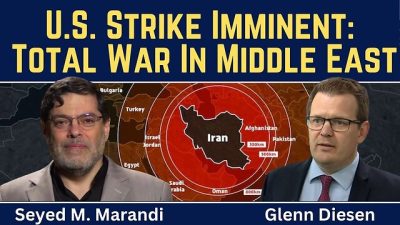
Seyed M. Marandi: Toward Total War in the Middle East
or go to
Aletho News Archives – Video-Images
From the Archives
The Geopolitics behind the War in Yemen (I)
By Mahdi Darius NAZEMROAYA | Strategic Culture Foundation | 30.03.2015
The United States and the Kingdom of Saudi Arabia became very uneasy when the Yemenese or Yemenite movement of the Houthi or Ansarallah (meaning the supporters of God in Arabic) gained control of Yemen’s capital, Sanaa/Sana, in September 2014. The US-supported Yemenite President Abd-Rabbuh Manṣour Al-Hadi was humiliatingly forced to share power with the Houthis and the coalition of northern Yemenese tribes that had helped them enter Sana. Al-Hadi declared that negotiations for a Yemeni national unity government would take place and his allies the US and Saudi Arabia tried to use a new national dialogue and mediated talks to co-opt and pacify the Houthis.
The truth has been turned on its head about the war in Yemen. The war and ousting of President Abd-Rabbuh Manṣour Al-Hadi in Yemen are not the results of «Houthi coup» in Yemen. It is the opposite. Al-Hadi was ousted, because with Saudi and US support he tried to backtrack on the power sharing agreements he had made and return Yemen to authoritarian rule. The ousting of President Al-Hadi by the Houthis and their political allies was an unexpected reaction to the takeover Al-Hadi was planning with Washington and the House of Saudi. … continue
Blog Roll
 Aletho News
- Pakistan-Iran talks secure LNG shipment to Islamabad through Hormuz
- Black Sea grain crisis puts global wheat supplies under pressure
- IRGC air defenses destroy another US MQ-1 drone over Strait of Hormuz
- Imran Khan’s entire immediate family detained in Pakistan ahead of mass protest demanding his release
- EU nation detains former presidential frontrunner
- Leaked: Britain’s Sham Conviction Of Hashim Thaci
- Seyed M. Marandi: U.S. Strike Imminent – Toward Total War in the Middle East
- Russia Voted Under Fire. Washington Is Loading the Tankers.
- 12 Things Your Oncologist Was Trained Not to Tell You
- Anthrax Attacks Paved Way for COVID-Era ‘Junk Drugs and Vaccines’
- If Americans Knew
- Israeli Attacks in Gaza Kill at Least Seven Palestinians Over Three Days, including Woman and Child
- Trump’s militarization of Washington DC as he pursues Israel’s war against Iran
- Why Israel Fears This Searing New Documentary
- Huckabee aide solicited cash gifts from Israelis
- This isn’t sci-fi, AI is already killing people
- ‘The Most Brutal Thing’: Investigation Reveals Execution of Elderly Woman in Rafah
- Inside Israel’s ‘soft’ ethnic cleansing plan for Gaza through the eyes of its victims
- New online database tracks pro-Israel political donations in the United States
- Israeli president pardons soldier convicted for killing wounded Palestinian
- Singer Ed Sheeran says his ‘heart broken’ by Gaza devastation, addresses Macklemore controversy
- No Tricks Zone
- 2025 Nature Paper Claiming Worsening Global Drought Gets RETRACTED …Heavily Flawed
- New Study: ‘Global Drought Shows No Detectable Recent Acceleration Under Climate Warming’
- Economic Masterminds: German Socialists Suggest Taxing Productivity Gains Stemming From Using AI
- The South China Sea Has Not Been Cooperating With The Climate Change Narrative
- Energy Crisis: Germany Enters Heating Season With Historically Low Gas Reserve Fill Levels
- New Study: The Antarctic Ice Sheet Gained Mass From 2020-2024 Due To Staggering Snow And Ice Accumulation
- Study: Ocean Heating Rates From Thousands Of Years Ago ‘Dwarf’ Modern Ocean Heating Rates
- Climate Extremists Target, Attack Large-Scale Power Grid Infrastructure In Germany!
- New Study: Antarctic Ice Melt Has Contributed Less Than 1 Centimeter To Sea Level Rise In The Last 30 Years
- Fear Of Debate: Alarmist German Climate Scientist Calls On Mainstream Media To Discredit Skeptic Voices
 Aletho News