Talks only possible with ‘tangible results,’ but US does not ‘seek dialogue’ – Tehran
RT | July 29, 2019
There is no point in talking when no “practical results” can be achieved, and Washington is not interested in good-faith dialogue, the Iranian Foreign Ministry spokesperson said amid rising tensions with the US.
“Dialogue and negotiation can be held when we have a certain agenda in place, and when we could get some tangible and practical results out of it,” Abbas Mousavi said on Monday, as cited by Reuters.
The Americans “are not seeking dialogue,” he added.
Problems have been piling up between the US and Iran over the Iranian nuclear and ballistic missile programs, as well as attacks on oil tankers in the Gulf of Oman, which the US blames Tehran for. Iran denies any wrongdoing and urges Washington to stop meddling in regional affairs.
Earlier this week, US Secretary of State Mike Pompeo proposed traveling to Iran to “speak directly to the Iranian people.”
Mousavi rebuffed Pompeo’s offer as a step in “psychological warfare” and a “defensive move” by the US in response to Iranian Foreign Minister Mohammad Javad Zarif’s recent trip to New York. The official said Iran “sees no sincerity” in Pompeo’s suggestion and pointed out that Zarif travels to New York only to attend UN events, not for bilateral talks with the US.
Amid the standoff with Iran, US officials maintain that Washington is open and ready for dialogue, but not until the Islamic Republic fulfills a laundry list of demands. Tehran has also been saying that it is ready to negotiate, but only on an equal footing and without threats and ultimatums by the US.
US, Pakistan move in tandem to end Afghan war
By M. K. BHADRAKUMAR | Indian Punchline | July 28, 2019
The US State Department chose Friday to announce the decision to approve a $125 million aid package providing technical support to Pakistan’s fleet of F-16 fighter aircraft. Ironically, the news reached Delhi on the 20th anniversary of the Kargil Vijay Diwas, which symbolises, as Prime Minister Narendra Modi put it on Saturday, “India’s might, determination, capability, discipline and patience” to thwart Pakistan’s hostile acts.
Clearly, Washington has begun to “incentivise” Pakistan, in the downstream of the talks between President Trump and Prime Minister Imran Khan at the White House on July 22.
Meanwhile, the Pentagon also notified on Friday about a proposed $670 million follow-on support programme for the eleven C-17 Globemaster-III air-lift aircraft sold by the US to India in the recent years. By holding out the carrot to India, Washington hopes to create the hype that it is also favouring Delhi.
The intention here is to finesse Delhi’s criticism over the revival of US military aid to Pakistan. Of course, it will be a delusional thought that the US is balancing India and Pakistan. In reality, the Pentagon’s India proposal is a purely commercial transaction — “after-sales service”, which will generate good business for the US vendors — while the military aid to Pakistan providing technical and logistics support for its F-16 fighter jets is on concessional terms and signifies a major political decision.
Delhi will take note that the proposed US military aid may significantly enhance Pakistan’s offensive capability insofar as some of the F-16 jets are capable of delivering nuclear weapons.
Indeed, the “big picture” emerging out of all this is that the US and Pakistan are marching ahead in tandem to implement the decisions taken by Trump and Imran Khan to swiftly end the Afghan war.
No sooner than Imran Khan left Washington on July 23, the chairman of the US Joint Chiefs of Staff General Joe Dunford traveled to Afghanistan’s capital of Kabul for consultations with American, NATO and Afghan officials.
Dunford said he wants to ensure Gen. Austin S. Miller, the US commander in Afghanistan, has all he needs. He added that he wanted to take the pulse of US military operations in the country. Indeed, the pulse rate is rather high, as the US withdrawal from Afghanistan looms large.
Dunford insisted that the negotiations have not changed the military mission in the country. “Day to day, the mission hasn’t changed for General Miller and the team, and they are still taking the fight to the Taliban and supporting the Afghan military,” he said.
But that’s putting on a brave face. Evidently, the US is pushing forward a “face-saving way out of Afghanistan,” as former CIA deputy director Michael Morell has told Axios. The message has gone down the line in the State Department and the Pentagon that Trump wants to move quickly toward a deal to end the war in Afghanistan. Morell is deeply sceptical whether a deal with the Taliban will secure peace.
He said, “I would bet that the US intelligence community and policymakers have a pretty good understanding of what the Taliban’s intentions are. So we’re making a deal that we know isn’t going to be kept just to save face, just to maintain honour.” Morell repeated his past warnings that the Taliban is “ideologically not disposed to sharing power.”
However, an apocalyptic scenario cannot deter Washington anymore. On a parallel mission, the US special representative on Afghanistan Zalmay Khalilzad also took off on July 23 from Washington to Kabul (where he is now speaking with members of the Afghan government as he works to encourage inter-Afghan conversations between the Taliban and the government.)
In immediate terms, Khalilzad expects Pakistan to deliver on the promise that Imran Khan made to Trump to the effect that he plans to meet with the Taliban to persuade them to hold negotiations with the government in Afghanistan. (Taliban has welcomed such a meeting.)
Imran Khan had said, “Now, when I go back after meeting President Trump … I will meet the Taliban and I will try my best to get them to talk to the Afghan government so that the elections in Afghanistan must be inclusive where the Taliban also participate in it.”
It may seem a tough call, but the news from Kabul on Saturday suggests that Pakistan may have made some headway already. The Afghan state minister for peace affairs Abdul Salam Rahimi announced on Saturday that “We (Afghan government) are preparing for direct talks (with the Taliban.) The government will be represented by a 15-member delegation. We are working with all sides and hope that in the next two weeks the first meeting will take place in a European country.”
The Norwegian capital Oslo is mentioned as the venue for the crucial meeting between the representatives of the Afghan government and the Taliban. The Taliban has not yet budged from its longstanding demand that a deal must be forged with the US first. Possibly, a deal may be announced after the 9th round of US-Taliban talks in Doha in the coming week.
Indeed, we are witnessing an utterly fascinating spectacle of diplomatic pirouette being played out between and amongst five main protagonists — Trump who is demanding an expeditious US withdrawal from Afghanistan, assuming Imran Khan will deliver on his promises; Imran Khan, in turn, going through the motions of persuading the Taliban to be reasonable while expecting generous US reciprocal moves to accommodate Pakistani interests; Ashraf Ghani, Afghan president, seeing the writing on the wall that US withdrawal is unstoppable, whilst still hoping to secure a second term in office; Khalilzad pushing the reluctant Afghan government to fall in line with a Taliban deal, while also negotiating with the Taliban for an orderly US withdrawal, albeit with a weak hand; and the Taliban on a roll, sensing victory. There are caveats galore. But the compass has been set.
10 Downing Street: Beware of Zionists at Work

Newly appointed home secretary, Priti Patel, had unauthorised meetings with Zionist regime leader Netanyahu in November 2017
Press TV – July 27, 2019
Boris Johnson, the new Prime Minister (PM), has promised a “golden age” to the British people. Addressing parliament for the first time as PM on July 25, Johnson said Brexit would make Britain “the greatest place on earth”.
Whilst these grandiose remarks are entirely in keeping with Johnson’s bombastic leadership style, nevertheless the British people, and the wider world, are left wondering to what extent the new PM can defend and promote the national interest.
Judging by Johnson’s effusive declaration of being a “passionate Zionist” in the closing stages of the Tory leadership race, the British people might be in for a disappointment.
Johnson made the same declaration – of being a “passionate Zionist” – in August 2014, at the height of Israel’s War on Gaza.
In keeping with his stated Zionist sympathies, Johnson’s new cabinet is riddled with Israeli sympathizers, two of whom can be described as hard-core Zionists.
First there is Sajid Javid, who was described by the Times of Israel on May 13, 2018, as Britain’s “top Muslim pro-Israel” politician.
Javid, who has been appointed chancellor, previously served as the home secretary, in whose role he implemented various pro-Israeli policies.
But Javid’s pro-Israel stance pales in comparison to Priti Patel’s, who has just been appointed home secretary.
In her previous role as international development secretary, Patel had 12 unauthorised meetings with Israeli Prime Minister Benjamin Netanyahu and other senior Zionist regime officials, including the foreign minister and the public security minister.
In a revelation that shocked even sections of the Tory party, Patel had suggested giving UK aid money to the Israeli army for a military project in the occupied Golan Heights.
Despite being dismissed by former PM Theresa May for breaching the ministerial code, Patel has made a remarkable comeback by occupying one of the greatest offices of state, namely the Home Office.
Since her appointment as home secretary on July 24, British social media has been awash with commentary highlighting the extreme irony of someone who prioritised the interests of a foreign power over Britain’s, now taking charge of the UK’s national security.
Across the spectrum of British activists, the new Tory cabinet’s ability and willingness to serve the national interest is being met with acute scepticism.
Johnson Forced To Tow Establishment Line When Dealing with Iran
Press TV – July 27, 2019
Britain’s new Prime Minister, Boris Johnson, has immediately been engrossed in controversy upon assuming the highest office in the land.
He has landed in hot water because of his father’s hard-hitting interview with Press TV.
Speaking to Press TV on July 25, two days after his son was declared prime minister, Stanley Johnson said he was looking forward to seeing Boris “building bridges with Iran”.
Talking up Boris’ fascination with ancient history, and his apparent “love” for Iran, Johnson Snr claimed that: “Iran means so much to him, so the chance to have long-standing relationship with a country with such a fantastic history…”
Johnson Snr even proposed the following solution to the tankers dispute: “I think the best thing would be to say, look, we let your ship go you let our ship go… easy peasy”.
Stanley Johnson came under immediate attack from the British press for his supposedly “bizarre gaffe” on “Iranian state TV”.
For his part, Boris Johnson explicitly opposed his father’s position, and possibly his own beliefs, by parroting the establishment line on this issue.
Despite all the hot issues of the day, not least Brexit, Johnson opted to focus on Iran as his top priority at the very beginning of his premiership.
Addressing parliament for the first time as prime minister, Johnson attacked the leader of the opposition, Jeremy Corbyn, for “appearing” on Press TV and “siding” with Iran.
Johnson was subsequently ridiculed by the tabloid press for attacking Corbyn for committing the same supposed sin as his own father.
However, this about-face is hardly surprising as, at the end of the day, the PM is expected to follow the old establishment guidelines on foreign policy matters.
If anything, this episode demonstrates the power of the establishment in imposing its values, requirements and policy priorities on the highest office of the land.
Boris Johnson has developed a reputation as an amateur historian. Back in 2006 he authored the book “The Dream of Rome” to showcase his historical knowledge.
The book was also the subject of a BBC documentary, with Johnson as the star of the show, thus further burnishing his credentials as a historian.
If he was true to his training as an amateur historian, and a putative “lover” of Iran, then Johnson would take immediate steps to ease tensions with Iran.
Some international observers tend to lean toward his father’s view on the tankers dispute. They argue that releasing the Grace 1 super-tanker, which was unlawfully seized in the Gibraltar Strait by the Royal Marines earlier this month, would constitute a credible de-escalatory first step.
His strength of personality and bombast notwithstanding, Boris Johnson’s words and actions in his first few days in office do not instill confidence that he will stay true to his own instincts and judgement on Iran.
After Mueller Debacle, Where Do Democrats Go?
By Pat Buchanan • Unz Review • July 26, 2019
The Democrats who were looking to cast Robert Mueller as the star in a TV special, “The Impeachment of Donald Trump,” can probably tear up the script. They’re gonna be needing a new one.
For six hours Wednesday, as three cable news networks and ABC, CBS and NBC all carried live the hearings of the House Judiciary and Intelligence Committees, the Mueller report was thoroughly trashed.
The special counsel stood by his findings. His investigation was not a “hoax” or “witch hunt,” he said. He admitted that he had found no Trump-Russia conspiracy. He denied he exonerated Trump of obstruction of justice.
All this we knew, and all of it we have heard for months.
What was new, what was dramatic, what was compelling was how the House Republicans arrived with their war paint on and ripped Mueller and his investigation to such shreds that viewers were feeling sorry for the special counsel at the end of his six hours of grilling.
The Republicans exposed him as only vaguely conversant with his own report. They revealed that he had probably not written his own statement challenging the depiction of his findings by Attorney General Bill Barr.
Mueller’s staff of lawyers, Republicans showed, reads like a donors list for Hillary Clinton. The FBI contingent that started the investigation was a cabal so hateful of Trump that some had to be fired.
Republicans raised questions about the origins of the investigation, tracing it back to early 2016 when Maltese intelligence agent Joseph Mifsud leaked to a staffer of the Trump campaign, George Papadopoulos, that Russia had Clinton’s emails. That and subsequent meetings have all the marks of an intel agency set-up.
Repeatedly, Republicans brought up the dossier written by British spy Christopher Steele, who fed Russian-sourced disinformation to Clinton campaign-financed intel firm, Fusion GPS, who passed it on to the FBI, which used it as evidence to justify warrants to spy on Trump’s campaign.
To many in the TV audience, this was fresh and startling stuff.
Yet Mueller’s response to all such allegations was that they were outside his purview and that other agencies were looking into them.
Wednesday’s hearings often proved painful to watch.
Mueller, a 74-year-old decorated Marine veteran of Vietnam and a former director of the FBI, sat mumbling his dissents as one charge after another was fired at him, his associates and his investigation.
For this disaster, the Democrats are alone to blame.
Mueller had wanted to file his report and leave it to the attorney general and Congress to act, or not act, on its contents. His job was done, and he did not want to testify publicly.
Democrats, desperate for impeachment hearings, wanted him to recite for the TV cameras every charge against the president.
What Democrats hoped would be a recital of Trump’s sins, Republicans turned into an adversarial proceeding that ended Mueller’s public career in a humiliating spectacle lasting a full day.
Where do Democrats go from here?
Their goal from the outset has been to persuade the nation that Trump colluded with Putin’s Russia to steal the 2016 election, and that the progressives are the true patriots in seeking to impeach and remove an illegitimate president and prosecute him for acts of treason.
The Republican position is that, for all his flaws and failings, Trump won the 2016 election fairly and squarely. He is our president, and the drive to impeach and remove him is an attempted constitutional coup d’etat by a “deep state” terrified that it cannot win against him in 2020.
The rival narratives are irreconcilable.
The Republican message of Wednesday: Proceed with hearings to impeach and there will be blood on the floor.
Democrats are in a hellish bind.
Should they proceed with hearings on impeachment, they will divide their party, force their presidential candidates to cease talking health care and start talking impeachment, and probably fail.
Impeachment hearings would fire up the Republican base and energize the GOP minority to prepare for combat in a Judiciary Committee where they are already celebrating having eviscerated the prosecution’s star witness.
If Democrats vote impeachment in committee, they will have to take it to the House floor, where their moderates, who won in swing districts, will be forced to vote on it, splitting their own bases in the run-up to the 2020 election.
If Democrats lose the impeachment vote on the House floor, it would be a huge setback. But if they vote impeachment in the House, the trial takes place in a Senate run by Mitch McConnell.
Trump would go into the 2020 battle against a Democratic Party that failed to overthrow the president in a radical coup that it attempted because it was afraid to fight it out with the president in a free and fair election.
Copyright 2019 Creators.com. 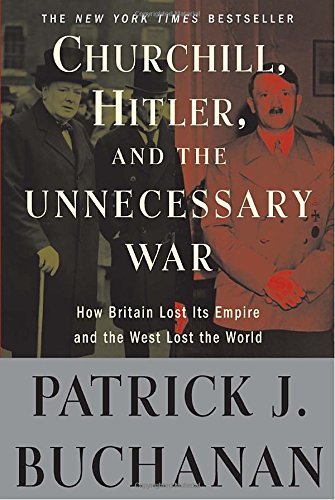
Ukraine on the cusp of change
By M. K. BHADRAKUMAR | Indian Punchline | July 23, 2019
The thumping victory by the Ukraine President Vladimir Zelensky’s Servant of the People party, securing an absolute majority of 253 seats in the 450 member parliament, can be viewed as a tectonic shift in the geopolitical landscape of Eurasia. The next big party in the parliament will be the pro-Russia Platform – For Life, which secured 44 seats. The stunning rout of the pro-western forces symbolised by former President Poroshenko’s Solidarity party (24 seats).
The West must see the writing on the wall that the tide of opinion in Ukraine is overwhelmingly favouring the country’s reconciliation with Russia — a total negation, in other words, of the “regime change” through a US-sponsored colour revolution in 2014. The pro-western forces had let loose a campaign that the July 21 election was about Renewal (pro-west regime change in 2014) versus Revanche (rapprochement with Russia). The latter has won resoundingly. (See a commentary in the US government controlled Radio Free Europe / Radio Liberty titled Renewal Or ‘Revanche’? Buzzwords Of Ukraine’s Parliamentary Elections Forecast Tension Following Vote.)
In effective terms, the control of parliament consolidates Zelenskiy’s gip on political power and enables him to accelerate three things: one, the purge of the Poroshenko era personnel from the top echelons of the government most of whom are western nominees or proxies; two, a parliament that will cooperate with his legislative and reform agenda; and, three, robust efforts forthwith to bring the war in Donbas to an end and an improvement in relations with Russia.
Moscow has every reason to be quietly pleased with the outcome of the July 21parliamentary poll in Ukraine. Did Moscow anticipate the election results? Possibly so — even if the scale of Zelensky’s victory might have surpassed expectations. President Putin voiced optimism on the eve of the poll saying that the two countries will mend ties. As he put it, “We [Russia and Ukraine] have many things in common, we can use this as our competitive advantage during some form of integration. Rapprochement is inevitable.”
In fact, Moscow has already begun sensing that the Ukrainian government is no longer taking a hostile attitude toward Russia. The Kremlin noted last week that Kiev’s newly-appointed representatives in the contact group working on Donbas are taking a cooperative and constructive attitude, eschewing the negativism of the Poroshenko era. Besides, Zelensky has also signalled readiness to release from detention the editor-in-chief of the Russian state-run news agency RIA Novosti, Kirill Vyshinsky.
Zelensky can be expected to push for a radical fresh start in the policies, domestic and foreign. He has made it clear that he disowned the legacy of the Poroshenko presidency. He will now push through parliament his plan to extend a current ban preventing officials from the Yanukovych era (prior to 2014 regime change) from working in the public service to Poroshenko and his team. Legal prosecutions also seem possible, especially as Zelensky seeks to abolish the general immunity enjoyed by parliamentarians. These are hugely popular moves — and they will seriously debilitate the pro-western forces.
Zelensky’s projection of himself as a president for peace echoes the deep yearning of a big majority of Ukrainians for an end to the war in Donbas. “We are prepared to do everything required by the Minsk agreements,” he recently said in an interview with Deutsche Welle. He seems willing to make concessions to the separatists, as envisaged under the Minsk agreements — such as a measure of regional autonomy, a say in the foreign and security policies, the use of Russian language and so on. If he moves in that direction, a sea change in the climate of relations between Ukraine and Russia is possible.
However, the complexity of the Donbas question should not be underestimated. The conflict is multi-dimensional and external powers — Russia as well as western powers — are deeply involved in Ukraine. The regime change in Ukraine in 2014 is at the root of it. Will the West let Ukraine slip out of its hands? Will Zelensky be allowed by the West to plough an independent furrow toward the east? These are key questions today. The Russian attitudes will be largely conditional on that. For the moment, it does appear, though, that Ukraine is on the cusp of change. See a recent research paper by the German Institute for International and Security Affairs titled The Donbas Conflict: Opposing Interests and Narratives, Difficult Peace Process.
Venezuela blames nationwide blackouts on ‘electromagnetic attack’
RT | July 22, 2019
Massive power outages all across Venezuela were likely caused by an “electromagnetic attack,” the government of President Nicholas Maduro said, stressing that authorities are working to restore the service as soon as possible.
The blackout affected the entire nation, Minister of Communication and Information Jorge Rodríguez said on Monday evening, claiming that the power was knocked out by outside interference. The government has activated all the necessary protocols to provide safety for Venezuelans and work crews are already working to restore power.
Preliminary probe into the incident has suggested the “existence of an electromagnetic attack that sought to affect the hydroelectric generation system of Guayana, the main provider of this service in the country,” the minister told state channel VTV.
While authorities are struggling to resolve the crisis, the US-backed opposition leader Juan Guaido has used the power outage to once again attack his political opponent, accusing President Maduro of “destroying” the country’s electrical system.
In March, Venezuela suffered two major blackouts that sent the country into darkness for days. At the time, Caracas blamed it on cyberattacks on the Guri Hydroelectric generation and distribution system and accused the US-backed local opposition of sabotaging the power grid. Maduro also accused Washington of waging an “electricity war” to bring Guaido to power.
“US Causes Instability Anywhere It Sets Foot”
Al-Manar | July 20, 2019
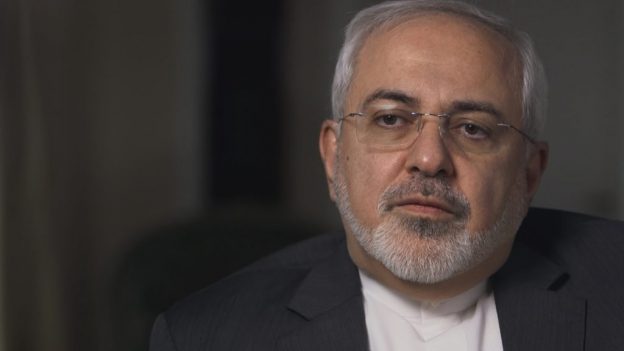
Iranian Foreign Minister Mohammad Javad Zarif said Saturday that the United States causes instability and insecurity everywhere in the world it sets foot, including the Persian Gulf and South America.
Iranian Foreign Minister Mohammad Javad Zarif arrived in the Venezuelan capital early Saturday after a six-day stay in New York.
Speaking to reporters upon arriving in Caracas, Zarif said that “anywhere the United States sets foot in, it causes instability there.”
“At the moment, the US is causing insecurity with its presence in the Persian Gulf, the Middle East, and also the South American region,” said Zarif.
He went on to add that, “I don’t know any place in the world where the US’s presence has brought stability.”
“Anywhere the US has set foot on, it led to pressure on the people and caused extremism and terrorism,” stressed the Iranian top diplomat.
While in Caracas, Zarif is slated to take part in the Ministerial Meeting of the Non-Aligned Movement (NAM) Coordinating Bureau (CoB) on 20-21 July under the theme: “Promotion and Consolidation of Peace through Respect for International Law.” He will also meet with a host of Venezuelan officials before making a visit to Nicaragua and Bolivia.
Iran Confiscated British Oil Tanker According to International Law: Official
Al-Manar | July 20, 2019
The Guardian Council Spokesman Abbasali Kadkhodaei said that Iran’s measure to seize a trespassing British oil tanker was carried out according to the rule of reprisal in the international law.
“The rule of reprisal is a recognized concept in international law and it is used in the face of another country’s illegal measures. The correct action of Iran’s government to encounter illegal economic war and seizure of oil tankers is an example of this rule and it is carried out according to the international law,” Kadkhodaei tweeted on Saturday.
In a statement on Friday, the IRGC said that the vessel named “Stena Impero” had been captured “at the request of Hormozgan Ports and Maritime Organization when passing through the Strait of Hormuz, for failing to respect international maritime rules.” The oil tanker was transferred to the coast to undergo the required legal proceedings, the statement added.
An unnamed Iranian maritime official said the ship had breached international maritime regulations by passing through a prohibited maritime passage in the Strait, turning off its tracking signals and ignoring warnings issued by Iranian authorities. “The tanker had turned off its tracker and ignored several warnings by the IRGC before being impounded,” the source said.
On July 4, British Royal Marines in Gibraltar stormed the Iran-operated 300,000-tonne Grace 1 and detained it, accusing it of carrying oil to Syria in possible violation of the European Union’s sanctions on the Arab country. Iran condemned the move as “piracy” and summoned Britain’s ambassador in protest over it.
Britain says seizures of UK vessels by Iran are ‘unacceptable’
RT | July 19, 2019
UK Foreign Secretary Jeremy Hunt has warned Iran of consequences for seizing two vessels in the Gulf, one of which has now been released. London’s response will be “robust” but not military, he said.
“We will respond in a way that is considered but robust,” Hunt told journalists, adding that the UK hopes to resolve the crisis through diplomacy and “is not looking” at military options.
Hunt said that he has already discussed the incident with US Secretary of State Mike Pompeo and looks forward to talking to his Iranian counterpart, Mohammad Javad Zarif. Denouncing the seizures as “unacceptable,” Hunt argued that Tehran would be “the biggest loser” if “freedom of navigation is restricted.”
Hunt said that there are no British citizens among the crew members of either ship. He also added that the British ambassador in Tehran has already contacted the Iranian Foreign Ministry in an attempt to resolve the situation.
Earlier on Friday, the Islamic Revolutionary Guard Corps – Iran’s elite military force – said it has seized the British oil tanker Stena Impero in the Strait of Hormuz over failure to “respect the international maritime rules.” The vessel sailing to Saudi Arabia was seen changing its course and heading north towards the Iranian island of Qeshm, marine tracking data showed.
The company owning the vessel, Stena Bulk, said it lost contact with the ship and that it was approached by “unidentified” small vessels before changing course.
Later the same day, another tanker owned by a British company – Norbulk Shipping UK Ltd – the Liberian-flagged ship Mesdar – also suddenly changed its course to Saudi Arabia and sailed to the Iranian mainland. This time, Tehran has not officially confirmed its seizure.
The tanker was apparently released later in the day, with tracking data showing the vessel changing course and heading westward and away from Iran late on Friday. The Iranian private Tasnim news agency reported that the British-owned Mesdar was cleared to continue its course, after having received a warning from the authorities over safety and environmental issues.
Norbulk has confirmed that the ship has resumed its travel towards Saudi Arabia, adding that the crew was “safe and well.”
“Communication has been re-established with the vessel and Master confirmed that the armed guards have left and the vessel is free to continue the voyage. All crew are safe and well,” the company said in a statement.
Tehran and London have been locked in a bitter row ever since a super tanker Grace 1 carrying Iranian crude oil was seized by the British marines in the Strait of Gibraltar on suspicion of violating the EU sanctions against Syria.
Tehran denied these accusations while calling the Gibraltar’s justification of detention laughable. Iran also accused the UK of acting on behalf of the US.
Washington has long sought to pressure Tehran into concessions on its nuclear and missile programs while repeatedly vowing to bring its oil exports down to zero with sanctions. It has also recently sent a naval group led by the aircraft carrier USS Abraham Lincoln to rehearse a possible strike against Iran while calling to form a “coalition” ostensively to defend the freedom of navigation.
US Imposes Sanctions on Hezbollah Senior Leader Over 1994 Terror Attack in Argentina
Sputnik – July 19, 2019
Hezbollah’s top figure, Salman Raouf Salman, stands accused of the bombing of a Jewish centre perpetrated 25 years ago in Argentina’s capital Buenos Aires.
The United States has introduced sanctions on a senior Hezbollah leader, a Colombian-born Lebanese national Salman Raouf Salman, over his complicity in terrorist attacks, according to the US Treasury. The top Hezbollah operative is accused of coordinating the bombing of a Jewish community centre in Argentina’s capital, Buenos Aires in 1994.
The Treasury’s Office of Foreign Assets Control (OFAC) said it added Salman Raouf Salman to its specially designated nationals list.
Treasury undersecretary of terrorism and financial intelligence Sigal Mandelker stated that Salman has continued to orchestrate terrorist operations in the Western Hemisphere for Hezbollah since the attack in Buenos Aires.
On Thursday, Argentina’s authorities designated the Lebanese-based Hezbollah movement as a terrorist organisation and decreed a freeze of all financial assets belonging to the group.
The move coincided with the 25th anniversary of the violent attack on the Mutual Israelite Association of Argentina community centre in Buenos Aires in 1994 that left 85 people dead and hundreds injured. Hezbollah denied any role in the attack.
If no CAATSA for Turkey, none for India either
By M. K. BHADRAKUMAR | Indian Punchline | July 18, 2019
President Trump’s statement on July 17 to block the sale of the advanced F-35 jet to Turkey and to remove Turkey altogether from the fighter jet programme marks an inflection point in the Turkish-American relations.
The development has profound implications for India as well, which is also procuring the S-400 Triumf anti-ballistic missile system from Russia.
Trump timed his decision on Turkey accepting the delivery of components of the Russian S-400 system last Friday. Washington is not holding back until the system has been fully delivered or deployed (in April next year, according to Turkey) or even for Turkish military personnel to receive training for Russia to operate the system. Washington estimates that it’s a done deal, a fait accompli.
Trump’s main argument is that S-400 is a “Russian intelligence collection platform that will be used to learn about its [F35] advanced capabilities.” He regretted that Turkey didn’t accept the US’s counteroffers “to meet its legitimate air defense needs” — specifically, its “multiple offers” on the Patriot system.
Trump brought the NATO into his argument, saying that the S-400 “undermines the commitments all NATO Allies made to each other to move away from Russian systems” and will have “detrimental impacts on Turkish interoperability with the Alliance”.
However, he went on to acknowledge Turkey’s record as a “longstanding and trusted partner and NATO Ally for over 65 years”, the great value Washington still attaches to its strategic relationship with Turkey, and the two countries’ relationship as NATO allies, which is “multi-layered, and not solely focused on the F-35.”
Trump concluded, “Our military-to-military relationship is strong, and we will continue to cooperate with Turkey extensively, mindful of constraints due to the presence of the S-400 system in Turkey.” Trump’s message is that this is the irreducible minimum he’s compelled to do under the circumstances. He eschewed any accusatory tone.
Importantly, Trump didn’t mention a word about sanctions under the legislation known as Countering America’s Adversaries Through Sanctions Act (2017) or CAATSA, which threatens third countries with sanctions over any “significant transactions” — defined as deals above $15 million — with Russian defense industry.
But then, it is useful to recall that even while signing the CAATSA into law in August 2017, Trump had stated that he believed the legislation was “seriously flawed — particularly because it encroaches on the executive branch’s authority to negotiate.” He said he’d implement it “in a manner consistent with the President’s constitutional authority to conduct foreign relations.”
So, Erdogan was right when he claimed after meeting Trump on the margins of the G20 in Osaka that the latter reassured him that there would be no sanctions. In Erdogan’s words, “We heard from him [Trump] that there won’t be anything like this [sanctions]. It is out of the question that such a thing takes place between two strategic allies. I believe it cannot happen.”
Indeed, Trump himself at a press conference in Osaka had refused to blame Turkey for its S-400 deal with Russia and instead flagged that Ankara was forced into the deal by the Obama administration. Trump added: “So what happens is we have a situation where Turkey is very good with us, very good, and we are now telling Turkey that because you have really been forced to buy another missile system, we’re not going to sell you the F-35 fighter jets?”
“It’s a very tough situation that they’re [Turkey] in, and it’s a very tough situation that we’ve been placed in, the United States. With all of that being said, we’re working through it, but it’s not really fair. Because they bought a Russian system, we’re not allowed to sell them billions of aircraft. It’s not a fair situation.”
To be sure, the CAATSA also gives Trump much discretion to waive sanctions on countries that buy Russian weapons. The waiver language was reportedly included to accommodate allies India and Vietnam. Now, isn’t Turkey an ally, too? But US Secretary of State Mike Pompeo told the Washington Post on Sunday he was confident the president would levy sanctions as CAATSA requires. “The law requires that there be sanctions and I’m confident that we will comply with the law and President Trump will comply with the law,” Pompeo said.
What explains Pompeo’s hawkish line on Turkey? Principally, in the Washington Beltway the Israeli lobby is hyperactive among think tankers, politicians, media people, etc. Under Erdogan, Turkey’s relations with Israel nosedived, as he openly began supporting the Hamas. Erdogan has likened Israel more than once to Nazi Germany, triggering hot exchanges with PM Benjamin Netanyahu. Israel has vowed to demonise Erdogan and take him down somehow.
Indeed, can India draw comfort from the above? Some tentative conclusions can be drawn. For a start, the crunch time comes by early 2021. The latest news from Moscow is that the issues concerning the mode of payments by India have been resolved and deliveries of S-400 Triumf missile systems are “planned to start after 2020 in accordance with the agreement.”
At any rate, there is nothing like an Indophobia prevalent in the US even if there are differences in the relationship. Trump will have a hard time imposing sanctions against India after being indulgent toward Turkey. The lawmakers are not going to cry for India’s blood if Trump grants a waiver. Basically, Trump has an aversion toward CAATSA, too.
The minions in his administration or the hangers-on in the think tanks (such as Ashley Tellis at the Carnegie, for example) periodically threaten India with CAATSA. But do they speak for Trump? (In fact, Erdogan said Trump told him in Osaka not to take them seriously.) Clearly, many of these minions who wave the Damocles’ sword at India have their own axe to grind, since they act as dalals for US arms manufacturers and keep hustling the Modi government to grant more arms deals to placate Trump. But in reality, for almost the same reasons that the US cannot do without its alliance with Turkey, India too is not easily replaceable in the US’ Indo-Pacific network of partnerships.
India has much to learn from Erdogan’s way of handling the issue. He stuck to his guns after carefully weighing that the S-400 ABM system’s induction boosts Turkish defence capability. He is even prepared to forgo the F-35. Analysts estimate that Turkey may simply turn elsewhere to procure weapons. Moscow has already indicated openness to selling its latest fighter jet, the Su-57 to Turkey.
The Turkish Foreign Ministry has warned that Washington’s decision on the F-35 jet will “irreparably damage relations” and that the unilateral move “neither complies with the spirit of alliance nor is it based on legitimate grounds.” The statement added, “It is unfair to remove Turkey, one of the main partners in the F-35 program.”
The cardinal lesson India can learn from Erdogan is that defending national interests will always come at a high price, especially when a superior power is involved. Turkey has a long history, situated on the outskirts of the western world, with searing experiences to recount through centuries. India too has a painful colonial history. (See an analysis by the European Council on Foreign Relations titled Unhappy anniversary: Turkey’s failed coup and the S-400.)
Featured Video

The Truth About the Trump Shootings with Ken Silva
or go to
Aletho News Archives – Video-Images
From the Archives
The Geopolitics behind the War in Yemen (I)
By Mahdi Darius NAZEMROAYA | Strategic Culture Foundation | 30.03.2015
The United States and the Kingdom of Saudi Arabia became very uneasy when the Yemenese or Yemenite movement of the Houthi or Ansarallah (meaning the supporters of God in Arabic) gained control of Yemen’s capital, Sanaa/Sana, in September 2014. The US-supported Yemenite President Abd-Rabbuh Manṣour Al-Hadi was humiliatingly forced to share power with the Houthis and the coalition of northern Yemenese tribes that had helped them enter Sana. Al-Hadi declared that negotiations for a Yemeni national unity government would take place and his allies the US and Saudi Arabia tried to use a new national dialogue and mediated talks to co-opt and pacify the Houthis.
The truth has been turned on its head about the war in Yemen. The war and ousting of President Abd-Rabbuh Manṣour Al-Hadi in Yemen are not the results of «Houthi coup» in Yemen. It is the opposite. Al-Hadi was ousted, because with Saudi and US support he tried to backtrack on the power sharing agreements he had made and return Yemen to authoritarian rule. The ousting of President Al-Hadi by the Houthis and their political allies was an unexpected reaction to the takeover Al-Hadi was planning with Washington and the House of Saudi. … continue
Blog Roll
 Aletho News
- Pakistan-Iran talks secure LNG shipment to Islamabad through Hormuz
- Black Sea grain crisis puts global wheat supplies under pressure
- IRGC air defenses destroy another US MQ-1 drone over Strait of Hormuz
- Imran Khan’s entire immediate family detained in Pakistan ahead of mass protest demanding his release
- EU nation detains former presidential frontrunner
- Leaked: Britain’s Sham Conviction Of Hashim Thaci
- Seyed M. Marandi: U.S. Strike Imminent – Toward Total War in the Middle East
- Russia Voted Under Fire. Washington Is Loading the Tankers.
- 12 Things Your Oncologist Was Trained Not to Tell You
- Anthrax Attacks Paved Way for COVID-Era ‘Junk Drugs and Vaccines’
- If Americans Knew
- Trump’s militarization of Washington DC as he pursues Israel’s war against Iran
- Why Israel Fears This Searing New Documentary
- Huckabee aide solicited cash gifts from Israelis
- This isn’t sci-fi, AI is already killing people
- ‘The Most Brutal Thing’: Investigation Reveals Execution of Elderly Woman in Rafah
- Inside Israel’s ‘soft’ ethnic cleansing plan for Gaza through the eyes of its victims
- New online database tracks pro-Israel political donations in the United States
- Israeli president pardons soldier convicted for killing wounded Palestinian
- Singer Ed Sheeran says his ‘heart broken’ by Gaza devastation, addresses Macklemore controversy
- Israel Has Imprisoned Female Journalist Bushra Al-Tawil Without Trial Or Charge In Solitary Confinement For Past Month
- No Tricks Zone
- 2025 Nature Paper Claiming Worsening Global Drought Gets RETRACTED …Heavily Flawed
- New Study: ‘Global Drought Shows No Detectable Recent Acceleration Under Climate Warming’
- Economic Masterminds: German Socialists Suggest Taxing Productivity Gains Stemming From Using AI
- The South China Sea Has Not Been Cooperating With The Climate Change Narrative
- Energy Crisis: Germany Enters Heating Season With Historically Low Gas Reserve Fill Levels
- New Study: The Antarctic Ice Sheet Gained Mass From 2020-2024 Due To Staggering Snow And Ice Accumulation
- Study: Ocean Heating Rates From Thousands Of Years Ago ‘Dwarf’ Modern Ocean Heating Rates
- Climate Extremists Target, Attack Large-Scale Power Grid Infrastructure In Germany!
- New Study: Antarctic Ice Melt Has Contributed Less Than 1 Centimeter To Sea Level Rise In The Last 30 Years
- Fear Of Debate: Alarmist German Climate Scientist Calls On Mainstream Media To Discredit Skeptic Voices
 Aletho News