‘We need negotiations, not declarations’: Russia stays away from Trump’s UN reform plan
RT | September 18, 2017
As US President Donald Trump officially launched his 10-point reform program for the United Nations, Russian officials say they share many of the concerns it raises, but not the methods Washington is using to advance its solutions.
On Monday morning in New York, UN Secretary-General Antonio Guterres and Trump delivered speeches in support of the reform declaration, which has been endorsed by 128 states.
According to the published text of the plan, it would give Guterres greater executive powers “encouraging him to lead organizational reform,” which would “provide greater transparency and predictability” and “promote gender parity and geographic diversity,” while combating “mandate duplication, redundancy, and overlap” and other forms of inefficiency at the international body.
“In recent years, the United Nations has not reached its full potential because of bureaucracy and mismanagement. While the United Nations on a regular budget has increased by 140 percent, and its staff has more than doubled since 2000, we are not seeing the results in line with this investment,” said Trump, who previously emphasized that the US is the biggest contributor to United Nations funds.
“To serve the people we support and the people who support us, we must be nimble and effective, flexible and efficient,” declared Guterres, the former Prime Minister of Portugal, who assumed his current post this year.
Countries that were hesitant or unwilling to sign the document – which include Russia, China, Brazil and South Africa – were not invited to the launch.
“There was no consultation either prior or following the publication of the declaration,” said Vassily Nebenzia, Russia’s envoy to the UN, in an interview with TASS news agency, published Monday. “We are all for increasing the role of the UN on the international arena, and raising its efficiency. The organization needs reform, even if not a fundamental overhaul. But the reform itself should not come through a declaration, but through inter-governmental negotiations between members.”
State-owned daily Rossiyskaya Gazeta cited officials in the Russian delegation in New York, who criticized the US for hijacking the ongoing UN General Assembly for its own purposes, noting that the declaration “had nothing to do with the United Nations” and that Washington “has developed a bad habit of using the UN building during General Assemblies to push its own foreign policy agenda.”
Some were altogether suspicious of Trump’s motives, considering his previously dismissive attitude to the UN.
“Trump’s reform is a landmark move towards a unipolar world, and the reduction of the role of the UN in the international architecture that is forming in the 21st century. We are not ready to support or participate in this process,” Leonid Slutsky, the Chairman of the Committee on International Affairs in the Russian parliament, told RIA news agency.
“The US should start not with behind-the-scenes coalition-forming,” wrote Konstantin Kosachev, who heads in the Foreign Affairs Committee in the upper chamber of the Russian parliament, the Federation Council, on his Facebook page. “Instead, it should begin by acknowledging its mistakes, when it bypassed the UN in Yugoslavia, Iraq, Libya and Syria.”
JCPOA not renegotiable, better deal “pure fantasy”: Iran’s Zarif
Press TV – September 14, 2017
Iranian Foreign Minister Mohammad Javad Zarif says the 2015 nuclear deal with the P5+1 group of countries, known as the Joint Comprehensive Plan of Action (JCPOA), is not open to renegotiation, stressing that there is no better alternative to the deal.
“The #JCPOA is not (re)negotiable. A ‘better’ deal is pure fantasy,” Zarif tweeted on Thursday, adding that it was time for the US to “stop spinning and begin complying, just like Iran.”
The remarks came at a time when Washington, which is a party to the nuclear agreement, seems to be laying out a case for abandoning it.
Zarif’s remarks also came following a meeting between Iran’s top diplomat and Russian President Vladimir Putin in the Black Sea resort city of Sochi on Wednesday.
During the meeting, the two sides stressed that the nuclear accord was non-negotiable and that all sides to the agreement must honor their obligations, Zarif said.
“The Islamic Republic of Iran has so far fulfilled all its commitments concerning the JCPOA, but unfortunately certain sides have not remained as committed as they should. Today, we stress that this (nuclear deal) is an international and multilateral agreement and that all sides must adhere to it,” he added.
Last month, US Ambassador to the UN Nikki Haley traveled to Vienna to press the IAEA on accessing Iran’s military sites; a demand, which has been categorically rejected by Tehran.
The top Iranian diplomat said at the time that the US was “openly hostile toward the JCPOA and determined to undermine and destroy it.”
The JCPOA was reached between Iran and the P5+1 group of countries — the US, Russia, China, France, and Britain plus Germany — in July 2015 and took effect in January 2016. Under the deal, Iran undertook to put limitations on its nuclear program in exchange for the termination of all nuclear-related sanctions against Tehran.
The International Atomic Energy Agency (IAEA) has on multiple occasions affirmed Iran’s adherence to its commitments under the nuclear agreement.
Constitutional Crisis Brews in Moldova as Government Tests President’s Authority
Sputnik – 4 10.09.2017
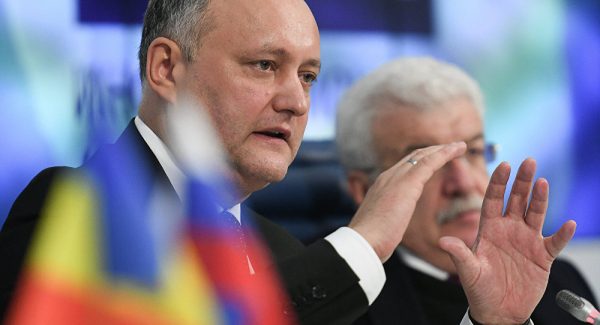
Moldovan President Igor Dodon is demanding the resignation of Deputy Defense Minister Gheorghe Galbura for defying a presidential order to block the deployment of Moldovan troops to Ukraine to participate in NATO-led military drills. Speaking to Sputnik, regional expert Boris Rozhin warned that the country is on a path to a constitutional crisis.
The Moldovan government approved sending several dozen troops to Ukraine last week, ignoring Dodon’s decree to block the deployment. Dodon described the move as an ‘usurpation of power’ by the cabinet.
Speaking to Radio Sputnik about what’s likely to happen next, Boris Rozhin, an expert at the Center of Military-Political Journalism, said that the Moldovan government will be likely to try to ignore or challenge the president’s demand for Galbura’s resignation.
“This confrontation over sending the military abroad is an indication that the constitutional crisis in Moldova is deepening,” the expert said. “The parliament and the government are refusing to recognize the president’s authority as commander-in-chief to give orders to the country’s armed forces.”
“This issue will be considered at a meeting of the country’s Security Council, and most likely, by the constitutional court, as Dodon’s decision to dismiss the deputy defense minister will either be ignored or contested,” Rozhin added.
The expert believes that this confrontation between the branches of Moldova’s government is likely to continue until the next parliamentary elections, tentatively set for November 2018.
“The confrontation can be resolved through a decision of the constitutional court, which confirms or rejects Dodon’s right to issue orders to the Armed Forces, or deepen further and continue until the next parliamentary elections,” Rozhin said.
“After that, a reformatting of the legislature may take place. At the moment, the ruling establishment does not reflect the alignment of forces in Moldovan society, which has grown tired of the government’s push for European integration, which did not bring the hoped for economic and social improvements for ordinary people.”
As the constitutionally designated commander-in-chief, Dodon vetoed the government’s decision to send 57 National Guard troops to Ukraine for NATO exercises, reminding them that Moldova is a neutral state. Ignoring the president’s order, the contingent left for Ukraine anyway. The president also signed a decree which said that Moldovan military forces would not be allowed to be sent abroad for military exercises, training or any similar events without approval from the president.
The present crisis is not the first public conflict between Dodon and the cabinet o ministers. Earlier, the government asked the UN General Assembly to consider the removal of Russian peacekeeping troops from the breakaway republic of Transnistria. Dodon called the initiative an “empty PR move.” The president and the cabinet have faced off over Russia repeatedly, the government proposing a series of unfriendly gestures, with the president, in turn, saying that he would like to bring the country closer to Moscow.
Dodon, often described by Western political observers as ‘pro-Russian’, won presidential elections in 2016, defeating his pro-West, pro-EU opponent Maia Sandu. Moldova’s parliament and government are dominated by the pro-EU Democratic Party of Moldova, a social democratic party closely associated with oligarch Vladimir Plahotniuc, and a collection of independent MPs.
Commenting on the political situation in the country, political observer Viktor Marakhovsky wrote that it would be more correct to call Dodon ‘pro-Moldovan’ than ‘pro-Russian’, because the pro-EU elites he is up against have effectively “privatized political power in exchange for international grants, figuratively speaking.” Not only do they seek to give up sovereignty to EU structures; some have spearheaded a campaign pushing for Romania’s absorption of Moldova, a campaign actively supported by Bucharest.
Marakhovsky thinks that Dodon’s best hope will be to organize a referendum to ask Moldovans to approve the expansion of the president’s powers, fresh elections and returning the subject of the history of Moldova to the country’s schools, replacing ‘the history of Romania’ subject presently being taught.
North Korea Played a Winning Card!
Al-Manar | September 8, 2017
North Korea has successfully carried out its sixth nuclear experiment in 11 years.
The country now, beyond any doubt is a nuclear power. This new development has sparked a score of reactions across the world, yet the overall tone of threats, especially those coming from USA did not amount to a direct menace of starting a war. They rather called for tightening the sanctions, reaching a total siege that could bring North Korea to its knees.
The defiant regime in Pyongyang, knew exactly how and when to play its winning cards.
Now the situation has reached a turning point whereby the North Korean leader has enough influence and a balance of terror where he could bring the American administration back to the negotiating table.
It is worth mentioning that the whole situation in the Korean Peninsula could be summed up as follows:
– Both USA and North Korea have no interest in starting a military confrontation that could easily slip into a nuclear war which would lead to catastrophic consequences all over the world.
– USA wants China to interfere and tame its ally and reach a settlement to the crisis without paying any price to Pyongyang. To this effect, Washington is applying pressure and tough sanctions on Chinese companies to prompt a direct reaction against North Korea.
– Washington is taking advantage from the recent escalation to make more arm deals and sell more weapons to South Korea and Japan, and to present itself as their defender and savior!
– Russia and China are happy to witness the North Korean provocation and challenge to Washington as this serves as a very important testing balloon to see how USA reacts in such situations.
– North Korea is interested to strike a permanent deal with Washington that would guarantee regime stability plus economic benefits that ends the paralyzing siege against it.
– China, North Korea’s main and almost only ally and supplier is not happy to watch the North Korean card slipping from its hand, as Pyongyang is attempting to find an independent track by itself away from any country’s major influence.
As a summation, the Korean Peninsula crisis has been set to a new phase where Washington can never be at ease meddling in its affairs. The North Korean nascent nuclear power is capable of hitting not only Japanese and South Korean targets or even US targets, but probably also European ones. This opens a new chapter in the crisis where the title is not limited to USA but rather shared, influentially though by North Korea. This ends the American monopoly and ushers in a new era where unipolarity no more exists.
North Korean delegation arrives in Russia, to be joined shortly by South Korean President
By Adam Garrie | The Duran | September 5, 2017
Hours after the 9th annual BRICS summit wrapped up in Xieman, China, delegates from East and South East Asia have begun arriving in the Russian city of Vladivostok for the Eastern Economic Forum.
The Forum is an event designed to enhance economic partnerships and cooperation between multiple Asian nations including Russia, China, Japan, Vietnam and the Korean states.
This year’s summit occurs days after North Korea tested what is thought to be a hydrogen-weapon. Russia and China have both condemned the move and support UN sanctions against Pyongyang, but are equally opposed to further crippling unilateral sanctions from Washington.
With many suspecting that North Korea would boycott the event, Russian officials have confirmed otherwise, stating that the North Korean delegation is already in Vladivostok.
South Korean President Moon Jae-in is to arrive shortly along with the South Korean delegation. While the Korean crisis is set to dominate discussions that would otherwise have been reserved for discussing trade and economic matters, it is not yet clear if the North and South Korean delegations will interact at any level.
Many suspect that Russian President Vladimir Putin who hosts the event will attempt to conduct dialogue with the representatives of both Korean states in order to try and de-escalate regional tensions.
The Eastern Economic Forum officially begins on the 6th of September and runs through the 7th.
Seymour Hersh Honored for Integrity
By Ray McGovern | Consortium News | September 1, 2017
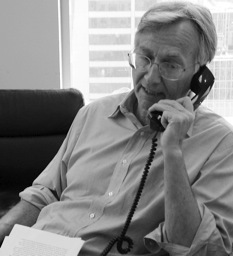
Journalist Seymour Hersh is to be honored with this year’s Sam Adams Award for Integrity to be presented to him at the Sam Adams Associates for Integrity in Intelligence (SAAII) award ceremony on the evening of Sept. 22 at American University.
Investigative reporter Seymour Hersh
Sam Adams Associates, who selected Hersh last month from a truly impressive roster of truth-tellers, are enthusiastic at the prospect of Sy joining the ranks of the 15 earlier awardees – from Coleen Rowley (2002) to John Kiriakou (2016). Included among those in between are other patriots: like Katharine Gun, U.K. Ambassador Craig Murray, Col. Larry Wilkerson, Julian Assange, Assistant Secretary of State Thomas Fingar, Edward Snowden, Chelsea Manning, and Bill Binney. [To learn more about previous honorees, as well as other material on whistleblowing, go to samadamsaward.ch.]
SAAII confers its annual award on a member of the intelligence profession or related field who exemplifies the courage, persistence and devotion to truth of Sam Adams, a CIA analyst on Vietnam who exposed the lies of the generals in Saigon and was then silenced. Later – but too late – Sam realized he should have gone public. (Yes, during the 1960s and 1970s, more of the U.S. media was able to put the national interest first and was open to whistleblowers.)
Sam, who was a fourth cousin seven times removed of President John Adams, died prematurely at age 55, nagged by the thought that had he not let himself be diddled by the system, thousands of lives might have been saved in Indochina. His story is told in War of Numbers, published posthumously. Several of Sam’s former colleagues are included in SAAII, as well as others who hold up the experience he underwent as a lesson for those who now know that, if they wish to succeed in getting the truth out, “going thru channels” normally is not only quixotic but also dangerous.
In 1967, Sam discovered that there were more than a half-million Vietnamese Communists under arms in South Vietnam – roughly twice the number that the U.S. command in Saigon would admit to, lest the outside world learn that American generals’ claims of “progress” were bogus. Commanding general William Westmoreland had put an artificial limit on the number that Army intelligence was allowed to carry on its books.
On Aug. 22, 1967, Westmoreland’s deputy, Gen. Creighton Abrams, specifically warned the Johnson administration back in Washington that the press would have a field day if Adam’s numbers were released, and that this would weaken the war effort. In a SECRET/EYES ONLY cable from Saigon, Abrams wrote: “We have been projecting an image of success over recent months,” and cautioned that if the higher figures became public, “all available caveats and explanations will not prevent the press from drawing an erroneous and gloomy conclusion.”
The Communist countrywide offensive during Tet (January/February 1968) made it painfully clear that the generals had been lying and that Sam Adams’s higher figures were correct. A few weeks after Tet, Daniel Ellsberg rose to the occasion and leaked the truth. Dan had learned that Westmoreland was asking for 206,000 more troops to widen the war into Cambodia, Laos and North Vietnam — right up to the border with China, and perhaps beyond.
After the 206,000 request was leaked by someone else to the New York Times, Ellsberg leaked Sam Adams’ information on actual enemy strength. Dan had come to the view that leaking truth about a deceitful war would be “a patriotic and constructive act.” It was his first unauthorized disclosure, and it was effective. On March 19, 1968, the Times published a stinging story based on Adams’s figures.
On March 25, President Johnson complained to a small gathering, “The leaks to the New York Times hurt us. … We have no support for the war. This is caused by the 206,000 troop request [by Westmoreland] and the leaks. … I would have given Westy the 206,000 men.” On March 31, 1968, Johnson introduced a bombing pause, opted for negotiations, and announced that he would not run for another term in November.
Enter Sy Hersh
Sy Hersh, who was already famous for bringing the My Lai massacre story to global attention in 1969, found Sam Adams and pursued this other story of Vietnam deception. Thus, there is poetic justice in Sy Hersh receiving this award named for Adams, since it was he who first reported (in the New York Times on Feb. 26, 1973) on Sam’s David vs. Goliath struggle against a military/political/intelligence establishment eager to cover up the politically driven undercounting of Communist fighters in South Vietnam.
In an article on Feb. 26, 1973, Hersh duly quoted Army officials who were still disparaging Sam’s courageous pursuit of the truth. But the quote that Sy chose to conclude the article reflects his well honed smell for the truth. He wrote, “’The trouble with Sam is that he has always been right,’ one former colleague remarked. ‘He always told the truth and never cared whose toes he stepped on.’”
Sy Hersh has no doubt worn out several pairs of shoes stepping on the toes of a well-heeled Establishment. The current response from the mainstream media to Hersh’s latest exposés that challenge the lies and propaganda of Official Washington is to say: “We’ll show you, Hersh. Just you try to get published anywhere in the English-speaking world.”
Sy tried in vain to find an American or British outlet that would publish his most recent report on President Donald Trump’s lie that a Syrian aircraft carried out a “chemical weapons attack” in Syria’s Idlib Province on April 4. This disclosure of a deception by the new President would have been a big deal, at least by the journalistic standards of the past, since Trump openly attacked Syria with 59 cruise missiles on April 6 in ostensible “retaliation.”
Sy ended up having to go to the mainstream German newspaper Die Welt to get the results of his investigation published. [See here and here.]
As for the New York Times – the so-called “paper of record” – and its proud tradition of publishing “all the news that’s fit to print,” its hallowed pages have made no mention of Pulitzer Prize-winning Sy Hersh’s article on the chemical incident in Syria on April 4. The slogan should be changed to “all the news that fits neatly into the government narrative we print.” Many Sam Adams Associates have also been active with Veteran Intelligence Professionals for Sanity and have faced similar ostracism from the mainstream media for almost 15 years.
Until He Was Silenced
Besides revealing the My Lai massacre in 1969, Hersh exposed illegal CIA domestic operations against the antiwar movement in 1974. More recently, in 2004, he reported on the torture and other abuses at Abu Ghraib in Iraq, and he exposed the Obama administration’s lies used to justify a bloody proxy war in Syria. None of this, however has left him cynical or dulled his conscience.
Sy told Die Welt that he still gets upset with government lying and at the reluctance of the media to hold governments accountable. Summing up lessons from Trump’s reaction to the April 4 chemical event in Syria, Sy said this: “We have a President in America today who lies repeatedly … but he must learn that he cannot lie about intelligence relied upon before authorizing an act of war. There are some in the Trump administration who understand this, which is why I learned the information I did.”
The common challenge we all face is getting such information into media outlets that Americans regularly access. Encouragement comes from Sy Hersh’s example of grit, integrity and stick-to-itiveness, which have already had a powerful influence on Sam Adams Associates. In sum, this year’s awardee is a wonderfully good fit.
Ray McGovern works for Tell the Word, a publishing arm of the ecumenical Church of the Saviour in inner-city Washington. A former CIA analyst and colleague of Sam Adams, Ray co-founded Sam Adams Associates for Integrity in Intelligence and Veteran Intelligence Professionals for Sanity (VIPS).
Lavrov to Tillerson on consulate closure: We regret escalation of tension not initiated by Russia
RT | August 31, 2017
Russian Foreign Minister Sergey Lavrov has expressed regret over the “escalation of tensions” after the US State Department ordered Russia to close several diplomatic offices in the US within 48 hours.
Moscow will carefully study the new measures the US announced and will inform Washington of its reaction, Lavrov said.
On August 23, the US embassy in Russia suspended all “nonimmigrant visa operations” in Russia, saying they will be resumed only in the main embassy building in Moscow on September 1.
“NIV [non-immigrant visa] interviews at the US Consulates in St. Petersburg, Yekaterinburg, and Vladivostok are suspended until further notice,” the embassy said in a statement.
“The first impression is that the American authors of these decisions made one more attempt to draw disfavor from Russian citizens toward the actions of the Russian authorities,” Lavrov said earlier in August.
Moscow later stated it would take no action in response to the US Embassy’s announcement on the processing of nonimmigrant visas, which Russian Foreign Ministry spokeswoman Maria Zakharova described as “the horror that the Americans have created.”
Earlier this summer, Russia ordered the US diplomatic mission to bring its personnel in Russia down to 455 people, to match the numbers of Russian diplomatic staff. The US said it would need to downsize its embassy and consular staff by 755 as a consequence.
Moldova Presses Russia over Transnistria: What Next?
By Alex GORKA | Strategic Culture Foundation | 28.08.2017
The government of Moldova has called on the United Nations to discuss the withdrawal of Russian peacekeepers from the breakaway Transnistria region at the upcoming 72nd session of the General Assembly to open on September 12. A letter from the Permanent Representative of Moldova to the UN, Victor Moraru, was forwarded on August 22, calling the presence of Russian troops in Transnistria «a threat to international peace and security».
The Russian Federation has stationed about 1,200 troops in Transnistria in accordance with the «Agreement on the Principles for a Peaceful Settlement of the Armed Conflict in the Transnistrian Region of the Republic of Moldova» signed on July 21, 1992 by the presidents of Russia and Moldova in the presence of Transnistria’s leader. Transnistria, a largely Russian-speaking region, broke away from Moldova following the collapse of the Soviet Union in 1991. Its relations with Moldova’s central government in Chisinau have been tense ever since. In 1992, a bloody armed conflict sparked, with civilian casualties estimated in hundreds on both sides. The truce ended a war between pro-Russian forces and the Moldovan military.
Besides the peacekeepers, there are also around 800 Russian military personnel who guard ammunition depots near Kolbasna settlement left over from the days of the USSR. Their scrapping and removal started in 2001, but was blocked by Transnistria’s residents in 2004 amid deteriorating relations with Chisinau.
In 2008, NATO’s Parliamentary Assembly adopted a resolution urging Russia to «withdraw its illegal military presence from the Transnistrian region of Moldova in the nearest future». Since 2014, after conflict erupted in Ukraine, Moldova has banned Russian military from crossing its territory and the Russian Aerospace Forces from landing at the airport in Chisinau.
In November 2016, the defense ministers of Moldova and Ukraine concluded an agreement on the organization of a «green corridor» for the withdrawal of Russian troops, together with weapons, from the territory of the Transnistrian Republic. It was perceived by Moscow as a provocative move as neither Russia nor Transnistria had been consulted.
On May 2, the Constitutional Court of Moldova declared unconstitutional the presence of Russian soldiers on the territory of the Transnistrian region of the republic. On July 30, the Government of Moldova called the Russian peacekeepers «a factor in the freezing of the Transnistrian conflict».
In July, Moldova’s parliament adopted a declaration, asking Russia to withdraw its troops from Transnistria. The move came a day after the Moldovan Foreign Ministry warned the military aircraft with Russia’s Deputy Prime Minister Dmitry Rogozin on board was not allowed to land in Chisinau for a visit to mark the 25th anniversary of the Russian peacekeeping mission in Transnistria. Andrei Neguta, the Moldovan ambassador to Russia, was invited to the Ministry of Foreign Affairs. Deputy Foreign Minister Grigory Karasin expressed a firm protest against the Moldovan government’s decision to declare Deputy Prime Minister Dmitry Rogozin a persona non-grata.
The official emphasized that Russia has been consistently working to develop good relations with Moldova in the past few years. In contrast, Chisinau’s irresponsible steps are aimed at deliberately undermining bilateral relations.
Moldova’s President Igor Dodon condemned the declaration on withdrawal of Russian peacekeepers adopted by the parliament, accusing the pro-Western lawmakers of trying to worsen relations with the Russian Federation. He also claimed that such a decision could only come from «outside Moldova», presumably referring to Romania. Romania’s Prime Minister Mihai Tudose and several Romanian ministers were in Chisinau on July 21 – the day the resolution was passed – for a joint government meeting with the Moldovan executive.
The parliamentary resolution was not approved unanimously. «This is a serious violation of common sense. At least allow us to look at it properly», Socialist MP Vlad Batrancea said in parliament. «We believe this is a geopolitical provocation», he added. The lawmakers from the opposition Socialist Party left the parliament’s meeting in protest.
Transnistria’s legislators condemned the declaration, adopted by the Moldovan parliament. The Transnistrian authorities also strongly oppose the Moldova’s plan to withdraw Russian peacekeepers. During 25 years, the peacekeeping mission has been a success. There have been no clashes. After all, nobody else but Moldova insisted on an international peacekeeping force in 1992.
Russia considers Moldova’s letter to the United Nations requesting the withdrawal of Russian peacekeepers from Transnistria as another hostile action. Russia’s ambassador to the United Nations, Vasily Nebenzya, has objected to the Moldovan government’s call for the UN to discuss withdrawing Russian troops at the next month’s General Assembly session. He believes the «sudden move» was «not very friendly», especially in view that Moscow had not been warned in advance of this request. The Russian representative to the UN also said that this initiative of Moldova would not contribute to the 5 + 2 talks on Transnistrian settlement.
There is a very important aspect of the problem to be mentioned here. Chisinau puts forward the argument that the 1999 OSCE Istanbul summit included the commitment by the Russian Federation to withdraw from Transnistria by December 31, 2002. It fails to mention the fact that the agreement was linked to the provisions of the 1990 Treaty on Conventional Armed Forces in Europe (CFE) that limited NATO and Warsaw force disposition in Europe. The treaty was never fully observed by NATO as it kept on expanding. In 2007, Russia suspended its participation in the treaty, and on 10 March 2015, citing NATO’s de facto breach of the CFE, Russia formally announced it was completely halting its participation in it as of the next day. The treaty has become history today, it’s not effective anymore. It’s worth to emphasize that the Istanbul document does not rescind the 1992 truce accord.
There is no doubt that the Moldovan letter is an element of the propaganda war to be used by the West in its effort to paint Russia as an «aggressor». Ukraine will use the opportunity for attacks against Russia.
And now, last but not least. Neither the Moldovan government, excluding the president, nor the parliament has mentioned the need to take into account the opinion of Transnistrian people. After all, they have the right for self-determination. The Moldovan letter to the United Nations includes everything but the right of the Transnistrian people to decide their own fate. Should Russia abandon them?
Is there any guarantee there will be no armed conflict sparked right after the Russian military personnel’s withdrawal? If Russia leaves and innocent people die again, will Moldova take on responsibility? Will it be ready to admit its guilt? Is there any other OSCE member but Russia willing to dispatch peacekeepers to Transnistria and shoulder the expenditure? Is there any progress on finding a solution to the problem through talks? Finally, is Moldova ready to provide answers to all these questions at the United Nations General Assembly’s session in September?
Trudeau’s pal in Rwanda a ruthless dictator
By Yves Engler · August 25, 2017
Why is the Trudeau government supporting Africa’s most ruthless dictator?
After amending the constitution to be able to run indefinitely Paul Kagame recently won 98.63 per cent of votes in Rwanda’s presidential election. In response, Canada’s High Commissioner Sara Hradecky tweeted “Congratulations to Rwandans for voting in peaceful presidential election” and “Canada congratulates Paul Kagame on his inauguration today as President of Rwanda.” The latter tweet was picked up by the state propaganda organ New Times in a story titled “Heads of State, diplomats laud Kagame’s ‘visionary leadership’.”
If garnering 99 per cent of the vote wasn’t a clue that Kagame is a dictator, the High Commissioner could’ve taken a look at Canada’s ‘paper of record,’ whose Africa bureau chief has shined a critical light on Rwanda in recent years. At the start of 2016 The Globe and Mail reported on two new books describing the totalitarian nature of the regime.
“Village informers,” wrote South Africa-based Geoffrey York. “Re-education camps. Networks of spies on the streets. Routine surveillance of the entire population. The crushing of the independent media and all political opposition. A ruler who changes the constitution to extend his power after ruling for two decades. It sounds like North Korea, or the totalitarian days of China under Mao. But this is the African nation of Rwanda — a long-time favourite of Western governments and a major beneficiary of millions of dollars in Canadian government support.”
In 2014 York wrote an investigation headlined “Inside the plots to kill Rwanda’s dissidents,” which provided compelling evidence that the regime had extended its assassination program outside of east Africa, killing (or attempting to) a number of its former top officials who were living in South Africa. Since the initial investigation York has also reported on Rwandan dissidents who’ve had to flee Belgium for their safety while the Toronto Star revealed five individuals in Canada fearful of the regime’s killers.
On top of international assassinations and domestic repression, Kagame has unleashed mayhem in the Congo. In 1996 Rwandan forces marched 1,500 km to topple the regime in Kinshasa and then re-invaded after the Congolese government it installed expelled Rwandan troops. This led to an eight-country war between 1998 and 2003, which left millions dead. Rwandan proxies have repeatedly re-invaded the mineral rich eastern Congo. In 2012 The Globe and Mail described how “Rwandan sponsored” M23 rebels “hold power by terror and violence” there.
The Rwandan government’s domestic repression and violence in the Congo is well documented. Yet I couldn’t find a single tweet or comment by Hradecky critical of Kagame since she became High Commissioner in January. Yet she found time to retweet Kagame’s International Women’s Day message that “Realizing women’s full aspirations is inextricably linked to achieving whole nation’s potential.”
Re-tweeting a tyrant’s message or applauding spurious elections are clear forms of support for the “butcher of Africa’s Great Lakes.” But, Hradecky has offered less obvious backing to the regime.
On July 4 Hradecky tweeted “From the Canadian High Commission, we wish Rwandans a Happy Liberation Day!,” which was picked up by the New Times in a story titled “Messages of solidarity as Rwanda marks Liberation Day.”
The Ugandan-sponsored Rwandan Patriotic Front officially captured Kigali on July 4, 1994. Trained at a US military base in Kansas, Kagame’s forces apparently waited to take the capital so their Liberation Day could coincide with their US backers’ Independence Day, a public relations move that continues to pay dividends as demonstrated by a July NPR story titled “In Rwanda, July 4 Isn’t Independence Day — It’s Liberation Day.”
Four years after 3,000 Ugandan troops “deserted” to invade their smaller neighbour the force of mostly exiled Tutsi took Kigali. Today, Rwanda continues to be ruled by largely English-speaking individuals who often are descended from those who had authority in a monarchy overthrown during the 1959–61 struggle against Belgian rule. The Guardian recently pointed to “the Tutsi elite who dominate politics and business” and the Economist detailed “The Rwandan Patriotic Front’s business empire” in the country.
Underpinning the “liberation” story is a highly simplistic, if not counterfactual, account of the 1994 genocide. Widely hailed as the person who ended the killings, Kagame is probably the individual most responsible for the mass slaughter. His RPF invaded Rwanda from Uganda, engaged in a great deal of killing and blew up the presidential plane, an event that unleashed the genocidal violence.
As Hradecky should know, last year the Globe and Mail described two secret reports documenting Kagame’s “direct involvement in the 1994 missile attack that killed former president Juvénal Habyarimana, leading to the genocide in which an estimated 800,000 people died.”
Echoing Kigali’s narrative, Hradecky published a half dozen tweets (or retweets) in April commemorating the Genocide. “Canada stands with Rwanda to commemorate the victims of Genocide,” read one. Hradecky also retweeted a Government of Rwanda statement: “Today marks the beginning of the 23rd Commemoration of the 1994 Genocide against the Tutsi.”
Promoting simplistic commentary on the subject effectively strengthens a regime that derives much of its legitimacy from purportedly stopping the genocide.
From commemorating Liberation Day to applauding questionable elections, Canada’s High Commissioner has provided various forms of ideological support to Africa’s most ruthless dictator. That should embarrass everyone who wants this country to be a force for good in the world.
Syria Approves Qalamoun Ceasefire Agreement between Hezbollah and ISIL Terrorist Group
Al-Manar | August 27, 2017
Syrian authorities approved the ceasefire agreement between Hezbollah and ISIL terrorist group in western Qalamoun in order to evacuate the rest of the takfiri militants from the area, a Syrian military source said.
The source added that preserving the souls of the Syrian army soldiers and allies was behind Syria’s approval.
ISIL Terrorists in Lebanon-Syria Border Outskirts Surrender
After an intensive military campaign launched by the Lebanese and Syrian armies and Hezbollah against ISIL terrorists in Lebanon-Syria border outskirts, a ceasefire was concluded and took into effect on Sunday at 7 a.m. (Local Time).
The takfiri militants of ISIL surrendered and agreed to leave the area after turning in the corpses of two of Hezbollah martyrs and disclosing the fate of the Lebanese Kidnapped servicemen.
The Lebanese Army Guidance declared Sunday morning a cease of fire against ISIL terrorists for more negotiations to reveal the fate of the kidnapped soldiers, according to a communiqué issued by the Army Guidance Directorate Department.
Nine Lebanese servicemen were kidnapped by ISIL terrorists, as well as Nusra Front militants, in 2014 when the takfiri group invaded the northeastern town of Arsal.
Iran, Saudi to Exchange Diplomatic Visits

Al-Manar | August 24, 2017
Iran and Saudi Arabia will soon exchange diplomatic visits, Tehran said, in a possible sign of tensions easing after the arch rivals cut ties last year.
Iranian Foreign Minister Mohammad Javad Zarif told local media the visits would take place after this year’s hajj pilgrimage to Mecca in Saudi Arabia, which is due to start at the beginning of September.
“Visas have been delivered for the two sides. The final steps need to be completed so our diplomats can go inspect our embassy and consulate in Saudi Arabia and for Saudi diplomats to come inspect their embassy and consulate,” Zarif told news agency ISNA.
Zarif urged Riyadh to reconsider its foreign policy.
“Saudi Arabia’s behavior goes against its own interests. We want security and stability throughout the region and insist on the need to fight against the dangers that threaten us all,” he said.
“Saudi Arabia has not benefited from two years of war and horrific acts against the Yemeni people, on the contrary,” he said. “It’s the same in Syria or in Bahrain. We hope they will choose another path.”
Featured Video

HE SAVED LIVES. NOW HE FACES PRISON.
or go to
Aletho News Archives – Video-Images
From the Archives
The Geopolitics behind the War in Yemen (I)
By Mahdi Darius NAZEMROAYA | Strategic Culture Foundation | 30.03.2015
The United States and the Kingdom of Saudi Arabia became very uneasy when the Yemenese or Yemenite movement of the Houthi or Ansarallah (meaning the supporters of God in Arabic) gained control of Yemen’s capital, Sanaa/Sana, in September 2014. The US-supported Yemenite President Abd-Rabbuh Manṣour Al-Hadi was humiliatingly forced to share power with the Houthis and the coalition of northern Yemenese tribes that had helped them enter Sana. Al-Hadi declared that negotiations for a Yemeni national unity government would take place and his allies the US and Saudi Arabia tried to use a new national dialogue and mediated talks to co-opt and pacify the Houthis.
The truth has been turned on its head about the war in Yemen. The war and ousting of President Abd-Rabbuh Manṣour Al-Hadi in Yemen are not the results of «Houthi coup» in Yemen. It is the opposite. Al-Hadi was ousted, because with Saudi and US support he tried to backtrack on the power sharing agreements he had made and return Yemen to authoritarian rule. The ousting of President Al-Hadi by the Houthis and their political allies was an unexpected reaction to the takeover Al-Hadi was planning with Washington and the House of Saudi. … continue
Blog Roll
 Aletho News
- Finland’s Stubb tells European leaders to calm down
- Defeating Russia on battlefield impossible – Fico
- Finland’s Gender Clinic Reversal
- Massachusetts Wants Mental Health Visits, Why Does Government Use ‘Health’ to Enter Our Homes & Families?
- US lawmaker admits American people footing bill for Trump’s failed aggression against Iran
- Pfizer Gave $500,000 to Groups That Lobbied to End Religious Exemption in Massachusetts
- HE SAVED LIVES. NOW HE FACES PRISON.
- Israeli lobby seeks to bind US fate to ‘Israel’: Araghchi
- Pakistan-Iran talks secure LNG shipment to Islamabad through Hormuz
- Black Sea grain crisis puts global wheat supplies under pressure
- If Americans Knew
- Israel Is Expanding and Upgrading Compounds for Palestinian Militias in Gaza
- The Palestinian-American Residents of This West Bank Town Are Wondering: Where Is Trump?
- Gaza desperately needs tents, wheelchairs, fuel… and everything else (Israel blocks it all) – Daily Update
- Israeli Attacks in Gaza Kill at Least Seven Palestinians Over Three Days, including Woman and Child
- Trump’s militarization of Washington DC as he pursues Israel’s war against Iran
- Why Israel Fears This Searing New Documentary
- Huckabee aide solicited cash gifts from Israelis
- This isn’t sci-fi, AI is already killing people
- ‘The Most Brutal Thing’: Investigation Reveals Execution of Elderly Woman in Rafah
- Inside Israel’s ‘soft’ ethnic cleansing plan for Gaza through the eyes of its victims
- No Tricks Zone
- 2025 Nature Paper Claiming Worsening Global Drought Gets RETRACTED …Heavily Flawed
- New Study: ‘Global Drought Shows No Detectable Recent Acceleration Under Climate Warming’
- Economic Masterminds: German Socialists Suggest Taxing Productivity Gains Stemming From Using AI
- The South China Sea Has Not Been Cooperating With The Climate Change Narrative
- Energy Crisis: Germany Enters Heating Season With Historically Low Gas Reserve Fill Levels
- New Study: The Antarctic Ice Sheet Gained Mass From 2020-2024 Due To Staggering Snow And Ice Accumulation
- Study: Ocean Heating Rates From Thousands Of Years Ago ‘Dwarf’ Modern Ocean Heating Rates
- Climate Extremists Target, Attack Large-Scale Power Grid Infrastructure In Germany!
- New Study: Antarctic Ice Melt Has Contributed Less Than 1 Centimeter To Sea Level Rise In The Last 30 Years
- Fear Of Debate: Alarmist German Climate Scientist Calls On Mainstream Media To Discredit Skeptic Voices

